↩ Accueil

Vue lecture

If Donald Trump thinks Greenland should be his, how long before he sets his sights on Scotland? | Zoe Williams

By the expansionist logic of the president and his advisers, the US is entitled to annex just about anywhere

‘We do need Greenland, absolutely,” Donald Trump told the Atlantic on 5 January, with the hand-wavy follow-up, “We need it for defence.” His adviser Stephen Miller was more aggressive still in an interview with CNN, saying: “The real question is, by what right does Denmark assert control over Greenland? What is the basis of their territorial claim? … The US is the power of Nato … obviously Greenland should be part of the United States.” His wife, Katie Miller, posted an image on X of a map of the country papered over with the US flag, with the caption “soon”. It’s hard to orientate sensibly towards things that happen on X these days: if she had posted a Grok-generated image of Greenland in a bikini, would that be more or less concerning?

Still, we’re right to be concerned. There is no comfort to be had from old-era ideas such as: “Maybe they’re just sabre-rattling about Greenland to distract from the matter of Venezuela”, or “surely the foundational principles of Nato, a defensive alliance, will prevent the US from any act of aggression towards its own allies?”

Zoe Williams is a Guardian columnist

Continue reading...

© Photograph: Jacquelyn Martin/AP

© Photograph: Jacquelyn Martin/AP

© Photograph: Jacquelyn Martin/AP

  •  

What did I learn from a new - and very random - poll? Our interior lives are much weirder than I thought | Zoe Williams

The normal run of polling tends to be all vindictive kite-flying about refugees or magical thinking about climate change. Give me more curtain-twitching and fewer political questions any day

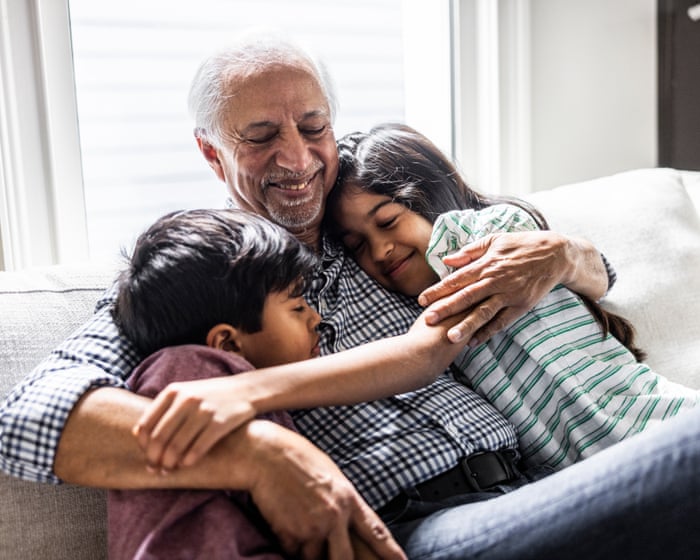
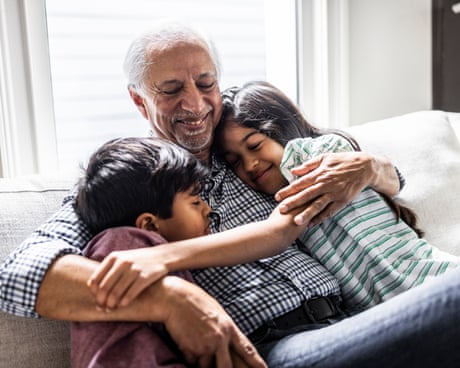
New polling just dropped from TV’s channel 5, conducted by More in Common, about a range of topics that fall under the umbrella, “every little thing”. Would people use a weight-loss jab if it were free on the NHS? (Yes, if they wanted to lose weight.) Do people, nevertheless, think weight-loss jabs are cheating? (Over a third of people said yes, which is to say, nearly two-thirds don’t think that.) Should grandparents be paid for doing childcare? (A third think so, which again leaves quite a hefty majority who think, “No, don’t be silly”.) Two-thirds think that adult children living with parents should pay rent; I’d like to have seen the wording of that question. Because if there isn’t an option, “it really depends on the income distribution within the family, plus the personalities, relationships and history of all concerned, and even if I knew all these things, it still wouldn’t be any of my business”, then surely some respondents will have been misrepresented.

Quite a sizeable majority (nearly two-thirds) think wills should always be split equally between children, which I guess is moderately interesting, as a snapshot of how people feel about wealth transfer and its impact on family dynamics, but it’s hardly what you’d call the pressing issue of the day.

Continue reading...

© Photograph: MoMo Productions/Getty Images

© Photograph: MoMo Productions/Getty Images

© Photograph: MoMo Productions/Getty Images

  •  

‘I love money!’: Katherine Ryan on success, feminism, bad reviews and ballsiness

When the Canadian comedian first arrived in the UK, she says she was instantly poor. But her career soon began to take off. She discusses provocation, perfectionism and telling people her secrets

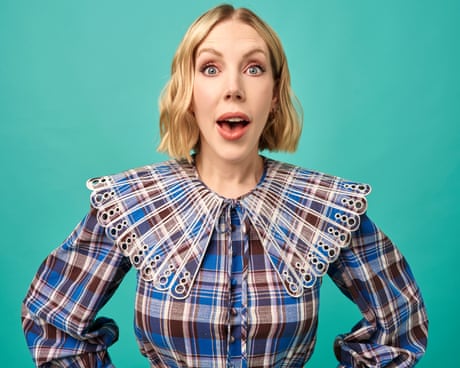
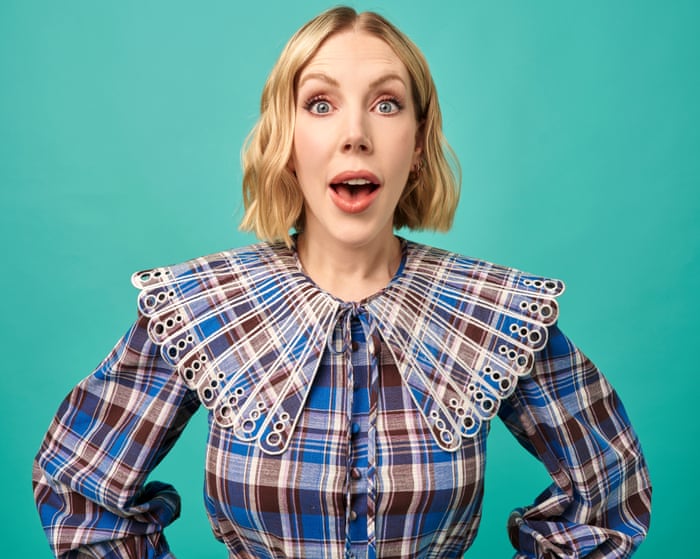
‘Especially in this country, I think you needed me. You didn’t realise it but you needed me, to lift some of your own shame.” Katherine Ryan, the 42-year-old Canadian comedian who has made her home in the UK for nearly 20 years, has brought her newly minted fourth child, Holland, to the Guardian offices and the baby is lying in a little blanket-nest on the table. Ryan whips off her breast pumps so they don’t make an annoying sound, but I hadn’t noticed the noise, as I was distracted by how adorable the baby is. The first thing you notice is the awesome capability of this woman, who can fully beam maternal love while crafting sequential thoughts in whole sentences, and never get distracted by anything.

The second thing you notice is what she’s famous for – a natural, unaffected ballsiness, a rejection of artifice and contradiction. When she sprang on to the UK alternative comedy scene in 2008, her provocation was that she was very good-looking and didn’t pretend not to know it. “Trying to be glamorous or pretty was seen as man-pleasing,” she recalls of the early 2010s, “which was the opposite of what a funny person would do. It was a trend to be self-deprecating. If you went on stage in a glamorous outfit with your little push-up bra and heels, like, ‘I think I’m stunning,’ that would be seen as really off-putting, but I did it because that’s what I liked.”

Continue reading...

© Photograph: Suki Dhanda/The Guardian

© Photograph: Suki Dhanda/The Guardian

© Photograph: Suki Dhanda/The Guardian

  •  

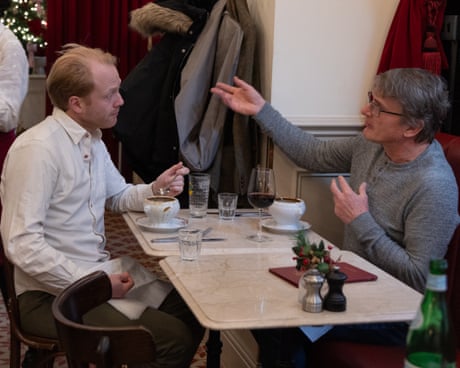
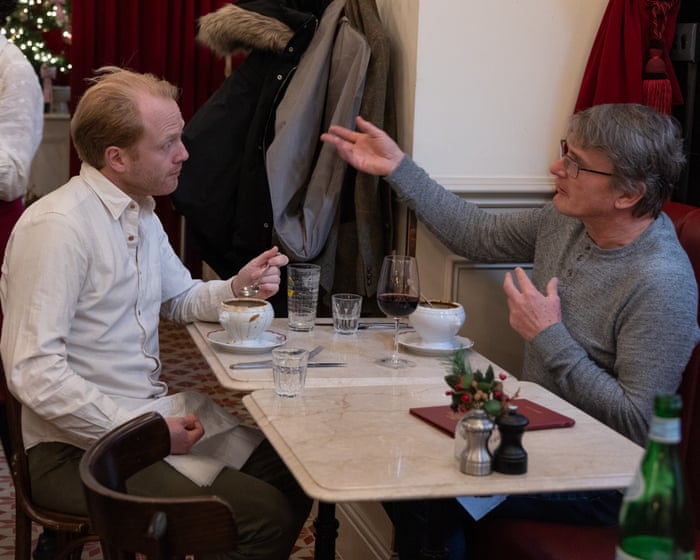
Dining across the divide: ‘I think gentrification is a social good. He said you lose communities’

A psychotherapy trainee and a retired software engineer bonded over living abroad, but did they agree on gentrification, second homes and mental health?

Rupert, 36, Worthing

Occupation Psychotherapy trainee

Continue reading...

© Photograph: Andy Hall/The Guardian

© Photograph: Andy Hall/The Guardian

© Photograph: Andy Hall/The Guardian

  •  

The electric vehicle revolution is still on course – don’t let your loathing of Elon Musk stop you joining up | Zoe Williams

Other firms are taking advantage of Tesla’s sales slump, while technological advances mean that glitches are being left in the rear-view mirror

In another era, before Elon Musk bought Twitter, changed its name to X to mark the spot of its descent into barbarism, honed Grok, a generator of far-right propaganda, swung behind Donald Trump and made what appeared to be a Nazi salute, I already knew he was a wrong ’un. The year was 2019, and I was test-driving a Tesla; while I was ambling off the forecourt, the PR told me jauntily that the windscreen was made of a material that would protect the driver from biohazards. I hit the brakes. “You what? What kind of biohazard? Like, a war?” She misconstrued me, thinking I intended to go and find some toxic waste site to see if it worked, and said: “I’m not sure it’s operational in the press fleet.”

That wasn’t my question: rather, what kind of a world was Tesla preparing for? One so unstable that an average (though affluent) private citizen would do well to prepare for a chemical weapons attack? What model of consumption was this, that the rich used their wealth to prepare for the mayhem their resource-capture would unleash, while the less-rich prepared slightly less well? Was Musk trying to bring to market the apocalypse planning that elites had already embarked on? Because if he was, then it was possible that he was not a great guy. And that turned out to be correct.

Continue reading...

© Photograph: Kevin Lamarque/Reuters

© Photograph: Kevin Lamarque/Reuters

© Photograph: Kevin Lamarque/Reuters

  •  

My big night out: I was about to get fired – then a colleague invited me to the party that changed my life

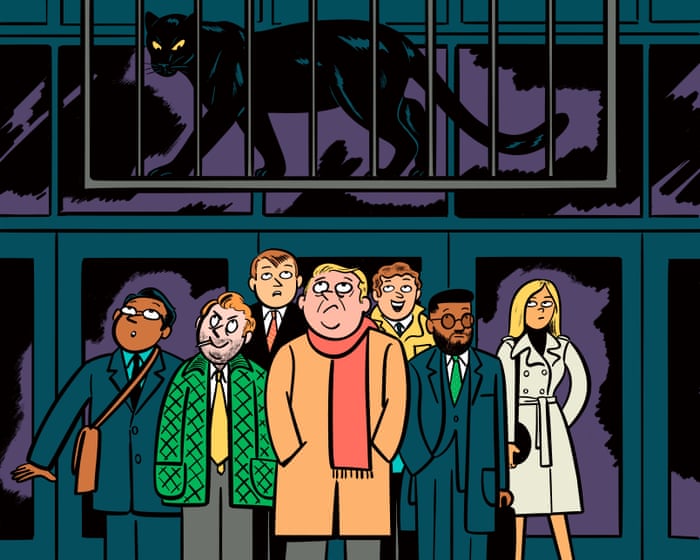
I wasn’t sure journalism was for me until I ended up in a bar with a group of lawless, funny co-workers who complained long and hard about the panther suspended above us in a cage

In the mid-90s, I was working as an admin assistant on the listings magazine of the London Evening Standard, and was about to be fired. OK, I wasn’t that good at the job, but I was also done with it. It was on my mind that I needed an actual job, one that you could describe to someone: “I’m an X.” At what point did you get to say: “I’m a journalist”? And was that even a real thing? A lawyer friend had told me: “I see mine as a profession and yours as more of a trade.” I ruminated on that a lot.

Anyway, some time between my latest misdemeanour and my inevitable disciplinary letter, someone from the main paper, let’s call him Pete Clark because that was his name (everyone else will go by initials, but Pete’s dead now, and he would want to be named, I think), asked if I wanted to go to a party. It was no special occasion, just the launch of a bar; this happened every night in the 90s, even Mondays. He was 43, but all old people look the same when you’re 23, so I felt as if the viscount owner of the paper had noticed me from the top of his gold mountain and invited me to a ball.

Continue reading...

© Illustration: Mark Long/The Guardian

© Illustration: Mark Long/The Guardian

© Illustration: Mark Long/The Guardian

  •  

The secrets of a great sex life: how to keep the flame alive in the bedroom

Sex is an appetite like any other and there is much you can do to make it a priority, from making sure you find the time for it to building your confidence and maintaining intimacy throughout the day

• Sign up here to get the whole series straight to your inbox

If you have sex, chances are, you’ll have a good day. But scheduling it makes it feel like a chore. And unlike any other chore or fitness enterprise, you conceive it more as self-indulgence than self-improvement, and as such, even if you’re already in a relationship, it’s hard to find that chin-out determination to get it done. Yet sex is an appetite like any other, a necessity like any other, a nourishment like any other. If you let it go dormant the effect on your relationship might be as if one or both of you are on a permanent diet – and also lonely. That might be fine for both of you, but for many of us, sex is a thing worth prioritising.

At its core, before you introduce any other domestic obstacles, it’s a two-person job, so you have to be attuned to one another; you can’t just decide unilaterally. To take this in ascending order of hurdles; if you’re a childless couple, the main block is going to be each other – not being in the same mood at the same time, not being in the house at the same time. This is true for your entire relationship, not just sex; I once interviewed a fertility doctor, who described working with a couple, trying to find an appointment time for when one was ovulating and both were in the country. They scrolled through several weeks before they managed it. “I felt as if I was beginning to get to the bottom of why they couldn’t conceive,” she said.

Continue reading...

© Illustration: Spencer Wilson/The Guardian

© Illustration: Spencer Wilson/The Guardian

© Illustration: Spencer Wilson/The Guardian

  •  
❌