 Connexion
What is Stranger Things’s Conformity Gate craze – and why did it crash Netflix?

An online conspiracy theory has left hysterical fans believing that the Netflix show’s finale was a fake. Could Vecna still come back with a secret episode?
In recent days, my 14-year-old daughter has been exhibiting signs of becoming a conspiracy theorist. But this isn’t your common or garden Twin-Towers-grassy-knoll-moon-landings business. She has fallen, entirely and joyfully, for a conjecture known as Conformity Gate – and she is not the only one.
For the non Gen-Zers out there, Conformity Gate is the theory that the much-vaunted finale of Netflix behemoth Stranger Things, released on 1 January in the UK, wasn’t the real finale at all.
Fuelled by energy drinks and pasty from lack of sunlight, fans of the show have been beavering away in basements around the world to produce a fantastical hypothesis that the finale’s rather soupy 40-minute epilogue was all an illusion created by the show’s mind-controlling villain Vecna. A secret final episode, showing what had really happened, would be released on 7 January, at 8pm US Eastern Time (1am in the UK).
Explaining the labyrinthine intricacies of the “evidence” cited by Conformiteers would take thousands of words. Essentially, it involves some people sitting with their hands in their lap wearing orange graduation gowns, too many people wearing glasses, a roll of dice totalling seven, a dial changing colour, a wonky milkshake-timeline, strategically positioned exit signs, a woman having short hair, a door handle switching sides, a character missing some scars, and one of the characters remarking that the town of Hawkins “feels different” – hardly surprising, as it’s no longer full of murderous monsters, cracks in the earth, and a psychopath made out of tree roots.

© Photograph: Courtesy Of Netflix/COURTESY OF NETFLIX © 2025
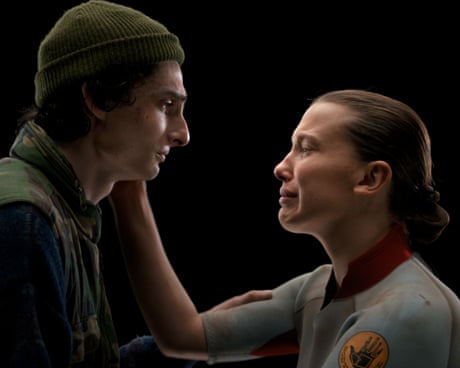
© Photograph: Courtesy Of Netflix/COURTESY OF NETFLIX © 2025
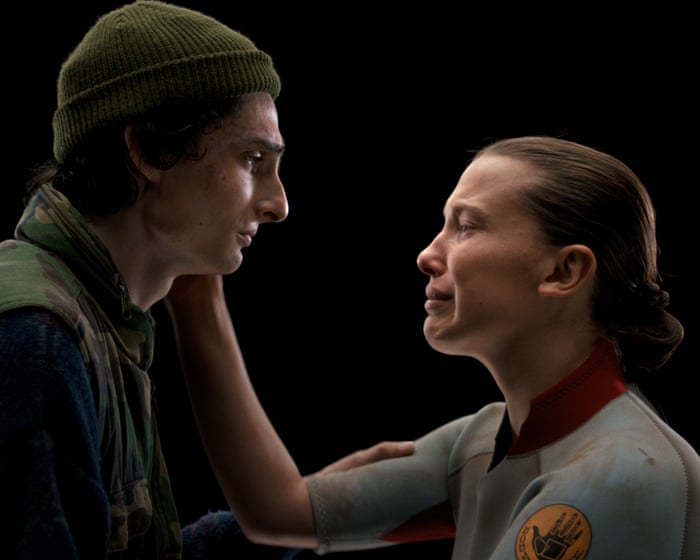
© Photograph: Courtesy Of Netflix/COURTESY OF NETFLIX © 2025
