Alors que l'IA et la réalité virtuelle réinventent la façon de faire des films, la technologie est devenue un levier majeur de réinvention pour le cinéma. À quelles évolutions peut-on s'attendre ?
Alors que l'IA et la réalité virtuelle réinventent la façon de faire des films, la technologie est devenue un levier majeur de réinvention pour le cinéma. À quelles évolutions peut-on s'attendre ?
The Booker-shortlisted novelist on the seismic effect of Sigrid Nunez, and wanting to write like Virginia Woolf
My earliest reading memory
Asking my mom if she could stop reading my bedtime book to me and just let me read it on my own, since I felt she was going too slowly. The book was either Charlie and the Chocolate Factory or its sequel, Charlie and the Great Glass Elevator, both by Roald Dahl.
My favourite book growing up
I loved Stuart Little, and all his small, clever things – his tiny canoe, his tiny sailboat. He had such a relaxed demeanor and was so dapper! I also loved Mary Norton’s The Borrowers series – tiny people living under the floorboards and improvising household goods out of “borrowed” safety pins and match boxes and so on. Clearly I had a thing for miniatures.
This tender satire of a dysfunctional American family’s search for moral guidance is precisely what our times need
Making the comic novel succeed is a rich, tricky project in our age of desperate, sometimes weirdly eager apocalypticism. Madeline Cash has spotted that a combination of tenderness and satire may be precisely what our times require. Lost Lambs, her debut novel about the Flynn family, is a witty, quickfire book set in a small American town, punch-drunk on clever, skewering lists and infested typographically by the gnats that plague the local church the family attends (“explagnation”, “extermignation”).
The Flynns are in a mess. It was easy for Catherine and Bud to be passionate when he was a young rock star and she was an aspiring artist. But since then they’ve acquired three daughters and a lot of Tupperware. Catherine succumbs to the advances of Jim, an amateur artist who gives her “the youthful comfort of being understood”. He’s rekindled her artistic ambitions, prompting her to decorate the Flynn house with nude self-portraits and proclaim an open marriage. She doesn’t yet know that Jim has a collection of pottery vaginas in his basement (“each of these pussies has touched my life”).
A father and son move to the Patagonian woods – but intensity wanes when a search for home becomes an obsessive quest for revenge
When the protagonist of Daniel Wiles’s debut novel Mercia’s Take, set in a mining community during the industrial revolution, left a bag of gold downstairs unprotected and then went to bed, I actually closed the book, in an attempt to stop the unfolding disaster. After finding this seam of gold, miner Michael dreams that his son will be able to go to school, rather than join the other children who work in the mine, like “blind, bald rodents unearthing themselves in search of scraps of candlelight”. In the novel, which won the 2023 Betty Trask prize, everything closes in on Michael: lungs clog, tunnels collapse, horse-drawn narrowboats are attacked by robbers in the sooty dusk. It’s a vivid reminder of the cost, in bodily suffering, of resource extraction.
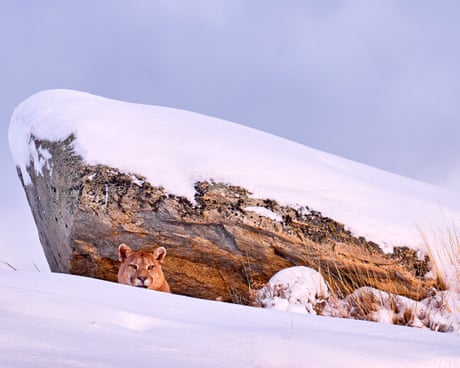
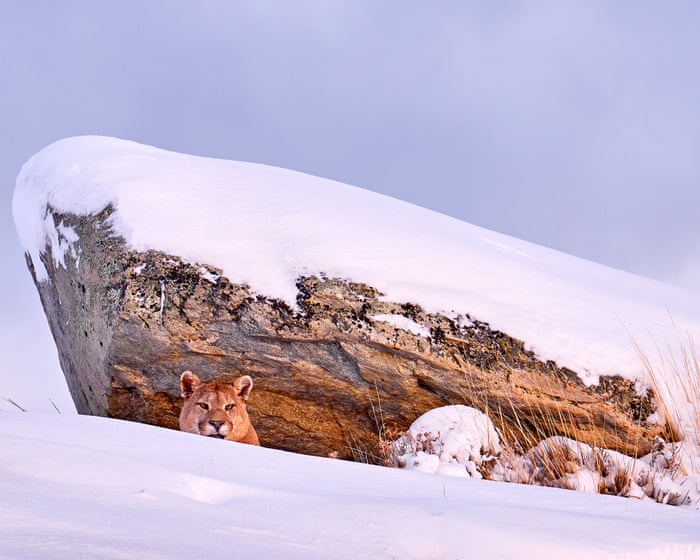
The Puma, Wiles’s second novel, is also a serious and intense historical novel about a father with limited resources who attempts to break a cycle of violence. In the early 1950s Bernardo, a more morally ambiguous figure than Michael, has brought his young son James across the Atlantic from England to the house in the Patagonian woods where he himself grew up. James chatters blithely about becoming a footballer, but Bernardo is distracted. He thinks he sees “shadows of his family walking in and out”, reminding him of a childhood in which “his eyes were wide and hurt by the twilight and he was barefooted and emptyhearted”.
 Connexion