Exclusive: Artist reminisces about his life in film using interviews recorded in last four years of his life
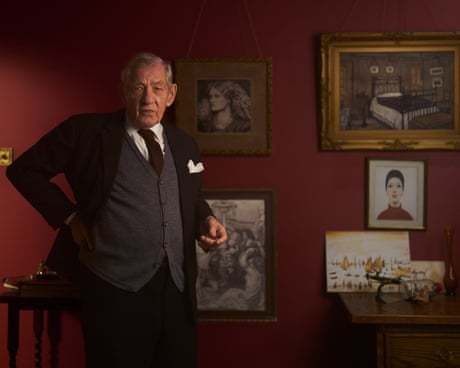
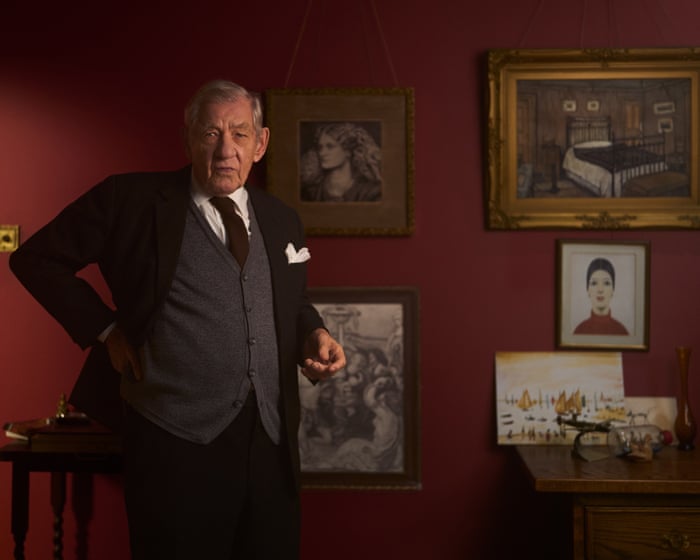
Fifteen years ago, Sir Ian McKellen was among the leading arts figures who criticised the Tate for not showing its collection of paintings by LS Lowry in its London galleries and questioned whether the “matchstick men painter” had been sidelined as too northern and provincial.
Now, 50 years after Lowry’s death, McKellen is to star in a BBC documentary that will reveal a trove of previously unheard audio tapes recorded with Lowry in the 1970s during his final four years of life.
He has broken his ankles, endured 365 days in a cell and faced down the 20th century’s worst winter. Yet he says he is not a masochist. We meet the man Marina Abramovich calls ‘the master’
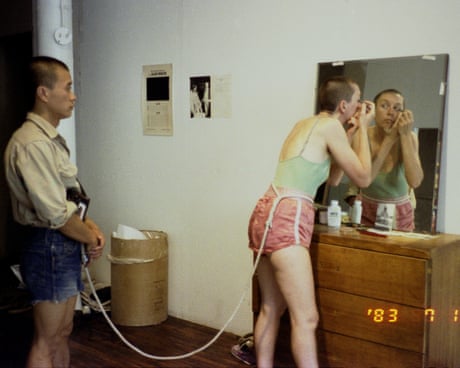
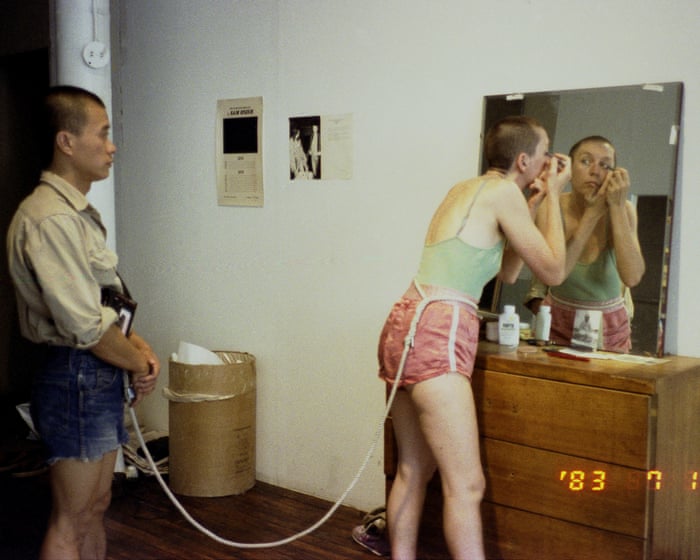
For one year, beginning on 30 September 1978, Tehching Hsieh lived in an 11ft 6in x 9ft wooden cage. He was not permitted to speak, read or consume any media, but every day a friend visited with food and to remove his waste.
The vital context here is that this incarceration was voluntary: Hsieh is a Taiwanese-American artist whose chosen practice is performance art, undertaking durational “actions” for long periods. Marina Abramović has called him the “master” of the form. In 1980, seven months after the end of Cage Piece, Hsieh began another year-long work, Time Clock Piece, which required him to punch a factory-style clock-in machine in his studio, every hour of each day for 365 days.
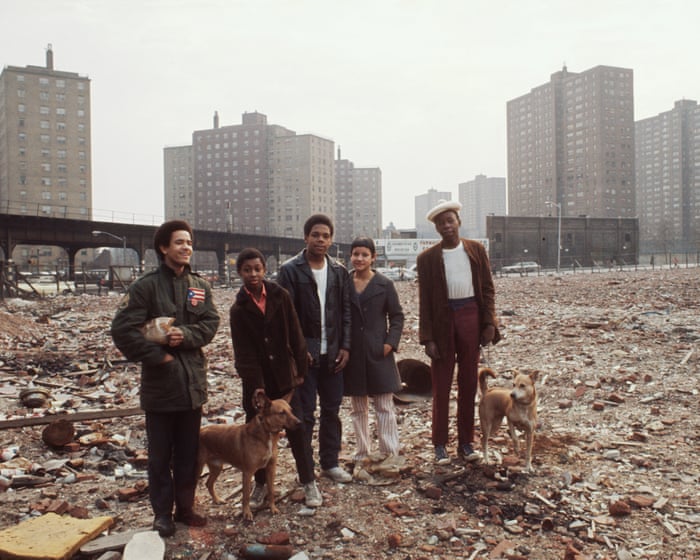
‘Huge parts of the city were being destroyed. This was part of my attempt to preserve the whole damn thing. The area became a juvenile prison’
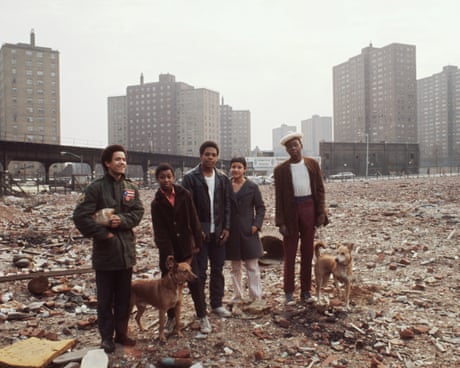
I landed in America in 1965 from Chile. I literally arrived on a banana boat. I went to the University of Notre Dame in the midwest and then to Columbia in New York. I had a teacher – also a photographer – who taught foreign students to write and speak better English. I would try to write poetry, which he thought was terrible. I’d never taken a picture before but he encouraged me to try photography and offered to lend me the money for a Pentax Spotmatic he’d seen for sale downtown. After that, I would just walk around New York with it and take photos. It quickly became clear to me how divided the city was. Half was white and the other half was Black and Latino. There was tremendous segregation.
Columbia was very prosperous. The students were well off and many were the sons of extremely rich people. I felt out of place. Also, there’s just a huge sense of loss when you leave your country and you don’t know anybody and are on your own. It made me want to look at what else was going on: to see the other side and the underside of the city. I found it easily because, in the late 60s and early 70s, deindustrialisation was going on. Big companies and car plants were shutting down and there were huge job losses and store closures. That contrast resonated with me. My family had lost a lot of money. The first part of my life was about seeing things disappear and having to make do with less and less. I was interested to see that in the US.
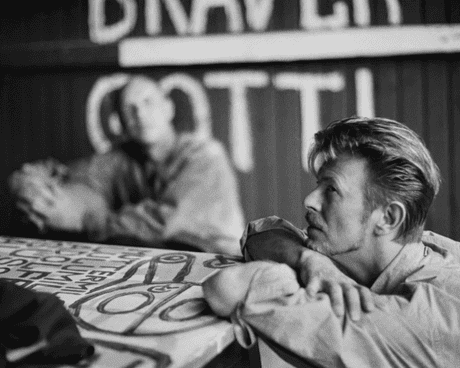
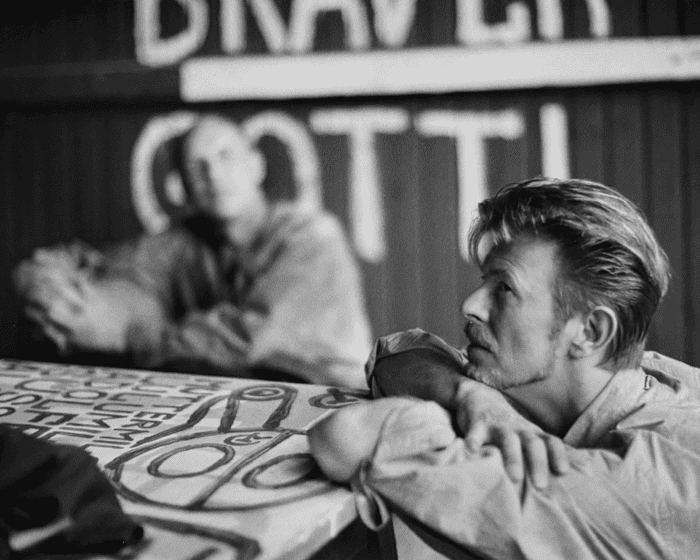
In 1994 the singer and Brian Eno spent a day with ‘outsider’ artists. Intimate photographs, showing in Australia for the first time, reveal the effect it had
From the Thin White Duke to Ziggy Stardust, the Berlin recluse to the late-career elegist, David Bowie’s oeuvre is defined by reinvention. As an artist he was relentlessly attuned to the conditions that might provoke the next creative rupture. One defining moment, however, has largely slipped from the popular imagination: a day spent inside a psychiatric hospital on the outskirts of Vienna – one that would prove unexpectedly formative.
In September 1994, Bowie and Brian Eno – who had reunited to develop new music – accepted an invitation from the Austrian artist André Heller to visit the Maria Gugging psychiatric clinic. The site’s Haus der Künstler, established in 1981 as a communal home and studio, is known internationally as a centre for Art Brut – or “Outsider Art” – produced by residents, many living with schizophrenia and other psychiatric disorders.
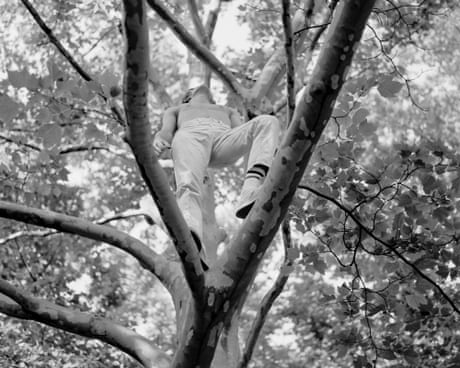
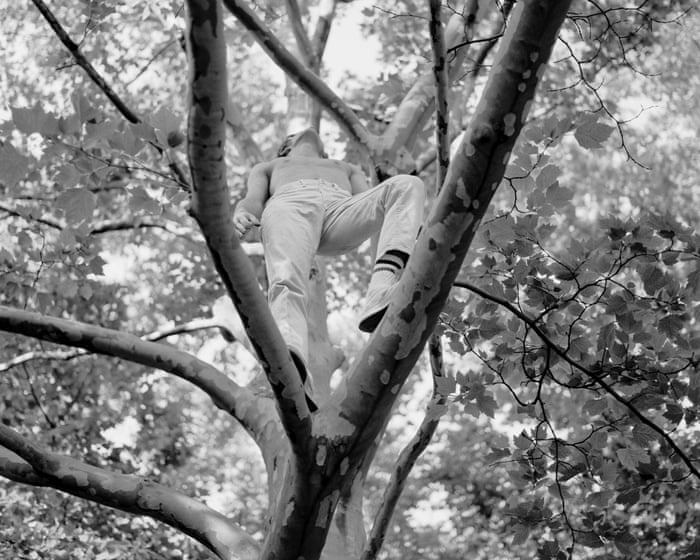
In 1969, Arthur Tress started making images at an overgrown corner of Central Park known as the Ramble – the beginning of an archive of a transitional period in queer culture
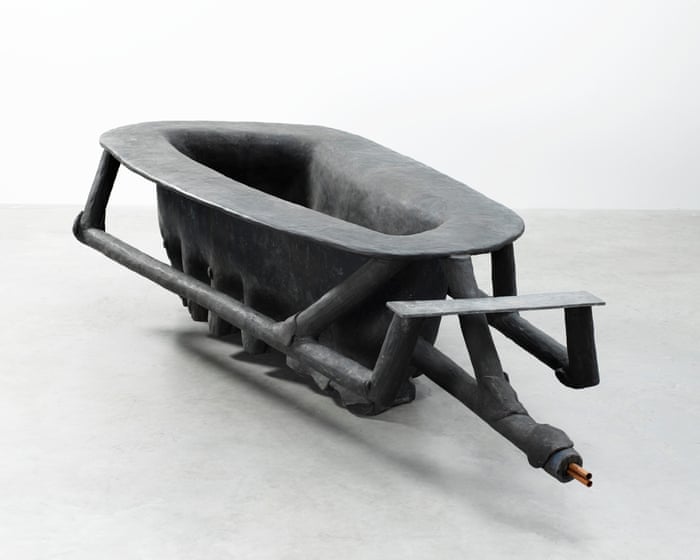
Thaddaeus Ropac Gallery, London There’s no escape from the torments of the past in this show, which celebrates the German artist at his most Wagnerian, enchanting and sickening you simultaneously
Born in 1921, Joseph Beuys was the “perfect” age to fight for Hitler and he did, with the wounds to prove it. The Andy Warhol portraits that complement this exhibition, without actually being part of it, brutally catch his gaunt, ravaged face in the glare of a photo flash under the hat he wore to hide burns sustained in a plane crash while serving in the Luftwaffe. The most haunting portrait turns Beuys into a spectral negative image, all darkness and shadow, his eyes wounded, guilty, lost. This was in the 1970s when Beuys was a charismatic one-man artistic revolution, inspiring young Germans to plant trees, lecturing about flows of ecological and human energy – and, in breathtaking performances, speaking to a dead hare or spending a week locked in a cage with a coyote.
All that remains today of those actions, protests and performances are posters, preserved scrawls on blackboards and mesmerising videos. Yet the moment Beuys disappeared – he died in 1986 – his solid, material sculptures took over. He believed passionately in flow and flux, promoting an animist vision of humanity and the cosmos. When he stopped talking and acting, entropy gripped his art, making it a static, slumped set of dead objects. And all the greater for it.
 Connexion