À l'occasion du Black Friday, notre partenaire Surfshark propose des promotions conséquentes sur ses produits dès aujourd’hui et pendant les prochaines semaines.
Surfshark est un VPN (réseau privé virtuel) qui vous permet de naviguer en toute sécurité et anonymat sur Internet. Grâce à un chiffrement avancé et une interface simple à utiliser, même les débutants peuvent protéger facilement leurs données personnelles et leur vie privée en ligne.
Vous pouvez protéger tous vos appareils : un seul abonnement peut être activé sur un nombre illimité d’appareils Mac, iPhone, iPad, Apple TV et plus encore sans aucune limitation de bande passante. Aucun autre service ne facilite autant la protection complète d’un foyer.
N’oublions pas ses outils de confidentialité intégrés, comme :
CleanWeb : bloque pubs et trackers
MultiHop (double VPN)
Kill Switch
Protection complète possible avec Surfshark One+ (antivirus, protection d’identité et surveillance de fuite de données)
Surfshark est donc maintenant en offre promotionnelle, vous permettant d'économiser 88 % sur un forfait de 2 ans. Un seul abonnement pouvant être utilisé sur un nombre illimité d'appareils sans contrôle de débit - Mac, iPhone, et Apple TV inclus.
Voici en détails l’offre VPN Black Friday 2025 Surfshark :
Surfshark VPN : abonnement de 2 ans pour 1,99€/mois + 3 mois supplémentaires gratuits
Surfshark One : abonnement de 2 ans pour 2,19€/mois + 3 mois gratuits (inclut VPN, antivirus et fonctionnalités avancées de protection)
Surfshark One+ : abonnement de 2 ans pour 4,19€/mois + 3 mois gratuits
C’est l’un des tarifs les plus bas jamais proposés pour un VPN dit "premium".
Les deux Mac les plus attendus pour 2026 sont les MacBook Air M5 et le MacBook A18.
MacBook Air M5
La génération M5 amène de bien meilleures performances face au M4. Les MacBook Air sont le cœur de marché des Mac. Le MacBook Air M5 est donc très attendu.
Je pense que c'est une erreur, le MacBook Air M4 est un excellent produit, aucun besoin d'attendre, et en revanche le MacBook Air M5 avec sa puissance de traitement théorique pourrait ne pas répondre aux attentes, ni même égaler le M4 sur des charges de travail lourdes sur la durée!
Le M5 a un TDP proche de 28W, quand 22W sur le M4. Si sur le MacBook Pro 14" ventilé activement ça ne pose pas problème, rien n'est moins sûr sur un MacBook Air refroidi passivement: comme avec le M3 on pourrait être très très déçu.
MacBook A18 12" ou 13"
Ce que moi j'attend le plus: un Mac simplifié de différentes manières, avec un SoC équivalent au M1, lequel rempli encore aujourd'hui parfaitement sa fonction, et plus abordable.
Les matériaux, la présentation, l'écran, les microphones et haut-parleurs, les entrées-sorties, et évidemment comparé au MacBook Air M4 (ou futur M5) : il y aura des compromis différents !
Mais ça devrait rester un Mac et dans les usages simples en 16Go/512Go donner toute satisfaction en usage informatique, tout comme un MacBook Air 13" M1 16Go/512Go le fait. Probablement un écran moins bon, enfin ça serait appelé un excellent écran sur un PC pas cher, microphones et haut parleurs encore moins bons (plus mauvais), et la présentation peut-être cheap.
Puis les entrées-sorties, on se souvient du MacBook 12" et son port (son seul port) USB Type C avec son second port mini-Jack 3.5mm pour casque. Adaptateur Apple USB Type C -> HDMI + USB + alimentation obligatoire! Je ne doute pas que Apple remette le couvert, et peut-être même se débarrasse du port pour casque au passage, au nom de la courageuse modernité... Apple a un superbe courage !
Mais en restant un Mac, en étant très abordable et pas mal performant quand-même, qui me suffirait comme machine secondaire. Avec des adaptateurs. Pas un, plusieurs. À payer en sus. Le prix d'entrée moins cher, les adaptateurs en sus, le chargeur en sus, et un seul port pas si fiable que ça sur la durée...
Physics Around the Clock: Adventures in the Science of Everyday Living By Michael Banks
Why do Cheerios tend to stick together while floating in a bowl of milk? Why does a runner’s ponytail swing side to side? These might not be the most pressing questions in physics, but getting to the answers is both fun and provides insights into important scientific concepts. These are just two examples of everyday physics that Physics World news editor Michael Banks explores in his book Physics Around the Clock, which begins with the physics (and chemistry) of your morning coffee and ends with a formula for predicting the winner of those cookery competitions that are mainstays of evening television. Hamish Johnston
Quantum 2.0: the Past, Present and Future of Quantum Physics By Paul Davies
You might wonder why the world needs yet another book about quantum mechanics, but for physicists there’s no better guide than Paul Davies. Based for the last two decades at Arizona State University in the US, in Quantum 2.0 Davies tackles the basics of quantum physics – along with its mysteries, applications and philosophical implications – with great clarity and insight. The book ends with truly strange topics such as quantum Cheshire cats and delayed-choice quantum erasers – see if you prefer his descriptions to those we’ve attempted in Physics World this year. Matin Durrani
Can You Get Music on the Moon? the Amazing Science of Sound and Space By Sheila Kanani, illustrated by Liz Kay
Why do dogs bark but wolves howl? How do stars “sing”? Why does thunder rumble? This delightful, fact-filled children’s book answers these questions and many more, taking readers on an adventure through sound and space. Written by planetary scientist Sheila Kanani and illustrated by Liz Kay, Can you get Music on the Moon? reveals not only how sound is produced but why it can make us feel certain things. Each of the 100 or so pages brims with charming illustrations that illuminate the many ways that sound is all around us. Michael Banks
2025 Puffin Books
A Short History of Nearly Everything 2.0 By Bill Bryson
Alongside books such as Stephen Hawking’s A Brief History of Time and Carl Sagan’s Cosmos, British-American author Bill Bryson’s A Short History of Nearly Everything is one of the bestselling popular-science books of the last 50 years. First published in 2003, the book became a fan favourite of readers across the world and across disciplines as Bryson wove together a clear and humorous narrative of our universe. Now, 22 years later, he has released an updated and revised volume – A Short History of Nearly Everything 2.0 – that covers major updates in science from the past two decades. This includes the discovery of the Higgs boson and the latest on dark-matter research. The new edition is still imbued with all the wit and wisdom of the original, making it the perfect Christmas present for scientists and anyone else curious about the world around us. Tushna Commissariat
In this episode of Physics World Stories, theoretical physicist, cosmologist and author Paul Davies discusses his latest book, Quantum 2.0: the Past, Present and Future of Quantum Physics. A Regents Professor at Arizona State University, Davies reflects on how the first quantum revolution transformed our understanding of nature – and what the next one might bring.
He explores how emerging quantum technologies are beginning to merge with artificial intelligence, raising new ethical and philosophical questions. Could quantum AI help tackle climate change or tackle issues like hunger? And how far should we go in outsourcing planetary management to machines that may well prioritize their own survival?
Davies also turns his gaze to the arts, imagining a future where quantum ideas inspire music, theatre and performance. From jazz improvized by quantum algorithms to plays whose endings depend on quantum outcomes, creativity itself could enter a new superposition.
Hosted by Andrew Glester, this episode blends cutting-edge science and imagination in trademark Paul Davies style.
Photodetectors convert light into electrical signals and are essential in technologies ranging from consumer electronics and communications to healthcare. They also play a vital role in scientific research. Researchers are continually working to improve their sensitivity, response speed, spectral range, and design efficiency.
Since the discovery of graphene’s remarkable electrical properties, there has been growing interest in using graphene and other two-dimensional (2D) materials to advance photodetection technologies. When light interacts with these materials, it excites electrons that must travel to a nearby contact electrode to generate an electrical signal. The ease with which this occurs depends on the work functions of the materials involved, specifically, the difference between them, known as the Schottky barrier height. Selecting an optimal combination of 2D material and electrode can minimize this barrier, enhancing the photodetector’s sensitivity and speed. Unfortunately, traditional electrode materials have fixed work functions which are limiting 2D photodetector technology.
PEDOT:PSS is a widely used electrode material in photodetectors due to its low cost, flexibility, and transparency. In this study, the researchers have developed PEDOT:PSS electrodes with tunable work functions ranging from 5.1 to 3.2 eV, making them compatible with a variety of 2D materials and ideal for optimizing device performance in metal-semiconductor-metal architectures. In addition, their thorough investigation demonstrates that the produced photodetectors performed excellently, with a significant forward current flow (rectification ratio ~10⁵), a strong conversion of light to electrical output (responsivity up to 1.8 A/W), and an exceptionally high Ilight/Idark ratio of 10⁸. Furthermore, the detectors were highly sensitive with low noise, had very fast response times (as fast as 3.2 μs), and thanks to the transparency of PEDOT:PSS, showed extended sensitivity into the near-infrared region.
This study demonstrates a tunable, transparent polymer electrode that enhances the performance and versatility of 2D photodetectors, offering a promising path toward flexible, self-powered, and wearable optoelectronic systems, and paving the way for next-generation intelligent interactive technologies.
Quantum Conference Key Agreement (QCKA) is a cryptographic method that allows multiple parties to establish a shared secret key using quantum technology. This key can then be used for secure communication among the parties.
Unlike traditional methods that rely on classical cryptographic techniques, QCKA leverages the principles of quantum mechanics, particularly multipartite entanglement, to ensure security.
A key aspect of QCKA is creating and distributing entangled quantum states among the parties. These entangled states have unique properties that make it impossible for an eavesdropper to intercept the key without being detected.
Researchers measure the efficiency and performance of the key agreement protocol using a metric known as the key rate.
One problem with state-of-the-art QCKA schemes is that this key rate decreases exponentially with the number of users.
Previous solutions to this problem, based on single-photon interference, have come at the cost of requiring global phase locking. This makes them impractical to put in place experimentally.
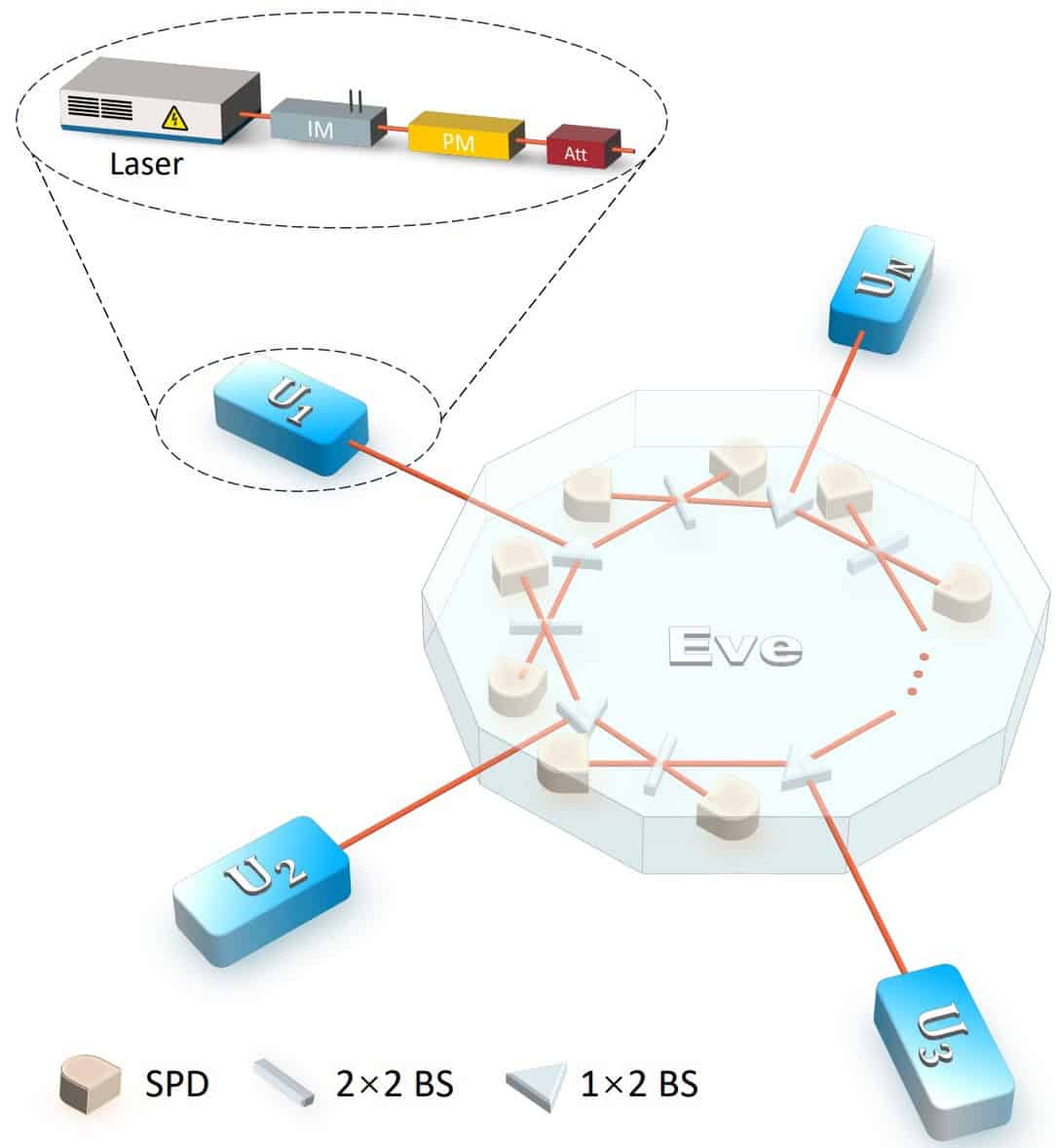
However, the authors of this new study have been able to circumvent this requirement, by adopting an asynchronous pairing strategy. Put simply, this means that measurements taken by different parties in different places do not need to happen at exactly at the same time.
Their solution effectively removes the need for global phase locking while still maintaining the favourable scaling of the key rate as in other protocols based on single-photon interference.
The new scheme represents an important step towards realising QCKA at long distances by allowing for much more practical experimental configurations.
Schematic representation of quantum group network via circular asynchronous interference (Courtesy: Hua-Lei Yin)
L'Agence américaine de protection de l’environnement a publié un document dans lequel elle annonce avoir réalisé un contrôle de l'usine de semi-conducteurs d'Apple située à Santa Clara.
Elle y a relevé ces manquements:
Caractérisation incorrecte de déchets dangereux.
manquement à des restrictions d'élimination de déchets.
Détenir un permis pour stocker des déchets dangereux pendant plus de 90 jours.
Contrôler les émissions atmosphériques d'un réservoir de déchets de solvants.
Étiquetez et datez correctement les conteneurs de déchets dangereux.
Respectez les normes de gestion des conteneurs de déchets dangereux.
Effectuer et documenter les inspections quotidiennes des réservoirs de déchets dangereux.
Pour cela Apple a écopé d'une amende de 261283$.
L'inspection a eu lieu suite à la plainte d'un riverain accusant les émanations de l'usine de l'avoir rendu malade. Il faut dire qu'elle est en pleine zone urbaine.
De son côté Apple a déclaré que ces problèmes ne provoquent aucun danger pour l'environnement et qu'elle reste très attachée à sa protection.
Découvrez notre sélection de jouets pour ce Noël 2025 !
Aujourd’hui, Vonguru s’est penché pour vous afin de vous donner des idées sur les nouveaux jouets à mettre sous le sapin pour ce Noël 2025 ! Après tout, il y a des parents parmi nos lecteurs, alors il faut bien leur proposer quelques petites idées et nouveautés sympas !
Dans cette nouvelle sélection d’idées cadeaux pour Noël nous vous proposerons 15 nouveautés sorties cette année pour offrir à vos enfants ou à ceux de vos proches.
Découvrez notre sélection !
Kit Sven Disney Frozen
Le kit de soin Sven Disney Frozen, c’est le rêve des petits fans de La Reine des Neiges ! Dès 3 ans, les enfants peuvent prendre soin de leur renne préféré avec plein d’accessoires inspirés de l’univers magique de Frozen. Conçu en plastique sans BPA, ce jeu d’imitation à la fois sûr et éducatif développe l’imagination et promet des moments de jeu féeriques tout droit sortis d’Arendelle.
Le coffret Clementoni Stylos Stitch à personnaliser va faire fondre tous les petits fans de Disney ! Dès 6 ans, les enfants peuvent laisser libre cours à leur créativité en décorant leurs stylos grâce à plus de 25 accessoires fun et colorés. Une activité DIY ludique et relaxante, parfaite pour stimuler l’imagination et créer des stylos uniques à l’image de Stitch — une super idée cadeau pour les petits artistes
Le coffret Bluey – Quad de plage avec figurine de Bandit apporte un vrai air de vacances dans les séances de jeu ! Avec son quad robuste, sa planche de surf et la figurine de Bandit (7,6 cm), les enfants peuvent imaginer des aventures fun au bord de la mer. Un set pour les petits fans du dessin animé, parfait pour stimuler l’imagination et rejouer les scènes adorées de Bluey.
La Meccano – Voiture de course F1 2 en 1 plonge les enfants dans l’univers palpitant de la mécanique, de la construction et de la vitesse. Avec ses pièces métalliques et son système d’assemblage emblématique, ils peuvent construire deux modèles différents, pour deux fois plus de fun et de défis. Un kit parfait pour booster la logique, la patience et la créativité, tout en se glissant dans la peau d’un vrai ingénieur en herbe.
Le Photo Creator Mini Cam Rose, c’est le premier vrai appareil photo des petits créateurs ! Facile à prendre en main et pensé spécialement pour les enfants, il leur permet de capturer leurs propres photos et vidéos comme des grands. Un super moyen de développer leur créativité tout en s’amusant et en immortalisant leurs plus jolis souvenirs
La poupée BABY born Emma, c’est le bébé dont rêvent tous les petits parents en herbe. Avec ses 10 fonctions ultra réalistes — elle boit, pleure, fait pipi et ferme même les yeux — elle offre une expérience de jeu plus vraie que nature, et tout ça sans piles ! Livrée avec plein de petits accessoires trop mignons (biberon, pot, assiette, cuillère, couche, etc.) et sa grenouillère toute douce, elle est parfaite dès 3 ans pour stimuler les jeux d’imitation, la motricité fine et, surtout, la tendresse.
Hitster, c’est LE jeu d’ambiance qui va animer vos vacances de Noël ! Le principe est simple : tu écoutes un extrait musical et tu dois le replacer dans la bonne chronologie. Facile ? Pas vraiment, surtout quand les décennies s’enchaînent ! Avec plus de 100 ans de hits, de la chanson rétro aux tubes d’aujourd’hui, c’est un voyage musical plein de fous rires à faire en famille ou entre amis. Parfait pour les soirées où tu veux prouver que c’est bien toi le vrai mélomane du groupe.
Boule Miniverse – Harry Potter Make It Mini Potions
Le MGA’s Miniverse Make It Mini Potions – Harry Potter, c’est la rencontre parfaite entre magie et DIY ! Ce coffret permet de créer ses propres mini potions en résine, inspirées de l’univers d’Harry Potter, avec un réalisme bluffant. Un vrai plaisir de collectionneur et une activité créative captivante dès 8 ans, pour tous ceux qui rêvent d’avoir leur petit coin de Poudlard à la maison.
Le Ravensburger Play+ – Mes premières brochettes à empiler, c’est un jeu d’éveil coloré et ludique qui ravira les tout-petits dès 18 mois ! Grâce aux pièces faciles à attraper, les enfants s’amusent à empiler, enfiler et créer leurs propres brochettes, tout en développant leur motricité fine et leur coordination. Un jouet malin, 100 % adapté aux petites mains, pour apprendre en s’amusant dès le plus jeune âge.
Le puzzle recto-verso Kididoc Châteaux forts et Chevaliers de Nathan est une aventure médiévale pleine de découvertes ! Avec ses 35 pièces de qualité supérieure et un encastrement parfait, il est idéal pour les enfants dès 4 ans. En plus, il est recto-verso : deux illustrations à assembler pour deux fois plus de plaisir et d’apprentissage tout en développant la concentration et la logique.
Clementoni – Puzzle Carte du Monde Magnétique en Bois
Le puzzle magnétique du Monde de Clementoni transforme la découverte de la planète en un jeu interactif passionnant ! Dès 4 ans, les enfants placent les magnets pour reconnaître animaux, monuments et continents, tout en s’amusant à explorer le globe. Un jeu éducatif et ludique qui éveille la curiosité, enrichit les connaissances et donne envie de voyager.
Le jeu d’apprentissage Dessineo BD de Nathan transforme le dessin en véritable aventure créative ! Compact et pratique avec ses 27 x 27 x 6 cm, il permet aux enfants de créer leurs propres histoires en bande dessinée tout en s’amusant. Une activité ludique et éducative qui stimule la créativité, l’imagination et le sens de la narration dès le plus jeune âge.
Le kit scientifique L’Observatoire des Insectes de Clémentoni transforme chaque sortie en véritable exploration de la nature ! Conçu pour les enfants dès 7 ans, il inclut une loupe, une boîte d’observation et des fiches explicatives pour découvrir insectes et petites bêtes de près. Une activité ludique et éducative qui éveille la curiosité, stimule l’esprit scientifique et fait aimer la biologie dès le plus jeune âge.
Le kit Clementoni Star Wars R2-D2 Robot permet aux enfants dès 8 ans de construire leur propre droïde emblématique ! Avec plus de 50 pièces et une application de programmation, ils peuvent le faire bouger et interagir, alliant jeu et apprentissage. Un jouet éducatif et immersif, parfait pour stimuler la logique, la créativité et les compétences en codage, tout en plongeant dans l’univers Star Wars.
Les PLAYMOBIL Icon Cars offrent aux enfants la chance de plonger dans l’univers passionnant des voitures de collection . Chaque véhicule est détaillé et prêt à l’action, parfait pour des heures de jeu imaginatif seul ou entre amis. Un jouet élégant et ludique qui stimule la créativité, la motricité et la passion pour les voitures dès le plus jeune âge.
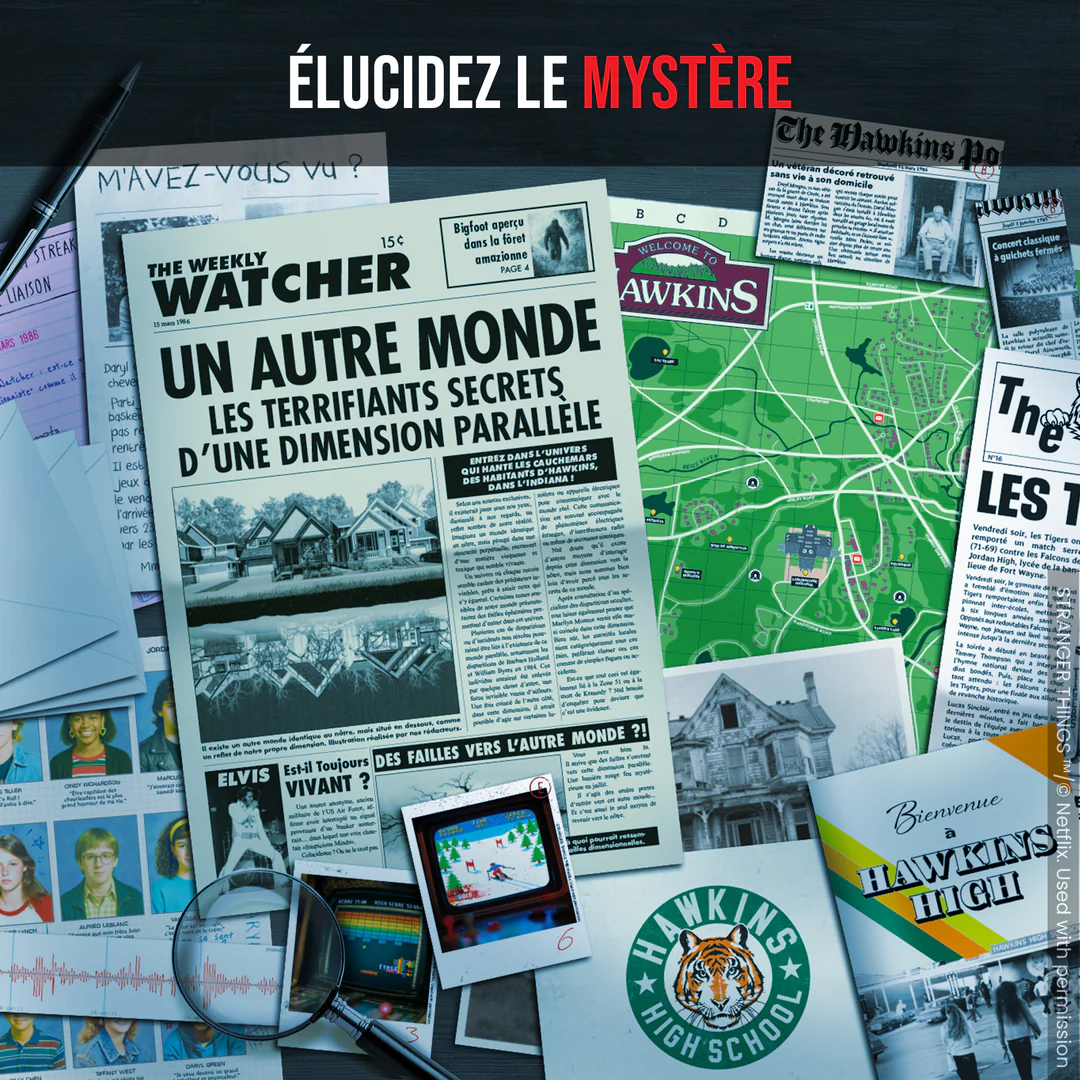
Non, on ne parle pas ici de la prochaine saison de la série Stranger Things qui arrive sur Netflix le 27 novembre prochain… mais bien d’une enquête de chez Dossiers Criminels… En effet, le désormais célèbre jeu d’enquêtes (on les a toutes faites!), s’est associé à Netflix pour proposer une nouvelle intrigue dans l’univers de la série avec une histoire inédite…
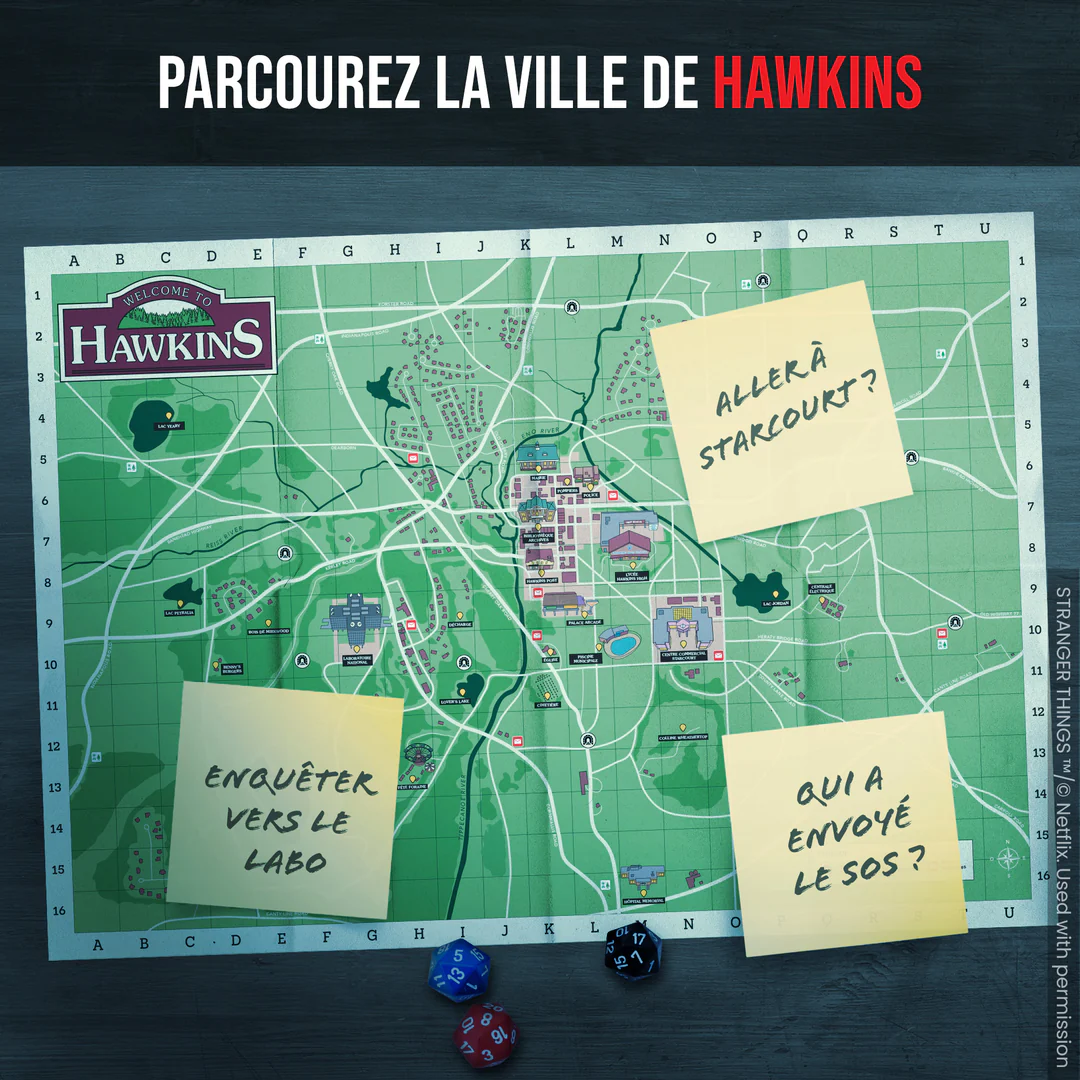
Quelque chose dérange l’équilibre fragile de la ville de Hawkins… A nous de parcourir la ville, mener l’enquête et élucider le mystère… Mais au début, on ne sait pas vraiment ce qui se passe… qui a disparu? Quand? Où?… Alors, quand on connait la série on se doute bien de ce qui se trame… mais l’intrigue se dévoile au fur et à mesure, enveloppe par enveloppe…
En effet, le jeu s’articule autour d’un site web qui fait office d’ordi des années 80 dans lequel on aura des infos et autre documents à lire ou bien des choses à écouter grâce à un walkman… et c’est particulièrement en progressant sur la carte de Hawkins fournie qu’on pourra avancer, en proposant un lieu sur la carte via le site web, on pourra débloquer la suite…
Bien sûr, comme dans toute bonne enquête Dossiers Criminels, les enveloppes contiennent tout un tas de documents ou même objets… On trouve des coupures de journaux, des photos, des brochures, etc…
Par rapport aux enquêtes qu’on connait dans la collection, il y a moins à lire ici et les documents sont plus faciles à appréhender car davantage visuels. Aussi, on pourra résoudre pas mal d’énigmes à base de signes ou autres visuels à bien analyser sous tous les angles.
L’enquête, d’une difficulté de 2 sur 5 est ainsi très abordable à tous types de joueuses et joueurs. La progression est rythmée et plutôt addictive avec une bonne immersion dans l’univers de Strangers Things par ses visuels et l’ambiance sonore de certains messages. Un effort particulier a été fait en ce qui concerne la réalisation des documents avec beaucoup d’allusions aux personnages de la série.
Il vous faudra environ 1h30 pour terminer cette enquête, idéalement à 3 joueurs ou plus (à partir de 14 ans). L’enquête est accessible et bien ficelée avec une réalisation de haute volée pour une immersion dans l’univers qui ravira les fans (il est même parfois question de jeu de rôles…). Si vous ne connaissez pas les Dossiers Criminels c’est un excellent moyen pour découvrir ces enquêtes à faire à la maison!
Marstek lance Venus E 3.0, la batterie qui récupère enfin tout votre surplus solaire
Marstek s’attaque à l’un des plus grands gâchis du photovoltaïque résidentiel : le surplus d’énergie perdu chaque jour faute de solution de stockage adaptée. Avec sa nouvelle batterie Venus E 3.0, la marque propose une réponse étonnamment simple : il suffit de la brancher sur une prise 230 V. Pas besoin de changer d’onduleur, ni de toucher à l’installation existante.
Une fois connectée, la Venus E 3.0 absorbe automatiquement l’excédent d’électricité produit la journée pour le restituer le soir. Elle s’appuie sur une compatibilité étendue avec la majorité des compteurs intelligents afin d’éviter toute injection réseau, assurant ainsi une autoconsommation à 100 % – un argument fort pour les foyers souhaitant optimiser leurs économies.
Mais la force du produit réside surtout dans son mode « AI Optimization » : une gestion intelligente qui planifie en temps réel la charge et la décharge en fonction des habitudes du foyer, du prix de l’électricité ou encore des prévisions météo. L’utilisateur n’a rien à faire : la batterie choisit les moments les plus rentables pour stocker ou restituer l’énergie. Les profils plus techniques pourront toutefois passer en mode manuel et définir eux-mêmes les plages et puissances de charge selon les tarifs horaires.
Positionnée à un prix compétitif pour une capacité de 5,12 kWh, la Venus E 3.0 mise également sur la durabilité. Elle s’appuie sur des cellules LFP (Lithium Fer Phosphate) qui supportent plus de 6 000 cycles, soit près de 15 ans d’utilisation. De quoi en faire un investissement fiable, à la fois économique et écologique.
Adaptée à tous les environnements – balcon, garage ou local technique –, la Venus E 3.0 s’inscrit pleinement dans l’ambition de Marstek : rendre le stockage d’énergie plus intelligent, plus sûr et plus accessible. Pour soutenir son expansion en France, la marque s’appuie désormais sur l’agence WEMOOVE, spécialisée dans les nouvelles technologies et le lifestyle.
Fondée en 2009, Marstek est aujourd’hui un acteur international majeur du stockage énergétique, avec une gamme allant des systèmes résidentiels aux batteries portables, en passant par les solutions pour balcons et les piles Li-ion AA/AAA. Présente en Chine, en France, aux États-Unis, au Japon et en Afrique, la marque poursuit un objectif clair : simplifier l’accès à l’énergie propre.
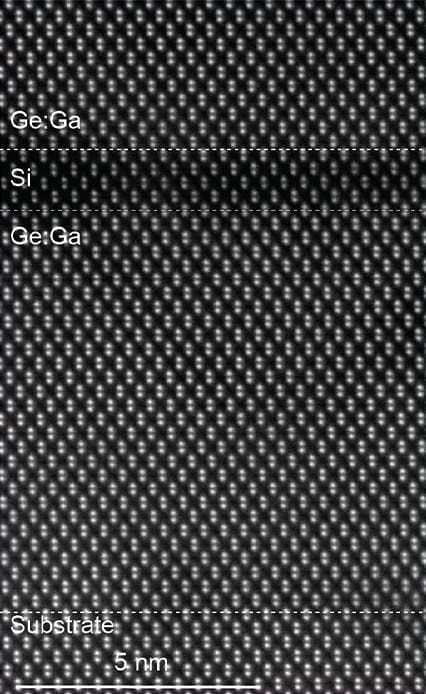
Coherent crystalline interfaces Atomic-resolution image of a superconducting germanium:gallium (Ge:Ga) trilayer with alternating Ge:Ga and silicon layers demonstrating precise control of atomic interfaces. (Courtesy: Salva Salmani-Rezaie)
The ability to induce superconductivity in materials that are inherently semiconducting has been a longstanding research goal. Improving the conductivity of semiconductor materials could help develop quantum technologies with a high speed and energy efficiency, including superconducting quantum bits (qubits) and cryogenic CMOS control circuitry. However, this task has proved challenging in traditional semiconductors – such as silicon or germanium – as it is difficult to maintain the optimal superconductive atomic structure.
In a new study, published in Nature Nanotechnology, researchers have used molecular beam epitaxy (MBE) to grow gallium-hyperdoped germanium films that retain their superconductivity. When asked about the motivation for this latest work, Peter Jacobson from the University of Queensland tells Physics World about his collaboration with Javad Shabani from New York University.
“I had been working on superconducting circuits when I met Javad and discovered the new materials their team was making,” he explains. “We are all trying to understand how to control materials and tune interfaces in ways that could improve quantum devices.”
Germanium: from semiconductor to superconductor
Germanium is a group IV element, so its properties bridge those of both metals and insulators. Superconductivity can be induced in germanium by manipulating its atomic structure to introduce more electrons into the atomic lattice. These extra electrons interact with the germanium lattice to create electron pairs that move without resistance, or in other words, they become superconducting.
Hyperdoping germanium (at concentrations well above the solid solubility limit) with gallium induces a superconducting state. However, this material is traditionally unstable due to the presence of structural defects, dopant clustering and poor thickness control. There have also been many questions raised as to whether these materials are intrinsically superconducting, or whether it is actually gallium clusters and unintended phases that are solely responsible for the superconductivity of gallium-doped germanium.
Considering these issues and looking for a potential new approach, Jacobson notes that X-ray absorption measurements at the Australian Synchrotron were “the first real sign” that Shabani’s team had grown something special. “The gallium signal was exceptionally clean, and early modelling showed that the data lined up almost perfectly with a purely substitutional picture,” he explains. “That was a genuine surprise. Once we confirmed and extended those results, it became clear that we could probe the mechanism of superconductivity in these films without the usual complications from disorder or spurious phases.”
Epitaxial growth improves superconductivity control
In a new approach, Jacobson, Shabani and colleagues used MBE to grow the crystals instead of relying on ion implantation techniques, allowing the germanium to by hyperdoped with gallium. Using MBE forces the gallium atoms to replace germanium atoms within the crystal lattice at levels much higher than previously seen. The process also provided better control over parasitic heating during film growth, allowing the researchers to achieve the structural precision required to understand and control the superconductivity of these germanium:gallium (Ge:Ga) materials, which were found to become superconducting at 3.5 K with a carrier concentration of 4.15 × 10²¹ holes/cm3. The critical gallium dopant threshold to achieve this was 17.9%.
Using synchrotron-based X-ray absorption, the team found that the gallium dopants were substitutionally incorporated into the germanium lattice and induced a tetragonal distortion to the unit cell. Density functional theory calculations showed that this causes a shift in the Fermi level into the valence band and flattens electronic bands. This suggests that the structural order of gallium in the germanium lattice creates a narrow band that facilitates superconductivity in germanium, and that this superconductivity arises intrinsically in the germanium, rather than being governed by defects and gallium clusters.
The researchers tested trilayer heterostructures – Ge:Ga/Si/Ge:Ga and Ge:Ga/Ge/Ge:Ga – as proof-of-principle designs for vertical Josephson junction device architectures. In the future, they hope to develop these into fully fledged Josephson junction devices.
Commenting on the team’s future plans for this research, Jacobson concludes: “I’m very keen to examine this material with low-temperature scanning tunnelling microscopy (STM) to directly measure the superconducting gap, because STM adds atomic-scale insights that complement our other measurements and will help clarify what sets hyperdoped germanium apart”.
It is book week here at Physics World and over the course of three days we are presenting conversations with the authors of three fascinating and fun books about physics. First up is my Physics World colleague Michael Banks, whose book Physics Around the Clock: Adventures in the Science of Everyday Living starts with your morning coffee and ends with a formula for making your evening television viewing more satisfying.
As well as the rich physics of coffee, we chat about strategies for finding the best parking spot and the efficient boarding of aeroplanes. If you have ever wondered why a runner’s ponytail swings from side-to-side when they reach a certain speed – we have the answer for you.
Other daily mysteries that we explore include how a hard steel razor blade can be dulled by cutting relatively soft hairs and why quasiparticles called “jamitons” are helping physicists understand the spontaneous appearance of traffic jams. And a warning for squeamish listeners, we do talk about the amazing virus-spreading capabilities of a flushing toilet.
This episode is supported by the APS Global Physics Summit, which takes place on 15–20 March, 2026, in Denver, Colorado, and online.
Début 2025, un gigantesque incendie a ravagé plus de la moitié de l’île Amsterdam. De retour sur place plusieurs mois après, des scientifiques tentent d’en estimer les conséquences sur ce havre de biodiversité à la croisée de l’océan Indien et de l’Antarctique.
“This is one of the big remaining frontiers in astronomy,” says Phil Bull, a cosmologist at the Jodrell Bank Centre for Astrophysics at the University of Manchester. “It’s quite a pivotal era of cosmic history that, it turns out, we don’t actually understand.”
Bull is referring to the vital but baffling period in the early universe – from 380,000 years to one billion years after the Big Bang – when its structure went from simple to complex. To lift the veil on this epoch, experiments around the world – from Australia to the Arctic – are racing to find a specific but elusive signal from the earliest hydrogen atoms. This signal could confirm or disprove scientists’ theories of how the universe evolved and the physics that governs it.
Hydrogen is the most abundant element in the universe. As neutral hydrogen atoms change states, they can emit or absorb photons. This spectral transition, which can be stimulated by radiation, produces an emission or absorption radio wave signal with a wavelength of 21 cm. To find out what happened during that early universe, astronomers are searching for these 21 cm photons that were emitted by primordial hydrogen atoms.
But despite more teams joining the hunt every year, no-one has yet had a confirmed detection of this radiation. So who will win the race to find this signal and how is the hunt being carried out?
A blank spot
Let’s first return to about 380,000 years after the Big Bang, when the universe had expanded and cooled to below 3000 K. At this stage, neutral atoms, including atomic hydrogen, could form. Thanks to the absence of free electrons, ordinary matter particles could decouple from light, allowing it to travel freely across the universe. This ancient radiation that permeates the sky is known as the cosmic microwave background (CMB).
But after that we don’t know much about what happened for the next few hundred million years. Meanwhile, the oldest known galaxy MoM-z14 – which existed about 280 million years after the Big Bang – was observed in April 2025 by the James Webb Space Telescope. So there is currently a gap of just under 280 million years in our observations of the early universe. “It’s one of the last blank spots,” says Anastasia Fialkov, an astrophysicist at the Institute of Astronomy of the University of Cambridge.
This “blank spot” is a bridge between the early, simple universe and today’s complex structured cosmos. During this early epoch, the universe went from being filled with a thick cloud of neutral hydrogen, to being diversely populated with stars, black holes and everything in between. It covers the end of the cosmic dark ages, the cosmic dawn, and the epoch of reionization – and is arguably one of the most exciting periods in our universe’s evolution.
During the cosmic dark ages, after the CMB flooded the universe, the only “ordinary” matter (made up of protons, neutrons and electrons) was neutral hydrogen (75% by mass) and neutral helium (25%), and there were no stellar structures to provide light. It is thought that gravity then magnified any slight fluctuations in density, causing some of this primordial gas to clump and eventually form the first stars and galaxies – a time called the cosmic dawn. Next came the epoch of reionization, when ultraviolet and X-ray emissions from those first celestial objects heated and ionized the hydrogen atoms, turning the neutral gas into a charged plasma of electrons and protons.
Stellar imprint
The 21 cm signal astronomers are searching for was produced when the spectral transition was excited by collisions in the hydrogen gas during the dark ages and then by the first photons from the first stars during the cosmic dawn. However, the intensity of the 21 cm signal can only be measured against the CMB, which acts as a steady background source of 21 cm photons.
When the hydrogen was colder than the background radiation, there were few collisions, and the atoms would have absorbed slightly more 21 cm photons from the CMB than they emitted themselves. The 21 cm signal would appear as a deficit, or absorption signal, against the CMB. But when the neutral gas was hotter than the CMB, the atoms would emit more photons than they absorbed, causing the 21 cm signal to be seen as a brighter emission against the CMB. These absorption and emission rates depend on the density and temperature of the gas, and the timing and intensity of radiation from the first cosmic sources. Essentially, the 21 cm signal became imprinted with how those early sources transformed the young universe.
One way scientists are trying to observe this imprint is to measure the average – or “global” – signal across the sky, looking at how it shifts from absorption to emission compared to the CMB. Normally, a 21 cm radio wave signal has a frequency of about 1420 MHz. But this ancient signal, according to theory, has been emitted and absorbed at different intensities throughout this cosmic “blank spot”, depending on the universe’s evolutionary processes at the time. The expanding universe has also stretched and distorted the signal as it travelled to Earth. Theories predict that it would now be in the 1 to 200 MHz frequency range – with lower frequencies corresponding to older eras – and would have a wavelength of metres rather than centimetres.
Importantly, the shape of the global 21 cm signal over time could confirm the lambda-cold dark matter (ΛCDM) model, which is the most widely accepted theory of the cosmos; or it could upend it. Many astronomers have dedicated their careers to finding this radiation, but it is challenging for a number of reasons.
Unfortunately, the signal is incredibly faint. Its brightness temperature, which is measured as the change in the CMB’s black body temperature (2.7 K), will only be in the region of 0.1 K.
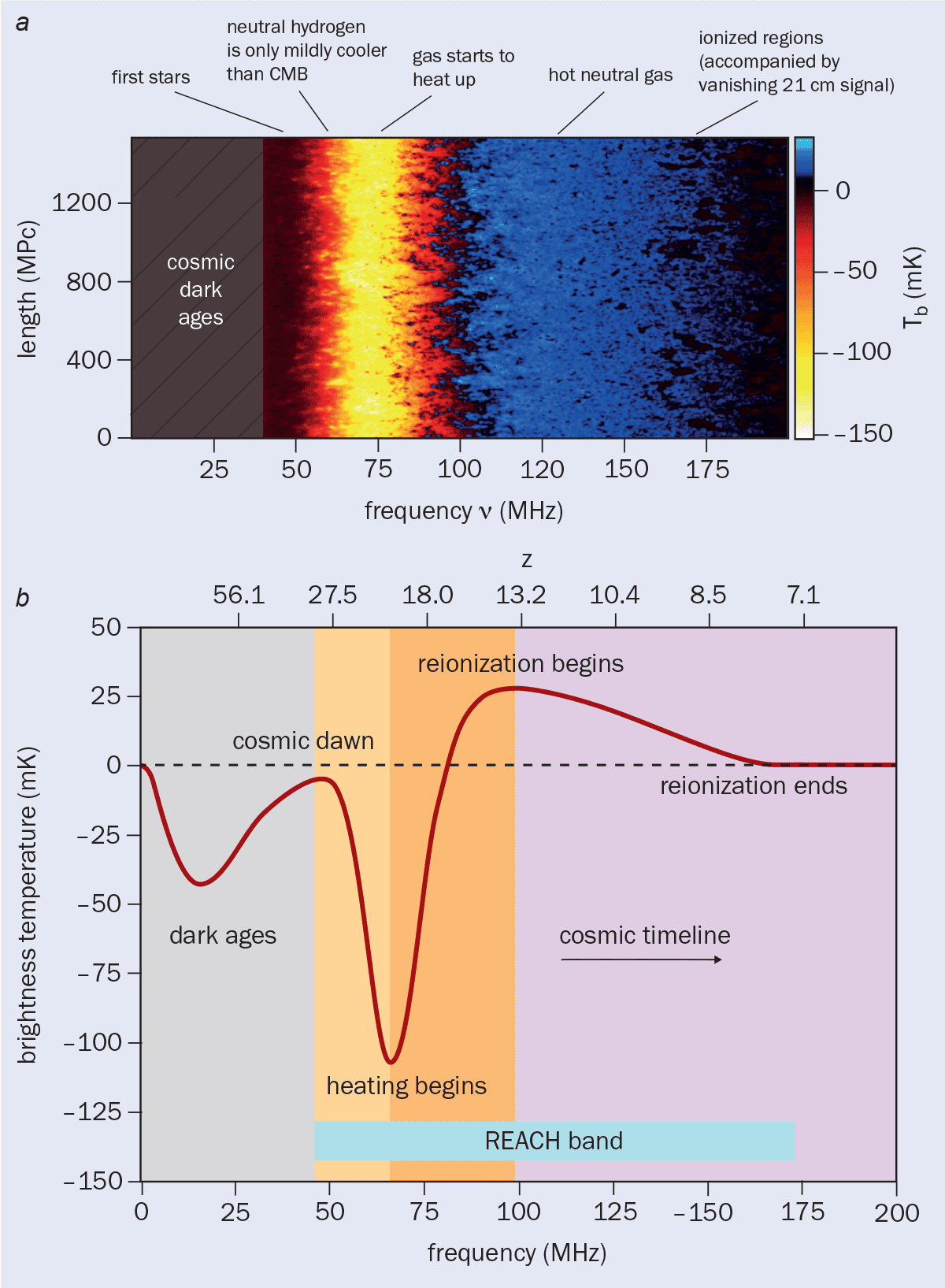
a A simulation of the sky-averaged (global) signal as a function of time (horizontal) and space (vertical). b A typical model of the global 21 cm line with the main cosmic events highlighted. Each experiment searching for the global 21 cm signal focuses on a particular frequency band. For example, the Radio Experiment for the Analysis of Cosmic Hydrogen (REACH) is looking at the 50–170 MHz range (blue).
There is also no single source of this emission, so, like the CMB, it permeates the universe. “If it was the only signal in the sky, we would have found it by now,” says Eloy de Lera Acedo, head of Cavendish Radio Astronomy and Cosmology at the University of Cambridge. But the universe is full of contamination, with the Milky Way being a major culprit. Scientists are searching for 0.1 K in an environment “that’s a million times brighter”, he explains.
And even before this signal reaches the radio-noisy Earth, it has to travel through the atmosphere, which further distorts and contaminates it. “It’s a very difficult measurement,” says Rigel Cappallo, a research scientist at the MIT Haystack Observatory. “It takes a really, really well calibrated instrument that you understand really well, plus really good modelling.”
The EDGES instrument is a dipole antenna, which resembles a ping-pong table with a gap in the middle (see photo at top of article for the 2024 set-up). It is mounted on a large metal groundsheet, which is about 30 × 30 m. Its ground-breaking observation was made at a remote site in western Australia, far from radio frequency interference.
But in the intervening seven years, no-one else has been able to replicate the EDGES results.
The spectrum dip that EDGES detected was very different from what theorists had expected. “There is a whole family of models that are predicted by the different cosmological scenarios,” explains Ravi Subrahmanyan, a research scientist at Australia’s national science agency CSIRO. “When we take measurements, we compare them with the models, so that we can rule those models in or out.”
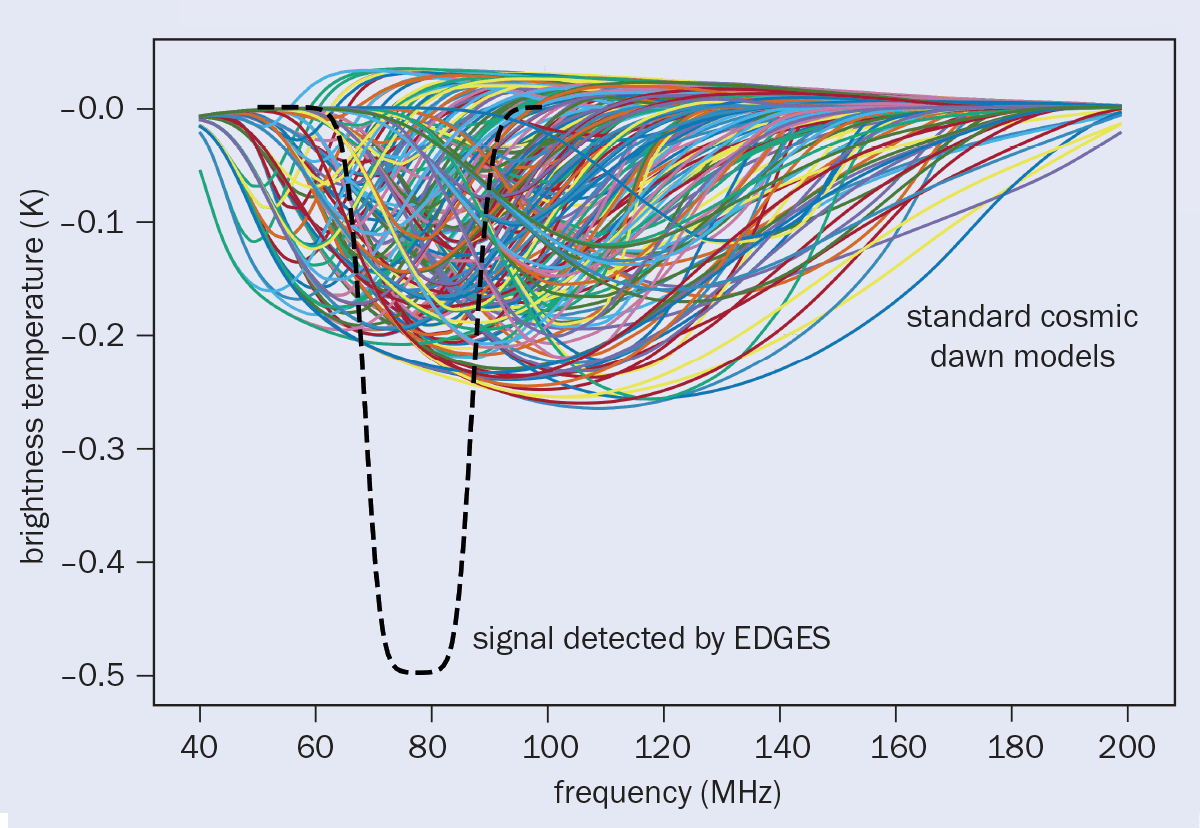
In general, the current models predict a very specific envelope of signal possibilities (see figure 1). First, they anticipate an absorption dip in brightness temperature of around 0.1 to 0.2 K, caused by the temperature difference between the cold hydrogen gas (in an expanding universe) and the warmer CMB. Then, a speedy rise and photon emission is predicted as the gas starts to warm when the first stars form, and the signal should spike dramatically when the first X-ray binary stars fire up and heat up the surrounding gas. The signal is then expected to fade as the epoch of reionization begins, because ionized particles cannot undergo the spectral transition. With models, scientists theorize when this happened, how many stars there were, and how the cosmos unfurled.
2 Weird signal
(Courtesy: SARAS Team)
The 21 cm signals predicted by current cosmology models (coloured lines) and the detection by the EDGES experiment (dashed black line).
“It’s just one line, but it packs in so many physical phenomena,” says Fialkov, referring to the shape of the 21 cm signal’s brightness temperature over time. The timing of the dip, its gradient and magnitude all represent different milestones in cosmic history, which affect how it evolved.
The EDGES team, however, reported a dip of more than double the predicted size, at about 78 MHz (see figure 2). While the frequency was consistent with predictions, the very wide and deep dip of the signal took the community by surprise.
“It would be a revolution in physics, because that signal will call for very, very exotic physics to explain it,” says de Lera Acedo. “Of course, the first thing we need to do is to make sure that that is actually the signal.”
A spanner in the works
The EDGES claim has galvanized the cosmology community. “It set a cat among the pigeons,” says Bull. “People realized that, actually, there’s some very exciting science to be done here.” Some groups are trying to replicate the EDGES observation, while others are trying new approaches to detect the signal that the models promise.
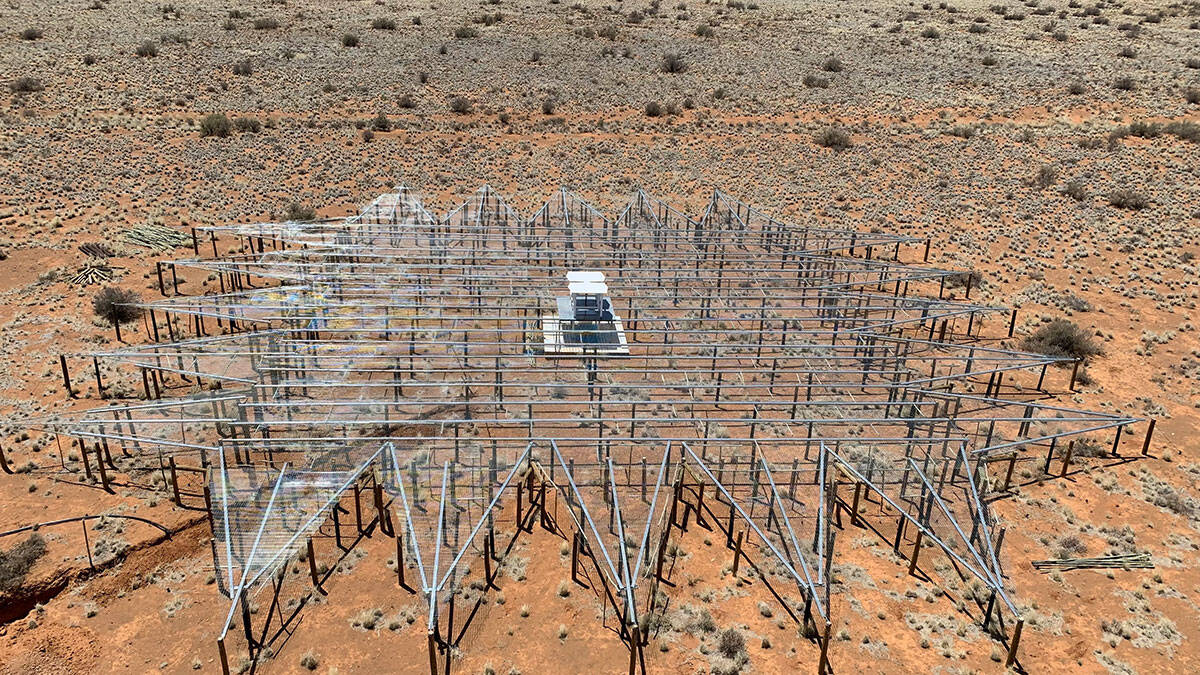
The Radio Experiment for the Analysis of Cosmic Hydrogen (REACH) – a collaboration between the University of Cambridge and Stellenbosch University in South Africa – focuses on the 50–170 MHz frequency range. Sitting on the dry and empty plains of South Africa’s Northern Cape, it is targeting the EDGES observation (Nature Astronomy 6 984).
The race to replicate REACH went online in the Karoo region of South Africa in December 2023. (Courtesy: Saurabh Pegwal, REACH collaboration)
In this radio-quiet environment, REACH has set up two antennas: one looks like EDGES’ dipole ping-pong table, while the other is a spiral cone. They sit on top of a giant metallic mesh – the ground plate – in the shape of a many-pointed star, which aims to minimize reflections from the ground.
Hunting for this signal “requires precision cosmology and engineering”, says de Lera Acedo, the principal investigator on REACH. Reflections from the ground or mesh, calibration errors, and signals from the soil, are the kryptonite of cosmic dawn measurements. “You need to reduce your systemic noise, do better analysis, better calibration, better cleaning [to remove other sources from observations],” he says.
Desert, water, snow
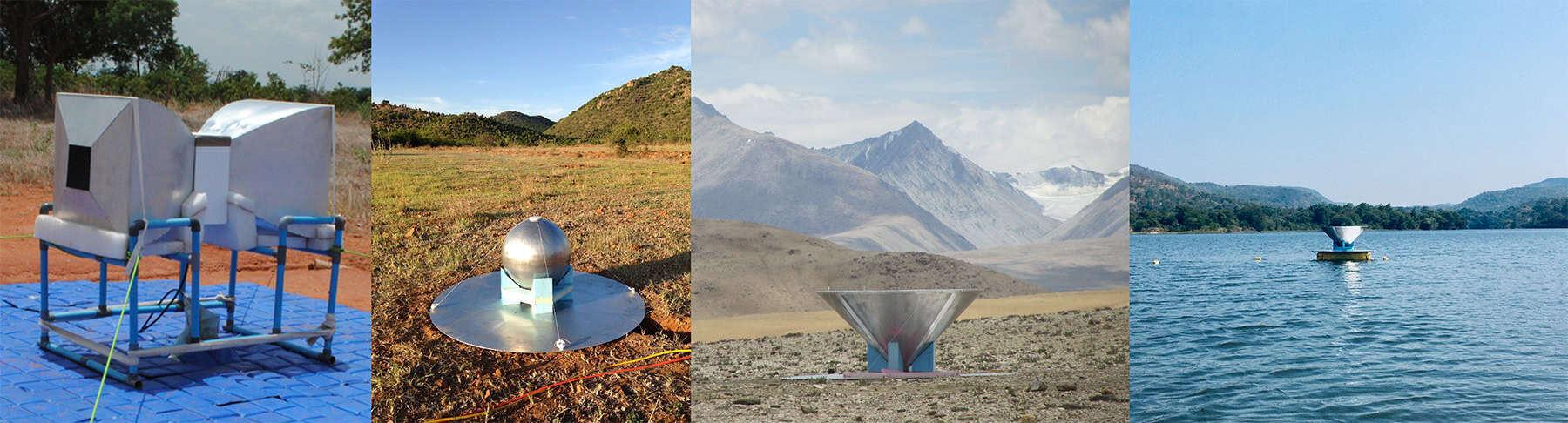
Another radio telescope, dubbed the Shaped Antenna measurement of the background Radio Spectrum (SARAS) – which was established in the late 2000s by the Raman Research Institute (RRI) in Bengaluru, India – has undergone a number of transformations to reduce noise and limit other sources of radiation. Over time, it has morphed from a dipole on the ground to a metallic cone floating on a raft. It is looking at 40 to 200 MHz (Exp. Astron.51 193).
After the EDGES claim, SARAS pivoted its attention to verifying the detection, explains Saurabh Singh, a research scientist at the RRI. “Initially, we were not able to get down to the required sensitivity to be able to say anything about their detection,” he explains. “That’s why we started floating our radiometer on water.” Buoying the experiment reduces ground contamination and creates a more predictable surface to include in calculations.
Floating telescope Evolution of the SARAS experiment and sites up to 2020. The third edition of the telescope, SARAS 3, was deployed on lakes to further reduce radio interference. (Courtesy: SARAS Team)
Using data from their floating radiometer, in 2022 Singh and colleagues disfavoured EDGES’ claim (Nature Astronomy 6 607), but for many groups the detection still remains a target for observations.
While SARAS has yet to detect a cosmic-dawn signal of its own, Singh says that non-detection is also an important element of finding the global 21 cm signal. “Non-detection gives us an opportunity to rule out a lot of these models, and that has helped us to reject a lot of properties of these stars and galaxies,” he says.
Raul Monsalve Jara – a cosmologist at the University of California, Berkeley – has been part of the EDGES collaboration since 2012, but decided to also explore other ways to detect the signal. “My view is that we need several experiments doing different things and taking different approaches,” he says.
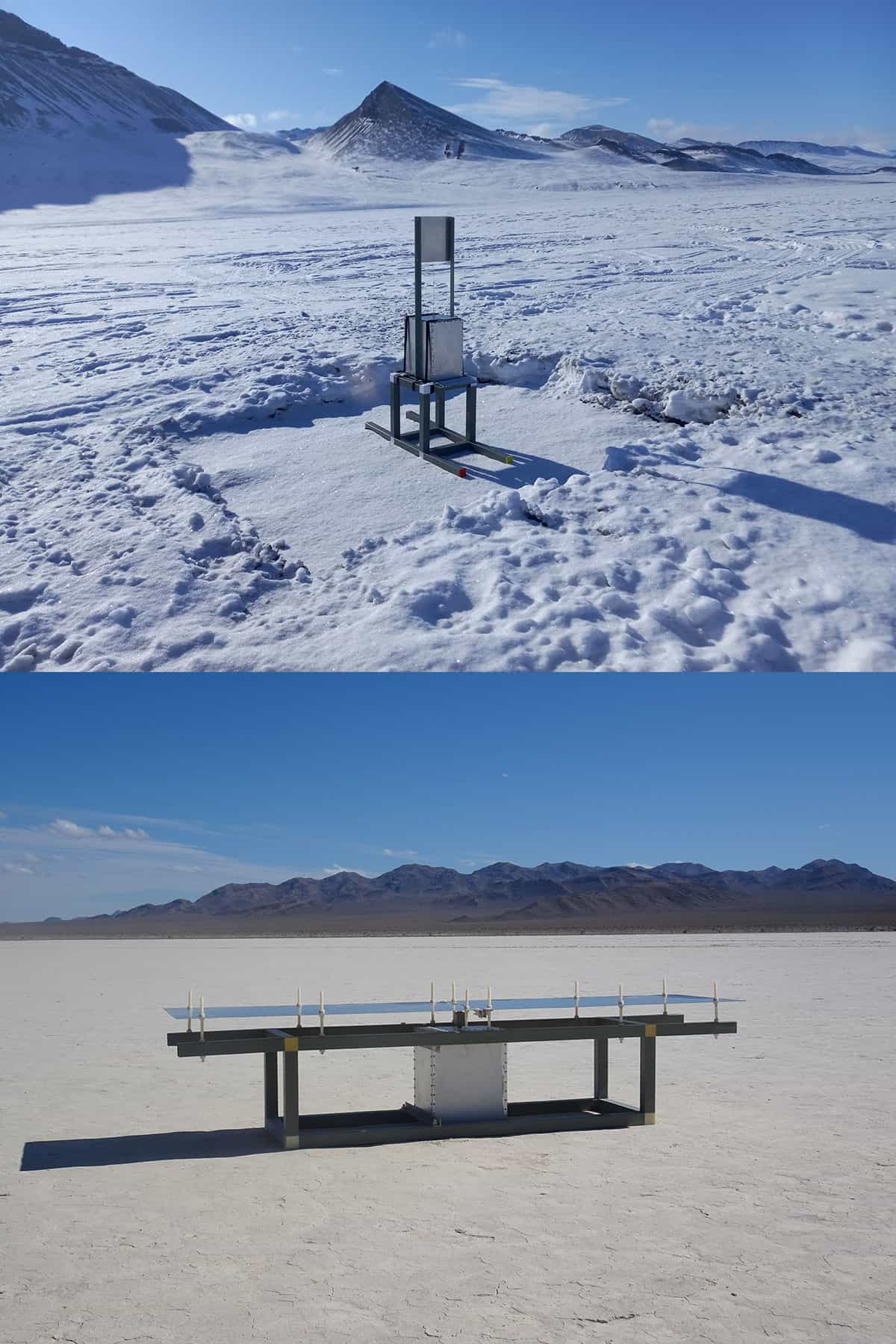
The Mapper of the IGM Spin Temperature (MIST) experiment, of which Monsalve is co-principal investigator, is a collaboration between Chilean, Canadian, Australian and American researchers. These instruments are looking at 25 to 105 MHz (MNRAS 530 4125). “Our approach was to simplify the instrument, get rid of the metal ground plate, and to take small, portable instruments to remote locations,” he explains. These locations have to fulfil very specific requirements – everything around the instrument, from mountains to the soil, can impact the instrument’s performance. “If the soil itself is irregular, that will be very difficult to characterize and its impact will be difficult to remove [from observations],” Monsalve says.
Physics on the move MIST conducts measurements of the sky-averaged radio spectrum at frequencies below 200 MHz. Its monopole and dipole variants are highly portable and have been deployed in some of the most remote sites on Earth, including the Arctic (top) and the Nevada desert (bottom). (Courtesy: Raul Monsalve)
So far, the MIST instrument, which is also a dipole ping-pong table, has visited a desert in California, another in Nevada, and even the Arctic. Each time, the researchers spend a few weeks at the site collecting data, and it is portable and easy to set up, Monsalve explains. The team is planning more observations in Chile. “If you suspect that your environment could be doing something to your measurements, then you need to be able to move around,” continues Monsalve. “And we are contributing to the field by doing that.”
Aaron Parsons, also from the University of California, Berkeley, decided that the best way to detect this elusive signal would be to try and eliminate the ground entirely – by suspending a rotating antenna over a giant canyon with 100 m empty space in every direction.
His Electromagnetically Isolated Global Signal Estimation Platform (EIGSEP) includes an antenna hanging four storeys above the ground, attached to Kevlar cable strung across a canyon in Utah. It’s observing at 50 to 250 MHz. “It continuously rotates around and twists every which way,” Parsons explains. Hopefully, that will allow them to calibrate the instrument very accurately. Two antennas on the ground cross-correlate observations. EIGSEP began making observations last year.
More experiments are expected to come online in the next year. The Remote HI eNvironment Observer (RHINO), an initiative of the University of Manchester, will have a horn-shaped receiver made of a metal mesh that is usually used to construct skyscrapers. Horn shapes are particularly good for calibration, allowing for very precise measurements. The most famous horn-shaped antenna is Bell Laboratories’ Holmdel Horn Antenna in the US, with which two scientists accidentally discovered the CMB in 1965.
Initially, RHINO will be based at Jodrell Bank Observatory in the UK, but like other experiments, it could travel to other remote locations to hunt for the 21 cm signal.
Similarly, Subrahmanyan – who established the SARAS experiment in India and is now with CSIRO in Australia – is working to design a new radiometer from scratch. The instrument, which will focus on 40–160 MHz, is called Global Imprints from Nascent Atoms to Now (GINAN). He says that it will feature a recently patented self-calibrating antenna. “It gives a much more authentic measurement of the sky signal as measured by the antenna,” he explains.
In the meanwhile, the EDGES collaboration has not been idle. MIT Haystack Observatory’s Cappallo project manages EDGES, which is currently in its third iteration. It is still the size of a desk, but its top now looks like a box, with closed sides and its electronics tucked inside, and an even larger metal ground plate. The team has now made observations from islands in the Canadian archipelago and in Alaska’s Aleutian island chain (see photo at top of article).
“The 2018 EDGES result is not going to be accepted by the community until somebody completely independently verifies it,” Cappallo explains. “But just for our own sanity and also to try to improve on what we can do, we want to see it from as many places as possible and as many conditions as possible.” The EDGES team has replicated its results using the same data analysis pipeline, but no-one else has been able to reproduce the unusual signal.
All the astronomers interviewed welcomed the introduction of new experiments. “I think it’s good to have a rich field of people trying to do this experiment because nobody is going to trust any one measurement,” says Parsons. “We need to build consensus here.”
Taking off
Some astronomers have decided to avoid the struggles of trying to detect the global 21 cm signal from Earth – instead, they have their sights set on the Moon. Earth’s atmosphere is one of the reasons why the 21 cm signal is so difficult to measure. The ionosphere, a charged region of the atmosphere, distorts and contaminates this incredibly faint signal. On the far side of the Moon, any antenna would also be shielded from the cacophony of radio-frequency interference from Earth.
“This is why some experiments are going to the Moon,” says Parsons, adding that he is involved in NASA’s LuSEE-Night experiment. LuSEE-Night, or the Lunar Surface Electromagnetics Experiment, aims to land a low-frequency experiment on the Moon next year.
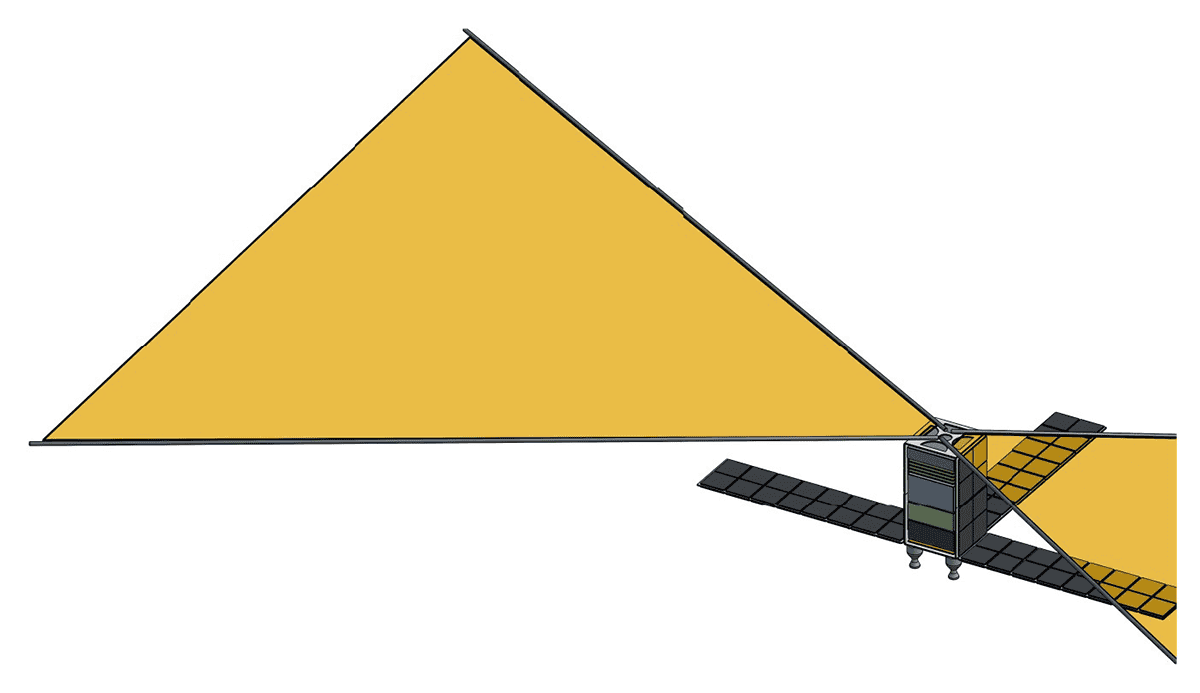
In July, at the National Astronomical Meeting in Durham, the University of Cambridge’s de Lera Acedo presented a proposal to put a miniature radiometer into lunar orbit. Dubbed “Cosmocube”, it will be a nanosatellite that will orbit the Moon searching for this 21 cm signal.
Taking the hunt to space Provisional illustration of the CosmoCube with its antenna deployed for the 21 cm signal detection, i.e. in operational mode in space. This nanosatellite would travel to the far side of the Moon to get away from the Earth’s ionosphere, which introduces substantial distortions and absorption effects to any radio signal detection. (CC BY 4.0 Artuc and de Lera Acedo 2024 RAS Techniques and Instruments4 rzae061)
“It is just in the making,” says de Lera Acedo, adding that it will not be in operation for at least a decade. “But it is the next step.”
In the meanwhile, groups here on Earth are in a race to detect this elusive signal. The instruments are getting more sensitive, the modelling is improving, and the unknowns are reducing. “If we do the experiments right, we will find the signal,” Monsalve believes. The big question is who, of the many groups with their hat in the ring, is doing the experiment “right”.
Un tout nouveau jeu multijoueur est disponible depuis le début du mois et c’est le phénomène du moment !
Arc Raiders vous propose une expérience intense et immersive dans un futur post-apo dans lequel les robots sont les maîtres de cet univers. A noter, que ce titre n’est pas un free-to-play et il vous faudra débourser la somme de 39,99€ pour profiter de cette expérience. Le jeu enregistre des records de fréquentation sur ses serveurs et si vous êtes à la recherche de jeux à découvrir avec vos amis, Arc Raiders tombe au bon moment.
Un jeu multi jouable en solo !
Arc Raiders est un jeu multijoueur d’extraction shooter qui mélange PvP et PvE. Cette nouvelle franchise propose un univers unique qui vous permet d’incarner un Raiders à la recherche de ressources pour contribuer à la survie de votre abri. Arc Raiders ne propose pas une histoire classique mais ponctue la narration de son lore par des textes à lire et des quêtes à réaliser.
Vos parties peuvent être jouées à plusieurs avec un maximum de 3 personnes par équipe. Cependant si vous souhaitez jouer en solitaire, c’est possible mais les phases de gunfight entre les différentes équipes du jeu sont assez dures à gérer. Il vous faudra vous infiltrer pour récupérer le maximum de ressources sans vous faire tuer ou vous allier avec d’autres joueurs pour rentrer sain et sauf à votre base. Personnellement j’ai essayé de jouer seul et à chaque fois je suis mort, je préfère jouer avec des inconnus pour augmenter mes chances de survie et c’est toujours sympa de discuter avec des personnes du monde entier. C’est ainsi que j’ai rencontré un joueur italien avec qui on a réussi nos premières missions. Le jeu propose un chat de proximité, ce qui favorise l’immersion et permet de discuter avec des joueurs ennemis pour tenter d’apaiser les conflits.
Avant chaque début de mission dans Arc Raiders, vous allez pouvoir choisir la carte sur laquelle vous souhaitez être déployé. Chaque environnement est assez différent et propose des situations plus ou moins urbaines. Au début, vous allez jouer sur une carte qui mélange forêt et désert avec très peu de bâtiments mais plus vous allez progresser dans le jeu plus vous aurez accès à certaines parties de ville. Il vous faudra faire attention car les villes regorgent de cachettes pour les joueurs ennemis et les robots présents sur ces cartes sont plus agressifs. Dans Arc Raiders, la gestion de vos ressources, de votre sac à dos et de vos armes sont des éléments indispensables pour préparer une bonne game. L’inventaire reste limité et il vous faudra choisir entre un équipement optimisé pour le combat ou la récolte de ressources. A noter que chaque mort dans une partie vous fait perdre l’ensemble de vos équipements et ressources obtenus. Arc Raiders ne pardonne pas et reste un jeu assez punitif. Dans le jeu, ce ne sont pas les humains dont il vous faudra faire attention mais les robots. Embark Studios chargé du développement a intégré une IA incroyable et redoutable. Les robots vous traquent à chaque instant et sont capables de vous détecter si vous émettez n’importe quel bruit. Des boss de zones sont aussi présents sur chacune des cartes et il vous faudra vous allier avec le maximum d’équipes pour en venir à bout si vous souhaitez obtenir des plans pour le craft et obtenir de nouveaux équipements et armes légendaires. Concernant l’extraction, il vous faudra regarder votre carte pour connaître les lieux de rendez-vous. Cependant il faut faire attention car certains moyens d’extraction demandent du temps pour s’ouvrir et émettent un son qui attire les robots et les joueurs. D’autres moyens plus discrets sont disponibles mais demandent des ressources ou des clés spécifiques pour s’ouvrir et mettre fin à la game.
Arc Raiders est une excellente découverte et si vous êtes adeptes de jeux multijoueurs je vous le recommande chaudement. Embark Studio avait fait déjà très fort en proposant The Finals qui avait su plaire aux fans de fast-fps compétitif et monte d’un cran avec un jeu d’extraction-shooter de qualité. Si le multi ne vous intéresse pas, il est possible de jouer en solitaire et d’avancer dans le scénario sans soucis. Cependant l’aspect social est mis en avant et j’ai trouvé sympa de nouer des amitiés avec des étrangers ou de m’allier avec des ennemis lors de moments difficiles. Arc Raiders propose une expérience unique et permet aux néophytes du genre d’embarquer dans une expérience sociale incroyable.
En août 2025, j’ai fait quelque chose qui me semblait jusque-là inimaginable: acheter un boîtier Leica. Il faut dire que, même si j’avais beaucoup aimé mon Leica Digilux 4 dont j’ai parlé ici en 2009, pour moi, ce n’était pas vraiment un boîtier Leica, puisqu’il s’agissait de l’équivalent d’un Panasonic LX3, les deux avec une optique Leica, mais une manière propre à Leica de gérer les JPEG qui faisait malgré tout la ... Continuer la lecture
Les apps mobiles Blued et Finka sont maintenant absentes de l'AppStore d'Apple en Chine... Grindr y avait déjà été censuré. Ces trois apps sont destinées aux public homosexuel et bisexuel.
La Chine a choisi de les faire interdire de l'AppStore d'Apple et du PlayStore de Google, les deux multinationales ont choisi de respecter la loi et de bannir ces deux apps. Mais silencieusement, sans réagir, sans communication, comme si c'était normal.
L'homosexualité n'est pas illégale en Chine, contrairement à de trop nombreux autres pays qui partagent une religion commune et une loi commune. Mais petit à petit la Chine interdit ceci ou cela, comme la "Shangai Pride" suspendue en 2020.
Ces deux multinationales, Apple et Google, font assembler (assemblage final) leurs smartphone respectifs en Chine pour de nombreux marchés. La Chine est aussi destinée à devenir leur premier marché, comme c'est déjà le cas pour l'automobile.
Je me souviens de Tim Cook donnant des leçons de chose à un Président des États-Unis pourtant ouvertement pour le mariage gay. Le même allant porter la bonne parole dans des pays où ses propres mœurs étaient criminalisé, et là ne l'ouvrant absolument pas. Les Droits de l'Homme? Après le business, un peu de sérieux! Toujours le même donnant à la Chine les clés pour surveiller tout ce qui est stocké dans iCloud, qu'on peut maintenant appeler Xi Cloud...
Je vous avouerais que je suis choqué et énervé, j'avais même préparé un autre texte (trop brutal, trop engagé), car entre ce que Apple et Tim Cook disent et font, il y a une abysse, incroyable!
Selon le Financial Times, les dirigeants d'Apple ont considérablement accéléré leur recherche d'un successeur pour Tim Cook. Le but serait de le remplacer dès 2026. Cette volonté de le remplacer au plus tôt ne serait pas liée à des contre-performances à venir ce qui est une bonne nouvelle. On ne connaît en revanche pas la raison profonde, aucune piste n'étant évoquée.
Nous ne vous cachons pas nous réjouir de voir du sang neuf à la tête d'Apple et ne serions pas surpris que le fiasco d'Apple Intelligence ne soit la raison profonde de cette volonté de confier les rênes de la société à quelqu'un d'autre.
Team effort Based at the University of Innsbruck, Ben Lanyon’s group has created a novel qubit register by trapping ten ions. (Courtesy: Victor Krutyanskiy/University of Innsbruck)
Researchers in Austria have entangled matter-based qubits with photonic qubits in a ten-ion system. The technique is scalable to larger ion-qubit registers, paving the way for the creation of larger and more complex quantum networks.
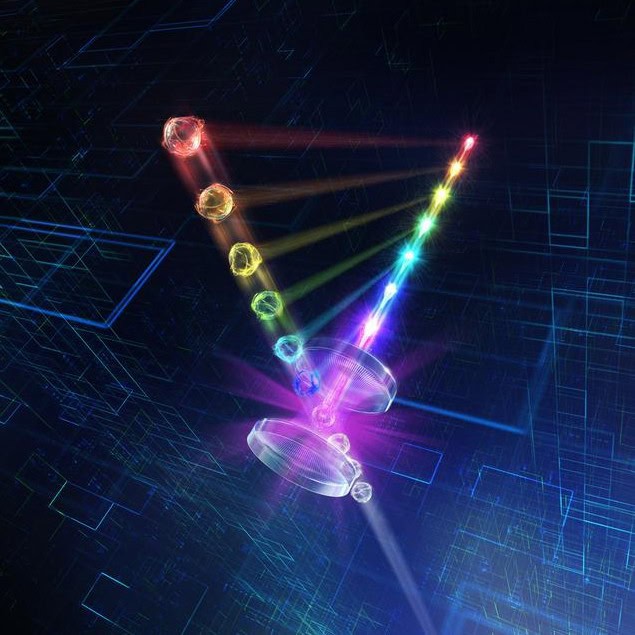
Ions in motion Each ion (large object) is moved one at a time into the “sweet spot” of the optical cavity. Once there, a laser beam drives the emission of a single photon (small object), entangled with the ion. The colours indicate ion–photon entanglement. (Courtesy: Universität Innsbruck/Harald Ritsch)
Quantum networks consist of matter-based nodes that store and process quantum information and are linked through photons (quanta of light). Already, Ben Lanyon’s group at the University of Innsbruck has made advances in this direction by entangling two ions in different systems. Now, in a new paper published in Physical Review Letters , they describe how they have developed and demonstrated a new method to entangle a string of ten ions with photons. In the future, this approach could enable the entanglement of sets of ions in different locations through light, rather than one ion at a time.
To achieve this, Lanyon and colleagues trapped a chain of 10 calcium ions in a linear trap in an optical cavity. By changing the trapping voltages in the trap, each ion was moved, one-by-one, into the cavity. Once inside, the ion was placed in the “sweet spot”, where the ion’s interaction with the cavity is the strongest. There, the ion emitted a single photon when exposed to a 393 nm Raman laser beam. This beam was tightly focused on one ion, guaranteeing that the emitted photon – collected in a single-mode optical fibre – comes out from one ion at a time. This process was carried out ten times, one per ion, to obtain a train of ten photons.
By using quantum state tomography, the researchers reconstructed the density matrix, which describes the correlation between the states of ions (i) and photons (j). To do so, they measure every ion and photon state in three different basis, resulting in nine Pauli-basis configurations of quantum measurements. From the density matrix, the concurrence (a measure of entanglement) between the ion (i) and photon (j) was found to be positive only when i = j, and equal to zero otherwise. This implies that the ion is uniquely entangled with the photon it produced, and unentangled with the photon produced by other ions.
From the density matrix, they also calculate the fidelity with the Bell state (a state of maximum entanglement), yielding an average 92%. As Marco Canteri points out, “this fidelity characterizes the quality of entanglement between the ion-photon pair for i=j”.
This work developed and demonstrated a technique whereby matter-based qubits and photonic qubits can be entangled, one at a time, in ion strings. Now, the group aims to “demonstrate universal quantum logic within the photon-interfaced 10-ion register and, building up towards entangling two remote 10-ion processors through the exchange of photons between them,” explains team member Victor Krutyanskiy. If this method effectively scales to larger systems, more complex quantum networks could be built. This would lead to applications in quantum communication and quantum sensing.
Selon Mac Gurman, Apple se désintéresse de la gamme Mac Pro. Ces machines qui n'ont pas été renouvelées depuis 2023 et toujours dotées de processeur M2 seraient considérées comme inutiles par la société qui préfère miser dans le futur sur le Mac Studio qui deviendrait le haut de gamme professionnel que ce soit en puissance de CPU qu'en dotation RAM.
Il y a quelques années nous aurions fustigé cette position. Aujourd'hui, avoir un Mac Pro n'a plus de réel intérêt surtout quand deux ans plus tard un MacBook Pro en a pratiquement la même puissance brute pour un prix bien moindre. C'est d'ailleurs un des effets de biais des puces Apple Silicon et de leur évolution. Elles tendent à pousser l'achat de machines milieu de gamme quitte à les renouveler plus fréquemment plutôt que de prendre une machine bien plus coûteuse et ultra puissante qui n'aura un intérêt que dans des domaines très pointus et qui sera surclassée deux ans plus tard par une machine coûtant e tiers de son prix.
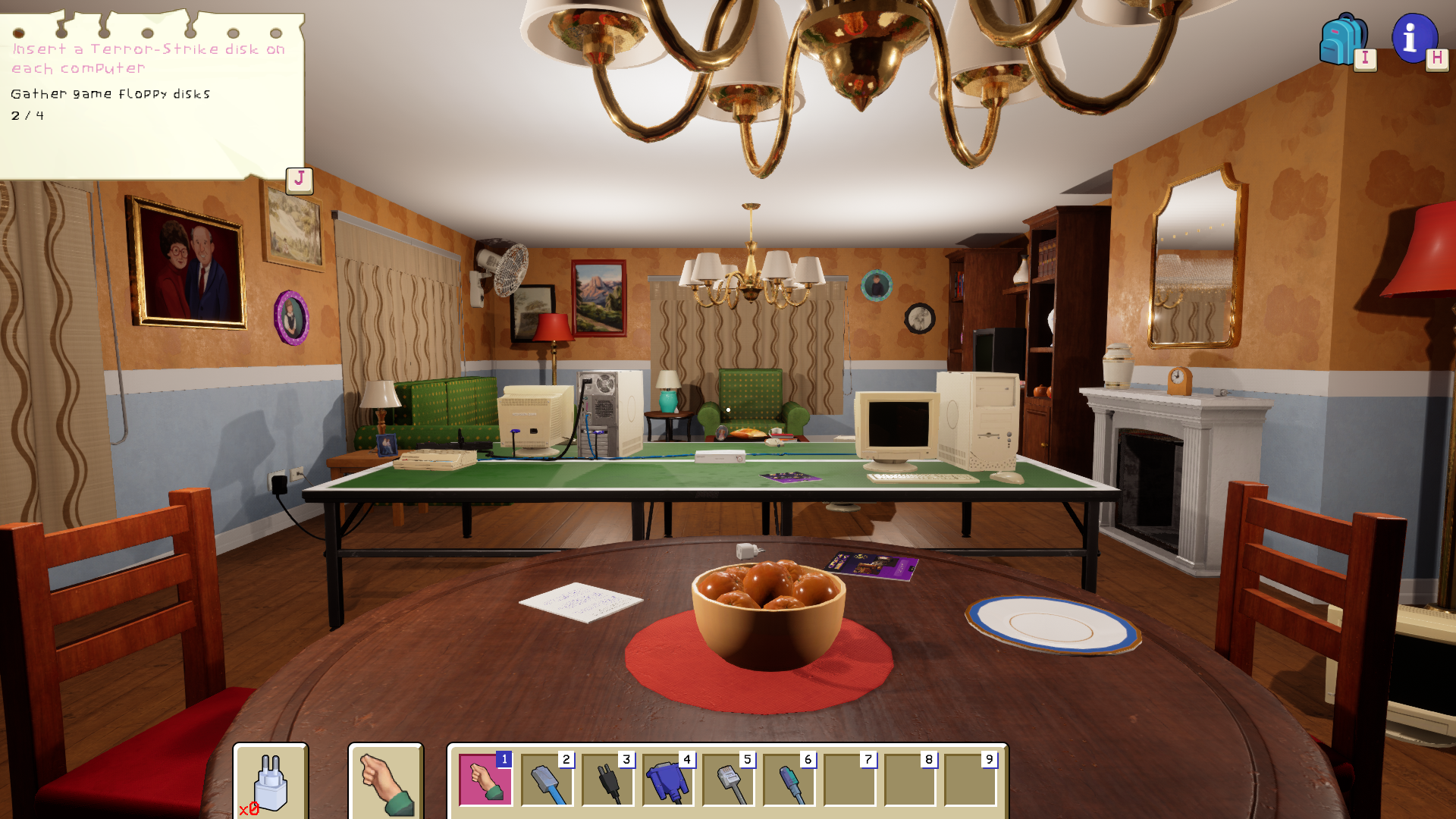
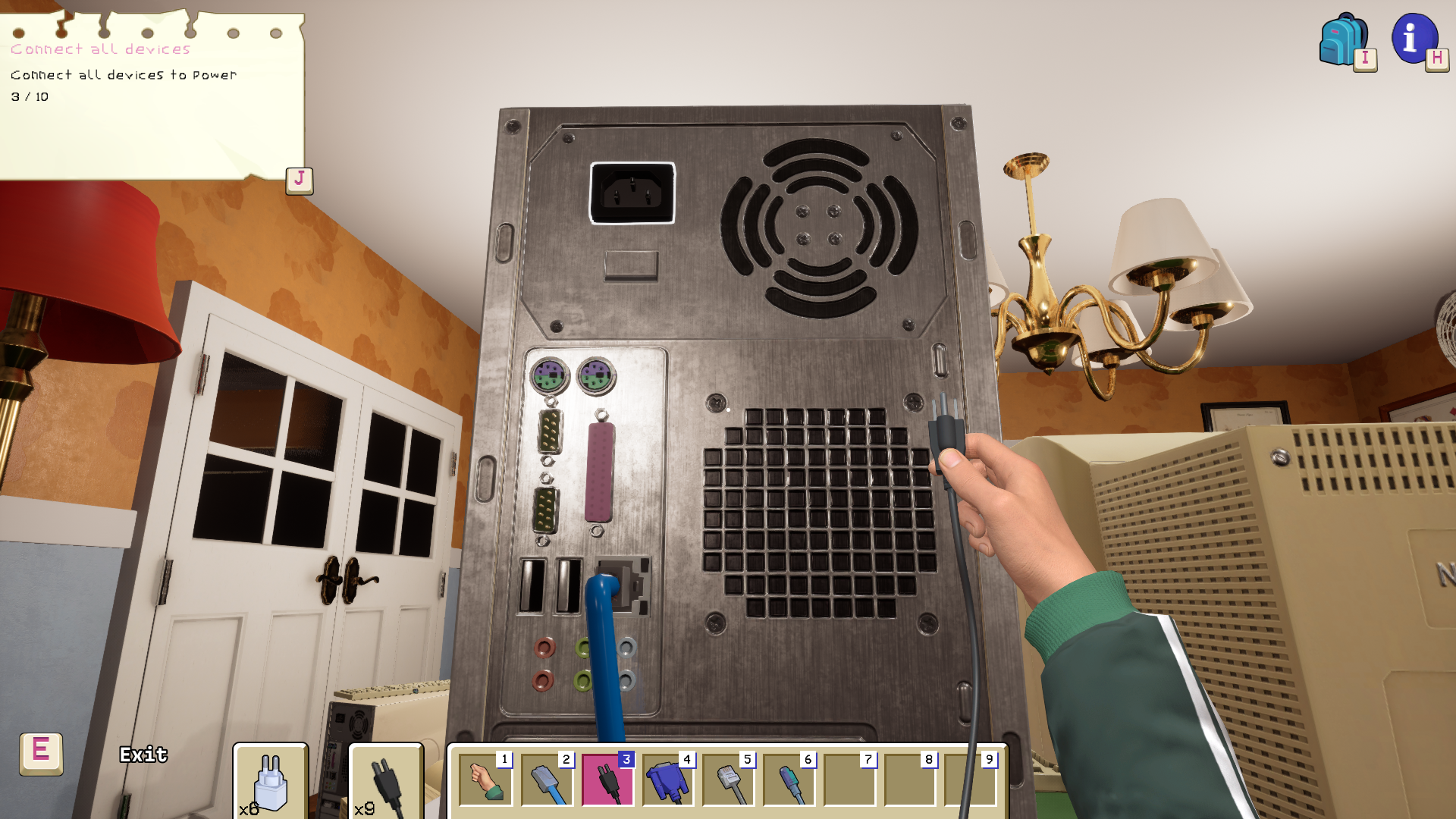
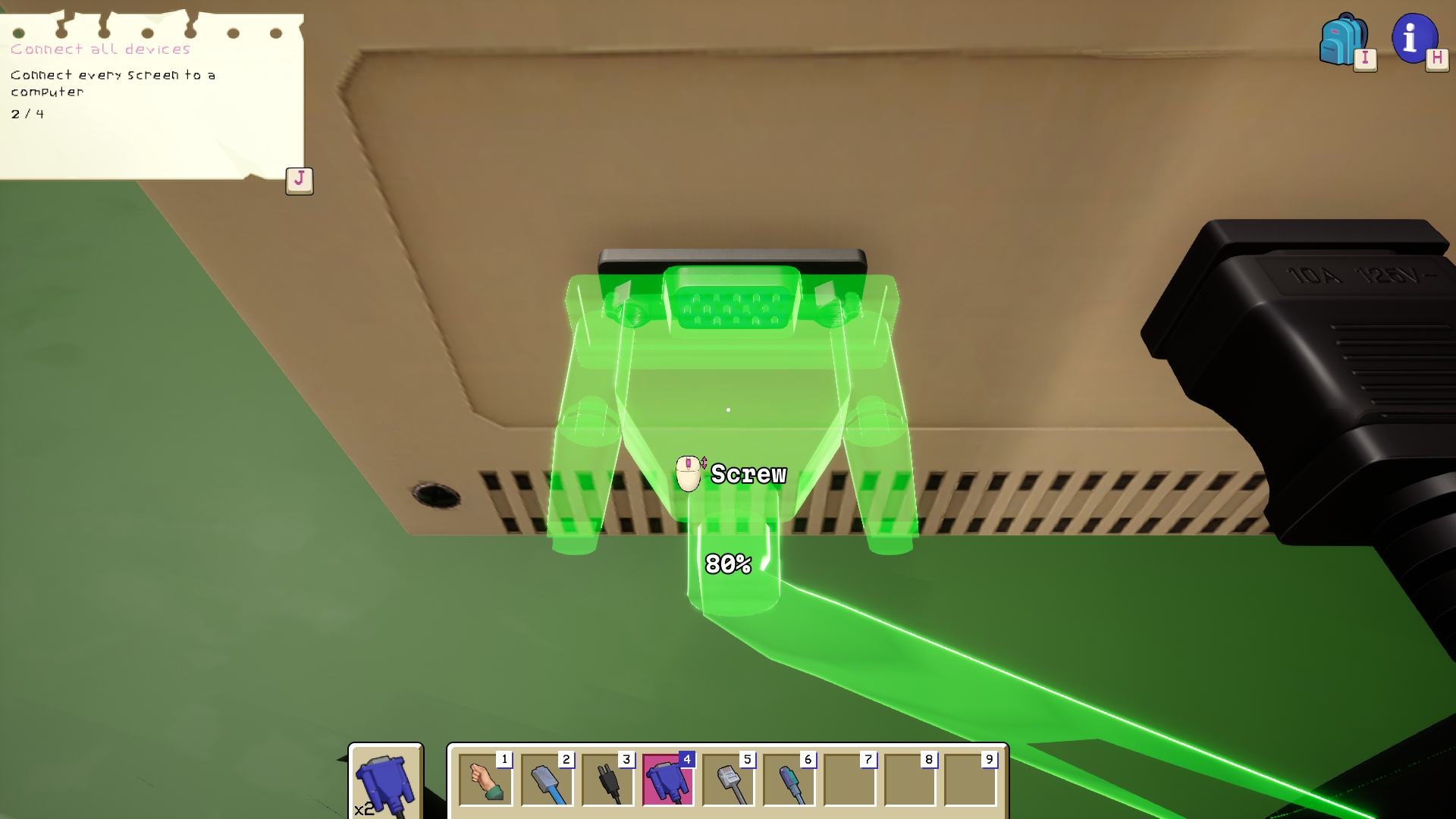
LAN Party Adventure est un puzzle-game disponible sur Steam. Développé par Leap Game Studios, il mélange réflexion et nostalgie dans une ambiance particulièrement relaxante. Le concept est simple et terriblement efficace : brancher et connecter des ordinateurs du début des années 2000. On manipule des câbles VGA bleus, des multiprises et des cartes réseau pour constituer de véritables LAN. Joué à la première personne, le titre offre des puzzles à la complexité croissante. Voyons ensemble ce qu’il a dans le ventre…
Class of 1999
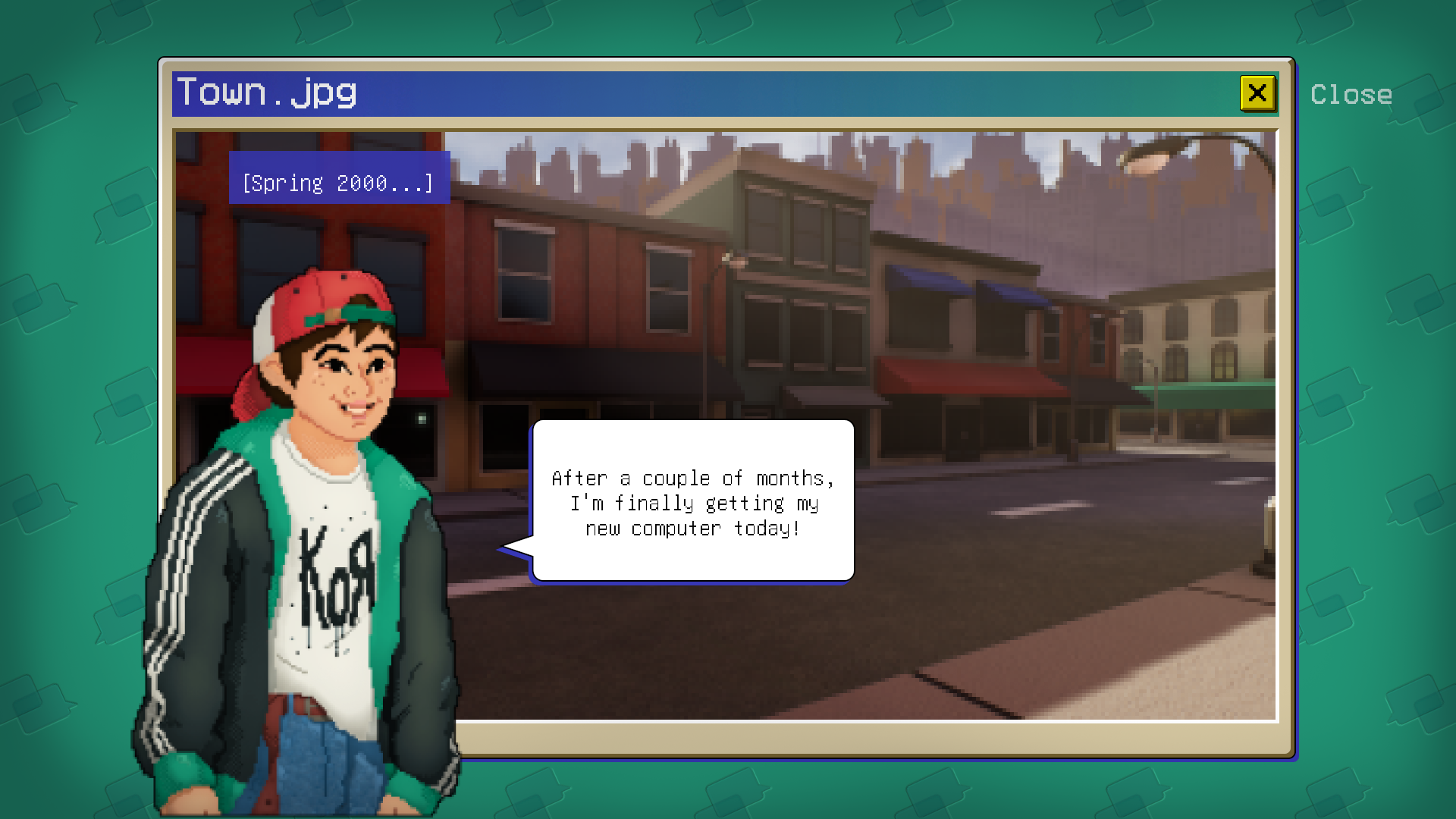
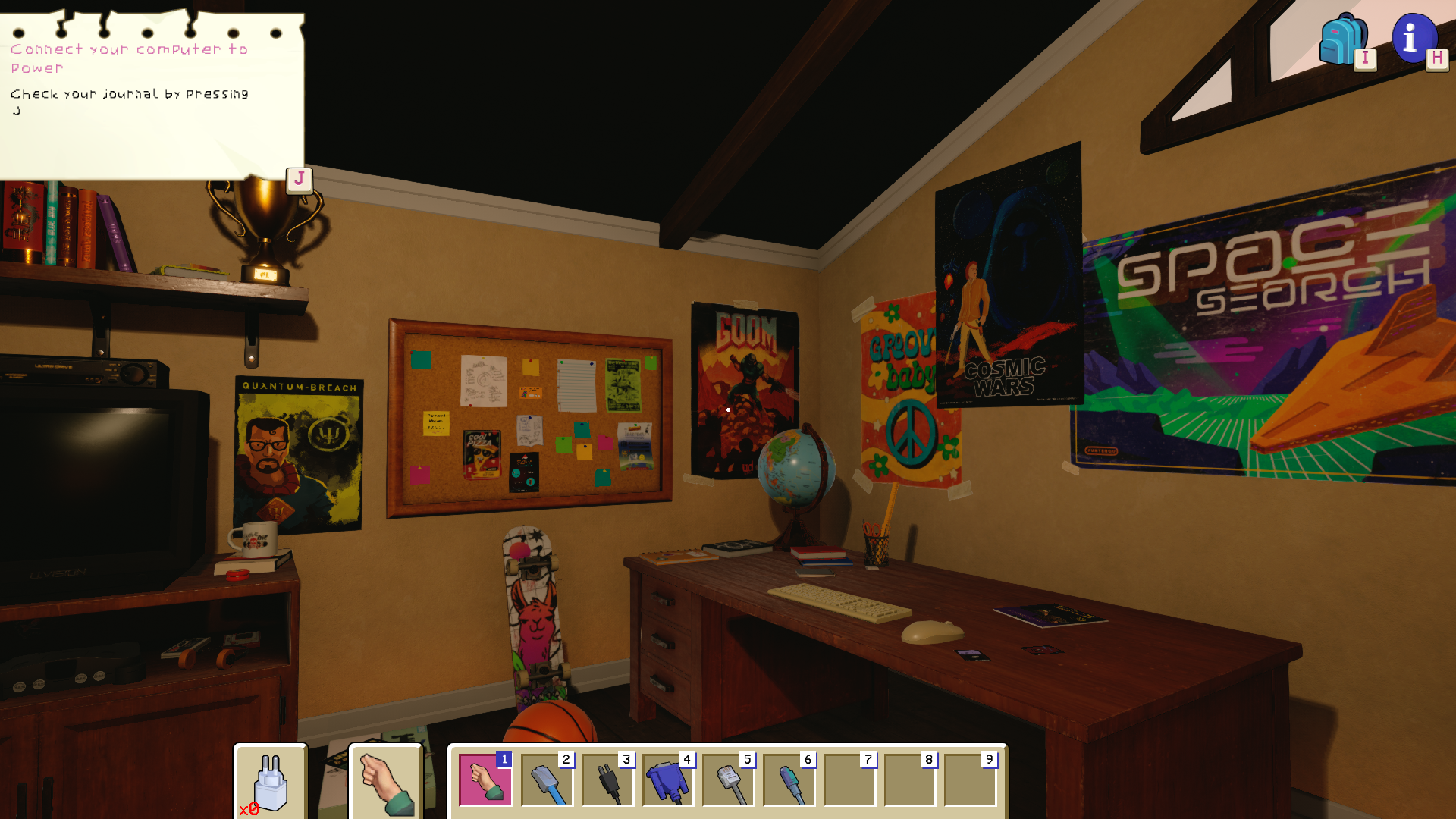
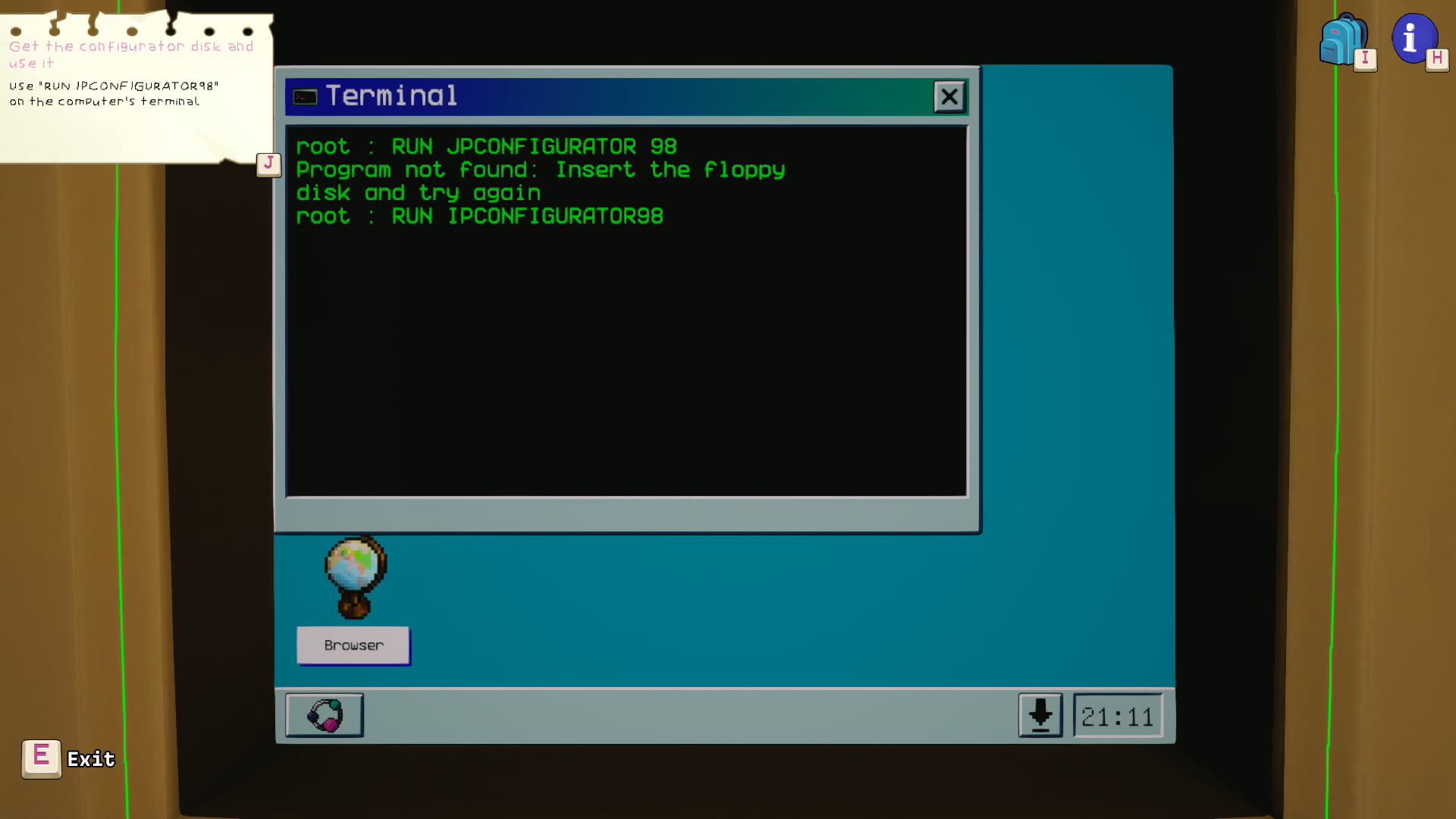
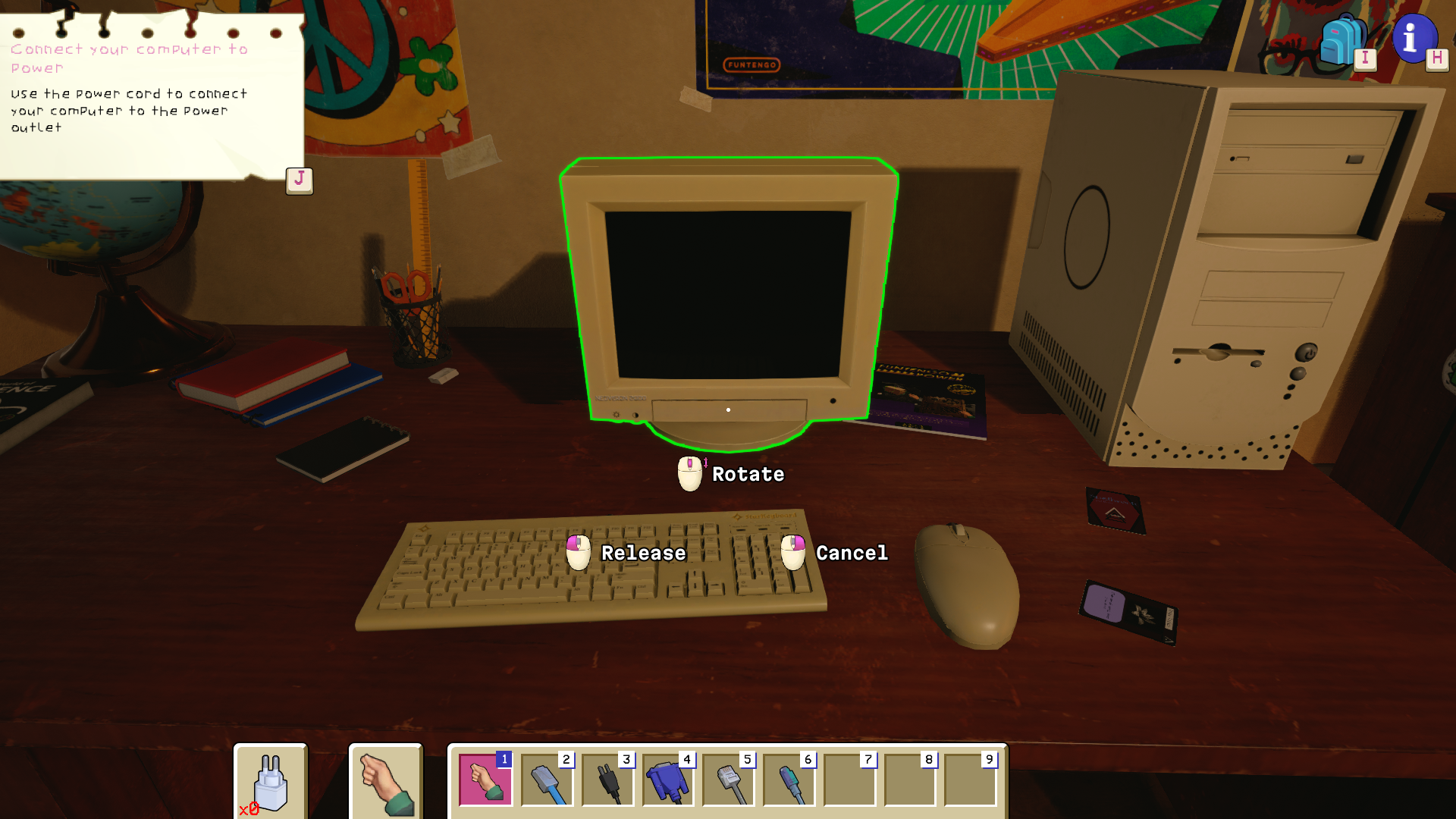
Le jeu vous place dans la peau d’un lycéen de l’an 2000. Vêtu de son plus beau t-shirt KoRn sous un hoodie Adidas délicieusement vintage, vous êtes le roi des ordinateurs. A tel point que vos potes vous appellent dès qu’ils ont un problème informatique. Vous commencez donc par installer votre PC dans votre chambre. Un tutoriel simple et efficace qui permet de s’immerger dans un ambiance que les moins de 35 ans ne peuvent pas connaître. On connecte les câbles et on tape des lignes de codes comme au bon vieux temps. Une boucle de gameplay qui m’évoque furieusement Motorcycle Mechanic Simulator. Un jeu dans lequel j’ai englouti une bonne vingtaine d’heures.
On n’est pas chez mémé
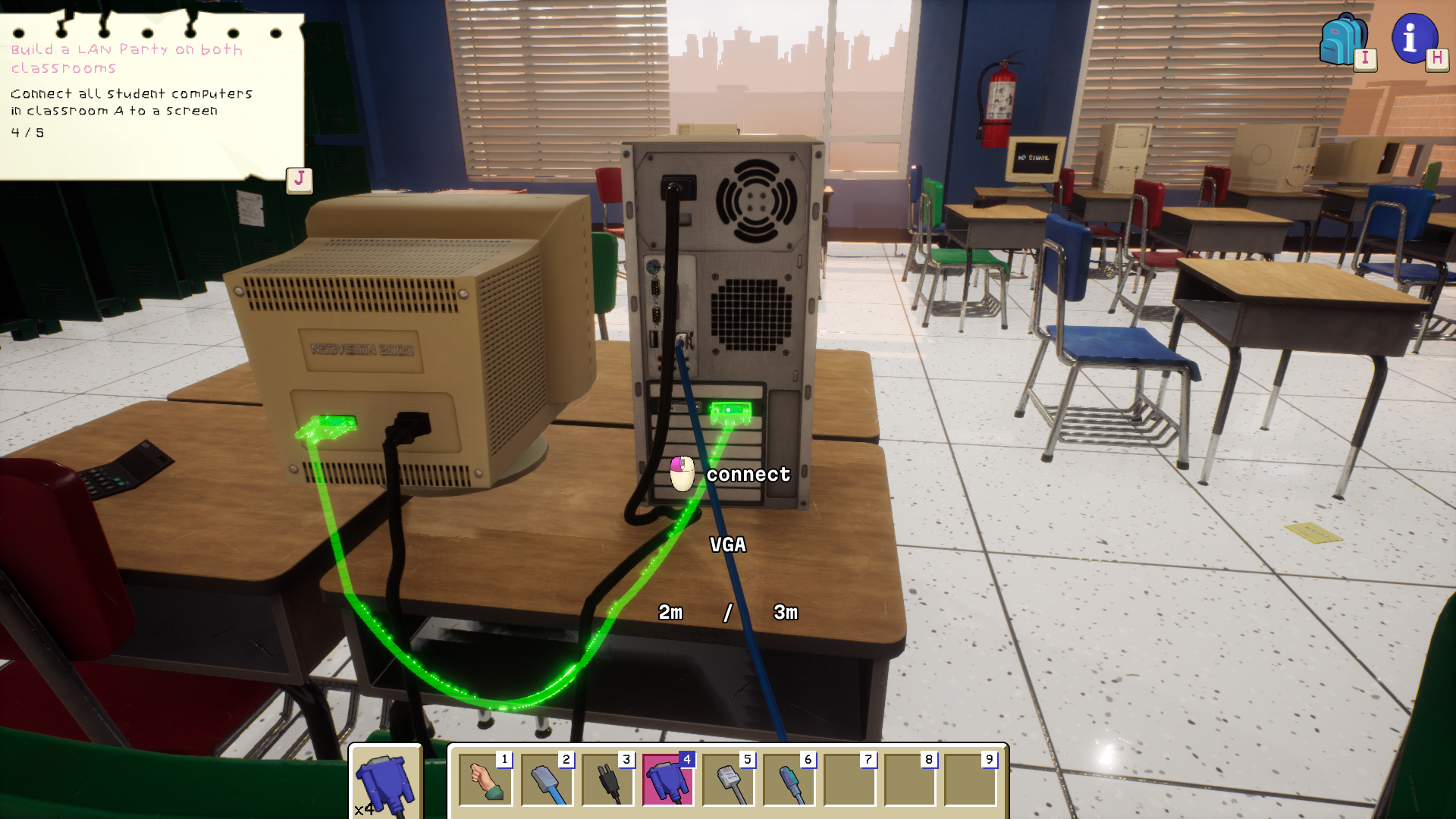
L’un des charmes du jeu réside dans la variété de ses environnements. Chaque niveau propose une nouvelle ambiance. On passe d’une chambre d’ado couverte de posters, à un salon vieillot, ou encore à une salle de classe aux néons froids. Ces décors, simples mais jolis, renforcent le côté cosy et relaxant du jeu. Tout en éveillant la fibre nostalgique de ceux ayant grandi à cette époque. La musique se résume quant à elle à quelques morceaux d’ambiance qui se marient plutôt bien avec le contexte.
C’était mieux avant
Les références à la culture gaming des années 2000 sont omniprésentes : vieux moniteurs CRT, tours beige, câbles entortillés, stickers rétro… Et bien sûr, ces fameux câbles VGA bleus que tous PCistes de l’époque ont un jour manipulés. Ce souci du détail participe pleinement au charme du jeu. On esquisse aussi un sourire devant les jaquettes parodiques de Doom, Counter Strike, ou encore Starcraft.
Le Club des 5
En plus des puzzles, un mystère relie les différents niveaux. Car on ne se contente pas de brancher des PC pour passer la nuit à se fragger entre amis. L’un d’entre eux disparaît subitement, ce qui sert de fil conducteur à l’intrigue. Cette touche narrative ajoute une dimension d’enquête inattendue. Elle donne envie de progresser pour découvrir ce qui se cache derrière ces installations informatiques de plus en plus complexes.
Le bug de l’an 2000
Le jeu n’est pas exempt de défauts. Impossible, par exemple, de déplacer un ordinateur une fois qu’il est branché. Une petite erreur de placement peut donc forcer le joueur à tout déconnecter, ce qui casse parfois le rythme.
Malgré ce bémol, LAN Party Adventure reste un puzzle-game cosy, relaxant et terriblement nostalgique. Pour les amateurs de réflexion, de mystère et de vibes rétro, c’est une petite pépite sympathique à découvrir absolument. Vive la multiprise !
Measuring blood flow to the brain is essential for diagnosing and developing treatments for neurological disorders such as stroke, vascular dementia or traumatic brain injury. Performing this measurement non-invasively is challenging, however, and achieved predominantly using costly MRI and nuclear medicine imaging techniques.
Emerging as an alternative, modalities based on optical transcranial measurement are cost-effective and easy to use. In particular, speckle contrast optical spectroscopy (SCOS) – an offshoot of laser speckle contrast imaging, which uses laser light speckles to visualize blood vessels – can measure cerebral blood flow (CBF) with high temporal resolution, typically above 30 Hz, and cerebral blood volume (CBV) through optical signal attenuation.
Researchers at the California Institute of Technology (Caltech) and the Keck School of Medicine’s USC Neurorestoration Center have designed a lightweight SCOS system that accurately measures blood flow to the brain, distinguishing it from blood flow to the scalp. Co-senior author Charles Liu of the Keck School of Medicine and team describe the system and their initial experimentation with it in APL Bioengineering.
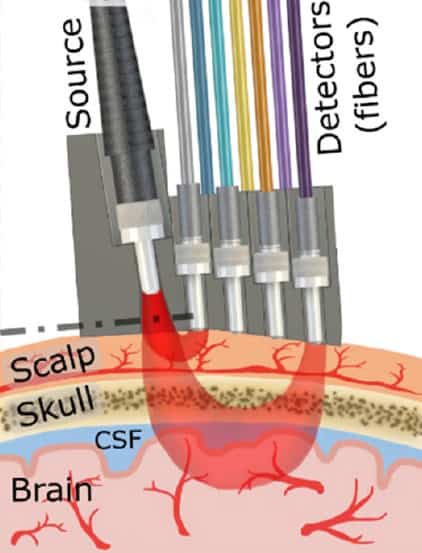
Seven simultaneous measurements Detection channels with differing source-to-detector distances monitor blood dynamics in the scalp, skull and brain layers. (Courtesy: CC BY 4.0/APL Bioeng. 10.1063/5.0263953)
The SCOS system consists of a 3D-printed head mount designed for secure placement over the temple region. It holds a single 830 nm laser illumination fibre and seven detector fibres positioned at seven different source-to-detector (S–D) distances (between 0.6 and 2.6 cm) to simultaneously capture blood flow dynamics across layers of the scalp, skull and brain. Fibres with shorter S–D distances acquire shallower optical data from the scalp, while those with greater distances obtain deeper and broader data. The seven channels are synchronized to exhibit identical oscillation frequencies corresponding to the heart rate and cardiac cycle.
When the SCOS system directs the laser light onto a sample, multiple random scattering events occur before the light exits the sample, creating speckles. These speckles, which materialize on rapid timescales, are the result of interference of light travelling along different trajectories. Movement within the sample (of red blood cells, for instance) causes dynamic changes in the speckle field. These changes are captured by a multi-million-pixel camera with a frame rate above 30 frames/s and quantified by calculating the speckle contrast value for each image.
Human testing
The researchers used the SCOS system to perform CBF and CBV measurements in 20 healthy volunteers. To isolate and obtain surface blood dynamics from brain signals, the researchers gently pressed on the superficial temporal artery (a terminal branch of the external carotid artery that supplies blood to the face and scalp) to block blood flow to the scalp.
In tests on the volunteers, when temporal artery blood flow was occluded for 8 s, scalp-sensitive channels exhibited significant decreases in blood flow while brain-sensitive channels showed minimal change, enabling signals from the internal carotid artery that supplies blood to the brain to be clearly distinguished. Additionally, the team found that positioning the detector 2.3 cm or more away from the source allowed for optimal brain blood flow measurement while minimizing interference from the scalp.
“Combined with the simultaneous measurements at seven S–D separations, this approach enables the first quantitative experimental assessment of how scalp and brain signal contributions vary with depth in SCOS-based CBF measurements and, more broadly, in optical measurements,” they write. “This work also provides crucial insights into the optimal device S–D distance configuration for preferentially probing brain signal over scalp signal, with a practical and subject-friendly alternative for evaluating depth sensitivity, and complements more advanced, hardware-intensive strategies such as time-domain gating.”
The researchers are now working to improve the signal-to-noise ratio of the system. They plan to introduce a compact, portable laser and develop a custom-designed extended camera that spans over 3 cm in one dimension, enabling simultaneous and continuous measurement of blood dynamics across S–D distances from 0.5 to 3.5 cm. These design advancements will enhance spatial resolution and enable deeper brain measurements.
“This crucial step will help transition the system into a compact, wearable form suitable for clinical use,” comments Liu. “Importantly, the measurements described in this publication were achieved in human subjects in a very similar manner to how the final device will be used, greatly reducing barriers to clinical application.”
“I believe this study will advance the engineering of SCOS systems and bring us closer to a wearable, clinically practical device for monitoring brain blood flow,” adds co-author Simon Mahler, now at Stevens Institute of Technology. “I am particularly excited about the next stage of this project: developing a wearable SCOS system that can simultaneously measure both scalp and brain blood flow, which will unlock many fascinating new experiments.”
Face à l’urgence climatique, les techniques d’élimination du CO₂ dissous dans l’océan suscitent quelques espoirs et beaucoup d’inquiétudes. Comment procéder ? Quelles règles se donner ? Qui doit décider ? Les éclairages du biogéochimiste Olivier Sulpis, chargé d’évaluer ces méthodes.
J'écris des moteurs d'échecs, ou d'autres comme pour le Reversi/Othello, depuis plusieurs décennies. Je suis en train de travailler sur un moteur sorti fin 1994 pour le Minitel, écrit en C-Ansi, Borland C 3.1 pour DOS à l'époque et gcc maintenant pour Posix dans un terminal VT-100, 32 bits pour Pentium [1] à l'époque et 64 bits pour x86 et ARM aujourd'hui. Du vieux code monothread, c'est à noter.
Et pour m'amuser, sur mon Mac mini M4, je ne fais non pas tourner une version compilée pour ARM mais celle compilée pour x86 64 bits. Le même exact code, grâce à Rosetta 2. Ce code x86 sort de gcc, avec l'option -O3 : optimisé mais en limitant les risques.
Je viens de m'apercevoir que si en moyenne un cœur Performance du M4 est 3,3 fois plus rapide que chaque cœur de mon MBP 15" 2017, ce qui devrait amener ce code x86 monothread à tourner moins de 3 fois plus vite sous ARM via Rosetta 2 (85% d'efficacité mesurée en 2020), il tourne en fait 4 fois plus vite maintenant en 2025!
Je soupçonne que Rosetta 2 s'est vu amélioré et pourrait utiliser les 16 registres généraux en plus de l'architecture ARM 64 bits pour optimiser le code x86 quand il le transcrit pour nos Mac Apple Silicon. Ce code simple (non-vectoriel, non fpu) tourne 30% plus vite qu'il le devrait !
Une limitation du Amd64 (ou x86 64 bit, ou x86-64) créé par AMD, c'est que son architecture ne contient que 16 registres généraux (entiers et pointeurs), contre 32 pour ARM 64bits (AArch64).
Ça permet évidemment à nos Mac ARM d'émuler facilement les 16 registres du x86, mais en laisse beaucoup inutilisés, et je pense que Rosetta 2 en profite pour limiter les relectures après écriture dans la pile (les écritures étant probablement conservées).
Une autre optimisation peut être d'éliminer les copies de registres inutiles, puisque en ARM 64 bits les opérations ont souvent 3 opérandes (2 sources et 1 destination), contre 2 en x86 64 bits (1 source, 1 destination). Par exemple a=b+c en x86 64 bits consiste à "copier" (créer un alias) b dans a puis à lui ajouter c (2 opérations), quand en ARM 64 bits, on ajoute b et c dans a en une seule opération.
L'aliasing de registres (ex-copie) est "gratuite" en x86 maintenant, mais nécessite de décoder une instruction de plus, donc plus de charge coté décodeur (front end) qui est déjà un problème en x86 avec des instructions de longueur variable et le travail pour créer les micro-instructions et macro-instructions depuis les Core™ 2.
Je vais vous revenir avec une comparaison avec du code ARM natif (même compilo mêmes options). Mais ce résultat est très surprenant, Apple fait un travail incroyable sur Rosetta 2 !
 Connexion



 ! Ce coffret permet de créer ses propres mini potions en résine, inspirées de l’univers d’Harry Potter, avec un réalisme bluffant. Un vrai plaisir de collectionneur et une activité créative captivante dès 8 ans, pour tous ceux qui rêvent d’avoir leur petit coin de Poudlard à la maison.