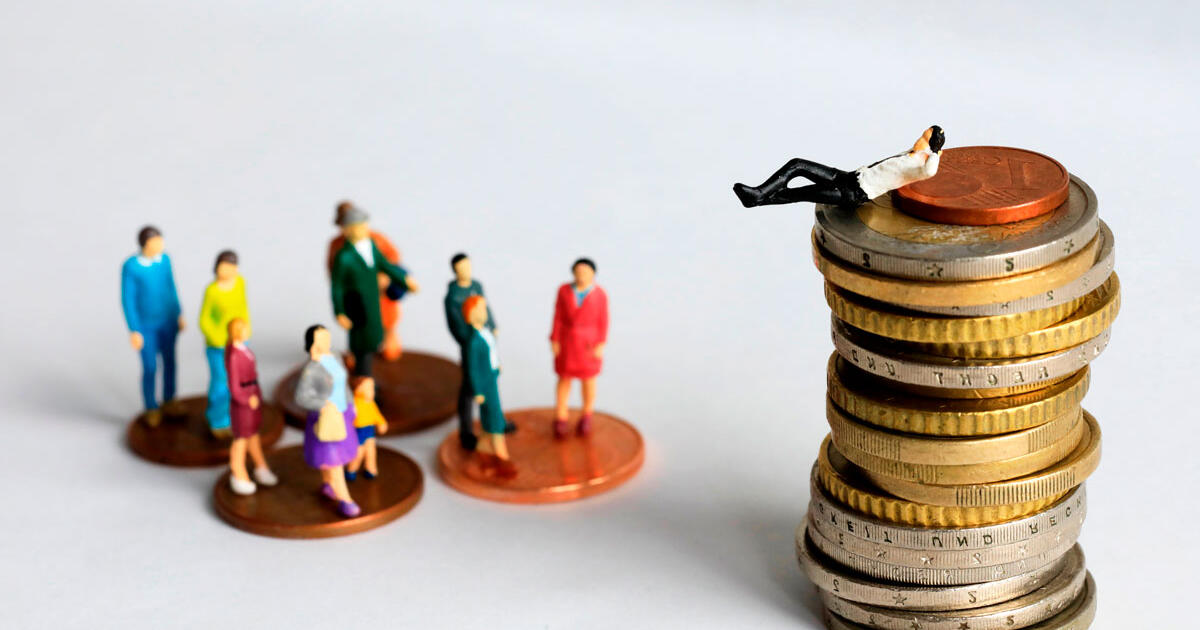
Elles sont à la tête des plus grosses entreprises, détiennent les plus grandes fortunes ou ont assez de poids pour influer sur les règles du jeu économique. Une étude internationale menée dans 16 pays, dont la France, livre une cartographie inédite des élites économiques.
This episode of the Physics World Weekly podcast features Tim Hsieh of Canada’s Perimeter Institute for Theoretical Physics. We explore some of today’s hottest topics in quantum science and technology – including topological phases of matter; quantum error correction and quantum simulation.
Our conversation begins with an exploration of the quirky properties quantum matter and how these can be exploited to create quantum technologies. We look at the challenges that must be overcome to create large-scale quantum computers; and Hsieh reveals which problem he would solve first if he had access to a powerful quantum processor.
This interview was recorded earlier this autumn when I had the pleasure of visiting the Perimeter Institute and speaking to four physicists about their research. This is the third of those conversations to appear on the podcast.
With its massive, well-engineered vapor chamber cooling, the ASUS ROG Strix SCAR 18 G835 (2025) pushes the performance of the Core Ultra 9 275HX and RTX 5090 to new heights with reasonable noise levels and low external temperatures. The super bright Mini LED display, great input devices, superb I/O, and tool-less upgradability cement this machine as the zenith of mobile gaming.
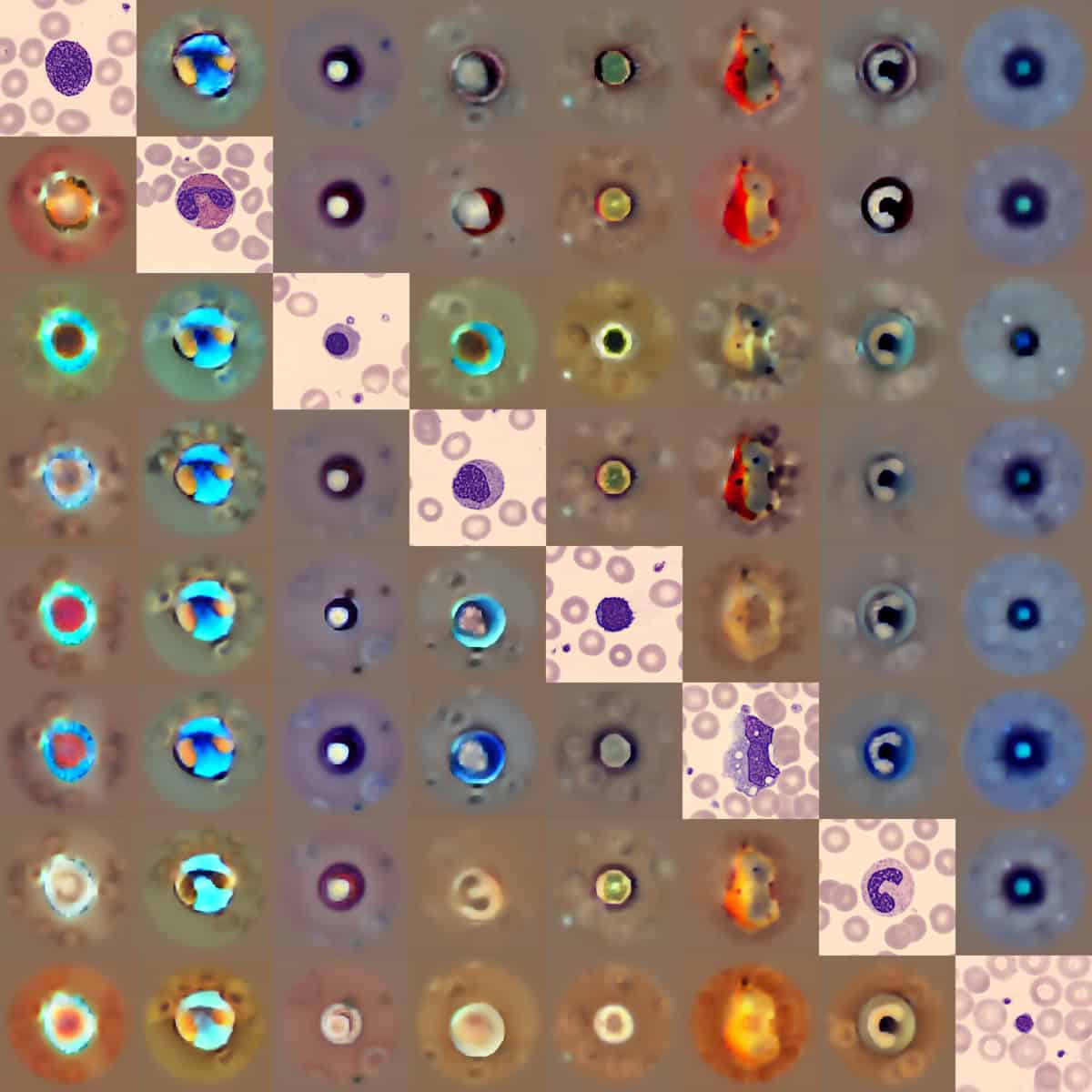
Generative classification The CytoDiffusion classifier accurately identifies a wide range of blood cell appearances and detects unusual or rare blood cells that may indicate disease. The diagonal grid elements display original images of each cell type, while the off-diagonal elements show heat maps that provide insight into the model’s decision-making rationale. (Courtesy: Simon Deltadahl)
The shape and structure of blood cells provide vital indicators for diagnosis and management of blood disease and disorders. Recognizing subtle differences in the appearance of cells under a microscope, however, requires the skills of experts with years of training, motivating researchers to investigate whether artificial intelligence (AI) could help automate this onerous task. A UK-led research team has now developed a generative AI-based model, known as CytoDiffusion, that characterizes blood cell morphology with greater accuracy and reliability than human experts.
Conventional discriminative machine learning models can match human performance at classifying cells in blood samples into predefined classes. But discriminative models, which learn to recognise cell images based on expert labels, struggle with never-before-seen cell types and images from differing microscopes and staining techniques.
To address these shortfalls, the team – headed up at the University of Cambridge, University College London and Queen Mary University of London – created CytoDiffusion around a diffusion-based generative AI classifier. Rather than just learning to separate cell categories, CytoDiffusion models the full range of blood cell morphologies to provide accurate classification with robust anomaly detection.
“Our approach is motivated by the desire to achieve a model with superhuman fidelity, flexibility and metacognitive awareness that can capture the distribution of all possible morphological appearances,” the researchers write.
Authenticity and accuracy
For AI-based analysis to be adopted in the clinic, it’s essential that users trust a model’s learned representations. To assess whether CytoDiffusion could effectively capture the distribution of blood cell images, the team used it to generate synthetic blood cell images. Analysis by experienced haematologists revealed that these synthetic images were near-indistinguishable from genuine images, showing that CytoDiffusion genuinely learns the morphological distribution of blood cells rather than using artefactual shortcuts.
The researchers used multiple datasets to develop and evaluate their diffusion classifier, including CytoData, a custom dataset containing more than half a million anonymized cell images from almost 3000 blood smear slides. In standard classification tasks across these datasets, CytoDiffusion achieved state-of-the-art performance, matching or exceeding the capabilities of traditional discriminative models.
Effective diagnosis from blood smear samples also requires the ability to detect rare or previously unseen cell types. The researchers evaluated CytoDiffusion’s ability to detect blast cells (immature blood cells) in the test datasets. Blast cells are associated with blood malignancies such as leukaemia, and high detection sensitivity is essential to minimize false negatives.
In one dataset, CytoDiffusion detected blast cells with sensitivity and specificity of 0.905 and 0.962, respectively. In contrast, a discriminative model exhibited a poor sensitivity of 0.281. In datasets with erythroblasts as the abnormal cells, CytoDiffusion again outperformed the discriminative model, demonstrating that it can detect abnormal cell types not present in its training data, with the high sensitivity required for clinical applications.
Robust model
It’s important that a classification model is robust to different imaging conditions and can function with sparse training data, as commonly found in clinical applications. When trained and tested on diverse image datasets (different hospitals, microscopes and staining procedures), CytoDiffusion achieved state-of-the-art accuracy in all cases. Likewise, after training on limited subsets of 10, 20 and 50 images per class, CytoDiffusion consistently outperformed discriminative models, particularly in the most data-scarce conditions.
Another essential feature of clinical classification tasks, whether performed by a human or an algorithm, is knowing the uncertainty in the final decision. The researchers developed a framework for evaluating uncertainty and showed that CytoDiffusion produced superior uncertainty estimates to human experts. With uncertainty quantified, cases with high certainty could be processed automatically, with uncertain cases flagged for human review.
“When we tested its accuracy, the system was slightly better than humans,” says first author Simon Deltadahl from the University of Cambridge in a press statement. “But where it really stood out was in knowing when it was uncertain. Our model would never say it was certain and then be wrong, but that is something that humans sometimes do.”
Finally, the team demonstrated CytoDiffusion’s ability to create heat maps highlighting regions that would need to change for an image to be reclassified. This feature provides insight into the model’s decision-making process and shows that it understands subtle differences between similar cell types. Such transparency is essential for clinical deployment of AI, making models more trustworthy as practitioners can verify that classifications are based on legitimate morphological features.
“The true value of healthcare AI lies not in approximating human expertise at lower cost, but in enabling greater diagnostic, prognostic and prescriptive power than either experts or simple statistical models can achieve,” adds co-senior author Parashkev Nachev from University College London.
Almost every image that will be taken by future space observatories in low-Earth orbit could be tainted due to light contamination from satellites. That is according to a new analysis from researchers at NASA, which stresses that light pollution from satellites orbiting Earth must be reduced to guarantee astronomical research is not affected.
The number of satellites orbiting Earth has increased from about 2000 in 2019 to 15 000 today. Many of these are part of so-called mega-constellations that provide services such as Internet coverage around the world, including in areas that were previously unable to access it. Examples of such constellations include SpaceX’s Starlink as well as Amazon’s Kuiper and Eutelsat’s OneWeb.
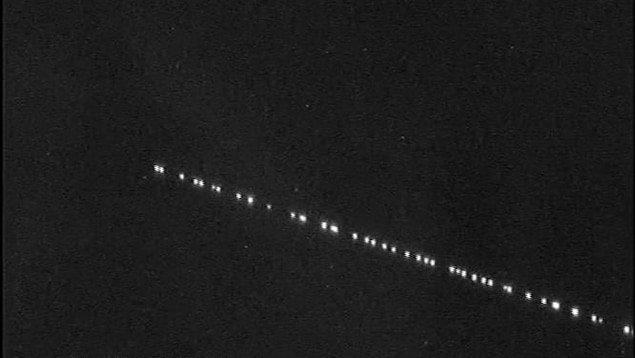
Many of these mega-constellations share the same space as space-based observatories such as NASA’s Hubble Space Telescope. This means that the telescopes can capture streaks of reflected light from the satellites that render the images or data completely unusable for research purposes. That is despite anti-reflective coating that is applied to some newer satellites in SpaceX’s Starlink constellation, for example.
Previous work has explored the impact of such satellites constellations on ground-based astronomy, both optical and radioastronomy. Yet their impact on telescopes in space has been overlooked.
To find out more, Alejandro Borlaff from NASA’s Ames Research Center, and colleagues simulated the view of four space-based telescopes: Hubble and the near-infrared observatory SPHEREx, which launched in 2025, as well at the European Space Agency’s proposed near-infrared ARRAKIHS mission and China’s planned Xuntian telescopes.
These observatories are, or will be placed, between 400 and 800 km from the Earth’s surface.
The authors found that if the population of mega-constellation satellites grows to the 56 000 that is projected by the end of the decade, it would contaminate about 39.6% of Hubble’s images and 96% of images from the other three telescopes.
Borlaff and colleagues predict that the average number of satellites observed per exposure would be 2.14 for Hubble, 5.64 for SPHEREx, 69 for ARRAKIHS, and 92 for Xuntian.
The authors note that one solution could be to deploy satellites at lower orbits than the telescopes operate, which would make them about four magnitudes dimmer. The downside is that emissions from these lower satellites could have implications for Earth’s ozone layer.
An ‘urgent need for dialogue’
Katherine Courtney, chair of the steering board for the Global Network on Sustainability in Space, says that without astronomy, the modern space economy “simply wouldn’t exist”.
“The space industry owes its understanding of orbital mechanics, and much of the technology development that has unlocked commercial opportunities for satellite operators, to astronomy,” she says. “The burgeoning growth of the satellite population brings many benefits to life on Earth, but the consequences for the future of astronomy must be taken into consideration.”
Courtney adds that there is now “an urgent need for greater dialogue and collaboration between astronomers and satellite operators to mitigate those impacts and find innovative ways for commercial and scientific operations to co-exist in space.”
Katherine Courtney, chairs the Global Network on Sustainability in Space, and Alice Gorman from Flinders University in Adelaide, Australia, appeared on a Physics World Live panel discussion about the impact of space debris that was held on 10 November. A recording of the event is available here.
En 2019 sortait Pirates Outlaws, un jeu de deckbuilding suffisamment apprécié qui aura donné l'impulsion au studio Fabled Game pour en faire une sorte, avec une refonte graphique particulièrement réussie.
Avec macOS 26, Apple a définitivement enterré le Launchpad, au profit de Spotlight et de sa fonction Apps. Cette icône, située dans le dock, donnait accès aux applications pour u...
Physicists have obtained the first detailed picture of the internal structure of radium monofluoride (RaF) thanks to the molecule’s own electrons, which penetrated the nucleus of the molecule and interacted with its protons and neutrons. This behaviour is known as the Bohr-Weisskopf effect, and study co-leader Shane Wilkins says that this marks the first time it has been observed in a molecule. The measurements themselves, he adds, are an important step towards testing for nuclear symmetry violation, which might explain why our universe contains much more matter than antimatter.
RaF contains the radioactive isotope 225Ra, which is not easy to make, let alone measure. Producing it requires a large accelerator facility at high temperature and high velocity, and it is only available in tiny quantities (less than a nanogram in total) for short periods (it has a nuclear half-life of around 15 days).
“This imposes significant challenges compared to the study of stable molecules, as we need extremely selective and sensitive techniques in order to elucidate the structure of molecules containing 225Ra,” says Wilkins, who performed the measurements as a member of Ronald Fernando Garcia Ruiz’s research group at the Massachusetts Institute of Technology (MIT), US.
The team chose RaF despite these difficulties because theory predicts that it is particularly sensitive to small nuclear effects that break the symmetries of nature. “This is because, unlike most atomic nuclei, the radium atom’s nucleus is octupole deformed, which basically means it has a pear shape,” explains the study’s other co-leader, Silviu-Marian Udrescu.
Electrons inside the nucleus
In their study, which is detailed in Science, the MIT team and colleagues at CERN, the University of Manchester, UK and KU Leuven in the Netherlands focused on RaF’s hyperfine structure. This structure arises from interactions between nuclear and electron spins, and studying it can reveal valuable clues about the nucleus. For example, the nuclear magnetic dipole moment can provide information on how protons and neutrons are distributed inside the nucleus.
In most experiments, physicists treat electron-nucleus interactions as taking place at (relatively) long ranges. With RaF, that’s not the case. Udrescu describes the radium atom’s electrons as being “squeezed” within the molecule, which increases the probability that they will interact with, and penetrate, the radium nucleus. This behaviour manifests itself as a slight shift in the energy levels of the radium atom’s electrons, and the team’s precision measurements – combined with state-of-the-art molecular structure calculations – confirm that this is indeed what happens.
“We see a clear breakdown of this [long-range interactions] picture because the electrons spend a significant amount of time within the nucleus itself due to the special properties of this radium molecule,” Wilkins explains. “The electrons thus act as highly sensitive probes to study phenomena inside the nucleus.”
Searching for violations of fundamental symmetries
According to Udrescu, the team’s work “lays the foundations for future experiments that use this molecule to investigate nuclear symmetry violation and test the validity of theories that go beyond the Standard Model of particle physics.” In this model, each of the matter particles we see around us – from baryons like protons to leptons such as electrons – should have a corresponding antiparticle that is identical in every way apart from its charge and magnetic properties (which are reversed).
The problem is that the Standard Model predicts that the Big Bang that formed our universe nearly 14 billion years ago should have generated equal amounts of antimatter and matter – yet measurements and observations made today reveal an almost entirely matter-based universe. Subtler differences between matter particles and their antimatter counterparts might explain why the former prevailed, so by searching for these differences, physicists hope to explain antimatter-matter asymmetry.
Wilkins says the team’s work will be important for future such searches in species like RaF. Indeed, Wilkins, who is now at Michigan State University’s Facility for Rare Isotope Beams (FRIB), is building a new setup to cool and slow beams of radioactive molecules to enable higher-precision spectroscopy of species relevant to nuclear structure, fundamental symmetries and astrophysics. His long-term goal, together with other members of the RaX collaboration (which includes FRIB and the MIT team as well as researchers at Harvard University and the California Institute of Technology), is to implement advanced laser-based techniques using radium-containing molecules.
La Commission Européenne d'Ursula von Der Leyen veut imposer Chat Control dans vos smartphones, iPhone en tête, avec le soutien indéfectible de notre Président de la République Française, chef des armées, grand-maître de l'ordre national de la Légion d'Honneur, grand maître de l'ordre national du Mérite, co-prince d'Andorre, premier et unique chanoine honoraire de la basilique Saint-Jean-de-Latran et protecteur de l'Institut de France, de l'Académie française et du domaine national de Chambord.
Oufff. C'est fait, j'ai rien oublié! Mon Salengro Français, je mourrirais pour toi!
Qu'est-ce que chat Control? Si on demande, c'est facile, c'est pour "protéger les enfants". Et Macron sait de quoi il parle.
Techniquement, plusieurs voies sont explorées, essentiellement soit depuis les OS (iOS et Android) en surveillant toute action de l'utilisateur et en transmettant des captures d'écran, des textes, etc. La seconde est en obligeant toute messagerie "chiffrée" a intégrer une backdoor un bout de code pour surveiller tous les échanges dont les images et/ou vidéos.
Évidemment les OS libres et open-source mobiles sont condamnés: on ne peut rien leur imposer et dans le pire des cas un "fork" (branchement de source) et c'est fini. GrapheneOS ne peut exister dans une France ou une union Européenne où les OS doivent surveiller leurs utilisateurs, nombre de distribution Linux seront aussi touchées !
Alternativement, autant WhatsApp va se plier aux demandes de la Commission Européenne, car ils nous espionnent encore plus, autant Telegram ou Signal vont refuser et vont devoir sortir de ce piège à cons.
Mais pour nous Français, ça va vouloir dire dans les deux cas que toutes nos communications seront espionnées. Car nous sommes coupables de pédocriminalité par défaut! Nous tous, Français, sommes des pédocriminels en puissance, et traité comme tels. Nos échanges privés ne seront plus privés, voire publiques en cas de hack réussi sur nos Maîtres.
Yet another cut-price Z890 motherboard, this time it's MSI's high-end MEG ACE that's far more wallet-friendly. All while offering 10 Gbps Ethernet, dual PCIe Gen 5 M.2 SSD support, dual 40 Gbps Thunderbolt 4, 60 W power over your case's Type-C port and a huge number of fast USB ports.
Apparemment plusieurs États Américains voudraient bannir tout VPN pour "protéger les enfants". Dont le Wisconsin avec une loi absurde demandant de bannir toute connexion depuis le Wisconsin via un VPN.
Les VPN ont plusieurs usages, le premier (historiquement) étant de relier des réseaux privés entre eux, par exemple une agence bancaire à son siège de manière sécurisée (authentifiée, sans accès aux données échangées, ni possibilité de les changer sans déclencher des erreurs).
Les distributeurs de billets, devenus depuis des mini-agences bancaires, utilisent aussi un VPN leur permettant d'échanger de manière sûre. Même quand ils sont sous un OS du XXème siècle.
Les VPN sont aussi utilisés à travers le monde par des opposants politiques appelés "dissidents" par le régime en place, comme en Chine, pour communiquer librement en protégeant leur identité, leurs échanges et idéaux, ainsi que leur vie privée. Les VPN ne protègent pas que les banques, ils protègent aussi la Liberté et la Démocratie.
Et dans le grand-public, hors le piratage de contenu promu par NordVPN et consorts, ils permettent d'éviter les Black Box en France, protégeant l'anonymat ainsi que la vie privée.
Bien sûr j'utilise des VPN au quotidien pour mon travail, pour garantir la sécurité des échanges, c'est maintenant incontournable professionnellement quand on accès à des plateformes sensibles. J'ai de plus deux VPN personnels. Un chez moi (Raspberry Pi), l'autre sur une instance Linux.
Petit à petit, avec les reculs sur les libertés, la protection de la vie privée, la protection des échanges privés, bien que tout cela garanti par les Droits de l'Homme et la CEDH, les VPN semblent incontournables pour nous tous...
Je laisse la parole à Telegram, puis à son créateur, Pavel Durov, en remerciant au passage @snooper pour avoir attiré mon attention.
"Aujourd’hui, l’Union européenne a failli interdire votre droit à la vie privée. Une loi devait être votée, obligeant les applications à scanner tous les messages privés et transformant chaque téléphone en un outil de surveillance.
La France a été le moteur de ce projet autoritaire, avec le soutien des anciens et actuels ministres de l’Intérieur, Bruno Retailleau et Laurent Nuñez. En mars dernier, ils ont déclaré que la police devrait pouvoir consulter les messages privés des citoyens français (détails ici). Les Républicains et Renaissance, le parti de Macron, ont voté en faveur de cette loi.
De telles mesures censées « lutter contre la criminalité » visent en réalité les citoyens ordinaires. Elles n’arrêteraient pas les criminels — qui pourraient simplement utiliser des VPN ou des sites spéciaux pour se cacher. Les messages des autorités et de la police ne seraient pas non plus surveillés, car la loi les en protège. Seuls VOUS — simples citoyens — risqueriez de voir vos photos et messages privés compromis.
Aujourd’hui, nous avons défendu la vie privée : l'Allemagne, par sa prise de position soudaine, a préservé nos droits. Toutefois, la menace qui pèse sur nos libertés demeure. Alors que les dirigeants français réclament un accès total aux messages privés, les droits fondamentaux des Français — et de tous les Européens — restent menacés." - Telegram, le 14 octobre 2025
Plus de détails? Le gouvernement Français a essayé de faire passer une loi pour obliger les messageries chiffrées à introduire une backdoor pour permettre la surveillance de masse, sans contrôle ni information de la Justice, sans intervention d'un Juge des Libertés. L'assemblée Nationale a retoquée cette loi de surveillance de masse. "A law requiring messaging apps to implement a backdoor for police access to private messages was passed by the Senate. Luckily, it was shot down by the National Assembly." - Pavel Durov
Merci à l'Assemblée Nationale et à nos députés en France, merci à l'Allemagne en Europe. Les discussions se poursuivent au niveau Européen, à Huis Clos. On n'en saura rien... C'est le fameux projet "Chat Control". Où le E signifie Enfants.
A new, microscopic formulation of the second law of thermodynamics for coherently driven quantum systems has been proposed by researchers in Switzerland and Germany. The researchers applied their formulation to several canonical quantum systems, such as a three-level maser. They believe the result provides a tighter definition of entropy in such systems, and could form a basis for further exploration.
In any physical process, the first law of thermodynamics says that the total energy must always be conserved, with some converted to useful work and the remainder dissipated as heat. The second law of thermodynamics says that, in any allowed process, the total amount of heat (the entropy) must always increase.
“I like to think of work being mediated by degrees of freedom that we control and heat being mediated by degrees of freedom that we cannot control,” explains theoretical physicist Patrick Potts of the University of Basel in Switzerland. “In the macroscopic scenario, for example, work would be performed by some piston – we can move it.” The heat, meanwhile, goes into modes such as phonons generated by friction.
Murky at small scales
This distinction, however, becomes murky at small scales: “Once you go microscopic everything’s microscopic, so it becomes much more difficult to say ‘what is it that that you control – where is the work mediated – and what is it that you cannot control?’,” says Potts.
Potts and colleagues in Basel and at RWTH Aachen University in Germany examined the case of optical cavities driven by laser light, systems that can do work: “If you think of a laser as being able to promote a system from a ground state to an excited state, that’s very important to what’s being done in quantum computers, for example,” says Potts. “If you rotate a qubit, you’re doing exactly that.”
The light interacts with the cavity and makes an arbitrary number of bounces before leaking out. This emergent light is traditionally treated as heat in quantum simulations. However, it can still be partially coherent – if the cavity is empty, it can be just as coherent as the incoming light and can do just as much work.
In 2020, quantum optician Alexia Auffèves of Université Grenoble Alpes in France and colleagues noted that the coherent component of the light exiting a cavity could potentially do work. In the new study, the researchers embedded this in a consistent thermodynamic framework. They studied several examples and formulated physically consistent laws of thermodynamics.
In particular, they looked at the three-level maser, which is a canonical example of a quantum heat engine. However, it has generally been modelled semi-classically by assuming that the cavity contains a macroscopic electromagnetic field.
Work vanishes
“The old description will tell you that you put energy into this macroscopic field and that is work,” says Potts, “But once you describe the cavity quantum mechanically using the old framework then – poof! – the work is gone…Putting energy into the light field is no longer considered work, and whatever leaves the cavity is considered heat.”
The researchers new thermodynamic treatment allows them to treat the cavity quantum mechanically and to parametrize the minimum degree of entropy in the radiation that emerges – how much radiation must be converted to uncontrolled degrees of freedom that can do no useful work and how much can remain coherent.
The researchers are now applying their formalism to study thermodynamic uncertainty relations as an extension of the traditional second law of thermodynamics. “It’s actually a trade-off between three things – not just efficiency and power, but fluctuations also play a role,” says Potts. “So the more fluctuations you allow for, the higher you can get the efficiency and the power at the same time. These three things are very interesting to look at with this new formalism because these thermodynamic uncertainty relations hold for classical systems, but not for quantum systems.”
“This [work] fits very well into a question that has been heavily discussed for a long time in the quantum thermodynamics community, which is how to properly define work and how to properly define useful resources,” says quantum theorist Federico Cerisola of the UK’s University of Exeter. “In particular, they very convincingly argue that, in the particular family of experiments they’re describing, there are resources that have been ignored in the past when using more standard approaches that can still be used for something useful.”
Cerisola says that, in his view, the logical next step is to propose a system – ideally one that can be implemented experimentally – in which radiation that would traditionally have been considered waste actually does useful work.
GrapheneOS est un OS open-source, gratuit et libre pour les smartphone Android. Son objectif est de protéger notre vie privée, ce qui est un peu éloigné des objectifs d'Android de Google! Il marche très bien sur les Google Pixel...
Le Président Français, Emmanuel Macron, a clairement et publiquement indiqué son choix pour amener des contrôles de nos communications mobiles, y-compris via des messageries "chiffrées", pour "protéger les enfants". Il connait le sujet... Donc espionner massivement toutes nos communications privées, sans contrôle de la Justice.
GrapheneOS dont la Fondation est au Canada, a choisi de se retirer préventivement du marché Français, car sentant venir le vent du boulet. Mais vous pourrez toujours continuer à le télécharger et l'installer, si votre smartphone Android n'est pas verrouillé (de plus en plus sont verrouillés!).
Le gouvernement Indien veut que Apple préinstalle son App Sanchar Saathi sur les iPhone. Cette App est censé augmenter la sécurité de différentes manières, permettant de bloquer un iPhone volé, de vérifier que l'iPhone n'est pas volé, et de rapporter des appels frauduleux (scams), entre autres fonctionnalités. Elle fait aussi du suivi et de la localisation.
Si initialement cette App était présentée comme ne pouvant être désinstallée, après quelques échanges et surtout des réseaux asociaux qui se sont enflammés contre elle, elle devrait pouvoir être désinstallée. Ce qui lui enlève tout intérêt en cas de vol de l'appareil!
Apple et le grand-public craignent que cette App soit utilisée pour espionner les utilisateurs de différentes façons ainsi que leurs échanges. Apple a indiqué au gouvernement Indien qu'il ne préinstallera pas cette App dans les iPhone vendu en Inde.
Il reste environ 3 mois aux différents fabricants de smartphone pour se plier à cette exigence du gouvernement Indien. Google n'a pas encore publiquement répondu.
Alors que la demande énergétique pour le développement de l’intelligence artificielle et le numérique est en constante croissance, des chercheurs mettent de l’avant la sobriété numérique. Ce choix vise à réduire son empreinte environnementale au quotidien.
When I was five years old, my family moved into a 1930s semi-detached house with a long strip of garden. At the end of the garden was a miniature orchard of eight apple trees the previous owners had planted – and it was there that I, much like another significantly more famous physicist, learned an important lesson about gravity.
As I read in the shade of the trees, an apple would sometimes fall with a satisfying thunk into the soft grass beside me. Less satisfyingly, they sometimes landed on my legs, or even my head – and the big cooking apples really hurt. I soon took to sitting on old wooden pallets crudely wedged among the higher branches. It was not comfortable, but at least I could return indoors without bruises.
The effects of gravity become common sense so early in life that we rarely stop to think about them past childhood. In his new book Crush: Close Encounters with Gravity, James Riordon has decided to take us back to the basics of this most fundamental of forces. Indeed, he explores an impressively wide range of topics – from why we dream of falling and why giraffes should not exist (but do), to how black holes form and the existence of “Planet 9”.
Riordon, a physicist turned science writer, makes for a deeply engaging author. He is not afraid to put himself into the story, introducing difficult concepts through personal experience and explaining them with the help of everything including the kitchen sink, which in his hands becomes an analogue for a black hole.
Gravity as a subject can easily be both too familiar and too challenging. In Riordon’s words, “Things with mass attract each other. That’s really all there is to Newtonian gravity.” While Albert Einstein’s theory of general relativity, by contrast, is so intricate that it takes years of university-level study to truly master. Riordon avoids both pitfalls: he manages to make the simple fascinating again, and the complex understandable.
He provides captivating insights into how gravity has shaped the animal kingdom, a perspective I had never much considered. Did you know that tree snakes have their hearts positioned closer to their heads than their land-based cousins? I certainly didn’t. The higher placement ensures a steady blood flow to the brain, even when the snake is climbing vertically. It is one of many examples that make you look again at the natural world with fresh eyes.
Riordon’s treatment of gravity in Einstein’s abstract space–time is equally impressive, perhaps unsurprisingly, as his previous books include Very Easy Relativity and Relatively Easy Relativity. Riordon takes a careful, patient approach – though I have never before heard general relativity reduced to “space–time is squishy”. But why not? The phrase sticks and gives us a handhold as we scale the complications of the theory. For those who want to extend the challenge, a mathematical background to the theory is provided in an appendix, and every chapter is well referenced and accompanied with suggestions for further reading.
If anything, I found myself wanting more examples of gravity as experienced by humans and animals on Earth, as opposed to in the context of the astronomical realm. I found these down-to-earth chapters the most fascinating: they formed a bridge between the vast and the local, reminding us that the same force that governs the orbits of galaxies also brings an apple to the ground. This may be a reaction only felt by astronomers like me, who already spend their days looking upward. I can easily see how the balance Riordon chose is necessary for someone without that background, and Einstein’s gravity does require galactic scales to appreciate, after all.
Crush is a generally uncomplicated and pleasurable read. The anecdotes can sometimes be a little long-winded and there are parts of the book that are not without challenge. But it is pitched perfectly for the curious general reader and even for those dipping their toes into popular science for the first time. I can imagine an enthusiastic A-level student devouring it; it is exactly the kind of book I would have loved at that age. Even if some of it would have gone over my head, Riordon’s enthusiasm and gift for storytelling would have kept me more than interested, as I sat up on that pallet in my favourite apple tree.
I left that house, and that tree, a long time ago, but just a few miles down the road from where I live now stands another, far more famous apple tree. In the garden of Woolsthorpe Manor near Grantham, Newton is said to have watched an apple fall. From that small event, he began to ask the questions that reshaped his and our understanding of the universe. Whether or not the story is true hardly matters – Newton was constantly inspired by the natural world, so it isn’t improbable, and that apple tree remains a potent symbol of curiosity and insight.
“[Newton] could tell us that an apple falls, and how quickly it will do it. As for the question of why it falls, that took Einstein to answer,” writes Riordon. Crush is a crisp and fresh tour through a continuum from orchards to observatories, showing that every planetary orbit, pulse of starlight and even every apple fall is part of the same wondrous story.
A new phase of water ice, dubbed ice XXI, has been discovered by researchers working at the European XFEL and PETRA III facilities. The ice, which exists at room temperature and is structurally distinct from all previously observed phases of ice, was produced by rapidly compressing water to high pressures of 2 GPa. The finding could shed light on how different ice phases form at high pressures, including on icy moons and planets.
On Earth, ice can take many forms, and its properties depend strongly on its structure. The main type of naturally-occurring ice is hexagonal ice (Ih), so-called because the water molecules arrange themselves in a hexagonal lattice (this is the reason why snowflakes have six-fold symmetry). However, under certain conditions – usually involving very high pressures and low temperatures – ice can take on other structures. Indeed, 20 different forms of ice have been identified so far, denoted by roman numerals (ice I, II, III and so on up to ice XX).
Pressures of up to 2 GPa allow ice to form even at room temperature
Researchers from the Korea Research Institute of Standards and Science (KRISS) have now produced a 21st form of ice by applying pressures of up to two gigapascals. Such high pressures are roughly 20 000 times higher than normal air pressure at sea level, and they allow ice to form even at room temperature – albeit only within a device known as a dynamic diamond anvil cell (dDAC) that is capable of producing such extremely high pressures.
“In this special pressure cell, samples are squeezed between the tips of two opposing diamond anvils and can be compressed along a predefined pressure pathway,” explains Cornelius Strohm, a member of the DESY HIBEF team that set up the experiment using the High Energy Density (HED) instrument at the European XFEL.
Much more tightly packed molecules
The structure of ice XXI is different from all previously observed phases of ice because its molecules are much more tightly packed. This gives it the largest unit cell volume of all currently known types of ice, says KRISS scientist Geun Woo Lee. It is also metastable, meaning that it can exist even though another form of ice (in this case ice VI) would be more stable under the conditions in the experiment.
“This rapid compression of water allows it to remain liquid up to higher pressures, where it should have already crystallized to ice VI,” explains Lee. “Ice VI is an especially intriguing phase, thought to be present in the interior of icy moons such as Titan and Ganymede. Its highly distorted structure may allow complex transition pathways that lead to metastable ice phases.”
Ice XXI has a body-centred tetragonal crystal structure
To study how the new ice sample formed, the researchers rapidly compressed and decompressed it over 1000 times in the diamond anvil cell while imaging it every microsecond using the European XFEL, which produces megahertz frequency X-ray pulses at extremely high rates. They found that the liquid water crystallizes into different structures depending on how supercompressed it is.
The KRISS team then used the P02.2 beamline at PETRA III to determine that the ice XXI has a body-centred tetragonal crystal structure with a large unit cell (a = b = 20.197 Å and c = 7.891 Å) at approximately 1.6 GPa. This unit cell contains 152 water molecules, resulting in a density of 1.413 g cm−3.
The experiments were far from easy, recalls Lee. Upon crystallization, Ice XXI grows upwards (that is, in the vertical direction), which makes it difficult to precisely analyse its crystal structure. “The difficulty for us is to keep it stable for a long enough period to make precise structural measurements in single crystal diffraction study,” he says.
The multiple pathways of ice crystallization unearthed in this work, which is detailed in Nature Materials, imply that many more ice phases may exist. Lee says it is therefore important to analyse the mechanism behind the formation of these phases. “This could, for example, help us better understand the formation and evolution of these phases on icy moons or planets,” he tells Physics World.
LYNK+ introduces a modular AIO for the RTX 5090 with a standout feature: drip-free quick-disconnect connectors that make installation and future upgrades effortless. The kit delivers excellent temperatures, great noise levels, and even helps NVIDIA's Boost algorithm ramp things up a little more.
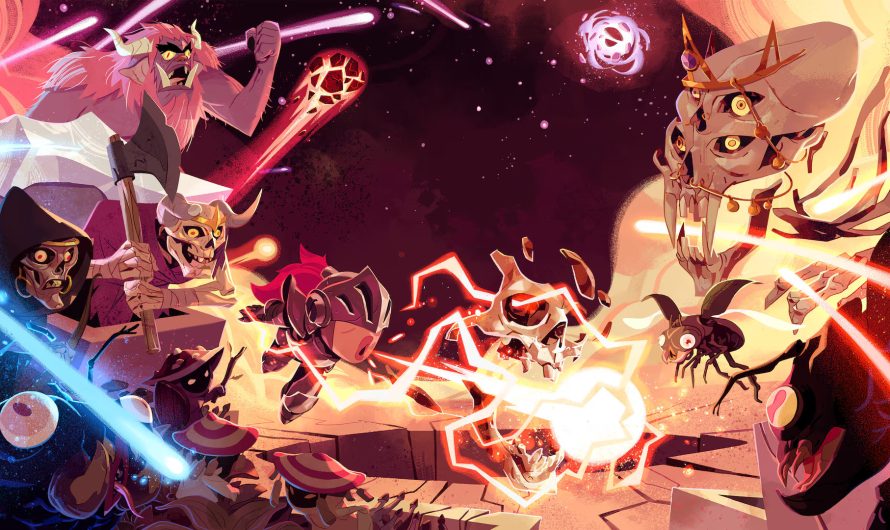
Devolver sait toujours nous concocter des jeux vidéo indés originaux et addictifs, qui sortent des sentiers battus et offre une approche artistique souvent décalée mais aussi des gameplay ingénieux. C’est tout à fait le cas ici avec Ball x Pit (testé sur PS5) qui nous emmène au cœur de Baboulone (non ce n’est pas une faute de frappe)…
Entre le casse-briques, le roguelite, le City builder… Ball x Pit est en effet un jeu à part, mais qui fait mouche.
Notre héros investit les ruines de Baboulone à la recherche de trésors, mais d’infâmes créatures squelettiques sont bien décidées à les défendre…
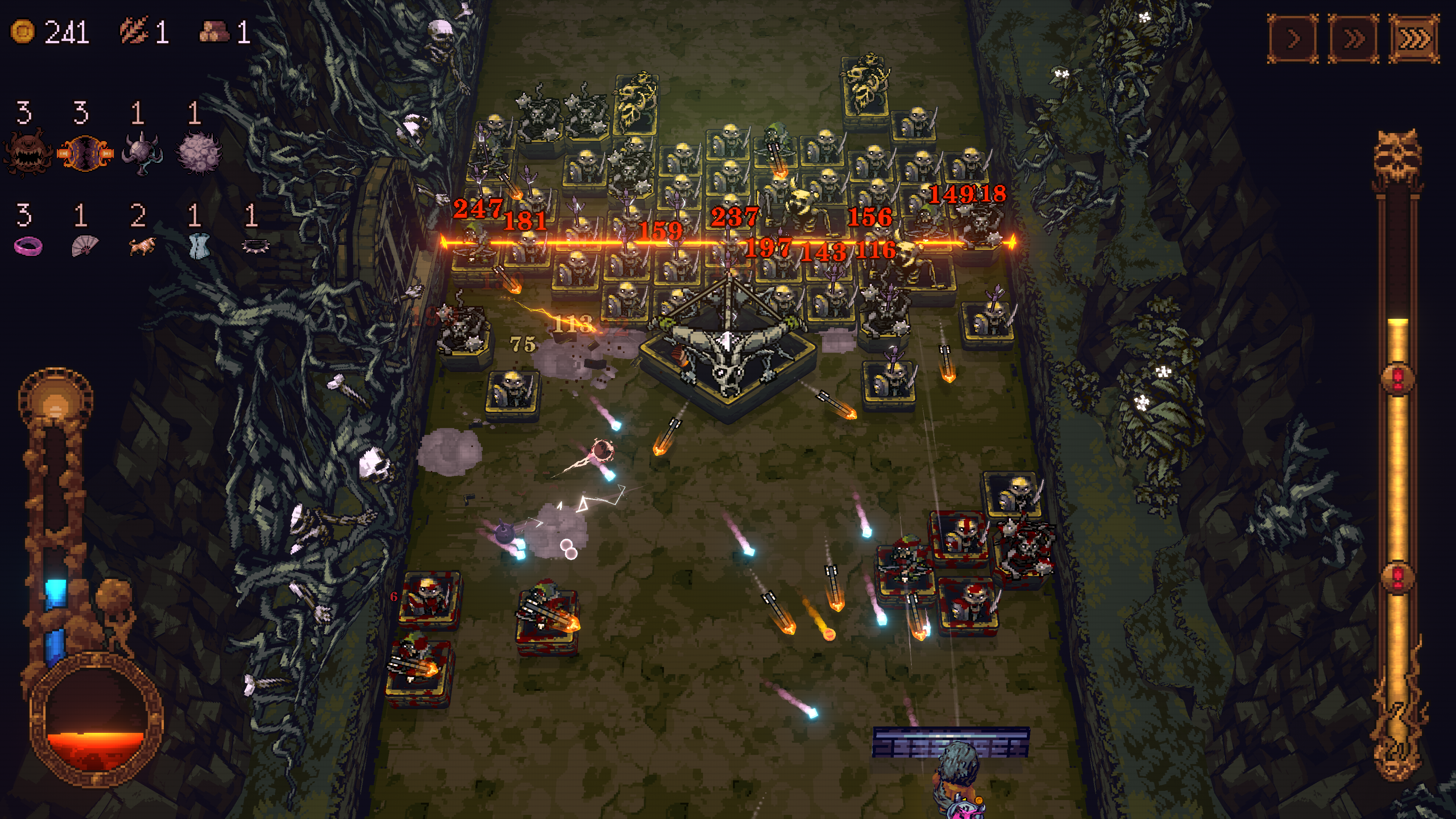
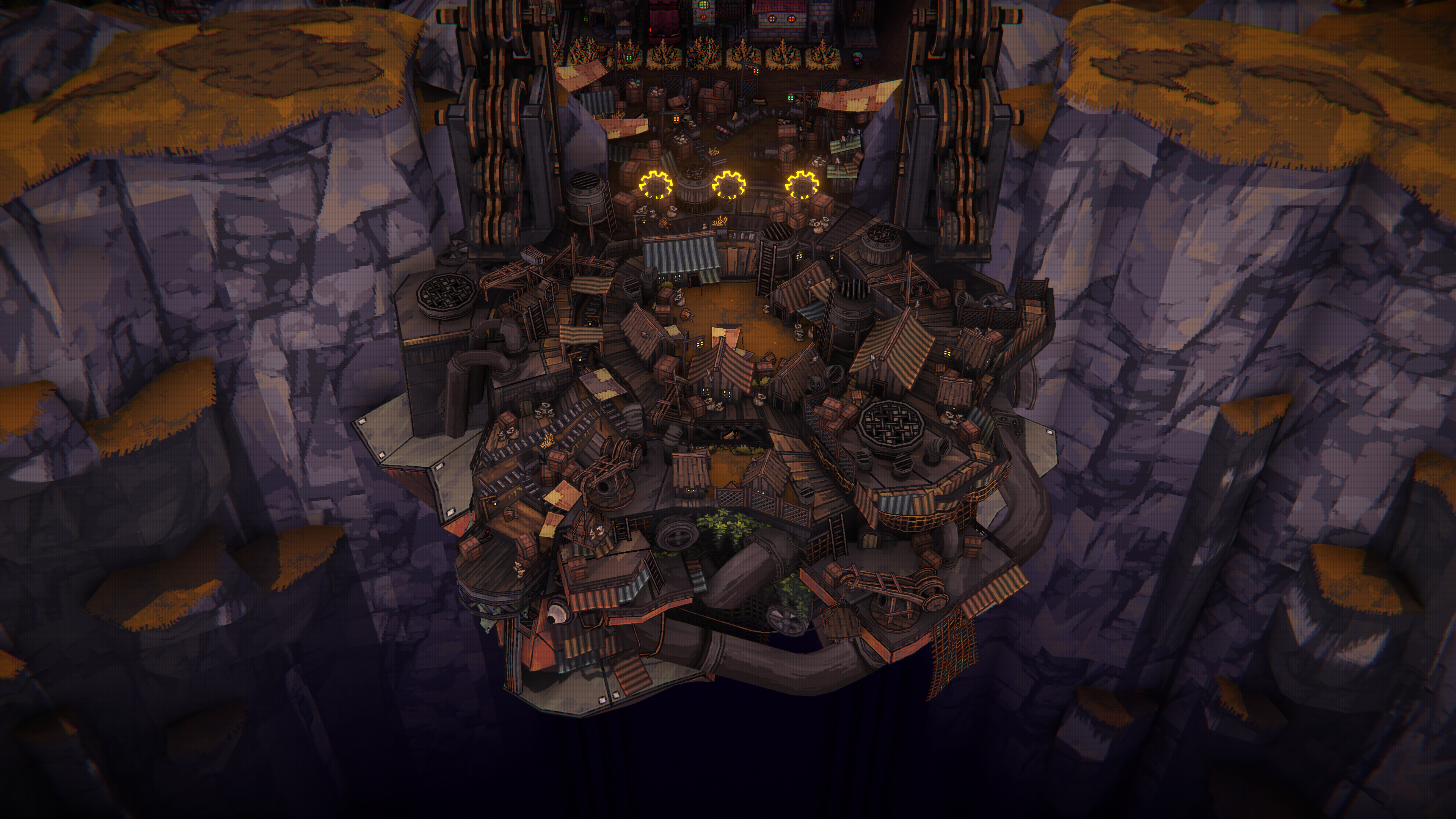
Le pitch est bref et plutôt convenu, cela dit, c’est le gameplay qui va donner du corps à tout cela puisqu’il va nous falloir reconstruire Baboulone. Ainsi, la phase de jeu principale reste le shoot en scrolling vertical. On tire alors sur les ennemis qui descendent à la manière d’un Space Invader. Et c’est en récoltant suffisamment de trésors qu’on va pouvoir construire des éléments de ville dans une partie différente du jeu…
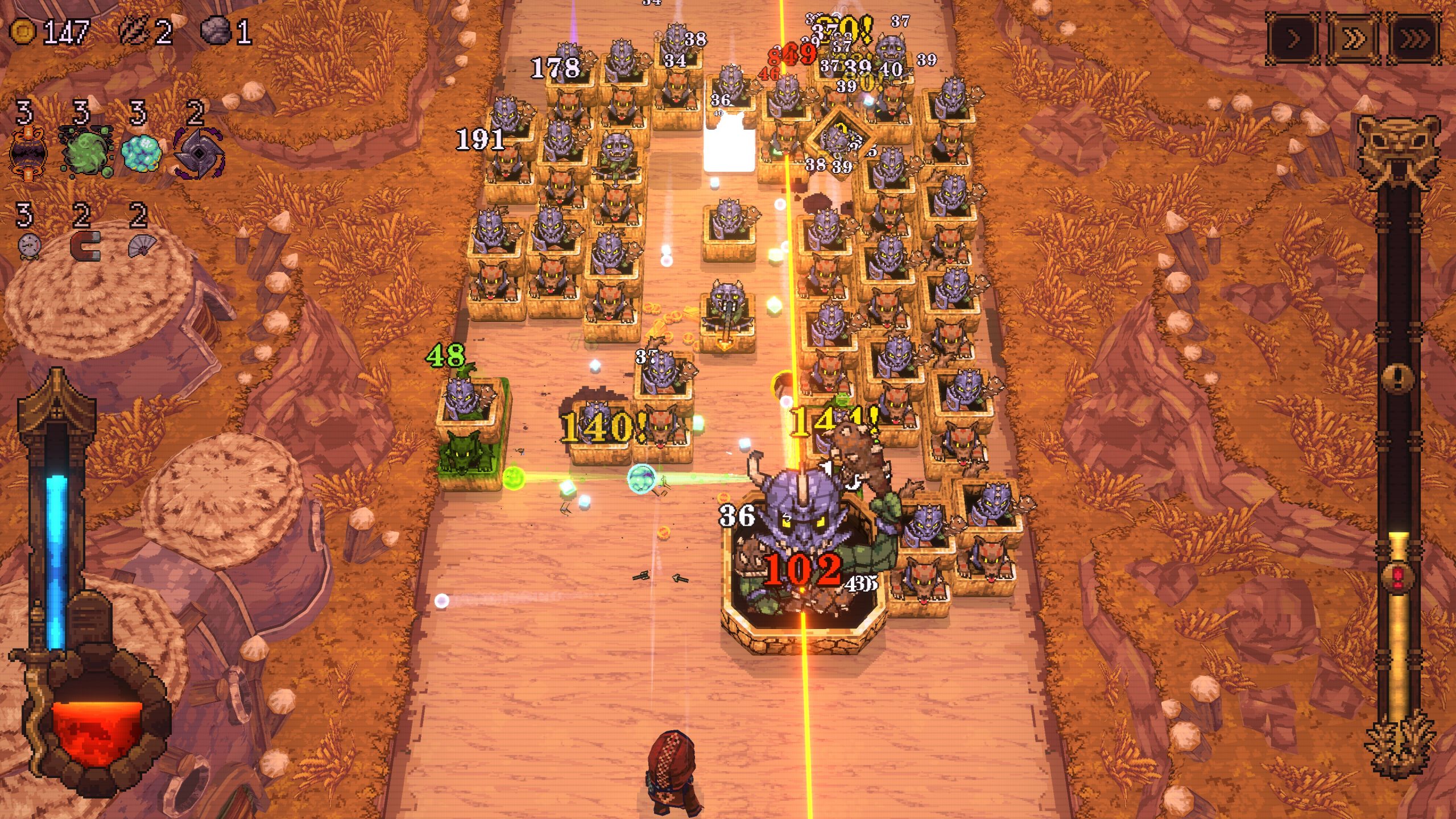
Vous mourrez souvent dans Ball x Pit, sachez-le. Mais c’est ainsi que vous allez faire évoluer votre personnage et notamment son arsenal. A la manière d’un shoot’em up, nos tirs rebondissent sur les parois et les projectiles sont nombreux. Les tableaux sont alors très chargés visuellement.
Le loot est primordial dans le jeu et c’est ainsi que le héros que vous aurez choisi pourra s’agrémenter d’armes variées selon les besoin. Entre rayons laser et ondes sismiques, il y a de quoi s’amuser et d’arriver au bout des vagues des ennemis. Mais le plus intéressant reste la possibilité de fusionner vos attaques…
Chaque stage a donc son lot de surprises et d’améliorations avec un boss à affronter à chaque fois ce qui clôture alors le niveau. C’est là que vous pourrez alors dépenser vos ressources pour construire des bâtiments mais aussi, pourquoi pas, recruter des persos qui pourront vous épauler dans vos démarches de construction. Ce côté City builder n’est pas gadget comme on pourrait le penser. Il a une vraie dimension intéressante et suffisamment développé pour avoir un intérêt dans le jeu global.
Le mix des genres apportent donc de la consistance au jeu mais aussi une certaine difficulté. Car, même si les phases de shoot semblent être un défouloir casual, il n’en est rien puisque la dimension City builder a une grande importante dans la progression générale.
Avec son approche graphique rétro et son approche assez simple dans les faits, Ball x Pit reste un jeu exigeant dans lequel il faudra s’investir un minimum pour évoluer. Le mélange des gameplay reste une force pour un jeu qui se veut original et novateur. Le pari est plutôt réussi et servi par une réalisation agréable avec une DA affirmée et une ambiance sonore dynamique. Le roguelite et la gestion de ville ne sont pas des genres qu’on aurait vu s’associer. Cependant, ici, ça fonctionne, à condition bien sûr d’apprécier ces deux genres de jeux vidéo disctincts. Ne vous fiez donc pas aux apparences en lançant Ball x Pit mais faites l’effort (si besoin) de vous lancer dans l’aventure. Il mérite le détour.
Attosecond science is undoubtedly one of the fastest growing branches of physics today.
Its popularity was demonstrated by the award of the 2023 Nobel Prize in Physics to Anne L’Huillier, Paul Corkum and Ferenc Krausz for experimental methods that generate attosecond pulses of light for the study of electron dynamics in matter.
One of the most important processes in this field is dephasing. This happens when an electron loses its phase coherence because of interactions with its surroundings.
This loss of coherence can obscure the fine details of electron dynamics, making it harder to capture precise snapshots of these rapid processes.
The most common way to model this process in light-matter interactions is by using the relaxation time approximation. This approach greatly simplifies the picture as it avoids the need to model every single particle in the system.
Its use is fine for dilute gases, but it doesn’t work as well with intense lasers and denser materials, such as solids, because it greatly overestimates ionisation.
This is a significant problem as ionisation is the first step in many processes such as electron acceleration and high-harmonic generation.
To address this problem, a team led by researchers from the University of Ottawa have developed a new method to correct for this problem.
By introducing a heat bath into the model they were able to represent the many-body environment that interacts with electrons, without significantly increasing the complexity.
This new approach should enable the identification of new effects in attosecond science or wherever strong electromagnetic fields interact with matter.
 Connexion