MSI MPG 322URX QD-OLED Review - Top-tier 4K Gaming


Using a novel spectroscopy technique, physicists in Japan have revealed how organic materials accumulate electrical charge through long-term illumination by sunlight – leading to material degradation. Ryota Kabe and colleagues at the Okinawa Institute of Science and Technology have shown how charge separation occurs gradually via a rare multi-photon ionization process, offering new insights into how plastics and organic semiconductors degrade in sunlight.
In a typical organic solar cell, an electron-donating material is interfaced with an electron acceptor. When the donor absorbs a photon, one of its electrons may jump across the interface, creating a bound electron-hole pair which may eventually dissociate – creating two free charges from which useful electrical work can be extracted.
Although such an interface vastly boosts the efficiency of this process, it is not necessary for charge separation to occur when an electron donor is illuminated. “Even single-component materials can generate tiny amounts of charge via multiphoton ionization,” Kabe explains. “However, experimental evidence has been scarce due to the extremely low probability of this process.”
To trigger charge separation in this way, an electron needs to absorb one or more additional photons while in its excited state. Since the vast majority of electrons fall back into their ground states before this can happen, the spectroscopic signature of this charge separation is very weak. This makes it incredibly difficult to detect using conventional spectroscopy techniques, which can generally only make observations over timescales of up to a few milliseconds.
“While weak multiphoton pathways are easily buried under much stronger excited-state signals, we took the opposite approach in our work,” Kabe describes. “We excited samples for long durations and searched for traces of accumulated charges in the slow emission decay.”
Key to this approach was an electron donor called NPD. This organic material has a relatively long triplet lifetime, where an excited electron is prevented from transitioning back to its ground state. As a result, these molecules emit phosphorescence over relatively long timescales.
In addition, Kabe’s team dispersed their NPD samples into different host materials with carefully selected energy levels. In one medium, the energies of both the highest-occupied and lowest-unoccupied molecular orbitals lay below NPD’s corresponding levels, so that the host material acted as an electron acceptor. As a result, charge transfer occurred in the same way as it would across a typical donor-acceptor interface.
Yet in another medium, the host’s lowest-unoccupied orbital lay above NPD’s – blocking charge transfer, and allowing triplet states to accumulate instead. In this case, the only way for charge separation to occur was through multi-photon ionization.
Since NPD’s long triplet lifetime allowed its electrons to be excited gradually over an extended period of illumination, its weak charge accumulation became detectable through slow emission decay analysis. In contrast, more conventional methods involve multiple, ultra-fast laser pulses, severely restricting the timescale over which measurements can be made. Altogether, this approach enabled the team to clearly distinguish between the two charge generation pathways.
“Using this method, we confirmed that charge generation occurred via resonance-enhanced multiphoton ionization mediated by long-lived triplet states, even in single-component organic materials,” Kabe describes.
This result offers insights into how plastics and organic semiconductors are degraded by sunlight over years or decades. The conventional explanation is that sunlight generates free radicals. These are molecules that lose an electron through ionization, leaving behind an unpaired electron which readily reacts with other molecules in the surrounding environment. Since photodegradation unfolds over such a long timescale, researchers could not observe this charge generation in single-component organic materials – until now.
“The method will be useful for analysing charge behaviour in organic semiconductor devices and for understanding long-term processes such as photodegradation that occur gradually under continuous light exposure,” Kabe says.
The research is described in Science Advances.
The post Slow spectroscopy sheds light on photodegradation appeared first on Physics World.
L'objet céleste, un rayon gamma, est lié à l'effondrement d'une étoile massive.


Fermilab has officially opened a new building named after the particle physicist Helen Edwards. Officials from the lab and the US Department of Energy (DOE) opened the Helen Edwards Engineering Research Center at a ceremony held on 5 December. The new building is the lab’s largest purpose-built lab and office space since the lab’s iconic Wilson Hall, which was completed in 1974.
Construction of the Helen Edwards Engineering Research Center began in 2019 and was completed three years later. The centre is an 7500 m2 multi-story lab and office building that is adjacent and connected to Wilson Hall.
The new centre is designed as a collaborative lab where engineers, scientists and technicians design, build and test technologies across several areas of research such as neutrino science, particle detectors, quantum science and electronics.
The centre also features cleanrooms, vibration-sensitive labs and cryogenic facilities in which the components of the near detector for the Deep Underground Neutrino Experiment will be assembled and tested.
With a PhD in experimental particle physics from Cornell University, Edwards was heavily involved with commissioning the university’s 10 GeV electron synchrotron. In 1970 Fermilab’s director Robert Wilson appointed Edwards as associate head of the lab’s booster section and she later became head of the accelerator division.
While at Fermilab, Edwards’ primary responsibility was designing, constructing, commissioning and operating the Tevatron, which led to the discoveries of the top quark in 1995 and the tau neutrino in 2000.
Edwards retired in the early 1990s but continued to work as guest scientists at Fermilab and officially switched the Tevatron off during a ceremony held on 30 September 2011. Edwards died in 2016.
Darío Gil, the undersecretary for science at the DOE says that Edwards’ scientific work “is a symbol of the pioneering spirit of US research”.
“Her contributions to the Tevatron and the lab helped the US become a world leader in the study of elementary particles,” notes Gil. “We honour her legacy by naming this research centre after her as Fermilab continues shaping the next generation of research using [artificial intelligence], [machine learning] and quantum physics.”
The post Fermilab opens new building dedicated to Tevatron pioneer Helen Edwards appeared first on Physics World.


Microsoft Excel est un tableur graphique pour interface graphique, une nouvelle génération apparue avec le Apple Lisa, et Excel créé pour le Macintosh par nul autre que Bill Gates en personne, lui donnant aussi accès aux documentations internes du Macintosh qui une fois photocopiées ont donné lieu à Microsoft Windows.

Microsoft Excel est donc lié à la fois au Macintosh et à Windows ! Et après une longue guerre menée par Microsoft, devenu le tableur de référence, en ayant écarté tous les autres du marché par des moyens plus ou moins illicites...
Mais savez-vous qu'il existe une discipline de e-sport avec Excel, et son championnat mondial ?
Régulièrement gagnée par des responsables d'entreprises spécialisées dans les données, les nerds des nerds, cette épreuve se joue à la fois sur la vitesse, par élimination du plus lent à chaque 5 minutes, mais aussi et évidemment sur le résultat au bout de 30 minutes.
Je vous avouerais que j'ai été étonné en découvrant cela, puis en y réfléchissant posément, je me suis dit que oui c'était une véritable épreuve de e-Sport, et je me demande quand apparaitront les épreuves de bash ou zsh, et pour les plus pros celle de Emacs avec LateX...
Découvrez en plus avec cet ancien sujet de Kombo sur YouTube.
Et vous, êtes-vous un pro d'Excel ?
A proposed new way of defining the standard unit of electrical resistance would do away with the need for strong magnetic fields when measuring it. The new technique is based on memristors, which are programmable resistors originally developed as building blocks for novel computing architectures, and its developers say it would considerably simplify the experimental apparatus required to measure a single quantum of resistance for some applications.
Electrical resistance is a physical quantity that represents how much a material opposes the flow of electrical current. It is measured in ohms (Ω), and since 2019, when the base units of the International System of Units (SI) were most recently revised, the ohm has been defined in terms of the von Klitzing constant h/e2, where h and e are the Planck constant and the charge on an electron, respectively.
To measure this resistance with high precision, scientists use the fact that the von Klitzing constant is related to the quantized change in the Hall resistance of a two-dimensional electron system (such as the one that forms in a semiconductor heterostructure) in the presence of a strong magnetic field. This quantized change in resistance is known as the quantum Hall effect (QHE), and in a material like GaAs or AlGaAs, it shows up at fields of around 10 Tesla. Generating such high fields typically requires a superconducting electromagnet, however.
Researchers connected to a European project called MEMQuD are now advocating a completely different approach. Their idea is based on memristors, which are programmable resistors that “remember” their previous resistance state even after they have been switched off. This previous resistance state can be changed by applying a voltage or current.
In the new work, a team led by Gianluca Milano of Italy’s Istituto Nazionale di Ricerca Metrologia (INRiM); Vitor Cabral of the Instituto Português da Qualidade; and Ilia Valov of the Institute of Electrochemistry and Energy Systems at the Bulgarian Academy of Sciences studied a device based on memristive nanoionics cells made from conducting filaments of silver. When an electrical field is applied to these filaments, their conductance changes in distinct, quantized steps.
The MEMQuD team reports that the quantum conductance levels achieved in this set-up are precise enough to be exploited as intrinsic standard values. Indeed, a large inter-laboratory comparison confirmed that the values deviated by just -3.8% and 0.6% from the agreed SI values for the fundamental quantum of conductance, G0, and 2G0, respectively. The researchers attribute this precision to tight, atomic-level control over the morphology of the nanochannels responsible for quantum conductance effects, which they achieved by electrochemically polishing the silver filaments into the desired configuration.
The researchers say their results are building towards a concept known as an “NMI-in-a-chip” – that is, condensing the services of a national metrology institute into a microchip. “This could lead to measuring devices that have their resistance references built-in directly into the chip,” says Milano, “so doing away with complex measurements in laboratories and allowing for devices with zero-chain traceability – that is, those that do not require calibration since they have embedded intrinsic standards.”
Yuma Okazaki of Japan’s National Institute of Advanced Industrial Science and Technology (AIST), who was not involved in this work, says that the new technique could indeed allow end users to directly access a quantum resistance standard.
“Notably, this method can be demonstrated at room temperature and under ambient conditions, in contrast to conventional methods that require cryogenic and vacuum equipment, which is expensive and require a lot of electrical power,” Okazaki says. “If such a user-friendly quantum standard becomes more stable and its uncertainty is improved, it could lead to a new calibration scheme for ensuring the accuracy of electronics used in extreme environments, such as space or the deep ocean, where traditional quantum standards that rely on cryogenic and vacuum conditions cannot be readily used.”
The MEMQuD researchers, who report their work in Nature Nanotechnology, now plan to explore ways to further decrease deviations from the agreed SI values for G0 and 2G0. These include better material engineering, an improved measurement protocol, and strategies for topologically protecting the memristor’s resistance.
The post Memristors could measure a single quantum of resistance appeared first on Physics World.


[MàJ] Alors que Netflix a fait l'annonce à ses clients, Warner a décidé de surenchérir sur son offre. Une bataille serrée s'annonce donc.
Netflix a annoncé avoir conclu un accord pour racheter le studio Warner Bros et ses contenus pour la somme de 82,7 milliards de dollars.
Avec ces contenus la société va étoffer considérablement son offre de contenus alors que la concurrence fait rage dans le secteur du streaming vidéo
Amazon et Disney on déjà eux aussi racheté nombre de sociétés. Apple fidèle à elle-même ne fait pas ce genre de choses mais préfère développer sa propre offre.
Cette revue de presse sur Internet fait partie du travail de veille mené par l’April dans le cadre de son action de défense et de promotion du logiciel libre. Les positions exposées dans les articles sont celles de leurs auteurs et ne rejoignent pas forcément celles de l’April.
✍ Thierry Noisette, le dimanche 7 décembre 2025.
20 organisations invitent à passer au Libre et demandent la liberté de choix informatique, dès l’acte d’achat, avec l’affichage des coûts des licences et la possibilité d’acheter un ordinateur sans système d’exploitation imposé.
Et aussi:
Le jeudi 4 décembre 2025.
Victoire en vue pour le logiciel libre en France: après l’Assemblée, le Sénat vote la fin de la certification tierce obligatoire pour les logiciels de caisse, jugée trop coûteuse et inadaptée. L’avis de l’APRIL.
✍ Mathieu M., le mercredi 3 décembre 2025.
Longtemps cantonné à une niche d’experts, Linux connaît une croissance spectaculaire sur les PC de bureau. Sa part de marché a triplé en quatre ans, largement alimentée par des utilisateurs fuyant un Windows jugé trop contraignant. Entre la fin du support de Windows 10 et l’essor du gaming, l’OS libre est devenu une alternative crédible pour des millions de personnes.
✍ Webb Wright, le mercredi 3 décembre 2025.
Avec des résultats impressionnants, la dernière version open-source du modèle d’IA chinois relance la question de savoir si les modèles propriétaires en valent la peine.
Commentaires : voir le flux Atom ouvrir dans le navigateur
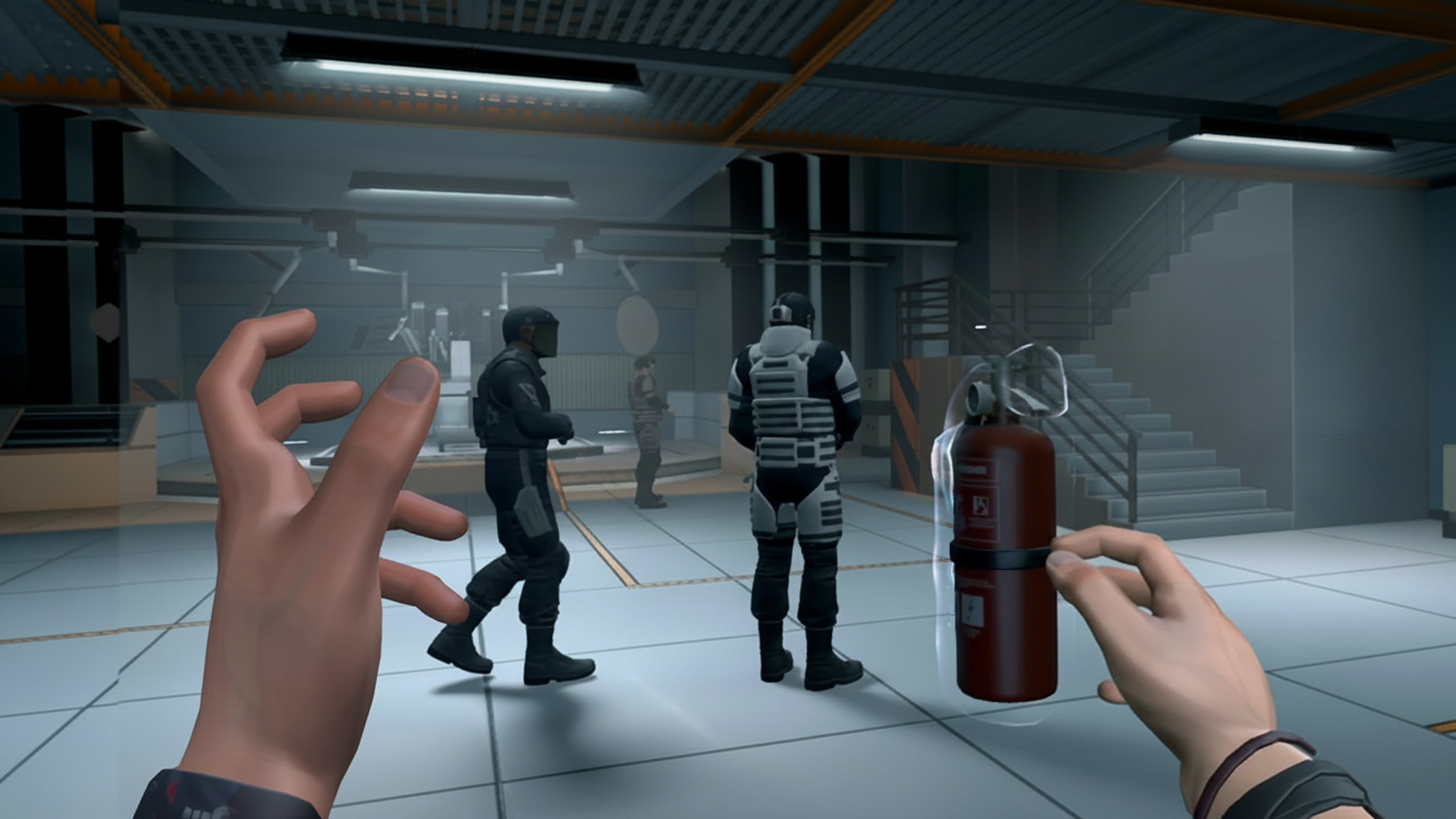
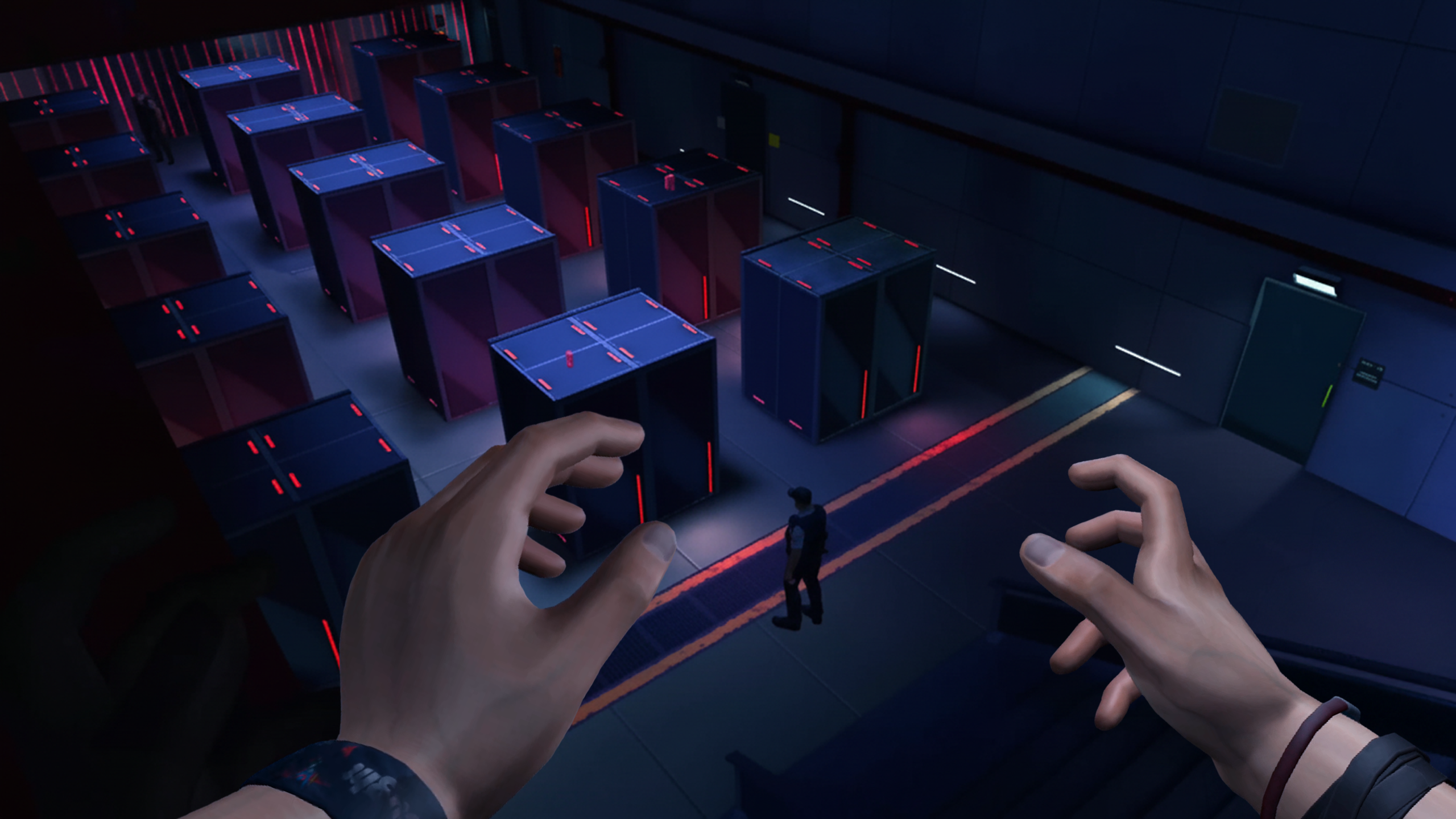
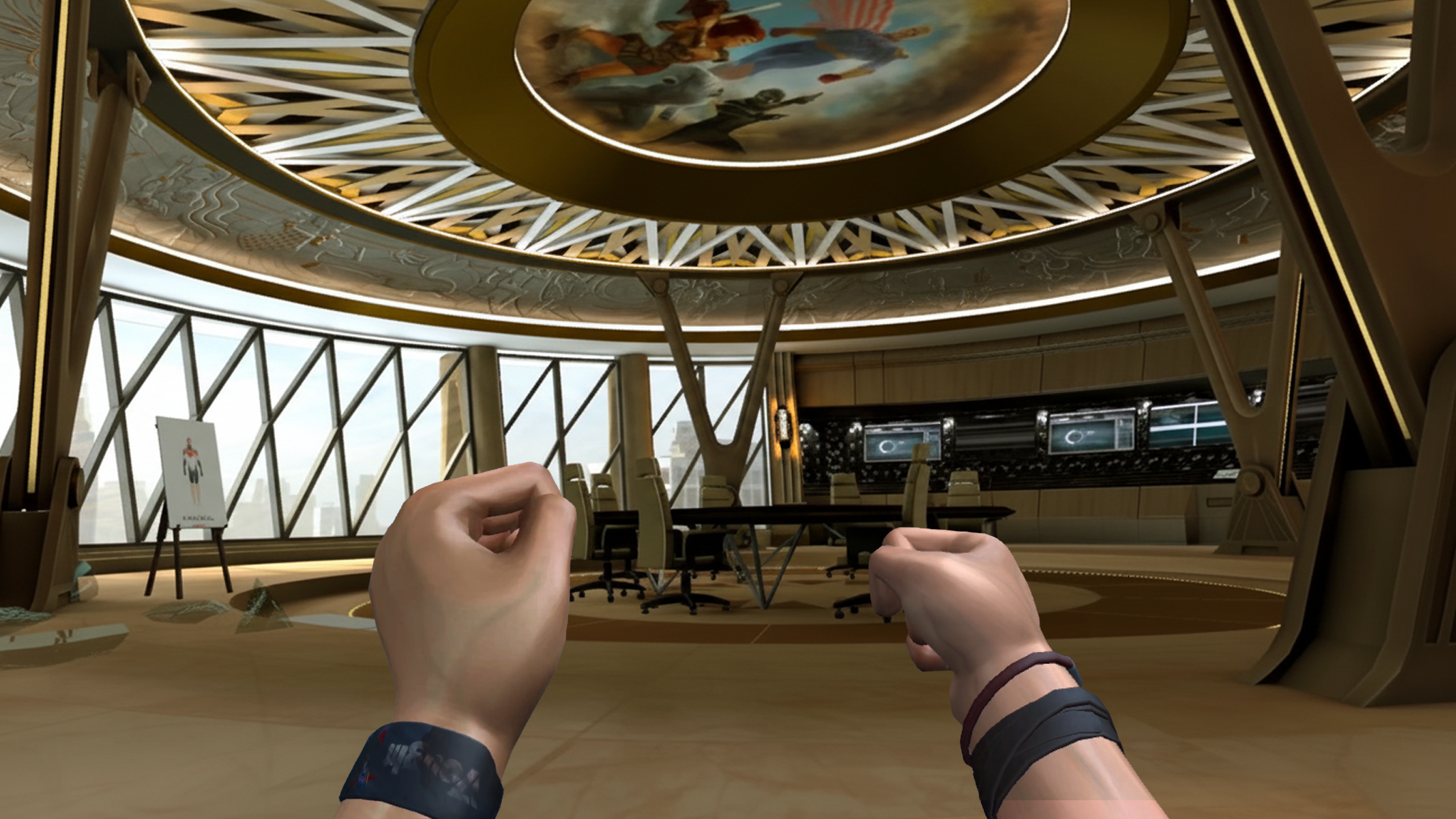
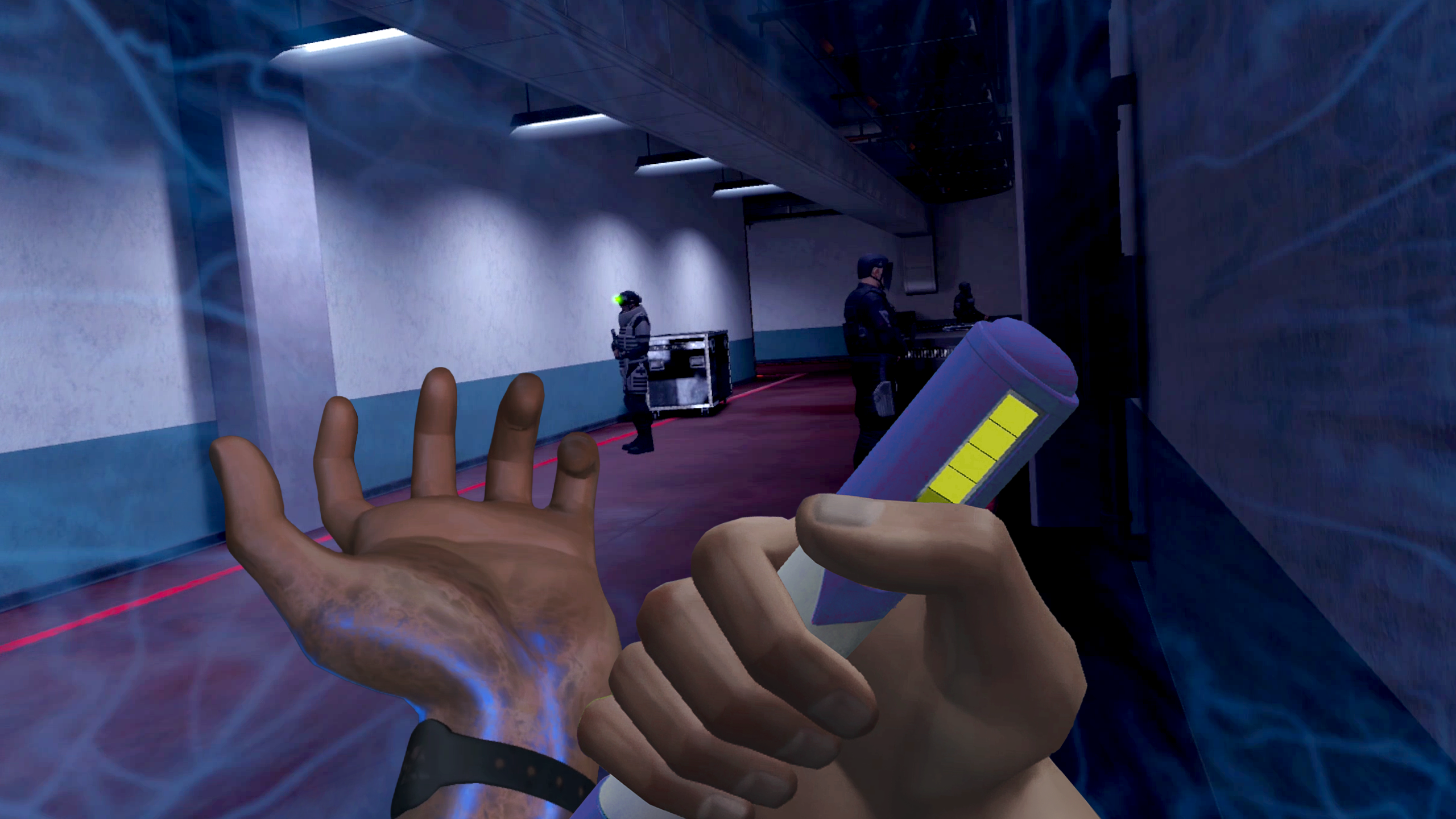
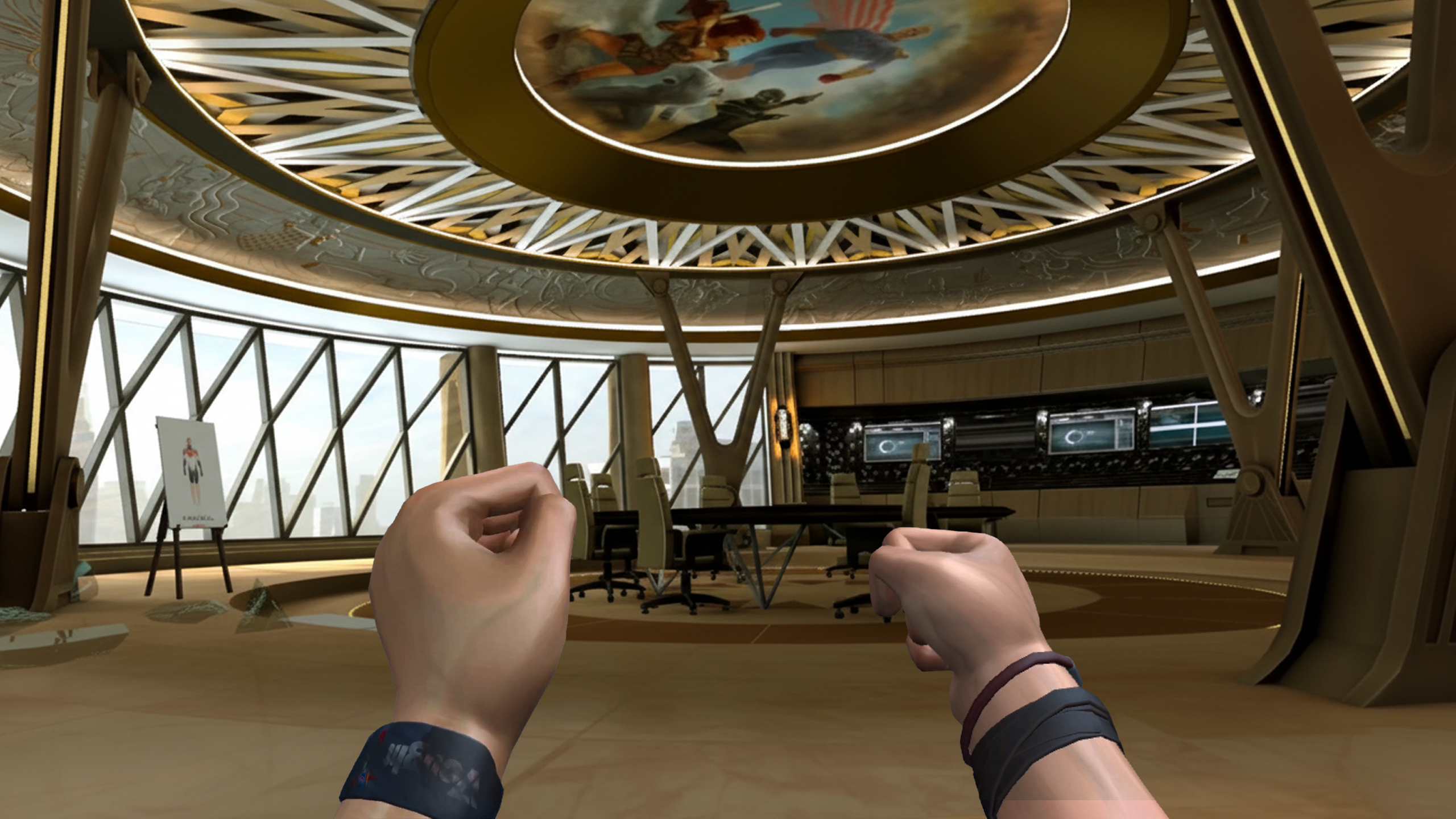
ARVORE revealed an adaptation of The Boys is coming to VR with cast members from the TV show lending their voices.
Brazil-based ARVORE is the studio behind the Pixel Ripped series and they've teamed with Sony Pictures Virtual Reality as publisher on a "stealth-action" VR game coming in 2026. The Boys is about to enter its final season on Amazon next year, though Amazon's association with the VR project appears to be simply as a producer for the show.
I'm getting a Five Nights At Freddy's meets BioShock vibe from the reveal trailer, which shows a theme park ride setting for its pre-rendered sections before meeting Homelander. Developers say the game "introduces an original character who accidentally uncovers a grotesque Vought secret that turns a family outing into carnage. Forced to become a Supe, the player joins The Boys to infiltrate Vought and take revenge in the most chaotic way possible. Blending stealth and combat with the franchise’s signature dark humor, the VR title delivers a new story rooted in the world fans love."
The full announcement trailer is embedded below and I've cut what looks like the available gameplay video above. Actors including Laz Alonso (Mother’s Milk), Colby Minifie (Ashley Barrett) and P.J. Byrne (Adam Bourke) reprise their roles with a "twisted interpretation" of Soldier Boy from Jensen Ackles.
We'll be curious to go hands-on with Trigger Warning as soon as we can. With Stranger Things VR out now, Deadpool VR available now and Teenage Mutant Ninja Turtles on the way, there's a wide range tonally to adapt TV and movies to VR and we'll be curious where ARVORE lands when it comes to representing The Boys.
Wishlists and pre-ordering are available on the PlayStation Store and Quest.


Google's Android XR is getting an AI feature that can turn any 2D content, including games streamed from your PC, into 3D in real-time.
Called System Autospatialization, Google formally announced the feature during The Android Show: XR Edition today, saying that it will arrive in 2026.
"Just imagine if every game was immersive, every YouTube video was immersive, if the entire web was immersive," Google teased.
Out of the box, on an OS level, other platforms like visionOS and Pico OS let you easily turn 2D photos 3D, but Google's Android XR is currently the only for headsets that does the same for video, and the jump to real-time spatialization will be an even bigger leap.
That's not to say real-time spatialization doesn't exist anywhere else, with Viture virtual monitor glasses having a similar feature, as well as some experimental PC VR apps. But it's surprising that it's possible on the XR2+ Gen 2 chipset while it's also handling a full XR operating system.
Google's depiction of Android XR's System Autospatialization.
Google says it will work for "pretty much any" app, and in multiple apps at once. The company's presentation depicted it being used for playing Cities: Skylines streamed from a PC, with the AI system depicted being able to tell the difference between the foreground UI and background game world.
We'll be sure to test the feature out when it launches on Android XR for Samsung Galaxy XR next year, as Google is making enormous claims here about the feature's capability.
UploadVRDavid Heaney

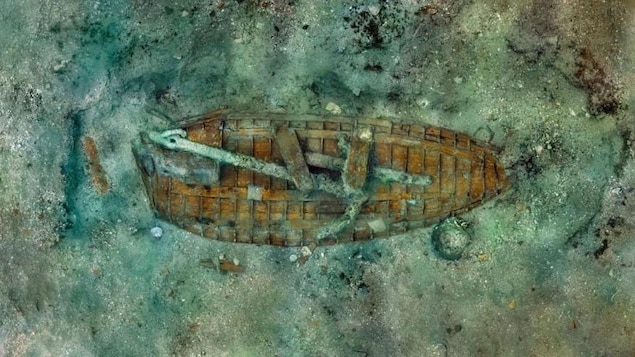
La carène de cette embarcation de plus de 35 mètres gisait dans les profondeurs du port d'Antirhod.


Assassin’s Creed Shadows est disponible depuis le 20 Mars 2025 mais nous avons eu l’occasion de tester la nouvelle version Nintendo Switch 2. Ubisoft continue de porter ses AAA sur la dernière console de Nintendo, ce qui ravit les joueurs comme moi. A noter que le jeu est disponible en physique mais seulement en game key card ou sinon en dématérialisé. Cette nouvelle version exige une connexion pour pouvoir utiliser le système de cross-save sans tracas.

Ce portage a nécessité beaucoup de travail de la part des équipes d’Ubisoft et cette nouvelle édition est d’une grande qualité mais souffre des contraintes techniques de la Nintendo Switch 2. Cependant il y’a encore quelques années ce type de jeu était impensable sur la première console. C’est avec plaisir que j’ai redécouvert ce jeu et j’ai pris énormément de plaisir à parcourir ce Japon féodal en mode portable et aussi sur ma TV. Toutefois, il est préférable de jouer sur un écran PC si vous souhaitez jouer en mode docker. Cela permet d’éviter les baisses de framerate que j’ai constaté sur une TV 4K.

Assassin’s Creed Shadows vous permet de découvrir le Japon féodal grâce à une histoire de vengeance à travers 2 points de vue différents. Vous incarnez Yasuke et Naoé, deux personnages très différents mais qui partagent tous les deux une volonté inébranlable. Naoé est une ninja et n’est pas forcément adaptée au combat rapproché. Il vous faudra jouer avec vos outils et vos techniques de furtivité pour tuer vos ennemis et réussir vos missions sans trop mourir. Yasuke est un samurai imposant qui n’hésite pas à utiliser sa force pour vaincre les hordes d’ennemis face à lui. Cependant il n’est pas du tout fait pour la furtivité mais encaisse les coups contrairement à Naoé. Le test plus complet du jeu est disponible sur le blog et vous permet d’avoir plus de détails sur l’un des open-world de cette année.


Assassin’s Creed Shadows Edition Switch 2 ajoute quelques nouveautés : l’écran tactile de la console pour les menus et la carte, un mode portable optimisé avec une résolution plus basse, des bonus et tous les derniers ajouts et contenus gratuits.
Personnellement, je trouve que ce portage est d’excellente qualité et permet aux joueurs Switch de jouer à un très bon AAA. J’ai préféré jouer en mode portable mais le mode docker tourne en 1080p et 30fps en moyenne. La batterie de la console fond comme neige au soleil car le jeu demande beaucoup de ressource à la console. N’hésitez pas à vous munir de votre chargeur si vous souhaitez jouer en mode portable. Je recommande chaudement cette nouvelle version d’Assassin’s Creed Shadows, en espérant avoir d’autres portages de ce genre sur cette nouvelle console.
Test réalisé par Pierre
Cet article TEST de ASSASSIN’S CREED SHADOWS version Switch! est apparu en premier sur Insert Coin.