↩ Accueil

Vue lecture

Darshan Shankar Reflects On 10 Years Of Bigscreen Beta As Beyond 2 Production Ramps

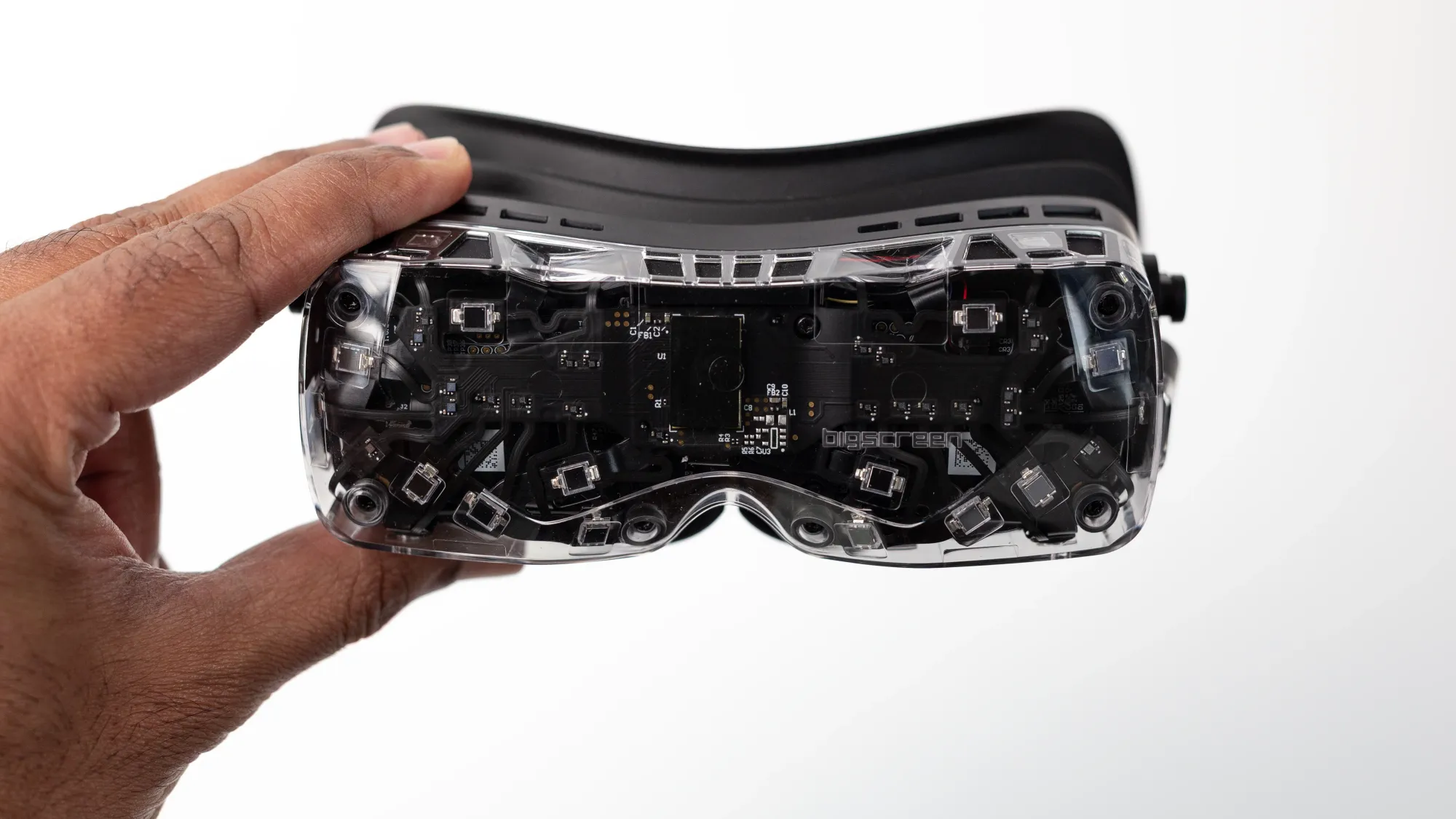
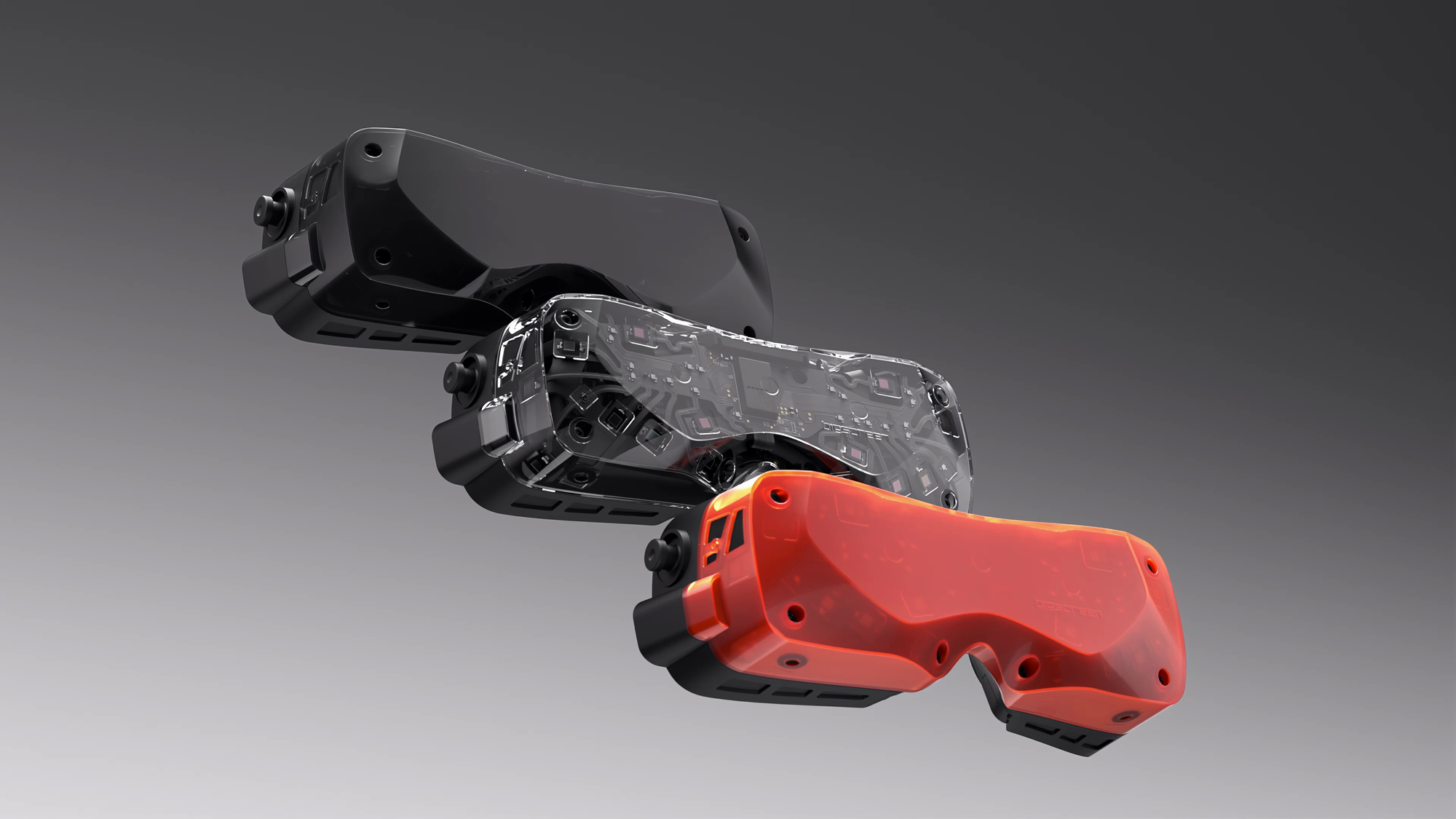
Bigscreen founder Darshan Shankar believes Beyond headsets could be among the top five systems in use on Steam in the next few years.

On that path, Shankar hopes to fully catch up to demand for Beyond 2 headsets in February so they "ship within 1-2 business days, including custom-fit and universal-fit orders." In April, Bigscreen marks 10 years of shared co-watching in VR on Steam with Shankar suggesting over email "perhaps we'll keep the 'beta' tag forever."

Shankar said Valve's announcement of Steam Frame coincided with "one of our biggest sales days" as "the Beyond 2 has become the obvious upgrade path for those who want ultra-lightweight high-resolution micro-OLED and still use their preferred SteamVR tracking/controller setup."

With Valve preparing to launch the Frame headset, I asked Shankar whether Bigscreen would support flat screen co-watching to devices like Steam Deck. Shankar responded:

"This has regularly come up in the past decade. We've stayed focused on VR, and I think that's our strength. Many others (especially Valve) will do a good job of cross-play across PC and VR. We're focused on the areas in which we think we have an exceptional edge in capability and knowledge. We have nothing to announce yet on our software development, need more time to develop :) but we haven’t been sitting idle, that’s for sure.

Bigscreen just launched Dynamic Foveated Rendering for the Beyond 2e headset with early access in iRacing and DCS World among the first to explore support for the feature, which promises "eye tracking-driven performance improvements." I purchased a Beyond 2 without eye tracking and received it near the end of 2025 to keep my base stations in service another couple years. We'll be curious to hear reports from 2e customers when it comes to their real world performance using the feature.

"Many customers – hundreds of thousands around the world – are actively using SteamVR Base Stations and Controllers right now with their Valve Index, HTC Vive, etc., and the Beyond 2 has become the obvious upgrade path for those who want ultra-lightweight high-resolution micro-OLED and still use their preferred SteamVR tracking/controller setup," Shankar wrote. "We are firmly committed to manufacturing the Beyond 2 with SteamVR Lighthouse tracking for the next 2 years. We can say this with certainty as we've inventoried components and have setup a continuously running production line. We've signed commitments to enterprise customers as they are reliant on our hardware for their businesses."

Beyond 2 was announced in March 2025, shipping started in July 2025 with a universal fit cushion shipping near the end of the year.

"December is our biggest month of shipping, shipping more units in a single month than we typically did in an entire year with Beyond 1 in 2023 or 2024," Shankar wrote. "We faced a lot more demand than we expected, with Beyond 2 already selling approximately 3 times more than Beyond 1 did."

"We thought we would have inventory on hand for fast-shipping by August/September, but demand has just been too high. Each time we ramp up supply/production, demand was going up even further."

The Steam Hardware Survey suggests that, as of this writing, Beyond headsets still need to climb past PlayStation VR2, Meta Quest Pro and both Windows Mixed Reality and the Oculus Rifts to make it into the top five.

"Perhaps within 1-2 years, we'll be Top 5 alongside Steam Frame, Quest 3, etc," Shankar wrote. "Beyond 2e's built-in eyetracking cameras is the first computer vision-driven product we've shipped. It should be no surprise that we'll eventually have more cameras inside Bigscreen Beyond, but there is no timeline for that. Camera R&D started years ago, and it'll still take years before we release anything. The bar is very high for any camera-based feature."

"I think the size of the existing SteamVR ecosystem is underestimated, and with Steam Frame dropping Lighthouse support, we're actually seeing growing sales."

Shankar said 2026 will see Bigscreen focus on expanding the company's international presence.

"We currently sell in the US, Japan, Canada, UK, Europe, Australia, and New Zealand (>50% of sales are international). To improve the speed of European fulfillment and support, we're planning to open a facility in The Netherlands in early 2026," Shankar wrote. "It currently takes 3-10 days to ship products into the EU from our Los Angeles factory, and we aim to improve this to 1-2 days with our local European center," Shankar wrote. "We've achieved meaningful scale as a company (expecting to cross $100 million in annual revenue in the next year). We've stayed true to our values, built by passionate VR enthusiasts for VR enthusiasts, and we're here for the long run."
  •  

The Cyberdeck: How Personal Computing Enters VR

William Gibson's 1984 novel Neuromancer describes jacking into "the consensual hallucination" of "the matrix" with a "custom cyberspace deck" projecting one's "disembodied consciousness" there. The hardware necessary to spend time in VR is a "cyberspace deck" seen "banging against" the hip of the main character.

In 2026, the "Realworld cyberdecks" page on Reddit says "The era of virtual reality is coming, so it is also time for cyberdecks to come" as hundreds contribute new rigs weekly.

If the "era of virtual reality" is coming and a "cyberspace deck" is how we get there, what do the first “realworld” decks look like? What are their functions?

Unlocking Digital Data In VR By Locking It To The Real World

What is a cyberdeck?

My custom deck begins at a couple terabytes of local storage of videos, photos, music, games, and other personal files. I've been able to access this data store in VR since about 2016 with Virtual Desktop. I don't buy much software from Microsoft, though, so my data has been an ill fit inside Windows. Looking ahead, I’d love to build on my data with a Framework laptop to drive VR directly with Linux. In the meantime, I'm using macOS, iOS, Windows 11, SteamOS, and various flavors of Android to operate my file systems.

Many of us already carry, at the very least, 50 gigabytes of storage in our phones everywhere we go. Is it so difficult for us to imagine a couple years more and almost everyone finding use for terabytes carried with us?

After roughly a decade of headsets from Gear VR in 2014 to Quest 3 in 2023, when the Vision Pro arrived in 2024 I first experienced a standalone system unlock terabytes of digital information to use in VR. Apple brought apps from my iPad and iPhone, sure, but I also started perusing my own personal data store on local drives wirelessly through Mac Virtual Display. When I use the feature, my Mac's screen turns off in the "realworld" and a resizable virtual panel opens in VR instead. If anybody else happens to be watching my screen my data isn't displayed there anymore. For some scenarios that's a bug, but for many it's a feature.

Gibson's fiction understood the value of cyberspace before "the matrix" could actually be. Now VR is a consumer reality and our model for personal storage of digital content collides with Gibson's idea of a deck and the technical delivery of cyberspace. For example, you discover the confines of your digital keepers when you apply personal computing to your life without any specific platform limitations. The FAT god commands us to store no file greater than 4 gigabytes. And beware special characters in thy filenames.

In my view, a "custom deck" starts with pouring one's personal data into any portable device. MicroSD cards are readable in Steam Decks and Steam Frames while thumb drives include their universal connector. So you can start building a deck starting from a $15 thumb drive or MicroSD card, and build up over time to a multi-thousand dollar laptop with the very latest graphics card to cyberspace.

Entry Level Decks

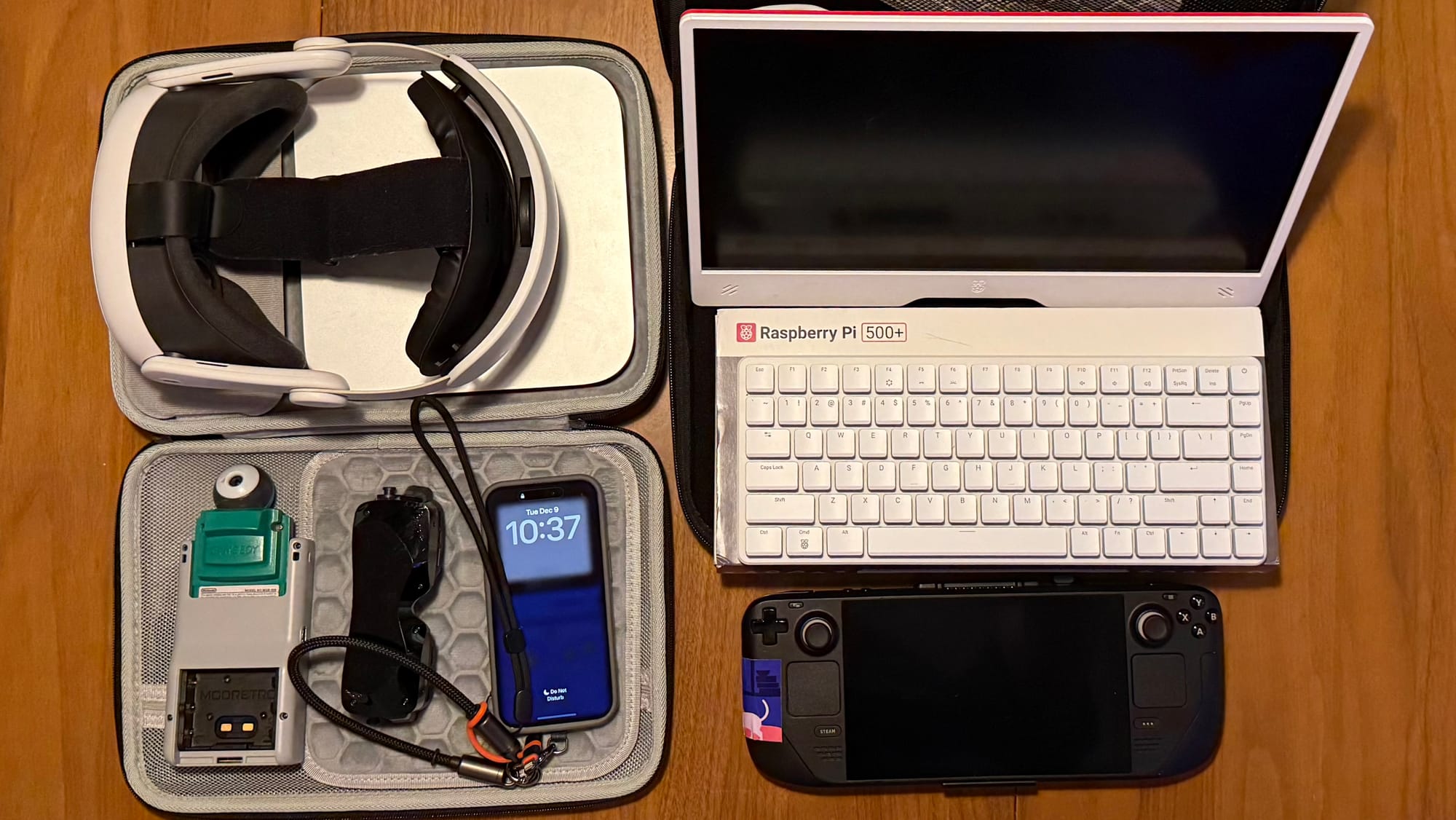
Hanging from a bag in the corner of my office is the latest personal computer from Raspberry Pi. Described as a "premium desktop computer" the Raspberry Pi 500+ is a keyboard selling for $200 with a 256-gigabyte solid-state drive built in running Linux.

Just send USB-C power into the Raspberry Pi and the keyboard starts computing. I used the included tools for the 500+ to unscrew the bottom of the keyboard and swap out its drive. The custom computer boots to the desktop quickly and now carries four terabytes of storage underneath satisfying mechanical keys.

Now I just need somewhere to display my files.

Conceptually, Raspberry Pi and I put together a custom deck of hardware and software that's cheaper and more portable than anything made by Apple. The Pi doesn't take me to cyberspace but it can display in cyberspace, and I can access it there as if from a floating terminal just like my Mac. And all of it is running in the space occupied by the keyboard traditionally used to operate a personal computer.

Wi-Fi and Bluetooth emanate from the keyboard. In the back, ethernet, USB and micro HDMI ports connect physical accessories. The biggest problem is that the year is 2026 and we don't have the easy-to-use software I need in virtual reality to access my deck's files wirelessly. Instead, I hack my keyboard PC into VR by any means necessary. That means dealing with stuff like VNC and IP addresses or perhaps a latency-inducing capture card.

The Steam Deck offers access to Linux in a more user-friendly handheld console-like form factor compared with any Pi or Mac. If logging into Steam online before you can do fun things with your computer is too restrictive, then you can build your own deck of hardware and software and log in online only if you want.

A Framework For The Future

Readers who invest multiple thousands of dollars in their personal computing rigs know $200 or even $500 doesn't truly buy a "premium desktop computer". If a Raspberry Pi can only display a flat screen in VR, then a Framework laptop should be able to fully embrace the concept of a cyberdeck carrying an NVIDIA RTX 5070 and 64 gigabytes of RAM.

My ideal configuration for a personal computer essentially matches the price of a top-of-the-line headset for a top-of-the-line deck that's upgradeable for years. To me, it doesn't really matter if my "deck" starts with my data on a thumb drive in a well-structured folder system, or if there's a complex operating system and graphics card and central processor with a virtual assistant managing my data. The computer becomes "custom" and "personal" when I put my data inside.

The aim is to bring personal computing with me wherever I go. It's not to the cafe or on a plane I really care about my deck of data and hardware going. Sure, those places would be great, but the most important place a deck goes is in VR.

Everyone Already Owns A Cyberdeck Lacking Direct VR Support

Bigscreen Beyond 2 needs a deck.

A cyberdeck is the missing key to Bigscreen Beyond.

As long as you're seated there in your chair and have a good supply of clean power, conceptually speaking, Bigscreen Beyond and a Framework laptop should put you in cyberspace when the headset touches your face.

Yes you need lasers sweeping the room right now for Beyond and a network connection added to this core experience would bring a lot. Yes you could also add accounts, friends, entitlements, digital rights management and thousands upon thousands of other services and software packages as with any open computer.

Whether Beyond is running from a desktop PC or the Framework laptop is a secondary concern. All that fundamentally matters is that when you go to VR you have at your fingertips a storage device you can separate from your computer with all your personal and favorite files organized, indexed, searchable, accessible and playable.

As of this writing, data portability in the "cloud" typically means waiting hours or days to download a store of information from a provider. There's a more immediate and extreme example of data portability, however, and we've had it for decades with removable storage systems.

If you have the freedom to immediately unplug both your content and yourself from the network and the headset, you also have the freedom to take your stuff with you anywhere and everywhere, in VR or otherwise.

From MP3 Players & Headphones To PCs & Assistants

Over the last quarter century, the MP3 player became the iPod and music libraries became the launchpad for iPhone – a new kind of hyper-connected deck filled with personal information. From iPhone and Android, our pocket decks consumed almost every product category of personal computing and remade a few others.

Something new is happening with spatial computing starting with experiences in virtual reality and extending into passthrough views and mixed reality. Any surface can become a touch-sensitive display. And our existing touch-sensitive displays become even more useful accepting touch input while turning off the flow of photons. They just send that data as bits over the network when needed. With reskinnable passthrough views, that "deck" in hand can become anything from a camera to a map to a tool to drag objects. Even non-interactive displays can become frames for new functionality. Watch a movie with closed captions while a friend seated on the same couch enjoys the same film in 3D without any text distractions.

That's just for starters. Now imagine looking down at your phone in hand in VR and swiping along its surface, but in the real world the screen is off. Or imagine playing Breath of the Wild while standing in Hyrule and holding a Sheikah Slate.

Like the words "virtual reality" before we could go there anytime, the word "cyberdeck" right now still exists largely in the realm of fiction, except to the people posting to a creative subreddit. It is still mostly a concept. But as a concept, consider the possibility that VR is taking so long to become accepted by mainstream audiences because we lack our companion devices, data, and services as we walk around another universe. To interact with VR, we hold a pair of controllers standing in for hands instead of a cyberdeck displaying a map of where to go.

Bring on the pucks to access cyberspace with terabytes carried between headsets and glasses. In the meantime, Neuromancer is in production for Apple TV.

  •  

VRChat Set A New Concurrent User Record On New Year's Eve

More people than ever before chose VRChat to ring in the New Year.

VRChat broke its concurrently connected user record as the year flipped from 2025 to 2026 in various time zones, according to figures posted on social media by the head of community.

As the New Year rolled across the United States from December 31 at 11:59 pm to January 1 at 12:00 am, from Eastern Time to Pacific Time, VRChat's servers supported nearly 150,000 staying online in various spaces together concurrently.

VRChat's long-time head of community Tupper posted on Bluesky that Japan saw a surprisingly high peak figure over the holiday, with no specific number provided, as well as specific peak numbers across the four time zones dividing up the United States for concurrently connected users:

  • Eastern: 147226
  • Central: 148886
  • Mountain: 141184
  • Pacific: 127708

While VRChat doesn't always detail how many users access the service in headset versus traditional flat interfaces, the figures help ground the narrative around VR headset use. Tupper noted that "normal weekend" use of VRChat in recent times has seen around "120-125K CCU at peaks."

As Bigscreen Beyond 2 continues scaling production of its ultralight headset design in 2026 and Valve prepares to sell the lightweight modular Steam Frame as well, we'll be curious to see where VRChat's peak figures land on January 1, 2027.

If you were in VRChat for New Year's Eve, please share in the comments below the name of the space you chose to be in to celebrate the new year. And for those outside VR who still might not see the overall trend here, did the people who stood freezing under the lights of Times Square in New York for most of New Year's Eve spend their time any better than the people cozy at home wearing Bigscreen Beyond 2 to visit VRChat?

  •  

Best 2025 Hand Tracking And Mixed Reality Games On Meta Quest & Apple Vision Pro

Our second round of UploadVR's Best of 2025 awards is now live.

We kicked things off earlier today with our favorite games this year across individual platforms: Quest, PC VR, PlayStation VR2, and Apple Vision Pro. This also discussed our top immersive entertainment titles outside of gaming, looking to more film-adjacent experiences.

Now, we're focusing on mixed reality apps and games as developers continue to embrace this approach. We're also diving into the best uses of hand tracking across the year, alongside dedicated early access categories for both mixed reality and VR games. While most of our categories are only applicable for full releases, Best Hand Tracking also factors in early access launches.

So then, onto round two. Here are our favorite hand tracking, mixed reality, and early access experiences in 2025.


Best Hand Tracking Game

Demeo x D&D is a great game but fundamentally similar to the same experience we've already had in Demeo, and Dimensional Double Shift unlocks the fun of Job Simulator in multiplayer after it left open beta. Hidden Memories of the Gardens Between, Banners & Bastions, Little Critters, and Pocket Lands all caught our eye this year.

There's one game, though, that stands out in 2025 – Jigsaw Night. You can grab the pieces whether they are close or far away and easily hand them to friends. At any time you can also pick up a controller and use it for more precise grabbing of faraway objects. This robust support, alongside other features like LIV integration, colocation, and puzzling with your own photos, means that solo developer Steve Lukas' project is an absolute delight to spend time in and a strong reason to bring just your headset with you.


Best Early Access Mixed Reality Game

We've seen some intriguing first looks at mixed reality games in early access this year. Pocket Lands has been a recent favorite where you create Minecraft-esque worlds, while Loop One: Done is an MR automation game where you record loops with drones and robots. We'd also note Super RC, Jigsaw Night, Galactic Traffic Control, and Healer.

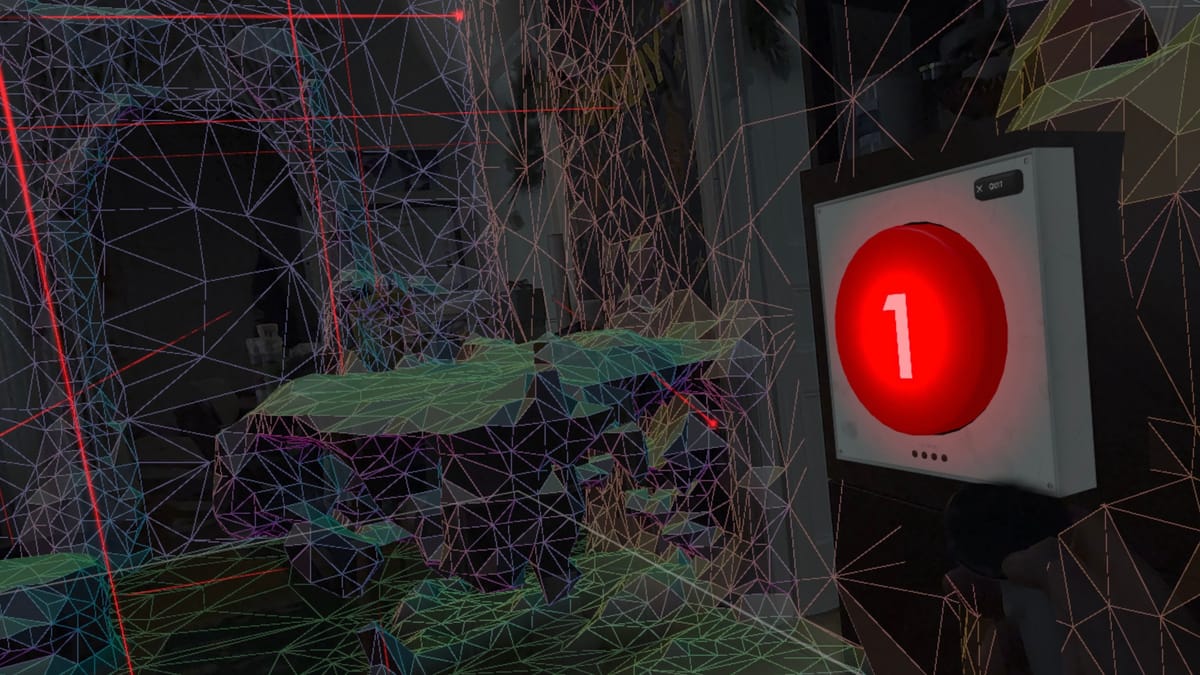
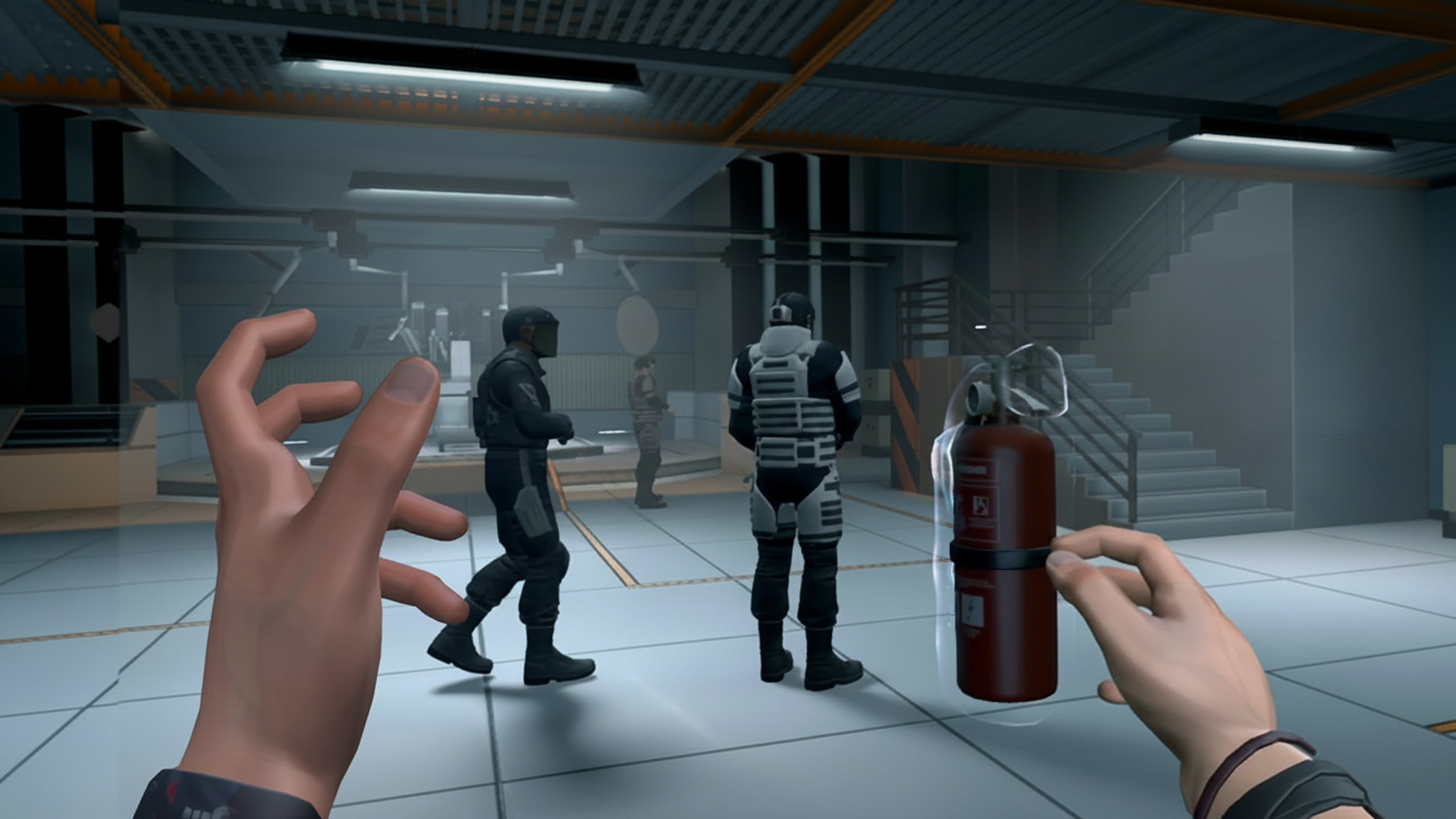
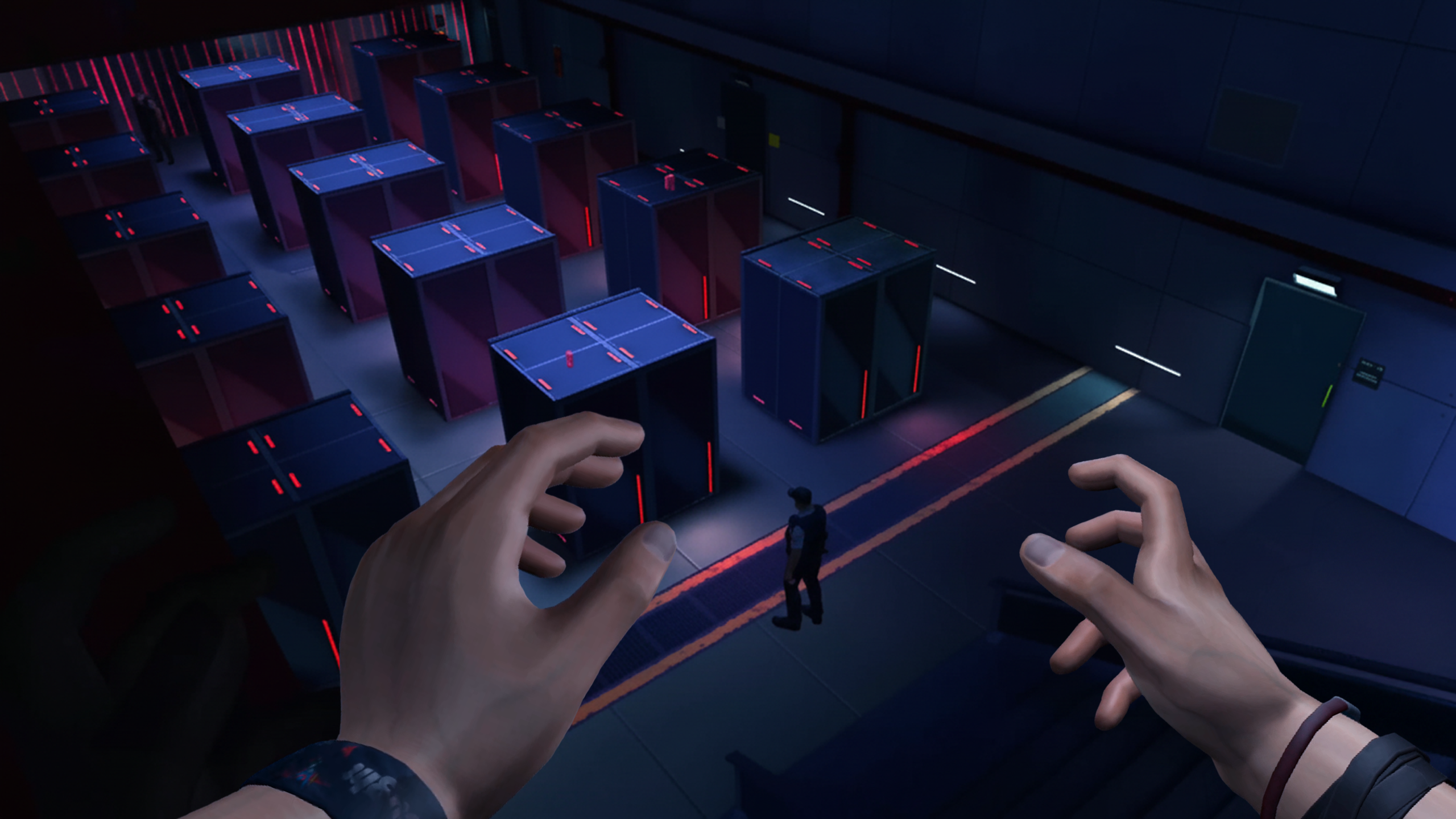
This time around, Laser Dance takes our award for the Best Early Access Mixed Reality Game of 2025. Thomas Van Bouwel delivered what we called “the first essential mixed reality game” and a go-to party game in our review. Offering an instantly relatable premise that feels ripped out of a spy film, it's one of the first experiences anyone should try when putting on a headset.

Laser Dance Early Access Review: The Mixed Reality Game Quest 3 Needs
Laser Dance in early access is the first essential mixed reality game.
UploadVRIan Hamilton

Best Early Access VR Game

Whether it's to gather community feedback or bring in crucial funding, more developers continue choosing early access launches across Quest and Steam, and 2025 has plenty of picks.

This year brought us a sequel to one of VR's earliest roomscale hits with Unseen Diplomacy 2, Another Axiom followed up on Gorilla Tag with Orion Drift, and Final Fury continues showing promise. Rounding this out is Boxing Underdog, The Pirate: Republic of Nassau, How to God, ZIX, and Out of Sight VR.

For 2025, Forefront is UploadVR's Best Early Access VR Game of the Year. Triangle Factory's latest game following Breachers provides a 32-player shooter comparable to EA's Battlefield series. “Combat is exciting and tense, its VR gunplay is tactile and satisfying, and its environments are dynamic and engaging,” we said at the time, and we'll continue watching its next moves.

Forefront Hands-On: The Battlefield Multiplayer Experience In VR
Forefront in early access brings excitingly tense, large-scale multiplayer warfare reminiscent of Battlefield to VR.
UploadVRJames Tocchio

Best Mixed Reality Game

As mixed reality continues to find its footing, we're continuing to see intriguing projects emerge from across the board. What we're seeing today feels like an early look at what we can expect in the years ahead. We're focused on games where mixed reality is the clear focus, and not an optional extra in otherwise fully immersive games.

On Quest 3, Star Wars: Beyond Victory took us back to a galaxy far, far away once again. We explored new worlds in Mythic Realms, raised a fluffy companion in Stay: Forever Home, while both Banners & Bastions and Table Troopers delivered strong tabletop style thrills. Other titles include Project AEROES, BEATABLE, Crystal Commanders, and Detective VR.

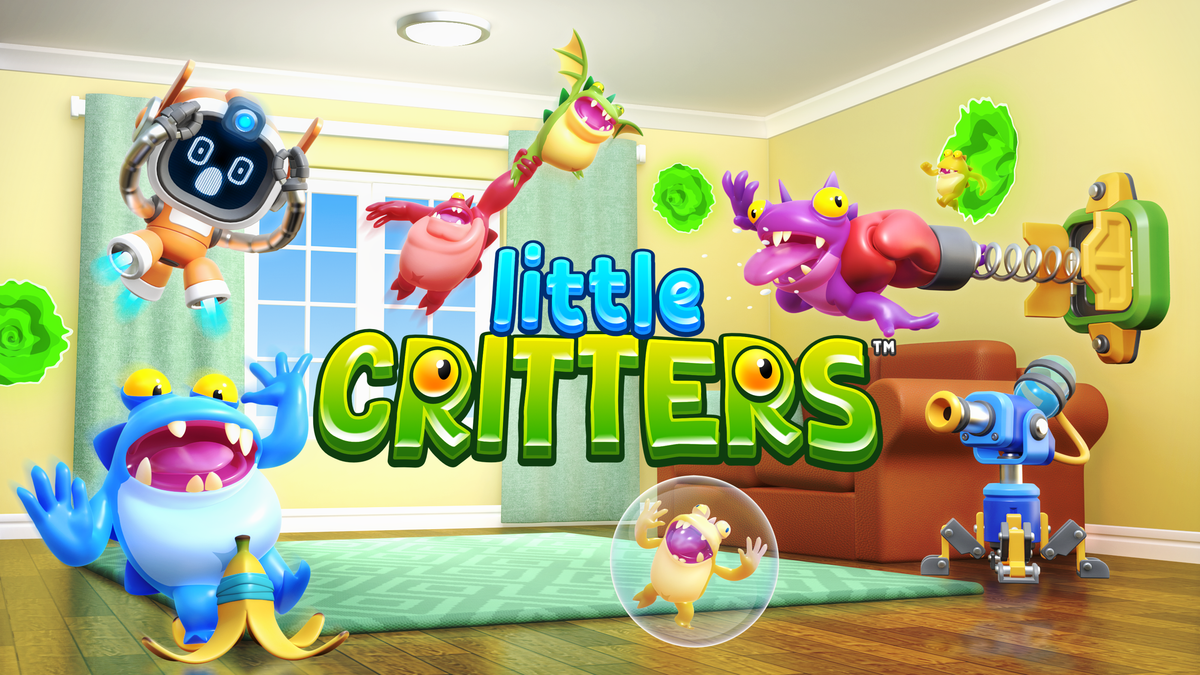
This year, our winner for Best Mixed Reality Game is Little Critters by Purple Yonder. Following the studio's work on Little Cities, we found an innovative take on the tower defense genre that puts you front and center in the fight. Its compelling gameplay has real impact, there's great strategic depth, and Little Critters keeps us coming back for more.

Little Critters Is A Tower Defense Game That Hits Home
Little Critters delivers a frenetic, accessible tower defense game in mixed reality today on Quest 3 and 3S.
UploadVRJosh Petersel

Best Mixed Reality App - Figmin XR

Apps like Pencil continue to show promise building out from innovative ideas – you can learn to draw Walkabout Mini Golf characters with a good old-fashioned pencil in hand and a headset on your head, and that's pretty cool.

Our award for best mixed reality app of 2025, though, goes to the gradually improving spatial playground Figmin XR. The app won last year too, and this year solo developer Javier Davalos essentially brought Tilt Brush to iPhone with the launch of Figmin XR there. Last year, we were able to get a pretty impressive colocation experience going in Figmin XR from Quest to Vision Pro.

This year, I single-handedly logged in with iPhone to the same virtual room as my headset. I could hold a digital object with my finger pressed to the iPhone and carry it around without even looking at it. Capturing mixed reality videos of Figmin playgrounds from iPhone could be a big use of this integration, or to let a friend or family member see into a spatial creation when they aren't in a headset.

How Figmin XR’s Colocation Works And Why Other Apps Need To Emulate It
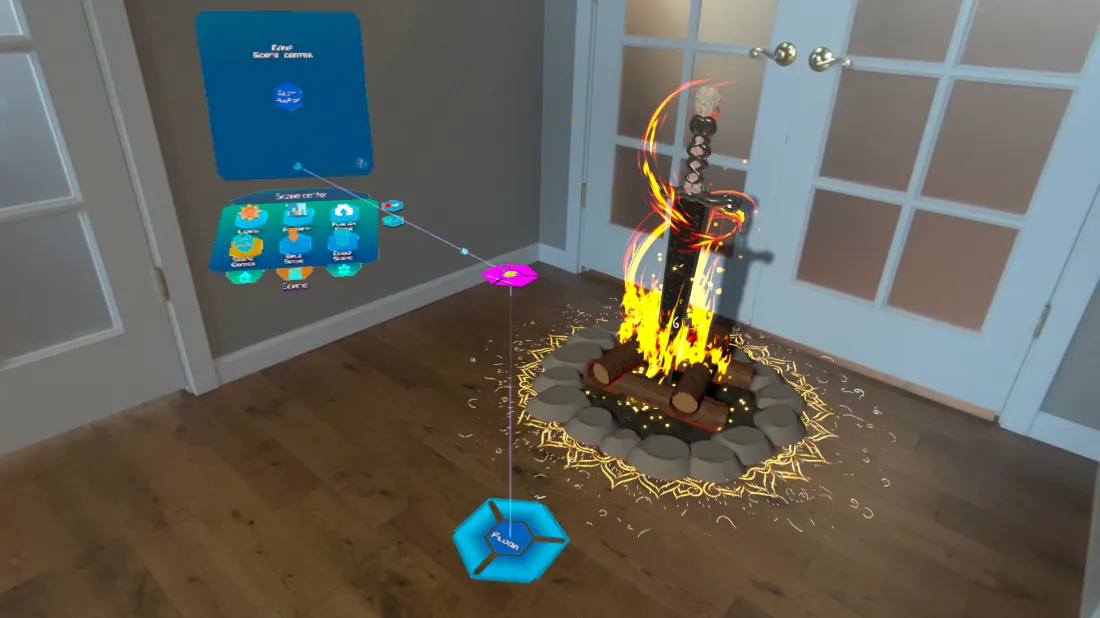
How to use Figmin XR’s “scene center” menu to colocate headsets from Apple, Meta and others.
UploadVRIan Hamilton

  •  

A Christmas Carol Is A Free Tradition Haunting Quest Headsets From Agile Lens

On Dec. 21, 2025, Ebenezer Scrooge will be haunted for the last time by disembodied spirits wearing Quest 2 or newer headsets.

Thereafter, the first fully embodied telling of A Christmas Carol by Charles Dickens in consumer VR will play on loop around the holiday each year, replaying the spatially captured performance by Agile Lens.

"One of our white whales we finally achieved this holiday was a method for perfectly recording EVERYTHING that happens during a live show," wrote architect and producer Alex Coulombe over direct message. "Mocap, show cues, audio, even everything the audience does. And we can play it back completely on demand."

Since 2021, Agile Lens has put together the experimental VR telling of A Christmas Carol using the latest cutting edge capture and streaming technologies, including Unreal's MetaHuman avatars. The production, along with other Agile Lens projects like a gigantic holodeck selling real estate in Texas, led the group to develop a tool called "Stage Presence" for the creation of future theatre-based productions in VR.

"We have no plans to shut down the app at this time— after the all-day VR replays on Christmas Eve, likely we’ll leave it as a bit of a museum where you can visit Charles Dickens’s study and see our old “Next Show in…” counter," Coulombe wrote. "Who knows? Maybe someday we’ll find a good reason to bring it out of retirement."

Tickets are free in Quest 2 or newer VR headsets to the final live showings held from Friday to Sunday. The performance stars Ari Tarr as Dickens and Scrooge with Debbie Deer as the ghosts, both of them wearing Quest Pro headsets for face and body capture. You’ll become a ghost yourself during the tellings this weekend, and visible to Scrooge as a disembodied spirit helping him come to terms with his behavior.

"I'm really proud of it. I'm going to miss it a lot. It's been such a joy and such a useful resource to come back to," said Kevin Laibson, who worked as a producer on the production. "You really can't mess up a Christmas Carol – everyone knows it and loves it."

"Likely next year we’ll pick a few dates to trigger some shared VR replays," Coulombe wrote. "The 'live' audience will be there as ghosts of the “present” right alongside the audience ghosts of the “past”— it will all get very meta."

We're extremely curious to see what Agile Lens and their creators do next with theatre in VR and with their Stage Presence tool. There have been some impressive theatrical experiences like The Under Presents and The Tempest and much more made in VR by others, but nothing that's been able to keep a troupe of actors employed continuously.

"VR live theatre is wonderful in terms of accessibility, but it’s still far from the ideal of actual breathing people in the same venue gasping and laughing together," Coulombe wrote. "And so we’d love the chance to combine our mixed reality theatre toolset with our virtual reality theatre toolset for a production that caters to an on-site audience while also inviting participants from around the world to join in. That’s the goal of Stage Presence— a modular toolkit to service a wide range of live XR productions."

  •  

Valve: "We See The Lines Between VR & Non-VR Content Really Being Blurred"

When UploadVR visited Valve headquarters to try Steam Frame, we heard comments echoing the strategies at Google and Apple.

There's an APK for that in Galaxy XR and thousands of iPad apps available day one on Apple Vision Pro. Meanwhile, the verified program for Steam Frame is poised to bring the value of Steam to your face wherever it is. Today, the only constant companion for most VR headsets is a Windows PC, but the time is coming when a Steam Deck, iPhone, iPad or Nintendo Switch may become an even more useful companion in VR.

Valve's trade-offs in Steam Frame's modular design have many prospective buyers fretting over the details. Developers are still reeling from the shift from Quest to Horizon – as Meta shifts strategies yet again – releasing games like Civilization VII and Vampire Survivors in VR along the way. Developers exploring Android XR and visionOS are figuring out what they can build in the space between fully immersive VR apps and traditional flatscreen content.

When it comes to Valve, we asked them about ideas like "spatial computing" and "mixed reality" being pursued elsewhere. Neither concept is really present in Valve's initial Steam Frame with black and white passthrough, though there's a lot of potential for sensing add-ons through the nose port.

Here's how Valve's Jeremy Selan replied about the focus of their first headset to carry the Steam name:

"As a strong Index user, someone who worked on it and has spent major portions of my adult life working on that and the Vive, when I think about playing VR, I have to make an intentional choice. So I'll be like, you know what? I want to go do VR. So I go to the room that has my PC and has my base stations installed. And I start playing that. But then sometimes, if I'm in another room and I'm like, well, maybe I should just take out my Deck and I start playing those games. And that choice I personally think is one of the highest friction bits remaining."
"Sure you can expect that when you put it on because it's SteamOS you hit the power button and you're fast into your game without the base station setup. Yeah, you can do [that] in any environment, but the ability to put on the headset and to see your Steam catalog in front of you where you can just choose a VR game or choose a non-VR game – it makes me play VR more. And it really reduces the impediment or the friction of even having to think about that distinction."
"We see the lines between VR and non-VR content really being blurred because they should just be games and you should be able to have devices that let you enjoy them. And this is our first stab at that."

We expect to have a review of Steam Frame in 2026 and will always bring you the latest. For more, you can dive into our nearly three-hour discussion from the day of the headset's announcement.

  •  

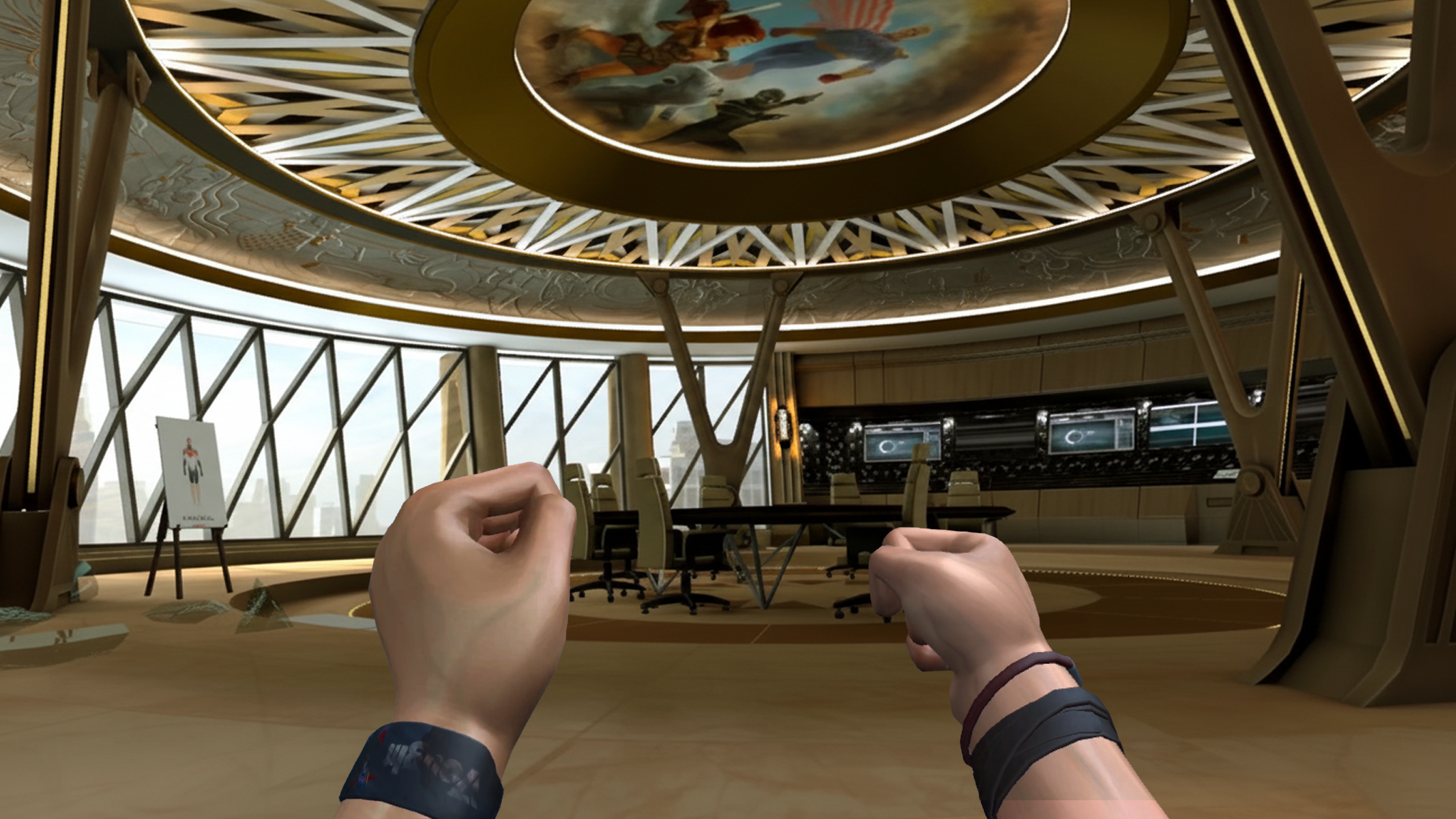
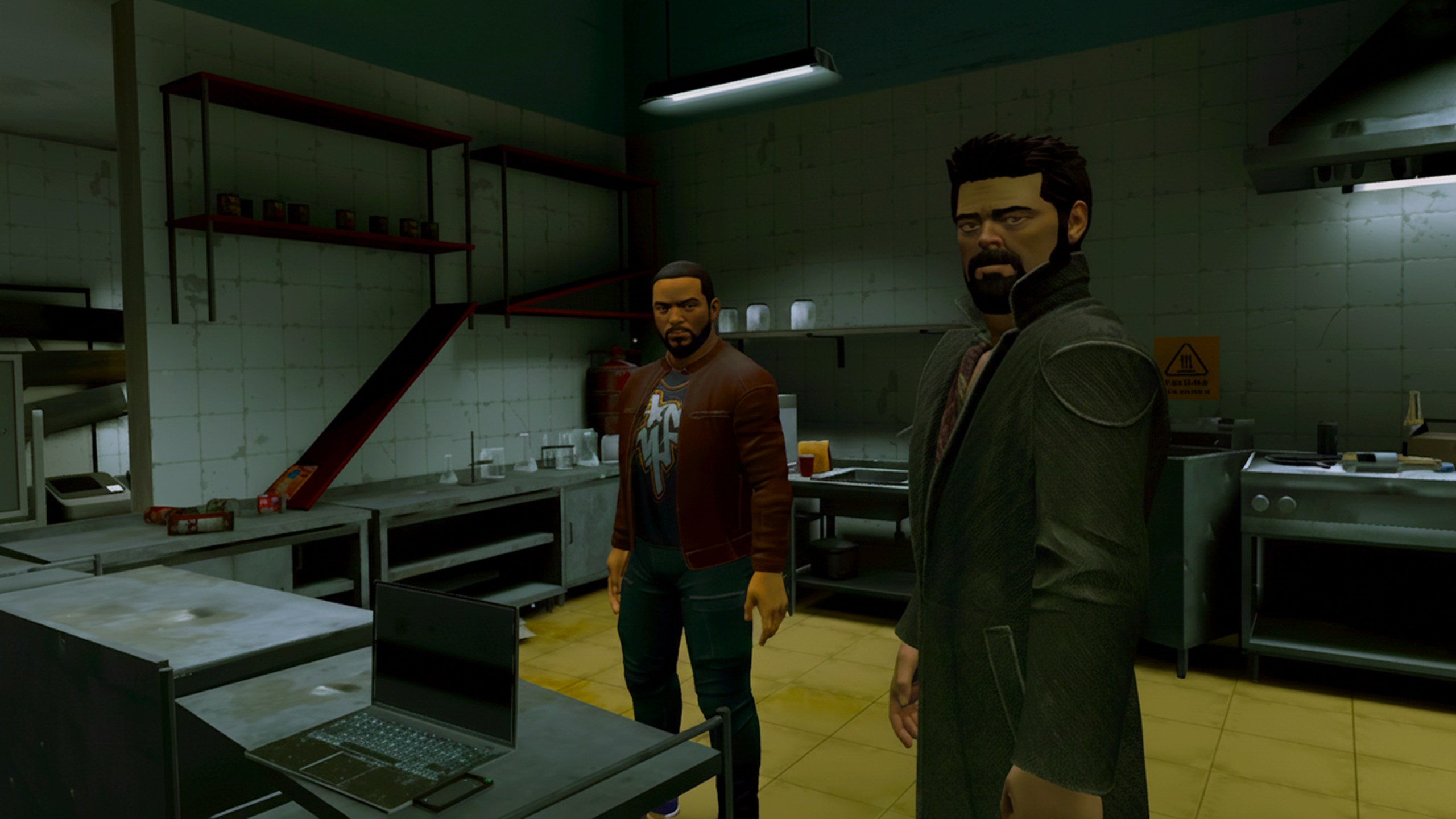
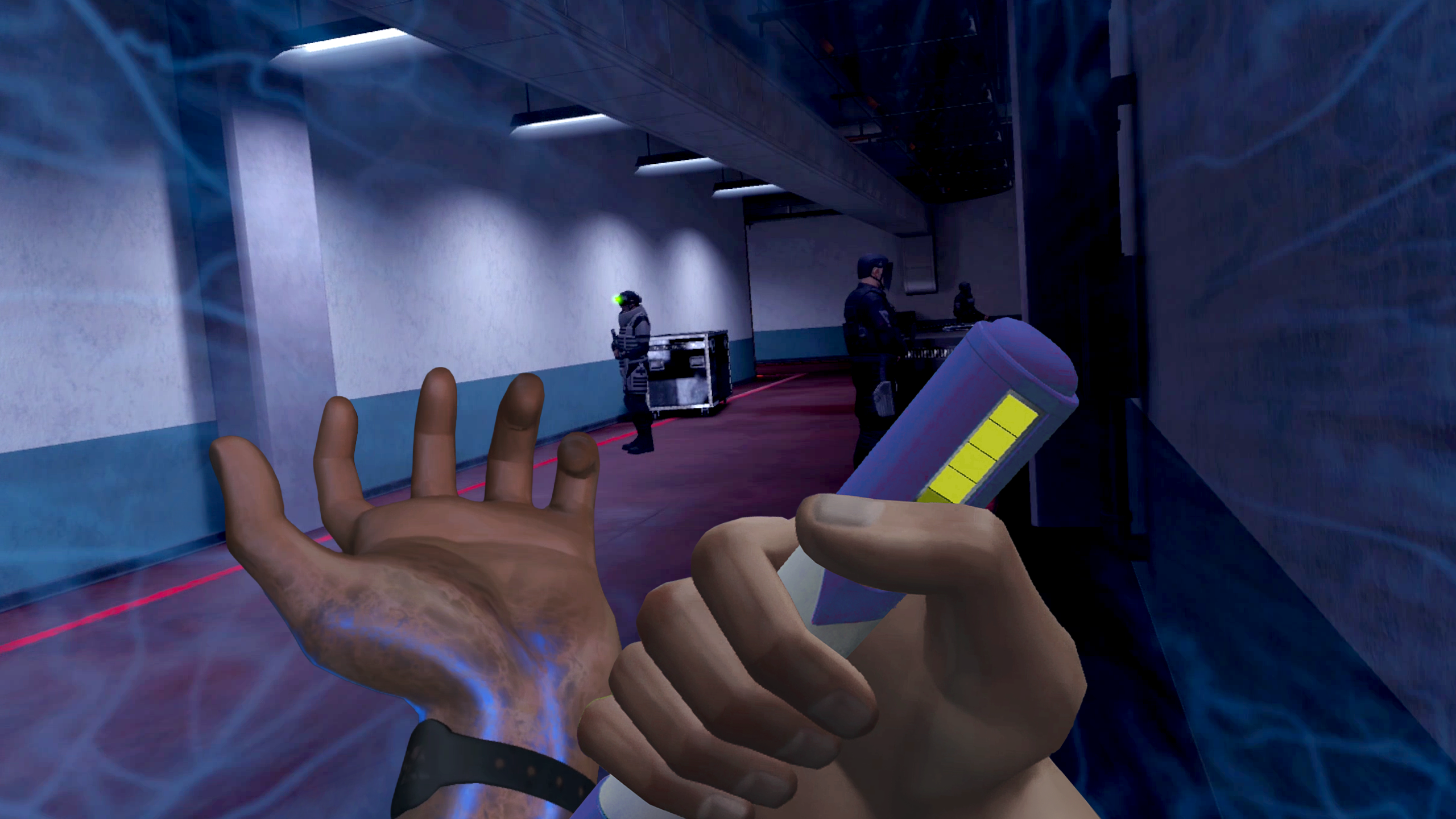
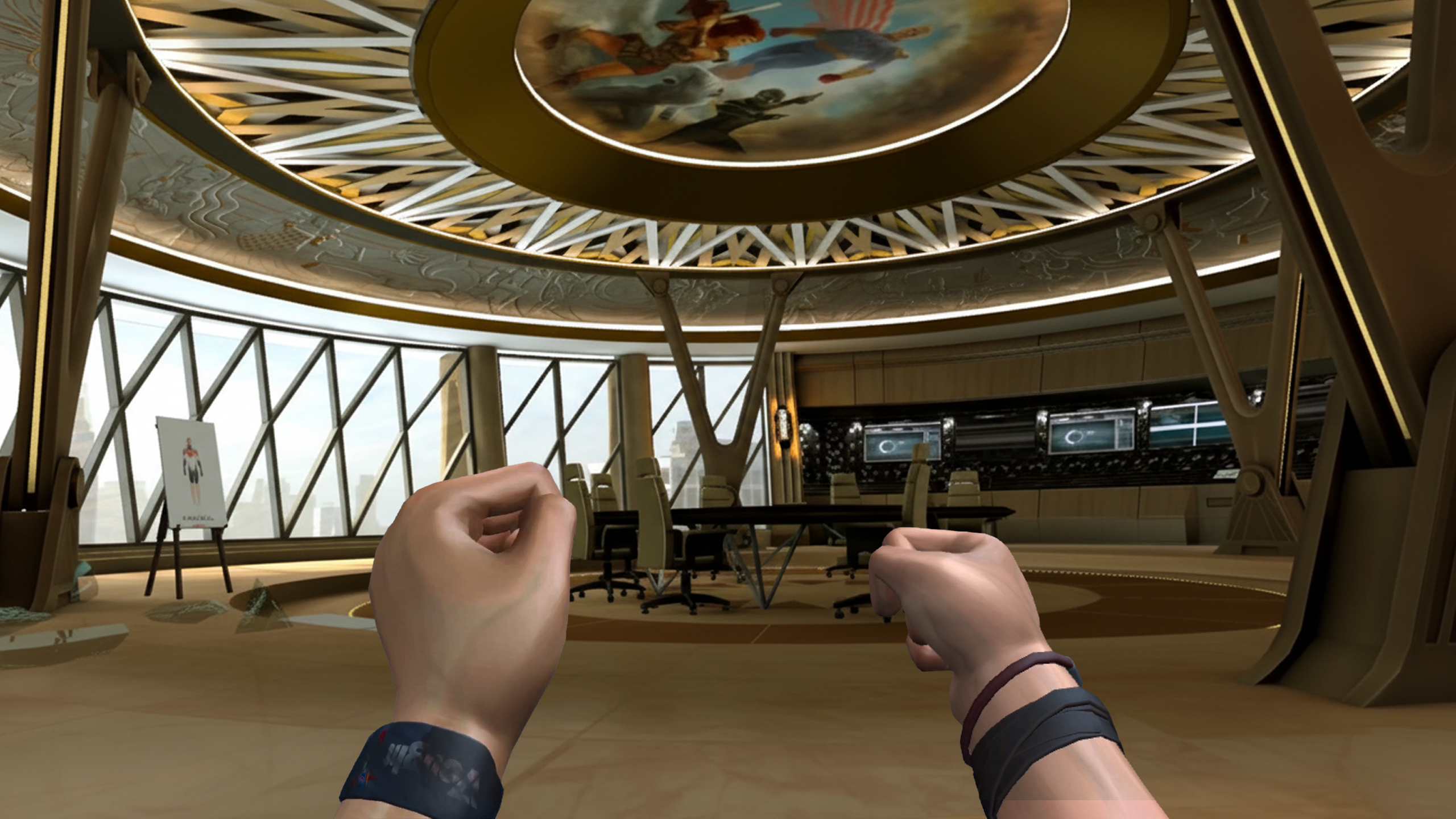
The Boys: Trigger Warning Comes To PlayStation VR2 & Quest 3 In 2026

ARVORE revealed an adaptation of The Boys is coming to VR with cast members from the TV show lending their voices.

Brazil-based ARVORE is the studio behind the Pixel Ripped series and they've teamed with Sony Pictures Virtual Reality as publisher on a "stealth-action" VR game coming in 2026. The Boys is about to enter its final season on Amazon next year, though Amazon's association with the VR project appears to be simply as a producer for the show.

0:00
/0:13

I'm getting a Five Nights At Freddy's meets BioShock vibe from the reveal trailer, which shows a theme park ride setting for its pre-rendered sections before meeting Homelander. Developers say the game "introduces an original character who accidentally uncovers a grotesque Vought secret that turns a family outing into carnage. Forced to become a Supe, the player joins The Boys to infiltrate Vought and take revenge in the most chaotic way possible. Blending stealth and combat with the franchise’s signature dark humor, the VR title delivers a new story rooted in the world fans love."

The full announcement trailer is embedded below and I've cut what looks like the available gameplay video above. Actors including Laz Alonso (Mother’s Milk), Colby Minifie (Ashley Barrett) and P.J. Byrne (Adam Bourke) reprise their roles with a "twisted interpretation" of Soldier Boy from Jensen Ackles.

We'll be curious to go hands-on with Trigger Warning as soon as we can. With Stranger Things VR out now, Deadpool VR available now and Teenage Mutant Ninja Turtles on the way, there's a wide range tonally to adapt TV and movies to VR and we'll be curious where ARVORE lands when it comes to representing The Boys.

Wishlists and pre-ordering are available on the PlayStation Store and Quest.

  •  
❌