↩ Accueil

Vue lecture

Did Leonardo da Vinci paint a nude Mona Lisa? I may have just solved this centuries-old mystery

It is one of the most tantalising – and entertaining – puzzles in art, stretching from the Louvre to the Loire via, well, Norfolk. And our critic thinks he has just worked it out

Increased security after the recent heist has made the queues at the Louvre even slower, yet on this rainswept, very wintry morning, no one grumbles. After all, the Mona Lisa is waiting inside for all these tourists who have come from the world over. Leonardo da Vinci’s woman – swathed in dark cloth and silk, smiling enigmatically as she sits in front of a landscape of rocks, road and water – draws crowds like no other painting. But if the Mona Lisa can attract such attention fully clothed, what would the queues be like if she was nude?

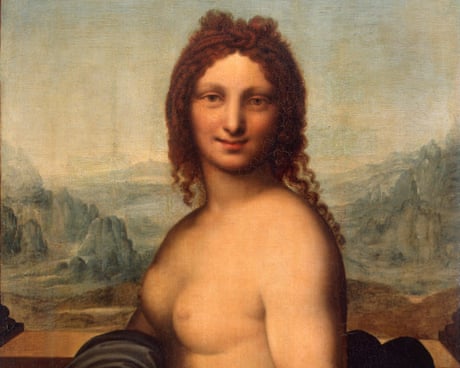
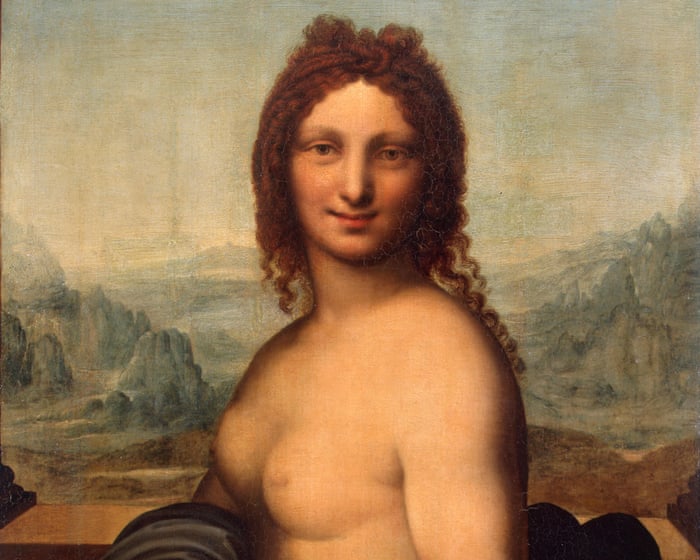
Strangely, this is not just amusing speculation – because in 18th-century Britain, she was. An engraving issued by a publisher called John Boydell gave libertine Georgians the opportunity to hang “Joconda” in their boudoir. It must have been popular because many copies survive. This Mona Lisa sits in a chair with her hands crossed in front of a fading view of distant rock formations. And, like the Mona Lisa in the Louvre, she smiles enigmatically. But there is one key difference. She is naked from the waist up.

Continue reading...
© Photograph: Album/Alamy
© Photograph: Album/Alamy
© Photograph: Album/Alamy
  •  

Trump’s assault on the Smithsonian: ‘The goal is to reframe the entire culture of the US’

The president has vowed to kill off ‘woke’ in his second term in office, and the venerable cultural institution a few blocks from the White House is in his sights

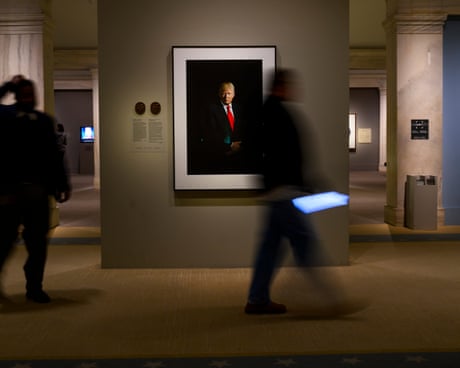
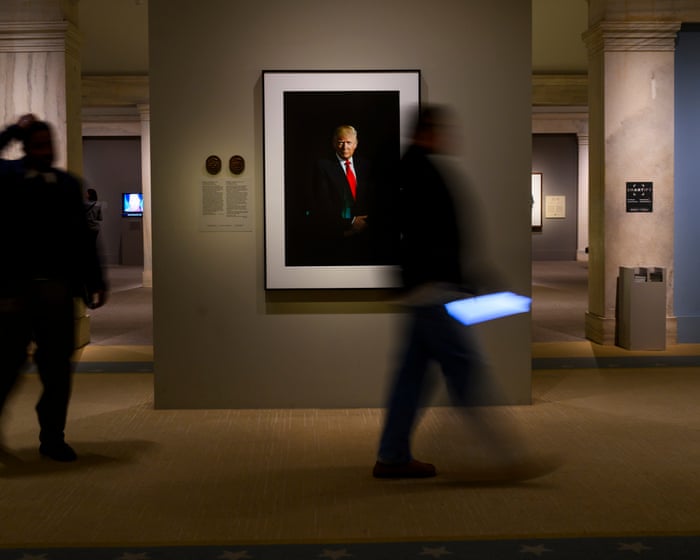
On 30 May last year, Kim Sajet was working in her office in the grandly porticoed National Portrait Gallery in Washington DC. The gallery is one of the most important branches of the Smithsonian Institution, the complex of national museums that, for almost 200 years, has told the story of the nation. The director’s suite, large enough to host a small party, has a grandeur befitting the museum’s role as the keeper of portraits of the United States’ most significant historical figures. Sajet was working beneath the gaze of artworks from the collection, including a striking 1952 painting of Mary Mills, a military-uniformed, African American nurse, and a bronze head of jazz and blues singer Ethel Waters.

It seemed like an ordinary Friday. Until, that is, an anxious colleague came in to tell Sajet that the president of the United States had personally denounced her on social media. “Upon the request and recommendation of many people I am herby [sic] terminating the employment of Kim Sajet as Director of the National Portrait Gallery,” Donald Trump had posted on Truth Social. According to the post, Sajet was “a highly partisan person” and a “strong supporter” of diversity and inclusion programmes, which by an executive order on his inauguration day, 20 January, he had eradicated from federal agencies. “Her replacement will be named shortly,” continued the message. “Thank you for your attention to this matter!”

Continue reading...

© Photograph: Pete Kiehart/The Guardian

© Photograph: Pete Kiehart/The Guardian

© Photograph: Pete Kiehart/The Guardian

  •  

Art could save your life! Five creative ways to make 2026 happier, healthier and more hopeful

Engaging in creativity can reduce depression, improve immunity and delay ageing – all while you’re having fun

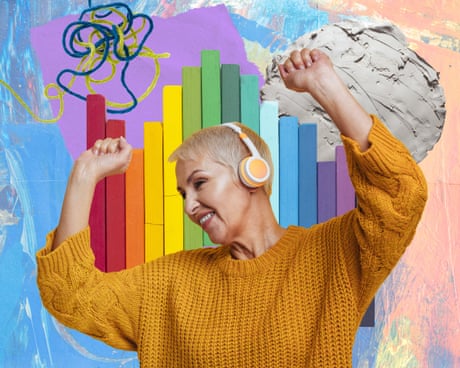
For some reason, we have collectively agreed that new year is the time to reinvent ourselves. The problem, for many people, is that we’ve tried all the usual health kicks – running, yoga, meditation, the latest diets – even if we haven’t really enjoyed them, in a bid to improve our minds and bodies. But have any of us given as much thought to creativity? Allow me to suggest that this year be a time to embrace the arts.

Ever since our Paleolithic ancestors began painting caves, carving figurines, dancing and singing, engaging in the arts has been interwoven with health and healing. Look through the early writings of every major medical tradition around the world and you find the arts. What is much newer – and rapidly accelerating over the past two decades – is a blossoming scientific evidence-base identifying and quantifying exactly what the health benefits of the arts are.

Continue reading...

© Composite: Guardian Design; Boonchai Wedmakawand;aerogondo;gojak;Catherine MacBride;Westend61/Getty Images

© Composite: Guardian Design; Boonchai Wedmakawand;aerogondo;gojak;Catherine MacBride;Westend61/Getty Images

© Composite: Guardian Design; Boonchai Wedmakawand;aerogondo;gojak;Catherine MacBride;Westend61/Getty Images

  •  
❌