↩ Accueil

Vue lecture

‘It was overwhelming’: Katie Leung on Harry Potter, sudden fame, insecurity – and starring in Bridgerton

As a teenager, the actor landed her first ever job in the blockbuster film series. The experience was fun – but also led to horrendous online abuse. Now she’s back, playing a tough and surprising matriarch in the Regency smash hit

Some actors might have been a little put out to audition for the role of the beautiful young romantic lead, and instead be cast as her mother, but not Katie Leung. “Absolutely not,” she says with a laugh. “I look young for my age – as most people in the west think Asians do – but I felt really seen to finally get to play the role of a mother.” She is a mother, she points out, and anyway, the role of Lady Araminta Gun, the steely aristo who is about to rock the new series of Netflix’s Regency behemoth Bridgerton, is so delicious, who could be insulted?

Araminta, widowed, has seen off two husbands, and now she’s trying to marry off her two teenage daughters, ideally to a Bridgerton, while keeping her stepdaughter, Sophie, in her place – as a Cinderella-style servant for the family. “The showrunners reassured me that it wasn’t going to be the archetypal evil stepmother role,” says Leung. “They wanted to find the humanity in Araminta. They wanted to ensure I knew her background, her struggles, why she makes these decisions, and why she’s so formidable.”

Continue reading...

© Photograph: David Levene/The Guardian

© Photograph: David Levene/The Guardian

© Photograph: David Levene/The Guardian

  •  

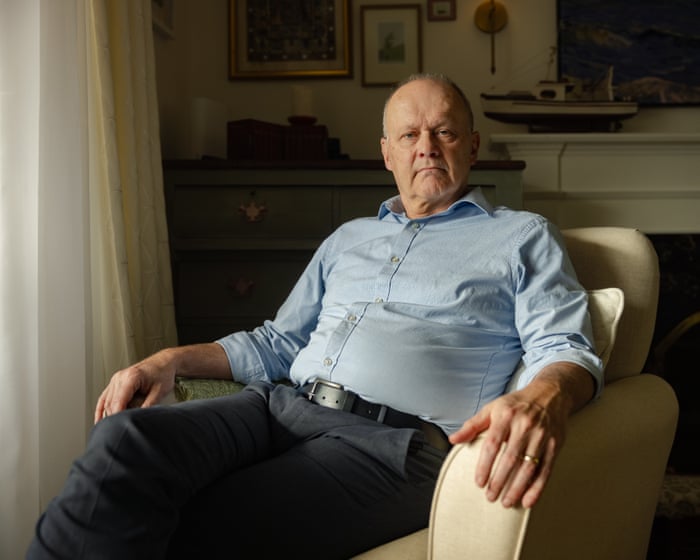
As a student, he was involved in a drunk-driving incident that killed a cyclist. Years later he would become expert in the healing powers of guilt

Psychologist Chris Moore saw first-hand how powerful and complex an emotion it is

Fuelled by the relief of having finished end-of-year exams, the pleasure of a warm late spring evening and quite a lot of alcohol, the house party was one of those that should have been remembered for all the right reasons. At some point, later in the night, Chris Moore and three friends were ready to leave. The party was some way out of town – Cambridge – and too far to walk, and, anyway, there was a car, temptingly, in the driveway, its keys in the ignition.

Somebody – Moore can’t remember who – suggested they drive back, and with the recklessness of youth and too much beer, they all got in. “I ended up in the front passenger seat and fell asleep,” he says. He came to, being taken out of the car by paramedics, then sitting by the side of the road, his face streaming with blood, surrounded by the lights of the emergency services. They had been in an accident, and Moore had hit the windscreen, asleep, and had deep lacerations on his forehead. He was the only one of the four who had been injured. What he didn’t know until the next day, in hospital after surgery, was that they had driven into a cyclist and killed him.

Continue reading...

© Photograph: Carolina Andrade/The Guardian

© Photograph: Carolina Andrade/The Guardian

© Photograph: Carolina Andrade/The Guardian

  •  

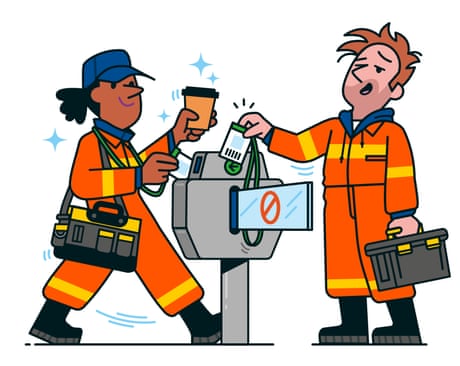
The perfect way to look after your health if you work shifts

There are many knock-on effects of working nights or early mornings, and often employers could do more to protect staff. But there are small, simple changes that can make all the difference

• Sign up here to get the whole series straight to your inbox

Approximately 8.7 million people in the UK work night shifts, but humans are not meant to be awake at night. “It goes against our natural circadian cycle,” says Steven Lockley, visiting professor at the Surrey Sleep Research Centre, University of Surrey. “We have a clock in the hypothalamus in the brain, and that clock has evolved to control many aspects of our physiology.” This includes metabolism and immune system, hormones, and heart, lung and brain function. “We’ve evolved to be awake in the daytime and asleep at night. When we do shift work, we’re going against what our natural rhythms want us to do.”

This is true not just for those who work in the dead of night, but for those who work early and evening shifts. It means, says Lockley, “you’re not sleeping at the right time. Night shifts are the worst example, but all of these [shift patterns] move away from the circadian desire to keep a stable sleep-wake cycle.”

Continue reading...

© Illustration: Spencer Wilson/The Guardian

© Illustration: Spencer Wilson/The Guardian

© Illustration: Spencer Wilson/The Guardian

  •  
❌