↩ Accueil

Vue lecture

With Sátántangó and Werckmeister Harmonies, Béla Tarr became the vividly disquieting master of spiritual desolation

The Hungarian director’s films moved slowly like vast gothic aircraft carrier-sized ships across dark seas, giving audiences a feeling of drunkenness and hangover at the same time

Béla Tarr, Hungarian director of Sátántangó and Werckmeister Harmonies, dies aged 70

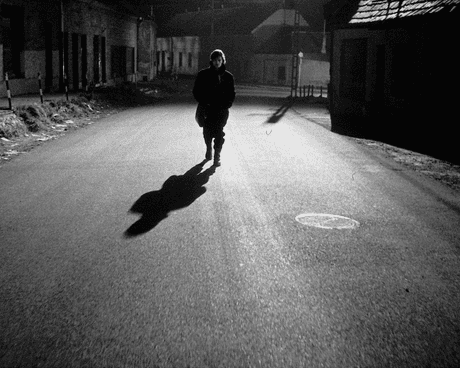
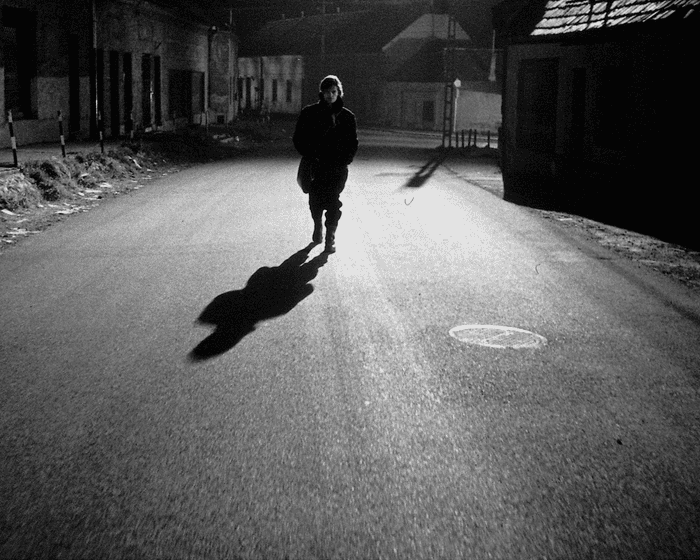
The semi-official genre of “slow cinema” has been around for decades: glacial pacing, unhurried and unbroken takes, static shooting positions, characters who appear to be looking – often wordlessly and unsmilingly – at people or things off camera or into the lens itself, mimicking the camera’s own calmly relentless gaze, the immobile silence accumulating into a transcendental simplicity. Robert Bresson, Theo Angelopoulos, Joe Weerasethakul, Lav Diaz, Lisandro Alonso; these are all great slow cinema practitioners. But surely no film-maker ever got the speedometer needle further back to the left than the tragicomic master Béla Tarr; his pace was less than zero, a kind of intense and monolithic slowness, an uber-slowness, in films that moved, often almost infinitesimally, like vast gothic aircraft-carrier-sized ships across dark seas.

Audience reactions were often a kind of delirium or incredulity at just how punishing the anti-pace was, but – given sufficient investment of attention – you found yourself responding with awe, but also laughing along to the macabre dark comedy, the parable and the satire. A Béla Tarr movie gave you drunkenness and hangover at the same time. And people were often to be found getting despairingly drunk in his films.

Continue reading...
© Photograph: Courtesy: Curzon
© Photograph: Courtesy: Curzon
© Photograph: Courtesy: Curzon

  •  

Love, desire and community: the new generation of readers bonding over romance novels

Young women drawn to ‘morally grey characters’ are driving a boom sparked by TikTok, Instagram and online friendships

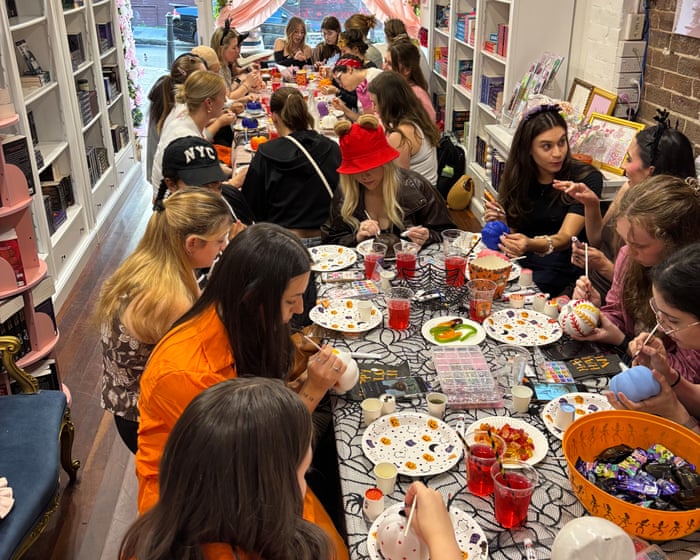
In a packed room in Sydney, an excited crowd riffles through stacks of stickers and bookmarks searching for their favourite characters. Another group flicks through racks of clothing, pulling out T-shirts that say “romance readers club” and “probably reading about fairies”.

A poster on the wall, with tear-off tabs, invites visitors to take what they need: a love triangle, a love confession mid-dragon battle, a morally grey man or a cowboy.

Sign up for the fun stuff with our rundown of must-reads, pop culture and tips for the weekend, every Saturday morning

Continue reading...

© Photograph: Scarlett Hopper/Romancing The Novel

© Photograph: Scarlett Hopper/Romancing The Novel

© Photograph: Scarlett Hopper/Romancing The Novel

  •  

Arborescence by Rhett Davis review – why would people turn into trees?

This quietly satirical speculative novel tells a story of metamorphosis, but feels insulated from real ecological crisis

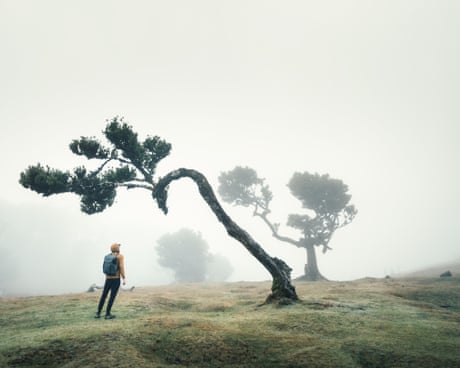
In the book-length essay Death By Landscape, Elvia Wilk gives a potted history of fiction in which humans turn into plants. There is Daphne, in Ovid’s Metamorphoses, who is so afraid she will be raped by Apollo that she begs her father to transform her into a laurel tree. More recently, in Han Kang’s The Vegetarian, brutalised Yeong-hye refuses food and takes root. Wilk argues that, in these stories and others, “a woman implants herself in despair, but also protest”.

Rhett Davis’s Arborescence – an even-tempered, quietly satirical speculative novel – tells a story of cross-species transformation at scale. The narrator is a man, Bren, who at the outset is dismissive of unverified reports of “people standing around believing they’re trees”. His partner, Caelyn, is curious and undaunted. She drags him out for a hike. “I’m not sure I like forests,” he complains. “I don’t like that part of The Lord of the Rings at all. It’s really terrifying.”

Continue reading...

© Photograph: borchee/Getty Images

© Photograph: borchee/Getty Images

© Photograph: borchee/Getty Images

  •  

The Ten Year Affair by Erin Somers review – the midlife adultery story our generation deserves

This is a witty takedown of insufferable millennial New Yorkers who have managed to ruin even sex

In Erin Somers’s The Ten Year Affair, Cora, a millennial mother, craves a bygone kind of passion from a bygone kind of man. Unfortunately for her, morality in 2015 is rigid and cynical, and instead of having the affair, Cora spends 10 years overthinking it, fantasising about it and discussing it with her potential lover, Sam – a playgroup dad who is “chief storytelling officer” at a mortgage start-up (yes, that’s his job title. They all have absurd jobs). The book presents itself as a comic take on the classic adultery novel and a send-up of a narrow, self-conscious group of downwardly mobile New Yorkers. I’d call it the midlife adultery story our entire generation deserves: a propulsive, witty takedown of insufferable hand-wringers who’ve managed to ruin even sex. Honestly, I couldn’t put it down.

Cora and her husband Eliot are smug, overeducated Brooklynites who, with rents rising and children growing, have moved reluctantly upstate. Caught in the “gruelling all-the-time-ness” of parenthood, they have desk jobs, two children, a persistent mushroom growing under their bathroom tiles that they lack the energy and money to sort out. They hang out with other smug, overeducated Brooklynites who have fled the city to drink negronis out of mason jars and judge each other closer to nature. But if Cora is lonely here, it’s not because of her fussy, lifeless lens but because her new neighbours are “dull and vain, duller and vainer than they were back in the city”. Eliot is high-minded and oblivious. He eats popcorn as she scrubs the oven and says he doesn’t wish to possess her. Cora imagines herself trying to survive with Eliot in the woods, washing clothes on a stone while he searches for chanterelles. She longs for drama, a bit of depravity, a lover who will beg, and worship, and “growl at the feet of the woman’s excellence”.

Continue reading...

© Photograph: PR

© Photograph: PR

© Photograph: PR

  •  

When a heart attack left me in a coma, my hallucinations inspired a novel – and a new life

After his heart stopped beating for 40 minutes, the former lawyer experienced weeks of hallucinations. The visions he experienced during his recovery set him on the path to a new career

On the evening of Monday 1 February 2021, during the third Covid lockdown, my wife Alexa and I sat down on the sofa to have sausages and chips in front of the TV. The children were tetchy, and we were worn out from trying to home-school them while working from home, me as a lawyer in the music industry and Alexa as a charity fundraiser. But at least, Alexa said to me, we had made it through January.

Then I started making strange noises. “Are you joking?” she asked. Then, “are you choking?”

Continue reading...

© Photograph: Jesse Alexander

© Photograph: Jesse Alexander

© Photograph: Jesse Alexander

  •  

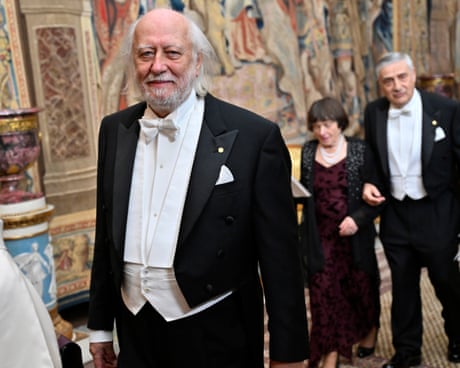
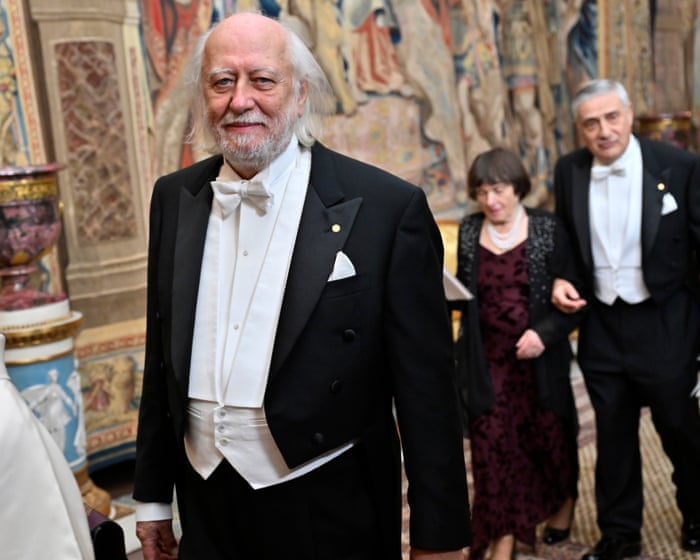
‘It has become difficult to live’: Hungarian writers bemoan country’s hostile environment

Nobel prize for László Krasznahorkai provides a rare glimpse of unity in a nation divided on party lines

Gyula, a tranquil and picturesque town in the east of Hungary, is best known for its sausages. It has no direct rail connection to Budapest, but it does have a library and a castle. Soon, it will also have an official copy of a Nobel medal.

“Congratulations to László Krasznahorkai, the first Nobel winner from Gyula,” proclaim billboards in the town, paying tribute to the 71-year-old writer who won this year’s Nobel prize in literature for “his compelling and visionary oeuvre.”.

Continue reading...

© Photograph: Jonas Ekströmer/TT/Shutterstock

© Photograph: Jonas Ekströmer/TT/Shutterstock

© Photograph: Jonas Ekströmer/TT/Shutterstock

  •  

Dreaming of writing your novel this year? Rip up all the rules!

After 35 years of teaching fiction writing, the prize-winning author shares her wisdom. First tip? Don’t write what you know…

I don’t think it’s a bad thing to want to write a first sentence so idiosyncratic, so indelible, so entirely your own that it makes people sit up or reach for a pen or say to a beloved: “Listen to this.” A first line needn’t be ornate or long. It needn’t grab you by the lapels and give you what for. A first line is only a demand for further attention, an invitation to the rest of the book. Whisper or bellow, a polite request or a monologue meant to repel interruption. I believe a first line should deliver some sort of pleasure by being beautiful or mysterious or funny or blunt or cryptic. Why would anyone start a novel, “It was June, and the sun was out,” which could be the first line of any novel or story? It tells you nothing. It asks nothing of you.

Continue reading...

© Illustration: Antonio Sortino/The Guardian

© Illustration: Antonio Sortino/The Guardian

© Illustration: Antonio Sortino/The Guardian

  •  

The hill I will die on: Fan fiction is real literature, whatever the snobs say | Urooj Ashfaq

Yes, it’s messy, derivative and occasionally incomprehensible – but so is life

Fan fiction is democracy in its purest, most chaotic form. It’s the people seizing the means of production. Every “what if?” is a tiny revolution. What if the side character got a backstory? What if the finale didn’t end in heartbreak? What if Harry Styles and Zayn Malik kissed just once, for morale?

Of course, many would argue that fan fiction isn’t real literature. It borrows worlds and characters that someone else created. It’s often unedited, published online for free and written by people with no verified experience. To the purists, it lacks originality, polish and commercial value, the hallmarks of what they believe “serious” writing should be.

Urooj Ashfaq is a Mumbai-based comedian, writer and actor.

Do you have an opinion on the issues raised in this article? If you would like to submit a response of up to 300 words by email to be considered for publication in our letters section, please click here.

Continue reading...

© Composite: Guardian Design/Getty Images

© Composite: Guardian Design/Getty Images

© Composite: Guardian Design/Getty Images

  •  

Les films de S.F / Fantastique les plus attendus de 2026

On a l’impression de se répéter chaque année, mais l’année 2026 s’annonce particulièrement riche pour les amateurs de films de genre, et notamment de films de S.F ou Fantastiques. Voici donc un petit tour d’horizon des long-métrages qui marqueront cette année nouvelle (la liste n’est pas exhaustive, nous …

Lire la suite

Aimez KultureGeek sur Facebook, et suivez-nous sur Twitter

N'oubliez pas de télécharger notre Application gratuite iAddict pour iPhone et iPad (lien App Store)


L’article Les films de S.F / Fantastique les plus attendus de 2026 est apparu en premier sur KultureGeek.

  •  

Andrew Miller: ‘DH Lawrence forced me to my feet – I was madly excited’

The novelist on how The Rainbow made him want to write, the strange genius of Penelope Fitzgerald and finding comfort in Tintin

My earliest reading memory
Sitting on the sofa with my mum reading Mabel the Whale by Patricia King, with beautiful colour illustrations by Katherine Evans. I think it was pre-school. My mother was not always a patient teacher, and I was often a slow learner, but the scene, the tableaux, in memory, has the serenity of an icon.

My favourite book growing up
Rosemary Sutcliff’s The Eagle of the Ninth. It’s a story set in Roman Britain; the Eagle is the lost standard of the ninth legion. I was a boy already obsessed by all things Ancient Roman (the alternative to the kind of boy obsessed with dinosaurs). One of the places I remember reading it is in bed with my dad. On Sunday mornings my brother and I would climb into the big bed. My parents had long since split up. There was a picture on the wall, a modest reproduction of Velázquez’s Rokeby Venus. To me, this voluptuous woman gazing at herself in a mirror was my mother. It’s interesting to me how the setting in which you read is such an integral part of the reading experience.

Continue reading...

© Photograph: Murdo Macleod/The Guardian

© Photograph: Murdo Macleod/The Guardian

© Photograph: Murdo Macleod/The Guardian

  •  

Blank Canvas by Grace Murray review – a superb debut from a 22-year-old author

In this energisingly original novel, an emotionally detached English student at college in New York tells a big lie

Lies offend our sense of justice: generally, we want to see the liar unmasked and punished. But when the deception brings no material gain, we might also be curious about what purpose the lie serves – what particular need of their own the liar is attempting to meet. This is precisely what Grace Murray’s witty, assured debut explores: not just the consequences of a lie but the ways in which it can, paradoxically, reveal certain truths.

At a small liberal arts college in upstate New York, Charlotte begins her final year by claiming that her father has just died of a heart attack. In fact, he is alive and well back in Lichfield, England. This lie is the jumping-off point for an unpacking of Charlotte’s psychology, as well as the catalyst for her relationship with fellow student Katarina, a quasi-love story that forms the book’s main narrative.

Continue reading...

© Photograph: PR

© Photograph: PR

© Photograph: PR

  •  
❌