↩ Accueil

Vue lecture

Got a New iPhone 17? How to Use All the New Features

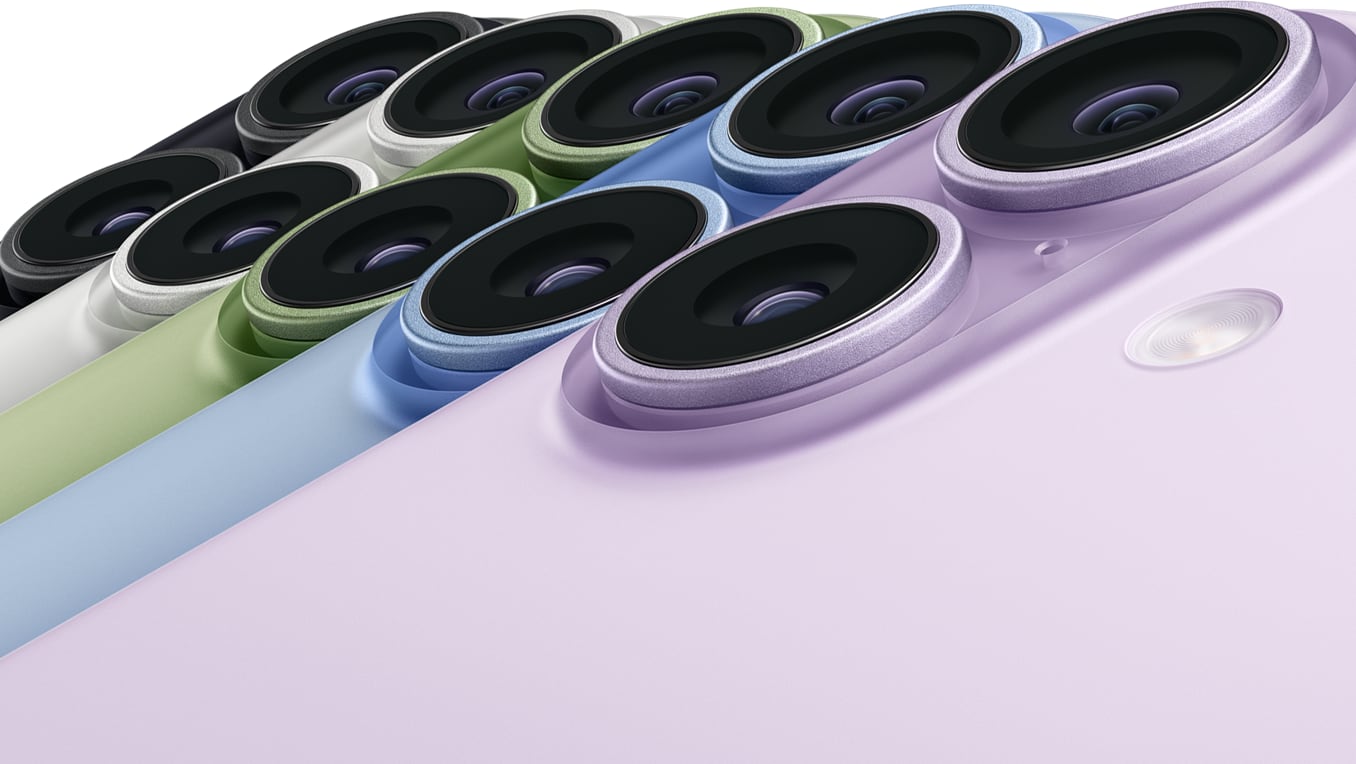
Apple's iPhone 17, iPhone Air, iPhone 17 Pro, and ‌iPhone 17 Pro‌ Max have been available to buy since September, and a fair few will have been gifted over the holidays. If you're the proud owner of one of Apple's latest models, then keep reading. Whether you're upgrading from an older iPhone or completely new to the devices, this article will help you get the most out your new ‌iPhone‌.


MacRumors has put together the following series of ‌iPhone 17‌ how-to articles explaining all the new features that can be found on Apple's newest models.

All iPhone 17 Models (Incl. iPhone Air)


iPhone 17 Pro and iPhone 17 Pro Max


iOS 26


Happy holidays!
This article, "Got a New iPhone 17? How to Use All the New Features" first appeared on MacRumors.com

Discuss this article in our forums

  •  

Track Santa's Journey From the North Pole Using Google's Santa Tracker

Have you been good this year? If so, you may be interested to know that Google has launched its annual Santa tracking feature, allowing Santa to be tracked in real time on his journey to the North Pole as he prepares to deliver presents to children around the world.


Google's Santa Tracker continues a two-decade tradition for the company, allowing excited children (and grown-ups!) to keep up with the jolly gift-giver's travels throughout December 24. On this day, Santa's Village transforms into a tracking experience where children can follow Santa and his reindeer as they merrily go about their important work.

Santa can be tracked using a web browser on iPhone, iPad, or Mac by visiting Google's official Santa Tracking website. The site features a live map of Santa's current location, his next stop, a live video feed of his journey, and the estimated time that he will arrive in each specific location.

The Santa site provides pictures of locations that Santa has already visited, a live count of gifts that have been delivered, and Santa's current distance from your location. There are also a selection of games to play, creative things to do, and videos to watch.

Other Santa tracking services are also available, such as the NORAD Tracks Santa Claus app and website, but Google's site is often the most interactive and detailed. Happy holidays!
This article, "Track Santa's Journey From the North Pole Using Google's Santa Tracker" first appeared on MacRumors.com

Discuss this article in our forums
  •  

Why Apple's Foldable iPhone May Be Smaller Than Expected

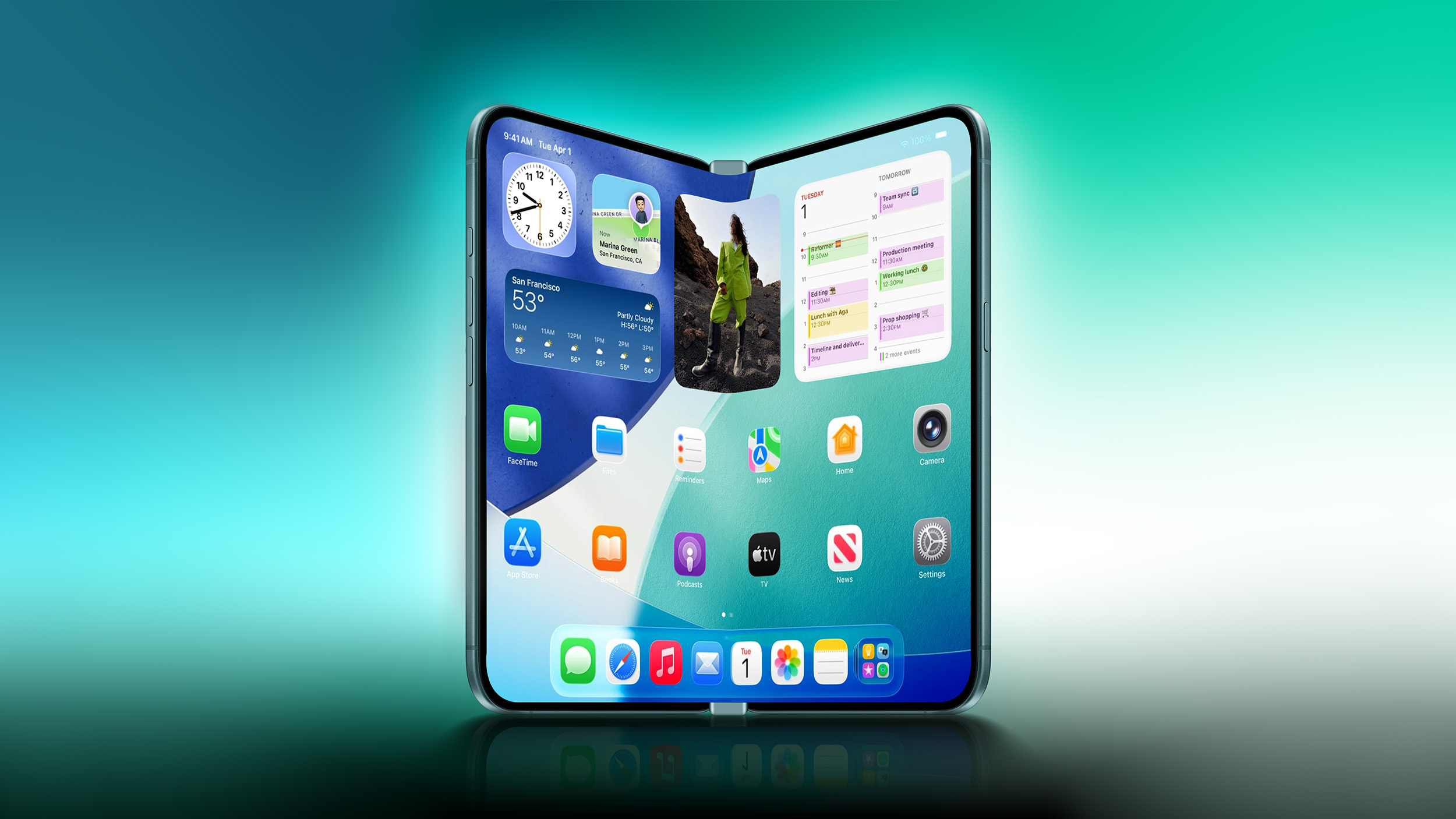
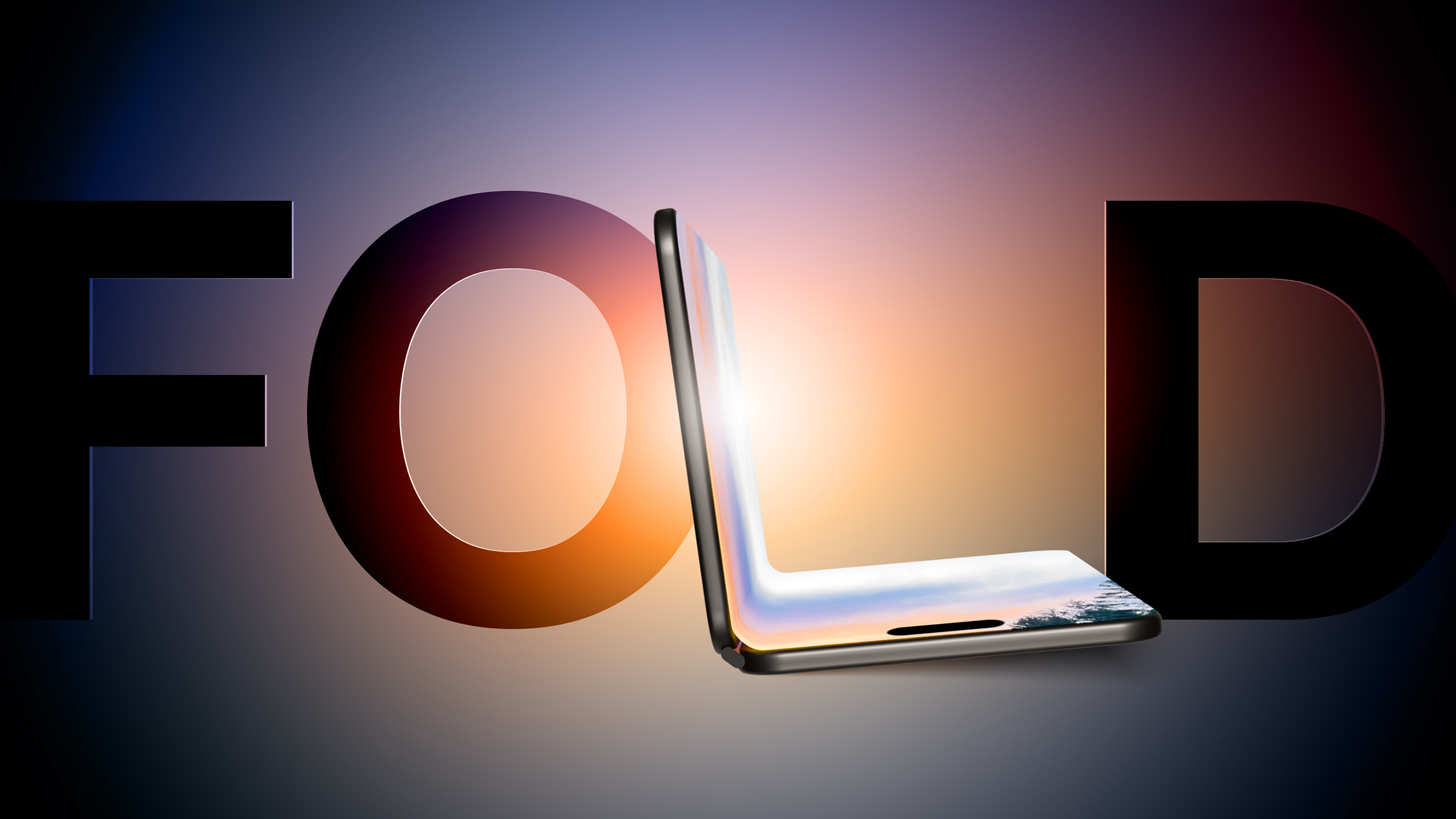
Apple's first foldable iPhone, rumored for release next year, may turn out to be smaller than most people imagine, if a recent report is anything to go by. According to The Information, the outer display on the book-style device will measure just 5.3 inches – that's smaller than the 5.4-inch screen on the ‌iPhone‌ mini, a line Apple discontinued in 2022 due to poor sales. The report has led some people to wonder why Apple would settle on such a compact form factor.


Using The Information's reported dimensions, content creator Ben Geskin has shared some images and video of a printed version of the device (embedded below) that help envision what it could look and feel like in the hand. They also hint at Apple's design strategy, suggesting it is related to an unavoidable trade-off between the outer and inner displays of a book-style foldable.

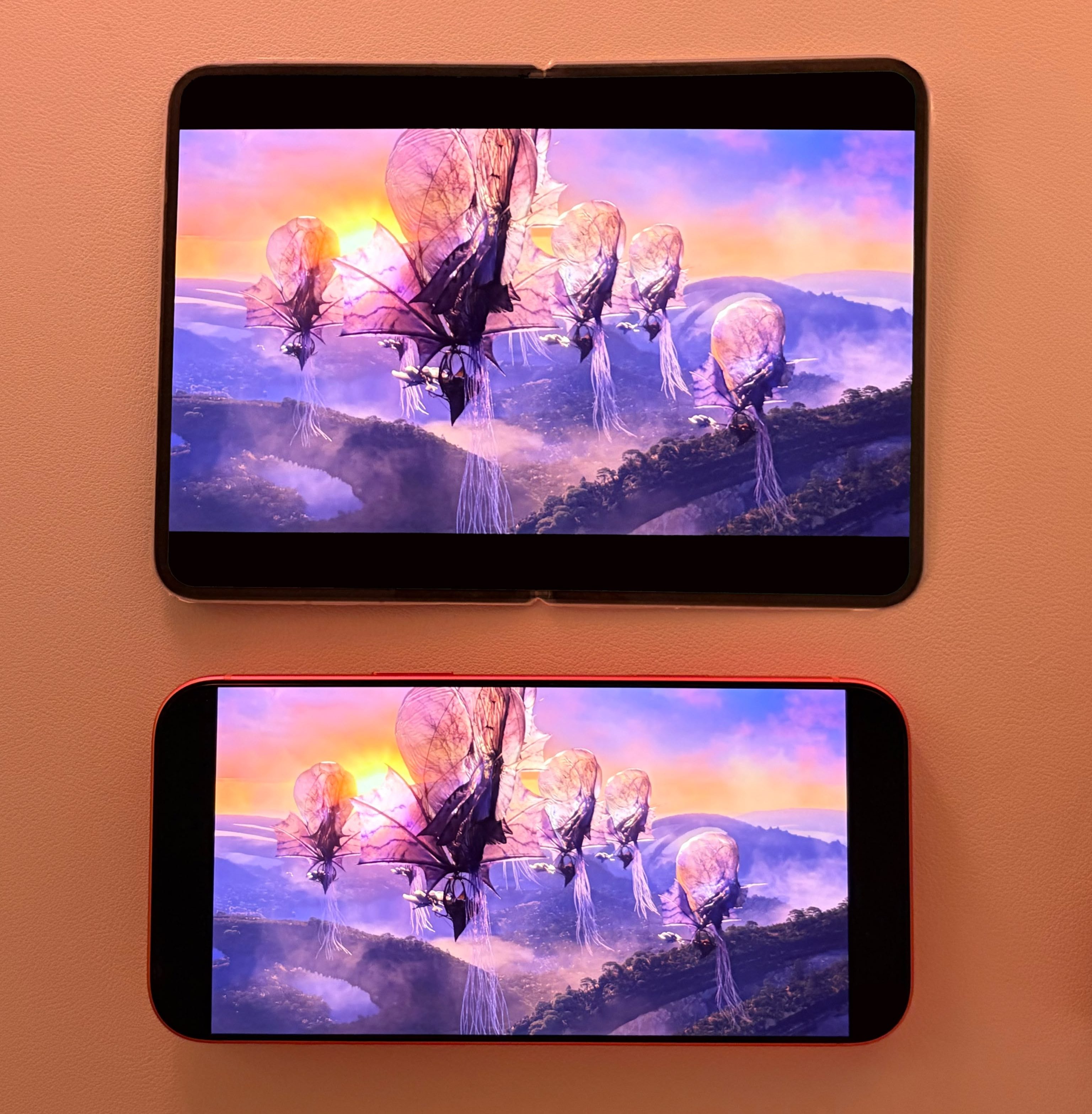
A taller, phone-like outer screen generally leads to a more square inner panel once unfolded, which can be awkward for many types of content, like videos and two open windows in Split View. Conversely, a more rectangular inner display that better supports multi-window use inevitably forces the outer display to become wider or smaller, making it less comfortable to hold and less conventional in use.

Printed a passport-style foldable phone to see how comfortable this form factor is in real life.

5.3-inch cover display
7.7-inch main display pic.twitter.com/5ae58Bc2Cq

— Ben Geskin (@BenGeskin) December 18, 2025

Reports suggesting Apple has opted for a roughly 4:3 aspect ratio on the inner display strongly suggest Apple is favoring the latter approach. A 4:3 inner display would allow Apple to more easily transfer established multitasking features from iPadOS into a foldable form. Here the unfolded state becomes the main mode of use, prioritizing a lightweight, ultra-portable iPad experience over a stretched-out smartphone.

That said, the ‌iPhone‌ Fold in its closed state is likely to feel more like a smaller everyday phone than other foldables on the market. Compare the rumored 5.3-inch outer screen size with the Samsung Galaxy Z Fold 7, which has a 6.5-inch front display, or the Google Pixel Pro Fold, whose cover screen comes in at 6.3 inches. Indeed, the ‌iPhone‌ Fold's front display would be smaller than almost all current major foldables, suggesting Apple is deliberately diverging from the "outer screen as primary phone" philosophy.

When choosing size, Apple will of course have a very deliberate product strategy in mind. While Samsung and Google largely treat the cover display on their foldables as a full-time smartphone screen, Apple may see the device's folded state as a secondary experience, suited to notifications, quick replies, and other glanceable interactions, while reserving the main experience for when the device is unfolded.

Comparison with the iPhone 17 Pro Max pic.twitter.com/MpJ80AwHXw

— Ben Geskin (@BenGeskin) December 18, 2025

However, software too has its limits. If users expect to browse, type extensively, or use third-party apps in the folded state, no amount of interface refinement will fully overcome a physically smaller canvas. That's what makes the comparison to the ‌iPhone‌ mini so notable – especially for a device expected to command a price premium of anywhere between $2,000 and $2,500, which would make it Apple's most expensive ever iPhone.

Ultimately, the rumored dimensions suggest Apple is betting on the value of the unfolded experience rather than the comfort of the folded one. The company seems willing to accept a smaller, less conventional outer display if it ensures the inner display can shine at the system and app level. If users come to think of the device not as a larger iPhone, but as an iPad that happens to fold into a pocket, the design trade-offs start to look far more intentional, and far more Apple-like.

16:9 video playback on 7.7-inch display vs. 6.9-inch iPhone 17 Pro Max display (image credit: @BenGeskin).

What do you think of the alleged dimensions of Apple's rumored foldable iPhone? Let us know in the comments. The "iPhone Fold," which some are calling it, is expected to launch alongside the iPhone 18 Pro models in September 2026.
This article, "Why Apple's Foldable iPhone May Be Smaller Than Expected" first appeared on MacRumors.com

Discuss this article in our forums
  •  

Track a Flight on Your iPhone

Flight tracker apps are a popular way to keep tabs on planes in the sky, because when you're preparing to fly or when someone you know is on board a flight, you can use them to check that things are still on schedule. But if you have an iPhone, you don't need to download and install a third-party app to track a flight – it's a handy built-in feature of the operating system.


The ability to track flights in iOS is thanks to the data detectors that Apple has integrated into the system for quite a few years now. Data detectors recognize things like times, dates and addresses, and in the right context, turns these into tappable links. Here's how it works.

Track Flights in Messages


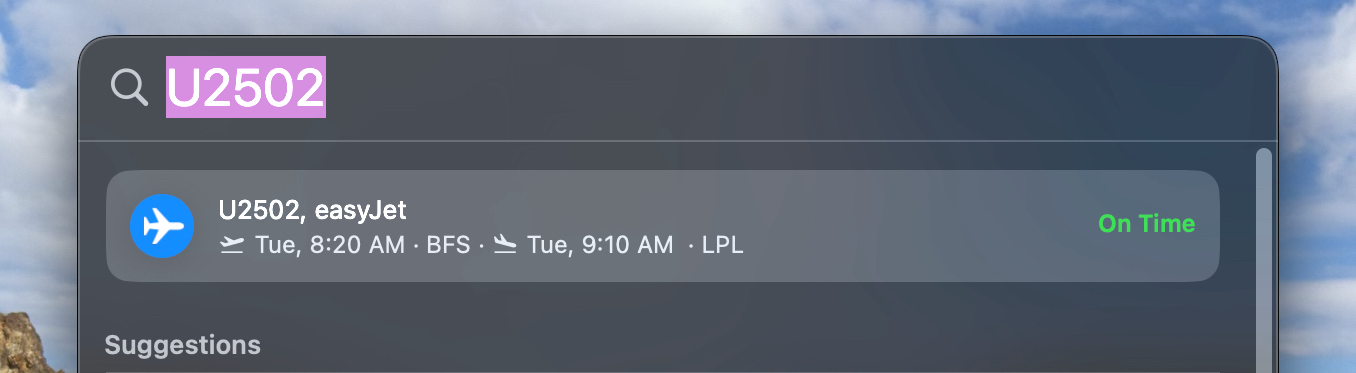
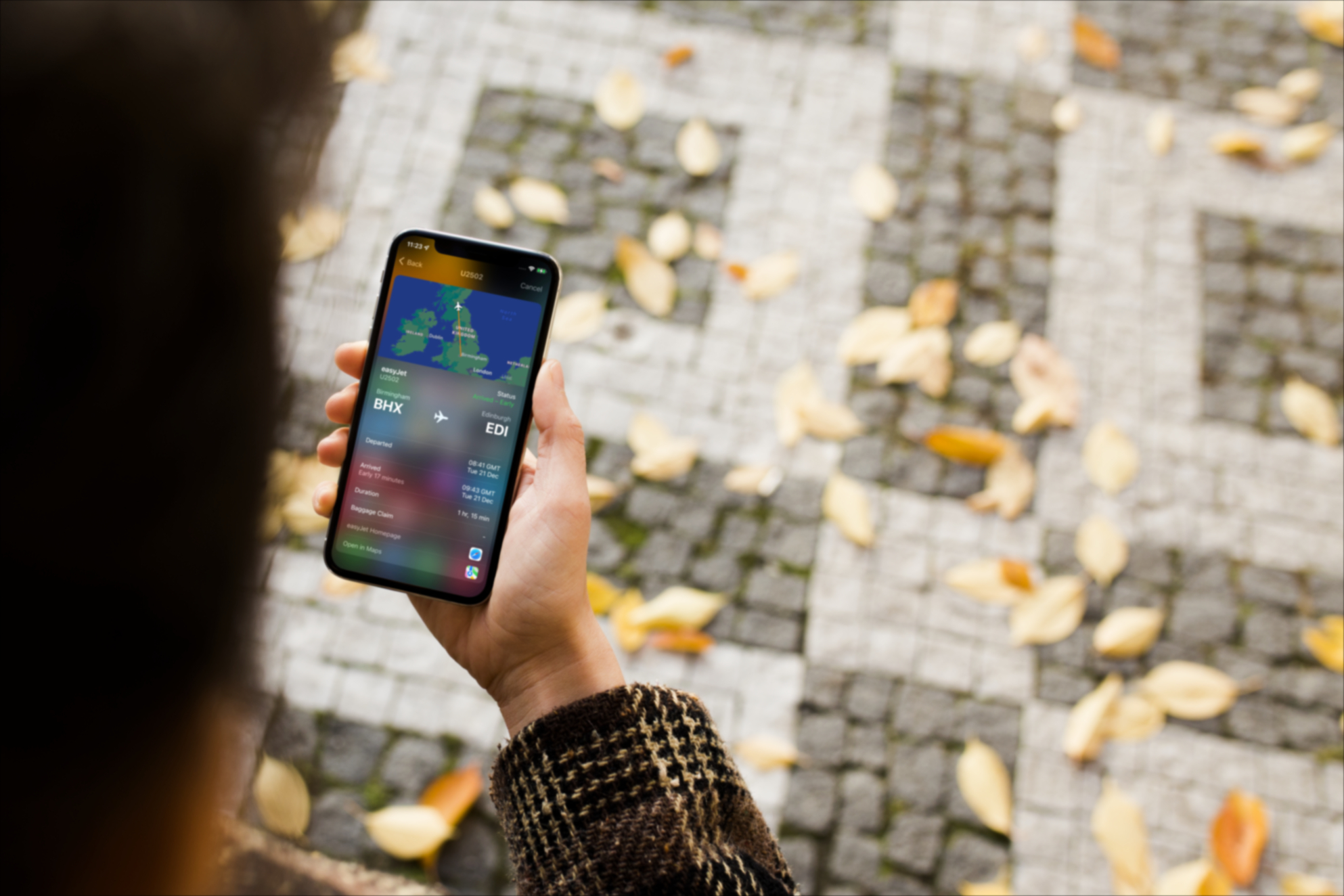
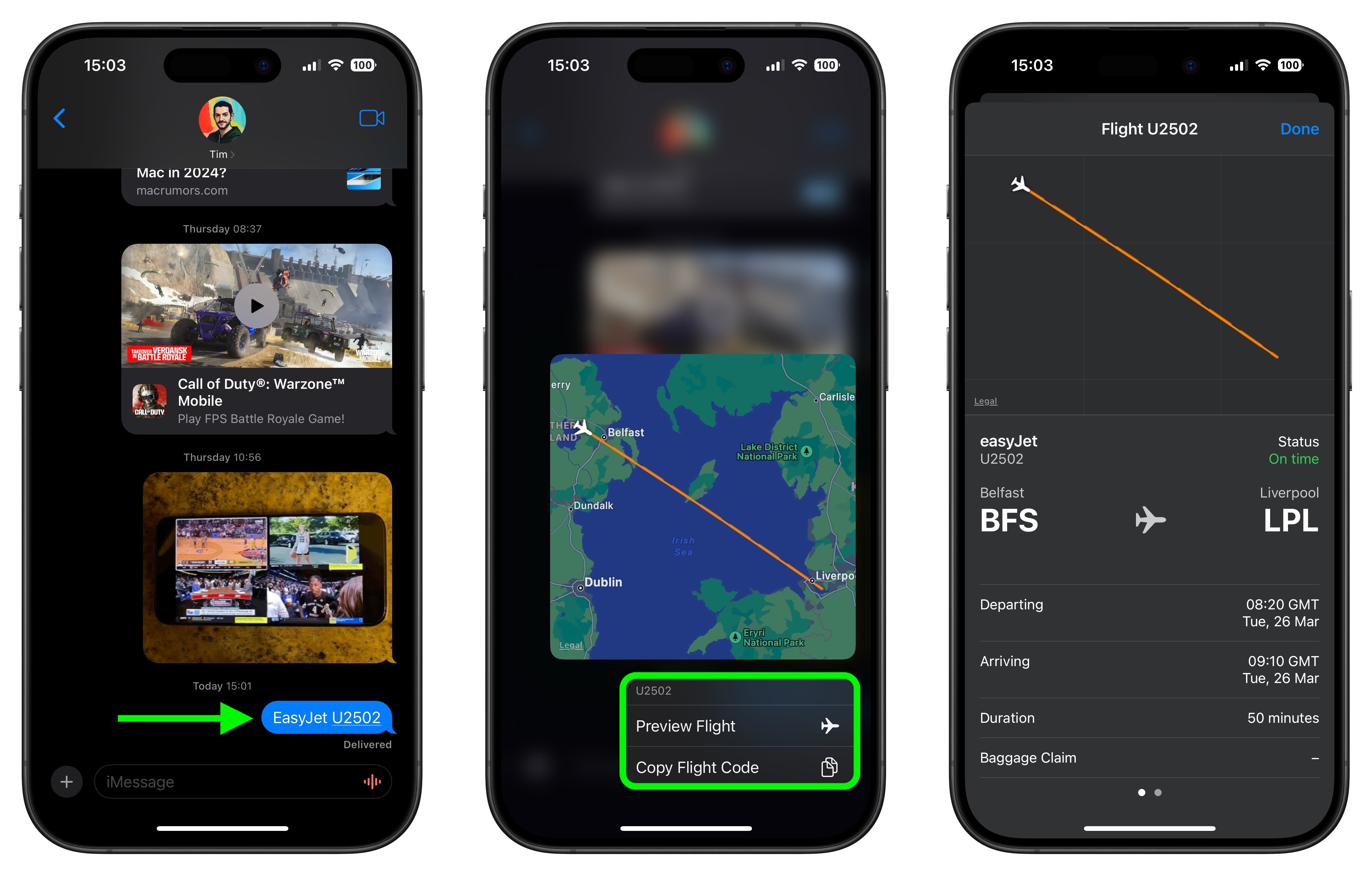
If someone sends you a flight number (U2502, say) in Messages, you can press and hold the underlined number to get a real-time view of the flight's progress plotted on a map.

messages
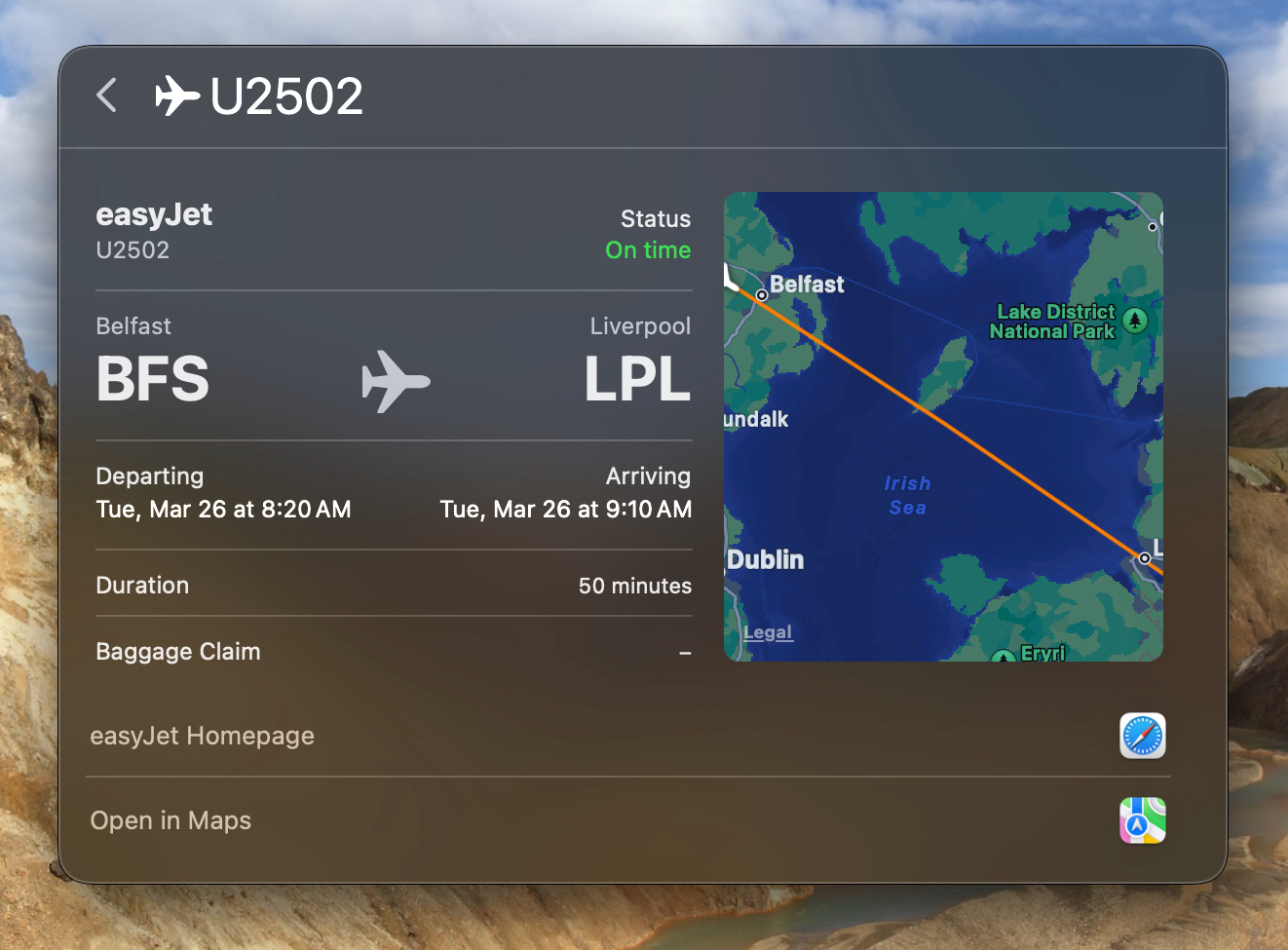
You also get the option to learn more by tapping Preview Flight, which will give you information like departure and arrival times, delays, and for some airports, baggage claim details. You'll find links to the airline website and Apple Maps at the bottom of the information card.

To increase the chances that iOS detects the flight number, it's best to include the full airline name along with the number (EasyJet U2502, for example).

Track Flights in Spotlight Search


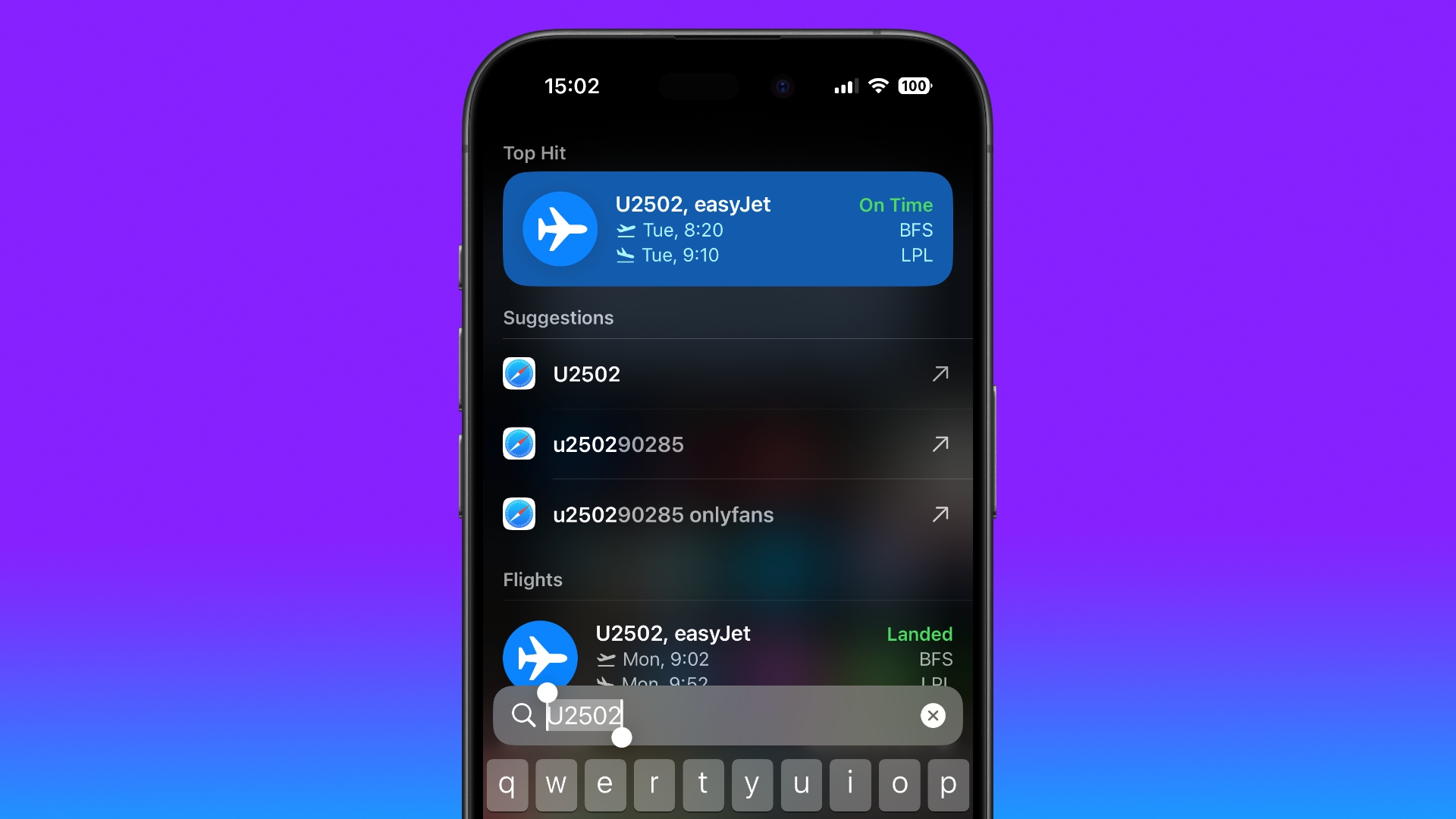
On iPhone and iPad, you can also track flights in Search.

search
Swipe down from the middle of the Home screen and simply input the flight number into the search field to get departure and arrival information. Tap the information card to get the additional details mentioned above.

Tracking Flights on a Mac


spotlight
Apple has included the same data detectors into macOS, meaning you can track flights on your Mac, too. Simply invoke Spotlight with the Command-Spacebar key combination and type the flight number into the input field.

spotlight
Select the flight data in the results, and you'll see the same information card that appears in iOS, complete with the flight's live trajectory shown on a map and other details.
This article, "Track a Flight on Your iPhone" first appeared on MacRumors.com

Discuss this article in our forums
  •  

Apple Still Testing Ultra-Thin Glass to Eliminate Foldable iPhone Crease

Apple is reportedly testing next-generation ultra-thin flexible glass (UFG) for its book-style foldable iPhone as it works to make the display crease invisible and potentially solve one of the most persistent issues of existing foldable displays.


According to Weibo-based leaker Digital Chat Station, Apple is evaluating UFG panels with uneven thickness, using thinner glass in the folding area to improve flexibility while retaining thicker sections elsewhere for rigidity and durability.

Unlike existing foldables, which rely on ultra-thin glass (UTG) that inevitably deforms along the hinge, UFG is designed to distribute bending stress more evenly across the panel. In theory, this approach could reduce the crease to the point where it becomes visually imperceptible during everyday use.

The testing is said to be ongoing as Apple refines manufacturing processes and long-term reliability targets ahead of an expected 2026 launch alongside the iPhone 18 Pro models.

The timing may appear late in Apple's development cycle, but it doesn't necessarily suggest a delay. Apple is likely currently transitioning from design validation into early production validation, where the big hardware decisions are already locked in, but more high-risk components continue to undergo final qualification.

Apple testing UFG now could be part of an effort to validate the novel way it's being applied, rather than to do with a decision about whether to use the technology at all. Apple could have more mature UTG solutions available as a fallback if its targets are not met. The report also claims that multiple Chinese display makers are also evaluating UFG-based solutions, suggesting the technology is approaching commercial readiness.

The foldable iPhone is expected to feature a book-style design with an approximately 5.3- to 5.5-inch outer display and a 7.8-inch inner screen. It will reportedly use liquid metal hinges to achieve a virtually crease-free display and is expected to be priced between $2,000 and $2,500, making it Apple's most expensive iPhone ever.
This article, "Apple Still Testing Ultra-Thin Glass to Eliminate Foldable iPhone Crease" first appeared on MacRumors.com

Discuss this article in our forums
  •  

iPhone 18 Trial Production to Start in February Ahead of Spring 2027 Launch

Apple is reportedly preparing to begin trial production of the iPhone 18 after Chinese New Year, according to Weibo-based leaker Fixed Focus Digital.


The claim suggests small-scale manufacturing runs will start once factories return to normal operations following the Lunar New Year shutdown, which typically ends in late February.

The Chinese leaker claims that production lines for the iPhone 18 Pro models have already been set up, indicating that the Pro hardware design has already been locked in. The leaker adds that the scope of external design changes is expected to be smaller than some may be anticipating.

That lines up with reports that the iPhone 18 Pro models will feature the same general design as the iPhone 17 Pro models, with the triple-lens rear camera system residing within the new camera plateau.

The report also fits with Apple's rumored shift to a split iPhone launch cycle. Under the reported strategy, the iPhone 18 Pro models are expected to debut in September 2026 alongside Apple's first foldable iPhone, while the standard iPhone 18 will follow later with the iPhone 18e for a spring 2027 launch.

Apple's iPhone 18 models could feature a simplified Camera Control button without a capacitive sensor to cut costs, but pressure sensing will still be available for all of the button functions. The standard iPhone 18 could be also upgraded to 12GB RAM, while adopting TSMC's 2nm architecture for the A20 chip, but beyond that we don't have many specifics about what else to expect at this time.

As for the iPhone 18 Pro models, they are expected to debut Apple's A20 Pro chip and could potentially feature under-screen Face ID technology, not to mention a variable aperture lens, and a new three-layer stacked image sensor made by Samsung. Apple is also expected to use the device to debut its next-generation, custom-made C2 modem.
Related Roundup: iPhone 18
Related Forum: iPhone

This article, "iPhone 18 Trial Production to Start in February Ahead of Spring 2027 Launch" first appeared on MacRumors.com

Discuss this article in our forums
  •