↩ Accueil

Vue lecture

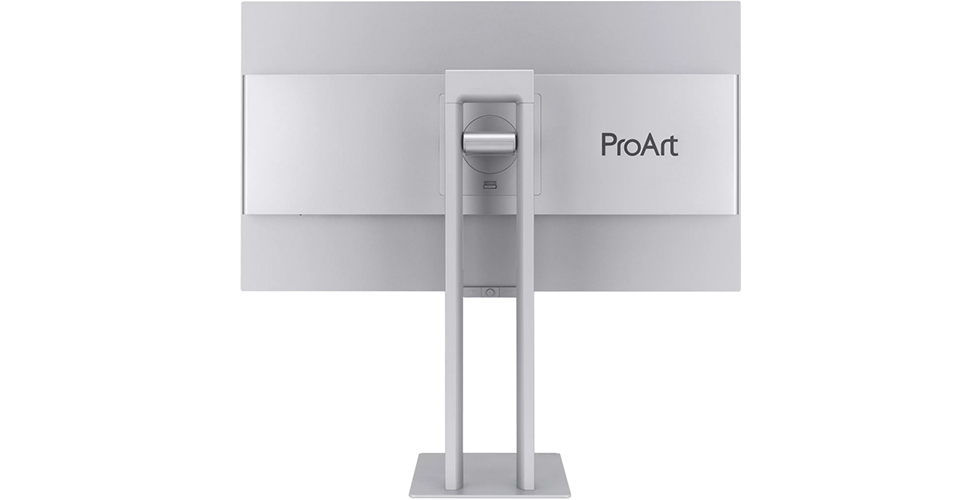
Asus ProArt PA27UCDMR merges 240Hz refresh rate with HDR10 and Dolby Vision

Asus is raising the bar for professional-grade monitors with the introduction of the PA27UCDMR, a 26.5-inch addition to the ProArt lineup that bridges the gap between high-speed gaming specifications and critical colour accuracy.

As shared by DisplaySpecifications, the PA27UCDMR is built around a 4K UHD QD-OLED panel with a 166 PPI pixel density, ensuring fine details remain sharp. While OLED is often associated with entertainment in the monitor market, Asus has tailored this specific model for the creative studio by incorporating a true 10-bit colour depth and near-total coverage of professional gamuts, including 99% DCI-P3 and 100% sRGB.


 

The motion handling is where the ProArt PA27UCDMR deviates from traditional creative displays. With a 240 Hz refresh rate and a 0.1 ms G2G response time, the monitor can handle high-frame-rate video review and game development workflows. This speed can then be paired with dynamic range support for HDR10, HLG, and Dolby Vision content. Moreover, the monitor is VESA DisplayHDR 400 True Black-certified.

The PA27UCDMR has an integrated hardware calibration solution, meaning you can calibrate it without relying on software-level profiles. This allows the user to switch between different systems without losing the preset. The inclusion of the Asus ProArt Calibration software, alongside compatibility with Calman and Light Illusion systems, reinforces its position as a tool for colour perfectionists. Furthermore, built-in ambient light and proximity sensors enable the display to dynamically adjust its brightness based on the studio environment or user presence.

Connectivity is equally good, headlined by a pair of Thunderbolt 4 ports that support daisy-chaining and deliver up to 96W of power to a connected laptop. This single-cable solution is complemented by DisplayPort 1.4 and HDMI 2.1 inputs, alongside a high-speed USB 3.2 Gen 2 hub. Mechanically, the monitor offers the full suite of ergonomic adjustments, including a 130 mm height range and the ability to pivot to a vertical orientation, ensuring it fits virtually any professional workspace.

KitGuru says: The ProArt PA27UCDMR is a formidable entry into the professional market, effectively silencing the argument that you have to choose between high refresh rates and professional colour accuracy.

The post Asus ProArt PA27UCDMR merges 240Hz refresh rate with HDR10 and Dolby Vision first appeared on KitGuru.

  •  

Nihon Falcom reveals new Trails and Ys JRPGs for 2026

Nihon Falcom has released its latest “Business Plans and Growth Potential” report detailing its plan toward global self-publishing and multi-platform development. After a successful fiscal 2025 driven by the worldwide success of the Trails in the Sky 1st Chapter remake, the legendary JRPG developer is doubling down on its independent publishing efforts for the Nintendo Switch, the recently launched Switch 2, and the PlayStation 5.

As shared by Gematsu, the report includes a roadmap with multiple upcoming titles. Still, the most significant is probably the formal scheduling of Trails in the Sky 2nd Chapter (the remake of Trails in the Sky SC), which is now locked for a fall 2026 release. Following the momentum of its predecessor, the title will launch simultaneously on PC, PlayStation 5, and Nintendo Switch. This simultaneous global release strategy marks a significant shift for Falcom, which historically relied on third-party partners for ports and regional launches.

Besides this remake, the internal roadmap reveals several high-priority projects currently in active development. Most notable is “Title C”, a new entry in the Tokyo Xanadu series. The 2026 schedule also includes a yet-to-be-announced “New Title” and a “Ported Title”, both aimed at the mid-year window.

Looking further ahead, the document confirms that unannounced mainline entries for both the Ys and Trails series (specifically referred to as Title I and Title H) are in production. The company is also exploring the potential of the Switch 2 for ports of its existing catalogue, with at least one dedicated Switch 2 port currently listed as “In Development”.

KitGuru says: Are you a fan of Falcom games? Which series is your favourite? Interested in any of Falcom's upcoming titles?

The post Nihon Falcom reveals new Trails and Ys JRPGs for 2026 first appeared on KitGuru.
  •  

LG unveils new UltraGear evo lineup with built-in AI upscaling tech

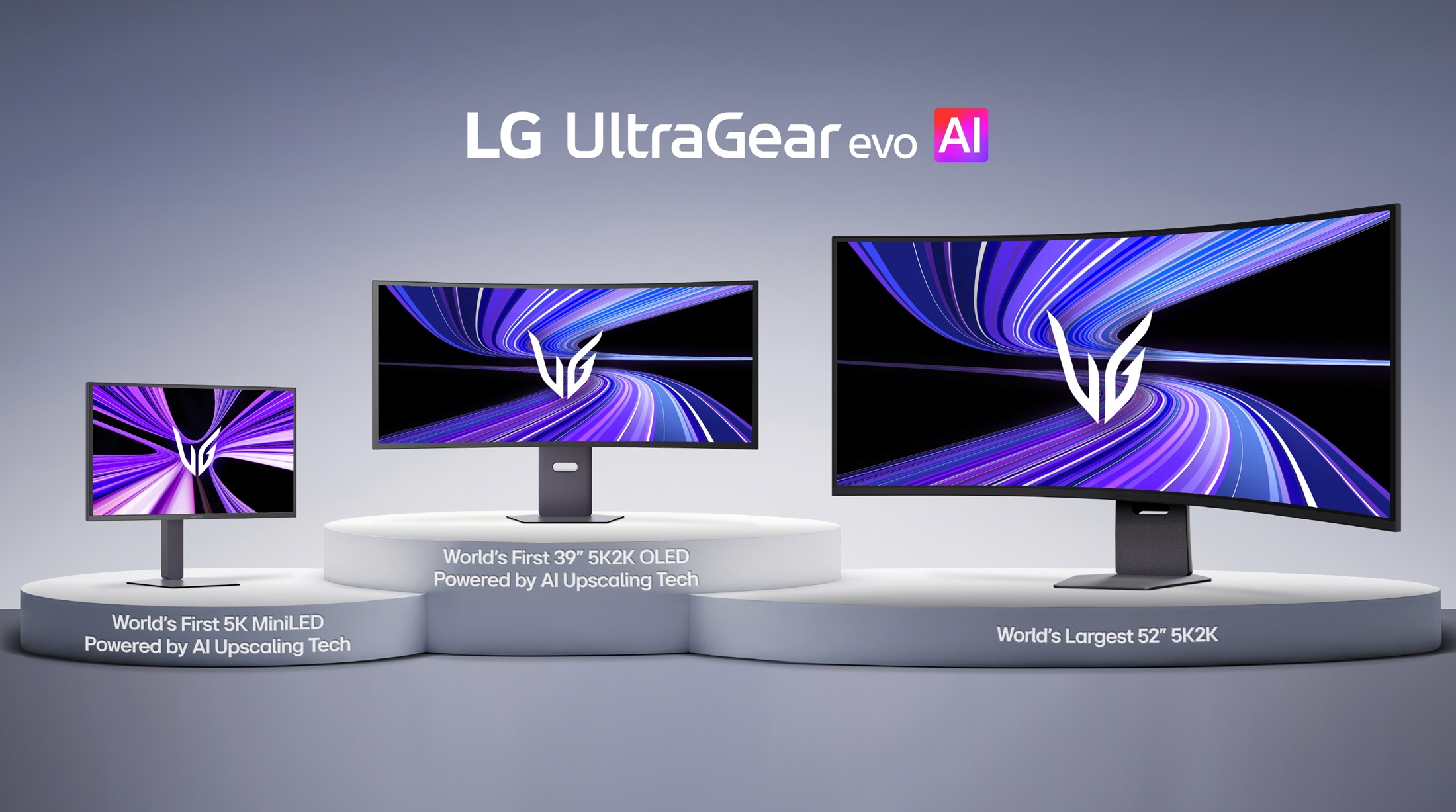
LG has unveiled a new lineup of high-end gaming monitors ahead of CES 2026, introducing a new flagship sub-brand named UltraGear evo. Designed to sit above its standard gaming lineup, the “evo” series prioritises high resolutions while aiming to overcome the hardware barrier to 5K gaming through integrated on-device AI upscaling.

The feature that sets all these new monitors apart is LG's proprietary 5K AI upscaling solution. LG claims this is the world's first on-device upscaler capable of taking lower-resolution signals and outputting them with “5K-class clarity” without taxing the user's graphics card. By moving the heavy lifting of spatial reconstruction from the PC to the monitor's internal scaler, LG suggests that gamers may even be able to skip a GPU upgrade.

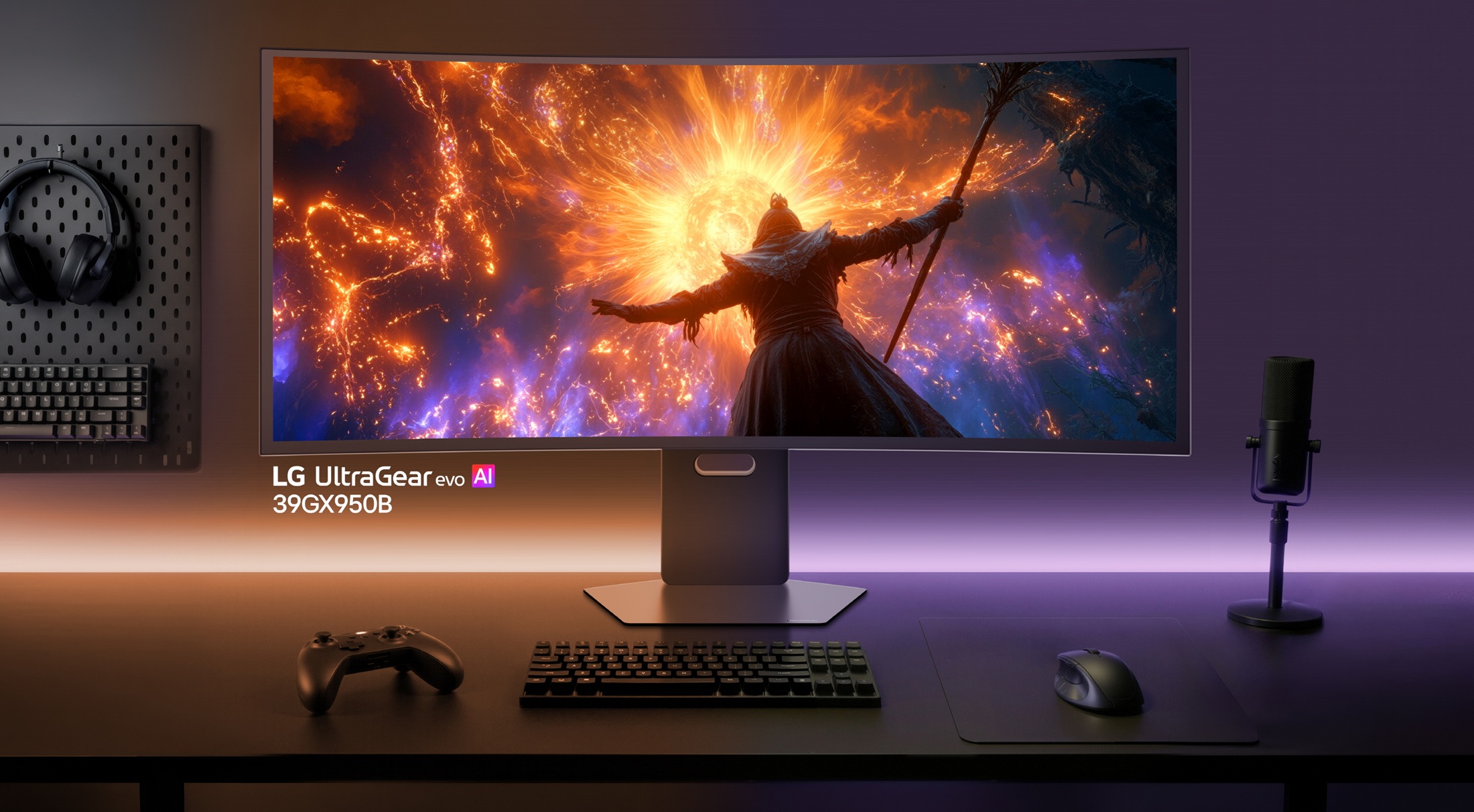
The lineup includes the 39GX950B, a 39-inch 5K2K (5120×2160) ultrawide that uses LG's Primary RGB Tandem OLED technology. This “four-stack” architecture, which stacks multiple light-emitting layers, improves peak brightness and panel longevity compared to traditional WOLED. For enthusiasts who split their time between immersive sims and Twitch shooters, the 39-inch model features a Dual Mode toggle that lets users switch between 165 Hz at 5K2K and a blistering 330 Hz at WFHD.

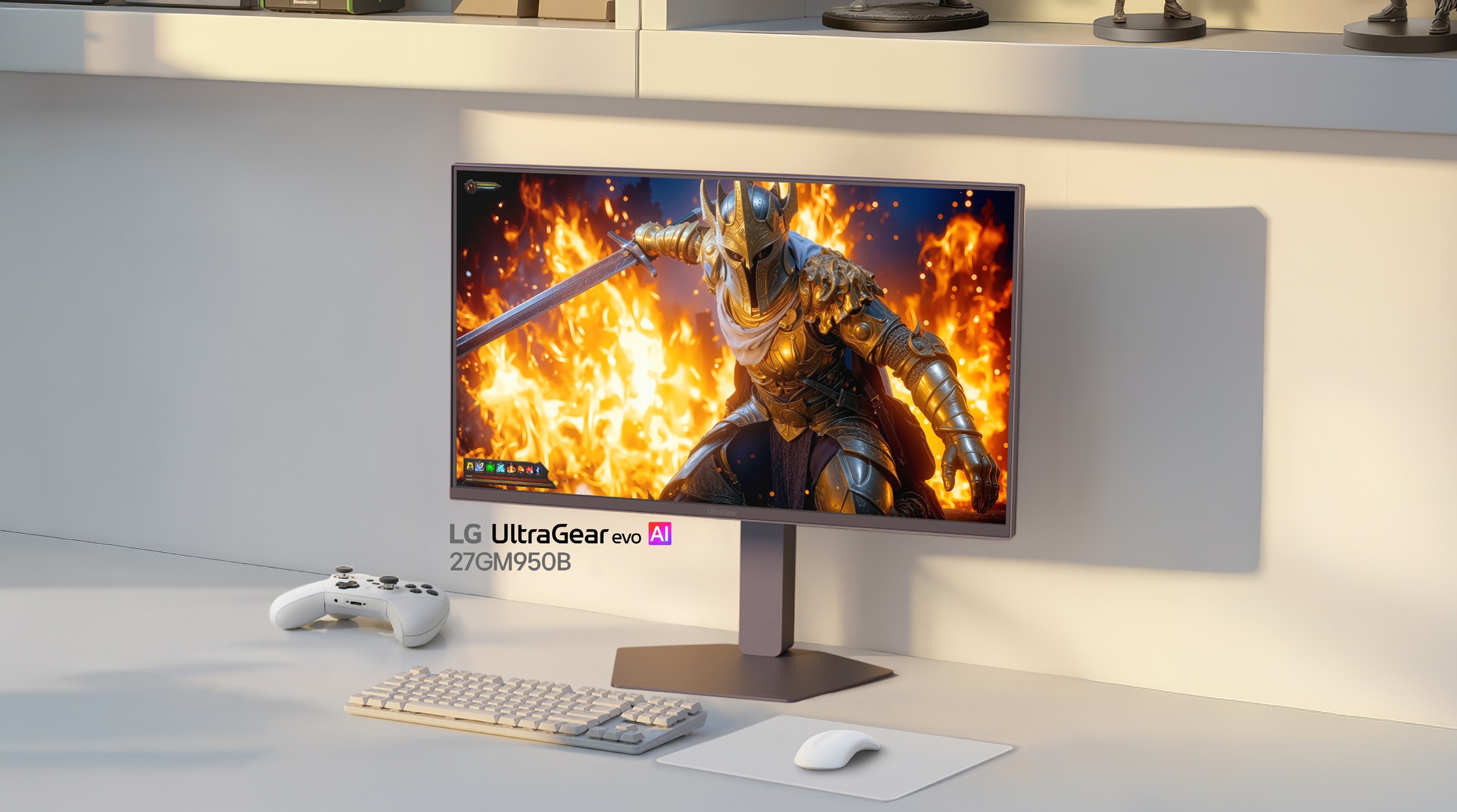
For those who prefer high-brightness HDR over perfect blacks, the 27GM950B arrives as the world's first 5K “New MiniLED” monitor. This 27-inch display addresses the common “blooming” or haloing issues found in older MiniLED designs through LG's Zero Optical Distance engineering. By physically minimising the gap between the 2,304 local dimming zones and the panel itself, LG claims it has achieved professional-grade optical clarity. This model also supports Dual Mode, reaching up to 330 Hz at QHD resolution with a peak brightness of 1,250 nits.

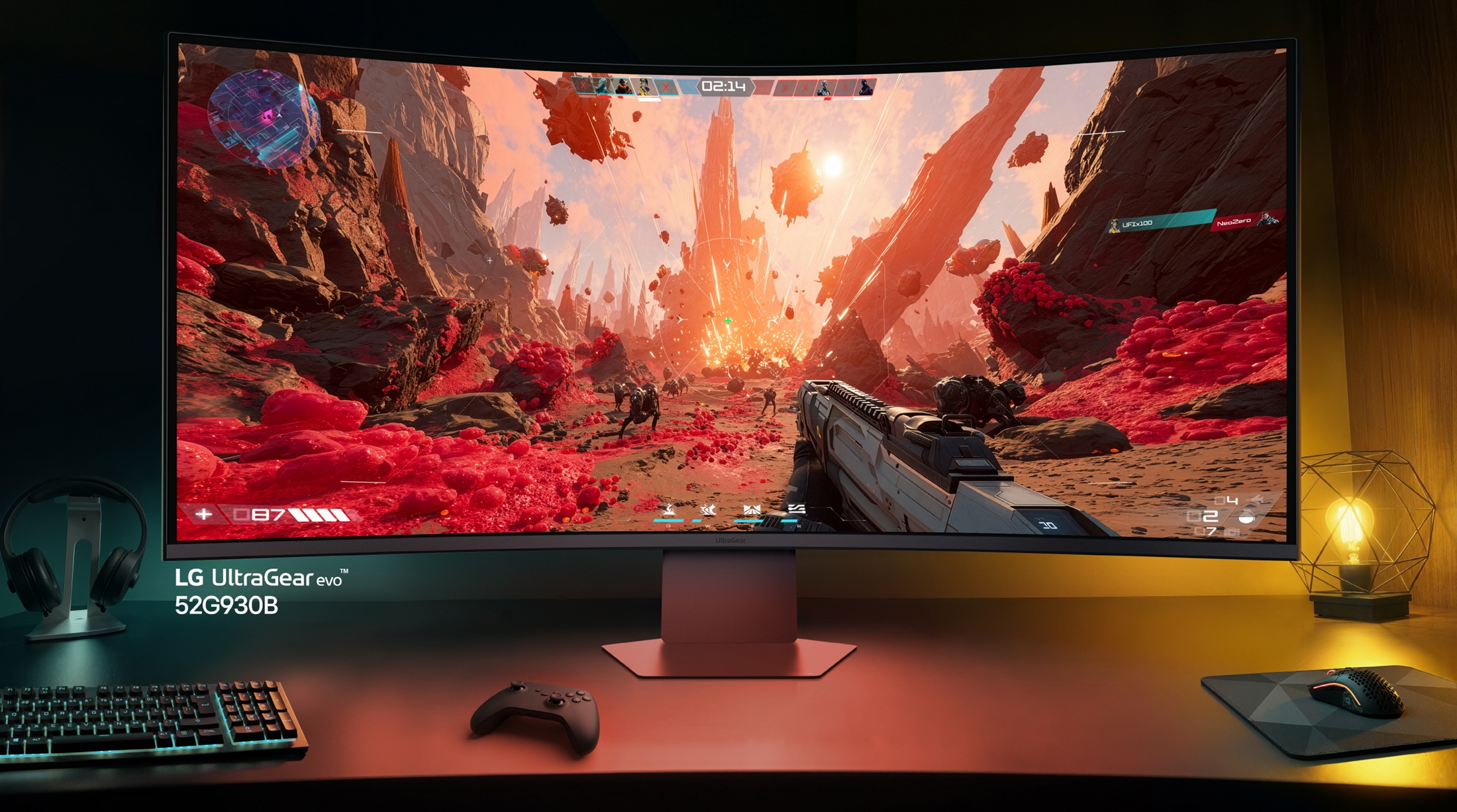
Rounding out the “evo” family is the 52G930B, currently the world's largest 5K2K gaming monitor. With a 52-inch diagonal and a 1000R curvature, it offers a 12:9 panoramic aspect ratio. Despite its sheer scale, it maintains a native 240 Hz refresh rate. Finally, for those who crave high refresh rates, LG confirmed that the UltraGear GX7 (27GX790B) will go on sale the day CES 2026 opens. This QHD Tandem OLED display reaches a native 540 Hz, with a secondary Dual Mode pushing to 720 Hz at HD resolution, directly challenging the latest TN and Fast-IPS esports panels.

KitGuru says: G's push into 5K AI upscaling is a clever move to mitigate the rising cost of GPUs. If the on-device processing can truly deliver a crisp 5K image without the shimmering associated with poor spatial upscalers, it could change how we value high-pixel-density monitors.

The post LG unveils new UltraGear evo lineup with built-in AI upscaling tech first appeared on KitGuru.
  •  

Sapphire joins the hidden-cable movement with PhantomLink GPU and motherboard

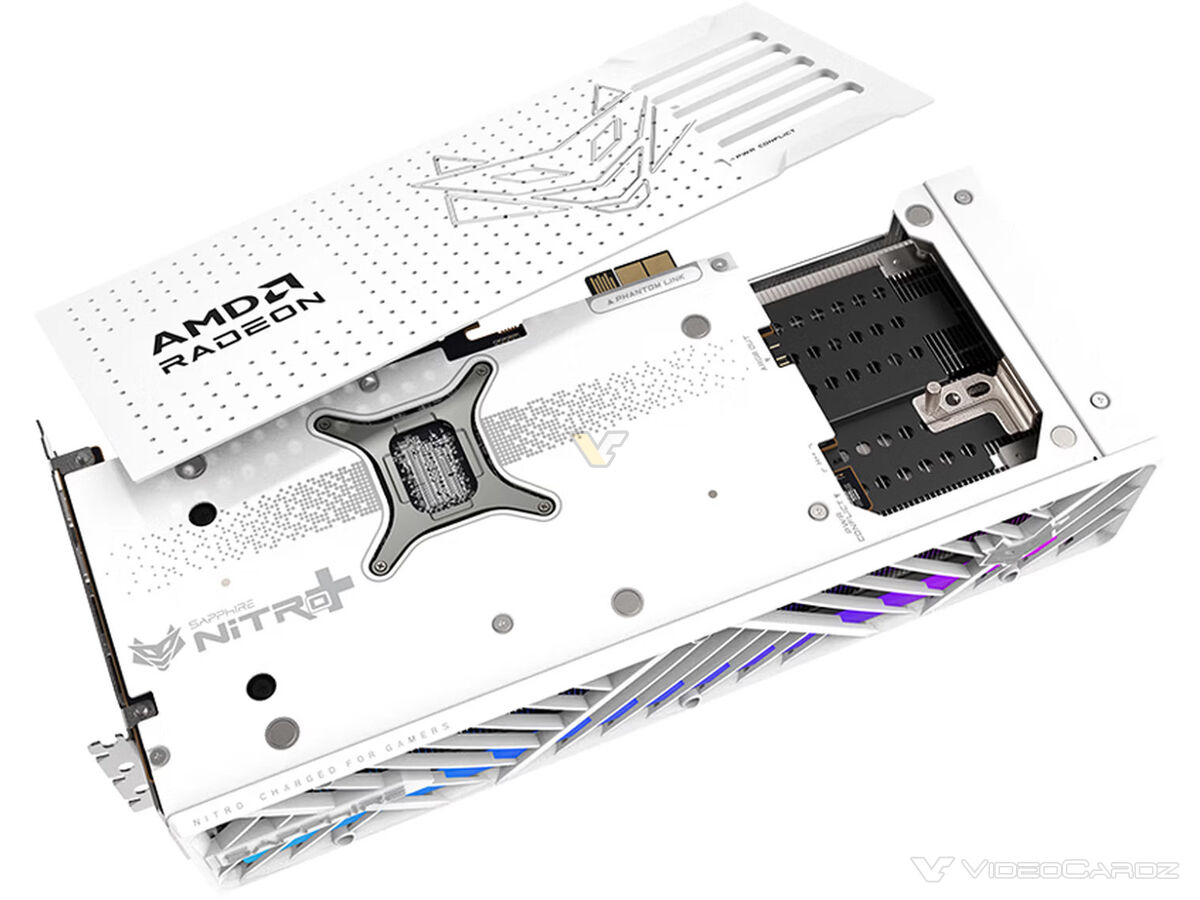
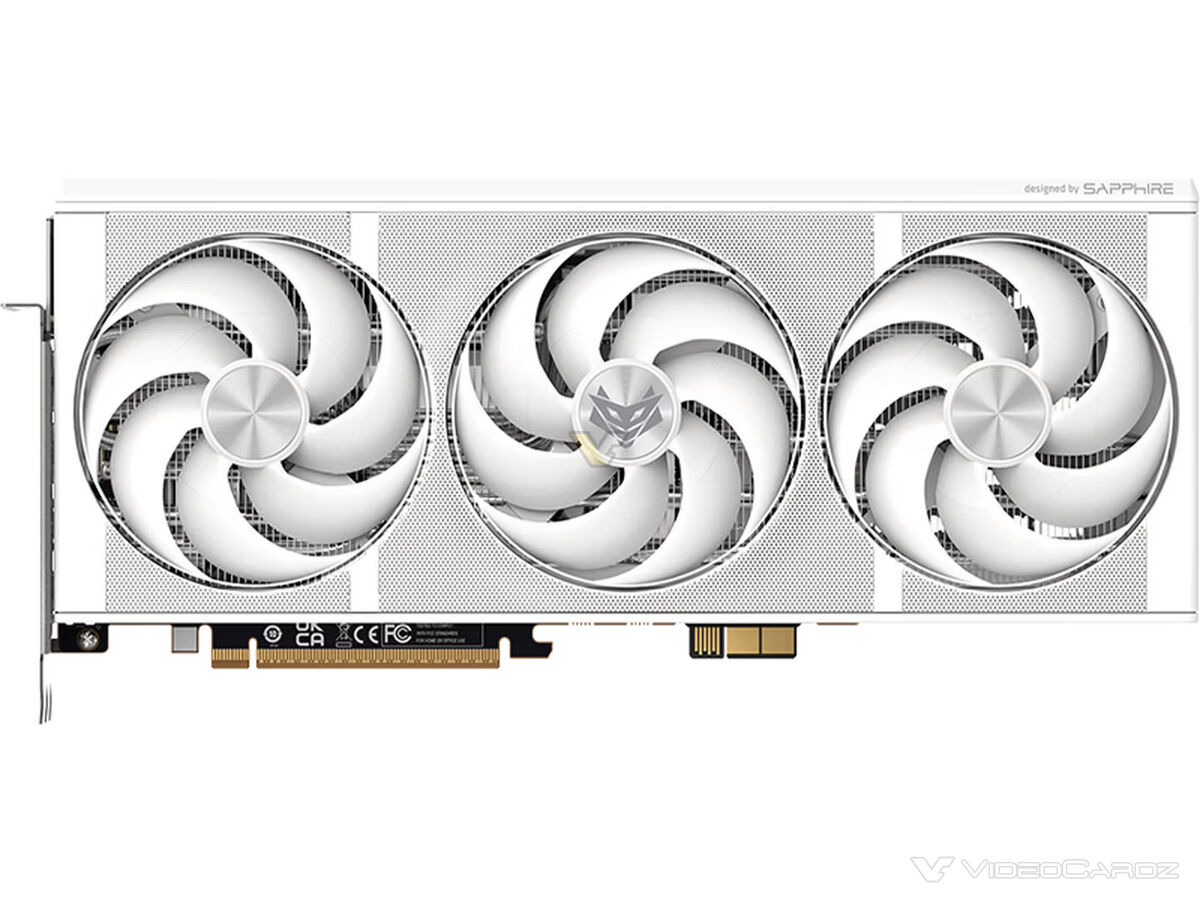
Sapphire has officially entered the “cable-less” PC building arena with the launch of its Nitro+ PhantomLink series. Currently debuting in the Chinese market, this release signals Sapphire's adoption of the back-connector power delivery standard, offering a solution to the cluttered aesthetics that often plague high-end builds. The new lineup includes a dark grey motherboard, a limited white edition motherboard, and a GPU.

According to VideoCardz, Sapphire's implementation of the Asus-pioneered BTF 2.5 (GC-HPWR) standard is named PhantomLink. By using a high-power header adjacent to the primary PCIe slot, the graphics card draws power directly from the motherboard. This eliminates the need for the traditional power cables that typically trail across the front of the chassis. For builders not yet ready to commit to a specialised motherboard, Sapphire has wisely opted for a detachable GC-HPWR module, allowing the card to function with standard hardware via a traditional 12V-2×6 connector.

Image credit: VideoCardz

To complement the new GPUs, Sapphire has also unveiled two matching motherboards built on the AM5 X870E chipset: the Nitro+ X870EA PhantomLink and the Nitro+ “Aurora” X870EA PhantomLink Polar Edition. These boards act as the power delivery hub for the system, featuring a rear-mounted power interface that keeps all primary cabling hidden behind the motherboard tray. Beyond the aesthetic clean-up, these boards are high-spec enthusiast offerings, featuring support for PCIe 5.0 storage and graphics, as well as modern connectivity standards like Wi-Fi 7 and USB4.

Underneath the hood, the Nitro+ RX 9070 XT PhantomLink shares identical specifications (via VideoCardz) with the standard Nitro+ model, featuring 4,096 stream processors and a core clock that boosts up to 3,060 MHz. The 16 GB of GDDR6 memory sits on a 256-bit bus operating at 20 Gbps, supported by 64 MB of Infinity Cache. Sapphire has also included a safety feature: a “PWR CONFLICT” LED that prevents the card from operating if a user accidentally connects both the PhantomLink header and the traditional 12V-2×6 cable simultaneously.

While these products are currently appearing on Chinese retail sites, a broader global rollout is expected to follow, likely coinciding with CES 2026. In terms of pricing, the Titanium model is listed at 5,799 RMB (approximately £611), while the white Aurora edition carries a premium at 5,999 RMB (roughly £632).

KitGuru says: Sapphire is clearly banking on the “clean build” trend becoming standard. While the reliance on a specific motherboard remains a barrier to entry, the inclusion of a detachable adapter makes this a much more sensible purchase for those planning a multi-stage system upgrade.

The post Sapphire joins the hidden-cable movement with PhantomLink GPU and motherboard first appeared on KitGuru.
  •  

SODIMM to DIMM adapters could help gamers work around DDR5 memory shortage

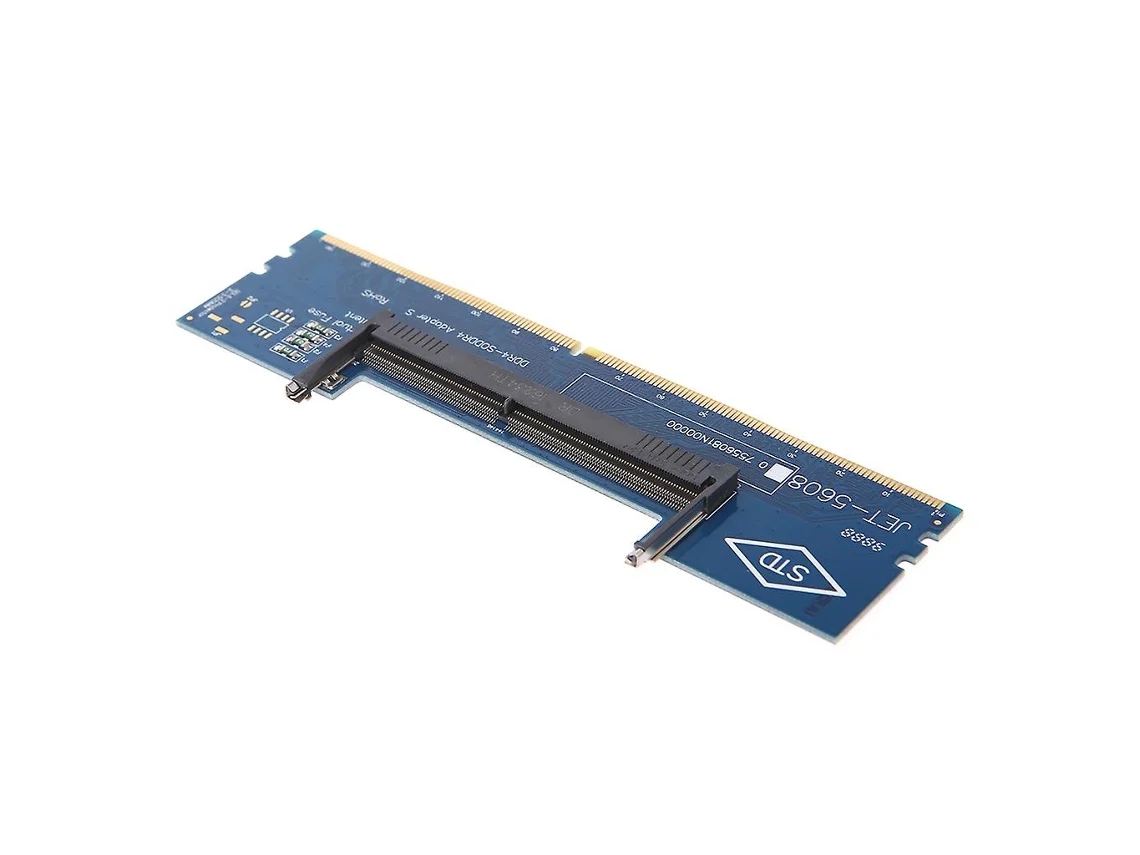
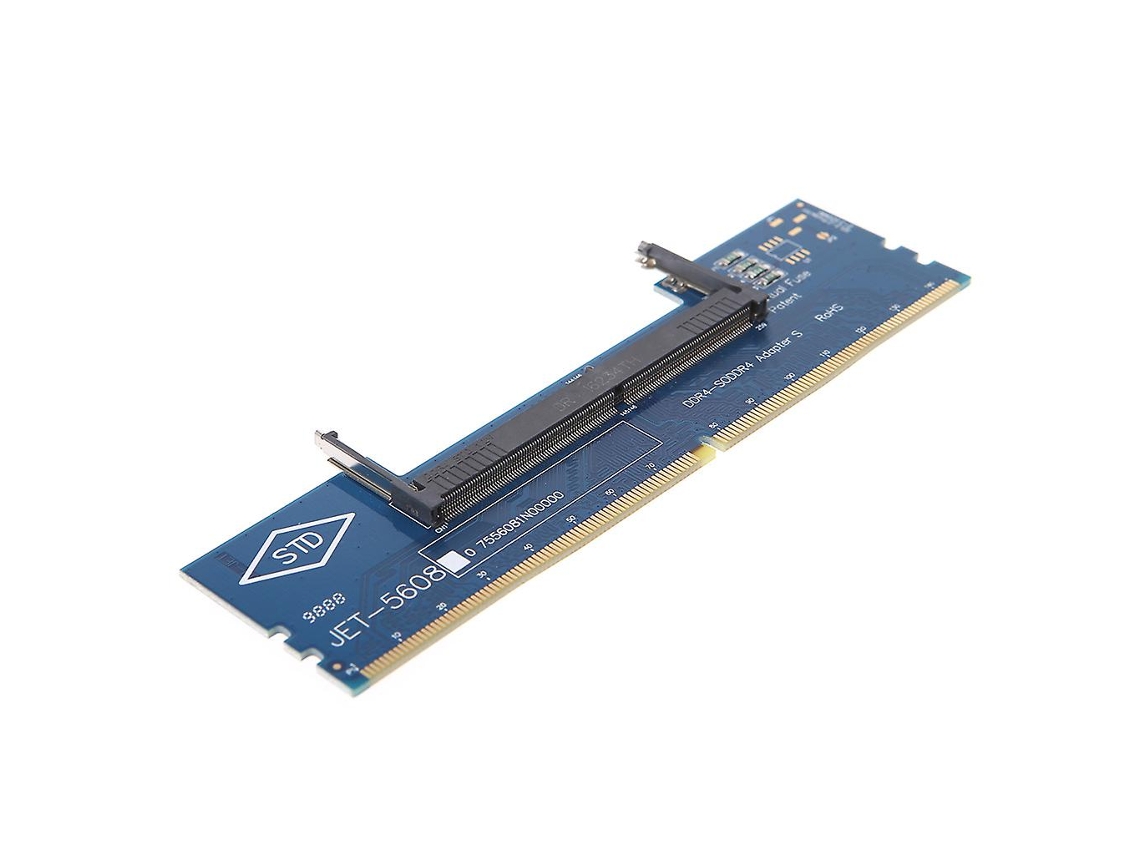
In recent weeks, DDR5 memory prices have begun skyrocketing due to a shortage brought about by AI companies buying up the majority of available DRAM supply. Gamers may be able to work around the shortages with a little ingenuity though, as desktop RAM can be replaced by SODIMM modules with the use of an adapter. 

Hardware Canucks (via Videocardz) put this idea to the test in a recent video to see how viable it is. By going to the used SODIMM memory market, PC builders can save a decent amount of money compared to current desktop RAM prices. As 3DCenter points out, these adapters are currently very cheap as well, so an end user would be looking at a 30% saving when buying 16GB of DDR5 SODIMM memory, plus an adapter, versus buying the equivalent amount of desktop memory at current prices.

However, this cost-saving measure is not without technical caveats. These adapters are fundamentally a hack, designed for repurposing spare hardware. Desktop motherboards are engineered for specific trace lengths and signal integrity, and introducing an additional physical interface via a passive adapter inherently degrades the quality of that signal path. Consequently, users should expect to lose some performance. Laptop modules typically operate with much looser timings and lower clock speeds than desktop kits from the likes of Corsair or G.Skill. To maintain system stability, further downclocking may be necessary to compensate for the electrical noise introduced by the adapter's additional circuitry.

This trend follows other DIY measures we've seen, such as the rise of “solder-it-yourself” memory kits. While these SODIMM adapters are a far more accessible solution that doesn't require specialised electronics knowledge, they represent a similar level of desperation in the current market. For gamers who have spare SODIMM sticks from an old gaming laptop or access to cheaper mobile stock, the adapter offers a viable bridge to a functional PC, even if it means sacrificing the low-latency performance of desktop modules.

KitGuru says: This may be a good workaround in a pinch, but we wouldn't necessarily recommend running your PC this way. 

The post SODIMM to DIMM adapters could help gamers work around DDR5 memory shortage first appeared on KitGuru.
  •  

NuPhy unveils new Node 100 keyboards

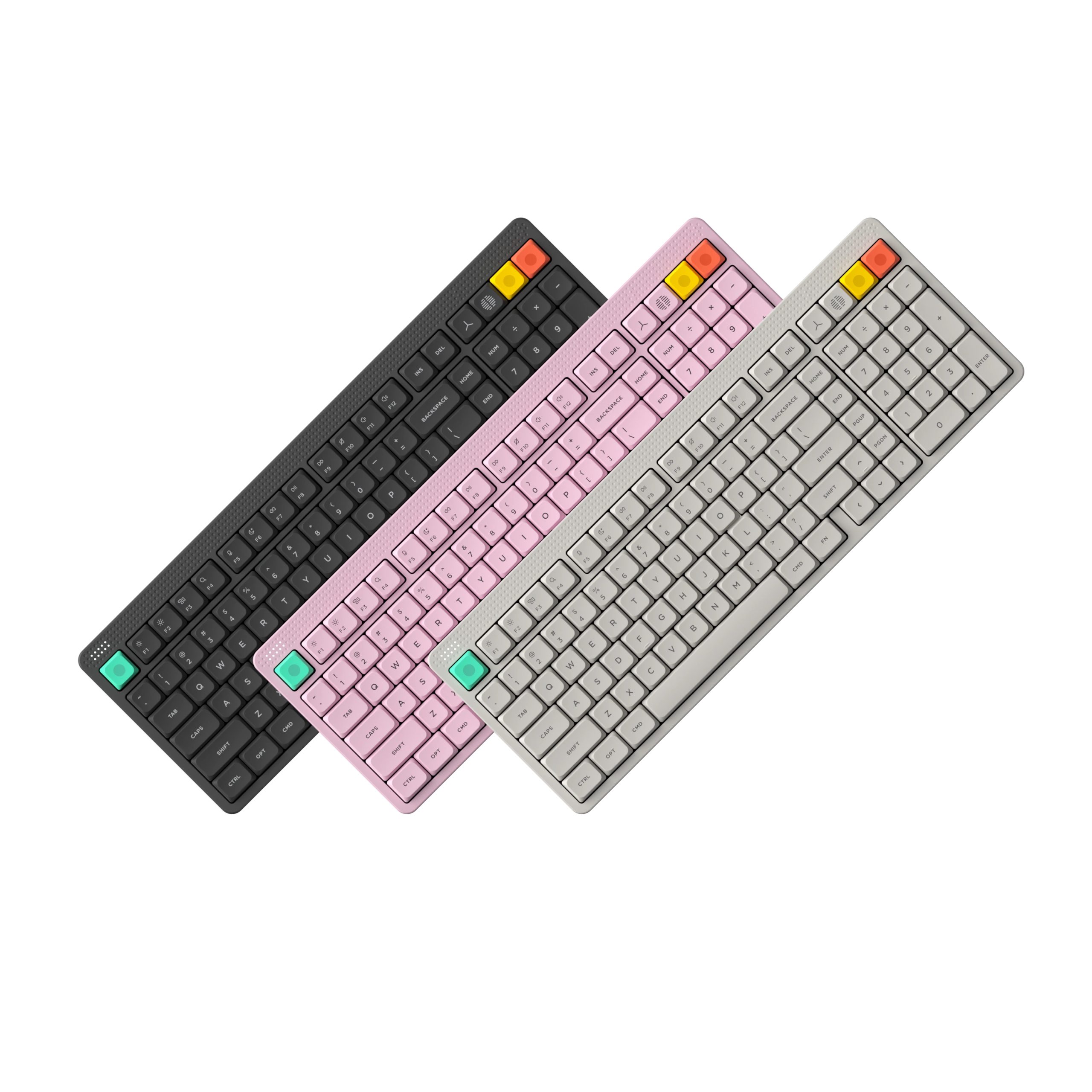
After launching the compact Node 75, NuPhy has officially unveiled the Node 100, a new low-profile mechanical keyboard with a retro minimalist design and an 1800 layout. Designed for users who need a full numpad without the desk-consuming footprint of a standard 104-key board, the Node 100 is available in three colours and three switch options.

The Node 100 retains the design elements of its smaller sibling, most notably the dot-matrix LED indicators on the left and the touch-sensitive strip on the right, which allows intuitive shortcuts and media controls. Despite its premium features, NuPhy has kept the price competitive, starting at $99.95 (with a $10 discount). This is achieved through a high-quality plastic construction with a PCB gasket mount system, ensuring a bouncier typing experience.

NuPhy is launching the Node 100 in two distinct configurations. The low-profile variants are aimed at the “productivity on the go” crowd, featuring a slim front height of just 13.8 mm and weighing in at 787 g. It uses NuPhy's Low-Profile Nano switches (based on Gateron's LP 3.0 tech) and dye-sublimated nSA profile PBT keycaps. The high-profile options are for the traditional desk setup, with a front height of 18.9 mm and double-shot PBT keycaps in the mSA profile.

Both versions feature two-stage adjustable feet, offering typing angles of 6°, 9°, or 12°, and support tri-mode connectivity: Bluetooth, 2.4 GHz wireless, and wired USB-C. Moreover, the two versions can be acquired in dark gray, pink, or white with linear, tactile, or silent mechanical switches.

Under the hood, the Node 100 runs on NuPhyIO firmware, which is fully programmable through a web interface. Battery life promises to be quite good: with south-facing RGB lighting disabled, the low-profile model (3,000 mAh) and the high-profile model (4,000 mAh) last up to 1,000 hours on a single charge. Even with the lights on, users can expect roughly 100 hours of wireless use.

Moreover, NuPhy is releasing the 3D reference files for the keyboard. This allows users with 3D printers to create custom accessories for the Node 100's top rail. Pre-designed files include everything from pen holders and phone stands to LEGO-compatible mounts, making the keyboard a literal playground.

KitGuru says: The Node 100 looks like a perfect blend of minimalism, enthusiast features, complete layout, and a decent price point. While you may find equivalent or even better standard/high-profile keyboards at this price, in the low-profile market, it can be challenging to find one this promising.

The post NuPhy unveils new Node 100 keyboards first appeared on KitGuru.
  •  

Buckshot Roulette hits 8 million sales, console port gets delayed

The horror hit Buckshot Roulette continues to defy the typical trajectory of indie titles. Developer Mike Klubnika and publisher Critical Reflex have announced that the game has officially surpassed 8 million copies sold on PC, an impressive figure for a project that began as a small-scale experimental release.

To put that 8-million-unit milestone into perspective, the game has now outpaced several major AA and AAA releases of the year, including Clair Obscur: Expedition 33 and the lifetime sales of the entire Octopath Traveler franchise. Perhaps most impressive is that these numbers represent actual sales of a PC-exclusive game, as Buckshot Roulette has never been part of a subscription service like Xbox Game Pass or PlayStation Plus. The game's success seems to stem from its mechanical hook: a high-tension game of Russian roulette played with a 12-gauge shotgun in a grime-streaked basement.

On not-so-bright news, fans waiting for the promised console versions will have to wait a bit longer. Initially slated for a late 2025 release, the ports have now been pushed back to 2026. Critical Reflex cited “technical difficulties” as the primary reason for the delay. The game was built in the Godot engine, and the team is reportedly working through specific optimisation hurdles to ensure the console experience matches the PC original's atmosphere and responsiveness. Despite the delay, the franchise is expanding into the physical realm, but not as a release. Over the next year, fans can expect a physical release of the game's soundtrack, along with new merchandise.

For now, the only place to play Buckshot Roulette is on PC via Steam and Itch.io. With a multiplayer update already proving popular throughout 2025, the game appears well-positioned to maintain its momentum until it finally hits consoles next year.

KitGuru says: Eight million copies for a game about shooting yourself in a basement is a testament to how much “vibes” and a strong mechanical hook matter in the indie space.

The post Buckshot Roulette hits 8 million sales, console port gets delayed first appeared on KitGuru.
  •  

Windows 11 has a hidden driver that may boost NVMe SSD performance

Windows users have long relied on the default disk.sys driver for storage management, a component that has mainly remained fundamentally unchanged since its introduction in 2006. While Windows has supported the NVMe protocol since Windows 8.1, the legacy driver continues to treat modern high-speed solid-state storage as a legacy SCSI disk. To address this bottleneck, Microsoft has officially introduced nvmedisk.sys for Windows Server 2025, but apparently, Windows 11 25H2 also has it hidden away.

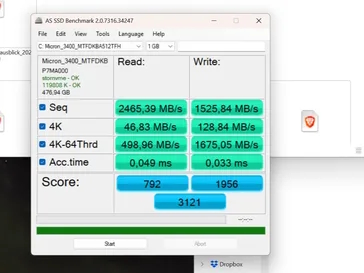
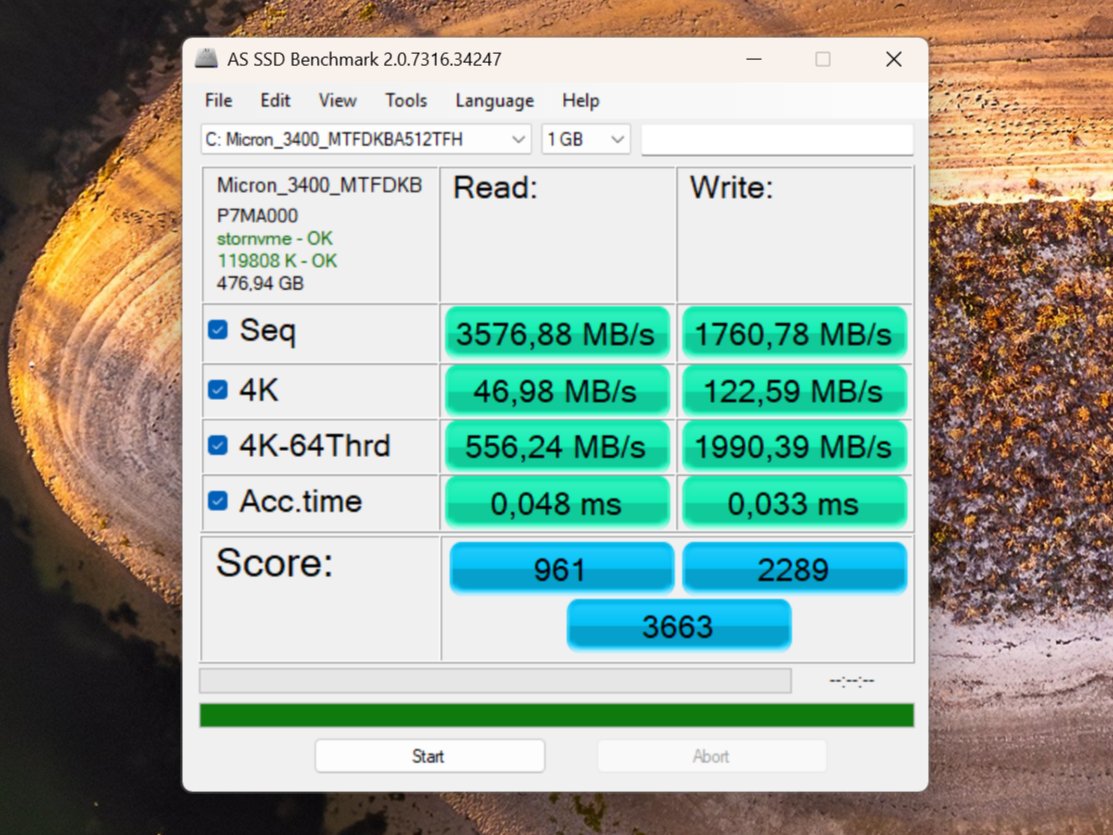
The team over at Notebookcheck tested this new driver on a Windows 11 PC, and as promised by Microsoft, the deeper NVMe awareness appears to be paying dividends in raw throughput. The testing suggests that nvmedisk.sys provides a measurable performance uplift across both sequential and random read/write workloads compared to the old driver. By bypassing the legacy SCSI translation layer, the new driver allows the OS to interface more directly with the flash controller, reducing overhead and improving latency on high-end drives such as the Samsung 990 Pro and Crucial T705. You can find the results before and after installing the new driver below:

Image credit: Noteboocheck

Although impressive, enthusiasts looking to force the transition should proceed with extreme caution, as the driver is not yet enabled by default for all hardware configurations. Current reports indicate that forcing nvmedisk.sys via registry modifications can lead to severe system instability or a total failure to boot if the underlying SSD controller lacks specific compatibility hooks. To verify which driver your system is currently using, users must navigate to Driver Details in Device Manager.

Given the potential for data loss or unbootable partitions, we strongly advise against manually switching drivers without a full-disk backup at hand. While the performance gains are enticing for those chasing benchmark records, the new driver is still in a soft launch.

KitGuru says: It is about time Microsoft retired a driver stack from 2006 for high-end storage. The question that remains is when it will arrive at a stable build.

The post Windows 11 has a hidden driver that may boost NVMe SSD performance first appeared on KitGuru.
  •  

LG Display to fix OLED text clarity with new 27-inch 4K RGB stripe panel

LG Display is unveiling its new OLED technology ahead of CES 2026. The company has officially announced the development of the world's first 27-inch 4K OLED panel featuring an RGB stripe structure and a 240Hz refresh rate. This new monitor promises to address the most persistent complaint regarding OLED monitors: text clarity.

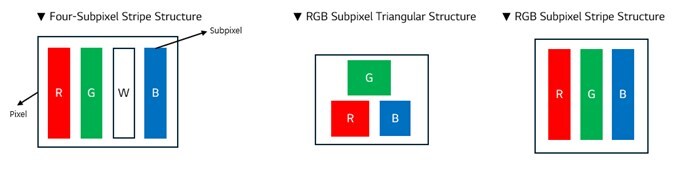
While OLED has long dominated in contrast and response times, the technology has struggled with productivity tasks. Current-generation WOLED panels typically use an RWGB structure, while QD-OLED uses a triangular RGB arrangement. Both configurations often cause “color bleeding” or “fringing” around text because modern operating systems like Windows are designed for the standard vertical RGB stripe found in traditional LCDs. By successfully implementing a true RGB stripe at 4K resolution, LG is promising a monitor that is finally as capable for spreadsheet work and coding as it is for high-end gaming.

The breakthrough isn't just about clarity, however. This new panel is the first of its kind to maintain the RGB stripe while pushing to 240Hz. To achieve this, LG applied new manufacturing techniques to increase the aperture ratio (the physical area of the pixel that emits light), allowing for higher brightness and faster refresh cycles without the need for an extra white subpixel found in standard WOLEDs.

For competitive gamers, the panel also features LG's Dynamic Frequency & Resolution (DFR) technology. This “dual-mode” capability allows users to switch between the native UHD (4K) at 240Hz for immersive gaming and a high-speed FHD (1080p) at 480Hz mode. We expect to see the first retail monitors using this panel at CES 2026.

KitGuru Says: Are you thinking of making the jump to an OLED monitor in 2026?

The post LG Display to fix OLED text clarity with new 27-inch 4K RGB stripe panel first appeared on KitGuru.
  •  

Samsung unveils 1024Hz gaming monitor and new Odyssey displays for 2026

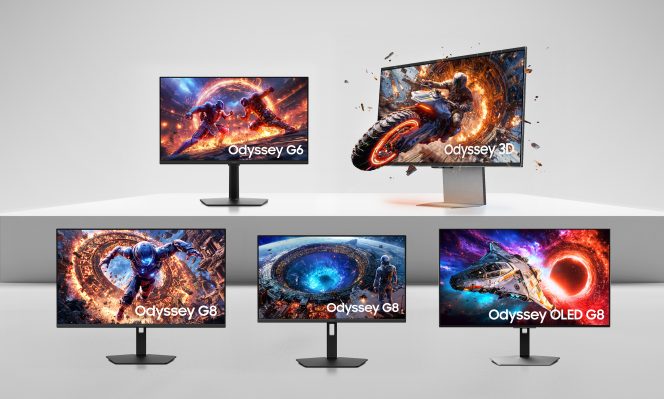
Samsung is setting an aggressive tone for CES 2026 with a new wave of high‑end monitors that mark several technical firsts for the company. The updated Odyssey lineup introduces a 1040Hz refresh rate, a glasses‑free 6K 3D display option, and broad adoption of DisplayPort 2.1 across its top models, signalling a clear push toward next‑generation bandwidth and visual performance.

Leading the announcement is the Odyssey 3D (G90XH), a 32-inch 6K (6144 x 3456) IPS monitor that aims to succeed where previous 3D efforts failed. By using real-time eye-tracking cameras and a lenticular lens layer, the G90XH delivers a glasses-free 3D experience that adjusts perspective based on the user's head position. While it runs natively at 165Hz, it features a “Dual Mode” that drops the resolution to 3K to enable a 330Hz refresh rate. Some games getting dedicated optimisations for this monitor include Stellar Blade and Lies of P.

For competitive gamers, the Odyssey G6 (G60H) is likely to be the most talked-about display of the year. This 27-inch QHD IPS monitor is the first in the world to break the four-digit refresh rate barrier, reaching 1040Hz in its “Dual Mode” (at HD resolution). Even at its native QHD resolution, the panel maintains a staggering 600Hz refresh rate.

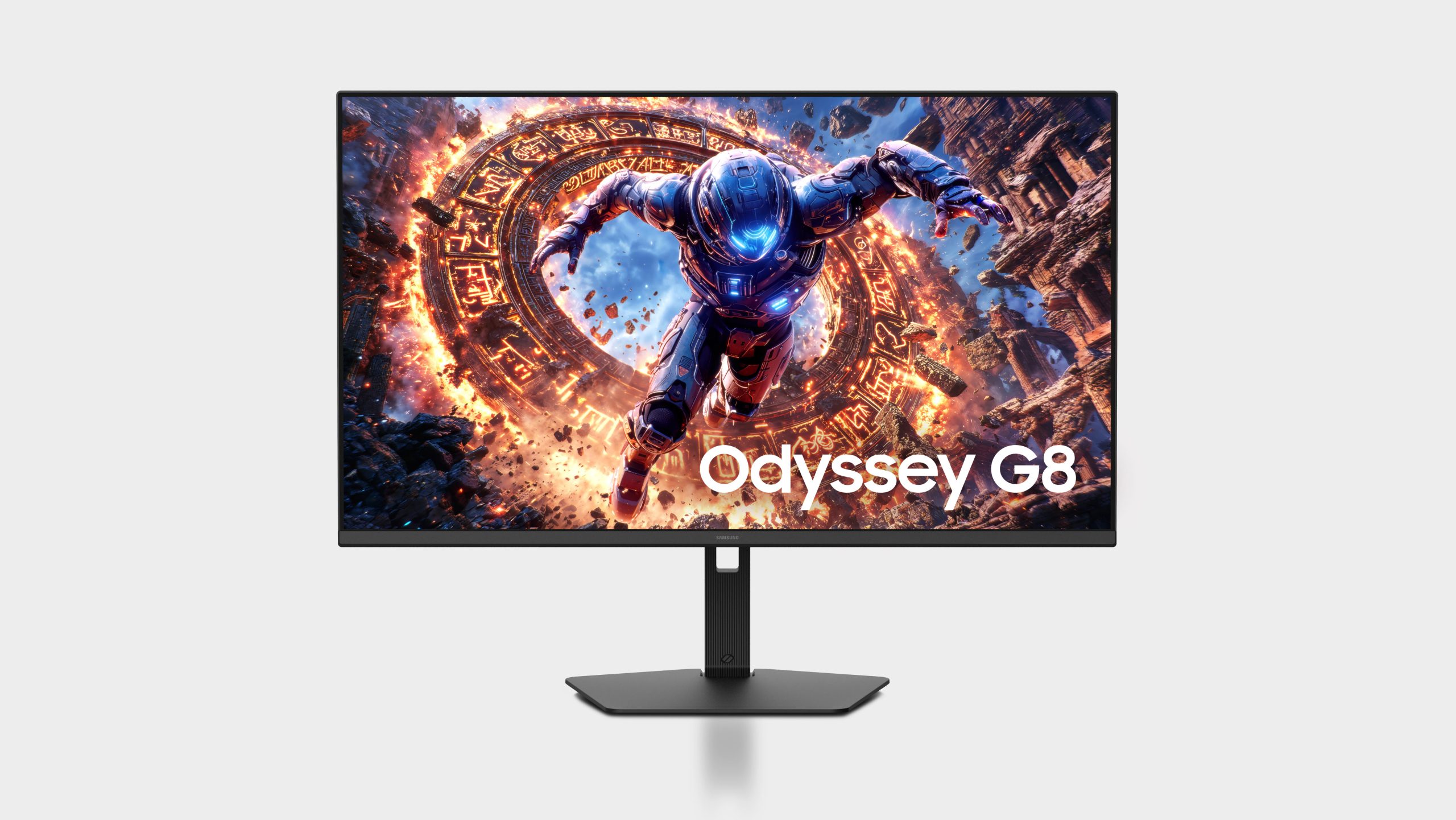
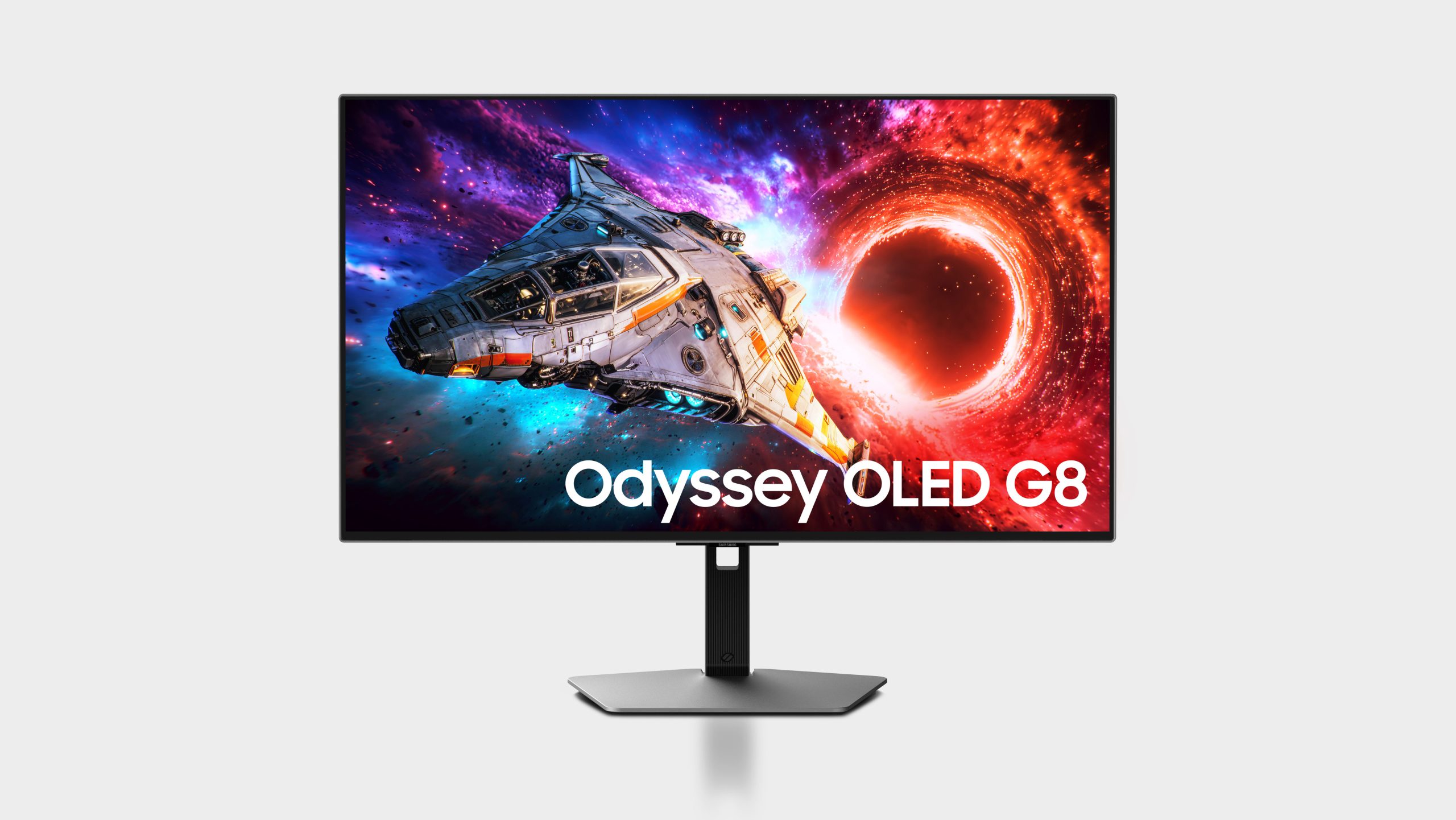
The Odyssey G8 series has also been expanded into a trio of high-resolution displays. The first is the G80H, a 32-inch 6K IPS model that mirrors the resolution of the 3D flagship, offering 6K at 165Hz or 3K at 330Hz. Then there's the G80HF, a 27-inch 5K variant running at 180Hz natively or 360Hz in QHD mode. Lastly, the G80SH is for the OLED enthusiasts, featuring a 32-inch 4K QD-OLED panel. This model stands out by being VESA DisplayHDR TrueBlack 500-certified and supporting DisplayPort 2.1 with UHBR20, providing up to 80Gbps of bandwidth.

All five models support AMD FreeSync Premium Pro and are Nvidia G-Sync Compatible. Samsung also stated that it will be showcased at CES 2026.

KitGuru says: What do you think of Samsung's 2026 Odyssey line-up so far?

The post Samsung unveils 1024Hz gaming monitor and new Odyssey displays for 2026 first appeared on KitGuru.
  •  

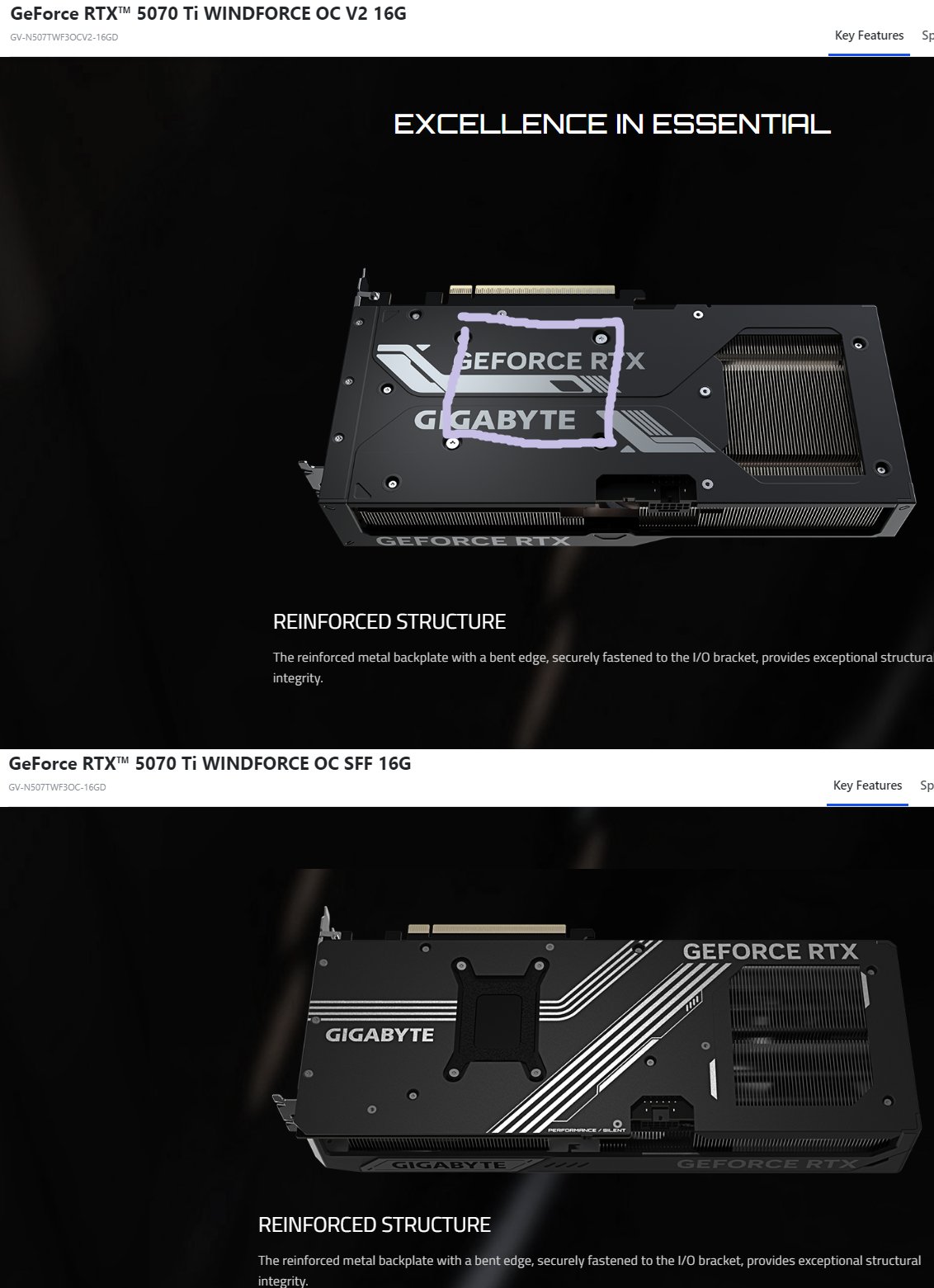
Gigabyte quietly swaps out thermal gel in RTX 5070 Ti Windforce V2

Gigabyte has introduced the product page for its GeForce RTX 5070 Ti Windforce OC V2, a revision to the original GeForce RTX 5070 Ti Windforce OC that apparently doesn't use the “server-grade thermal conductive gel” that has been criticised by many users for leaking. This marks a departure from the cooling strategy the company heavily promoted at the start of the year.

The saga began earlier in 2025 when early adopters of the Gigabyte GeForce RTX 50 and Radeon RX 9000 series cards reported a viscous material oozing from beneath their heatsinks. This phenomenon was particularly prevalent in systems with vertical GPU mounts, where gravity caused the non-solid gel to drip away from the components, such as VRAM and MOSFETs. At the time, Gigabyte issued a formal statement defending the choice, claiming the leakage was a purely cosmetic result of over-application during early production runs. The manufacturer maintained that the substance could withstand temperatures up to 150°C and would not impact the reliability or longevity of the hardware.

Image credit: Uniko's Hardware

Despite that, the release of the RTX 5070 Ti Windforce OC V2 suggests a rethink behind the scenes. As spotted by Uniko's Hardware (via VideoCardz), the updated specifications and product imagery reveal that standard thermal pads have replaced the thermal gel. Gigabyte has not provided a formal reason for the swap, but given the reports, most would assume the gel would be the leading cause.

However, the thermal interface isn't the only aspect of the card to see a refresh in this second iteration. The Windforce OC V2 features a significantly altered physical footprint compared to the original SFF-focused design it replaces. The new shroud is approximately 43mm shorter, using a triple-fan array of smaller 80mm fans. Moreover, the PCB layout appears to have been modified, with relocated screw positions and the removal of the dual-BIOS switch found on the first generation. The backplate has also been redesigned with new visuals.

KitGuru says: There is more to this revision than the replacement of thermal materials, but that is the big one. New buyers will no longer have to worry about potential leakage. 

The post Gigabyte quietly swaps out thermal gel in RTX 5070 Ti Windforce V2 first appeared on KitGuru.
  •  

Square Enix confirms Octopath Traveler series has cleared 6 million sales

Square Enix has announced that the Octopath Traveler franchise has officially surpassed the six-million-unit sales milestone globally. This figure represents a significant jump from the five million units recorded in December 2024, suggesting that the series’s expansion to new platforms and the recent launch of a new entry have boosted its commercial momentum.

The original Octopath Traveler, which first debuted on the Nintendo Switch in 2018 before migrating to PC, Xbox, and eventually PlayStation 4 and 5, remains the primary driver of these figures. To date, the first game has sold over 3 million units. Its sequel, Octopath Traveler II, has contributed over one million units since its early 2023 launch.

The most recent growth in the series’ figures can be attributed to the release of Octopath Traveler 0 on December 4th. Serving as a prequel to the original and a clean version (no microtransactions) of the mobile title Champions of the Continent, this latest entry launched on day one across nearly all current hardware, including the Nintendo Switch 2, PlayStation 5, Xbox Series X|S, and PC.

With the series now established across almost every modern ecosystem, Square Enix is celebrating the milestone with various digital storefront discounts (up to 60%) on the first two titles.

KitGuru says: Did you play any Octopath Traveler games? Do you think Square Enix should keep investing in this series?

The post Square Enix confirms Octopath Traveler series has cleared 6 million sales first appeared on KitGuru.
  •  

Respawn founder Vince Zampella has passed away

Games industry veteran and Respawn Entertainment founder, Vince Zampella, has passed away. Zampella had been a leader at Infinity Ward before forming his new studio, Respawn Entertainment, and then joining EA. 

According to NBC Los Angeles, authorities have confirmed that Zampella's vehicle had been involved in a crash in the San Gabriel Mountains on Sunday afternoon. A Ferrari struck a concrete barrier and then burst into flames.

As a co-founder of Infinity Ward, Zampella was one of the minds behind the Medal of Honor and Call of Duty franchises. Following a high-profile departure from Activision, Zampella co-founded Respawn Entertainment, where he continued to innovate with the release of Titanfall and its sequel.

Beyond shooters, Zampella’s leadership at Respawn oversaw the development of the critically acclaimed Star Wars Jedi games. Most recently, he had also been aiding the direction of the Battlefield series, including Battlefield 6.

The post Respawn founder Vince Zampella has passed away first appeared on KitGuru.
  •  

18,000 hour-long torture test reveals OLEDs are more reliable than LCDs

The team at RTINGS has been running a multi-year longevity experiment. This grueling torture test has seen 102 televisions pushed to their absolute limits over the last three years. The latest data drop confirms that while the majority of modern displays can survive the 10,000-hour milestone unscathed, a number of units have succumbed to the pressure, with 20 TVs dying completely.

When looking at which manufacturers are delivering long-term durability in this test, LG and TCL have emerged as the frontrunners. Despite the perceived gap in market positioning, both brands showed remarkably low failure rates throughout the testing period. Only a single LG OLED succumbed to a total hardware failure out of nearly two dozen tested units. Similarly, TCL proved that budget-friendly pricing doesn’t always necessitate poor quality control, with only one unit failing right at the finish line of this latest update. It is worth noting that while LG did experience some partial failures, these were largely concentrated in their LCD offerings rather than their premium OLED panels.

However, it's important to note that a necessary caveat to these findings is the inherent sample size limitation. Since RTINGS tests only one unit per model, individual defects can skew the perception of an entire brand. This explains why manufacturers with fewer entries, such as Insignia or Toshiba, currently sit at a 100% failure rate. As such, don't take this as a definitive statement on the quality control standards of every unit leaving the factory floor.

The data also highlights a technical trend: the less complex the backlight system, the more likely the TV is to survive. OLED displays (WOLED and QD-OLED included) proved to be the most resilient precisely because they lack a traditional backlight. On the other hand, edge-lit LED arrays are the most frequent culprits for catastrophic failure. Displays utilizing Full-Array Local Dimming (FALD), such as high-end Mini-LED models, performed significantly better. While about a third of these units still encountered issues, the increased complexity of the backlight management seems to offer better redundancy and thermal protection compared to their direct- and edge-lit counterparts.

In terms of panel technology, IPS displays surprisingly occupied the bottom of the charts, with 15 out of 24 units suffering defects. However, this might not be because of the technology itself, but due to current market trends. Manufacturers rarely pair IPS panels with advanced local dimming solutions, pairing these TVs with cheaper and more fragile backlighting systems.

Another takeaway is that price is no guarantee of longevity. Several flagship, high-cost televisions performed poorly under stress, while some of the most durable units were found in the budget sector. Moreover, repairability remains a major hurdle. Modern assembly techniques make it nearly impossible to service a unit without causing further damage. Of the 20 total failures in the RTINGS lab, only two were successfully repaired, suggesting that for most users, a failure within the warranty period is the only real safety net.

KitGuru says: Were you surprised by the results? Will you consider these findings when you need to buy a TV or a monitor?

The post 18,000 hour-long torture test reveals OLEDs are more reliable than LCDs first appeared on KitGuru.
  •  

Analyst forecasts further price increases in 2026 due to memory shortages

Market analysts at IDC have updated their outlook for the global memory sector, and the forecast is grim for PC builders and enthusiasts. What began as a tightening of supply is rapidly evolving into a full-blown crisis, with new data suggesting that the PC market could contract significantly in 2026 as component costs continue to skyrocket.

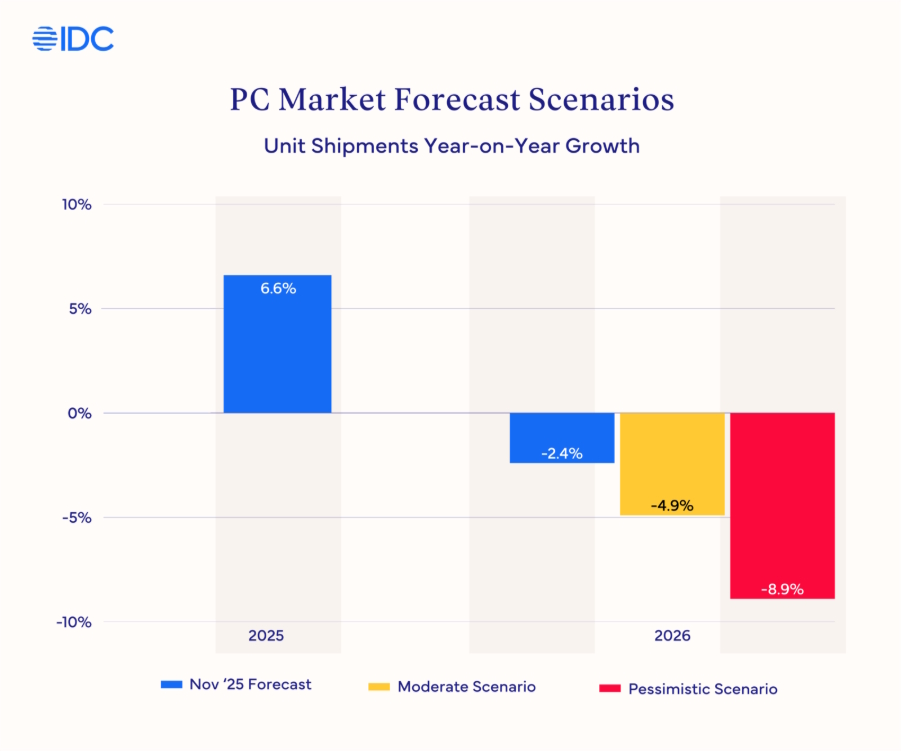
While IDC (via Wccftech) initially predicted in November a manageable 2.4% dip in the PC market for 2026, the analytics firm has now modeled two far more concerning scenarios based on deteriorating DRAM and NAND availability. A moderate outlook suggests a sales decline of 4.9%, while a pessimistic model warns of an 8.9% drop.

Image credit: IDC

This scenario is being driven by a sharp rise in acquisition costs. Under the moderate scenario, component prices could climb by 4-6%, but if the supply chain fractures further, we could see spikes of up to 8%. The industry giants are already passing these costs down the chain, with reports indicating that Dell and Lenovo are preparing to hike pre-built system prices by as much as 15%. In the DIY space, the situation has become so volatile that modular laptop maker Framework has ceased selling standalone RAM entirely to prevent scalpers from stripping their stock.

The root cause of this meltdown is the industry's pivot to High Bandwidth Memory (HBM) to feed the appetite of AI data centers. Semiconductor manufacturers are reallocating their limited wafer capacity to these high-margin AI chips, leaving traditional consumer memory on the back burner. Despite the shortage, vendors are hesitant to break ground on new fabrication plants, fearing that the current AI explosion might be a bubble that bursts before new facilities can come online.

KitGuru says: Of the three scenarios shown by IDC, which one do you believe 2026 will follow?

The post Analyst forecasts further price increases in 2026 due to memory shortages first appeared on KitGuru.
  •  

Indie Game Awards strips Clair Obscur: Expedition 33 of titles over GenAI use

Clair Obscur: Expedition 33 is getting awards from all sides, but something unexpected happened to two of them. Although the game was awarded the Debut Game and Game of the Year awards over at the Indie Game Awards on December 18th, Sandfall Interactive’s Clair Obscur: Expedition 33 has been retroactively disqualified from these accolades due to the use of genAI, violating the ceremony's strict eligibility criteria.

The disqualification comes just days after the title secured both awards on December 18th. According to a formal statement from the committee (via Eurogamer), the move was triggered when Sandfall Interactive confirmed the use of generative AI assets on the awards premiere. This disclosure reportedly contradicted earlier declarations made during the submission process, where representatives had allegedly stated that no such tools were used in the creation of the RPG.

Six One Indie has maintained a public firm position against the integration of generative AI within independent projects, citing it as a core factor in their nomination vetting process. While reports suggest that the AI-generated assets in question were limited to placeholder textures that were subsequently removed after the game's April launch, the organisers clarified that any use of these tools renders a title ineligible. The committee noted that while Clair Obscur: Expedition 33 remains a high-quality production, the breach of regulations left them with no choice but to retract the honours to preserve the integrity of the awards.

As a result of the disqualification, the awards have been passed down to the respective runners-up in each category. The puzzle-adventure title Blue Prince has now been officially named the Indie Game Awards' Game of the Year 2025. Similarly, the Debut Game trophy has been awarded to Sorry We’re Closed, the survival horror title.

Sandfall Interactive has yet to issue a detailed public rebuttal regarding the discrepancy in their submission claims.

KitGuru says: Do you agree with the Indie Game Awards committee decision? What's your take on using genAI in games?

The post Indie Game Awards strips Clair Obscur: Expedition 33 of titles over GenAI use first appeared on KitGuru.
  •  

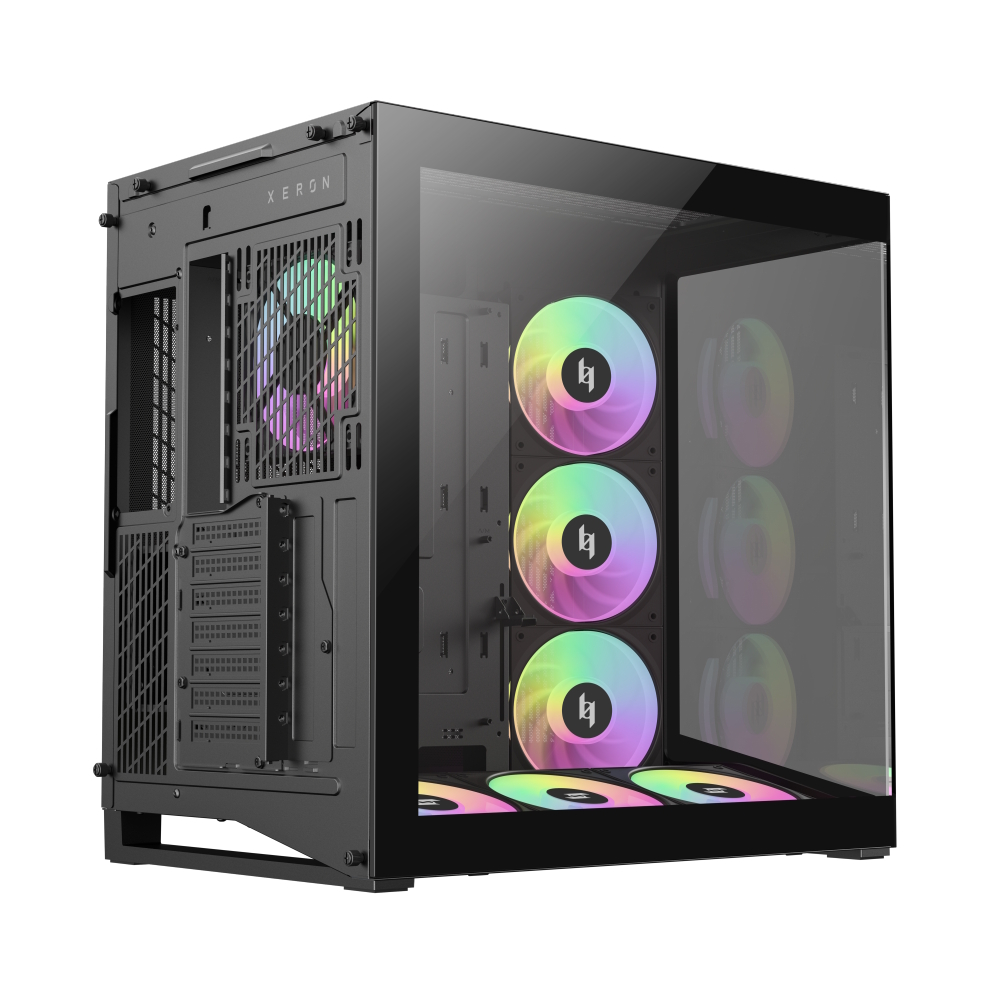
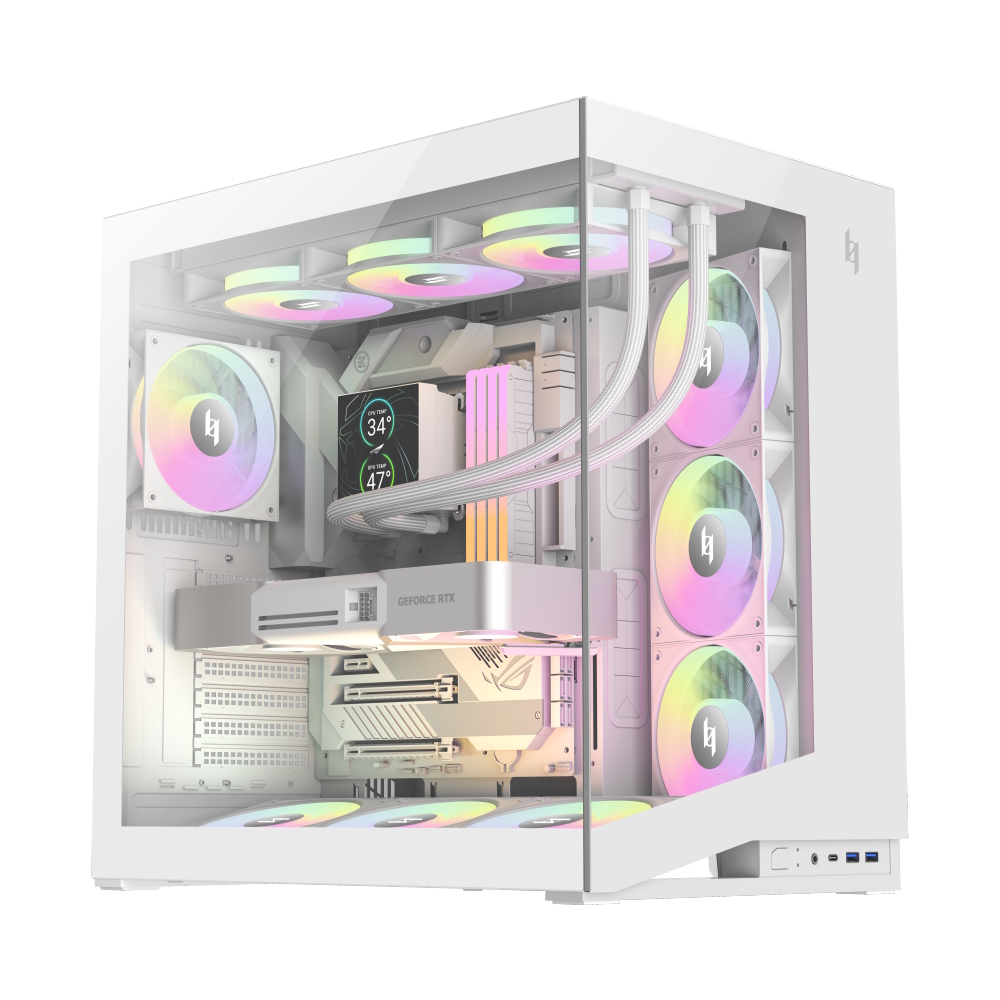
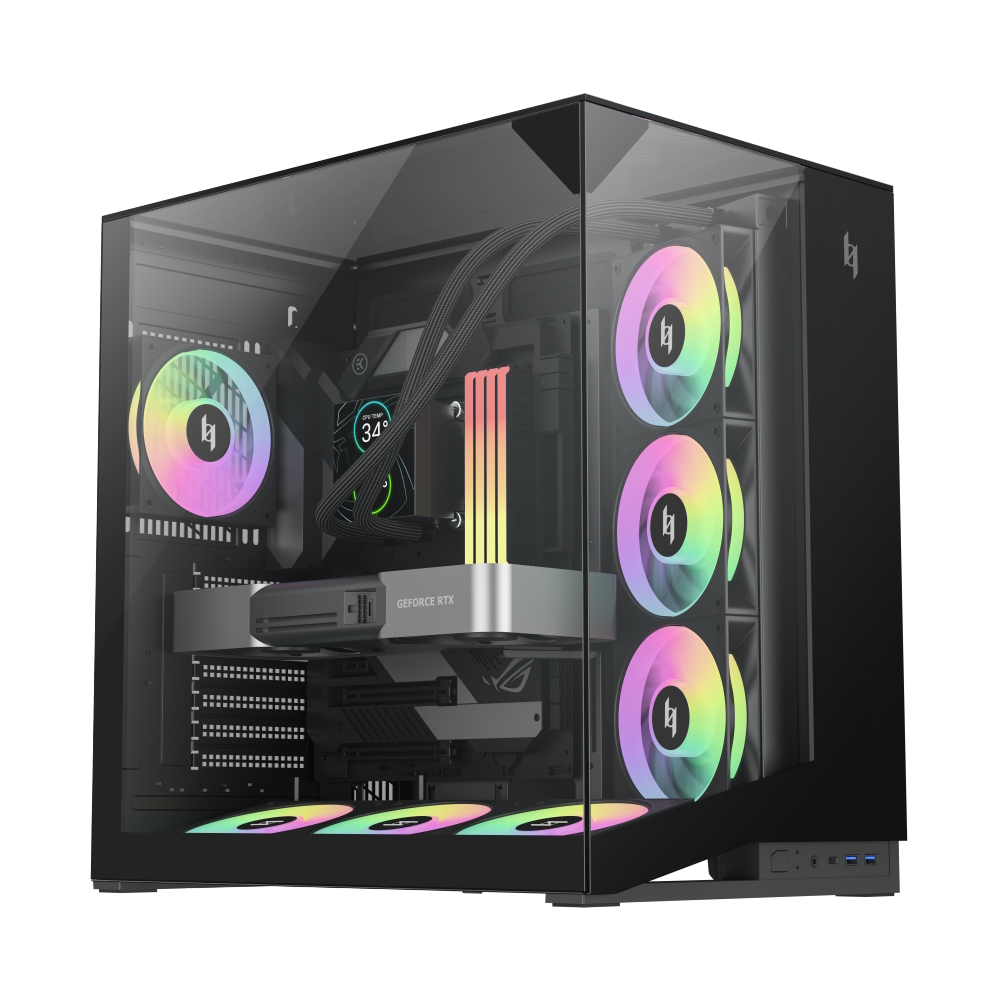
GameMax introduces NEX C56 series with ‘inclined’ airflow design

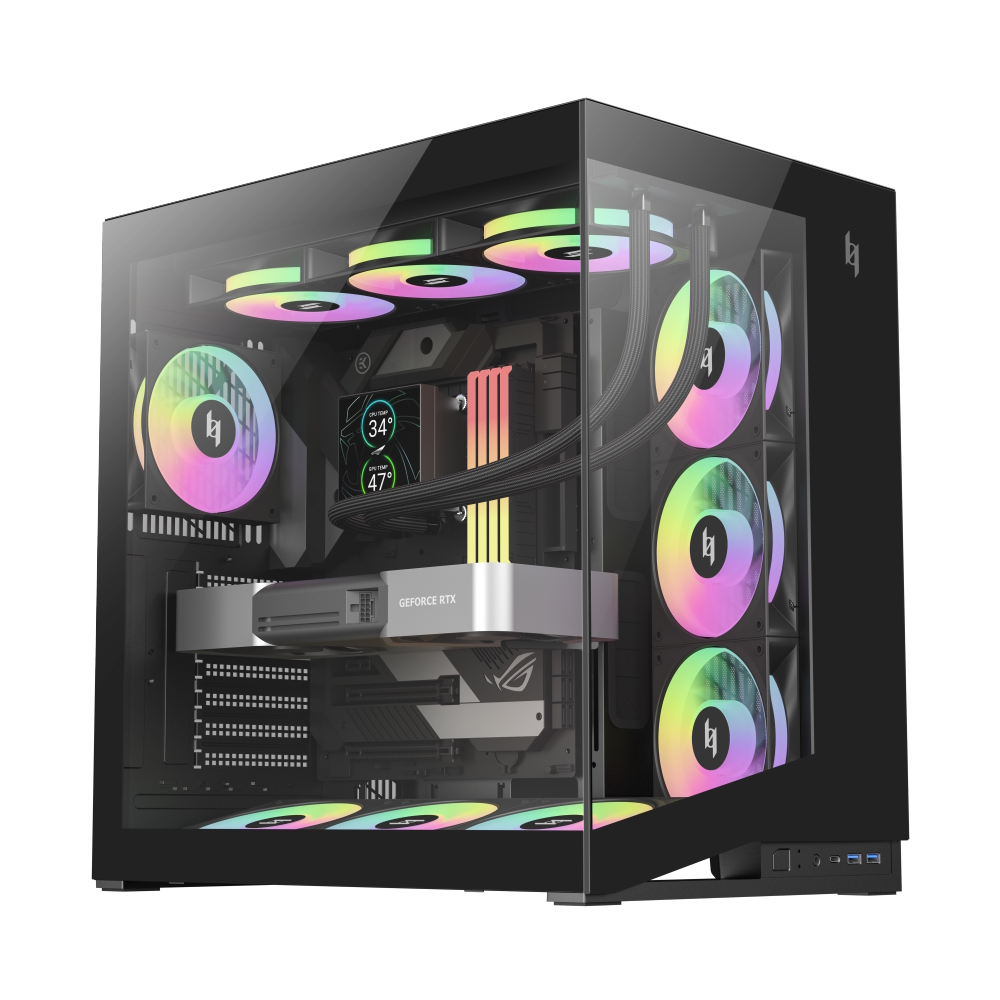
GameMax has expanded its chassis portfolio today with the announcement of the Nex C56 and Nex C56 VC. Targeting the budget-conscious end of the dual-chamber market, these new mid-towers attempt to differentiate themselves from the sea of “fish tank” cases with an internal layout that angles the bottom intake fans.

Both chassis feature a “12° inclined airflow layout”, as described by GameMax. In practice, this means the fan mounts on the bottom and the sides of the motherboard tray are slightly angled towards the centre of the case, rather than sitting straight. The manufacturer claims this creates a more direct path for fresh air to reach hot components, specifically the graphics card, which is a common pain point in dual-chamber designs that often struggle with restrictive intake paths.

Two distinct variations are available at launch to cover different aesthetic preferences. The standard Nex C56 prioritises thermal performance, shipping with a fully mesh top panel to allow for heat exhaust and seven 120 mm ARGB PWM fans (space for up to 10x). This model is the more capable of the two in terms of raw cooling potential, supporting a “stack-effect” configuration. Alternatively, the Nex C56 VC (Vision Compact) goes all-in on the showroom aesthetic, replacing the mesh roof with a third tempered-glass panel and packing 4x 120 mm ARGB PWM fans (space for up to 7x). This creates a seamless “triple-glass” panoramic view, though builders will likely have to rely heavily on the side and bottom intakes to keep temperatures in check.

Despite being entry-level options, the specification sheet is surprisingly generous. Both cases support ATX motherboards and offer clearance for graphics cards up to 425 mm in length. Liquid cooling support is good, with space for dual 360 mm radiators, and the chassis includes a height-adjustable GPU anti-sag bracket, a feature often missing in this price bracket. Connectivity is handled via a front I/O panel featuring one USB-C 3.2 Gen 2 port and two USB-A 3.2 Gen 1 ports. Storage options support up to 2x 3.5-inch HDDs and 2x 2.5-inch SSDs, hidden in the rear chamber.

GameMax is positioning these cases firmly in the entry-level segment, undercutting many competitors. The standard NEX C56 starts at just $69.99 for the black model, while the glass-topped NEX C56 VC is even cheaper at $59.99. Both versions are available in white for a $5 premium.

KitGuru says: These cases certainly look the part and the price tag is decent too.

The post GameMax introduces NEX C56 series with ‘inclined’ airflow design first appeared on KitGuru.
  •  

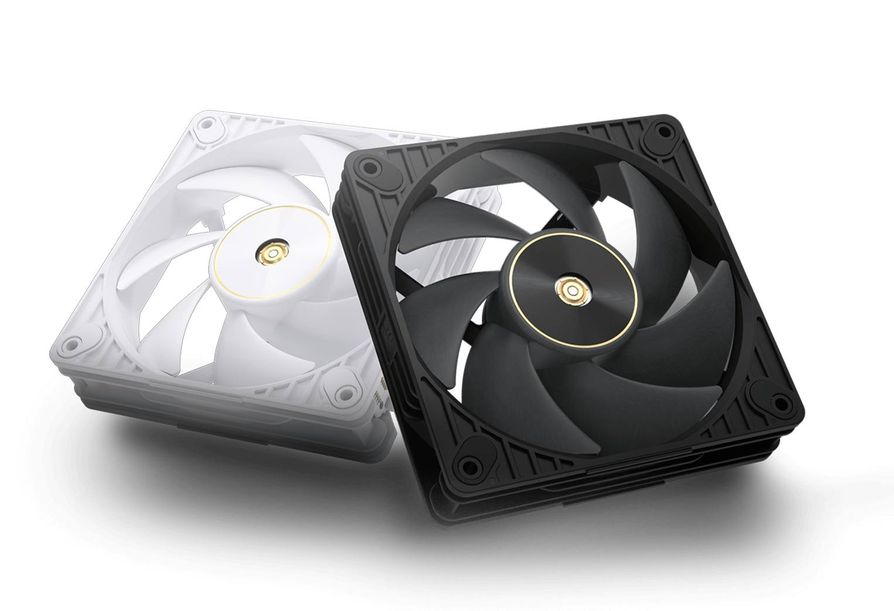
Asus challenges the performance fan market with new ProArt PF120

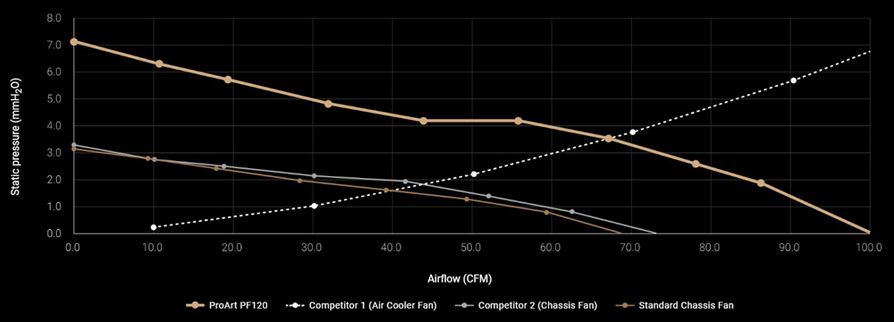
Asus has been expanding its ProArt sub-brand from monitors and motherboards into a whole ecosystem for creators, and recently, that expansion has reached the cooling sector. The company has officially announced the ProArt PF120, a high-performance 120mm case fan designed to compete directly with the industry's heavyweights like the Phanteks T30 and Noctua NF-A12x25.

The ProArt PF120 removes the RGB lighting common in gaming builds, offering an industrial aesthetic in both black and white colourways. Asus has utilised Liquid Crystal Polymer (LCP) for the fan blades, a material choice prized for its rigidity and resistance to thermal expansion. This allows for extremely tight tolerances, with the PF120 boasting a blade-to-frame gap of just 0.5mm to minimise turbulence and maximise pressure efficiency.

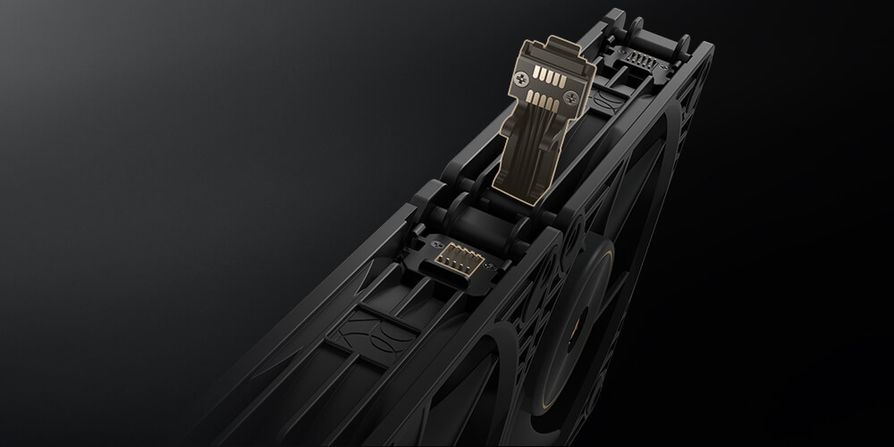
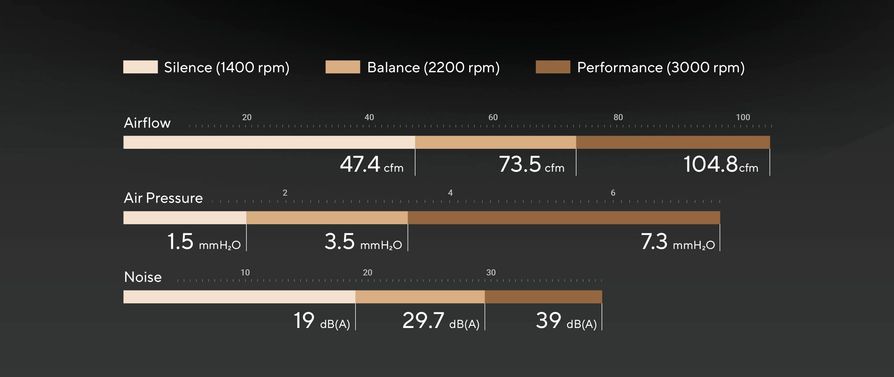
The fan operates at a maximum speed of 3000 RPM, at which it delivers a rated static pressure of 7.3mmH2O and an airflow of 104.8 CFM. Unusually, the frame thickness is 28mm. For the motor, the fan uses a three-phase, six-pole design within a brass bearing shield to reduce vibration. To keep cable clutter to a minimum, the units feature a patented daisy-chain interconnect system that allows users to link adjacent fans, passing power and PWM signals through a single cable.

For users who don't need the 3000 RPM jet-engine experience, the three-pack includes an inline cable controller. This allows builders to cap the maximum speed at three distinct presets: 1400 RPM for silent builds, 2200 RPM for balanced use, or the full 3000 RPM for maximum thermal dissipation. Pricing and regional availability have not yet been confirmed, but given the LCP construction and performance claims, we expect these to sit at the premium end of the market.

KitGuru says: Asus isn't the first name that springs to mind for case fans, but that could change if these perform as well as their spec sheet suggests. 

The post Asus challenges the performance fan market with new ProArt PF120 first appeared on KitGuru.
  •  

LG Display teases new Tandem WOLED panels ahead of CES 2026

LG Display has released teasers showcasing its latest advancements in OLED technology. While the video focuses on highlighting the benefits of its “Primary RGB Tandem” tech, it has also confirmed that several long-rumoured panel specifications are now ready for mass production. With CES 2026 just around the corner, it appears the manufacturer is preparing to flood the market with new high-performance options for PC enthusiasts.

The most immediate takeaway from the new footage (via FlatPanelsHD) is a subtle rebranding. LG Display appears to be streamlining the nomenclature for its fourth-generation technology, dropping the clunky “Primary RGB Tandem” moniker in favour of the cleaner “Tandem WOLED”. This helps differentiate the stack from “Tandem OLED” solutions currently used in the automotive sector, which have a different structural composition. Interestingly, the video also makes a fleeting reference to “Primary RGB Tandem 2.0”, suggesting that an iterative update to the underlying tech is already in the pipeline for the coming year.

The other teaser explicitly references a 39-inch ultrawide panel sporting a “5K” resolution. Based on previous roadmap leaks, this is almost certainly the anticipated 5K2K (5120 x 2160) unit. At 39 inches, this resolution delivers a pixel density of approximately 142 PPI, bringing it in line with the text clarity of 32-inch 4K displays. Visuals from the clip also suggest a shift in display curvature. While LG's previous 34-inch and 39-inch gaming panels featured an aggressive 800R curve, this new flagship model appears to adopt a significantly gentler radius.

The manufacturer also nodded to the 27-inch 1440p panel with a native 540 Hz refresh rate (up to 720 Hz in Performance mode), a unit we have already seen deployed in the Asus ROG Swift PG27AQWP-W. Another confirmation taken from the teaser is the 27-inch 4K WOLED panel. This form factor has been dominated by Samsung Display's QD-OLED technology for some time, and LG's arrival in the WOLED stable marks a crucial catch-up move, offering consumers more choice in the 27-inch segment.

KitGuru says: Have you been waiting on new-generation panels before making the jump to an OLED display?

The post LG Display teases new Tandem WOLED panels ahead of CES 2026 first appeared on KitGuru.
  •  

Bandai Namco confirms PC system requirements for Code Vein 2

Bandai Namco has released the PC system requirements for the upcoming anime-styled action RPG, Code Vein 2. The specifications confirm that aspiring Revenants will need significantly more robust hardware than the 2019 original to play the new game when it launches on January 30th, 2026.

First teased during Summer Game Fest 2025, Code Vein 2 expands on the “anime Dark Souls” formula with a new narrative centred on time manipulation, larger environments, and a deepened partner system. While the first game was known for being relatively lightweight, the sequel demands a modern rig to hit 60 FPS, even at 1080p. Bandai Namco has set 16 GB of RAM and Windows 11 as the absolute floor for entry. This effectively leaves Windows 10 users behind, a trend we are seeing more frequently in 2025-2026 releases. Storage requirements have also ballooned to 70 GB, with the publisher strongly recommending an SSD.

For a 1080p experience at 30 FPS on Low settings, users will need at least an Intel Core i5-9600K or AMD Ryzen 5 3600 paired with a GTX 1660 Super or Radeon RX 5700. Those looking to push the visual fidelity to High at 60 FPS will need to step up to an RTX 3080 or Radeon RX 6800, alongside a beefier CPU like the Ryzen 7 7800X3D or the Intel Core i7-12700KF. The detailed system requirements can be found below:

MINIMUM

  • Requires a 64-bit processor and operating system
  • OS: Windows 11
  • Processor: Intel Core i5-9600K /AMD Ryzen 5 3600
  • Memory: 16 GB RAM
  • Graphics: Nvidia GeForce GTX 1660 Super / AMD Radeon RX 5700 / Intel Arc B570
  • DirectX: Version 12
  • Storage: 70 GB available space
  • Additional Notes: Estimated performance: 1080p/30fps with graphics settings at “Low”.

RECOMMENDED

  • Requires a 64-bit processor and operating system
  • OS: Windows 11
  • Processor: Intel Core i7-12700KF / AMD Ryzen 7 7800X3D
  • Memory: 16 GB RAM
  • Graphics: Nvidia GeForce RTX 3080 / AMD Radeon RX 6800
  • DirectX: Version 12
  • Storage: 70 GB available space
  • Additional Notes: Estimated performance: SSD is recommended. 1080p/60fps with graphics settings at “High”.

Pre-orders are currently live on Steam, with Standard, Deluxe, Ultimate, and Collector's Editions available. All pre-orders include a face paint and a weapon. The deluxe edition includes the base game with a 3-day early access, a custom outfit pack (3 costume sets and a weapon), and the upcoming DLC Mask of Idris. The Ultimate Edition adds to the Deluxe Edition with a digital mini artbook, a soundtrack, and a character costume set (6 costumes). Lastly, the Collector's Edition has everything included in the Ultimate Edition, plus an 18 cm figure, a 60-page artbook, and a metal case.

KitGuru says: Did you play the original Code Vein? Are you planning on getting the sequel? Is your PC ready for it?

The post Bandai Namco confirms PC system requirements for Code Vein 2 first appeared on KitGuru.
  •  

Final Fantasy Pixel Remaster surpasses 6 million sales

Square Enix has confirmed that its Final Fantasy Pixel Remaster series has officially surpassed six million units sold worldwide. The collection, which revitalises the first six entries in the long-running RPG franchise, has proven a commercial success since its initial rollout in 2021, validating the publisher's strategy of preserving its back catalogue with uniform standards for modern platforms.

While Square Enix has often faced criticism for its handling of legacy ports, the Pixel Remaster initiative appears to have struck the right chord with gamers. The project involved a complete overhaul of Final Fantasy I through VI, unifying the visual style across the NES and SNES eras. The original pixel artist, Kazuko Shibuya, returned to redraw the 2D character sprites, ensuring the new assets remained faithful to the source material. On the audio front, legendary composer Nobuo Uematsu supervised and orchestrated arrangements of the soundtracks, replacing the synthesized tunes of the 8-bit and 16-bit hardware.

The sales figures shared by Square Enix reflect performance across a staggered release schedule spanning multiple years and ecosystems. The first wave hit Steam, iOS, and Android between July 2021 and February 2022. Following sustained demand from console players, the collection was released on PlayStation 4 and Nintendo Switch in April 2023. Most recently, the series landed on Xbox Series X|S and the Microsoft Store in 2024, making the collection playable natively on all major current-gen hardware.

Beyond the audiovisual facelift, the commercial longevity of the bundle is likely aided by the inclusion of modern convenience features that respect player time. Square Enix implemented toggle-based boosters, allowing users to adjust experience gain, automate combat, or disable random encounters entirely. These optional tools have made the notoriously grind-heavy 8-bit entries significantly more palatable for a contemporary audience accustomed to faster pacing.

KitGuru says: It took Square Enix a few tries to get these ports right, but the sales numbers don't lie. With six million copies sold, the Pixel Remaster series stands as one of the publisher's most successful attempts at leveraging its heritage.

The post Final Fantasy Pixel Remaster surpasses 6 million sales first appeared on KitGuru.
  •  

The Game Awards 2025 breaks records again with 171 million live views

This year's Game Awards has once again proven its dominance in the gaming calendar, setting a new viewership record for its 2025 broadcast. According to data reported by the organization, The Game Awards secured an estimated 171 million global live views, marking an 11% increase over the 154 million figure recorded in 2024.

Note that this figure represents strictly live tune-ins for the main show. It excludes the long tail of trailer views, social media clips, and viewership from premium partners like Prime Video. The data is aggregated across major open platforms, including YouTube, Twitch, TikTok Live, Steam, X, and Facebook, as well as major regional players such as JioHotstar in India and various Chinese streaming services.

Platform-specific metrics paint a picture of steady growth rather than explosive spikes. On YouTube, the official 4K stream saw an 8% rise in concurrent viewers, contributing to a total platform peak of over 2.4 million when co-streams are factored in. Twitch performance remained good as well, with peak concurrents climbing 5% to settle just above 1.8 million.

This trajectory continues a decade-long trend for the event, which has grown from a modest 1.9 million viewers in 2014 to the juggernaut it is today. The most significant historical leaps occurred in 2018, when it jumped to 26.2 million, and in 2020, when it hit 83 million. The 2025 numbers suggest that while the growth curve is flattening, the ceiling has not yet been reached.

KitGuru says: Did you watch the show? What platform were you watching it on?

The post The Game Awards 2025 breaks records again with 171 million live views first appeared on KitGuru.
  •  

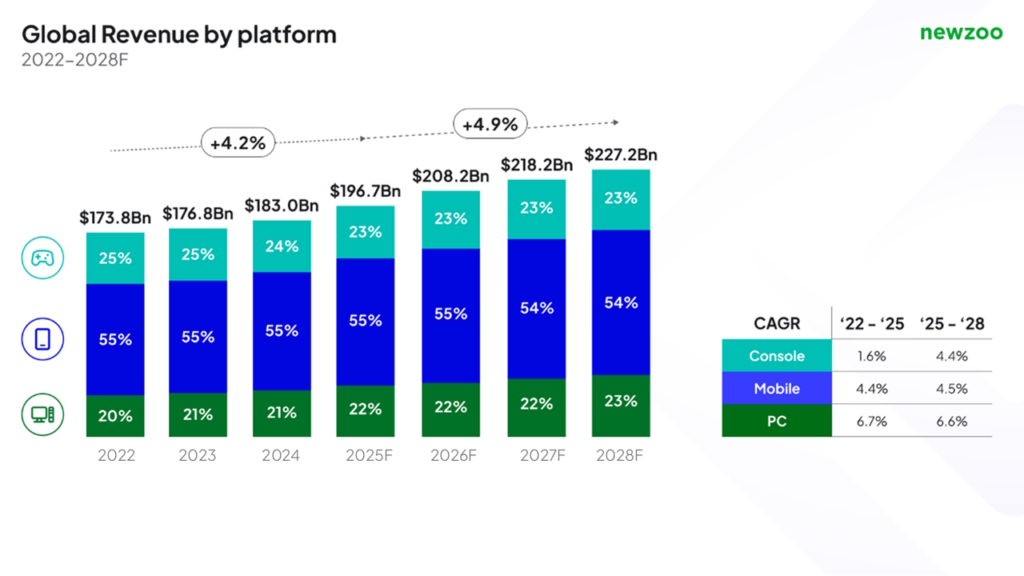
PC gaming growth outpaces console as global market hits $197 billion

Global analytics firm Newzoo has provided an optimistic year-in-review for 2025 in gaming. The broader global picture shows an industry on the rise, driven heavily by a resurgence in PC gaming and the arrival of the Nintendo Switch 2.

Newzoo (via VGC) projects that the global video game market will close 2025 with a total value of $197 billion, representing a healthy 7.5% increase over 2024. Although steeper than in recent years, analysts warn that looming economic factors like tariffs, the rising cost of living, and emerging memory shortages could dampen this momentum as we head into 2026.

The breakdown of this growth offers an interesting insight into current player habits. Mobile gaming remains the dominant revenue generator, expected to reach $108 billion, up 7.7% year on year. However, the PC sector has emerged as the growth leader, rising 10.4% to reach $43 billion. This expansion outpaces the console market, which is forecast to grow modestly by 4.2% to $45 billion.

Image credit: Newzoo

According to Michiel Buijsman, Newzoo’s Chief Market Analyst, the surge in PC revenue isn't necessarily due to a sudden influx of new players, but rather existing enthusiasts spending more deeply within the ecosystems they already inhabit. The top 10 PC games by revenue in 2025 were all released in 2025, and notably, none were free-to-play titles. This list included a mix of established brands and three completely new IPs, highlighting the platform's openness to system-driven design and varied experiences.

In contrast, the console market remains heavily reliant on established familiarity. The top 10 revenue generators on console were exclusively existing franchises, with half of the list comprised of annual releases. Electronic Arts appears to be the primary beneficiary of this trend, publishing nearly half of the top-performing titles. However, the standout success on the console front is undoubtedly Pokémon Legends Z-A, which managed to crack the top rankings despite being exclusive to a single platform.

Perhaps the biggest surprise taken from the engagement data is the reversal of fortunes between the industry's two biggest shooters. While Call of Duty: Black Ops 7 ranked only in the top 10 console titles by monthly active users (MAUs), Battlefield 6 has demonstrated remarkable staying power. EA's shooter appeared across all revenue and engagement lists for both PC and console, suggesting that 2025 will go down as the year Battlefield finally reclaimed the crown from its rival.

Significant structural changes and indie success also defined the year. Sandfall Interactive’s Clair Obscur: Expedition 33 capped off a stellar year for independent developers by sweeping The Game Awards, proving that non-AAA titles can still dominate the discourse. Meanwhile, on the corporate side, the industry is grappling with consolidation, exemplified by EA's move to take the company private.

KitGuru says: If PC growth momentum continues over the coming years, the platform has a pretty good chance of catching up to consoles. If someone said this 20 years ago, it would probably be called crazy, but today, it's closer to reality than ever.

The post PC gaming growth outpaces console as global market hits $197 billion first appeared on KitGuru.
  •  

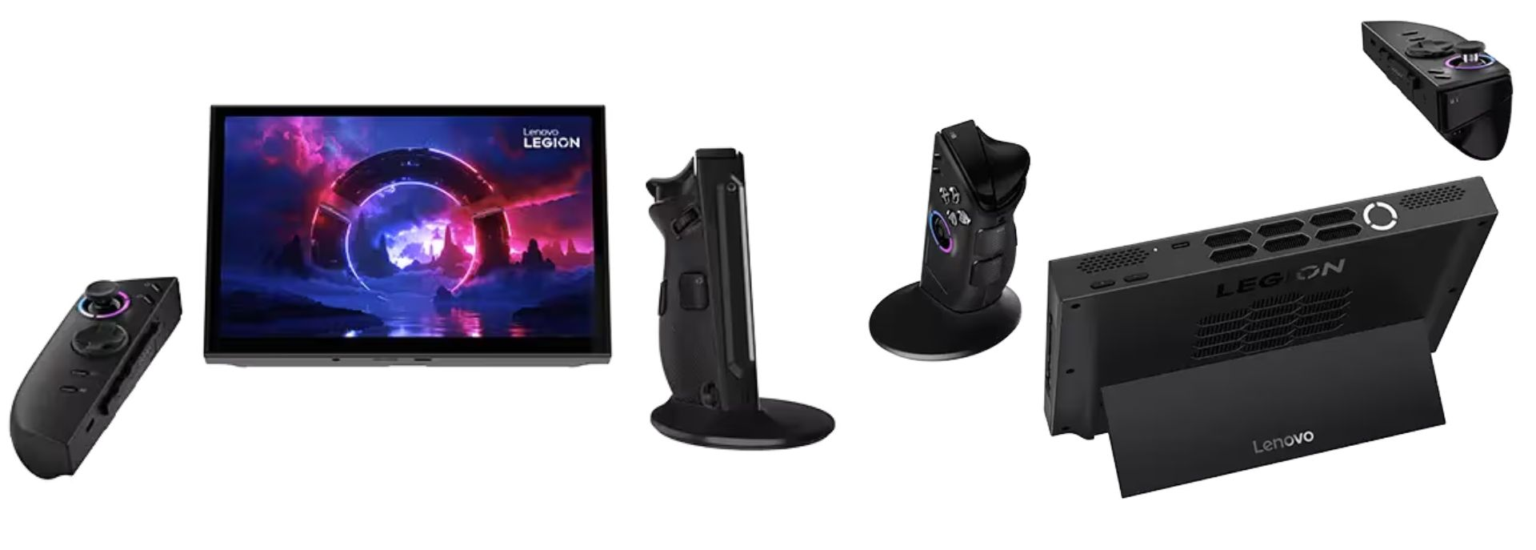
Lenovo is reportedly preparing a SteamOS-powered Legion Go Gen 2 for 2026

If recent reports are to be believed, Lenovo is planning to announce a new handheld at CES 2026. According to a new report, the manufacturer is preparing to unveil a version of its Legion Go Gen 2 running Valve's SteamOS, making it the first Ryzen Z2 Extreme-powered console running Valve's OS natively.

This development would mark Lenovo's second foray into the SteamOS ecosystem, following the Legion Go S. However, this Gen 2 model with SteamOS targets the high-end enthusiast. According to Windows Latest, the hardware configuration mirrors the Windows variant, meaning it would pack AMD's Ryzen Z2 Extreme APU, featuring eight Zen 5 cores and integrated Radeon 890M graphics. This CPU is backed by up to 32GB of LPDDR5X-8000 memory and a PCIe Gen4 M.2 2242 SSD with capacities up to 2TB.

Image credit: Windows Latest

The display specifications remain equally impressive, with the unit retaining the 8.8-inch PureSight OLED panel found on its Windows sibling. This screen offers a 1920×1200 resolution at a 16:10 aspect ratio, a 144Hz refresh rate, and 500 nits of peak brightness. To keep this hardware running without a wall socket, Lenovo has equipped the device with a 74Wh battery and 65W USB-C charging.

If this report proves true, then the Legion Go Gen 2 would become the first officially supported device to pair the Ryzen Z2 Extreme with SteamOS, potentially offering a significant performance leap over the current Steam Deck OLED. For now, we await official confirmation, which could arrive during CES next month.

KitGuru says: This device would offer a significantly more powerful alternative to the Steam Deck. Now we'll just have to wait and see how much it will cost. 

The post Lenovo is reportedly preparing a SteamOS-powered Legion Go Gen 2 for 2026 first appeared on KitGuru.
  •