The Belgian author’s genius comes to the fore in a dark domestic drama
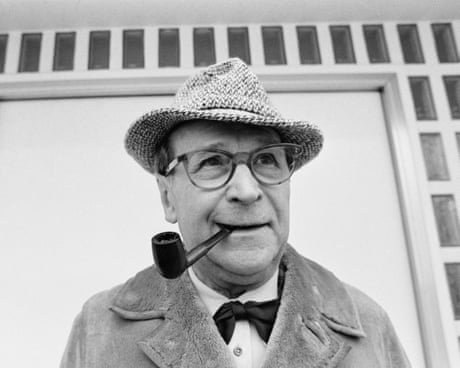
The more one reads of Georges Simenon, the stranger the writer and his writings become. His novels, most of them composed in a week or two, are simple, straightforward, shallow-seeming even, but below the surface lie dark and fathomless depths.
Many readers will know him as the creator of Commissioner Jules Maigret of the Paris Police Judiciaire, the most unpretentious, humane and convincing of the great fictional detectives. However, his finest work is to be found in what he called his romans durs, or hard novels, including such masterpieces as Dirty Snow, Monsieur Monde Vanishes and the jauntily horrifying The Man Who Watched the Trains Go By. Now, Penguin Classics has launched a series of 20 of the romans durs in new translations, starting with The Cat, originally published in French in 1967.
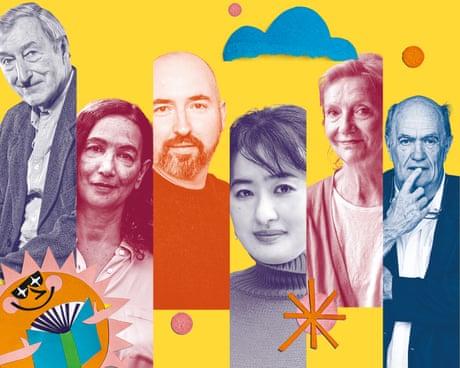
Maggie O’Farrell, Yann Martel and Julian Barnes are among the authors publishing new novels this year
The beginning of the books calendar is usually dominated by debuts, but January 2026 sees releases from some of the year’s biggest authors. Known for his surreally bittersweet short stories, George Saunders has written only one novel so far – but that one won the Booker prize. The follow-up to 2017’s Lincoln in the Bardo, Vigil(Bloomsbury) focuses on an unquiet spirit called Jill who helps others pass over from life to whatever comes next. She is called to the deathbed of an oil tycoon who is rapidly running out of time to face up to his ecological crimes, in a rallying cry for human connection and environmental action. Ali Smith’s Glyph (Hamish Hamilton) is a companion to 2024’s Gliff, and promises to tell a story initially hidden in that previous novel. Expect fables, siblings, phantoms and horses in a typically playful shout of resistance against war, genocide and the increasingly hostile social discourse. And in Departure(s) (Jonathan Cape), Julian Barnes announces his own – this blend of memoir and fiction, exploring memory, illness, mortality and love across the decades, will be his last book. “Your presence has delighted me,” he assures the reader. “Indeed, I would be nothing without you.”
The Hamnet adaptation hits UK cinemas in January, but Maggie O’Farrell’s next novel isn’t out until June. Land(Tinder), a multigenerational saga which opens in 19th-century Ireland in the wake of the famine, is inspired by her own family history and centres on a man tasked with mapping the country for the Ordnance Survey. There’ll be much anticipation, too, for The Things We Never Say from Elizabeth Strout (Viking, May). The ultra-prolific Strout is adored for her interconnected novels, but this story of a man with a secret is a standalone, introducing characters we’ve never met before. In John of John (Picador, May) Douglas Stuart, author of much-loved Booker winner Shuggie Bain, portrays a young gay man returning home from art school to the lonely croft on the Hebridean island where he grew up. And September sees a new novel from Irish writer Sebastian Barry: The Newer World (Faber) follows Costa winner Days Without End and A Thousand Moons in transporting the reader to late 19th-century America in the aftermath of the Civil War.
Wild Dark Shore by Charlotte McConaghy; Darkrooms by Rebecca Hannigan; The Nancys and the Case of the Missing Necklace by RWR McDonald; Best Offer Wins by Marisa Kashino; Your Every Move by Sam Blake
Wild Dark Shore by Charlotte McConaghy (Canongate, £9.99) The award-winning Australian writer’s third adult novel begins with a lone woman, Rowan, washed up on a remote island between Tasmania and Antarctica. Shearwater is a research outpost, home to the global seed vault created as a bulwark against climate catastrophe and to colonies of seals, penguins and birds. For eight years, Dominic Salt and his children have lived there, but dangerously rising sea levels mean that they, and the vault, will shortly be evacuated. Dominic cannot understand why Rowan has ended up on Shearwater, and Rowan is mystified by the absence of the scientists and researchers, about whom the family are tight-lipped – and the island’s communication centre has been mysteriously sabotaged, isolating them still further. McConaghy writes beautifully about the natural world and expertly ratchets up the tension, as mutual suspicion increases and secrets are gradually revealed. This is a powerful read that encompasses not only grief, sacrifice and perseverance in the face of disaster, but also survival strategies and their concomitant moral dilemmas.
Darkrooms by Rebecca Hannigan (Sphere, £20) When chaotic kleptomaniac Caitlin returns to her small Irish home town after the death of Kathleen, the mother from whom she has been estranged for many years, she’s pleased to be welcomed by the Branaghs, friendly neighbours she remembers from childhood. Less pleasant is being forced to confront past traumas, including the disappearance of her nine-year-old friend Roisin from a local wood 20 years earlier. Caitlin feels guilty about this, as does Roisin’s older sister Deedee, who is sure that Caitlin is still hiding something. Having joined the garda to find answers that never materialised, Deedee is drinking heavily, making poor decisions and jeopardising both her job and her relationship, and both women desperately need closure … This impressive, if bleak, debut is a slow-burning but well paced story of shame, guilt, misplaced loyalty and generational trauma, the conclusion of which, once one is in possession of all the facts, has a heartbreaking inevitability.
A Pulitzer finalist is among the first-time novelists, in tales of love, a surreal prison, teen murder and a tradwife
Belgrave Road Manish Chauhan (Faber, January) An affecting tale of loneliness and love in Chauhan’s home town of Leicester, Belgrave Road tells the story of Mira, newly arrived in the UK from India following an arranged marriage, and Tahliil, a Somali cleaner who becomes her lunch partner, and her escape. By day, Chauhan is a finance lawyer; his debut novel follows his shortlisting in last year’s BBC short story competition.
This Is Where the Serpent Lives Daniyal Mueenuddin (Bloomsbury, January) The Pakistani-American writer’s 2009 story collection, In Other Rooms, Other Wonders, was a Pulitzer finalist. Like his debut, hHis first novel is set in Pakistan, moving between bustling cities and agricultural estates, interrogating the country’s class dynamics through an epic portrait spanning six decades.
The wife of William Shakespeare takes centre stage in a rich, sensitive examination of parental grief, sensitively narrated by Jessie Buckley
The jury is still out on the merits of Chloé Zhao’s Hamnet, which arrives in cinemas next month, but there is no arguing with the quality of the source material. Maggie O’Farrell’s lyrical and immersive novel, which won the Women’s prize in 2020, imagines the relationship between William Shakespeare and his wife, Agnes Hathaway, and their grief over the death of their 11-year-old son, Hamnet, from the plague in 1596. The book opens with the young Hamnet realising his twin sister Judith is unwell and searching for an adult to attend to her, while unaware that he is the one who is fatally ill.
Shakespeare – who is never named and instead referred to as “the husband” or “the father” – is depicted not as a literary superstar but a flawed man who is rarely home. The focus is on Hathaway, a free-spirited woman with deep connections to the landscape. The narrative shifts between her childhood, the early years of her marriage and the aftermath of Hamnet’s death, during which Shakespeare writes one of his greatest plays, Hamlet (records state that the names Hamlet and Hamnet were interchangeable in those days).
Matriarchs, absent fathers and troubled childhoods: 2025 was the year French literature focused on family
In my neighbourhood bookshop, La Galerne, the shelves are well organised. On the ground floor, there’s a corner for foreign literature and another for French literature, with the latest releases right at the front. For nonfiction and essays, you used to have to go downstairs. But two years ago, they put a new table in front of the French literature corner for feminist essays and memoirs. A prime spot for people to grab a piece of the revolution without thinking about it too much. This change took a wild turn when local genius Annie Ernaux won the Nobel prize in 2022. Where should we put her work: in the crowded space for new French literature or the feminist memoir table?
This dilemma is now a regular question in France. The Anglosphere and other European countries have been wrestling with it over the past two decades, but here the line between fiction and nonfiction has only just begun to vanish in the minds of authors and their editors. Should we put a new table between the two? It would be a perfect spot for great autofiction such as Édouard Louis’s or Christine Angot’s novels. Or deeply personal nonfiction such as Alice Coffin’s Le Génie Lesbien or Adèle Yon’s bestseller Mon vrai nom est Élisabeth – her first novel and a literary quest to reveal the patriarchal violence suffered by the author’s great-grandmother. More than 150,000 copies have been sold since its release in February.
Anne-Laure Pineau is an independent writer based in Le Havre, France
L'année 2025 se termine et il est l'heure de faire le grand bilan pour les jeux vidéo. Quels sont les titres qui ont retenu notre attention ? Voici notre sélection, parmi les dizaines de tests de Numerama parus entre janvier et décembre.
The 1908 Tunguska comet changes the direction of history and gives rise to a weird new reality in this acclaimed epic from the Polish author
The opening sentence of this remarkable novel announces that the reader is in for an intriguing experience. “On the fourteenth day of July 1924, when the tchinovniks of the Ministry of Winter came for me, on the evening of that day, on the eve of my Siberian Odyssey, only then did I begin to suspect that I did not exist.” It may hint at Kafka in the ominous arrival of officials, or Borges in its metaphysical conundrum, but stranger things are afoot. In 1924 there was no tsar, let alone his bureaucrats, the tchinovniks. The date is significant, but I don’t mind admitting I had to find out why online. The time, as Hamlet says, is out of joint.
The rudely awakened sleeper is Benedykt Gierosławski, a Polish philosopher, logician, mathematician and gambler whose debts will be erased if he undertakes a special mission for the Ministry. He is to travel to Siberia, “the wild east”, and find his father, Filip, who was exiled there for anti-government activities. This is not clemency. Filip is now known as Father Frost, and as a geologist, radical and mystic, he might have a connection with what has occurred. The reader is drip-fed the details. A comet fell into Tunguska in Siberia in 1908, as it did in our universe. But here the event has caused the emergence of an inexplicable, expanding, possibly sentient coldness called the “gleiss”. Ice, which won the European Union prize for literature, came out in Poland in 2007, well before the Game of Thrones TV adaptation made “winter is coming” a meme; but in this novel, it certainly is.
 Connexion