Tapsoba seals dramatic turnaround for Burkina Faso
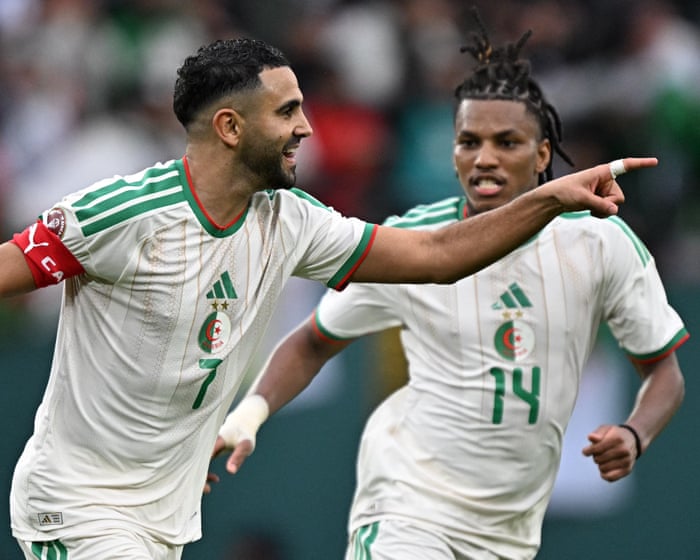
Riyad Mahrez scored twice as Algeria launched their Africa Cup of Nations campaign with a comfortable 3-0 Group E win over 10-man Sudan in Rabat.
The Desert Warriors were ahead within two minutes when the former Leicester and Manchester City winger ran on to Hicham Boudaoui’s clever backheel and fired past the Sudan keeper Monged Abuzaid.
Members of Sudan’s Emergency Response Rooms network tell Guardian they didn’t mind missing out on the Nobel peace prize because ‘we only want to help’
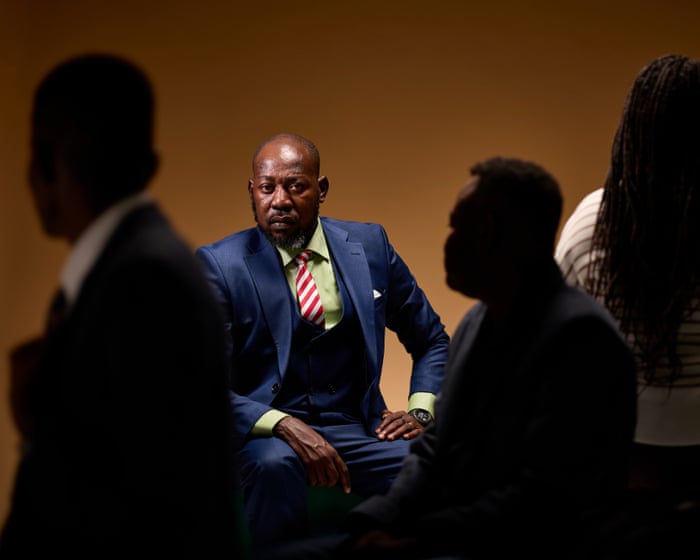
Doing good gets you killed in Sudan. It was why Amira did not tell her mother when she joined a volunteer group that felt like the only thing stopping her country sliding deeper into dystopia.
Each morningshe secretly crossed the shifting frontline of Sudan’s North Kordofan state. Amira was entering territory held by the Rapid Support Forces (RSF), paramilitaries who have committed countless war crimes, including genocide, during the country’s cataclysmic war.
It has been a year dominated by Donald Trump. It has not yet even been 12 full months since his return to the White House in January but already the changes he has wrought – both in the US and around the world – seemed scarcely conceivable in 2024. Katharine Viner, the Guardian’s editor-in-chief, tells Annie Kelly what it has looked like from the editor’s chair: from the deployment of the national guard on American streets, to the humiliation of Volodymyr Zelenskyy in the Oval Office, to the erosion of the rules that once governed peace and war.
In the UK, she describes a Labour government failing to tell its story and missing chance after chance to tackle the rise of Reform and the far right. ‘Politics is about timing,’ she says of the government’s notable silence over the summer, ‘and I think a lot of those opportunities were missed.’ It has not been a year without hope, from the unexpected success of leftwing figures such as Zohran Mamdani and Zack Polanski, to the Guardian’s decisive victories in court defending its reporting, in a case described as a landmark ruling for #MeToo journalism. Support the Guardian today: theguardian.com/todayinfocuspod
This is our last episode of 2025. Thank you to everyone who has listened and watched this year. We will return with new episodes on 5 January 2026.
The fracturing multilateral order has led to a new age of insecurity. But acts of courage and solidarity can point the way to a better future
In one of his last sermons, the great Christian theologian and philosopher Paul Tillich asked: “Do we have a right to hope?” As an army chaplain to German forces during the first world war and a refugee from Nazi Germany, Tillich had witnessed first-hand some of the horrors of the 20th century. But his answer to the question he posed in 1965 was yes. Nobody could live without hope, Tillich told his Harvard audience, even if it led “through the narrows of a painful and courageous ‘in-spite-of’”.
Sixty years on, a similar spirit of defiant optimism is needed to navigate our own era of conflict and anxiety. The fourth anniversary of Vladimir Putin’s invasion of Ukraine is approaching, and dark political forces menace the social fabric of western liberal democracies. More widely, a fracturing multilateral order is delivering a more unstable and threatening world.
Do you have an opinion on the issues raised in this article? If you would like to submit a response of up to 300 words by email to be considered for publication in our letters section, please click here.
 Connexion