Survey adds to experts’ concern about addiction risk and highlights support for plan to ban sales to under-18s
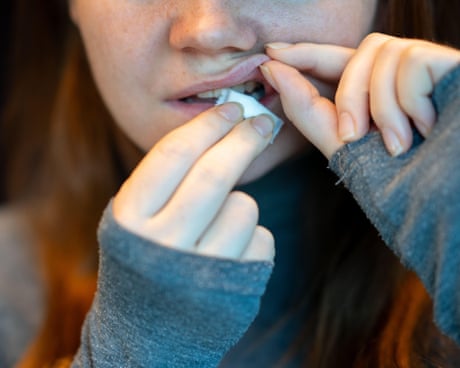
One in eight teenagers aged 14 to 17 have used nicotine pouches, a survey has found, adding to health experts’ concern about their growing popularity.
Users hold the small sachets, which look like mini-teabags and are often flavoured, in their mouths to enjoy the release of the nicotine they contain. They are also known as “snus”.
Cutting-edge therapies exist, but the market cannot deliver them cheaply. Britain must build NHS capacity so that cures become collective goods, not expensive products
Just a small fraction of our 20,000 genes can cause disease when disrupted – yet that sliver accounts for thousands of rare disorders. The difficulty is: what can a doctor do to treat them? In a common condition such as type 2 diabetes, the underlying biology is similar for millions of patients. The doctor can prescribe metformin. But with a genetic disorder, the mutation might only affect a small number of people worldwide. In many cases, doctors won’t even know which mutation is responsible, let alone how to fix it.
Novel gene-editing breakthroughs are making headlines. But therapies are expensive and complex to develop. The cost of bringing any new drug to patients is now around $2bn, in part because, as Brian David Smith notes in New Drugs, Fair Prices, the “success rate, from discovery to market, is tiny” and there are approved treatments for “less than 10% of the 8,000 diseases that affect humans”. Commercial incentives, he argues, skew innovation towards lucrative cancer drugs and long-term treatments for large populations. Complex gene therapies for very rare conditions are seen as too costly to develop and too small to profit from.
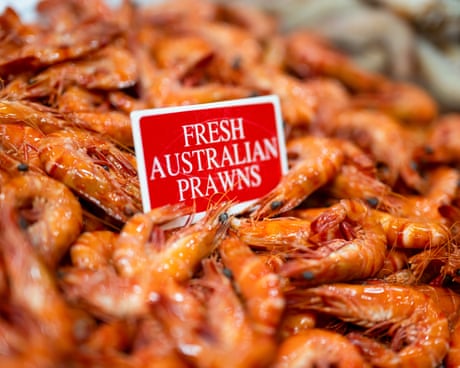
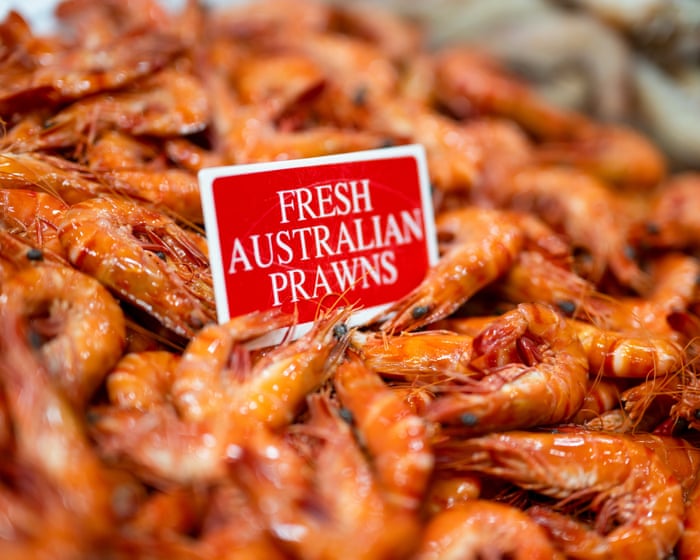
Crustaceans are a festive season staple for many families, particularly in Australia where an estimated 18.5m kilograms of prawns and more than 150,000 lobsters are eaten over Christmas and New Year.
Globally, trillions are caught and consumed each year. Australia is a major producer, with prawn, lobster and crab industries valued at more than $1bn.
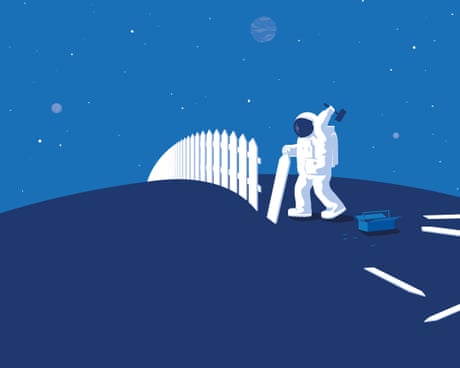
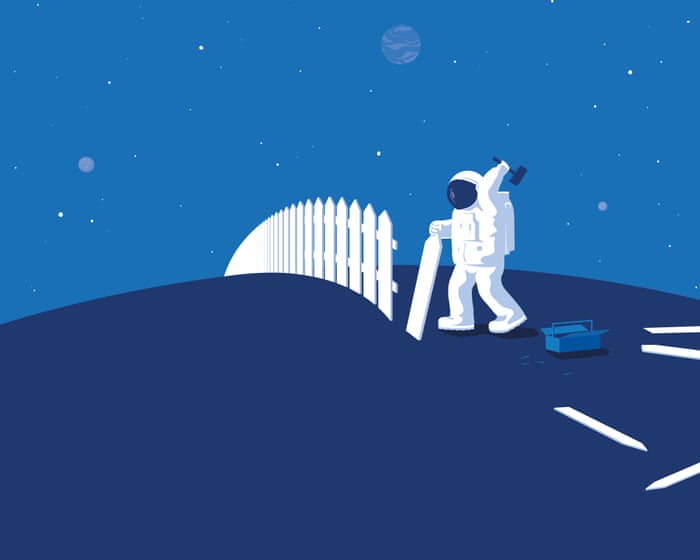
The commercialisation of the cosmos is already underway, and our current laws aren’t fit for purpose
If there is one thing we can rely on in this world, it is human hubris, and space and astronomy are no exception.
The ancients believed that everything revolved around Earth. In the 16th century, Copernicus and his peers overturned that view with the heliocentric model. Since then, telescopes and spacecraft have revealed just how insignificant we are. There are hundreds of billions of stars in our galaxy, the Milky Way, each star a sun like ours, many with planets orbiting them. In 1995, the Hubble space telescope captured its first deep-field image: this showed us that there are hundreds of billions of galaxies in our known universe, huge wheeling collections of stars dispersed through space.
As rising seas salinise the soils of the Venice lagoon, scientists and chefs are turning to long-forgotten wild herbs
On the scrubby banks of the rural swathes of the Venice lagoon, an evening chorus of cicadas underscores the distant whine of farmers’ three-wheeled minivans. Dotted along the brackish fringes of the cultivated plots are scatterings of silvery-green bushes – sea fennel.
This plant is a member of a group of remarkable organisms known as halophytes – plant species that thrive in saltwater. Long overlooked and found growing in the in-between spaces – saltmarshes, coastlines, the fringes of lagoons – halophytes straddle boundaries in both ecosystems and cuisines. But with shifting agricultural futures, this may be about to change.
Mars n’est pas encore habitée, mais elle est déjà occupée. En orbite comme à la surface, plusieurs engins venus de la Terre scrutent la planète rouge en continu, à la recherche d’indices sur son passé et sur la possibilité d’y envoyer un jour des humains. Tour d’horizon.
Mars n’est pas encore habitée, mais elle est déjà occupée. En orbite comme à la surface, plusieurs engins venus de la Terre scrutent la planète rouge en continu, à la recherche d’indices sur son passé et sur la possibilité d’y envoyer un jour des humains. Tour d’horizon.
Les festivités de décembre véhiculent généralement une image idyllique de détente absolue : boissons réconfortantes, moments privilégiés en famille, et promesse de ressourcement. Pourtant, nombreux sont ceux qui peinent à véritablement décompresser durant cette période. Comment expliquer que les fêtes brandissent l’espoir d’un répit sans jamais vraiment tenir leur promesse ? Un repos plus réparateur ... Lire plus
Une analyse approfondie menée par le comité de prévention des maladies cardiovasculaires de l’American Heart Association renforce considérablement l’hypothèse selon laquelle préserver la santé de nos gencives contribue à protéger notre cœur. S’appuyant sur dix années de publications scientifiques (études génétiques, essais cliniques et tests en laboratoire), ce rapport actualise leur déclaration scientifique de 2012. ... Lire plus
Le vieillissement du corps humain se manifeste visiblement par des rides, cheveux gris et taches brunes. Pourtant, des transformations tout aussi significatives surviennent à l’intérieur de notre organisme sans que nous en ayons conscience. Vers 80 ans, la paroi intestinale de la plupart des individus présente de petites poches saillantes appelées diverticules. Ces excroissances se ... Lire plus
Les festivités de décembre véhiculent généralement une image idyllique de détente absolue : boissons réconfortantes, moments privilégiés en famille, et promesse de ressourcement. Pourtant, nombreux sont ceux qui peinent à véritablement décompresser durant cette période. Comment expliquer que les fêtes brandissent l’espoir d’un répit sans jamais vraiment tenir leur promesse ? Un repos plus réparateur ... Lire plus
Une analyse approfondie menée par le comité de prévention des maladies cardiovasculaires de l’American Heart Association renforce considérablement l’hypothèse selon laquelle préserver la santé de nos gencives contribue à protéger notre cœur. S’appuyant sur dix années de publications scientifiques (études génétiques, essais cliniques et tests en laboratoire), ce rapport actualise leur déclaration scientifique de 2012. ... Lire plus
Le vieillissement du corps humain se manifeste visiblement par des rides, cheveux gris et taches brunes. Pourtant, des transformations tout aussi significatives surviennent à l’intérieur de notre organisme sans que nous en ayons conscience. Vers 80 ans, la paroi intestinale de la plupart des individus présente de petites poches saillantes appelées diverticules. Ces excroissances se ... Lire plus
UN body to study possibility of integrating centuries-old practices into mainstream healthcare
From herbalists in Africa gathering plants to use as poultices to acupuncturists in China using needles to cure migraines, or Indian yogis practising meditation, traditional remedies have increasingly being shown to work, and deserve more attention and research, according to a World Health Organization official.
A historical lack of evidence, which has seen traditional practices dismissed by many, could change with more investment and the use of modern technology, according to Dr Shyama Kuruvilla, who leads the WHO Global Traditional Medicine Centre.
Le temps n’est pas une constante universelle figée. La relativité l’a démontré depuis longtemps, mais une avancée récente permet désormais d’en mesurer les effets avec une précision inédite à l’échelle interplanétaire. Des chercheurs américains ont déterminé avec exactitude la vitesse à laquelle les horloges martiennes devancent celles de la Terre. Cette différence infime en apparence ... Lire plus
Le temps n’est pas une constante universelle figée. La relativité l’a démontré depuis longtemps, mais une avancée récente permet désormais d’en mesurer les effets avec une précision inédite à l’échelle interplanétaire. Des chercheurs américains ont déterminé avec exactitude la vitesse à laquelle les horloges martiennes devancent celles de la Terre. Cette différence infime en apparence ... Lire plus
Les liens entre alimentation et longévité fascinent depuis des décennies. Une recherche récente menée aux États-Unis apporte un éclairage particulièrement précis sur ce sujet, en isolant un acteur clé souvent négligé. Les scientifiques ont observé qu’une réduction ciblée d’un acide aminé essentiel pouvait ralentir le vieillissement chez la souris et prolonger significativement sa durée de ... Lire plus
Les liens entre alimentation et longévité fascinent depuis des décennies. Une recherche récente menée aux États-Unis apporte un éclairage particulièrement précis sur ce sujet, en isolant un acteur clé souvent négligé. Les scientifiques ont observé qu’une réduction ciblée d’un acide aminé essentiel pouvait ralentir le vieillissement chez la souris et prolonger significativement sa durée de ... Lire plus
The shift would mean fewer shots recommended for children. But a Danish health official found the idea baffling, saying the United States was getting “crazier and crazier in public health.”
A pediatrician administering a combination six-way vaccination against diphtheria, tetanus, pertussis, poliomyelitis, Haemophilus influenzae type b and hepatitis B, in Berlin.
 Connexion