↩ Accueil

Vue lecture

Danish postal service to stop delivering letters after 400 years

PostNord’s decision to end service on 30 December comes after fear over ‘increasing digitalisation’ of Danish society

The Danish postal service will deliver its last letter on 30 December, ending a more than 400-year-old tradition.

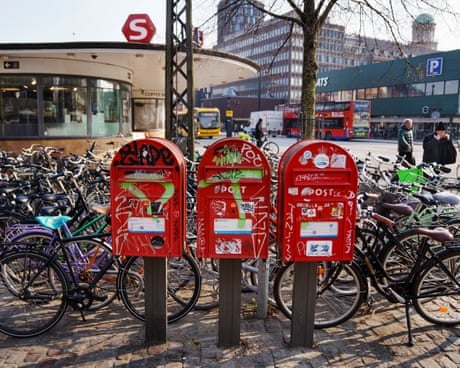
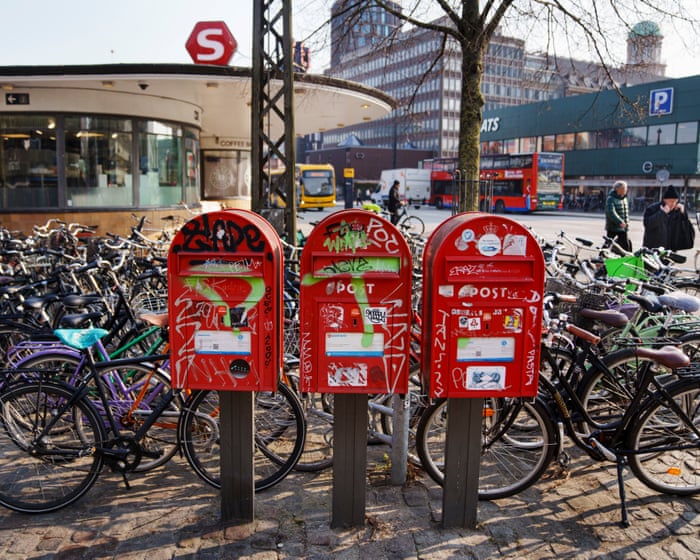
Announcing the decision earlier this year to stop delivering letters, PostNord, formed in 2009 in a merger of the Swedish and Danish postal services, said it would cut 1,500 jobs in Denmark and remove 1,500 red postboxes amid the “increasing digitalisation” of Danish society.

Continue reading...

© Photograph: Liselotte Sabroe/EPA
© Photograph: Liselotte Sabroe/EPA
© Photograph: Liselotte Sabroe/EPA


  •  

Denmark says Russia was behind two ‘destructive and disruptive’ cyber-attacks

Intelligence service says attacks were work of groups connected to Russian state in ‘clear evidence’ of hybrid war

The Danish government has accused Russia of being behind two “destructive and disruptive” cyber-attacks in what it describes as “very clear evidence” of a hybrid war.

The Danish Defence Intelligence Service (DDIS) announced on Thursday that Moscow was behind a cyber-attack on a Danish water utility in 2024 and a series of distributed denial-of-service (DDoS) attacks on Danish websites in the lead-up to the municipal and regional council elections in November.

Continue reading...

© Photograph: Nils Meilvang/Ritzau Scanpix/AFP/Getty Images

© Photograph: Nils Meilvang/Ritzau Scanpix/AFP/Getty Images

© Photograph: Nils Meilvang/Ritzau Scanpix/AFP/Getty Images

  •  

Copenhagen’s ‘ghetto law’ may be unlawful, EU court rules

ECJ ruling brings hope to area of city targeted over high percentage of residents with ‘non-western’ backgrounds

Residents of a Copenhagen neighbourhood that became an international symbol of a law in Denmark known as the “ghetto law” have said they are confident they can overturn the legislation in the Danish courts after the top EU court ruled that it may be unlawful.

The controversial law, dating from 2018, allows the state to demolish apartment blocks in areas labelled “parallel societies” by the government, where at least half of residents have a “non-western” background. Formerly, the government referred to these neighbourhoods as “ghettoes”.

Continue reading...

© Photograph: Andrew Kelly/Reuters

© Photograph: Andrew Kelly/Reuters

© Photograph: Andrew Kelly/Reuters

  •