Connexion
Street Gods Review: A Norse Rogue In Need Of A Spark

Street Gods, one of two Norse mythology-inspired VR roguelites coming to Meta Quest in December, emphasizes style and power fantasy over any real impactful combat.
Developer Soul Assembly has a long history with combat-heavy VR titles, like the Drop Dead series, Last Stand, Warhammer 40,000: Battle Sister. While it occasionally dabbles in other genres, like working on Just Dance VR, action games are its bread and butter. All the aforementioned games, primarily shooters mind you, received mostly the same critical response. Straightforward, albeit shallow, and fun to play with friends.
What is it?: A Norse mythology-based roguelite
Platforms: Meta Quest 3/3S (reviewed on Quest 3)
Release Date: December 18, 2025
Developer/Publisher: Soul Assembly
Price: $19.99
So, given Soul Assembly's history and the genre we're dipping into, the first thing that surprised me in this game is how forward the story is. Most roguelites deliver the setting in a cursory introduction that just sets the table for the carnage that will ensue. Street Gods surprisingly takes its time with a lengthier than expected multi-part tutorial that arguably takes a bit too long with the setup, but in hindsight turns out to be the best part of the game.
You play as Val, a street-smart graffiti artist who happens upon Mjölnir, the signature weapon of Thor, the Norse God of Thunder. As you approach it, Mjölnir inexplicably begins to speak to you. This voice is Thor himself, entrapped in his own weapon for reasons beyond his own understanding. You pick up the hammer and are immediately attacked by what can only be described as Norse zombies, who look ripped straight out of the Drop Dead universe with different clothes on.
It's here that my primary issue with Street Gods comes up. Thor teaches you how to swing and throw Mjölnir to defeat the undead, but nothing really lands. I realize that when playing VR, you are ostensibly always swinging at air, but most melee-heavy games get around this with a combination of controller haptics, sound effects, and visual cues (sparks, blood, enemy reactions, etc.). There is no real crunch here, no impact, no visceral immersion to the combat. The controller haptics are extremely weak, so when unleashing power attacks like shooting lightning from the hammer, it doesn't feel like much of anything because both the haptics and sound effects are so subdued. The 'clank' sound of the hammer on impact is fine, but not enough. It needs more oomph, to be blunt.
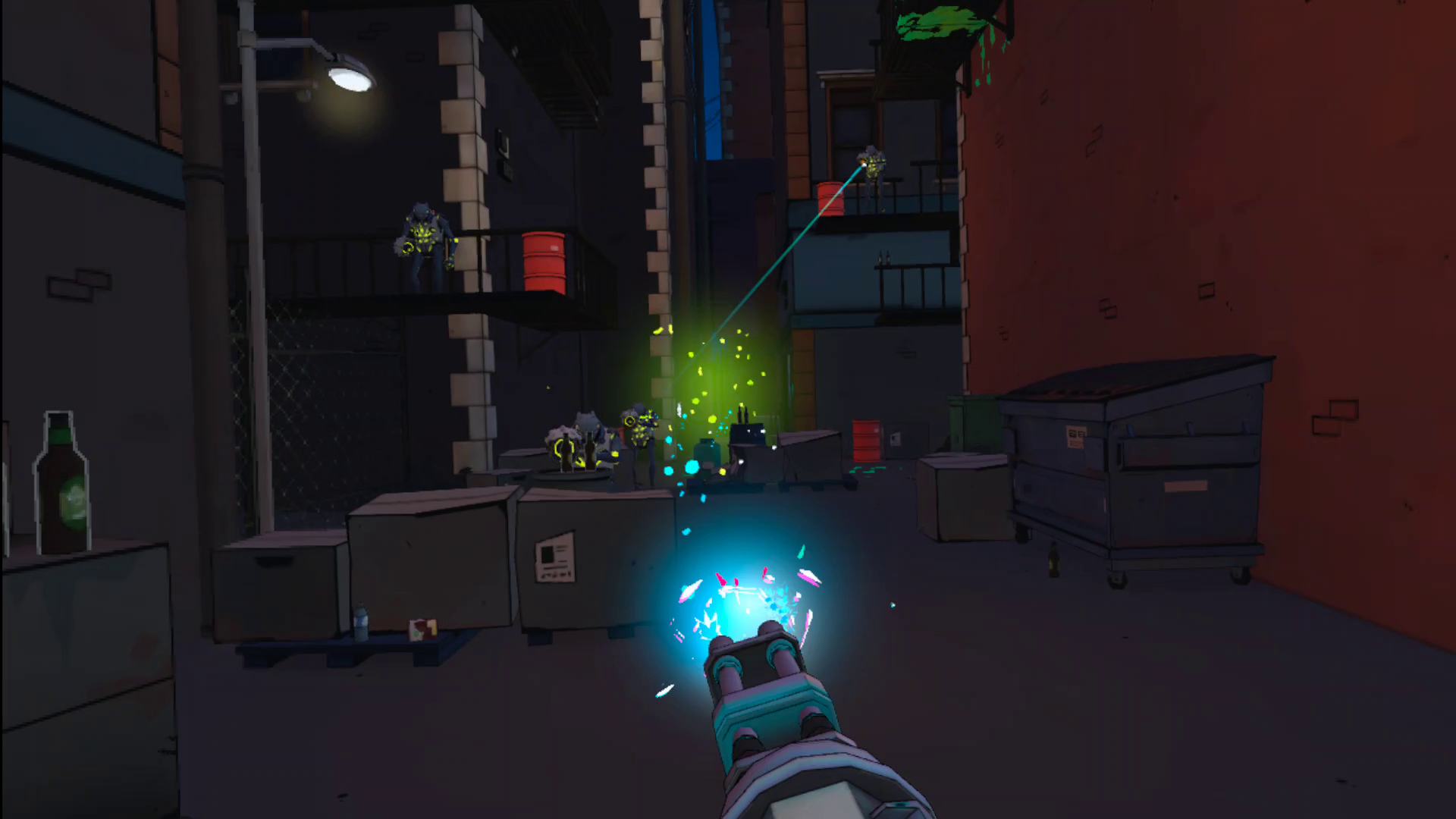
Street Gods early-game combat - Captured by UploadVR on Meta Quest 3
Now, this may be by design, since you are imbued with the power(s) of a God in this game, but the power fantasy here is muted by the lack of physicality. This is a fairly lightweight arcade-like experience with a heavily comic book-inspired aesthetic (more on that later). The arcade feel shines through as you tear through enemies like wet paper with all of your various abilities, but I couldn't shake the combat's lifeless energy.
Having said that, Street Gods makes up for its general lack of substance with all kinds of style. As you quickly unlock new abilities, you'll be tossing enemies around with lightning-powered hammer uppercuts, a golden lasso that can yank foes all over the map, unleashing lightning attacks, and so on. The elongated introduction has a stretch where you are falling through the merging of Earth and Asgard, and that sequence is terrific. The game feels cool to play, but that level of cool can be fleeting depending on your personal tastes. I found myself losing interest about 20 minutes into each of my runs because of combat.
This extends to the power-ups. After dispatching all the enemies in an arena, you are presented with a chest with the standard assortment of power-ups and perks: more health, better defense, increased attack power when health is low, and so on. New abilities are unlocked in an arena that lets you practice before you move forward. Occasionally, a new ability would spawn as a perk, like dropping a bomb behind you when you dash, but they are few and far between. All the tropes are here, but at its core, there's nothing new to veteran roguelite players.
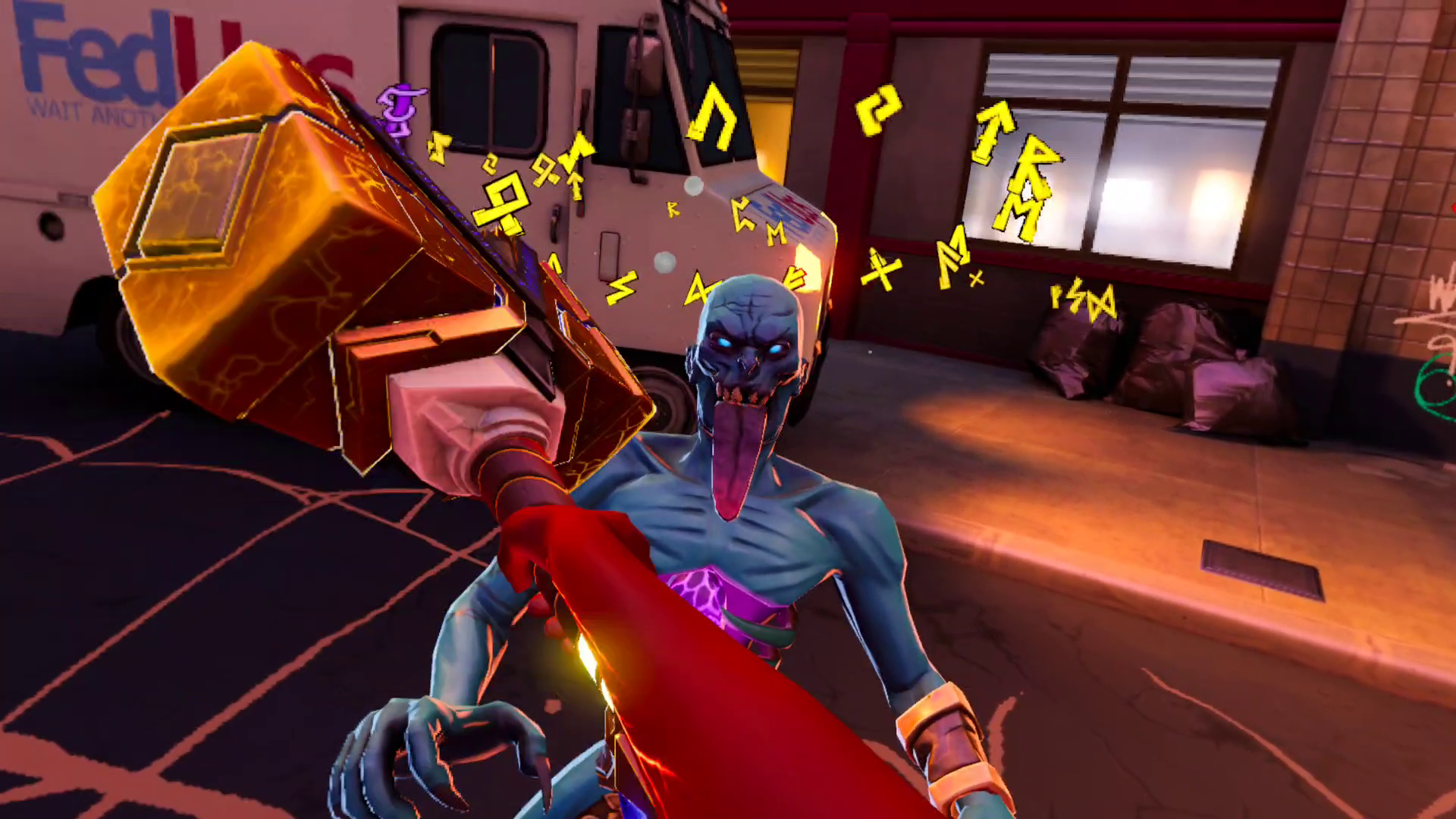
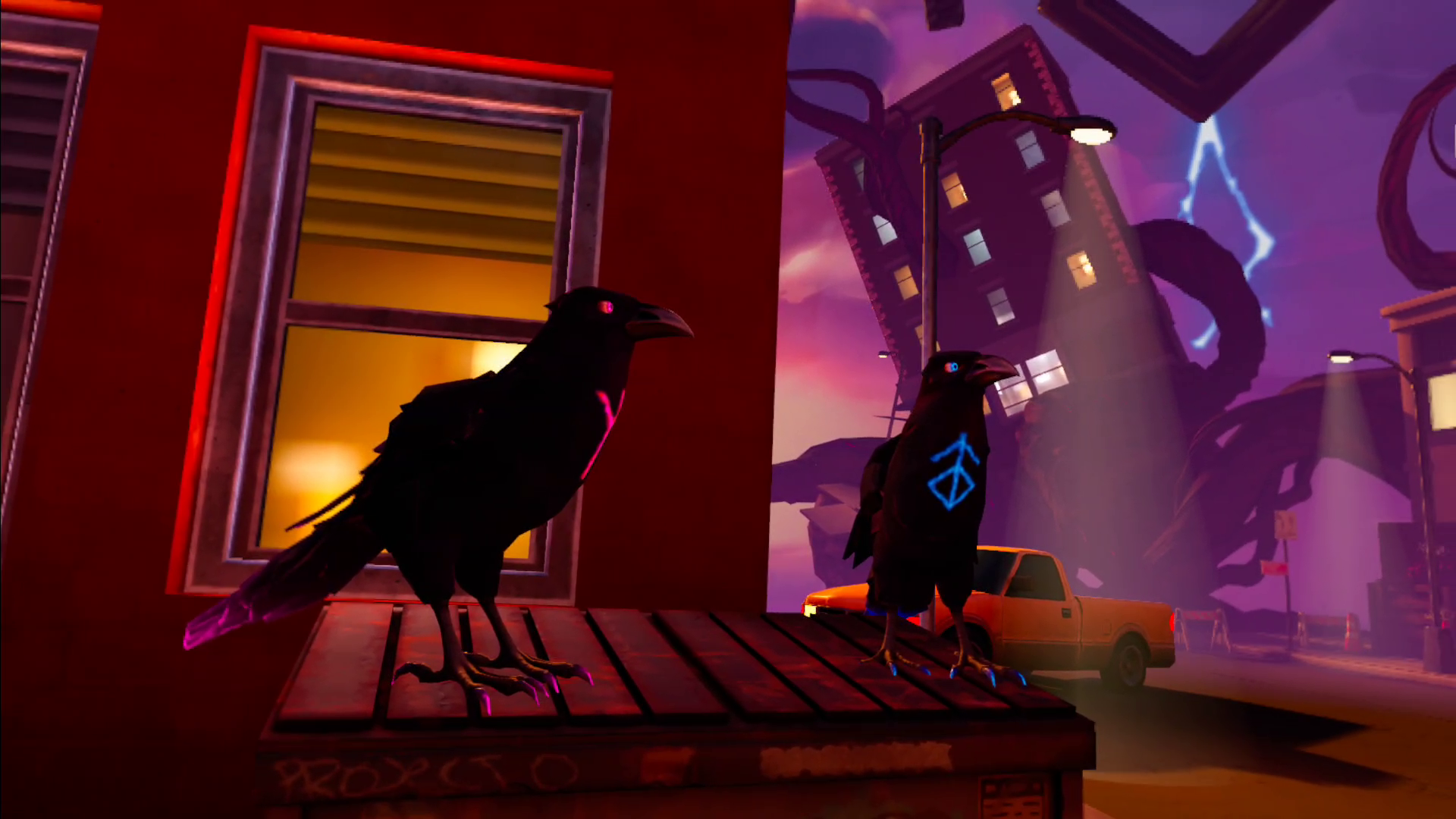
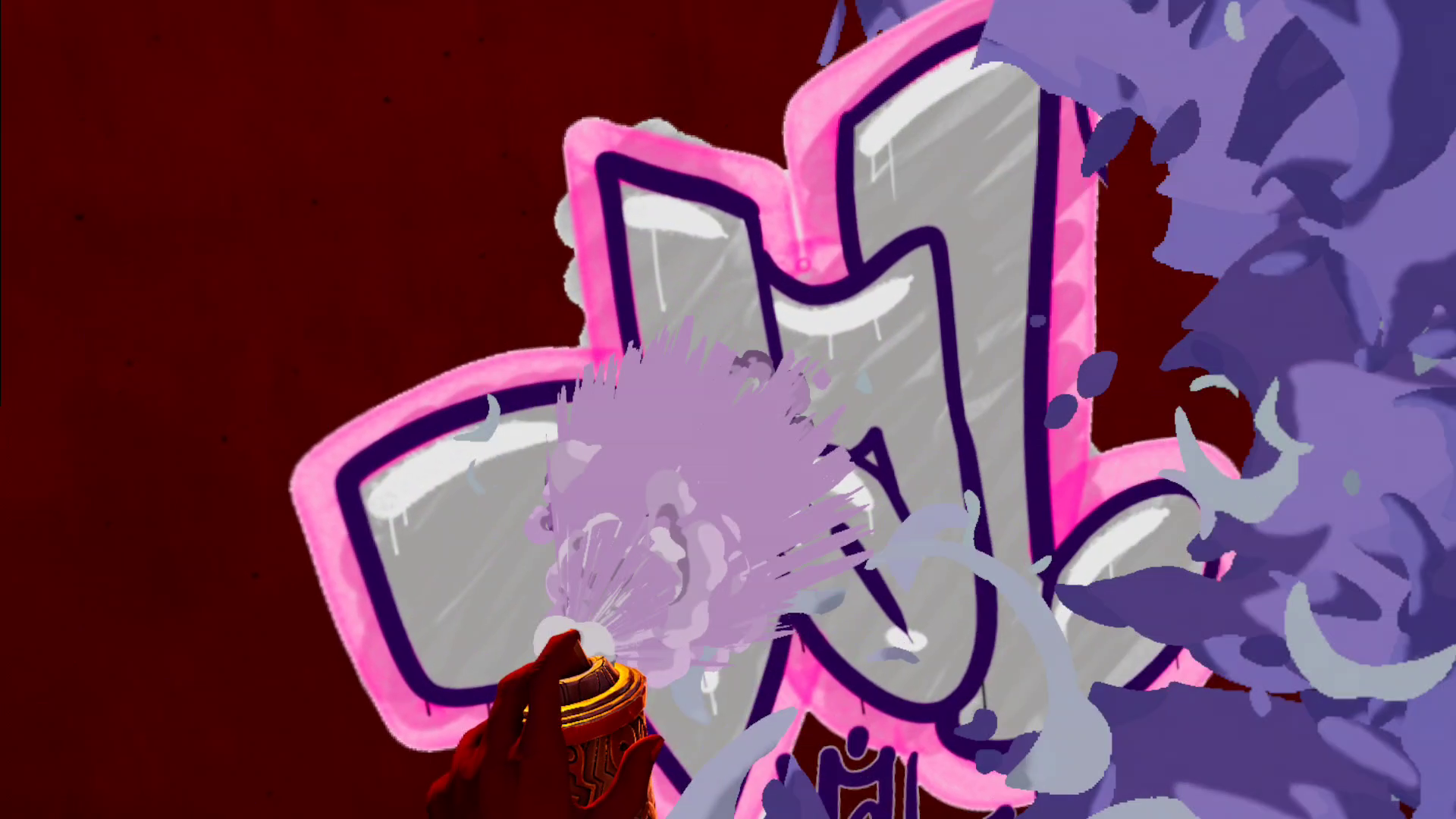
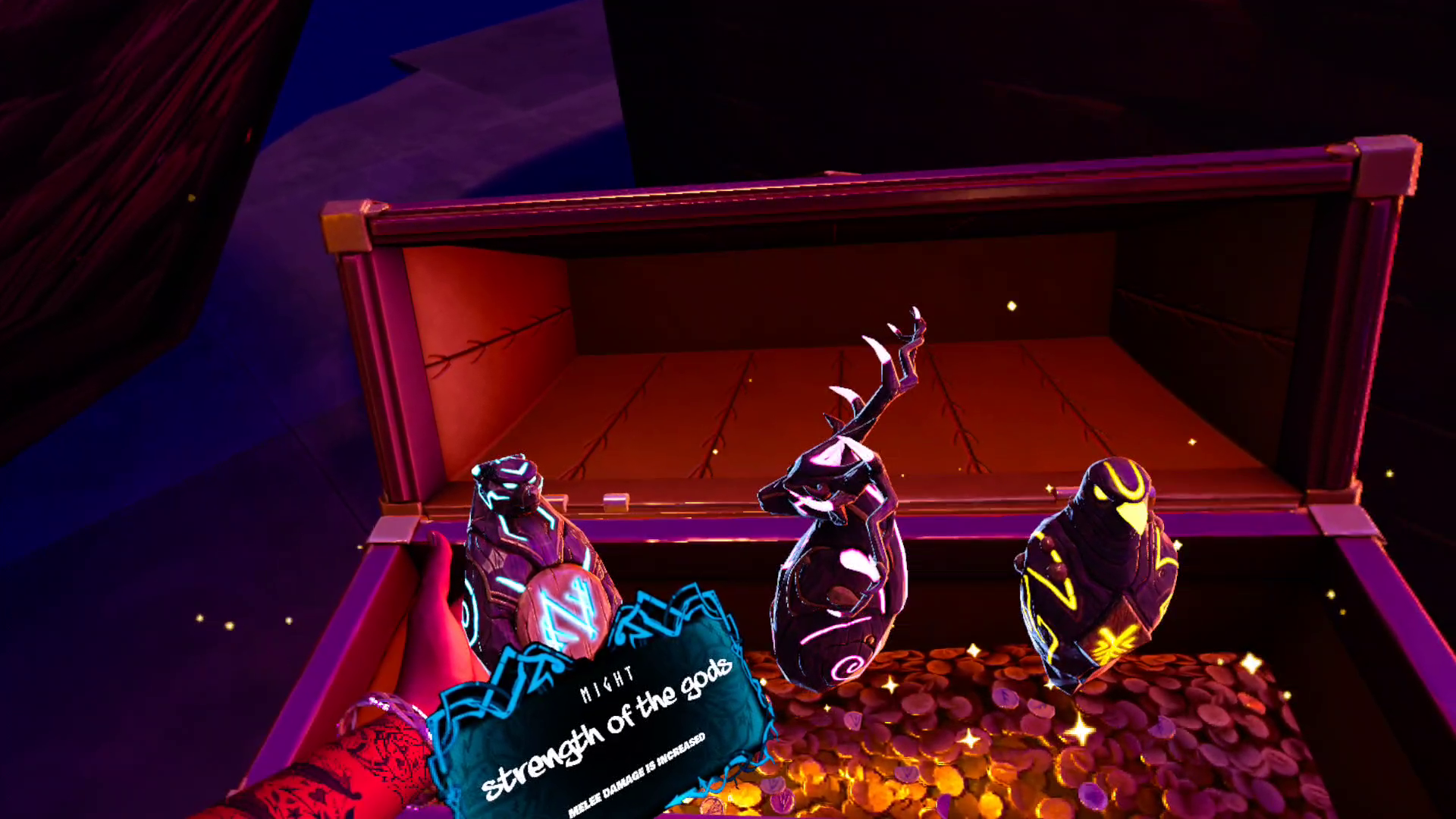
Street Gods screenshots captured by UploadVR
One of the tricky things to get right in a game that plays in power fantasies is balancing said fantasy with a sense of peril. Street Gods falls woefully short here. I never felt any real sense of danger during any of my runs. Enemies can spawn all around you, but maybe owing to the limitations of standalone VR, there are never more than a handful onscreen at any given moment and they go down so easily that you hardly ever get hit.
Even as the game ramps up with a few new enemy variations with area of effect attacks, they're still taken out from range simply by throwing Mjölnir (which eventually gets powered up to hit multiple enemies). Health is dropped in droves by enemies upon death too, so even if you do take damage, it's easily nullified. Compare this to Drop Dead: The Cabin, another Soul Assembly title, where restrictions on map traversal and scarcity of supplies make every run a struggle and that is sorely missed here.
Visually, Street Gods is an interesting study in contrasts. The story of the game is the Norse realms are colliding and merging with Earth (Midgard), so you do battle in city streets with otherworldly vines and giant crystals protruding from them. It looks quite nice, but after the umpteenth time in the same map, even with switching things up with different times of day & weather, it gets old pretty quickly. Most of the maps are quite colorful, except for the snow-covered areas. These are blindingly washed out, so much so that I had to turn down the brightness on my Quest.
Acquiring a new blessing in Street Gods - Captured by UploadVR on Meta Quest 3
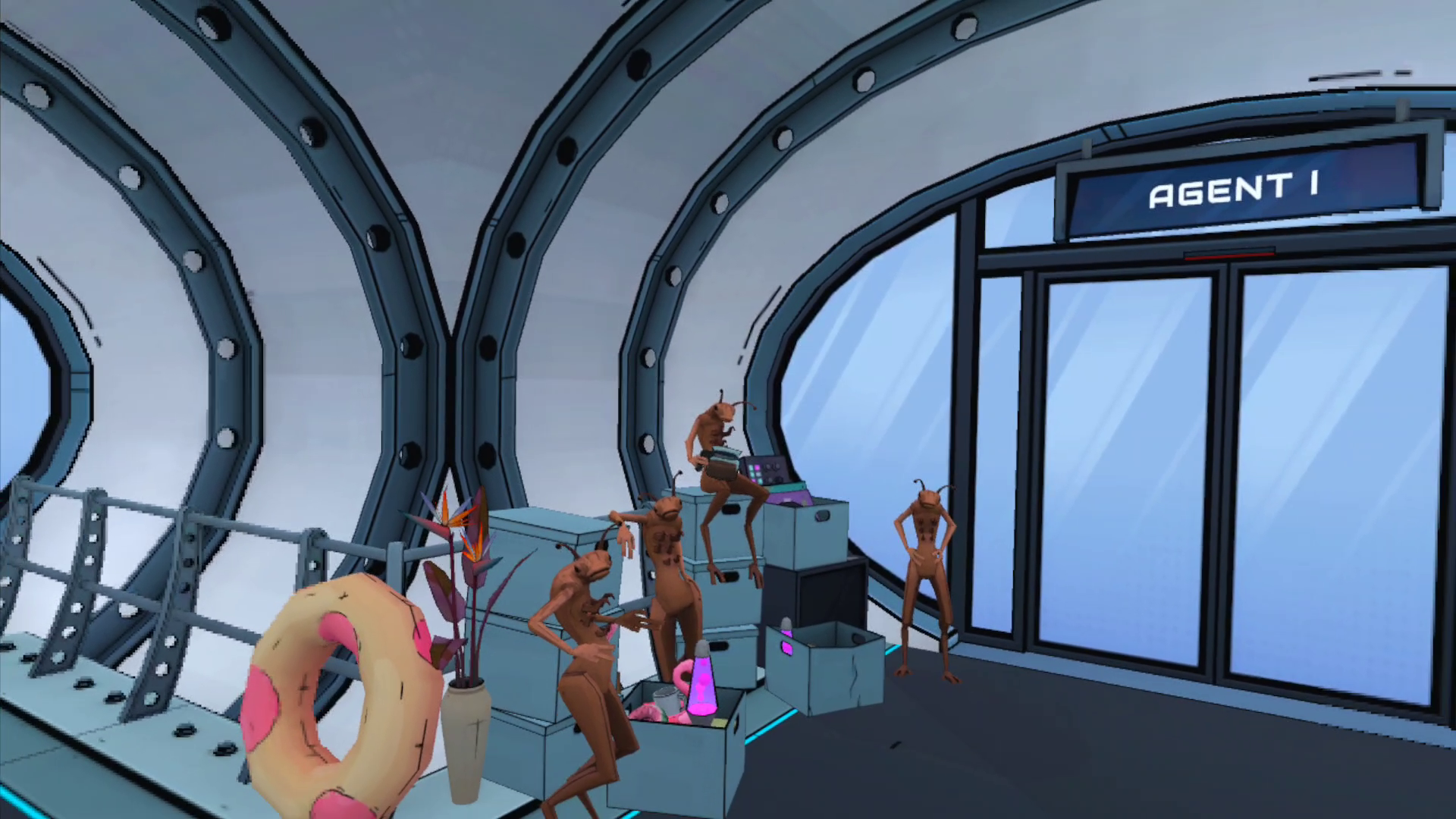
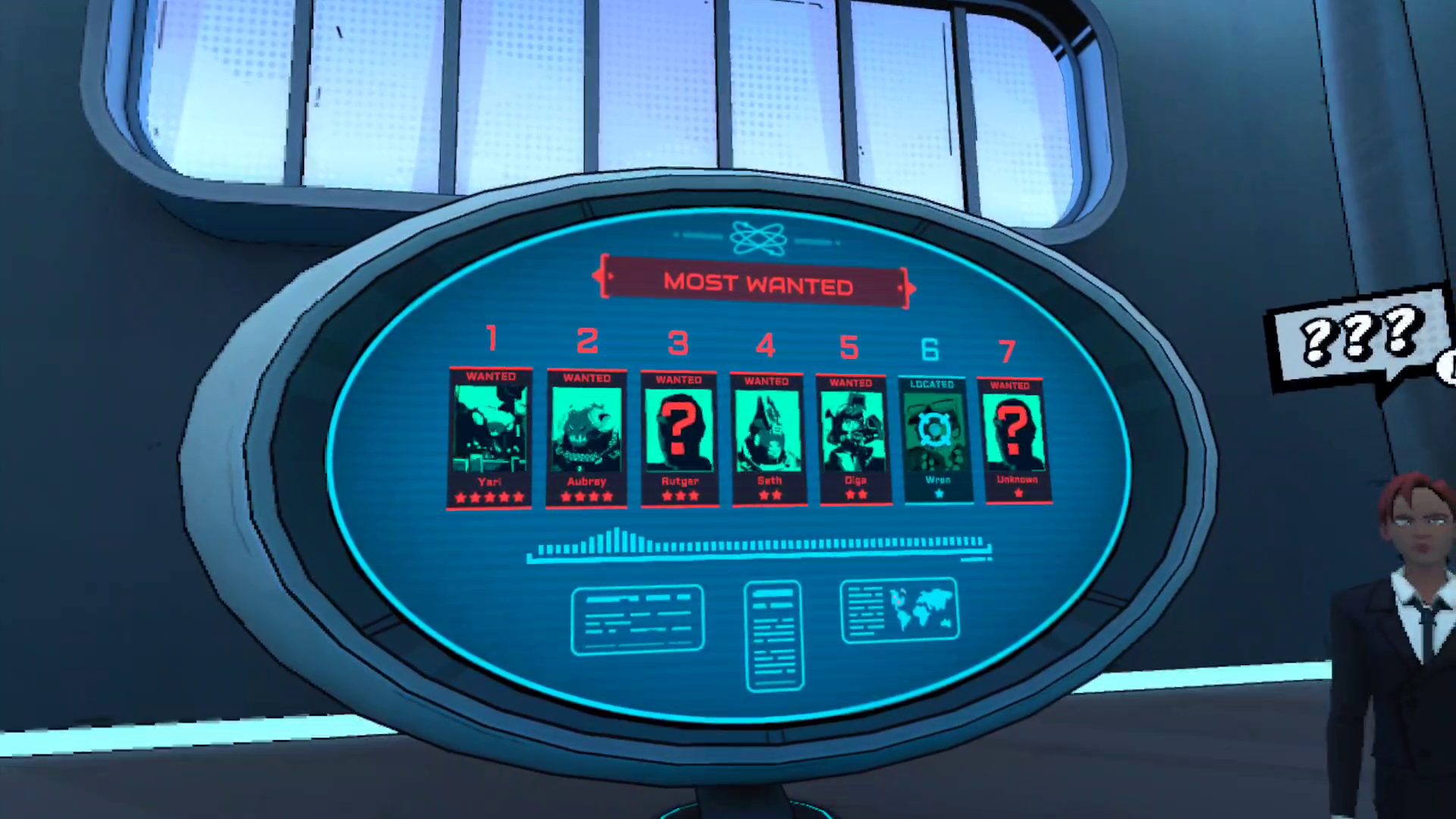
Occasionally, between levels, you'll travel to a hub between realms to get some exposition from your talking hammer and a rock with paper drawn eyes and a crown representing Loki. This hub area is the nicest looking part of the game by far. You can also damage the vehicles and dumpsters in each level, but like the enemies, the damage just sort of happens. If you are old enough to recall destroying the car in Street Fighter II, same idea here. Frame A, perfectly fine. Frame B, destroyed. With no animation or motion between the two, other than a plume of fire for vehicles.
As stated earlier, the common enemies look ripped straight from a Drop Dead game, with gangly looking movements and a comic book-esque word pop-up when getting hit, but in motion, they don't look great. If they are far away from you, they visibly move at a lower framerate and this frame drop repeats when you knock them far away. Once you see it, you can't unsee it. Graphically, Street Gods is a mixed bag.
The world of Street Gods doesn't take itself too seriously, choosing to lean on the (hopefully) fun combat and powers to keep the player engaged. The exchanges in the hub area are mostly played for laughs, with the voice actors delivering their lines like the straight man in a goofball comedy. Some of it lands, but most of it doesn't. Val and Thor also quip endlessly during combat, with some of their lines clumsily stacking over each other, and after 2 or 3 runs, I had heard them all and was begging for a mute button. Same with the music, which felt very run-of-the-mill and on a short loop. There is a story here, with hints at Val's backstory and questions as to how and why Thor is imprisoned in his own weapon, but the dialogue and the characters are so ho-hum that it's difficult to get invested.
Comfort
Street Gods uses artificial stick-based movement with no option for teleport movement. Players can choose between snap and smooth turning with speed settings for each, a sitting mode with a height adjustment, and a motion vignette while moving.
Mjölnir, your primary weapon in the game, defaults to your right hand. This can also be changed to your left hand in the settings menu.
Finally, when I was approaching my first boss fight, I entered the portal and the game crashed after 3 minutes of black screen with music playing. When I reloaded, it just dropped me back into more waves, this time in a new element type (snow) that I hadn't seen yet. I had to let myself die and delete my save data to in essence restart the game to get back to the boss fight, which thankfully loaded on the second attempt. Performance was fine to start, but after that crash, I started to see some stuttering and frame drops when a lot of enemies were onscreen.
Hopefully this can be fixed with patches, but having to restart took me out of the game completely. I put it down for some time before jumping back in.
Street Gods - Final Verdict
If you are an action junkie just here to wreck enemies, there are better roguelites available in VR with more engaging combat than Street Gods. Even as a power fantasy, the lack of weapon variety, uninspired enemies, repetitive locations, and power-ups make Street Gods a struggle to hold your attention for long.

UploadVR uses a 5-Star rating system for our game reviews – you can read a breakdown of each star rating in our review guidelines.