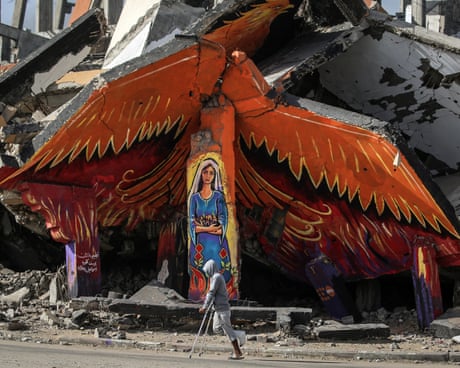
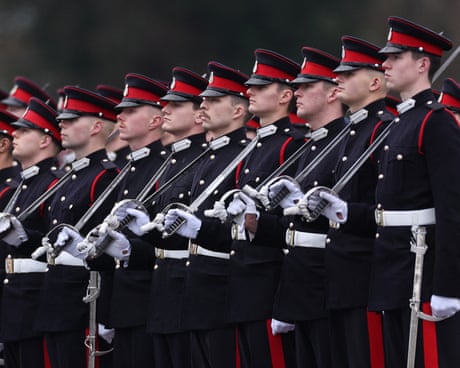
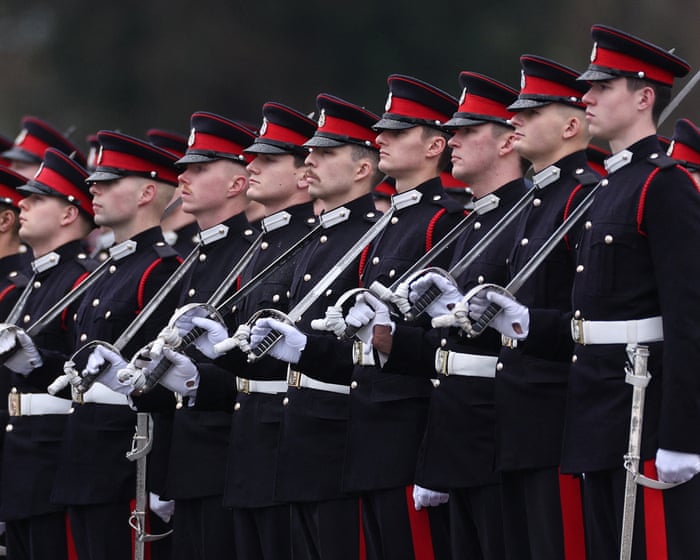
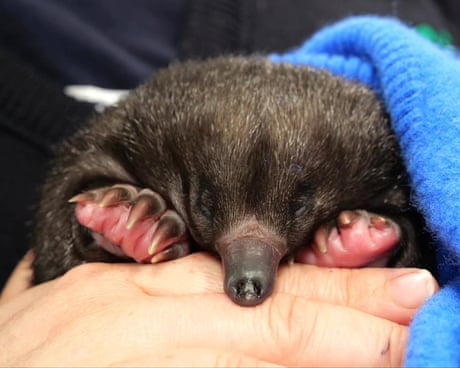
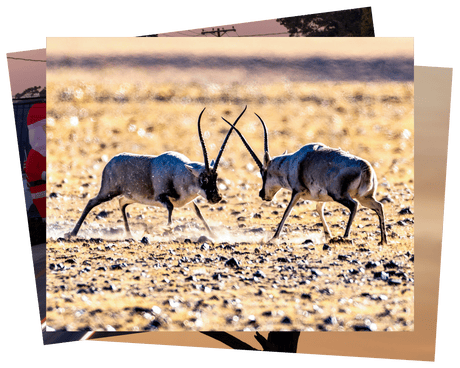
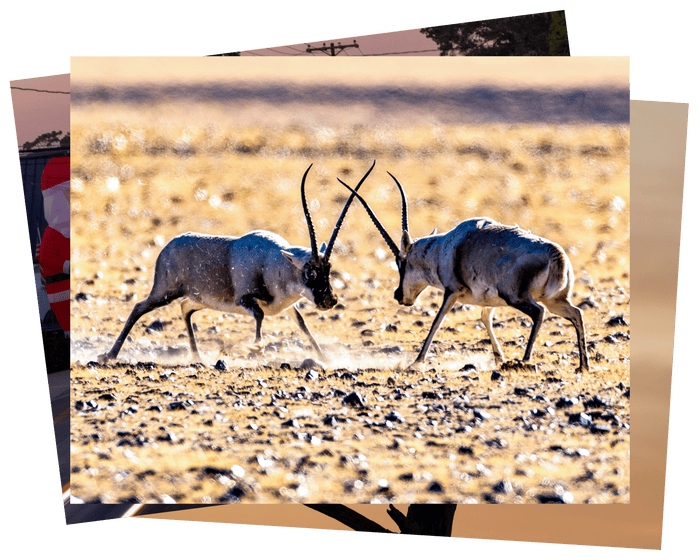
Russian airstrikes on Kyiv, floods in Indonesia, the IDF in Gaza and the Nutcracker in Nairobi: the past seven days as captured by the world’s leading photojournalists
The UK art world is finally becoming more inclusive. But greater support must be given to the organisations that enable disabled artists to flourish
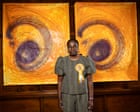
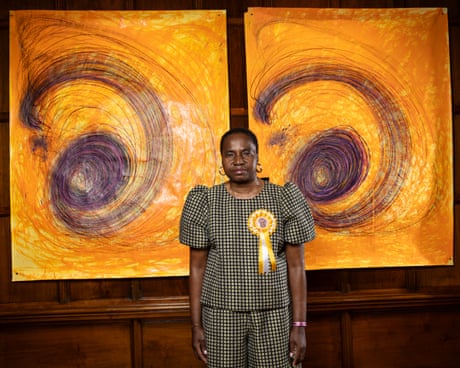
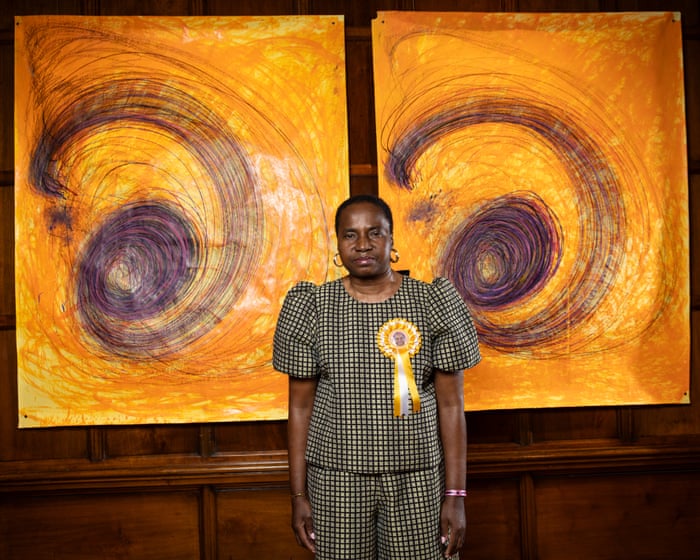
The Turner prize is no stranger to sparking debate or pushing boundaries. This year it has achieved both. For the first time, an artist with learning disabilities has won. Glasgow-born Nnena Kalu took the award for her colourful, cocoon-like sculptures made from VHS tape, clingfilm and other abandoned materials, along with her large swirling vortex drawings. Kalu is autistic, with limited verbal communication. In an acceptance speech on her behalf, Kalu’s facilitator, Charlotte Hollinshead, said that “a very stubborn glass ceiling” had been broken.
Kalu’s win is a high-profile symbol of a shift towards greater inclusivity that has been happening in the UK arts world over the past five years. Last month, Beyond the Visual opened at the Henry Moore Institute, Leeds, in which everything is curated or created by blind and partially sighted artists. The exhibits range from Moore sculptures (which visitors are encouraged to touch) to David Johnson’s 10,000 stone-plaster digestive biscuits stamped with braille. Design and Disability at the V&A South Kensington is showcasing the ways in which disabled, deaf and neurodivergent people have shaped culture from the 1940s to now.
Do you have an opinion on the issues raised in this article? If you would like to submit a response of up to 300 words by email to be considered for publication in our letters section, please click here.
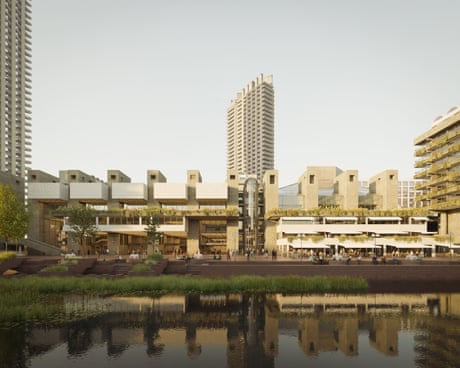
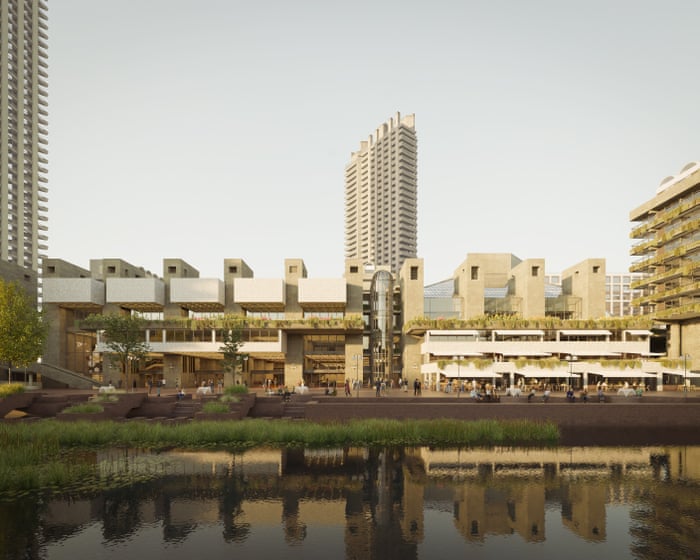
The brutalist arts-and-towers complex, where even great explorers get lost, is showing its age. Let’s hope the 50th anniversary upgrade is better than the ‘pointillist stippling’ tried in the 1990s
The Barbican is aptly named. From the Old French barbacane, it historically means a fortified gateway forming the outer line of defence to a city or castle. London’s Barbican marks the site of a medieval structure that would have defended an important access point. Its architecture was designed to repel. Some might argue, as they stumble out of Barbican tube station and gaze upwards, not much has changed in the interim.
The use of the word “barbican” was in decline in this country until the opening in 1982 of the Barbican Arts Centre. Taking 20 years to build, it completed the modernist megastructure of the Barbican Estate, grafted on to a huge tract of land devastated by wartime bombing. The aim was to bring life back to the City through swish new housing, energised by the presence of culture. Nonetheless, the arts centre, the elusive minotaur at the heart of the concrete labyrinth, was always farcically difficult to locate. To this day, visitors are obliged to trundle along the Ariadne’s thread of the famous yellow line, inscribed in what seemed like an act of institutional desperation, across concrete hill and dale.
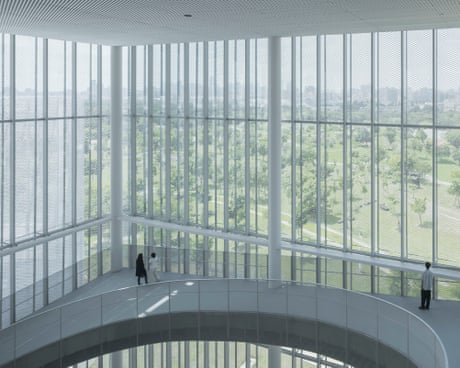
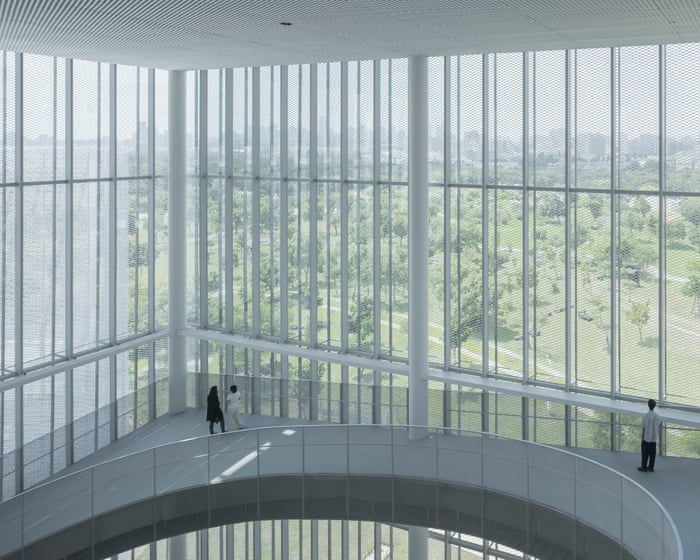
With its soaring ceilings, meandering pathways and mesh-like walls, Taichung Art Museum, designed by Sanaa, sweeps visitors from library to gallery to rooftop garden for rousing views
Walking through the brand new Taichung Art Museum in central Taiwan, directions are kind of an abstract concept. Designed by powerhouse Japanese architecture firm Sanaa, the complex is a collection of eight askew buildings, melding an art museum and municipal library, encased in silver mesh-like walls, with soaring ceilings and meandering pathways.
Past the lobby – a breezy open space that is neither inside nor out – the visitor wanders around paths and ramps, finding themselves in the library one minute and a world-class art exhibition the next. A door might suddenly step through to a skybridge over a rooftop garden, with sweeping views across Taichung’s Central Park, or into a cosy teenage reading room. Staircases float on the outside of buildings, floor levels are disparate, complementing a particular space’s purpose and vibe rather than having an overall consistency.
 Connexion