The US has turned Trofim Lysenko into a hero.
Born in 1898, Lysenko was a Ukrainian plant breeder, who in 1927 found he could make pea and grain plants develop at different rates by applying the right temperatures to their seeds. The Soviet news organ Pravda was enthusiastic, saying his discovery could make crops grow in winter, turn barren fields green, feed starving cattle and end famine.
Despite having trained as a horticulturist, Lysenko rejected the then-emerging science of genetics in favour of Lamarckism, according to which organisms can pass on inherited traits to offspring. This meshed well with the Soviet philosophy of “dialectical materialism”, which sees both the natural and human worlds as evolving not through mechanisms but environment.
Stalin took note of Lysenko’s activities and had him installed as head of key Soviet science agencies. Once in power, Lysenko dismissed scientists who opposed his views, cancelled their meetings, funded studies of discredited theories, and stocked committees with loyalists. Although Lysenko had lost his influence by the time Stalin died in 1953 – with even Pravda having turned against him – Soviet agricultural science had been destroyed.
A modern parallel
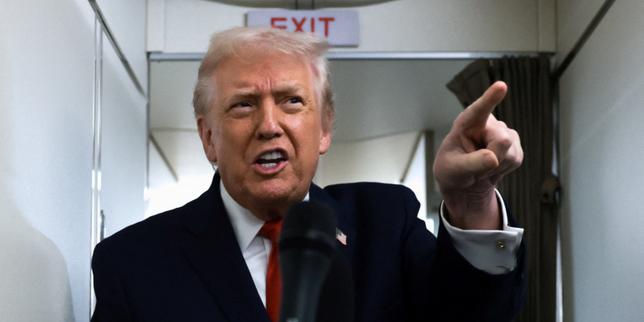
Lysenko’s views and actions have a resonance today when considering the activities of Robert F Kennedy Jr, who was appointed by Donald Trump as secretary of the US Department of Health and Human Services in February 2025. Of course, Trump has repeatedly sought to impose his own agenda on US science, with his destructive impact outlined in a detailed report published by the Union of Concerned Scientists in July 2025.
Last May Trump signed executive order 14303, “Restoring Gold Standard Science”, which blasts scientists for not acting “in the best interests of the public”. He has withdrawn the US from the World Health Organization (WHO), ordered that Federal-sponsored research fund his own priorities, redefined the hazards of global warming, and cancelled the US National Climate Assessment (NSA), which had been running since 2000.
But after Trump appointed Kennedy, the assault on science continued into US medicine, health and human services. In what might be called a philosophy of “political materialism”, Kennedy fired all 17 members of the Advisory Committee on Immunization Practices of the US Centers for Disease Control and Prevention (CDC), cancelled nearly $500m in mRNA vaccine contracts, hired a vaccine sceptic to study its connection with autism despite numerous studies that show no connection, and ordered the CDC to revise its website to reflect his own views on the cause of autism.
In his 2021 book The Real Anthony Fauci: Bill Gates, Big Pharma, and the Global War on Democracy and Public Health, Kennedy promotes not germ theory but what he calls “miasma theory”, according to which diseases are prevented by nutrition and lifestyle.
Divergent stories
Of course, there are fundamental differences between the 1930s Soviet Union and the 2020s United States. Stalin murdered and imprisoned his opponents, while the US administration only defunds and fires them. Stalin and Lysenko were not voted in, while Trump came democratically to power, with elected representatives confirming Kennedy. Kennedy has also apologized for his most inflammatory remarks, though Stalin and Lysenko never did (nor does Trump for that matter).
What’s more, Stalin’s and Lysenko’s actions were more grounded in apparent scientific realities and social vision than Trump’s or Kennedy’s. Stalin substantially built up much of the Soviet science and technology infrastructure, whose dramatic successes include launching the first Earth satellite Sputnik in 1957. Though it strains credulity to praise Stalin, his vision to expand Soviet agricultural production during a famine was at least plausible and its intention could be portrayed as humanitarian. Lysenko was a scientist, Kennedy is not.
As for Lysenko, his findings seemed to carry on those of his scientific predecessors. Experimentally, he expanded the work of Russian botanist Ivan Michurin, who bred new kinds of plants able to grow in different regions. Theoretically, his work connected not only with dialectical materialism but also with that of the French naturalist Jean-Baptiste Lamarck, who claimed that acquired traits can be inherited.
Trump and Kennedy are off-the-wall by comparison. Trump has called climate change a con job and hoax seeks to stop research that says otherwise. In 2019 he falsely stated that Hurricane Dorian was predicted to hit Alabama, then ordered the National Oceanic and Atmospheric Administration to issue a statement supporting him. Trump has said he wants the US birth rate to rise and that he will be the “fertilization president”, but later fired fertility and IVF researchers at the CDC.
As for Kennedy, he has said that COVID-19 “is targeted to attack Caucasians and Black people” and that Ashkenazi Jews and Chinese are the most immune (he disputed the remark, but it’s on video). He has also sought to retract a 2025 vaccine study from the Annals of Internal Medicine (178 1369) that directly refuted his views on autism.
The critical point
US Presidents often have pet scientific projects. Harry Truman created the National Science Foundation, Dwight D Eisenhower set up NASA, John F Kennedy started the Apollo programme, while Richard Nixon launched the Environmental Protection Agency (EPA) and the War on Cancer. But it’s one thing to support science that might promote a political agenda and another to quash science that will not.
One ought to be able to take comfort in the fact that if you fight nature, you lose – except that the rest of us lose as well. Thanks to Lysenko’s actions, the Soviet Union lost millions of tons of grain and hundreds of herds of cattle. The promise of his work evaporated and Stalin’s dreams vanished.
Lysenko, at least, was motivated by seeming scientific promise and social vision; the US has none. Trump has damaged the most important US scientific agencies, destroyed databases and eliminated the EPA’s research arm, while Kennedy has replaced health advisory committees with party loyalists.
While Kennedy may not last his term – most Trump Cabinet officials don’t – the paths he has sent science policy on surely will. For Trump and Kennedy, the policy seems to consist only of supporting pet projects. Meanwhile, cases of measles in the US have reached their highest level in three decades, the seas continue to rise and the climate is changing. It is hard to imagine how enemy agents could damage US science more effectively.
The post Can we compare Donald Trump’s health chief to Soviet science boss Trofim Lysenko? appeared first on Physics World.
 Connexion

 Le prix est excellent, mais l'offre on s'en doute n'intéressera probablement pas grand monde entre la mauvaise réputation des processeurs Arrow Lake-S, mais aussi les difficultés actuellement à monter une configuration à cause des prix démentiels des barrettes DDR5. Après, comme à notre habitude, no...