Nous avons essayé de passer en revue tout ce dont nous aurions besoin pour créer un Na'vi : la réponse, au risque d'en décevoir certains, pique un peu d'un point de vue scientifique.
Nous avons essayé de passer en revue tout ce dont nous aurions besoin pour créer un Na'vi : la réponse, au risque d'en décevoir certains, pique un peu d'un point de vue scientifique.
Mick Herron’s Slow Horses, Belinda Bauer’s obsessive world of bird egg collectors, Uketsu’s innovative Japanese detective mystery – and more
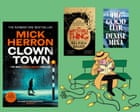
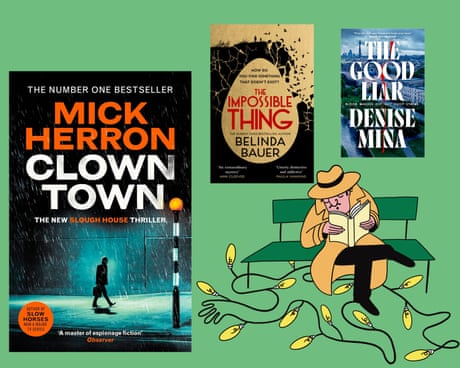
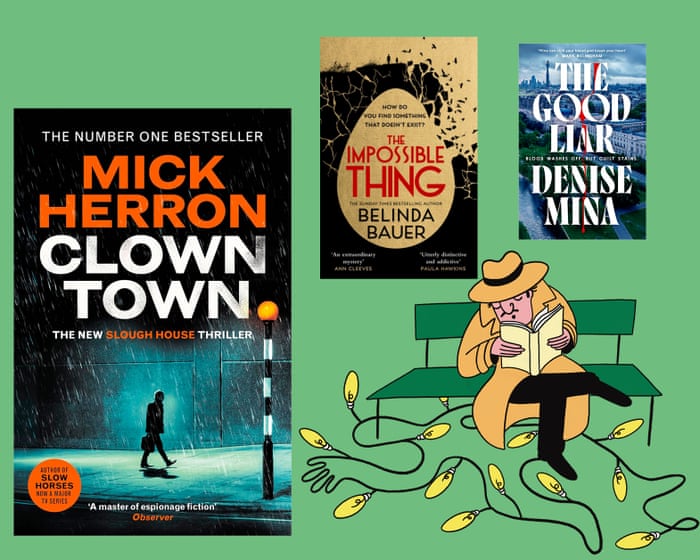
If we get the heroes we deserve, then Jackson Lamb, foul-mouthed and slovenly ringmaster of a circus of failed spies, is truly the man for our times. With Clown Town (Baskerville), the ninth book in Mick Herron’s state-of-the-nation satire/thriller mashup series, hitting the bestseller lists, and the fifth series of the Slow Horses TV adaptation streaming, this has been the author’s year. In the latest outing, Lamb and his stable of “losers, misfits and boozers” are well up to the mark as secrets about an IRA double agent threaten to come to light, exposing the seamier side of state security for a story of loyalty and betrayal.
Complicity and culpability, as well as class and professional ethics, are the subjects of Denise Mina’s The Good Liar (Harvill). When the creator of a revolutionary blood splatter probability scale realises that its flaws may have led to an unsafe conviction, she has to decide what to do about it. Tense and powerful, this is a sobering reminder of how the human element can undermine an apparently objective scientific method. The Confessions by Paul Bradley Carr (Faber) ventures into similar territory to terrifying effect. It takes place in an all-too-plausible future in which the world has become reliant on a decision-making algorithm; things go catastrophically awry when the AI tool begins to feel remorse for some of its decisions, and carnage results.
Si Charles Darwin était encore parmi nous aujourd’hui, il aurait certainement de quoi remplir ses carnets en étudiant cette monstruosité. Ses études de terrain seraient, en revanche, « légèrement » compliquées par la nature, disons, particulièrement agressive de la créature.
The return of Nobel laureate Han Kang; film-making under the Nazis; stuck in a time loop; Scandinavian thrills; and essential stories from postwar Iraq
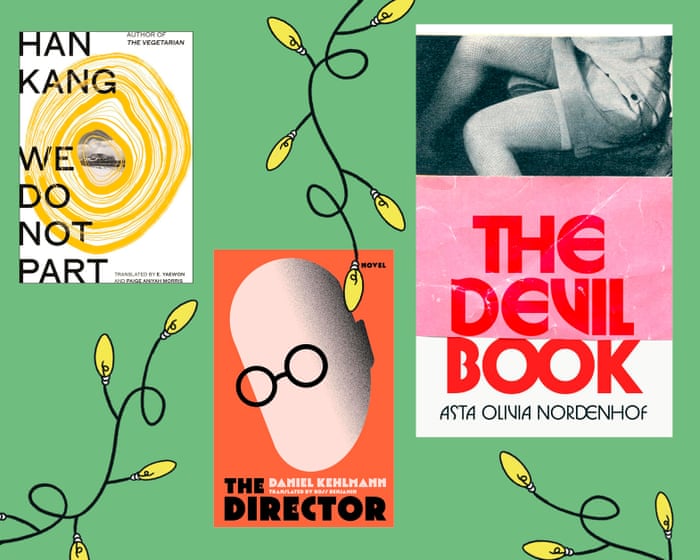
We Do Not Part Han Kang, translated by e yaewon and Paige Aniyah Morris (Hamish Hamilton)
The Korean 2024 Nobel laureate combines the strangeness of The Vegetarian and the political history in Human Acts to extraordinary effect in her latest novel. Kyungha, a writer experiencing a health crisis (“I can sense a migraine coming on like ice cracking in the distance”), agrees to look after a hospitalised friend’s pet bird. The friend, Inseon, makes films that expose historical massacres in Korea. At the centre of the book is a mesmerising sequence “between dream and reality” where Kyungha stumbles toward Inseon’s rural home, blinded by snow, then finds herself in ghostly company. As the pace slows, and physical and psychic pain meet, the story only becomes more involving. This might be Han’s best novel yet.
On the Calculation of Volume I and II Solvej Balle, translated by Barbara J Haveland (Faber)
“It is the eighteenth of November. I have got used to that thought.” Book dealer Tara Selter is stuck in time, each day a repeat of yesterday. Groundhog Day it ain’t; this is more philosophical than comic – why, she doesn’t even bet on the horses – but it’s equally arresting. Tara slowly begins to understand how she occupies space in the world, and the ways in which we allow our lives to drift. At first she tries to live normally, recreating the sense of seasons passing by travelling to warm and cold cities. By the end of volume two, with five more books to come, we get hints of cracks appearing in the hermetic world – is Balle breaking her own rules? – but it just makes us want to read on further.
 Connexion