↩ Accueil

Vue lecture

Dual Knit Band Quest 3 Mod Balances Meta With Apple

The weakest part of the Quest 3 reveals itself the moment you put it on. The stock cloth head strap is barely adequate and uncomfortable for a lot of people. Meta shipped variations of this strap for years, and each time the same thing happens. The result is a thriving aftermarket built almost entirely around fixing a problem the headset ships with.

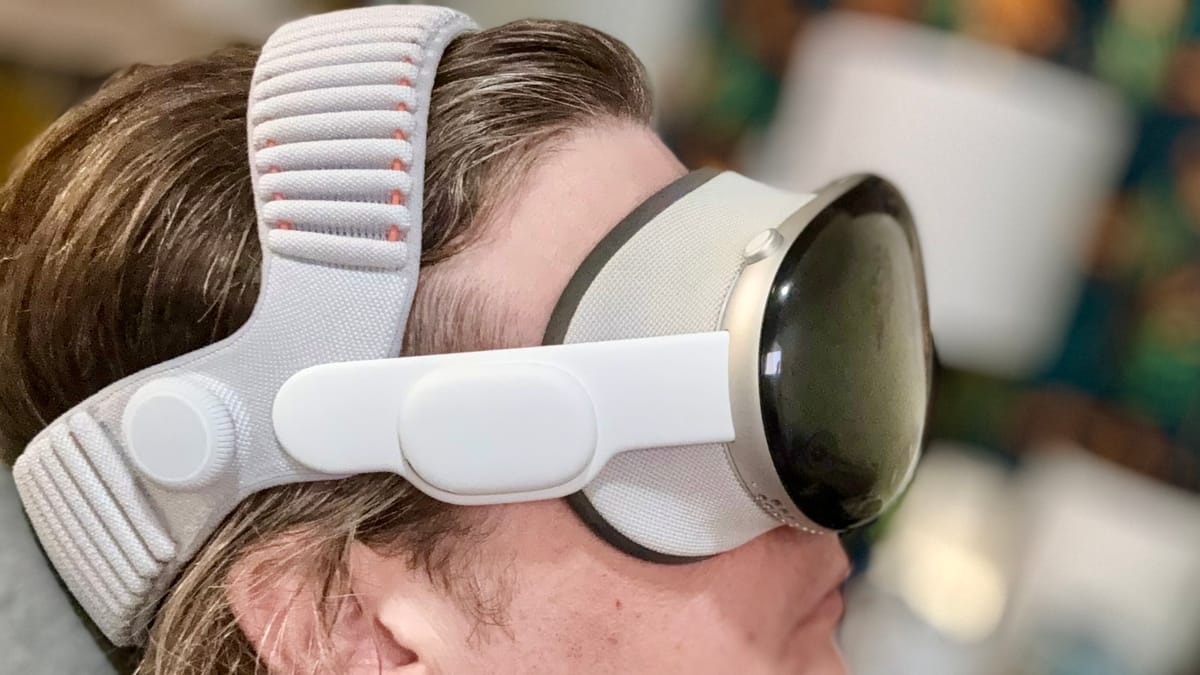
My own reference point for comfort comes from an unexpected place. My first experience with any headset was an Apple Vision Pro demo. What struck me, in addition to the visuals and the floating screens, was the Solo Knit Band. The fabric cupped the back of my head evenly, gathering just enough to distribute pressure instead of concentrating it in one spot. The headset eventually pressed down on my face due to the lack of a top strap to counteract the heavy weight of the Vision Pro, but the strap itself felt high-quality and secure in a way that made a strong impression on me at the time. I bought the Quest 3 a short time later and my experience with Meta headsets and the default strap starts there.

When Apple launched Vision Pro it came with two straps. The Solo Knit Band that appeared in nearly every promotional image as well as a second, bulkier, strap with a cross strap over the top of the head that actually supported the headset’s weight. Apple rarely showed that second strap in marketing.

Apple course corrected with the later introduction of the Dual Knit Band alongside the second-generation M5-powered Vision Pro. Each M5 headset now ships just with the Dual Knit Band.

Apple initially prioritized appearance and ended up with a headset sitting too heavily on the user’s face. Adding proper top support was a necessary fix.

So when I started hearing stories of people adapting Apple’s Solo and Dual Knit Bands for use on the Quest 3, I paid attention. The idea of pairing Apple’s strap comfort with the Quest headset made sense immediately. I wanted to see whether I could recreate what I remembered from that first demo using hardware I already owned.

The solution turned out to be relatively straightforward. A well-regarded Etsy seller offers 3D-printed side plates designed specifically to mount Apple’s knit bands onto the Quest 3. After a short exchange to confirm fit and compatibility, I placed the order, which arrived in days. Apple took longer. The Dual Knit Band was backordered for nearly a month.
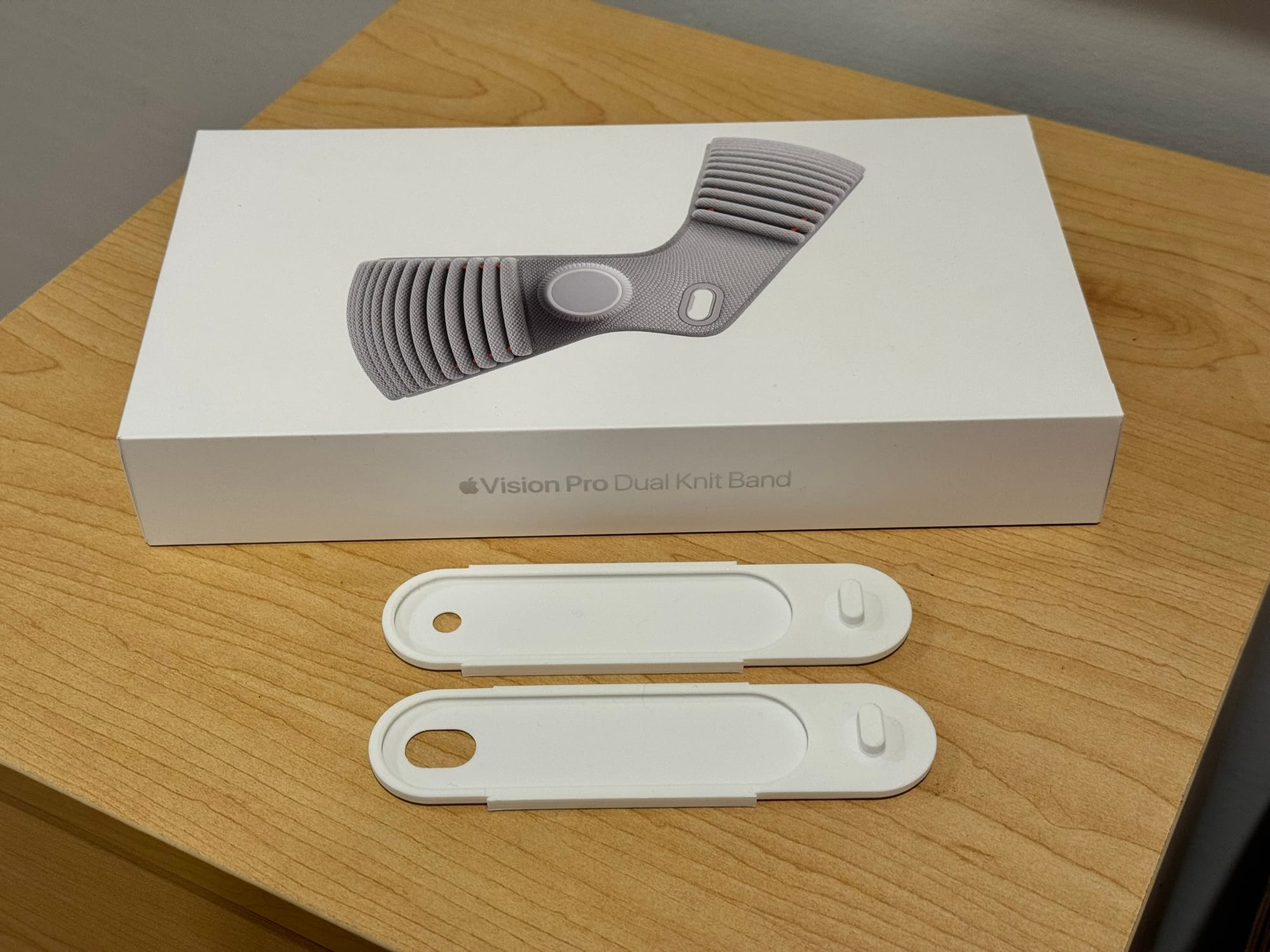
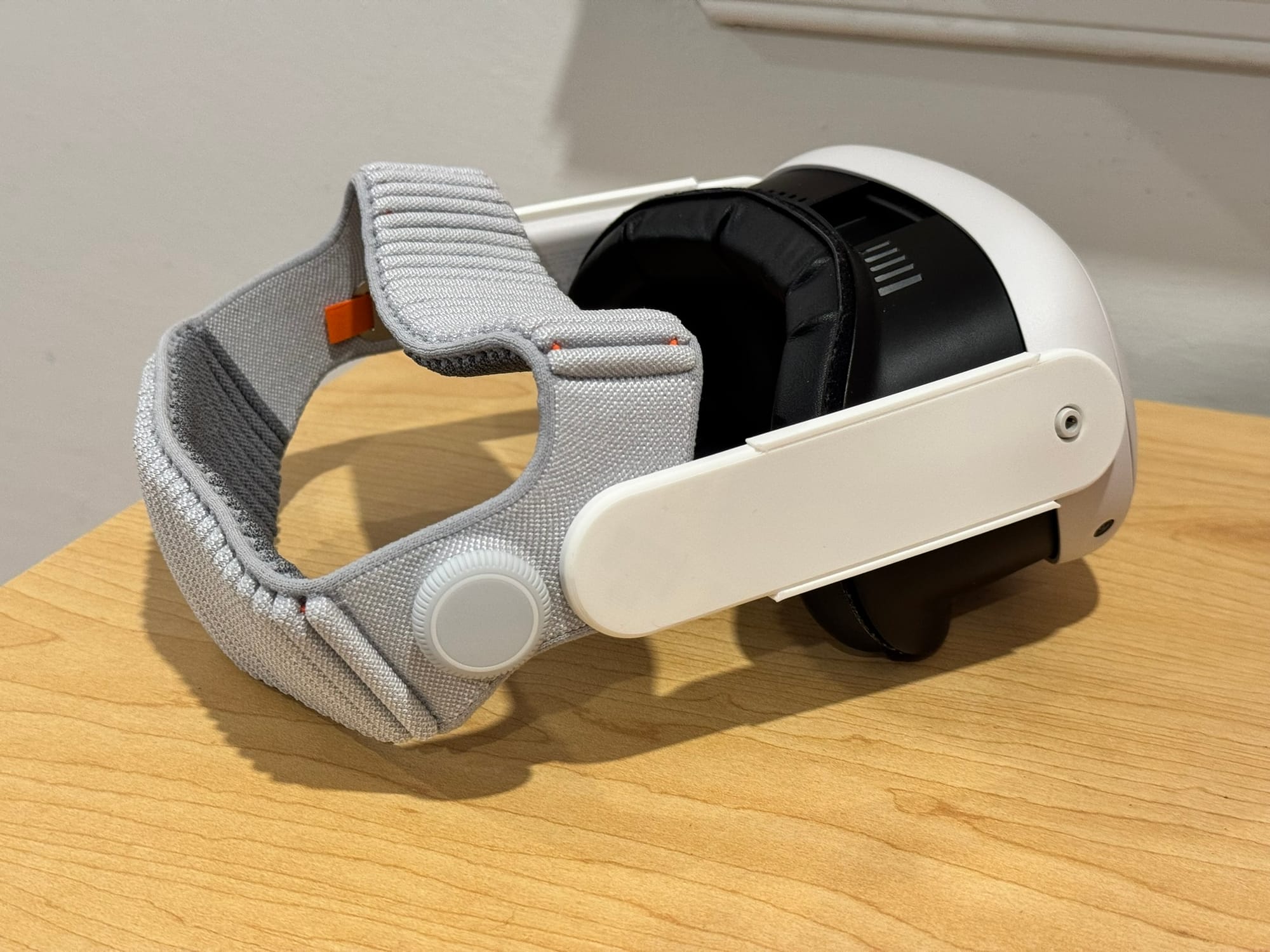
Once everything arrived, I assembled what looked like a mismatched experiment. (Editor’s Note: From FrankenQuest to Dual Knit Quest) The effect was obvious right away. Even before putting the headset on, you can feel the tungsten weights built into the rear of the Dual Knit Band doing real work as a counterbalance. The balance of the headset becomes evident the moment you pick it up.

Wearing it confirmed what I was hoping for. This is easily the most comfortable strap setup I have used on the Quest 3. The same fabric gathering and cupping I remembered from Vision Pro is there, but now the top strap keeps the headset locked in place. It does not slide forward. It does not sag. It stays where you set it.

The adjustment system is also very Apple. A single rear dial, reminiscent of the Digital Crown on the Apple Watch, controls both straps. Pull it out and twist to adjust the top strap. Push it in and twist to tighten the rear. You do not think about it after the first use. It works the way it should. The result is a Quest 3 that finally feels as comfortable as it should have been from the start.

0:00
/0:41

This setup vastly improves how I use the Quest 3 day to day. I often use it lying down for meditation, watching videos, or for reading on the web. In other straps, pressure points show up quickly and in some an added rear hard band makes it uncomfortable to lay your head down. The Dual Knit Band avoids that entirely. The weight stays evenly distributed, and the headset remains comfortable even during longer sessions. This article was written entirely on my Quest 3 using the Dual Knit Band reclining on my bed.

At $99 plus the pieces from Etsy, the Dual Knit Band for Quest 3 is pricey compared with many other solutions, but the quality of the materials and added comfort feels like value for the money. I highly recommend this solution to add a little Apple design magic to your Meta Quest 3 and gain some serious comfort.

Apple Vision Pro Dual Knit Band First Impressions: Better Balance
Hands-on first impressions with the Dual Knit Band for Apple Vision Pro.
UploadVRIan Hamilton

  •  

Titanic: Echoes From The Past Is A Memorable Free-Roam VR Experience In New York

A free-roam immersive VR installation in New York City explores the wreck of the RMS Titanic in 1912.

Titanic: Echoes From The Past is from Eclipso, a company focused on large-scale location-based experiences. The experience lasts over half an hour as it places guests in walk-around virtual reality aboard a modern ocean research vessel investigating what remains of the infamous sinking in the North Atlantic in April 1912.

The Titanic Experience

After a brief narrative setup establishing guests as explorers aboard a research vessel, the experience begins with a 3,800 meter descent to the Titanic wreck site alongside a deep-sea submersible. The mangled remains of the ship are scattered across the ocean floor, immediately setting a somber tone. From there, the experience transitions into a dramatized retelling of the ship’s ill-fated maiden voyage, following the fictionalized perspective of an actual passenger.

VR’s ability to convey scale is on full display inside the engine room. The ship’s massive steam-powered machinery towers overhead, with enormous rotating components working in unison to propel the vessel forward. Standing beneath them, it becomes easy to grasp the raw industrial power required to move a ship of this size across the Atlantic.

After leaving the engine room, guests step out onto the boat deck, with the ocean stretching out in every direction. This is one of the first moments where the size of the ship really lands. There is room to walk, pause, and look around, and the openness of the deck contrasts sharply with the enclosed spaces below.

Captain Edward Smith is introduced shortly thereafter, and guests are free to walk the deck alongside him. Nothing feels rushed. The experience allows time to explore at your own pace, as well as interact with certain items in each scene. A brief stop at the ship’s gymnasium offers a quieter moment, providing a glimpse into daily life aboard Titanic before everything changed.

The experience then moves to the Grand Staircase, one of the most recognizable locations on the ship. Standing beneath the glass and wrought iron dome, the scale is striking. Characters move through the space at full human scale, carrying on conversations you can listen in on as you pass. The scene lets the environment and its occupants do the storytelling.

The penultimate sequence takes place on the bridge during the moments leading up to the collision. Guests are close enough to watch the iceberg slide past the ship, its size hard to ignore as it looms nearby. After that, you're given one last look at the ship as it looked before setting to sea.

Eclipso's location on West 57th Street in Manhattan. Photo: Craig Storm

The Technology of the Experience

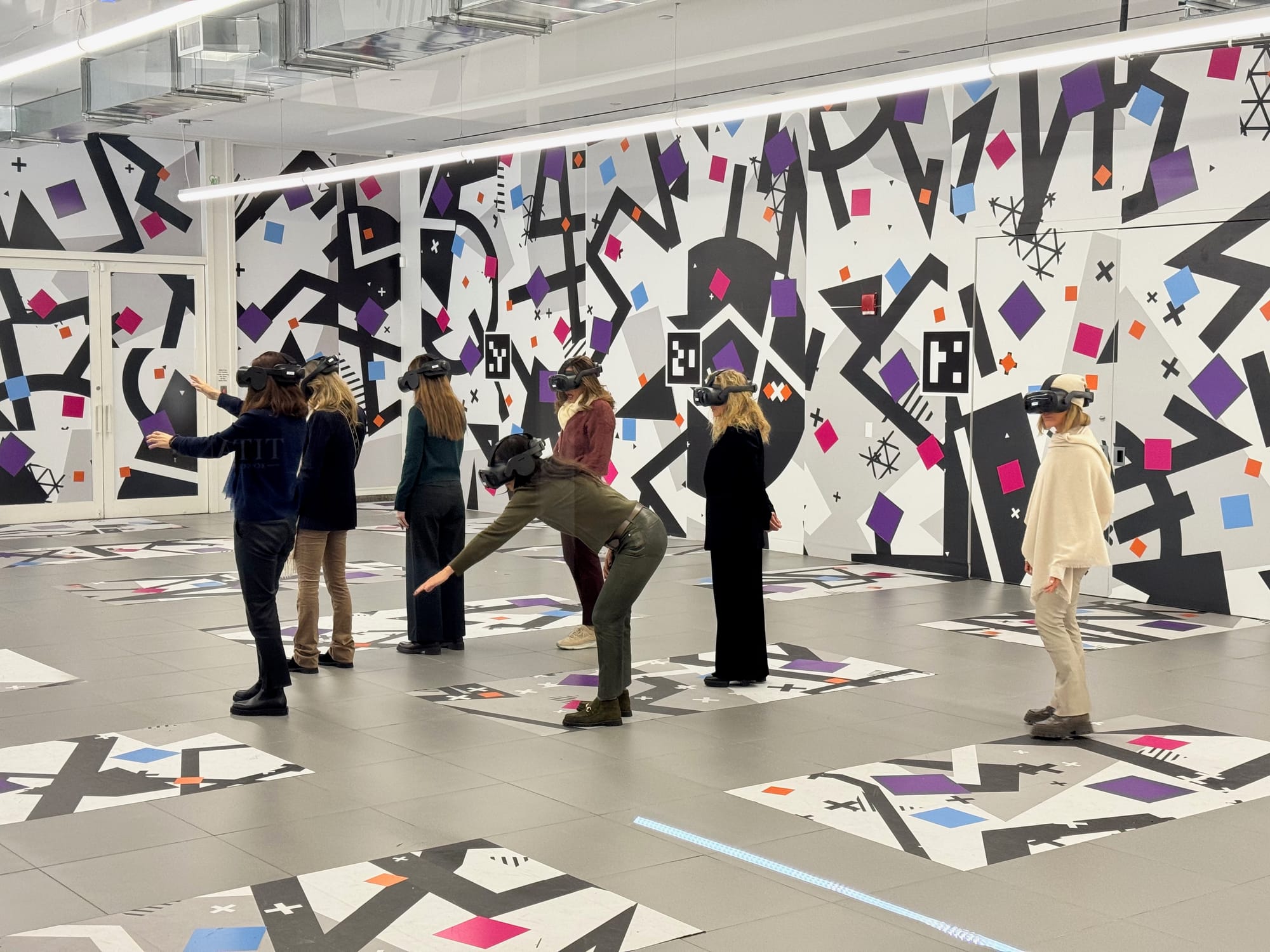
Eclipso’s New York City location occupies a 10,000 square foot space on the west side of Manhattan. Guests arrive and are staged in a hallway that provides background information on Titanic before entering the experience. When ready, they are fitted with a headset by an Eclipso staff member.

The facility uses HTC Vive Focus 3 standalone VR headsets. Each headset is paired with plastic ear coverings that help direct audio toward the ears while also reducing ambient noise from other guests. The result is a more focused audio experience without fully isolating participants from their surroundings.

What stands out immediately is how simple and friction-free the setup process is. Guests are not required to wear body trackers, attach external sensors, or strap on a PC backpack. Within roughly a minute of putting on the headset, participants are free to begin exploring. According to staff on site, the majority of guests at this location have never used a VR headset before, making ease of use a clear priority.

During a scene where guests are transported downward through an opening in the wreck, a holographic grid appears beneath them, grounding the visuals and helping reduce potential motion discomfort. It is a touch that reflects thoughtful design choices aimed at keeping the experience comfortable without breaking immersion.

The Shared Experience

The combination of simple, effective VR hardware and thoughtfully designed software creates a totally compelling experience. As I moved through the various scenes, I found myself deliberately pushing toward the edges of the physical space, trying to trigger the virtual boundary system. More often than not I was able to walk freely without interruption. I only encountered the boundary wall in a few cases and, had I not been actively testing the limits of the space, I likely would not have noticed the boundaries at all. The experience is so freeing many might try to test those limits.

Other participants appear as ghost-like outlined human forms. I was surprised by how much interaction naturally occurred between us. Because the space is so large, we were often spread out, focused on different details within the same scene. More than once, we called out to each other to come take a look at something nearby. The simple white outline made it easy to understand where others were positioned without introducing a complex avatar that might have pulled attention away from the environment itself.

Impact & Memories

There's an open seating area with a large window to look into most of the VR space for people who might not be interested in experiencing it themselves. There are no monitors, though, showing into VR, so it's possible some fear of missing out will set in for anybody seeing their group walk out into the space in their headsets.

After completing the experience, I spent some time watching other groups as they finished their sessions. I could tell one group had reached the staircase scene because they started dancing together. Watching that kind of immersion engaging with a historical event that occurred more than a century ago reinforced immersive VR's use as a powerful tool for learning, even as its entertainment value remains obvious. In a shared, guided setting like this, immersive technology can make history feel more immediate and memorable in ways traditional museum exhibits often struggle to match.

An Eclipso staff member told me they've had success with schools booking class trips to the facility, and the response has been positive from students and educators alike. Observing reactions firsthand, it's easy to understand why. The experience demonstrates how immersive VR can complement existing approaches to teaching history by creating moments that students can experience with a sense of scale and presence, and that they are likely to remember long after they leave.

Window covering outside the Eclipso facility. Photo: Craig Storm

Final Thoughts

Titanic: Echoes From The Past lets the environment lead. The experience is guided by narration leaving room to look around, walk around, and absorb the scale of each location. Standing beneath the engines or walking the deck works because VR used in this way gives you the time and perspective to take those moments in.

The experience is also exceedingly easy to get into and that really matters. Setup is quick, the headset never becomes a distraction, and nothing about the process feels intimidating. Watching first-time VR users move comfortably through the space makes it clear ease-of-use was a real priority here, and not an afterthought.

By the time it was over, I felt like I had actually spent time in a place rather than simply having observed a retelling. The immersion worked. Leaving the location in Manhattan, I realized I had visited a ship and taken in its scale and atmosphere without the romance of James Cameron's direction or the historical characterizations of people like the "Unsinkable" Molly Brown. VR's scale and the immense freedom to walk openly across the Titanic gave me a deep and lasting sense of having been aboard the ship in a place it never reached.

Eclipso operates a network of locations in other major cities with additional experiences planned for New York and elsewhere. Tickets to Titanic: Echoes From The Past start at $31 per person at writing time with quotes upon request for group outings.

  •