It’s not what we can or cannot say that matters – rather, it’s whether what we say can get any visibility at all under the US-specific algorithm
We tend to think of censorship as the direct suppression of speech. We conjure images of mouths taped shut, courts seizing books and films, and journalists or activists thrown in jail to silence their voices. But what if, in a digital era governed by invisible yet highly consequential algorithms, censorship no longer revolved around the ability to speak, but rather around the visibility of content, its effective “reach”?
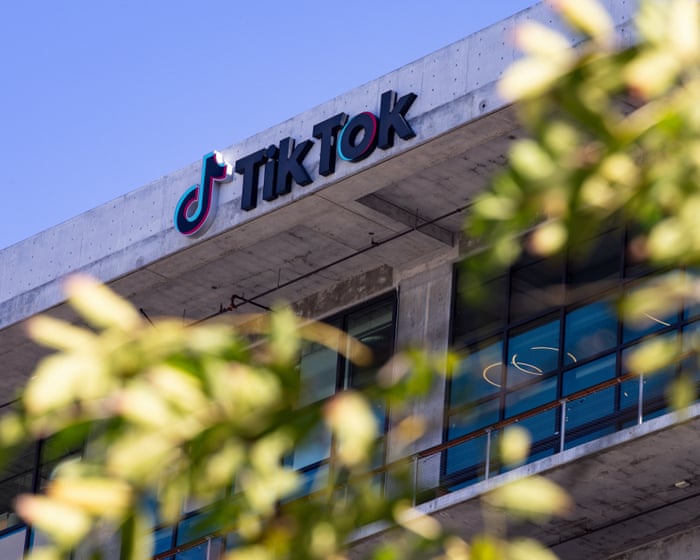
The launch of TikTok’s new US-specific algorithm underscores the urgency of this risk. This week, control over the platform’s operations has shifted to the TikTok USDS joint venture led by a consortium of investors that includes US big tech firms such as cloud-computing company Oracle, with the Chinese parent company ByteDance retaining a 19.9% stake. This arrangement is presented as a means of complying with US legislation introduced under former president Joe Biden, with the aim of protecting user data and preventing political interference from China. Yet many of TikTok’s 200 million US-based users now fear that Donald Trump and his allies may use algorithmic control to do precisely what China was accused of doing: interfering with political discussion by suppressing critical voices.
Paolo Gerbaudo is a senior researcher at the faculty of political science and sociology of Complutense University in Madrid and the author of The Great Recoil
Depuis la fin janvier 2026, plusieurs internautes ont signalé sur X la présence d’une campagne publicitaire pour le pendentif d’IA de friend.com dans le métro parisien. Déjà vivement critiqué aux États-Unis, l’objet fait désormais polémique en France.
In the first part of our series on digital politics, we look at how centrists have lost ground fighting disinformation – when the real battle is over emotion and attention
Robert Topinka is a reader in digital media and rhetoric at Birkbeck, University of London
There’s a strange tendency to describe social media as something other people use – those young people on TikTok, that conspiratorial uncle on Facebook, the rightwing trolls on X. In truth, we’re all online now. The number of global social media users surpassed 5 billion in 2024. To put that into perspective there are 8 billion people on the planet.
The internet has totally transformed the ways in which we communicate and share information. First the internet came for print. As free online content began outcompeting subscription newspapers, publishers briefly found new audiences on Facebook, only to see referral traffic plummet after the platform began suppressing posts with external links.
Robert Topinka is a reader in digital media and rhetoric at Birkbeck, University of London
La question de l’impact des réseaux sociaux sur la santé mentale des adolescents continue d’agiter les tribunaux américains. Depuis plusieurs années, les plateformes et les pouvoirs publics s’affrontent autour d’accusations de mécanismes jugés trop engageants, voire nocifs pour les plus jeunes. TikTok vient justement de faire un pas de côté en choisissant la voie du […]
La branche américaine de TikTok vient d'être vendue à des investisseurs américains. Ils ont modifié la politique de confidentialité de l'application, faisant fuir les utilisateurs par milliers.
Khaby Lame vend son entreprise dans le cadre d’un accord à 975 millions de dollars. Le roi de TikTok autorise une nouvelle entité à monétiser son influence mondiale, et à créer un double numérique généré par l’intelligence artificielle. Le deal pourrait générer 4 milliards de dollars de revenus par an, selon un communiqué.
À peine la création de la coentreprise TikTok USDS officialisée, avec la participation remarquée de Xavier Niel, la plateforme a modifié sa politique de confidentialité pour ses utilisateurs américains. Un changement rapide, intervenu le jour même de l’annonce, qui relance les débats autour de la collecte de données par le réseau social… Une collecte de […]
Après plusieurs années de tensions politiques et réglementaires, TikTok a trouvé une issue pour maintenir ses activités aux États-Unis. L’application, utilisée par plus de 200 millions d’américains, devait répondre aux exigences de Washington en matière de sécurité nationale et de protection des données. C’est pour cette raison que ByteDance, sa maison-mère chinoise, avait annoncé la […]
L’activité américaine de TikTok est cédée à une nouvelle coentreprise détenue majoritairement par des intérêts américains. Cette coentreprise va revoir l’algorithme de recommandation et mettre en place de nouvelles mesures pour protéger les données d’utilisateurs.