↩ Accueil

Vue lecture

Apple Plans to Expand iPhone Driver's Licenses to These 7 U.S. States

In select U.S. states, residents can add their driver's license or state ID to the Apple Wallet app on the iPhone and Apple Watch, and then use it to display proof of identity or age at select airports and businesses, and in select apps.


The feature is currently available in 13 U.S. states and Puerto Rico, and it is expected to launch in at least seven more in the future.

To set up the feature, open the Wallet app and tap on the plus sign in the top-right corner. Next, select Driver's License and ID Cards and follow the steps.

Supported States


The following 13 states offer driver's licenses in the Wallet app:The feature is also available in Puerto Rico.

Future States


Apple and local DMV offices have announced that the following U.S. states have signed on to adopt the feature, but no timeframes were disclosed:
  • Connecticut

  • Kentucky

  • Mississippi

  • Oklahoma

  • Utah

  • Arkansas

  • Virginia

Participating Airports


Apple Wallet IDs are accepted at TSA checkpoints in more than 250 airports in the U.S., for domestic travel. Given that Apple Wallet IDs are not accepted by law enforcement, and lack many other use cases, carrying a physical ID is still necessary.

Here are just some of the airports that offer the feature — there are hundreds of others:
  • Baltimore/Washington International Thurgood Marshall Airport (BWI)

  • Ronald Reagan Washington National Airport (DCA)

  • Washington Dulles International Airport (IAD)

  • Phoenix Sky Harbor International Airport (PHX)

  • Denver International Airport (DEN)

  • Hartsfield–Jackson Atlanta International Airport (ATL)

  • Cincinnati/Northern Kentucky Airport (CVG)

  • John Glenn Columbus International Airport (CMH)

  • San Francisco International Airport (SFO)

  • San Jose Mineta International Airport (SJC)

  • Los Angeles International (LAX)

  • Daniel K. Inouye International Airport (HNL)

  • Des Moines International Airport (DSM)

  • Eastern Iowa Airport (CID)

  • Albuquerque International Sunport (ABQ)

  • Lea County Regional Airport (HOB)

  • Luis Munoz Marin International Airport (SJU)

  • Billings Logan International Airport (BIL)

  • Bozeman Yellowstone International Airport (BZN)

  • Great Falls International Airport (GTF)

  • Missoula International Airport (MSO)

  • Chicago O'Hare International Airport (ORD)

  • Chicago Midway International Airport (MDW)

  • St. Louis Lambert International Airport (STL)

  • Richmond International Airport (RIC)

  • Norfolk International Airport (ORF)

  • Roanoke-Blacksburg Regional Airport (ROA)

  • Newport News-Williamsburg International Airport (PHF)
Travelers should refer to TSA signage to confirm availability of the feature.

Digital Passport


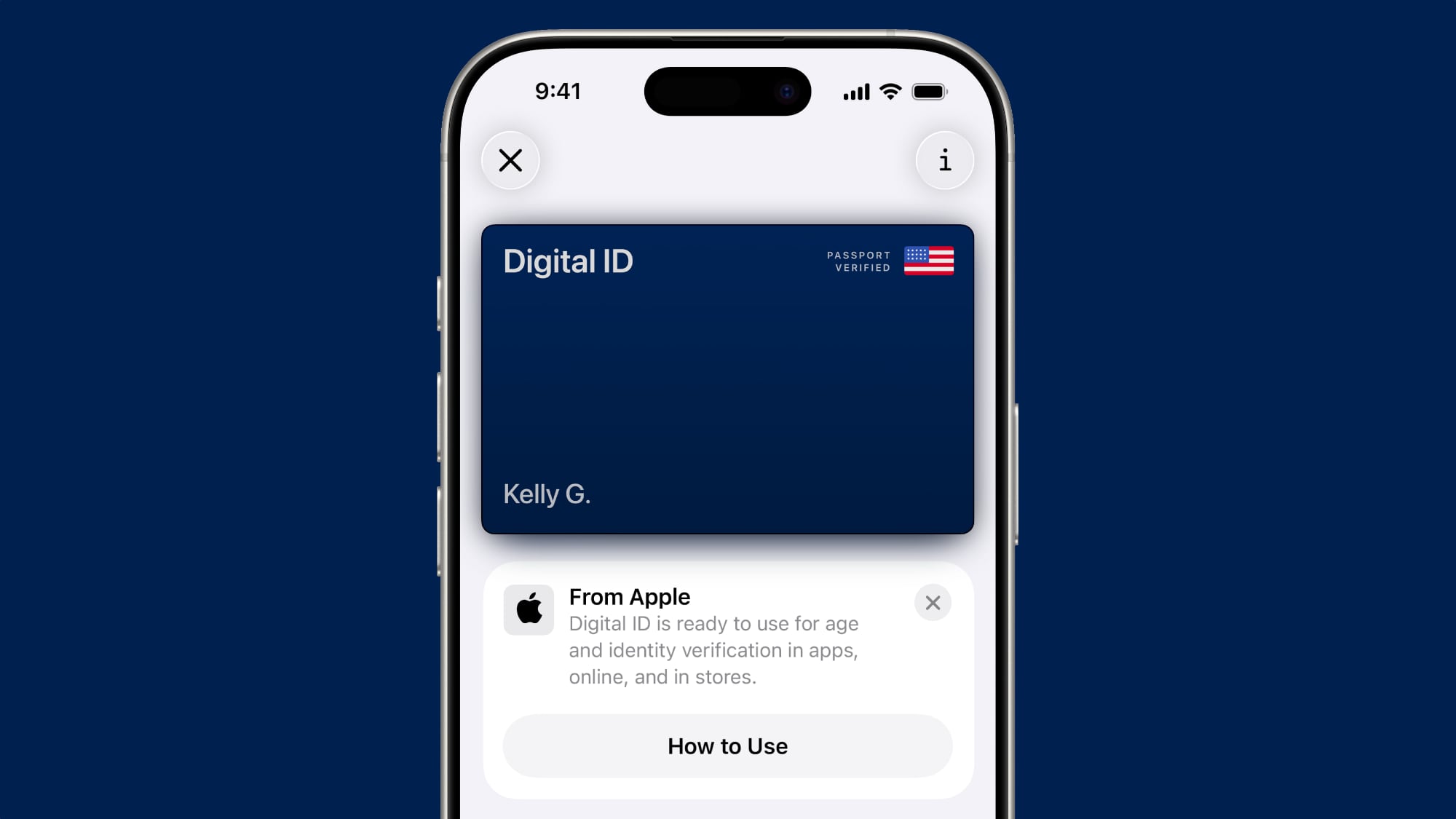
If you live in a state that does not yet offer Apple Wallet IDs, you can now create a Digital ID based on your U.S. passport, and present it at the same participating TSA checkpoints, for age and identity verification purposes during domestic travel. It is not a replacement for a physical passport, and it cannot be used for international travel.
This article, "Apple Plans to Expand iPhone Driver's Licenses to These 7 U.S. States" first appeared on MacRumors.com

Discuss this article in our forums
  •  

Apple Discontinued These 25 Products This Year

With the end of 2025 near, the time has come to look back at the devices and accessories that Apple discontinued throughout the year.


Most of the products that were discontinued this year were simply replaced by a new model with an updated chip. However, the iPhone SE line was entirely discontinued when the iPhone 16e launched, and the iPhone Plus line is being phased out.

Below, we have listed 25 products that were discontinued by Apple this year.

iPhones


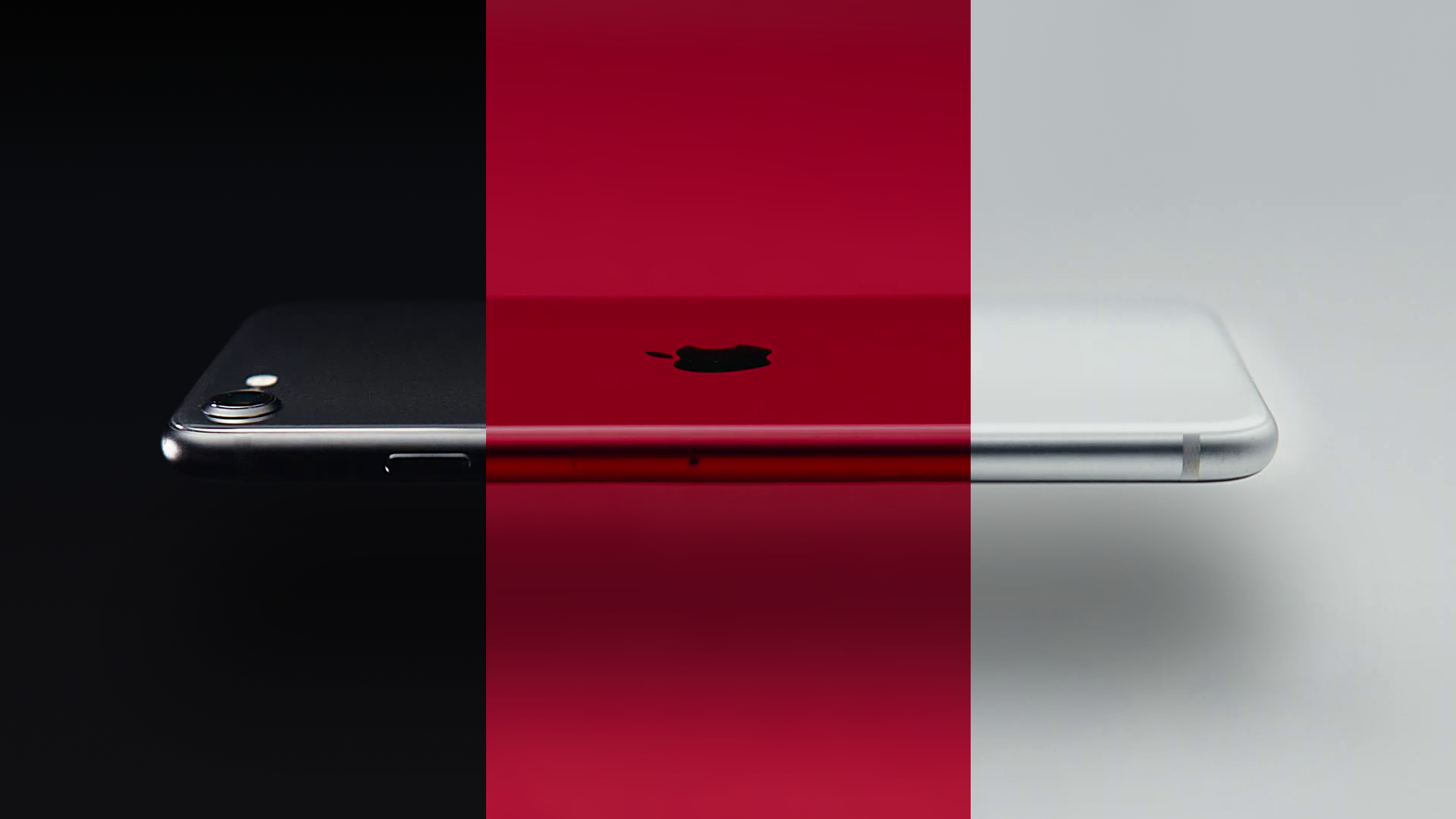
Apple discontinued the third-generation iPhone SE in February, after introducing the iPhone 16e. As a result, Apple no longer sells any iPhone models with a Home button, Touch ID, LCD screen, a sub-6-inch screen size, or Lightning.

The original iPhone SE was released in March 2016. That model's design was largely based on the iPhone 5s, with key specs including a 4-inch display, a Touch ID home button, and an aluminum and glass frame with chamfered edges. However, the device was powered by a newer A9 chip from the iPhone 6s and iPhone 6s Plus.

Apple went on to release two more iPhone SE models in 2020 and 2022, respectively, with those devices having a similar design as the iPhone 8.

Meanwhile, the iPhone Plus has effectively been replaced by the ultra-thin iPhone Air in Apple's smartphone lineup. Both the iPhone 14 Plus and iPhone 15 Plus were discontinued this year, and it is only a matter of time before the iPhone 16 Plus is axed too. Apple is not expected to release another Plus model in the foreseeable future.

Here are all of the iPhone models that were discontinued this year:
  • iPhone 16 Pro Max (succeeded by iPhone 17 Pro Max)

  • iPhone 16 Pro (succeeded by iPhone 17 Pro)

  • iPhone 15 Plus

  • iPhone 15

  • iPhone 14 Plus

  • iPhone 14

  • iPhone SE (succeeded by iPhone 16e)

iPads


It was a spec-bump year for the iPad lineup, with the iPad Pro, iPad Air, and entry-level iPad all receiving faster chips, but no major design changes.

Here are all of the iPad models that were discontinued this year:

  • iPad Pro with M4 chip (updated with M5 chip)

  • iPad Air with M2 chip (updated with M3 chip)

  • iPad 10 (updated with A16 chip)

Apple Watches


Apple Watch Series 11 is a very minor upgrade over the now-discontinued Series 10, but the Apple Watch Ultra 3 and Apple Watch SE 3 offer some more meaningful changes. None of the latest Apple Watch models received a new chip, though.

Here are all of the Apple Watch models that were discontinued this year:

  • Apple Watch Ultra 2 (succeeded by Apple Watch Ultra 3)

  • Apple Watch Series 10 (succeeded by Apple Watch Series 11)

  • Apple Watch SE 2 (succeeded by Apple Watch SE 3)

Macs


Here are all of the Mac models that were discontinued this year:

  • Mac Studio with M2 Max and M2 Ultra chips (updated with M4 Max and M3 Ultra chips)

  • 14-inch MacBook Pro with M4 chip (updated with M5 chip)

  • 13-inch and 15-inch MacBook Air with M3 chip (updated with M4 chip)

  • 13-inch MacBook Air with M2 chip

Other


Here are other Apple products and accessories that were discontinued this year:* In the U.S., U.K., Canada, Japan, and select other countries only.

Did we miss anything? Let us know in the comments section.
This article, "Apple Discontinued These 25 Products This Year" first appeared on MacRumors.com

Discuss this article in our forums

  •  

iPhone 18 Pro Launching Next Year With These 12 New Features

While the iPhone 18 Pro and iPhone 18 Pro Max are not expected to launch for another nine months, there are already plenty of rumors about the devices.


Below, we have recapped 12 features rumored for the iPhone 18 Pro models.

  1. The same overall design is expected, with 6.3-inch and 6.9-inch display sizes, and a "plateau" housing three rear cameras

  2. Under-screen Face ID

  3. Front camera in top-left corner of the screen

  4. Variable aperture for at least one rear camera

  5. A20 Pro chip manufactured with TSMC's 2nm process and new packaging technology

  6. A simplified Camera Control button with no swipe gestures

  7. Design changes to the rear Ceramic Shield for MagSafe charging, potentially including a more frosted glass appearance

  8. Apple-designed C1X or C2 modem for 5G/LTE cellular connectivity

  9. Apple-designed N1 chip or newer for Wi-Fi 7, Bluetooth 6, and Thread

  10. Web browsing via satellite

  11. New color options under consideration: burgundy, brown, and purple

  12. iPhone 18 Pro Max may be slightly thicker than the iPhone 17 Pro Max, perhaps to accommodate a larger battery
Apple will likely release the iPhone 18 Pro models in September 2026. Bookmark our iPhone 18 roundup to stay on top of future rumors.
Related Roundup: iPhone 18
Related Forum: iPhone

This article, "iPhone 18 Pro Launching Next Year With These 12 New Features" first appeared on MacRumors.com

Discuss this article in our forums
  •  

Apple to Allow Alternative App Stores and More on iOS in Brazil by April

Due to regulatory action, Apple has agreed to allow alternative app stores, third-party payment systems for in-app purchases, and in-app links to external offers on iOS in Brazil, according to legal news website MLex and Brazilian blog Tecnoblog.


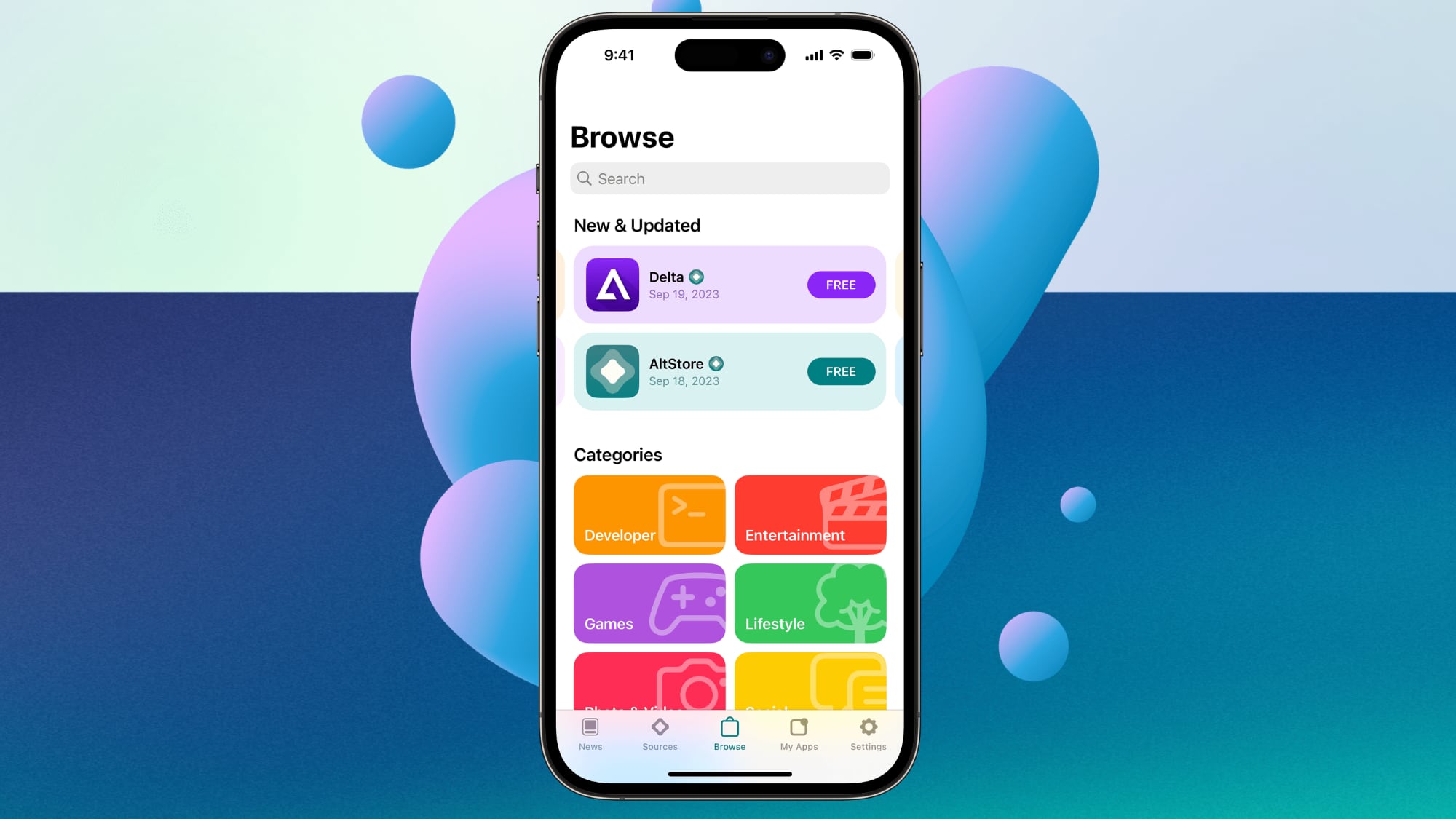
This means that iPhone users in Brazil would gain access to options beyond Apple's App Store, such as the AltStore from Riley Testut and Shane Gill.

The changes must be implemented within 105 days, so Apple has until early April to roll them out. That timeframe might align with the release of iOS 26.4.

Apple has already allowed alternative app stores and/or third-party payment systems on iOS in the EU, Japan, and South Korea, and it will likely be forced to do so in the UK and Australia too, due to similar regulations across those regions.

AltStore

Apple has opposed alternative app stores due to privacy and security concerns.

"If you prefer using apps that have met all of Apple's App Review Guidelines, including Apple's standards for privacy, security, and quality, you can use the App Store," says Apple, in a support document about alternative app distribution.
Related Roundups: iOS 26, iPadOS 26
Related Forum: iOS 26

This article, "Apple to Allow Alternative App Stores and More on iOS in Brazil by April" first appeared on MacRumors.com

Discuss this article in our forums

  •  

Apple Hit With Supersized Fine in Italy Over an iPhone Privacy Feature

Italy's Competition Authority (AGCM) has imposed a €98.6 million ($116 million) fine on Apple over its App Tracking Transparency feature.


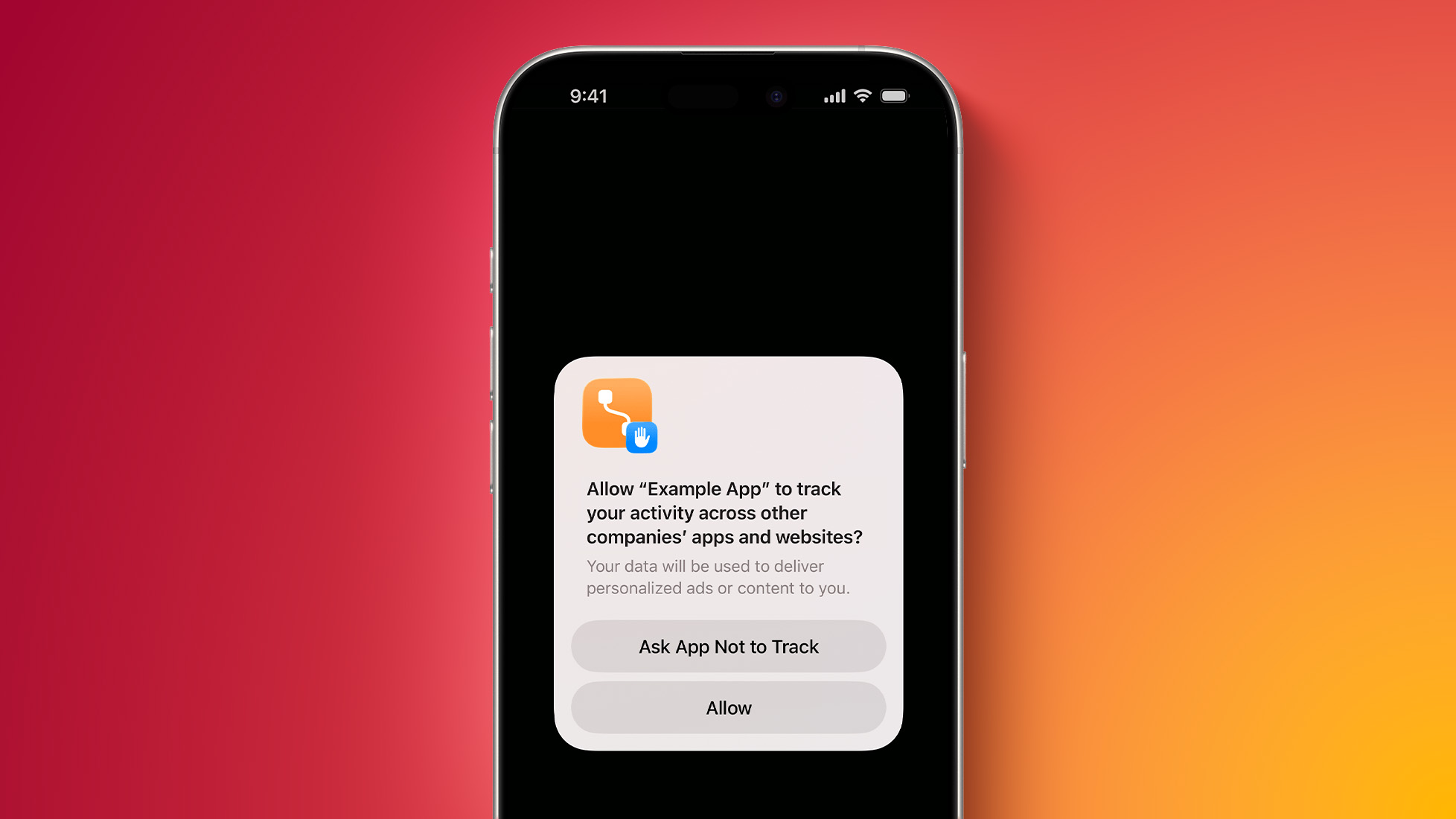
Since the release of iOS 14.5 in April 2021, Apple has required apps to ask for permission before tracking a user's activity across other apps and websites for personalized advertising, as part of a feature named App Tracking Transparency. If a user selects the "Ask App Not to Track" option, the app is unable to access the device's advertising identifier.

In a press release and executive summary today, the AGCM said the App Tracking Transparency rules are "disproportionate," and "harmful" to app developers and advertisers. Ultimately, it found that Apple abused its dominant position in the EU market.

The regulator does not take issue with Apple implementing policies that are designed to strengthen privacy and security for users, but it said the App Tracking Transparency feature is "excessively burdensome for developers."

Specifically, iPhone and iPad users in the EU are presented with both App Tracking Transparency and GDPR-related permission prompts in apps, and the AGCM found this "double consent" requirement to be harmful to app developers and advertisers.

"Apple could have achieved the same level of privacy protection for its users through means less restrictive of competition," the AGCM said. "This would have prevented the unilateral imposition of additional burdens on third-party developers, thereby avoiding the above-mentioned double consent requests for advertising purposes."

The regulator also found that the App Tracking Transparency rules appear capable of generating financial benefits for Apple, even though the feature applies to its own apps as well. The only reason that Apple apps do not show an App Tracking Transparency prompt is because Apple does not track user activity across other apps and websites.

In a statement shared with several media outlets, Apple said it will appeal the decision, and it touted the privacy benefits of App Tracking Transparency.

Earlier this year, Apple warned that it may be forced to stop offering App Tracking Transparency in the EU due to regulatory pressures in countries such as Italy, France, Germany, and Poland, and from the overarching European Commission.
This article, "Apple Hit With Supersized Fine in Italy Over an iPhone Privacy Feature" first appeared on MacRumors.com

Discuss this article in our forums
  •  

You Can No Longer Downgrade to iOS 26.1

Apple has stopped signing iOS 26.1, meaning that iPhone users can no longer downgrade to that software version via Finder on macOS or the Apple Devices app on Windows. iOS 26.2 is now the minimum version that is still signed by Apple, and the first beta of iOS 26.3 is also available to developers and public beta testers.


iOS 26.2 was released last week. The update adds a Liquid Glass slider for the Lock Screen's clock, offline lyrics in Apple Music, and much more.
Related Roundups: iOS 26, iPadOS 26
Related Forum: iOS 26

This article, "You Can No Longer Downgrade to iOS 26.1" first appeared on MacRumors.com

Discuss this article in our forums

  •  

iMac Rumor Recap: OLED Display, M5 Max, 32-Inch Model, and More

While it appears that the iMac will not be updated in 2025, rumors indicate that Apple is planning some big changes for the all-in-one desktop computer.


Below, we recap what has been rumored for the iMac over the next two to three years.

Current Model: M4 Chip


As a refresher, Apple last updated the 24-inch iMac in October 2024. Key upgrades included the M4 chip, up to 32GB of RAM, a 12-megapixel Center Stage camera, a nano-texture display option, Thunderbolt 4 ports, and new color options.

The overall design of the iMac has not changed since April 2021.

Next Model: M5 Chip


Apple will likely update the iMac with an M5 chip next year, but no other changes have been rumored yet, so expect a spec bump for now.

If the iMac receives some of the upgrades that the 14-inch MacBook Pro with the M5 chip did, the next iMac could be available with up to 4TB of storage (up from 2TB), and up to 2× faster SSD performance compared to the previous model.

iMac Pro With M5 Max Chip?


Earlier this year, Apple accidentally released a macOS kernel debug kit that contained internal product codenames, including for what appears to be an iMac with an M5 Max chip. It is unclear if the 24-inch iMac would be updated with M5 and M5 Max chips simultaneously next year, or if Apple plans to re-release a separate, higher-end iMac Pro with the M5 Max. The previous Intel-based iMac Pro was discontinued in March 2021.

32-Inch iMac?


It has been nearly four years since Apple discontinued the 27-inch iMac, as part of its move away from Intel processors. Since then, the 24-inch iMac has been Apple's only all-in-one desktop computer, with no larger model available.

In October 2023, Apple supply chain analyst Ming-Chi Kuo predicted that a higher-end 32-inch iMac with mini-LED backlighting would be released in 2025, but it appears that rumor was wrong given that the year is nearly over. Kuo has not commented on a larger iMac in a long time, so it is unclear if Apple plans to release such a product.

In November 2023, Apple announced that it had no plans to release a new version of the 27-inch iMac with an Apple silicon chip at that time. Instead, Apple recommended pairing its standalone Studio Display with a Mac Studio or Mac mini. Perhaps this was Apple ruling out a larger iMac entirely, but only time will tell, and decisions can change.

Wishful thinking: a 32-inch iMac Pro with an M5 Max chip and mini-LED backlighting.

OLED Display


South Korean publication The Elec this week reported that Apple is planning to release a 24-inch iMac with an OLED display in 2027 or 2028.

The primary benefit of OLED technology compared to the current iMac's LCD is better overall image quality, with higher contrast ratio and deeper blacks.

Like the iPad Pro, the iMac could go from LCD to mini-LED to OLED over the years.

Bookmark our iMac roundup to stay up to date with the latest rumors.
Related Roundup: iMac
Buyer's Guide: iMac (Caution)
Related Forum: iMac

This article, "iMac Rumor Recap: OLED Display, M5 Max, 32-Inch Model, and More" first appeared on MacRumors.com

Discuss this article in our forums

  •