↩ Accueil

Vue lecture

iPhone 18 Pro: Leaker Reveals Alleged Size of Smaller Dynamic Island

For now, rumors have settled on the iPhone 18 Pro and iPhone 18 Pro Max featuring a smaller Dynamic Island, and now a leaker has revealed its alleged size.
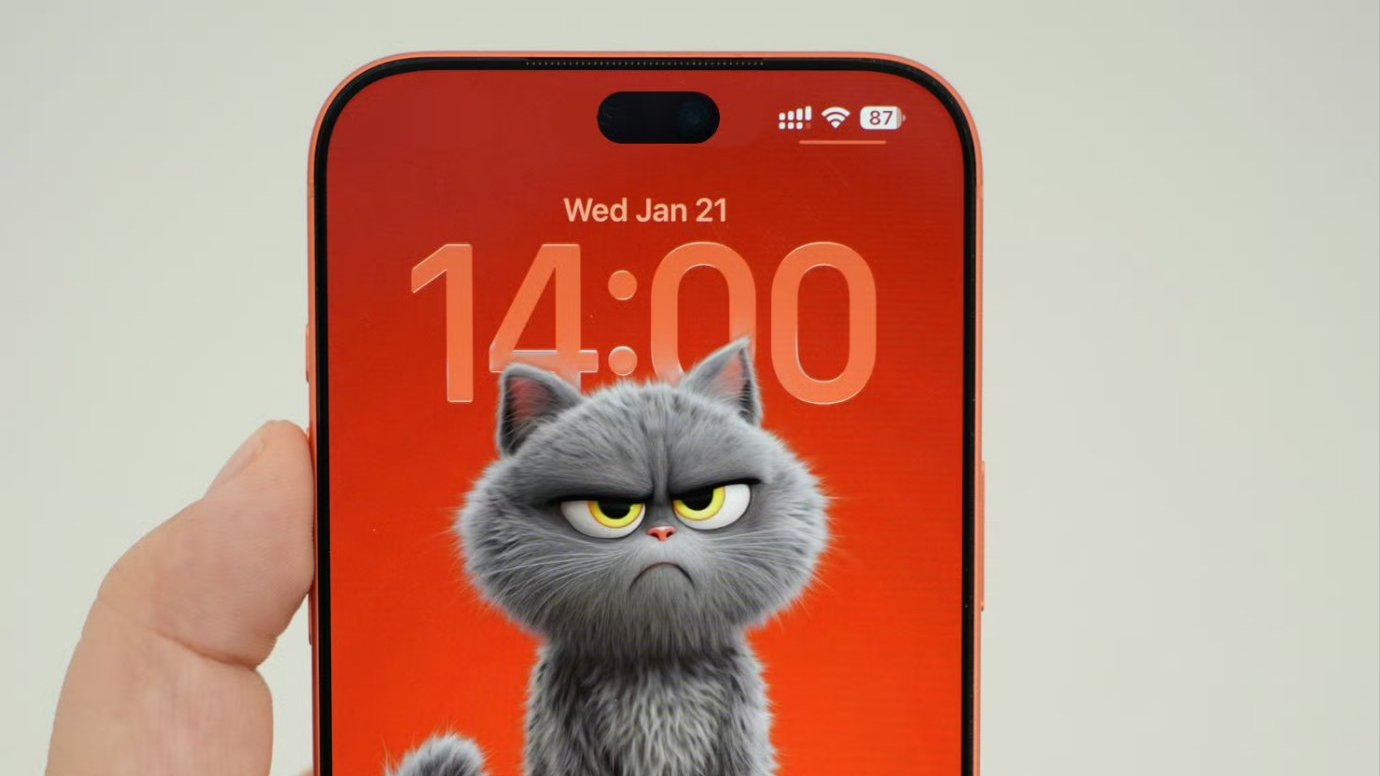
iPhone 18 Pro with a smaller Dynamic Island (mockup via Ice Universe)

The account "Ice Universe" today claimed the Dynamic Island cutout on the iPhone 18 Pro models will be approximately 35% narrower than it is on the iPhone 17 Pro models. Specifically, they said it will have a width of around 13.5mm, down from around 20.7mm, and they shared the mockup image above to show what it would look like.

An earlier report from The Information indicated that the iPhone 18 Pro models will feature under-screen Face ID. As a result, the publication said the devices would have only a hole-punch front camera in the top-left corner of the screen, rather than the current pill-shaped cutout for the front camera and Face ID sensors. However, the latest word is that only Face ID's flood illuminator will be moved under the screen this year, meaning that Apple will only be able to shrink the pill-shaped cutout rather than remove it entirely.

According to display industry expert Ross Young, who has a very good track record, the smaller Dynamic Island will last through at least 2027. So, it could take at least a few more years until the iPhone finally gets a truly seamless display.

"Ice Universe" has leaked some accurate iPhone dimensions in the past, giving them credibility, but they do not have a perfect track record.

Apple is expected to unveil the iPhone 18 Pro models in September.
Related Roundup: iPhone 18
Related Forum: iPhone

This article, "iPhone 18 Pro: Leaker Reveals Alleged Size of Smaller Dynamic Island" first appeared on MacRumors.com

Discuss this article in our forums

  •  

1Password Launches Anti-Phishing Warnings for Pasted Passwords

Popular password management app 1Password today announced the launch of a new phishing protection feature that's meant to "act as a second pair of eyes" before users provide their passwords to scammers.


1Password will not autofill a username and password on a website that is spoofing another as one layer of protection, but users can get around that by manually retrieving their usernames and passwords.

To add further protection, when a user attempts to paste their username and password into a website, the 1Password browser extension will display a pop-up warning that prompts them to pause and use caution before continuing. 1Password hopes that the warning will cause users to take a second, more careful look at the website before proceeding.

The phishing protection feature will be turned on by default for individual and family plan users, while 1Password Admins can turn it on for employees. The protection is rolling out starting today.

Pricing for 1Password starts at $2.99 per month for an individual user.
This article, "1Password Launches Anti-Phishing Warnings for Pasted Passwords" first appeared on MacRumors.com

Discuss this article in our forums
  •  

Apple Accuses European Commission of 'Political Delay Tactics' Over App Store Changes

Apple claims the European Commission is refusing to let to implement App Store changes, instead using "political delay tactics" to levy unfair investigations and fines. Apple provided the statement to Bloomberg in response to MacPaw's decision to shut down alternative iOS app marketplace Setapp Mobile in the EU because of the complicated business terms that it has to deal with.


The European Commission has refused to let us implement the very changes that they requested. In October, we submitted a formal compliance plan and they have yet to respond. The EC is using political delay tactics to mislead the public, move the goal posts, and unfairly target an American company with burdensome investigations and onerous fines.

MacPaw plans to sunset Setapp Mobile in the EU on February 16, 2026. The company said it was shutting down the app because of "complex business terms that don't fit Setapp's current business model," but MacPaw did not go into further detail. Apple does indeed have a complicated fee structure in Europe, for both app marketplaces and the apps that are distributed through them. Apple allows for app marketplaces in the EU because of the Digital Markets Act, which is policed by the European Commission.

The European Commission is gearing up to blame Apple for Setapp's EU shutdown, according to information viewed by Bloomberg. "Apple has not rolled out changes to address the key issues concerning its business terms, including their complexity," the EC reportedly plans to say.

Apple says that it has not simplified its EU business terms as expected because of the European Commission's refusal to let it implement the changes.

Apple further claims that there is little demand for alternative app marketplaces in Europe, and the company said that it is not the reason that Setapp is shutting down.
This article, "Apple Accuses European Commission of 'Political Delay Tactics' Over App Store Changes" first appeared on MacRumors.com

Discuss this article in our forums
  •  

What's Behind the Apple Weather App on the iPhone Forecasting So Much Snow?

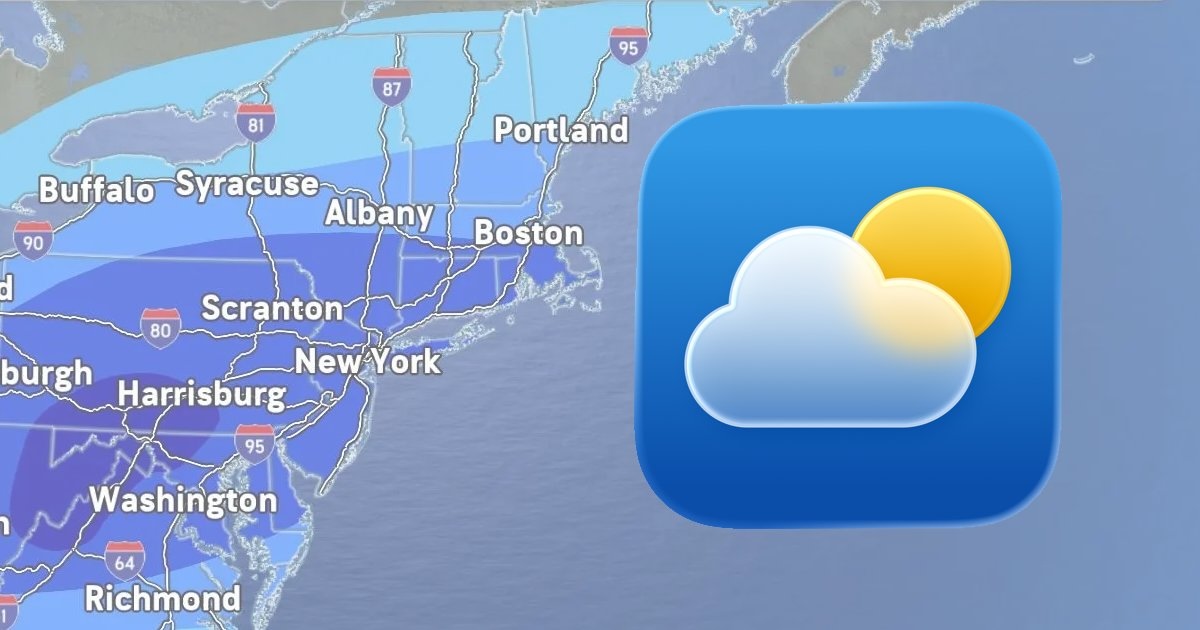
A major storm system is expected to deliver significant snowfall and freezing rain across more than half of the United States this weekend, with winter weather alerts in effect in cities like Atlanta, Baltimore, Boston, Charlotte, Cleveland, Dallas, Indianapolis, Nashville, New York, Philadelphia, Raleigh, Washington D.C., and others.


On the iPhone, iPad, and Mac, the Apple Weather app has forecasted up to two feet of snowfall in some cities, which has led to a lot of discussion about the app and how its forecasts can sometimes significantly differ from other weather providers.

The New York Times today reported on the topic. First, it said "many weather apps" show the results from a single forecast model, whereas meteorologists will often look at many models. Second, it noted that meteorologists caution that it can be difficult to forecast specific precipitation amounts several days in advance of a storm.

As this system approaches, snowfall estimates shown in the Apple Weather app have decreased in many cities compared to what was originally forecasted, but the amounts remain significant in many areas. Other cities may experience freezing rain, sleet, or a wintry mix, and the weather could cause power outages in some locations.

Apple Weather Data Sources


In 2020, Apple acquired the popular weather app Dark Sky, and it has since integrated the app's features and hyperlocal forecasts into the Apple Weather app. In a support document, however, Apple says that it still gathers at least some weather data from sources including the U.S. National Weather Service, The Weather Channel, and others.

Severe Weather and Next-Hour Precipitation Notifications


In the U.S., you can receive severe weather and next-hour precipitation notifications on your iPhone by opening the Apple Weather app, tapping on the list icon in the bottom-right corner, tapping on the three dots in the top-right corner, selecting Notifications, and turning on both types of notifications under Current Location.
This article, "What's Behind the Apple Weather App on the iPhone Forecasting So Much Snow?" first appeared on MacRumors.com

Discuss this article in our forums

  •  

Get Super Bowl Ready With Samsung's Big Sale on TVs and Monitors

Samsung recently kicked off a sale across its most popular Vision AI-supported monitors and TVs, with notable markdowns on products like The Frame and the Smart Monitor series. These deals have all been applied automatically on Samsung's website, and many match all-time low prices on these products.

Note: MacRumors is an affiliate partner with Samsung. When you click a link and make a purchase, we may receive a small payment, which helps us keep the site running.


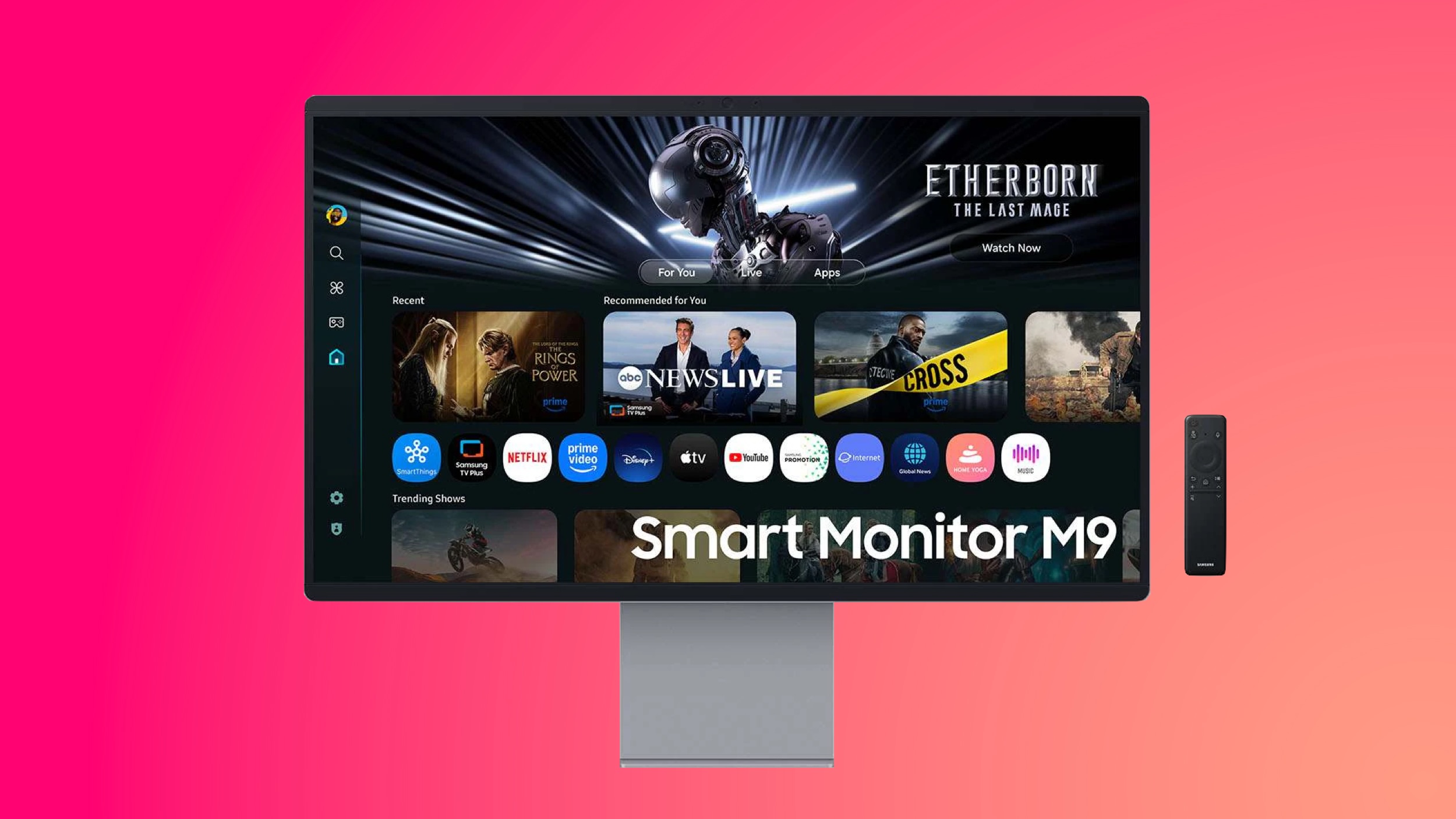
Starting with monitors, you can get the 32-inch Smart Monitor M9 4K OLED for $1,299.99, down from $1,599.99. This version of the Smart Monitor line launched last summer, and Samsung's discount today is a match of the record low price on the display.


Another notable monitor discount is the 43-inch Smart Monitor M7 in White for $359.99, down from $499.99. You'll also find the 32-inch Smart Monitor M8 for $399.99, down from $699.99.


Regarding TVs, there are quite a few models of The Frame TV on sale, including all-time low prices on The Frame models from 2025. You can get the 2025 65-inch The Frame TV for $1,199.99 ($600 off), as well as the 75-inch Frame Pro for $1,999.99 ($1,200 off), a match of the all-time low price.


For even more savings, anyone interested can watch Samsung's Super Bowl-themed Vision AI commercial to stack on an extra 10 percent off at checkout. The video is under 1 minute long, so it's worth it if you're shopping for one of Samsung's high-end TVs or monitors this month.

TVs


Monitors


Galaxy Products


If you're on the hunt for more discounts, be sure to visit our Apple Deals roundup where we recap the best Apple-related bargains of the past week.


Deals Newsletter


Interested in hearing more about the best deals you can find in 2026? Sign up for our Deals Newsletter and we'll keep you updated so you don't miss the biggest deals of the season!


Related Roundup: Apple Deals

This article, "Get Super Bowl Ready With Samsung's Big Sale on TVs and Monitors" first appeared on MacRumors.com

Discuss this article in our forums

  •  

Apple's F1 Movie Nominated for Best Picture at 2026 Oscars

Popular Apple racing movie F1 has been nominated for Best Picture by the Academy of Motion Picture Arts and Sciences, Apple said today. Nominees were announced for the 98th annual Academy Awards, and Apple earned six nominations in total.


F1, which stars Brad Pitt, will be up against Bugonia, Frankenstein, Hamnet, Marty Supreme, One Battle After Another, Sinners, Sentimental Value, The Secret Agent, and Train Dreams for the Best Picture Award. The film was also nominated for Best Sound, Best Film Editing, and Best Visual Effects.

Apple documentary Come See Me in the Good Light was nominated for Best Documentary Feature Film, and The Lost Bus was nominated for Best Visual Effects.

F1 was the highest-grossing sports feature of all time, according to Apple, and one of the company's most successful films to date. It earned over $631 million worldwide during its theatrical run. Apple says that its films, documentaries, and shows have earned 687 total wins and 3,229 award nominations since the Apple TV service launched in 2019.

The 98th annual Academy Award winners will be revealed on Sunday, March 15.
This article, "Apple's F1 Movie Nominated for Best Picture at 2026 Oscars" first appeared on MacRumors.com

Discuss this article in our forums

  •  

Apple's John Ternus Takes Over Design in Latest CEO Succession Move

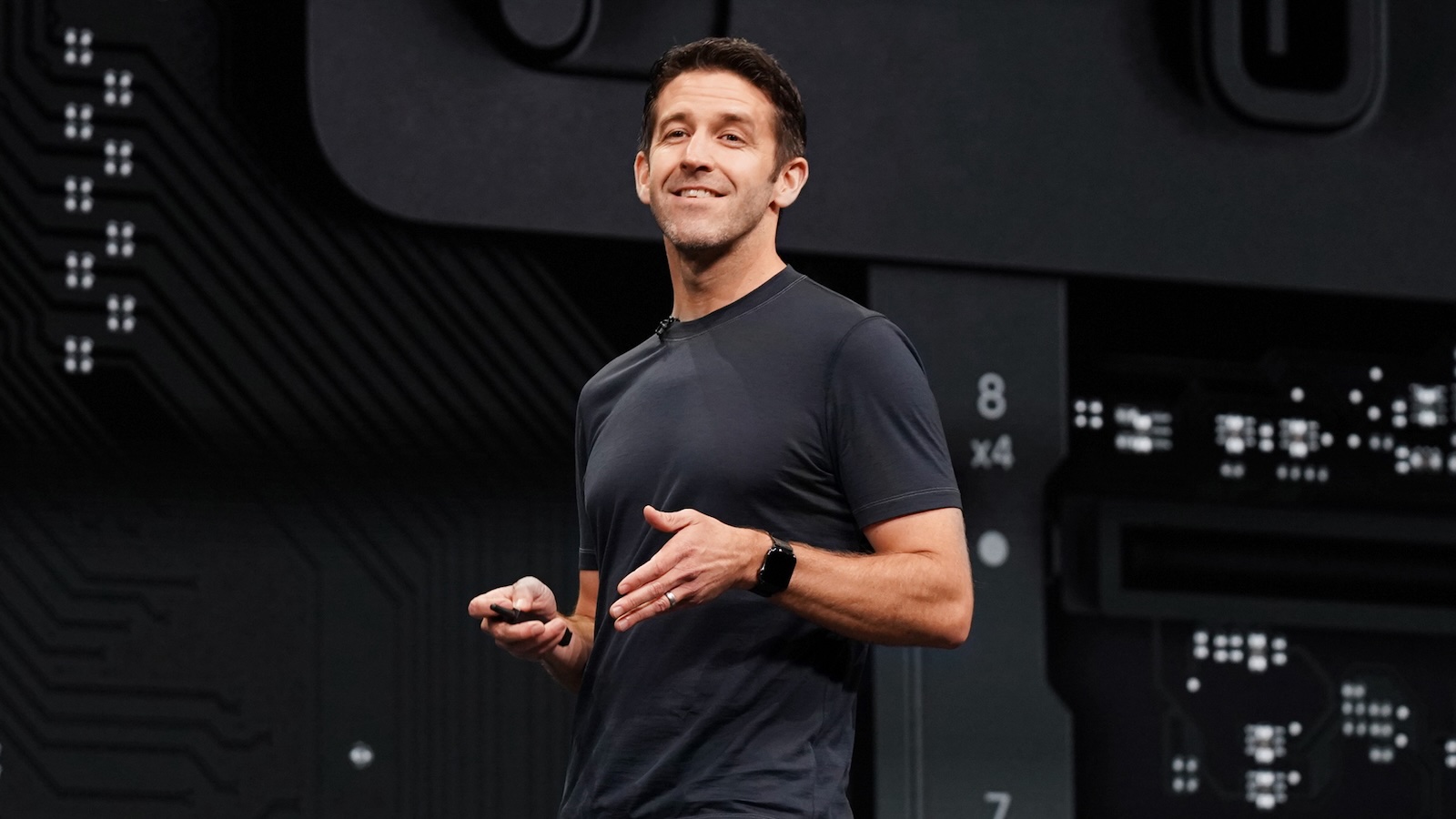
Apple's hardware chief John Ternus has been overseeing Apple design teams since late last year as Apple continues preparing him to take over as CEO, reports Bloomberg.


Apple CEO Tim Cook put Ternus in charge of the design teams the final months of 2025, expanding his responsibilities. Apple's software and hardware design teams were most recently managed by former Apple chief operating officer Jeff Williams, who retired from Apple in 2025. When Williams retired, Apple said the design teams would report directly to Cook, but Cook apparently handed the reins to Ternus.

Design is one of the most important divisions at Apple, and it has always been led by a senior executive. Jony Ive was in charge of the design team before he left and it was given to Williams.

Ternus is apparently the "executive sponsor" of all design on Cook's management team, which means he handles communications between design staff and the executive team. He represents the design team in executive gatherings, and manages design team leaders.

Bloomberg claims that inside sources said Cook is aiming to expose Ternus to more parts of the company's operations. Design decisions are made by consensus, so while Ternus is taking on a larger role, software engineering chief Craig Federighi and marketing chief Greg Joswiak continue to have a say in Apple's overall aesthetic.

Multiple reports have suggested that Ternus is the most likely candidate to take on the role of Apple CEO when Cook retires. Cook turned 65 last year, but there do not appear to be any imminent plans for his retirement. Ternus is Apple's youngest senior executive at 50, so he could have a long run if he is eventually promoted to CEO.

Ternus leads Apple's hardware engineering team, and he has been described as having an even temperament, strong attention to detail, and intimate knowledge of Apple's supply chain. Some at Apple fear that he is too risk averse, inexperienced with geopolitical issues, and not charismatic enough to run Apple.
This article, "Apple's John Ternus Takes Over Design in Latest CEO Succession Move" first appeared on MacRumors.com

Discuss this article in our forums

  •  

MacBook Pro to Receive Up to Six New Features by Next Year

Apple is expected to release MacBook Pro models with M5 Pro and M5 Max chips soon, but you might want to pass on them, as bigger changes are around the corner.


It has been reported that the MacBook Pro will be receiving a major redesign in late 2026 or in 2027. Six new features have been rumored so far, including an OLED display, touch capabilities, a Dynamic Island, M6 Pro and M6 Max chips manufactured with TSMC's advanced 2nm process, a thinner design, and built-in cellular connectivity.

The exact launch timing remains to be seen. Apple has updated the MacBook Pro twice in one year in the past, with the M2 Pro and M2 Max models debuting in January 2023 and the M3 Pro and M3 Max models following in October 2023, so there is a chance that the M5 Pro and M5 Max models could debut soon and the models with OLED displays could follow later this year. However, 2027 seems like a safer bet for now.

Keep in mind that the entry-level 14-inch MacBook Pro with the M6 chip is not expected to receive many of the changes listed below.

Apple last redesigned the MacBook Pro in 2021, when the M1 Pro and M1 Max models launched.

OLED Display


Bloomberg's Mark Gurman and others have indicated that the two-generations-away MacBook Pro models will have OLED displays.

The current MacBook Pro models are equipped with LCD displays with mini-LED backlighting. The move to OLED technology would result in improved image quality, thanks to richer colors and higher contrast ratio with true blacks.

All of the iPhone, Apple Watch, and iPad Pro models that Apple sells today are already equipped with OLED displays, excluding refurbished models.

Touch Screen


Not only will the MacBook Pro be moving to OLED, but the displays will apparently have touch-screen capabilities too. This functionality would allow Mac users to use both their fingers and a keyboard and mouse/trackpad for input.

Steve Jobs said that a touch-screen Mac would cause arm fatigue, but he made that comment a long time ago, and Apple does reverse course from time to time.

Dynamic Island


Yet another display-related change on these MacBook Pro models will be a hole-punch camera, according to Gurman. As a result, he said that the MacBook Pro will no longer have a notch. Instead, he expects a Dynamic Island or something "similar."

With a Dynamic Island, the MacBook Pro would move one step closer to a truly edge-to-edge display with thin bezels. Like on the iPhone, the Dynamic Island would display things such as low battery life alerts and AirPods connection indicators in the area surrounding the hole-punch camera at the top-center part of the screen.

M6 Pro and M6 Max Chips


This one is obvious, but the two-generations-away MacBook Pro models will be powered by Apple's two-generations-away M6 Pro and M6 Max chips. Notably, these chips are expected to be manufactured with TSMC's advanced 2nm process, which should result in greater year-over-year performance and efficiency gains than usual.

The current M4 Pro and M4 Max chips and the upcoming M5 Pro and M5 Max chips are or will be built with TSMC's 3nm processes.

Thinner Design


Yet another MacBook Pro rumor shared by Gurman is a thinner design versus existing models.

The move from LCD with mini-LED backlighting to OLED would contribute to the thinner design, and there could be other changes that help to slim things down.

As of now, there has been no indication that Apple plans to once again remove ports like HDMI, MagSafe, or the SD card slot in order to achieve this thinner design, but we shall see. That was a very unpopular decision the last time it happened.

Cellular


Macs can already connect to a cellular network via the Personal Hotspot feature on a nearby iPhone or iPad, but Apple has reportedly at least considered built-in cellular connectivity for future Macs. If these plans moved forward, the MacBook Pro would likely be equipped with Apple's C1X or future C2 modem for 5G and LTE.
Related Roundup: MacBook Pro
Buyer's Guide: MacBook Pro (Caution)
Related Forum: MacBook Pro

This article, "MacBook Pro to Receive Up to Six New Features by Next Year" first appeared on MacRumors.com

Discuss this article in our forums

  •  

Apple's Siri Chatbot May Run on Google Servers

Apple is considering a significant shift in how it operates Siri by potentially running its next-generation chatbot on Google's cloud infrastructure rather than entirely on its own Private Cloud Compute servers, according to Bloomberg's Mark Gurman.


In yesterday's report detailing Apple's plans to turn ‌Siri‌ into a chatbot in iOS 27, Gurman said that the company is in discussions with Google about hosting the forthcoming ‌Siri‌ chatbot on Google-owned servers powered by Tensor Processing Units (TPUs), a class of custom chips designed specifically for large-scale artificial intelligence workloads. The arrangement would mark a major departure from Apple's emphasis on processing user requests either directly on-device or through its own tightly controlled Private Cloud Compute infrastructure.

In a potential policy shift for Apple, the two partners are discussing hosting the chatbot directly on Google servers running powerful chips known as TPUs, or tensor processing units. The more immediate Siri update, in contrast, will operate on Apple's own Private Cloud Compute servers, which rely on high-end Mac chips for processing.


The near-term ‌Siri‌ improvements in iOS 26.4 are still expected to run on Apple's own Private Cloud Compute servers, which the company unveiled in 2024 as a privacy-focused alternative to on-device processing. Private Cloud Compute relies on Apple-designed servers built around high-end Mac chips, and Apple has positioned the system as one where user data is processed temporarily and not retained, not even being accessible to Apple itself. Those claims have been central to Apple's public messaging around Apple Intelligence.

The more advanced ‌Siri‌ chatbot planned for the following major operating system update is expected to rely on a newer and more capable large language model developed by Google. This model is internally referred to as Apple Foundation Models version 11 and is comparable in capability to Google's latest Gemini models. Running such a model at scale may exceed the practical capacity of Apple's current Private Cloud Compute infrastructure, prompting the need to use Google's significantly larger, specialized cloud footprint and AI hardware.

The possibility of running ‌Siri‌ requests on Google servers does not necessarily mean Google would gain access to user data in a conventional sense. Apple already relies on third-party cloud providers, including Google, for parts of iCloud's infrastructure, while retaining control over encryption keys and data handling policies.
This article, "Apple's Siri Chatbot May Run on Google Servers" first appeared on MacRumors.com

Discuss this article in our forums

  •  

Enable Smoother 120Hz Browsing in Safari

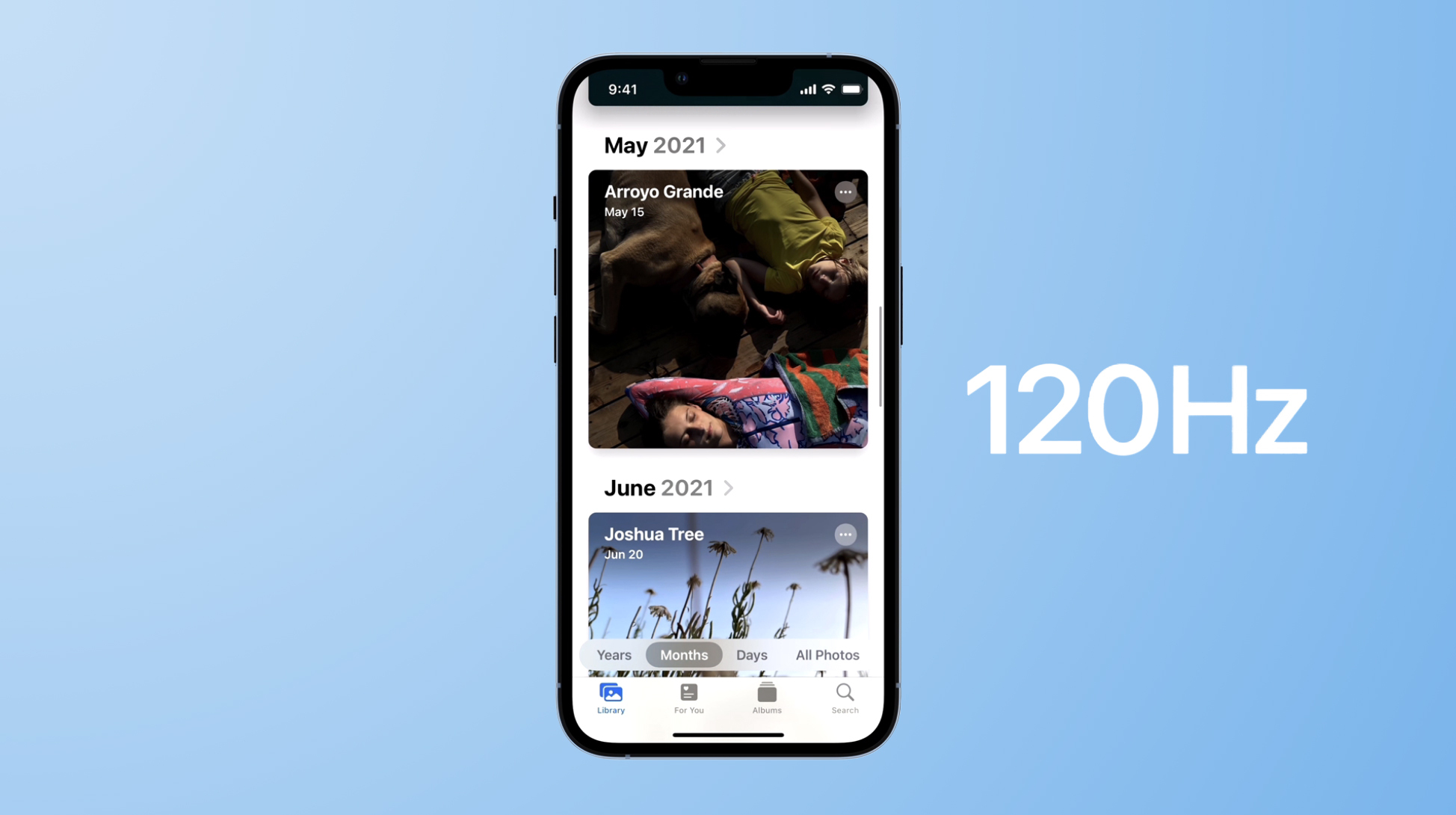
Any iPhone, iPad, or Mac with a ProMotion display is capable of rendering buttery smooth 120Hz animations. However, Apple's Safari browser is locked to 60fps page rendering by default, making scrolling feel noticeably choppier for some users than in Chrome or Firefox. Thankfully, recent versions of Safari include a hidden setting that lets you unlock 120Hz rendering.


At 60Hz, your screen refreshes every 16.7 milliseconds, meaning each frame of a scrolling page stays on screen for that duration. At 120Hz, the refresh interval drops to 8.3 milliseconds, so the image updates twice as often. This reduces the perceived blur and judder as content moves across the screen, making motion look more fluid and responsive. For a better idea of the difference, visit Blur Buster's Motion Tests webpage and watch the refresh rate test in Safari.

The difference is most noticeable when scrolling text-heavy pages or panning across detailed content. That said, the improvement is more dramatic for some people than others. If you've never noticed Safari feeling "off" compared to other apps, you may not register much difference. But if you've used Chrome or Firefox on the same device and wondered why Safari felt slightly sluggish, this is the reason.

The 120Hz option is buried in Safari's Feature Flags, a developer-focused menu that doesn't require any special mode to access on iPhone or iPad. On Mac, you'll need to enable developer features first, but it's a straightforward process. Keep in mind that turning on 120Hz may impact your device's battery life if you tend to browse a lot.

Here's how to enable 120Hz scrolling on all your Apple devices.

Enable 120Hz Safari Browsing iPhone and iPad


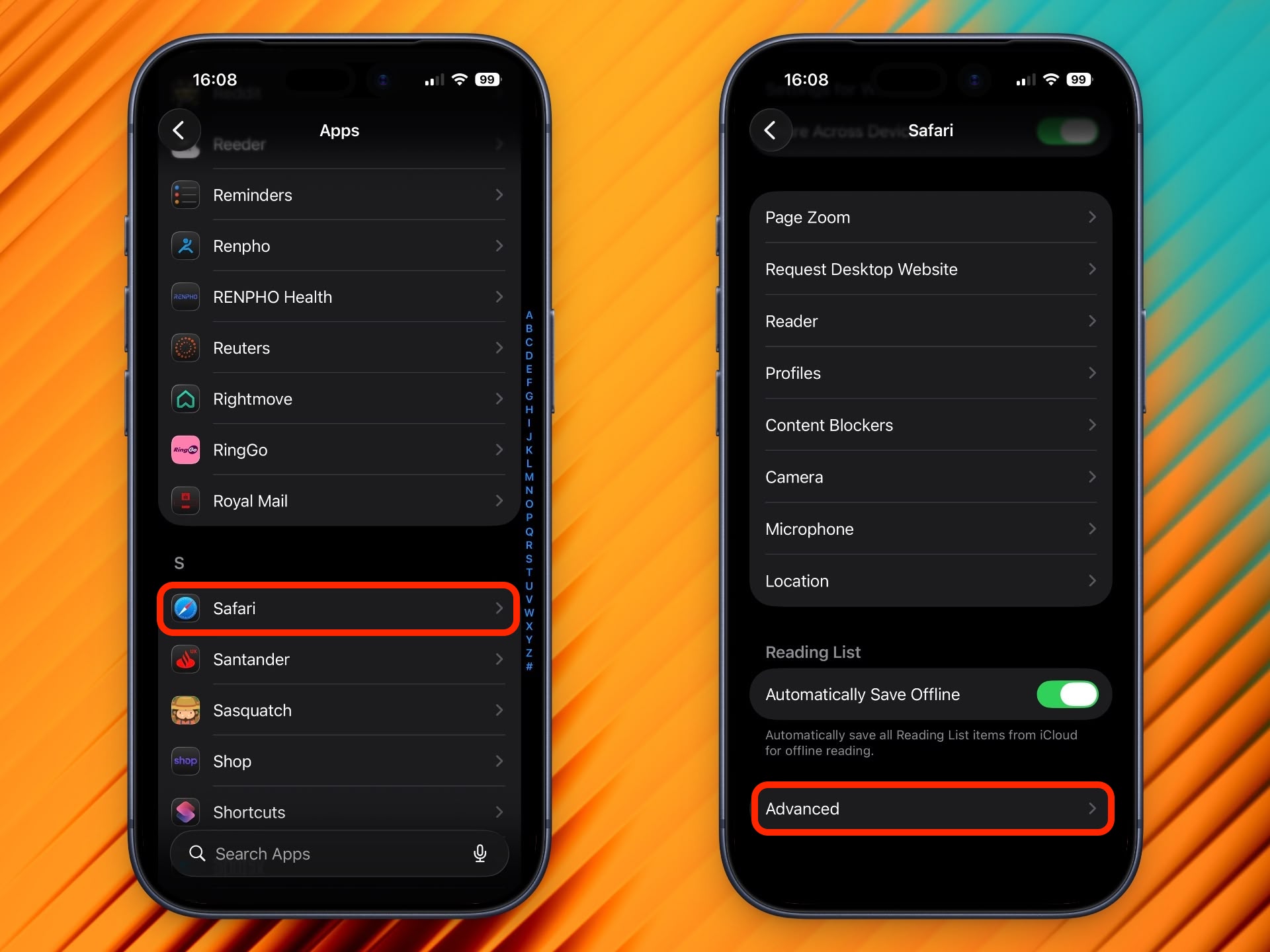
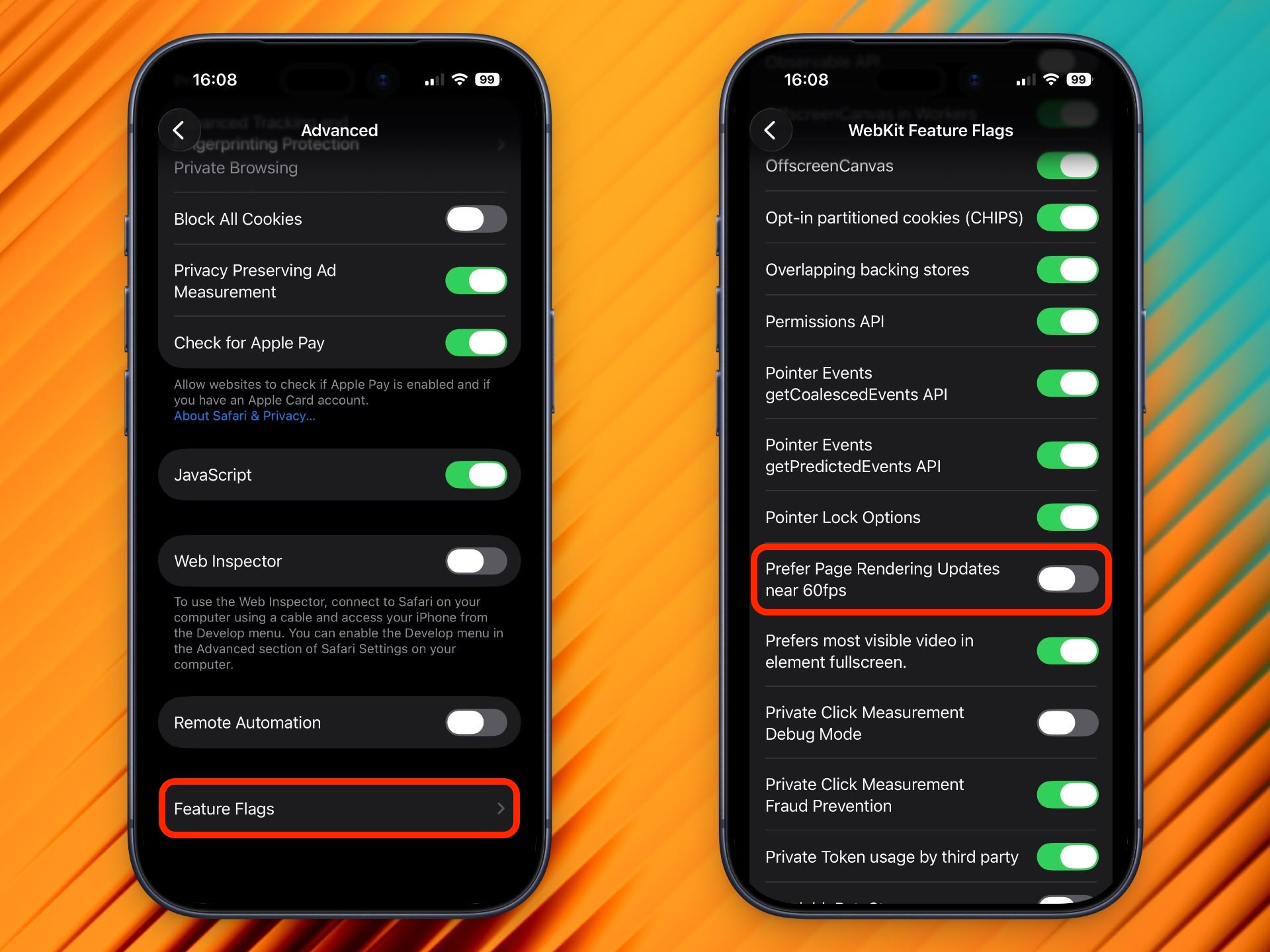
  1. Open the Settings app.

  2. Scroll down and tap Apps.

  3. Tap Safari.

  4. Scroll to the bottom and tap Advanced.

  5. Tap Feature Flags at the bottom of the list.

  6. Scroll to Prefer Page Rendering Updates near 60fps and toggle it off.

  7. Force quit Safari and reopen it.

With this setting disabled, Safari will now render pages at up to 120Hz on ProMotion-equipped devices, including iPhone 13 Pro and later, and iPad Pro models with ProMotion.

Enable 120Hz Safari Browsing on Mac


Enabling 120Hz on Mac requires a few extra steps to reveal the Feature Flags menu.

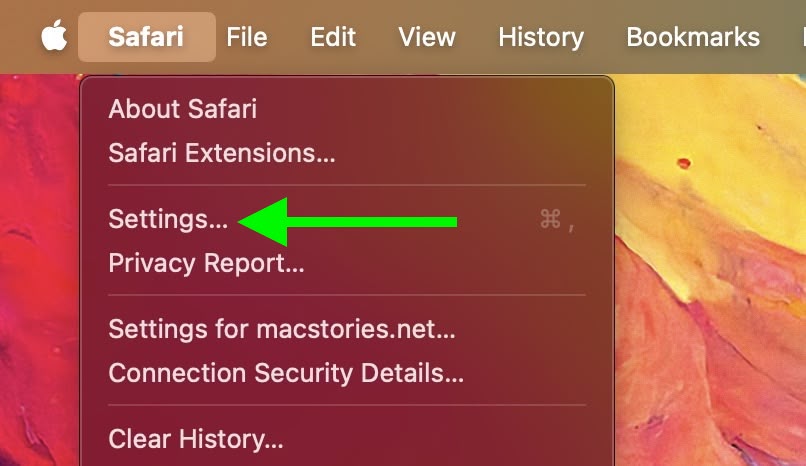
  1. Open Safari, then click Safari in the menu bar and choose Settings....
    safari
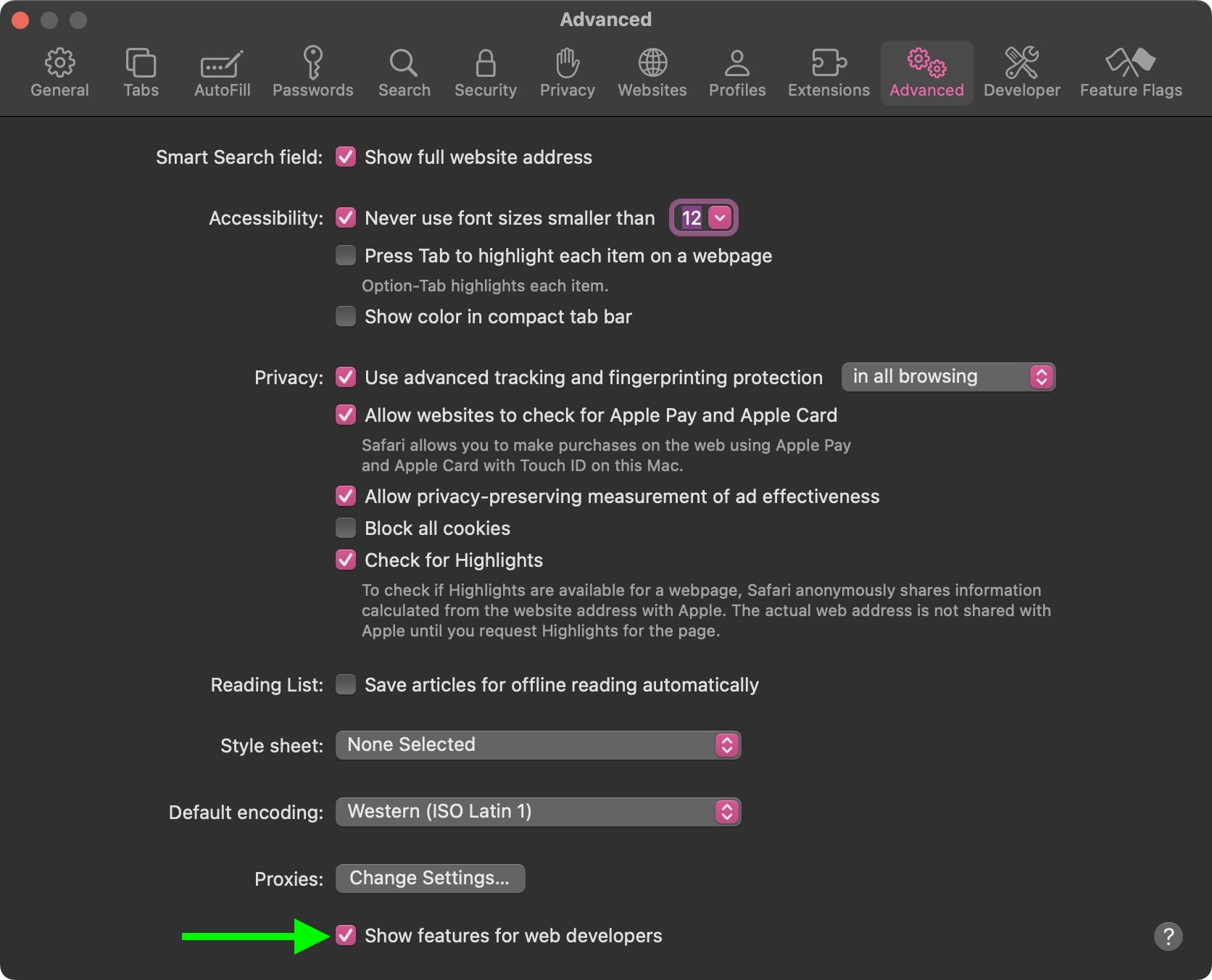
  2. Click the Advanced tab.

  3. At the bottom of the pane, check the box next to Show features for web developers.
    safari
  4. A new Feature Flags tab will appear in the toolbar – click it.

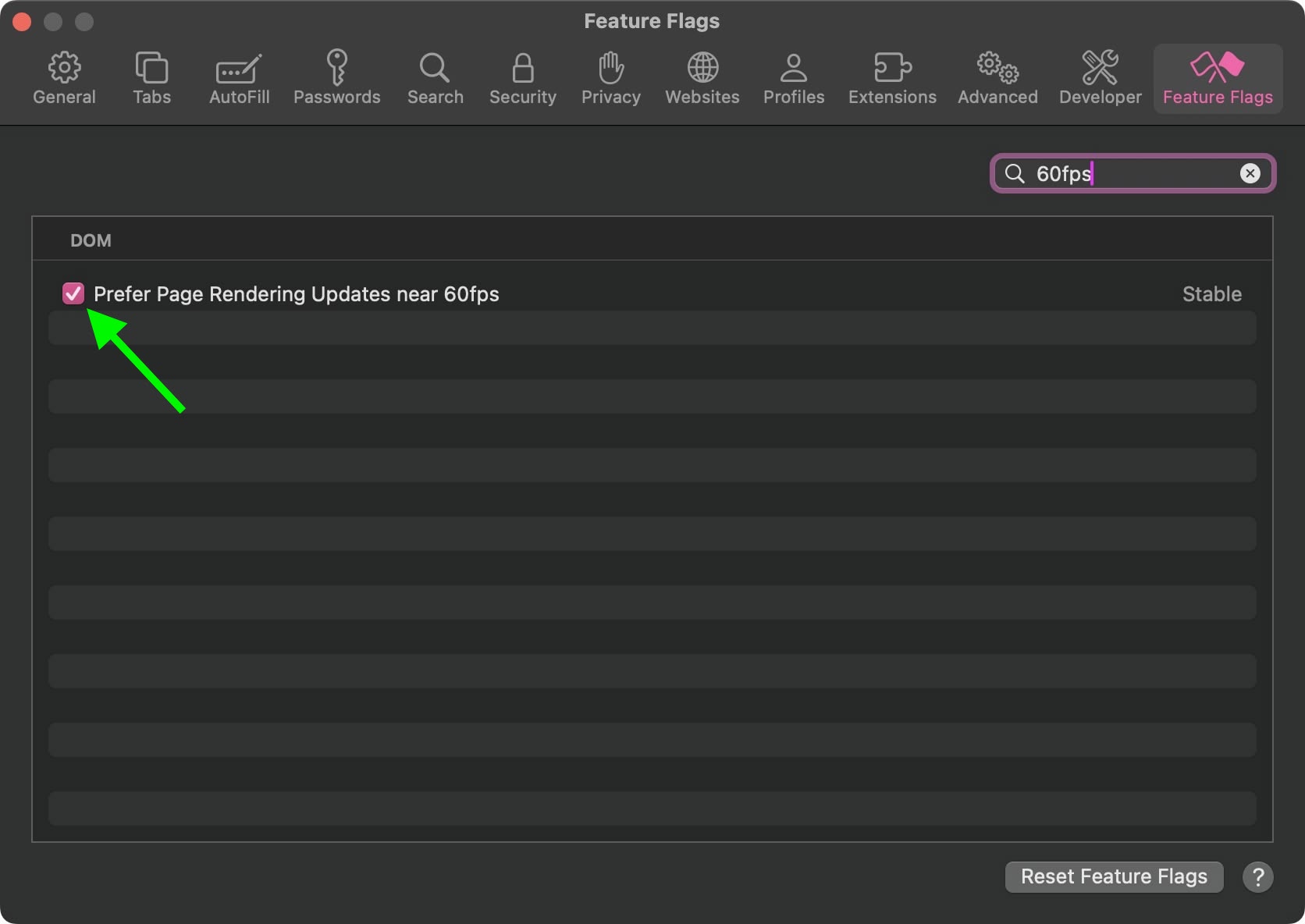
  5. In the search field at the top right, type 60fps.

  6. Uncheck Prefer Page Rendering Updates near 60fps.

  7. Quit Safari completely and reopen it.
    safari


This works on any Mac with a ProMotion display, which includes the 14-inch and 16-inch MacBook Pro models introduced in 2021 and later. If you have external displays connected to your Mac that are capable of refreshing at 120Hz, they should also benefit from the change.

Kudos goes to MacStories for unearthing the 120Hz scrolling tip recently shared by developer Matt Birchler.
Tag: Safari

This article, "Enable Smoother 120Hz Browsing in Safari" first appeared on MacRumors.com

Discuss this article in our forums

  •  

Amazon Discounts Popular Accessories From Ecovacs, Jackery, and Anker

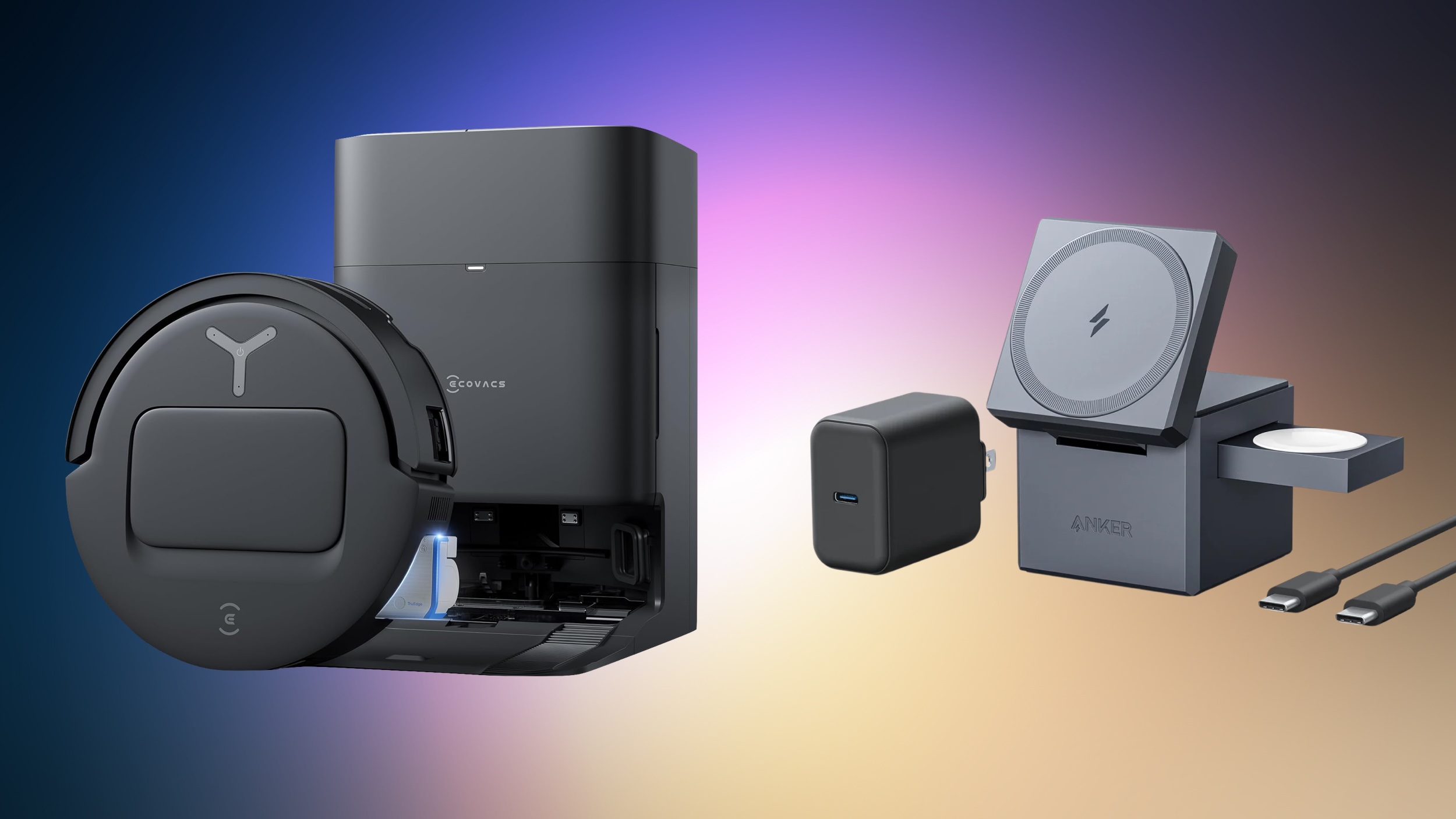
Amazon this week has a few notable sales from popular brands like Ecovacs, Jackery, and Anker. These include discounts on everything from MagSafe-compatible chargers to portable power stations and robot vacuums.

Note: MacRumors is an affiliate partner with Amazon. When you click a link and make a purchase, we may receive a small payment, which helps us keep the site running.
The highlight of the sale is Ecovacs' range of robot vacuums and mops, with as much as $500 off these devices this week. You can get the Ecovacs Deebot T80 Omni Robot Vacuum and Mop for $499.99, down from $999.99. Another notable discount can be found on the Ecovacs Deebot X8 Pro Omni Robot Vacuum and Mop for $749.00, down from $1,099.00.


Additionally, Amazon has discounts on multiple Anker charging accessories, including products like the 3-in-1 MagSafe-Compatible Charging Cube for $97.49, down from $149.95 and the SOLIX C300 Power Station with Lantern for $179.99, down from $249.00. You can find these deals and more in the lists below, and this time around none require any coupon codes.

Ecovacs


Anker


Jackery


If you're on the hunt for more discounts, be sure to visit our Apple Deals roundup where we recap the best Apple-related bargains of the past week.


Deals Newsletter


Interested in hearing more about the best deals you can find in 2026? Sign up for our Deals Newsletter and we'll keep you updated so you don't miss the biggest deals of the season!


Related Roundup: Apple Deals

This article, "Amazon Discounts Popular Accessories From Ecovacs, Jackery, and Anker" first appeared on MacRumors.com

Discuss this article in our forums

  •  

Utah Adds a Strange Twist to the iPhone vs. Android Debate

While the iOS vs. Android debate has been going on for nearly two decades, one lawmaker in Utah has taken it to the next level with a strange new twist.


According to Utah news station KSL, Utah State Senator Kirk Cullimore (R-Sandy) has proposed a new bill that would designate Android as the state's official mobile operating system. It is a real bill that would amend an existing Utah law outlining the state's official bird, fruit, song, flower, dinosaur, winter sports, and more.

"Utah's state mobile operating system is Android," the proposed amendment reads.

"Someday, everybody with an iPhone will realize that the technology is better on Android," said Cullimore, according to the report. "I'm the only one in my family – all my kids, my wife, they all have iPhones – but I'm holding strong," he added.

The change would take effect on May 6, if the bill were to be passed and signed into law. However, it seems to be a publicity stunt more than anything.

"I don't expect this to really get out of committee," said Cullimore.
Tag: Android

This article, "Utah Adds a Strange Twist to the iPhone vs. Android Debate" first appeared on MacRumors.com

Discuss this article in our forums

  •  

Report: Apple's New AI Strategy Firms Up Under Craig Federighi

Apple has restructured its artificial intelligence strategy under software chief Craig Federighi, accelerating plans to overhaul Siri by relying on external AI models after years of internal delays and organizational friction.


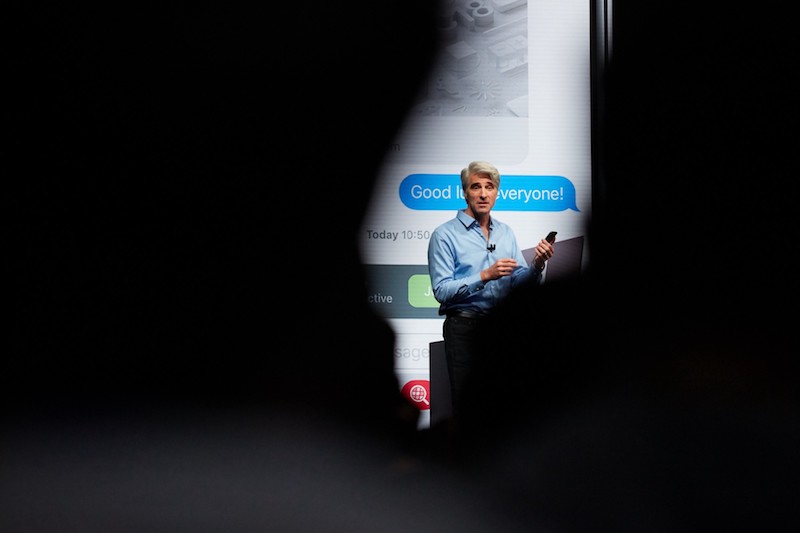
According to a detailed report from The Information, Apple's approach to artificial intelligence has undergone a significant shift over the past year. Apple software chief Craig Federighi is said to be at the center of that shift, having assumed direct oversight of the company's AI organization and is now driving decisions that will shape the future of ‌Siri‌ and other Apple Intelligence features across the product lineup.

Last fall, Federighi apparently addressed a joint meeting of Apple's software and AI teams, expressing enthusiasm for closer collaboration while also signaling dissatisfaction with the company's pace of progress in artificial intelligence. Some members of Apple's foundation models team interpreted the remarks as criticism of their work.

In December, Apple moved to consolidate its AI leadership under Federighi, completing a transition that had begun earlier in the year when responsibility for ‌Siri‌ was removed from the AI group and brought under Federighi's software division. In January, Apple announced plans to use Google's Gemini AI models to power future AI upgrades, including an improved version of ‌Siri‌. In Federighi's view, integrating a third-party model would allow Apple to finally ship a revamped ‌Siri‌ later this year after controversially postponing the update in 2025.

However, the report also outlines internal concerns about the implications of placing AI under Federighi's control. People who have worked closely with him described him as highly cost-conscious and skeptical of investments with uncertain returns. This approach stands in notable contrast to rivals such as OpenAI, Meta Platforms, and Google, who invest tens of billions of dollars in data centers, chips, and AI researchers.

Apple has attempted to limit infrastructure spending by emphasizing on-device processing and its Private Cloud Compute system, which uses Apple silicon. The company was said to be waiting for the cost of AI computation and talent to decline, betting that most consumer use cases will eventually be handled locally on devices.

Federighi apparently viewed AI as unpredictable and difficult to control, preferring deterministic software behavior that could be clearly specified during design reviews. He rejected proposals to use AI to dynamically reorganize the iPhone home screen, arguing that such changes would confuse users.

Tensions over AI strategy have surfaced internally before. Around 2019, Mike Rockwell, who was leading development of the Vision Pro headset, reportedly proposed an AI-driven interface. He criticized Federighi's software approach as overly conservative, prompting a rebuke. Rockwell was later placed in charge of ‌Siri‌ in early 2025 and now reports directly to Federighi.

Despite his earlier skepticism, Federighi's stance shifted following the release of ChatGPT in late 2022. People close to him said he became convinced of the potential of large language models after experimenting with the technology and instructed his teams to explore ways to integrate similar capabilities into Apple products. Federighi reportedly concluded that Apple's internal models did not perform adequately on devices, while members of the foundation models team believed they were being blamed for challenges related to model optimization, which fell under the software organization's responsibilities.

Some team members complained they were not given sufficient guidance on how their models would ultimately be used, limiting their ability to compete with external alternatives. Around the time Apple removed ‌Siri‌ oversight from Giannandrea and assigned it to Rockwell, with Federighi directing the broader effort, Federighi instructed teams to evaluate deep integration of third-party models.

Despite the partnership with Google, Apple plans to continue developing its own AI models, particularly those designed to run on devices. Apple reportedly intends to shrink and adapt models derived from external partners so they can run more fully on Apple hardware, reducing long-term dependence. To support that goal, Apple is said to be considering acquisitions of smaller AI firms specializing in model compression and optimization.

See The Information's full report for more.
This article, "Report: Apple's New AI Strategy Firms Up Under Craig Federighi" first appeared on MacRumors.com

Discuss this article in our forums

  •  

20th Anniversary iPhone May Not Have All-Screen Design After All

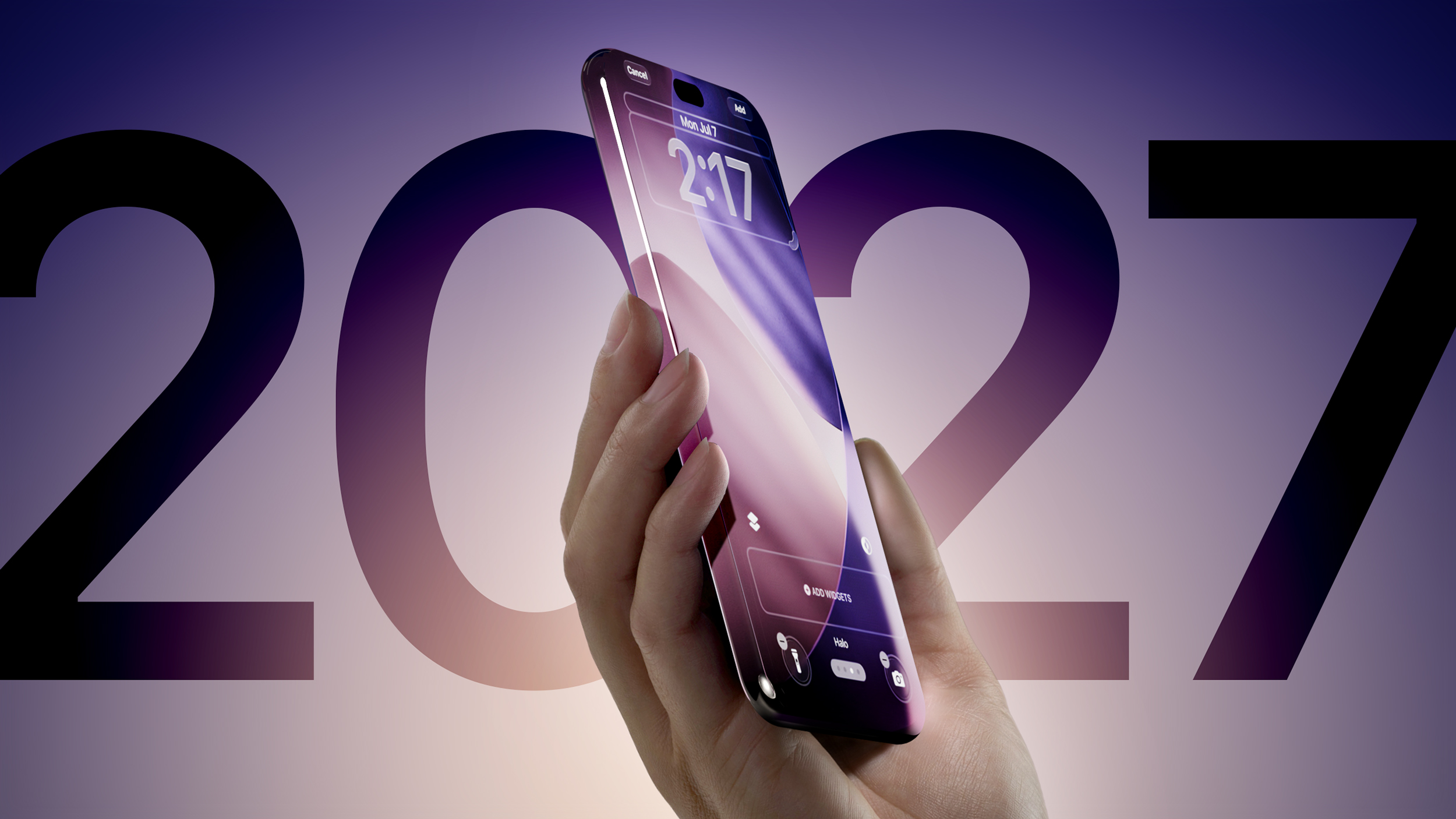
Apple has long been rumored to be planning a dramatic redesign for the iPhone's 20th anniversary in 2027, ever since Bloomberg's Mark Gurman reported last May that the company is aiming for an all-glass device "without any cutouts in the display." But new comments from respected display industry analyst Ross Young appear to throw cold water on these claims.


In a post on X (Twitter) yesterday, the former Counterpoint Research VP clarified remarks he made last June about Apple's display plans, saying he expects the smaller Dynamic Island rumored to be coming to iPhone 18 Pro models this fall to stick around through 2027.

In replies to follow-up questions, Young went further. The now-retired analyst said he still expects Apple's 2028 iPhone Pro models to feature a centered hole-punch cutout in the display – presumably housed within the same smaller Dynamic Island – rather than a true all-screen design. That timeline aligns with a roadmap he shared in June 2025, which predicted that a fully notch-free, truly all-screen iPhone wouldn't arrive until 2030.

If Young's predictions prove accurate, Gurman may need to revise his 20th-anniversary iPhone claims. Or perhaps not. One possibility is that Young's expectations are simply out of date. Supply chain timelines shift regularly, and Apple may have made more progress moving Face ID components and the front-facing selfie camera under the display than Young's sources indicate.

Alternatively, Apple could be developing a special 20th-anniversary model that sits above the iPhone Pro tier, similar to how the original iPhone X was unveiled at Apple's iPhone 8 launch in 2017 (Apple introduced its first Pro models with the iPhone 11 Pro and iPhone 11 Pro Max in September 2019). Such a device could debut the all-screen design Gurman has described, while the standard Pro models retain a smaller Dynamic Island.

Apple is expected to unveil the iPhone 18 Pro and Pro Max this September. The 20th-anniversary iPhone – whatever form it takes – will presumably follow in fall 2027.
This article, "20th Anniversary iPhone May Not Have All-Screen Design After All" first appeared on MacRumors.com

Discuss this article in our forums

  •  

Apple Responds to Slowing China Sales With Lunar New Year Discounts

Apple is offering discounts of up to 1,000 yuan ($144) on some products in China in anticipation of a holiday shopping rush and competitive pricing from local vendors, reports the South China Morning Post.


Ahead of February's Lunar New Year, Apple's mainland China website and official stores are offering limited-time discounts on products including the iPhone 16 and iPhone 16 Plus, as well as some MacBook, iPad, Apple Watch, and AirPods models. The discounts come into effect between January 24 and January 27.

Apple led the Chinese smartphone market in the fourth quarter of 2025 with a 22 percent share, thanks to strong iPhone 17 sales. Despite the demand, sales are said to have been falling month on month, and the promotions are aimed at countering the decline.

China's smartphone market shrank 1.6 percent year on year in Q4 2025, while full-year shipments declined 0.6 percent. Counterpoint analysts have put the decline down to weak demand amid rising prices and global memory shortages.

Chinese government policies appear to have played a role too. Under government subsidies, consumers of electronics get a 15% refund of products that are priced under 6,000 yuan ($820). Apple partly missed out on the program, since its iPhone Pro models exceed the price cutoff, giving its local rivals an edge.
Tag: China

This article, "Apple Responds to Slowing China Sales With Lunar New Year Discounts" first appeared on MacRumors.com

Discuss this article in our forums

  •  

ChatGPT Atlas Gains Tab Groups, Auto Google/AI Search Switching

OpenAI is rolling out another noteworthy update to ChatGPT Atlas, its AI-powered browser for Mac.


As per the release notes, the latest build introduces tab groups, allowing users to organize their browsing sessions more efficiently. The update also brings fixes for vertical tab "mini mode" and a simplified right-click context menu for tabs.

On the search front, Atlas now features an "Auto" mode that automatically switches between ChatGPT and Google depending on the query. The search results UI has also been refreshed with a new vertical layout that more prominently displays links in answers.

Elsewhere in this update, Safari users migrating to Atlas will now be prompted to install the iCloud passwords extension during onboarding. Other changes include a simplified address bar context menu, crash fixes, updated translations, and support for macOS keyboard text replacements on webpages.

Today's update follows the browser's first major update that came in November. That introduced vertical tabs, iCloud Passkey support, and Google as a default search engine option.

Atlas currently remains available only on macOS, but OpenAI has said Windows, iOS, and Android versions are coming.
Tag: ChatGPT

This article, "ChatGPT Atlas Gains Tab Groups, Auto Google/AI Search Switching" first appeared on MacRumors.com

Discuss this article in our forums

  •  

Claude AI iPhone App Can Now Connect to Apple Health in the US

Anthropic's Claude AI chatbot is gaining Apple Health integration, allowing the assistant to access users' health and fitness data directly from their iPhone.


The feature is rolling out in beta this week via the Claude iOS app, Anthropic announced as part of a broader healthcare push. U.S. subscribers on Claude Pro and Max plans can opt in to share their data, including movement, sleep, and activity patterns.

Once connected, Claude can summarize medical history, explain test results, detect patterns across fitness metrics, and help users prepare questions for doctor appointments. HealthEx and Function connectors are also available in beta.

Anthropic says the integrations are "private by design." Users choose exactly what they share, must explicitly opt in, and can revoke access at any time. Health data isn't used to train models, according to the company.

The announcement comes two weeks after OpenAI launched ChatGPT Health with its own Apple Health connector. Both companies stress their tools aren't intended for diagnosis and aren't a substitute for professional medical advice.
This article, "Claude AI iPhone App Can Now Connect to Apple Health in the US" first appeared on MacRumors.com

Discuss this article in our forums

  •  

Cut Apple Music iPhone Storage Usage in Minutes – Here's How

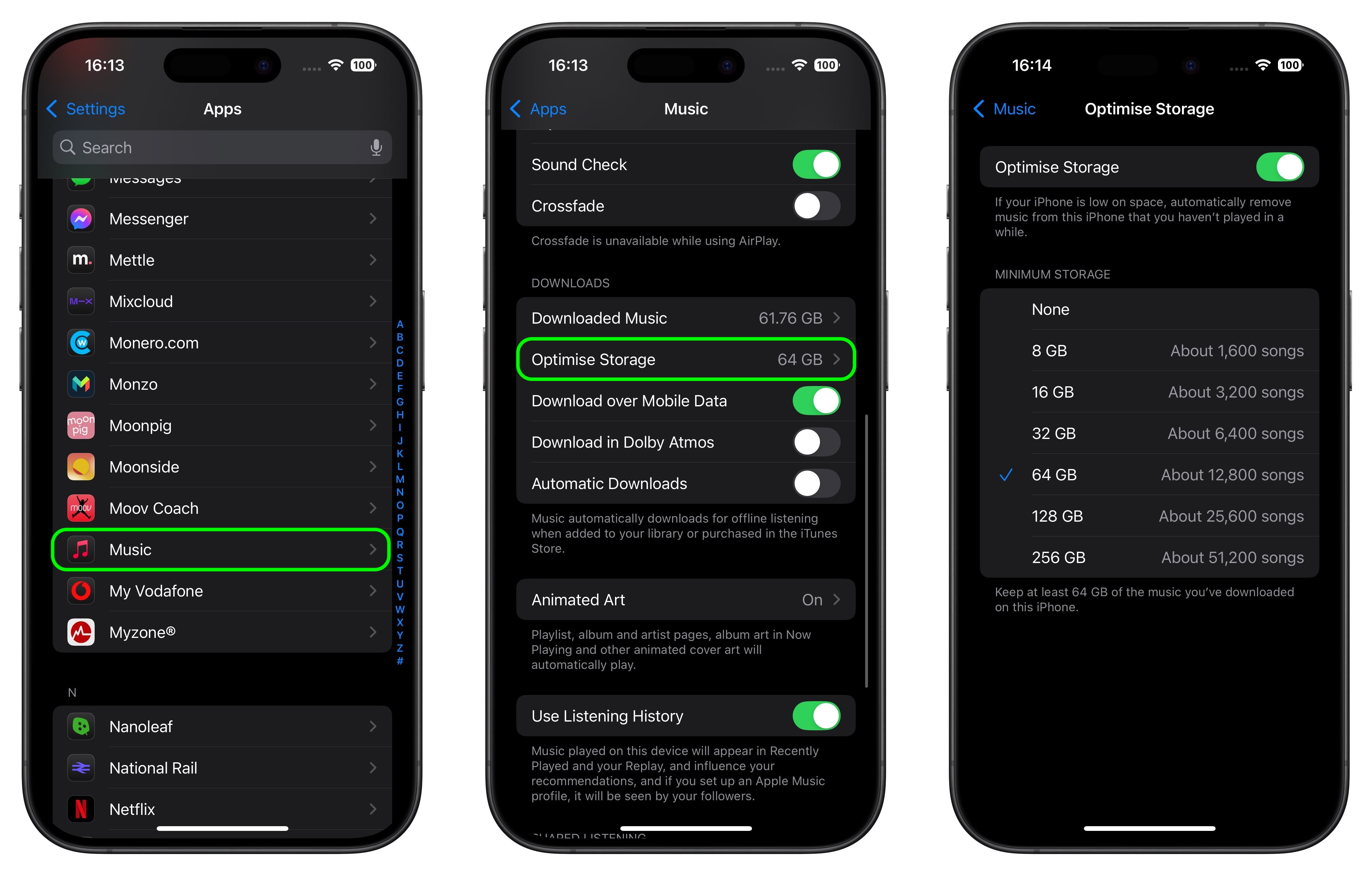
As an Apple Music subscriber, you're able to download songs, playlists, and albums from the Apple Music catalog to your iPhone or iPad for offline listening, but this can gradually eat up your device's storage space over time.


Fortunately the Music app includes a handy feature that can spring into action whenever your device's storage space runs low, and automatically offload songs you haven't played for a while in order to make space for newer ones.

It's called Optimized Storage, and here's how you can enable it.

  1. Launch the Settings app on your iPhone or iPad.

  2. Scroll down to the apps list and select Music.

  3. Under Downloads, tap Optimized Storage.
    settings
  4. Toggle the Optimized Storage switch to the "on" position so that it shows green.

  5. Choose a minimum storage amount that you want to keep for music before downloaded songs start being removed from your device.
You can also monitor storage space by turning off automatic downloads and making sure to download new songs manually when needed. There's also an option to remove downloaded songs one by one from the Apple Music app if you prefer not to have songs offloaded by Apple automatically.
This article, "Cut Apple Music iPhone Storage Usage in Minutes – Here's How" first appeared on MacRumors.com

Discuss this article in our forums

  •  

Apple's Upcoming Home Hub Could Include 'Robotic Swiveling Base'

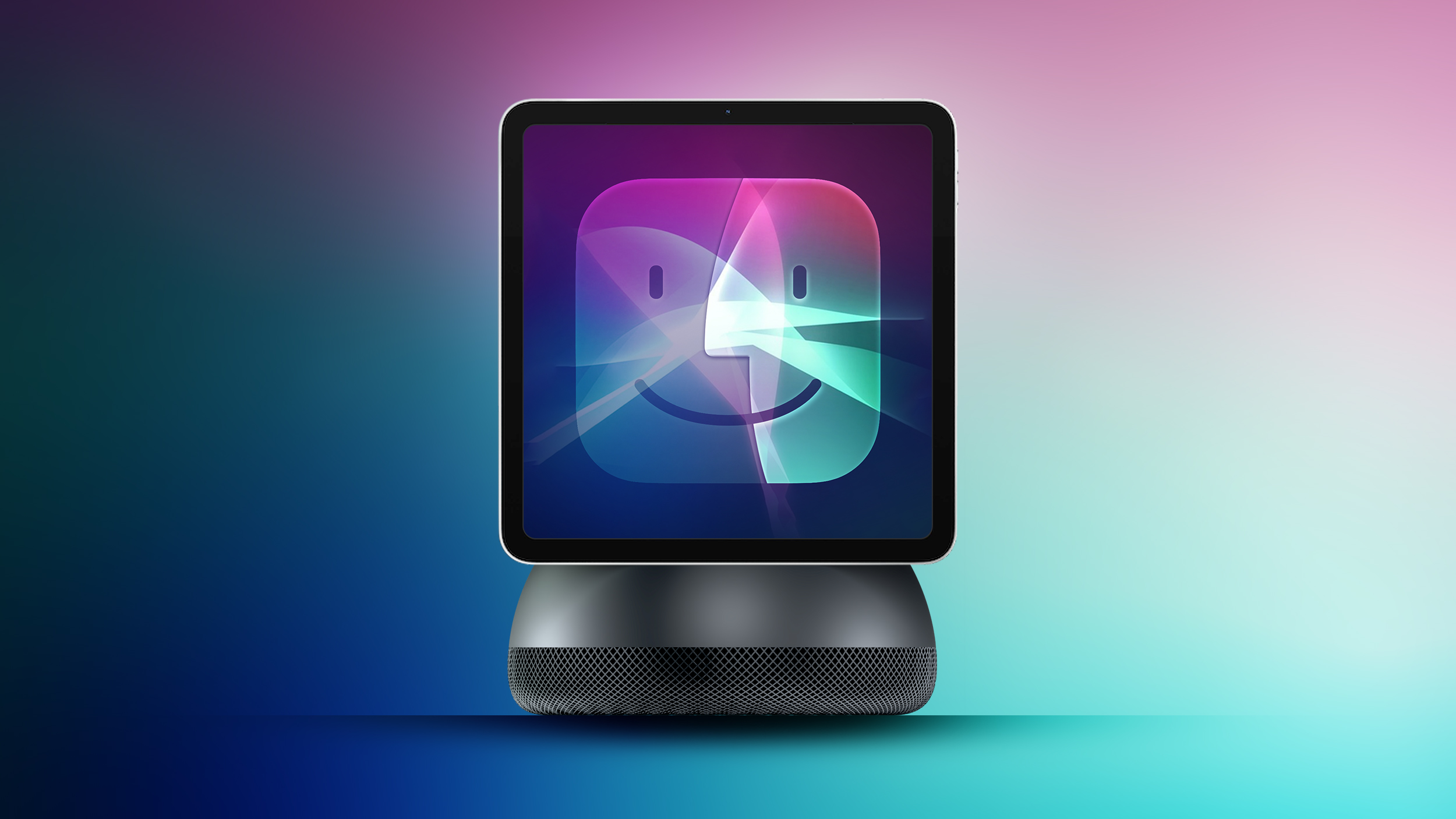
The home hub device that Apple plans to release as soon as this spring has a "robotic swiveling base," according to The Information's Wayne Ma. Ma mentioned the new detail in a piece outlining Apple's work on an AI pin.


Apple is also working on a home product featuring a small display, speakers and a robotic swiveling base, designed with a heavy emphasis on AI features. That device could be released as soon as this spring, according to two of the people.

We've heard a lot of rumors about the home hub because it was supposed to launch in 2025, but to date, no rumors have suggested that it will have a swiveling robotic base. Bloomberg's Mark Gurman previously said that Apple is developing two versions of the hub, one that's meant to be mounted on the wall and another that has a HomePod mini-like speaker base that can be placed on a desktop or countertop.

No prior descriptions of the home hub base have suggested that it will have any kind of swivel function or that it will be robotic. In fact, the wording sounds similar to how Gurman has described Apple's tabletop robot, which will be a 2027 follow up to the home hub.

Gurman said the tabletop robot will have an iPad-like display mounted on a thin robotic arm that allows the display to tilt up and down and rotate 360 degrees. The device will be able to reposition itself to face whoever is speaking, and it is said to have a "visual personality."

Ma did not go into detail on the purpose of the robotic swiveling base, or how it will work, but presumably it would be able to move to face people. The home hub is supposed to have an array of sensors that let it determine when someone is in the room.

We are expecting the home hub to launch in the coming months, right around the time that Apple debuts iOS 26.4 with the upgraded version of Siri.
This article, "Apple's Upcoming Home Hub Could Include 'Robotic Swiveling Base'" first appeared on MacRumors.com

Discuss this article in our forums

  •  

Will Apple Charge for Its Siri Chatbot?

Apple is apparently working on a Siri chatbot that will rival Claude, Gemini, and ChatGPT, and Apple is aiming to debut it in less than six months when iOS 27 is unveiled at WWDC. Bloomberg shared details on the chatbot earlier today, but there was one major question unanswered: what will Apple charge?


Anthropic, Google, OpenAI, and other companies that run major chatbots offer a free version, but it's often throttled and a paid subscription is required for full functionality. Apple is reportedly planning to integrate its Siri chatbot deeply into iOS, iPadOS, and macOS instead of offering a standalone app. A ‌Siri‌ chatbot available on billions of devices is going to be expensive to run, but ‌Siri‌ is also so core to Apple products that people aren't going to want to pay for what's always been free.

What the Siri Chatbot Can Do


Per Bloomberg, the ‌Siri‌ chatbot will be able to "search the web for information, create content, generate images, summarize information and analyze uploaded files." It will also be able to control Apple devices and use personal data and on-screen information for search and to complete tasks. That sounds like just about everything that existing chatbots like ChatGPT can do, plus Apple is integrating the chatbot into all of its apps.

On-Device Siri Chatbot?


Some of those tasks can be completed on-device using the powerful A-series and M-series chips Apple has been building into its products, but Apple is using a custom AI model developed with the Google Gemini team. According to Bloomberg, the model is roughly comparable to Gemini 3, and the full version of Gemini 3 can't run on a high-end Mac, let alone a mobile device.

Apple is going to need servers to run the ‌Siri‌ chatbot, and while it has been building Private Cloud Compute servers for AI features, it's unlikely that it has enough for a ‌Siri‌ chatbot. Bloomberg suggests that Apple is actually discussing running its chatbot on Google servers, and Google isn't going to do that for free.

Compute Costs and Infrastructure


Whether Apple is using its own private cloud compute servers or Google's Tensor servers, it needs serious compute power. Every question ‌Siri‌ is asked and every image ‌Siri‌ generates will cost Apple.

OpenAI is not profitable, and it spends billions on inference each year. OpenAI has committed to spending $1.4 trillion on infrastructure to keep up with demand, an amount of money that it doesn't have yet. Google spent $85 billion on infrastructure to meet AI demand in 2025. In August, Google said that the median Gemini Apps text prompt uses 0.24 watt-hours of energy. At scale, across all Google devices and all Google products, that's hundreds of millions of dollars per year just in electricity costs.

How Gemini is Priced


Google has already integrated Gemini into its Pixel smartphones and other Android devices. It has a split tier system that Apple might adopt.

Android users have access to a free version of Gemini that costs Google less to run. It can answer questions, summarize text, write emails, and control apps and smartphone features. Android users have to pay $20 per month for Gemini Advanced to get access to the more advanced version of Gemini that offers better reasoning, longer context for analyzing bigger documents, and improved coding.

Apple could do something similar, offering a basic version of ‌Siri‌ that's accessible to everyone, with more advanced models available with a subscription. iCloud already provides a model for a free/paid product split. Apple offers all Apple users 5GB of cloud storage for free, but anything more will cost you.

Temporarily Free?


Apple could make its ‌Siri‌ chatbot free to use to begin with, which would lure users who are paying for other services like ChatGPT. ChatGPT, Claude, and Gemini are all around $20 per month, so Apple eating ‌Siri‌ chatbot costs for a year or two would be hard to compete with. Even undercutting current prices would likely lure customers and make Apple an immediate key player in the AI market.

Right now, Apple Intelligence is entirely free to use even for images generated with Image Playground, but the capabilities are limited and some functionality runs on-device.

Possible Cost


Apple might not be able to absorb AI costs, and there could be paid options right when the ‌Siri‌ chatbot launches. If that's the case, pricing will likely be competitive with existing chatbots.

AI companies have decided entry-level plans should cost $20/month, but it's not clear if that price point is actually sustainable with the growing costs of training new models and supporting more users.

  • ChatGPT Plus - $20/month

  • Copilot Pro - $20/month

  • Gemini Advanced - $19.99/month

  • Claude Pro - $20/month

  • Perplexity Pro - $20/month


Siri ChatGPT Integration


Right now, Apple has a partnership with OpenAI to hand complex requests off to ChatGPT. Apple doesn't pay OpenAI for this feature, but it does put ChatGPT in front of millions of Apple users. When Apple launches its ‌Siri‌ chatbot, ChatGPT integration could be removed.

Eliminating the ChatGPT integration might also impact Apple's legal battle with Elon Musk. Musk's xAI company sued Apple and OpenAI for colluding to promote ChatGPT over other AI bots like Grok, arguing that Apple should let other chatbots integrate with ‌Siri‌.

If Apple stops offering ChatGPT through ‌Siri‌ in favor of its own ‌Siri‌ chatbot, it would be no different than Google integrating Gemini into all Android devices, or Meta limiting its smart glasses to Meta AI.

Launch Timing


We'll probably be hearing more about the ‌Siri‌ chatbot in the coming months. Apple is aiming to unveil the functionality in iOS 27, iPadOS 27, and macOS 27, which will be previewed in June at WWDC.
This article, "Will Apple Charge for Its Siri Chatbot?" first appeared on MacRumors.com

Discuss this article in our forums

  •  

Apple Developing AirTag-Sized AI Pin With Dual Cameras

Apple is working on a small, wearable AI pin equipped with multiple cameras, a speaker, and microphones, reports The Information. If it actually launches, the AI pin will likely run the new Siri chatbot that Apple plans to unveil in iOS 27.


The pin is said to be similar in size to an AirTag, with a thin, flat, circular disc shape. It has an aluminum and glass shell, and two cameras at the front. There is a standard lens and a wide-angle lens that are meant to capture photos and videos, while three microphones are designed to pick up sound around the wearer. An included speaker allows the pin to play audio, and there is a physical control button along one edge. The device is able to wirelessly charge like an Apple Watch.

Apple wants the final version of the pin to be about the same size as an ‌AirTag‌, but it will be slightly thicker. Currently, there is no built-in attachment method, but that could change later in development.

The Information says it is not clear if Apple plans to sell the pin on its own or bundle it with future smart glasses or other devices, but the physical button and built-in cameras, speakers, and microphones suggest that it can operate independently.

AI pins and wearables have not fared well so far, but multiple companies are developing AI wearables. OpenAI is teaming up with Jony Ive for some kind of small AI device that may or may not be wearable, and it has multiple other AI products in the works. Meta has AI glasses, and Amazon has the Bee bracelet. Dozens of other small companies have created small, AI-integrated wearables and devices, which means Apple needs to keep pace.

Apple's AI pin could be released as soon as 2027, but The Information cautions that development is in the early stages and could be canceled.
This article, "Apple Developing AirTag-Sized AI Pin With Dual Cameras" first appeared on MacRumors.com

Discuss this article in our forums

  •  

Mark Your Calendar: Apple's Key Dates to Watch Over the Next Month

While the first few weeks of 2026 have been relatively slow for Apple, things should start to pick up soon. Apple Creator Studio launches next week, and there are a handful of other items on the company's agenda over the next month.


Below, we have listed key Apple dates to watch through February:


  • Friday, January 23: Apple's retail store at Santa Rosa Plaza in Santa, California is moving to Montgomery Village. The grand opening is at 12 p.m. local time.

  • Wednesday, January 28: Apple Creator Studio launches. The all-in-one subscription bundle provides access to the Final Cut Pro, Logic Pro, Pixelmator Pro, Motion, Compressor, and MainStage apps, along with premium content across the Final Cut Pro, Pixelmator Pro, Numbers, Pages, Keynote, and Freeform apps. In the U.S., pricing is set at $12.99 per month or $129 per year.

  • Thursday, January 29: Apple will report its earnings results for the first quarter of its 2026 fiscal year, which encompasses the holiday shopping season. Apple updated the iPad Pro, MacBook Pro, and Vision Pro with the M5 chip during the quarter. Apple's CEO Tim Cook and CFO Kevan Parekh will discuss the results on a conference call at 5 p.m. Eastern Time. You can listen live on Apple's website.

  • Thursday, February 5: Another four games are coming to Apple Arcade, including Retrocade, an app that lets you play classic arcade games like Asteroids, PAC-MAN, Breakout, Galaga, and Space Invaders. One of the other additions will be an arcade version of the popular PC game Sid Meier's Civilization VII.

  • Friday, February 6: Apple will accept submissions for the 2026 Swift Student Challenge from Friday, February 6 through Saturday, February 28. Some of the winners will be invited to spend three days at Apple Park during WWDC 2026 in June.

  • Sunday, February 8: Apple Music is the official sponsor of the Super Bowl LX Halftime Show, set to be held on Sunday, February 8. This year's performer is Puerto Rican rapper and singer Bad Bunny.

  • Tuesday, February 10: A few years ago, Apple's Home app was rearchitected, and the company will be ending support for the original architecture on this day. If you do not update, Apple warns you might experience issues.

  • Tuesday, February 24: Apple will be holding its annual shareholders meeting at 8 a.m. Pacific Time, and it will once again be held virtually. Apple shareholders of record as of January 2, 2026 can vote to re-elect the company's board of directors, ask questions, and more. Apple rarely answers any questions about future plans, so the meetings are often unremarkable from a news perspective.

These are only the dates that we know about, and there could be new product announcements and more over the coming weeks. Stay tuned!
This article, "Mark Your Calendar: Apple's Key Dates to Watch Over the Next Month" first appeared on MacRumors.com

Discuss this article in our forums

  •  

A Siri Chatbot is Coming in iOS 27

Apple plans to turn Siri into a chatbot that will rival Anthropic's Claude, Google's Gemini, and OpenAI's ChatGPT, reports Bloomberg. Apple did not initially plan to introduce a chatbot, but their popularity forced Apple executives to reconsider.


Codenamed Campos, the ‌Siri‌ chatbot will be integrated into iOS 27, iPadOS 27, and macOS 27, replacing the current version of ‌Siri‌. It will have the same natural language conversation functionality as chatbots like ChatGPT, and it will be accessible by using the "‌Siri‌" wake word or by holding down the side button on an iPhone or iPad.

Apple is testing the ‌Siri‌ chatbot as a standalone app, but it won't be offered in app form. Instead, it will be built directly into Apple devices. Apple plans to power the chatbot with a custom model based on Google Gemini.

Apple's chatbot will be able to search the web, generate content like images, help with coding, summarize information, and analyze uploaded files. It will be able to use personal data on a person's device to complete tasks, and it will result in a much improved search feature. Apple is also designing a feature that will let the ‌Siri‌ chatbot view open windows and on-screen content, as well as adjust device features and settings.

‌Siri‌ will integrate into all Apple apps, including Photos, Mail, Messages, Music, and TV, and it will be able to access and analyze content in the apps to respond to queries and requests. There will be voice and type-based interface options.

Apple is considering how much the ‌Siri‌ chatbot will remember. Claude and ChatGPT are able to glean information about users from past conversations for personalization purposes, but Apple may limit ‌Siri‌'s memory for privacy purposes.

The ‌Siri‌ chatbot will be an upgrade to the more personalized version of ‌Siri‌ that Apple plans to roll out in iOS 26.4. With iOS 26.4, Apple will make ‌Siri‌ more capable, implementing the Apple Intelligence features that it initially promised in iOS 18. The much more powerful chatbot version of ‌Siri‌ will follow later in the year, in iOS 27 and its sister updates.

Apple currently plans to unveil ‌Siri‌ chatbot at the Worldwide Developers Conference in June, after which testing of iOS 27 will begin.

The ‌Siri‌ chatbot will be the key new feature in iOS 27, iPadOS 27, and macOS 27, with Apple otherwise focusing on fixing bugs and improving performance.
This article, "A Siri Chatbot is Coming in iOS 27" first appeared on MacRumors.com

Discuss this article in our forums

  •  

Apple Employees Using 'Enchanté' Internal AI Chatbot to Speed Up Work

Apple hasn't developed an AI chatbot for consumers, but it has been using them internally for some time now. Last year, Bloomberg's Mark Gurman detailed a Veritas chatbot to test the new version of Siri, and now Macworld has shared details on two other AI tools that Apple employees are allegedly using.


Enchanté is apparently a chatbot that rolled out to employees in November 2025, and it is an "internal ChatGPT-like assistant" that Apple workers can use for "ideas, development, proofreading, and even general knowledge answers."

The tool is said to look similar to the ChatGPT app for macOS, and it runs models approved by Apple. It is run locally or on private servers, and it incorporates Apple Foundation Models, Claude, and Gemini. Employees can upload documents, images, and files for analysis, and the app can access files stored on a Mac.

Apple encourages employees to use Enchanté as a test platform and for everyday work tasks, because it incorporates Apple internal documentation and guidelines.

The second AI tool that Apple developed is called Enterprise Assistant, and it is designed to be a knowledge hub for corporate employees. Macworld says that it has a database of Apple internal policies, so workers can ask questions about everything from company conduct guidelines to health insurance benefits.

It's no surprise that Apple is using AI tools internally, and there have been reports about Apple testing different AI features and platforms since 2023. In 2024, for example, Apple tested a ChatGPT-like generative AI tool that allows AppleCare employees to speed up technical support.

Apple hasn't rolled out consumer-facing chatbot features as of yet, but it has tested a Support Assistant in the Apple Support app. The Support Assistant uses natural language to provide users with help solving issues with Apple devices.

Later this year, Apple plans to introduce an overhauled version of ‌Siri‌ that's powered by Google Gemini, and it will also incorporate chatbot features.
This article, "Apple Employees Using 'Enchanté' Internal AI Chatbot to Speed Up Work" first appeared on MacRumors.com

Discuss this article in our forums

  •  
❌