Discover how widespread self-sabotaging behavior is linked to how our brains evolved in a world full of unknown dangers and how to break the cycle for good.
Learn how radio observations uncovered unusually hot gas inside a young galaxy cluster, revealing how black holes and star formation may heat clusters far earlier than expected.
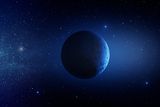
Thanks to an enormous stroke of luck and serendipitous timing, astronomers were able to calculate the mass and distance of a free-floating planet for the first time. Learn more about it.
Multiple studies have linked cellphone use to an increased risk of car accidents. Learn how new research suggests delays in rapid-eye movement when talking might be at least partly to blame.
Learn how ancient DNA from human remains provided the first direct evidence that a common childhood virus has been part of the human genome since the Iron Age.
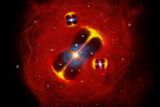
Learn more about IRAS 23077+6707, a protoplanetary disk, nicknamed Dracuala's Chivito, that may serve as a planet nursery and be the largest disk ever observed in visible light.
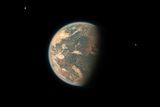
What planet is most like Earth? Reseachers have identified several exoplanets similar to our planet, but none that are an exact twin. Learn how new technology could help aid in the search.
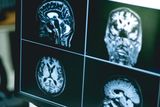
More than 3 million children take medication to manage ADHD symptoms. Discover how new research suggests they may work a little differently than thought.
Learn more about the theory that the faces we see in dreams come from faces we've encountered in real life, and how testing that theory is nearly impossible.
 Connexion