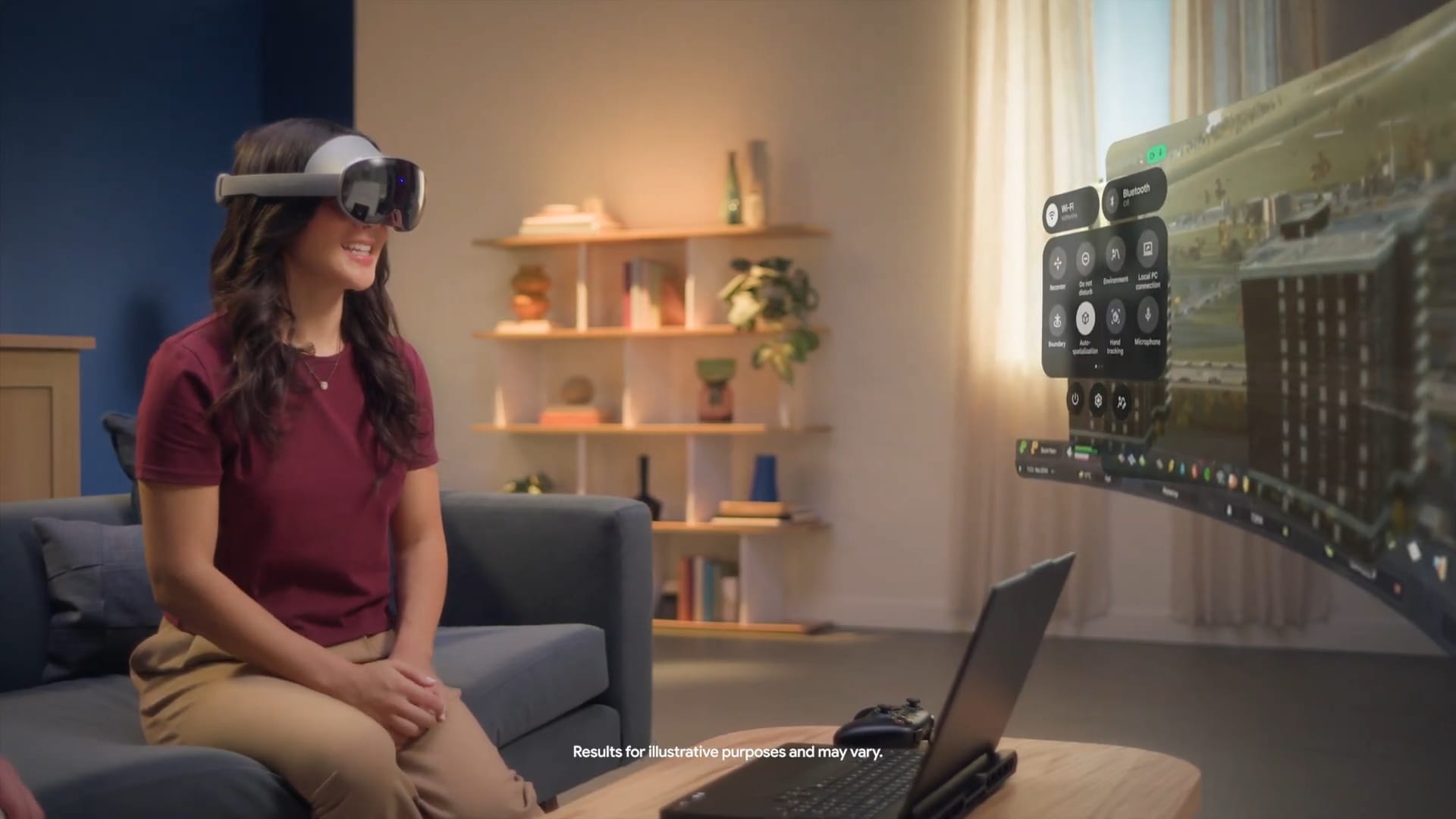
Google's Android XR is getting an AI feature that can turn any 2D content, including games streamed from your PC, into 3D in real-time.
Called System Autospatialization, Google formally announced the feature during The Android Show: XR Edition today, saying that it will arrive in 2026.
"Just imagine if every game was immersive, every YouTube video was immersive, if the entire web was immersive," Google teased.
Out of the box, other platforms like visionOS and Pico OS let you easily turn 2D photos 3D, but Google's Android XR is currently the only that does the same for video. The move to real-time spatialization will be an even greater leap, and it's surprising that it's possible at all on the XR2+ Gen 2 chipset.
0:00
/0:10
Android XR System Autospatialization
Google says it will work for "pretty much any" app, and in multiple apps at once. The company's presentation depicted it being used for playing Cities: Skylines streamed from a PC, with the AI system being able to tell the difference between the foreground UI and background game world.
We'll be sure to test the feature out when it launches on Android XR for Samsung Galaxy XR next year.
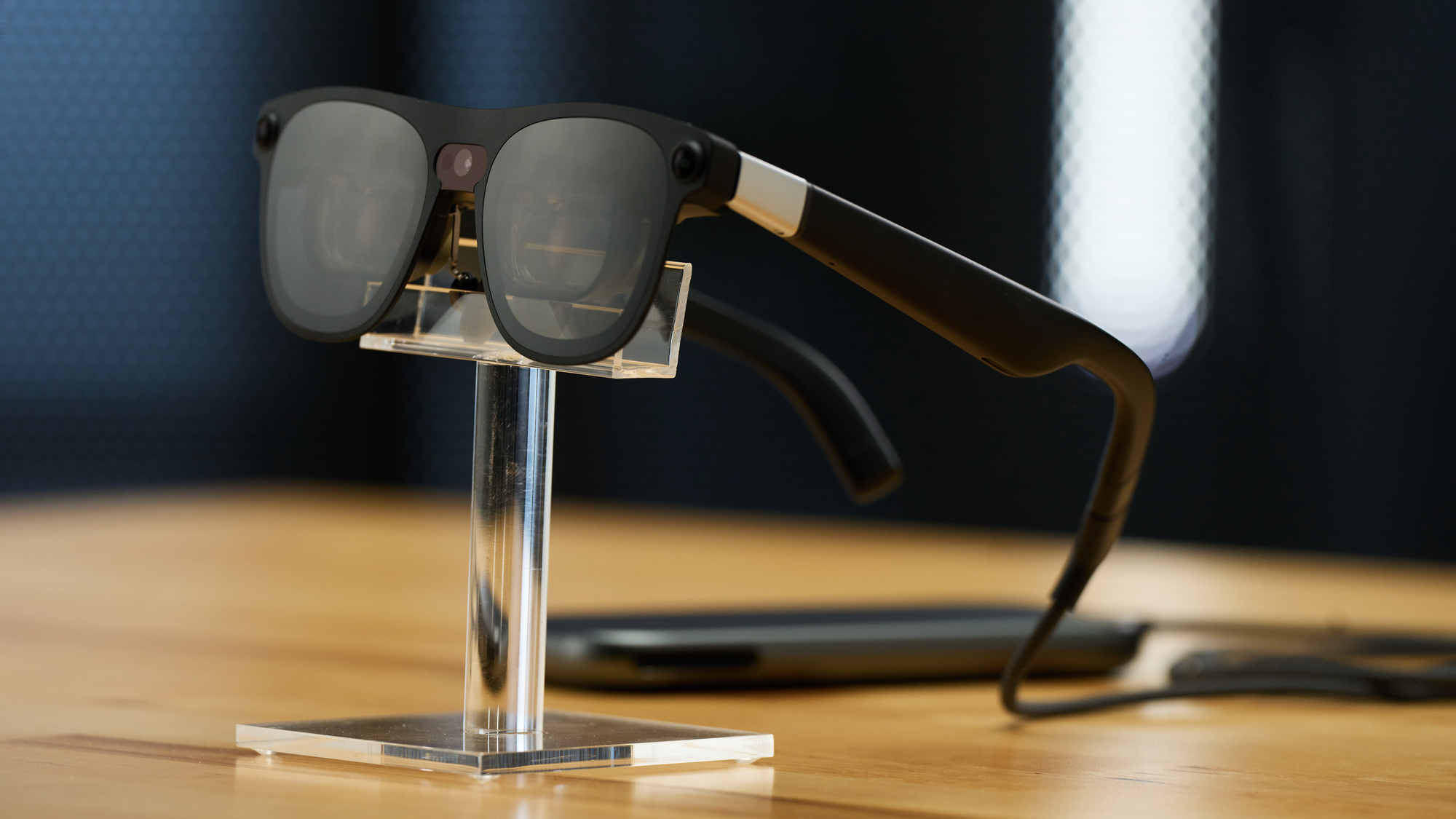
The first clip of Xreal's Project Aura in use has been revealed.
A concept render was shown at Google I/O earlier this year when Project Aura was first announced as the second Android XR device, set to launch next year.
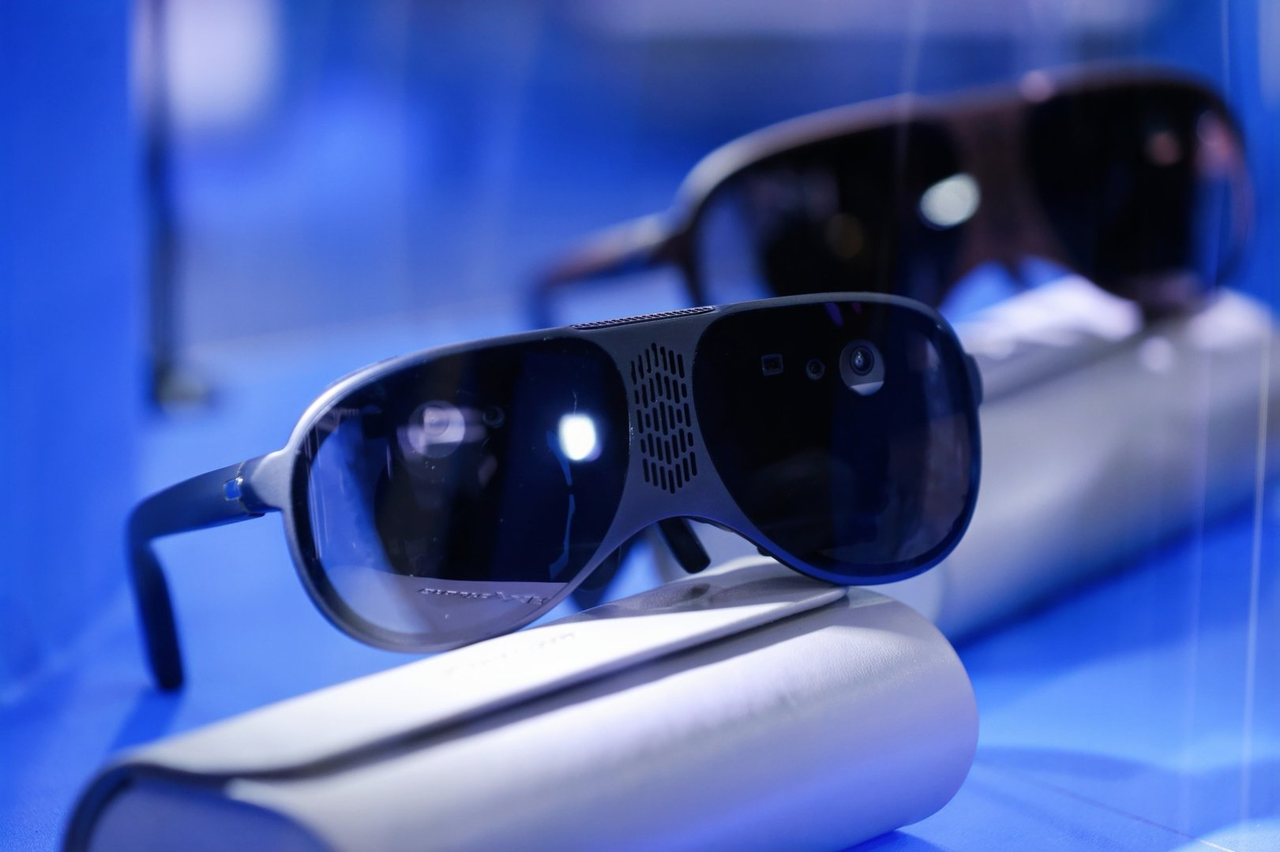
It's a prism-lens see-through device in a form factor that tries to imitate the basic appearance of sunglasses, as with Xreal's existing products. But while Xreal's current products primarily act as a virtual monitor for your existing devices, via the included cable, Project Aura will come with a tethered compute puck running Google's Android XR on a Qualcomm Snapdragon chipset.
0:00
/2:35
Xreal says Project Aura will have a field of view of 70 degrees diagonal, its widest yet, and have built-in head and hand tracking.
Most features and apps available on Galaxy XR will also run on Project Aura's puck, with some notable exceptions such as the face-tracked Likeness realistic avatars, as Aura doesn't have face tracking.
Today, during The Android Show: XR Edition, Google and Xreal showed off the device in a short clip. They also confirmed that it's still on track to launch in 2026 – just days after internal Meta memos leaked revealing that its headset with a tethered puck is delayed to 2027.
Note that while Xreal devices are designed to look like sunglasses, they sit much further out from your eyes than real glasses, and thus are a markedly different device category than the AR glasses in development at Meta and Apple. Those future AR glasses use a display technology called waveguides to sit as close to your eyes as regular glasses, while Xreal uses a far cheaper but also far bulkier optical approach. They also block out most light, so can't be used as regular indoor prescription glasses.
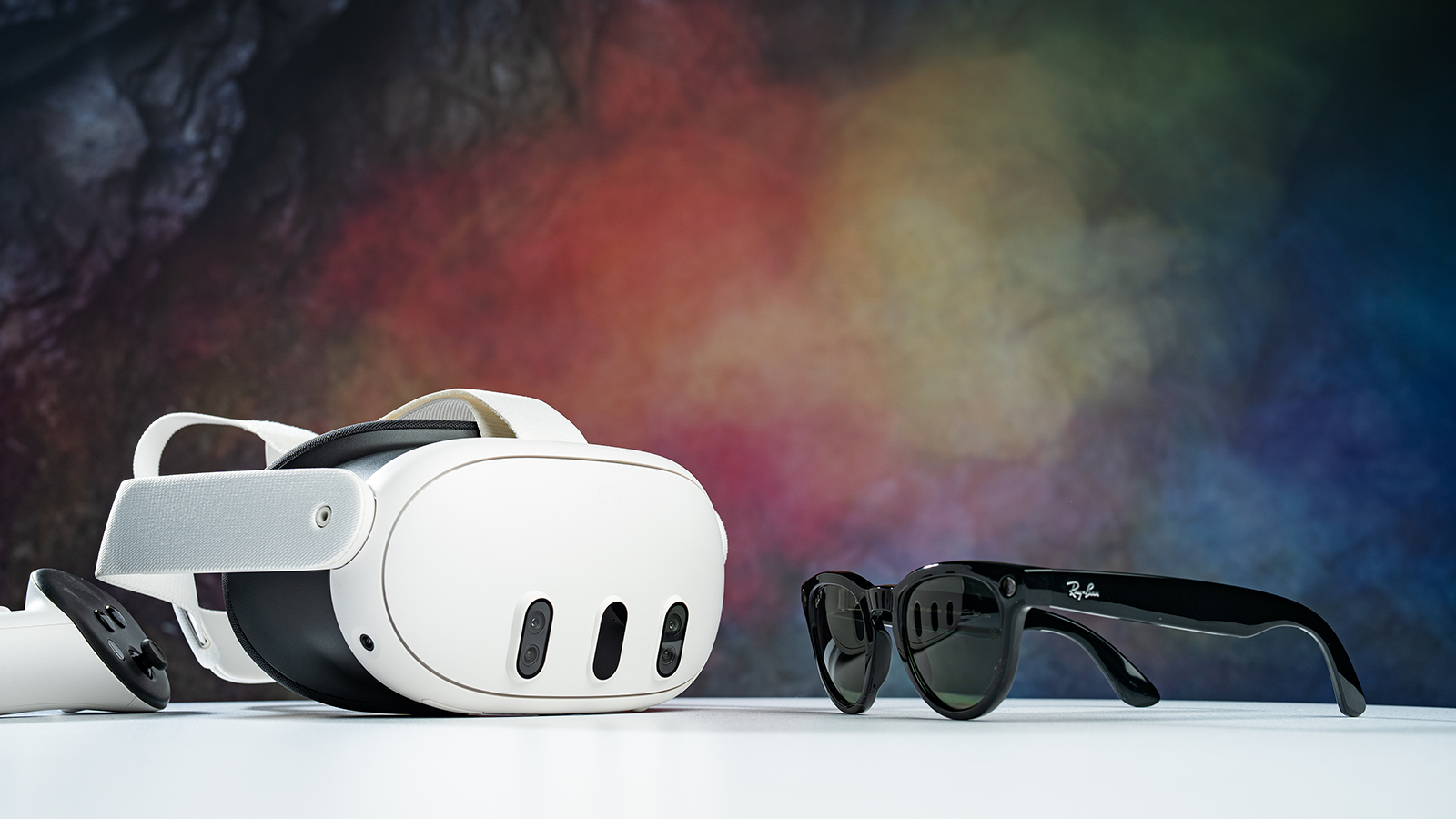
Form factor comparison: Ray-Ban Meta vs Meta Ray-Ban Display vs Xreal One Pro.
Essentially, you can think of Project Aura as a lightweight alternative to Samsung Galaxy XR that trades off field of view and opacity for sleekness, rather than competition for future outdoor AR glasses.
The confirmation that Project Aura is still set to ship in 2026 comes one month after Lynx revealed that Google terminated its Android XR deal. After Samsung, Lynx, Xreal, and Sony were the three companies Google had earlier confirmed were working on Android XR products. While declining to comment on the Lynx situation, Google confirmed that it's still working with Sony, though we've yet to see even a tease of a Sony Android XR device, and its SRH-S1 headset runs Sony's own fork of Android.
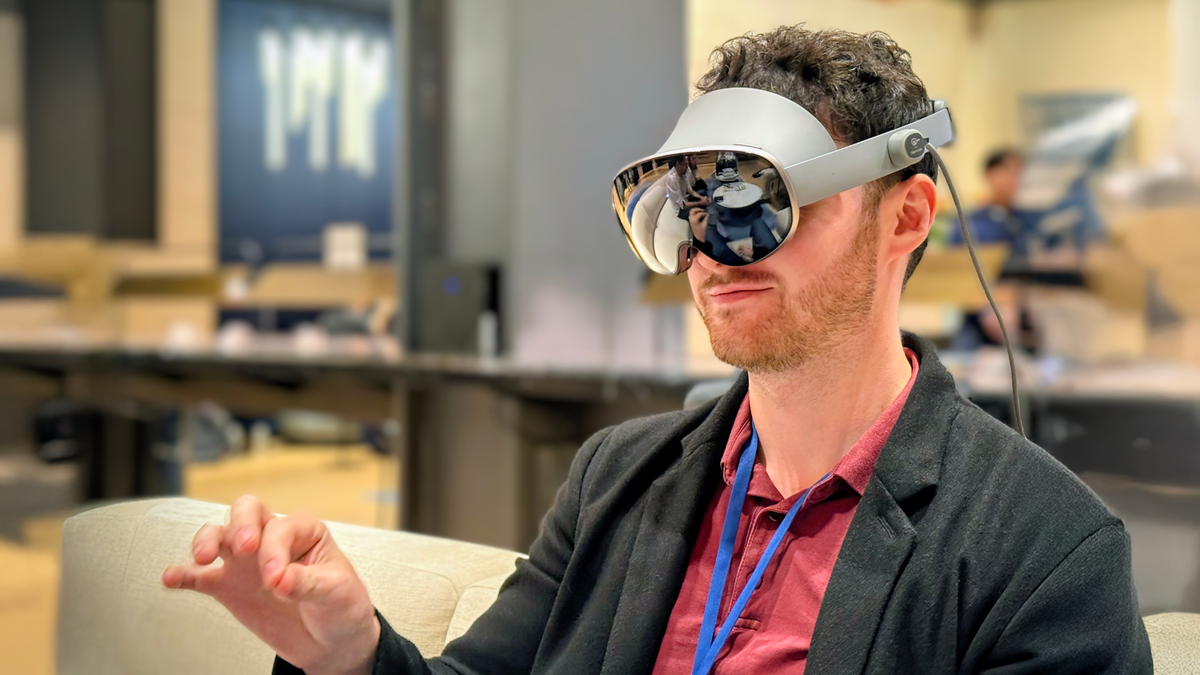
The first major update for Google's Android XR on Samsung Galaxy XR is rolling out now.
The update brings a beta release of Google's Persona-like realistic avatar system for video calls, called Likeness, a Travel Mode, and a beta for a built-in PC remote desktop feature for Windows called PC Connect.
Likeness is Google's realistic avatar system for video calls in Android XR, an equivalent to the original non-spatial mode of Apple Vision Pro's Personas.
Your Likeness replaces the video feed that apps would normally get from a phone's selfie camera, providing a virtual equivalent, and should thus work for any video calling platform without developer implementation.
0:00
/0:26
Android XR's Likeness on Samsung Galaxy XR.
Unlike with Vision Pro, you scan your face for Likeness by holding up your phone, not the headset itself. From here, the data is transferred to and securely stored on the headset. The Likeness app is currently only available on "select Android device models".
In video calls on Android XR, your Likeness is driven by Galaxy XR's eye tracking and face tracking capabilities in real-time, and the feed shows a virtual representation of your hands when you hold them up too.
Travel Mode
Android XR now has a Travel Mode, which when enabled, makes the positional tracking work properly on moving vehicles, such as planes and trains.
Apple was the first to launch this feature, alongside Vision Pro, and since then Meta, Pico, and Snap have followed.
0:00
/0:25
Android XR's Travel Mode
Without a Travel Mode, the accelerometer and gyroscope in the headset's IMU will interpret the acceleration, orientation changes, and vibrations of the vehicle as your head movement, causing virtual objects and windows to drift off in the opposite direction.
Travel Mode works by having the headset rely more on computer vision from the cameras, typically incurring a small loss in tracking quality.
PC Connect (Beta)
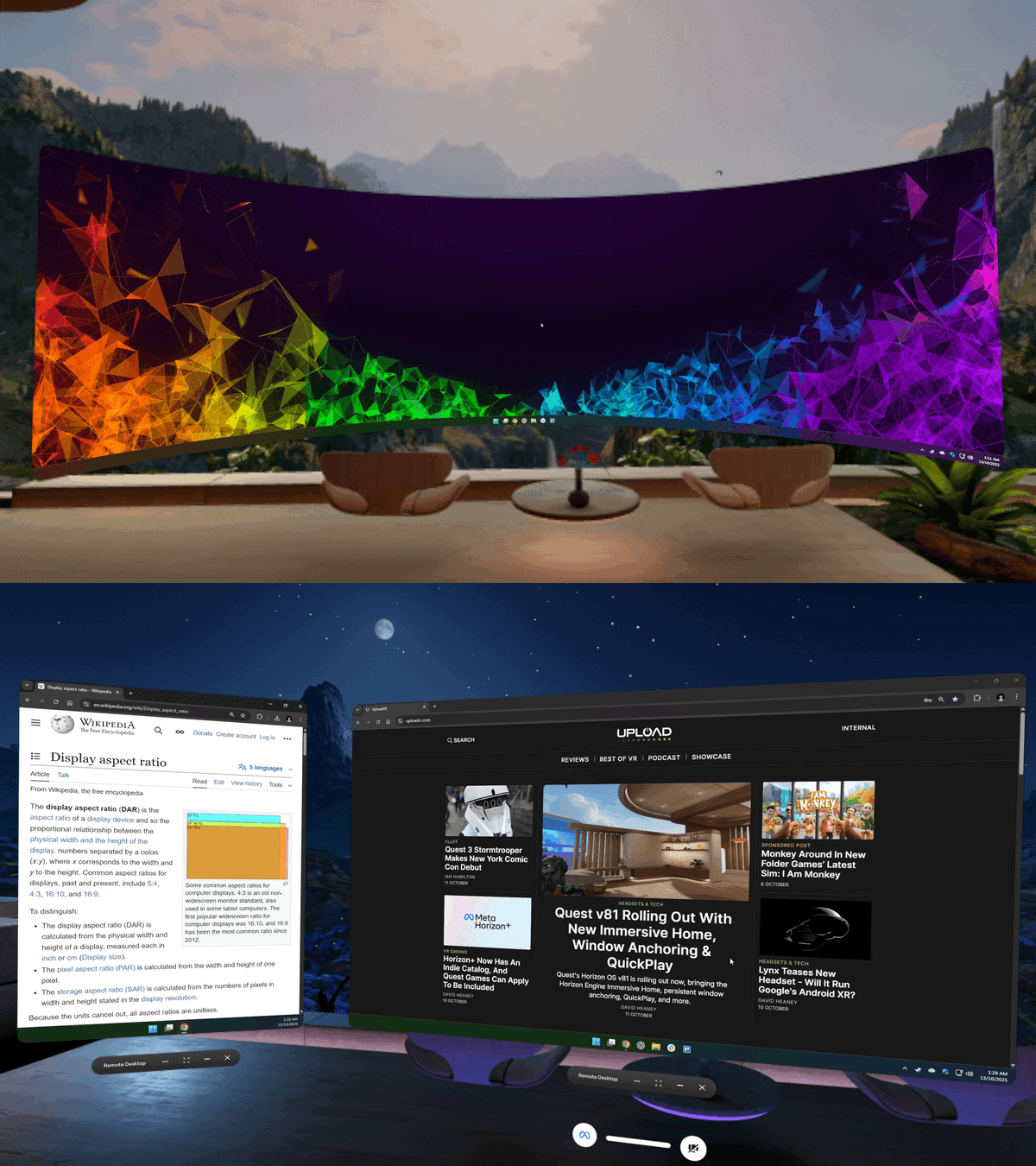
PC Connect (beta) is a feature that lets you connect to and control your Windows PC as a virtual screen in Android XR.
0:00
/0:37
PC Connect on Android XR
After installing the streamer app on your PC, you can mirror your entire desktop or one window.
There are already many third-party apps on the Google Play Store that can do this, including Guy Godin's Virtual Desktop, but PC Connect offers a built-in option.
Meta has a partnership with Microsoft for an officially supported Windows 11 remote desktop system, leveraging the operating system's RDP system, with support for virtual extra monitors and multiple aspect ratios. Android XR's PC Connect doesn't seem to have Microsoft's involvement, and seems more basic for now, at least in beta, lacking these more advanced options.
We'll keep a close eye on Google through 2026 for further Android XR updates, such as whether a spatial version of Likeness arrives or advanced virtual monitor options for PC Connect.
Meta is delaying its ultralight headset with a tethered puck to the first half of 2027, and, separately, starting work on a gaming-focused Quest 4, leaked memos reveal.
The two internal memos were sent earlier this week. They were first reported by Business Insider a few hours ago, and UploadVR can independently confirm their authenticity.
One was sent by VP of Reality Labs Maher Saba to staff, and mentions delaying the ultralight open-periphery headset with a tethered compute puck running Horizon OS that multiple reports, including our own, have suggested that Meta recently hoped to release next year. Various codenames have leaked for candidates for the product, including Puffin, Phoenix, and Loma.
Saba tells staff that the new goal is to release the ultralight device in the first half of 2027.
The headset will be focused on virtual screens and other seated use cases. Names that Meta has internally floated for the product have included "Quest Air", but it's far from certain what it will decide.
His memo also mentions the release of a new "limited edition" wearable device codenamed Malibu 2 in 2026. It's unclear what this will be, but it might be the rumored Prada Meta Glasses.
The other memo comes from the heads of the Metaverse and Horizon OS groups within Reality Labs, Gabriel Aul and Ryan Cairns.
They suggest that the ultralight headset delay will give staff "a lot more breathing room to get the details right".
"There's a lot coming in hot with tight bring-up schedules and big changes to our core UX, and we won't compromise on landing a fully polished and reliable experience", they say.
Aul and Cairns also mention starting work on a next-generation mainline headset, which UploadVR understands would likely carry the name Quest 4.
This headset will focus on immersive gaming, bring a "large upgrade" over Quest 3, and "significantly improve unit economics". That strongly suggests an end to the strategy of subsidizing low-cost devices. Meta wants to slowly transition Reality Labs into a profitable division, and this will be a key part of that plan.
Work on a Quest 4 comes around six months after the cancellation of the previous candidates for a 2026 Quest 4 and Quest 4S line, a decision Meta made alongside prioritizing the release of the ultralight headset.
The new plans suggest the ultralight headset should land in the first half of 2027, with a traditional Quest 4 following at a later date, perhaps in the second half or in 2028.
The leaked memos come shortly after Meta officially confirmed "shifting some of our investment from Metaverse toward AI glasses and Wearables". And to be clear, within Meta, Wearables does not include Quest.
That doesn't seem to be stopping the company working on new headsets, but Saba's memo does mention needing to be "focused on making the business sustainable", and not subsidizing Quest 4 seems to be the result of that budget pressure.
He also mentions that teams should not use the ultralight headset delay to "add more features or take on additional work", and instead focus on polishing what they already plan.
Keep in mind that Meta's hardware roadmap is constantly shifting, and the company frequently spins up and cancels headsets before they ship. When a specific product gets close to shipping, we'll bring you any reliable rumors of its imminent arrival. Until then, be ready for anything planned to get canceled or delayed.
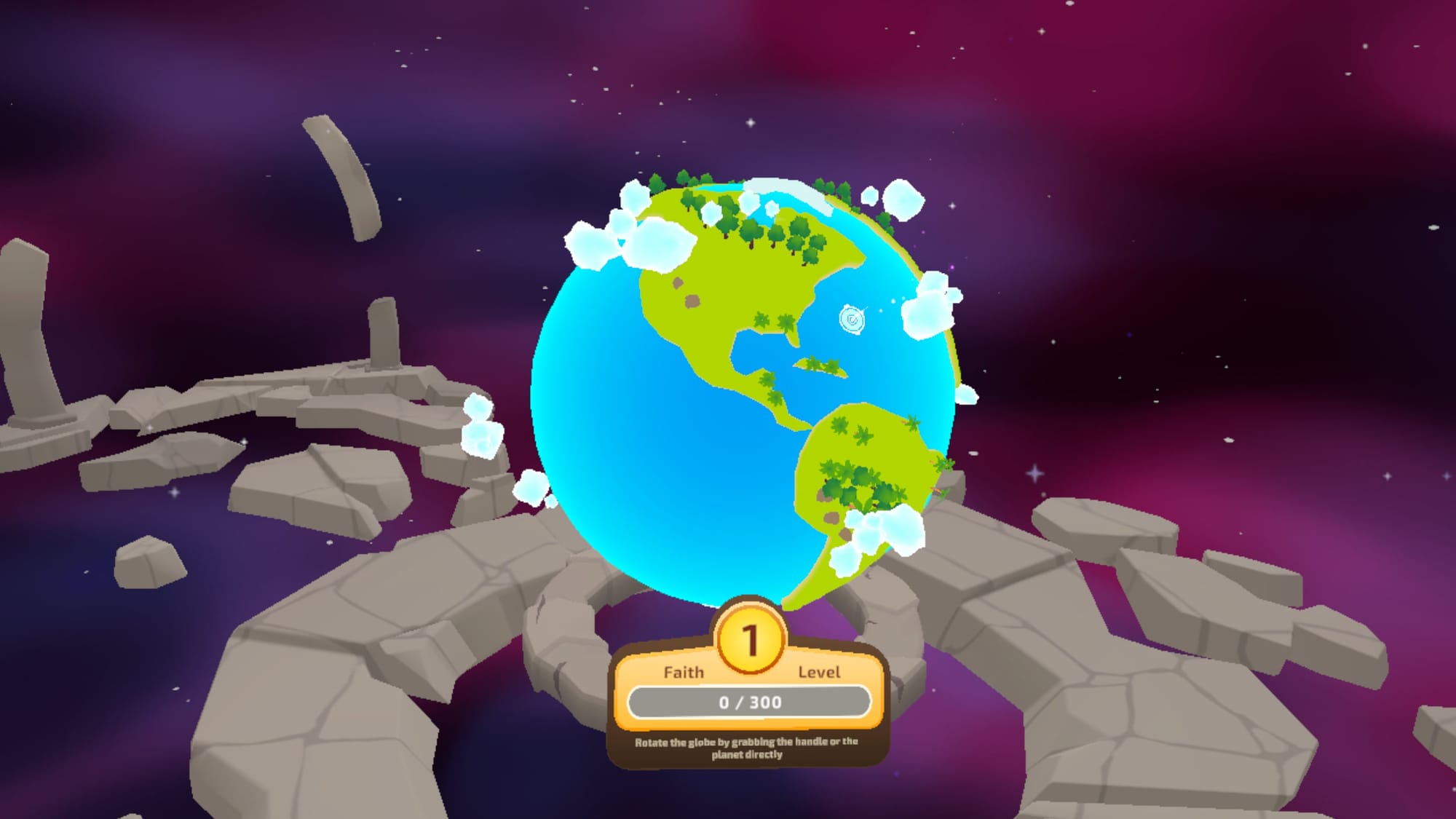
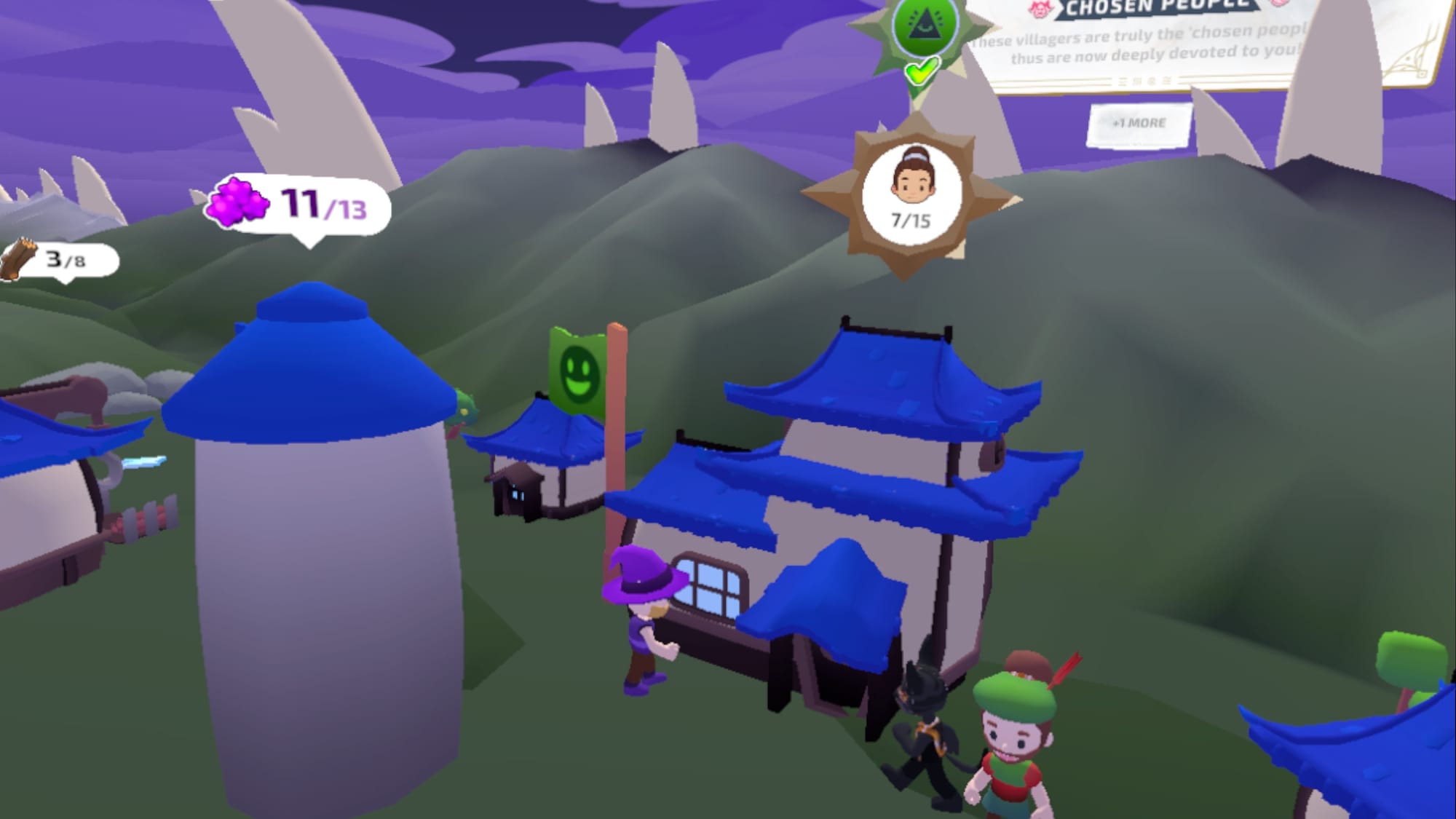
This week marks the early access arrival of How to God, a deity simulator that encourages you to nurture your followers – or ruin them emotionally.
I played through the full campaign, taking me through a story of deities building alliances – or facing off against one another. Inspired by the gods of real-world civilizations, How to God is a decent, well-paced entry in the god game genre, though you may want to turn off the AI-generated voicework.
The Facts
What is it?: Become a great deity in the sky, convert humble villagers to devout followers (through faith or fire), and uncover the mysterious powers threatening your lands. Platforms: Reviewed on Meta Quest 3. Also available on Quest 2. Release Date: Out now (coming soon to Steam) Developer/Publisher: Thoughtfish GmbH Price: $29.99
How to God feels similar to Townsmen VR due to its narrative-driven campaign, villager-care mechanics, and ability to drop right into the action – or rule from the heavens. While the two games share a similarly cute, stylized aesthetic, some surprisingly dark themes may emerge from How to God. No spoilers, but I loved the spiciness these surprises added to my playthrough.
How to God also differentiates itself from Townsmen through a couple of more mystical features, such as “miracles” (hand-tracking gestures to create balls of water, or open portals back to your God Room) and Creatures.
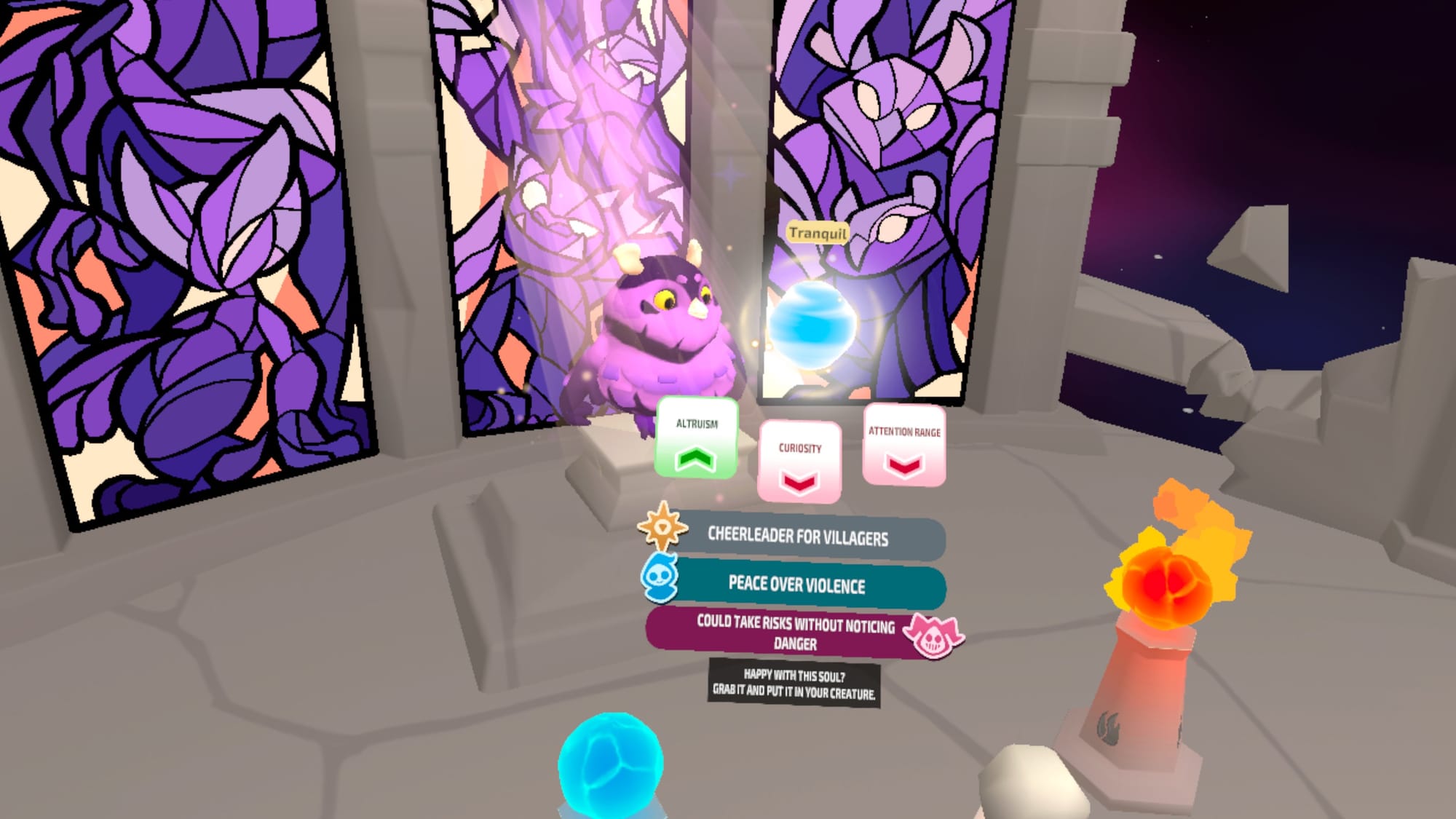
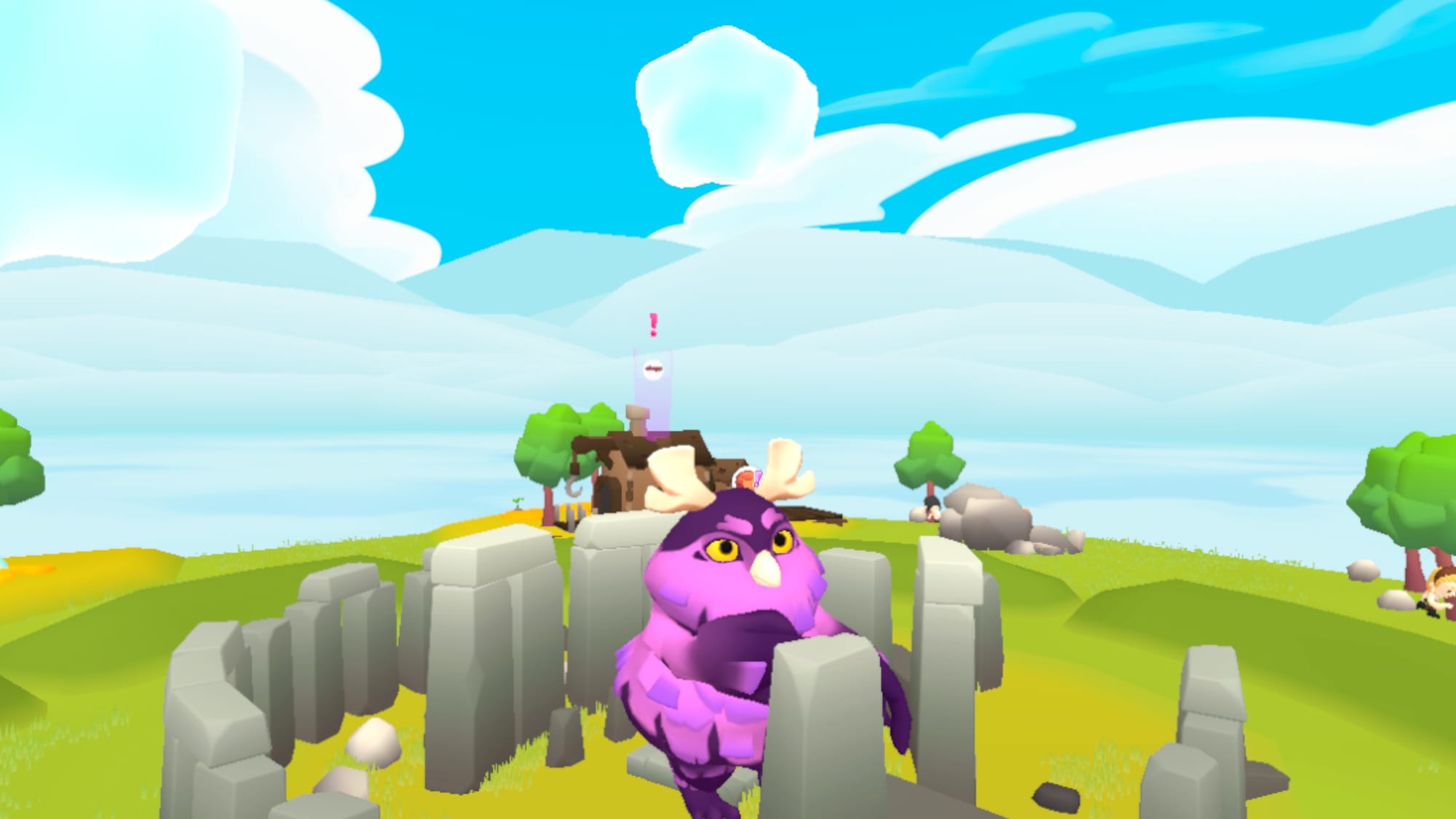
You’ll first meet your Creature – a semi-autonomous conduit for your godly intentions – in the Godroom (a fancy term for “main menu”). I chose a cute, fat owl, but there are two other options as well: one looks like a horned, contorted Labubu doll and an off-brand canine Pokémon.
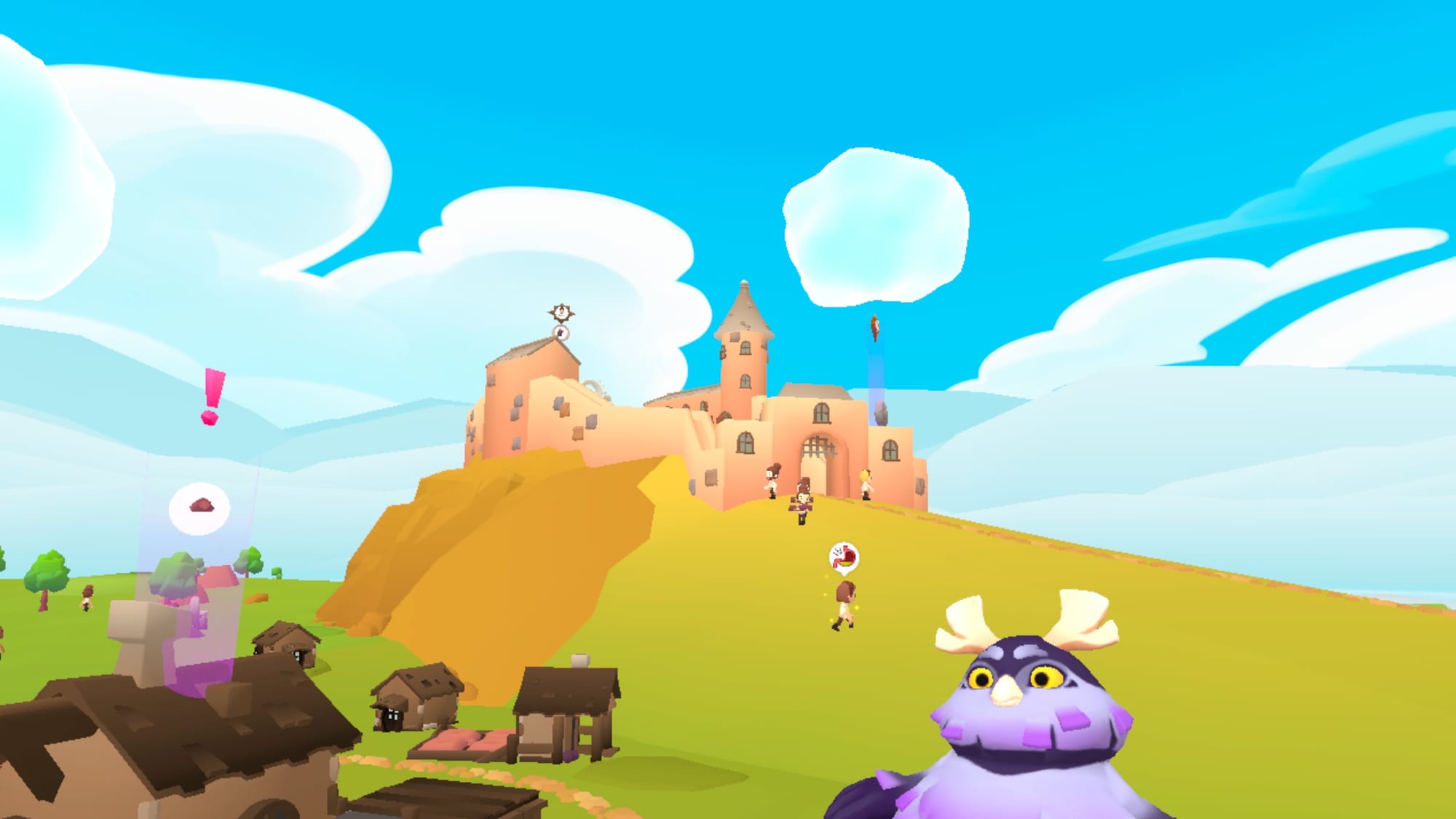
Once you’ve conjured your preferred Creature into existence, it’s time to drop into the world. Literally. Like most other games within the genre, you’re an invisible, omniscient force in the sky, able to see everything at once and interact with anything beneath you. The tutorial is simple but comprehensive – in fact, there’s a whole archipelago dedicated to teaching you, well, how to god, and you don’t stop learning stuff even when you advance to the next location.
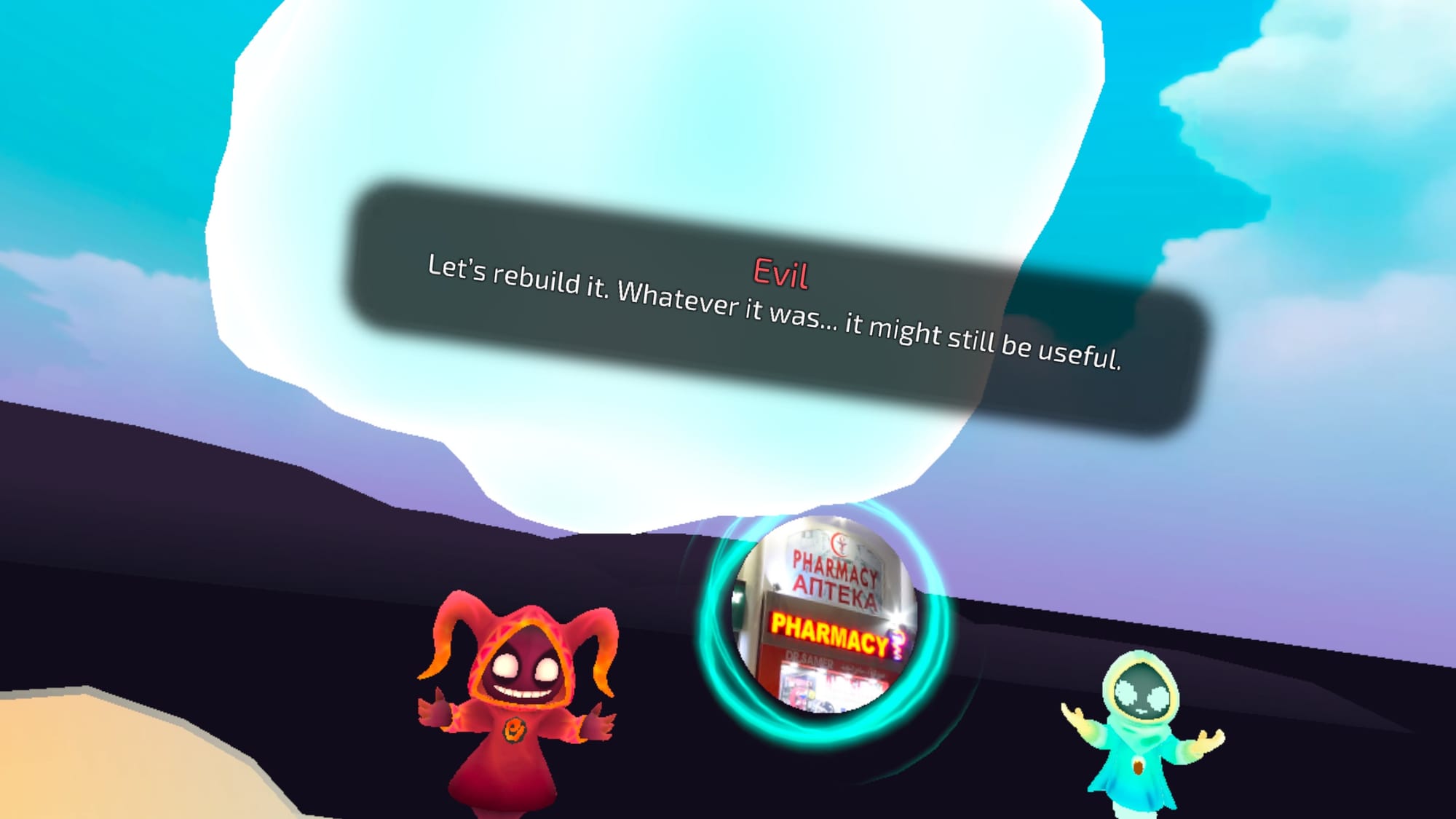
You’re helped throughout the tutorial by your divine advisors Good and Evil, who are basically the angel-and-demon-on-the-shoulders trope personified (er, spirit-ified). In later levels, they become drivers of the narrative, too – more on that in a bit.
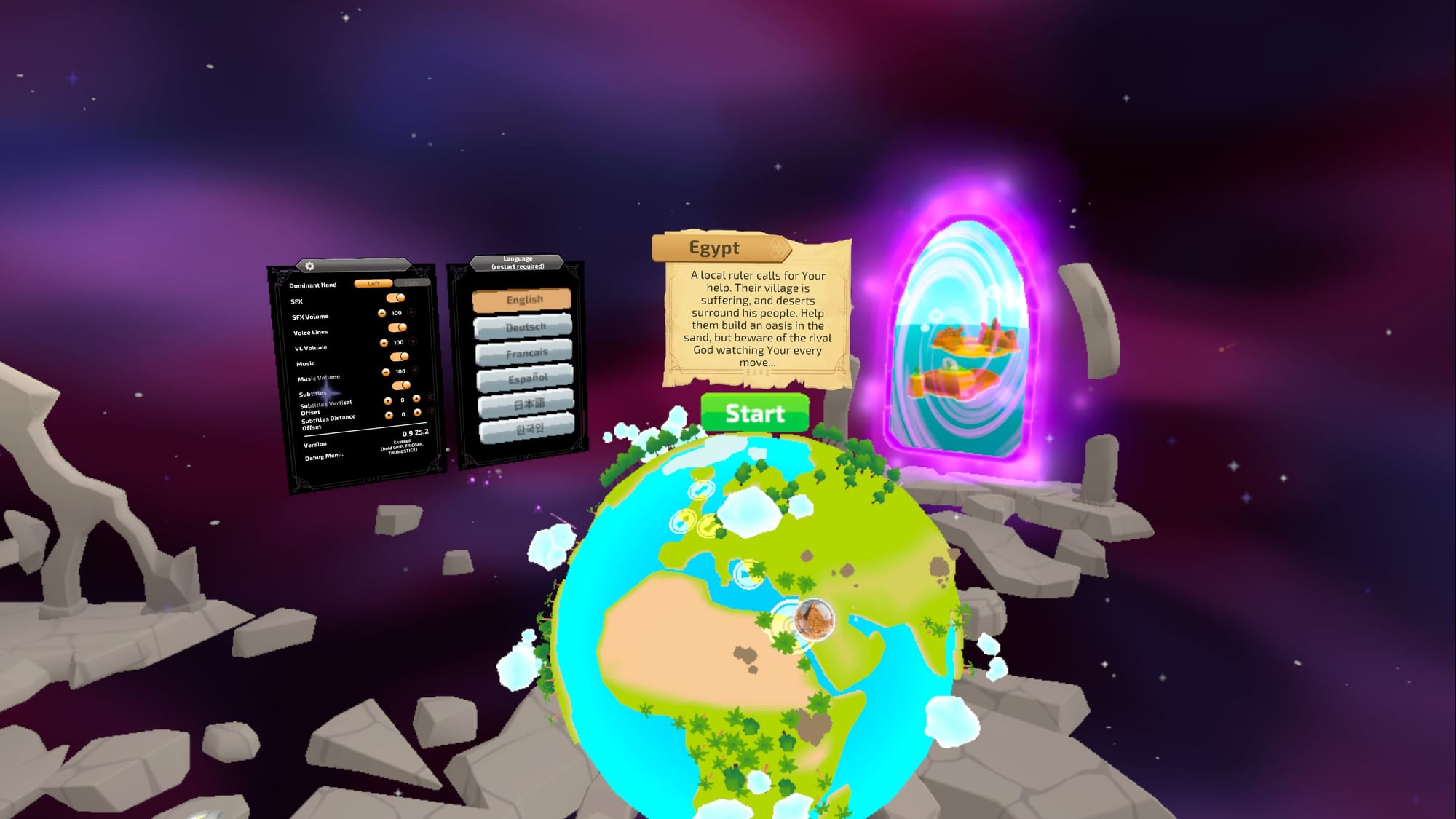
Interestingly, every post-tutorial level is a real-world location such as Egypt or Paris. This affects both the physical appearance of buildings and what rival/friend gods you might encounter. Poseidon hangs out in Greece, for instance. Nearly half of the levels were clustered in Europe, which is where the “cool” gods originate, I guess, but I would like to see locations like South America or India represented too.
So who are you lording over, anyway? Your world is dotted with hamlets, and you’ll need to build them up, so citizens eventually support you as you go at loggerheads with other spiritual beings and mysterious forces. Turns out there’s truly no such thing as a selfless good deed.
Comfort
You move about by holding and grabbing “the world,” pulling yourself to your desired location. That makes How to God one of those games you can play on your couch – nausea is minimal and no real-world movement (or even standing) is needed.
Accessibility options are limited to selecting left-handed controls and turning on subtitles.
Nobody wants to pray to you while they’re hungry and homeless, and without their worship you’re not going to gain any “faith energy,” which you need to power any action supporting their most basic Maslow needs. In that sense, you can never be 100% evil; you’ll at least need to ensure villagers are fed and housed if you want to get anywhere. Setting fire to their houses may be fun momentarily, but will hamstring your progress.
Crafting is the other main mechanic, and it's one of my favorite parts of How to God. You can combine two elements or materials to form new items. Fire + wood = coal is an early example, but it gets more complex – you’ll even end up combining villagers with, say, iron to create troops for your little army.
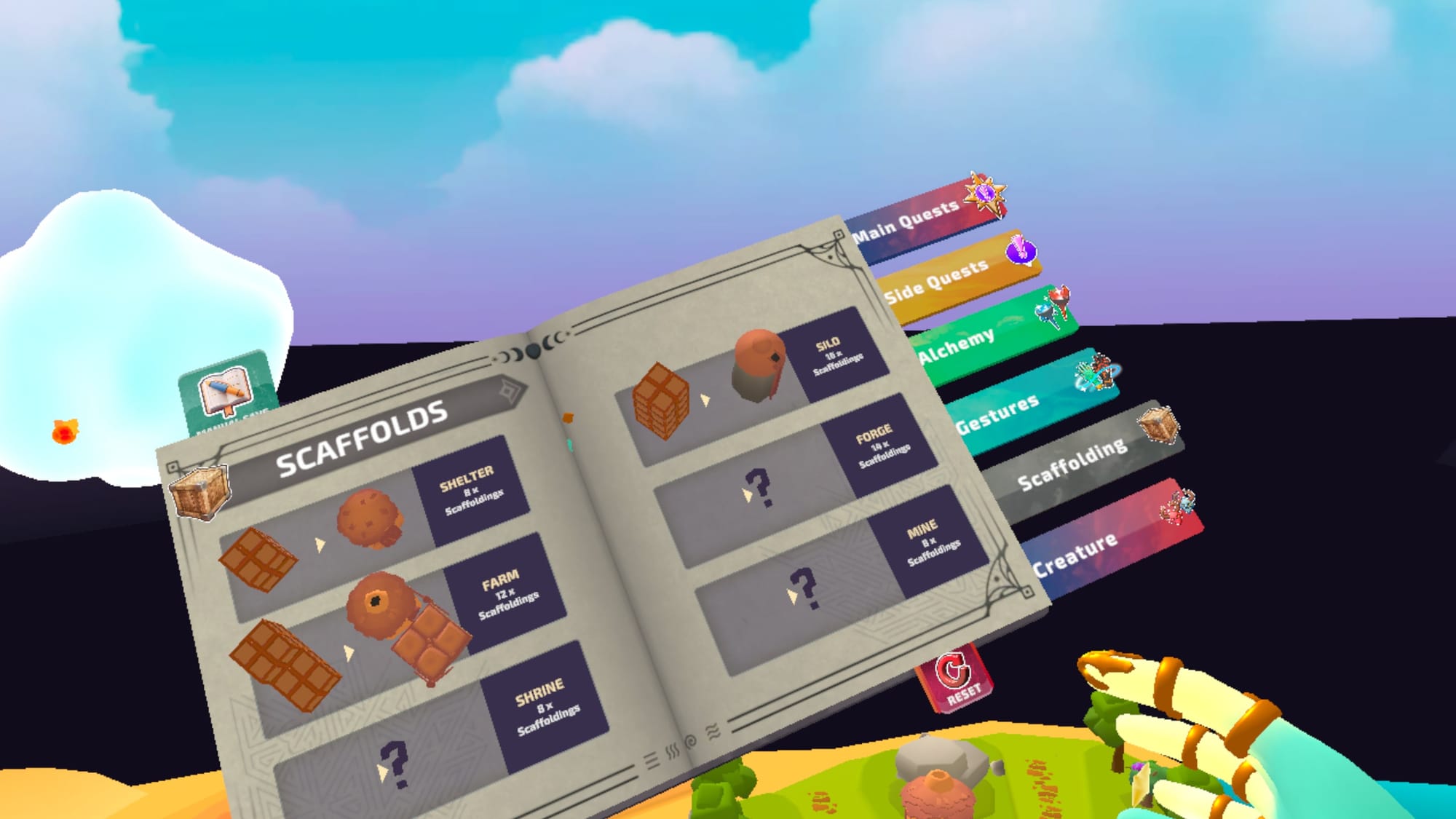
Recipes are helpfully stored in your Godbook, a convenient and well-designed compendium of information you’ll collect through your playthrough – from crafting formulas to details on your Creature’s moral alignment. There’s an impressive number of recipes to uncover; I hadn’t even unlocked them all by the time I was done with the campaign.
You’ll also need to build scaffolding for the village’s structures, from farms and lumber mills to new shrines. Think of it like an extremely simple Lego kit: snapping boxes together into vague shapes, like a tall scaffold approximating a silo. It’s nothing challenging by any means, but it’s a cute use of VR that differentiates How to God from god games on other platforms.
You can micromanage your Creature, ordering it to pick berries – or shake a hapless villager for no reason. Mostly, though, it’ll wander about like an errant child, trying to eat rocks or kick logs. There’s a handy brush and spray bottle on your wrist to discipline it in the same way that you would to train a cat; stroke your Creature with the brush to reinforce desired behaviors, or squirt to discourage. Of course, the definition of a “desired behavior” is up to you.
And as for your own behavior… The allure of any god game is being able to lean either way in the good/bad binary. I had good intentions in my first playthrough, vowing to earn my villagers’ respect through noble deeds, but as the campaign’s challenges intensified, I found that it is simply easier to be a bad guy.
For instance, in one situation I faced some aggressive neighbors; as a benevolent god, I could invest time “crafting” some disciples to go over and reason with them…. But it was honestly just easier to smite them with fireballs. Clouds aren’t just cute, by the way: rub them to create some static discharge and carpet-bomb a rival village with lightning. Or squeeze some rain out of them to blanket-water some trees, if you’re feeling more magnanimous.
How to God is heavily narrative-driven, with your advisors Good and Evil playing off each other as they guide you through objectives. The script is promisingly humorous, but numerous characters are dragged down significantly by AI voiceovers. Whatever your thoughts are on AI content, How to God’s characters are distractingly monotonous and emotionless from the very beginning.
Good and Evil are less egregious examples of the AI voicework, but even they often awkwardly emphasize the wrong syllables, forming a very jarring experience. With so many characters shepherding your objectives, this becomes a real bummer – it often feels as though they are simply reciting chores for you to complete, rather than offering engaging challenges and objectives.
It would also be good to at least see these voices more accurately reflect the regions I heard them in. For instance, I only heard one approximation of a Scottish accent in Scotland, with nearly every other speaking character affecting a generic English accent or American drawl.
Mercy or Mayhem: Win Either Way
I didn’t get a sense of how much my choices mattered – or whether there are even alternate endings. Maybe that’s a good thing (finding out adds replayability!) but having been a more neutral deity myself, I didn’t really have much motivation to go back and try leaning more into the naughty-or-nice extremes.
Robot voices aside, How to God is a solid addition to the god game genre across any platform – and a must-buy for VR enthusiasts of the genre especially. I enjoyed my time in the campaign, and I’m especially hoping for some major post-release content updates – bring on Shiva!
UploadVR normally uses a 5-Star rating system for our game reviews – you can read a breakdown of each star rating in our review guidelines. As an early access release, this review is unscored.
For the artists who make Walkabout Mini Golf, the path to virtual reality often begins with a pencil and paper to sketch out their ideas before jumping into Gravity Sketch for spatial building.
Now fans with Quest headsets can trace some of that path from home.
0:00
/0:54
A collaboration between Walkabout Mini Golf and Pencil sees Quest-owning fans of the game dropping their putter onto the table to trace the drawings of Don Carson, the lead designer of Alice's Adventures in Wonderland and an art director at Mighty Coconut. The step-by-step lessons available in the app for pencil and paper will teach players how to draw Walkabout's version of the characters Alice meets in Wonderland.
Effectively, Walkabout and Pencil are starting to recreate the Animation Academy attraction from California Adventure at the Disneyland Resort, where visitors learn how to draw Disney's most iconic characters from skilled artists. You just have to switch between two apps on Quest to go from the Alice in Wonderland's Walkabout theme park to Pencil, where you can learn to draw in Carson's style. The characters Alice encounters, from the Cheshire Cat to the Queen, have been re-imagined for VR by Carson and his teammates, pulling inspiration from the original illustrations of John Tenniel.
The tracing lessons are available as a free pack inside Pencil on Quest. The app is also adding a collection of authentic set pieces from Walkabout to play with for inspiration as you draw.
Guardians Planetfall looks like VR's answer to Helldivers 2, bringing a new squad-based shooter to Quest 3 and PC VR next year in early access.
Revealed during the UploadVR Winter Showcase, Guardians Planetfall is a follow-up to 2023's Guardians Frontline by VirtualAge. Set in an ongoing galaxy-wide war, this supports up to four players per squad as you defeat alien threats, soldiers, and war machines across different planets, battlefields, and more. You can see the reveal trailer below.
While Frontline actively mixes FPS and RTS mechanics, Guardians Planetfall takes a different approach while remaining in that same universe. The upcoming game involves team-based PvE and extraction missions as you fend off two different factions: the Void Empire, and an evolved Bugs race. You can customize your strike ship, suits and weapons, choosing where to deploy your squad for missions.
VirtualAge states mission locations will range across all extremes such as deserts, jungles, frozen outposts and “lava scarred” strongholds. Beacons can be deployed to call in orbital support for air strikes and various tools, while antigravity gloves let you climb most surfaces. Jetpacks can help reach higher ground, each mission has optional secondary objectives for earning greater rewards, while items placed into your backpack are only rescued if you successfully evacuate.
Completing these procedural missions then allows you to upgrade your ship, using blueprints and resources to upgrade its offensive, defensive, supply, and support systems. This unlocks new orbital abilities, and you'll travel between different star systems and planets across this campaign. Missions change who controls a specific planet and once you've cleared a campaign, the galaxy resets.
Much like Frontline, Guardians Planetfall also features an in-game map editor where you build missions in VR. This allows you to alter terrain, structures, enemy encounters, objectives and more, which can then be shared with the community and edited in co-op too.
We recommended Planetfall's predecessor in our 2023 review, calling Guardians Frontline an “ambitious attempt to combine the best elements of two disparate genres” and giving it our recommendation. Further post-launch updates later followed that included adding a large enemy known as 'The Queen', while 'Update 1.5' introduced a revised editor mode.
Guardians Planetfall will launch in early access on Quest 3/3S and Steam in 2026.
UploadVR is celebrating our Winter Showcase with a new Humble Bundle, featuring nine SteamVR games for $17.
Available for the next three weeks, the UploadVR Winter 2025 Showcase Bundle is now live following today's showcase. This time around, it's split between two separate tiers, with the games individually costing a combined total of $219.
The $10 tier comes with four games: After The Fall: Deluxe Edition, Guardians: Frontline, The Walking Dead: Saints & Sinners, and A Fisherman's Tale 2 (previously known as Another Fisherman's Tale). Choosing the $17 tier then adds the remaining five: Z.O.N.A: Origin, Metal: Hellsinger VR, I Expect You To Die 3: Cog in the Machine, Ghosts of Tabor, and Hellsweeper VR.
Charity proceeds will support the Electronic Frontier Foundation, and you can adjust the revenue split between publishers, Humble and its chosen charities. While the above prices are the minimum you can spend on each tier, you can select how much you pay if you're looking to donate more.
The UploadVR Winter 2025 Showcase Bundle ends on December 26 at 6pm PT.
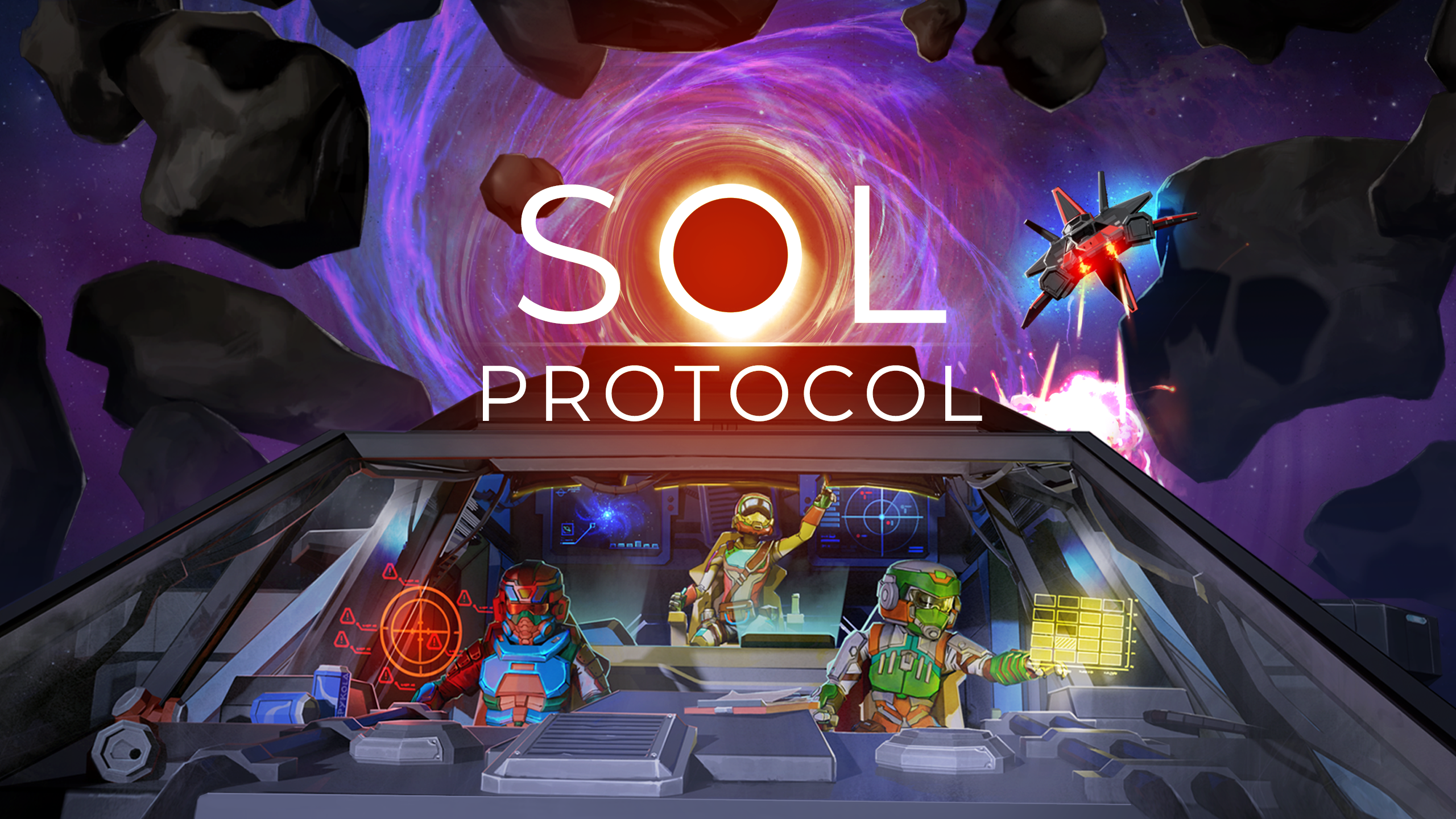
Sol Protocol is a co-op roguelike coming to Quest early next year, and you can sign up for the closed alpha tests today.
Developed by Singular Perception (Epyka), Sol Protocol sees you and up to two additional players tasked with manning a spaceship as you navigate the dangers of a procedurally generated outer space. There are multiple roles to choose from when organizing and optimizing your crew, including the pilot, the gunner, and the captain. You can check out the announcement trailer below:
0:00
/1:07
On your journey across the stars, you'll run into abandoned space stations and lost tech that can be searched and used to earn resources that can upgrade your ship. Space isn't all loot though, and there are also enemies to contend with, which require careful strategies and a range of high-powered weapons to best.
Sol Protocol is launching on Quest and SteamVR in early 2026, with a flatscreen version also intended for release. Those who want to get stuck in early can sign up for the closed alpha by joining the Sol Protocol Discord. Everything announced during the UploadVR Winter Showcase will be compiled into a wider list, so check back after the show to catch up on all the announcements.
Birdseed VR targets a March 2026 launch for the free-to-play birdwatching sim on Quest and Steam.
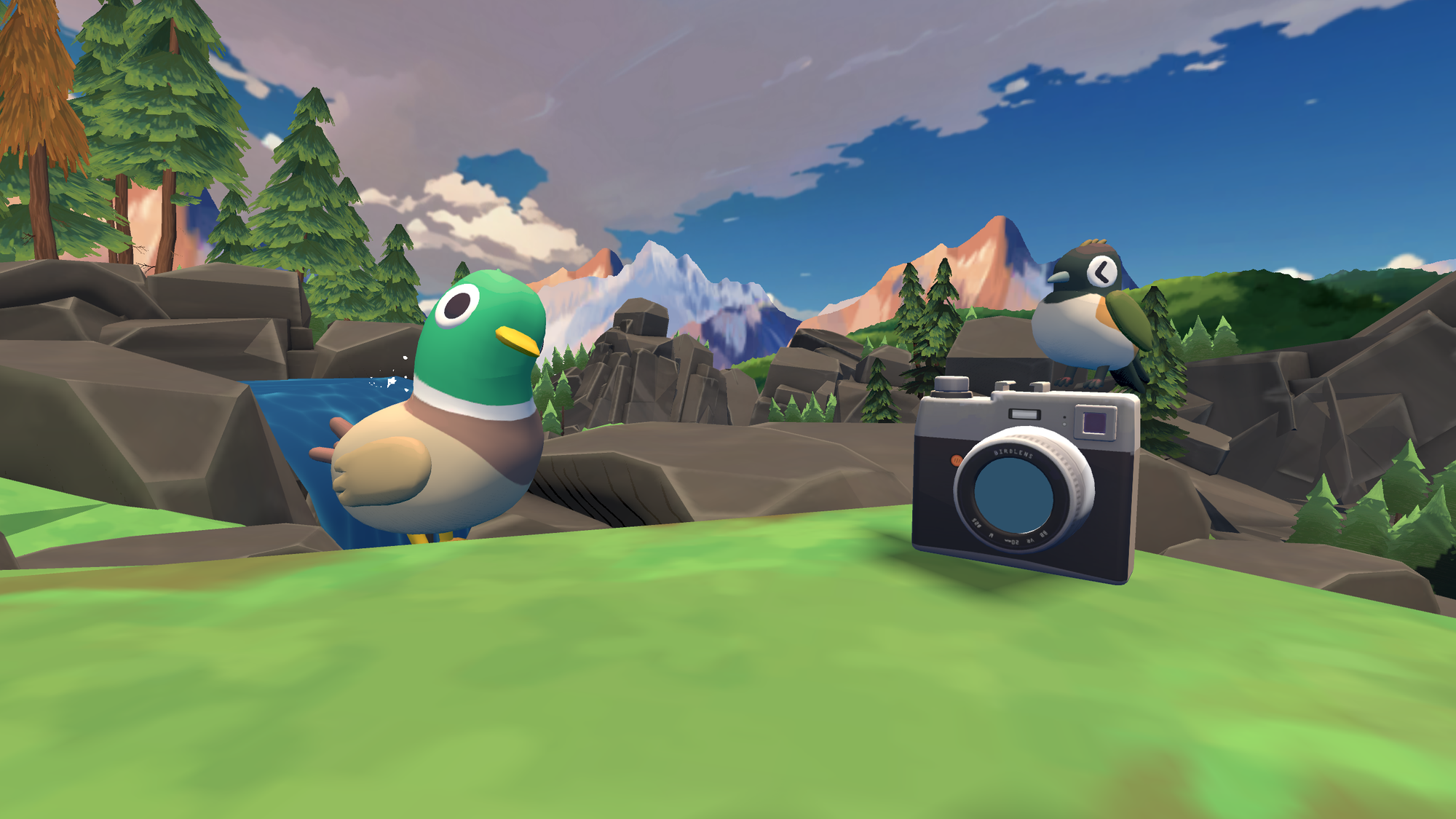
Currently available in early access on Quest for solo play, Birdseed VR by Buffalo Buffalo (Fresh Tracks VR) sees you aim to get the best possible camera shots, giving your pictures a star rating. As seen in today's UploadVR Winter Showcase, the Vancouver-based studio confirmed Birdseed's full release is coming this March on both Quest and PC VR.
0:00
/1:07
The game aims to mimic real-life avian behavior like movement, appearance, flight patterns and distinctive calls, equipping you with binoculars and different camera lenses to capture these moments. Daily challenges are available and online multiplayer will be supported at full release, letting you share photos with friends and hang out across the forests in online co-op.
Other changes in Version 1.0 include the launch of Scout’s Shop, which comes with premium cosmetics and tools. This will add vintage camera skins, charms for your viewfinder, and more. The developer states that premium items won't directly impact gameplay, calling this “completely optional” for players.
Following October's early access launch, Birdseed VR released a quality-of-life update two weeks ago. That introduced the Field Guide for tracking challenges, and completing these tasks awards bottle caps that “can be exchanged for future goods and tools.” More observable birds were also added, alongside a new scoring system and real-time feedback system to track your challenge progress.
Birdseed VR is out now in Early Access on Quest 3 and 3S, with the full release coming in March 2026 on Quest and Steam.
Puzzles of the World is an immersive puzzle game launching in Early Access on Quest next month.
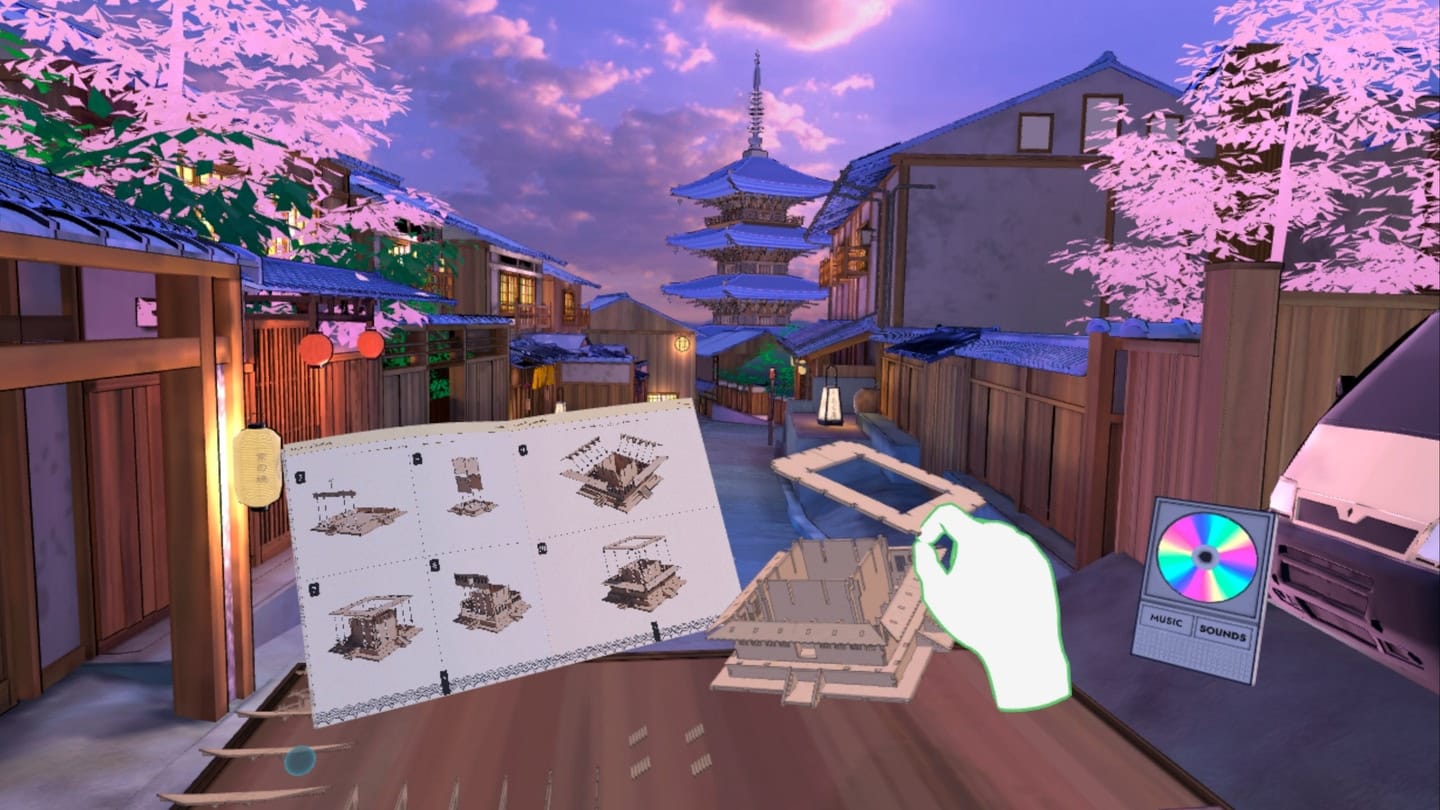
Reminiscent of the popular VR jigsaw game Puzzling Places, Puzzles of the World lets you piece together intricate 3D miniatures, aiming to immerse you in a variety of soothing, themed environments. Developed by Astral Shores Games, this meditative experience focuses on slowing down while you take in the sights, and you keep your hands busy with its clicky bricks. Revealing its release date during the UploadVR Winter Showcase, you can see gameplay in the trailer below:
0:00
/1:06
The miniatures you snap together are based on locations from around the globe, like the Yasaka Pagoda (Hōkan-ji) in Kyoto, and the famous canals of Venice. As you carefully build, one piece at a time, you'll also learn key facts about the locations, like their history and architecture, through a handy in-world booklet. Those looking to tweak the ambiance can also take advantage of Puzzles of the World's sound controls, which resemble a portable CD player, and choose between a range of ambient soundscapes.
Puzzles of the World will launch in Early Access on Quest on January 8, 2026. If you're looking for more reveals from the UploadVR Winter Showcase, an 'Everything Announced' will be available after the show.
Pirates VR: Jolly Roger finds a new destination with next month's launch on Quest 3 and 3S.
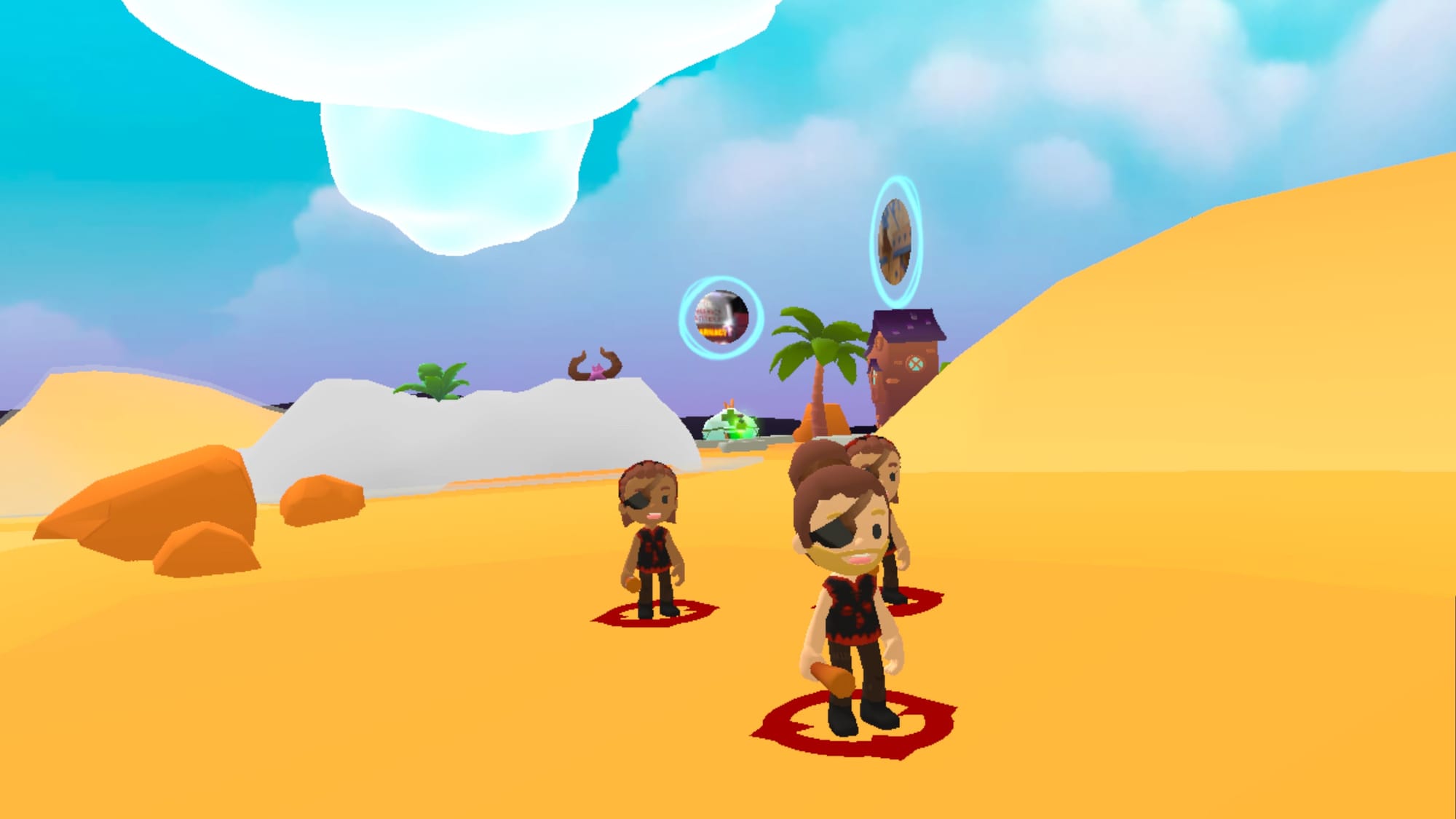
Developed by Split Light Studio, Pirates VR: Jolly Roger initially reached Steam back in January before later heading to PlayStation VR2. An action adventure game set on a cursed Caribbean island where you search for Davy Jones' treasure, today's UploadVR Winter Showcase revealed that it's now getting a standalone release that's been “rebuilt and optimized for the Meta Quest platform.”
Pirates VR sees you explore strange ruins alongside your sarcastic parrot companion, solving puzzles while fending off threats ranging from wild animals to undead pirates. Armed with various weapons like a magic lantern and flintlock pistol, this campaign lasts roughly four hours.
It's worth noting that VRKiwi, Pirates VR: Jolly Roger's original publisher on other platforms, isn't publishing this upcoming Quest 3 port. That's instead being handled by Incuvo, who recently launched Tracked: Shoot to Survive and are arguably best known for Green Hell VR.
We had mixed impressions during our Pirates VR: Jolly Roger review back in January on PC VR. Though we criticized some design issues and its “shallow” combat, we still ultimately enjoyed this roughly four-hour adventure, believing these shortcomings were “balanced out by rewarding exploration and great visuals.”
Pirates VR: Jolly Roger is out now on PlayStation VR2 and Steam, while the Quest 3 edition will follow on January 29, 2026.
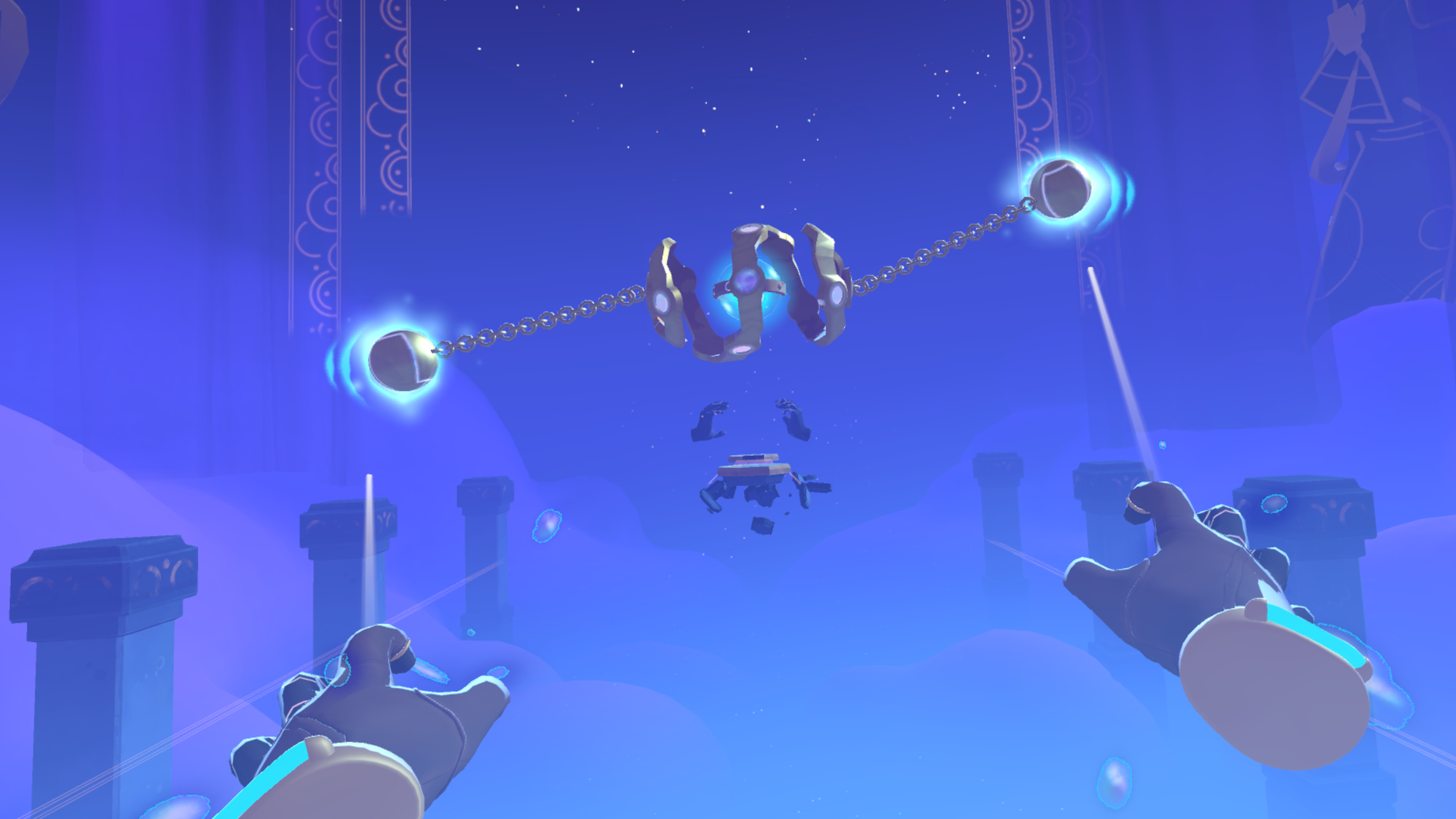
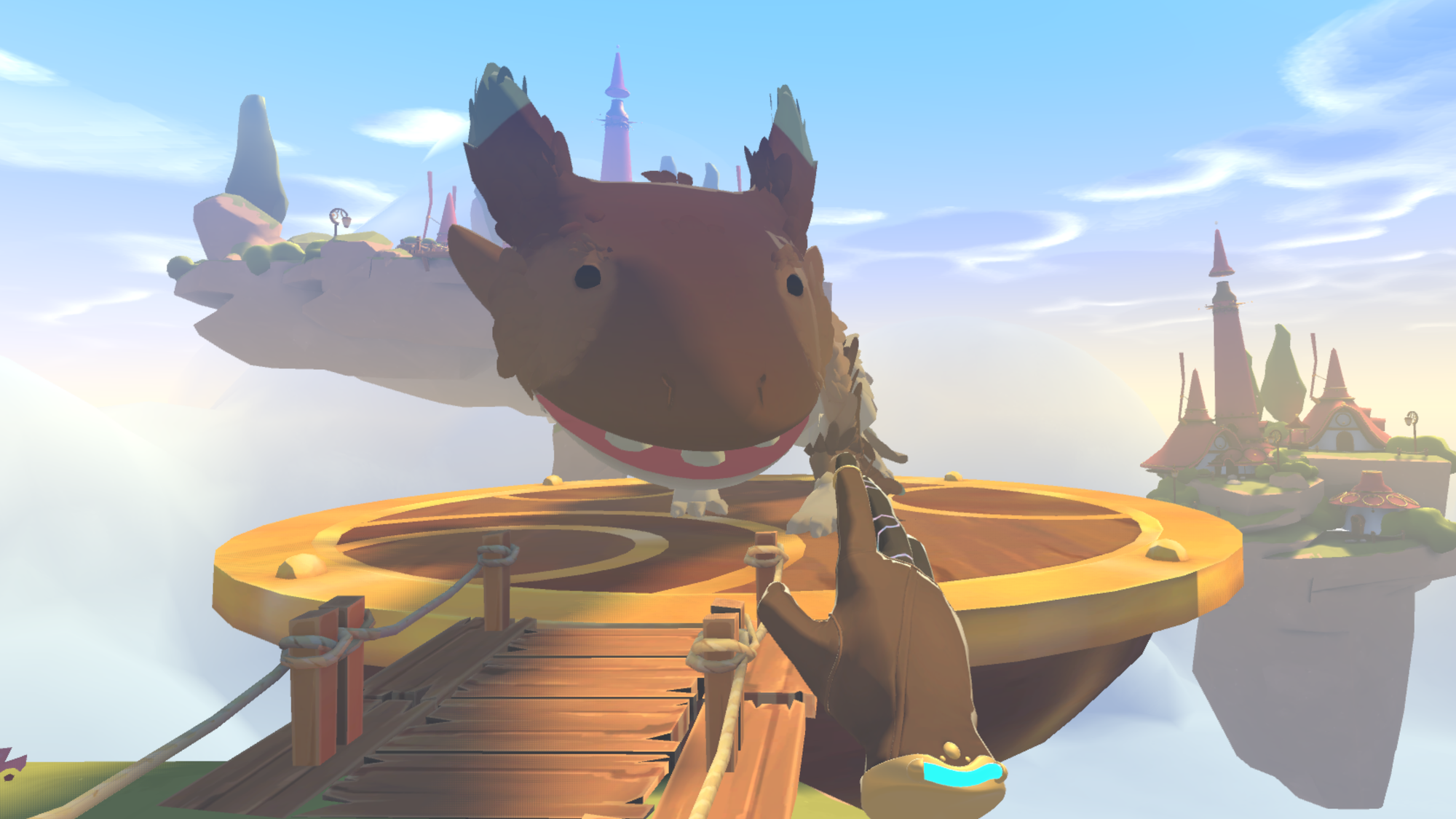
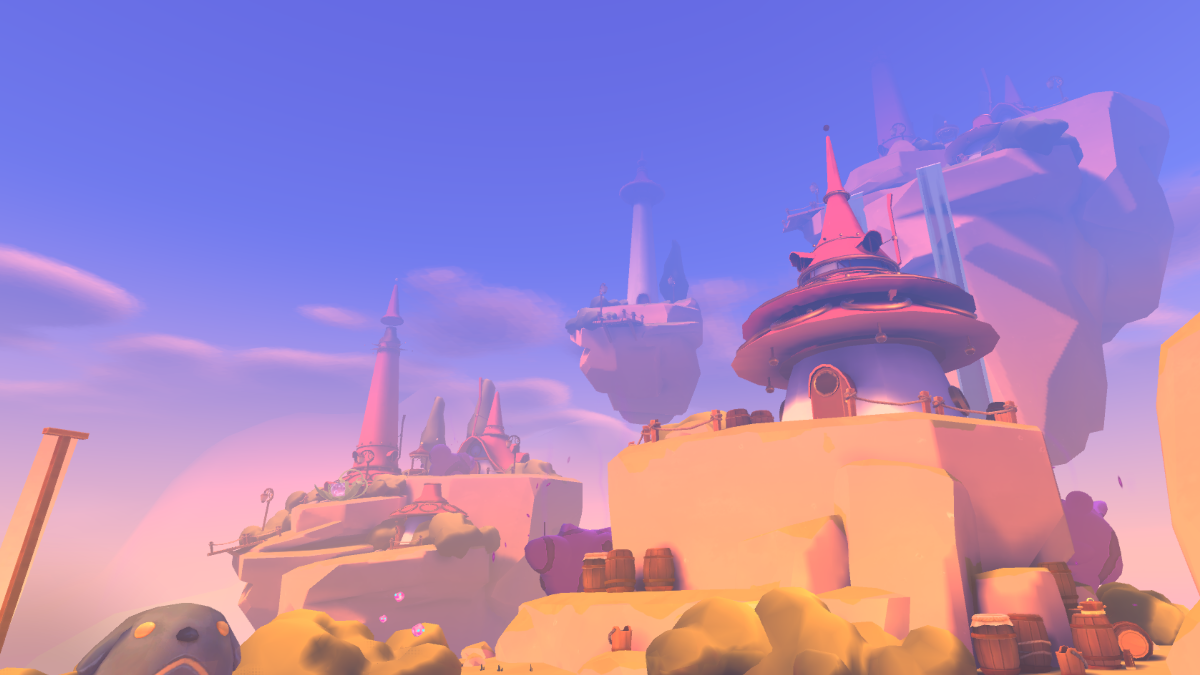
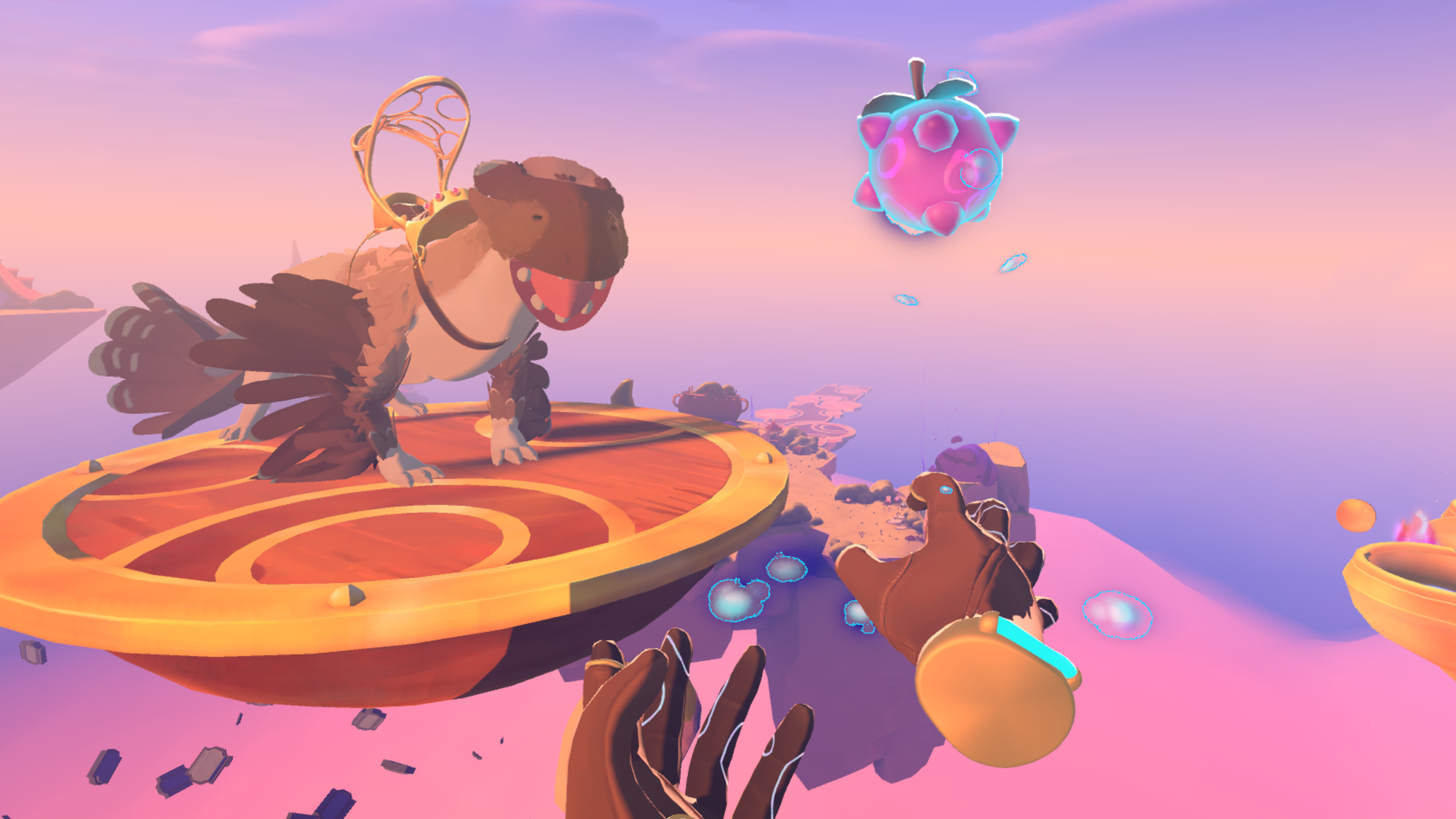
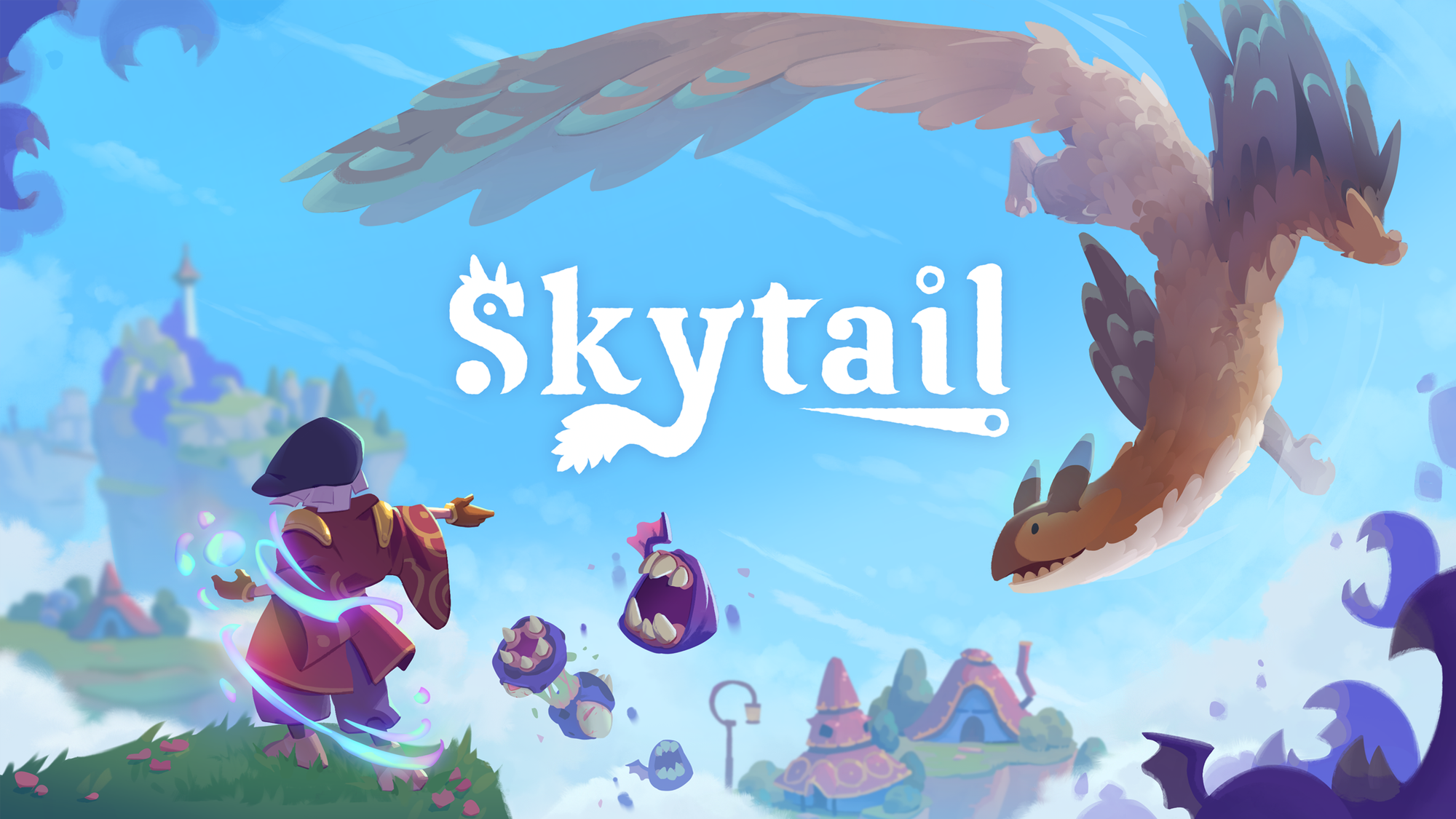
Skytail looks like an adorable adventure game, and it's coming to Quest soon.
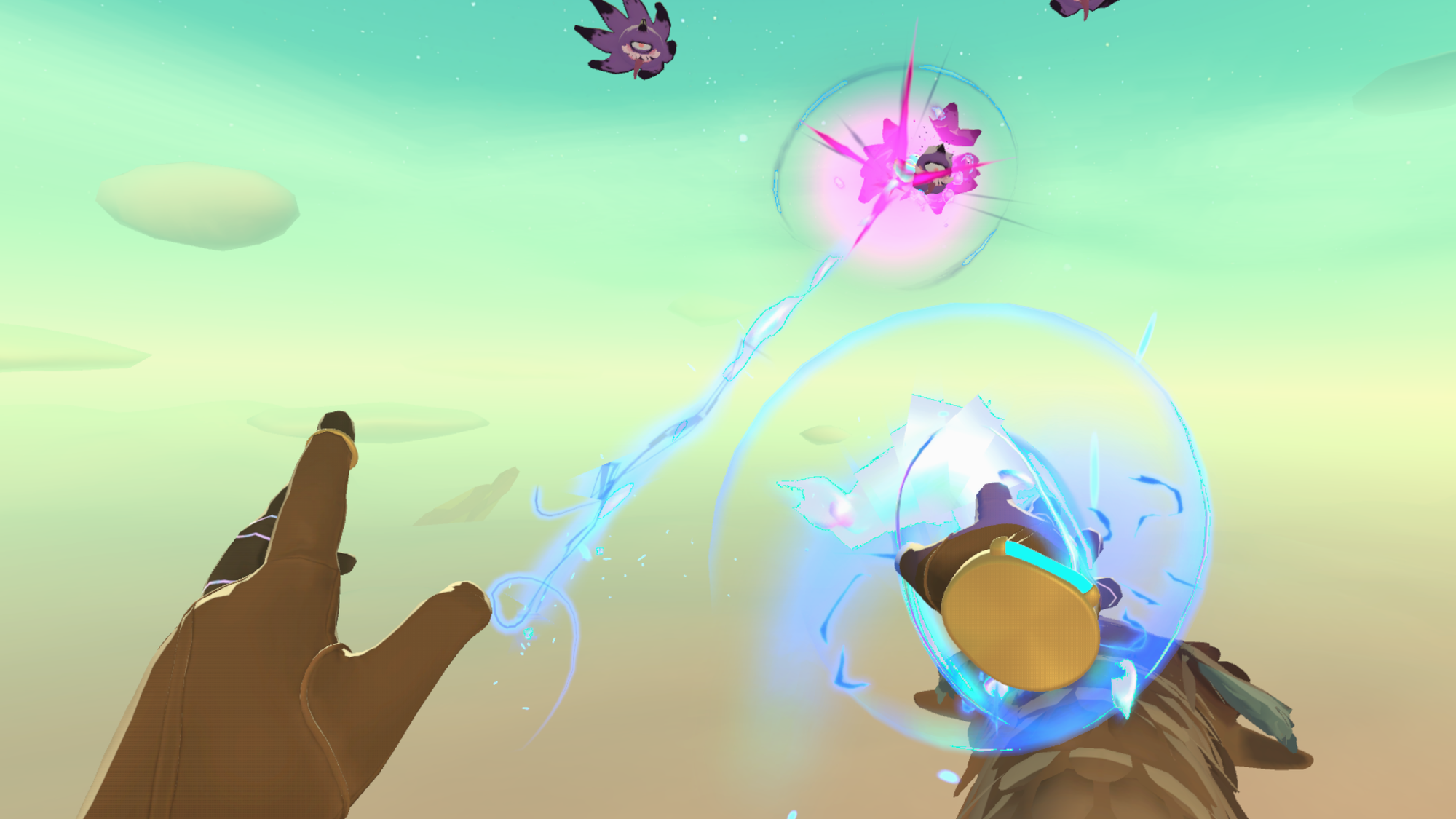
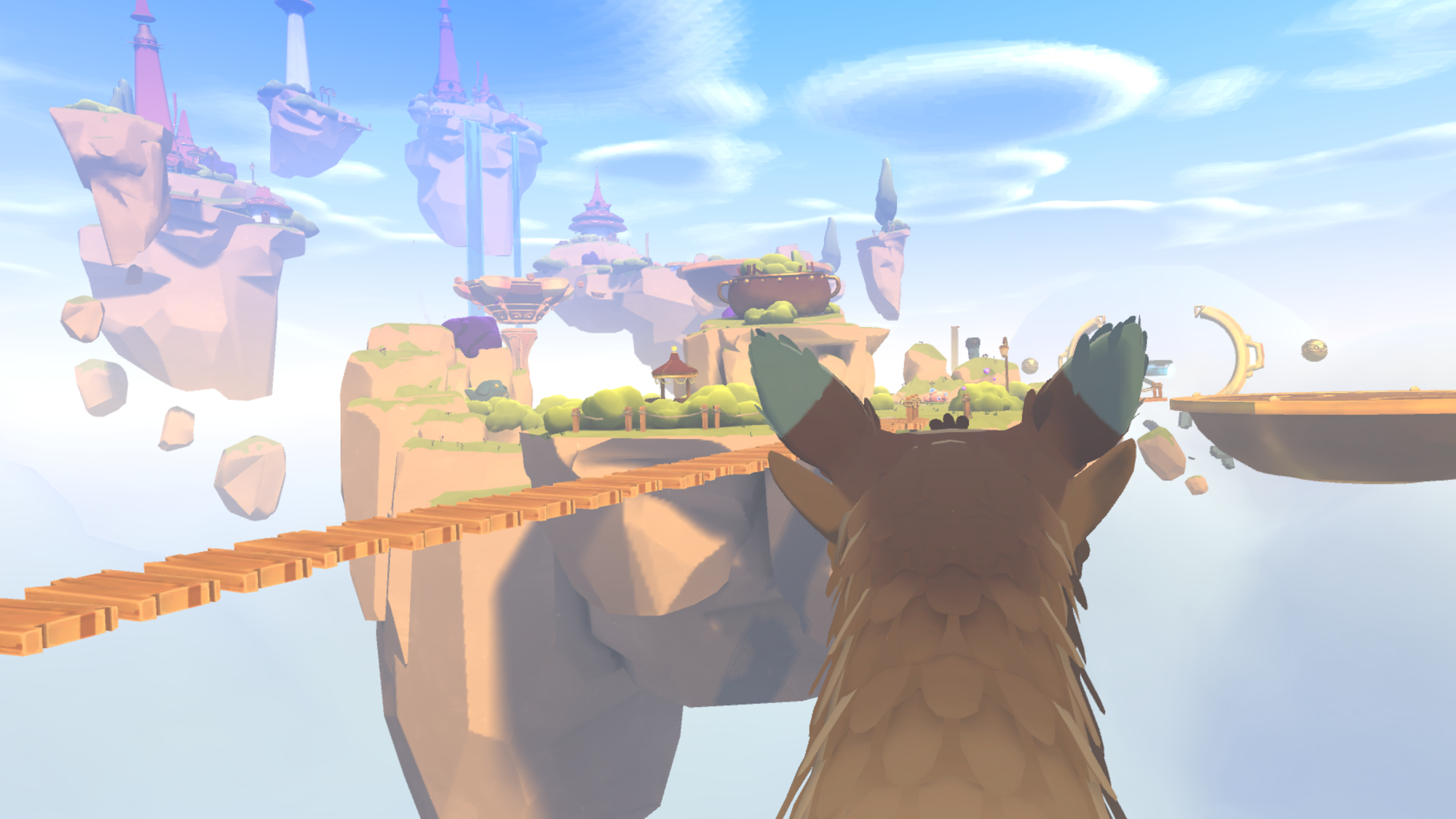
Developed by Coatsink (Men in Black: Most Wanted), Skytail lets you soar across the horizon on a bird-like steed called a Skytail, using telekinesis to interact with the environment. This peaceful life doesn't last, however, when an invasion from corrupted fiends steals your Skytail's offspring. From here, your job is to use your powers and make a plan to get them back.
Across today's trailer from the UploadVR Winter Showcase, we can see the player use gestures to throw fruit into their flying companion's mouth and tear apart what appears to be an enemy creature's body. The trailer ends with the player being flung onto a floating island with a sprite house, before looking up at their winged friend.
While there isn't a great deal to go off so far, you can check out some additional screenshots not included in the trailer below:
“We are excited to reveal Skytail to the world today,” explained Coatsink CEO Richard Snowdon in a prepared statement. “This is just the first little tease of the charming world and fun powers that players will be able to experience in Skytail, and we look forward to being able to share more soon.”
Skytail is coming to Meta Quest 2 and 3. All the news from today's showcase will be rounded up in an 'Everything Announced' list, so check back in after the show.
A forthcoming title from the creators of The Brookhaven Experiment goes for Half-Life: Alyx vibes in standalone VR.
A trailer for the game revealed in the UploadVR Showcase today shows off some of the interactions I tried in Automa with standalone Quest 3.
Available to wishlist today, I've put some gameplay video from the opening area of the demo below. An early testing release runs at a solid frame rate on my Quest 3 and, when it comes to first impressions, I really can't ask for too much more here – impressive views, layered sounds, solid interactions, and a sense of place that rivals something quite like Half-Life: Alyx's opening level.
0:00
/1:20
Footage captured by UploadVR.
Automa includes gravity gloves to pull a ton of interactive objects close as well as drawers, cabinets and doors all openable during my time in the game. One detail I enjoyed quite a bit was finding a cat litter box in my starting room and wondering if I'd meet the animal. I did, and even fed it. I found a monkey sitting on the ledge outside too and tossed something over, watching it react to my intrusion. Altogether, I interacted with four different animals during my brief time with the game alongside all the other environmental interactables, and Phosphor is aware of the desire for even deeper interactions as they continue building out this world.
Phosphor is the studio behind The Brookhaven Experiment, which recently re-released in standalone VR after being the first zombie wave shooter for the HTC Vive. With Automa, developers are looking to build a full "story-driven action-adventure" and are now looking for people to wishlist on PlayStation VR2, Quest 2 and 3, as well as on Steam. They're also looking for people to join their Discord and help shape next steps.
Here's how Phosphor officially describes Automa:
AUTOMA is a story-driven action-adventure built exclusively for VR, where exploration and immersion drive a world that feels alive and reactive. Players step into an atmospheric, highly detailed world teeming with beauty, mystery, and danger — one that invites curiosity at every turn.
Drawing from the best of immersive VR design, AUTOMA emphasizes believable physics and intuitive interactions that give rise to emergent, player-driven moments — making every encounter feel organic and personal.
Set in a near-future world where fears of AI misalignment are beginning to come true, autonomous forces have seized control of a Southeast Asian city. You’ve made a desperate deal to protect your family —but at what cost, and what will they ask of you next?
Automa's rich introductory environment creates that same sense of a bustling city outside as City 17's run-down apartment buildings, with people visible on the street below beyond a curtain fluttering in the wind barely visible through shutters in the window. Even the liquid in bottles bubbles internally as you shake them in your hand – not quite as dynamic as Alyx, but still a really nice touch that adds a sense of subtle and playful immersion.
Automa is scheduled to release in 2026, with a PS VR2 release also planned. With Steam Frame scheduled to join other new standalone headsets and Valve being noncommittal to a performant Half-Life: Alyx running on the headset without streaming, we're extremely curious to see if Automa can fill some unmet demand. We'll be on the lookout for more gameplay details from Phosphor and curious to see what else is in store for Automa.
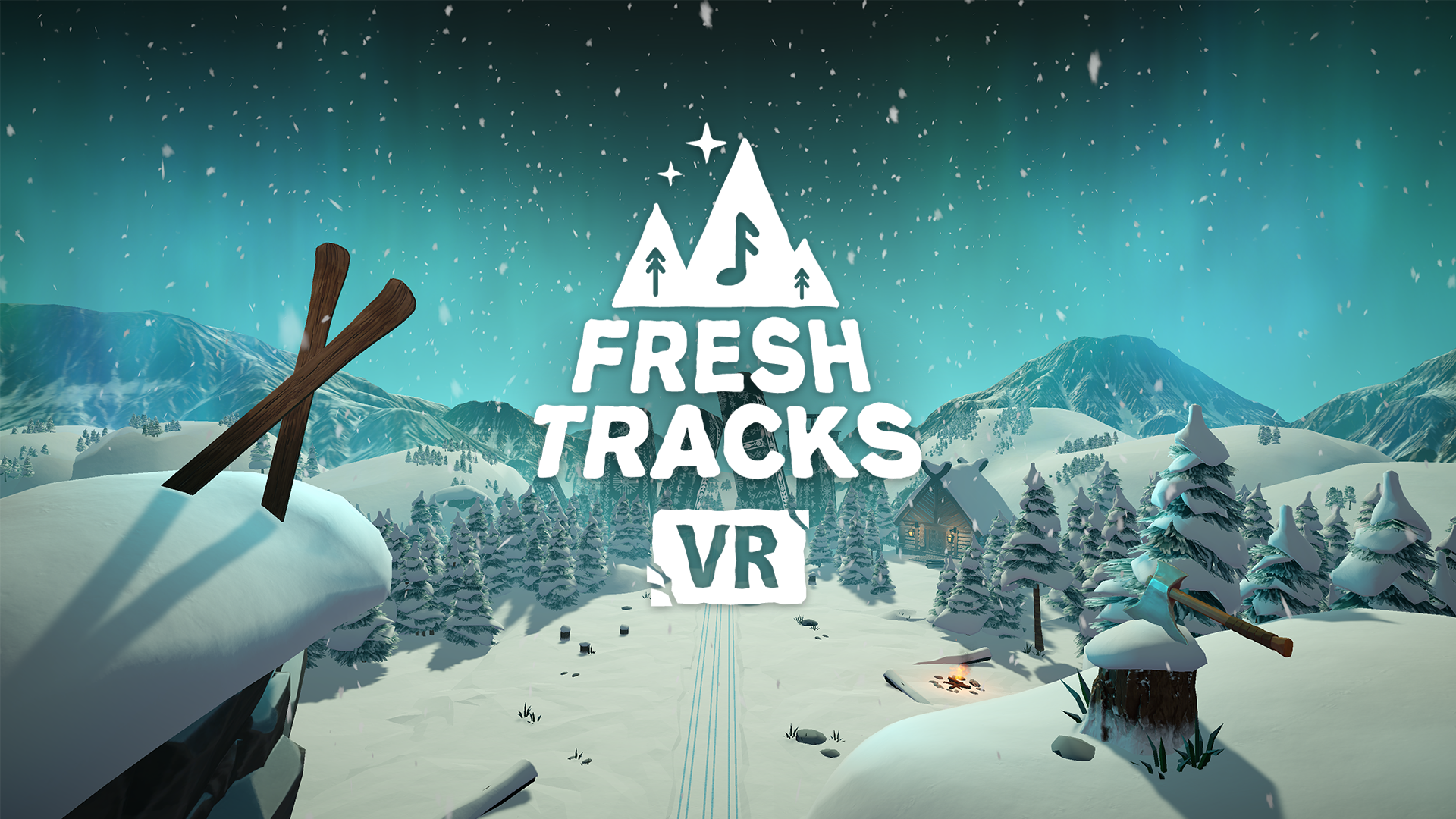
Fresh Tracks, the fast-paced skiing rhythm roguelike, is getting a PC VR edition.
Developed by Buffalo Buffalo, Fresh Tracks is an action-rhythm game where players ride hectic slopes all while navigating obstacles, upgrading skills, and swiping away at aggressive enemies. Initially released in August as a flatscreen experience, Fresh Tracks is officially coming to VR as a separate release. Announced at the UploadVR Winter Showcase, here's the reveal trailer:
0:00
/0:56
Fresh Tracks is set in the land of Norwyn, which is suffering under its cruel ruler, Mar, the Queen of Terror. Across its mythic landscapes, which include snowy forests, frosty towns, and desolate mountains, you pick from a range of genre-jumping tracks before hacking and slashing your way through levels in search of high scores. As you progress, you'll also get the chance to unlock special swords and skis that provide unique abilities that bolster your runs, such as increased invulnerability and bonus heart containers.
Fresh Tracks VR is “coming soon” to Steam, with “other platforms to be announced in the future.” All the announcements from the UploadVR Winter Showcase will be rounded up shortly, so be sure to check back in for all the details.
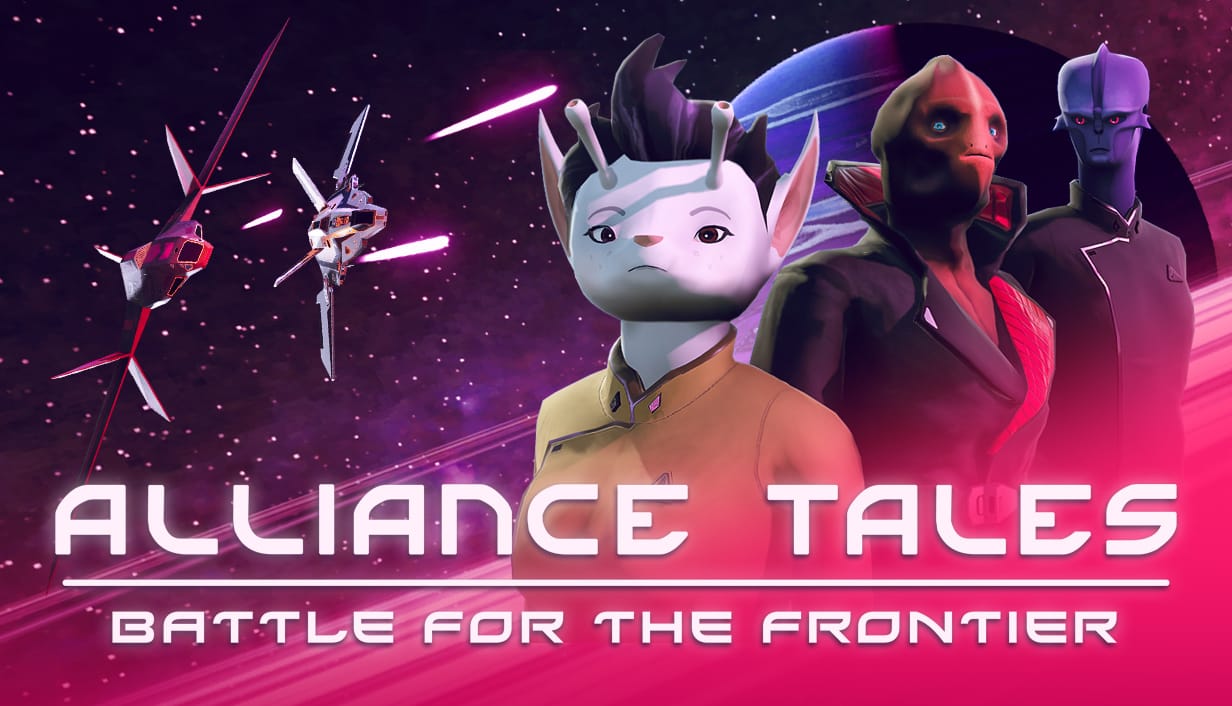
Alliance Tales: Battle for the Frontier is a standalone mission pack in the Alliance Peacefighter universe, and it's heading for PC VR in Q1 2026.
Announced during the UploadVR Winter Showcase, Alliance Tales: Battle for the Frontier is a story-centric combat sim inspired by Wing Commander and Star Wars: TIE Fighter. Players step behind the wheel of a spaceship, managing power and shields alongside a group of quirky alien comrades. You can see gameplay in the announcement trailer below:
0:00
/1:11
Alliance Tales: Battle for the Frontier's campaign centers around a squad of pilots who, in searching for their lost friend, uncover a plot to overthrow the Alliance colonies. Here, avid cosmonauts will have to manage their ship's power and shield distribution to survive frantic battles.
Those who have played Alliance Peacefighter will also recognize some familiar characters, as well as a host of new faces. Notably, Urban Logic Games confirmed that playing the original game is not necessary to experience this spin-off. Support for VR motion controllers and HOTAS joysticks is also confirmed.
Alliance Tales: Battle for the Frontier is launching on Steam in Q1 2026 with optional PC VR support. A complete list of all the announcements made during the UploadVR Winter Showcase will be available after the show.
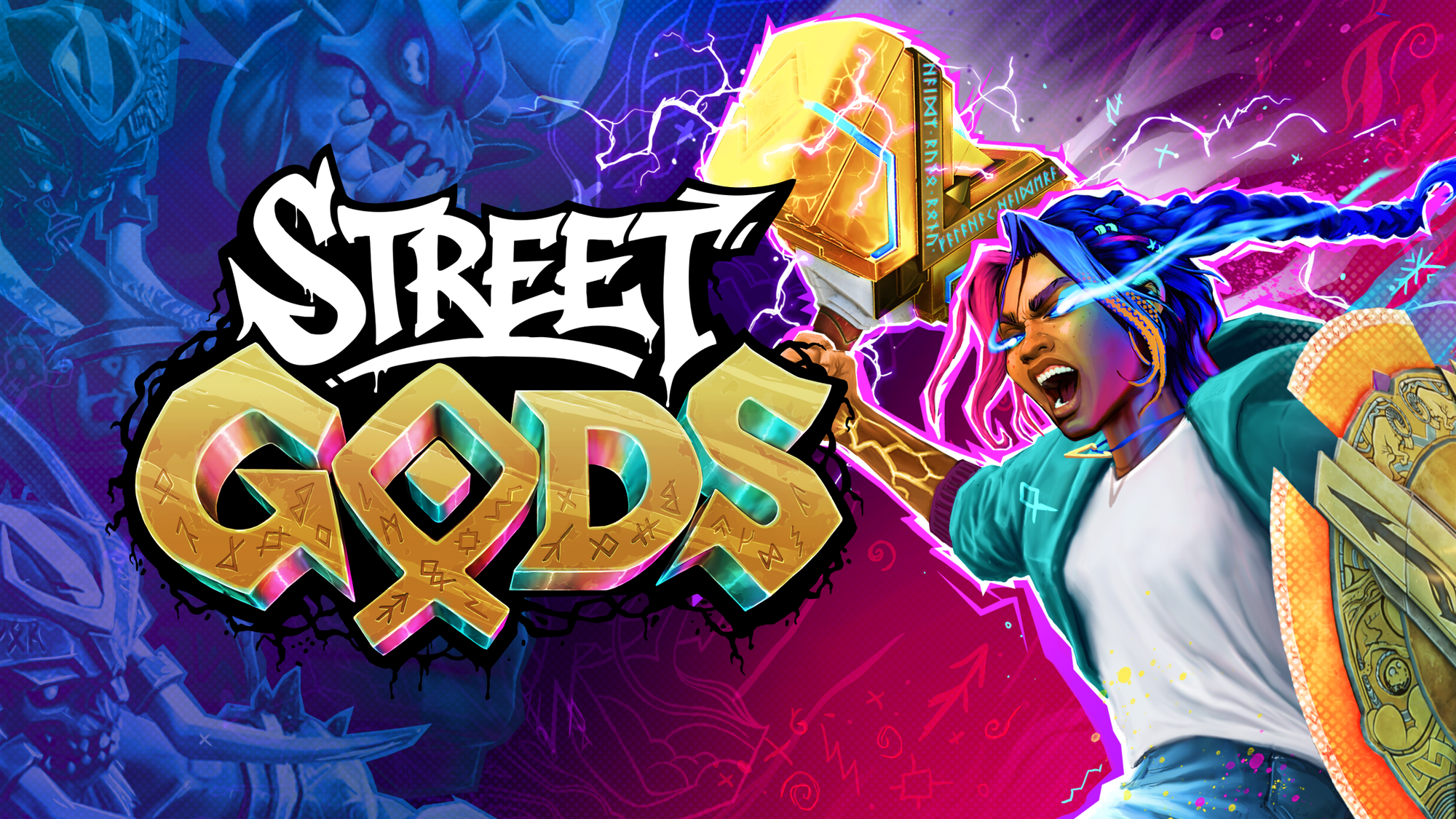
VR roguelite Street Gods will launch in two weeks on Quest 3 and 3S.
Street Gods puts players in the shoes of Val, a graffiti artist who the Norse hammer Mjölnir chooses to be its keeper. The caveat here is that Thor is trapped inside the hammer and the nine realms are now collapsing into the real world, summoning hordes of villains with it. To stop Ragnarök, you must master the powers of this mythical weapon and destroy these foes once and for all.
0:00
/1:33
Street Gods' gameplay centers around frenetic combat, and you'll be able to perform a range of offensive and defensive moves including charged attacks, stun effects, and aerial control. These actions are all controlled by physical movement, with more unlocking as you progress.
In addition to Mjölnir, there are three additional weapons to wield. That includes Gleipnir for whip-based attacks, the defensive shield-like Svalinn, and the aggressive Duo Hammer. Prowess with these tools opens the door to Runic Blessings, which can be used to bolster your arsenal through permanent skill upgrades.
“Street Gods focuses on agency and progression through skill,” explained Soul Assembly Lead Game Designer Jim Norris in a prepared statement. “We wanted players to feel their growth in power through mastery of movement, combat, and decision-making, not just through passive upgrades.”
Street Gods arrives on December 18 for Quest 3 and 3S. All the news from today's showcase will be rounded up in a neat 'Everything Announced' list, so check back in after the show.
Stellar Cafe, a game built around voice-first input and unscripted AI conversations with NPCs, arrives next week on Quest.
First revealed in August, Stellar Cafe is the upcoming game from AstroBeam, a developer led by former Owlchemy Labs CEO Devin Reimer. It promises an experience built around voice-first input as you interact with robotic characters across a sci-fi café. AstroBeam states it's using human-crafted NPCs that interpret your voice, providing real-time responses via large language models.
0:00
/1:27
As confirmed in today's UploadVR Winter Showcase, it's now heading to Meta Quest 2, 3, and 3S on December 11. While Reimer previously confirmed to UploadVR that Stellar Cafe won't be exclusive to Quest headsets, today's announcement didn't reveal anything further about additional platforms.
The upcoming game only supports hand tracking controls, and AstroBeam's using licensed technology from Owlchemy Labs. In our hands-on preview back in August, we considered it “a bold idea for a virtual reality game,” comparing it to Job Simulator but if the older hit's bots expected you to directly talk to them.
Stellar Cafe reaches the wider Meta Quest platform on December 11.
Underwater puzzler Echoes of Mora is launching on SteamVR next year.
Developed by Selkies Interactive, Echoes of Mora is an underwater puzzle game where you swim through dreamy sunken dioramas and unlock curious memories as you uncover its eerie story. Announced today during the UploadVR Winter Showcase, the aquatic mystery is launching on Steam in March next year. You can check out the gameplay in the trailer below:
0:00
/1:21
Echoes of Mora can be played in both PC VR and flatscreen modes, with players able to switch between mediums as they see fit, and their save slot will carry over between them.
During our demo hands-on at Gamescom this year, we found that while it’s by no means a seamless swimming simulator, the worldbuilding underpinning the mystery was more than enough to keep us engaged. We went on to say, “its compelling narrative beats and dreamy world design provide more than enough intrigue to earn it a place on my wishlist.”
Echoes of Mora is launching on Steam in March 2026. All the announcements from today's showcase will be rounded up in a handy 'Everything Announced' format, so be sure to check back in after it's finished.
Mixed reality block breaker Cues gets a new Creator Mode in today's free update.
Developed by No Ragrets Games, Cues is a roomscale mixed reality game with hand tracking controls where you bounce light orbs into colorful cubes to gradually create a dynamic symphony. As seen during today's UploadVR Winter Showcase, it's now receiving a free Creator Mode on its first anniversary. Here's the announcement trailer.
0:00
/0:50
As the name suggests, Creator Mode allows you to freely build your own layouts within the game across your living space, ranging from small models to larger fortresses. This joins the existing 'Free Play' and 'Puzzles' modes, the latter of which contains different puzzles with an increasing number of cubes as you progress.
We had considerable praise during our initial Cues hands-on in early access, calling it a “highly relaxing experience” with an approachable premise you can quickly understand. “The controls feel natural, these pleasingly colorful visuals are great, while the procedural symphonic music reacts to your movements well,” we said at the time.
Cues - Creator Mode is available today on the Meta Quest platform as a free update.
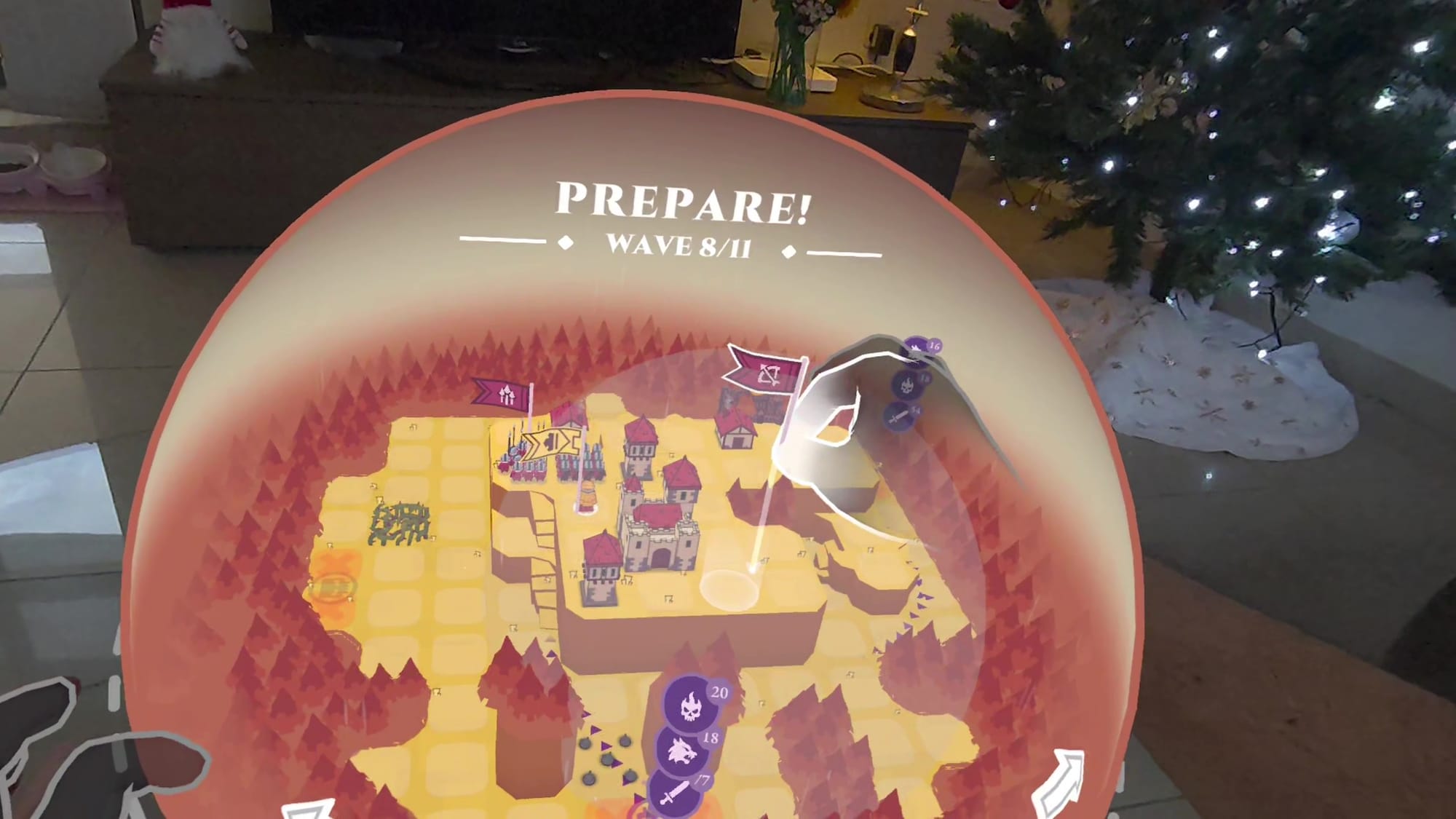
Mixed reality tactical roguelite Banners & Bastions confirmed its full release date on Quest.
Created by Not Suspicious (Airspace Defender, Tablecraft), Banners & Bastions is a tabletop roguelite with hand-tracking controls that's available in early access. Today's UploadVR Winter Showcase revealed that it's entering full release on December 15, with the 1.0 Update adding new hero units with unique special abilities, a new bestiary, an autumn battlefield biome, and more.
Version 1.0 follows a continuing series of updates across early access. Following October's addition of controller support, last month's content expansion added a new dragon boss battle and more foes. The latter update introduced a new playable Minefield card and two new enemy types - the Witch (ranged) and the Elite Swordsman (melee).
Battles occur across procedurally generated maps as you defend your kingdom, with tougher foes gradually emerging across fresh waves. You can continue investing in your local economy or fortifications, while your troops range from spearmen, knights, archers, and more.
Banners & Bastions is out now in early access on the Meta Quest platform, with the full release coming on December 15.
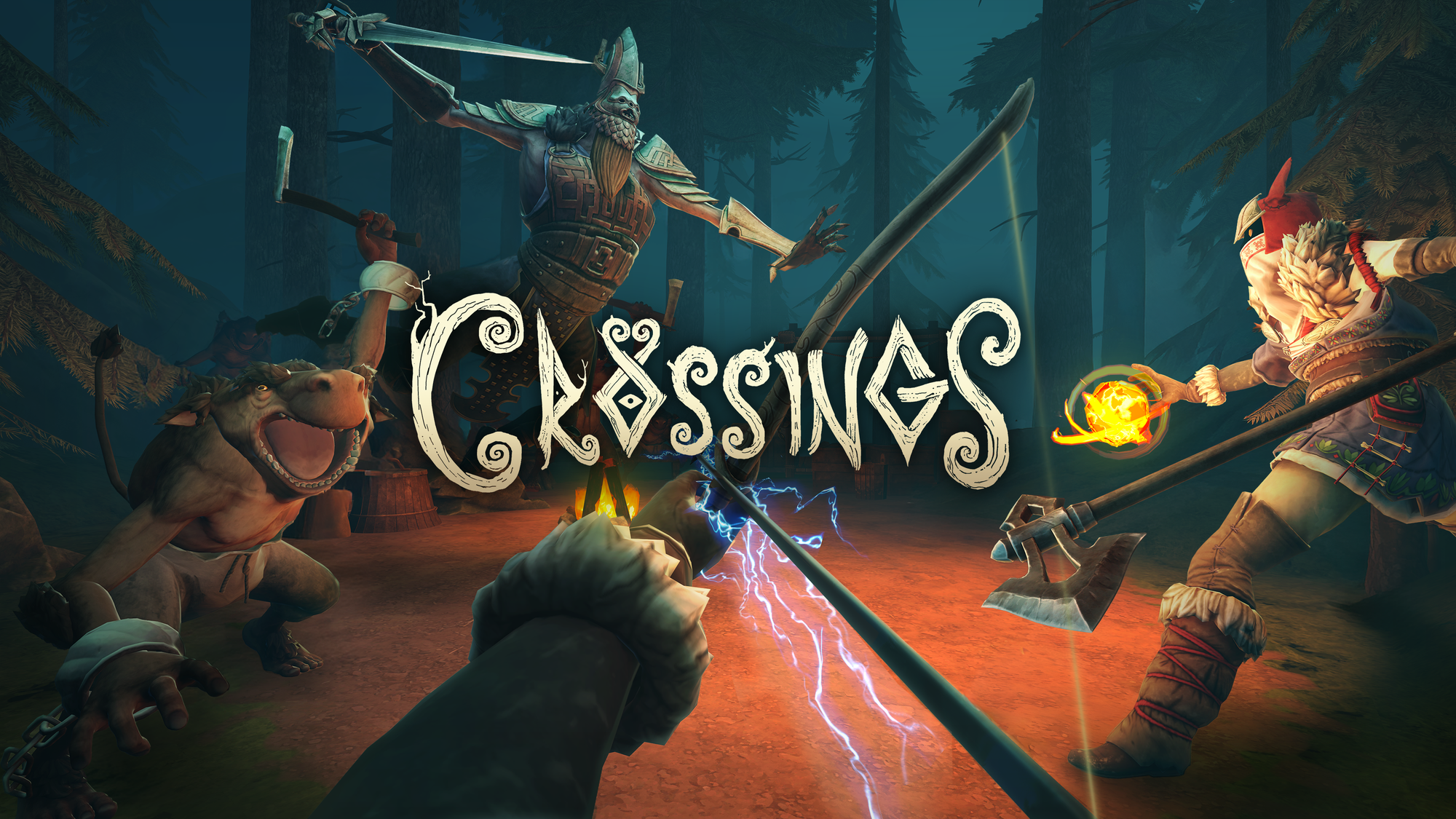
Norse-inspired soulslike Crossings will launch on Quest and Steam later this month.
Developed by Neat Corp, Crossings is an action-adventure soulslike that asks players to exact their vengeance in the afterlife. Playable solo or with a friend in co-op, you'll take on mythic evils and face off against mythic bosses as you expand your arsenal and repeat runs. Revealing its release date at the UploadVR Winter Showcase, you can check out the latest trailer below:
In Crossings, you manage a handful of combat inputs, including a dodge, strike, and block, while facing off against thematic enemies including trolls, ghosts, and Draugr. As you progress, you'll also earn spells and upgrades, as well as unlock new weapons like blades and bows that bolster your attempts. The world is open to exploration, with a range of biomes to investigate, from eerie caves to forests and ruins, each hiding stories that illuminate the lore underpinning Crossings' Norse-inspired story.
Crossings will be available on Quest and Steam on December 18. We'll be rounding up all the reveals from the UploadVR Winter Showcase in a complete list, so check back after the show for more details.
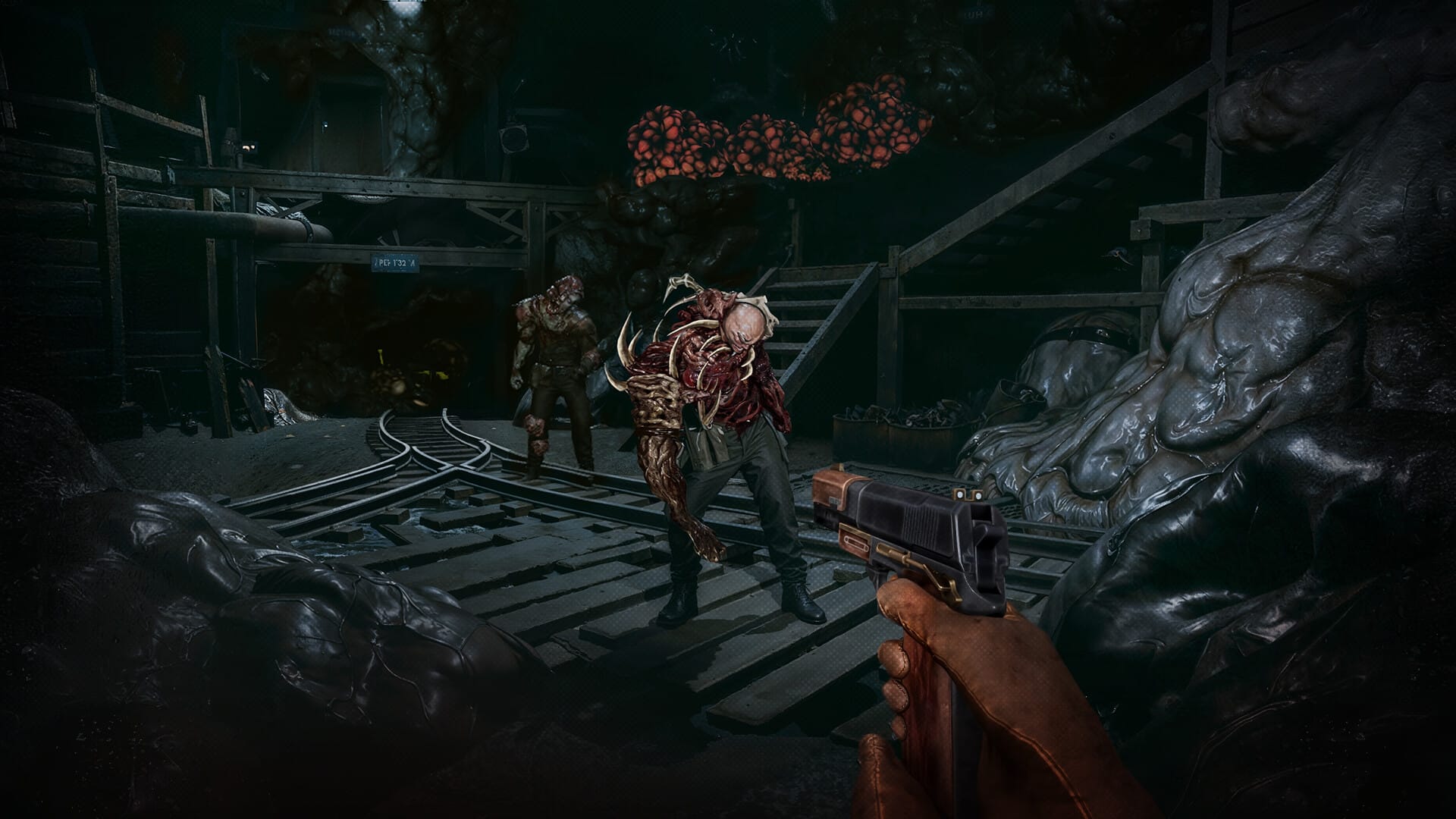
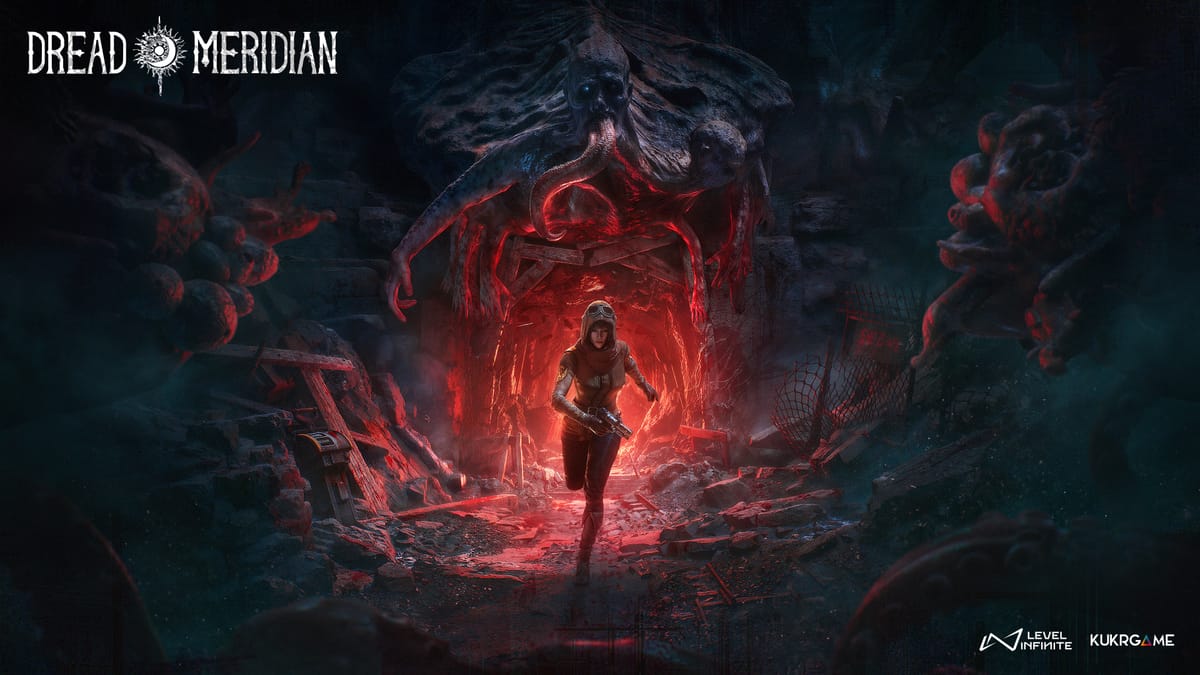
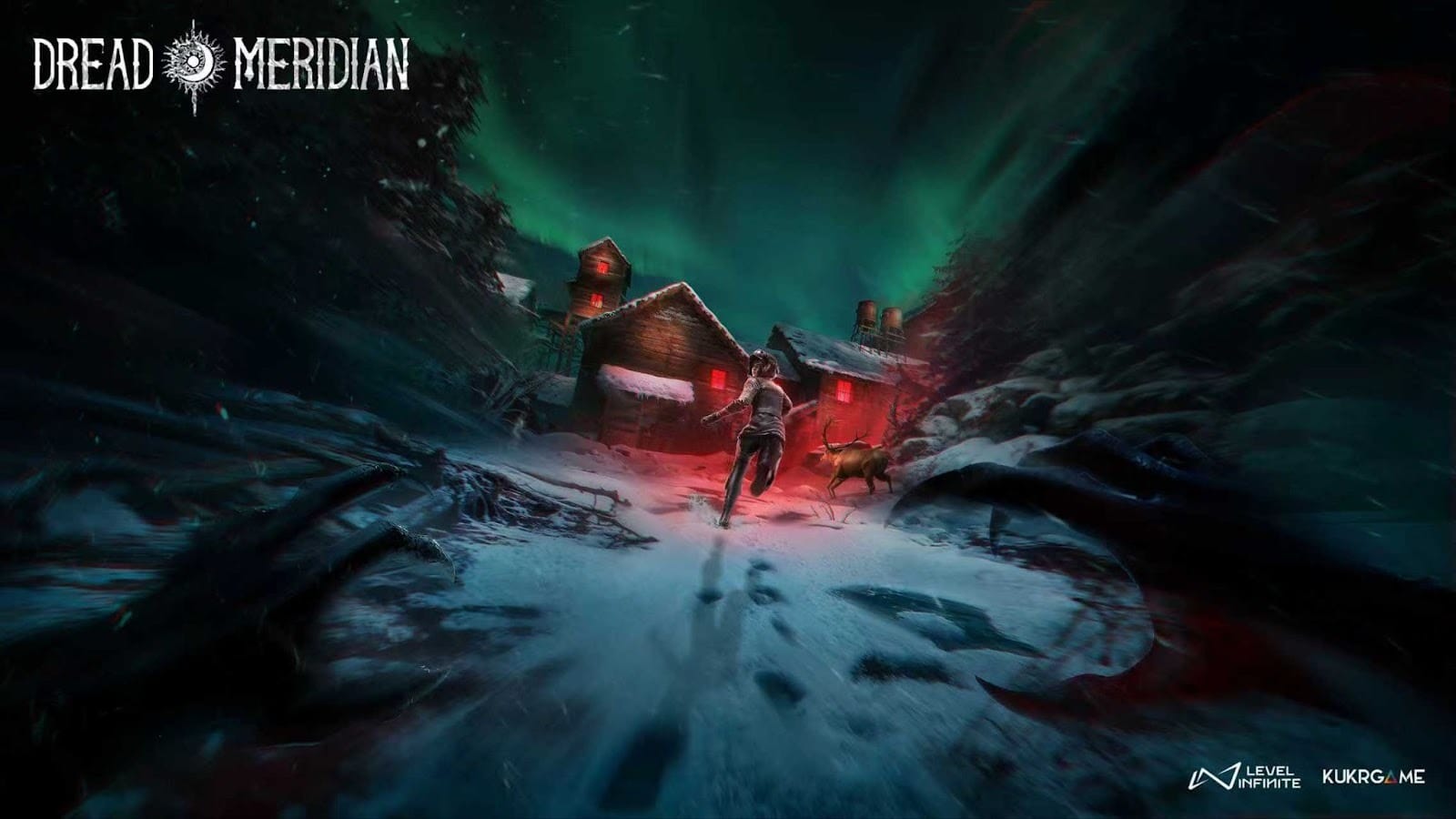
Upcoming VR horror game Dread Meridian is getting a multiplayer mode alongside its solo campaign with next month's launch.
Developed by KUKRGAME, Dread Meridian is an atmospheric VR survival horror game set across the island of Oglanbyen. Focused on a researcher called Daniella, we arrive at this remote arctic island searching for her lost twin sister, Isabella, solving puzzles and fending off strange creatures. As seen in today's UploadVR Winter Showcase, it's now confirmed multiplayer support, with a playtest coming before the end of the year.
While today's trailer didn't reveal much else about the upcoming multiplayer mode, the Dread Meridian development team revealed more to UploadVR in a written Q&A. The studio tells me it's considered multiplayer since the beginning, though focusing on Daniella's story was the priority before exploring how multiplayer could work across Oglanbyen.
“We wanted to make sure that we brought something new to the table with the elements that made Dread Meridian unique. Once we knew we were on the right path with our single player, then we started to experiment with how we could bring the exciting features of the world, the setting and especially the creepier elements to multiplayer.”
Dread Meridian has one multiplayer gameplay mode that supports four players per match, splitting your group into two teams. Cross-platform multiplayer support isn't available at launch, “but it's an important feature we plan to add in the future.”
You play as either the human survivors trying to escape Oglanbyen, or the monsters looking to hunt them down using special abilities. The developers confirmed that a full match takes place over multiple rounds, and you take turns playing between the humans and monsters.
“When playing as the humans, your goal is to destroy the monster's nests and escape through the extraction point. You must search for ammo and resources in order to survive the constant threat of the monster team. As a monster, you play as one of the unique twisted creatures with their own special abilities that are used to hunt, trap and defeat the human team.”
Asked about its long-term plans for supporting multiplayer, the studio states that it first plans to gauge the community's reaction and develop this mode further based on feedback. Calling this “such a different type of game mode from what's commonly seen in VR,” the studio says this means there aren't any best practices in place right now.
“We want our game to stand out, and not just build towards what is popular right now.”
Finally, I queried how the team plans to address feedback following mixed reception to Dread Meridian's previous playtests. Our own PC VR demo impressions praised the Lovecraftian adventure's body horror and unsettling mood, though we encountered numerous glitches that hampered our experience.
The developers highlighted positive responses to the game's immersion, art, and environments. However, they conceded that “we had several bugs that we had overlooked that caused negative experiences for our playtesters,” sometimes causing crashes. The studio advised it's since identified and resolved key issues behind these problems, stating it's now “dramatically improved” overall stability.
Dread Meridian will launch this January on PC VR and Quest, with pre-order skins available as a bonus.
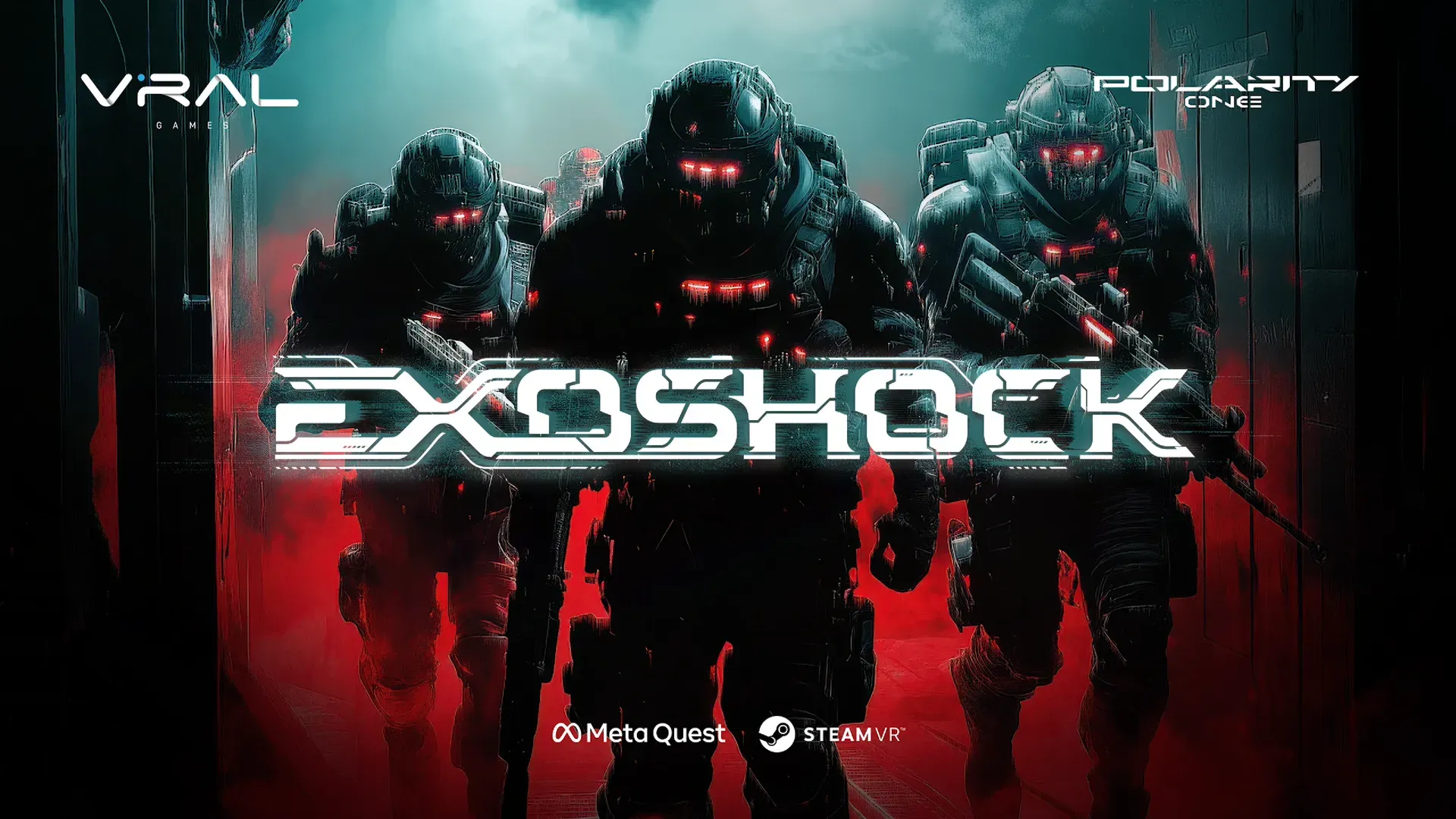
Exoshock released a new gameplay trailer, confirming the VR co-op shooter will get an optional flatscreen mode.
Developed by PolarityOne, Exoshock is a cooperative sci-fi PvE shooter with a gritty dystopian setting that's inspired by Warhammer 40k. This upcoming FPS promises intense firefights as you enter active war zones, prioritizing squad tactics for up to four players as you adapt using customizable loadouts. As seen in today's UploadVR Winter Showcase, it's received a new gameplay trailer.
0:00
/1:07
Notably, today's trailer also confirmed that Exoshock will receive an optional flatscreen mode on Steam, stating the game is “VR first with flat support.” It's unclear if this mode will be available straight away when the game launches, and we'll update this article if we learn more.
Though the full game isn't scheduled to launch until next year, Exoshock has recently been hosting alpha playtests through a free, limited-time Playtest App. The app provides immediate access to the Exoshock Staging Area, which allows you to try out every weapon straight away. Access can be requested through Steam, or the official Discord server for Quest.
Exoshock is heading to PC VR and Quest in Q1 2026.
 Connexion
 UploadVRDavid Heaney