↩ Accueil

Vue lecture

Fractal Pop 2 Air PC Case Review

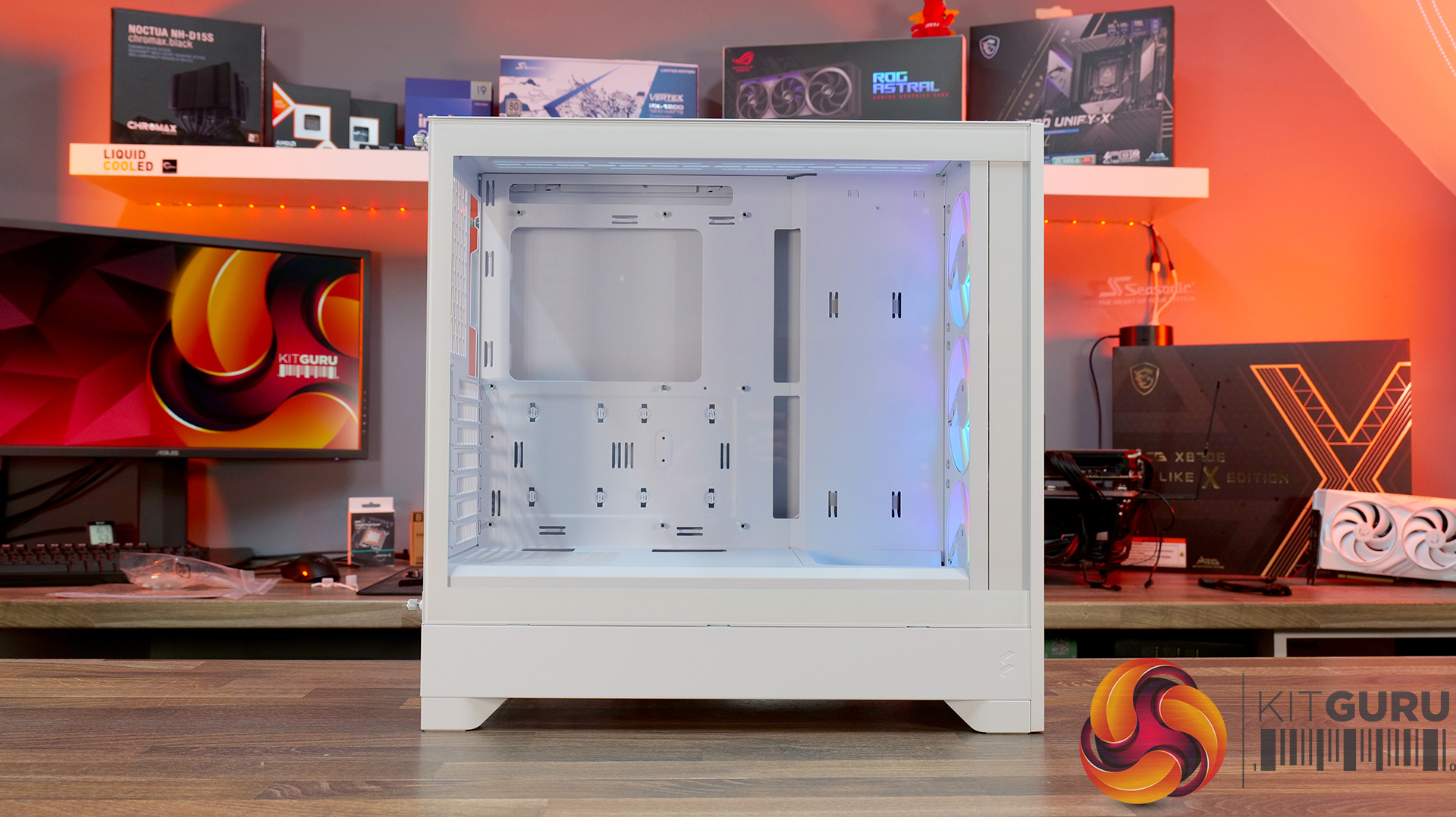
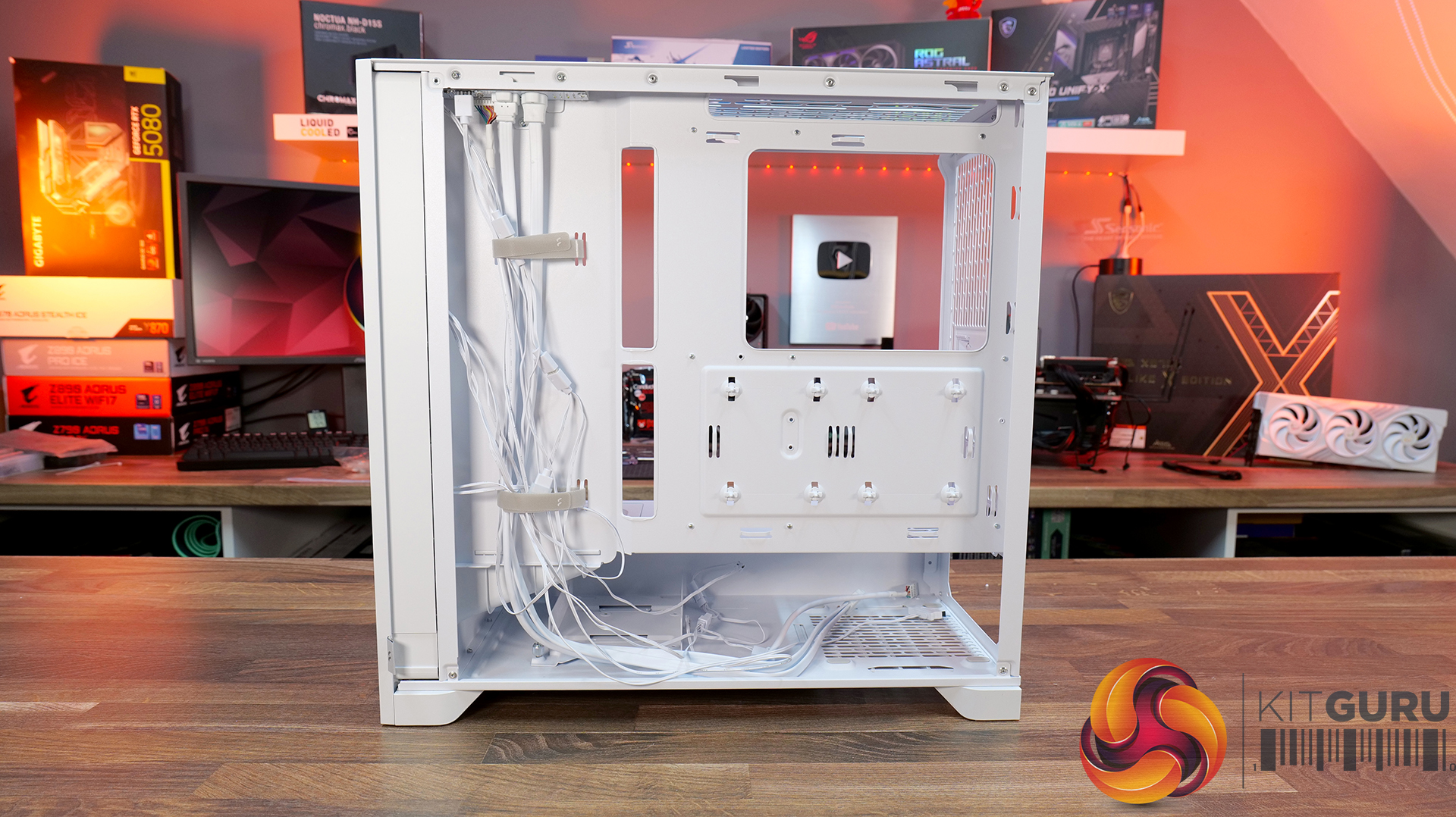
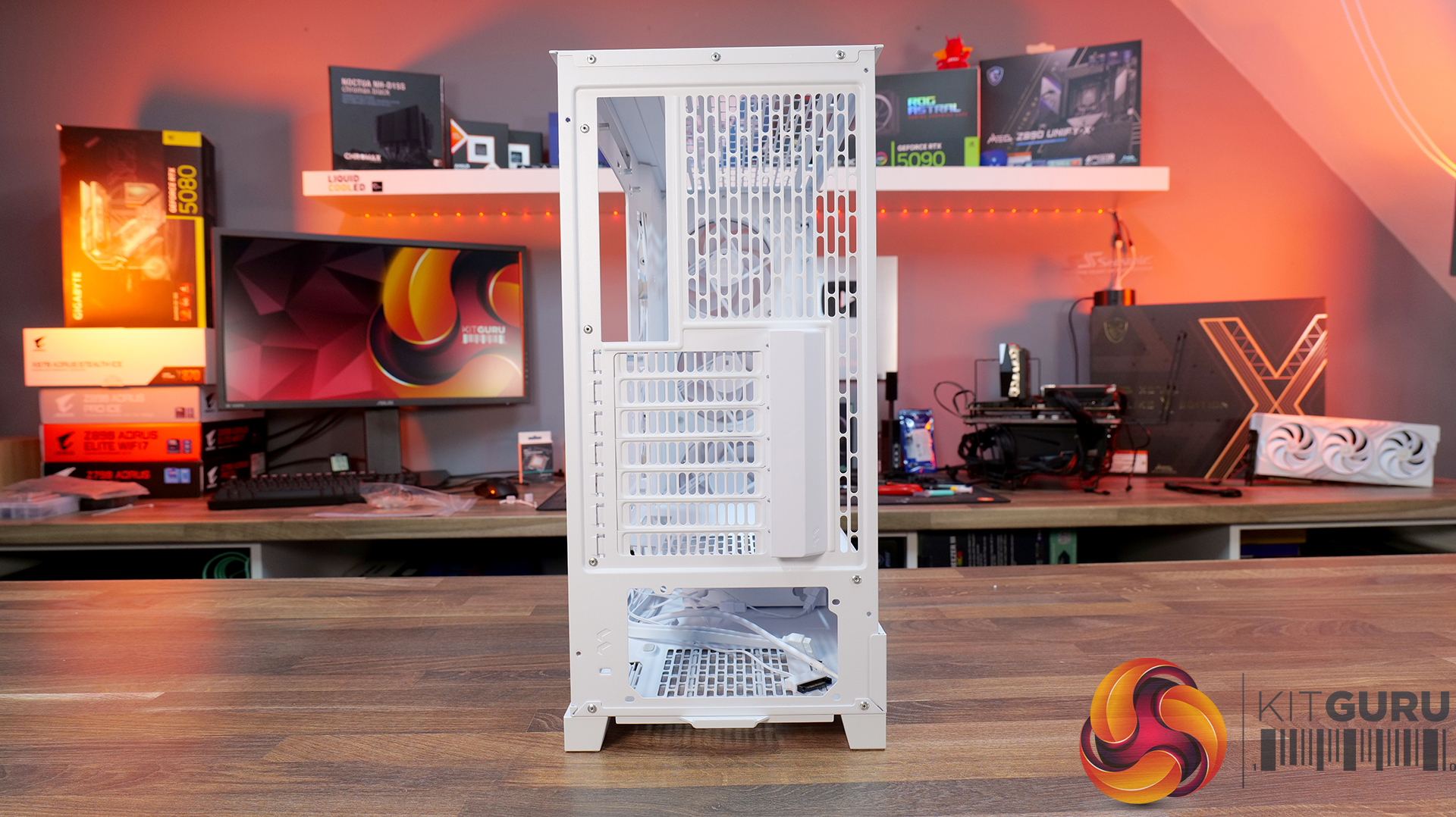
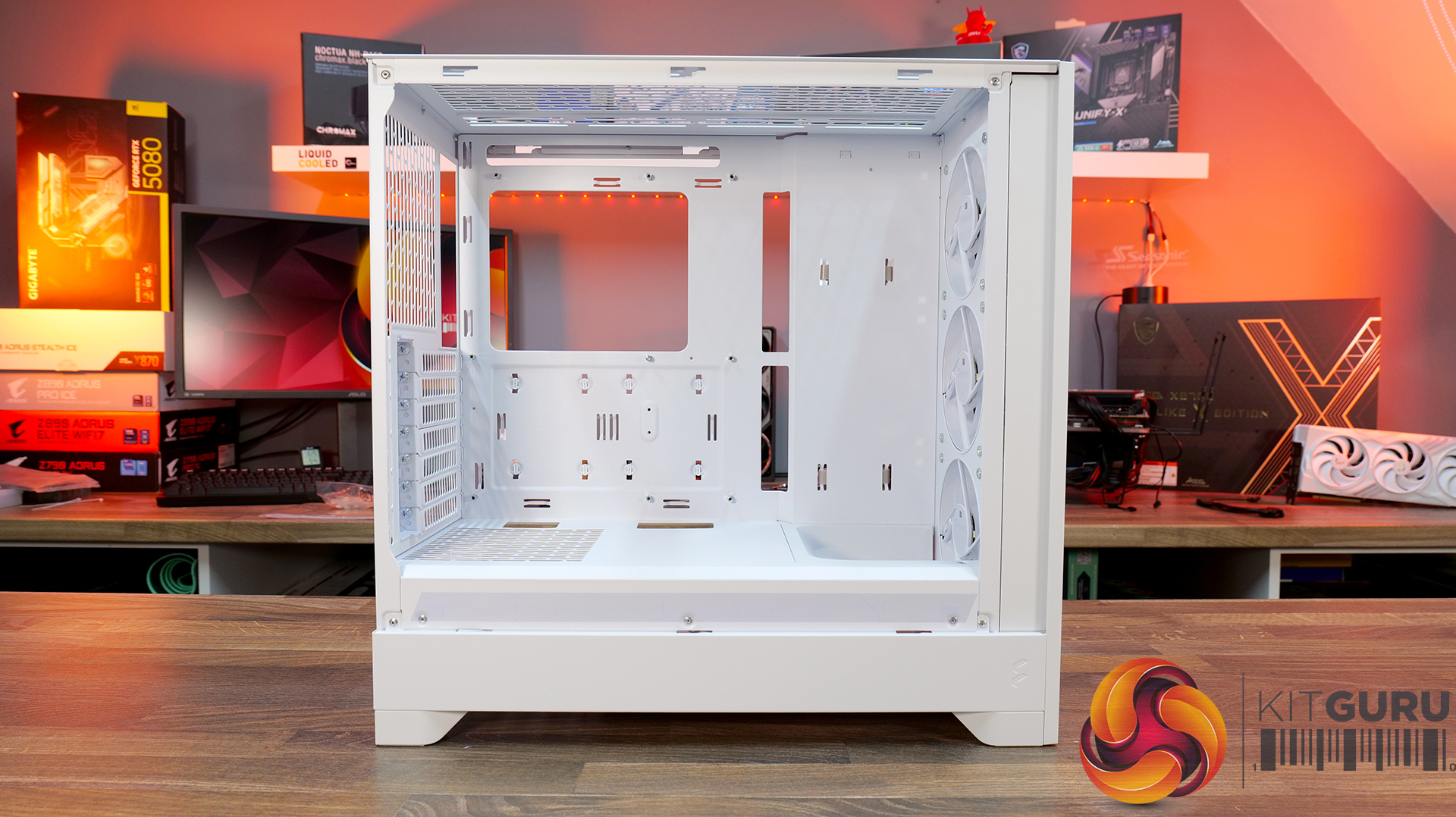
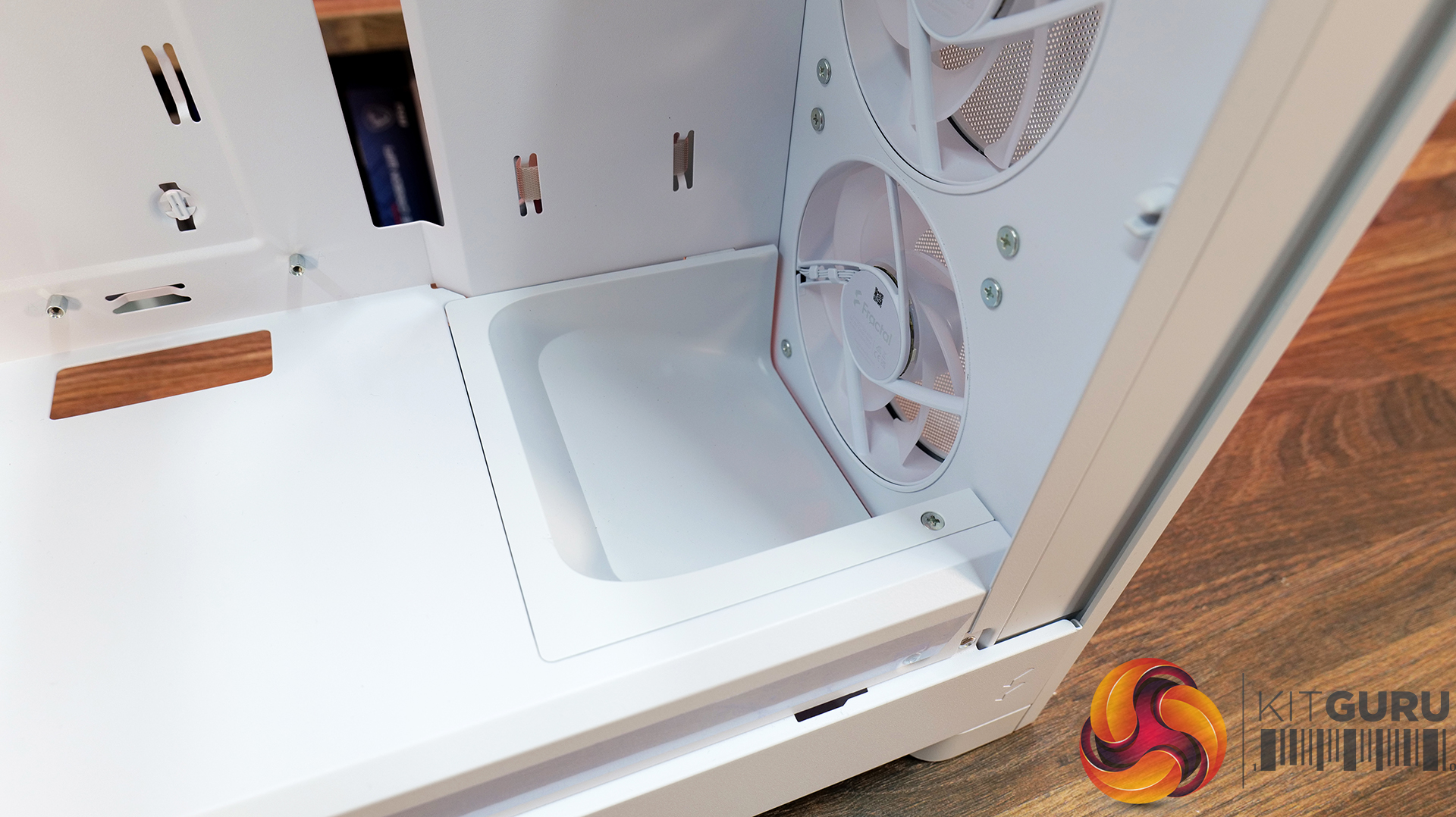
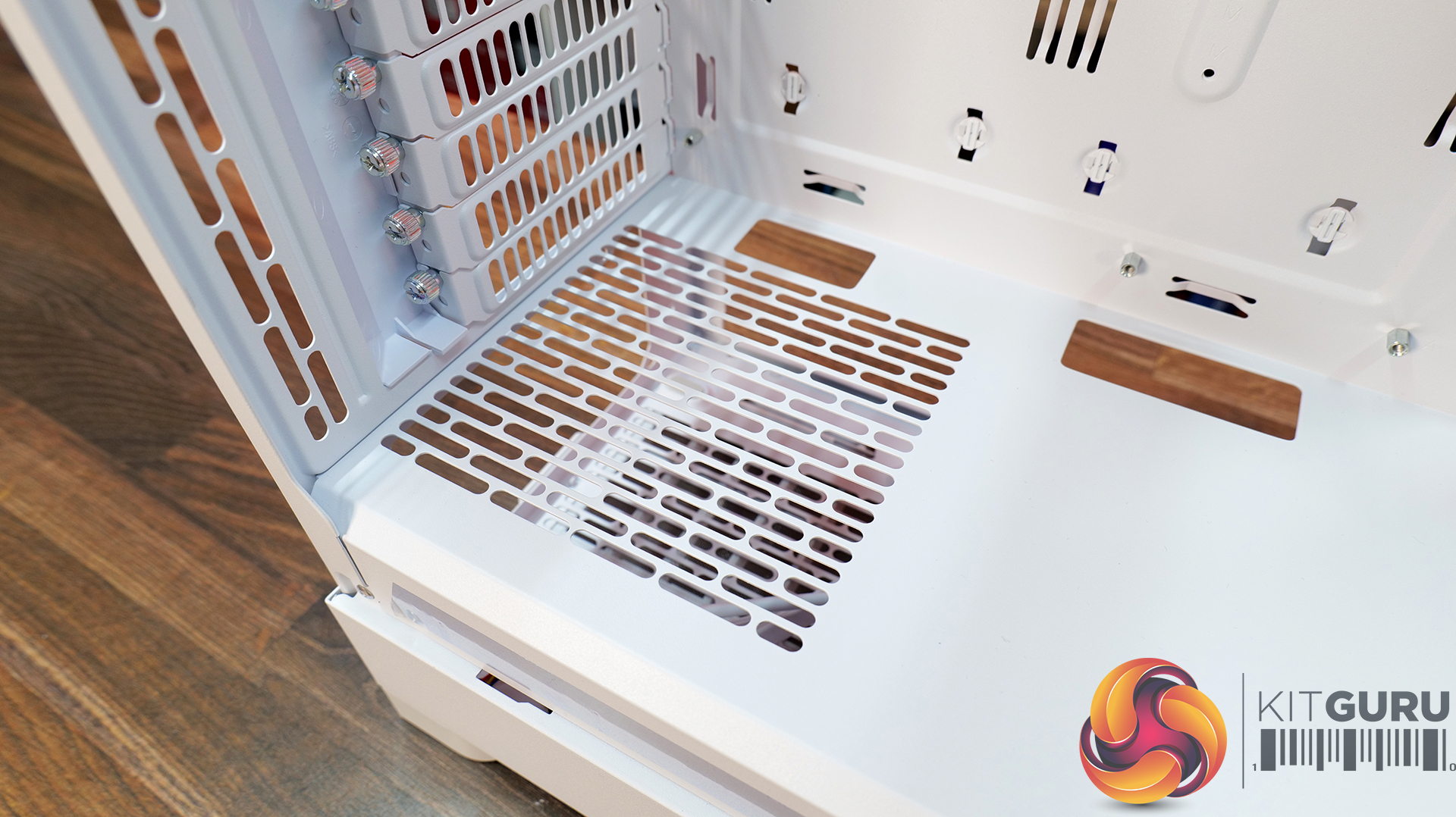
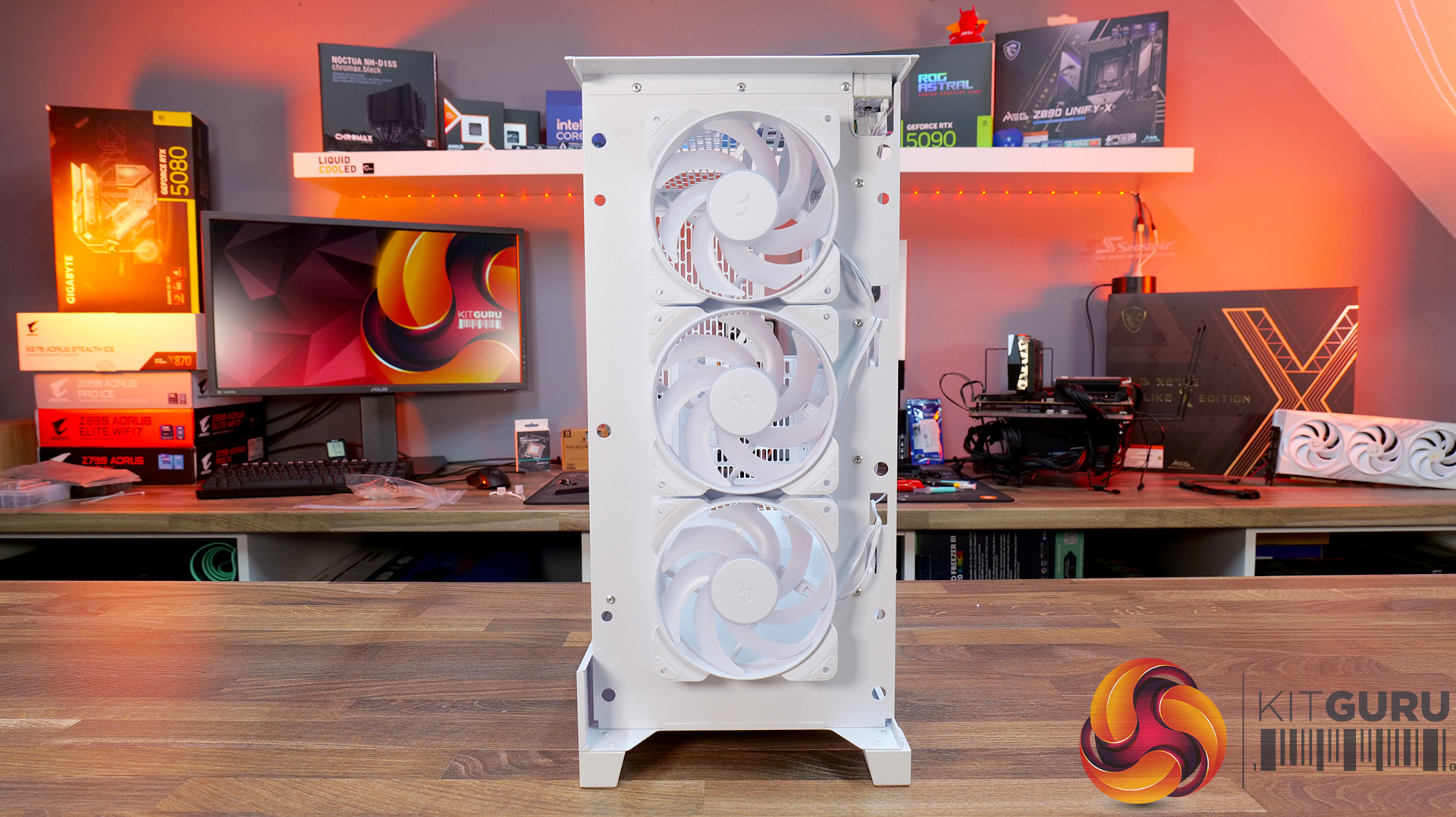
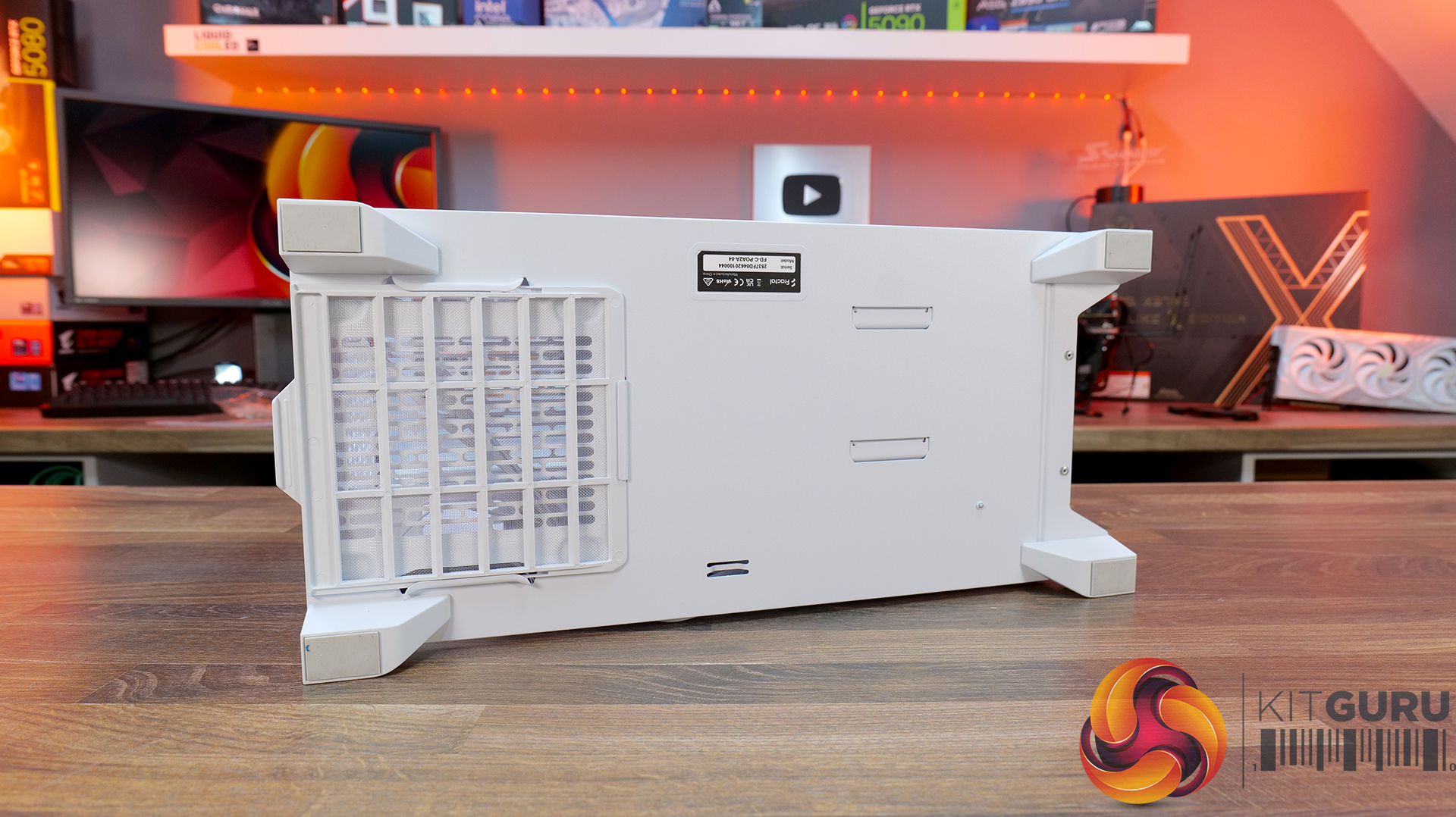
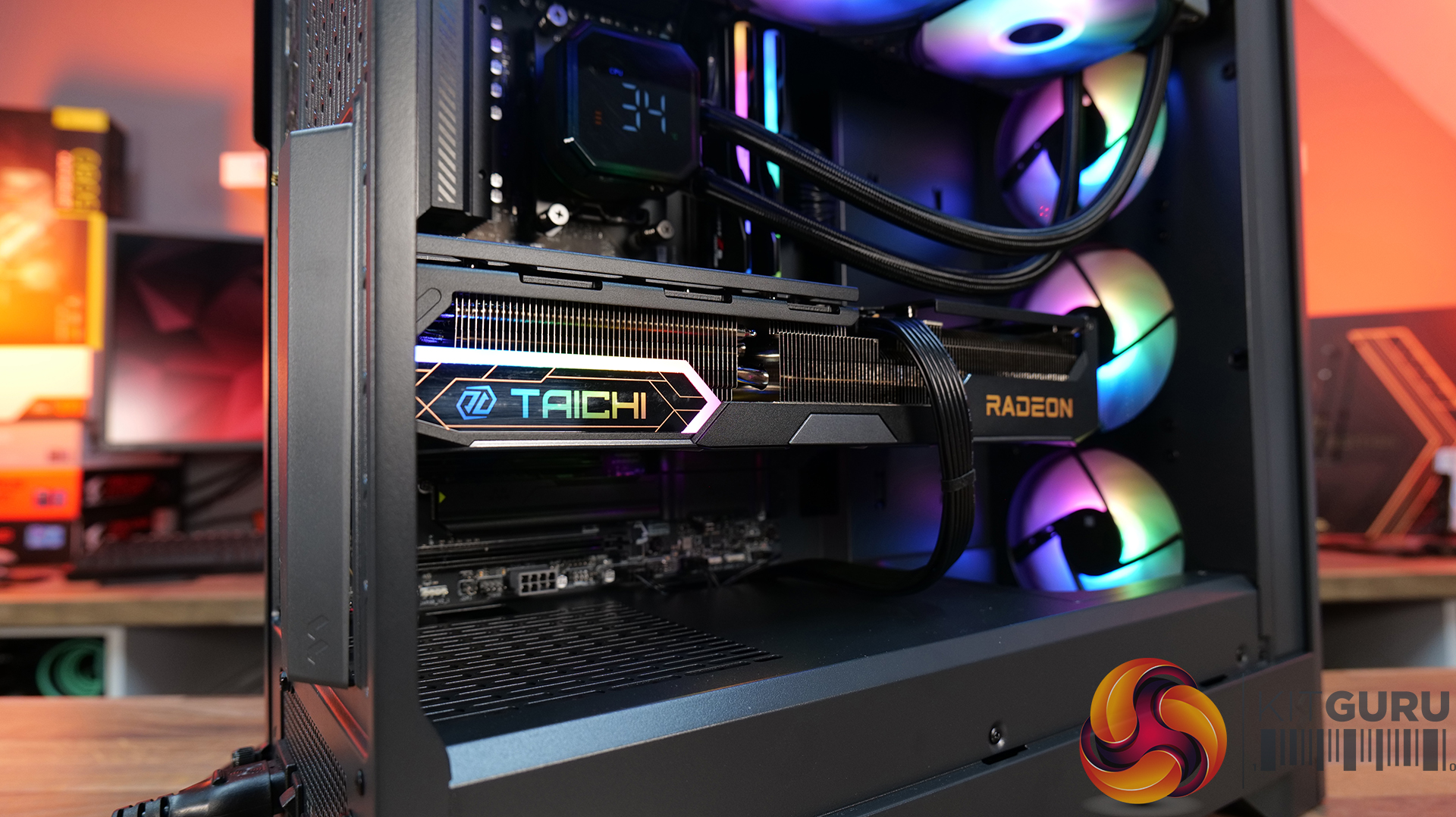
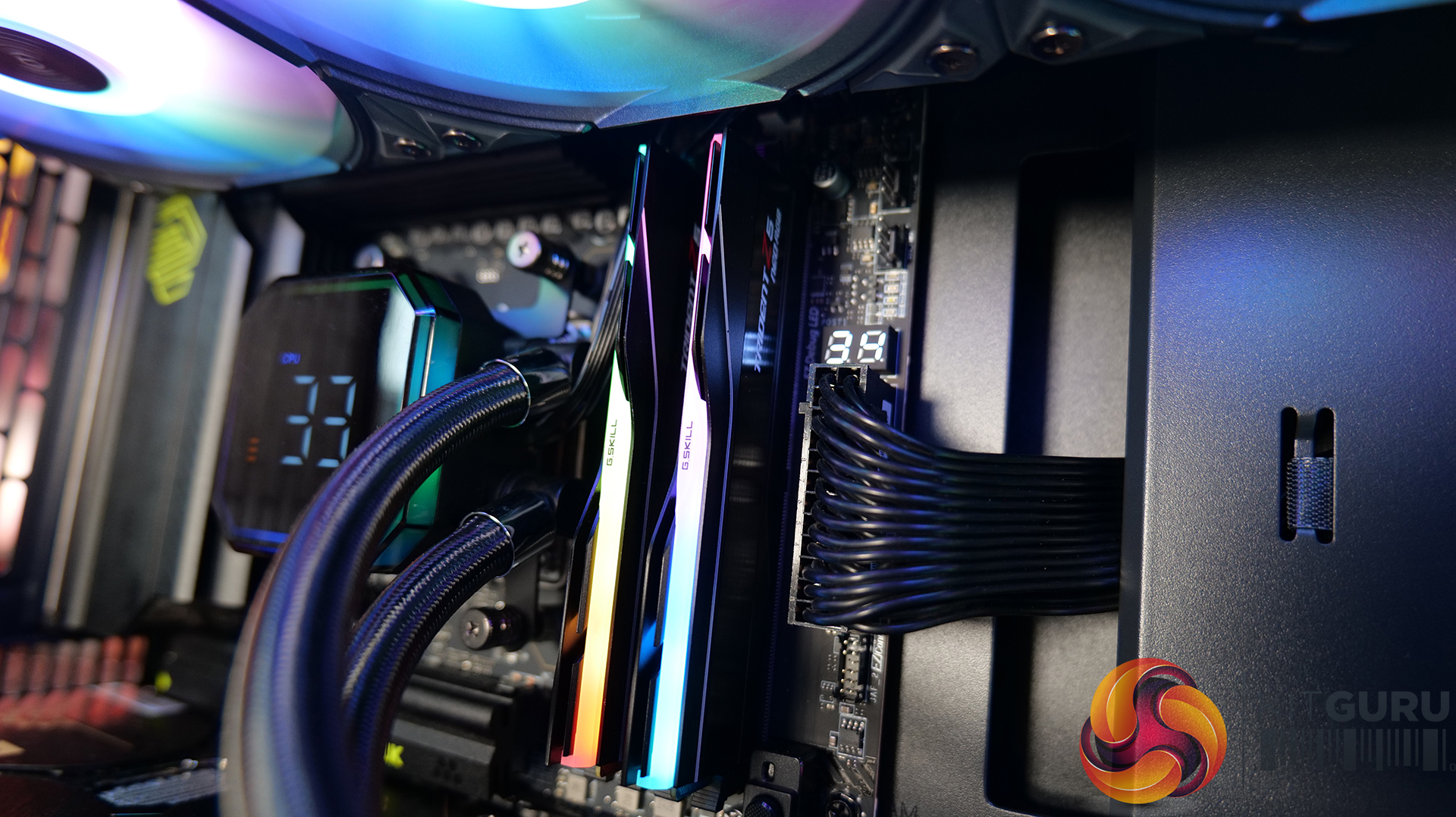
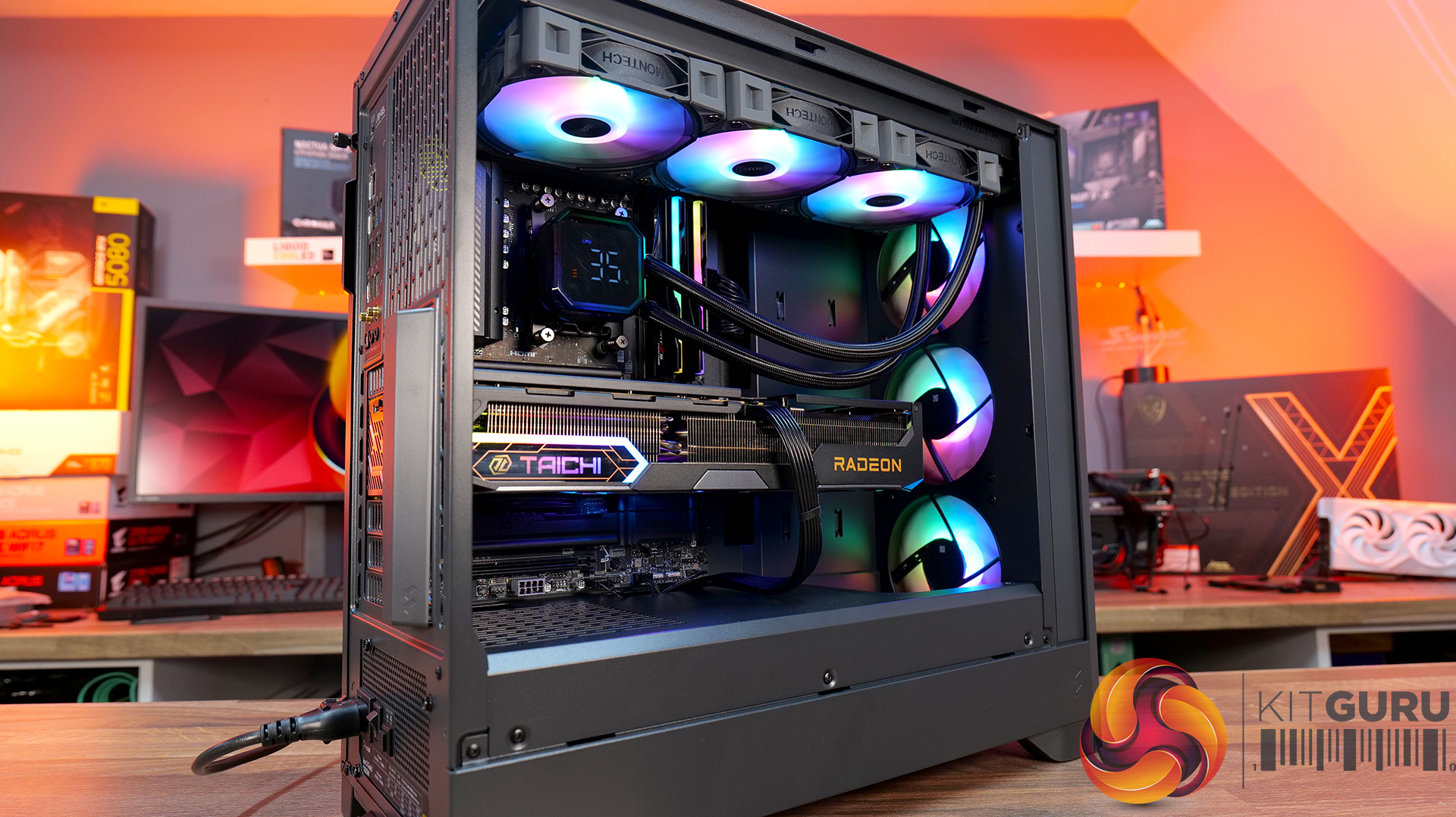
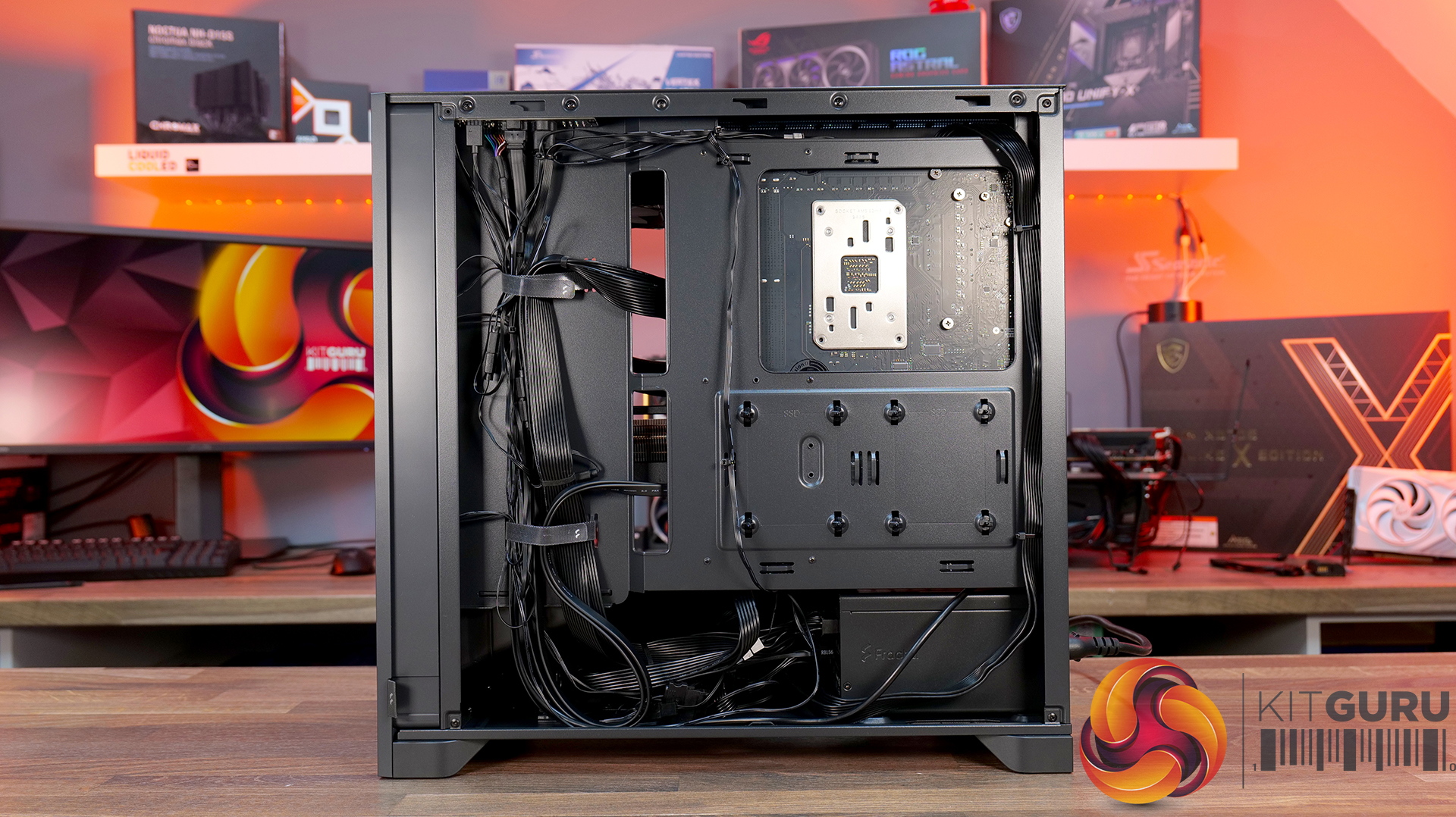
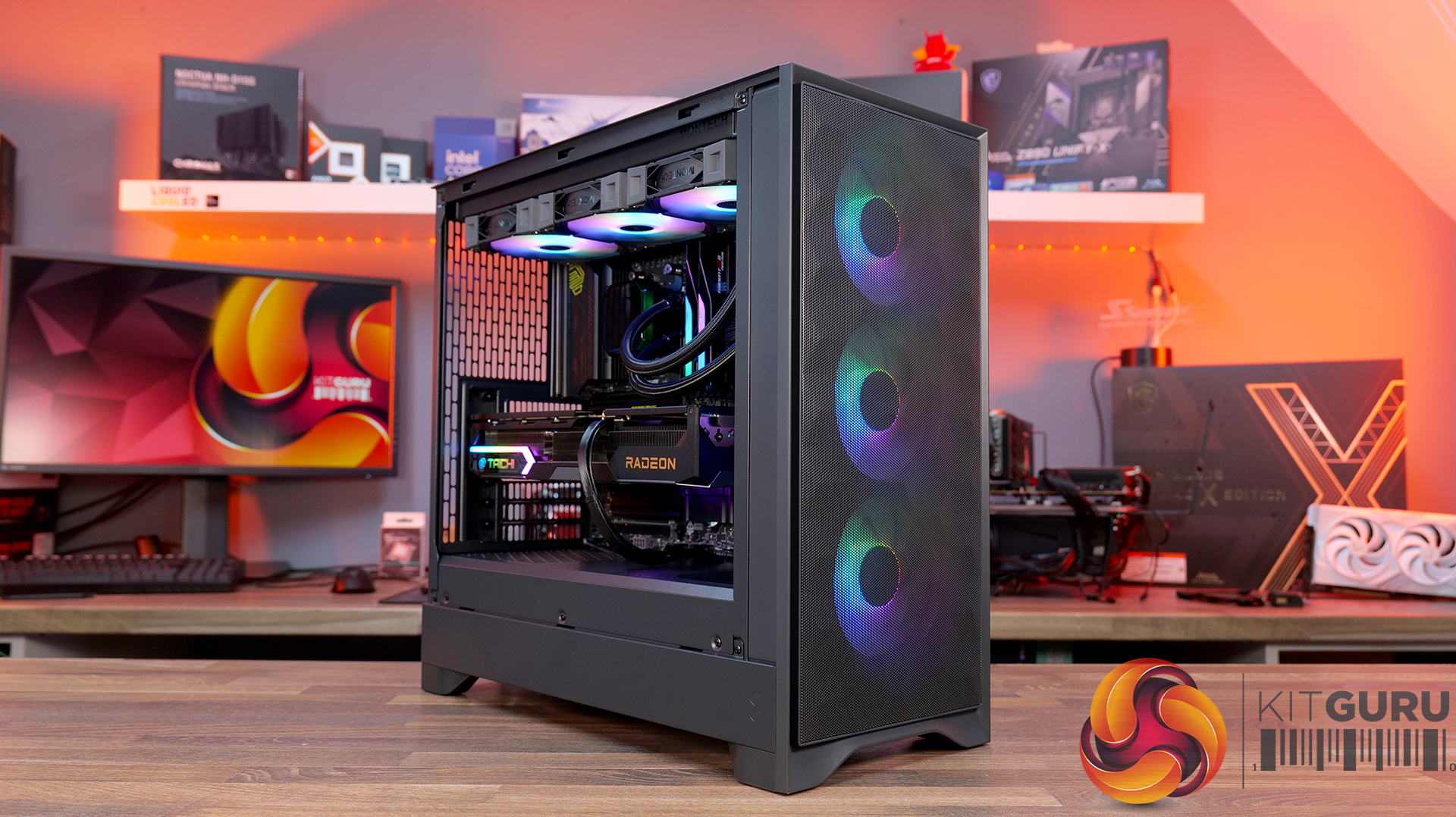
Today we’re taking a look at the Fractal Design Pop 2 Air, a mid-tower case focused on airflow and simplicity. It uses a full mesh front and ventilated top panel, comes with three 120mm fans pre-installed, and includes a GPU air guide designed to improve graphics card cooling. Support covers motherboards ranging from ATX down to Mini-ITX, large air coolers, long GPUs, and up to 360mm radiators. In this review, we’ll be checking build quality, layout, and thermal performance to see how it stacks up.

Timestamps:

00:00 Intro
00:44 Key specs and pricing
02:11 Starting the teardown
03:52 GPU air guide + included fans
05:38 Other features, sizings and compatibility
06:50 Rear of the case / mobo tray
08:01 RGB hub
08:38 Storage support
09:34 Underside
10:09 Included accessories
10:47 Thermal performance + noise
12:04 Performance summary and James’ thoughts
13:34 Closing thoughts
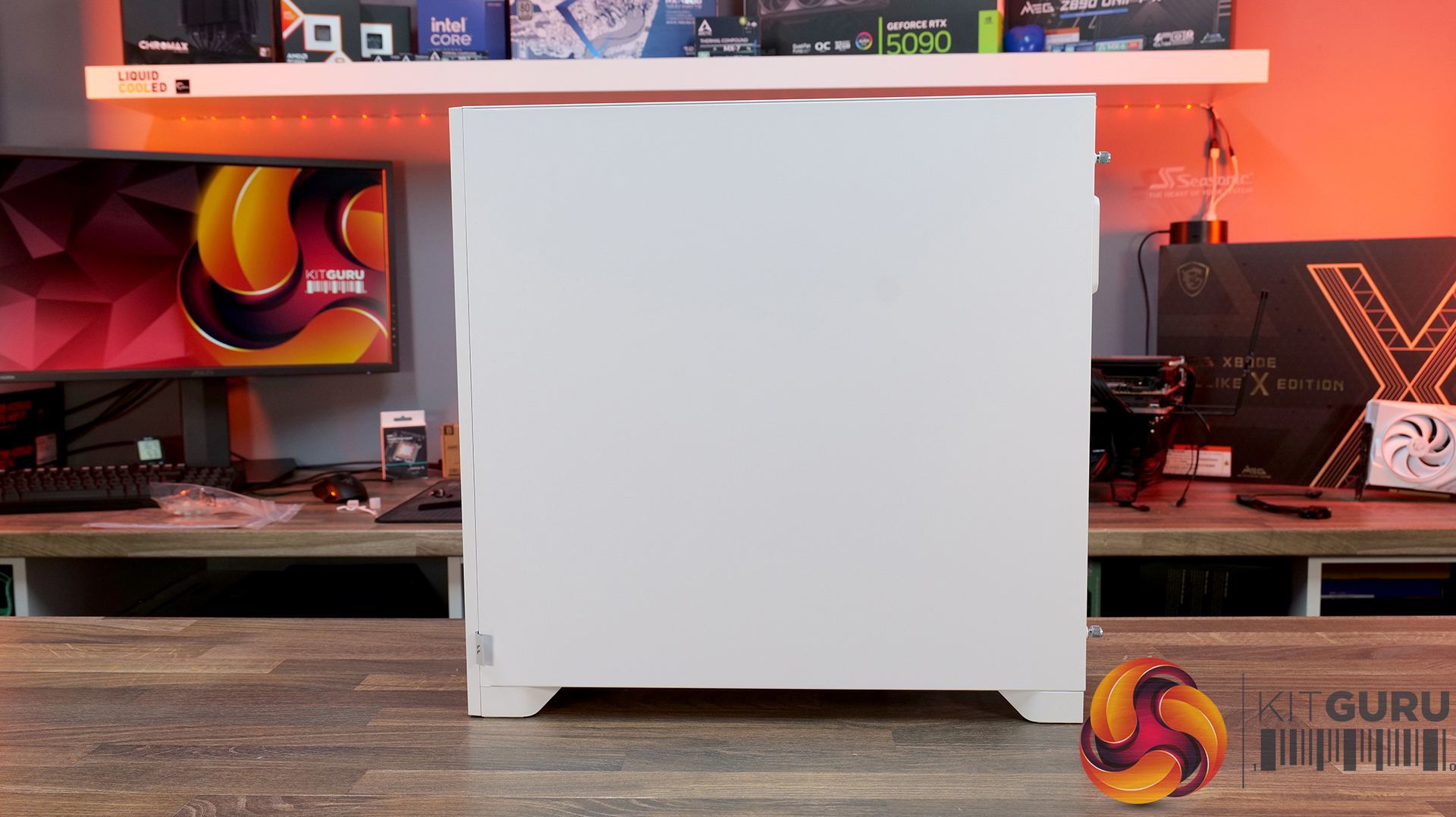
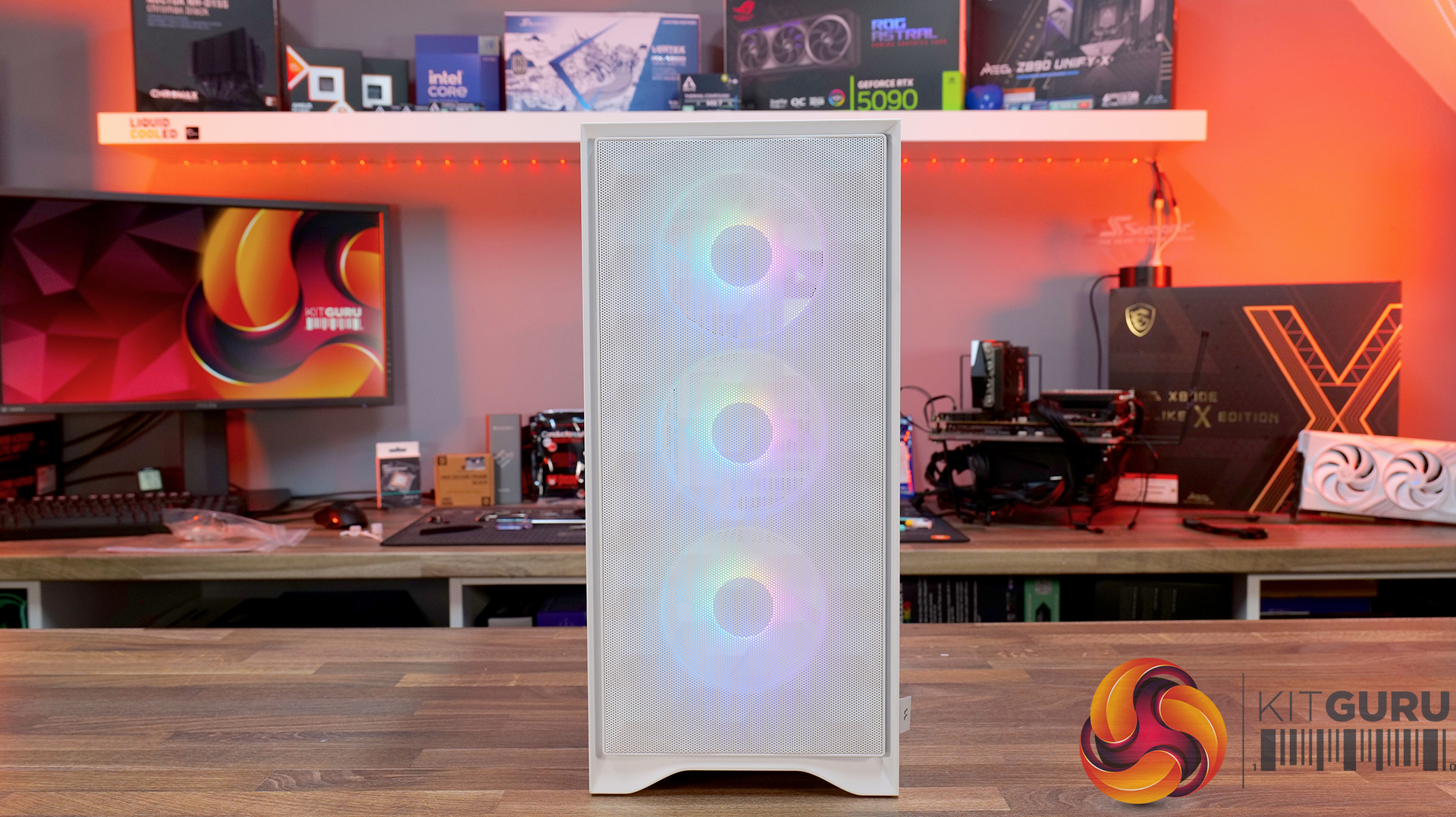
Fractal Pop 2 Air Features:

  • Airflow-focused design: Pop 2 Air features a fine cubic-pattern mesh front and a ventilated top panel with three included Aspect 12X RGB fans.
  • Component compatibility: It supports graphics cards up to 416 mm long, CPU coolers up to 170 mm tall and top-mounted radiators up to 360 mm.
  • Integrated GPU air guide: Pop 2 is equipped with a front air guide to direct airflow specifically toward the graphics card area, to help improve GPU cooling performance.
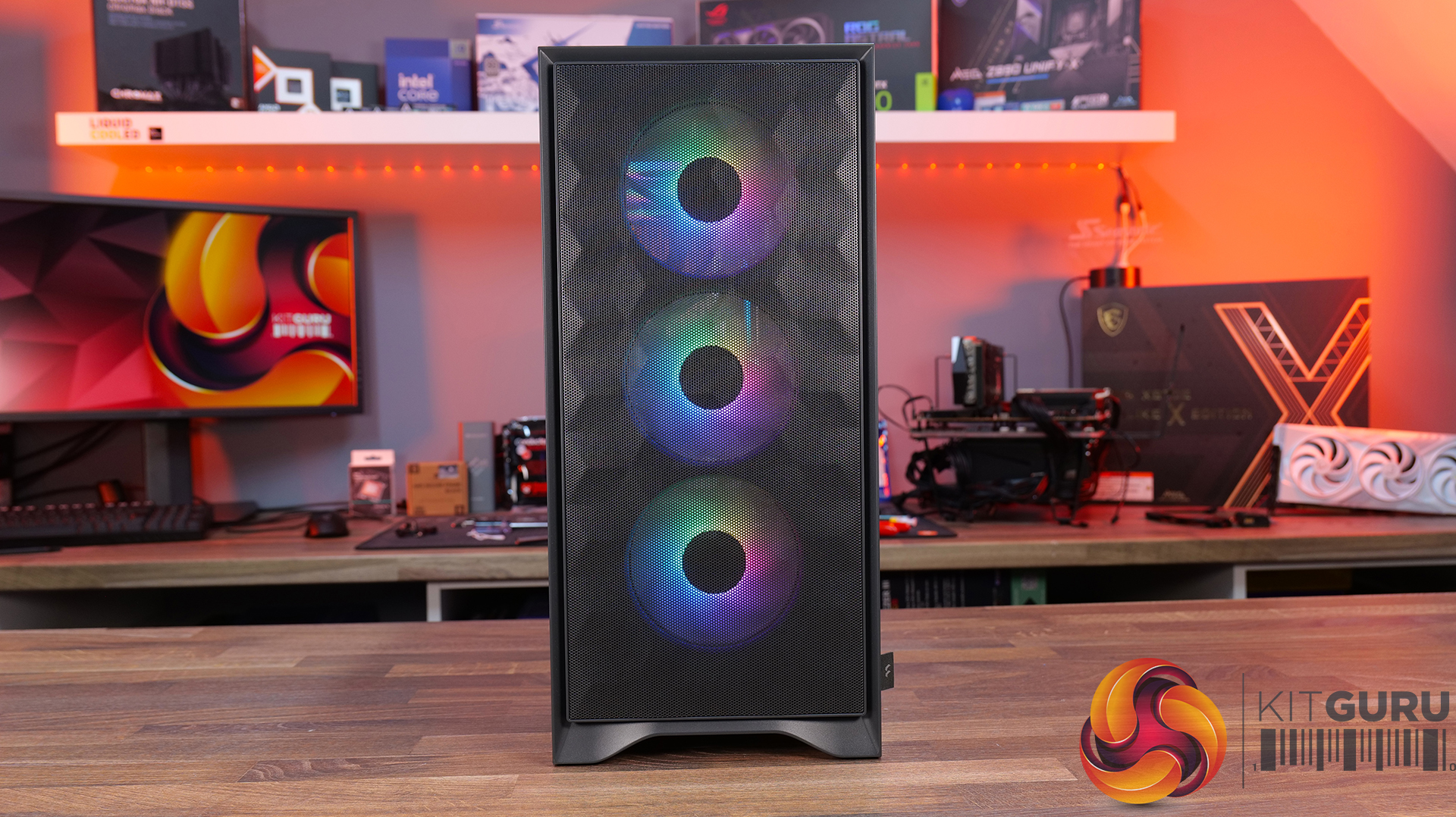
Specifications:

  • Case Type: Mid-Tower
  • Dimensions (LxWxH): 481 × 215 × 462 mm
  • Materials: Steel, Tempered Glass, Plastic
  • Motherboard Support: ATX / Micro-ATX / Mini-ITX
  • Back-connect motherboard support: No
  • Expansion Slots: 7
  • Storage bays: 1 × 3.5″/2.5″ combo mount, 2 × dedicated 2.5″ mounts (3 total)
  • Max GPU Length: 416mm
  • Max CPU Cooler Height: 170mm
  • PSU Type: ATX up to 180mm
  • Pre-installed Fans: 3 x 120mm Aspect 12X RGB non-PWM (Front)
  • Fan Support: 3 x 120mm (Front), 3 x 120mm (Top), 1 x 120mm (Rear)
  • Radiator Support: Up To 360mm (Top)
  • Dust Filters: Top (Steel) PSU (Nylon)
  • Font I/O: 1 × USB Type-C (5 Gbps), 1 × USB Type-A (5 Gbps), 1 × Audio/Mic combo jack
  • LCD Screen: N/A

Thermal Performance Testing

To simulate thermal demand, we run the Cinebench R23 multi-thread benchmark and 3DMark Speed Way stress test simultaneously in a loop for 30 minutes to load the system fully. This gives the CPU and GPU enough time to reach constant steady-state temperature. With this data, we can compare how the system handles the thermal demand and measure peak noise levels.

Thermal performance is measured with the case in various configurations, such as the default, with the tempered glass left-hand side panel removed and with the front panel removed to see how these configurations affect the CPU and GPU temperature. During testing, only stock case fans are used unless otherwise specified. All water pumps are set to maximum RPM and fans are set to a custom RPM curve by the Motherboard software/BIOS.

All temperature measurements are presented as Deltas – meaning the ambient temperature has been deducted from the CPU temperature, giving us a Delta. Data shown in the charts represent the average component temperature over the length of the test as measured by HWiNFO, and then the last 15 minutes of the data are calculated to get the average. The ambient temperature during thermal tests is between 19-20⁰C.

Test System Specification:

Thermal Performance Overview

We tested the case thermals with a 360mm AIO as the exhaust at the top and in several different configurations. The default configuration shown in the charts is with the 360mm AIO at the top, 3 x 120mm Front intake fans and with all panels installed.
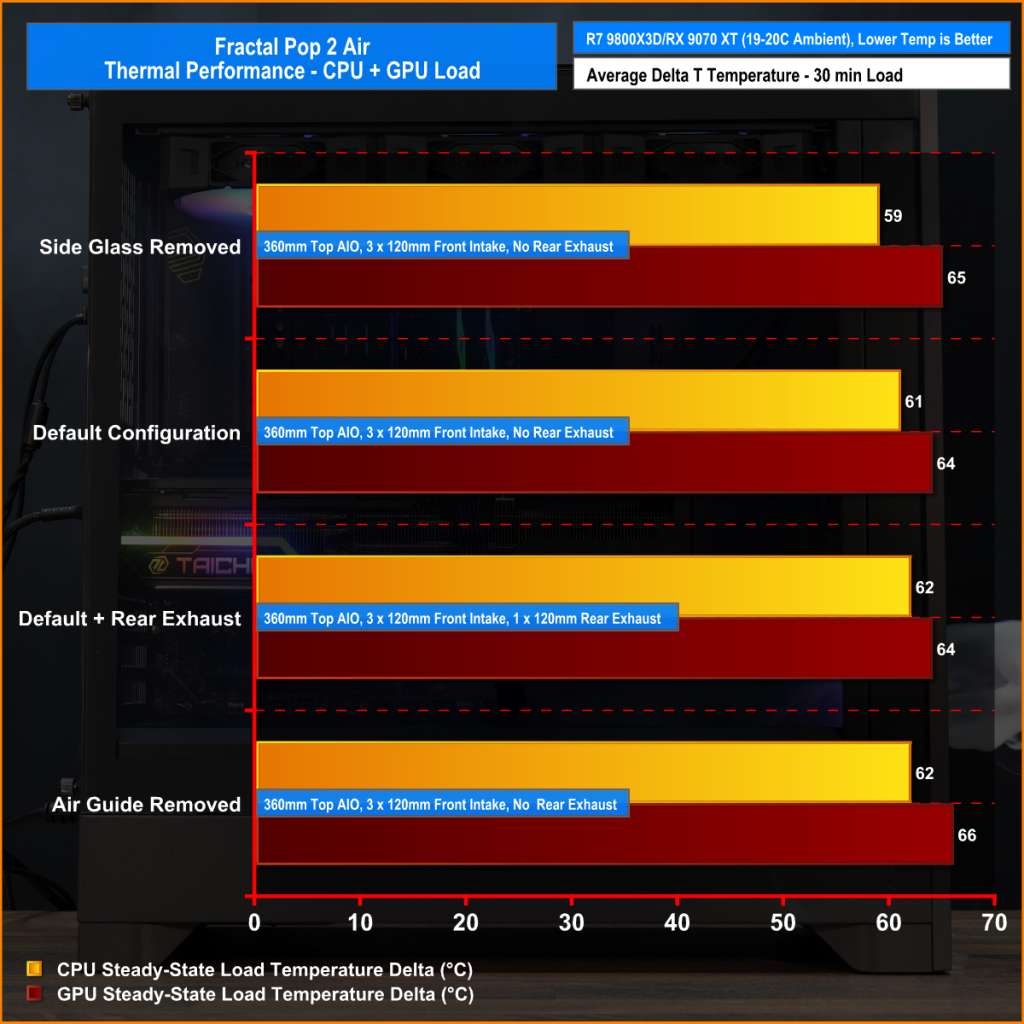
CPU temperatures are close across all test configurations, ranging from 59°C to 62°C over ambient. Removing the side panel produces the lowest CPU temperature at 59 °C, while the default layout and added rear exhaust both sit 1-3 degrees °C higher, indicating the stock airflow path is already optimised. GPU temperatures show minor variation, with the default configuration achieving the lowest result at 64 °C. Removing the GPU air guide results in the highest GPU temperature at 66 °C, showing its effectiveness in directing airflow toward the graphics card with minimal impact on CPU cooling.

Noise Output
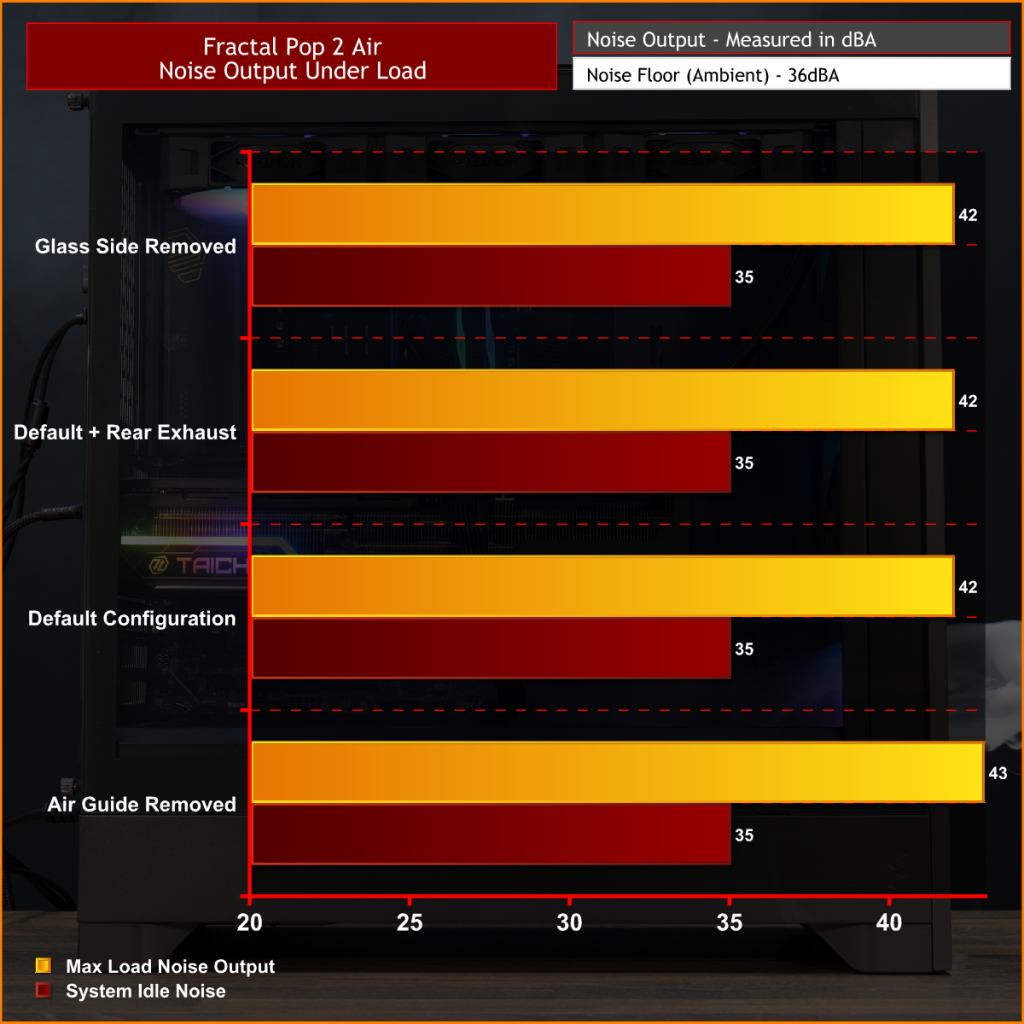
Under load, the Pop 2 Air shows very consistent noise output across configurations, measuring 42 dBA with the side panel removed, in the default layout, and with an added rear exhaust fan. Removing the GPU air guide results in a minor increase to 43 dBA, suggesting it provides a small benefit in controlling airflow under load with slightly lower fan speed. At idle, all configurations sit at 35 dBA, indicating stable fan behaviour and no additional noise coming from airflow changes.

Closing Thoughts

In some key areas, the Fractal Pop 2 Air shows a shift in direction compared to the original Pop series. Some of the more distinct features that made it popular are gone, like the 5.25-inch drive bay and the bold and bright internal colour options that gave the earlier models a bit of personality. In their place, Fractal has moved more towards mainstream airflow-focused design, which will likely appeal to cooling enthusiasts wanting to squeeze all the performance from their hardware, even if it means losing some of that original charm.

On the positive side, the updates applied in the Pop 2 Air make sense for modern high-performance gaming systems. Support for up to a 360mm top-mounted radiator is a welcome addition, and the included GPU air guide proves to be more than a gimmick, offering a small benefit to graphics card temperatures in our testing. Cooling performance overall is solid, and the default fan configuration does a good job, and quietly.
That said, there are some notable omissions at this price point. There are no removable radiator or fan brackets to help with installation, no built-in GPU anti-sag support, and the included fans are non-PWM, which limits fine speed control and adjustment. These aren’t deal-breakers, but they are features that competitors often include at this price range, and their absence will be noticed by more advanced and experienced enthusiast system builders.

Build quality is, for the most part what we’ve come to expect from Fractal Design – generally good, except for the top panel which is quite weak and flexible without any fans or radiator mounted.

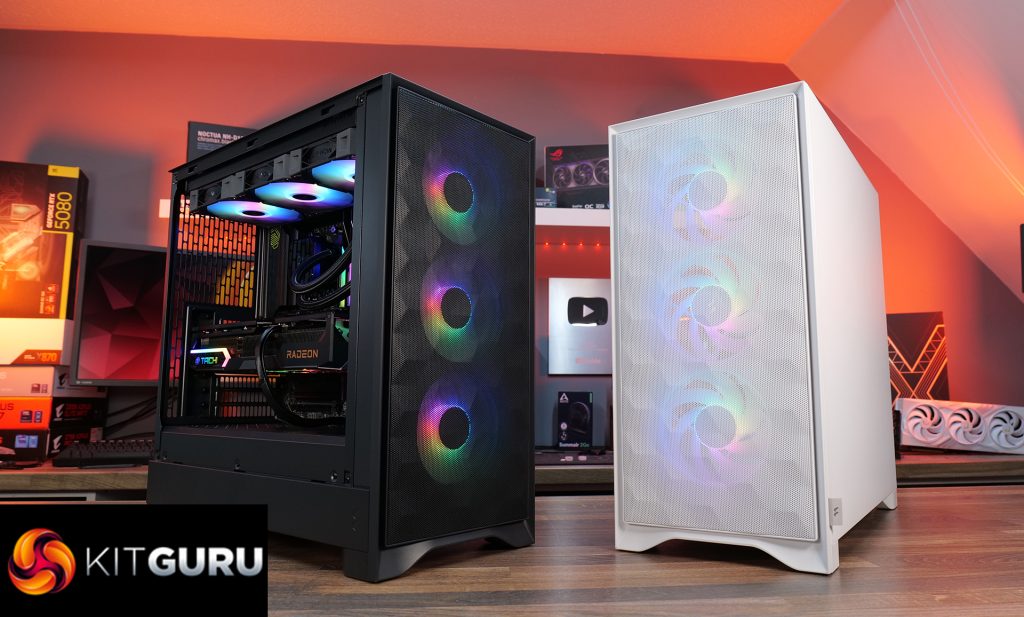
Taken as a whole, the Fractal Pop 2 Air is a competent, airflow-focused mid-tower that prioritises cooling and compatibility over the fun and functional extras seen in its predecessor. It’s not the most feature-rich case in its class, but if you value straightforward design and solid thermal performance, it may appeal to you as it is reasonably priced too at under £90 with fans, glass and RGB included.

The Fractal Pop 2 Air is available to purchase now from Scan in either black or white, priced from £79.99 HERE.

Pros: 

  • Good thermal performance.
  • Improved radiator support over the original Pop.
  • Good build quality.

Cons:

  • The distinctive Pop colours have gone.
  • Lost 5.25-inch drive support.
  • No back-connect motherboard support.
  • Included fans are not PWM.
  • Very basic in some areas, with no fan hub, modular parts or GPU support brackets etc.

KitGuru says: We miss some of the features of the original Pop in this new version, but if your focus is solid cooling and high-end hardware support at a low cost, then the Pop 2 Air might be ideal for you.


The post Fractal Pop 2 Air PC Case Review first appeared on KitGuru.
  •  

Alastair Duncan to reprise his role as Mimir in live-action God of War

Back in 2022, it was reported that Sony had entered into talks with Amazon to develop a live-action adaptation of the console maker’s highly-popular God of War franchise. While production was off to a slow start, work on the project appears to be progressing smoothly – with a majority of the cast now being officially announced.

Back in January, Amazon started to promote their upcoming God of War show, confirming early casting details including the role of Kratos (being played by Ryan Hurst). Since then, we’ve gotten additional casting details including some familiar voices reprising their roles.

As reported by Deadline, Ólafur Darri Ólafsson (known for Severance and The Secret Life of Walter Mitty) is officially set to play the role of Thor in the show. Joining him (as per Variety) are Max Parker as Heimdall; Mandy Patinkin as Odin – and Danny Woodburn / Jeff Gulka playing Brok / Sindri respectively.

God of War Amazon

Perhaps the most surprising casting choice however is Alastair Duncan as Mimir, who actually played the character in the games (and whose voice would be highly familiar to those who experienced the duology). Serving as one of the primary narrators for 2018’s God of War and Ragnarok, Alastair Duncan reprising his role is a welcome surprise.

While it is still too early to glean much regarding Amazon’s God of War adaptation, the casting choices so far are certainly encouraging.

KitGuru says: What do you think of the casting choices so far? Are you glad to see Alastair Duncan return? Who do you think they’ll get to play Atreus? Let us know down below.

The post Alastair Duncan to reprise his role as Mimir in live-action God of War first appeared on KitGuru.
  •  

Switch 1 version of Apex Legends to shut down later this year

Shortly following the launch of the Nintendo Switch 2, EA / Respawn Entertainment updated their popular Battle Royale ‘Apex Legends’ with a Switch 2 edition – letting Nintendo owners finally compete on a more equal footing at 60fps. As expected however, the OG Switch version of Apex Legends will now soon be discontinued, officially shutting down at the end of Season 29.

Making the announcement via their blog, the team at Respawn Entertainment wrote: “Hey legends, we want to share an important update about Apex Legends on the Nintendo Switch. Season 29 will be the final update for Apex Legends on Nintendo Switch. Future seasons of Apex Legends will continue to be available on Nintendo Switch 2.”

Apex Legends Nintendo

For the uninitiated, Season 29 ends on the 3rd of August, and so there is still plenty of time to play the game between now and then (even if the OG Switch version is arguably the worst). Regardless, as all your progress is tied to your EA account, those who wind up picking Apex back up on Switch 2 will be able to continue right where they left off.

Even back when it released in 2021, the Switch 1 version of Apex Legends was far from the optimal way to experience a competitive multiplayer shooter and so it’s not surprising to see it being discontinued. It will be interesting to see how much longer the last-gen PS4 and Xbox One versions persist for.

KitGuru says: Did you ever try the game on Switch 1? How was it? When do you think the other last-gen versions will be discontinued? Let us know down below.

The post Switch 1 version of Apex Legends to shut down later this year first appeared on KitGuru.
  •  

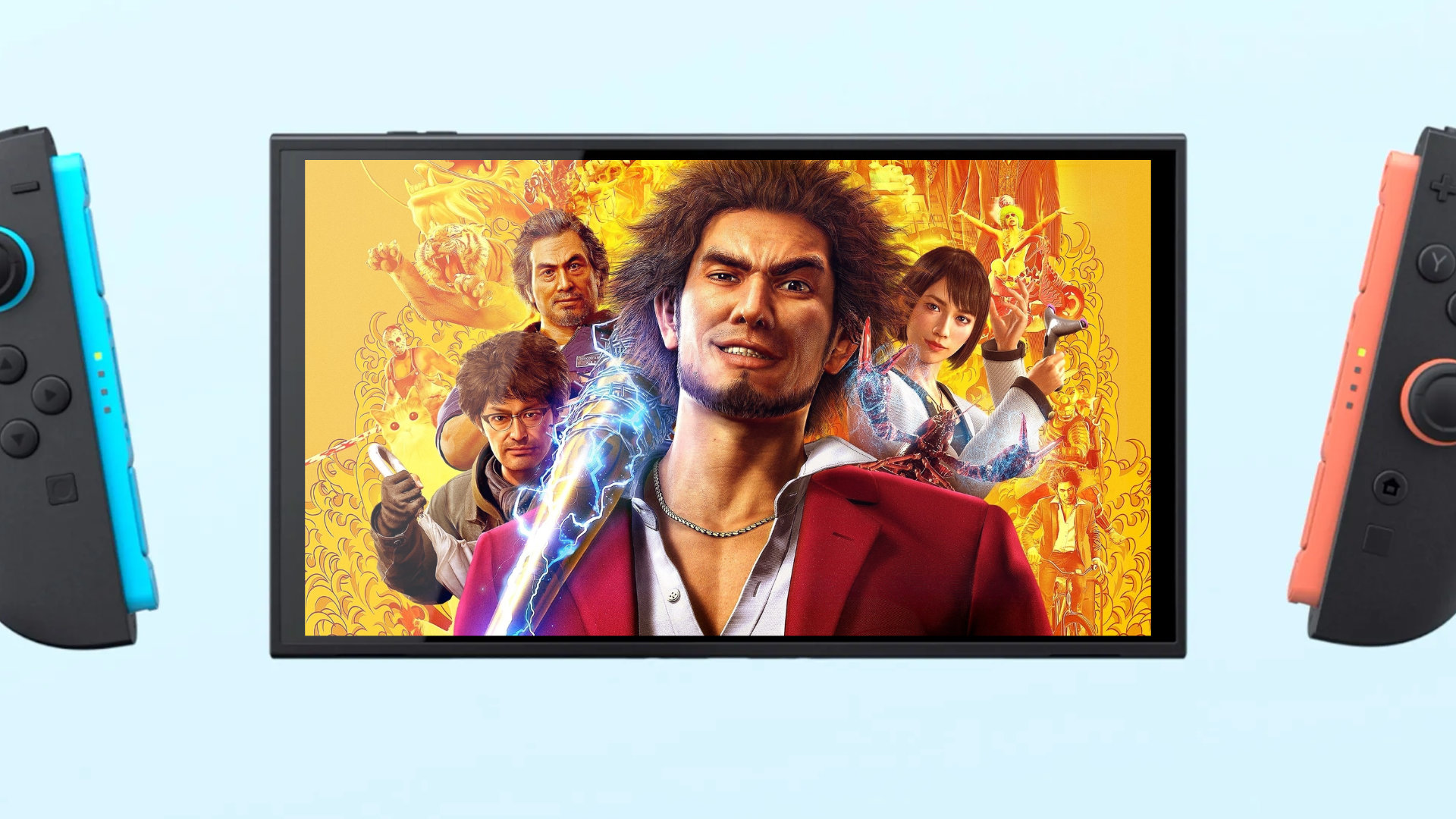
RGG Studio hope to bring even more Yakuza games to Switch 2

SEGA and RGG Studio have been pretty good with supporting Nintendo platforms in recent years, with the Switch 1 receiving plenty of ports over its lifetime. The Yakuza series in particular has seen strong representation with 0, 1, 2 and (soon) 3 available on the platform. According to the studio, even more entries could be coming “if fans tell us more.”

Releasing a promotional video to YouTube for the upcoming Yakuza Kiwami 3 & Dark Tides, the team at RGG Studio spoke on their support for the Nintendo Switch platform in particular, with Masayoshi Yokoyama stating:

“We've had Yakuza 0, 1, 2 and now 3. So, on Switch 2 with Yakuza Kiwami 3 & Dark Ties, we're releasing everything that we can at the moment. From here on, the number may increase if fans tell us more.”

Yakuza Switch

Yokoyama continued, “I've always thought that being able to play anywhere is really important for Switch 2, and I think it's a great piece of hardware that will make the dreams of people who wanted to play games in the past but were restricted by location to come true. When the Switch 2 came out, the game actually worked because the performance has also improved, so I decided from the beginning that I wanted to port the game (Yakuza Kiwami 3) over no matter what.”

As mentioned, RGG Studio have brought over quite a few Yakuza games to Nintendo at this point, with the original Kiwami reportedly “selling like hotcakes” on the OG Switch. That said, there are still plenty of entries not available on the platform, and so it will be interesting to see if and when the remainder of the Yakuza / Like a Dragon series find their way over to the Switch 2.

KitGuru says: What do you think of the earlier Yakuza games? Would you like to see Like a Dragon also come to the platform? Do you prefer the turn-based or real-time entries? Let us know down below.

The post RGG Studio hope to bring even more Yakuza games to Switch 2 first appeared on KitGuru.
  •  

HBO’s The Last of Us Season 3 might be its final

HBO’s adaptation of The Last of Us helped spearhead the surge in quality adaptations of video game properties, amassing record-breaking views and winning a ton of awards. Like with the games themselves however, Season 2 of the show proved to be somewhat more contentious than the first. While a 3rd Season was greenlit even before the second season came out, it appears as though the next chapter of HBO’s TLOU might be its last.

Though it was never explicitly stated, prior to the launch of series 2 for HBO’s The Last of Us showrunner Craig Mazin alluded to the fact that there could be up to 4 Seasons required to tell the story of the two games.

Whether these plans were ever more than a vague idea or not, it seems as though HBO’s The Last of Us will most likely conclude with its next Season, with HBO chief Casey Bloys responding to the question of whether S3 will be its last by stating: “It certainly seems that way, but on decisions like that, we will defer to the showrunners. So you can ask them.”

The Last of Us Season

Based on the wording, it appears as though the decision to go with 3 seasons instead of 4 has come from the creative side of the company, and less so the management (especially as Bloys spoke on the matter back in July stating “Craig is still working it out whether it will be two more seasons or one more long season. It hasn't been decided yet, and I'm following Craig's lead on that”).

This should hopefully mean that when it does eventually release, series 3 will encapsulate the remainder of Part II’s story in a satisfactory (and not rushed) manner. We will have to wait and see however.

KitGuru says: What do you think of HBO’s The Last of Us? Was series 2 a disappointment to you? What were your opinions on the games? Let us know down below.

The post HBO’s The Last of Us Season 3 might be its final first appeared on KitGuru.
  •  

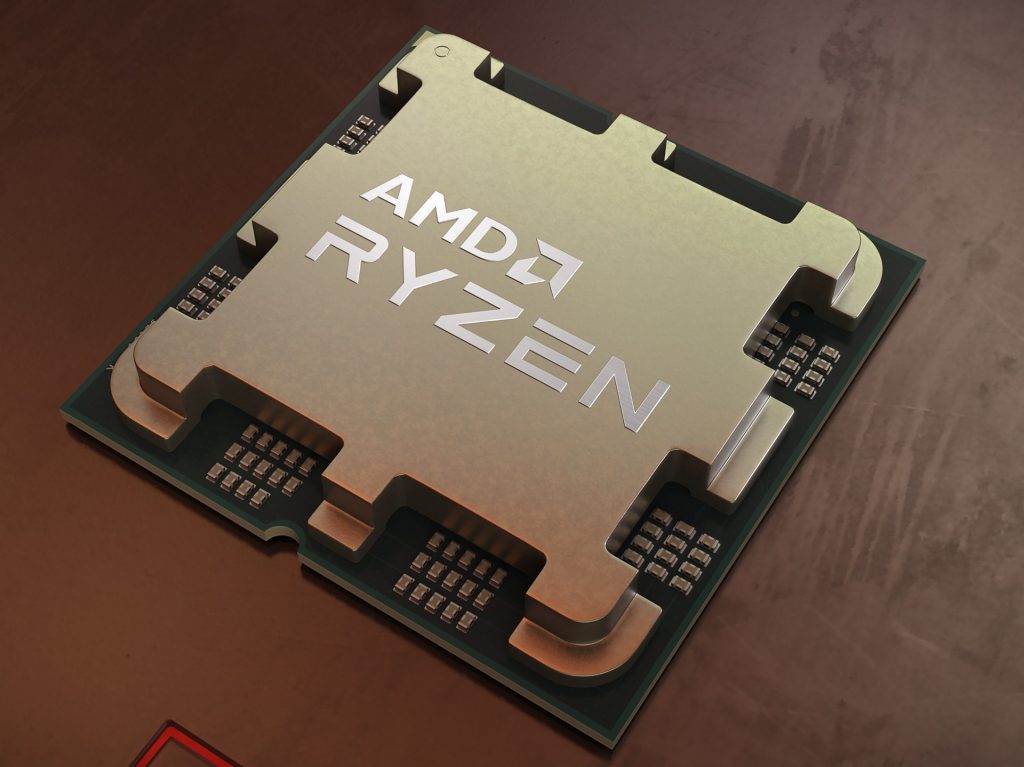
AMD Zen 6 ‘leak’ suggests compact 12-Core CCDs with 48MB L3 cache

AMD’s next‑generation “Zen 6” microarchitecture may bring some notable changes, according to a new rumour shared by leaker HXL (via VideoCardz). The post claims AMD is considering increasing the core density of its standard CPU Complex Die (CCD) for the first time, moving from the long‑standing 8‑core layout to a 12‑core configuration. The same rumour also mentions a shift to TSMC’s latest process node and a larger L3 cache per CCD.

HXL claims that the new Zen 6 CCDs are full-performance cores designed to maintain high clock speeds, effectively giving the mainstream AM5 platform a 50% boost in multi-core processing power per chiplet. HXL also claims that the increased core count would be enabled by higher transistor density from TSMC’s rumoured N2 (2nm) process.

Cache capacity is also part of the rumour. The L3 cache per CCD is said to increase from 32MB to 48MB, and when paired with a stacked 96MB V‑Cache layer, a single Zen 6 CCD could reach 144MB of L3 cache. Under this scenario, a dual‑CCD, 24‑core CPU might offer up to 288MB of total L3 cache. None of these numbers have been verified by AMD.

KitGuru says: A move to a 12‑core CCD would be a major shift. If AMD were to release a single‑CCD, 12‑core X3D model, it could avoid the scheduling quirks seen on dual‑CCD parts like the 7950X3D while offering more cores than today’s 8‑core gaming‑focused chips. For now, though, all Zen 6 details should be treated as unconfirmed.

The post AMD Zen 6 ‘leak’ suggests compact 12-Core CCDs with 48MB L3 cache first appeared on KitGuru.
  •  

Nvidia reportedly prioritising 8GB graphics cards amid rising memory costs

A new rumour circulating on the Board Channels forum suggests Nvidia may be shifting its supply strategy for the GeForce RTX 50 series. According to the post, rising VRAM costs could be pushing the company to prioritise lower‑capacity models.

According to a Board Channels Forum user (via VideoCardz), 8GB versions of the RTX 5060, RTX 5060 Ti and the 12GB RTX 5070 may account for as much as 75% of total GPU shipments for the quarter. It is implied that this is due to price hikes around memory, brought about by booming AI data centre demand.

If accurate, Nvidia may be aiming to remain competitive with AMD's 16GB GPUs by maintaining a steady supply of RTX 5070 GPUs. While AMD has reportedly prioritised these 16GB cards due to their stronger market appeal, Nvidia's claimed focus on 8GB and 12GB variants suggests it is leaning into volume over VRAM capacity.

KitGuru says: Do you think the memory, SSD and GPU markets will bounce back for consumers this year? 

The post Nvidia reportedly prioritising 8GB graphics cards amid rising memory costs first appeared on KitGuru.
  •  

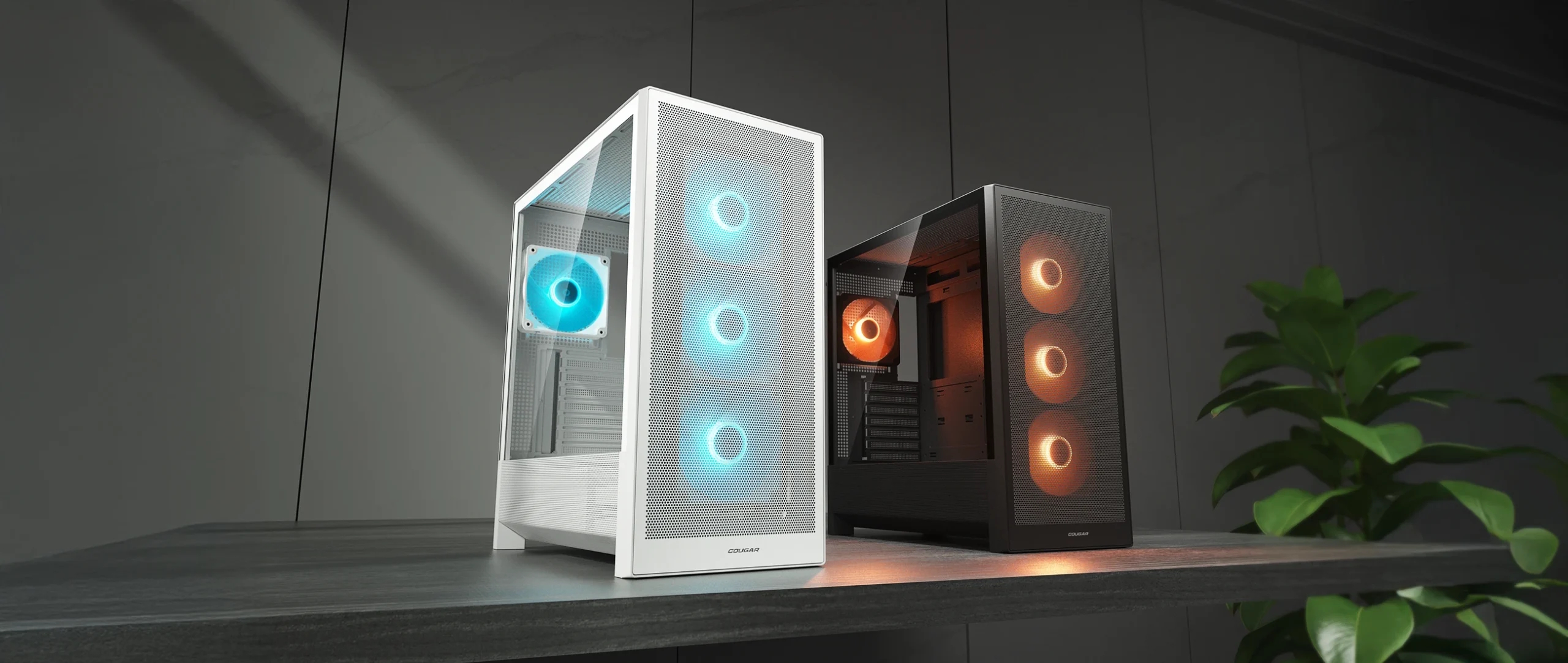
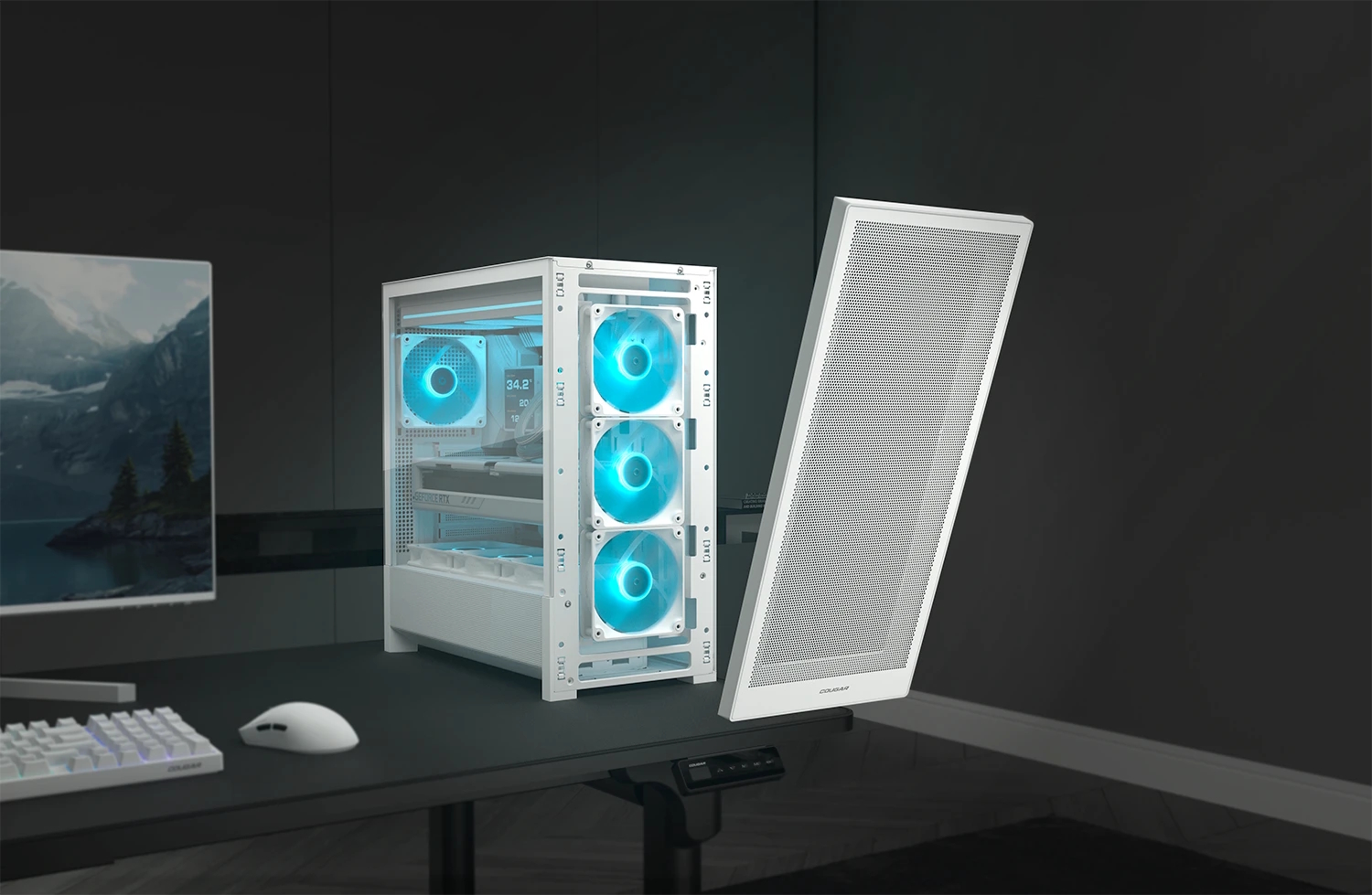
Cougar unveils new MX230 RGB mid-tower with triple-fan PSU shroud

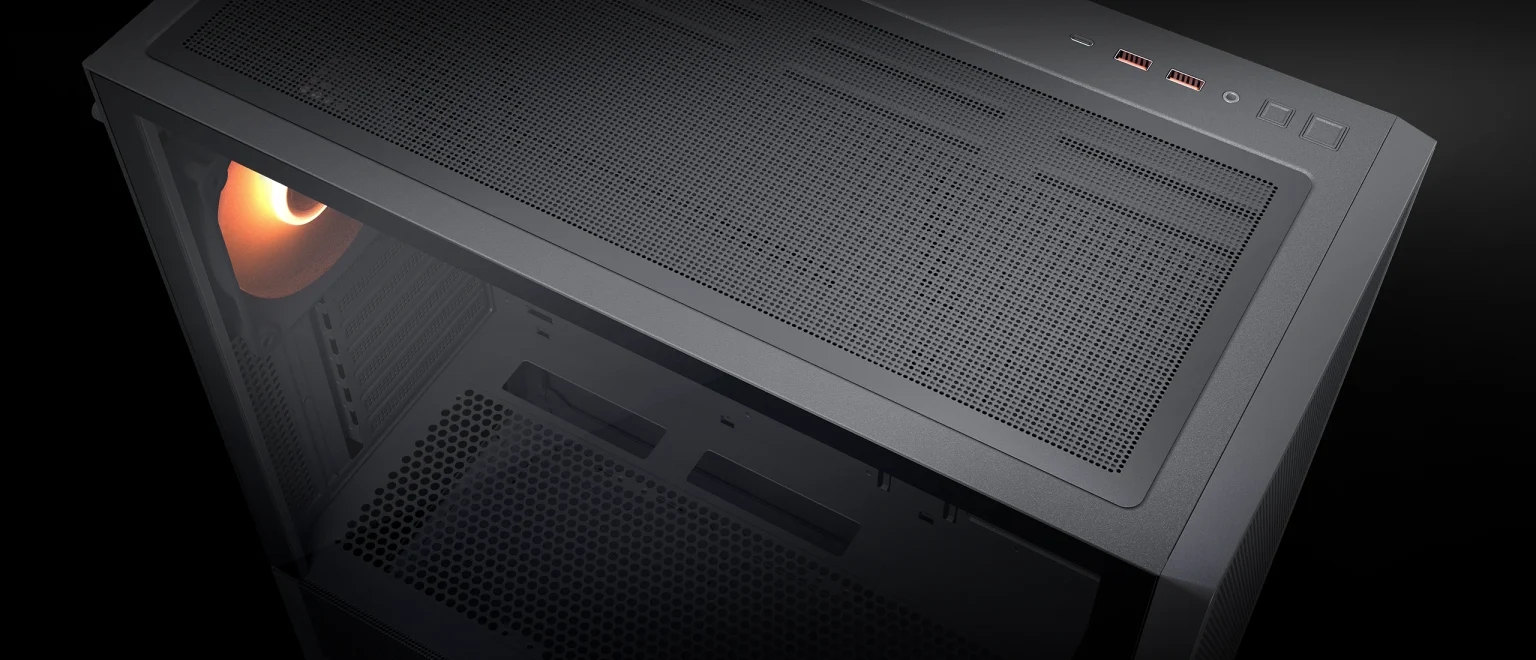
Cougar has officially unveiled the MX230 RGB, a mid-tower chassis that prioritises thermals over the “fish tank” aesthetic trend. The MX230 focuses on airflow, featuring a front mesh panel and an angled mesh bottom panel. This “airflow-first” philosophy aims to create a vertical thermal column that delivers fresh air directly to components, a departure from the side-heavy glass layouts that have dominated in recent years.

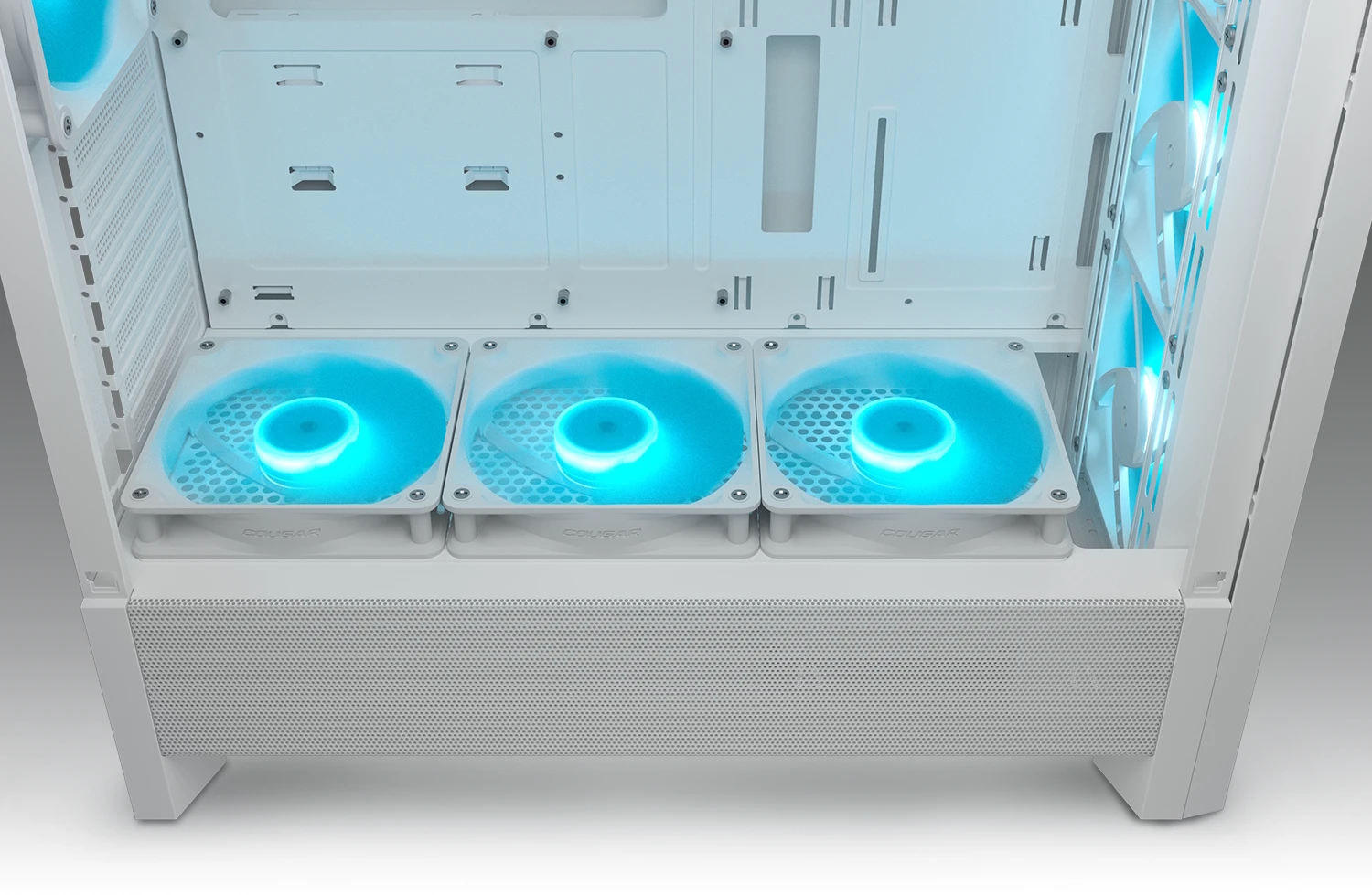
The MX230 RGB (via CowCotland) stands out with its triple-fan-capable PSU shroud, which can accommodate three 120 mm fans. This design is engineered to provide ample cabling clearance, ensuring that intake air is not choked by internal hardware. Out of the box, the MX230 is equipped with four 120 mm ARGB fans (three front, one rear), but it supports a maximum of 10 fans. For liquid cooling enthusiasts, the top panel supports radiators up to 360 mm.

Despite its compact dimensions (475 x 220 x 445 mm), the MX230 offers flagship-tier compatibility. It supports E-ATX motherboards, 170 mm tall CPU coolers, 200 mm long PSUs, and graphics cards up to 400 mm long. Additionally, the case supports 2 x 3.5″ HDDs or 1+1 2.5″ SSDs.

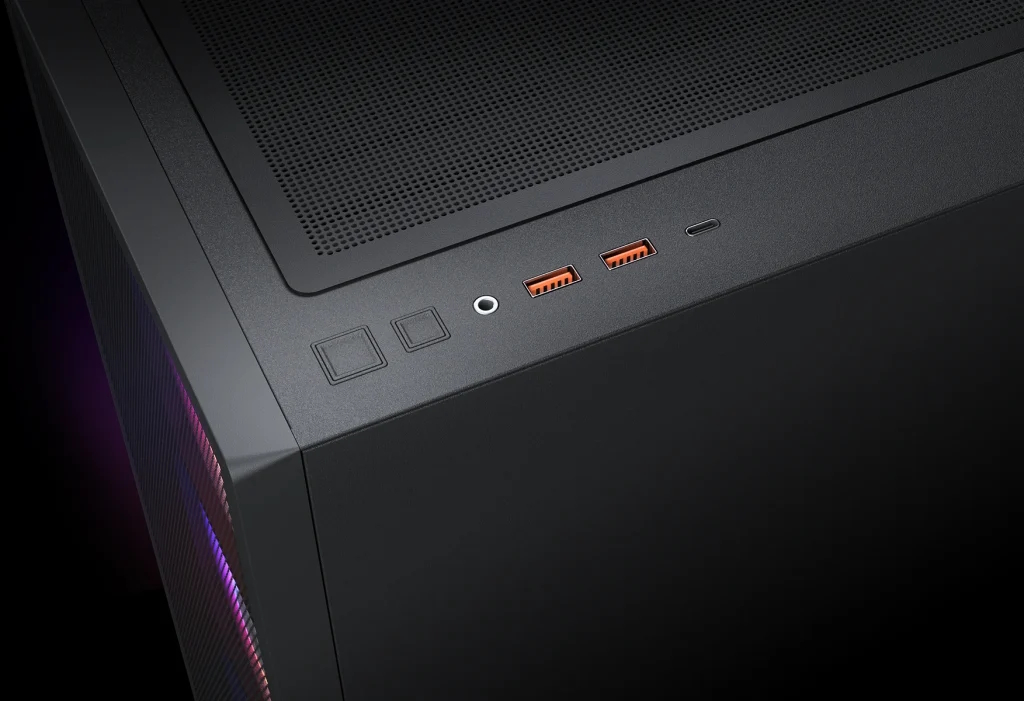
Builders will appreciate the tool-less maintenance offered by the snap-fit metal front panel and the high-speed connectivity of the front I/O, which includes a USB-C 3.2 Gen 2 (10Gbps) port. The case will be available in black and white.

KitGuru says: Although simple, the MX230 RGB looks quite nice and offers pretty much everything (and a bit more) the average PC gamer needs from a case. 

The post Cougar unveils new MX230 RGB mid-tower with triple-fan PSU shroud first appeared on KitGuru.
  •  

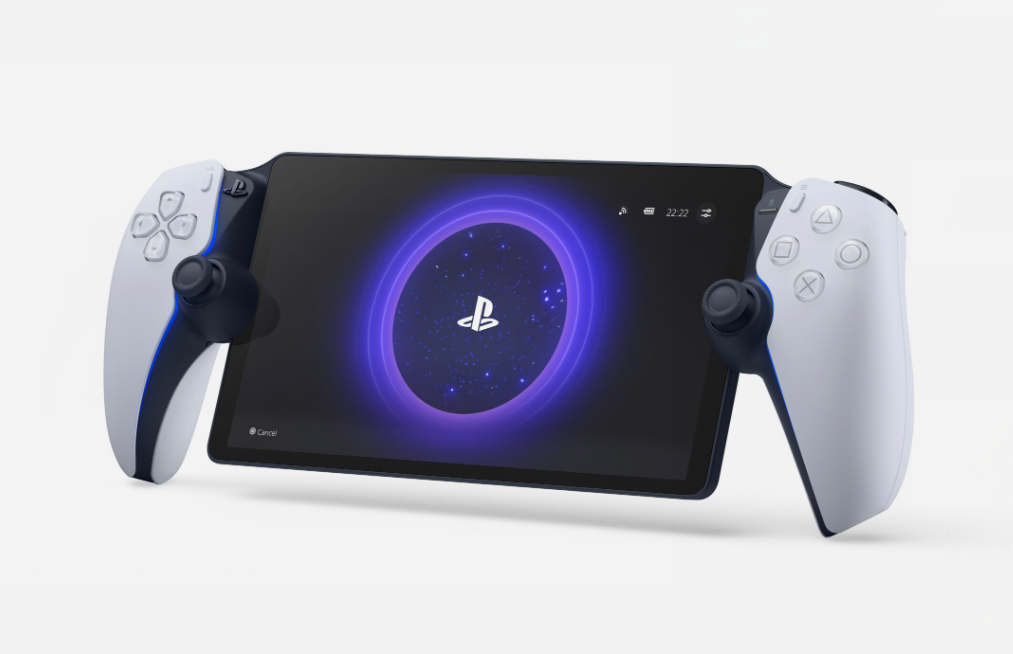
PlayStation Portal OLED tipped for 2026

Sony appears to be aggressively repositioning itself in the portable gaming market for 2026. According to recent leaks, the company is preparing a two-pronged approach: a near-term OLED refresh of the existing PlayStation Portal and a much more powerful gaming handheld powered by AMD's RDNA 5 graphics.

The report comes from Kepler_L2 (via r/GamingLeaksAndRumours), who states that the PlayStation Portal OLED is expected to launch in 2026. While internally similar to the current version, the move to an OLED panel addresses the primary criticism of the original's LCD screen, black levels and contrast. Following the recent software update that enabled cloud streaming for the Portal, the hardware refresh marks Sony's intent to turn the device into a more premium “cloud-first” companion.

However, the real excitement lies with Sony's upcoming handheld console, also referred to in previous reports as Project Canis. This long-rumoured device is expected to be a native powerhouse rather than a streaming peripheral. This console is expected to be powered by AMD's next-gen RDNA 5 (potentially branded as UDNA), LPDDR5X memory, and a low-power target (something like 15W TDP), optimising it for portable battery life.

As you may have heard, Sony has reportedly added a mandatory “low power mode” to PlayStation 5 development kits. This would allow developers to easily scale existing PS5 titles to run natively on the handheld's hardware. While the native handheld is likely to launch closer to the PlayStation 6, the OLED Portal refresh will act as a bridge, keeping Sony's foot in the door of the handheld market throughout 2026.

KitGuru says: Do you already have a Portal console? Would the upcoming OLED version convince you to buy one?

The post PlayStation Portal OLED tipped for 2026 first appeared on KitGuru.
  •  

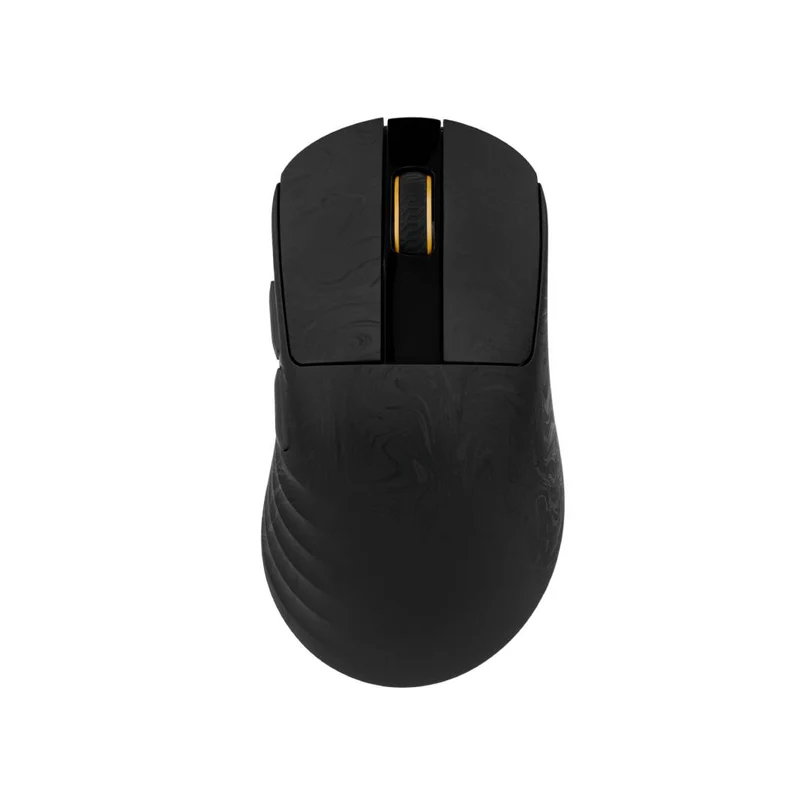
Epomaker unveils Carbonis gaming mouse, made with solid carbon fibre

Epomaker is expanding its carbon mouse lineup with the Carbonis, a solid-shell, ergonomic carbon fibre gaming mouse. While its predecessor, the CarbonX, utilised a lattice-style honeycomb frame to save weight, the Carbonis adopts a solid right-handed ergo shape reminiscent of the Razer DeathAdder V4 Pro.

Using carbon fibre, Epomaker aims to deliver a structurally rigid frame that remains lightweight. Under the shell, the Carbonis (via TechPowerUP) is equipped with the flagship PixArt PAW 3950 sensor and the Nordic N54L MCU. This combination supports a native 8000 Hz (8K) polling rate for minimal input latency. Another standout feature is the integrated smart LCD screen on the top of the mouse, which provides real-time feedback on DPI settings, battery life, and current polling rates.

The device uses an online, web-based driver, allowing users to customise settings via a browser without the need for traditional software installations. As for aesthetics, the mouse will be available in two models: a black forged carbon pattern with a matching dongle, and a purple gradient with a transparent purple dongle.

The Carbonis is currently in its final pre-launch phase. Epomaker is offering a $1 early-bird reservation that entitles buyers to a $15 discount when the mouse officially goes on sale later this month. Pricing is yet to be defined.

KitGuru says: Carbon fibre is becoming quite common for enthusiast mice. Most of them are quite pricey, but from what we know about Epomaker, this one will likely be cheaper than its rivals. 

The post Epomaker unveils Carbonis gaming mouse, made with solid carbon fibre first appeared on KitGuru.
  •  

Beyond Good and Evil 2 development continues amid Ubisoft restructuring

Earlier this month, Ubisoft restructured its entire business and cancelled a number of projects, while also delaying others. Interestingly, Beyond Good and Evil was named as one of the main franchises to survive the restructuring and now, the sequel's director has confirmed that Ubisoft remains ‘committed' to the game. 

Beyond Good and Evil 2 was announced all the way back in 2017 but the project has gone through many changes since then. At numerous points, fans have speculated that the project may have been cancelled but over the past year, numerous job listings have confirmed that the game is still in active development.

In a statement (via VGC), Beyond Good and Evil 2 director, Fawzi Mesmar said that Ubisoft “remain committed and focused” on delivering the long-awaited sequel. Mesmar also said that the game is “unaffected by the recent changes” at the publisher.

It is still unclear exactly when Beyond Good and Evil 2 will resurface, or when fans can expect to get their hands on it. If it ends up arriving in 2027, it will be the second 10-year project that Ubisoft has released in recent years, following Skull & Bones, which began development in 2013, but didn't release until 2024 due to numerous delays.

KitGuru Says: Beyond Good and Evil 2 is a bit of a headscratcher. It is a sequel to a cult classic game from the 2003, one that many had forgotten about until the sequel was announced in 2017. Ubisoft has much more popular classics under its wing that could do with a return to the spotlight, including the likes of Splinter Cell and Prince of Persia. 

The post Beyond Good and Evil 2 development continues amid Ubisoft restructuring first appeared on KitGuru.
  •  

Nintendo Direct now tipped for February 5th

It would seem that the rumours of an incoming Nintendo Direct showcase are picking up steam. Multiple additional sources have since corroborated the claim that a new stream will be taking place in February. 

Followed on from NatetheHate, GameXplain and VGC have also corroborated the claim that a Nintendo Direct will be happening next week. However, VGC adds that this is going to be a partner showcase, so don't expect any first-party Nintendo game announcements.

Switch Direct

The stream is supposed to take place on Thursday, February 5th, focusing on new third-party games heading to the Switch and Switch 2 consoles. There are already some likely candidates in mind for the showcase.

Titles like Borderlands 4 and Elden Ring are still yet to receive official release dates for the Switch 2. Recent rumours also indicated that Final Fantasy 7 Rebirth is due to land on the Switch 2 later this year. There have also been rumblings around a Switch 2 upgrade for The Witcher 3, and Capcom also reportedly wants to bring Monster Hunter Wilds over to Nintendo's new system.

KitGuru Says: Fans of Nintendo's exclusive franchises will have to wait a while longer for news. In the meantime, there will be plenty of new ports on the way for the latest Switch console. 

The post Nintendo Direct now tipped for February 5th first appeared on KitGuru.
  •  

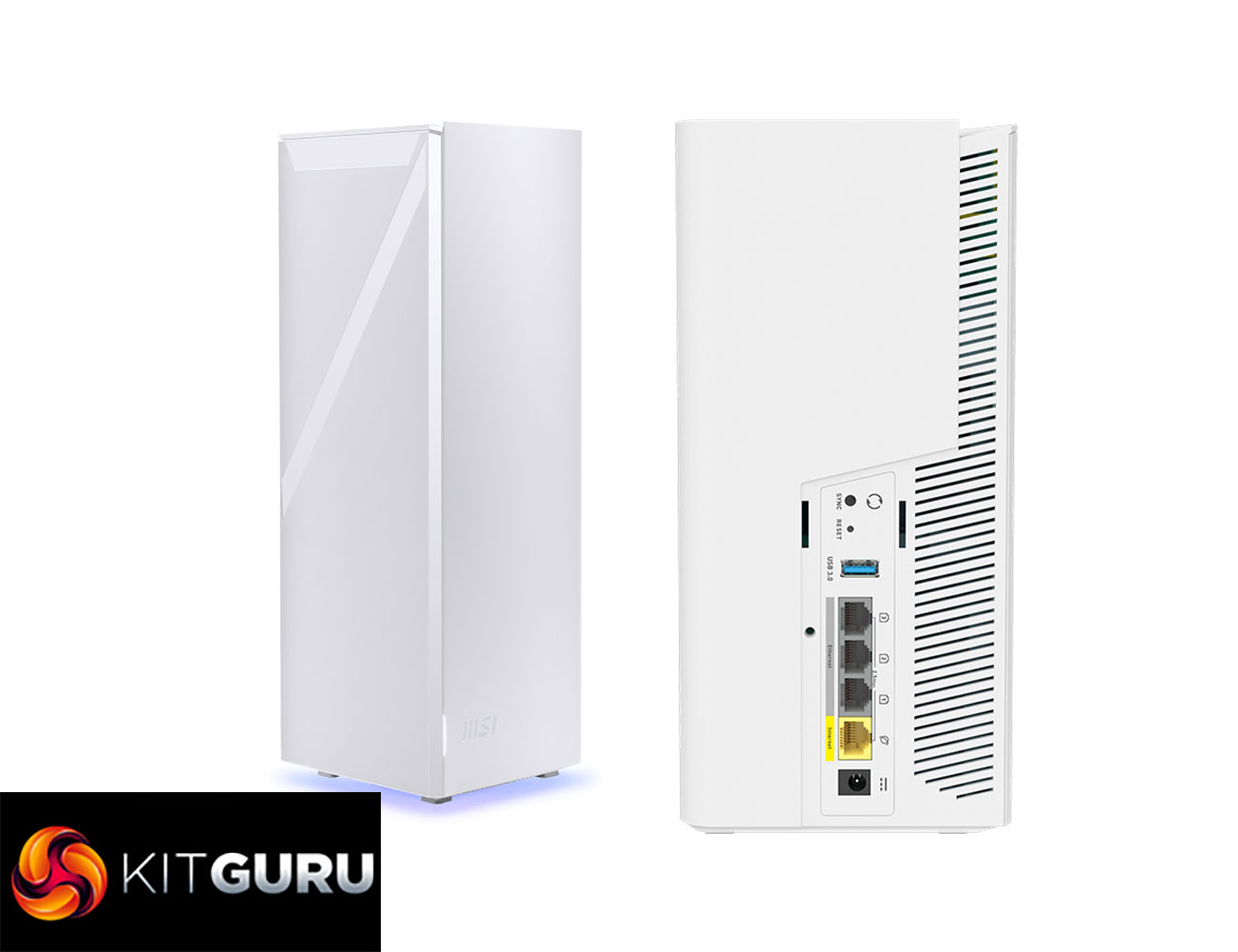
MSI Roamii BE Pro Mesh WiFi 7 System Review

WiFi 7 is finally starting to gain traction, although we're still waiting for more client devices to arrive. If you're looking to upgrade your wireless network, it would now be a false economy not to future-proof yourself with the latest standard. Joining the WiFi 7 fray is MSI with its Roamii BE mesh system. It comes in two forms – Lite and Pro. The former offers just two radio frequencies, while the Pro we tested adds 6GHz, promising monster wireless network bandwidth. We put the Roamii BE Pro through our comprehensive WiFi mesh test suite to find out if the practice matched the theory.

The Roamii BE Pro is a BE11000 system, meaning it combines 5,764Mbits/sec at 6GHz, with 4,323Mbits/sec at 5GHz, and 688Mbits/sec at 2.4GHz, although MSI only promises a maximum combined throughput of 9.4Gbits/sec. The benefit of WiFi 7 (and WiFi 6 BE) is that 6GHz and 5GHz can be combined (with a compatible client) for maximum throughput. The Lite version loses the 6GHz, so offers just BE5000 performance.

You get 6x internal antennae (so two per waveband) with the Roamii BE Pro, plus additional router software and hardware features. The system can allegedly cover a 6,000 square feet area, although of course this will depend on obstructions. That's likely to be more than enough for a three story house, such as the one we use for testing.

The Roamii BE Pro has a solid wired networking specification too, with four 2.5Gbit Ethernet ports, one of which would be used for WAN duties on the router, while remaining available for wired devices on the satellite. There is a USB port on both units too, ready for network storage sharing.

Coming in at under £300, the Roamii BE Pro looks like good value too, giving you mesh WiFi for the price of a midrange standalone router. Read on to find out if the performance and capabilities make this a bit of a bargain.

Price: £279.99

Specification:

  • Wireless protocols: MU-MIMO with 802.11b/g/n/ax/be 2.4GHz, 802.11a/n/ac/ax/be 5GHz/6GHz
  • Performance: AX11000 (5,760 + 4,320 + 688 Mbits/sec)
  • Antenna Configuration: 2×2 internal antennas for 2.4GHz; 2×2 for 5GHz; 2×2 for 6GHz
  • Ports: 4 x 2.5 Gigabit Ethernet WAN, USB 3.0
  • Modem Support: VDSL/ADSL 2+ or cable
The post MSI Roamii BE Pro Mesh WiFi 7 System Review first appeared on KitGuru.
  •  

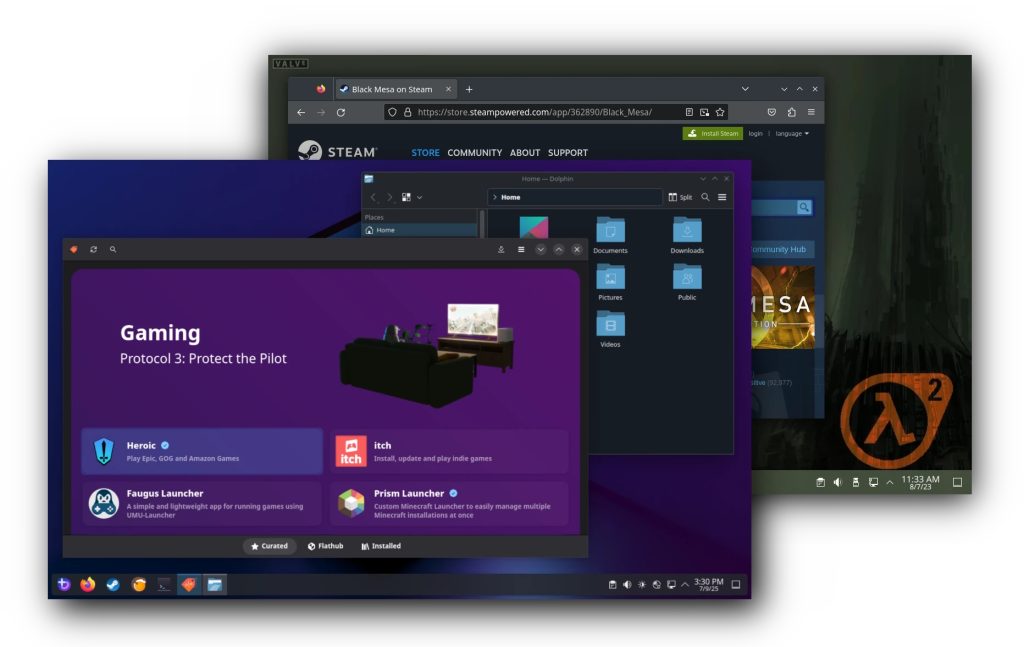
Open Gaming Collective (OGC) formed to unify Linux gaming

A number of major Linux gaming projects are joining forces to form the Open Gaming Collective. The goal here is to reduce duplicated work across several crucial projects and centralise development efforts for critical components like kernel patches, input frameworks and display compositors. 

The OGC's technical strategy (via GamingOnLinux) centres on an “upstream-first approach”. Rather than maintaining permanent forks or bespoke patches, the group intends to submit all improvements and hardware fixes directly to the source projects (such as the mainline Linux kernel or Mesa). Early deliverables include a shared, gaming-optimised OGC Kernel and a specialised fork of gamescope designed to expand hardware support across a wider range of handhelds and desktop GPUs.

Bazzite, one of the founding members, has already outlined immediate changes resulting from joining the collective. The distribution will phase out its custom Handheld Daemon (HHD) in favour of InputPlumber, a unified input remapper already utilised by SteamOS, ChimeraOS, and Nobara. Additionally, Bazzite will integrate features like RGB and fan control directly into the Steam UI where possible, further bridging the gap between custom Linux distros and the native Steam Deck experience.

Besides Bazzite, other companies and partners include Nobara, ChimeraOS, Playtron, Fyra Labs, PikaOS, ShadowBlip, and Asus Linux.

KitGuru says: The formation of the OGC is an important step for the Linux gaming community. Standardising the kernel and input layers could finally bring the “it just works” stability of SteamOS to the broader Linux desktop world.

The post Open Gaming Collective (OGC) formed to unify Linux gaming first appeared on KitGuru.
  •  

Fanatec and Elgato introduces official Stream Deck plugin for racing sims

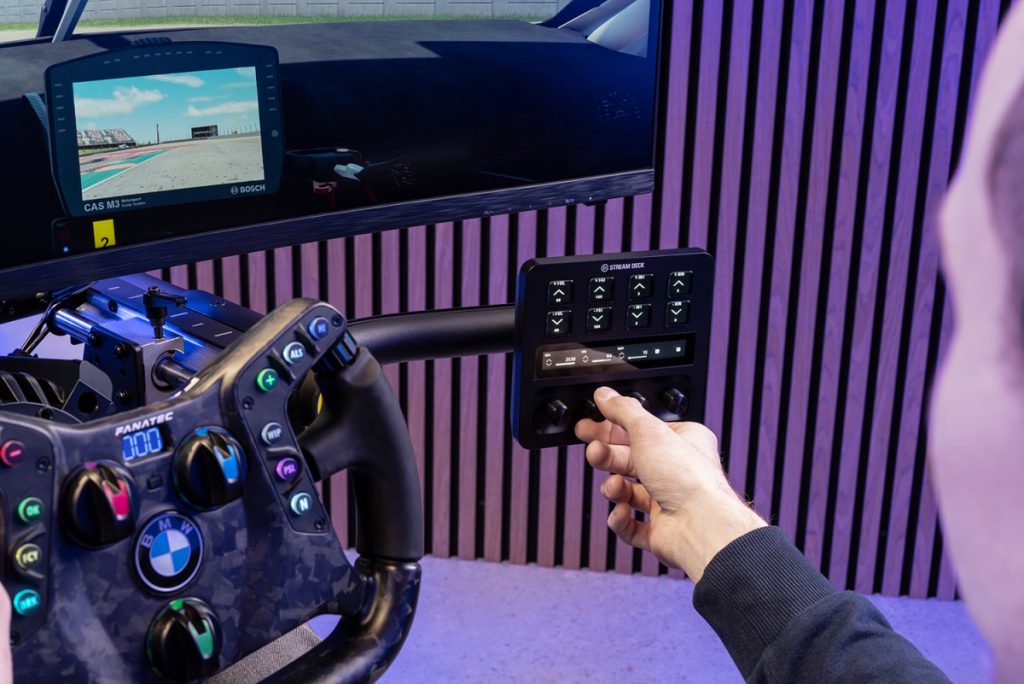
Fanatec has officially released its first-party Stream Deck plugin. Available for free on the Elgato Marketplace, the plugin transforms the Stream Deck into a real-time telemetry display and hardware tuning hub for racing sims.

This collaboration marks one of the first major synergy projects since Fanatec's integration into the Corsair family, leveraging Elgato's software expertise to enhance the racing experience. The plugin supports the entire Stream Deck lineup, with optimised, pre-configured profiles specifically for the Stream Deck XL and the dial-equipped Stream Deck +.

For the first time, racers can use the Stream Deck as a digital “dashboard” to monitor critical race data, including tyre temperatures, fuel levels, track position, and flag warnings. Beyond telemetry, the most powerful feature is direct access to the Fanatec Tuning Menu, which lets drivers use Stream Deck buttons or dials to adjust force feedback strength, brake sensitivity, and other hardware parameters on the fly.

KitGuru says: Are you interested in sim racing setups? If you had or have one, would something like Elgato's Stream Deck with this new plugin be something you would consider adding?

The post Fanatec and Elgato introduces official Stream Deck plugin for racing sims first appeared on KitGuru.
  •  

Gearbox shares updated 2026 roadmap for Borderlands 4

Borderlands 4 is in a bit of an awkward spot currently. While the game is in many ways the best the series has seen, a relative lack of end-game content for hardcore fans and a plethora of performance issues especially at launch led to softer-than-expected sales. That said, the team at Gearbox appear committed to improving Borderlands 4, with the team now offering an updated roadmap for 2026.

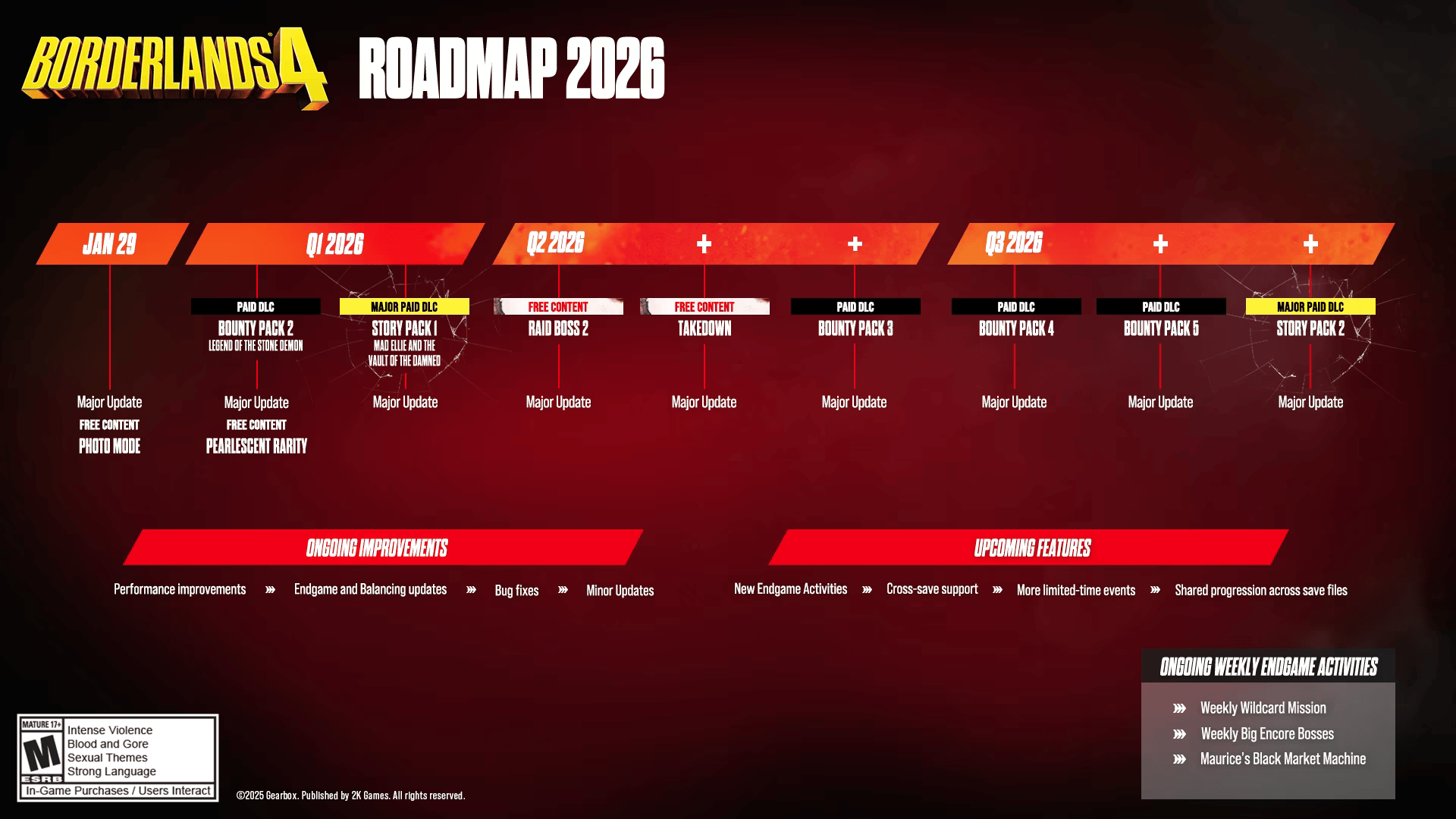
Taking to their blog, the team at Gearbox officially showcased their full 2026 roadmap. While we knew some of what to expect from Borderlands 4’s post-launch plans (even prior to the game’s release), we’ve now gotten a more comprehensive look.

The first major update for 2026 is now live and includes the addition of a photo mode alongside dozens of tweaks, buffs, changes and fixes.

Looking to the future however, Borderlands 4’s 2026 is set to be as follows:

  • Q1 2026
    • Bounty Pack 2 (paid)
    • Pearlescent rarity (free)
    • Story Pack 1 (paid)
  • Q2 2026
    • Raid Boss 2 (free)
    • Takedown (free)
    • Bounty Pack 3 (paid)
  • Q3 2026
    • Bounty Pack 4 (paid)
    • Bounty Pack 5 (paid)
    • Story Pack 2 (paid)

Borderlands 4 Roadmap

Each of these new pieces of content (both free and paid) will be released alongside a ‘major’ update. Other ancillary additions with no specific timeline include:

  • Performance improvements
  • Endgame and balancing updates
  • New Endgame activities
  • Cross-save and shared-progression
  • Limited-time events

While the game certainly came in a bit hot, Borderlands 4 is a fun time and so it is encouraging to see the team at Gearbox try to address as many fans' complaints as possible – while still sticking to their initial plans.

KitGuru says: What do you think of this updated roadmap? What’s your opinion on Borderlands 4 in its current state? Does it have the potential to be the best entry in the series? Let us know your thoughts down below.

The post Gearbox shares updated 2026 roadmap for Borderlands 4 first appeared on KitGuru.
  •  

World War Z x The Walking Dead available now

World War Z is a fun 3rd-person co-op shooter in the vein of Left4Dead and other horde shooters. Released back in 2019, the team at Saber Interactive have blessed the title with a ton of post-launch support – much of which was free. 4 months on from its last major update, the game has now gotten its first big crossover DLC, with World War Z x The Walking Dead available now.

Purchasable right now for the relatively low price of £7.99, World War Z x The Walking Dead offers a ton of content for fans of both Saber Interactive’s shooter as well as watchers of the show, adding:

  • New Story Campaign with 3 chapters
    • The Prison
    • Alexandria Safe Zone
    • Grady Memorial Hospital
  • 4 playable survivors
    • Rick Grimes
    • Daryl Dixon
    • Michonne
    • Negan

  • Two melee weapons
    • Michonne’s Katana
    • Negan’s Bat Lucille
  • Two weapon skins
    • Rick’s Revolver
    • Daryl’s Crossbow
  • Visual overhaul of enemies to look like TWD’s ‘walkers’
  • New special enemy ‘spiked walker’

While there have been a bunch of different games based on The Walking Dead, very few have been received well. As such, for many this represents what might be one of the better Walking Dead experiences out there – despite only being a crossover.

KitGuru says: What do you think of this latest DLC? Are you a fan of The Walking Dead? What other zombie properties would you like to see World War Z collab with? Let us know down below.

The post World War Z x The Walking Dead available now first appeared on KitGuru.
  •  

Solid Snake to join Rainbow Six: Siege as a brand new operator

Rainbow Six: Siege is arguably one of Ubisoft’s biggest games of all time, with the now decade-old title continuing to make money in-part through its plethora of cross-overs. Following on from the likes of Chun-Li; Master Chief; 2B and even Pickle Rick, Solid Snake himself is set to join the Rainbow Six Siege roster.

Teasing their upcoming Year 11 Roadmap reveal event (going live on the 15th of February) Ubisoft offered a slight hint at what players can expect in the way of announcements.

Though very little was given away, we do know that the iconic Solid Snake himself is set to crossover into Rainbow Six: Siege.

Unlike all other crossovers, Snake is set to be a full-on operator as opposed to simply being a skin for a pre-existing character – meaning he should have his own unique abilities, equipment and more.

Unfortunately, we did not get to hear Snake speak in the teaser, and so it is unknown whether the operator will feature brand new voice lines (and who will voice him) or if they will simply reuse old audio. We will have to wait until the 15th of February to find out.

KitGuru says: Are you surprised to see Snake coming to Siege? Will he be voiced by David Hayter? Who’s your favourite operator? Let us know down below.

The post Solid Snake to join Rainbow Six: Siege as a brand new operator first appeared on KitGuru.
  •  

New Nioh 3 demo available now on PS5 and PC

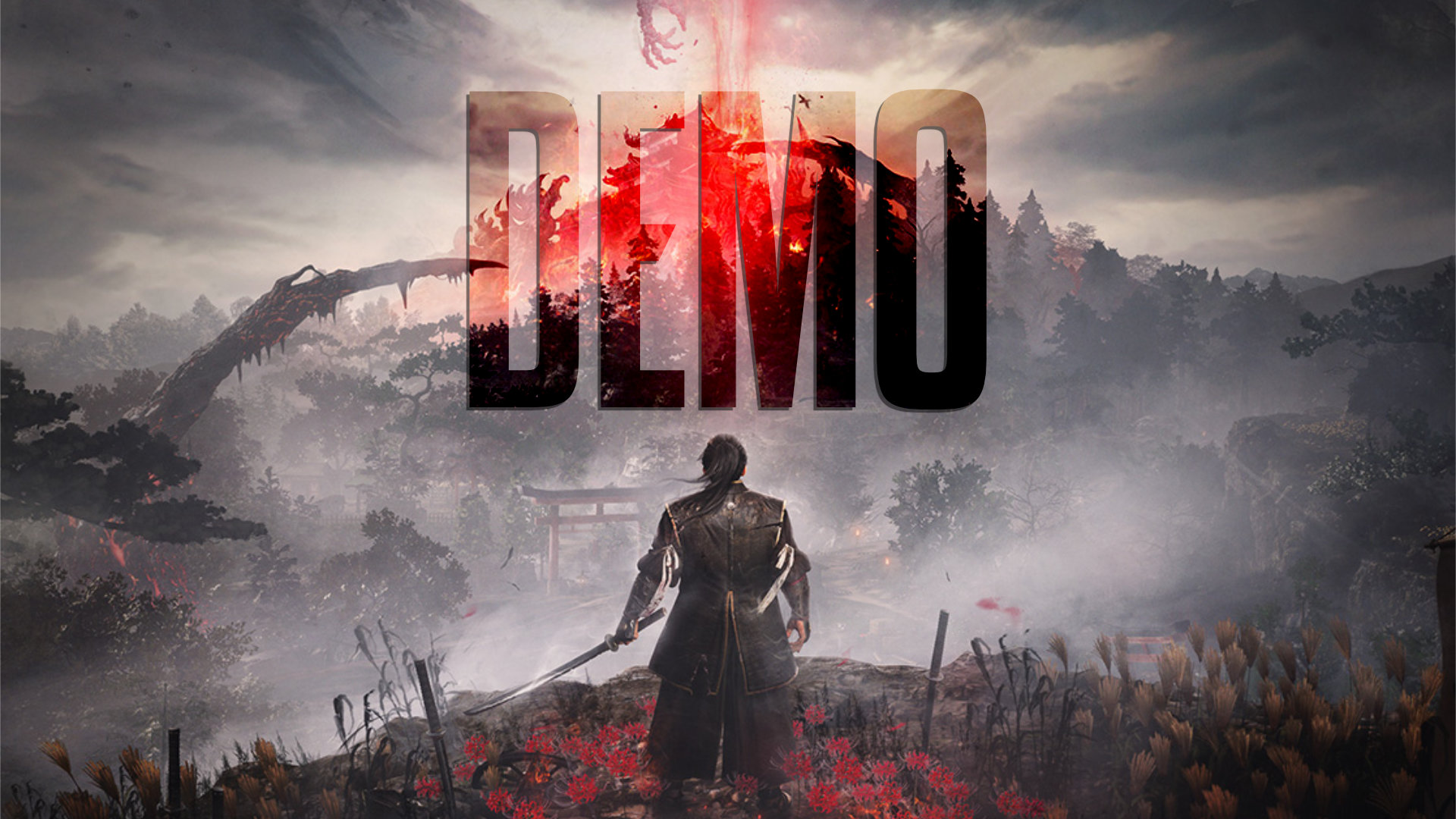
Team Ninja have been great in supporting their upcoming releases with free demos for all to check out and enjoy. Such has been the case with the Nioh series, offering various alpha, beta and timed-limited demos across its previous two entries. Following the initial Nioh 3 demo from last year, the studio has now released a more complete demo ahead of the game’s February release date.

With Nioh 3 just a week away from launch, Team Ninja have now published a brand new demo for the game, letting you try out the title for yourself ahead of its 6th of February release date.

Unlike the limited-time demo released back in June following its initial unveiling, this new demo is available on both PS5 and PC, and will allow you to transfer your save data over to the full game upon its release.

Nioh 3 Team Ninja

As expected, the demo features the opening section of the game and so switching over to the full release should be relatively painless. Those who do complete the demo prior to the 15th of February will also receive a bonus in-game item as a small reward.

While no end date has been given for this demo, Team Ninja have delisted various demos in the past, and so you might want to check Nioh 3 out for free while you can – even if you don’t plan on buying the title immediately.

KitGuru says: Are you looking forward to Nioh 3? What’s your favourite modern Team Ninja game? Let us know your thoughts down below.

The post New Nioh 3 demo available now on PS5 and PC first appeared on KitGuru.
  •  

AOC AG276QSG2 Review (1440p/360Hz G-Sync Pulsar)

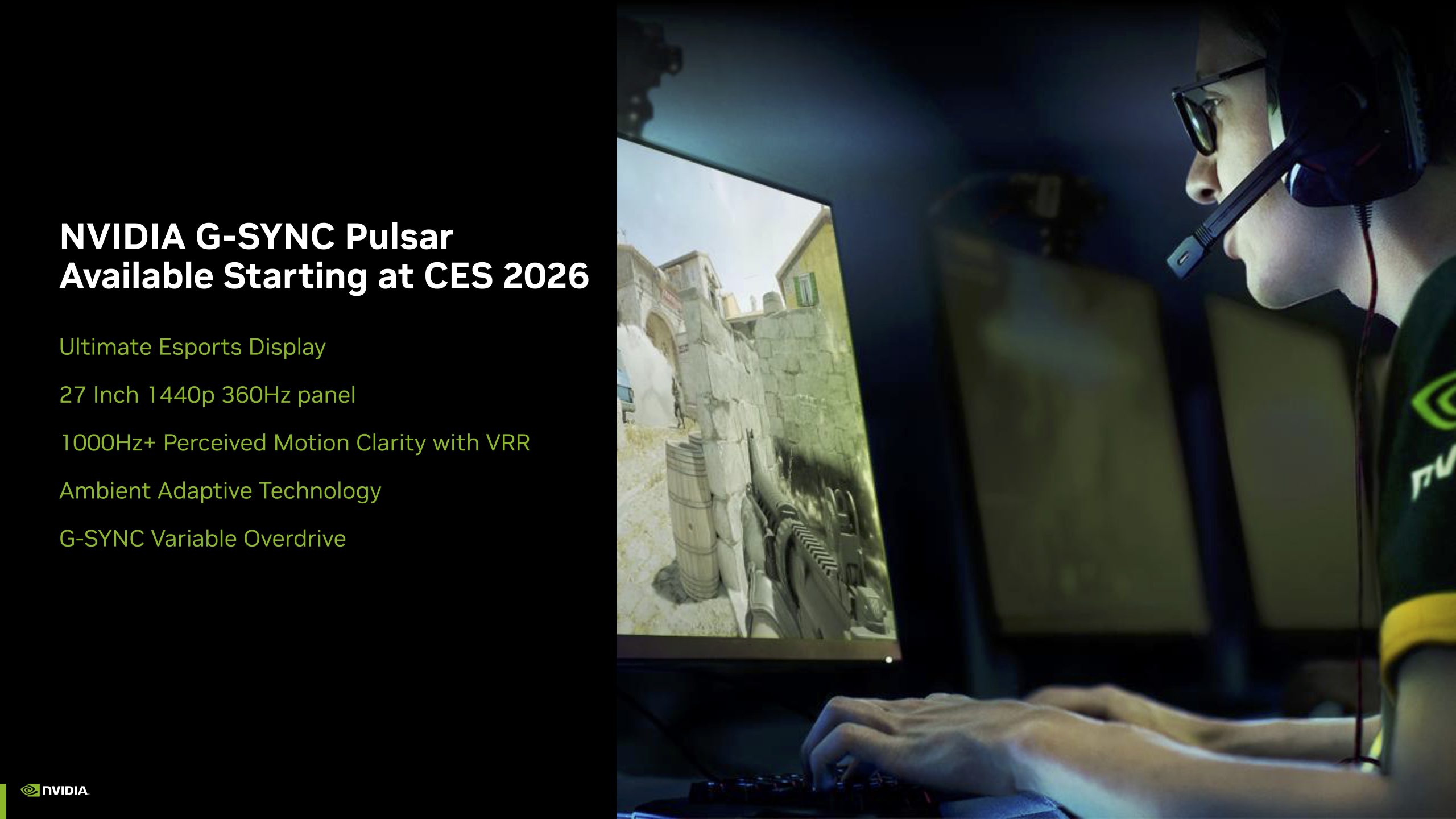
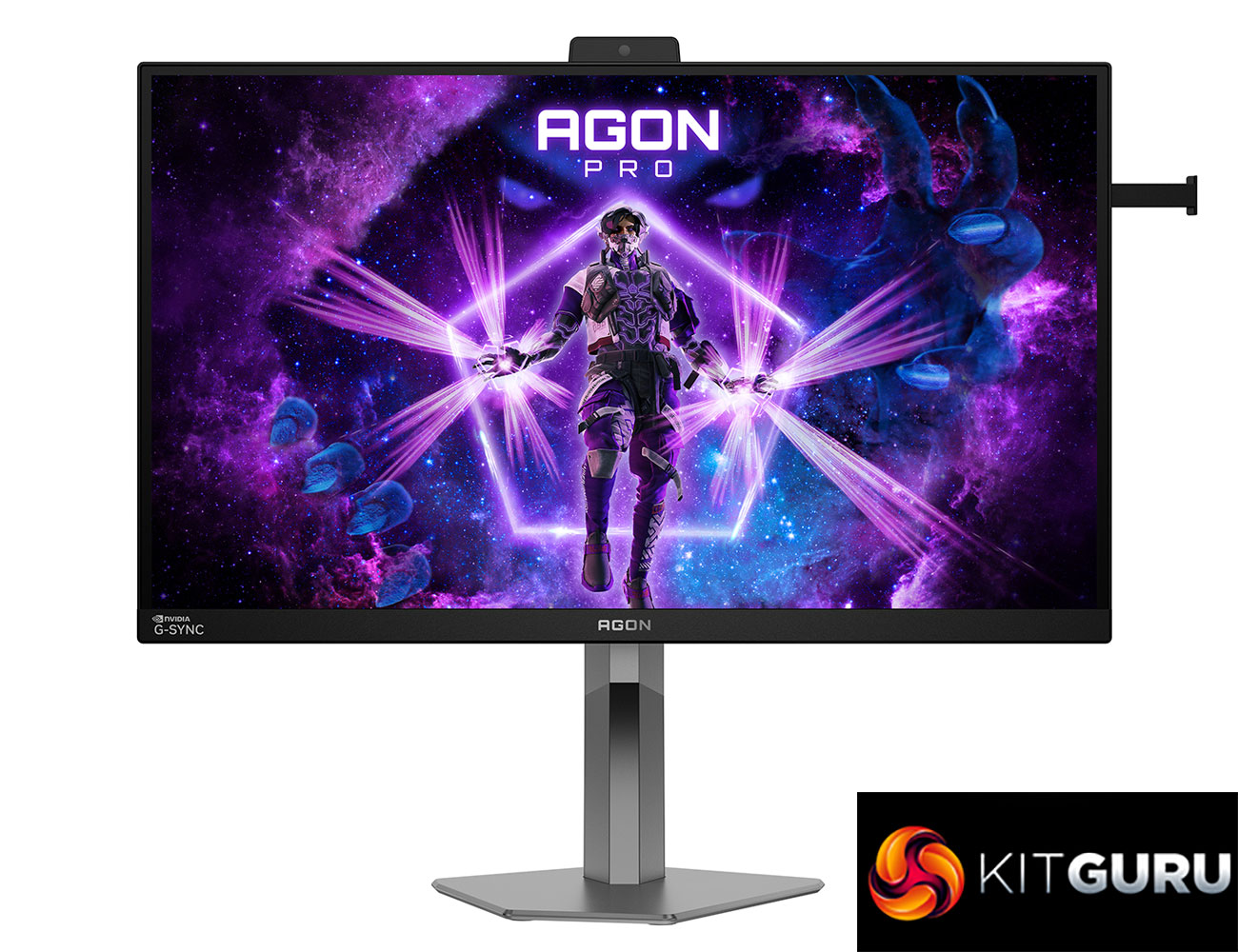
Today we're checking out the AOC Agon Pro AG276QSG2. The model number may not make it immediately obvious, but this is a rather exciting monitor for one main reason – it supports Nvidia's new G-Sync Pulsar backlight strobing technology that was officially launched at CES 2026. It's built around a 27in 1440p IPS panel with a 360Hz refresh rate, so that alone sounds pretty competitive – but what does Pulsar bring to the table? We find out today.

Timestamps:

00:00 Intro
00:57 Pricing and other Pulsar models
01:31 But what is G-Sync Pulsar?
03:43 Pulsar motion clarity examples
06:00 Overdrive and response times
07:28 Panel testing
10:30 Real-world gaming experience
12:17 Monitor design
13:36 Closing thoughts

First things first – pricing. The AOC AG276QSG2 is listed for pre-order on both Scan and OCUK for just under £560, making it the cheapest of the two other G-Sync Pulsar monitors that are currently listed here in the UK, given Acer's model is £600, and the ASUS is £629. Given all Pulsar monitors use the same panel, and considering Pulsar behaviour itself is tuned by Nvidia, performance between all three is likely to be near-identical, so the lower price alone could swing a lot of buyers towards this AOC model.

G-Sync Pulsar

But we're getting ahead of ourselves, so let's take a step back and first answer the question – what exactly is G-Sync Pulsar?

We don't need to go into too much depth here, as it was announced back at CES 2024, we got hands-on in April that year, and more recently Nvidia published an in-depth blog explaining exactly how the technology works.

In a nutshell, Pulsar is the combination of high-tech backlight strobing and G-Sync variable refresh rate technology. While some monitors have married adaptive sync and backlight strobing together in the past, Pulsar is a much more advanced system that is designed to dramatically improve perceived motion clarity throughout the VRR window.

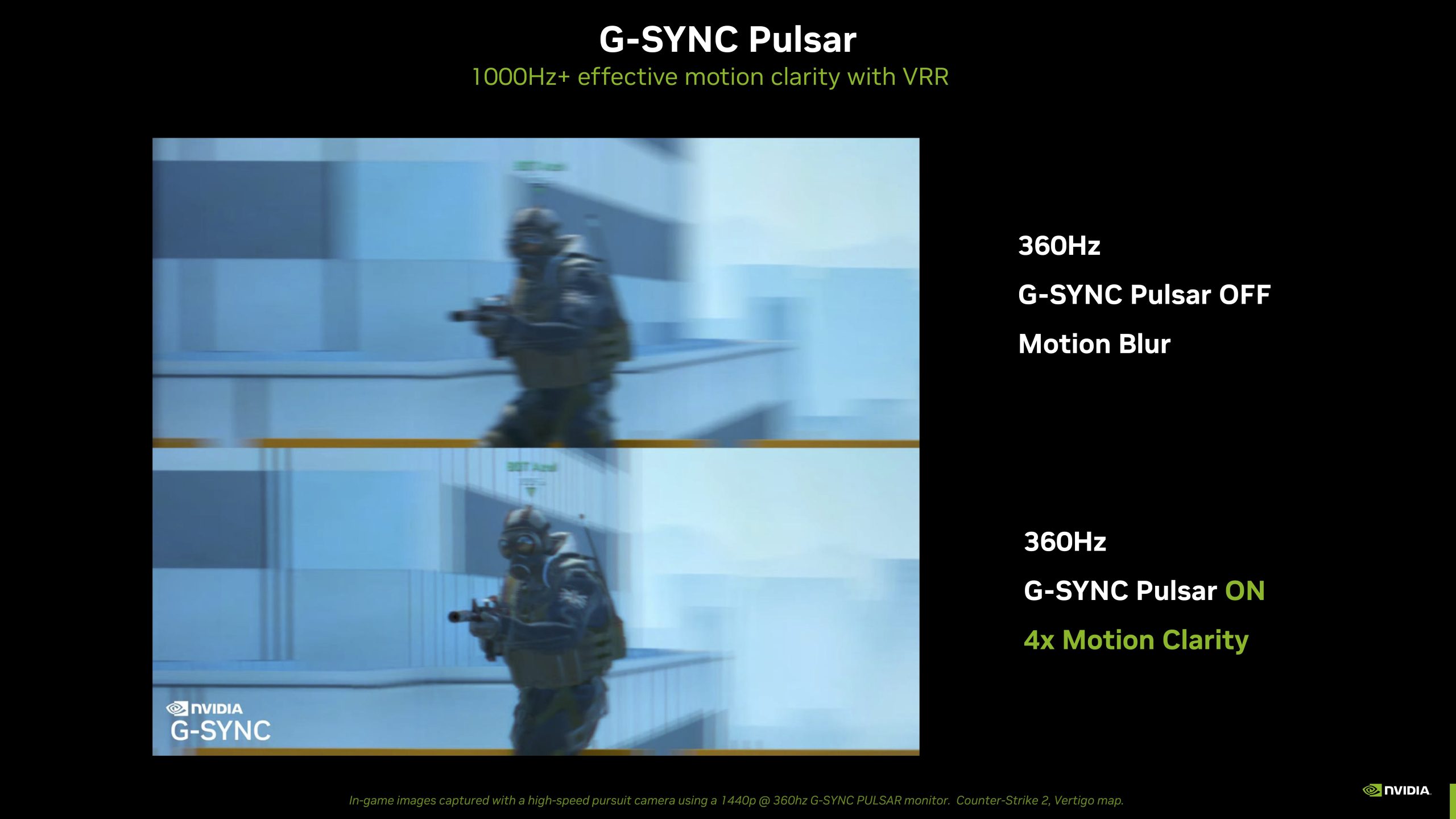
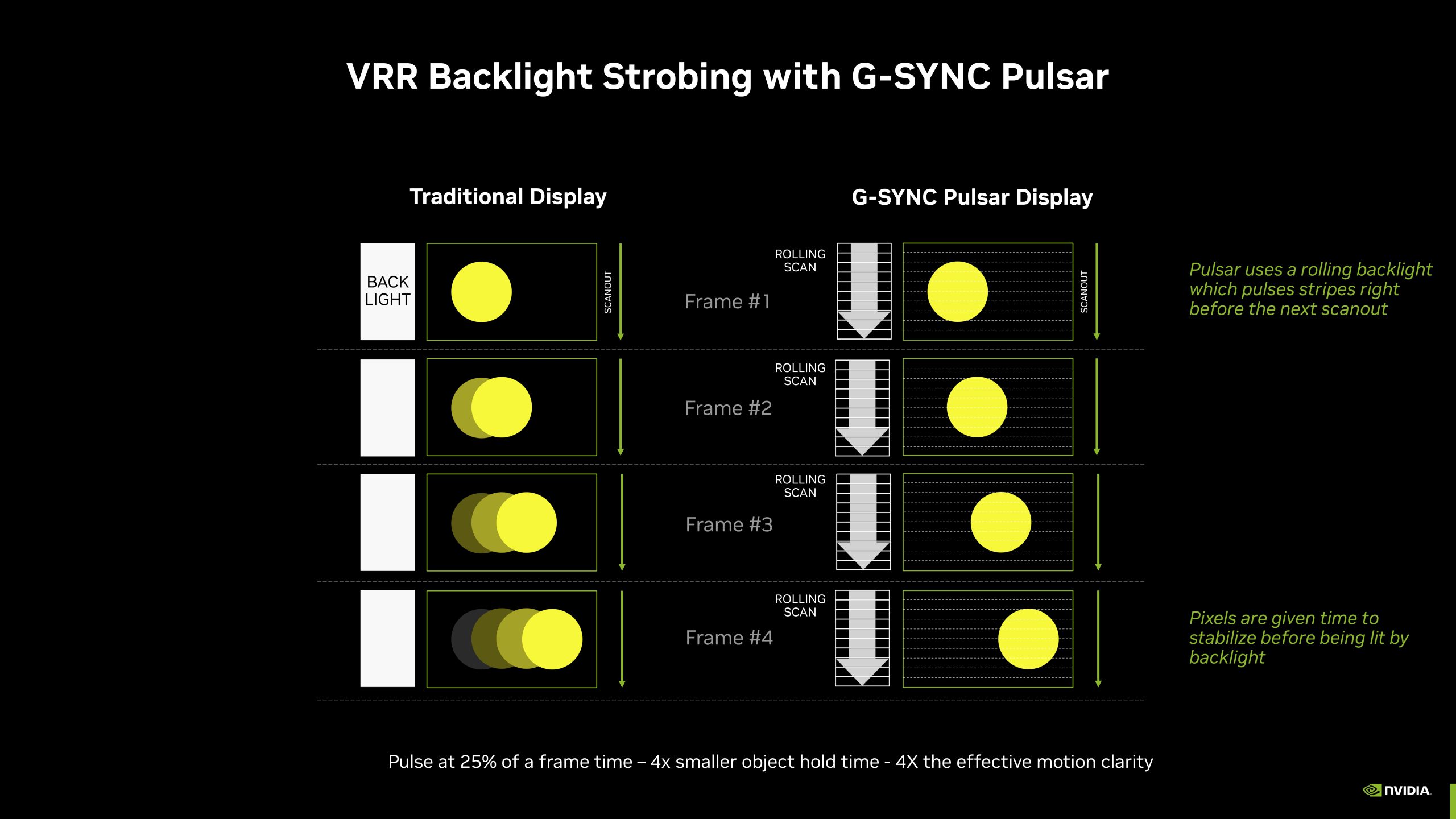
At its most basic level, backlight strobing works by reducing the amount of time each frame is visible. With Pulsar, Nvidia says that the backlight is only pulsed for 25% of the frame time, meaning each image is only briefly illuminated once the pixels have fully settled. In theory, that 1/4 frame visibility translates into 4x lower persistence, and this is how the company claims ‘1000Hz+ effective motion clarity'.

The G-Sync integration is the added secret sauce. More basic backlight strobing implementations typically run at fixed refresh rates and fire the backlight at a fixed point in the refresh cycle, regardless of how long the GPU took to deliver the frame or how well the panel transitions have completed. That leads to the usual strobing artifacts we're used to seeing, like crosstalk, double images, and inconsistent clarity especially at lower refresh rates. Pulsar, however, is driven directly by the MediaTek scaler which now has G-Sync built in, so the display knows exactly when a frame starts, when pixel response has stabilised, and when to flash the backlight.

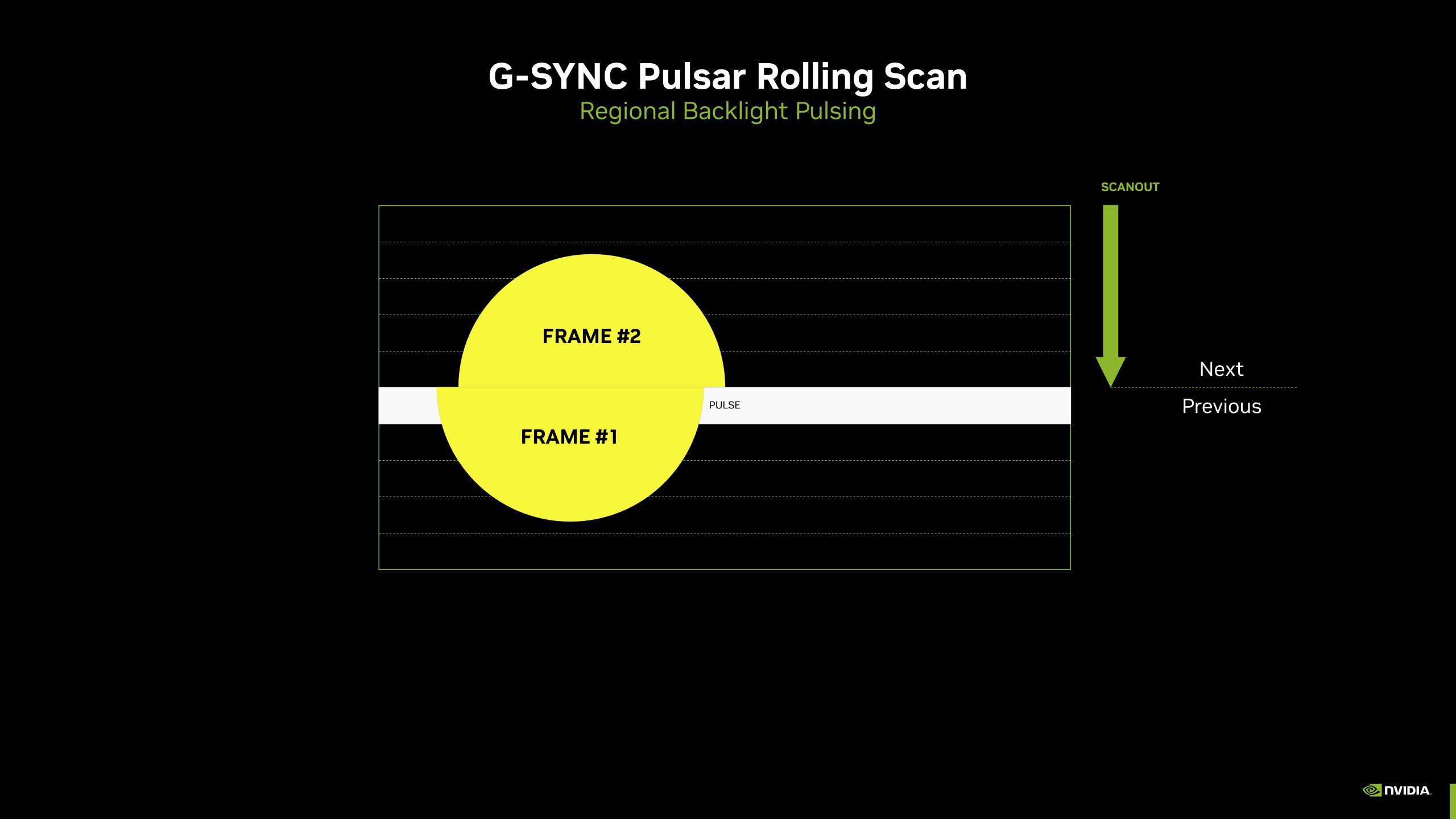
On top of that, Pulsar incorporates what Nvidia calls a ‘rolling scan'. By utilising multiple horizontal backlight strips that can be pulsed independently, Pulsar strobes different sections of the panel sequentially, rather than the whole panel being strobed at once. This should lead to dramatically reduced crosstalk and consistent clarity from top to bottom, something that isn't true for previous backlight strobing implementations.

Specification:

  • Screen size (inch): 27
  • Screen size (cm): 68.58
  • Flat / Curved: Flat
  • Panel treatment: Antiglare (AG)
  • Pixel pitch: 0.2328 mm
  • Pixels per inch: 108.79
  • Panel resolution: 2560 x 1440
  • Resolution name: QHD
  • Aspect ratio: 16:9
  • Panel type: Fast IPS
  • Backlight type: WLED
  • Max refresh rate: 360 Hz
  • Response time (GtG): 1 ms
  • Response time (MPRT): 0.3 ms
  • Static contrast ratio: 1000:1
  • Viewing angle (CR10): 178 / 178
  • Display colours: 16.7 Million
  • Brightness in nits: 450 cd/m²
  • Bezel type (front): 3-sided frameless
  • Bezel colour (front): Black
  • Bezel finishing (front): Texture
  • Cabinet colour (backside): Grey, Black
  • Cabinet finishing (backside): Texture
  • Removable stand:
  • Speaker power: 2 W x 2
  • Kensington lock:
  • VESA mount support: With VESA bracket accessory
  • Tilt: -3.5° ~ 18.5°
  • Height adjust: 130 mm
  • Swivel: -18.5° ~ 18.5°
  • Pivot: -90° ~ 90°
  • HDMI: 2x HDMI 2.1 (TMDS)
  • Digital HDCP (HDMI): HDCP 2.2
  • DisplayPort: DisplayPort 1.4 x 1
  • USB hub:
  • USB generation: USB 3.2 (Gen 1), 5 Gbit/s
  • USB type downstream: 3 x USB-A
  • USB type upstream: 1 x USB-B
  • Audio output: 1x Audio out
  • Warranty period: 3 years
The post AOC AG276QSG2 Review (1440p/360Hz G-Sync Pulsar) first appeared on KitGuru.
  •  

Thermaltake launches new TR300 series chassis in mesh and wood slat variants

Thermaltake has announced the TR300 Series Mid Tower Chassis, a new ATX lineup focused on space efficiency, airflow, and modern customisation. The range includes two models, the TR300 TG and TR300 WS, both available in black or white colour options.

The key difference between the TR300 TG and the TR300 WS is the front panel. The latter uses real wood slats at the front, while the TG uses a more standard mesh front panel. Both should offer good airflow for your intake fans, so choosing between them should primarily come down to whether or not you like the modern wood-PC fusion.

The chassis uses a front‑mounted PSU layout with an adjustable rack offering four mounting positions, improving internal space, airflow, GPU clearance, and radiator support. It accommodates up to ATX motherboards, with optimised PCIe slot placement to maintain proper GPU alignment. Cooling support includes up to eight 120mm fans and room for a 360mm radiator at the top.

Both models support Thermaltake’s optional 6‑inch LCD Screen Kit (1480 × 720), enabling system monitoring, JPG/GIF playback, AI Forge visuals, and mobile control via the TT PlayLink app. Additional features include removable dust filters, support for two 3.5‑inch HDDs and three 2.5‑inch SSDs, and front I/O with dual USB 3.0 Type‑A, USB 3.2 Gen 2 Type‑C, HD Audio, and dedicated power/reset buttons.

Discuss on our Facebook page, HERE.

KitGuru Says: Will you be considering the TR300 for a future build? 

The post Thermaltake launches new TR300 series chassis in mesh and wood slat variants first appeared on KitGuru.
  •  

Corsair’s new Galleon 100 SD keyboard is now available

At CES earlier this month, Corsair officially revealed the Galleon 100 SD, a new full-size keyboard that replaces the numpad with Elgato Stream Deck functionality. Now following on from multiple ‘Best of CES' awards, the new keyboard is ready to hit the market.

The new Corsair Galleon 100 SD is a new full-size keyboard from Corsair, but rather than having a numpad, the keyboard has been equipped with a 12-key Elgato Stream Deck. Corsair says the device combines engineering from both Corsair and Elgato to meet long‑standing community requests for a single input solution that handles gameplay, apps, and device control.

The keyboard includes 12 LCD keys, two multifunction dials, and a 5‑inch colour display for real‑time system and game information. All controls are configured through the Stream Deck app, with support for folders, profile switching, and the full plugin ecosystem.

Beyond the Stream Deck features, the Galleon 100 SD uses Corsair’s AXON engine with polling rates up to 8000Hz, plus FlashTap SOCD handling for directional‑input control. The board ships with pre‑lubed MLX Pulse switches, gasket mounting, six layers of dampening, and an aluminium frame.

The Corsair Galleon 100 SD is now shipping worldwide as of today. Over in the US, it will cost $349.99. Here in the UK, it is retailing for £309.99 directly via Corsair's webstore.

Discuss on our Facebook page, HERE.

KitGuru Says: This keyboard looks to pack the best of two product lines, but it is also very expensive. Are you thinking about getting one of these? 

The post Corsair’s new Galleon 100 SD keyboard is now available first appeared on KitGuru.
  •  

Prototype, Bards Tale and more join GeForce Now this week

The next round of games for GeForce Now has been announced. There are ten new titles joining the cloud gaming library this week, including new releases like Half Sword, as well as classics like Prototype. 

Aside from the new games joining the library, there is another major GeForce Now update happening this week. For the first time, a native Linux client is now available, expanding GeForce Now's reach across native Linux PCs, Windows, macOS, Chromebooks, smart TVs and mobile devices.

Here is the full list of new games joining GeForce Now today:

  • The Midnight Walkers (New release on Steam, Jan. 28, GeForce RTX 5080-ready)
  • Cairn (New release on Steam, Jan. 29, GeForce RTX 5080-ready)
  • Prototype (New release on Ubisoft Connect, Jan. 29)
  • Prototype 2 (New release on Ubisoft Connect, Jan. 29)
  • Warhammer 40,000: SPACE MARINE 2 (New release on Xbox, available on Game Pass, Jan. 29, GeForce RTX 5080-ready)
  • Half Sword (New release on Steam, Jan.30, GeForce RTX 5080-ready)
  • Vampires: Bloodlord Rising (New release on Steam, Jan. 30, GeForce RTX 5080-ready)
  • The Bard’s Tale Trilogy (Steam and Xbox, available on Game Pass)
  • The Bard’s Tale IV: Director’s Cut (Steam and Xbox, available on Game Pass)
  • Total War: Three Kingdoms (Epic Games Store)

There are four titles joining the RTX 5080 servers for GeForce Now Ultimate members too, including Cairn, The Midnight Walkers, Half Sword and Warhammer 40,000: Space Marine 2.

Discuss on our Facebook page, HERE.

KitGuru Says: Will you be playing any of this week's new GeForce Now titles? 

The post Prototype, Bards Tale and more join GeForce Now this week first appeared on KitGuru.
  •  

Amazon Games loses VP following mass layoffs

Last year, Amazon made the decision to stop development on its MMO, New World, and wind back its game development practices through major cuts at its studios. Now, Amazon Games VP, Christoph Hartmann, is leaving the company behind. 

Following a wave of layoffs at Amazon Game Studios last year, Jason Schreier reports that the long-running Vice President has stepped down. Christoph Hartmann had previously been the head of 2K Games under Take-Two, before leaving to help Amazon ramp up its own game development and publishing business more than eight years ago.

Amazon Gaming

While Amazon Games has operated for more than a decade, it has only managed to successfully ship one in-house developed game. New World had a strong start but failed to retain its momentum post-launch. Amazon has had a bit more success in publishing, having served as the publisher for Lost Ark in the west. Currently, Amazon is also expected to publish the next Tomb Raider game from Crystal Dynamics.

Amazon underwent restructuring and cost-cutting efforts in October 2025, leading to more than 14,000 layoffs.

Discuss on our Facebook page, HERE.

KitGuru Says: Amazon Games has gone through a lot of change in recent months. At this point, it is unclear if they will make another game internally, or if they'll stick to publishing going forward. 

The post Amazon Games loses VP following mass layoffs first appeared on KitGuru.
  •  
❌