↩ Accueil

Vue lecture

Morocco and Regragui feel pressure before high-profile Afcon quarter-finals

Seven of the eight nations have won the tournament before while Mali take on the role of stubborn outsiders

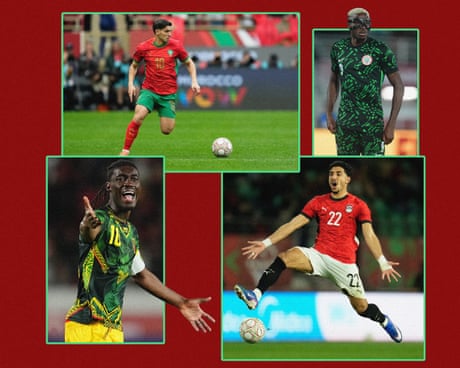
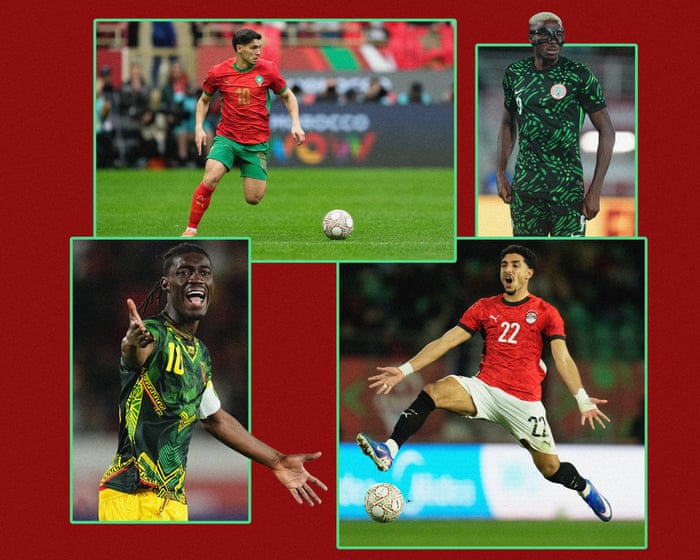
A comfortable 3-0 victory for the defending champions, Côte d’Ivoire, over Burkina Faso on Tuesday evening completes the highest-powered set of quarter-finalists the Cup of Nations has ever known. Seven of the last eight are former champions; between them they have won 22 Cups of Nations. It is the first time all eight quarter-finalists are in the top 10 African sides in the Fifa rankings.

It’s been a strangely predictable tournament so far, at least after Ghana failed to qualify; the nearest to a surprise in the last 16 was Mali’s win over Tunisia and Cameroon’s victory over South Africa. After the lengthy preamble in a format lacking in jeopardy, the tournament needs the giants to deliver the appropriate payoff.

Continue reading...

© Composite: Getty Images
© Composite: Getty Images
© Composite: Getty Images

  •  

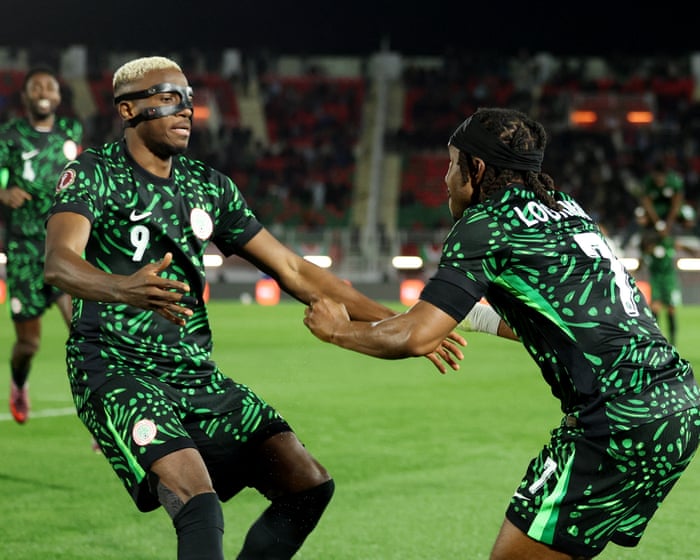
Lookman shines in Nigeria romp while Salah scores to help Egypt reach Afcon last eight

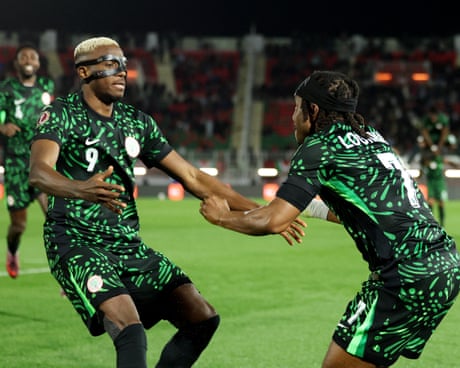
It’s not supposed to be like this. Nigeria, for at least two decades, have been a team that huffed and puffed, struggled with the weight of their own history and expectation, seemed always less than the sum of their parts. Even as they won the tournament in 2013, or got to the final in 2024, the sense of effort was palpable. Nothing came easily to them. They’re not meant to be a side who canter through last-16 ties.

But on a foul night in Fez, though, the rain leaching across the stadium, Nigeria, inspired by Ademola Lookman, produced a performance of emphatic attacking quality and effectively had the game won with two goals before the half hour. Lookman put them ahead after 20 minutes with his third goal of the tournament, a typical finish into the top corner after a clever cutback from Akor Adams. Five minutes later, it was Lookman’s cross that Victor Osimhen turned in to make it 2-0. The same combination added a third two minutes into the second half, and whatever sliver of hope remained for Mozambique was vanquished for good. Adams smashed in a fourth from yet another Lookman assist.

Continue reading...

© Photograph: Amr Abdallah Dalsh/Reuters

© Photograph: Amr Abdallah Dalsh/Reuters

© Photograph: Amr Abdallah Dalsh/Reuters

  •  

Ruben Amorim is gone, but Manchester United’s forever crisis rolls on | Jonathan Wilson

The head coach (or should that be manager?) fired cryptic shots at his Old Trafford bosses, then was fired himself

Discontent at Manchester United these days is only ever deferred. Ruben Amorim’s departure from the club on Monday was long anticipated and came, in the end, with a weary sigh. He had made a half-hearted protest about the recruitment structure after Sunday’s draw at Leeds, but it felt even at the time like barely more than a gesture. And so another manager, the seventh since Sir Alex Ferguson left in 2013, falls victim to the United meat-grinder.

Everybody at United, fundamentally, is unhappy. And not unhappy in the sense that Alex Ferguson used to be unhappy, when the club was essentially fuelled by his volcanic rages, but enervated, frustrated by the realisation that this is not how things used to be, that this was once the biggest football club in the country and now they keep failing to get the win they need to lift them to fifth.

Continue reading...

© Composite: Guardian Pictures; Action Images/Reuters; PA Images

© Composite: Guardian Pictures; Action Images/Reuters; PA Images

© Composite: Guardian Pictures; Action Images/Reuters; PA Images

  •  

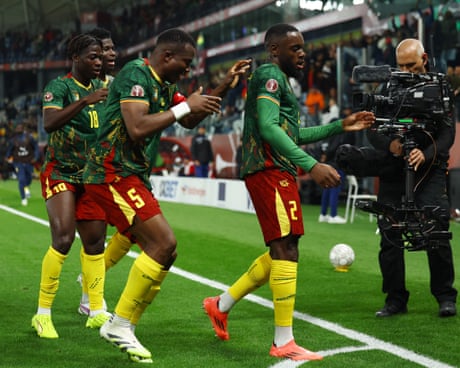
Africa’s superpowers assemble for Cup of Nations knockout stages

Cameroon and hosts Morocco could soon be joined by Nigeria and Egypt at the business end of the tournament

For a decade or more, a familiar theme of Cups of Nations has been how the pyramid of African football has been growing little taller but much broader. African sides came no closer to really challenging at a World Cup, but the range of teams capable of beating the continent’s elite, of getting to the knockout stage of the Cup of Nations, was becoming more diverse. Perhaps, though, a new phase is beginning.

It’s dangerous always to read too much into the performance of one side at one tournament, but in Qatar in 2022 Morocco at last broke through the quarter-final barrier and became the first African side to reach a World Cup semi-final. And now, in the Cup of Nations Morocco are hosting, the traditional powers are reasserting themselves. There is yet to be a real surprise in the tournament and, halfway through the round of 16, the prospect is of the highest-powered list of quarter-finalists in history.

Continue reading...

© Photograph: Siphiwe Sibeko/Reuters

© Photograph: Siphiwe Sibeko/Reuters

© Photograph: Siphiwe Sibeko/Reuters

  •  

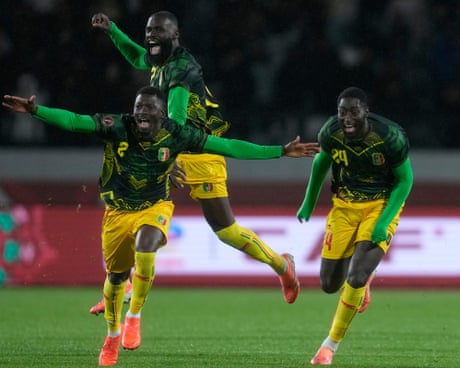
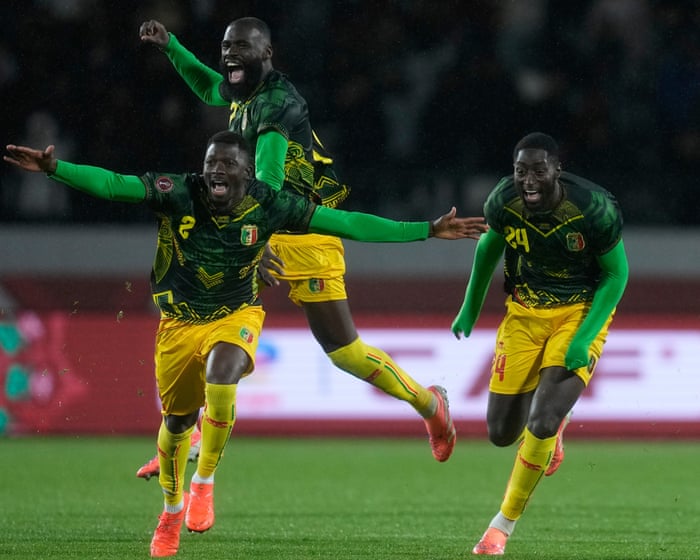
Paranoia and Mali get the better of timid, tetchy Tunisia

  • Mali 1 Tunisia 1 (aet; Mali win 3-2 on penalties)

  • North Africans fail to take the game to 10 men

There is perhaps no nation on earth whose football is as paranoid as that of Tunisia, and with so little reason. They qualified for a third successive World Cup with ease and forced a draw in a friendly against Brazil in November, yet their football is infected with fear. To watch them play is to experience a dystopian world in which imagination has been outlawed. In the end, they went out of the Cup of Nations on Saturday because their self-doubt proved even stronger than Malian self-destructiveness.

The Mali goalkeeper Djigui Diarra took the plaudits but this was a game Tunisia should never have lost. For over an hour and a half they played against 10. They took the lead in the 89th minute. Twice they led in the shootout. And somehow they still lost, undermined by their own unwillingness to take the game on. If they had only played, they would surely have won but as so often before, Tunisia did not just play. They squabbled and spoiled, feigned injury and moaned, and every so often forgot themselves, played a handful of passes and looked the decent side that they really should be.

Continue reading...

© Photograph: Themba Hadebe/AP

© Photograph: Themba Hadebe/AP

© Photograph: Themba Hadebe/AP

  •  

Premier League’s warped economics make £65m fee for Semenyo a snip | Jonathan Wilson

Price tag for winger’s move to Manchester City would make headlines in any other country but not in England

Antoine Semenyo, it seems likely, will soon join Manchester City from Bournemouth for a fee of £65m. Given how well Rayan Cherki and Phil Foden have played from the right this season, it is not immediately obvious why City need him, but the modern game is the modern game, the rammed calendar makes large and flexible squads essential and Pep Guardiola may have some esoteric plan for the Ghanaian anyway. But perhaps what is most striking about the deal is the fee – or, more precisely, how little attention it has drawn.

English football has become inured to big transfers. The fee feels about right. Semenyo is 25. He has four and a half years left on his contract. He is quick, skilful, intelligent and works hard. He is disciplined, but has the capacity to do the unexpected. Of course a player of his ability costs that much. Yet £65m would make him the third-most expensive player in Bundesliga history. He would be the seventh-most expensive in Serie A history, the 14th-most expensive in La Liga history. Only nine non-English clubs have paid a fee higher than that. Even in Premier League terms, Semenyo sneaks into the top 25.

Continue reading...

© Composite: Getty Images

© Composite: Getty Images

© Composite: Getty Images
  •  
❌