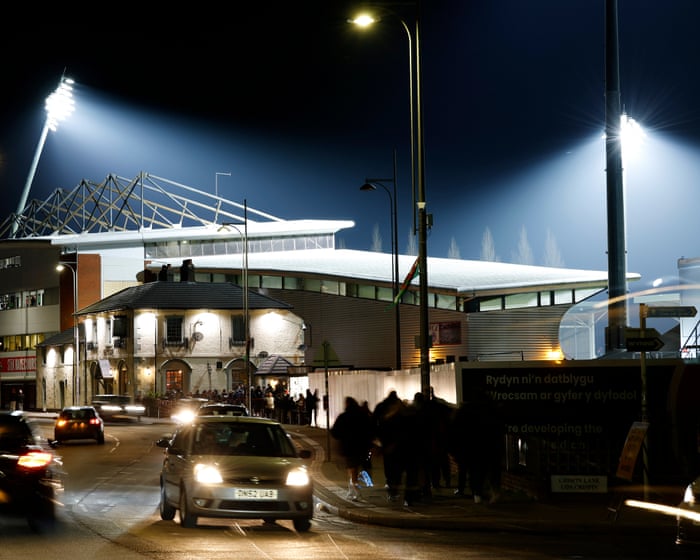
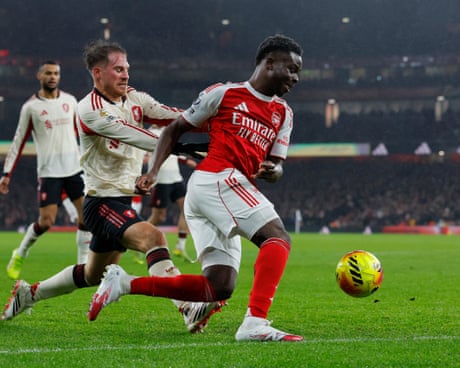
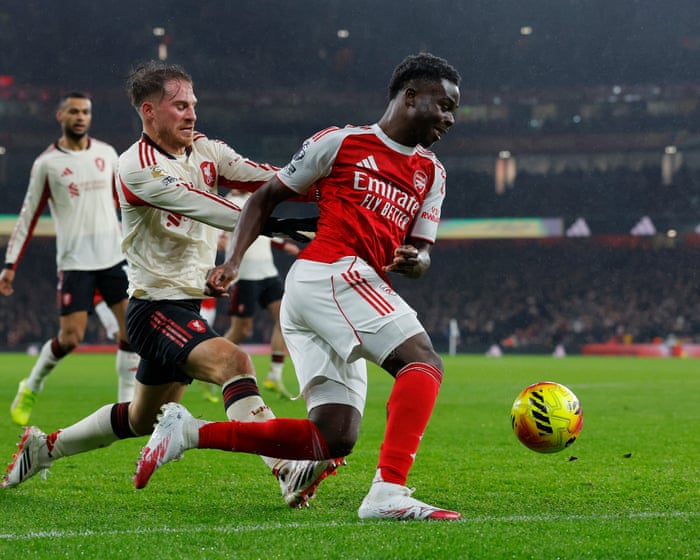
Sean Dyche has been speaking to TNT: “We’ve got a quiet week next week and then it all picks up again in the Europa League. We’ve got some good players out there tonight so I expect a performance.
“We’ve had eight injuries to players, some that have proved themselves at this club and others who want to prove themselves, so the true fitness is not there in some of them, but we’ve got no choice but to use them. These are tricky games. I’ve made it absolutely clear to the players that our attitude has to be spot on.”
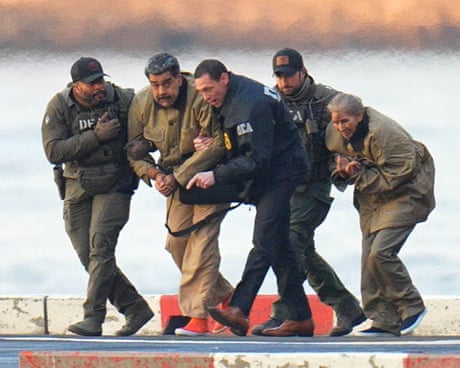
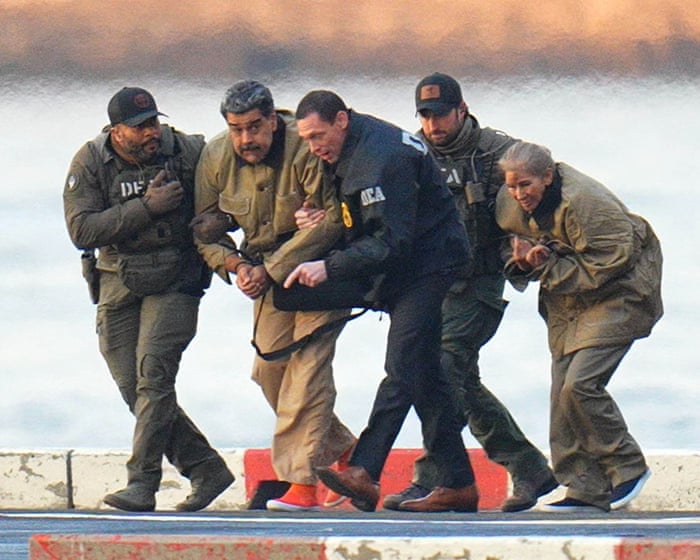
Nicolás Maduro seized, Russian drone strikes rock Kyiv, anti-ICE protests erupt in Minneapolis and Storm Goretti lashes Britain – the past seven days as captured by the world’s leading photojournalists
Dutch head coach has been rewarded for winning Champions League with contract that runs until 2029 designed to return club to domestic dominance
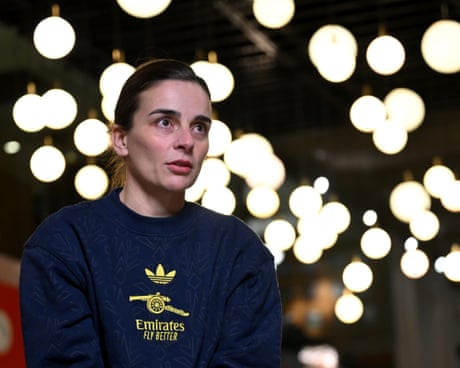
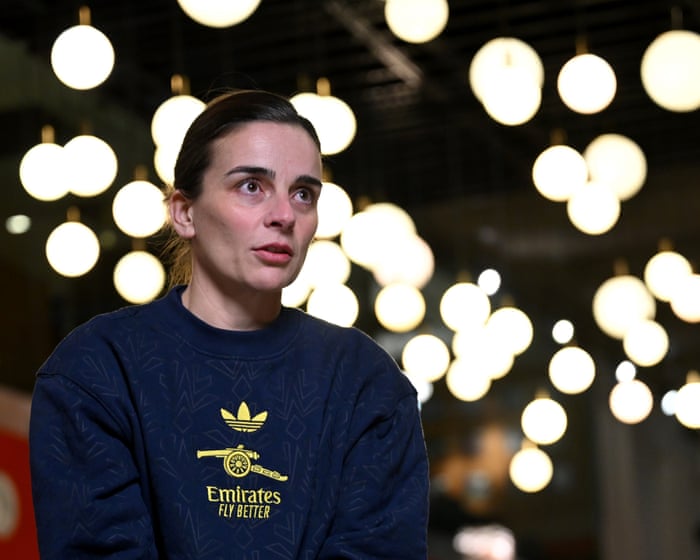
The summer of 2029 feels very distant, whether you think of it as the year of the next Women’s Euros, the year when theoretically there will be the next UK general election or the year when a near-Earth asteroid larger than the Emirates Stadium is scheduled to pass by our planet.
When it comes to English women’s football Arsenal, with an unrivalled 48 major trophies, are as large a celestial body as you can get, but in terms of domestic success they have been rather stuck in orbit since their most recent WSL title in 2019, and nobody at the club will want to imagine reaching 2029 and having gone a decade without a league title.
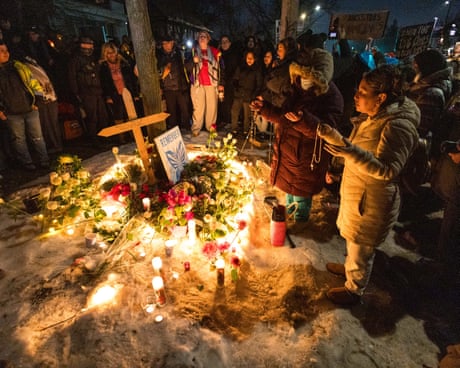
Jacob Frey criticizes Trump administration’s response to shooting death of Renee Nicole Good
Officials in Minneapolis on Friday accused federal authorities of “hiding the facts” over the killing of a US citizen by an officer with the Immigration and Customs Enforcement (ICE) agency, and demanded the inclusion of state investigators in the FBI inquiry.
Jacob Frey, the Minnesota city’s Democratic mayor, criticized the Trump administration’s response to the shooting, speaking at a press conference two days after the death of Renee Nicole Good in her car in a confrontation with federal officers amid protests and community scrutiny during an immigration crackdown.
A brutal regime has failed to safeguard either the country’s physical security or basic living standards. But Donald Trump’s threats to intervene won’t help civilians
The internet blackout across Iran is meant to prevent protests from spreading, and observers from witnessing the crackdown on them. But it’s also emblematic of the deep uncertainty surrounding this unrest and the response of a regime under growing pressure.
Rocketing inflation and a tanking currency sparked the protests in late December. They have since broadened and spread. Videos showed thousands marching in Tehran on Thursday night and people setting fire to vehicles and state-owned buildings.
Do you have an opinion on the issues raised in this article? If you would like to submit a response of up to 300 words by email to be considered for publication in our letters section, please click here.
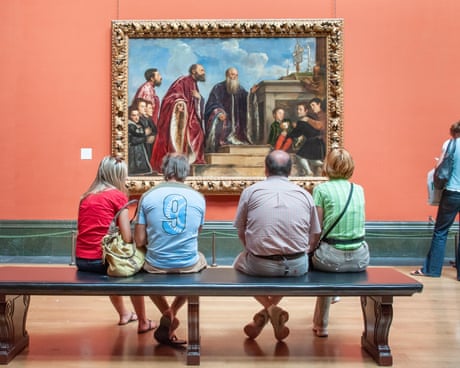
It can make us healthier, happier and live longer. Engaging in culture should be encouraged like good diet and exercise
The second Friday in January has been dubbed “Quitter’s Day”, when we are most likely to give up our new year resolutions. Instead of denying ourselves pleasures, suggests a new batch of books, a more successful route may be adding to them – nourishing our minds and souls by making creativity as much a daily habit as eating vegetables and exercising. Rather than the familiar exhortations to stop drinking, diet, take up yoga or running, there is an overwhelming body of evidence to suggest that joining a choir, going to an art gallery or learning to dance should be added to the new year list.
Art Cure by Daisy Fancourt, professor of psychobiology and epidemiology at University College London, brings together numerous research projects confirming what we have always suspected – art is good for us. It helps us enjoy happier, healthier and longer lives. One study found that people who engaged regularly with the arts had a 31% lower risk of dying at any point during the follow-up period,even when confounding socioeconomic, demographic and health factors were taken into account. Studies also show that visiting museums and attending live music events can make people physiologically younger, and a monthly cultural activity almost halves our chances of depression. As Fancourt argues, if a drug boasted such benefits governments would be pouring billions into it. Instead, funding has been slashed across the culture sector and arts education has been devalued and eroded in the UK.
Do you have an opinion on the issues raised in this article? If you would like to submit a response of up to 300 words by email to be considered for publication in our letters section, please click here.
Over 100 pieces of human remains including skulls and headless torsos found in car and home of Jonathan Gerlach
A Pennsylvania man suspected of desecrating a historic cemetery in his state is facing hundreds of charges pertaining to grave robbery after authorities recently found more than 100 pieces of human remains in his possession, prompting one official to call the case “the most horrific thing”.
Jonathan Gerlach, 34, had human skulls, bones, mummified feet, headless torsos and other corpse parts – including in his car, home and storage locker – after his arrest on Tuesday, according to a sworn police statement reported by NBC News.
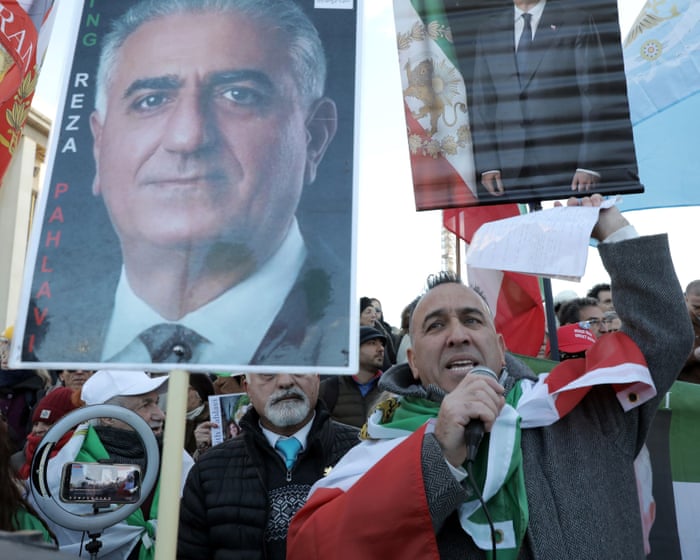
Despite significant support for the shah, Iranian society may be looking for any ‘escape from a dead end’
Supporters of Reza Pahlavi, the exiled son of Iran’s deposed shah, were claiming the crowds out in the streets of Iran were a direct response to his call to action. They described it as a referendum on his leadership and that the response showed he had won.
Yet the issue of an alternative leadership for Iran remains unresolved. Many Iranians, eager to end the 47-year-long rule of the clerics, still view a return to monarchical rule with suspicion.
Trump’s admission that he recognises no constraint outside his own morality was a horrifying moment of truth. It should galvanise all those who oppose him
For a serial liar, Donald Trump can be bracingly honest. We’ve known about the mendacity for years – consider the 30,573 documented falsehoods from the president’s first term, culminating in the big lie, his claim to have won the 2020 election – but the examples of bracing candour are fresher. This week both began and ended with the US president speaking the shocking truth.
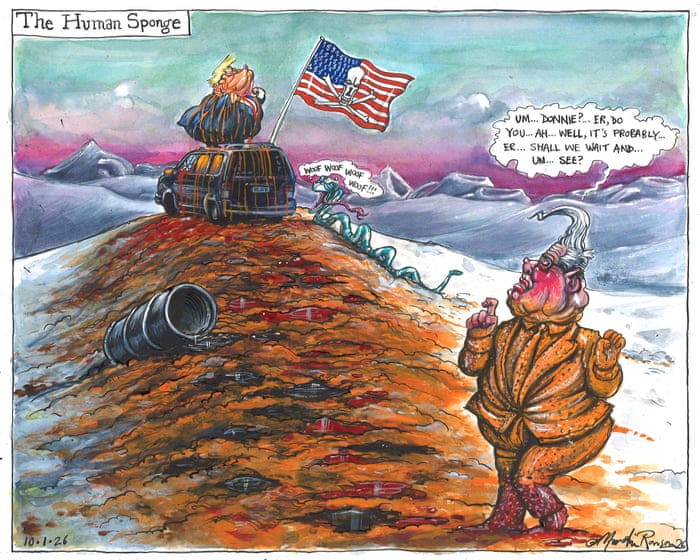
At a press conference to celebrate his capture of the Venezuelan dictator Nicolás Maduro, Trump announced that from now on the US would “run” that country, before moving in the very next breath to Venezuela’s oil. There was no pious talk of democracy, scant mention even of the drug trafficking that earlier served as a pretext for military action. Instead, Trump said out loud what had once been a slogan on leftist placards in protest at past US interventions, admitting that it really was all about the oil. It was as transparent a revelation of Trump’s true motive as you could have asked for.
In this week’s newsletter: In the first of a new series, we’re digging into the archives to find the first fleeting mentions of pop culture’s great and good. But who’s this little lady?
From Radiohead playing in backroom pubs as On a Friday to Timothée Chalamet’s early days as an Xbox YouTuber, it’s always fascinating to see the faltering first steps of famous folk. So in this week’s newsletter we’re launching a new regular feature, Origin stories, where we’ll look at how the Guardian first covered some now very familiar pop culture figures or institutions. And you’ll find out who the tyke above is, from a 1973 photoshoot, at the end.
Major new films promise to reveal more about the lives of public figures, provocative topics and historical events
The landscape for nonfiction cinema is swift, fragile and constantly in flux in these absurd times; films we discuss now may not be released, and films we discuss a year from now may not even be the germ of an idea yet. But between the usual stable of celebrity retrospectives, music documentaries and the ongoing work to record the atrocities in Gaza, the documentary slate for 2026 already seems both full and promising. From the assassination attempt on Salman Rushdie to AI, a Billie Jean King retrospective to Elon Musk, here are 10 of the most hotly anticipated documentaries in 2026.
Film director of poetic narratives set in remote Hungarian communities, filled with desolation and foreboding
Susan Sontag once claimed she would be “glad to see” Béla Tarr’s 1994 masterpiece Sátántangó “every year for the rest of my life”. No small compliment given that the film is more than seven hours long.
Tarr, who has died aged 70, earned the reverence of cinephiles on the basis of a handful of austere, poetic and painstakingly slow black-and-white films including Damnation (1987), Werckmeister Harmonies (2000) and his swansong The Turin Horse (2011).
From talent shows to the big screen, the actor’s performance in Hamnet has made her a leading awards contender
Hamnet, Chloé Zhao’s film adaptation of Maggie O’Farrell’s bestselling novel about William Shakespeare and his wife, Agnes (or Anne) Hathaway, is a tender meditation on love and grief. Charting the couple’s anguish over the death of their 11-year-old son – said to have inspired the play Hamlet – it has moved audiences to tears and united critics in their praise.
The film’s emotional force is carried by the Irish actor and singer Jessie Buckley, who portrays Hathaway (opposite Paul Mescal’s Shakespeare) with a rawness and intimacy that has already earned her a Critics’ Circle award for best actress, and marked her out as a leading contender for the Golden Globes, Baftas and Oscars. The Guardian film critic Peter Bradshaw called her “unselfconsciously beguiling”, while Rolling Stone predicted audiences “will be talking about Jessie Buckley’s performance for years”.
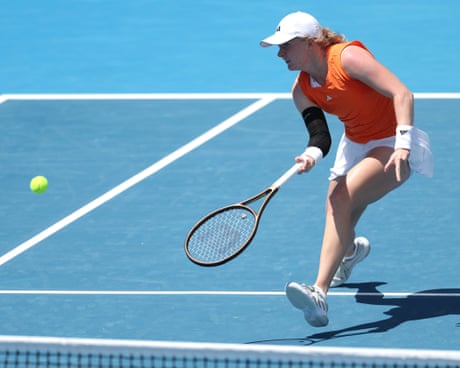
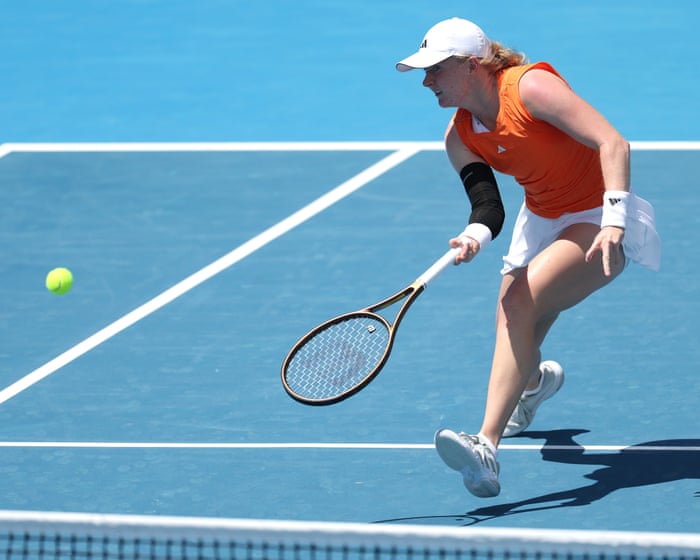
After a breakout week in Auckland that saw her defeat world No 15 Emma Navarro, injuries that have dogged the 25-year-old’s career have bitten again
During the first weeks of last year’s clay-court season, Francesca Jones found herself fighting through a breathless three-set tussle in Bogotá that was rapidly falling out of her control. Trailing 5-3 in the final set of her second-round match, an exhausted Jones began her service motion. As she tried to leap into the air and strike the ball, however, she staggered forwards and collapsed to the ground. Two points from defeat, she was steered off the court in a wheelchair.
This was an extreme experience for Jones, but it was also painfully reflective of her career until that point. Her biggest adversary has so often been her own body. In 2024 alone, she contested 20 tournaments – seven of which ended in a mid-match retirement and she also withdrew mid-tournament from another event. In 40% of the events she took part in that year, her body simply did not allow her to play tennis.
The ad campaign ended in late 2025, the Swedish streaming giant confirmed, having previously said, despite protests, that it did not violate advertising policies
Spotify is no long running advertisements for the US Immigration and Customs Enforcement (ICE), the streaming service has confirmed, after the Trump administration campaign ended in late 2025.
“There are currently no ICE ads running on Spotify,” the Swedish company said in a statement. “The advertisements mentioned were part of a US government recruitment campaign that ran across all major media and platforms.”
Deal understood to lift pay to about £300,000 a week
Arsenal keen to reward Declan Rice with new deal
Bukayo Saka has agreed a new five-year contract at Arsenal that will make him one of the highest-paid players in the club’s history.
The England forward’s deal that he signed in May 2023 is thought to be worth about £200,000 a week and is due to expire in 2027. Saka said before the Champions League quarter-final victory against Real Madrid in April that he wanted to “win wearing this badge” but also said he was in “no rush” to sign a new contract.
Freddy Guevara will never forget the 34 excruciating days he spent inside Venezuela’s most notorious political prison after being snatched by masked men from Nicolás Maduro’s intelligence agency.
The black hood, the interrogations, the stress positions, the salsa music his captors blasted at him in an attempt to make him crack.
It is one of the most tantalising – and entertaining – puzzles in art, stretching from the Louvre to the Loire via, well, Norfolk. And our critic thinks he has just worked it out
Increased security after the recent heist has made the queues at the Louvre even slower, yet on this rainswept, very wintry morning, no one grumbles. After all, the Mona Lisa is waiting inside for all these tourists who have come from the world over. Leonardo da Vinci’s woman – swathed in dark cloth and silk, smiling enigmatically as she sits in front of a landscape of rocks, road and water – draws crowds like no other painting. But if the Mona Lisa can attract such attention fully clothed, what would the queues be like if she was nude?
Strangely, this is not just amusing speculation – because in 18th-century Britain, she was. An engraving issued by a publisher called John Boydell gave libertine Georgians the opportunity to hang “Joconda” in their boudoir. It must have been popular because many copies survive. This Mona Lisa sits in a chair with her hands crossed in front of a fading view of distant rock formations. And, like the Mona Lisa in the Louvre, she smiles enigmatically. But there is one key difference. She is naked from the waist up.
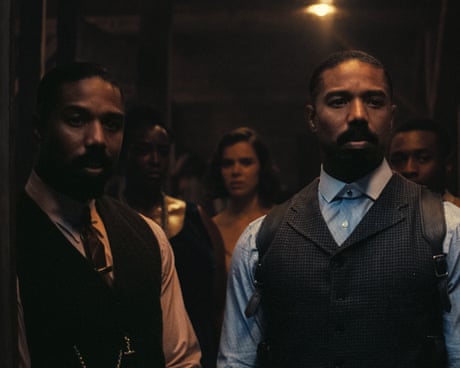
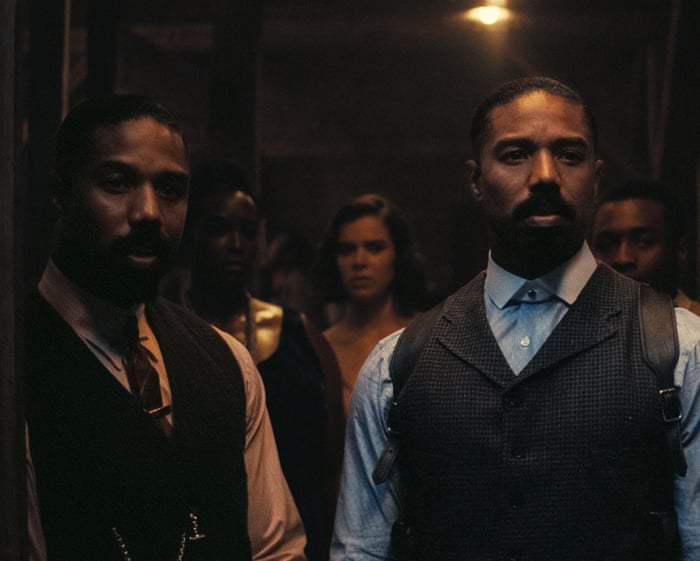
With strong showings for Ryan Coogler’s Sinners and target hit for 50% female directors, criticism that has dogged the prizes in recent years may have been headed off
For now, the Bafta film awards appears to have headed off further criticism over its long-running diversity crisis after revealing its longlists on Friday.
 Connexion