Global Witness says plan to upgrade railway line from DRC to Angola puts up to 1,200 buildings at risk of demolition
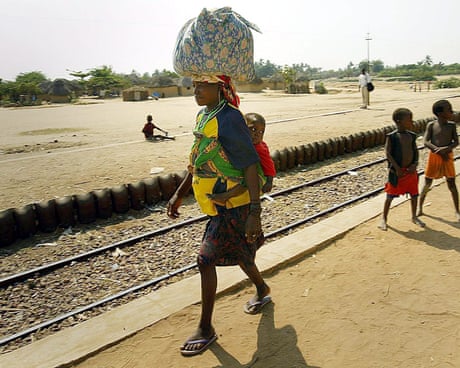
Up to 6,500 people are at risk of being displaced in the Democratic Republic of the Congo by a multi-billion-dollar infrastructure project funded by the EU and the US, amid a global race to secure supplies of copper, cobalt and other “critical minerals”, according to a report by campaign group Global Witness.
The project, labelled the Lobito Corridor, aims to upgrade the colonial-era Benguela railway from the DRC to Lobito on Angola’s coast and improve port infrastructure, as well as building a railway line to Zambia and supporting agriculture and solar power installations along the route. Angola has said it needs $4.5bn (£3.4bn) for its stretch of the line.
As leaders try to break smugglers’ business model, research suggests strategy so far has had opposite effect
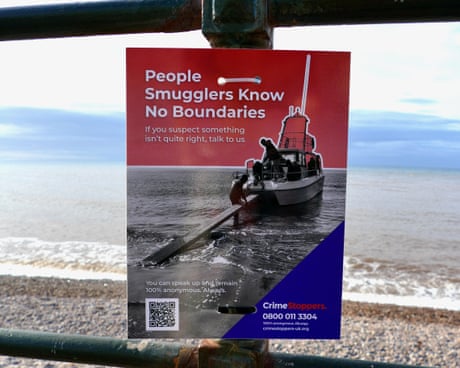
Hardline migration policies adopted by governments across the globe have been a boon for people smugglers, fuelling demand and allowing them to raise their prices, according to a report.
The findings, released on Thursday by the Mixed Migration Centre of the Danish Refugee Council, and based on interviews with thousands of migrants and hundreds of smugglers, come as officials prepare to gather next week in Brussels to discuss how best to combat smuggling.
The rookie plays like a linebacker at quarterback. His reckless style is costing his teammates and coaches as well as himself
Jaxson Dart wants you to know something: this is real football. It’s not soccer or flag. It’s tackle football, the kind where quarterbacks go airborne. After taking the latest in a growing compilation of bone-crushing hits, Dart brushed himself off and delivered a post-game sermon on toughness. “We’re not playing soccer,” he said. “You’re going to get hit. Things happen.”
Yet these “things” continue to happen to Dart at an alarming rate. In his eight NFL starts, he has absorbed as many unnecessary hits as any rookie quarterback in recent memory. On Monday night, Dart took another heavy hit near the sideline in the first quarter of the Giants’ 33-15 loss to the Patriots. Dart scrambled out of the pocket on second-and-13 and ran for a first down. As he approached the sideline, Dart could have stepped out and gained fewer yards while still moving the chains. Instead, he braced, lowered his shoulder and was sent soaring through the air by Patriots linebacker Christian Elliss.
Icy mining magnate Gillian Anderson goes head to head with rebellious rancher Lena Headey in a drama that takes itself so very, very seriously
Angel’s Ridge, Washington Territory, 1854. It’s dusty, there’s a saloon bar, there’s horses, an ineffable sense of – I don’t know, let’s call it manifest destiny – about the place, and the only colour settlers have brought with them is sepia. But wait! What’s this? The owner of the local silver mine riding into town? And it’s a woman! In a western?
Yessir, it is. Not only that but she is played by Gillian Anderson (in full ice mode, despite the dust) and is clearly trouble. Not only that, but there is a second woman about to go toe-to-toe with her and do battle for the town’s soul over the eight episodes that comprise The Abandons, the latest venture from Sons of Anarchy’s Kurt Sutter. Its joint lead is Lena Headey as Fiona Nolan, a devout Irish Catholic woman who has gathered a misfit ragtag bunch of motley orphan crew outcasts about her and lives with this patchwork family in Jasper Hollow. Jasper Hollow, alas, is full of silver that Constance Van Ness (the local mine owner, played by Anderson) wishes to bring under her control to placate one of her investors.
Twenty years on, the social media-savvy contestants will have greater power. His brutal approach to judging them will have to change, too
There is a moment in the trailer for Simon Cowell’s new Netflix show, The Next Act, that is almost touching in its adherence to the way things once were. Cowell, who we see on a variety of beige sofas primly clutching his knees, talks about how to curate a new boyband, 20 years after the launch of his first TV talent show. “There is a huge risk here,” he says, heavy with drama. “If this goes wrong, it will be: ‘Simon Cowell has lost it.’” In fact, as anyone who has an eye on dwindling audience figures for his existing shows knows, for the vast majority of 18- to 24-year-olds – or even for younger millennials – the more likely response will be, “Simon who?”
Which doesn’t mean that a new generation of viewers can’t be lured in by Cowell’s expertise. The question of whether 66-year-old Cowell can tweak a dusty and decades-old model has less to do with current music trends – just as well, since pop music has moved from TV to TikTok, which Cowell says he hates – than the music executive’s extremely well-tested ability to make good TV and bend his persona to align with the times. In the rollout of publicity for the new show, Cowell has made a good fist of expressing regret at how rude he used to be to contestants, apologising in the New York Times, after some cajoling, for “being a dick”, and putting his eye-rolling, grimacing performance as a judge down to the tedium of audition days rather than what most of us understood it to be: the extraction of lolz out of confused individuals who had the misfortune to appear on his shows.
Perhaps the data-soaked discourse of modern football actually does this Premier League centurion something of a disservice
Stack them up. Pile them high. Sort them and arrange them, parse them and categorise them, order them to your table like items in a Chinese restaurant. Personal favourites? Give me the No 33 against Arsenal, the one with the flowing hair. I’ll also take a No 81 against Chelsea, when he spots a hapless Robert Sánchez out of goal, and lobs him deliciously from the edge of the area.
Give me a No 98 against Bournemouth, in which he deliberately slants his run around the keeper, slots it in from a tight angle, tries to clamber atop the advertising hoardings in triumph, loses his balance, collapses in peals of giggles. And maybe chuck in a No 53 against Brentford, in which Kristoffer Ajer somehow manages to fall over without being touched, spooked into incoherence by his very presence.
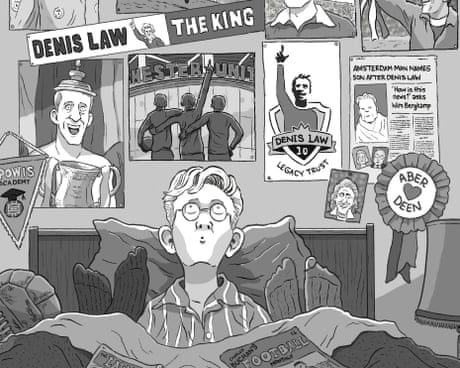
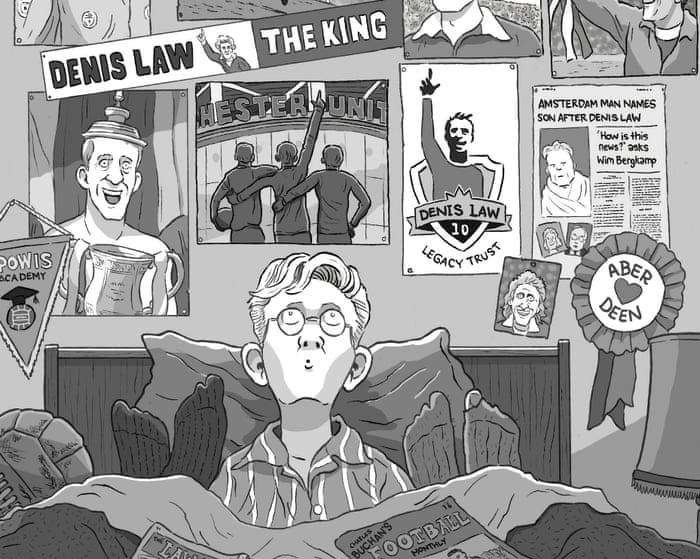
“Denis Law is one of the few footballers I’m too young to have seen play live, but like all followers of the game, I’m aware of his impact and talent. What I hadn’t fully appreciated was what a kind and generous person he was – something that became obvious as I read the many tributes to his character, in preparation for this cartoon”.
Tall, handsome and used to receiving fire emojis on his social media posts, the dancer has, with his partner Mayara Magri, been called ‘the Posh’n’Becks of ballet’. But there is suffering in his art: ‘I kind of enjoy negativity,’ he says
In the expensive hush of a hotel bar over the road from the Royal Ballet and Opera in Covent Garden, London, Matthew Ball asks for a mint tea. I’m having a white wine; Ball’s body is clearly more of a temple than mine, although you don’t need to know our drinks orders to see that: he has an effortlessly straight-backed posture, muscular arms under a white T-shirt. On stage, ballet dancers can seem like mighty gods and goddesses, but often IRL they are petite. Not so Ball, whose tall stature is part of why he’s much in demand for princely roles and partnering. With the fine features and strong angles of his face, and those piercing eyes, there’s a bit of the Robert Pattinson about him. Is he as brooding and romantic in his roles on stage? Certainly. Tortured? We’ll come to that.
At 31, Ball is riding the crest of a career that seems to have gone pretty smoothly so far. Growing up in Liverpool, he didn’t get much stick for being into ballet as a kid (the worst comments came from another girl in his ballet class). Joining the Royal Ballet School at 11, he graduated straight into the Royal Ballet company and was promoted each year, making it to the top rank of principal in 2018. He has loved getting his teeth into meaty dramatic roles, especially the psychological turmoil of Kenneth MacMillan’s ballets: the suicidal Crown Prince Rudolf in Mayerling or the doomed poet Des Grieux in Manon. As a guest star he was smouldering as The Stranger in Matthew Bourne’s popular Swan Lake and made a virtuoso cameo, spinning in a Paul Smith suit, in the recent Quadrophenia ballet. Plus, he dances at galas all over the world, often with his Brazilian girlfriend and fellow Royal Ballet principal Mayara Magri. He would groan at me telling you that Tatler called them “The Posh’n’Becks of ballet”. “They really went to town on that,” he shakes his head bashfully, “Golden Balls!”
Gus Poyet’s assistant says ‘moment of misunderstanding’ led to his being punished by the K League
Jeonbuk Hyundai Motors had their “La Decima” banners ready on the second weekend of November to celebrate a 10th South Korean title won in style by the head coach, Gus Poyet. Their game with Daejeon Hana, however, turned out to be the most controversial and divisive of the season. Jeonbuk were leading 2-1 when, in injury time, the referee, Kim Woo-seong, did not award a penalty for handball, much to the displeasure of Mauricio Taricco, Poyet’s No 2.
Even when VAR intervened and Kim pointed to the spot, the former Tottenham full-back kept complaining, to the extent that he was shown a second yellow card minutes after the first. The Argentinian put his index fingers next to the outer corner of each eye. Kim interpreted the gesture as racist and reported the 52-year-old to the K League’s disciplinary committee.
The Russian president’s Delhi visit gives him a chance to reduce Moscow’s isolation but both countries need each other to negotiate Trump’s America and a powerful China
When Vladimir Putin last set foot in India almost exactly four years ago, the world order looked materially different. That visit – lasting just five hours due to the covid pandemic – saw Putin and Indian prime minister Narendra Modi discuss economic and military cooperation and reaffirm their special relationship.
Three months later, Russia’s full-scale invasion of Ukraine would turn him into a global pariah, isolating Russia from the world and restricting Putin’s international travel.
The imposing concrete buildings that defined British postwar architecture held a vision of the future – but many fell into disrepair. A new book finds the finest examples
A new overnight bus service in the Netherlands, Belgium and Switzerland offers comfort and sustainability
I feel my travel-scrunched spine start to straighten as I stretch out on the plump mattress, a quilted blanket wrapped around me and a pillow beneath my head. As bedtime routines go, however, this one involves a novel step – placing my lower legs in a mesh bag and clipping it into seatbelt-style buckles on either side; the bed will be travelling at around 50mph for the next 12 hours and there are safety regulations to consider.
Last month Swiss startup Twiliner launched a fleet of futuristic sleeper buses, and I’ve come to Amsterdam to try them out. Running three times a week between Amsterdam and Zurich (a 12-hour journey via Rotterdam, Brussels, Luxembourg and Basel), with a Zurich to Barcelona service (via Berne and Girona) launching on 4 December, the company’s flat-bed overnight sleeper buses are the first such service in Europe.
A tricky age gap, a dose of wedding day drama, literary love affairs, office rivals and the sexy side of Brexit
Consider Yourself Kissed Jessica Stanley (Hutchinson Heinmann)
Clever and contemporary, this modern romance between short king single dad Adam and magazine writer Coralie accrues depth as it jumps from initial meet-cute to a decade-long romance, all the while embracing stepmotherhood, work and politics. (You didn’t think you could get Brexit into a romance?) The writing is wonderful, and the book has genuine heft – which might dial back the escapist fun, but it’s no less enjoyable for that.
Problematic Summer Romance Ali Hazelwood (Sphere) Hazelwood, a behemoth of current romantic fiction, specialises in funny and sharp hot-nerd affairs. Despite highlighting its own issues in the title, this novel got a rather mixed reception from the more judgmental corners of the internet on account of the age difference between the lovers. The gap between Maya and Conor, her big brother’s best friend, is 15 years – she is 23 to his 38. Depending on your generation and point of view, this is either completely and absolutely fine, or intensely concerning, despite the heroine insisting valiantly on her own agency and a reluctant romantic hero who resists the affair for this very reason. The book itself is typically charming and incredibly enjoyable, full of one-liners and cheek. (Far less controversially, she has followed it up with Mate, about a vampire bride falling in love with a werewolf. Sex with an actual animal is notably less problematic than an age gap in 2025.)
Amnesty International finds immigrants at Florida facility were shackled and left outside in metal cage for up to a day
Detainees at the notorious Florida immigration jail known as “Alligator Alcatraz” were shackled inside a 2ft high metal cage and left outside without water for up to a day at a time, a shocking report published Thursday by Amnesty International alleges.
The human rights group said migrants held at the state-run Everglades facility, and at Miami’s Krome immigration processing center operated by a private company on behalf of the Trump administration, continue to be exposed to “cruel, inhuman and degrading treatment” rising in some cases to torture.
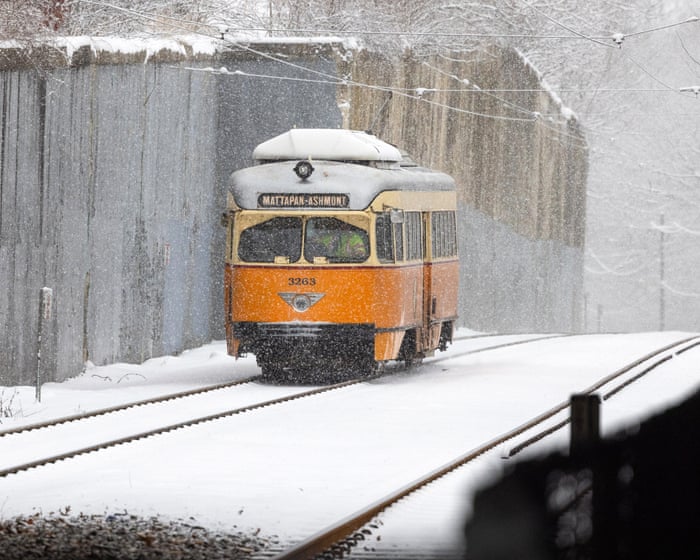
Pace of area’s temperature rise, outpaced in US only by Alaskan Arctic, apparently increased in past five years
The US region called New England is widely known for its colonial history, maple syrup and frigid, snow-bound winters. Many of these norms are in the process of being upended, however, by a rapidly altering climate, with new research finding the area is heating up faster than almost anywhere else on Earth.
The breakneck speed of New England’s transformation makes it the fastest-heating area of the US, bar the Alaskan Arctic, and the pace of its temperature rise has apparently increased in the past five years, according to the study.
Reports of escaped wallabies are on the rise, especially in southern England. But how easy is it to spot these strange and charismatic marsupials – and why would a quintessentially Australian creature settle here?
It was about 9.30 or 10 on a dark, late November night; Molly Laird was driving her pink Mini home along country lanes to her Warwickshire cottage. Suddenly, the headlights’ beam picked up an animal sitting in the road. “I thought it was a deer at first,” Molly tells me. “But when it moved, its tail wasn’t right, and it was hopping. It took me a while to realise, but I thought: that’s a kangaroo!”
Molly’s next thought was: “I’m going insane,” closely followed by, “No one’s going to believe me.” So she got out her phone and filmed it. Later, she posted the video on social media, where she was told it was likely to be not a kangaroo, but its smaller cousin, the red-necked wallaby.
New film is based on TV series inspired by The Office, whose lead character is said to resemble the chancellor
He’s the middle-manager who talks as if he’s the CEO, a beacon of workplace inclusivity in his own head but a bigoted chauvinist as soon as he opens his mouth. And listening to him creates a mix of familiarity and embarrassment-by-proxy that turns out to be surprisingly pleasurable.
Ricky Gervais’s cringe-making general manager of a soul-destroyingly dull Slough-based paper merchant stopped being a regular presence on British TV over two decades ago, but the many comedic characters that he spawned across the globe have outlived him.
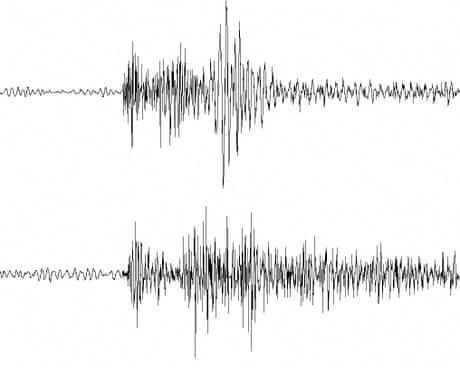
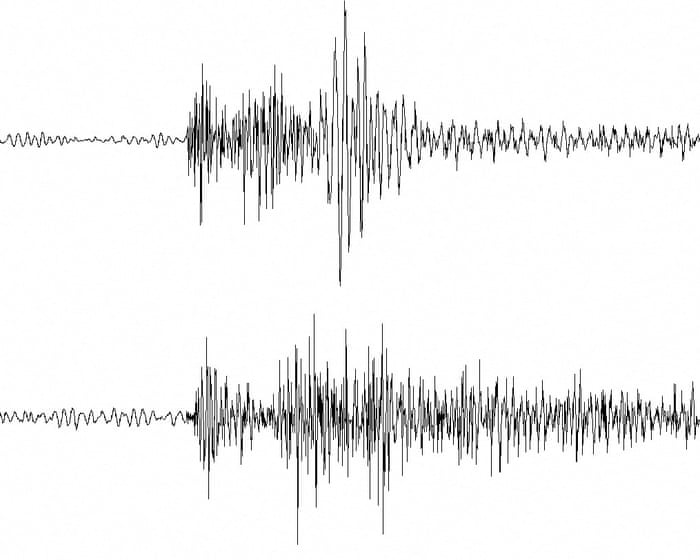
Residents report homes shaking from 3.3-magnitude quake that British Geological Survey says was centred just off the coast of Silverdale, Lancashire
A 3.3-magnitude earthquake shook homes in north-west England late on Wednesday, the British Geological Survey (BGS) reported.
The quake struck shortly after 11.23pm and was felt across Lancashire and the southern Lake District, including the towns of Kendal and Ulverston, within 12 miles of the epicentre.
25 questions on notable pop culture, sporting and public figures we lost this year. How will you fare?
Something a little different this week. As the year draws to a close, the Thursday quiz pauses to pay tribute to some of the notable pop culture, sporting and public figures we lost over the past 12 months, with the annual in memoriam edition. No prizes, except the chance to remember the joy they (mostly) gave us – via the medium of trying to recall obscure trivia about them. Let us know how you get on in the comments. Allons-y!
The Thursday news quiz, No 226 – annual in memoriam edition
If you typed the words “believe, belong and become” into a Google video search on Thursday morning, the first return may have been a sermon by TJ Mauldin, the lead pastor of the First Baptist church of Tifton, Georgia.
Directly below the bearded and blue-jeaned pastor’s video under that alliterative banner, you may have clicked through to a sermon by West Florida Baptist church’s Mike Brown, who had those three b-words emblazoned on a snug-fitting black T-shirt.
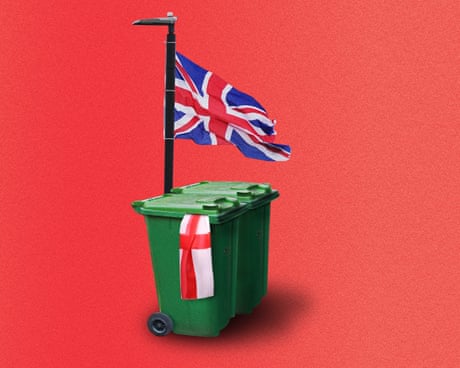
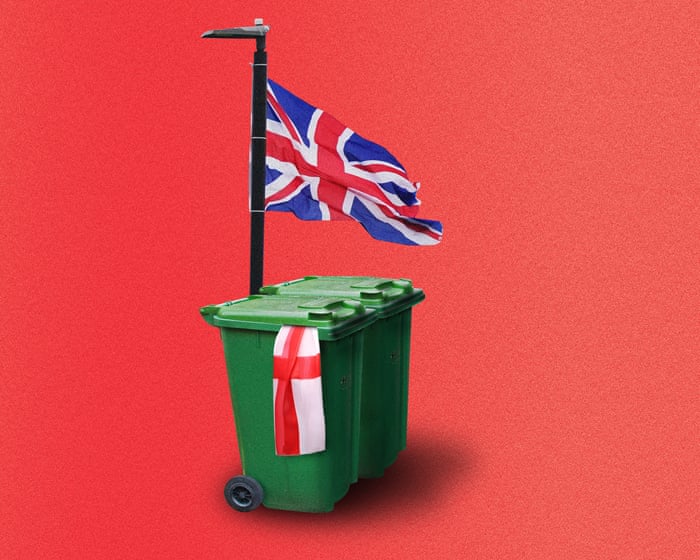
The controversy over flags has faded from the national agenda – but street by street, late at night and with ingenious equipment, their raising and removal is the subject of a roiling dispute over local identity
The Christmas lights have gone up in Stirchley. A multifaith mix of stars and swirls add a festive air to the lamp-posts along the main street of this south Birmingham suburb. Stirchley is a modest kind of place, sandwiched between better known (and better off) areas such as Bourneville and Moseley, but there is plenty of evidence here of the lively community spirit that last year resulted in the area being named the best place to live in the Midlands.
Posters in shop windows along Pershore Road advertise a knitting group, a neighbourhood winter fair and the local food bank, while in the former swimming baths, now a community hub, friendly flyers for coffee mornings and choirs are stacked.
In the 21st-century imbalance of power, Europe and Nato have neither the arms nor the wealth to impel Russia or the US to take its peace settlement seriously
The failure of this week’s peace talks between Vladimir Putin and Donald Trump’s envoy Steve Witkoff fits into a now well-established pattern of standoffs on Ukraine during Trump’s second term. But the dynamic that produced these talks may be becoming more entrenched. The US and Russian interests driving the process have not changed, while the conflict on the ground is intensifying. The lack of progress this week means there will be another attempt to end the war soon, and perhaps another after that, until, one day, there is some kind of US-backed deal to halt the conflict on terms broadly favouring Russia.
The geopolitical algorithm driving this effort is too consistent to ignore. It has been repeated ever since Trump re-entered the White House in January. On the campaign trail, Trump had claimed he could stop the war in a day. That was never going to happen. But from 12 February onwards, when Trump first talked directly to Putin about Ukraine, the intention and approach have not altered. There is no reason to suppose they will do so now. Indeed, Tuesday’s impasse may spur them on again.
 Connexion