↩ Accueil

Vue lecture

Bridging borders in medical physics: guidance, challenges and opportunities

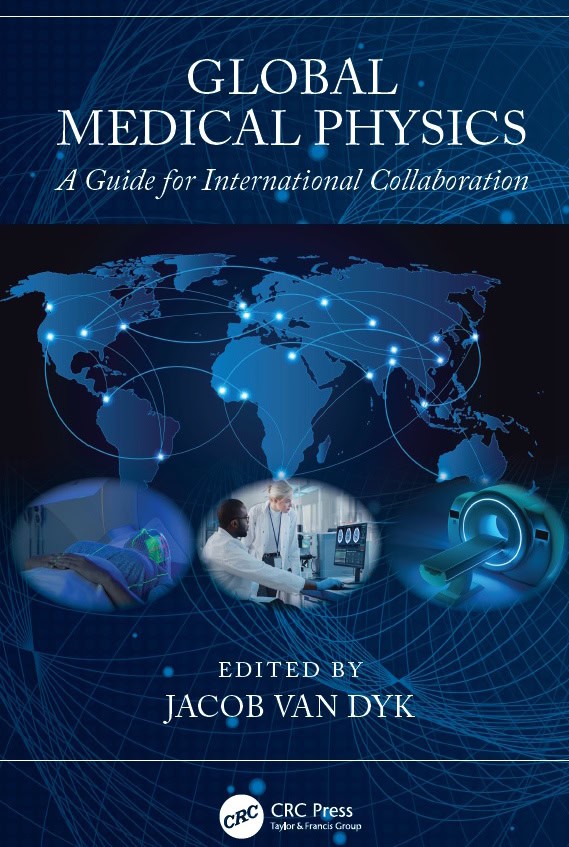
Book cover: Global Medical Physics: A Guide for International Collaboration
Educational aid Global Medical Physics: A Guide for International Collaboration explores the increasing role of medical physicists in international collaborations. The book comes in paperback, hardback and ebook format. An open-access ebook will be available in the near future. (Courtesy: CRC Press/Taylor & Francis)

As the world population ages and the incidence of cancer and cardiac disease grows alongside, there’s an ever-increasing need for reliable and effective diagnostics and treatments. Medical physics plays a central role in both of these areas – from the development of a suite of advanced diagnostic imaging modalities to the ongoing evolution of high-precision radiotherapy techniques.

But access to medical physics resources – whether equipment and infrastructure, education and training programmes, or the medical physicists themselves – is massively imbalanced around the world. In low- and middle-income countries (LMICs), fewer than 50% of patients have access to radiotherapy, with similar shortfalls in the availability of medical imaging equipment. Lower-income countries also have the least number of medical physicists per capita.

This disparity has led to an increasing interest in global health initiatives, with professional organizations looking to provide support to medical physicists in lower income regions. Alongside, medical physicists and other healthcare professionals seek to collaborate internationally in clinical, educational and research settings.

Successful multicultural collaborations, however, can be hindered by cultural, language and ethical barriers, as well as issues such as poor access to the internet and the latest technology advances. And medical physicists trained in high-income contexts may not always understand the circumstances and limitations of those working within lower income environments.

Aiming to overcome these obstacles, a new book entitled Global Medical Physics: A Guide for International Collaboration provides essential guidance for those looking to participate in such initiatives. The text addresses the various complexities of partnering with colleagues in different countries and working within diverse healthcare environments, encompassing clinical and educational medical physics circles, as well as research and academic environments.

“I have been involved in providing support to medical physicists in lower income contexts for a number of years, especially through the International Atomic Energy Agency (IAEA), but also through professional organizations like the American Association of Physicists in Medicine (AAPM),” explains the book’s editor Jacob Van Dyk, emeritus professor at Western University in Canada. “It is out of these experiences that I felt it might be appropriate and helpful to provide some educational materials that address these issues. The outcome was this book, with input from those with these collaborative experiences.”

Shared experience

The book brings together contributions from 34 authors across 21 countries, including both high- and low-resource settings. The authors – selected for their expertise and experience in global health and medical physics activities – provide guidelines for success, as well as noting potential barriers and concerns, on a wide range of themes targeted at multiple levels of expertise.

This guidance includes, for example: advice on how medical physicists can contribute to educational, clinical and research-based global collaborations and the associated challenges; recommendations on building global inter-institutional collaborations, covering administrative, clinical and technical challenges and ethical issues; and a case study on the Radiation Planning Assistant project, which aims to use automated contouring and treatment planning to assist radiation oncologists in LMICs.

In another chapter, the author describes the various career paths available to medical physicists, highlighting how they can help address the disparity in healthcare resources through their careers. There’s also a chapter focusing on CERN as an example of a successful collaboration engaging a worldwide community, including a discussion of CERN’s involvement in collaborative medical physics projects.

With the rapid emergence of artificial intelligence (AI) in healthcare, the book takes a look at the role of information and communication technologies and AI within global collaborations. Elsewhere, authors highlight the need for data sharing in medical physics, describing example data sharing applications and technologies.

Other chapters consider the benefits of cross-sector collaborations with industry, sustainability within global collaborations, the development of effective mentoring programmes – including a look at challenges faced by LMICs in providing effective medical physics education and training – and equity, diversity and inclusion and ethical considerations in the context of global medical physics.

The book rounds off by summarizing the key topics discussed in the earlier chapters. This information is divided into six categories: personal factors, collaboration details, project preparation, planning and execution, and post-project considerations.

“Hopefully, the book will provide an awareness of factors to consider when involved in global international collaborations, not only from a high-income perspective but also from a resource-constrained perspective,” says Van Dyk. “It was for this reason that when I invited authors to develop chapters on specific topics, they were encouraged to invite a co-author from another part of the world, so that it would broaden the depth of experience.”

The post Bridging borders in medical physics: guidance, challenges and opportunities appeared first on Physics World.
  •  

How multi-agent AI can strengthen space missions against the unknown

Falcon 9 streaks

Space missions are entering a new era defined by complexity: more sensors, more software-driven behavior, more tightly coupled subsystems and more interactions between spacecraft and orbital infrastructure. As these systems evolve, the number of potential failure modes grows — ranging from thermal drift and aging hardware to configuration errors, environmental disturbances, and unfamiliar system behavior. […]

The post How multi-agent AI can strengthen space missions against the unknown appeared first on SpaceNews.

  •  

Benchmark demonstrates high-throughput ASCENT thruster in hotfire testing at Edwards Air Force Base

SAN FRANCISCO – Benchmark Space Systems’ ASCENT-fueled Macaw thruster performed a 10-minute continuous burn, clearing the way for an on-orbit application of the propulsion technology, the company announced Dec. 10. “Because ASCENT has 50% greater impulse density than other monopropellants, mission planners and spacecraft designers can get the similar delta-v [change in velocity] with less […]

The post Benchmark demonstrates high-throughput ASCENT thruster in hotfire testing at Edwards Air Force Base appeared first on SpaceNews.

  •  

Can we compare Donald Trump’s health chief to Soviet science boss Trofim Lysenko?

The US has turned Trofim Lysenko into a hero.

Born in 1898, Lysenko was a Ukrainian plant breeder, who in 1927 found he could make pea and grain plants develop at different rates by applying the right temperatures to their seeds. The Soviet news organ Pravda was enthusiastic, saying his discovery could make crops grow in winter, turn barren fields green, feed starving cattle and end famine.

Despite having trained as a horticulturist, Lysenko rejected the then-emerging science of genetics in favour of Lamarckism, according to which organisms can pass on inherited traits to offspring. This meshed well with the Soviet philosophy of “dialectical materialism”, which sees both the natural and human worlds as evolving not through mechanisms but environment.

Stalin took note of Lysenko’s activities and had him installed as head of key Soviet science agencies. Once in power, Lysenko dismissed scientists who opposed his views, cancelled their meetings, funded studies of discredited theories, and stocked committees with loyalists. Although Lysenko had lost his influence by the time Stalin died in 1953 – with even Pravda having turned against him – Soviet agricultural science had been destroyed.

A modern parallel

Lysenko’s views and actions have a resonance today when considering the activities of Robert F Kennedy Jr, who was appointed by Donald Trump as secretary of the US Department of Health and Human Services in February 2025. Of course, Trump has repeatedly sought to impose his own agenda on US science, with his destructive impact outlined in a detailed report published by the Union of Concerned Scientists in July 2025.

Last May Trump signed executive order 14303, “Restoring Gold Standard Science”, which blasts scientists for not acting “in the best interests of the public”. He has withdrawn the US from the World Health Organization (WHO), ordered that Federal-sponsored research fund his own priorities, redefined the hazards of global warming, and cancelled the US National Climate Assessment (NSA), which had been running since 2000.

But after Trump appointed Kennedy, the assault on science continued into US medicine, health and human services. In what might be called a philosophy of “political materialism”, Kennedy fired all 17 members of the Advisory Committee on Immunization Practices of the US Centers for Disease Control and Prevention (CDC), cancelled nearly $500m in mRNA vaccine contracts, hired a vaccine sceptic to study its connection with autism despite numerous studies that show no connection, and ordered the CDC to revise its website to reflect his own views on the cause of autism.

In his 2021 book The Real Anthony Fauci: Bill Gates, Big Pharma, and the Global War on Democracy and Public Health, Kennedy promotes not germ theory but what he calls “miasma theory”, according to which diseases are prevented by nutrition and lifestyle.

Divergent stories

Of course, there are fundamental differences between the 1930s Soviet Union and the 2020s United States. Stalin murdered and imprisoned his opponents, while the US administration only defunds and fires them. Stalin and Lysenko were not voted in, while Trump came democratically to power, with elected representatives confirming Kennedy. Kennedy has also apologized for his most inflammatory remarks, though Stalin and Lysenko never did (nor does Trump for that matter).

What’s more, Stalin’s and Lysenko’s actions were more grounded in apparent scientific realities and social vision than Trump’s or Kennedy’s. Stalin substantially built up much of the Soviet science and technology infrastructure, whose dramatic successes include launching the first Earth satellite Sputnik in 1957. Though it strains credulity to praise Stalin, his vision to expand Soviet agricultural production during a famine was at least plausible and its intention could be portrayed as humanitarian. Lysenko was a scientist, Kennedy is not.

As for Lysenko, his findings seemed to carry on those of his scientific predecessors. Experimentally, he expanded the work of Russian botanist Ivan Michurin, who bred new kinds of plants able to grow in different regions. Theoretically, his work connected not only with dialectical materialism but also with that of the French naturalist Jean-Baptiste Lamarck, who claimed that acquired traits can be inherited.

Trump and Kennedy are off-the-wall by comparison. Trump has called climate change a con job and hoax seeks to stop research that says otherwise. In 2019 he falsely stated that Hurricane Dorian was predicted to hit Alabama, then ordered the National Oceanic and Atmospheric Administration to issue a statement supporting him. Trump has said he wants the US birth rate to rise and that he will be the “fertilization president”, but later fired fertility and IVF researchers at the CDC.

As for Kennedy, he has said that COVID-19 “is targeted to attack Caucasians and Black people” and that Ashkenazi Jews and Chinese are the most immune (he disputed the remark, but it’s on video). He has also sought to retract a 2025 vaccine study from the Annals of Internal Medicine (178 1369) that directly refuted his views on autism.

The critical point

US Presidents often have pet scientific projects. Harry Truman created the National Science Foundation, Dwight D Eisenhower set up NASA, John F Kennedy started the Apollo programme, while Richard Nixon launched the Environmental Protection Agency (EPA) and the War on Cancer. But it’s one thing to support science that might promote a political agenda and another to quash science that will not.

One ought to be able to take comfort in the fact that if you fight nature, you lose – except that the rest of us lose as well. Thanks to Lysenko’s actions, the Soviet Union lost millions of tons of grain and hundreds of herds of cattle. The promise of his work evaporated and Stalin’s dreams vanished.

Lysenko, at least, was motivated by seeming scientific promise and social vision; the US has none. Trump has damaged the most important US scientific agencies, destroyed databases and eliminated the EPA’s research arm, while Kennedy has replaced health advisory committees with party loyalists.

While Kennedy may not last his term – most Trump Cabinet officials don’t – the paths he has sent science policy on surely will. For Trump and Kennedy, the policy seems to consist only of supporting pet projects. Meanwhile, cases of measles in the US have reached their highest level in three decades, the seas continue to rise and the climate is changing. It is hard to imagine how enemy agents could damage US science more effectively.

The post Can we compare Donald Trump’s health chief to Soviet science boss Trofim Lysenko? appeared first on Physics World.

  •  

Diagnosing brain cancer without a biopsy

Early diagnosis of primary central nervous system lymphoma (PCNSL) remains challenging because brain biopsies are invasive and imaging often lacks molecular specificity. A team led by researchers at Shenzhen University has now developed a minimally invasive fibre-optic plasmonic sensor capable of detecting PCNSL-associated microRNAs in the eye’s aqueous humor with attomolar sensitivity.

At the heart of the approach is a black phosphorus (BP)–engineered surface plasmon resonance (SPR) interface. An ultrathin BP layer is deposited on a gold-coated fiber tip. Because of the work-function difference between BP and gold, electrons transfer from BP into the Au film, creating a strongly enhanced local electric field at the metal–semiconductor interface. This BP–Au charge-transfer nano-interface amplifies refractive-index changes at the surface far more efficiently than conventional metal-only SPR chips, enabling the detection of molecular interactions that would otherwise be too subtle to resolve and pushing the limit of detection down to 21 attomolar without nucleic-acid amplification. The BP layer also provides a high-area, biocompatible surface for immobilizing RNA reporters.

To achieve sequence specificity, the researchers integrated CRISPR-Cas13a, an RNA-guided nuclease that becomes catalytically active only when its target sequence is perfectly matched to a designed CRISPR RNA (crRNA). When the target microRNA (miR-21) is present, activated Cas13a cleaves RNA reporters attached to the BP-modified fiber surface, releasing gold nanoparticles and reducing the local refractive index. The resulting optical shift is read out in real time through the SPR response of the BP-enhanced fiber probe, providing single-nucleotide-resolved detection directly on the plasmonic interface.

With this combined strategy, the sensor achieved a limit of detection of 21 attomolar in buffer and successfully distinguished single-base-mismatched microRNAs. In tests on aqueous-humor samples from patients with PCNSL, the CRISPR-BP-FOSPR assay produced results that closely matched clinical qPCR data, despite operating without any amplification steps.

Because aqueous-humor aspiration is a minimally invasive ophthalmic procedure, this BP-driven plasmonic platform may offer a practical route for early PCNSL screening, longitudinal monitoring, and potentially the diagnosis of other neurological diseases reflected in eye-fluid biomarkers. More broadly, the work showcases how black-phosphorus-based charge-transfer interfaces can be used to engineer next-generation, fibre-integrated biosensors that combine extreme sensitivity with molecular precision.

Do you want to learn more about this topic?

Theoretical and computational tools to model multistable gene regulatory networks by Federico BocciDongya JiaQing NieMohit Kumar Jolly and José Onuchic (2023)

The post Diagnosing brain cancer without a biopsy appeared first on Physics World.

  •  

5f electrons and the mystery of δ-plutonium

Plutonium is considered a fascinating element. It was first chemically isolated in 1941 at the University of California, but its discovery was hidden until after the Second World War. There are six distinct allotropic phases of plutonium with very different properties. At ambient pressure, continuously increasing the temperature converts the room-temperature, simple monoclinic a phase through five phase transitions, the final one occurring at approximately 450°C.

The delta (δ) phase is perhaps the most interesting allotrope of plutonium. δ-plutonium is technologically important, has a very simple crystal structure, but its electronic structure has been debated for decades. Researchers have attempted to understand its anomalous behaviour and how the properties of δ-plutonium are connected to the 5f electrons.

The 5f electrons are found in the actinide group of elements which includes plutonium. Their behaviour is counterintuitive. They are sensitive to temperature, pressure and composition, and behave in both a localised manner, staying close to the nucleus and in a delocalised (itinerant) manner, more spread out and contributing to bonding. Both these states can support magnetism depending on actinide element. The 5f electrons contribute to δ-phase stability, anomalies in the material’s volume and bulk modulus, and to a negative thermal expansion where the δ-phase reduces in size when heated.

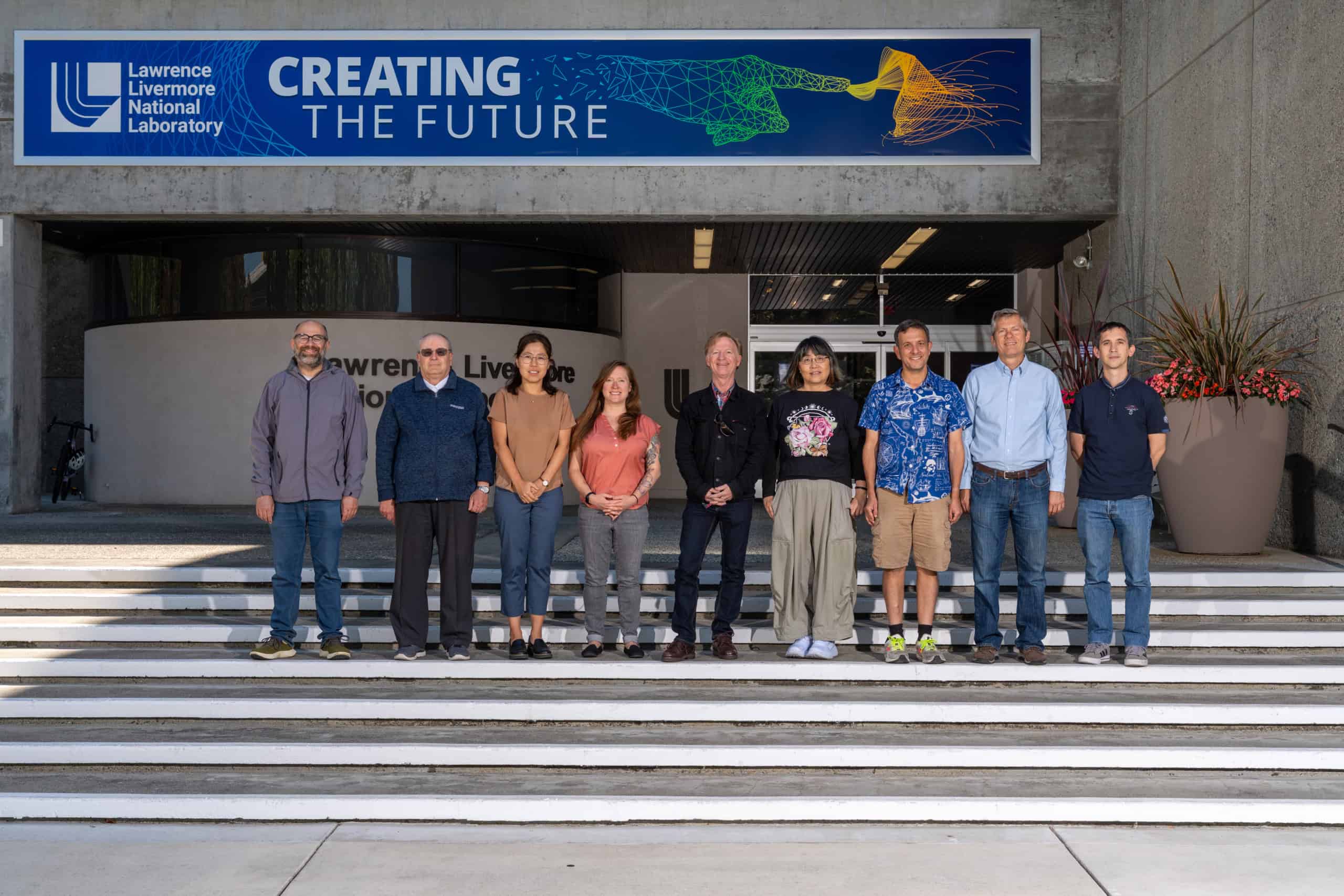
Research group from Lawrence Livermore National Laboratory
Research group from Lawrence Livermore National Laboratory. Left to right: Lorin Benedict, Alexander Landa, Kyoung Eun Kweon, Emily Moore, Per Söderlind, Christine Wu, Nir Goldman, Randolph Hood and Aurelien Perron. Not in image: Babak Sadigh and Lin Yang (Courtesy: Blaise Douros/Lawrence Livermore National Laboratory)

In this work, the researchers present a comprehensive model to predict the thermodynamic behaviour of δ-plutonium, which has a face-centred cubic structure. They use density functional theory, a computational technique that explores the overall electron density of the system and incorporate relativistic effects to capture the behaviour of fast-moving electrons and complex magnetic interactions. The model includes a parameter-free orbital polarization mechanism to account for orbital-orbital interactions, and incorporates anharmonic lattice vibrations and magnetic fluctuations, both transverse and longitudinal modes, driven by temperature-induced excitations. Importantly, it is shown that negative thermal expansion results from magnetic fluctuations.

This is the first model to integrate electronic effects, magnetic fluctuations, and lattice vibrations into a cohesive framework that aligns with experimental observations and semi-empirical models such as CALPHAD. It also accounts for fluctuating states beyond the ground state and explains how gallium composition influences thermal expansion. Additionally, the model captures the positive thermal expansion behaviour of the high-temperature epsilon phase, offering new insight into plutonium’s complex thermodynamics.

Read the full article

First principles free energy model with dynamic magnetism for δ-plutonium

Per Söderlind et al 2025 Rep. Prog. Phys. 88 078001

Do you want to learn more about this topic?

Pu 5f population: the case for n = 5.0 J G Tobin and M F Beaux II (2025)

The post 5f electrons and the mystery of δ-plutonium appeared first on Physics World.

  •  

Scientists explain why ‘seeding’ clouds with silver iodide is so efficient

Silver iodide crystals have long been used to “seed” clouds and trigger precipitation, but scientists have never been entirely sure why the material works so well for that purpose. Researchers at TU Wien in Austria are now a step closer to solving the mystery thanks to a new study that characterized surfaces of the material in atomic-scale detail.

“Silver iodide has been used in atmospheric weather modification programs around the world for several decades,” explains Jan Balajka from TU Wien’s Institute of Applied Physics, who led this research. “In fact, it was chosen for this purpose as far back as the 1940s because of its atomic crystal structure, which is nearly identical to that of ice – it has the same hexagonal symmetry and very similar distances between atoms in its lattice structure.”

The basic idea, Balajka continues, originated with the 20th-century American atmospheric scientist Bernard Vonnegut, who suggested in 1947 that introducing small silver iodide (AgI) crystals into a cloud could provide nuclei for ice to grow on. But while Vonnegut’s proposal worked (and helped to inspire his brother Kurt’s novel Cat’s Cradle), this simple picture is not entirely accurate. The stumbling block is that nucleation occurs at the surface of a crystal, not inside it, and the atomic structure of an AgI surface differs significantly from its interior.

A task that surface science has solved

To investigate further, Balajka and colleagues used high-resolution atomic force microscopy (AFM) and advanced computer simulations to study the atomic structure of 2‒3 nm diameter AgI crystals when they are broken into two pieces. The team’s measurements revealed that the surfaces of both freshly cleaved structures differed from those found inside the crystal.

More specifically, team member Johanna Hütner, who performed the experiments, explains that when an AgI crystal is cleaved, the silver atoms end up on one side while the iodine atoms appear on the other. This has implications for ice growth, because while the silver side maintains a hexagonal arrangement that provides an ideal template for the growth of ice layers, the iodine side reconstructs into a rectangular pattern that no longer lattice-matches the hexagonal symmetry of ice crystals. The iodine side is therefore incompatible with the epitaxial growth of hexagonal ice.

“Our works solves this decades-long controversy of the surface vs bulk structure of AgI, and shows that structural compatibility does matter,” Balajka says.

Difficult experiments

According to Balajka, the team’s experiments were far from easy. Many experimental methods for studying the structure and properties of material surfaces are based on interactions with charged particles such as electrons or ions, but AgI is an electrical insulator, which “excludes most of the tools available,” he explains. Using AFM enabled them to overcome this problem, he adds, because this technique detects interatomic forces between a sharp tip and the surface and does not require a conductive sample.

Another problem is that AgI is photosensitive and decomposes when exposed to visible light. While this property is useful in other contexts – AgI was a common ingredient in early photographic plates – it created complications for the TU Wien team. “Conventional AFM setups make use of optical laser detection to map the topography of a sample,” Balajka notes.

To avoid destroying their sample while studying it, the researchers therefore had to use a non-contact AFM based on a piezoelectric sensor that detects electrical signals and does not require optical readout. They also adapted their setup to operate in near-darkness, using only red light while manipulating the Ag to ensure that stray light did not degrade the samples.

The computational modelling part of the work introduced yet another hurdle to overcome. “Both Ag and I are atoms with a high number of electrons in their electron shells and are thus highly polarizable,” Balajka explains. “The interaction between such atoms cannot be accurately described by standard computational modelling methods such as density functional theory (DFT), so we had to employ highly accurate random-phase approximation (RPA) calculations to obtain reliable results.”

Highly controlled conditions

The researchers acknowledge that their study, which is detailed in Science Advances, was conducted under highly controlled conditions – ultrahigh vacuum, low pressure and temperature and a dark environment – that are very different from those that prevail inside real clouds. “The next logical step for us is therefore to confirm whether our findings hold under more representative conditions,” Balajka says. “We would like to find out whether the structure of AgI surfaces is the same in air and water, and if not, why.”

The researchers would also like to better understand the atomic arrangement of the rectangular reconstruction of the iodine surface. “This would complete the picture for the use of AgI in ice nucleation, as well as our understanding of AgI as a material overall,” Balajka says.

The post Scientists explain why ‘seeding’ clouds with silver iodide is so efficient appeared first on Physics World.

  •  

Slow spectroscopy sheds light on photodegradation

Using a novel spectroscopy technique, physicists in Japan have revealed how organic materials accumulate electrical charge through long-term illumination by sunlight – leading to material degradation. Ryota Kabe and colleagues at the Okinawa Institute of Science and Technology have shown how charge separation occurs gradually via a rare multi-photon ionization process, offering new insights into how plastics and organic semiconductors degrade in sunlight.

In a typical organic solar cell, an electron-donating material is interfaced with an electron acceptor. When the donor absorbs a photon, one of its electrons may jump across the interface, creating a bound electron-hole pair which may eventually dissociate – creating two free charges from which useful electrical work can be extracted.

Although such an interface vastly boosts the efficiency of this process, it is not necessary for charge separation to occur when an electron donor is illuminated. “Even single-component materials can generate tiny amounts of charge via multiphoton ionization,” Kabe explains. “However, experimental evidence has been scarce due to the extremely low probability of this process.”

To trigger charge separation in this way, an electron needs to absorb one or more additional photons while in its excited state. Since the vast majority of electrons fall back into their ground states before this can happen, the spectroscopic signature of this charge separation is very weak. This makes it incredibly difficult to detect using conventional spectroscopy techniques, which can generally only make observations over timescales of up to a few milliseconds.

The opposite approach

“While weak multiphoton pathways are easily buried under much stronger excited-state signals, we took the opposite approach in our work,” Kabe describes. “We excited samples for long durations and searched for traces of accumulated charges in the slow emission decay.”

Key to this approach was an electron donor called NPD. This organic material has a relatively long triplet lifetime, where an excited electron is prevented from transitioning back to its ground state. As a result, these molecules emit phosphorescence over relatively long timescales.

In addition, Kabe’s team dispersed their NPD samples into different host materials with carefully selected energy levels. In one medium, the energies of both the highest-occupied and lowest-unoccupied molecular orbitals lay below NPD’s corresponding levels, so that the host material acted as an electron acceptor. As a result, charge transfer occurred in the same way as it would across a typical donor-acceptor interface.

Yet in another medium, the host’s lowest-unoccupied orbital lay above NPD’s – blocking charge transfer, and allowing triplet states to accumulate instead. In this case, the only way for charge separation to occur was through multi-photon ionization.

Slow emission decay analysis

Since NPD’s long triplet lifetime allowed its electrons to be excited gradually over an extended period of illumination, its weak charge accumulation became detectable through slow emission decay analysis. In contrast, more conventional methods involve multiple, ultra-fast laser pulses, severely restricting the timescale over which measurements can be made. Altogether, this approach enabled the team to clearly distinguish between the two charge generation pathways.

“Using this method, we confirmed that charge generation occurred via resonance-enhanced multiphoton ionization mediated by long-lived triplet states, even in single-component organic materials,” Kabe describes.

This result offers insights into how plastics and organic semiconductors are degraded by sunlight over years or decades. The conventional explanation is that sunlight generates free radicals. These are molecules that lose an electron through ionization, leaving behind an unpaired electron which readily reacts with other molecules in the surrounding environment. Since photodegradation unfolds over such a long timescale, researchers could not observe this charge generation in single-component organic materials – until now.

“The method will be useful for analysing charge behaviour in organic semiconductor devices and for understanding long-term processes such as photodegradation that occur gradually under continuous light exposure,” Kabe says.

The research is described in Science Advances.

The post Slow spectroscopy sheds light on photodegradation appeared first on Physics World.

  •  

SCHOTT launches high-performance cover glass for next-generation space solar cells

schott logo square

– SCHOTT® Solar Glass exos provides enhanced radiation resistance and optical performance for simple silicon cells up to III-V multijunction satellite solar cells.– Jointly developed with Heilbronn-based AZUR SPACE Solar […]

The post SCHOTT launches high-performance cover glass for next-generation space solar cells appeared first on SpaceNews.

  •