↩ Accueil

Vue lecture

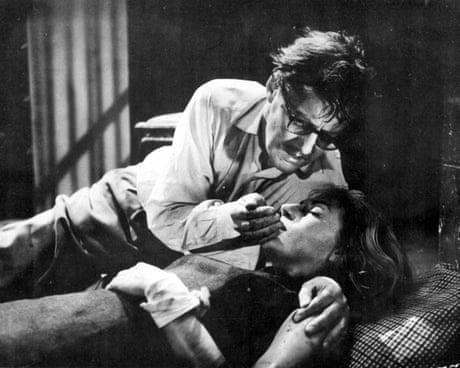
Strongroom review – tough locked-vault thriller is outstanding British 60s crime picture

A gang of bank robbers return to the scene of their crime to free the two employees they imprisoned in a vault in this suspenseful British thriller from 1962

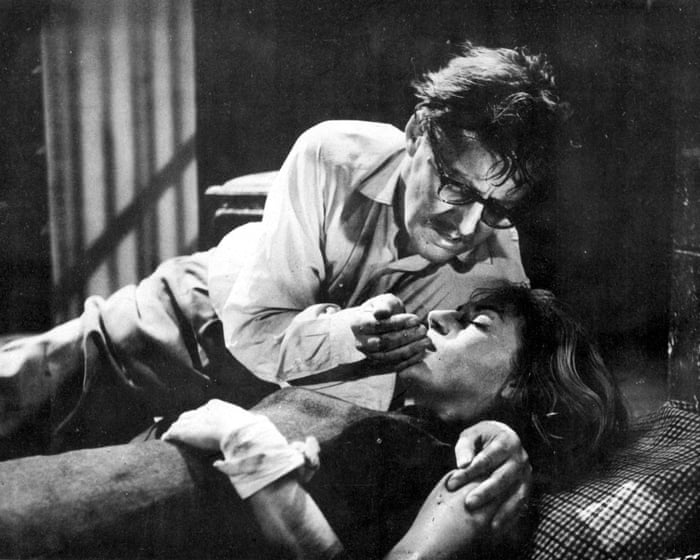
Vernon Sewell’s outstanding British crime picture from 1962, co-scripted by veteran screenwriter Richard Harris, is now re-released. It is a taut, tough suspense thriller in black-and-white, leading to a sensationally grim final shot. It is in fact a B-movie, one of the support features that once made up a complete evening’s entertainment: a cheap’n’cheerful genre which, though often awful, sometimes liberated talented people to create terrific, unheralded work, and whose importance to film history has been valuably elucidated by critic Matthew Sweet. A character in this film in fact, about to go out to the cinema, talks about the importance of seeing the full programme.

Griff (played by Derren Nesbitt) leads a trio of robbers who raid a suburban bank just as it is about to shut up shop for the bank holiday weekend. In a horribly cynical touch, Griff poses as a postman to gain entrance using his dead father’s old uniform. Having manhandled the straitlaced manager Mr Spencer (Colin Gordon) and his demure secretary Miss Taylor (Ann Lynn) down into the basement to get them to open up the strongroom with all the cash, they lock the two employees in there and make their getaway.

Continue reading...
© Photograph: THEATRECRAFT/RGR Collection/Alamy
© Photograph: THEATRECRAFT/RGR Collection/Alamy
© Photograph: THEATRECRAFT/RGR Collection/Alamy
  •  

Bafta has caught the zeitgeist with One Battle After Another, but let’s hear it for The Ballad of Wallis Island

Paul Thomas Anderson’s antifa parable is queasily relevant to the times, but here’s hoping Tim Key and co can get some reward for their brilliant British film

Combat intensifies as One Battle After Another takes 14 Bafta nominations
Bafta film awards 2026: full list of nominations

The Bafta nominations list underscores the enormous award-season love being felt for Ryan Coogler’s Sinners, his subversive vampire riff on America’s black experience – though it isn’t making history in quite the same way as it is at the Oscars, having 13 Bafta nominations, one behind Paul Thomas Anderson’s league-leader One Battle After Another with 14.

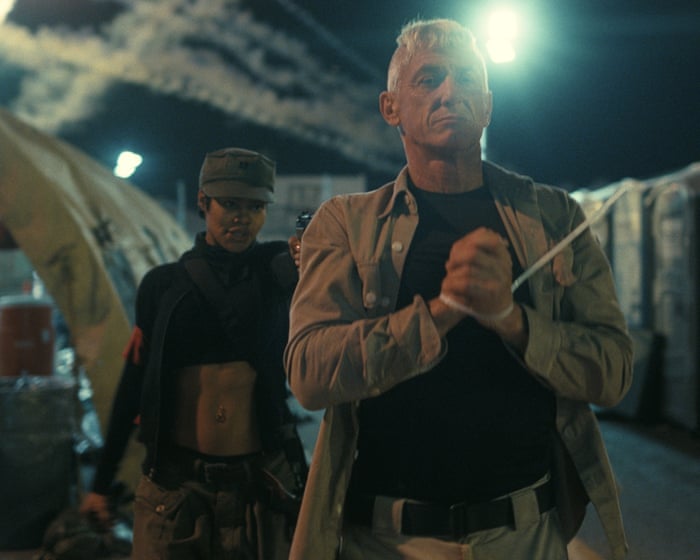
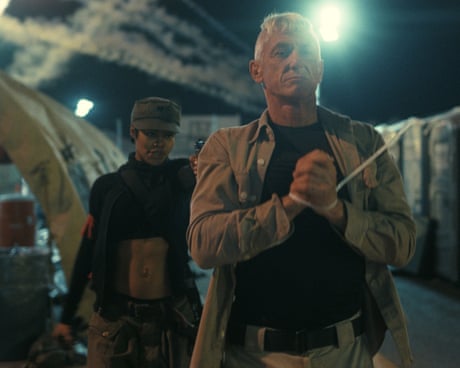
The awards-season prominence of Anderson’s epic antifa parable, inspired by the Thomas Pynchon novel Vineland, with Leonardo DiCaprio as a dishevelled, clueless ex-revolutionary facing off against Sean Penn’s brutal honcho Colonel Lockjaw, is happening at a queasily appropriate zeitgeist moment. The grotesquely trigger-happy immigration officers of ICE are shooting people dead on US streets and this ugly fiasco is giving us a horribly familiar-looking new figure.

Continue reading...

© Photograph: Courtesy Warner Bros. Pictures

© Photograph: Courtesy Warner Bros. Pictures

© Photograph: Courtesy Warner Bros. Pictures

  •  

Send Help review – Sam Raimi returns with gore-laced plane-crash survival face-off

Starring Rachel McAdams and Dylan O’Brien, this gets off to a promising start, but the plot twists are derivative and the tacked-on violence descends into exasperating silliness

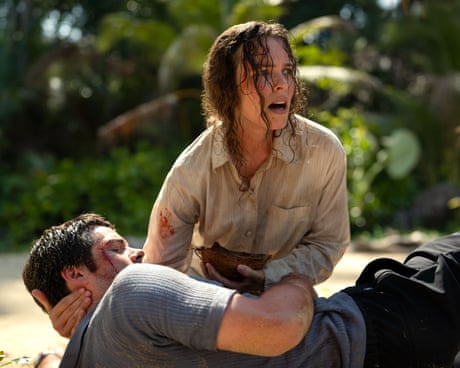
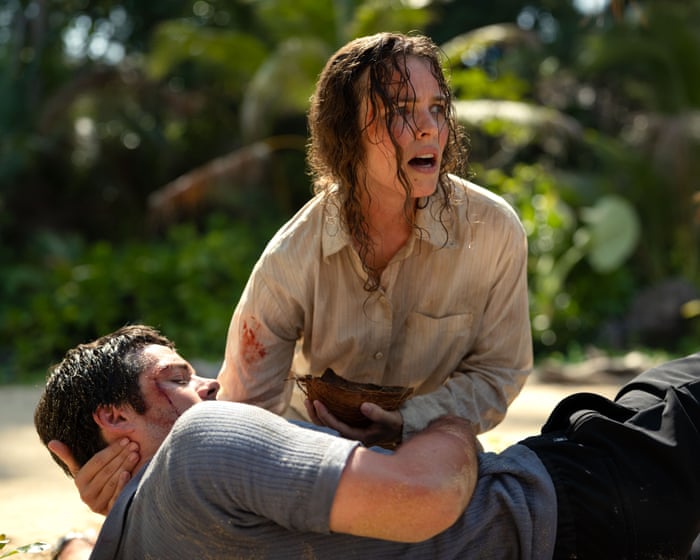
Sam Raimi is back with this violent black comedy scripted by Damian Shannon and Mark Swift, set on a desert island where two plane-wreck survivors are facing off. It’s a movie whose entertaining initial premise and shrewd satire are finally damaged by Raimi’s need to juice everything up with spurious “horror” flourishes for the fanbase, on-brand gore eruptions that aren’t really scary and undermine the film’s believability, turning everything into silliness. The poster and promotional materials promise a “horror” film, but that isn’t really what this is. But what is it? Well, it’s a desert island parable that owes something to JM Barrie’s The Admirable Crichton and to … how to say it? … other dramas. No spoilers, but Raimi appearing to borrow from a recent Cannes Palme d’Or winner was not, as they say, on my bingo card.

Rachel McAdams plays nerdy Linda Liddle, a single woman living alone with a caged bird. She’s devoted to her job. She is an extremely smart researcher in a corporation, but is passed over for promotion by the charmless misogynists running the firm: useless, untalented males in Patrick Bateman suits who depend on her work. Chief among these odious sexists is new CEO Bradley Preston, played by Dylan O’Brien, a vacuous smoothie and nepo princeling whose late father, the company founder, valued Linda enough to promise her a VP position – a promise on which the hateful Bradley now smugly reneges.

Continue reading...

© Photograph: Brook Rushton

© Photograph: Brook Rushton

© Photograph: Brook Rushton

  •  

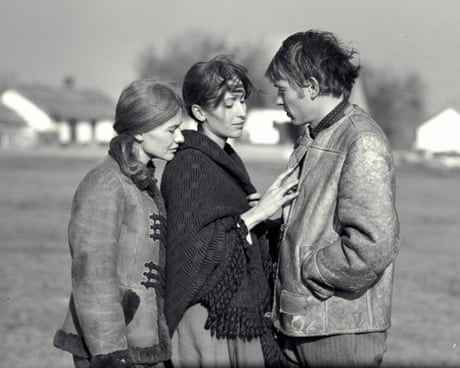
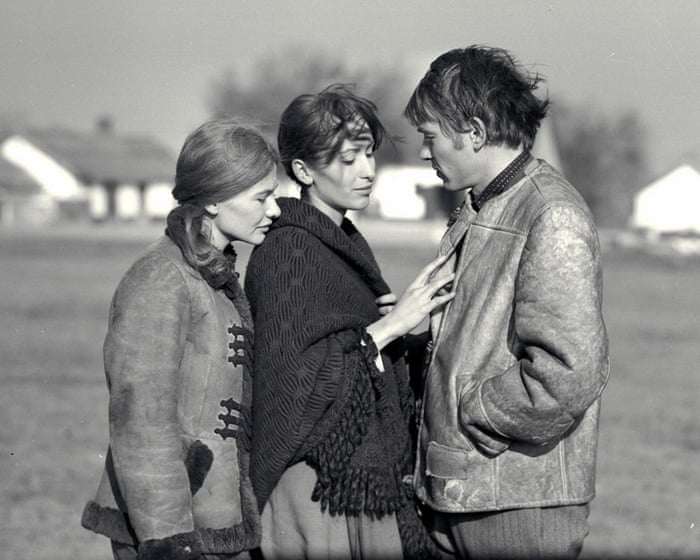
Silence and Cry review – deeply strange 1960s erotic ballet meditating on Hungary’s history and politics

Director Miklós Jancsó creates a bizarre psychodrama set after the fall of the 1919 Hungarian Soviet republic, encompassing postwar trauma and erotic overtones

Miklós Jancsó’s mysterious film from 1968 is a deeply strange somnambulist ballet. It shows a piece of Hungary’s political history implicitly juxtaposed with the postwar Soviet present, in which Czechoslovakia and Hungary have been crushed. The brutality of the anti-Communist powers of 1919 depicted in the film would have been an officially acceptable subject, but the indictment of brutality is clearly transferable. And it is an impenetrable psychological trauma with weird erotic overtones, like an absurdist bad dream transcribed by Kafka.

The scene is the vast Hungarian plain, with a desolate wind always blowing, on which the characters perform their roles as if on a gigantic stage; it is a single unitary space which appears to extend, Sahara-like, to the far horizon in all directions. People do not quite enter and exit in the conventional fashion, but rather can often be seen gradually arriving from an impossibly long way away, and leave by progressively dwindling to a vanishingly small dot in the distance. Jancsó’s distinctively sinuous camerawork glides and swoops elegantly around the action in a series of long unbroken takes.

Continue reading...

© Photograph: PR

© Photograph: PR

© Photograph: PR

  •  
❌