 Connexion
Protecting one of the Europe’s last wild rivers: a volunteering trip to the Vjosa in Albania

Now a ‘wild river national park’, the Vjosa needs more trees to be planted to preserve its fragile ecosystem. And visitors are being asked to help …
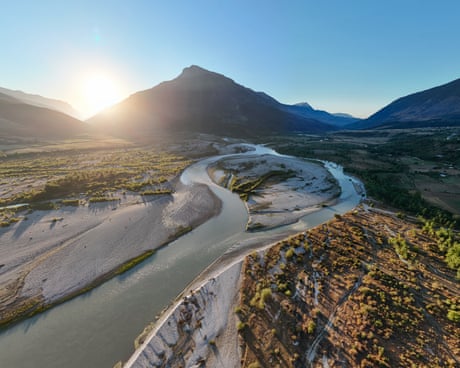
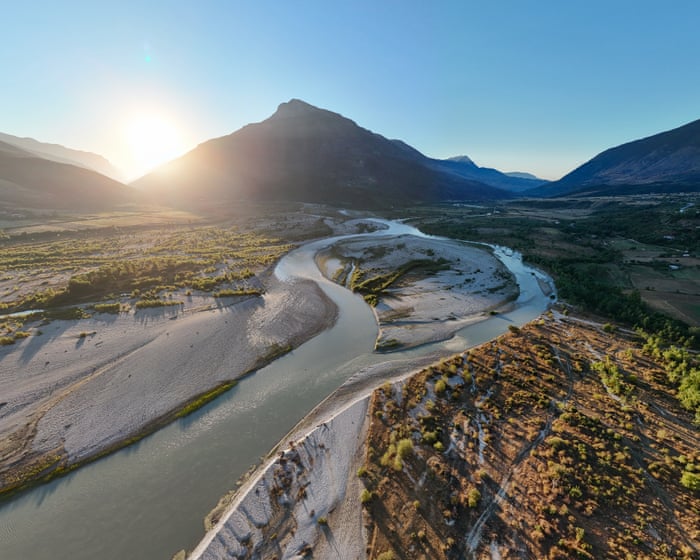
Our induction into tree-planting comes from Pietro, an Italian hydromorphologist charged with overseeing our group of 20 or so volunteers for the week. We’re standing in a makeshift nursery full of spindly willow and poplar saplings just above the Vjosa River, a graceful, meandering waterway that cuts east to west across southern Albania from its source 169 miles away upstream in Greece.
Expertly extricating an infant willow from the clay-rich soil, Pietro holds up the plant for us all to see. Its earthy tendrils look oddly exposed and vulnerable. “The trick is not to accidentally snick the stem or break the roots,” he says. Message registered, we take up our hoes and head off in pairs to follow his instructions.
The volunteering week is the brainchild of EcoAlbania and the Austria-based Riverwatch. Back in 2023, these two conservation charities succeeded in persuading the Albanian government to designate the River Vjosa as Europe’s first “wild river national park”. It was a timely intervention. According to new research co-funded by Riverwatch, Albania has lost 711 miles (1,144km) of “nearly natural” river stretches since 2018 – more, proportionally, than any country in the Balkans. Now, the question facing both organisations is: what next?
On our first evening, Riverwatch’s chief executive, Ulrich (“Uli”) Eichelmann, gives a presentation setting out his answer. But before he does, we have a dinner of lamb and homegrown vegetables to work through. The traditional spread is a speciality of the Lord Byron guesthouse in Tepelenë, a small town in the heart of the Vjosa valley and home to EcoAlbania’s field office – our base for the week.
© Photograph: Joshua Lim
© Photograph: Joshua Lim
© Photograph: Joshua Lim
