Connexion
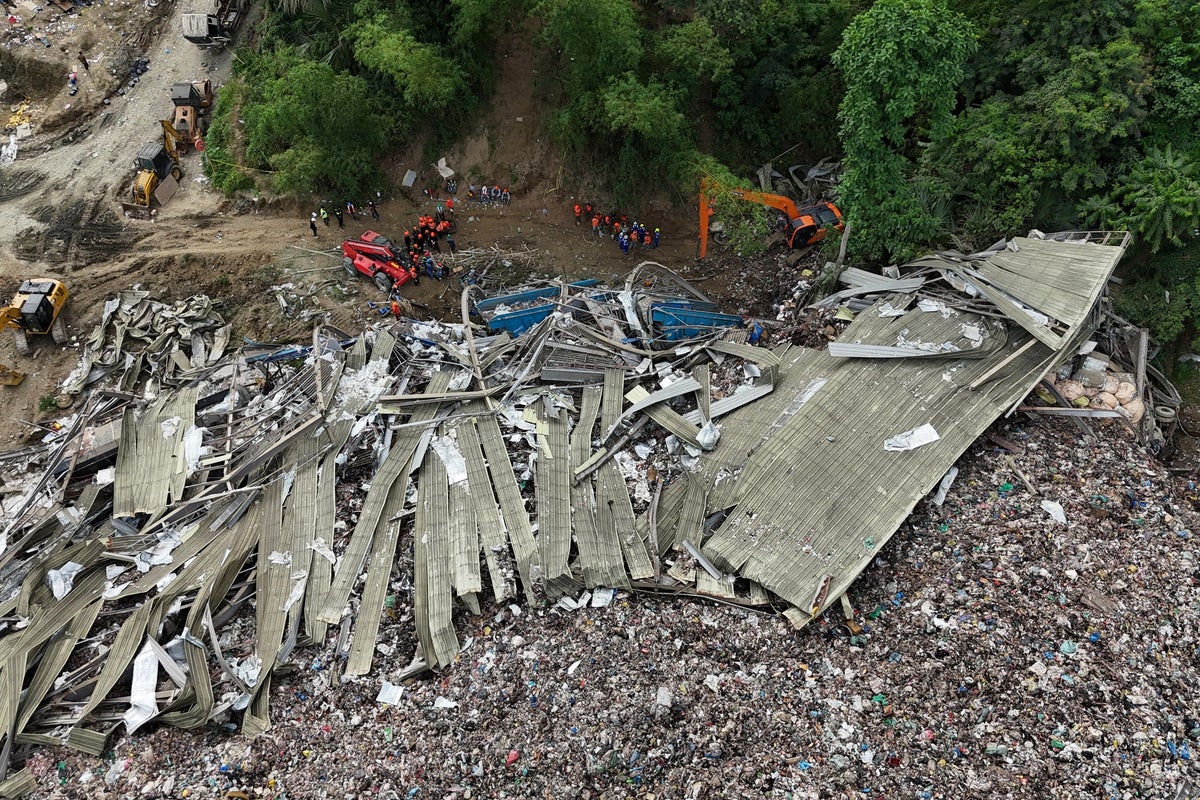
Philippine city ends recovery work after deadly landfill collapse kills 36

Authorities move to investigate safety failures as waste services remain disrupted after disaster in Cebu
© AP
Authorities move to investigate safety failures as waste services remain disrupted after disaster in Cebu
© AP
Rahman says while he had not faced overt discrimination early in his career, there have been changes in the last eight years

© Getty
Senegal were led off the field by head coach Pape Thiaw after hosts Morocco were awarded a controversial late penalty

© AP
‘I like creating artwork that brings people together,’ says artist Luke Jerram

© Ben Birchall/PA Wire


Sylvester Stallone shared rare footage of himself inside his home gym as the star confessed working out is getting “harder and harder”.

© Sylvester Stallone


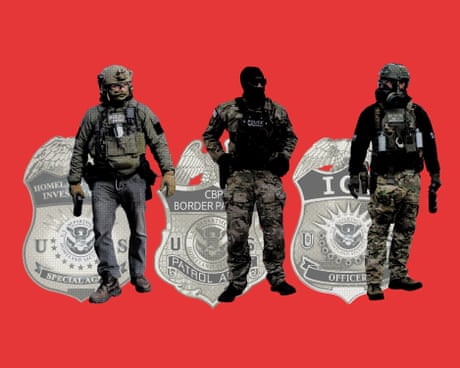
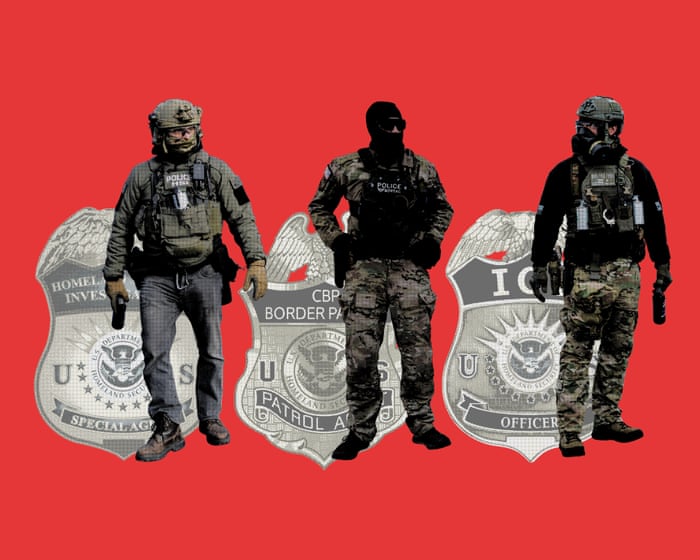
These are the federal agencies detaining people across the US – mostly, but not all, under the umbrella of the Department of Homeland Security
When the Trump administration ordered a surge of armed federal immigration enforcement personnel on to the streets of Minneapolis, the Department of Homeland Security declared it the largest operation in its history and the liberal midwestern city became Donald Trump’s latest chosen hotspot.
Such escalations mark the US president’s agenda of mass arrests and deportations from the US interior. The highest-profile efforts involve officers from multiple agencies rushing to prominent Democratic-led US cities, against local leaders’ wishes. But coast to coast, federal officers have been raiding homes, businesses, commercial parking lots – even schools, hospitals and courthouses. The efforts have delighted the president’s hardcore Make America Great Again voter base, but are also tearing families apart and spreading fear and even death on the streets and in detention.
Continue reading...
© Illustration: Photos via UCG Credit/Universal Images Group/Getty Images, Scott Olson/Getty Images, Octavio Jones/AFP/Getty Images/Guardian Design
© Illustration: Photos via UCG Credit/Universal Images Group/Getty Images, Scott Olson/Getty Images, Octavio Jones/AFP/Getty Images/Guardian Design
© Illustration: Photos via UCG Credit/Universal Images Group/Getty Images, Scott Olson/Getty Images, Octavio Jones/AFP/Getty Images/Guardian Design
Martin Luther King Jr knew that ‘whatever affects one directly affects all indirectly’. But we Americans are denying that reality
The United States seems determined to turn its back on the rest of our planetary neighbors. The Trump administration’s recent decision to withdraw from 66 international treaties, conventions and organizations is striking for the range of its rejections. Everything from the global treaty on climate change to multilateral efforts to address migration and cultural heritage, clean water and renewable energy, and the international trade in timber and minerals has been summarily dismissed as “contrary to the interests of the United States”.
It’s no surprise that an administration hellbent on physical walls around the United States would also put up such walls of indifference, as if all of these longstanding collective efforts were simply “irrelevant” to our interests as a country, as the US secretary of state, Marco Rubio, put it in a public statement. And yet, as we know, the reality of contemporary life on Earth is so profoundly otherwise. How has the truth of our interconnectedness with others elsewhere become so difficult to grasp in the United States?
Continue reading...
© Photograph: Fotosearch/Getty Images

© Photograph: Fotosearch/Getty Images

© Photograph: Fotosearch/Getty Images
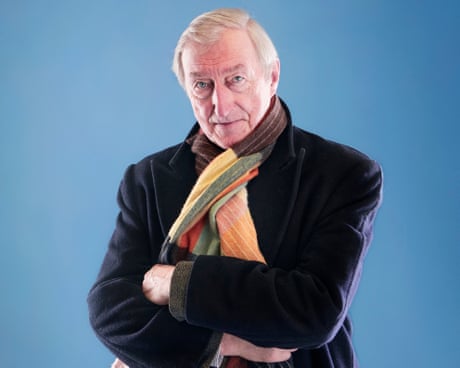
As the Booker prize-winning author prepares to publish his final novel at 80, we assess his finest work
Duffy is the first in a series of crime novels about a bisexual private eye that Barnes published under the pseudonym Dan Kavanagh. It came out the same year as Barnes’s debut novel proper, Metroland, but where that took seven years to write, this took 10 days. Not that it shows: this “refreshingly nasty” (as Barnes’s friend Martin Amis put it) crime caper is beguilingly well written, with passages that display all of Barnes’s perception and wit. The plot of reverse blackmail and the shocking climax only add to the fun.
Sample line “Two in the morning is when sounds travel for ever, when a sticky window makes a soft squeak and three Panda cars hear it from miles away.”
© Photograph: Linda Nylind/The Guardian
© Photograph: Linda Nylind/The Guardian

© Photograph: Linda Nylind/The Guardian
People across the US are moving on from the empty platitudes MLK Day often evokes – and embodying King’s words
This year, the Dr Martin Luther King Jr holiday forces Americans to grapple with the crisis and protests that have spread across the country, particularly in Minneapolis. Each year on this holiday, we reflect on King’s life and legacy. We wonder about what he might make of this moment. Though civil rights protesters in the 1950s and 60s were repeatedly met with extreme state violence, Americans are now facing a president who is troublingly more powerful than past figures such as the notorious segregationist and Alabama governor George Wallace.
Militarized and masked federal police forces, abetted by a corrupted justice department, are expansive and employ far more deadly weapons against protesters today. Civil rights leaders often sought federal intervention to combat localized racial violence in the south. But now, local and state officials, along with ordinary citizens who have been galvanized by federal violence, are combating government crackdowns against immigrants and their neighbors. Over the span of a week, ICE agents killed an American wife and mother of three, Renee Good, and shot a man from Venezuela during a traffic stop. They have arrested and detained American citizens and have terrorized neighborhoods, businesses and schools. Their irrational, unprofessional and unconstitutional actions have caused chaos, panic and harm throughout American cities. This is far from the progress King dreamed of, and he used his last years to warn Americans to refuse comfort, the status quo, and bring oppression to an end.
Continue reading...
© Composite: Getty Images

© Composite: Getty Images

© Composite: Getty Images
Fear, abuse and eroding rights for trans people have created a hostile environment in the US – can they claim asylum in the Netherlands?
Ter Apel, a small, unassuming Dutch town near the German border, is a place tourists rarely have on their itinerary. There are no lovely old windmills, no cannabis-filled coffee shops and on a recent visit it was far too early for tulip season.
When foreigners end up there, it is for one reason: to claim asylum at the Netherlands’ biggest refugee camp, home to 2,000 desperate people from all around the world.
Continue reading...
© Photograph: Judith Jockel/The Guardian

© Photograph: Judith Jockel/The Guardian

© Photograph: Judith Jockel/The Guardian


© Susana Vera/Reuters
Two of the people responsible for keeping dangerous content off our screens are considering legal action against TikTok - Nicole Wootton-Cane explores their claims of ‘union-busting’ in a culture where employees are ‘pitted against each other’
© Alamy/PA
At least 39 people are dead and more than 150 injured following a train crash in southern Spain

© Reuters
Sanae Takaichi became Japan’s first female premier in October 2025

© JIJI Press

© PA Wire

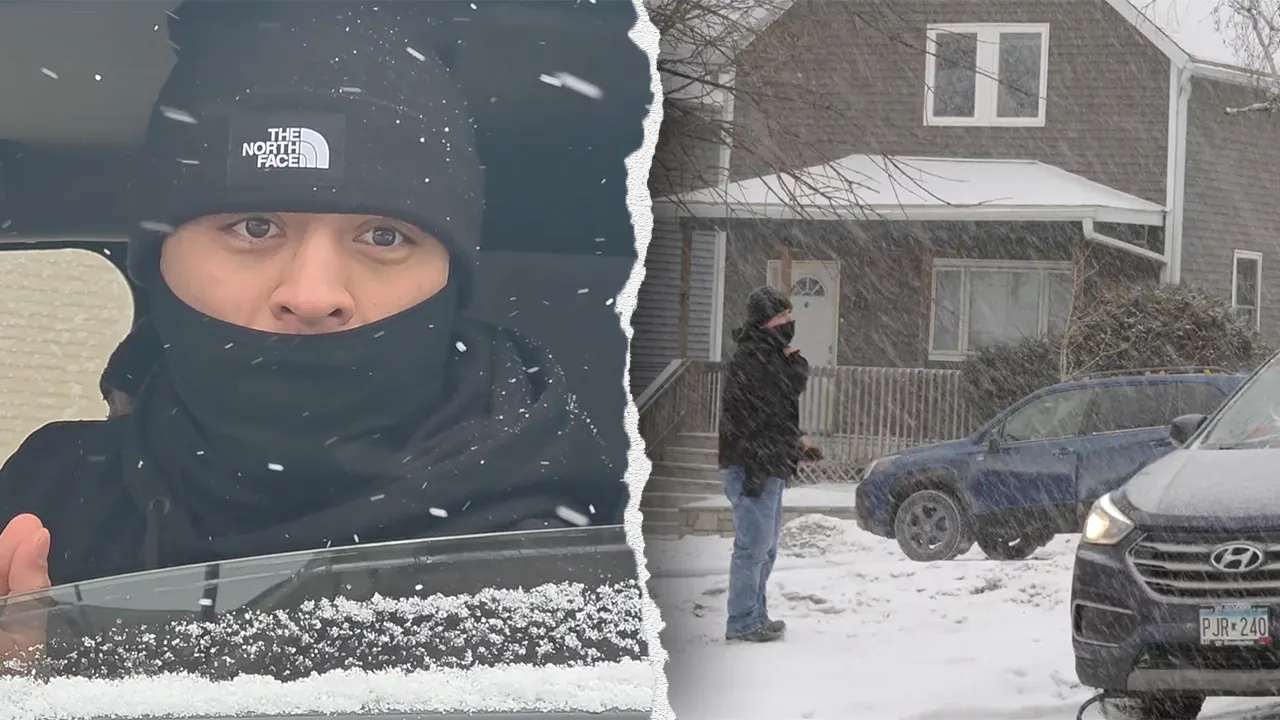
Conservative leader is seeking to take advantage of strong approval ratings to strengthen her hold over the ruling LDP and reinforce her coalition’s narrow majority

© AFP via Getty
Advanced microscopy technique enables scientists to peer into follicles in real time

© AFP via Getty
Trinidad Ramirez urged his daughter to ‘fight’ during the broadcast, begging her to ‘do whatever you can to get away from what you’re in’

© KENS 5
© Copyright 2026 The Associated Press. All rights reserved