↩ Accueil

Vue lecture

FA Cup third round buildup, Wrexham joy, Rosenior’s Chelsea bow and Afcon – matchday live

⚽ All the latest ahead of Saturday’s football action
Ten things to look out for | Fixtures | Mail us

There was supposed to be another match in the FA Cup today between Salford City and Swindon Town but it has been postponed because of a frozen pitch.

Here is a full list of the FA Cup fixtures on Saturday, all times are in GMT:

Macclesfield v Crystal Palace, 12.15pm

Everton v Sunderland, 12.15pm

Wolves v Shrewsbury, 12.15pm

Cheltenham v Leicester City, 12.15pm

Doncaster v Southampton, 3pm

Stoke City v Coventry, 3pm

Sheffield Wednesday v Brentford, 3pm

Newcastle v Bournemouth, 3pm

Fulham v Middlesbrough, 3pm

Ipswich Town v Blackpool, 3pm

Manchester City v Exeter City, 3pm

Burnley v Millwall, 3pm

Boreham Wood v Burton, 3pm

Cambridge United v Birmingham City, 5.45pm

Tottenham v Aston Villa, 5.45pm

Grimsby Town v Weston-super-Mare, 5.45pm

Bristol City v Watford, 5.45pm

Charlton v Chelsea, 8pm

Continue reading...

© Composite: Guardian Design

© Composite: Guardian Design

© Composite: Guardian Design

  •  

Trump may be the beginning of the end for ‘enshittification’ – this is our chance to make tech good again | Cory Doctorow

The US president is weaponising tech, but his tariffs and Brexit provide a surprising opportunity to gain back digital control of our lives

It’s been 25 years since I started working for the Electronic Frontier Foundation, an American nonprofit dedicated to preserving and promoting human rights on the internet. I’ve found myself in dozens of countries working with activists, politicians and civil servants to untangle the complex technical questions raised by the internet, and every one of our discussions ended in the same place. “OK,” they’d say, “you’ve definitely laid out the best way to regulate tech, but we can’t do it.”

Why not? Because – inevitably – the US trade rep had beaten me to every one of those countries and made it eye-wateringly clear that if they regulated tech in a way that favoured their own people, industries and national interests, the US would bury them in tariffs.

Cory Doctorow is a science fiction author, activist and journalist. He is the author of dozens of books, most recently Enshittification: Why Everything Suddenly Got Worse and What To Do About It

Continue reading...

© Illustration: Thomas Pullin/The Guardian

© Illustration: Thomas Pullin/The Guardian

© Illustration: Thomas Pullin/The Guardian

  •  

Ashes 2025-26: our writers’ end-of-series England v Australia awards

Brainless moments, moral victories and tough lessons were abundant during a series that still provided plenty of drama

Player of the series Travis Head was the boxing kangaroo at the top of the Australia order. But this one goes to the other animal on the baggy green crest, Mitchell Starc bounding in like an emu, slicing through England during the live bit, and playing all five to finish with 31 wickets at 19 apiece. Elite.

Continue reading...

© Composite: Guardian Design

© Composite: Guardian Design

© Composite: Guardian Design

  •  

Indonesia blocks Musk’s Grok chatbot due to risk of pornographic content

Move comes after governments and regulators from Europe to Asia have condemned the AI tool and some have opened inquiries into sexualised content

Indonesia temporarily blocked Elon Musk’s Grok chatbot on Saturday due to the risk of AI-generated pornographic content, becoming the first country to deny access to the AI tool.

The move comes after governments, researchers and regulators from Europe to Asia have condemned and some have opened inquiries into sexualised content on the app.

Continue reading...

© Photograph: Anna Barclay/Getty Images

© Photograph: Anna Barclay/Getty Images

© Photograph: Anna Barclay/Getty Images

  •  

Nicaraguan authorities arrests dozens for reportedly supporting Maduro capture

Human rights groups say ‘at least 60 arbitrary arrests’ have occurred for celebrating the US military operation

Authorities in Nicaragua have arrested at least 60 people for reportedly celebrating or expressing support for the capture of Venezuelan president Nicolás Maduro, a human rights watchdog group and local media outlets said Friday.

Nicaraguan president Daniel Ortega and his wife, vice president Rosario Murillo, are staunch allies of Maduro, who was captured by US military personnel in Caracas last Saturday and taken to New York to face trial on drug and weapons charges.

Continue reading...

© Photograph: Jairo Cajina/Nicaraguan Presidency/AFP/Getty Images

© Photograph: Jairo Cajina/Nicaraguan Presidency/AFP/Getty Images

© Photograph: Jairo Cajina/Nicaraguan Presidency/AFP/Getty Images

  •  

Heated Rivalry: this queer Canadian hockey romp is so hot it threatens to scorch the ice it skates on

Ravishing actors, charged glances, buttocks like pneumatic hams … this is one steamy love story. But it’s far more than just a porny sport-based bodice-ripper

I was surprised to learn that ice hockey romance is a genre, a popular one. Surprising, but it makes sense. Love in a cold setting has a fairytale quality. It’s why the great Russian romances endure, though they aren’t relatable. Most of us don’t sit by windows, waiting for a horse to bring word that our cousin has survived the winter in Smolensk. Perhaps it’s time for a modern Doctor Zhivago? Enter Heated Rivalry (Saturday 10 January, 9pm, Sky Atlantic), a Canadian queer romp so hot it threatens to scorch the ice it skates upon.

Shane Hollander and Ilya Rozanov are star players from Montreal and Moscow respectively, mysteriously drawn to each other on the rink, in the full glare of the media. Well, not that mysteriously. The co-leads get down to business almost immediately, with a not-quite meet cute in a shower room. Every episode thereafter features charged glances, sweaty necks and muscular pumping. Even the camera feels as if it’s in lust, gliding over 8%-fat sports star bodies and the glass walls of luxury flats. It’s an audacious feat, making ice hockey sexy. Those padded uniforms usually make wearers resemble the Thing from The Fantastic Four.

Continue reading...

© Photograph: Sphere Abacus/Sky

© Photograph: Sphere Abacus/Sky

© Photograph: Sphere Abacus/Sky

  •  

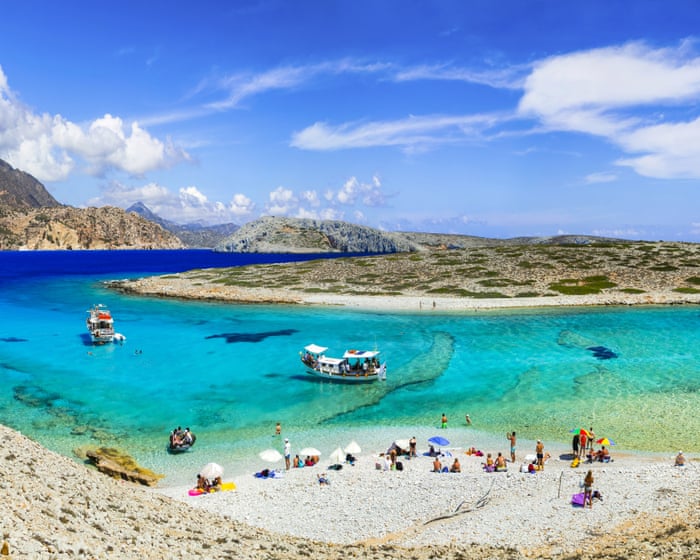
50 inspiring travel ideas for 2026, chosen by readers: beaches, city breaks, family holidays and more

Our popular readers’ tips column has been running for 20 years. We’ve selected some highlights from the past 12 months to help you plan your 2026 adventures
Enter this week’s competition, on life-changing holidays

Continue reading...

© Photograph: leoks/Shutterstock

© Photograph: leoks/Shutterstock

© Photograph: leoks/Shutterstock

  •  

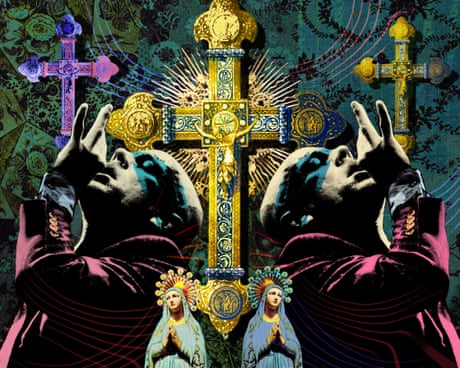
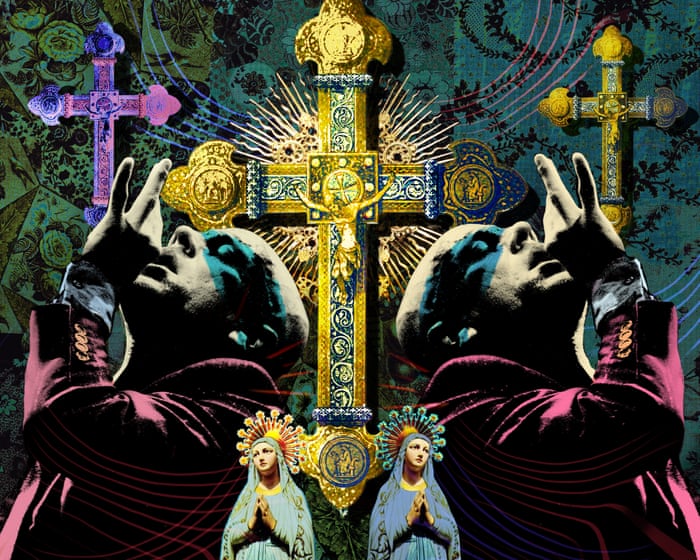
My cultural awakening: Losing My Religion by REM helped me escape a doomsday cult

I had been a member of the Children of God for two decades, but was growing disillusioned with its controlling behaviour and increasingly worrying sexual practices. Then I heard Michael Stipe’s lyrics and was set on a path to freedom

In 1991, I was living in a commune with 200 other people in Japan, as a member of a cult called the Children of God, which preached that the world was going to end in 1993. Everything I did – from where I slept each night, to who I was allowed to sleep with – was decided by the head of my commune. I was encouraged to keep a diary, and then turn it over to the leaders every night, so they could comb through it for signs of dissent. I was only allowed to listen to cult-sanctioned music, and I was only allowed to watch movies with happy endings, because those were the types of films of which the cult’s supreme leader – David Berg – approved. The Sound of Music was one of Berg’s favourite films, so we watched it on repeat.

By the time I was living in Japan, I was in my mid-30s, and I’d been part of the cult for 20 years. I was indoctrinated by a young hippy couple when I was 16, and persuaded to run away from my family and join a sect of the cult near my home town in Canada. I was a lonely teenager and desperately searching for some kind of meaning. Everybody I knew worked in the lumber mill in my small town, and the thought that I was doomed to live that life scared the hell out of me. The first time I visited the commune, everyone hugged me when I walked in, just to say “hello”. It was intoxicating.

But by 1991, after two decades in the cult, my faith was weakening. It was becoming clearer to me that Berg was wrong about the world ending in 1993. A whole series of events that were meant to directly precede the Second Coming hadn’t happened, and Berg – who lived in secrecy and communicated with his followers by written “prophecies” – kept issuing increasingly unconvincing excuses.

I was also becoming more resistant to the way the cult leaders sought to control the most intimate parts of my life. When I joined the cult, it was very sexually conservative. If you wanted to date another member of the community, you had to ask for permission from the leadership. But as the years went by, Berg started preaching a doctrine of sexual freedom, and ordering his members to couple-swap. I had got married to another cult member in the 1980s, and was living with her in a Children of God commune in Japan. Because I resisted couple-swapping I was forcibly separated from my wife as a punishment – and ordered to live in a different commune on my own.

There was also an even darker side to the Children of God that I was trying to shut my eyes to. Berg had released a written decree which permitted adult cult members to have sex with children. I never witnessed any sexual contact with children, and while I did read that decree when it was released in the 1980s, I refused to accept it. Still, it horrified me.

Forcibly separated from my wife, and with Berg’s teachings becoming more twisted, I was in a state of spiritual turmoil. But it was only when I heard REM’s song Losing My Religion that I was pushed to action. Cult members were allowed to own Walkmans, because the Children of God released their own music on cassette, but we were forbidden from listening to “worldly” music. As my will to blindly obey crumbled, I began to secretly tune in to the American armed forces radio station that broadcast in Japan. (Technically, I’d always had the power to covertly listen to music this way, but it’s a sign of how indoctrinated I was that I had never allowed myself to do so before.) One day, Losing My Religion came on, and I remember hearing it for the first time and freezing. I physically stopped walking.

Continue reading...

© Illustration: Martin O'Neill/The Guardian

© Illustration: Martin O'Neill/The Guardian

© Illustration: Martin O'Neill/The Guardian

  •  

What links Billie Eilish and George Gershwin? The Saturday quiz

From Barclays, Cadbury and Clarks to Nith and Wampool, test your knowledge with the Saturday quiz

1 What identically named comic strips debuted in the US and UK in March 1951?
2 Which pharaoh was known by later Egyptians as the Great Ancestor?
3 Which Spanish-language singer is the world’s most-streamed artist?
4 Which big cat has the widest geographical distribution?
5 Who was the first woman to train a Grand National winner?
6 What element has the lowest boiling point?
7 Which artist has museums in Pittsburgh and Slovakia?
8 Which country has more than 9m abandoned homes?
What links:
9
Billie Eilish; George Gershwin; Barry Gibb; Robert Sherman?
10 Annan; Dee; Eden; Esk; Kirtle Water; Nith; Wampool?
11 Lord Kitchener and Mighty Sparrow; nymph of Ogygia; Jacques Cousteau’s ship?
12 Elgin City; Juventus; Marseille; Swindon Town?
13 Barclays; Cadbury; Clarks; Fry’s; Lloyds; Rowntree’s?
14 Rose; tree; bird; arrow; globe; poppy?
15 Nicola Adams; Mel B; Alan Bennett; Erling Haaland; Gabby Logan; Marco Pierre White?

Continue reading...

© Photograph: Allen J Schaben/Los Angeles Times/Getty Images

© Photograph: Allen J Schaben/Los Angeles Times/Getty Images

© Photograph: Allen J Schaben/Los Angeles Times/Getty Images

  •  

What does your car say about you? A global portrait of people and their rides, from Shanghai to Santa Monica

You can tell a lot about someone from the vehicle they drive, as Martin Roemers’ collection of photographs show. Introduction by author William Boyd

In my novels I find that I very rarely write “a car” or “a van” or “a lorry” – I always tend to specify the marque and the model, often with some pedantic precision. Why should this be so? After all, I am a non-driver, someone who claims to be able to drive (I did learn), but who never passed his driving test. And yet, paradoxically, I’m something of a car enthusiast – a sort-of petrol-head, I confess – perhaps a consequence of spending many hours, or maybe that should be years,  in the back of minicabs that conveyed me here and there around London. In my long experience of minicab use I’ve found that most conversations with minicab drivers often end up being about cars. I’ve learned a lot.

There is another reason why I like to specify. I have a conviction that the type of car, or vehicle, that you drive is as much an expression of your personality as the clothes you wear or the decor of the home you call your own. Even the blandest of mid-price cars – the Toyota Prius, the Kia Picanto, the Volkswagen Jetta, for example – are making a covert statement about you, the owner. You chose that car – and your choice is surprisingly eloquent.

Continue reading...

© Photograph: Martin Roemers/Martin Roemers/ Panos Pictures

© Photograph: Martin Roemers/Martin Roemers/ Panos Pictures

© Photograph: Martin Roemers/Martin Roemers/ Panos Pictures

  •  

‘The whole world can think whatever they want’ – Naseem Hamed on boxing, racism and his greatest regret

Former champion on his relationship with trainer Brendan Ingle, now portrayed on film, quitting at the right time and the importance of his faith

Naseem Hamed carries himself with a stately grandeur these days. Having settled his considerable bulk into a comfortable chair he pauses meaningfully. We look at each other intently and it’s hard to believe the incorrigible little “Naz fella”, the swaggering Prince Naseem who became a world champion 30 years ago and changed British boxing forever with his dazzling aptitude for fighting and showmanship, is 51 now.

“This is the one thing you need to understand,” Hamed says as he remembers Brendan Ingle’s famous old gym in Sheffield. “The minute I walked through the doors of that boxing club, that was it. I saw the ring, the bags, the lines on the floor, and I was immediately obsessed. This was going to be my life. I saw boxing as a game of tag. I’m going to hit you and you can’t hit me. It took speed and accuracy and I was really good at it.”

Continue reading...

© Photograph: Tom Jenkins/The Guardian

© Photograph: Tom Jenkins/The Guardian

© Photograph: Tom Jenkins/The Guardian

  •  

No, private schools aren’t victims of ‘reverse discrimination’ – and Cambridge should know better | Lee Elliot Major

Trinity Hall’s plan to target elite schools sends the message that privilege equals talent, when the reality is that poorer students are already on the back foot

A Cambridge college’s plan to target students from some of the country’s most elite private schools has struck a nerve. As reported by the Guardian, Trinity Hall justified the move by claiming that a focus only on “greater fairness in admissions” could “unintentionally result in reverse discrimination”. Alumni LinkedIn feeds and social media threads quickly filled with outrage, as many Cambridge graduates interpreted the move as class prejudice rearing its ugly head once again. One angry fellow at the college said it amounted to a “slap in the face” for their state-educated undergraduates.

It brought back memories of the sneering snobbery at Oxford when the former Guardian editor Alan Rusbridger, then principal of Lady Margaret Hall, introduced a new foundation year. “We don’t do hard luck stories,” sniffed one academic. “Oxford doesn’t do remedial education,” complained another. The foundation year at Oxford and also at Cambridge has since enjoyed huge success, proving that students who have faced great adversity or academic disadvantage can flourish when given the chance.

Lee Elliot Major is a professor of social mobility at the University of Exeter. His forthcoming book Cracking the Class Codes is published in 2026.

Continue reading...

© Photograph: Nathaniel Noir/Alamy

© Photograph: Nathaniel Noir/Alamy

© Photograph: Nathaniel Noir/Alamy

  •  

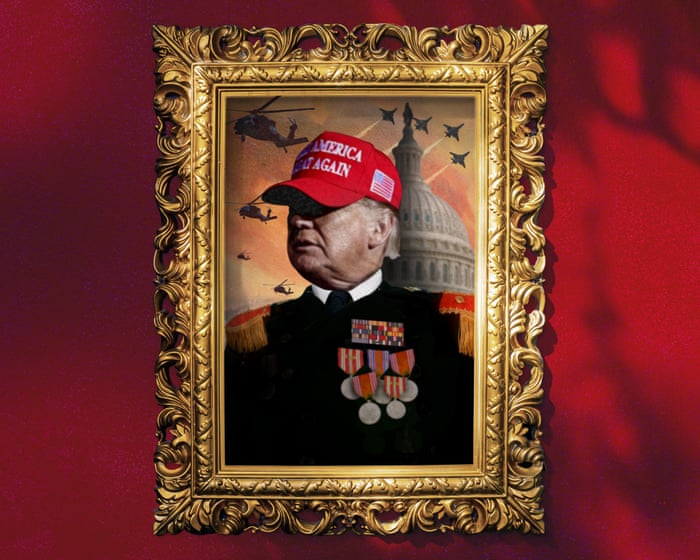
Trump’s territorial ambition: new imperialism or a case of the emperor’s new clothes?

Trump’s attack on Venezuela suggests expansionism is under way but some argue it is simply standard US foreign policy stripped of hypocrisy

The attack on Venezuela and the seizure of its president was a shocking enough start to 2026, but it was only the next day, when the smoke had dispersed and Donald Trump was flying from Florida to Washington DC in triumph, that it became clear the world had entered a new era.

The US president was leaning on a bulkhead on Air Force One, in a charcoal suit and gold tie, regaling reporters with inside details of the abduction of Nicolás Maduro. He claimed his government was “in charge” of Venezuela and that US companies were poised to extract the country’s oil wealth.

Continue reading...

© Composite: Artwork by Alex Mellon and Guardian Design. Source Photographs by Getty Images, Reuters

© Composite: Artwork by Alex Mellon and Guardian Design. Source Photographs by Getty Images, Reuters

© Composite: Artwork by Alex Mellon and Guardian Design. Source Photographs by Getty Images, Reuters

  •  
❌