↩ Accueil

Vue lecture

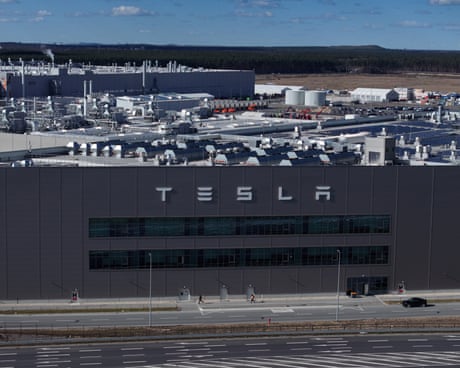
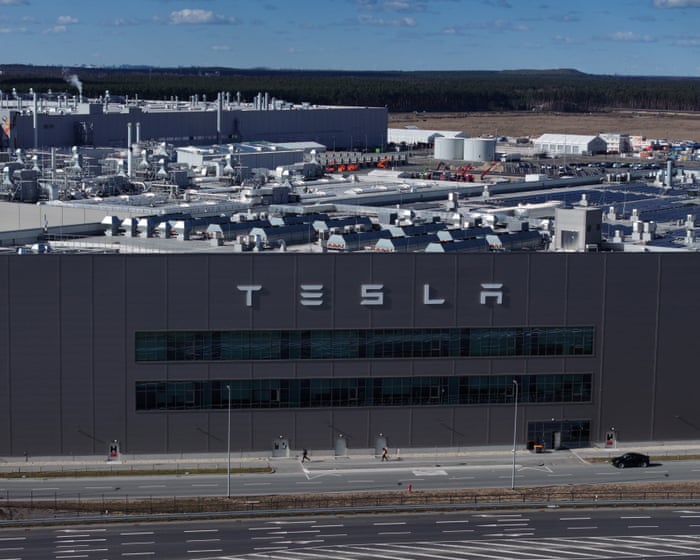
Tesla sales fall across Europe again as BYD surges; Ryanair fined €235m by Italy’s competition authority – business live

Rolling coverage of the latest economic and financial news

From cars to planes! Ryanair has been fined €235m (£205m) by Italy’s competition authority for abusing its dominant position in its dealings with travel agents.

The Italian Competition Authority imposed the penalty after concluding that Ryanair had executed an “elaborate strategy” to block online and traditional travel agencies from purchasing Ryanair flights on ryanair.com, or to make it harder.

The investigation revealed that, at the end of 2022, Ryanair began to explore ways to hinder travel agencies. From mid-April 2023, these plans were implemented through measures that intensified over time. At first, Ryanair rolled out facial recognition procedures on its website aimed at users who purchased their ticket through a travel agency.

Then, at the end of 2023, when the Authority’s investigation was underway, Ryanair totally or intermittently blocked booking attempts by travel agencies on its website (for example, by blocking payment methods and mass-deleting accounts linked to OTA bookings). In a third phase of its strategy, in early 2024, Ryanair imposed partnership agreements on OTAs and, subsequently, Travel Agent Direct accounts on traditional agencies, containing terms that restricted agencies from offering Ryanair flights in combination with other services.

Continue reading...

© Photograph: Sean Gallup/Getty Images
© Photograph: Sean Gallup/Getty Images
© Photograph: Sean Gallup/Getty Images


  •  

The hill I will die on: Ignore the haters, TK Maxx is actually quite good | Hannah J Davies

The chaos is undeniable, but where else are you going to get a pair of jeans and a pistachio-cream panettone cake for such a reasonable price?

‘Oh it’s a mess!” my mum says, shaking her head. “It’s like a jumble sale.” I’m fresh from a trip to TK Maxx, and all I’m getting is negativity. A couple of days later I’m watching Educating Yorkshire when it happens again: one of the teachers tells his pupils to tidy up, lest their classroom look like one of its stores.

Quite frankly, I’m sick of the slander. Sure, I’ve been in some branches that do look like a tornado has just blown through them. But, these days, they’re few and far between. My local TK Maxx, in a nice enough London suburb, is tidy and organised – so much so that when I hid a pair of Good American jeans the other day to “have a think” and then circled back for them, they had already been moved.

Hannah J Davies is a freelance culture writer and editor

Continue reading...

© Composite: Guardian Design/Getty Images

© Composite: Guardian Design/Getty Images
© Composite: Guardian Design/Getty Images
  •  

The 10 best global albums of 2025

Lebanese singer-songwriter Yasmine Hamdan returns with mournful minimalism, Mohinder Kaur Bhamra’s 1982 album of Punjabi disco makes a comeback and Guatemalan duo Titanic serve up ecstatic tracks
The 50 best albums of 2025
More on the best culture of 2025

A 40-minute suite of continuous, repetitive drumming might not sound like the most accessible music but south Asian percussionist and producer Sarathy Korwar’s latest album, There Is Beauty, There Already, turns this concept of insistent rhythm into strangely alluring work. Leading an ensemble of three drummers, Korwar develops a dense percussive language throughout the record’s 10 movements, channelling Steve Reich’s phasing motifs as well as Indian classical phrasing and anchoring each in the repetition of a continual, thrumming refrain. As the album continues, the refrain begins to emulate the hypnotic repetition of ceremonial rhythm, drawing us further into Korwar’s percussive world the longer we listen.

Continue reading...

© Photograph: Ada Navarro

© Photograph: Ada Navarro

© Photograph: Ada Navarro

  •  

The Devil’s Backbone review – rich, rousing ghost story is early gothic gem from Guillermo del Toro

Executed with trademark technical flair and empathy, this part-horror, part-fairytale set in a haunted orphanage from 2001 is one of the director’s best

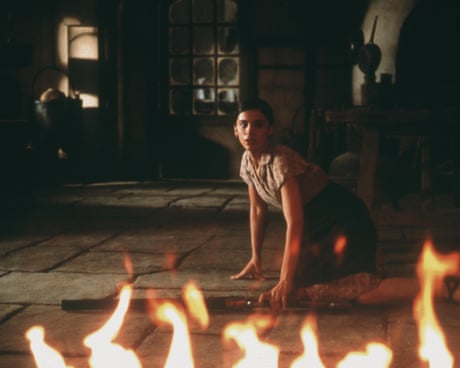
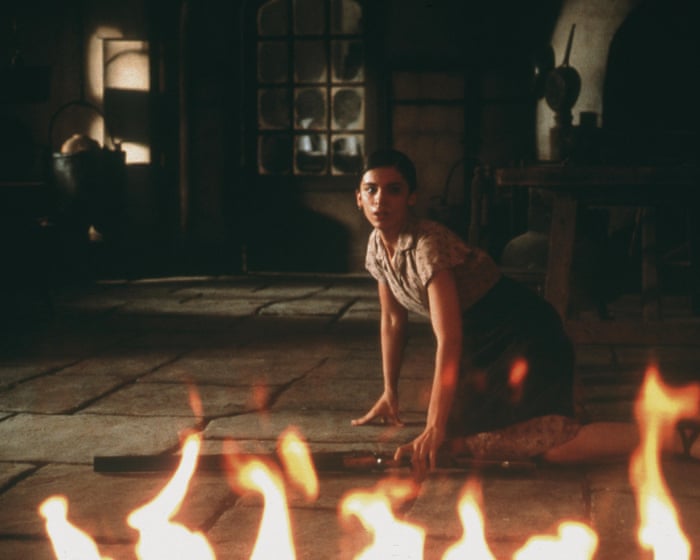
He’s a household name now after The Shape of Water and his new Frankenstein, but 25 years ago Guillermo del Toro was a virtual unknown, still bruised from the Harvey Weinstein-produced Hollywood flop Mimic. But, as this overlooked follow-up attests, he was always a class act. In fact, this is one of his best: a rich, rousing ghost story shrouded in trademark gothic gloom but executed with technical flair and a good deal of empathy.

As with his later breakthrough Pan’s Labyrinth, it’s part-horror, part-fairytale, with children at its centre. The setting is a middle-of-nowhere boys’ orphanage in 1930s Spain, a leftist sanctuary from Franco’s fascists during the civil war. Newcomer Carlos (Fernando Tielve) must find his feet in this semi-surreal realm, with an unexploded bomb in the middle of the courtyard, some kindly adults (one-legged Marisa Paredes and kindly doctor Federico Luppi), some not-so-kindly adults (aggressive caretaker Eduardo Noriega), and junior bullies to win over. There’s also a ghost in the mix: a pale-faced boy named Santi, whose death no one seems to want to discuss, and to whose empty bed Carlos is ominously assigned.

Continue reading...

© Photograph: Miguel Bracho/Canal+Espana/Kobal/Shutterstock

© Photograph: Miguel Bracho/Canal+Espana/Kobal/Shutterstock

© Photograph: Miguel Bracho/Canal+Espana/Kobal/Shutterstock

  •  

Guardian readers’ Christmas appeal donations surpass £500,000

Hope appeal is raising funds for five UK charities that build trust, hope and change at grassroots level

Generous Guardian readers have so far raised more than £500,000 for the Hope appeal supporting inspirational grassroots charities that bring together divided communities, promote tolerance, and tackle racism and hatred.

The 2025 Guardian appeal is raising funds for five charities: Citizens UK, the Linking Network, Locality, Hope Unlimited Charitable Trust, and Who Is Your Neighbour?

Continue reading...

© Photograph: Christopher Thomond/The Guardian

© Photograph: Christopher Thomond/The Guardian

© Photograph: Christopher Thomond/The Guardian

  •  

Reform plan to cap aid at £1bn would damage UK’s international influence, critics warn

Exclusive: Campaigners say slashing overseas aid would leave UK unable to meet existing commitments

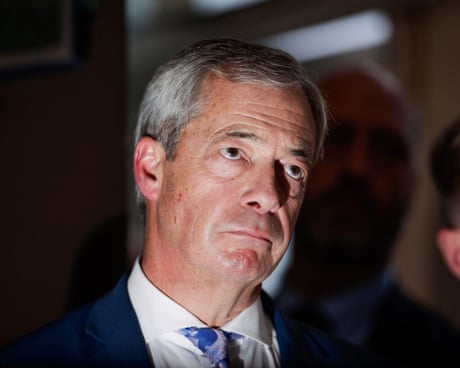
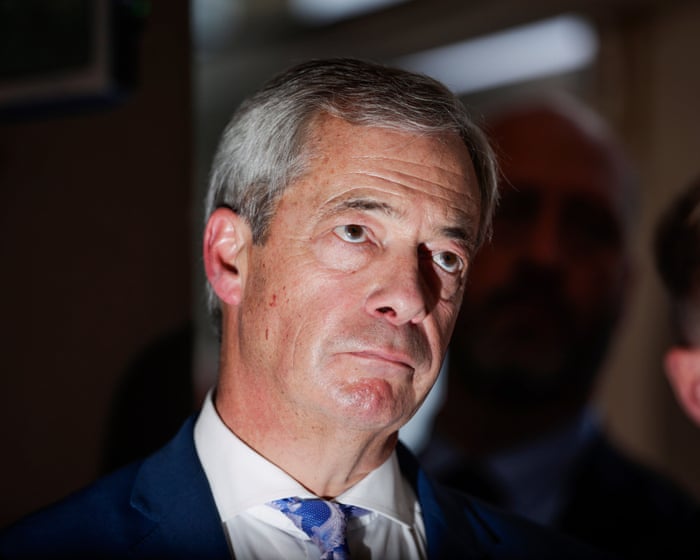
Plans by Reform UK to slash the aid budget by 90% would not cover existing contributions to global bodies such as the UN and World Bank, shredding Britain’s international influence and risking its standing within those organisations, charities and other parties have warned.

Under cuts announced by Nigel Farage in November, overseas aid would be capped at £1bn a year, or about 0.03% of GDP. Keir Starmer’s government is already set to reduce aid from 0.5% of GDP to 0.3% by 2027, but even that lower proportion would still amount to £9bn a year.

Continue reading...

© Photograph: Murdo MacLeod/The Guardian

© Photograph: Murdo MacLeod/The Guardian

© Photograph: Murdo MacLeod/The Guardian

  •  

The second China shock is coming – and the UK’s response is too timid | George Magnus

Beijing’s push to dominate technology through state-backed industrial policy is reshaping global trade and could devastate European industry

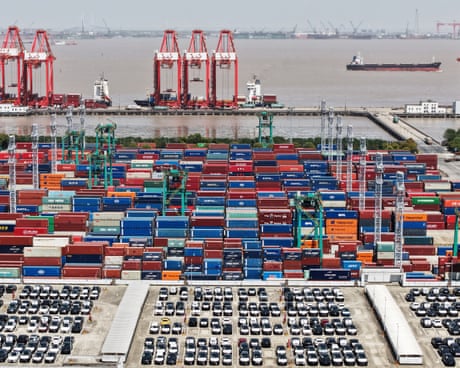
Emmanuel Macron came back from China in early December empty-handed. The French president’s appeal to his Chinese counterpart, Xi Jinping, to help stop the war in Ukraine was never going to gain traction given Beijing’s unqualified support for Russia.

Urging Xi to address China’s surging trade surplus, the result of the country’s economic and industrial policies, predictably also fell on closed ears.

Continue reading...

© Photograph: China Daily/Reuters

© Photograph: China Daily/Reuters

© Photograph: China Daily/Reuters

  •  

Capitalism by Sven Beckert review – an extraordinary history of the economic system that controls our lives

The Harvard professor provides a ceaseless flow of startling details in this exhaustively researched, 1000-year account

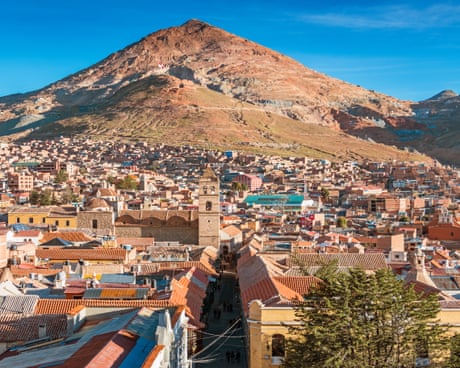
In the early 17th century, the Peruvian city of Potosí billed itself as the “treasure of the world” and “envy of kings”. Sprouting at the foot of the Cerro Rico, South America’s most populous settlement produced 60% of the world’s silver, which not only enabled Spain to wage its wars and service its debts, but also accelerated the economic development of India and China. The city’s wealthy elites could enjoy crystal from Venice and diamonds from Ceylon while one in four of its mostly indigenous miners perished. Cerro Rico became known as “the mountain that eats men”.

The story of Potosí, in what is now southern Bolivia, contains the core elements of Sven Beckert’s mammoth history of capitalism: extravagant wealth, immense suffering, complex international networks, a world transformed. The Eurocentric version of capitalism’s history holds that it grew out of democracy, free markets, Enlightenment values and the Protestant work ethic. Beckert, a Harvard history professor and author of 2015’s prize-winning Empire of Cotton, assembles a much more expansive narrative, spanning the entire globe and close to a millennium. Like its subject, the book has a “tendency to grow, flow, and permeate all areas of activity”. Fredric Jameson famously said that it was easier to imagine the end of the world than the end of capitalism. At times during these 1,100 pages, I found it easier to imagine the end of the world than the end of Capitalism.

Continue reading...

© Photograph: benedek/Getty Images/iStockphoto

© Photograph: benedek/Getty Images/iStockphoto

© Photograph: benedek/Getty Images/iStockphoto

  •  

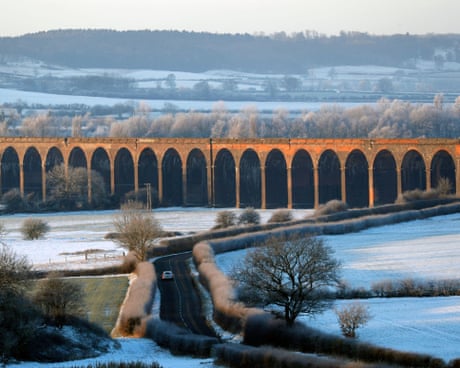
‘An unsung alternative to the Cotswolds‘: exploring Leicestershire’s Welland valley

This hidden gem has country inns, canalside walks, a stunning viaduct, the historic town of Market Harborough – and not a tour bus in sight

It was a chilly Sunday in November 2000 when the gods chose to smile on Ken Wallace. The retired teacher was sweeping his metal detector across a hillside in Leicestershire’s Welland valley when a series of beeps brought him up short. Digging down, he found a cache of buried coins almost two millennia old. He had chanced upon one of the UK’s most important iron age hoards, totalling about 5,000 silver and gold coins.

More than 25 years on, I’m staring at Ken’s find at the civic museum in the nearby town of Market Harborough. The now gleaming coins are decorated with wreaths and horses. They’re about the size of 5p pieces, but speak of a wild-eyed age of tribal lands and windswept hill forts.

Continue reading...

© Photograph: Darren Staples/Alamy

© Photograph: Darren Staples/Alamy

© Photograph: Darren Staples/Alamy

  •  

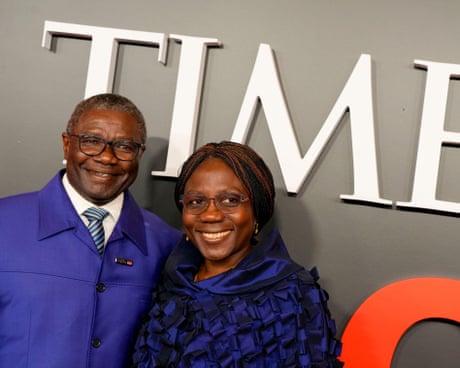
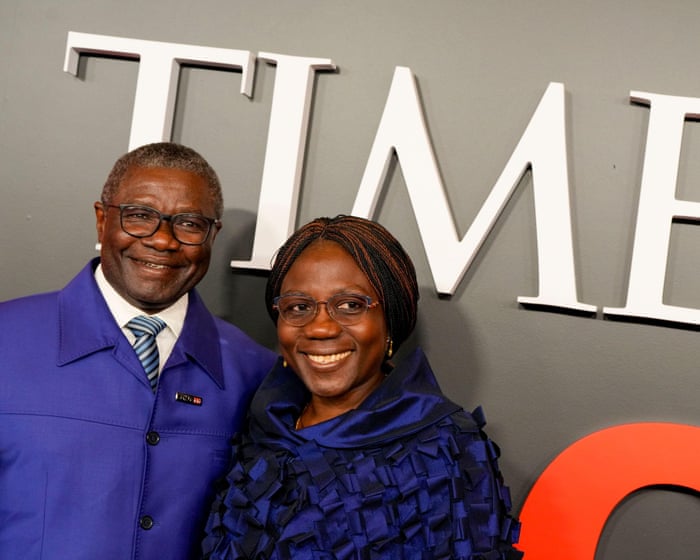
Meet Dr Happi. With $100m and a steely determination could he save the world from the next pandemic?

The Cameroonian professor made the Time most influential list in 2025 and saw the project he co-founded receive $100m for its virus detection work. Now he is on a mission to transform Africa’s genomics capability

Winning the world’s health lottery is a lonely business in the current climate. “It’s like being an orphan in a space where there used to be many kids playing – suddenly everybody’s gone and you’re just there with a ball,” says Dr Christian Happi.

The Cameroonian distinguished professor of molecular biology and genomics has just won $100m for his work – at a time when global health funding is being viciously slashed as part of wider aid cuts.

Continue reading...

© Photograph: Jennifer Graylock/Alamy

© Photograph: Jennifer Graylock/Alamy

© Photograph: Jennifer Graylock/Alamy

  •  

When the AI bubble bursts, humans will finally have their chance to take back control | Rafael Behr

The US economy is pumped up on tech-bro vanity. The inevitable correction must prompt a global conversation about intelligent machines, regulation and risk

If AI did not change your life in 2025, next year it will. That is one of few forecasts that can be made with confidence in unpredictable times. This is not an invitation to believe the hype about what the technology can do today, or may one day achieve. The hype doesn’t need your credence. It is puffed up enough on Silicon Valley finance to distort the global economy and fuel geopolitical rivalries, shaping your world regardless of whether the most fanciful claims about AI capability are ever realised.

ChatGPT was launched just over three years ago and became the fastest-growing consumer app in history. Now it has about 800m weekly users. Its parent company, OpenAI, is valued at about $500bn. Sam Altman, OpenAI CEO, has negotiated an intricate and, to some eyes, suspiciously opaque network of deals with other players in the sector to build the infrastructure required for the US’s AI-powered future. The value of these commitments is about $1.5tn. This is not real cash, but bear in mind that a person spending $1 every second would need 31,700 years to get through a trillion-dollar stash.

Rafael Behr is a Guardian columnist

Continue reading...

© Photograph: Bloomberg/Getty Images

© Photograph: Bloomberg/Getty Images
© Photograph: Bloomberg/Getty Images
  •  

Forecasters say 2025 ‘more likely than not’ to be UK’s hottest year on record

Met Office says temperatures are tracking ahead of 2022 after year of heatwaves and drought, though late cold spell could yet intervene
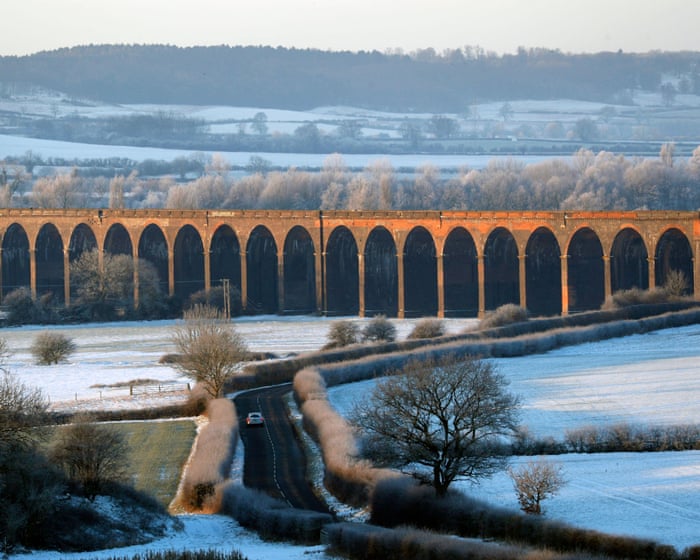
Forecasters say 2025 is “more likely than not” to break the record for the hottest year in the UK since records began, after a summer of heatwaves and drought followed by a mild autumn.

According to the Met Office, the official forecaster, the mean temperature for 2025 is tracking well ahead of the previous highest year, set in 2022. However, a colder spell expected from Christmas until the new year makes it too close to call definitively.

Continue reading...

© Photograph: Maureen Bracewell/Getty Images/500px

© Photograph: Maureen Bracewell/Getty Images/500px

© Photograph: Maureen Bracewell/Getty Images/500px

  •  

Trump Announces New ‘Trump Class’ of Warships

The president said development of the vessels would help maintain military superiority and improve the industrial base, but analysts suggested they were the wrong approach to current threats.

© Eric Lee for The New York Times

In giving the new class of ships his own name, Mr. Trump continued a self-aggrandizing streak of imprinting his brand on various aspects of the federal government.
  •  

What happened next: the Coldplay kiss cam couple

They went mega-viral as the couple who were caught canoodling on a live screen. Cue plot twists and months of public intrigue

On 16 July 2025, Andy Byron and Kristin Cabot went to a Coldplay concert in Boston. You know this, I know this, my pop-culture-averse neighbour Norma knows this. Millions of people around the world are intimately acquainted with what happened that fateful day: the co-workers were caught cuddling and then jumping apart in horror on Coldplay’s kiss cam. Attention spans are short and fresh memes are minted daily. Unfortunately for Byron and Cabot, this wasn’t just another meme; the video of their shocked reaction contained all the ingredients of a viral moment with unusual staying power.

First, there was the format: the clip – uploaded on social media by a fellow concert-goer – was only a few seconds long and easy to recreate. Then there were the protagonists: Byron was the married CEO of software company Astronomer and Cabot was the head of HR. Inequality is at record levels and eat-the-rich narratives are everywhere; everyone loves the chance to hate on wealthy tech types.

Continue reading...

© Composite: TikTok

© Composite: TikTok

© Composite: TikTok

  •  

‘For the first time, she could tell people who she was’: Ireland’s gender recognition decade

Ireland’s 2015 Gender Recognition Act was born in an era of optimism and consensus, but as gender-critical activism grows so does debate whether it can hold

Soon after Ireland passed its Gender Recognition Act in 2015, Kevin Humphreys, a Labour politician, visited a residential home for senior citizens – where an older woman thanked him for the new law.

It was Humphreys who, as the minister of state for social protection 10 years ago, guided through the legislation that has meant transgender people in Ireland can apply to have their lived gender legally recognised by the state through a simple self-certification process.

Continue reading...

© Photograph: Niall Carson/PA

© Photograph: Niall Carson/PA

© Photograph: Niall Carson/PA

  •