As far as Micron is concerned, the prevailing narrative about its recent strategy shift to focus more heavily on AI customers gets one *ahem* Crucial detail wrong. Actually more than one, though the biggest misconception from Micron's vantage point is that it's abandoning the consumer market in favor of AI, when in reality it's simply serving
While Obsidian Entertainment’s Avowed failed to live up to the high expectations which some fans had for the title upon its release last year, the Xbox console exclusive was a solid title in its own right – even if it wasn’t the Skyrim successor which many were hoping for. With updates to the game still planned for 2026, a PS5 port for Avowed has now been officially announced – set to launch exactly one year on from its Xbox release.
Announced during the recent New Game+ Showcase, Obsidian Entertainment’s Avowed has been officially confirmed to be launching on PlayStation 5 next month; arriving on the 17th of February 2026 (almost exactly one year on from its Xbox release).
Now labelled as the Anniversary update, the patch is set to include the long awaited new game+ mode alongside a new weapon type; character presets; appearance modifiers; new races; a photo mode and more.
As mentioned, Avowed was a decent game in its own right though was held back due to fans expecting it to be the next Skyrim-like experience. With a pretty fun first-person magic combat system and solid exploration however, Avowed could be worth checking out when it launches on PS5 next month.
KitGuru says: What did you think of Avowed at launch? Have the updates released so far improved the experience? Let us know your thoughts down below.
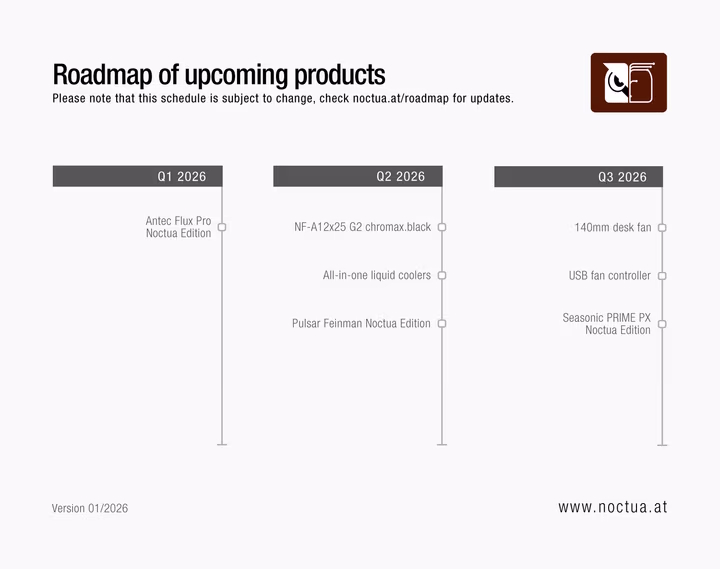
Noctua has opened the new year by updating its public product roadmap. As some might've guessed, the January 2026 schedule is defined primarily by shifting deadlines. While the list of upcoming hardware remains identical to the last version published, Noctua has moved the majority of its near-term releases further back into the year.
The first quarter of 2026 was initially slated to be a busy period for the brand, but the updated roadmap (via Hardware&Co) sees two out of three major launches slip. The Antec Flux Pro Noctua Edition chassis remains the sole survivor of the Q1 window, standing as the only product currently on track for an immediate release. Meanwhile, the Pulsar Feinman Noctua Edition gaming mouse and the much-requested NF-A12x25 G2 chromax.black fans have both been pushed into Q2. Also in Q2, there's the company's first AIO liquid coolers.
Moving on to Q3, we have the Seasonic Prime PX Noctua Edition PSU, which has been a staple of Noctua's trade show booths for over a year. The PSU is joined by the 140 mm desk fan and the dedicated USB fan controller, both originally slated for Q2.
This latest update is perhaps most significant for what it doesn't include. No new product entries have been added to the roadmap, suggesting Noctua is currently prioritising the completion of its existing projects over new experimental designs.
KitGuru says: For those waiting on the Seasonic collaboration or the all-in-one liquid coolers, it seems you'll have to wait a bit longer. If these new targets hold, the Prime PX PSU series will finally arrive more than twelve months after its initial public presentation, continuing Noctua's reputation for prioritising “quality optimisation” over strict adherence to a calendar.
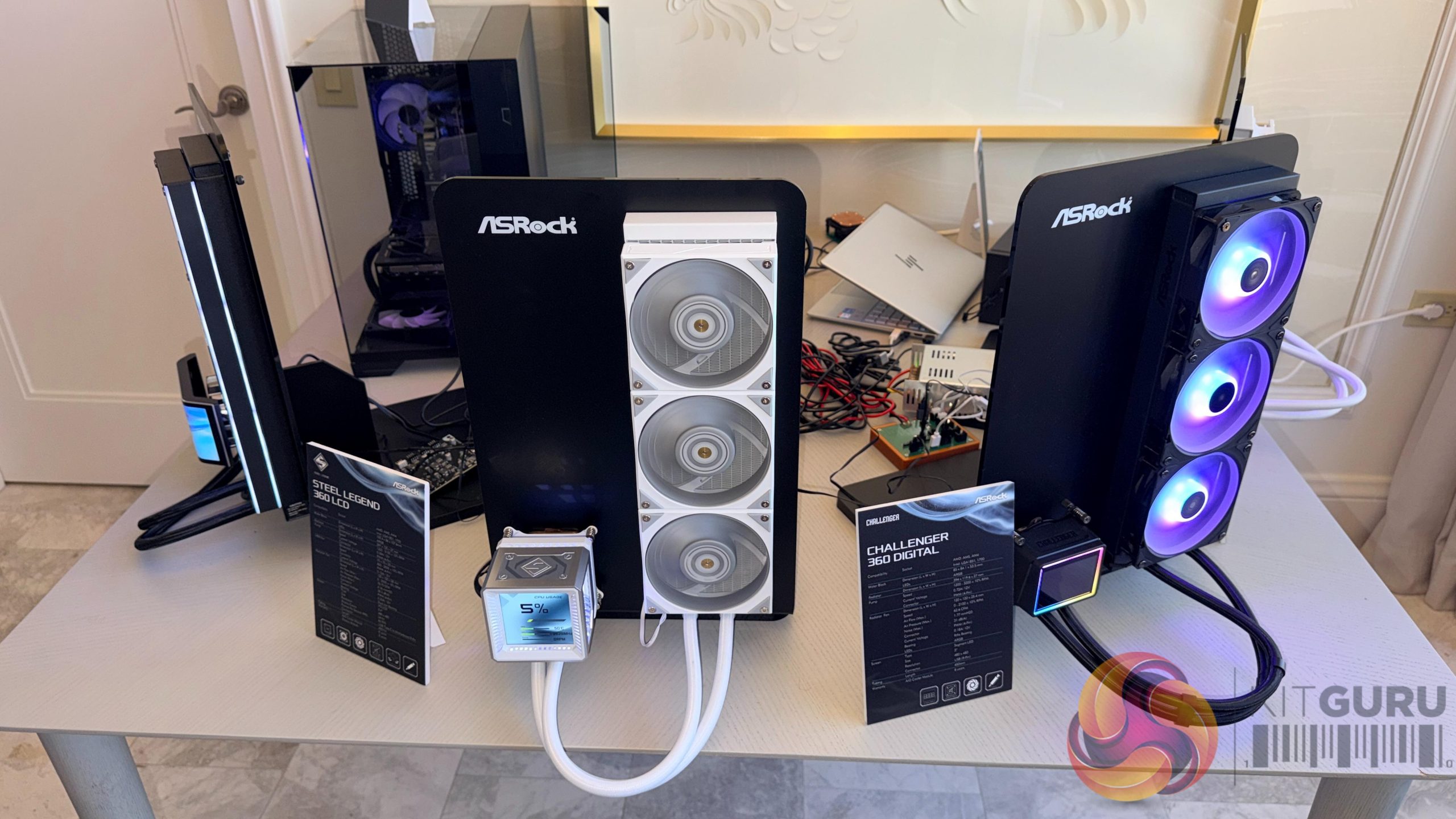
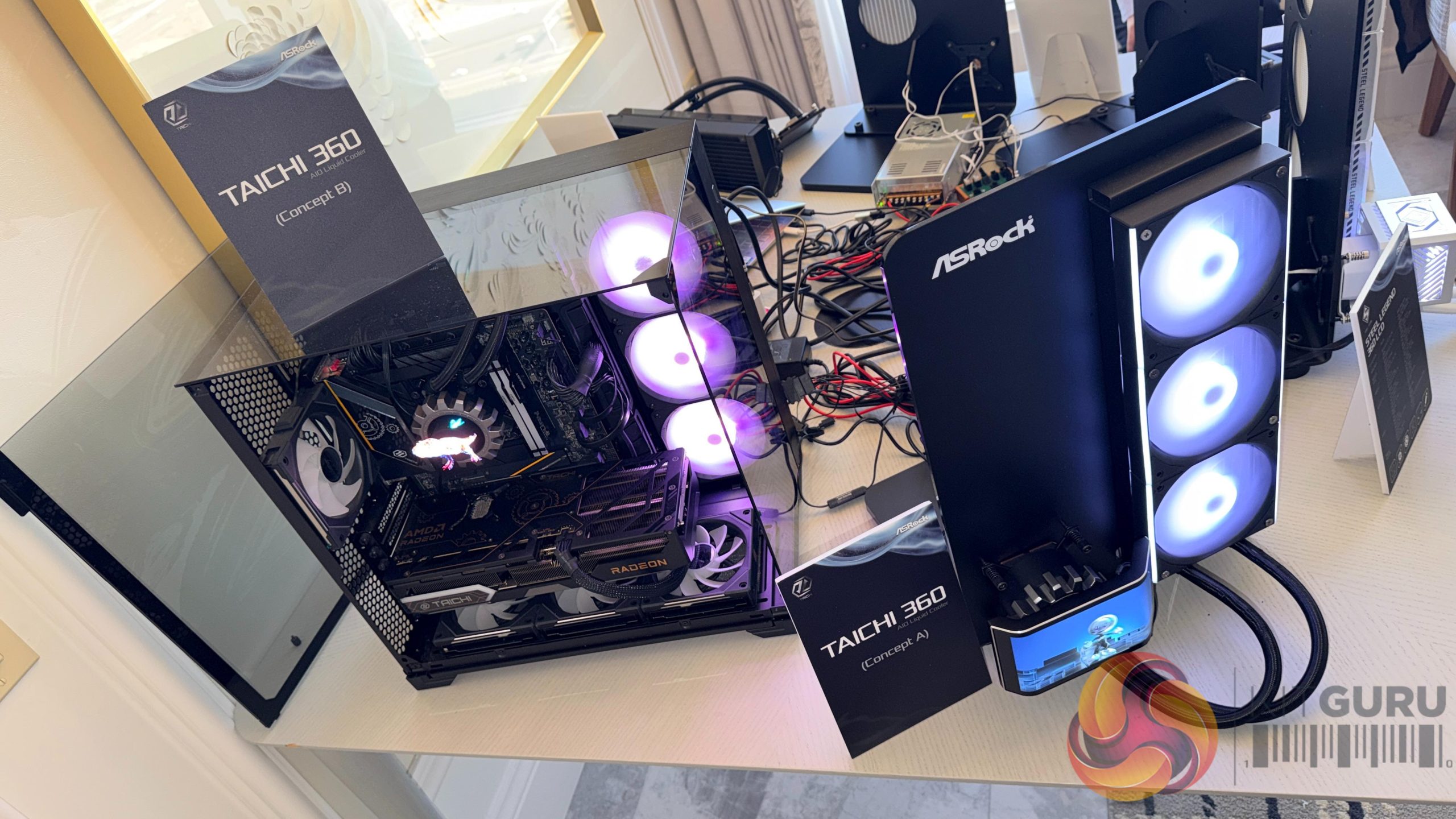
At CES this week, we caught up with ASRock to get a first-hand look at their new line-up of AIO liquid coolers, a new QD-OLED monitor and new compact PCs.
Watch via YouTube below:
Timestamps:
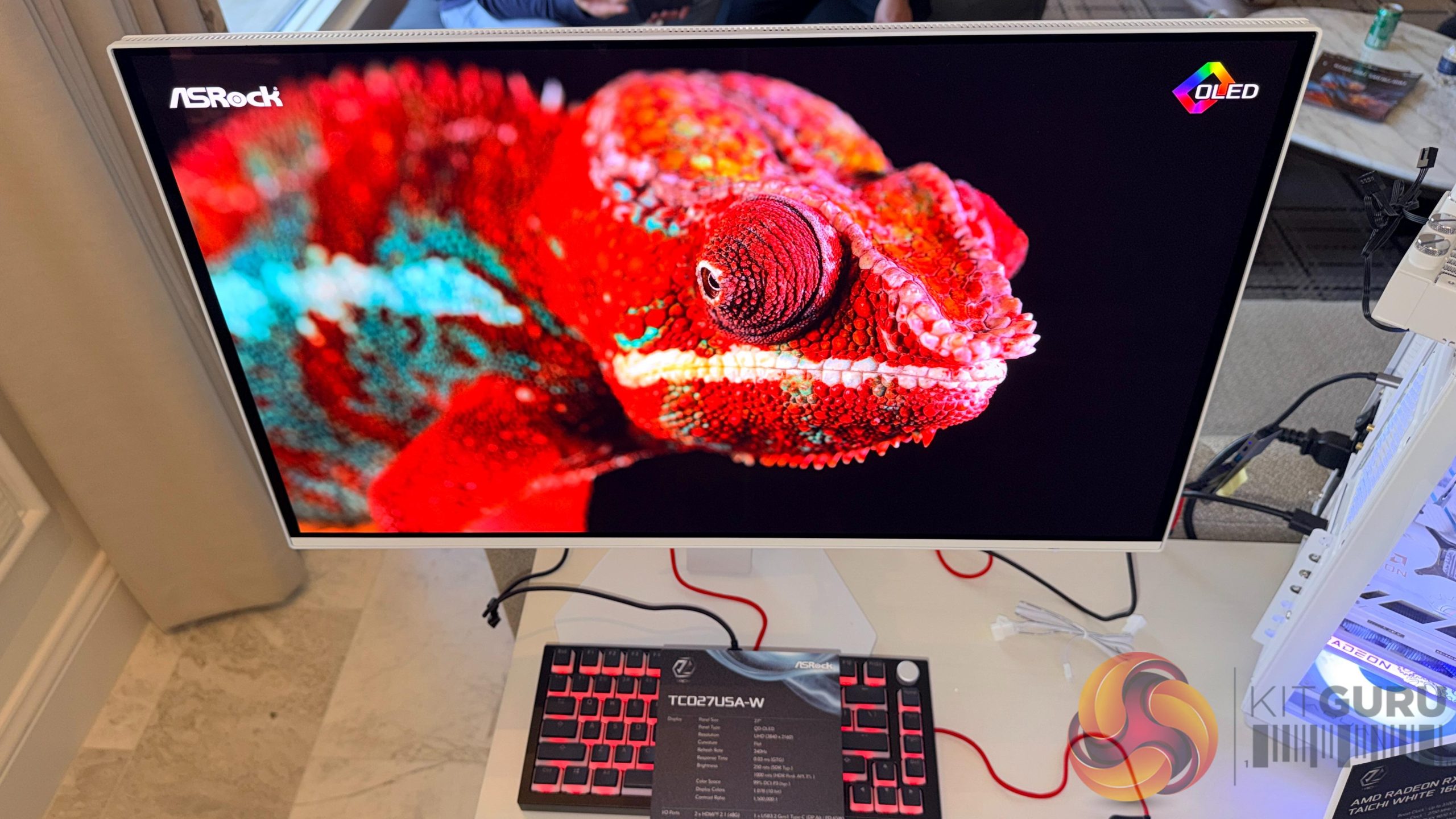
00:00 New 27in 4K QD-OLED
00:44 Mini PCs and NUC systems
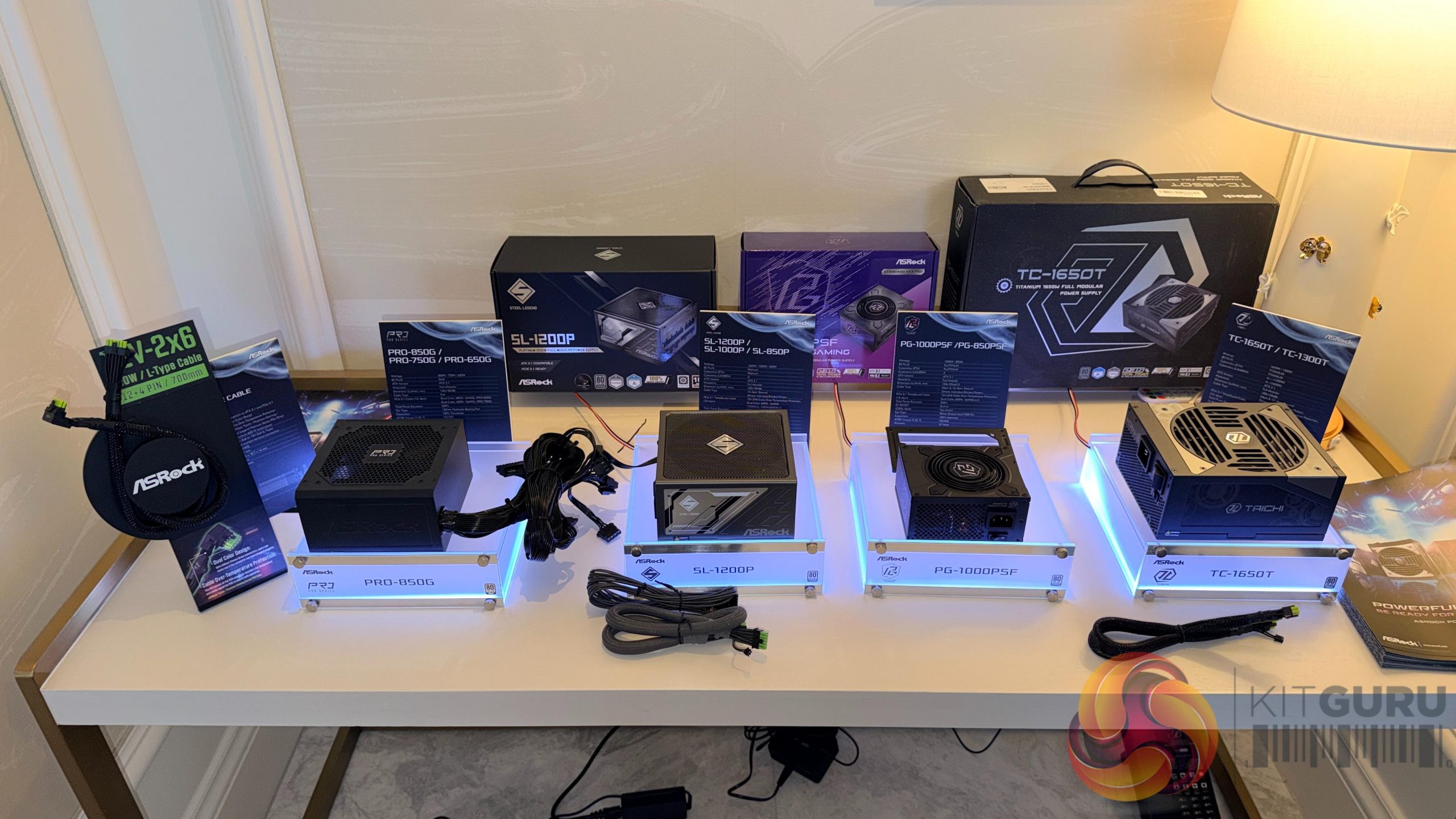
01:19 Full range of PSUs
03:09 ASRock’s new AIOs too
04:28 and finally the mobos: Rock + Challenger
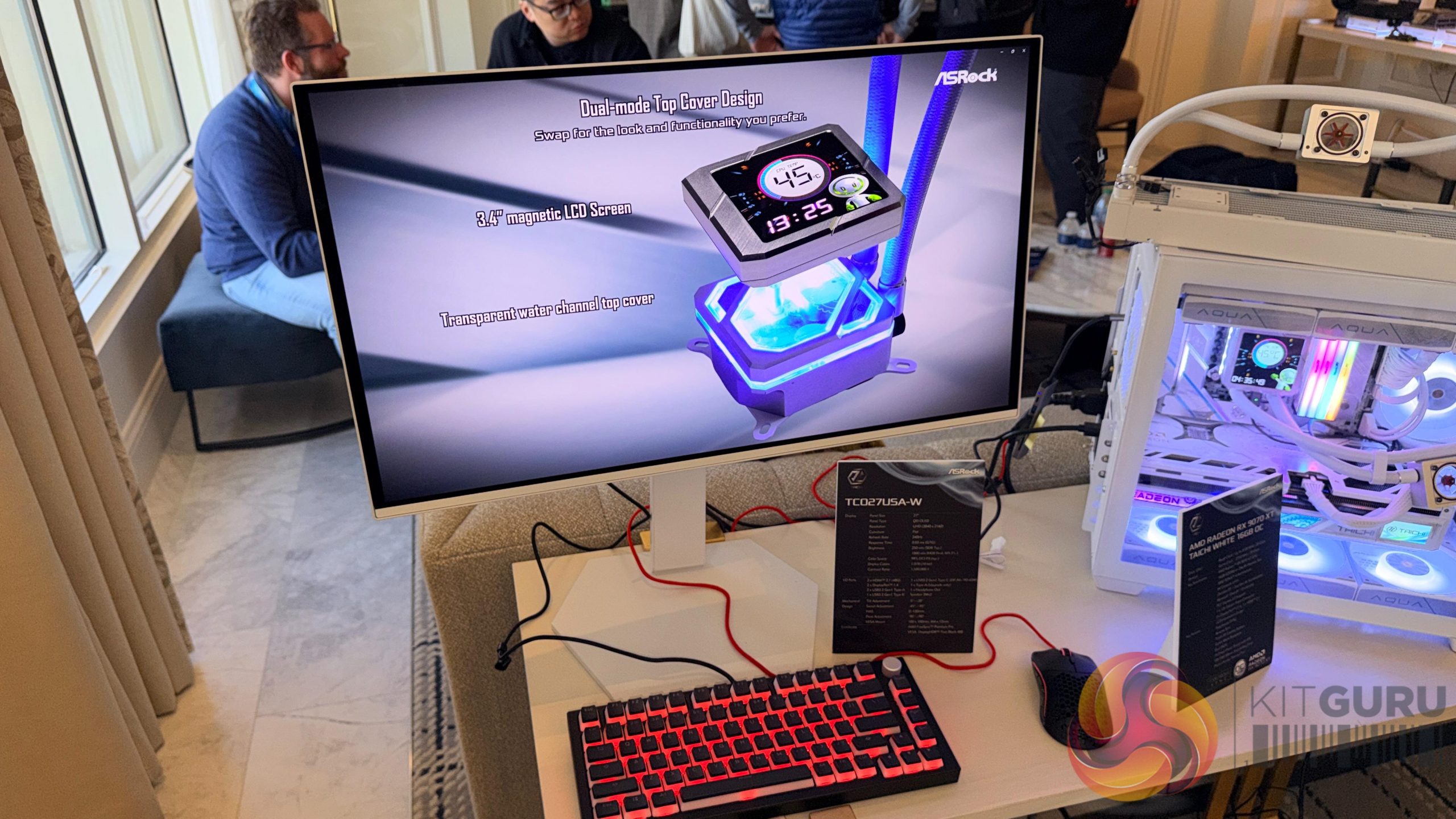
ASRock’s 2026 liquid‑cooler lineup is led by the Taichi AQUA series, which features a dual‑mode top cover that switches between a magnetic 3.4‑inch LCD and a transparent window for viewing coolant flow. The Taichi AQUA 360 LCD uses a dual‑pump design rated for 500W+ workloads, paired with a 38mm radiator, an integrated flow indicator and LCP fans with dual‑ball‑bearing construction and IP54 protection.
For workstation platforms such as AMD sTR5 and Intel LGA4677, the WS series carries over the same dual‑pump 500W+ architecture but adds a full‑coverage cold plate sized for high‑core‑count CPUs. ASRock positions it for sustained, heavy‑load operation.
The Phantom Gaming 360 LCD targets gaming systems with a 3.4‑inch display, 32mm radiator and a 3‑phase, 6‑slot pump. A VRM cooling module assists around the socket, supported by high‑output fans and a Halo ARGB frame. Steel Legend offers a more durability‑focused variant with the same LCD, pump and VRM module, backed by LCP fans. For mainstream builders, the Challenger and Pro series prioritise ease of installation. Challenger models include a 3‑inch smart display, pre‑installed fans and a quick‑release bracket, while the Pro series adds ARGB lighting and tuned fans for balanced cooling and noise.
On the monitor front, ASRock is showing the TCO237USA-W. This is a 240Hz QD-OLED monitor arriving in Q2, so we expect more details in the coming months.
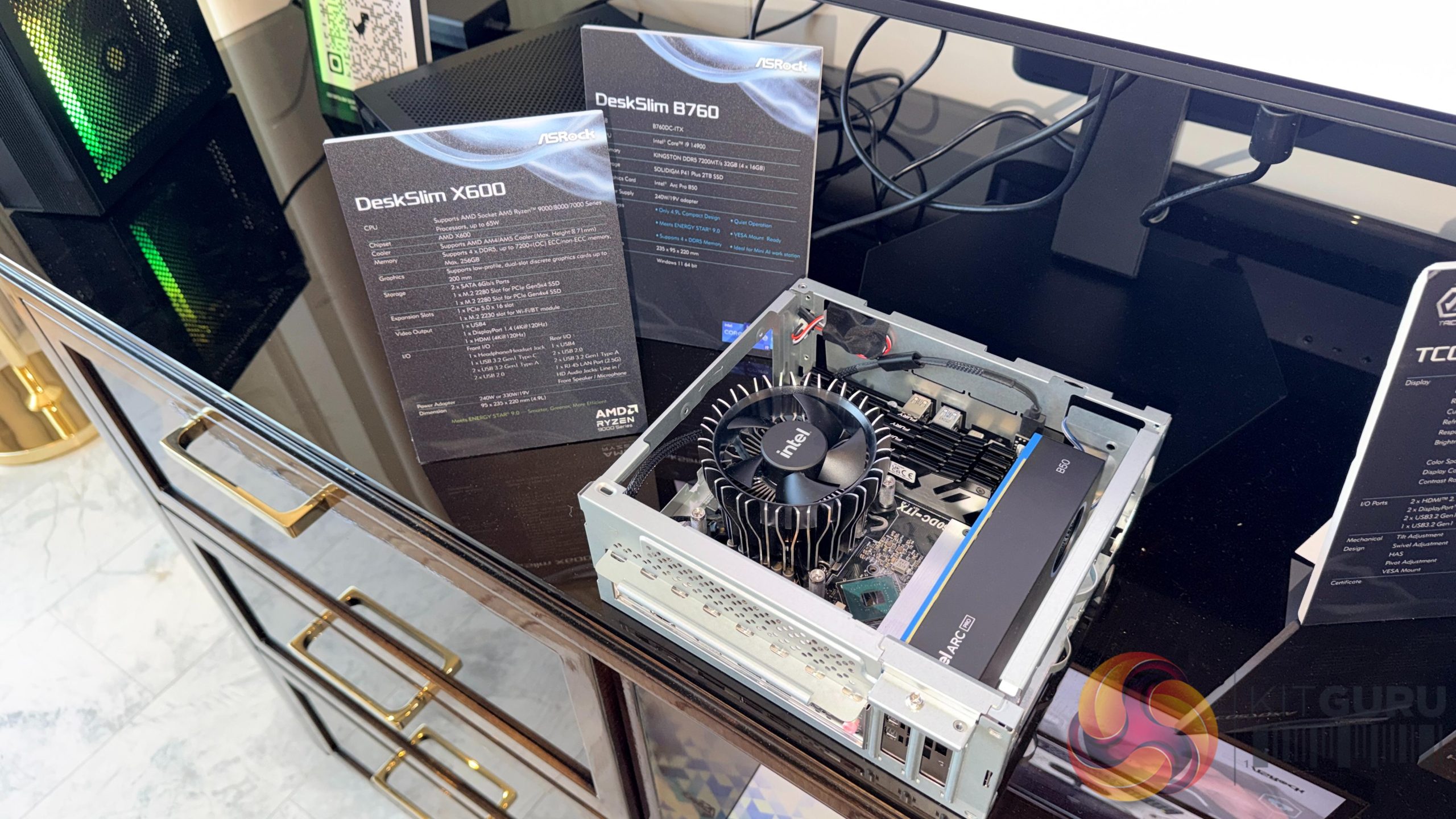
The ASRock DeskSlim returns in 2026 with new models packing both Intel and AMD hardware. Despite being an ultra-small NUC system, a DeskSlim can pack in an Intel Arc Battlemage discrete graphics card, so you can get some extra graphical horsepower beyond integrated graphics.
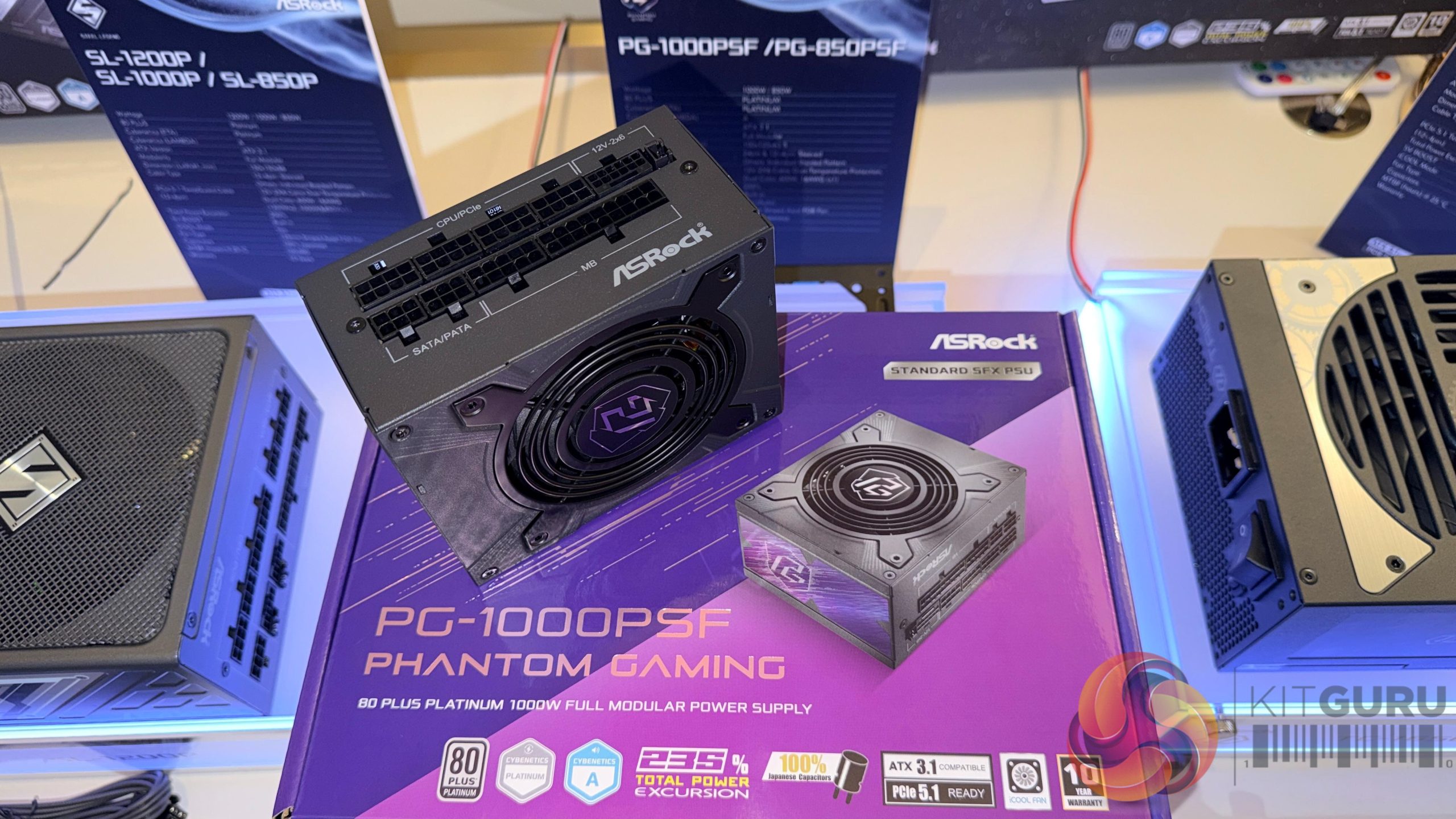
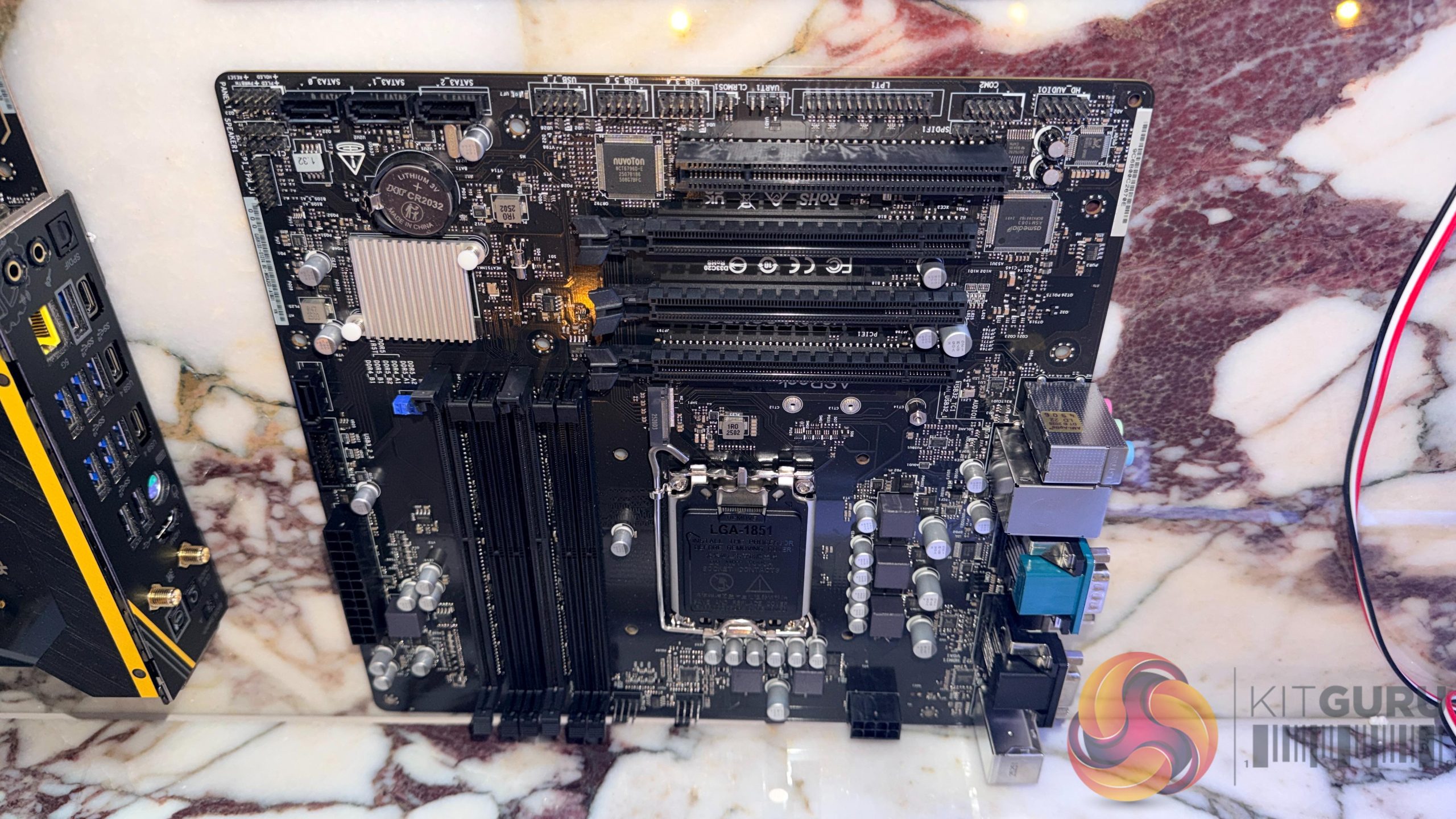
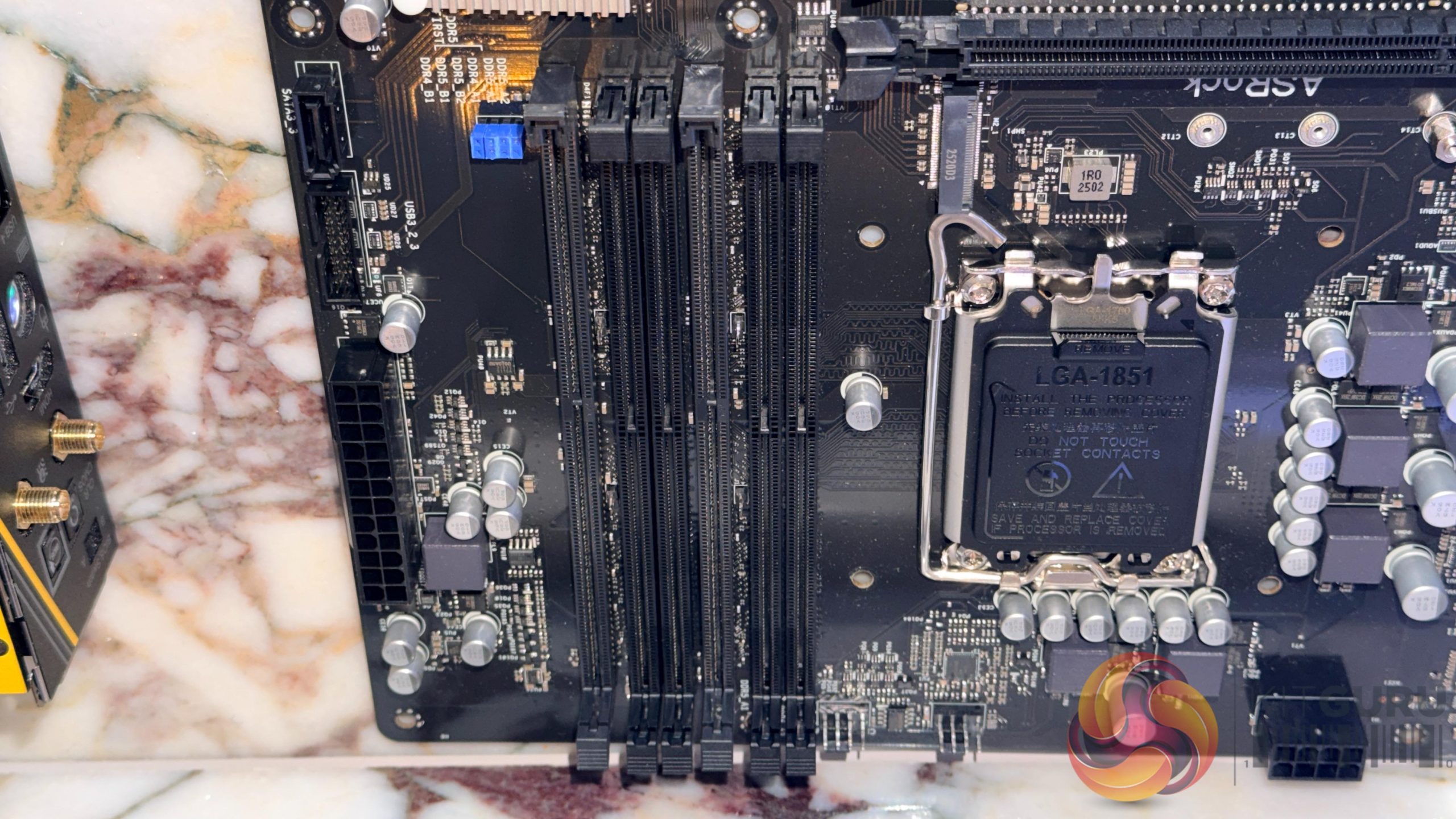
In our full video you can also get a look at ASRock power supplies, alongside a range of motherboards – including a very peculiar board that has both DDR4 and DDR5 RAM slots. With the way the DDR5 market has been going in recent months, we may need to see more of those on the market.
KitGuru Says: What did you make of ASRock's CES showing this year?
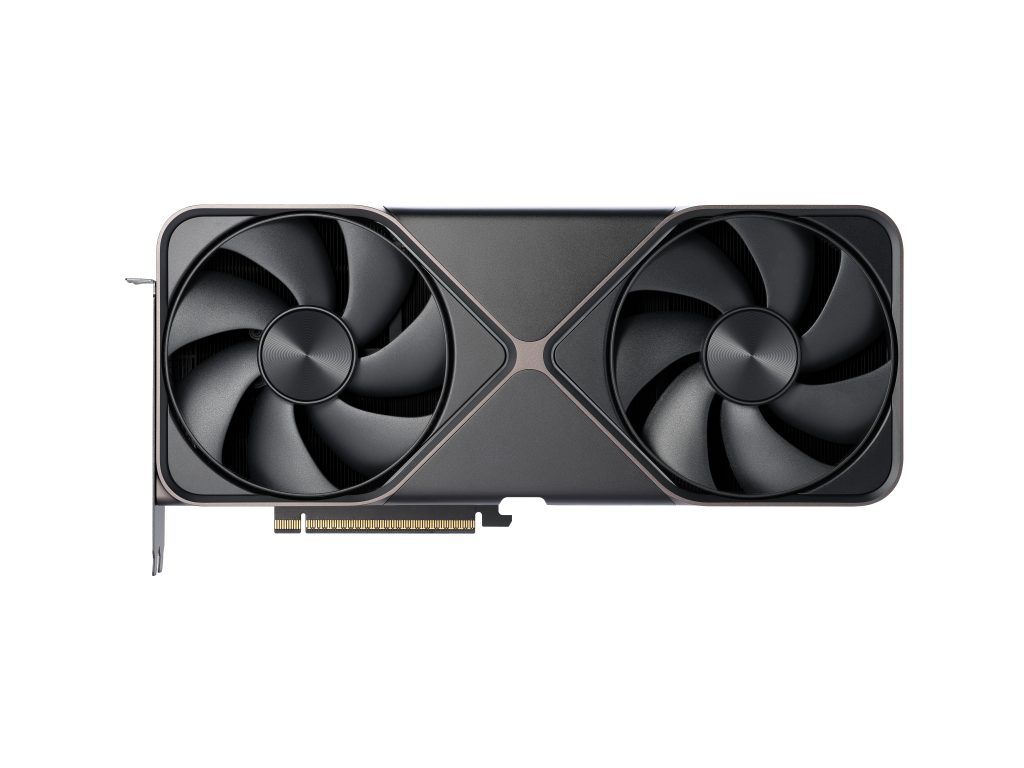
With CES 2026 now firmly in the rearview mirror and no new desktop GPUs to show for it, the hardware community has started to wonder when we'll get new GPUs. The RTX 50 Super refresh is nowhere to be seen, so all eyes are now on the GeForce RTX 60 series, which is rumoured to adopt the “Rubin” architecture currently dominating Nvidia's enterprise roadmap. However, according to the latest leaks, gamers should settle in for a long wait, as the next generation isn't expected to break cover until the second half of 2027.
The “Rubin” name is already official in the data centre space, where Nvidia has discussed the Rubin CPX platform (GR) as the successor to Blackwell. While Nvidia has not confirmed that this branding will extend to the GeForce gaming lineup, historical patterns suggest a consumer adaptation is highly likely. The latest technical breadcrumbs come from kopite7kimi, who has shared the silicon that will power the RTX 60 series. According to the leaker, the consumer Rubin cards would follow a “GR20x” naming convention, with the GR202 likely being the flagship consumer GPU.
The leaker also pointed out the expected release date for the new series, claiming it would only be available in the second half of 2027. This aligns with AMD's rumoured RDNA 5 timeline, setting the stage for a massive showdown next year.
This release date and the absence of the RTX 50 Super series make us believe that the current RTX 50 series lineup will be the best you can get for some time. If the RTX 60 series is still nearly two years away, Nvidia likely feels the current Blackwell stack has enough longevity to maintain market dominance, especially given the lack of competition in the high-end segment. Rather than incremental hardware refreshes, the next 18 months will likely be defined by software progress, of which we've already seen a bit with the release of DLSS 4.5.
KitGuru says: If Rubin is indeed a late-2027 product, the RTX 5090 is set to become the longest-reigning flagship in Nvidia's modern history. For those who bought into Blackwell early, your investment looks safer than ever, but those waiting for a “mid-cycle” deal may want to temper expectations.
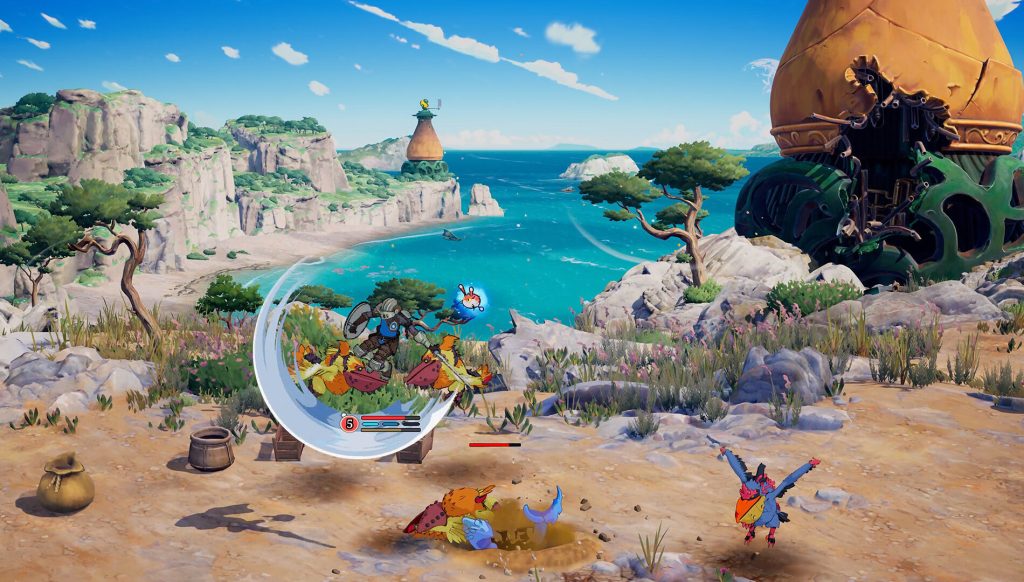
Stoic, the developer behind The Banner Saga, has officially announced that its side-scrolling action RPG Towerborne will exit Early Access on February 26th. However, the 1.0 release arrives with a massive change: the game is completely abandoning its original free-to-play, always-online model in favour of a “buy once, own forever” approach. In a surprising move for an Xbox-published title, Stoic also confirmed that Towerborne will land on PlayStation 5 on day one.
The shift to a premium model is a direct response to community feedback during the game's stint in Xbox Game Preview. By moving to a paid structure, Stoic has been able to gut the “live service grind” and re-engineer the game to support full offline play. The 1.0 update will retail for $24.99 for the Standard Edition and $29.99 for the Deluxe Edition. For those already playing in Early Access, the transition is seamless: your account will automatically upgrade to the Standard Edition for free, and all existing Founders Pack rewards will remain exclusive to your account.
In addition to the transition to the business model, the 1.0 release will also introduce a significant content drop that completes Belfry's narrative arc. That includes a complete campaign culminating in a previously locked final showdown, as well as two new bosses, additional lieutenants, and a “Brutal” difficulty tier. The world is also expanding, now featuring a new coastal biome alongside a reimagined Forge system that allows for stat re-rolling and advanced gear modification. Lastly, all microtransactions have been removed, as every cosmetic in the game, including those previously in the premium shop, is now earnable through the game.
Existing players who accumulated “Belfry Bucks” (the old premium currency) will see their balances converted into Stepstones on launch day. This exclusive transfer currency can be redeemed for high-level crafting materials and “Big Bags of Writs” to jumpstart progression in the 1.0 economy. While character progression carries over, Stoic is encouraging veterans to start a fresh save to experience the reworked narrative flow from the beginning.
The experience is rounded out by a orchestral score from Grammy-nominated composer Austin Wintory. Towerborne will be available on Xbox Series X|S, PC (Steam and Windows Store), and PlayStation 5 on February 26th. The game is also available on Xbox Game Pass (Premium and Ultimate).
KitGuru says: Stoic is making an incredibly pro-consumer move here. In an industry currently struggling with “live service fatigue”, pivoting a game from an always-online F2P model to a premium offline-capable title is a breath of fresh air.
We all know that AI is booming at the minute, and that has had a huge knock-on effect for the PC industry. First the discrete GPUs market was hit, and – more recently – DRAM prices have been rocketing skywards. You may not initially think that a NAND flash manufacturer would have the solution, but Phison's aiDAPTIV+ technology could help shift the AI burden away from memory constraints.
At CES 2026, we stopped to visit Phison and hear about how the company's aiDAPTIV+ tech – what it is, and how it works. While initially announced last year, it's not something we've covered before, so we wanted to share the low-down given the technology makes a good deal of sense.
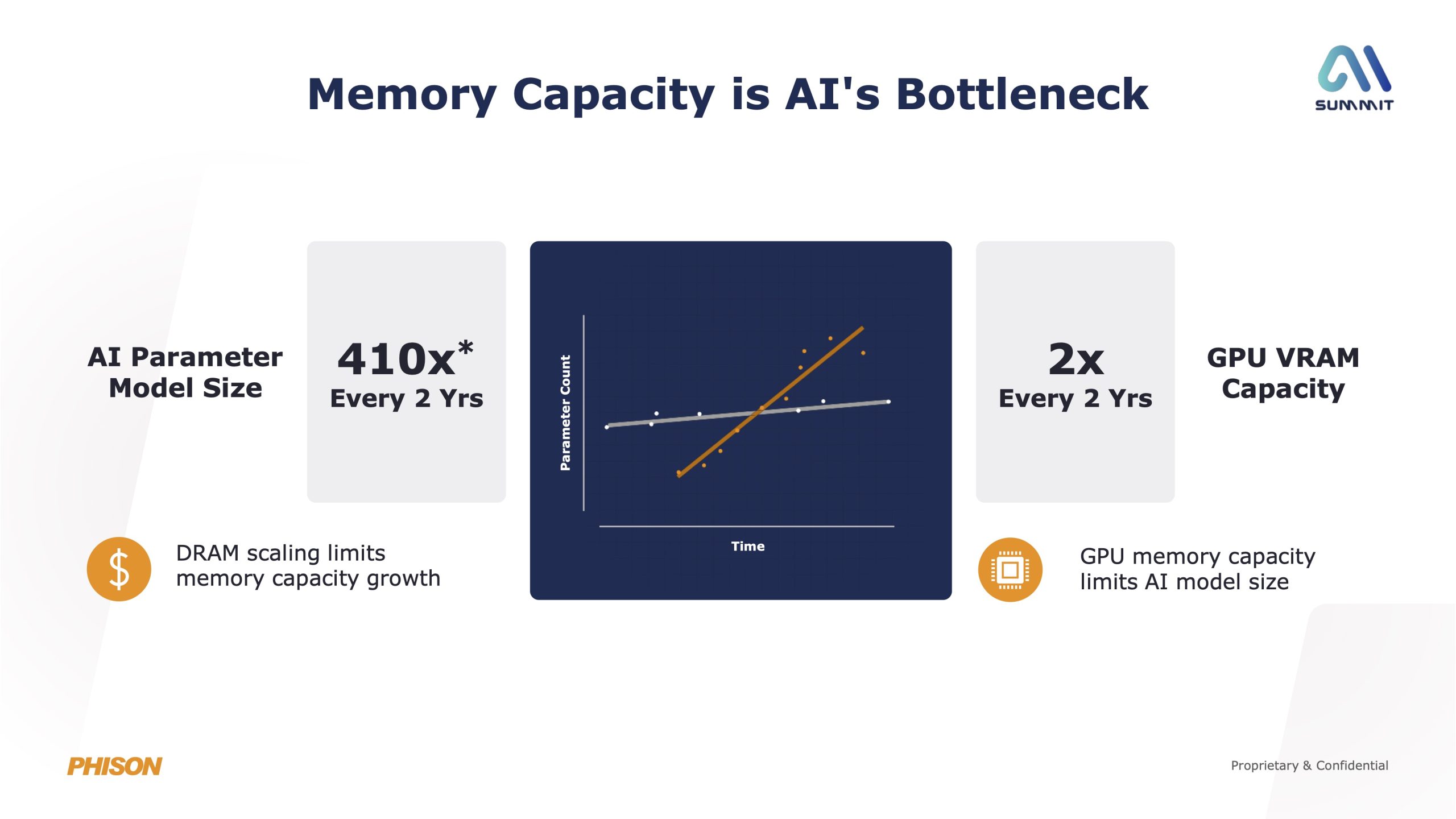
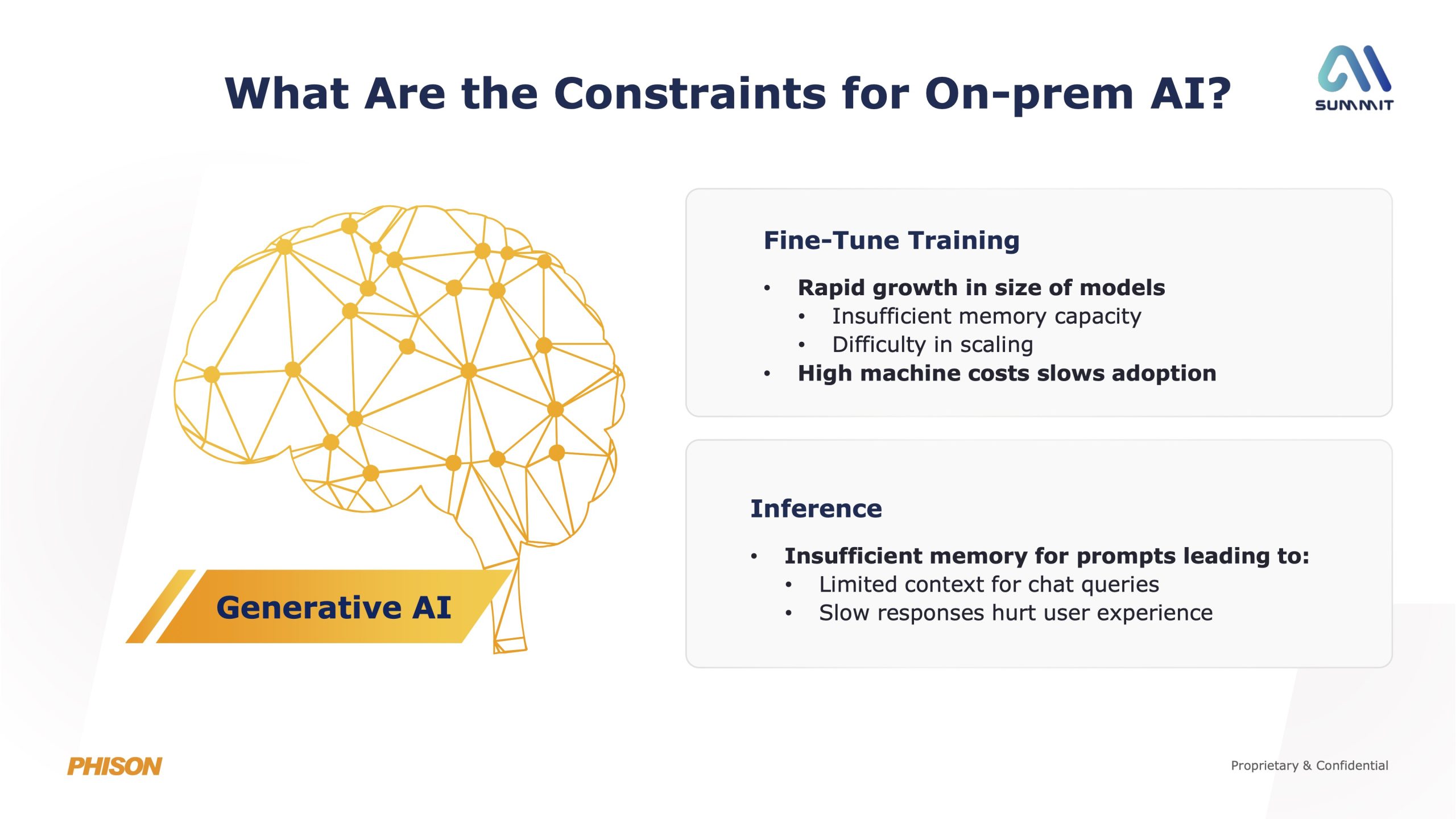
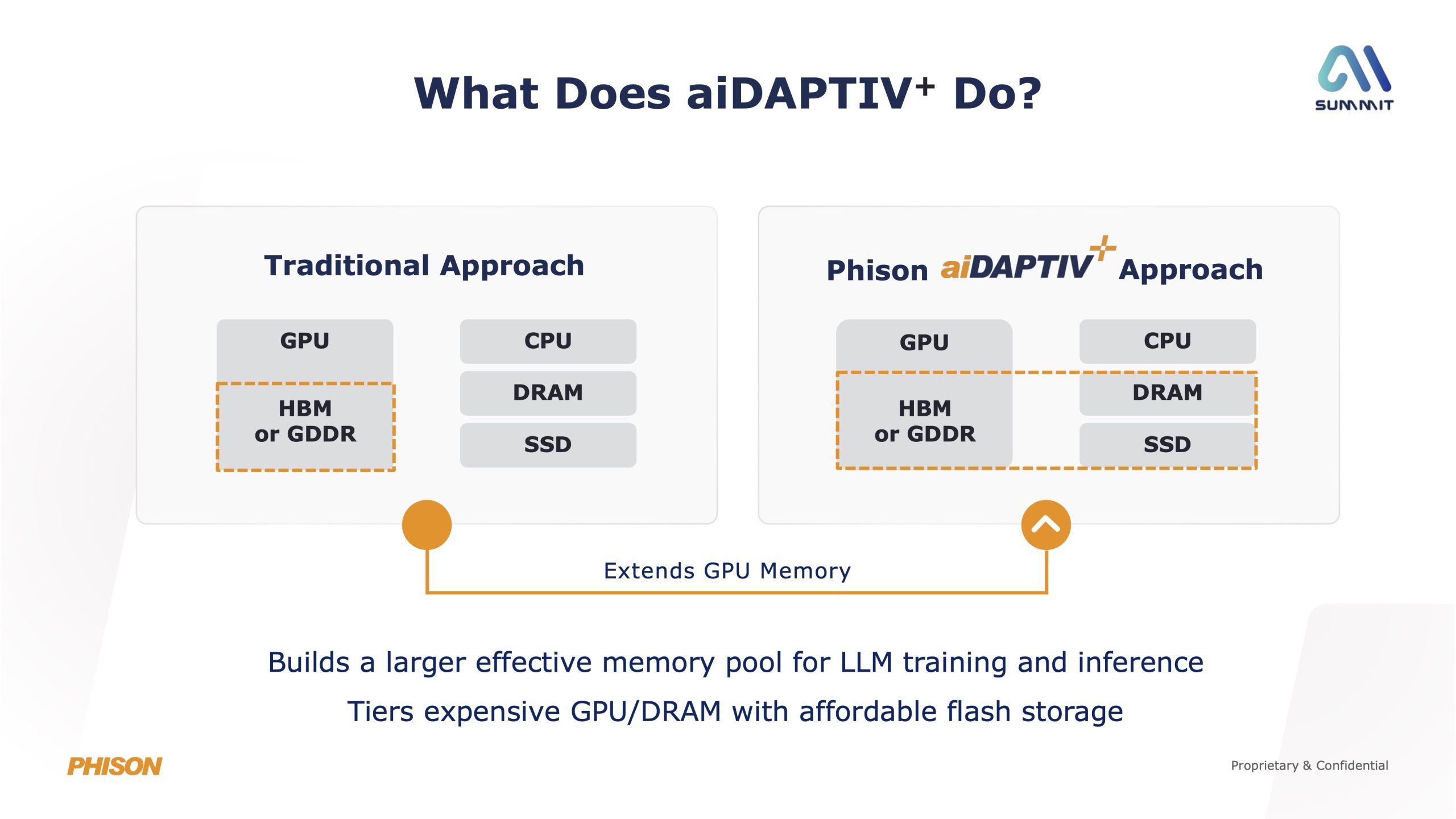
In a nutshell, Phison's aiDAPTIV+ technology is designed to mitigate one key problem area for current AI workflows – limited GPU memory. The company points out that AI models are growing far faster than what VRAM or system DRAM can keep up with, so memory capacity, rather than raw compute, has become the primary bottleneck for local AI training and inference. That, in turn, has implications for both AI model size and performance on your typical PC.
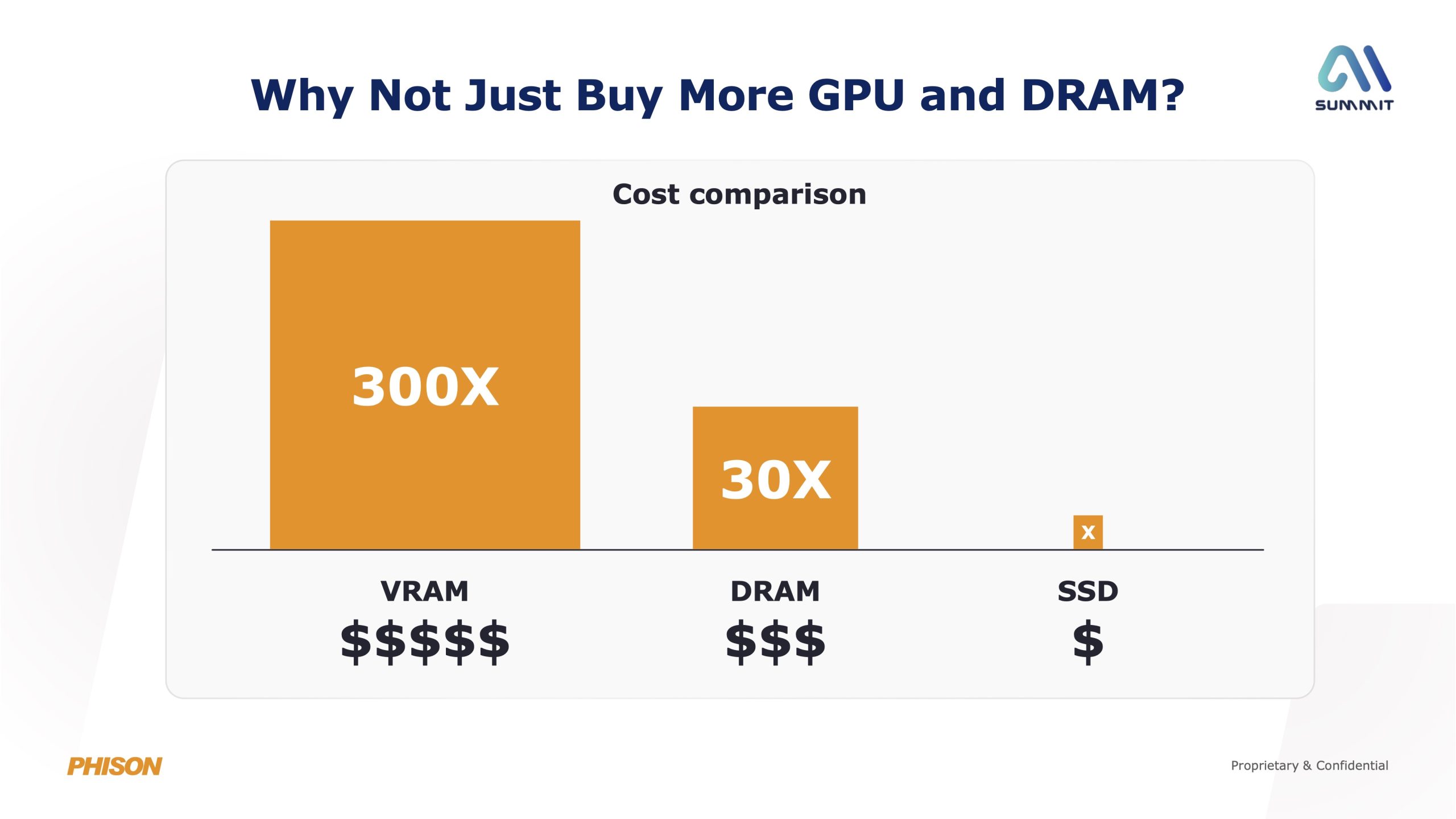
So, rather than relying on ever larger and more expensive GPUs – something we've already become well accustomed to in the gaming segment over the last few years – aiDAPTIV+ effectively builds a much larger memory pool by ‘tiering' GPU VRAM and system memory with NAND flash storage. This allows inactive AI data to be offloaded to SSDs, freeing up the properly fast memory for active workloads, while also significantly reducing cost compared to scaling VRAM or DRAM alone.
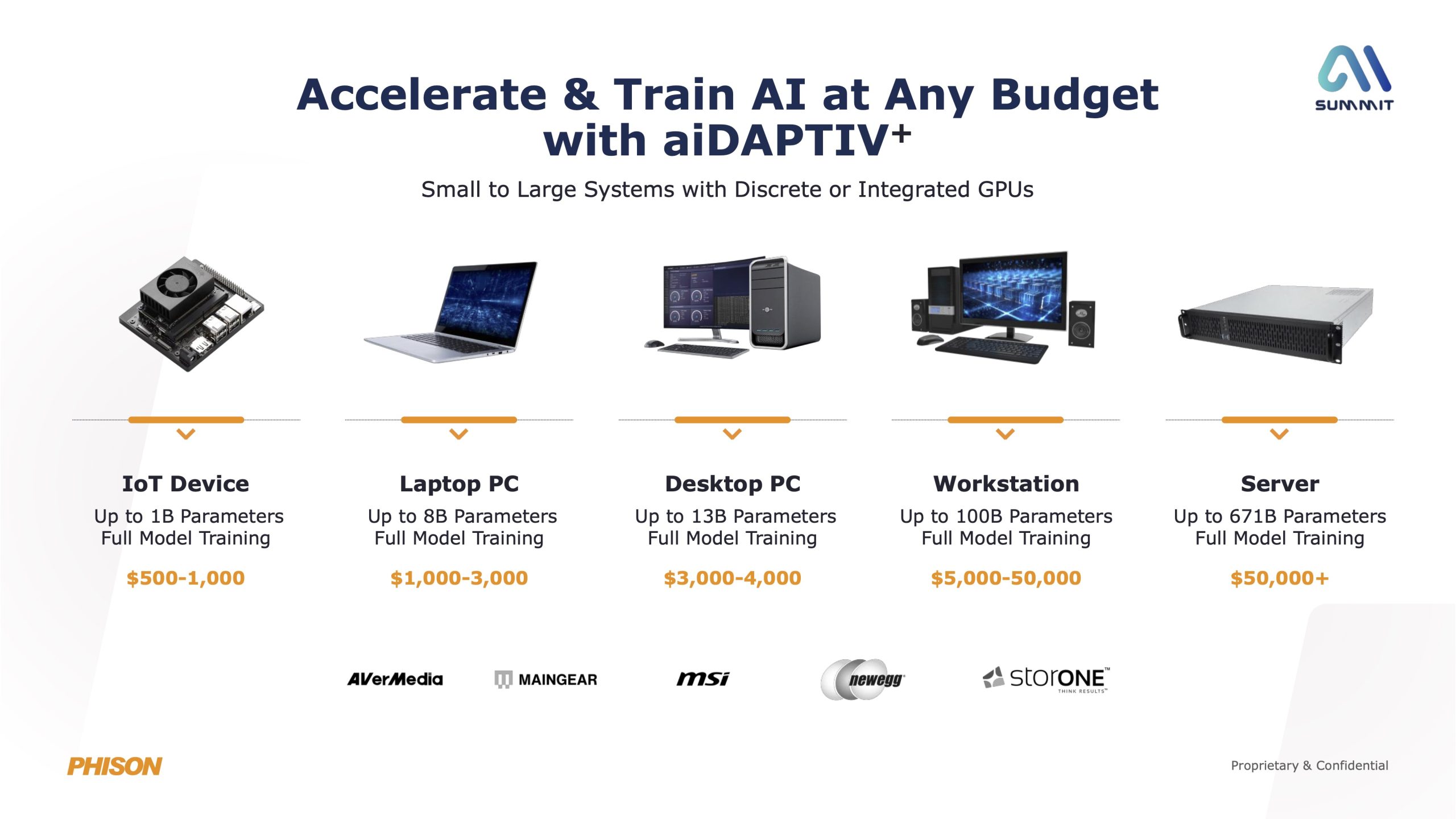
Now, at CES 2026, Phison has expanded aiDAPTIV+ beyond high-end AI workstations, making it a much more viable technology, given support has been added for ‘integrated GPU architectures', so mobile platforms – including laptops, desktops, workstations and small-form-factor PCs using both discrete and integrated GPUs – can now make use of the tech.
Phison claims that, for Mixture of Experts (MoE) inference processing, ‘a 120B parameter can now be handled with 32GB of DRAM' rather than 96GB that would otherwise be required with, what the company calls, ‘traditional approaches'.
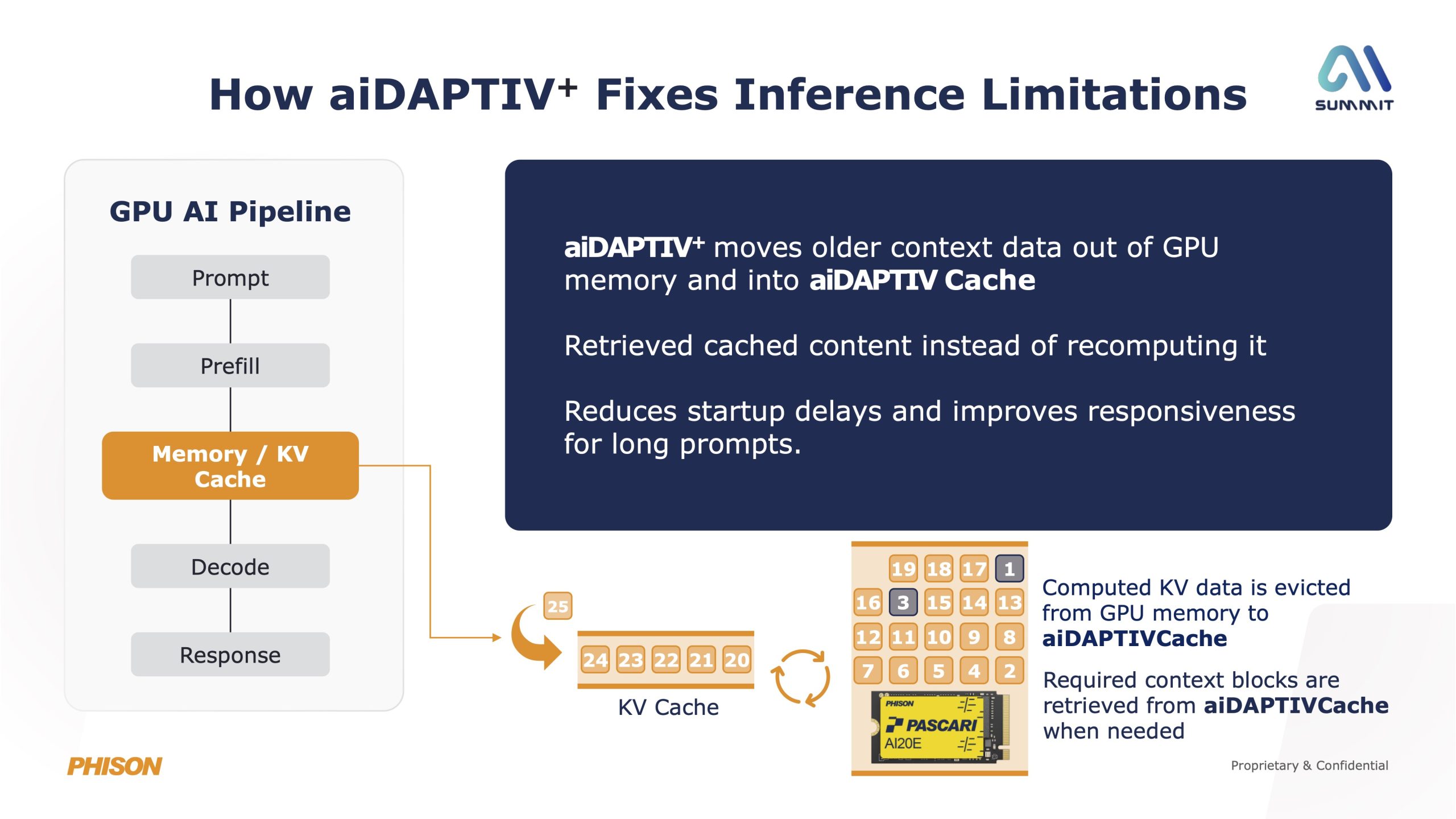
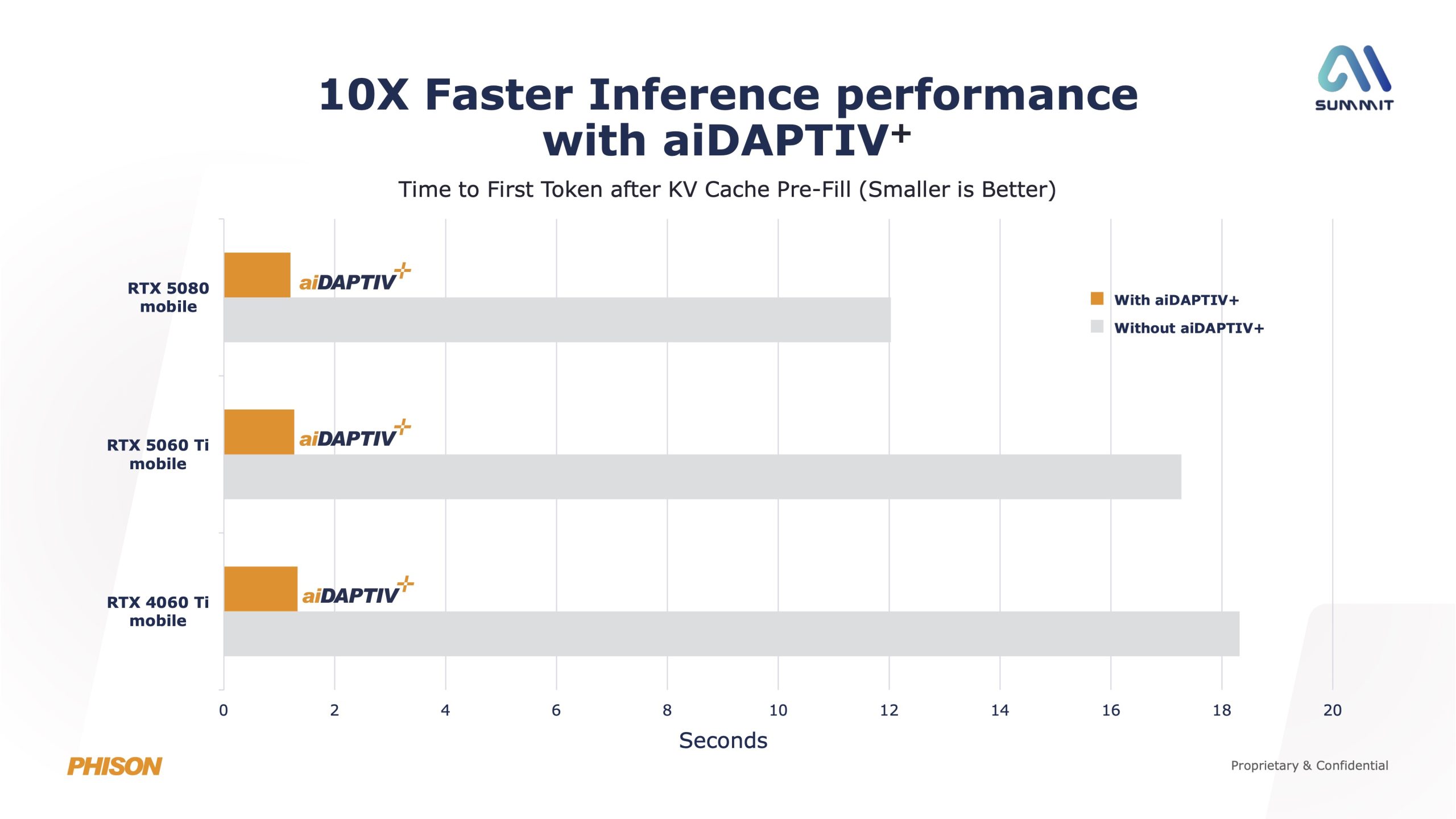
On top of that, aiDAPTIV+ addresses GPU KV cache limitations by moving older context data out of VRAM and into flash-based cache, allowing it to be reused instead of recomputed. According to Phison's presentation, this can deliver up to a 10x improvement in time-to-first-token for long prompts, improving responsiveness across a range of AI workloads.
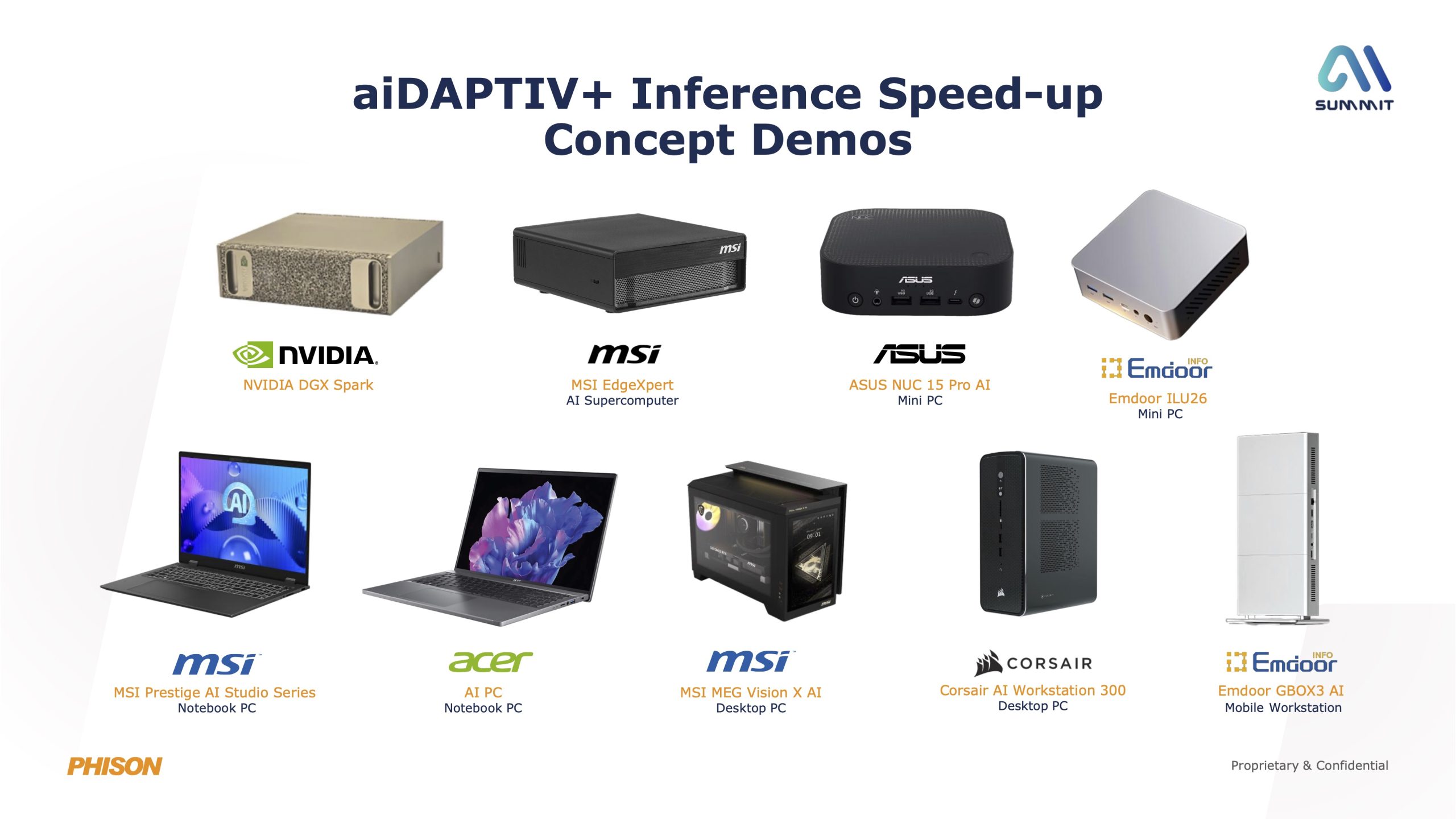
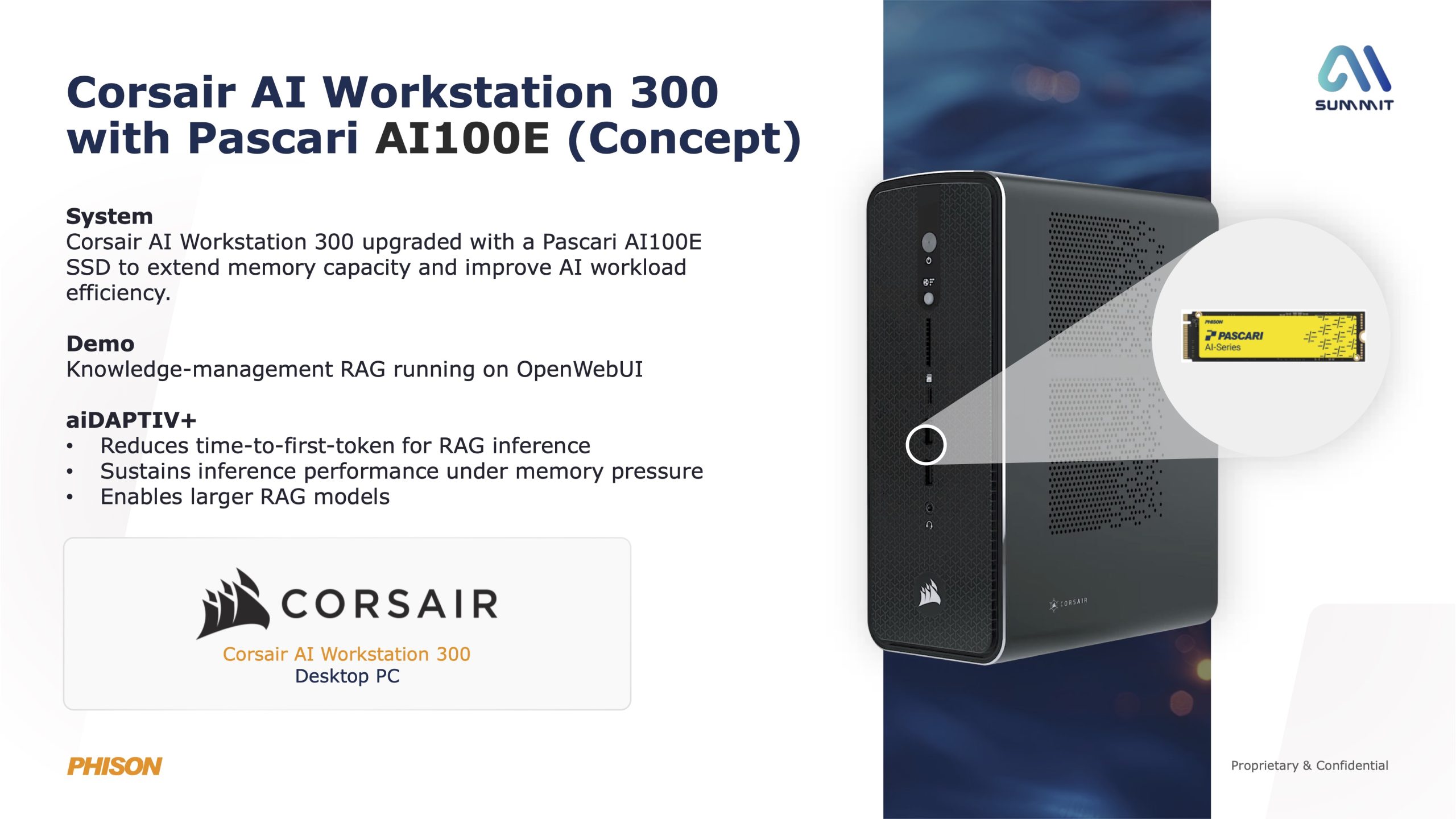
Finally, Phison showed off a number of aiDAPTIV+ concept demos at CES 2026, including systems from brands more familiar to the typical KitGuru reader, including Acer, ASUS, MSI and Corsair. While there is clearly still work to be done, the demos give us a glimpse of what it would mean to bring practical AI acceleration to more mainstream systems, rather than relying on cloud-based solutions.
KitGuru says: It's an interesting technology that makes a lot of sense on paper. Let's see how things develop over the next few months.
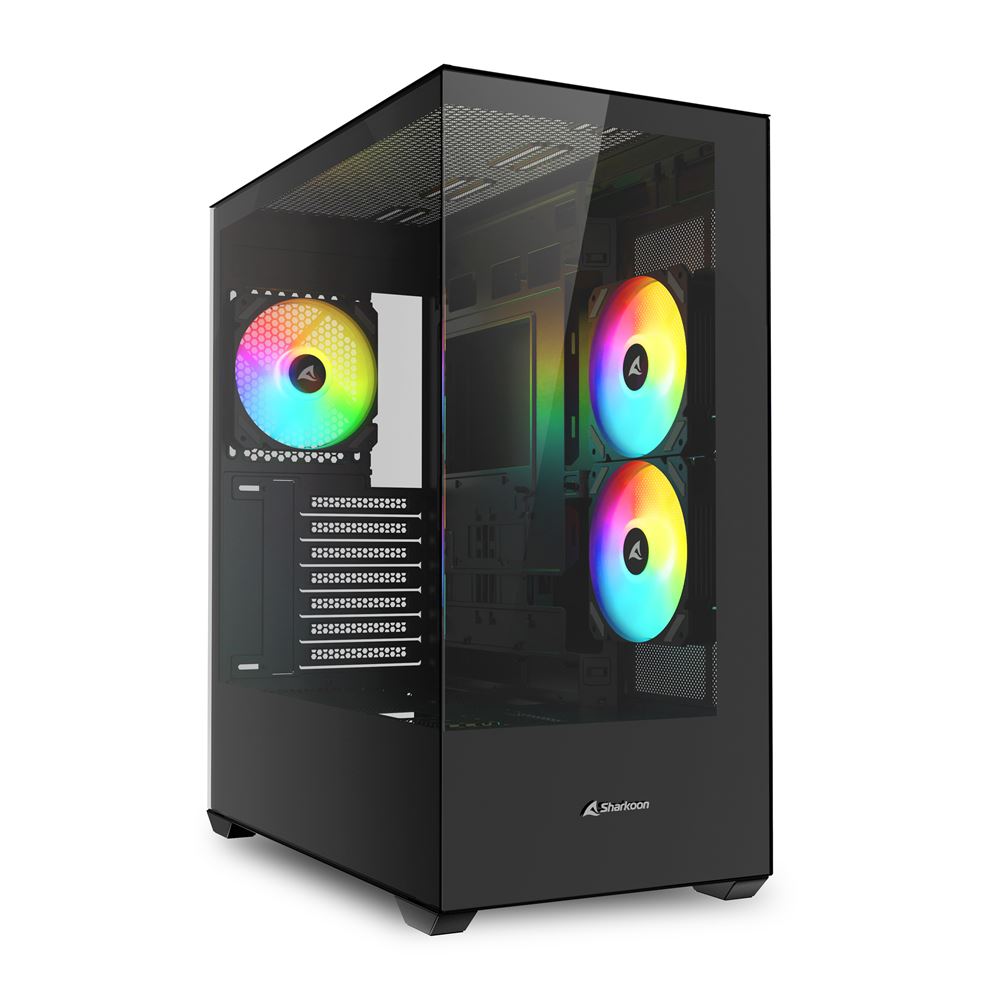
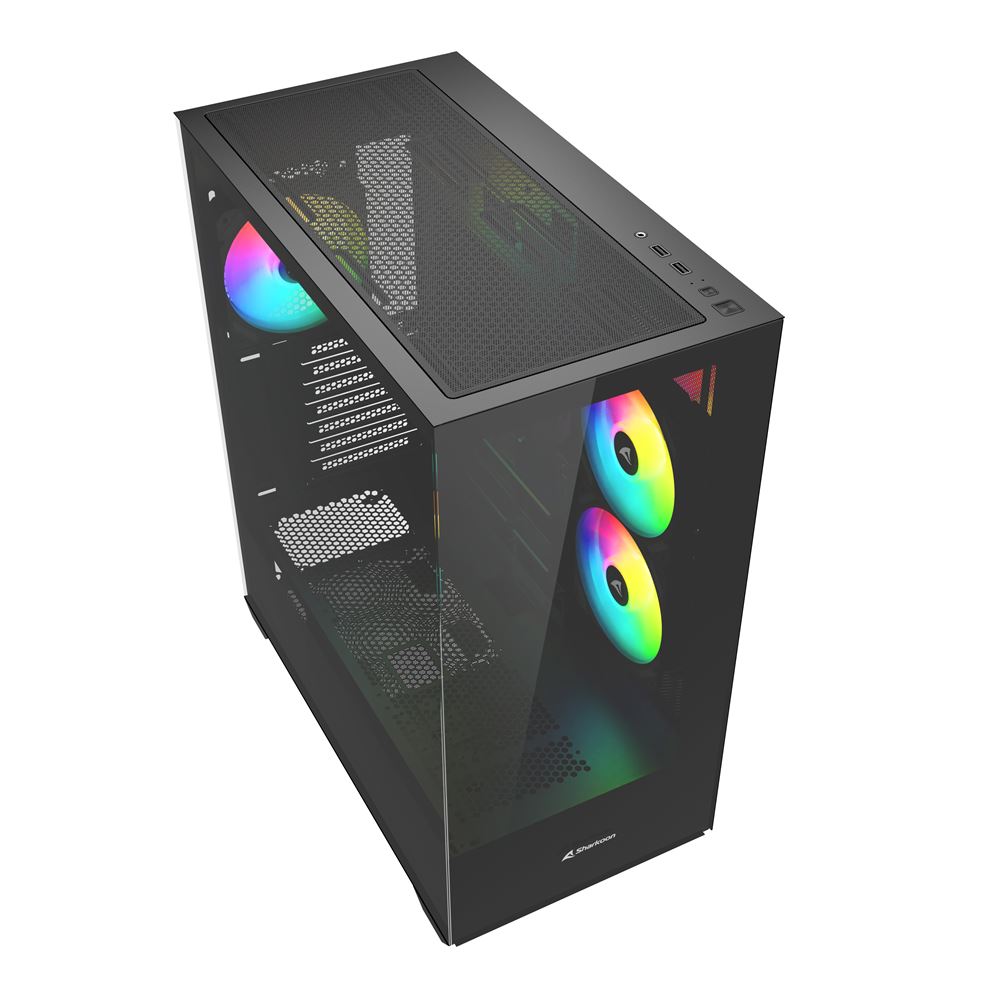
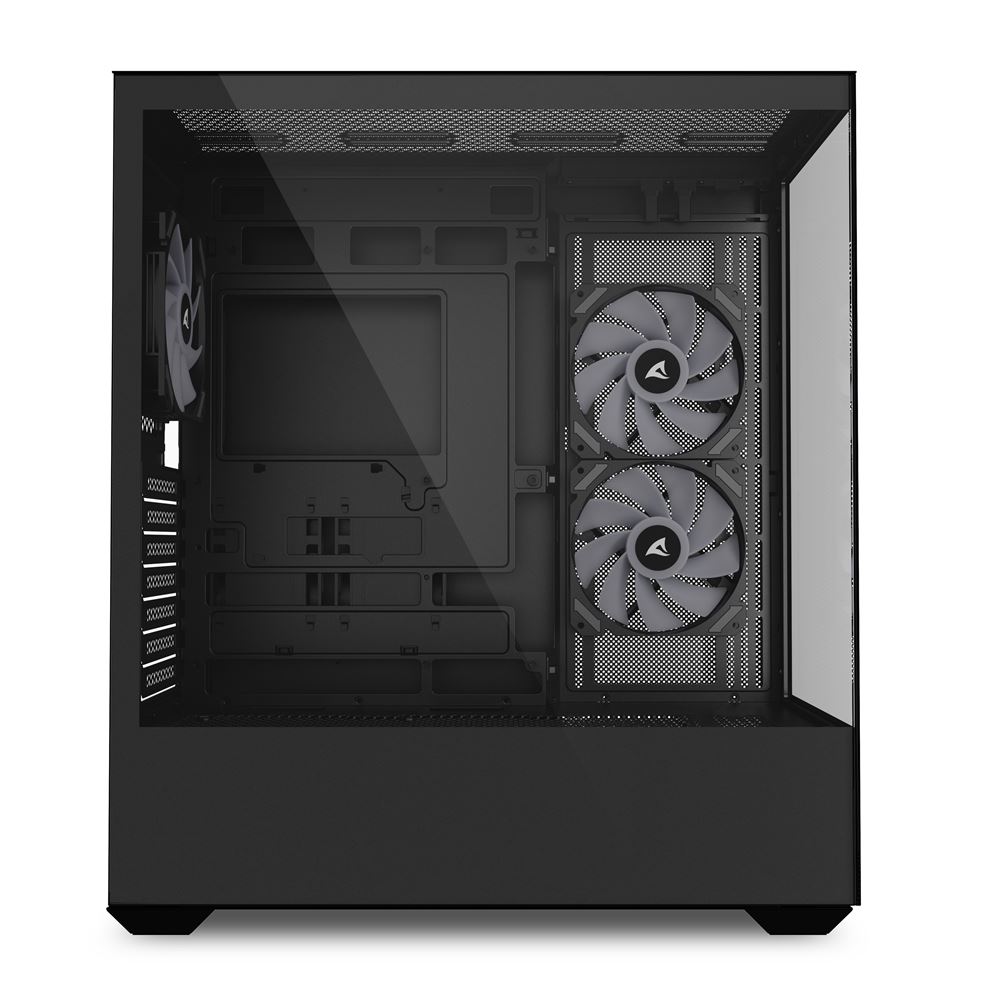
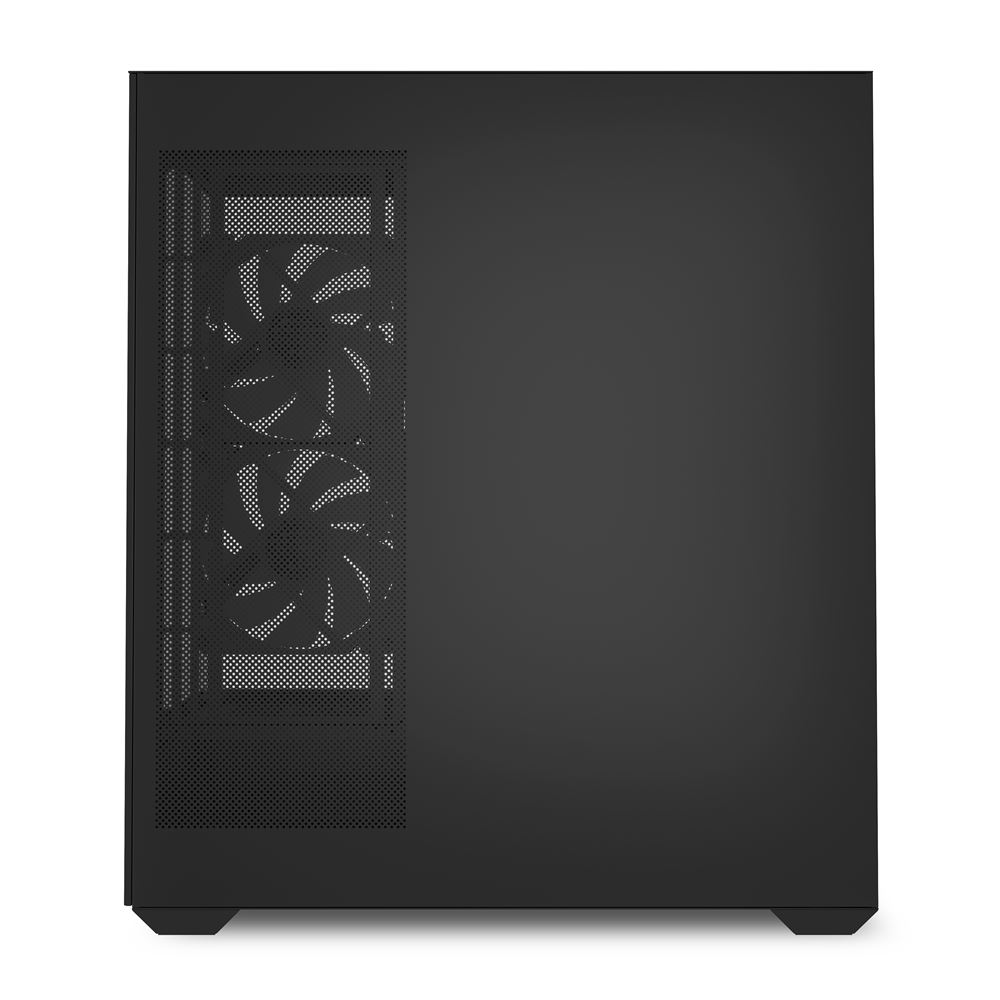
Sharkoon has launched the SK6 ARGB, a mid-tower chassis that aims to bring the “fish tank” aesthetic to a more accessible price point. While the dual-panel tempered glass design is clearly the focus, Sharkoon has engineered the internal layout to support the rising trend of back-connect (BTF) motherboards, positioning the SK6 as a budget-friendly foundation for ultra-clean builds.
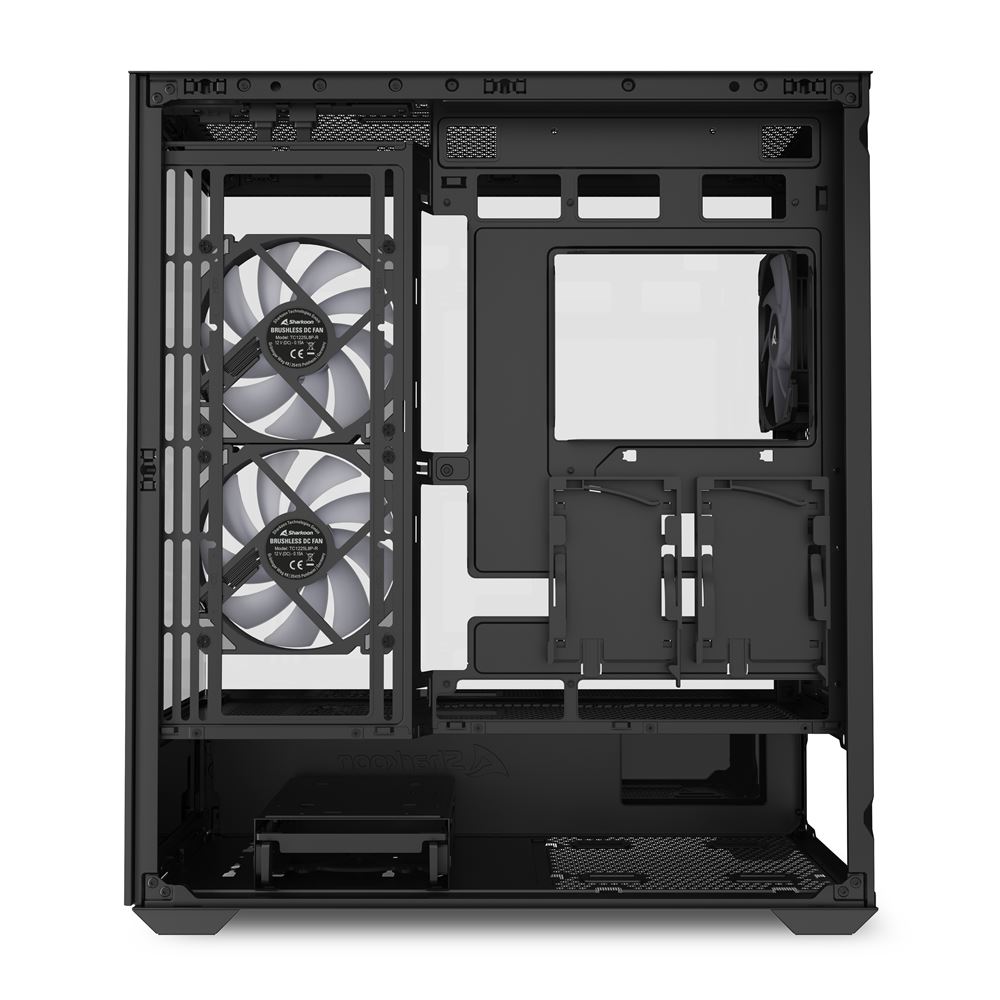
The aesthetic appeal of the SK6 ARGB centres on its uninterrupted tempered glass front and side panels, providing an unobstructed view of the internal components. To maintain this look without suffocating the hardware, Sharkoon has opted for a side-panel intake strategy rather than a traditional mesh front. Out of the box, the case includes three pre-installed 120mm ARGB PWM fans. Two of these are “reverse-blade” models mounted on the side tray.
The interior can accommodate up to 9 fans. For those leaning into liquid cooling, the SK6 ARGB provides a primary 360 mm radiator mount at the top and a secondary 280 mm position on the side, allowing for dual-radiator setups typically reserved for much larger chassis. This flexibility is complemented by a main chamber that can house graphics cards up to 410 mm in length and CPU air coolers up to 170 mm tall. High-capacity power supplies are also supported, with a length limit of 235 mm.
As vendors like Asus and MSI move power and data connectors to the rear of the PCB, case manufacturers have had to adapt their tray designs to include the necessary cutouts. The SK6 ARGB is fully compatible with these standards, enabling a build that is virtually devoid of visible cabling. Storage options are equally practical, with the drive cage supporting two 3.5-inch HDDs or four 2.5-inch SSDs. The I/O panel is side-mounted and features dual USB-A ports and an audio jack. The Sharkoon SK6 ARGB is entering the market priced at €59.90.
KitGuru says: Considering its relatively low price, we wouldn't expect touches like reverse-blade fans to maintain a clean intake look. Still, Sharkoon now offers an interesting option in the entry-level segment for those who want to show off their systems and maintain a clean build.
Following the conclusion of CES 2026 without a single discrete GPU announcement, industry sources have confirmed that Nvidia has indefinitely postponed, and potentially cancelled, the GeForce RTX 50 Super series. Originally intended to bridge the VRAM gaps in the Blackwell lineup, the refresh has been sidelined by AI dominance, a global memory crisis, and AMD's lack of competitive pressure.
According to the Board Channels forum (via VideoCardz), this delay in the RTX 50 Super series can be attributed to three key reasons. The first is that the surge in demand for compute GPUs has forced Nvidia to “cut corners” on consumer allocation. As production lines shift to the Vera Rubin NVL72 and H200 systems, the silicon intended for mid-cycle gaming refreshes is being diverted to more lucrative markets.
Moreover, there's also the ongoing GDDR7 shortage, as a severe DRAM supply crunch currently affects the industry. Costs for GDDR7 have skyrocketed, and the 3 GB modules required for the rumoured 24 GB and 32 GB 50 Series Super variants are in critically short supply. As such, releasing these cards now would force an MSRP so high that they would be DOA for most gamers.
Perhaps the most pragmatic reason is that AMD has also pushed its next-generation RDNA 5 architecture to 2027. With the Radeon RX 9070 XT unable to challenge the RTX 5080 or 5090, Nvidia sees no strategic necessity to refresh its stack. Even Intel's rumoured B770 was a no-show at CES, leaving the current RTX 50 series to almost dominate by default.
KitGuru says: With the Super cards on ice and memory prices still climbing, the RTX 50 series you see on shelves today might be the only high-end options we get for the next 18 months.
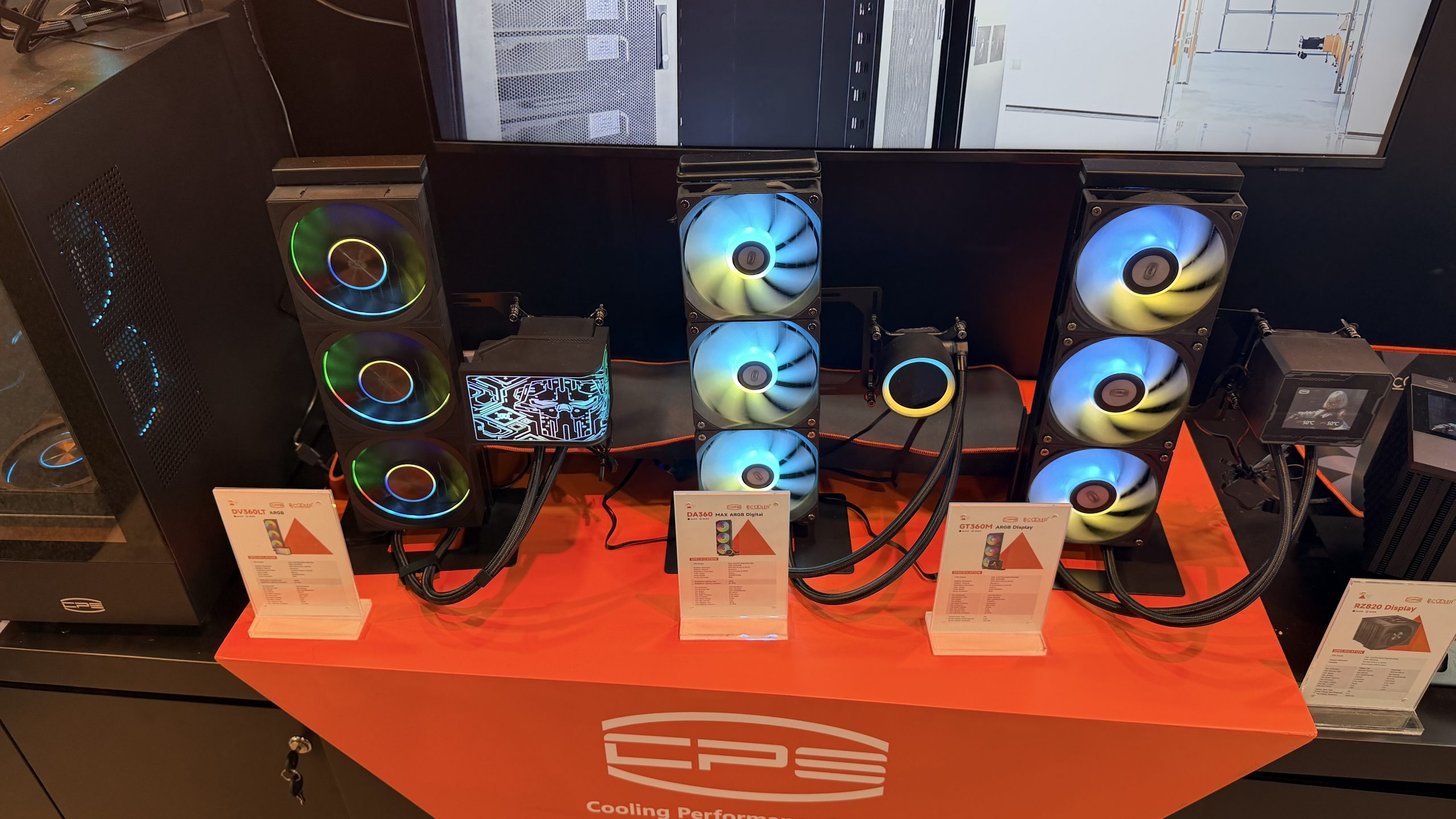
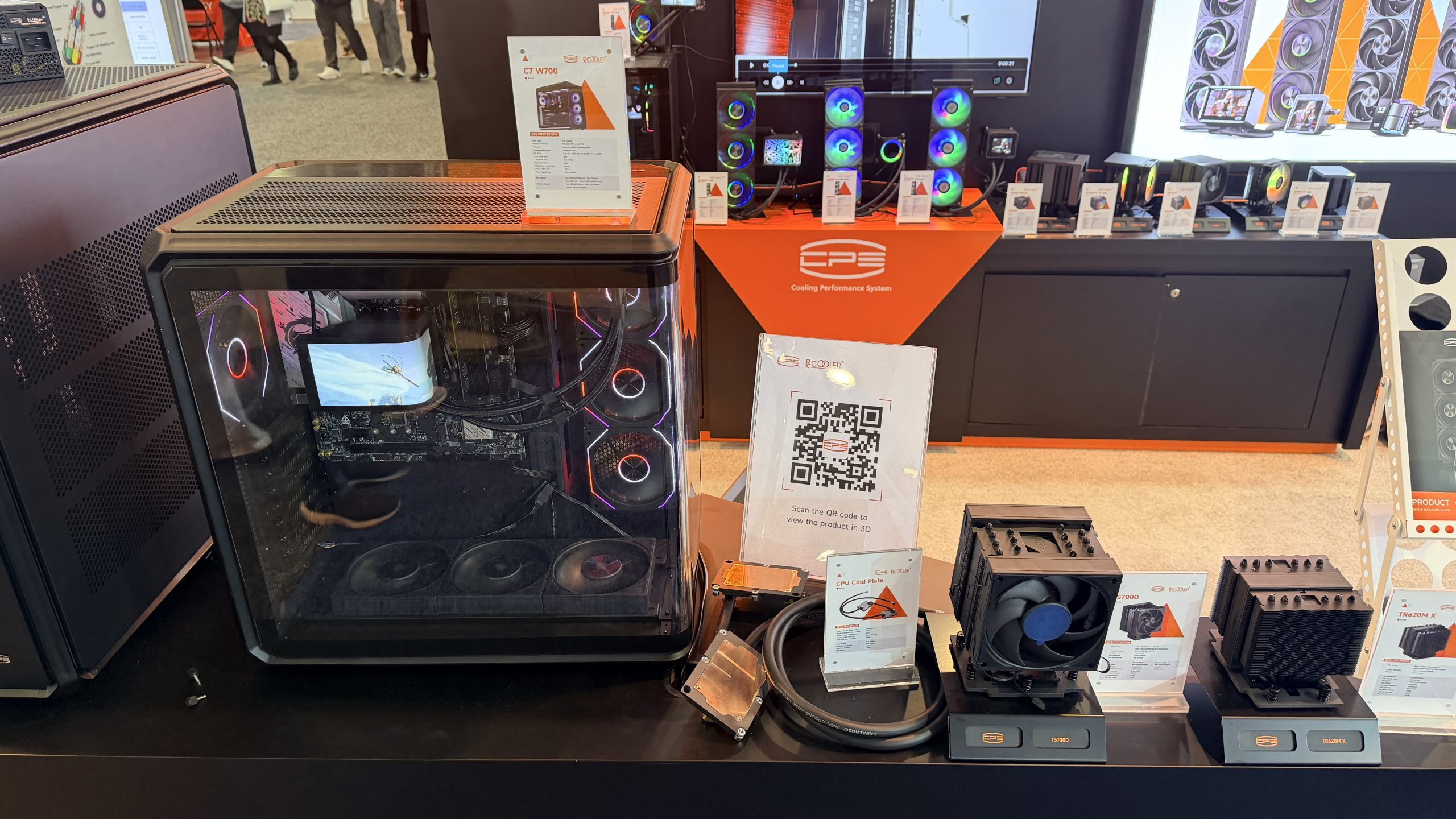
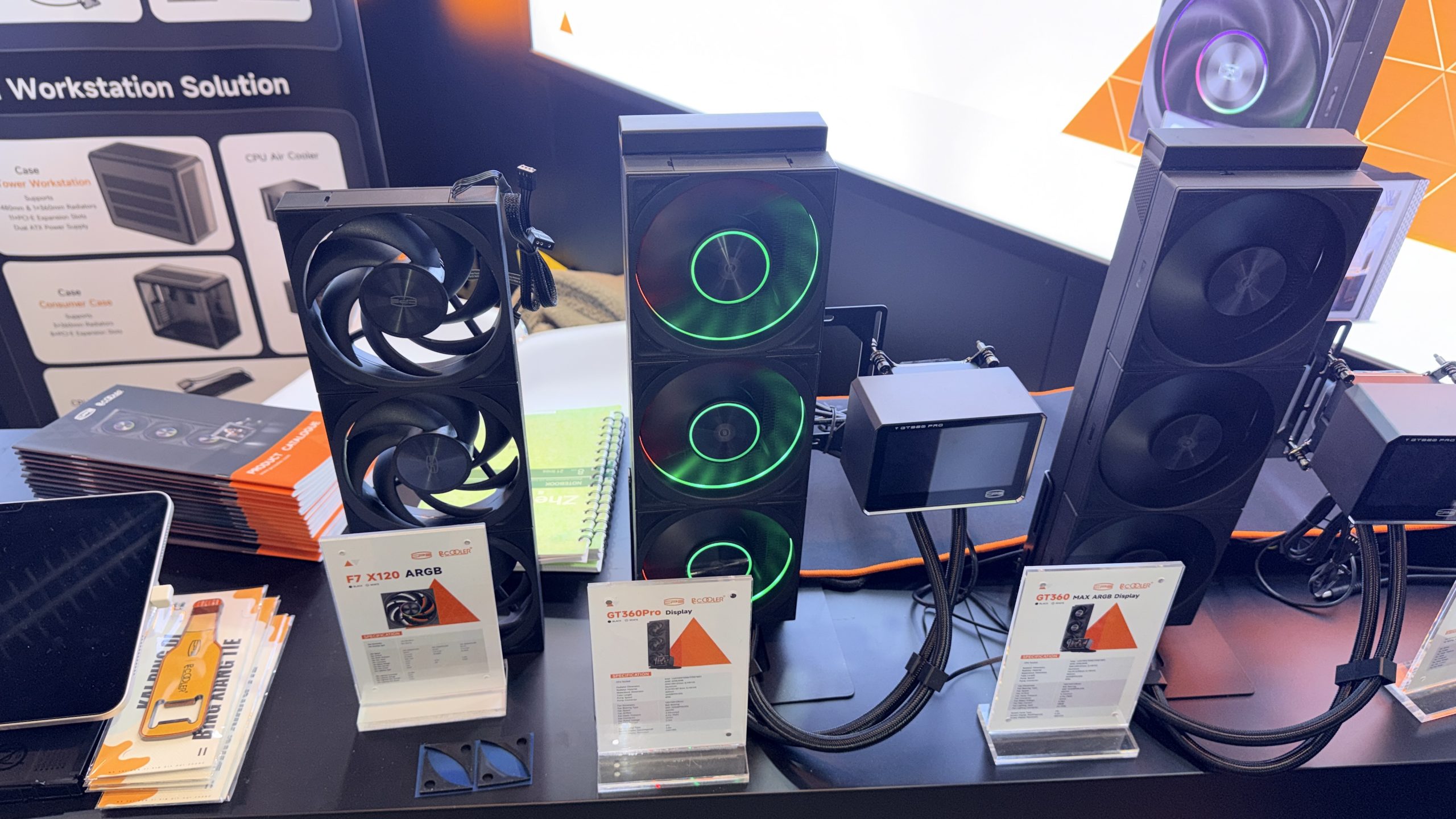
In our latest CES video, we head over CPS PCCooler to check out a wide range of new hardware on show, including air coolers, liquid coolers, ATX and workstation cases, and refreshed ATX 3.1 power supplies.
Watch via YouTube below:
Timestamps:
00:08 SR 700 monster chassis and C7M 700
01:33 Air cooler lineup for Threadripper
01:52 The new AIO range
03:05 Air coolers
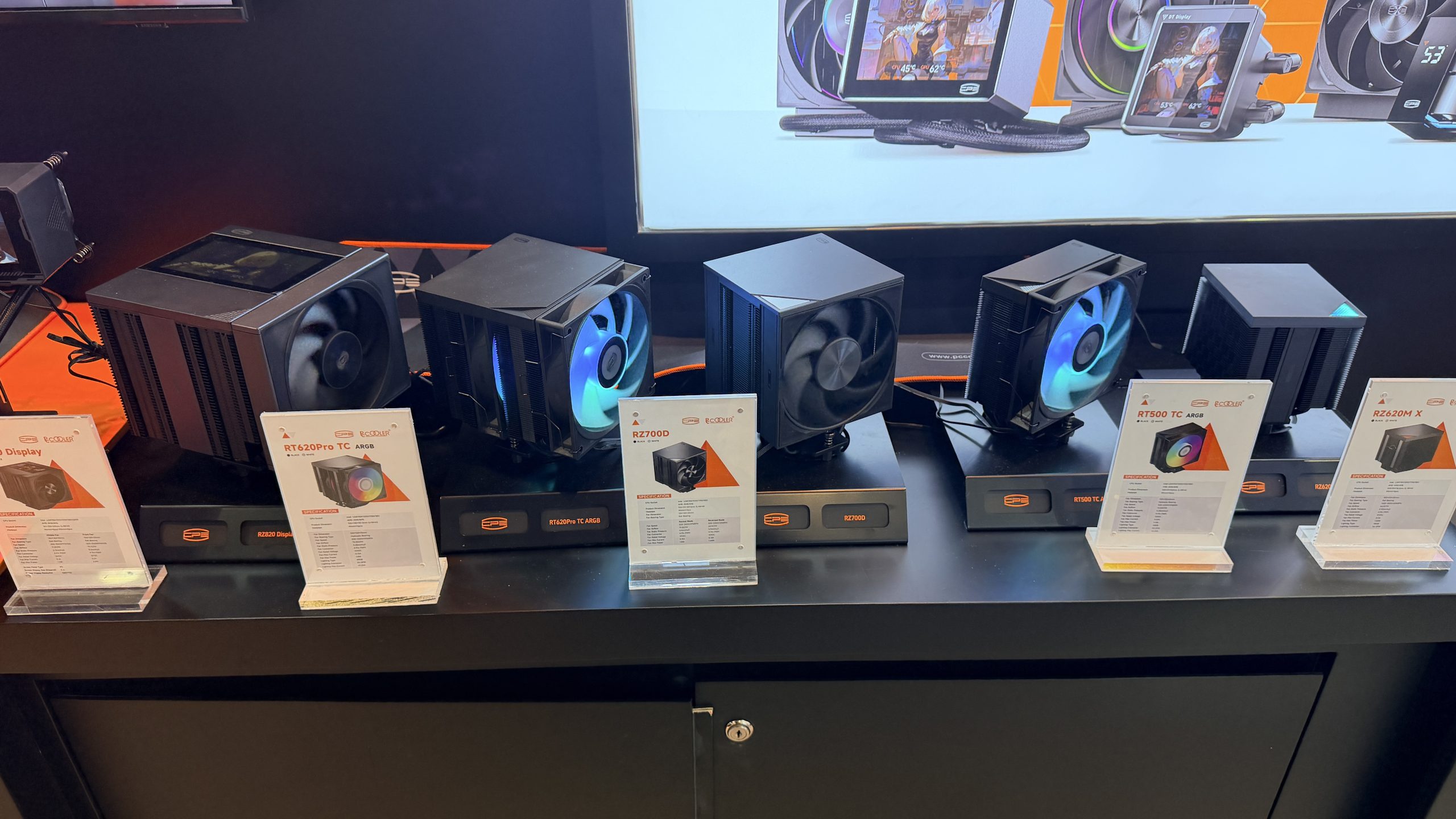
On the air‑cooling side, CPS PCCooler introduced several new models. The RZ700D is a 159.5mm single‑tower cooler with seven 6mm heatpipes, a nickel‑plated copper base and the company’s F5 dual ball‑bearing fan. It uses a magnetic top cover, clip‑free fan mounting and offers full RAM clearance. Above that, the RT720TC brings a dual‑tower layout with seven 6mm heatpipes, an integrated top cover, an anti‑deformation bracket and hydraulic‑bearing fans capable of up to 2200RPM speeds. The RZ620 Pro TC follows a similar design with six heatpipes and dual ball‑bearing fans, along with a clip‑free centre fan for easier installation. All three coolers support Intel LGA1851 and AMD AM5.
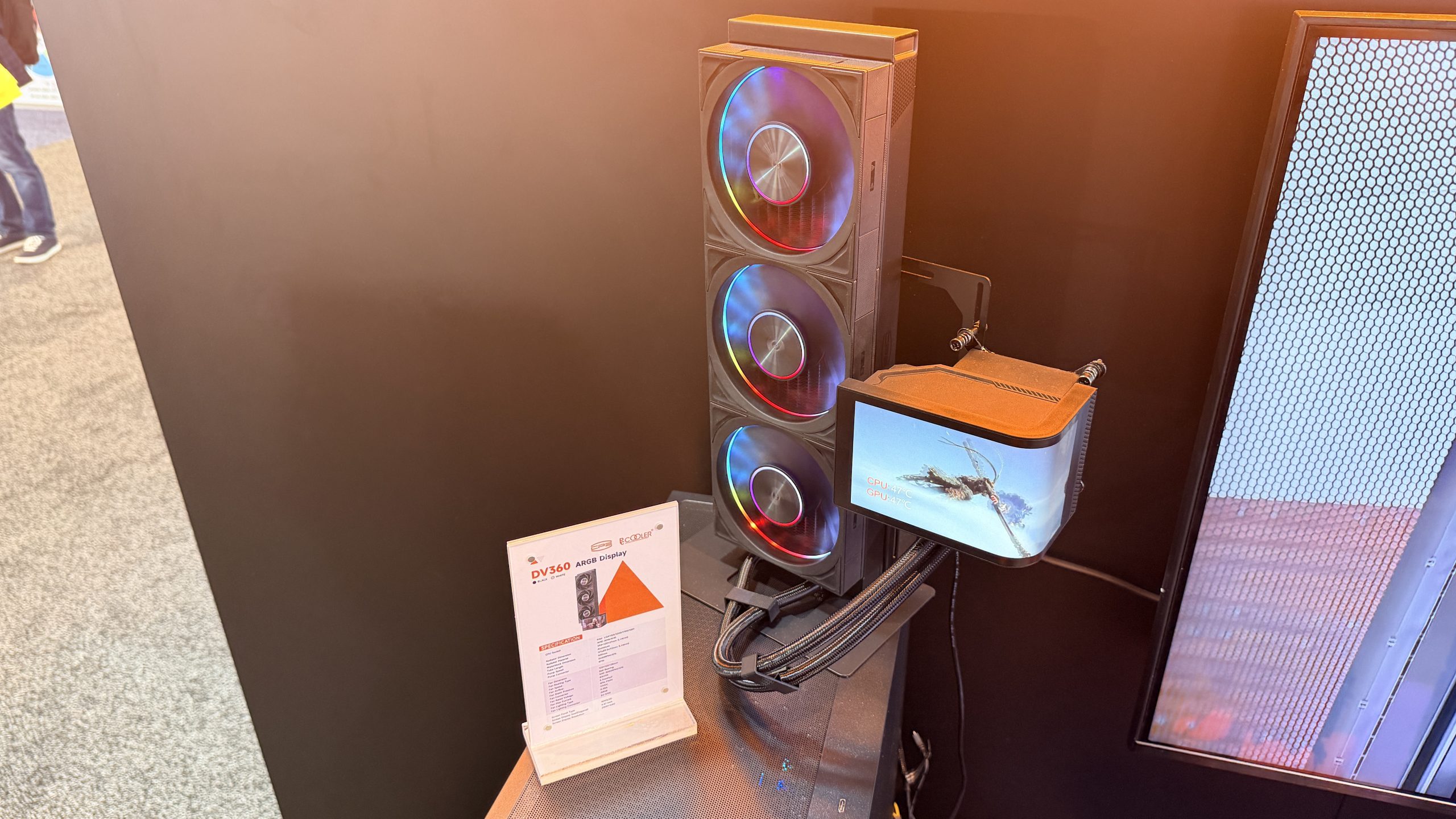
The company is also expanding its display‑equipped AIO range. The DV360 ARGB Display pairs a 360mm radiator with a 6.67‑inch curved AMOLED screen running at 2400×1080 resolution and 60Hz refresh rate. The screen mounts magnetically and can be angled, while cooling is handled by a ceramic bearing pump and F7 X120B fans that scale up to 3000RPM. For builders wanting a smaller display, the GT360M ARGB Display uses a 2.8‑inch IPS LCD with the same 360mm radiator size, a ceramic‑bearing pump and pre‑installed daisy‑chain fans.
On the chassis front we have the C3Q500, a new ATX panoramic chassis with 270° tempered glass, support for 360mm liquid coolers and GPU clearance up to 420mm. Tool‑less side panels and up to nine 120mm fan positions target mainstream builders. For workstation users, the C5Q700 supports dual GPUs up to 450mm, E‑ATX motherboards and up to 15 fans, along with 420mm radiator support. Above that, the C9Z700 is a full‑tower aluminium model designed for multi‑GPU and server‑grade boards including HTPX and SSI‑EEB. It supports up to 30 fans, dual PSUs and radiators up to 480mm.
CPS PCCooler’s PSU lineup has also been refreshed. The SU Series sits at the top with Cybenetics Titanium certification, silicon‑carbide MOSFETs, full Japanese capacitors and up to four native PCIe5.1 12V‑2×6 connectors, scaling from 1350W to 2500W. The KN Series targets mainstream builders with 80Plus Gold efficiency, full‑modular cables and models from 650W to 1000W. The YS Series, powered by Seasonic, offers 80Plus and Cybenetics Gold ratings, full Japanese capacitors and a 12‑year warranty in 850W to 1200W capacities.
CPS PCCooler also showed updates across its fan portfolio, including the dual‑halo F7 X120B, the industrial‑grade F9 R120 with liquid‑crystal‑polymer blades, and the airflow‑focused F5 R140. Two workstation coolers were also on display: the FW700, a 7‑heatpipe design for Intel 4710 and AMD SP5/STR5 platforms, and the compact FW620, a 4U‑compatible dual‑tower cooler with 100mm fans.
At CES 2026, AMD gave us a hands-on look at its new mini PC, the Ryzen AI Halo. As its name implies, the AMD Ryzen AI Halo is built around AMD's current top-of-the-line APU, the Strix Halo-based Ryzen AI Max+ 395. The Ryzen AI Max+ 395, which we've previously reviewed in the ASUS ROG Flow z13 and the HP Z2 Mini G1a, features 16 AMD Zen 5 CPU
Recently on X/Twitter, user @Clawsomegamer spotted a preliminary listing for the Steam Machine on a Czech retailer's website. On the surface, no pricing information is displayed, but the web page's code does reveal pricing of 19,826 CZK ($950 USD) for the 512GB Steam Machine and 23,305 CZK ($1070 USD) for the 1TB version. Mind you, this price
A new era appears to be kicking off in immersive hardware as long-time VR developers reel from a Christmas season without new consumer hardware drawing in audiences.
UploadVR spoke with a number of developers finding themselves in varying degrees of distress over the overall direction of investment in VR and the overwhelming cost of reaching people in headsets about their wares.
Several spoke on condition of anonymity for fear of their business relationships with platform companies being affected by their comments. If you have comments you'd like to share with UploadVR, you can email ian@uploadvr.com or message 1-949-610-3857. I will assume comments are fine to associate with your name unless you include the words "on background" in your message to request I take steps to anonymize your statements.
“We are definitely seeing a shift in the market and a need to diversify in terms of platforms,” wrote Tommy Palm, the head of Resolution Games. “We’ve been preparing for this for some time as we’ve aimed to make our games available to players across as many platforms as possible for the last few years. While it’s no easy task to launch a game like Demeo x Dungeons & Dragons: Battlemarked across Quest, PlayStation and Steam - with the goal of more platforms to come - the game did exceed our sales goals over the holidays, and being cross platform helped with that.”
Creature led by Doug North-Cook released several projects in 2025 with partners of the label launching new games and downloadable content at a regular pace. Maestro continues dropping hugely appealing DLC content and our reviewer found Deadly Delivery from Creature-associated Flat Head Studio to be "hilarious horror best played with friends".
"The state of the industry leaves no room for error," North-Cook wrote. "With no new headset this holiday sales were up over the holidays but not where they would be in a new device era. I fully expect most studios will have a difficult time finding a positive path forward this year as industry trends, lack of investment, and declining per-developer revenue hit everyone hard."
"Creature isn’t slowing down at all though. We have several large titles in development across multiple partner studios - some of our most ambitious yet. We also had a positive holiday with our catalog overall doing pretty well and Deadly Delivery ranking as one of the top selling titles leading into the holidays."
Cloudhead Games laid off 40 people after teasing for years work on a major title following their standout release Pistol Whip. The studio confirmed in the comments on our initial article about the layoffs that both versions of the game – one for Intel machines and one for ARM systems – will be packaged for sale on the forthcoming Steam Frame. At 16 people now, founder Denny Unger's first week of 2026 involved resetting Cloudhead's strategy and "reverse recruiting" for dozens of now-former colleagues looking for new remote positions.
Some VR game developers have been buoyed by revenue from the subscription programs offered by Sony and Meta that their games are downloadable through. Some developers, however, see these subscriptions becoming a larger percentage of a smaller income pie overall. With no new VR hardware from Meta in 2025 and confirmation that their third-party Horizon OS headset program has been shelved, developers growing overly dependent on subscription revenue likely face difficult decisions about how to maintain independence or continue VR development.
Forking Inputs
Do VR developers build games for controller-free hand tracking or for a new set of controllers from Valve that differ from Meta Quest in the number of buttons they have?
Do they build volumes that float in space alongside other volumes and windows, or do they construct fully immersive virtual worlds?
Can VR developers expect the targeting of eye tracking in all future headsets to help them build more responsive software?
"We're as hungry as ever," Payton told us during the broadcast. "I think a Wolverine VR game would be incredible. I want that."
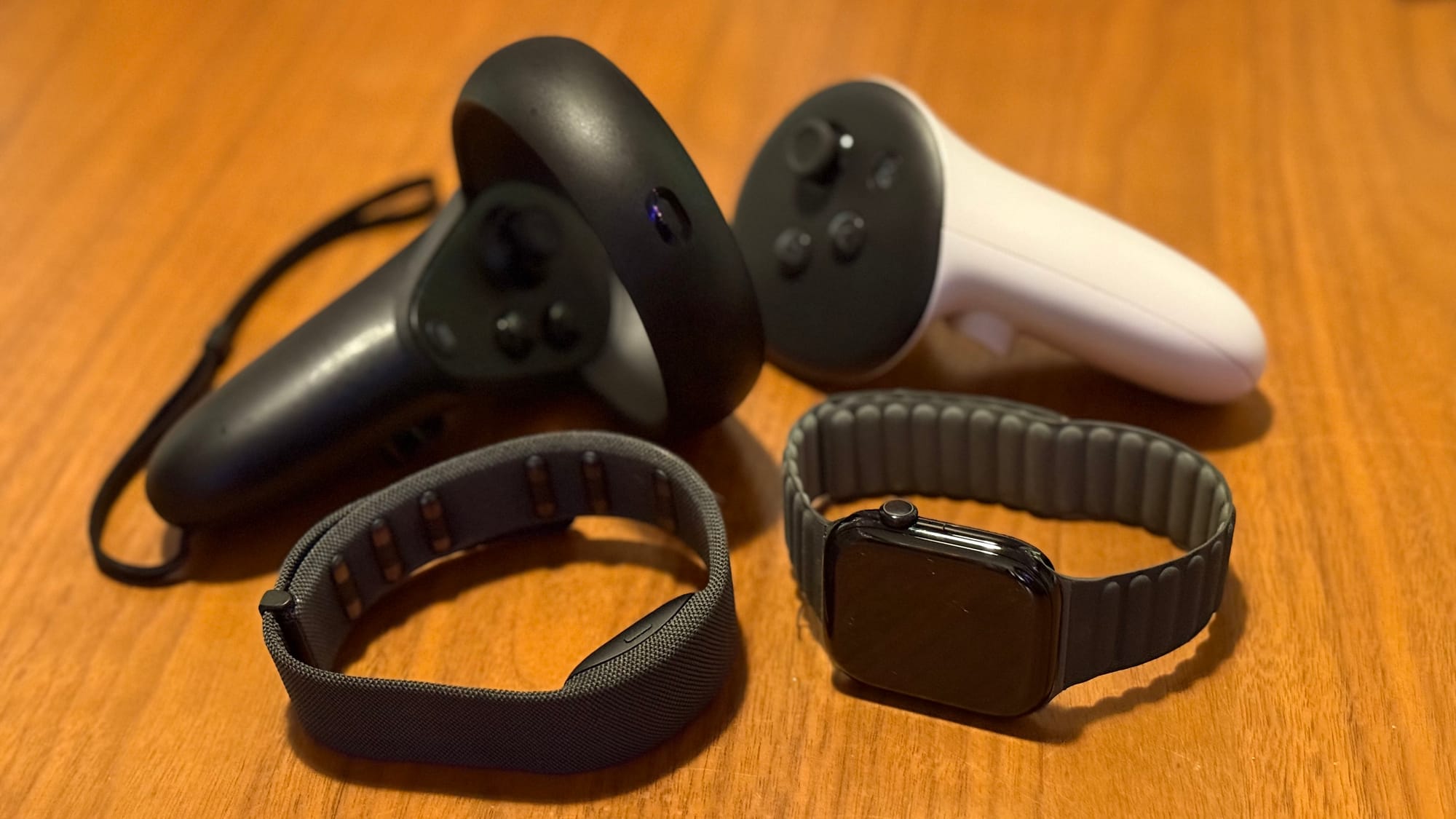
A Meta Neural Band worn on each wrist could conceivably make that dream come true. When combined with the idea that computer vision could help more accurately detect precision microgestures, we're glimpsing an era with Meta's Display glasses that could see users do much more than just navigating menus in headsets or glasses privately with simple thumb swipes.
In the dreams we seem to share with the director of one of the best VR games produced by Meta, we want something wholly more robust from our experience in headset. Wolverine's adamantium claws can seem to slide out from underneath the skin of our wrists and then we can use our new tools to climb up brick walls in wide field of view virtual reality. This can be done without controllers in hand as wristbands vibrate haptic effects for us instead. If this is the way, it would require Meta figuring out how to transition its ecosystem from selling two inexpensive controllers in the box with each headset to bundling up a pair of Neural Bands instead.
Without third-party Horizon OS headsets to differentiate the experience inside Meta's ecosystem near term, and as executives court partners like UFC and James Cameron long term, VR game developers are left wondering what space Meta is making for them in their future endeavors.
50-degree field of view AR glasses with a wristband on your dominant hand to interact with menus or handwrite will certainly be interesting to some people for tasks out in the physical world. However, that's so very far from the presence-inducing VR of the sort we would want in a Wolverine game. We can only have dual-wielding indestructible claws via a pair of bands on both wrists with wide field of view virtual reality doing the work of transporting us into a world of superheroes.
Platform Focus
Consider the next two years facing two of the best games made for VR – Batman: Arkham Shadow and Half-Life: Alyx. Near term, pirates are likely to try to run Batman: Arkham Shadow on the Frame headset before Meta chooses to put it for sale on the Steam store.
Meanwhile, Valve is working to get Half-Life: Alyx running performant in the standalone Steam Frame. If that should happen, will there be the same demand to get that experience running directly on a Meta standalone?
I'm illustrating that some of the biggest-budget exclusive software products made for VR headsets – games owned 100% by the platform – find their virtual worlds diametrically opposed in the pressure ahead for their distribution.
Alyx faces developer-led optimization to bring an experience that sings with a high-powered PC down to run performant on a low-powered standalone headset. Batman faces the demand of PC buyers hungry for more high-quality content than the market can produce, and a publisher with some motivations against selling software via a competitor's storefront.
Nintendo releases the revamped Virtual Boy next month and we'll be curious if Sony can pull together a coherent strategy after the PlayStation VR2. Meanwhile, Apple chips away at major software updates for visionOS and we'll have a review of Steam Frame once we receive the completed headset from Valve.
For now, multiple long-time VR development studios still find themselves committed to the medium and working on new software, but they are also recalibrating their expectations for a smaller market near-term and difficult decisions ahead about focus and differentiation.
At CES 2026 in Las Vegas this past week, I finally had the opportunity to go hands on with the Galaxy Z TriFold, Samsung’s first phone that folds twice and transforms from a regular 6.5-inch Android handset into a 10-inch Android tablet. On the surface, the Z TriFold is essentially a thicker Galaxy Z Fold7 with an extra, third panel, but that
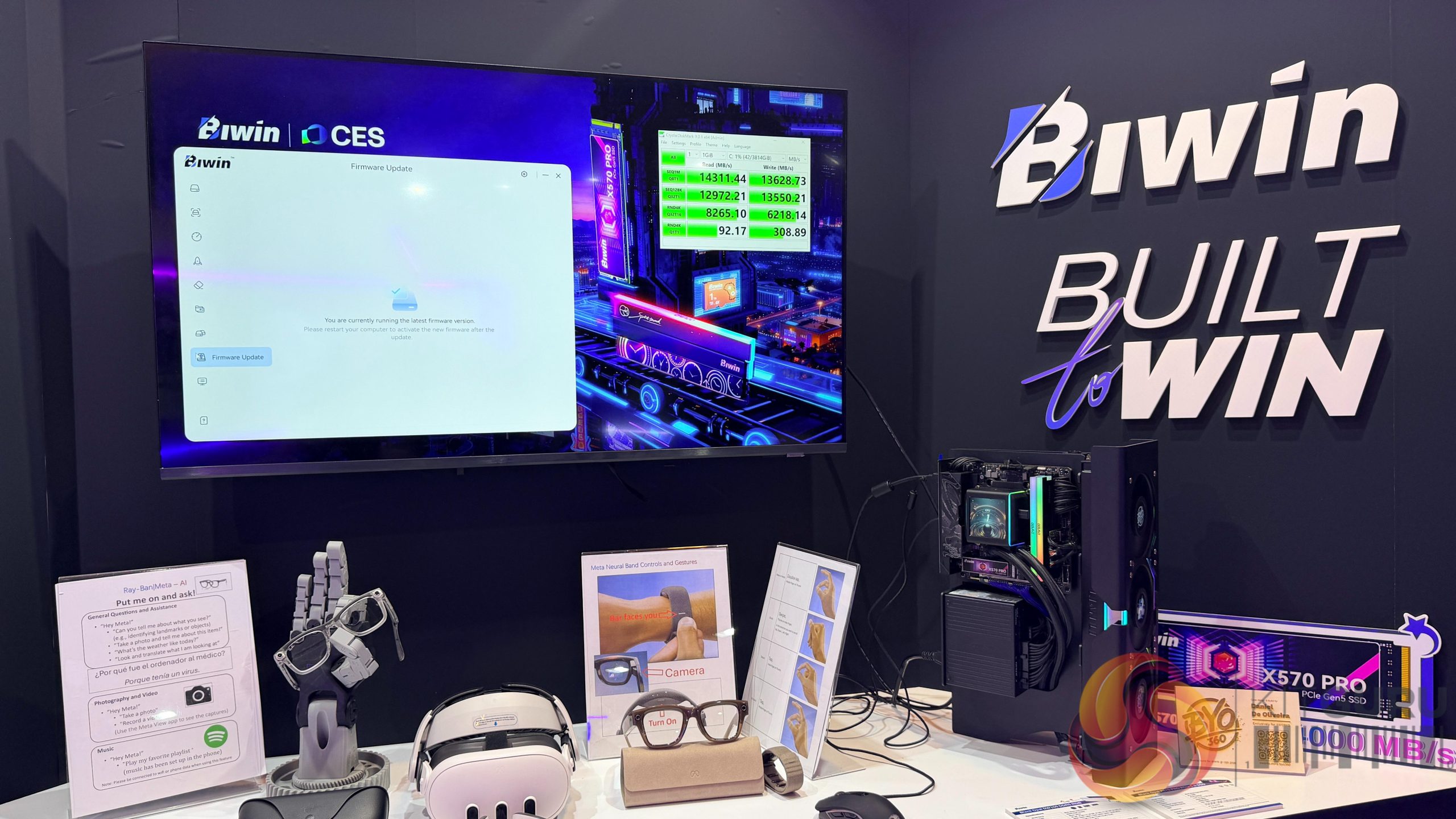
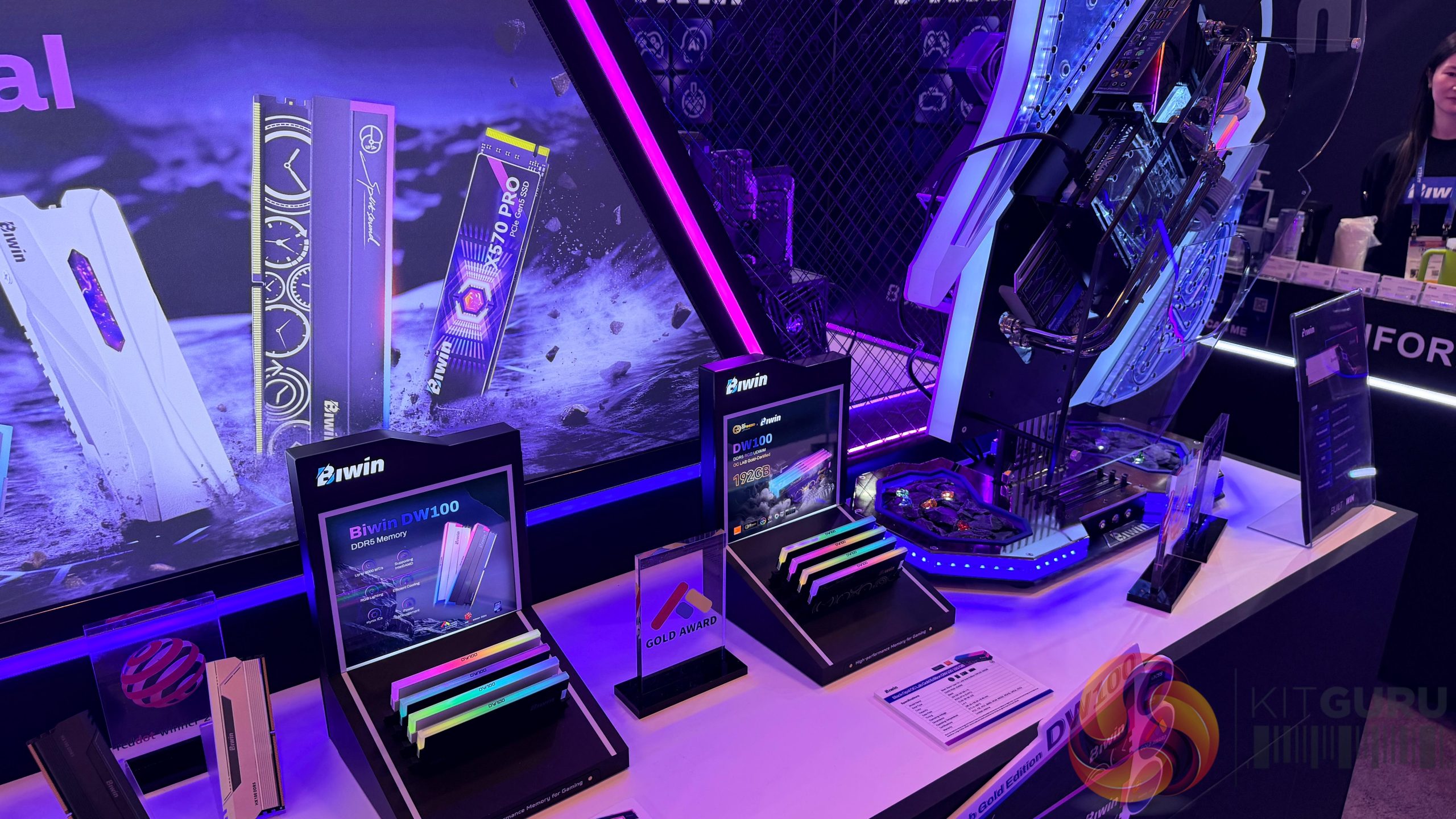
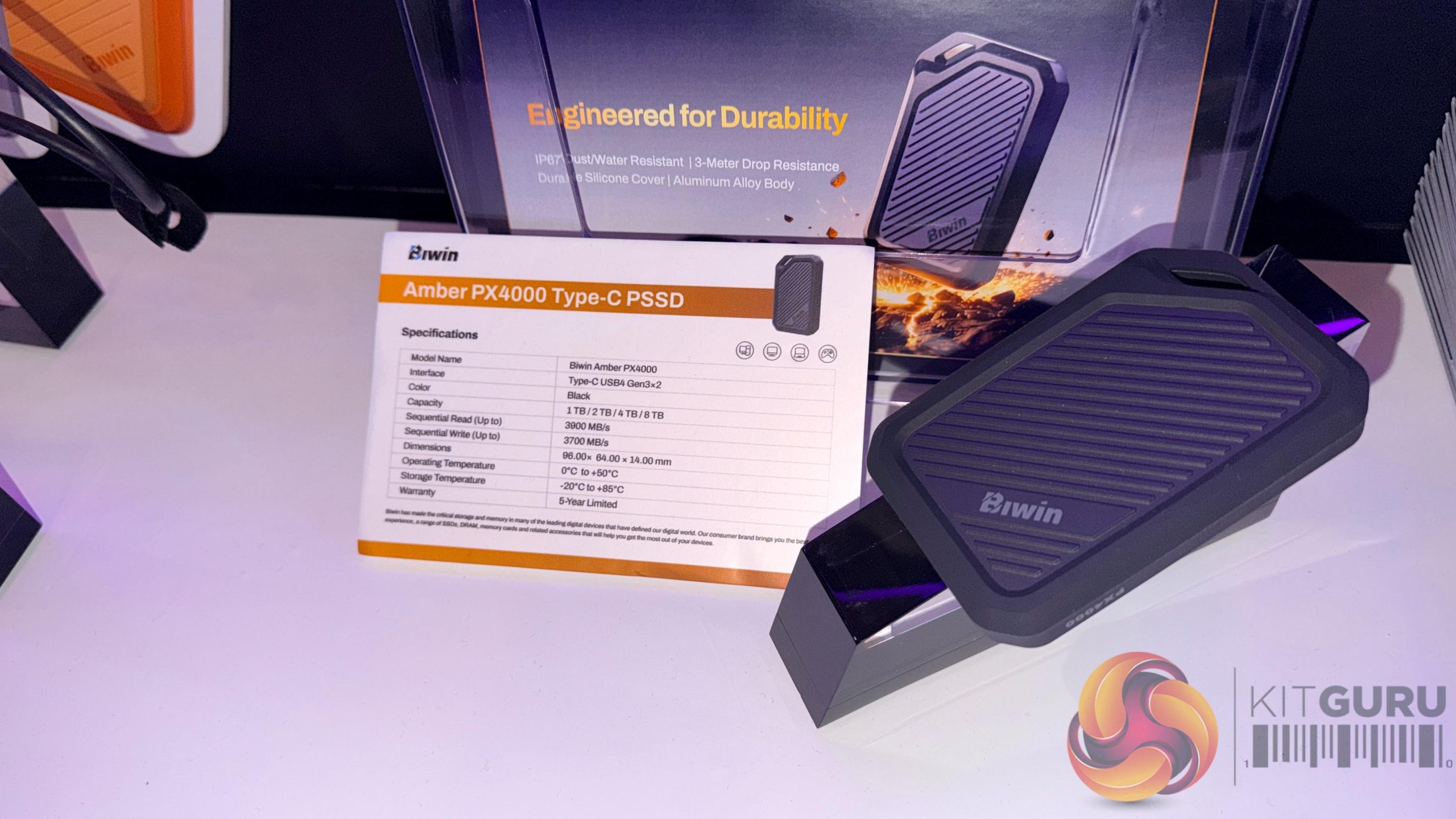
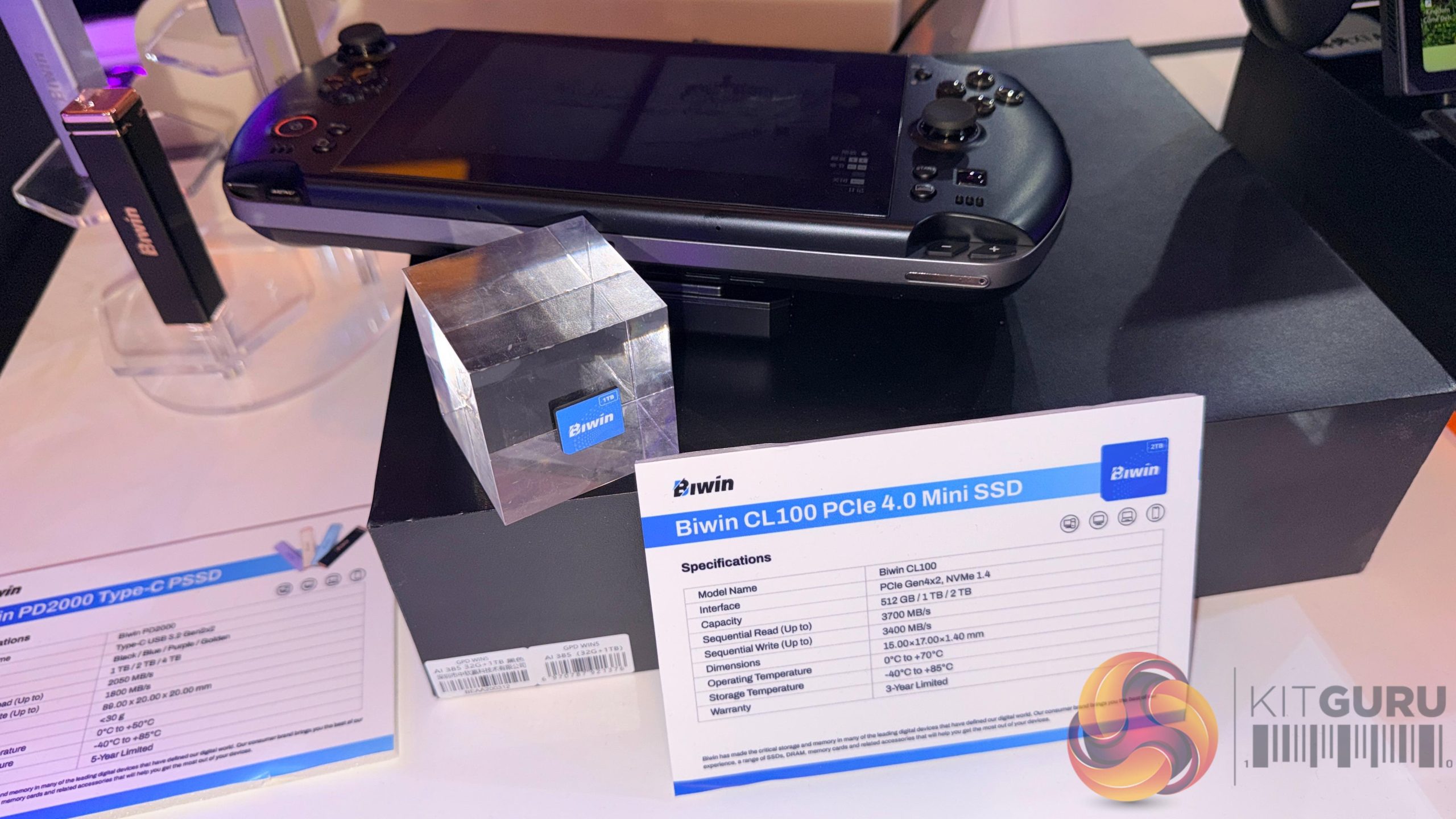
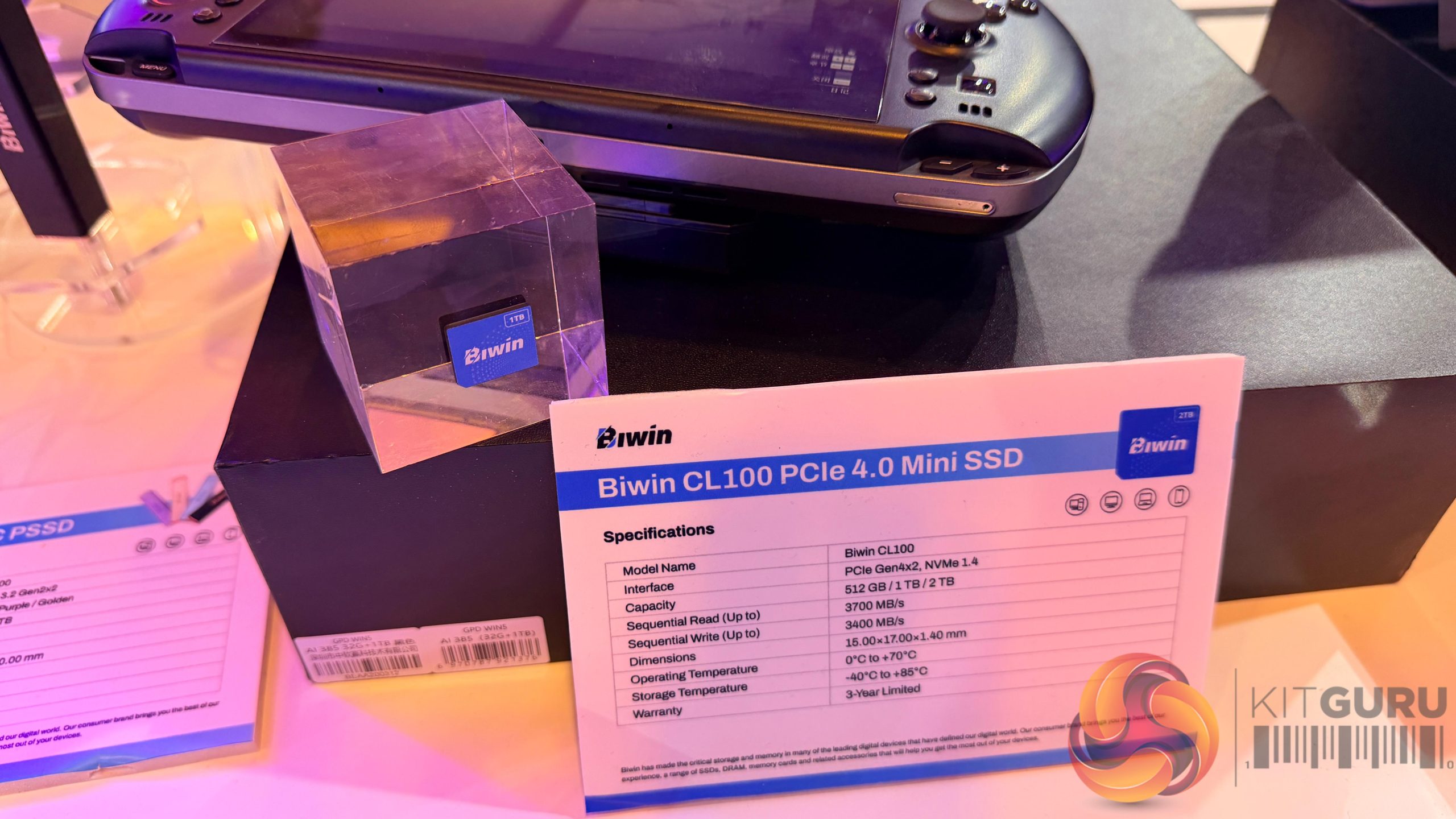
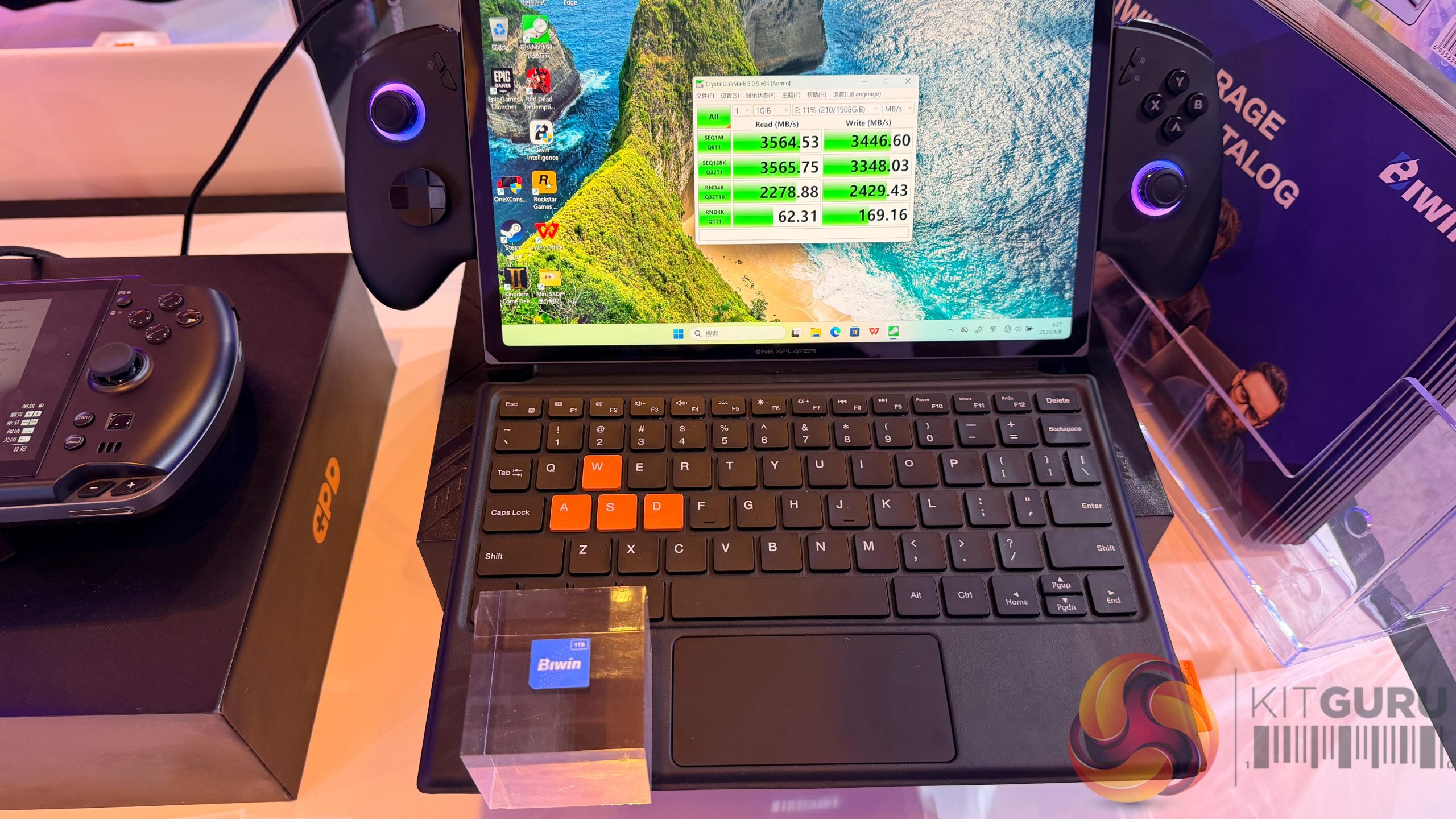
Biwin used CES 2026 to showcase a broad refresh of its consumer storage and memory portfolio, spanning CFexpress cards, portable SSDs, DDR5 modules, microSD cards, and next‑generation PCIe Gen5 NVMe drives.
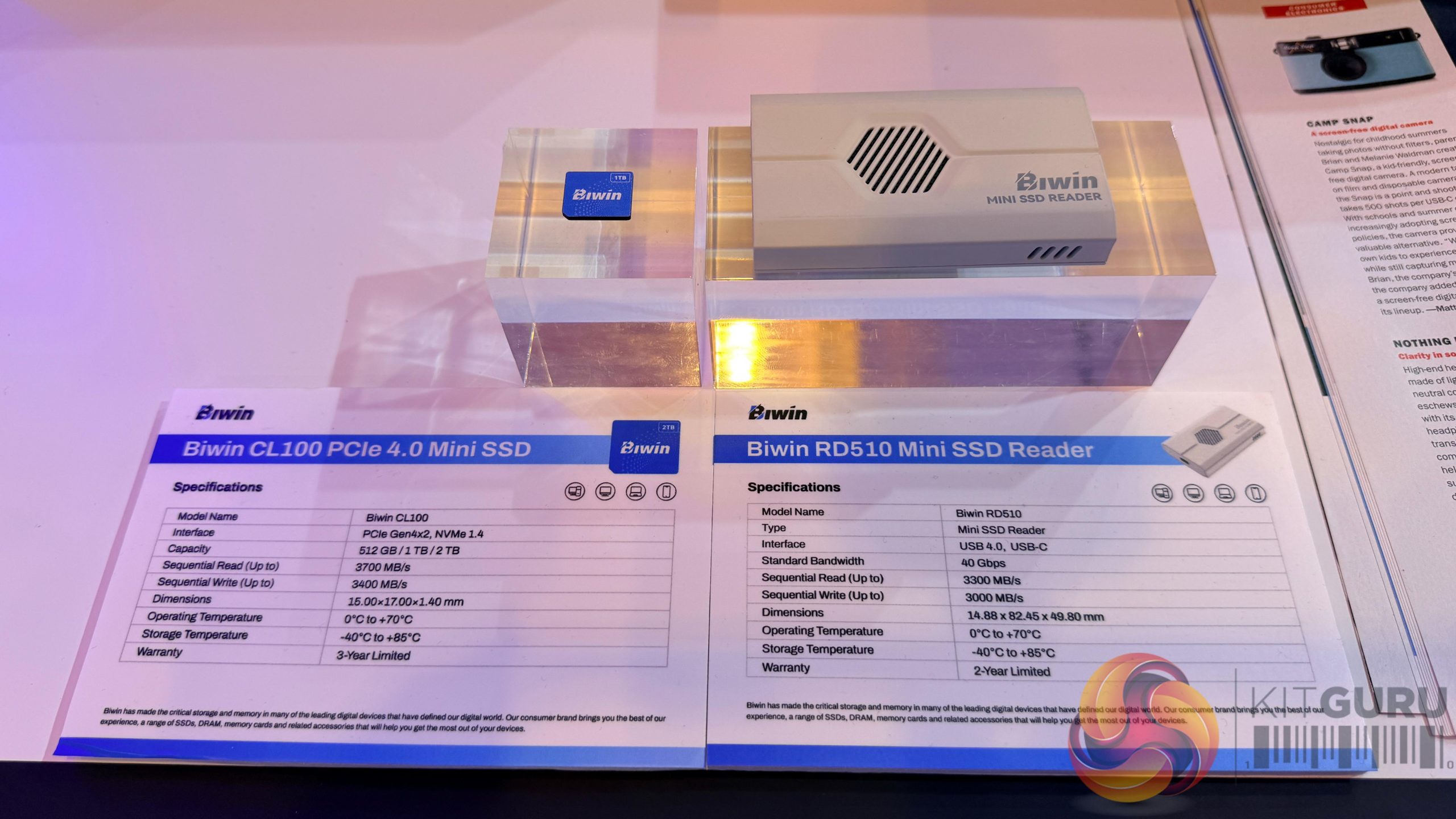
First up we have the CB500 CFexpress Type B card, designed for high‑end cameras and 8K capture. It delivers up to 3750MB/s read performance, enabling rapid offloading and sustained high‑bitrate recording. Biwin also highlighted its compact CL100 and RD510 Mini SSDs, aimed at embedded systems, handhelds, and ultra‑portable devices. The Mini SSD platform uses a 15×17×1.4mm LGA package yet still reaches up to 3700MB/s read and 3400MB/s write, with capacities from 512GB to 2TB. The accompanying RD510 card reader supports USB 3.2 Gen1 for fast external transfers.
On the memory side, the DW100 DDR5 memory, which was the recipient of a CES Innovation Award, was on display. These modules reach up to 8400MT/s, with RGB variants rated up to 9200MT/s and CL42 latency for high‑end gaming and enthusiast builds.
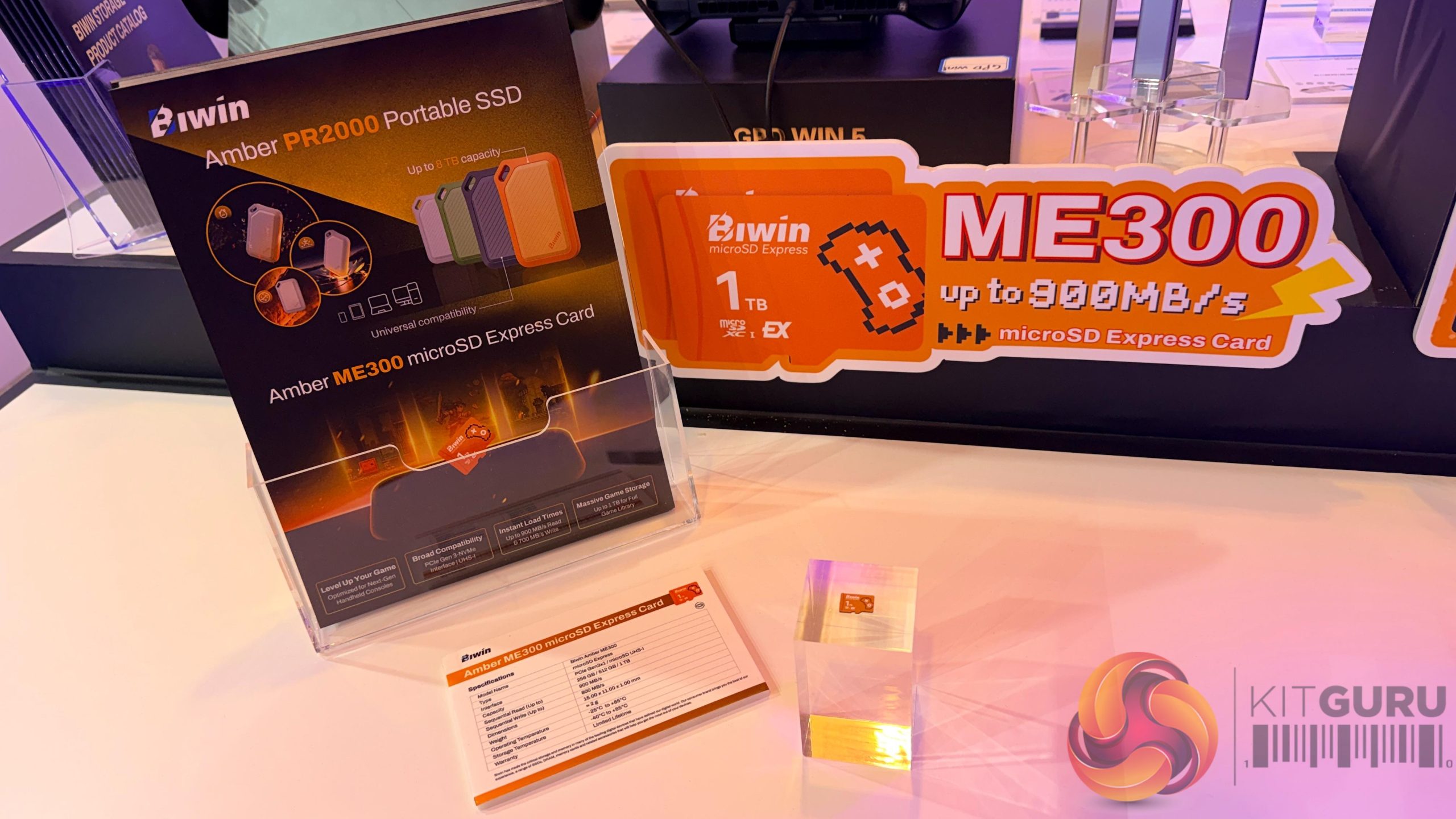
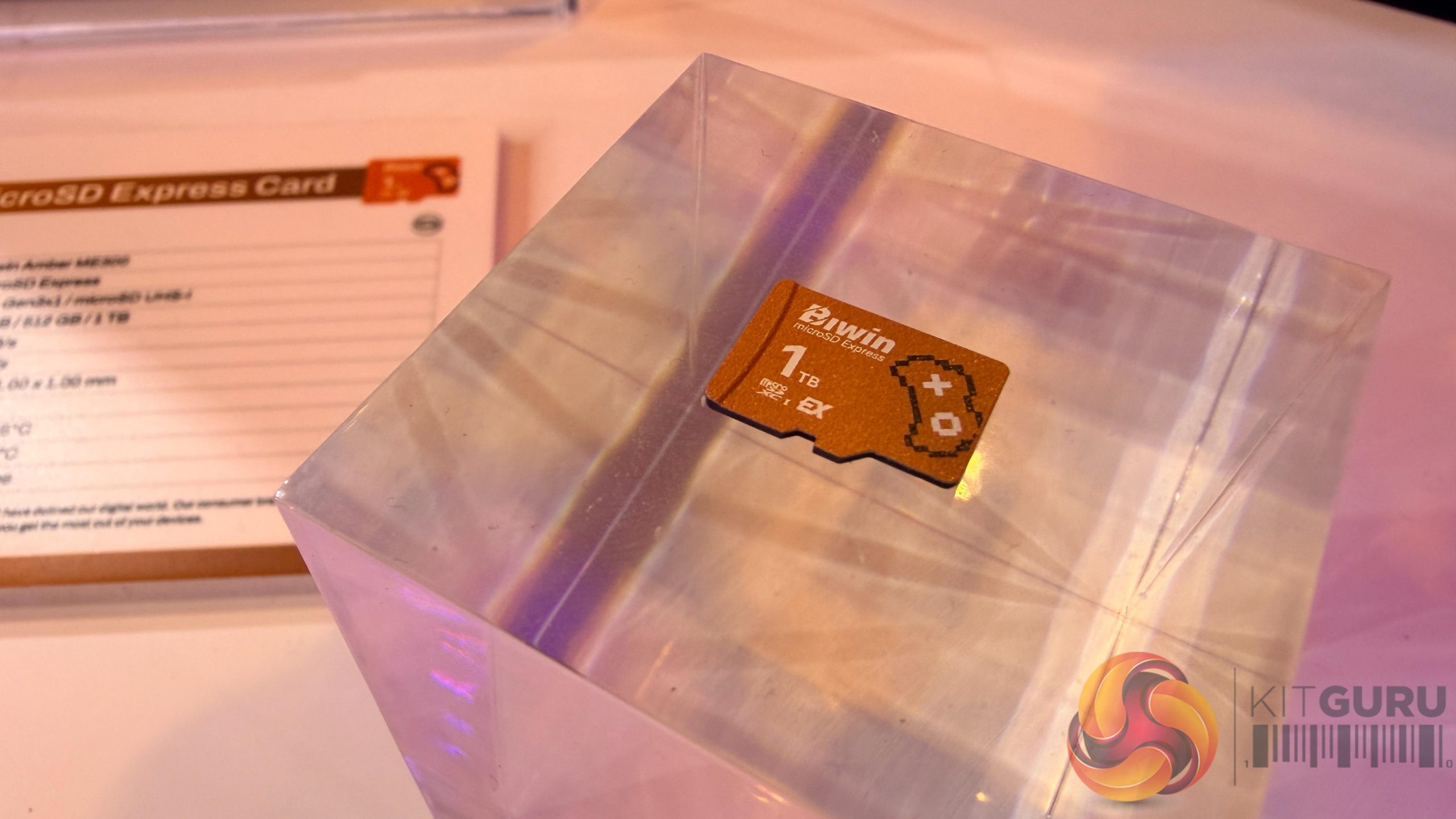
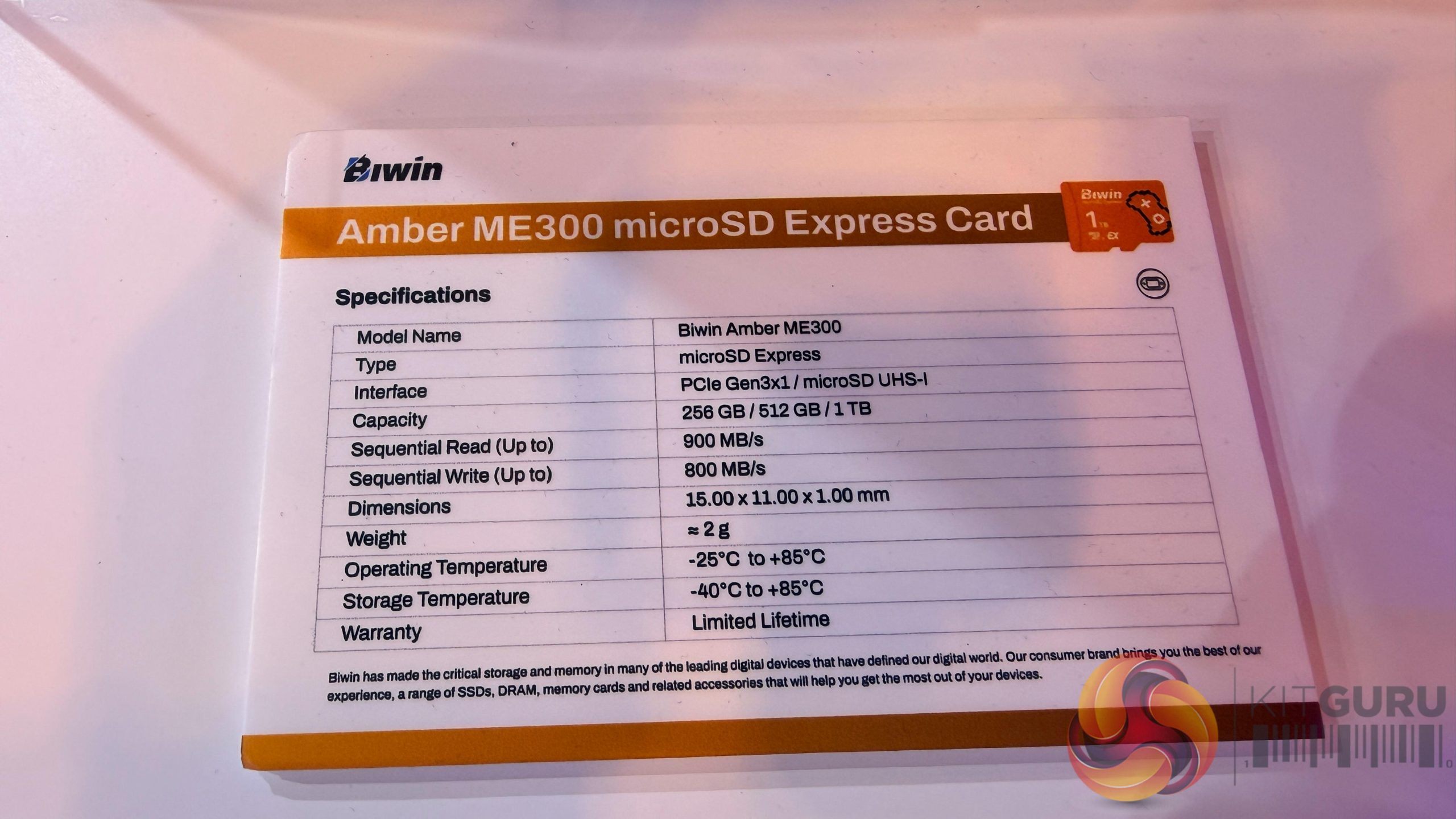
For portable storage, Biwin showed multiple PSSD options. The OC PR2000 is a rugged USB‑C portable SSD with silicone protection, offering capacities up to 4TB and USB 3.2 Gen2x2 throughput. The PX4000 PSSD targets mainstream users needing compact, high‑speed external storage. The ME300 microSD series expands Biwin’s flash card lineup, rated for 210MB/s read and 170MB/s write, with capacities up to 512GB for drones, handheld consoles, and action cameras.
Biwin also brought its latest PCIe Gen5 NVMe drives to the show, including the X570 PRO and X570H PRO. Both support NVMe 2.0 and reach up to 14000MB/s read and 14000MB/s write, with the X570 PRO additionally rated for 2000K/1600K IOPS thanks to its DRAM‑equipped controller.
Remember back in September when NVIDIA announced the existence of the Rubin CPX processor at the AI Technology Conference? We theorized at that time that Rubin CPX could be the chip destined to eventually appear in next-generation GeForce cards. The theory made sense, but apparently it's incorrect, at least according to long-time NVIDIA leaker
ASRock is entering bold new territory at CES 2026, expanding its portfolio of products to include six previously-teased AIO liquid coolers. At first glance, these AIOs look similar, due to the common 360mm radiators between them, but there are distinct features for each that set them apart.
One of the most interesting is the ASRock WS Series
Google's drive to infuse AI across its portfolio of existing products has seen steady Gemini integration in many areas, and now Gmail is getting the biggest Gemini overhaul yet. Gmail will now include a dedicated AI Inbox, which is meant to isolate the most important emails from across your various categories to rise to the top. Another new
We saw some exciting tech at CES this week, including new monitors leveraging NVIDIA's G-SYNC Pulsar technology. Now it's a waiting game to see when they'll actually be available to purchase. In the meantime, there are great deals to be had on the current crop of OLED panels, including a fantastic discount on an curvy Alienware mode.
Alienware
Has it been half a century already? Believe it or not, Apple is turning 50 years old this year, and to celebrate the occasion, auction house RR Auction is hosting a huge 50th anniversary Apple sale with a whole bunch of desirable collectibles, some of which are expected to fetch half a million dollars or more. One of them is an ultra-rare
ADATA is marking its upcoming 25th anniversary at CES 2026 with a showcase spanning AI‑centric storage, industrial solutions and new XPG gaming hardware. The company’s booth is divided into three zones – AI Innovation, Smart Living and Gaming Lifestyle. We cover it all in our latest CES video.
Timestamps:
00:00 Intro
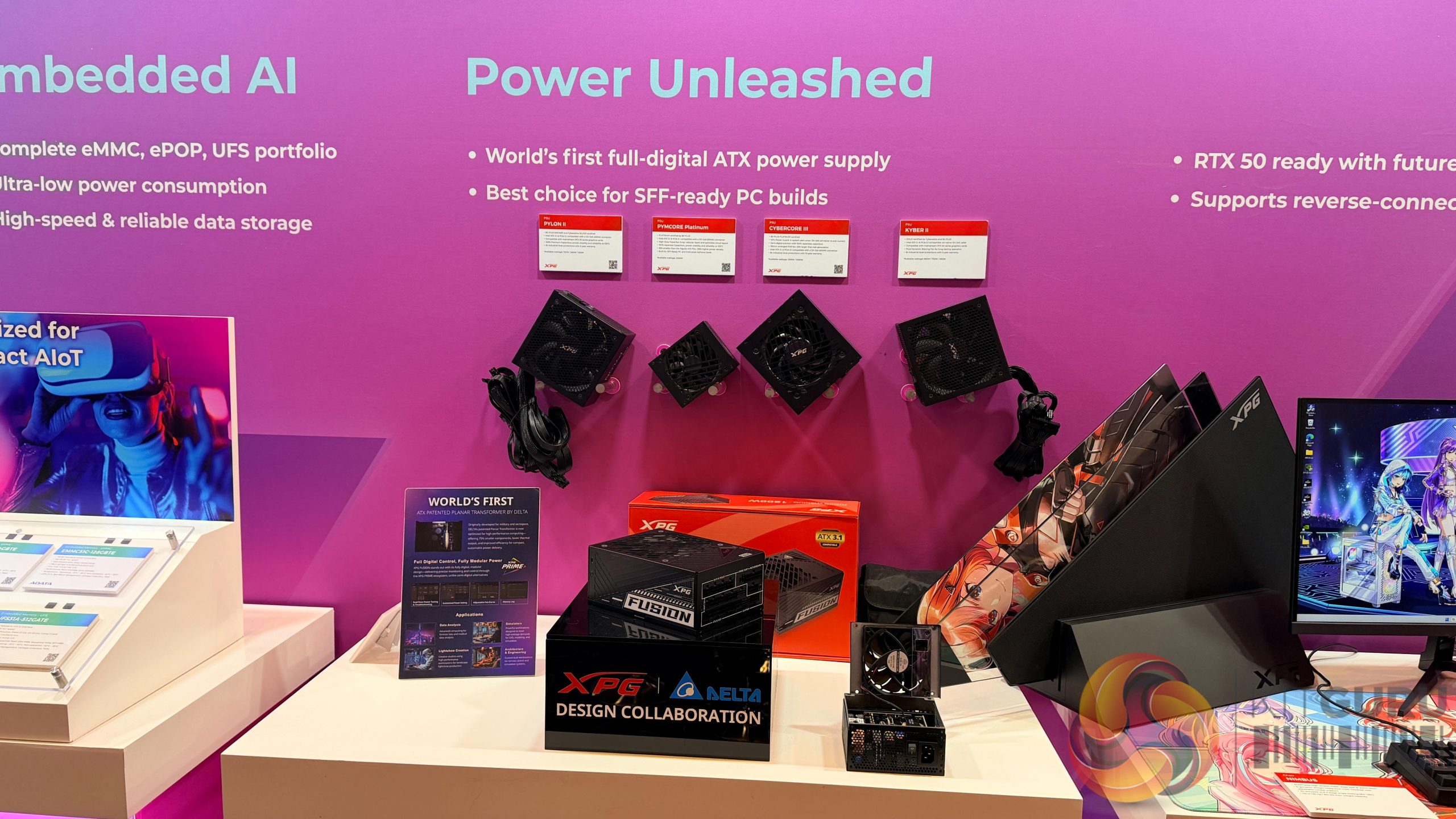
00:25 PSU’s
00:46 XPG Dock / XPG Pro Cog Studio Headset
01:50 Levante View 360
02:37 XPG Nimbus Chair
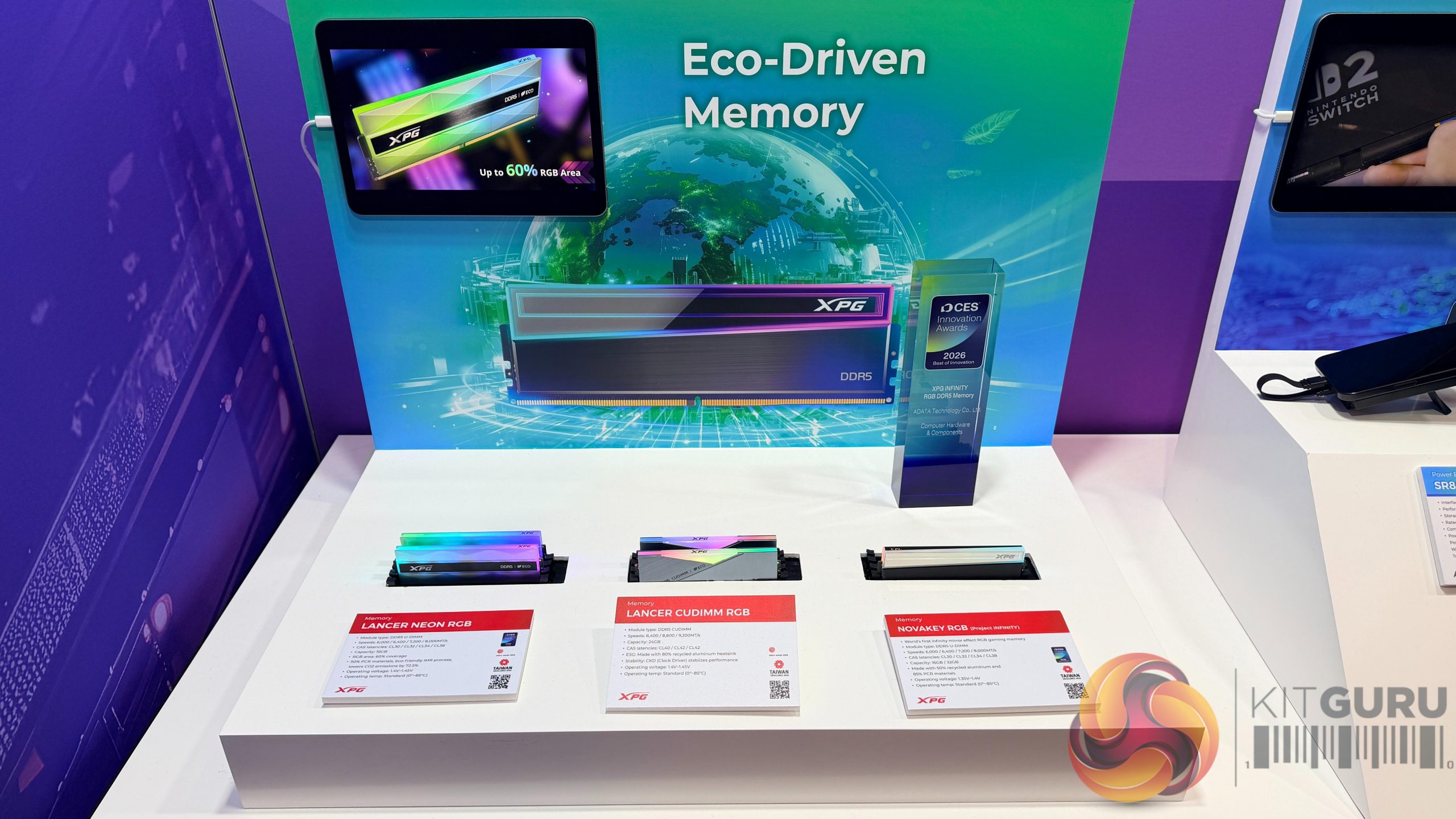
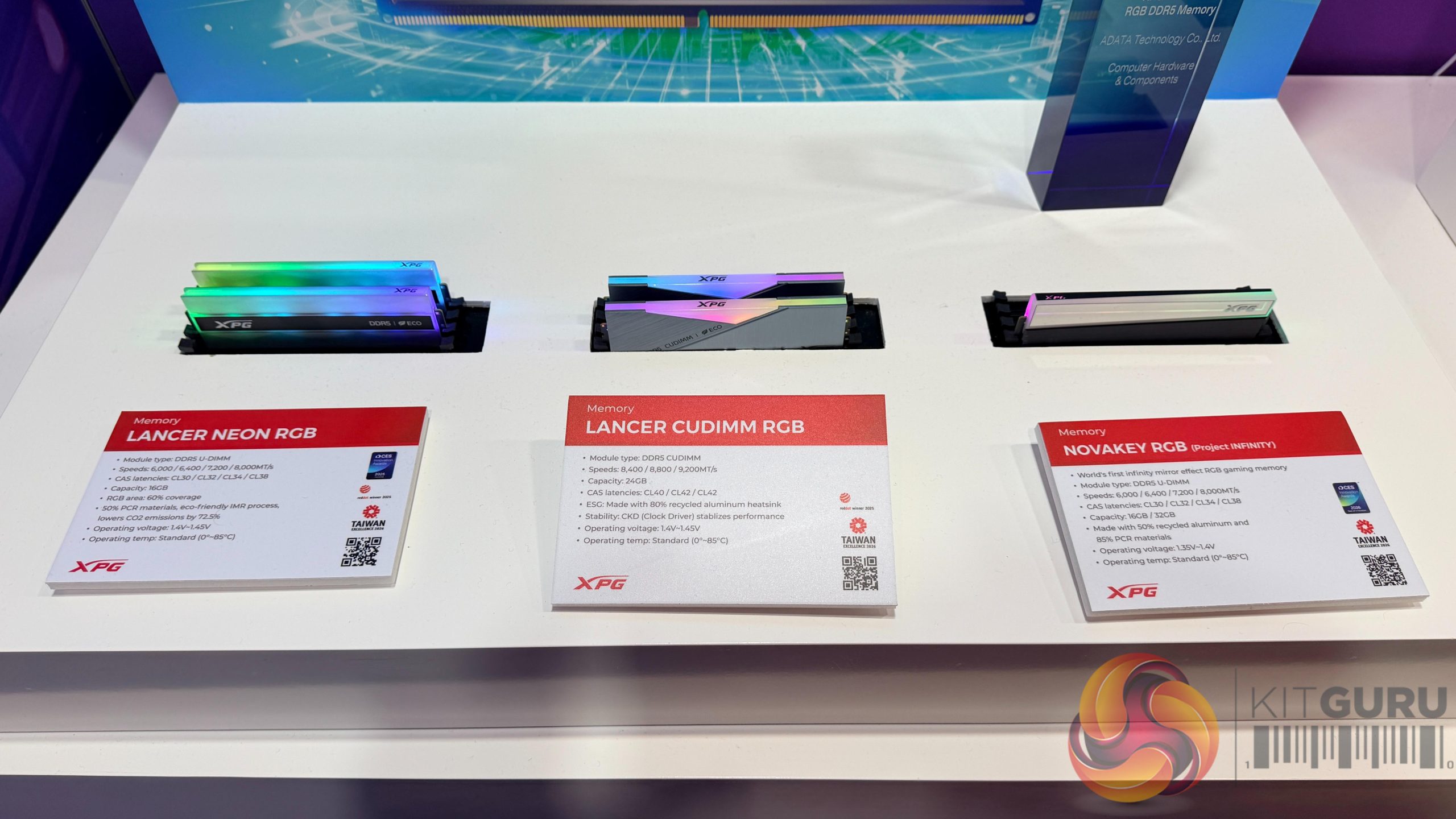
02:48 XPG Memory
04:06 Trusta SSD and Memory range
04:37 Modded Chassis and XPG Cooling
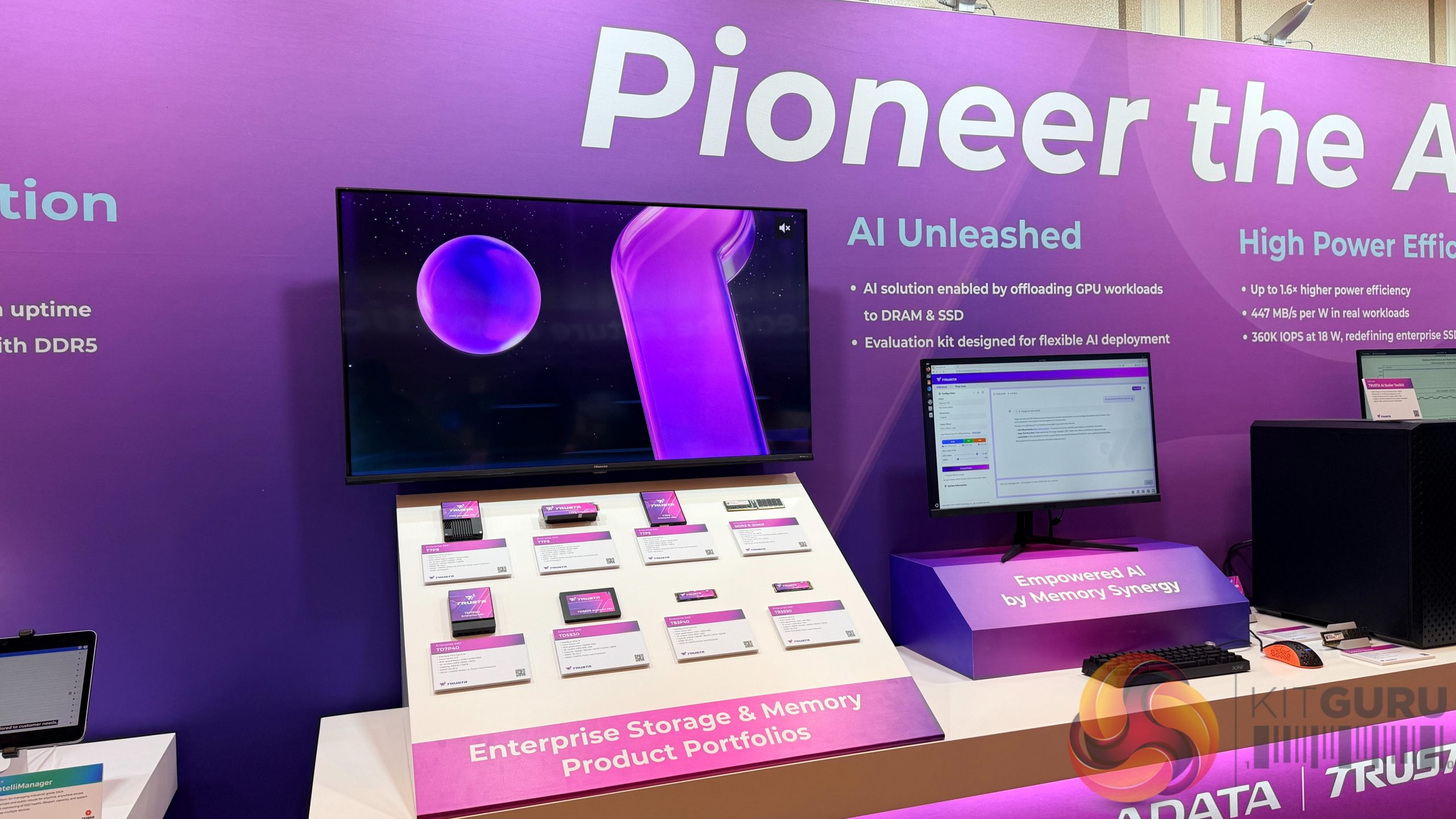
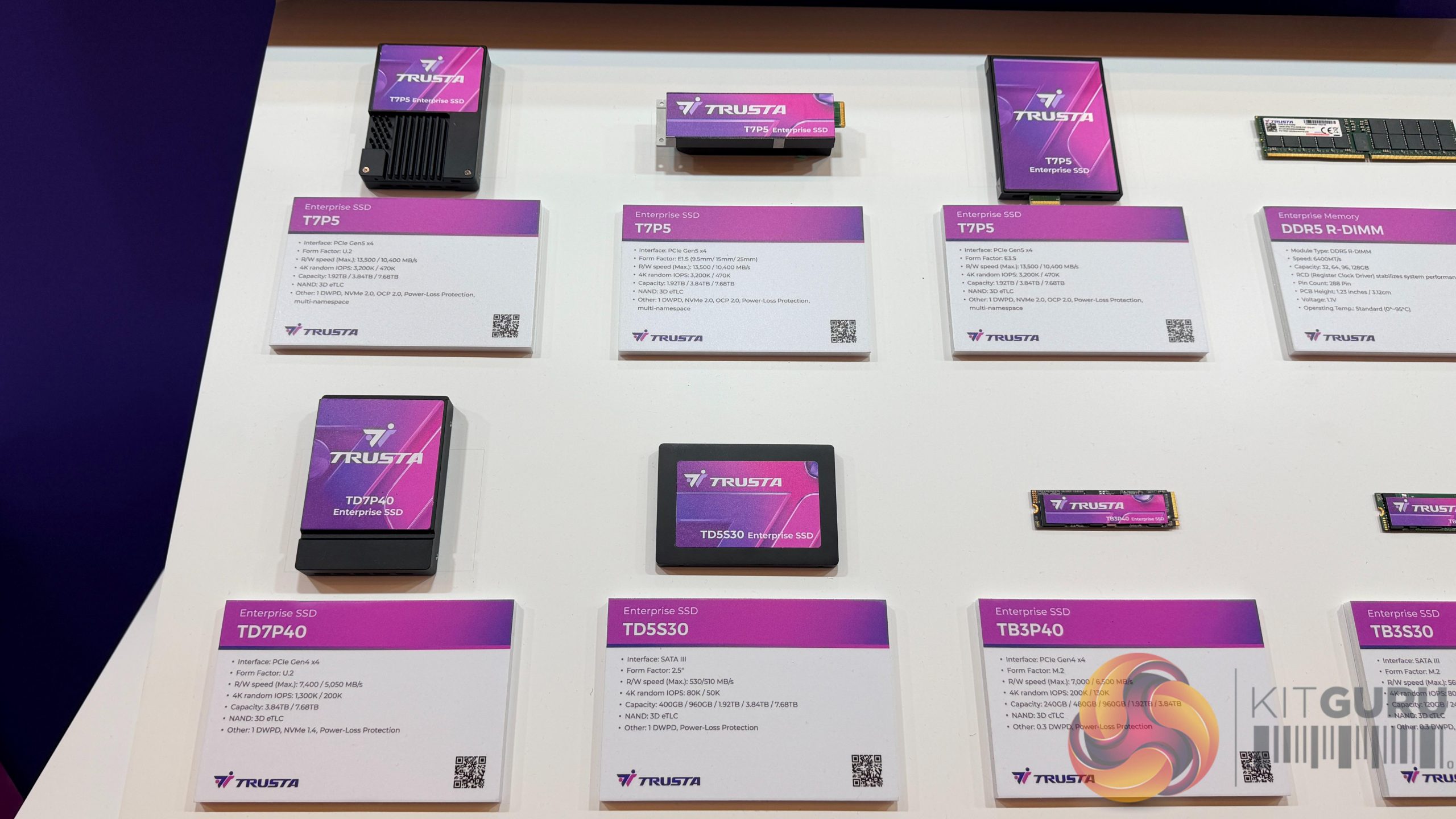
In the AI Innovation Zone, ADATA’s enterprise brand TRUSTA is debuting the TRUSTA AI Scaler Toolkit, a software‑defined architecture designed to offload parts of LLM inference across GPU, DRAM and SSD resources. TRUSTA is also introducing the PCIe 5.0 T7P5 SSD, rated for up to 13,500 and 10,300MB/s read/write speeds and 447MB/s‑per‑watt efficiency, alongside new DDR5 RDIMM modules up to 128GB and 6400MT/s.
ADATA Industrial is showcasing its A+ IntelliManager platform for cloud‑based device monitoring, as well as the IU2P41BP PCIe Gen4 U.2 SSD with capacities up to 8TB. New DDR5 ECC CU‑DIMM and CSO‑DIMM 7200 modules target edge AI and industrial control systems.
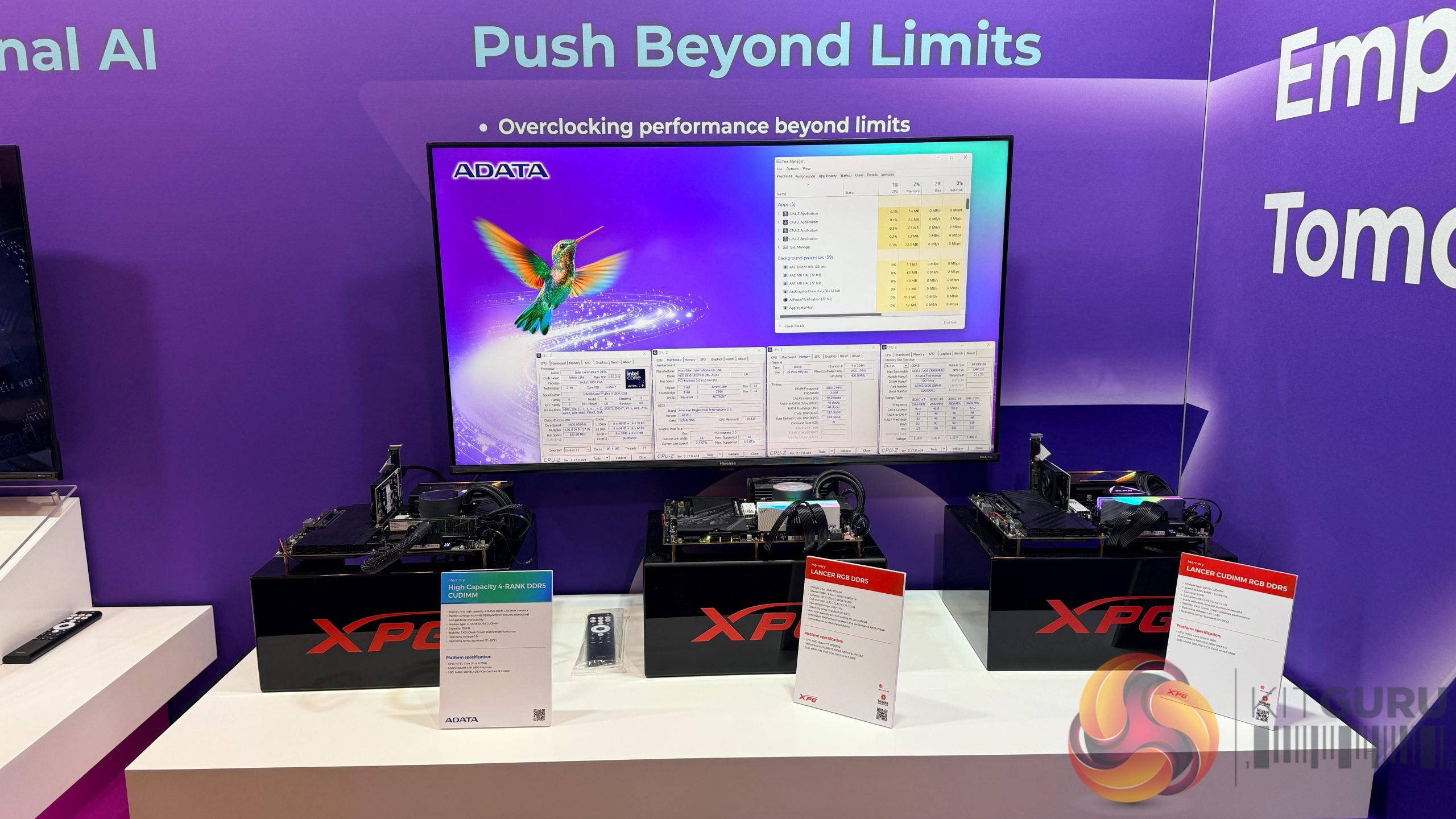
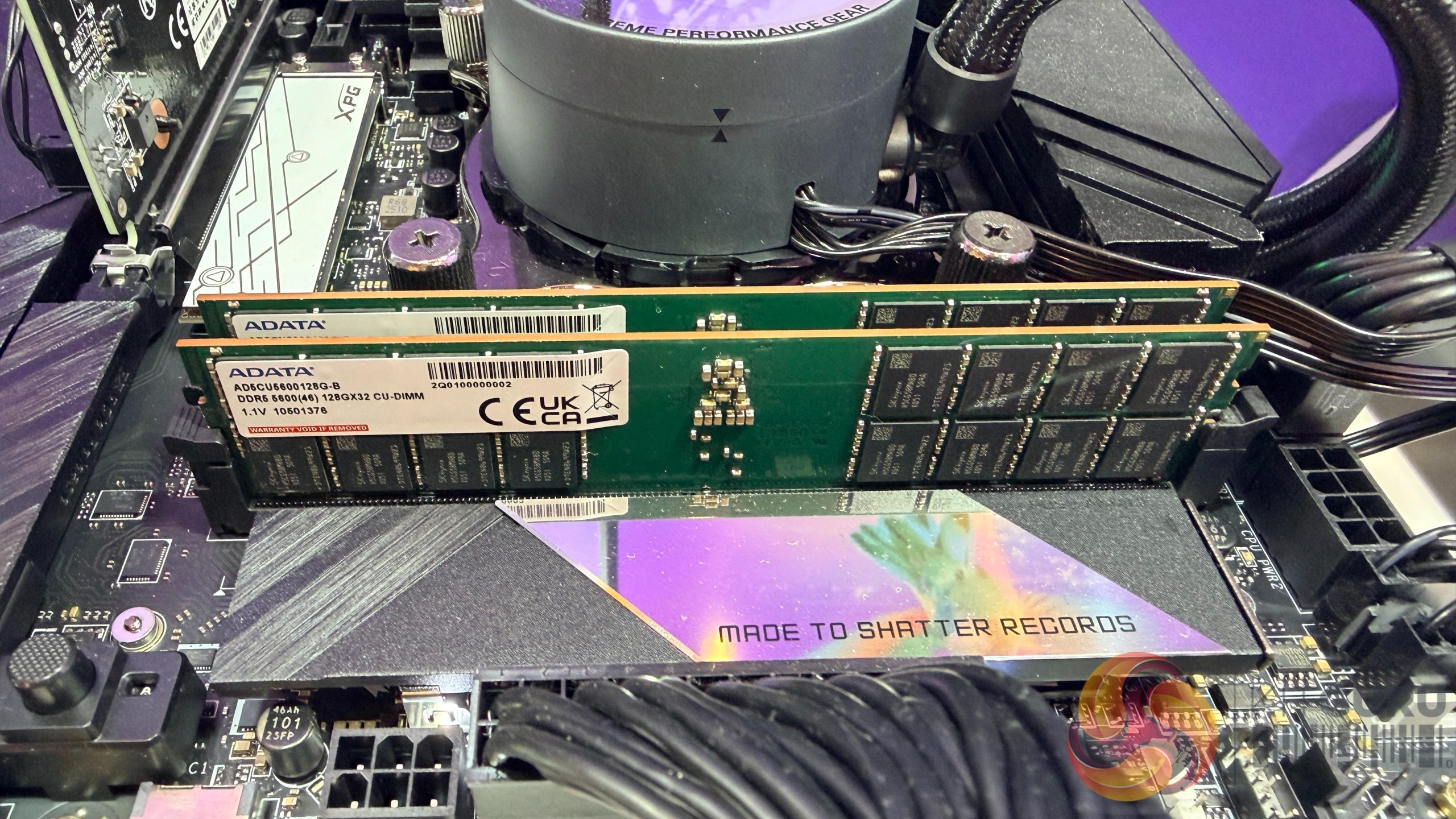
In the Smart Living zone, ADATA is presenting the industry’s first 4‑RANK DDR5 CUDIMM module developed with MSI and Intel, offering 128GB per stick. The company is also highlighting sustainable designs such as the XPG NOVAKEY RGB DDR5 memory, which is built with recycled materials and capable of 8000MT/s. The Project BulletX is a new portable SSD (USB4, up to 4000MB/s) and Project TapSafe is designed for the security-conscious with NFC security built in.
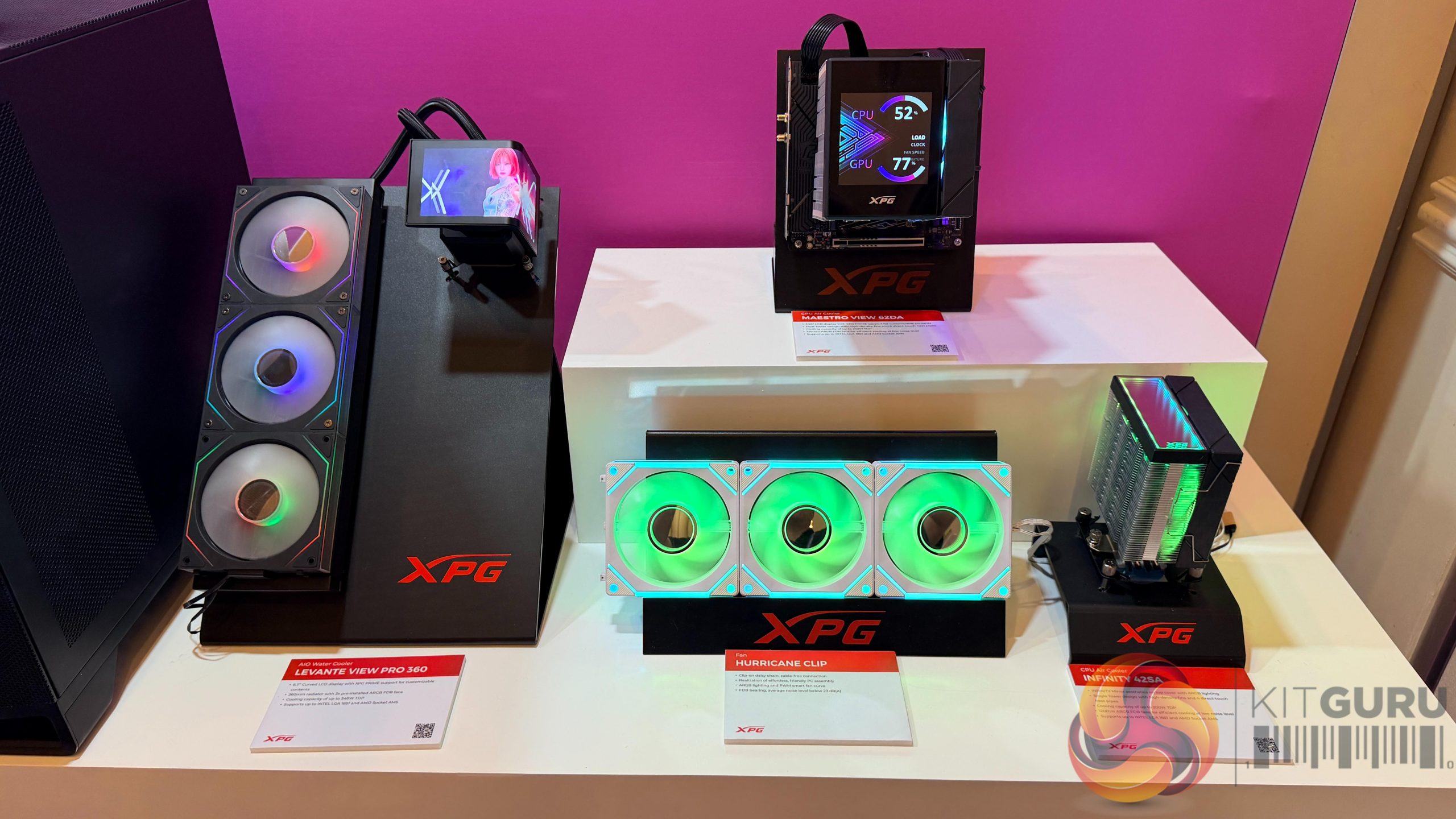
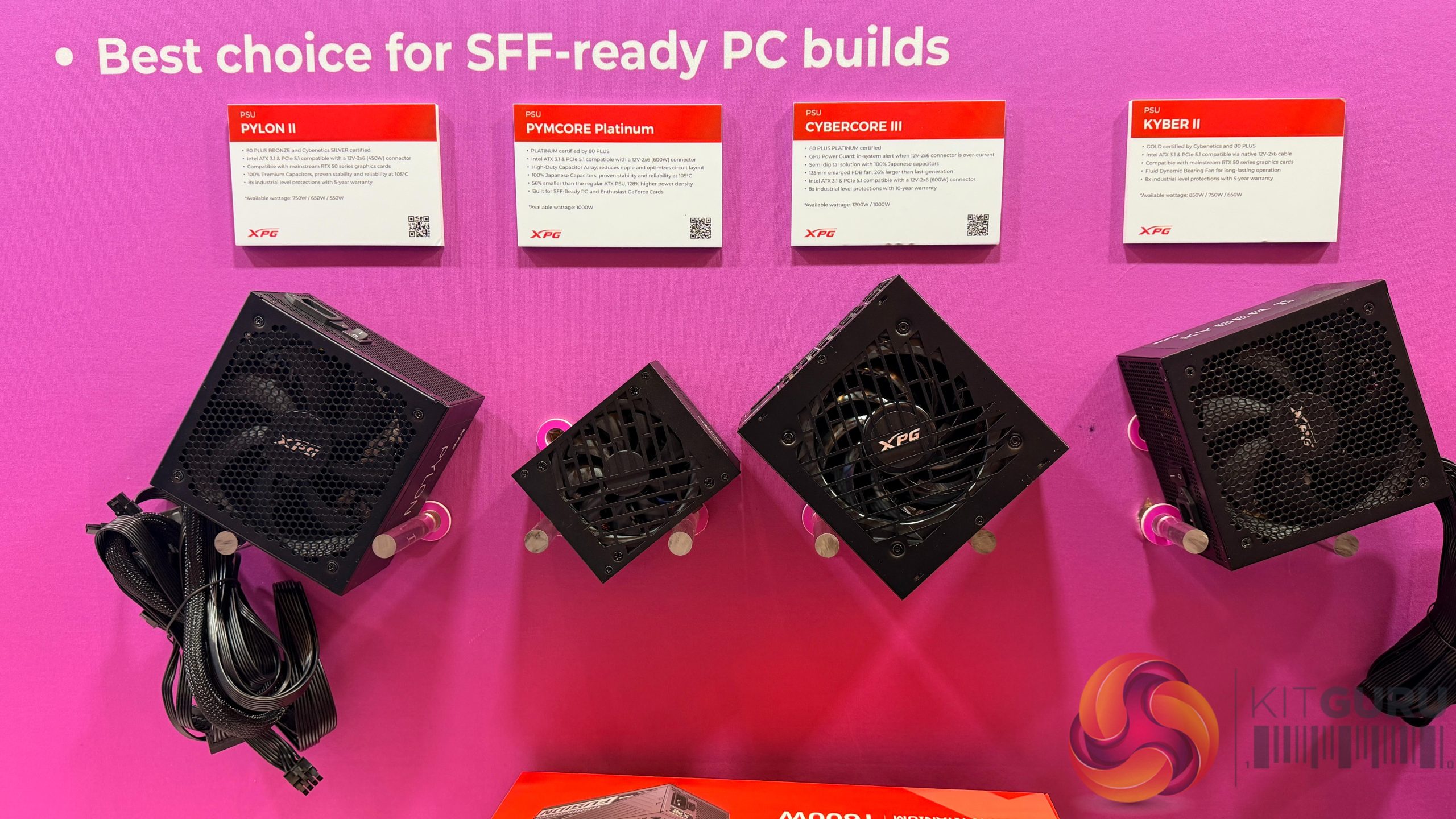
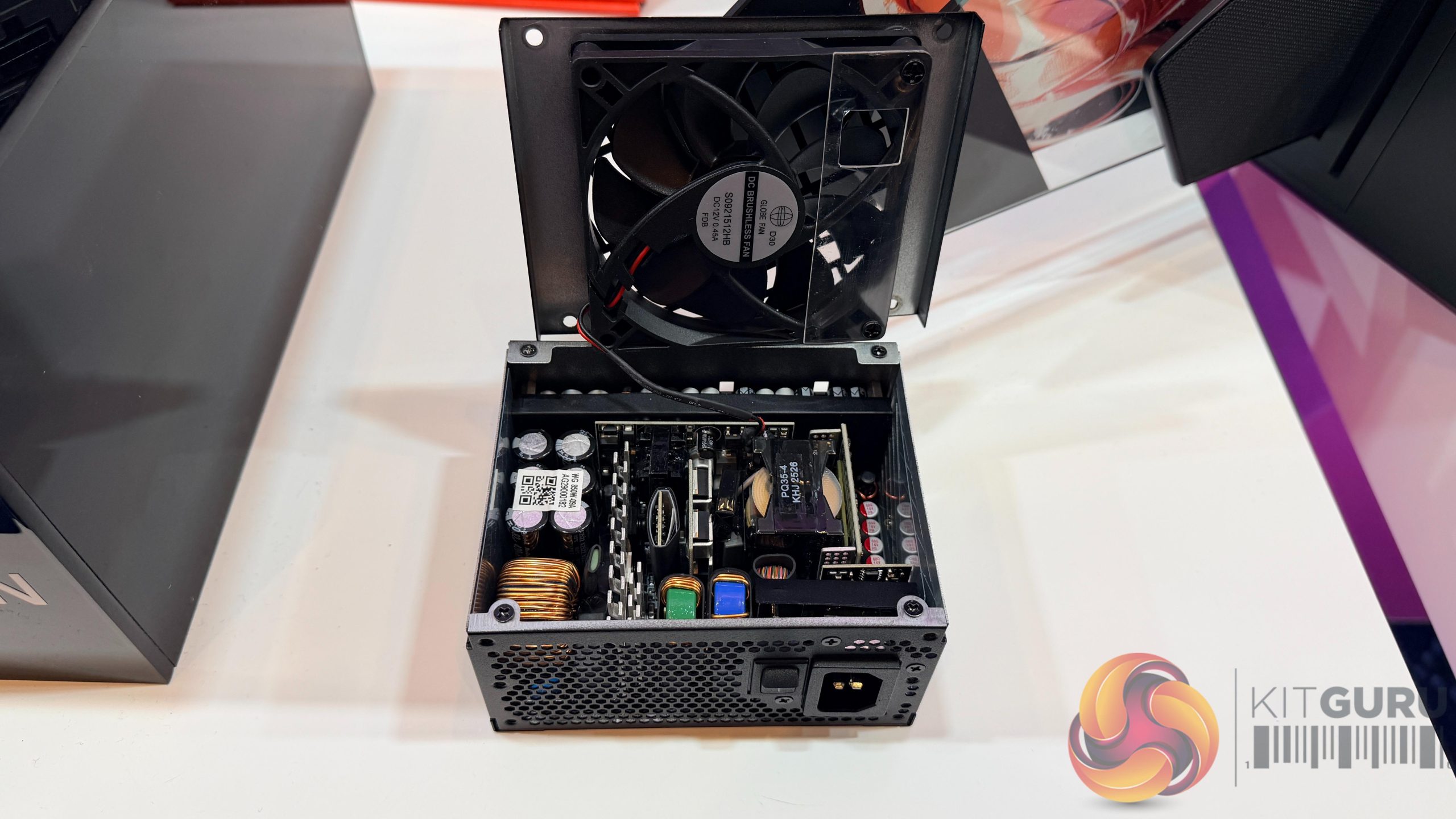
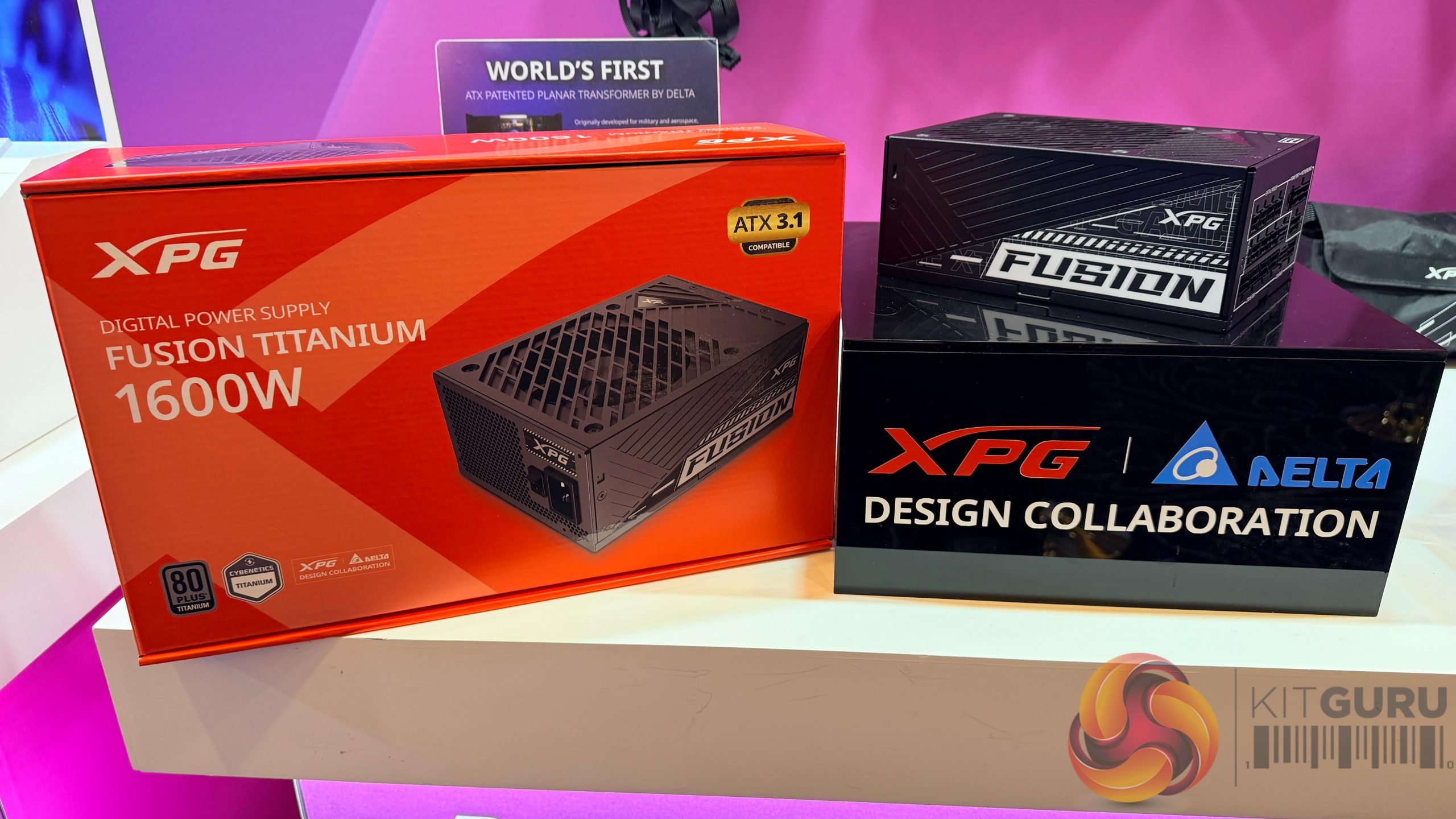
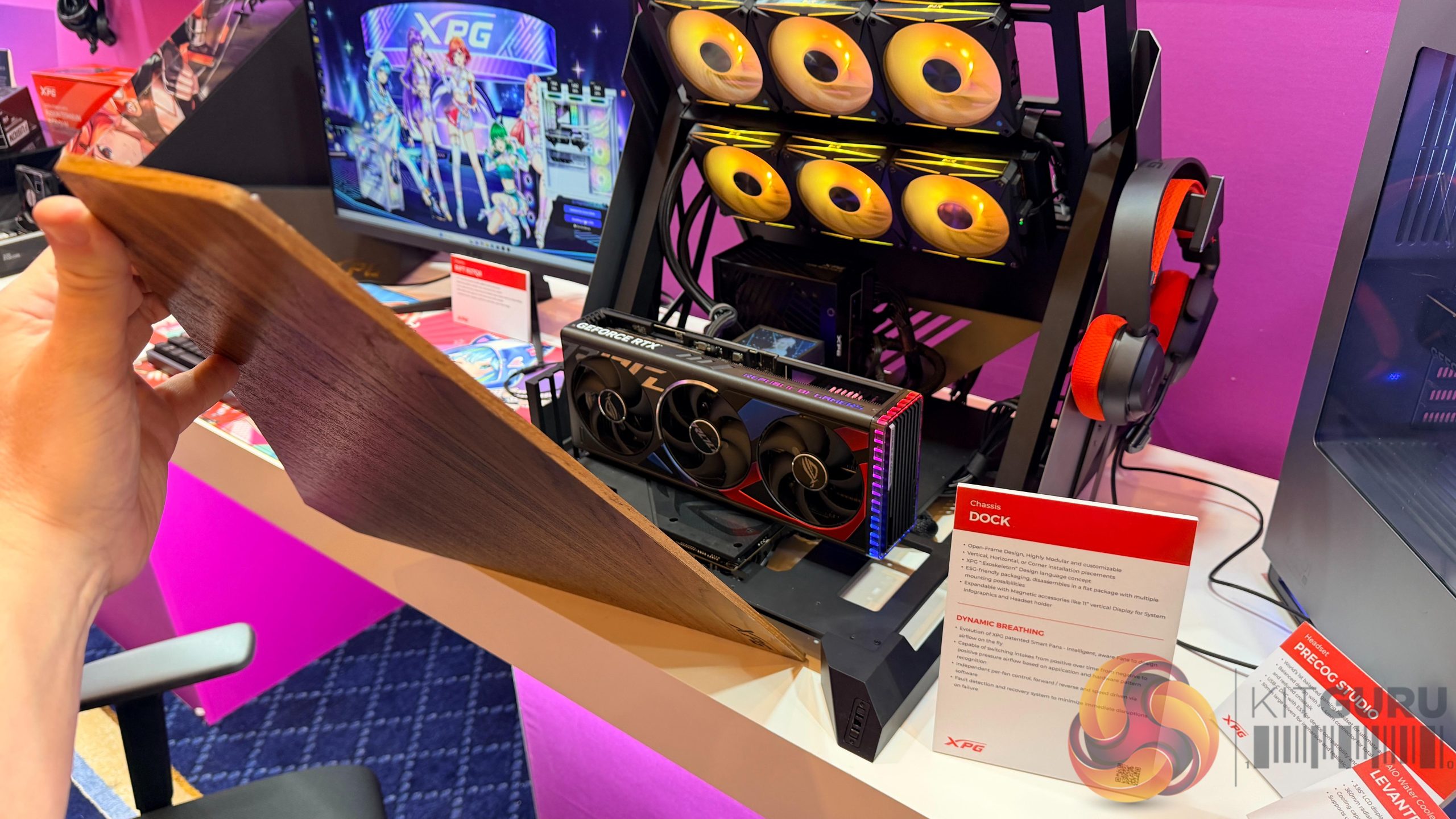
XPG’s gaming lineup includes the INVADER X ELITE chassis with panoramic glass and walnut accents, the DOCK open‑frame case, and new cooling hardware such as the LEVANTE VIEW PRO 360 with a 6.7‑inch curved display. XPG is also expanding its PSU range with the PYMCORE SFX Platinum 1000W and CYBERCORE III 1200W, and introducing new NIMBUS PLUS and NIMBUS gaming chairs.
Portable speakers are a confusing product, with some being much better than you'd expect and others which you would think would be amazing are actually awful; before you even consider the subjectivity…
AMD FSR Redstone includes the FSR 4 for upscaling, ML-Frame Gen to hallucinate frames for you instead of rendering them traditionally as well as Ray Regeneration to boost performance when you enable…
 Connexion
 As far as Micron is concerned, the prevailing narrative about its recent strategy shift to focus more heavily on AI customers gets one *ahem* Crucial detail wrong. Actually more than one, though the biggest misconception from Micron's vantage point is that it's abandoning the consumer market in favor of AI, when in reality it's simply serving