 Connexion
Just Try To Catch The Samsung 9100 PRO 1TB

There is something special about the 1TB version of the Samsung 9100 Pro, for contrary to your expectations it tends to run faster on an ASUS ROG Crosshair X870E APEX than it…
There is something special about the 1TB version of the Samsung 9100 Pro, for contrary to your expectations it tends to run faster on an ASUS ROG Crosshair X870E APEX than it…
Over the last couple of years display technology has been fun to follow as it is continually evolving. QD-OLEDs have become more robust and less fuzzy, refresh rates have soared and coatings,…
PNY has something special for anyone who wants to build a SFF gaming PC, the RTX 5080 Slim, RTX 5070 Ti Slim and the RTX 5070 Slim. All three are two slot…
Intel officially launched its Core Ultra 3 series of mobile processors dubbed "Panther Lake" at CES 2026. The new chips build upon Lunar Lake and Arrow Lake-H to deliver scalable chips that…
In addition to refreshing the existing Alienware Area-51 and Aurora lineup set to land in Q1 2026, Dell teased two additional gaming laptops that will see the Alienware brand expand to…
 At CES 2026, NVIDIA finally revealed its long-awaited lineup of first-generation G-SYNC Pulsar monitors—and one of them is the MSI MPG 272QRF X36. Like the other new monitors revealed at NVIDIA's conference, the MSI MPG 272QRF X36 is a 27-inch Rapid IPS monitor in 2560×1440 resolution, with full G-SYNC support up to 360 Hz. Where things get
  Accessory maker Logitech provides users with an extensive suite of software to manage and customize its lineup of popular mice and innovative keyboards. Unfortunately, the company failed to maintain a necessary certificate on the macOS versions of these apps, leaving users in a lurch as their hardware no longer worked as intended. Thankfully,
 Gigabyte is finishing up its CES announcements this week with the reveal of several new laptop models. The new models house the latest Ryzen CPUs and RTX graphics, with new AI features designed to make hardware and software management easier.
The updated GiMATE interface consolidates real‑time system information, voice‑driven controls and hardware management into a single interface aimed at simplifying navigation and day‑to‑day adjustments. The GiMATE ecosystem is also being expanded. AI Power Gear III now supports direct MUX switching between Discrete Mode and MSHybrid, while offering several automated power profiles: Auto Mode disables the GPU on battery to extend runtime, Optimus Mode targets balanced performance and Eco Mode prioritises maximum power saving. GiMATE Creator adds support for Qwen‑Image for English and Chinese visual‑generation prompts, and GiMATE Coder introduces natural‑language code generation, correction and optimisation.
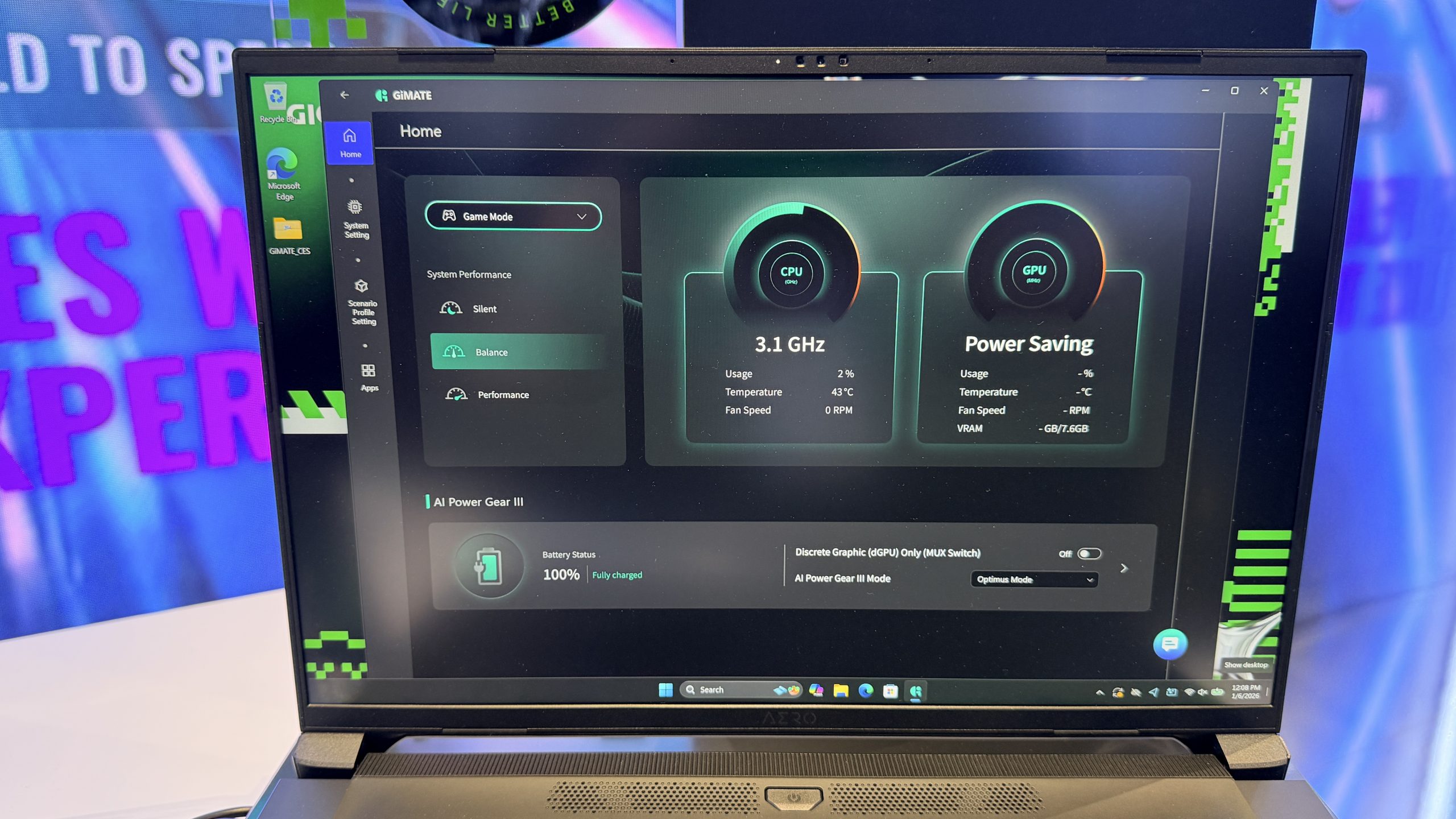
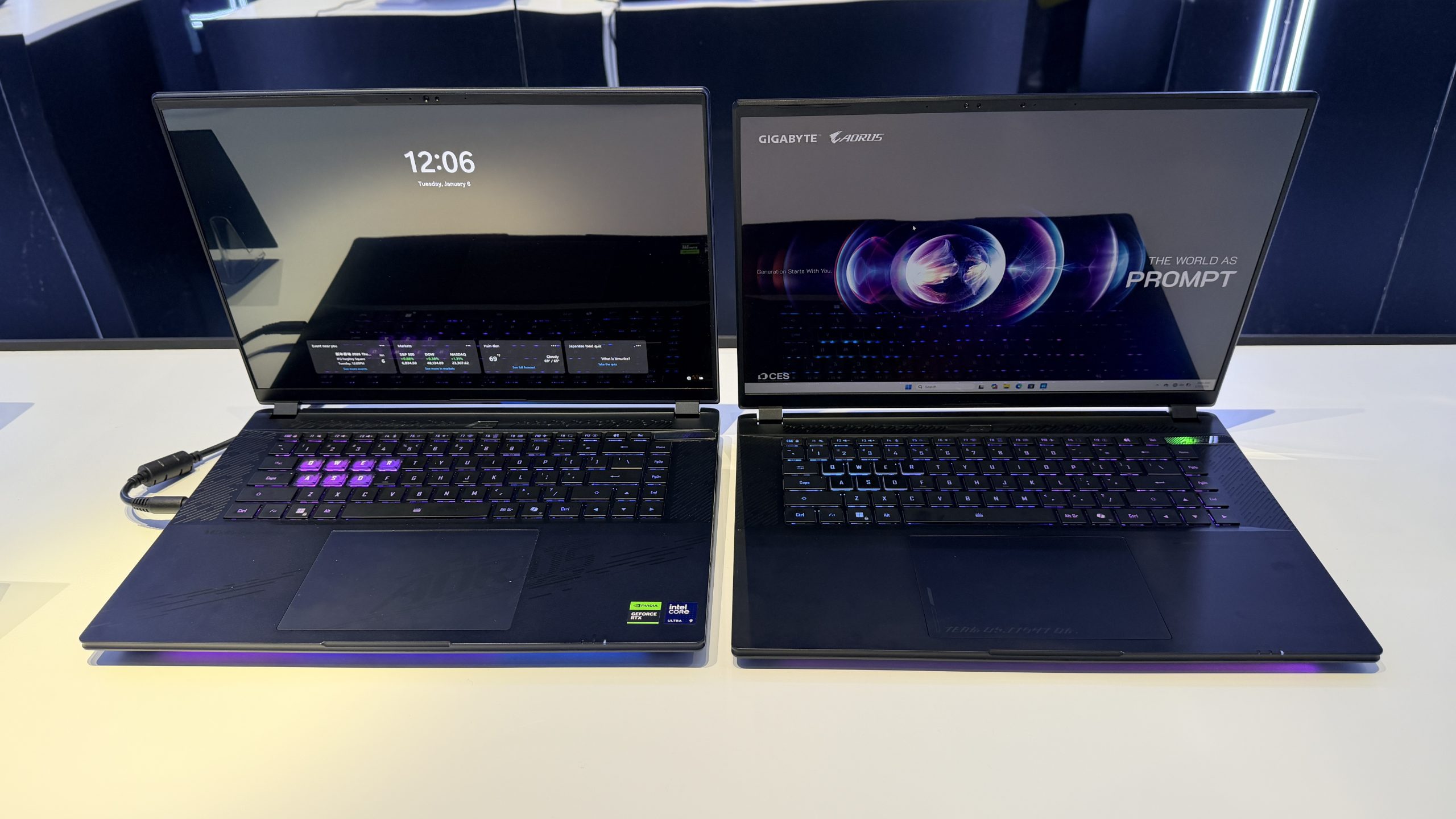
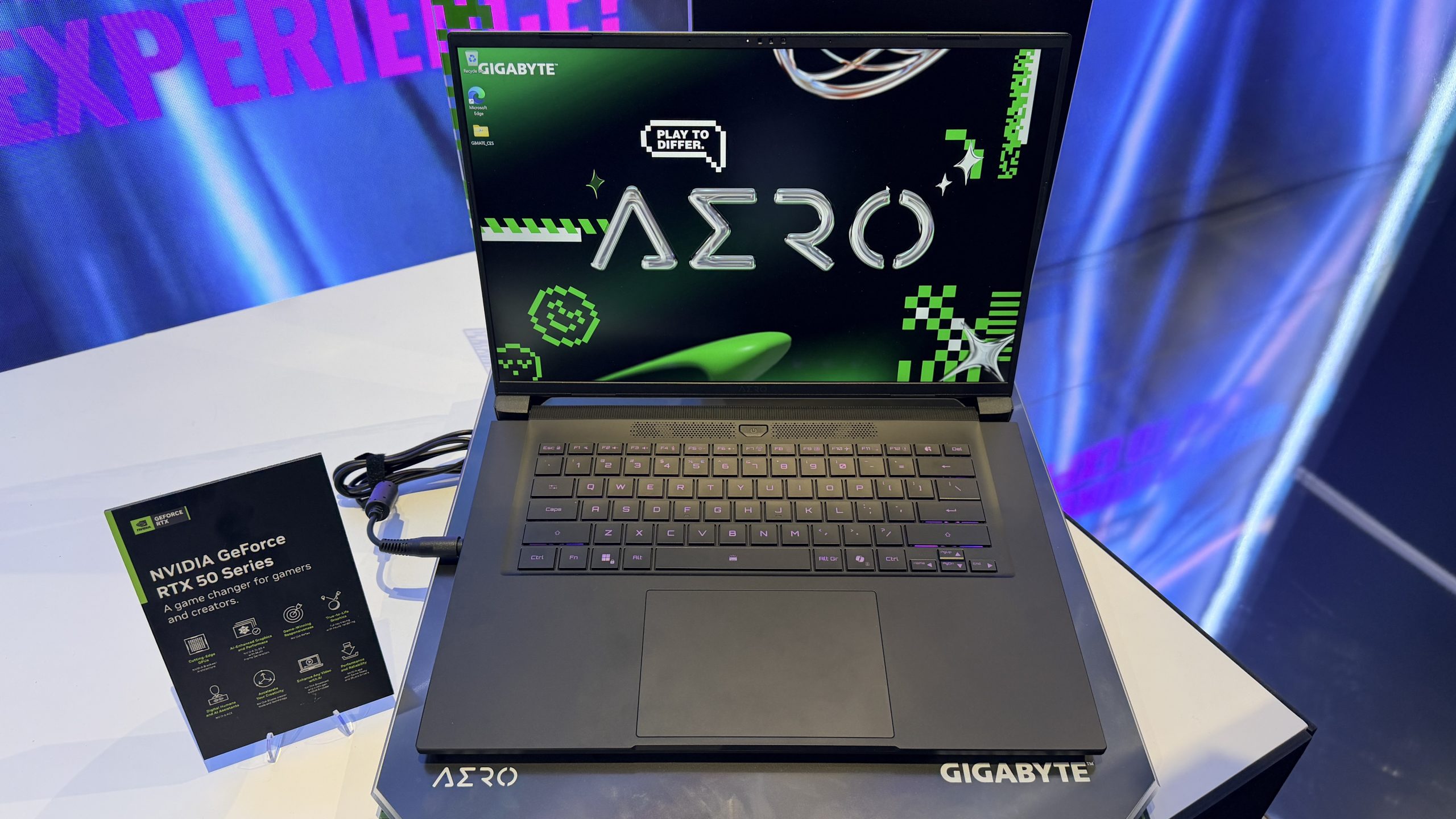
Moving on to the new laptops themselves, there are three models to look at, headlined by the Aorus Master 16. This laptop is positioned as the flagship for 2026, pairing AMD’s Ryzen 9 9955HX3D with an RTX 5090 Laptop GPU inside a 19mm chassis, a notable reduction in thickness compared to the previous generation. The system uses the company’s WINDFORCE Infinity EX cooling design, combining a vapor chamber with an asymmetric Frost Fan layout to manage the thermal load of high‑end components in a thin‑and‑light form factor. This model is clearly aimed at users who want desktop‑class performance in a portable footprint.
For creators and mobile professionals, the AERO X16 shifts the focus toward efficiency and on‑device AI acceleration. It is built around AMD’s Ryzen AI 400 series processors, which are designed to improve responsiveness and handle heavier AI‑assisted workloads without relying on cloud processing. GIGABYTE positions this model as the more mobility‑friendly option in the lineup, with an emphasis on creative workflows and general productivity.
Rounding out the range is the GAMING A18 PRO, which offers a more balanced configuration. With a 20mm profile and support for up to an RTX 5080 Laptop GPU, it targets users who want strong gaming and content‑creation performance without stepping into flagship territory. GIGABYTE frames this model as a versatile choice for mainstream gamers, hybrid creators and users beginning to explore AI‑accelerated applications.
KitGuru Says: Are you thinking of picking up a new laptop this year?
The post CES 2026: Gigabyte unveils new laptop range, including high-end Aorus Master 16 first appeared on KitGuru. Intel's new Core Ultra Series 3 processors (codenamed Panther Lake) offer extremely impressive integrated graphics performance, as we noted in our brief testing yesterday. They're also based on what is arguably the most advanced manufacturing process in the world, Intel's 18A, which boasts exclusive features like RibbonFET and PowerVia. That
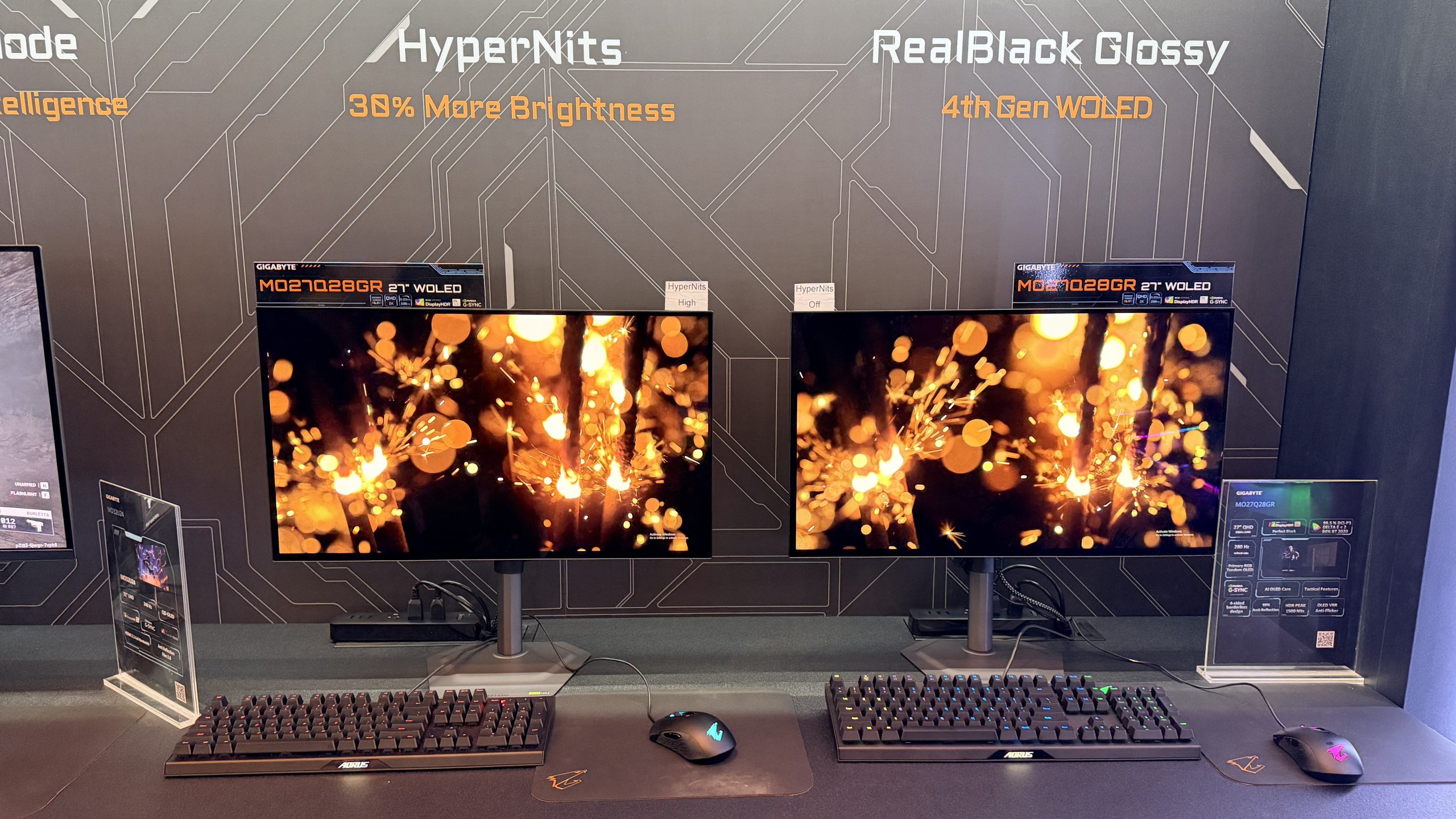
 At CES this week, Gigabyte has introduced four new OLED gaming monitors to its line-up, focusing heavily on picture-quality tuning for HDR and SDR content. The key new feature is HyperNits, which aims to address issues with HDR modes appearing dim by boosting the brightness curve without blowing out highlights.
For HDR, GIGABYTE is introducing a set of tuned HDR Picture Modes including HDR Movie, HDR Game and HDR Vivid, alongside a new feature called HyperNits. Many OLED panels appear dim in HDR peak‑brightness modes due to APL constraints, and HyperNits aims to counter this by reshaping the EOTF curve to boost brightness by up to 30% without blowing out highlights. Users can select HyperNits High for maximum output or HyperNits Medium for a milder 20% lift.
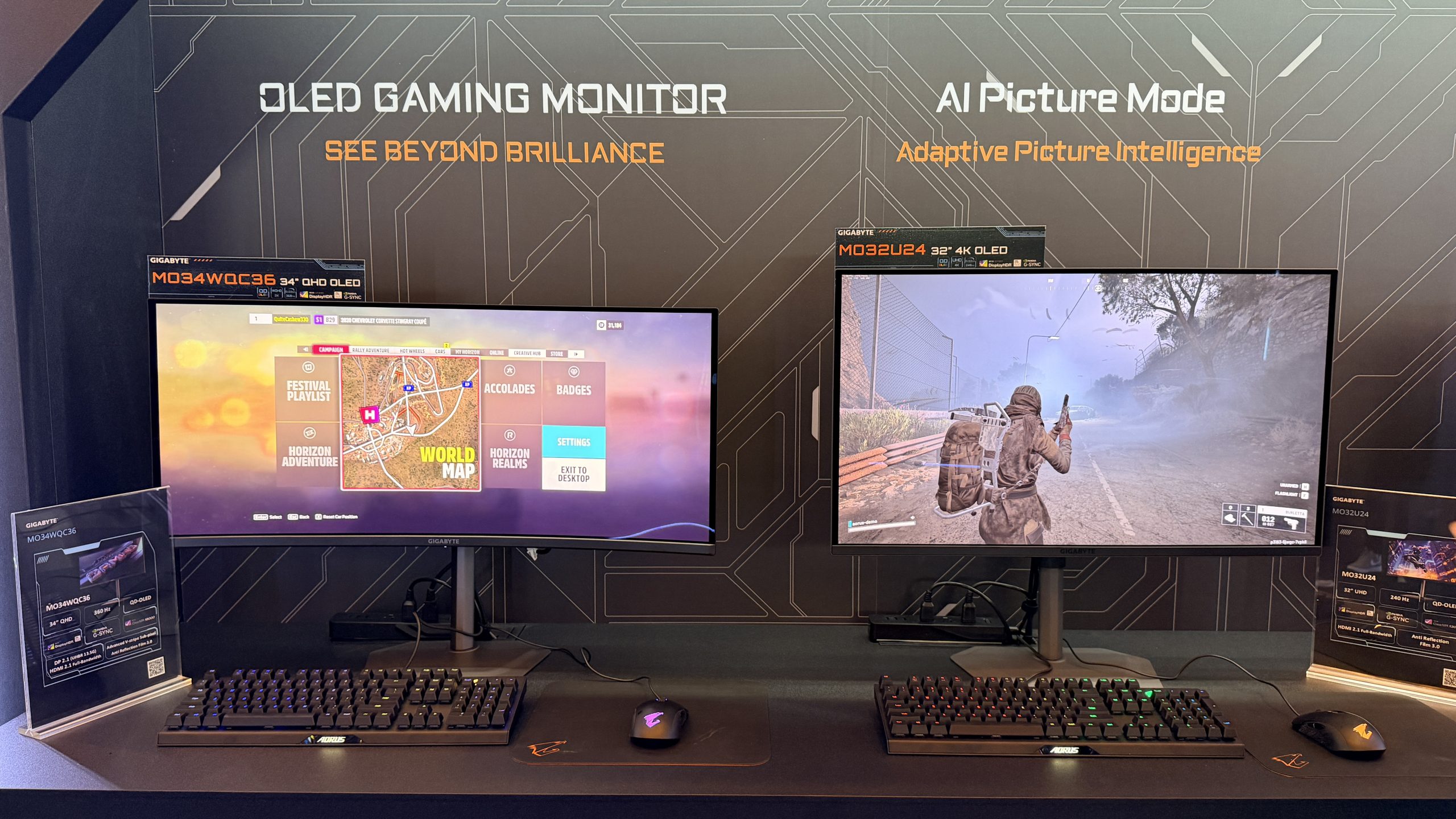
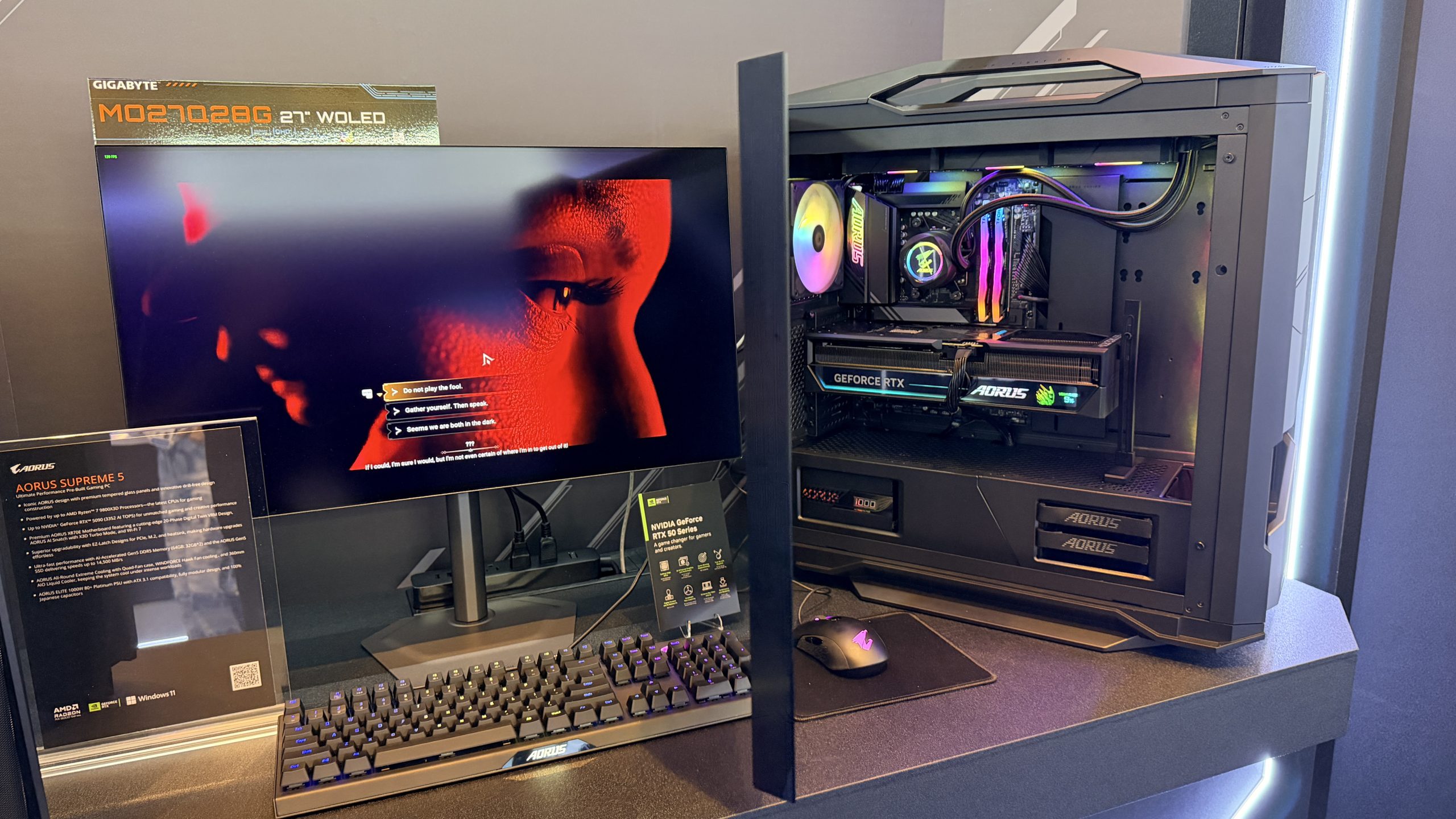
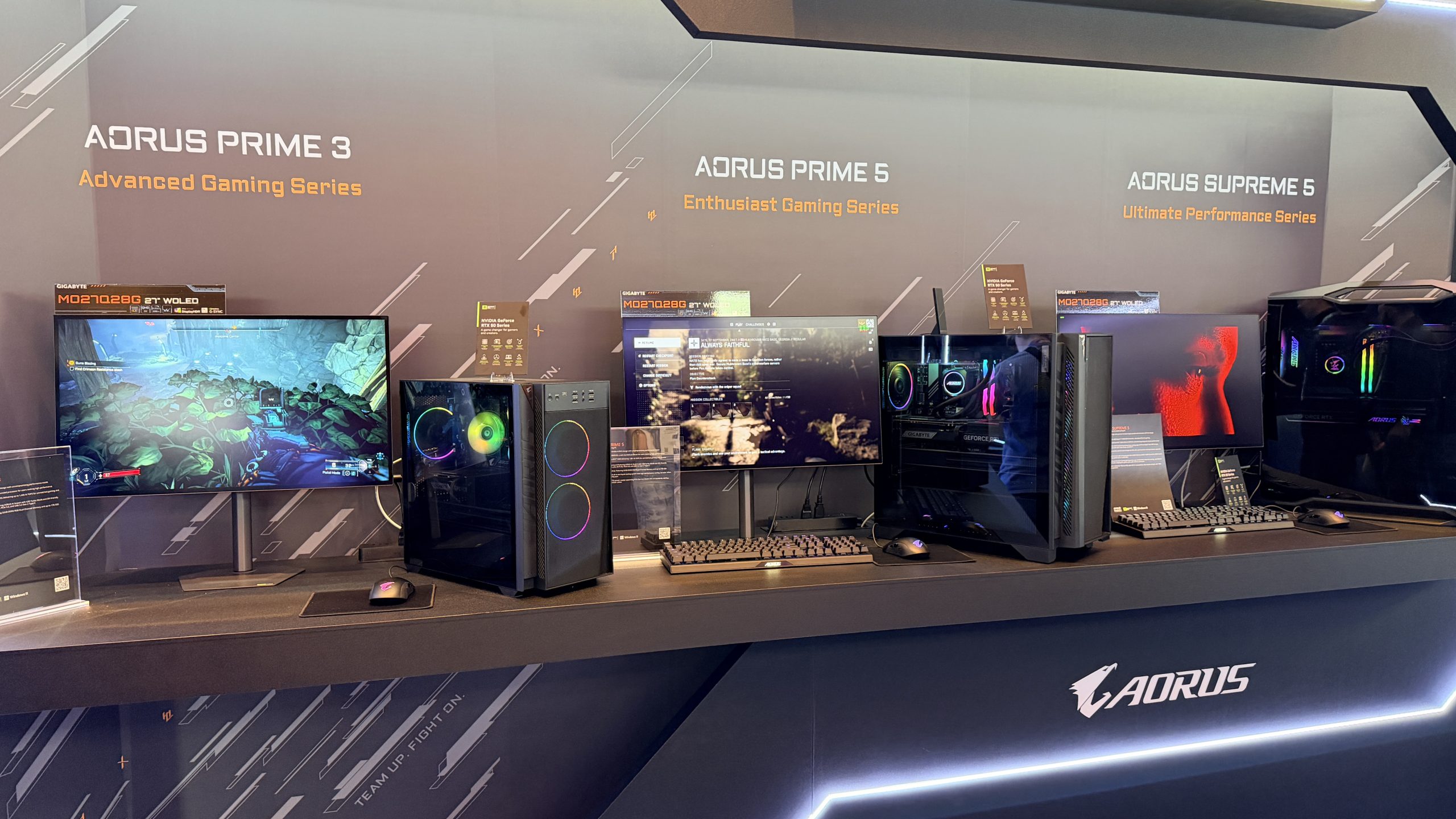
SDR content is handled by a new AI Picture Mode trained on a large dataset to automatically adjust settings based on activity. It can reduce brightness and blue light for work, increase contrast and adjust gamma for movies, or activate AI Black Equalizer for improved visibility in FPS titles. Adjustments are applied dynamically in real time.
These new displays will also come with a new set of Gigabyte's ‘Tactical Features'. Tactical Switch 2.0 enables one‑click switching between resolutions and aspect ratios such as 4:3 or 5:4, while Ultra Clear is designed to improve motion clarity and reduce blur in fast‑moving content.
The CES lineup includes the ultra‑wide QD‑OLED MO34WQC36 and the 4K QD‑OLED MO32U24, both featuring the new ObsidianShield film and DisplayHDR True Black 500 certification. ObsidianShield is said to improve perceived black levels by up to 40% and increases surface hardness from 2H to 3H for better scratch resistance. The MO34WQC36 also adopts a new V‑stripe sub‑pixel structure for improved text clarity. Rounding out the range is the MO27Q28GR, which uses RealBlack Glossy 4th‑gen WOLED technology and carries UL certification for bright‑room black performance.
KitGuru Says: Are you thinking of making the jump to a new-gen OLED display this year?
The post CES 2026: Gigabyte unveils new-gen OLED monitors first appeared on KitGuru.PNY has officially entered the 2026 Small Form Factor (SFF) market at CES 2026, unveiling a trio of Blackwell-based graphics cards designed to fit where most modern flagships cannot. The new GeForce RTX 5080, RTX 5070 Ti and RTX 5070 Slim models all adhere to a strict dual-slot, 40mm-thick design, making them suitable for SFF builds. By leveraging a redesigned thermal solution that utilises a vapour chamber and an aluminium backplate, PNY aims to provide the full performance of Nvidia's reference specifications without the massive physical footprint
The flagship of this compact series is the PNY GeForce RTX 5080 16GB Slim. PNY is shipping both standard and factory-overclocked versions, with the OC model boosting up to 2730MHz. Cooling a 360W TDP dual-slot card measuring 300mm in length and 40mm in thickness is no small feat, which is why PNY has equipped the 5080 with dual 120mm fans. These fans are designed to move more air at lower RPMs, theoretically keeping the noise floor manageable even during heavy 4K gaming loads

Sitting just below the flagship, the RTX 5070 Ti Slim is arguably the most interesting entry for SFF builders, as Nvidia isn't producing a Founders Edition for this SKU. PNY's version has a 300W TDP and fits into a slightly shorter 290mm chassis. Further down the stack, the RTX 5070 Slim is even smaller, measuring 128mm wide and featuring a pair of 100mm fans. All three models use a PCIe 5.0 interface and offer modern display connectivity, including three DisplayPort 2.1b outputs and a single HDMI 2.1b port.
Software control is handled by PNY's VelocityX suite, which allows for real-time telemetry monitoring, custom fan curves and manual OC. While the cards lack the ARGB lighting found on the more mainstream Epic-X series, the clean, industrial aesthetic is clearly aimed at users who prefer performance over flair. PNY expects these units to hit retail shelves in February 2026.
KitGuru says: PNY is filling a gap in the market here, particularly with the dual-slot RTX 5070 Ti. For those building in restrictive spaces, these Slim models might be one of the few ways to get a high-end RTX 50 card on their systems.
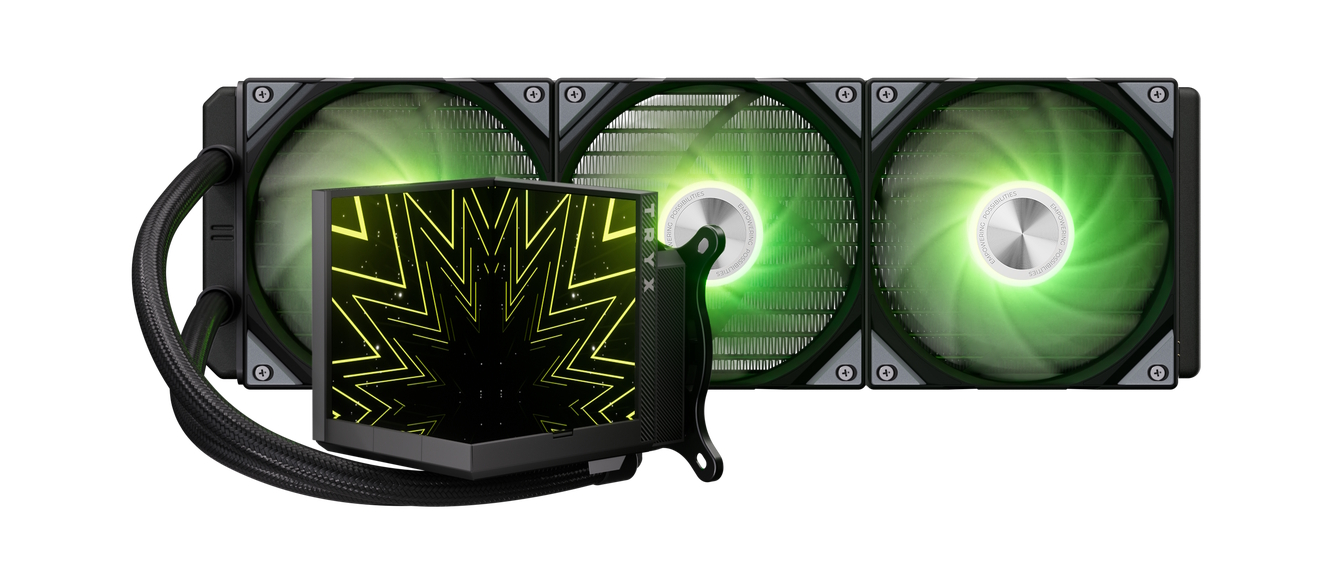
The post CES 2026: PNY targets SFF enthusiasts with dual-slot GeForce RTX 5080 and 5070 Slim first appeared on KitGuru.Following the launch of its Panorama series last year, Tryx has made a mark on the PC hardware market. At CES 2026, the brand is expanding its lineup to new segments with a trio of products that push the limits of how much screen real estate you can realistically fit inside a chassis. Headlining the launch is the Stage 360 AIO, a liquid cooler that ditches the single-panel approach for a unique “spliced” dual-display setup. Alongside the AIO comes a “lifestyle” chassis with a cross-flow fan design and the company’s first high-end CPU cooler, the Turris 620.
The Stage 360 liquid cooler offers an upgrade over typical LCD-on-pump systems. Rather than a single large screen, Tryx has integrated two 4.0-inch IPS displays onto an aluminium pump base, “spliced” together to create a continuous visual stage. With a pixel density of 254 PPI and a 720×720 resolution per panel, the visual fidelity is high enough to display detailed animations or even support small physical figurines placed on the base. Configuration is handled through the company’s Kanali software. Under the hood, the unit relies on 8th-gen Asetek technology and triple Rota SL ARGB fans to handle a rated TDP of 280W.


Moving to the chassis, the Flova F50 mid-tower was designed to blend a PC case with home aesthetics. The case features ventilated fabric-finished panels available in black, white or pink. However, the real innovation is the proprietary Tryx Cross-Flow (TCF) fan. Unlike traditional axial fans that push air in a straight line, the TCF is a side-mounted drum-style fan that creates a 90-degree airflow channel. This uniform wall of air is intended to eliminate dead spots over the motherboard and GPU while operating at an ultra-quiet 20 dBA. The case is also modern in its compatibility, offering full support for back-connect motherboards like Asus BTF and MSI Project Zero.
For those who prefer air cooling but still want the “screen-on-everything” aesthetic, the Turris 620 aims to deliver. This dual-tower heatsink features a massive 5.0-inch ultra-wide HD IPS display that is magnetically mounted to the top. The cooler uses a six-heatpipe configuration and a nickel-plated micro-convex base, and it can tame CPUs up to 280W. Installation is simplified through a rail system for the Rota fans, allowing them to be snapped into place without the usual struggle of wire clips.
The Stage 360 is expected to hit European shelves in February 2026 for £199.99/€229.99. The Flova F50 will arrive around the same time, starting at £129.99/€144.99, while the Turris 620 is slated for a March release with pricing to be confirmed closer to launch.
KitGuru says: The engineering behind the Flova F50's cross-flow fan is legitimately interesting. If that TCF fan can actually deliver on its promise of silent, uniform cooling, Tryx might have more than just coolers with big displays on its hands.
The post CES 2026: Tryx expands its lineup with new cooling solutions and cases first appeared on KitGuru.Since the launch of the PlayStation 5 back in 2020, Sony has kept the console feeling fresh thanks to plenty of additional accessories and customisation options. Joining the line-up in 2026 is the PS5’s new Hyperpop Collection – featuring bright and colourful face plates and DualSense controllers.
Making the announcement via the PlayStation Blog, the VP of global marketing at SIE Isabelle Tomatis officially unveiled the Hyperpop Collection: Featuring three new striking designs for DualSense wireless controllers and PS5 console covers.”
With a shiny/glossy finish complimented by a mix of bright colours transitioning into black, the Hyperpop collection is perhaps one of the PS5’s best-looking after-market accessories yet – second only to their ‘Chroma’ series.
The PS5 Hyperpop Collection is available in 3 colours (Techno Red, Remix Green, Rhythm Blue) and will be pre-orderable from the 16th of January – with shipping commencing from the 12th of March.
Additional details on the new console covers and DualSense controllers can be found HERE.
KitGuru says: What do you think of the PS5’s customisation compared to previous generations? Were the face plates a good idea? Which collection has been your favourite so far? Let us know your thoughts down below.
The post Sony unveils new limited edition Hyperpop PS5 DualSense and accessories first appeared on KitGuru.MSI has officially launched the MPG 272QRF X36, a monitor developed in close partnership with Nvidia to spearhead the arrival of G‑Sync Pulsar technology. Aimed at the competitive gaming market, this 27‑inch Rapid IPS display pairs a native WQHD (2560 x 1440) resolution with a 360Hz refresh rate. While high‑refresh displays are increasingly common in the competitive scene, the MPG 272QRF X36 distinguishes itself by finally unifying variable refresh rate (VRR) and backlight strobing without the traditional compromises of flickering or screen tearing
Nvidia’s G‑Sync Pulsar technology is what makes this possible. Historically, gamers had to choose between the stutter‑free experience of G‑Sync and the superior motion clarity of backlight strobing (ULMB). Pulsar eliminates this by using variable‑frequency backlight strobing to synchronise with the GPU’s fluctuating frame rate. By dividing the backlight into multiple horizontal sections and utilising a “rolling scan” technique, the monitor pulses the backlight for only 25% of each frame duration. This ensures pixels have time to stabilise before they are illuminated, resulting in what Nvidia claims is a fourfold improvement in motion clarity (240 FPS has the motion clarity of 960Hz).
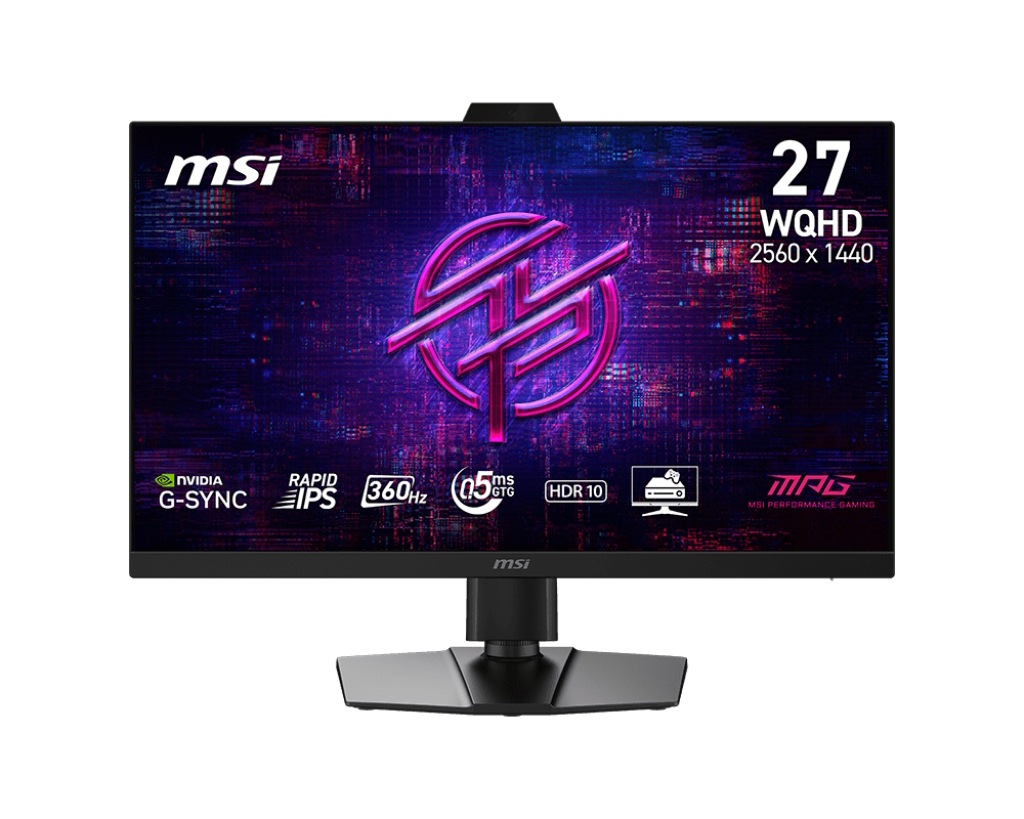
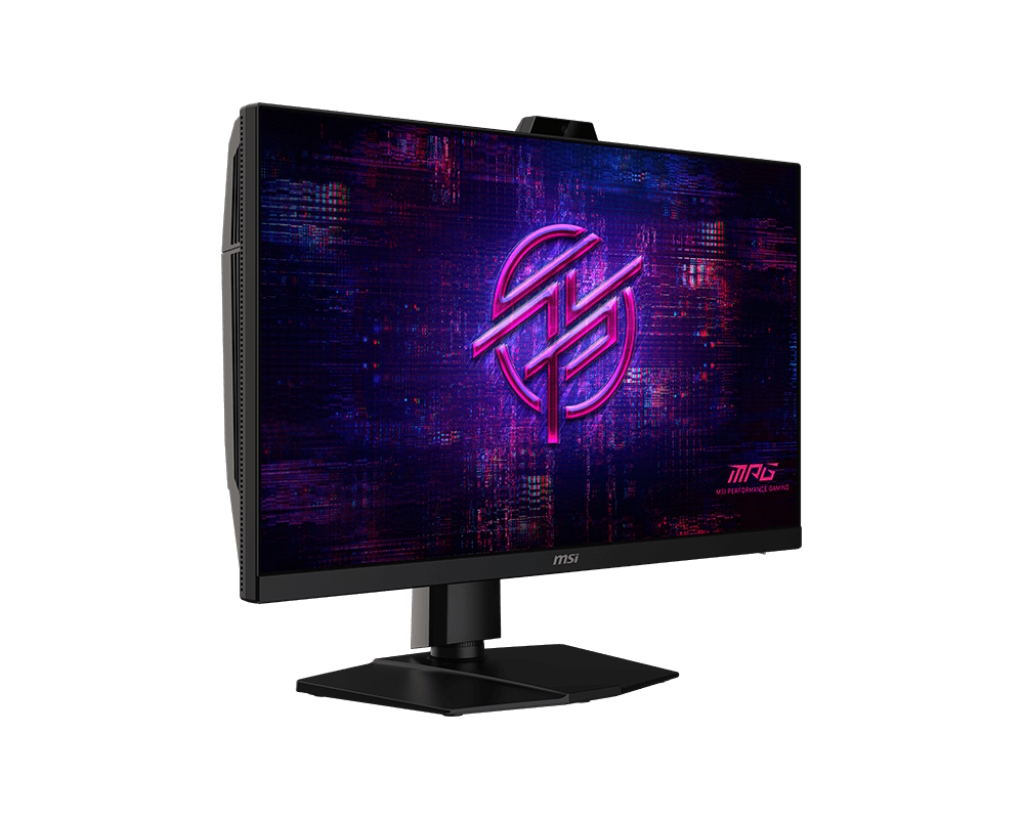
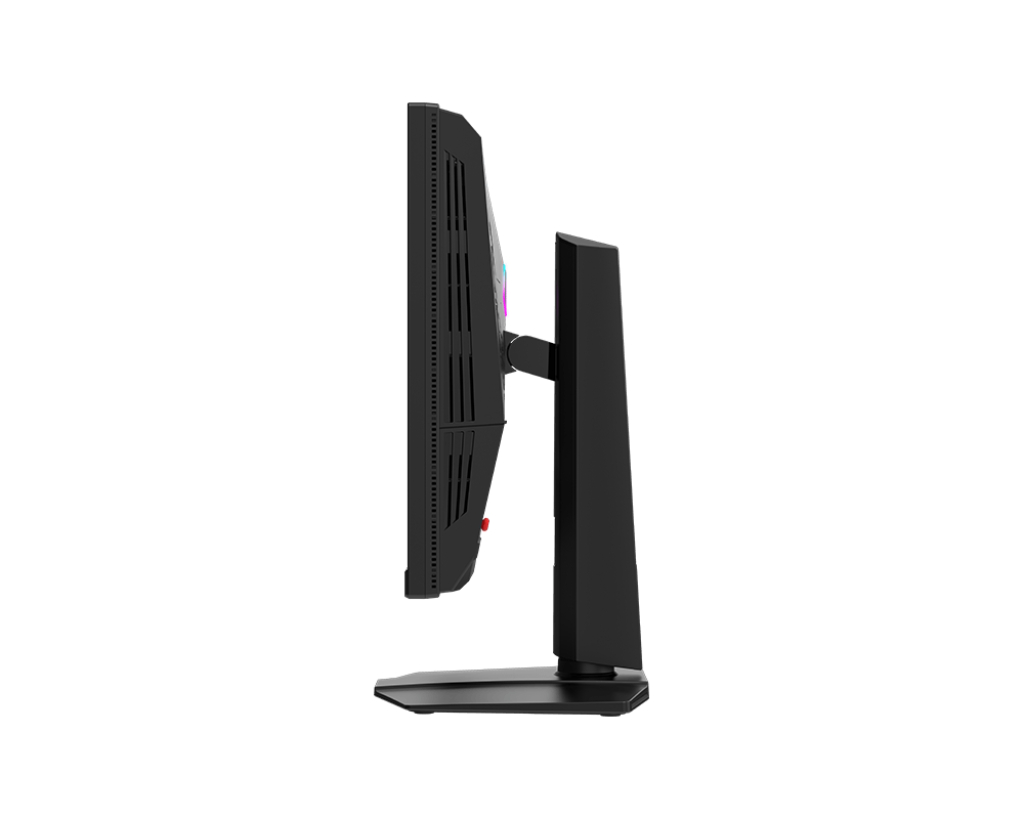
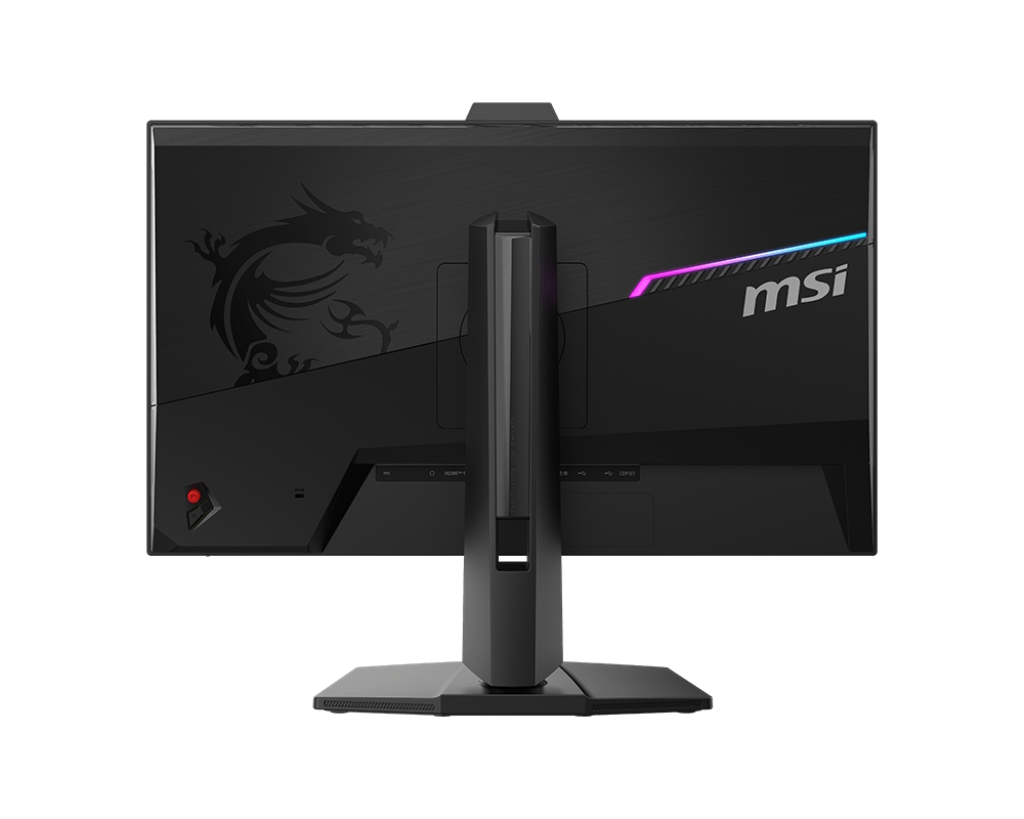
Beyond raw speed, the MPG 272QRF X36 integrates several quality‑of‑life features for varying environments. The G‑Sync Ambient Adaptive system utilises an on‑board light sensor to monitor the user’s surroundings, automatically adjusting brightness and colour temperature to maintain optimal contrast while reducing eye strain. Competitive players who still prefer lower resolutions for performance reasons will also find value in the 25″ Mode simulation. This feature provides pixel‑perfect scaling for resolutions such as 1920 x 1080 and 1280 x 960, allowing players to use a smaller windowed area with reduced interpolation artefacts or blur.
The monitor uses a Rapid IPS panel with 10‑bit colour support (8‑bit + FRC) and a peak brightness rating of 500 nits. Connectivity includes dual HDMI 2.1 ports and a DisplayPort 1.4a input. The display also supports user‑updatable firmware directly from Nvidia, allowing the G‑Sync module to receive performance optimisations post‑purchase. The MPG 272QRF X36 is priced at $649.99.
KitGuru says: Nvidia's G-Sync Pulsar is very promising. However, considering you're getting a 27-inch IPS panel when you could get a 27/32-inch 4K OLED monitor for the same price, potential buyers will have to evaluate if they really value motion clarity that much.
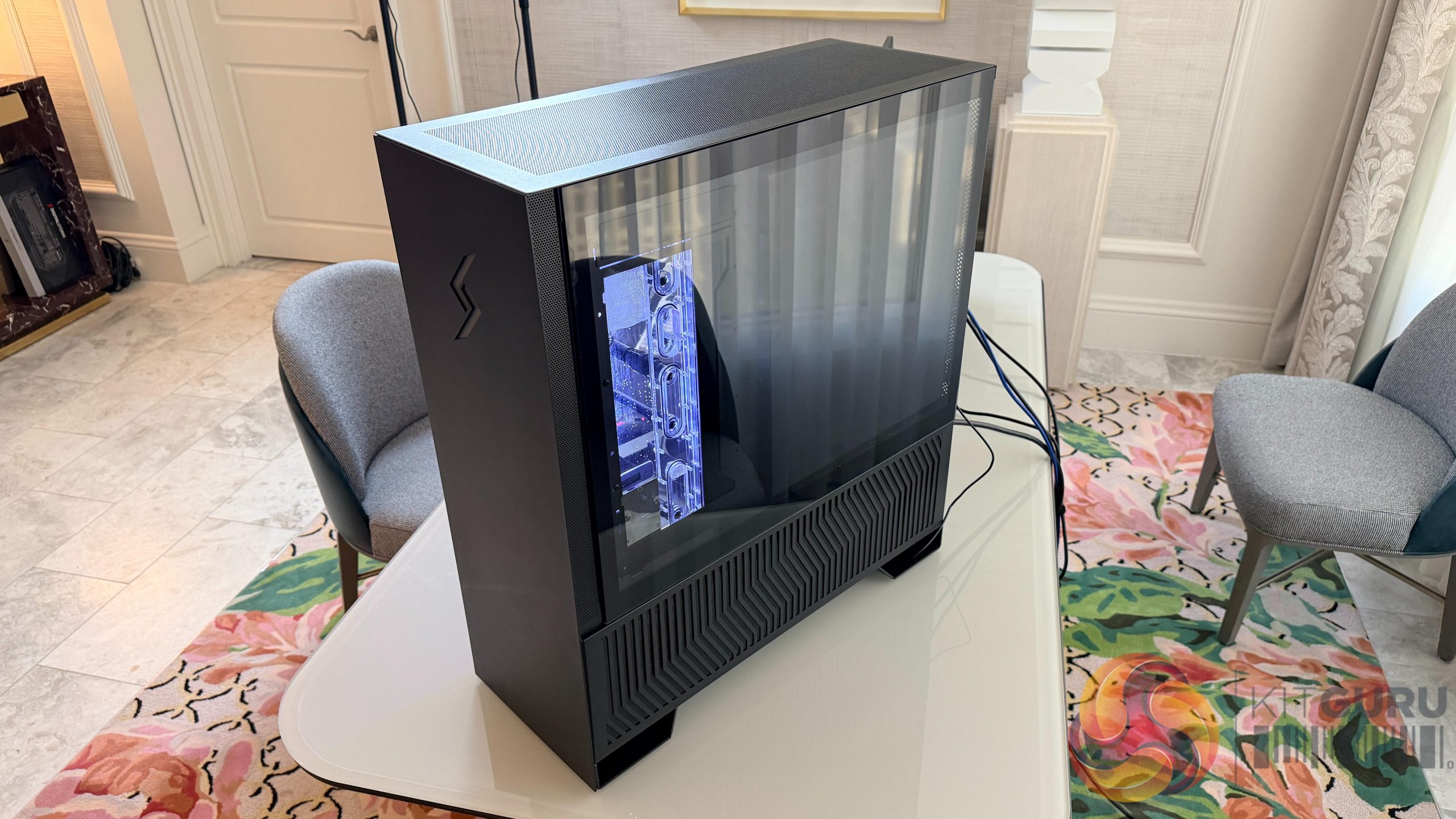
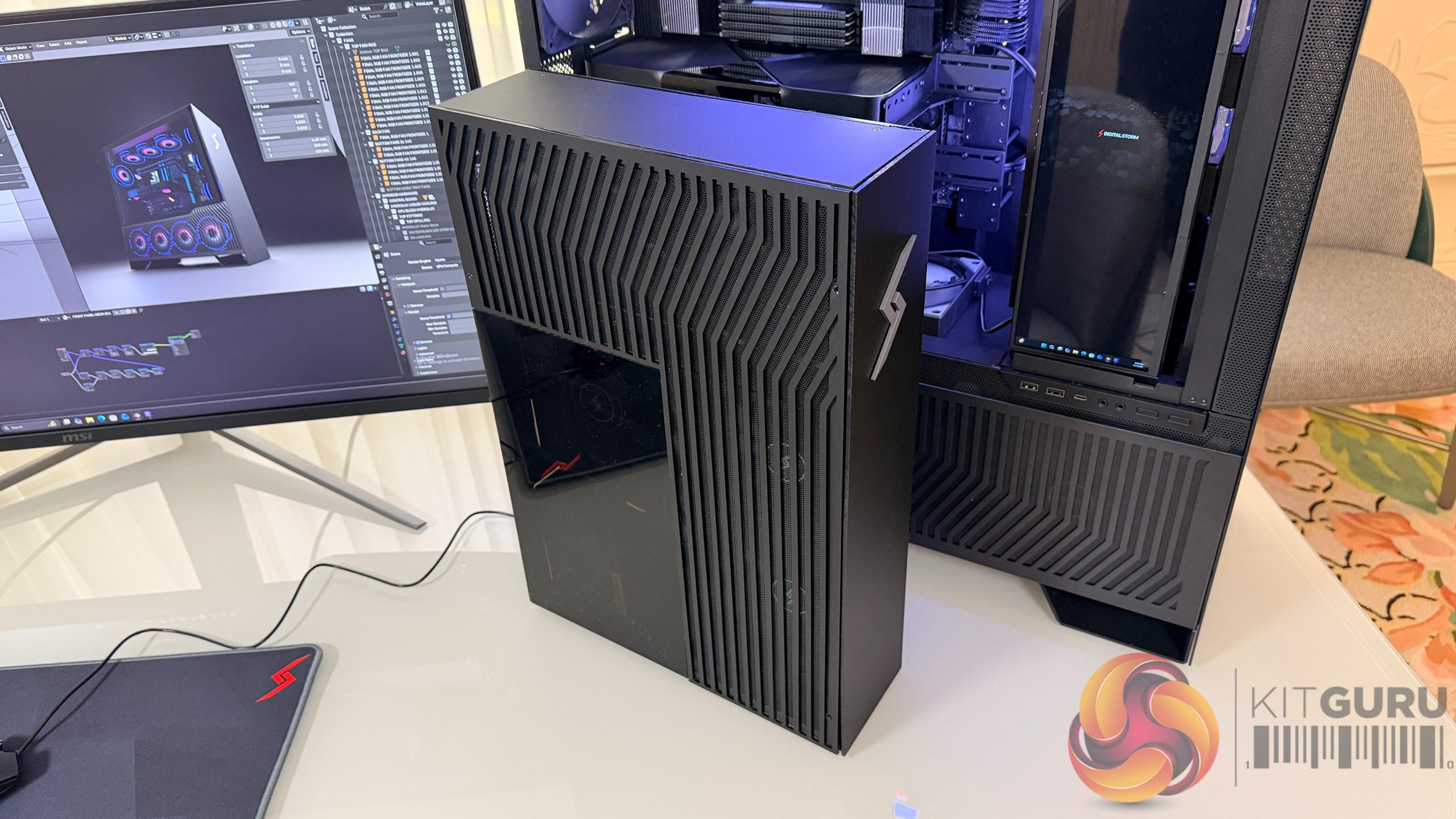
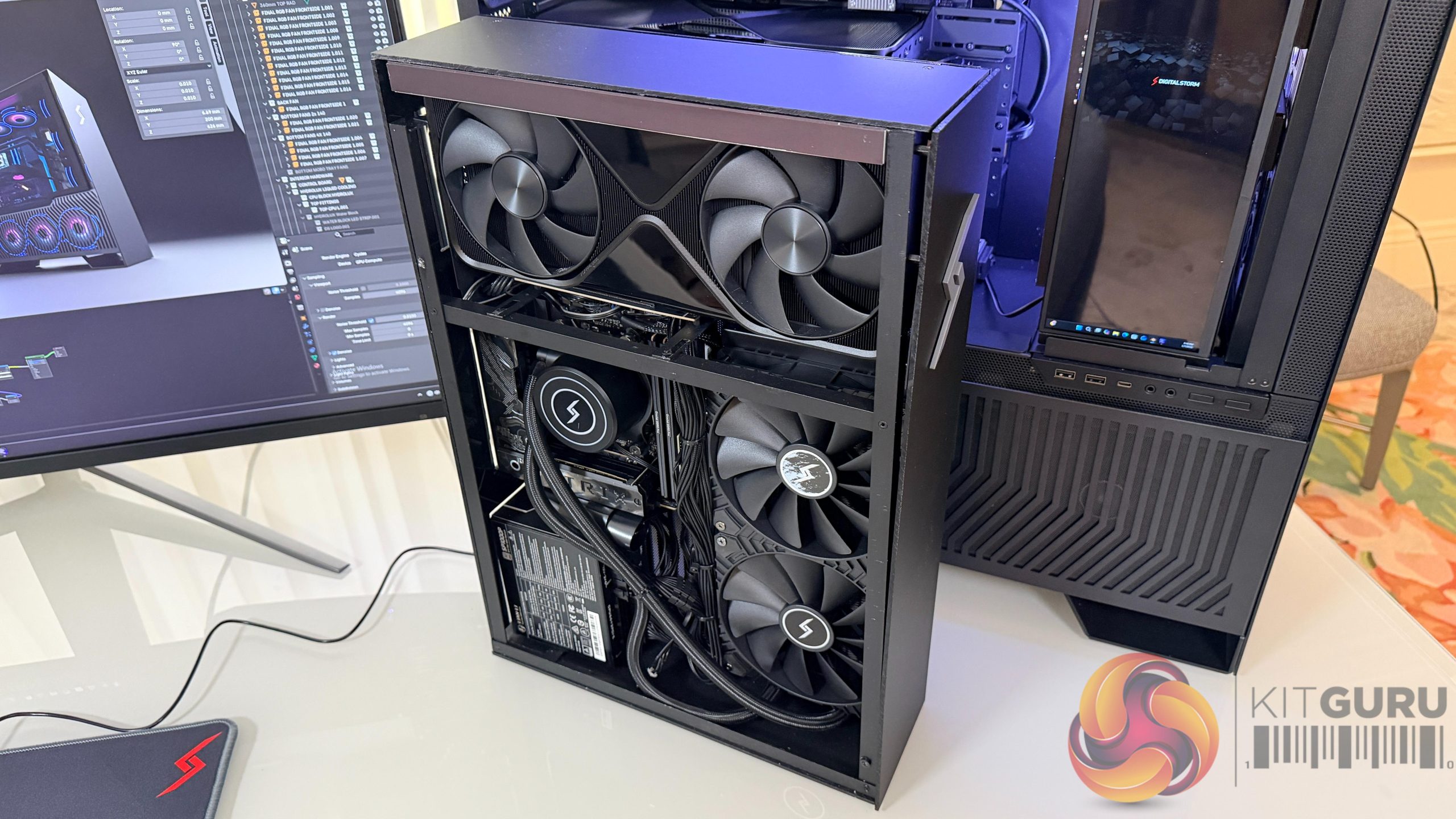
The post CES 2026: MSI introduces the MPG 272QRF X36, its first Nvidia G-Sync Pulsar monitor first appeared on KitGuru.At CES this week, we stopped by to visit US PC maker, Digital Storm. At their booth, we got a look at the new Vector and Aventum 5 systems, each taking a different approach to high-end computing.
The Digital Storm Vector is designed as a slimmer, more compact alternative to traditional ATX towers, fitting high‑end components into a chassis just 4 inches wide. It emphasises performance density, managing heat, airflow and acoustics within a constrained volume while still supporting powerful CPUs and modern GPUs. In its top configurations, the Vector can be equipped with an NVIDIA RTX 6000 Pro Blackwell GPU paired with either an AMD Ryzen 9 9950X or an Intel Core Ultra 9 285K processor.
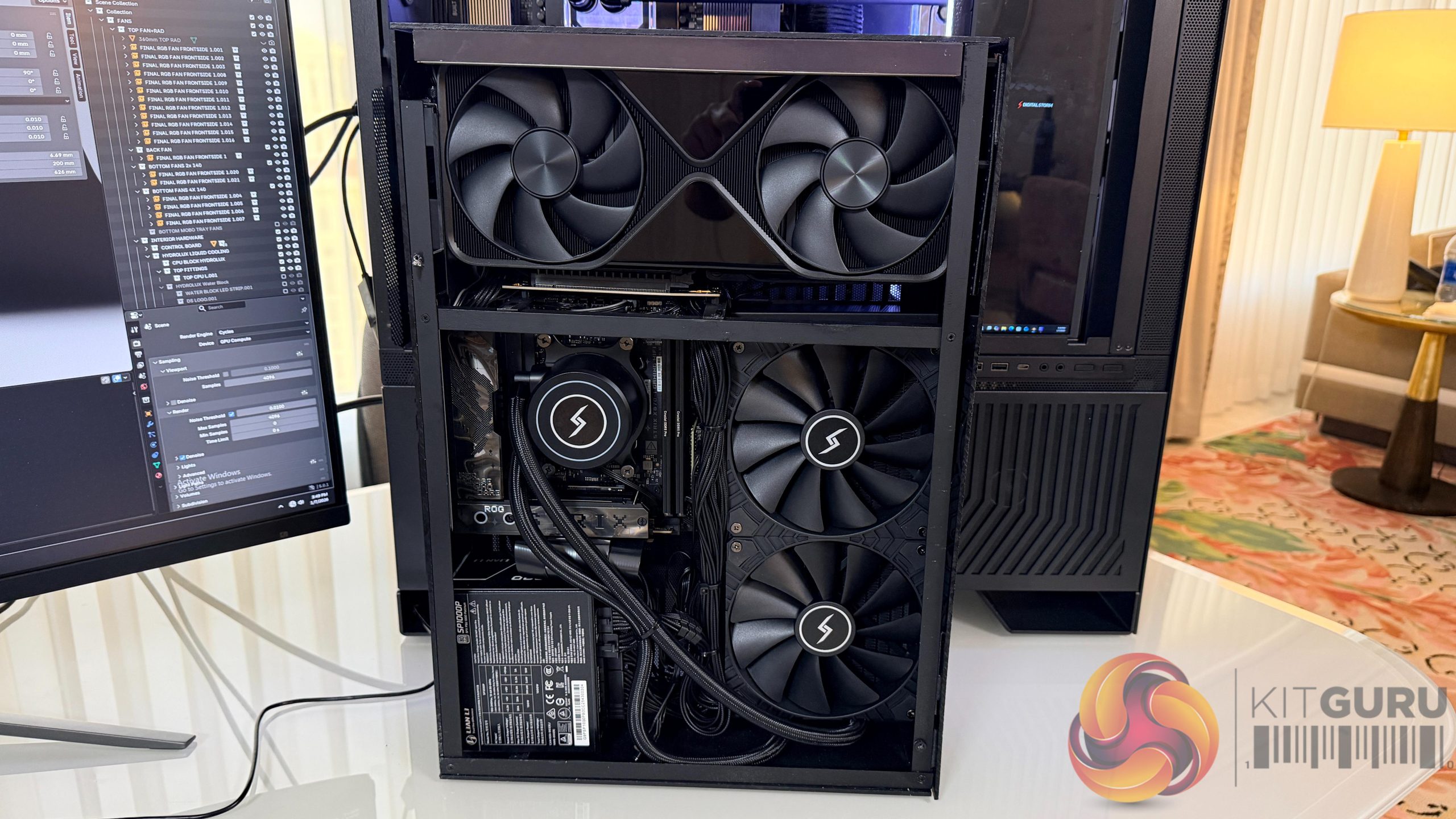
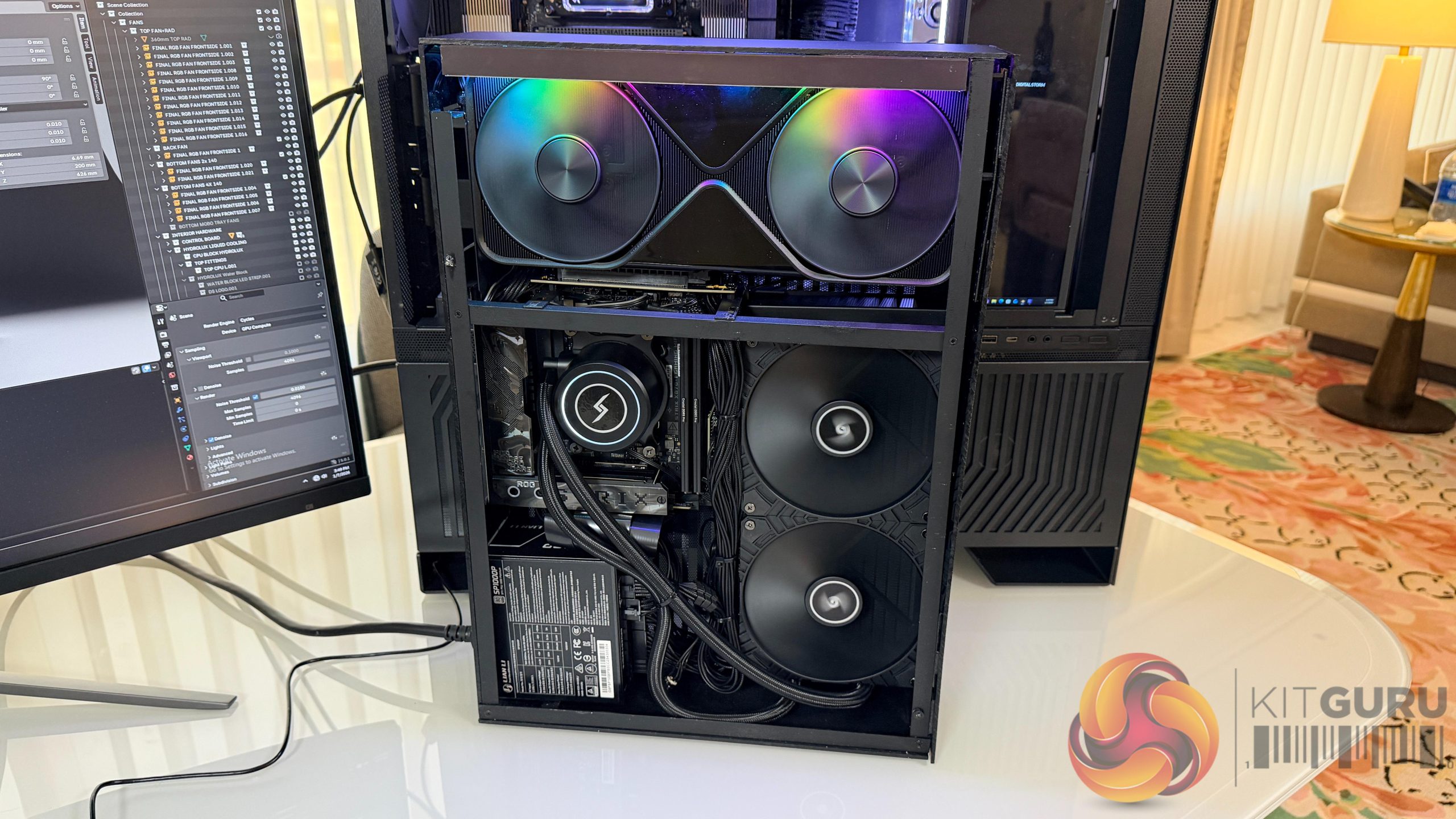
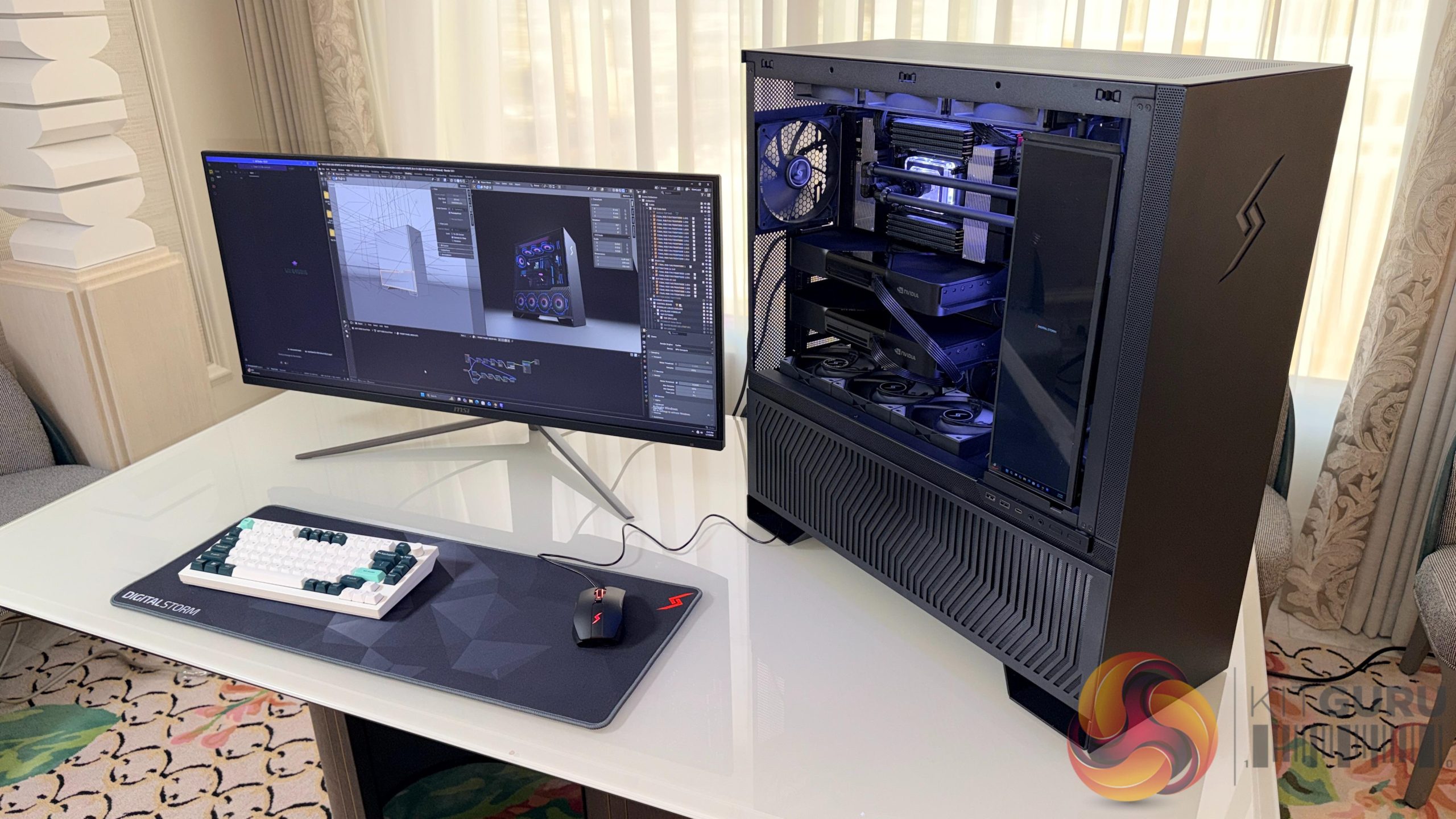
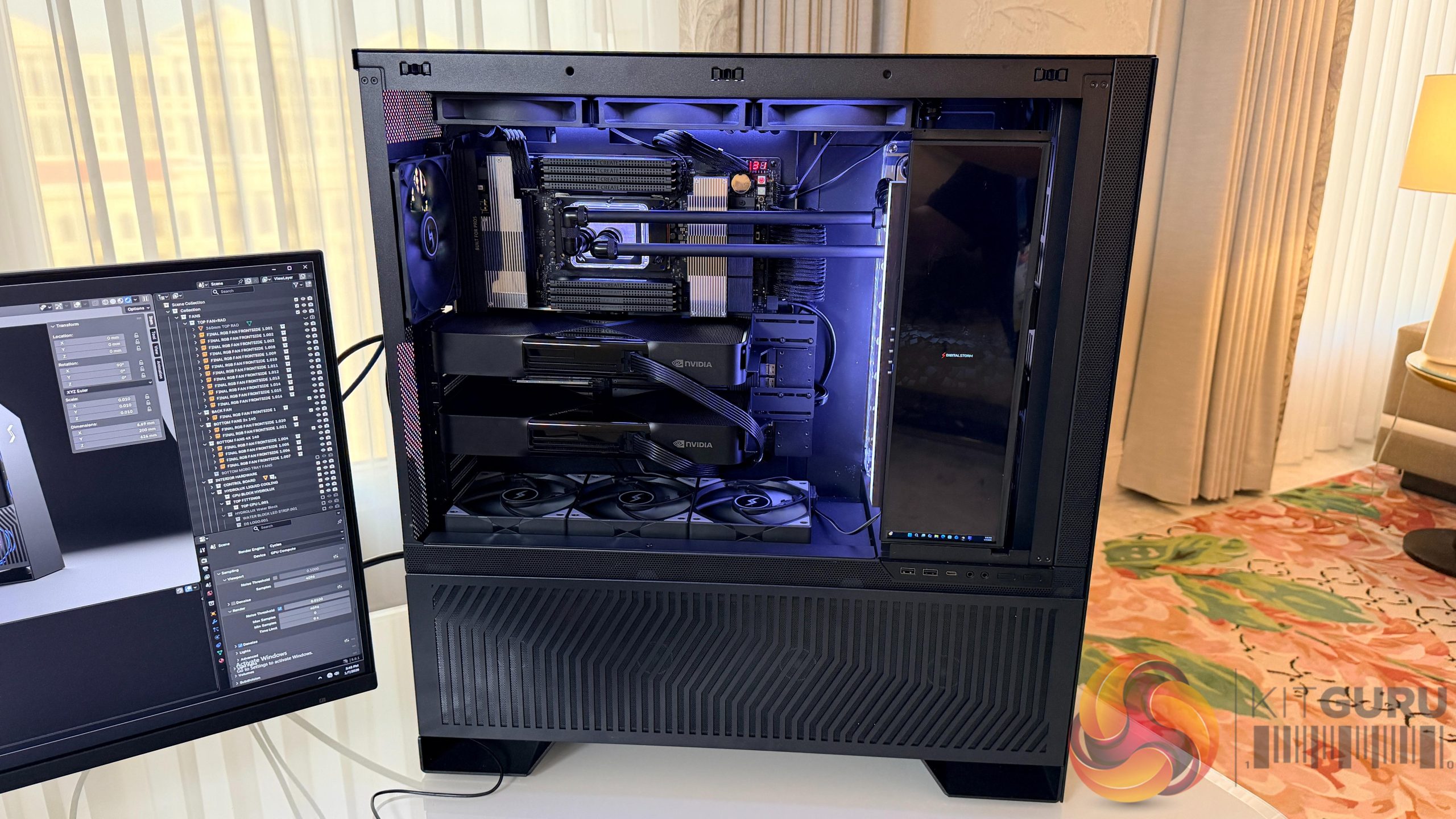
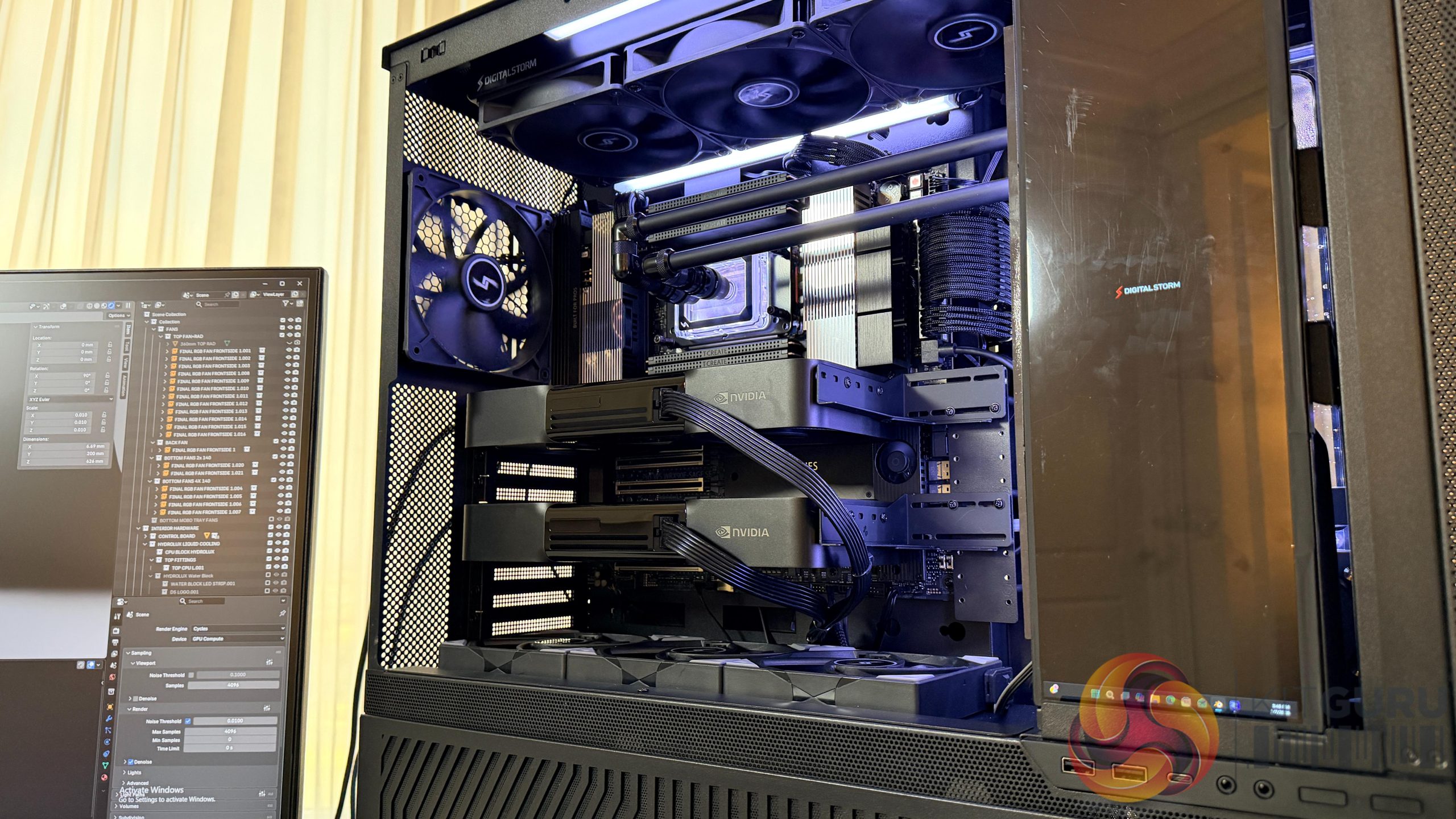
The Aventum 5 is Digital Storm’s latest fully liquid‑cooled desktop, redesigned to prioritise radiator capacity, airflow routing and serviceability for long‑duration CPU and GPU workloads. The system is built to keep next‑generation CPUs and RTX 6000‑class GPUs operating at boost clocks for extended periods without throttling. A large display is integrated directly into the chassis, providing real‑time system monitoring stats such as temperatures, clock speeds, utilisation and cooling performance without relying on overlays or additional monitors.
Both the Vector and Aventum 5 PCs will be available with a wide range of configuration options, including the latest desktop platforms from AMD and Intel, NVIDIA GPUs up to the RTX 6000 Pro Blackwell, large memory capacities, fast NVMe storage and high‑end power supplies. The Aventum 5 is expected to start at around $3,000 USD. Meanwhile, the Vector will start at approximately $2,000 USD. Both are expected to be available to order through Digital Storm starting in Q2.
KitGuru Says: These aren't so much gaming PCs but rather AI development powerhouses.
The post CES 2026: Digital Storm debuts new prebuilt PCs with RTX Pro Blackwell graphics first appeared on KitGuru.
 Semiconductor engineers everywhere are clutching their lint-free jumpsuits in horror as Elon Musk has announced his latest disruption: the "dirty fab," a chip lab so chill in its standards that you could smoke and eat a double fat cheeseburger inside.
Elon - “I think they’re getting clean rooms wrong in these modern (chip) fabs. I’m going
Semiconductor engineers everywhere are clutching their lint-free jumpsuits in horror as Elon Musk has announced his latest disruption: the "dirty fab," a chip lab so chill in its standards that you could smoke and eat a double fat cheeseburger inside.
Elon - “I think they’re getting clean rooms wrong in these modern (chip) fabs. I’m going  One of the cooler things we saw in person at CES this year is MSI's new GeForce RTX 5090 32G Lightning Z. A flagship GPU like the GeForce RTX 5090 is capable of standing on its own for noteworthiness, but what separates this one from the crowd is that it comes with a big and integrated 8-inch color LCD panel to display system vitals, artwork,
  Astronomers have captured the moment a supermassive black hole literally tore apart a super sun (one 30 times larger than our own) and released a burst of energy equivalent to 400 billion suns.
Affectionately called the "Whippet" (officially AT2024wpp), this Tidal Disruption Event (TDE) occurred on a scale that defied traditional expectations.
Astronomers have captured the moment a supermassive black hole literally tore apart a super sun (one 30 times larger than our own) and released a burst of energy equivalent to 400 billion suns.
Affectionately called the "Whippet" (officially AT2024wpp), this Tidal Disruption Event (TDE) occurred on a scale that defied traditional expectations.  As impressive as the debut of Intel's mobile Panther Lake lineup at CES 2026 was, AMD has gone on the record as being "not afraid" of Intel's latest and greatest architecture. The reason for this is because Intel didn't compare Panther Lake to AMD's top-of-the-line Strix Halo in its slides, with an AMD executive saying, "Strix Halo, or Ryzen
  Apple is reportedly exploring camera technology currently being used in medical, archeology, and the military, with rumors suggesting the integration of multispectral imaging and high-resolution 200MP sensors in forthcoming iPhones. That would certainly be exciting if true, though as always, treats rumors like this with a grain of salt.
According
Apple is reportedly exploring camera technology currently being used in medical, archeology, and the military, with rumors suggesting the integration of multispectral imaging and high-resolution 200MP sensors in forthcoming iPhones. That would certainly be exciting if true, though as always, treats rumors like this with a grain of salt.
According  Forget for a moment that ASUS is already embracing the Wi-Fi 8 standard when the vast majority of consumers have yet to upgrade their home networks to Wi-Fi 7 hardware, let alone Wi-Fi 6E or even Wi-Fi 6. The real story here is the design of ASUS ROG's NeoCore Wi-Fi 8 router concept—is it just me or does it look it could be rolled like a D20
  After coming to a revised royalty rate agreement with the U.S. government, NVIDIA has orders from China for more than 2 million H200 AI chips at around $27,000 each, but will only ship the orders if they are paid in full upfront, Reuters reports. Citing two people who have purportedly been briefed on the matter, the outlet says NVIDIA's requirement
 In the wake of last year’s highly-successful The Elder Scrolls IV: Oblivion Remastered, we began to hear an increasing number of leaks and rumours suggesting that Fallout 3 would be next in line to receive such a treatment. Though yet to be officially confirmed, insiders have claimed that not only is Fallout 3 set to get a remaster, but the much-loved New Vegas too.
As claimed by known Xbox insider Jez Corden via Windows Central, “we are eventually getting a Fallout 3 remake in the vein of Elder Scrolls IV: Oblivion Remastered.”
This far from surprising given both the success of Oblivion Remastered and the fact that a Fallout 3 remaster was leaked by Microsoft themselves back in 2023. What is more interesting however is that according to Corden the much-loved Fallout: New Vegas is also set to receive a similar treatment.

While Fallout 3 has plenty of fans, New Vegas in particular has come to be known as one of the best RPGs of all time and so it getting a remaster in particular would be exciting indeed.
That said, while the Oblivion remaster was received warmly, it suffers from plenty of performance issues owing in part to its Unreal Engine 5 layer. Assuming Fallout 3 and New Vegas will be handled in the same way, here’s to hoping that more time is dedicated to making the experience a smooth one – though this might be asking too much from Bethesda.
KitGuru says: What do you think of this latest claim? Which of the two games would you want to see remastered first? What were your overall thoughts on Oblivion Remastered? Let us know down below.
The post Fallout: New Vegas remaster reportedly in the works alongside Fallout 3 first appeared on KitGuru.