↩ Accueil

Vue lecture

Hi-Fi Rush to get a physical release with pre-orders going live next week

Hi-Fi Rush has had an interesting life. Developed by Tango Gameworks and published by Microsoft following their acquisition of ZeniMax Media (aka Bethesda), the rhythm-focused action title received high praise across the board and was reportedly a success on all fronts according to Xbox. Unfortunately, Tango Gameworks would later be shut down – though it was thankfully revived by KRAFTON. Now under a new label, a physical release for Hi-Fi Rush has been officially announced.

Making the official announcement, physical media specialists Limited Run Games have revealed that they are releasing a disc version of Hi-Fi Rush.

Available for PS5/Xbox in 3 different variants, the Rhythm (standard) Edition includes the base game alongside all Digital Deluxe Edition content. The Smidge Edition meanwhile offers you a physical version of the game alongside a 3-disc soundtrack with developer notes; a special edition box and a bunch of in-game bonuses.

Last but certainly not least, the Project Armstrong Edition includes all of the above plus:

  • A hardcover art book
  • Glow in the dark pin
  • Certificate of authenticity
  • 6 inch guitar replica
  • 8 inch 808 cat plush
  • Chai’s Project Armstrong pass
  • An even bigger collector’s box
Hi-Fi Physical

All three versions of Hi-Fi Rush will be available to pre-order from the 16th of January until the 1st of March, with the Rhythm Edition costing you $39.99; the Smidge Edition going for $69.99 and the Project Armstrong Edition setting you back a whole $174.99.

Given the behind-the-scenes drama surrounding Tango Gameworks and Microsoft, it makes some sense that this physical release has taken quite a while to come to fruition. Still, for those who want a disc version of one of Tango Gameworks’ best titles, it is finally happening.

KitGuru says: What did you think of Hi-Fi Rush? Is the physical version arriving too late? What do you think of each edition’s contents? Let us know down below.

The post Hi-Fi Rush to get a physical release with pre-orders going live next week first appeared on KitGuru.
  •  

“Creator-led” New Game+ Showcase announced, featuring no “paid placements”

While Geoff Keighley’s Game Awards and Summer Game Fest showcases have easily become two of the biggest events for video game announcements, they’ve also garnered some controversy due to the prices required in order to appear in either event, leaving many smaller studios out of luck. Fortunately, a creator-led event has now been announced, with the New Game+ Showcase emphasising its lack of any paid advertisements.

Releasing a hype trailer in the lead up to the event, the New Game+ Showcase is set to go live on the 8th of January and will feature a total of 45 games, including the likes of Crimson Desert; Aphelion; and many more.

The New Game+ Showcase is a creator-led event “designed to put authentic excitement back at the center of game reveals.”

Featuring no paid advertisements, the showcase is focused on giving “developers and publishers a stage where their game isn’t competing for attention with dozens of sponsored slots, but instead stands out in front of communities that want to discover it.”

Created by known public figures Luke Stephens; Luality; Jake Lucky; IamRob; Blue Thunder and HUN2R, this new showcase offers plenty of strong potential – assuming it’s done correctly.

Fortunately we won’t have to wait long to find out, with the New Game+ Showcase officially going live in just a couple days on the 8th of January at 9PM UK time.

KitGuru says: What do you think of this latest showcase? Are you excited? Are there too many video game showcases at this point, or does Keighley need some extra competition? Let us know your thoughts down below.

The post “Creator-led” New Game+ Showcase announced, featuring no “paid placements” first appeared on KitGuru.
  •  

CES 2026: MSI showcases RTX 5090 Lightning Z, MAX motherboards and more

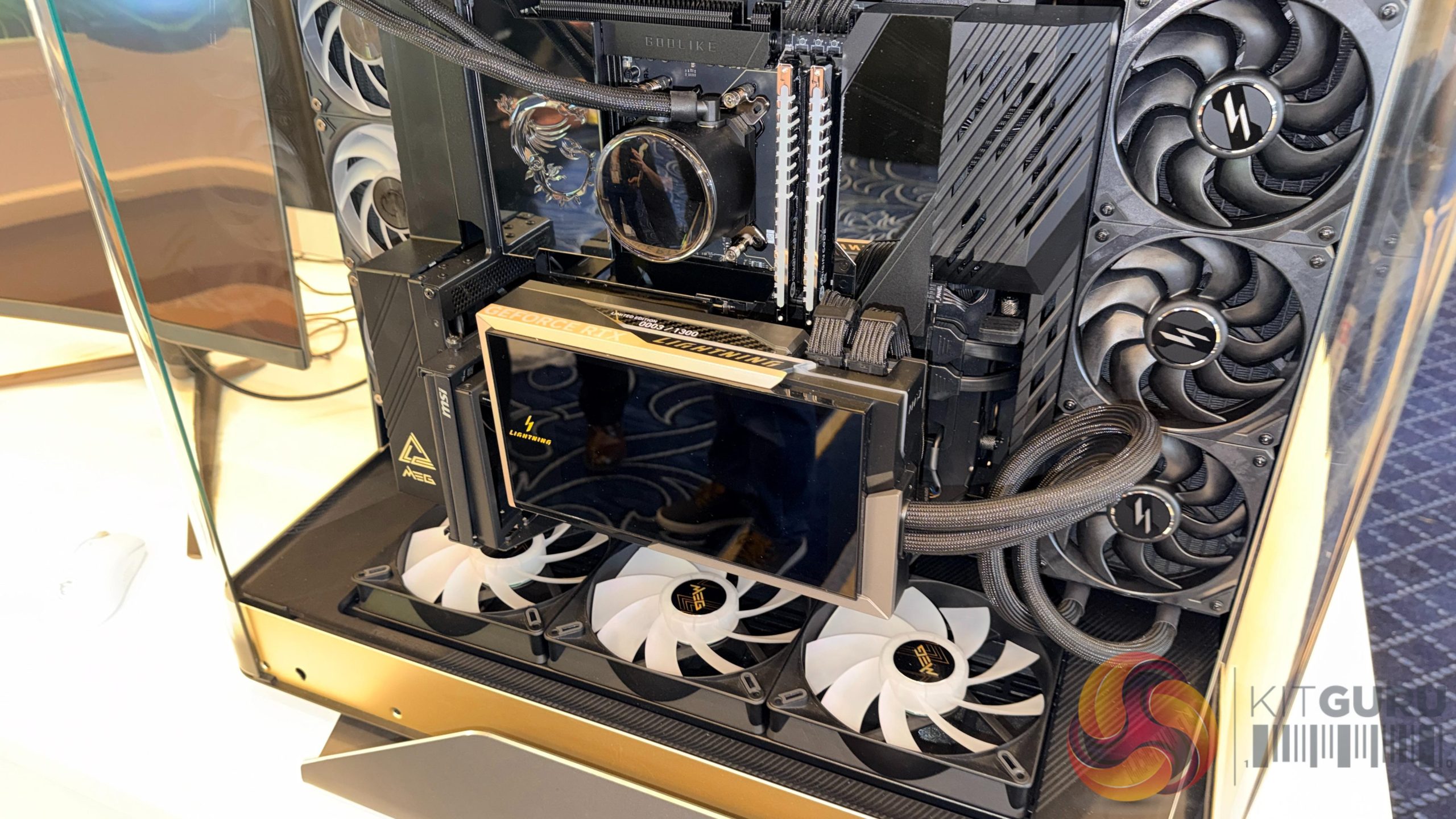
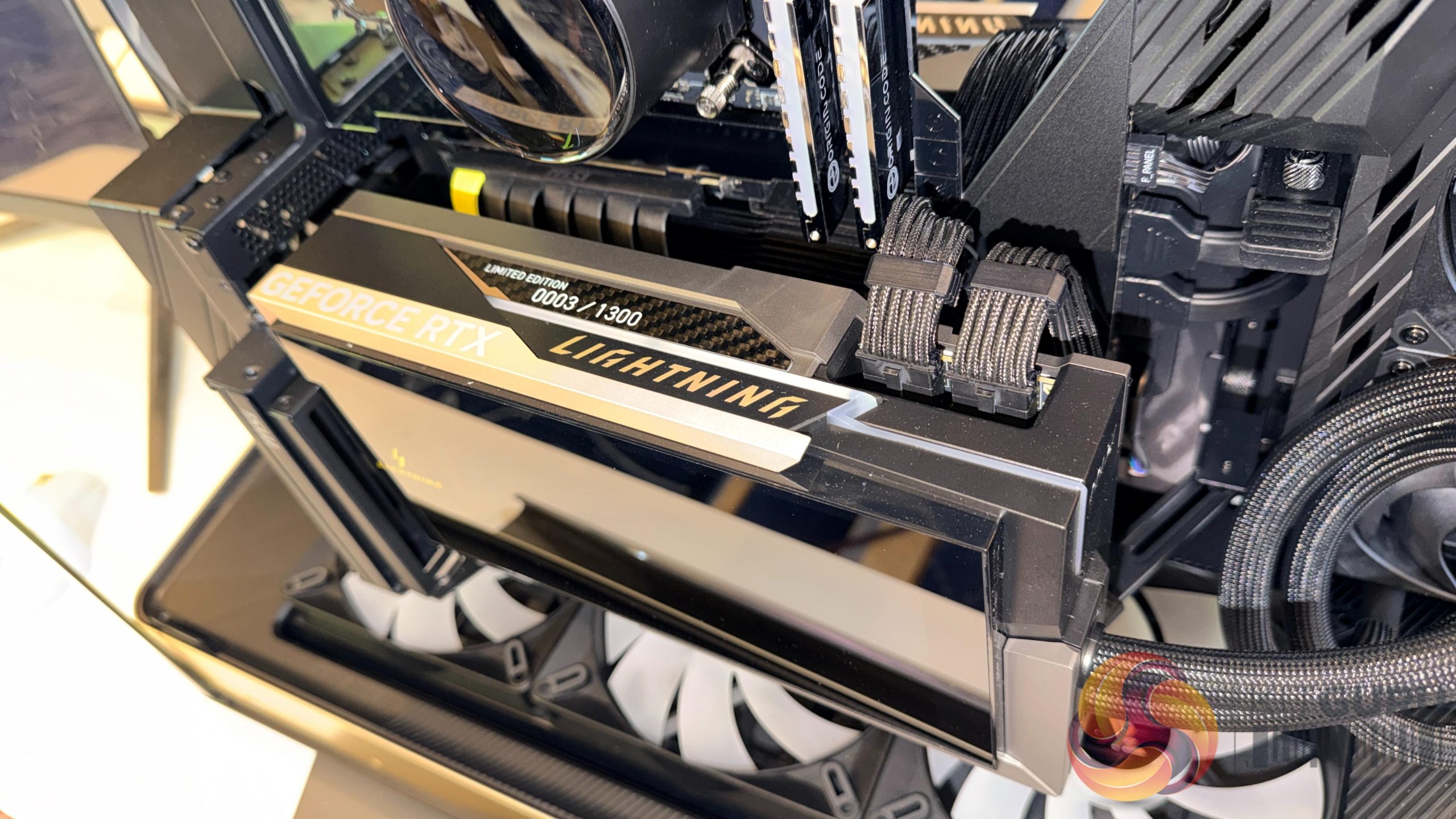
We visited MSI at CES this week to get an early look at a huge range of new technology. The star of the show is the new RTX 5090 Lightning Z, a limited edition graphics card with world-beating overclocking potential. We also take a good look at MSI's new MEG PC, based around the flagship Maestro 900R chassis, alongside new peripherals, OLED monitors and more. 

Watch via YouTube below:

Timestamps:
00:00 MEG PC Build / Maestro 900R
00:33 X870E Unify X Max / Coreliquid E15 360
00:48 Motherboard Kit
01:17 Screens / features and other hardware
02:06 New Motherboards
02:17 New ‘professional’ monitors
02:48 Supercomputer / AI Edge
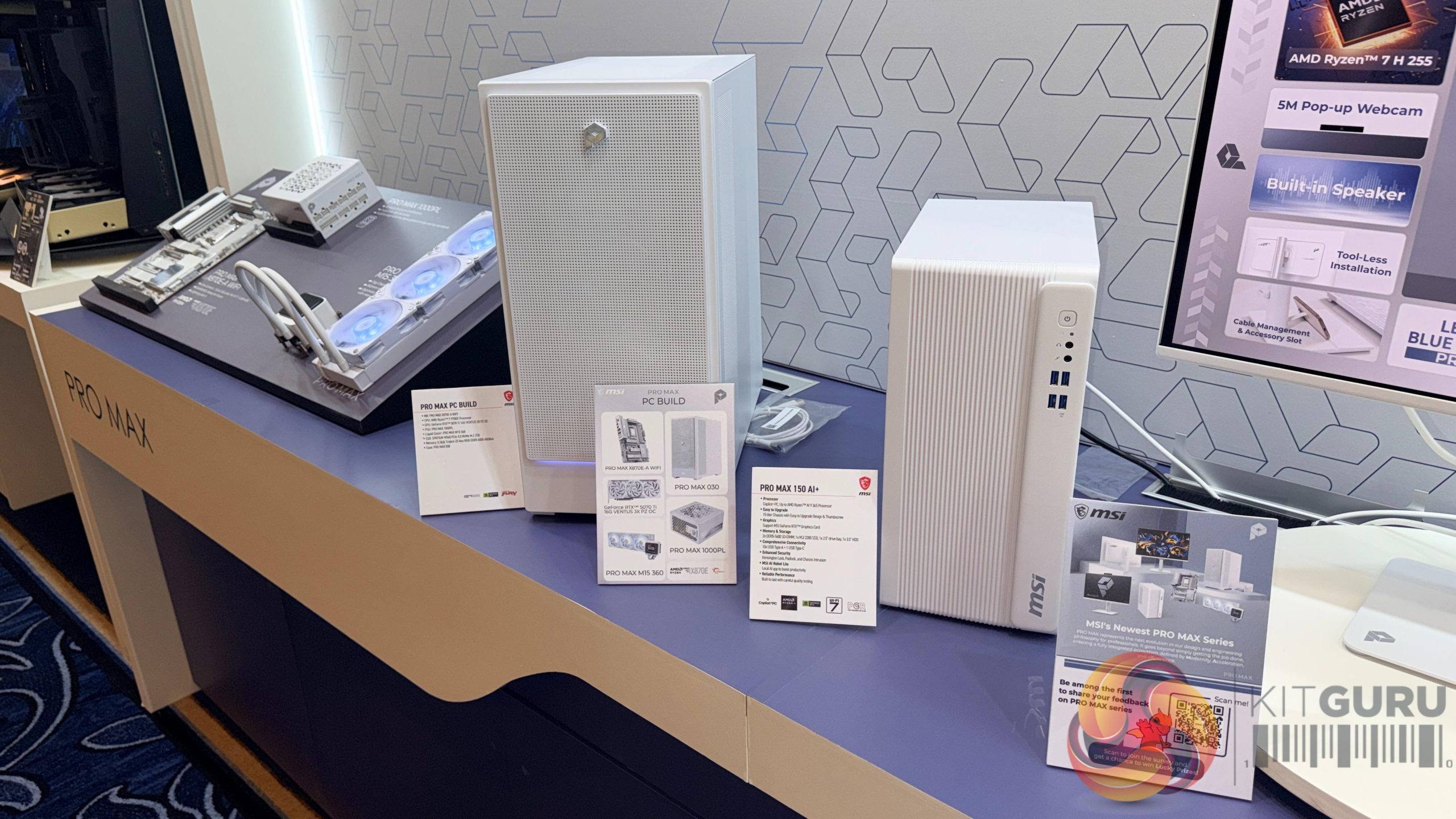
03:29 ‘White’ Components
03:49 Pro Max White 271UPXW12G
04:11 Pro Max 24
04:51 Power Supplies and alert software
06:06 Limited Edition 5090 GPU
07:40 Storage
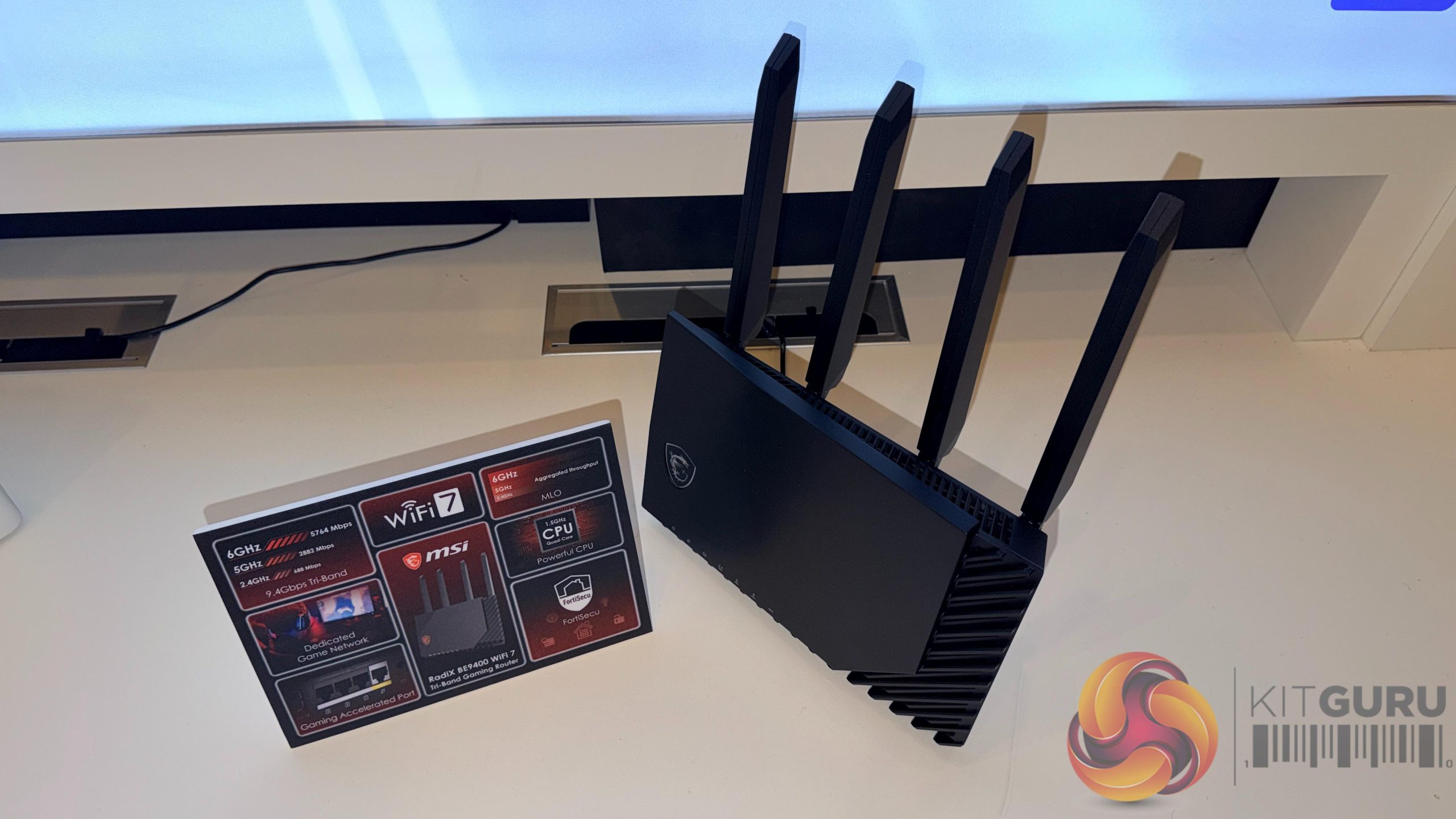
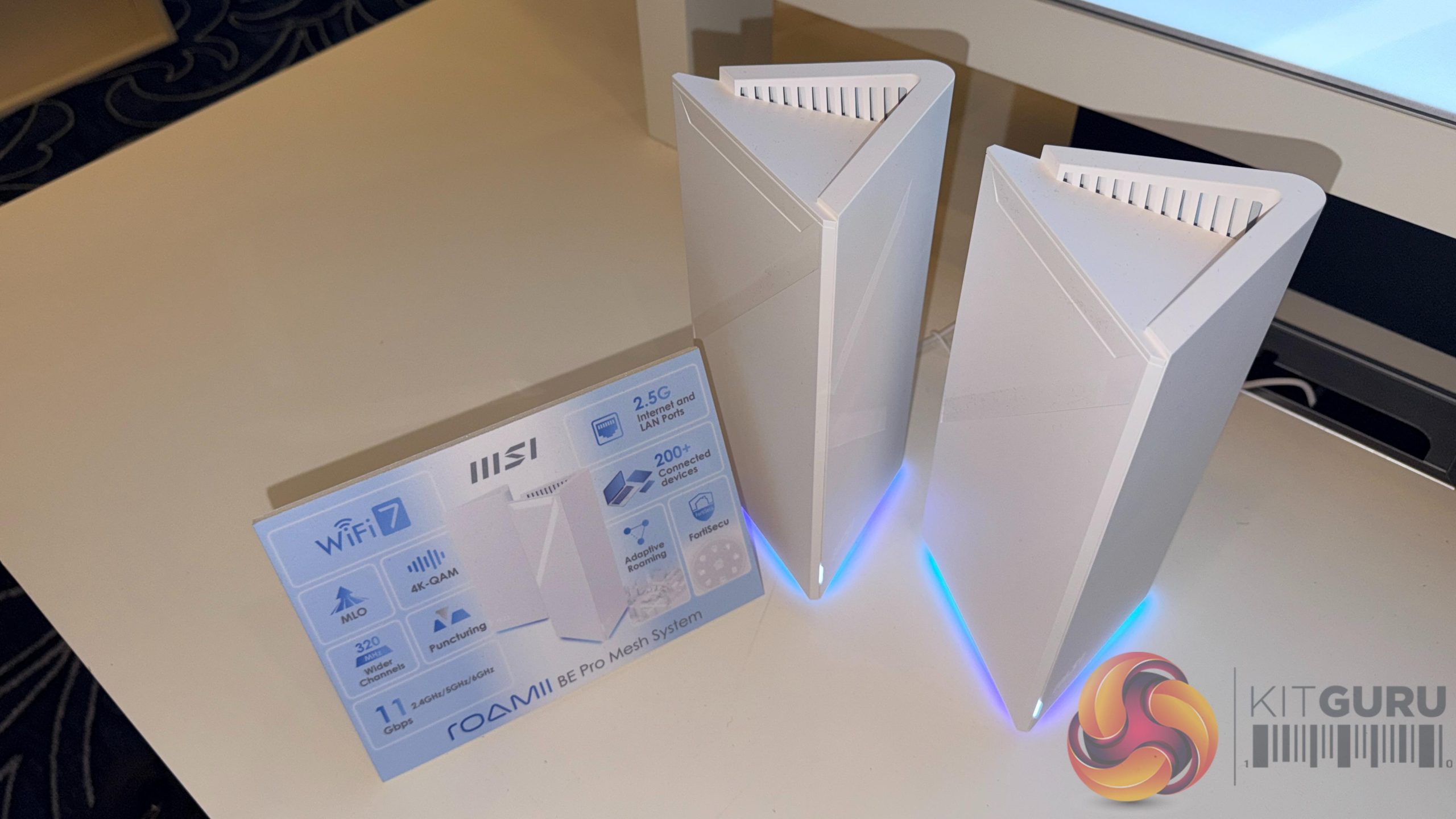
08:15 RadiX BE9400 & Roam II BE Pro Mesh
08:46 New Peripherals

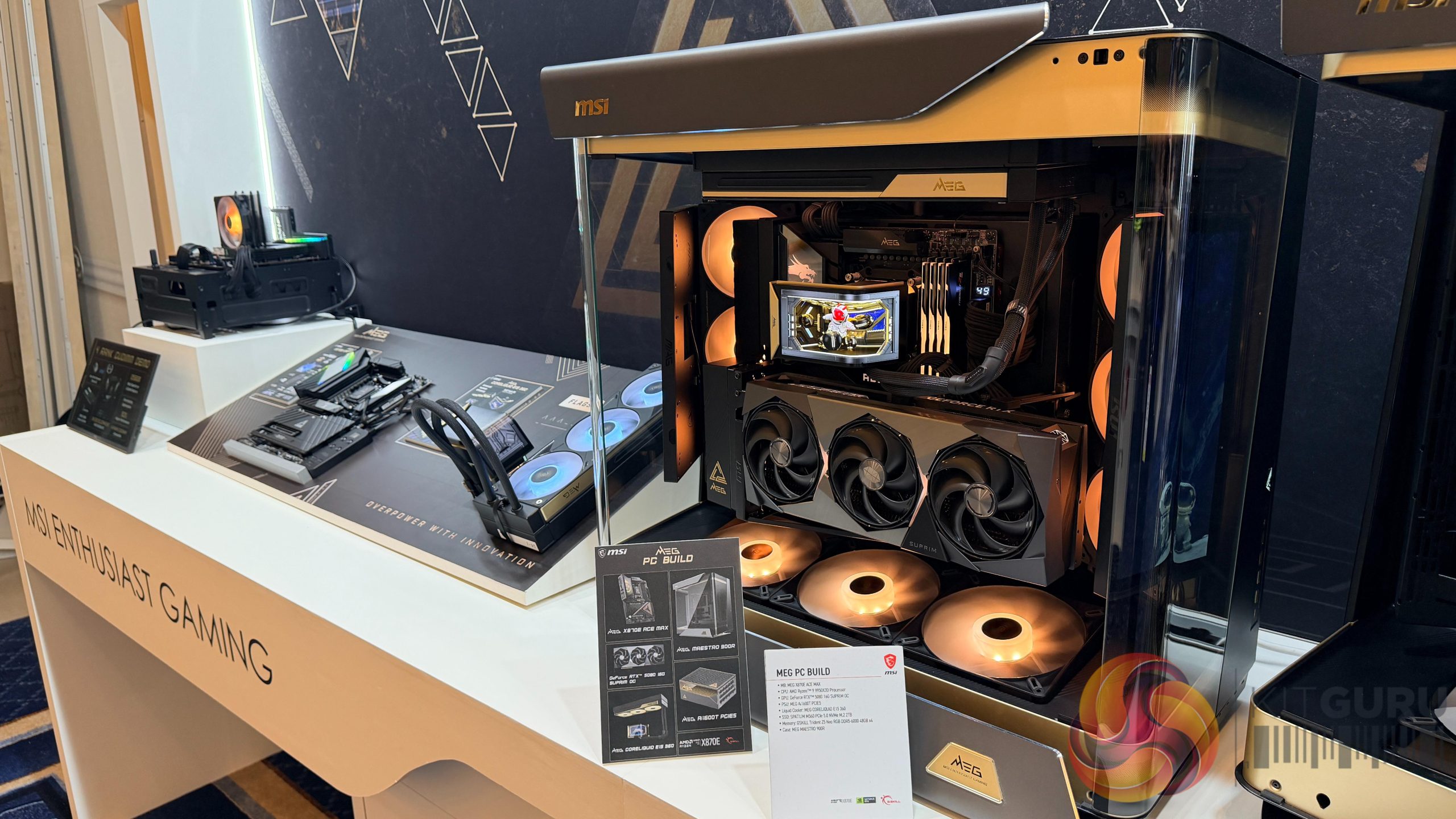
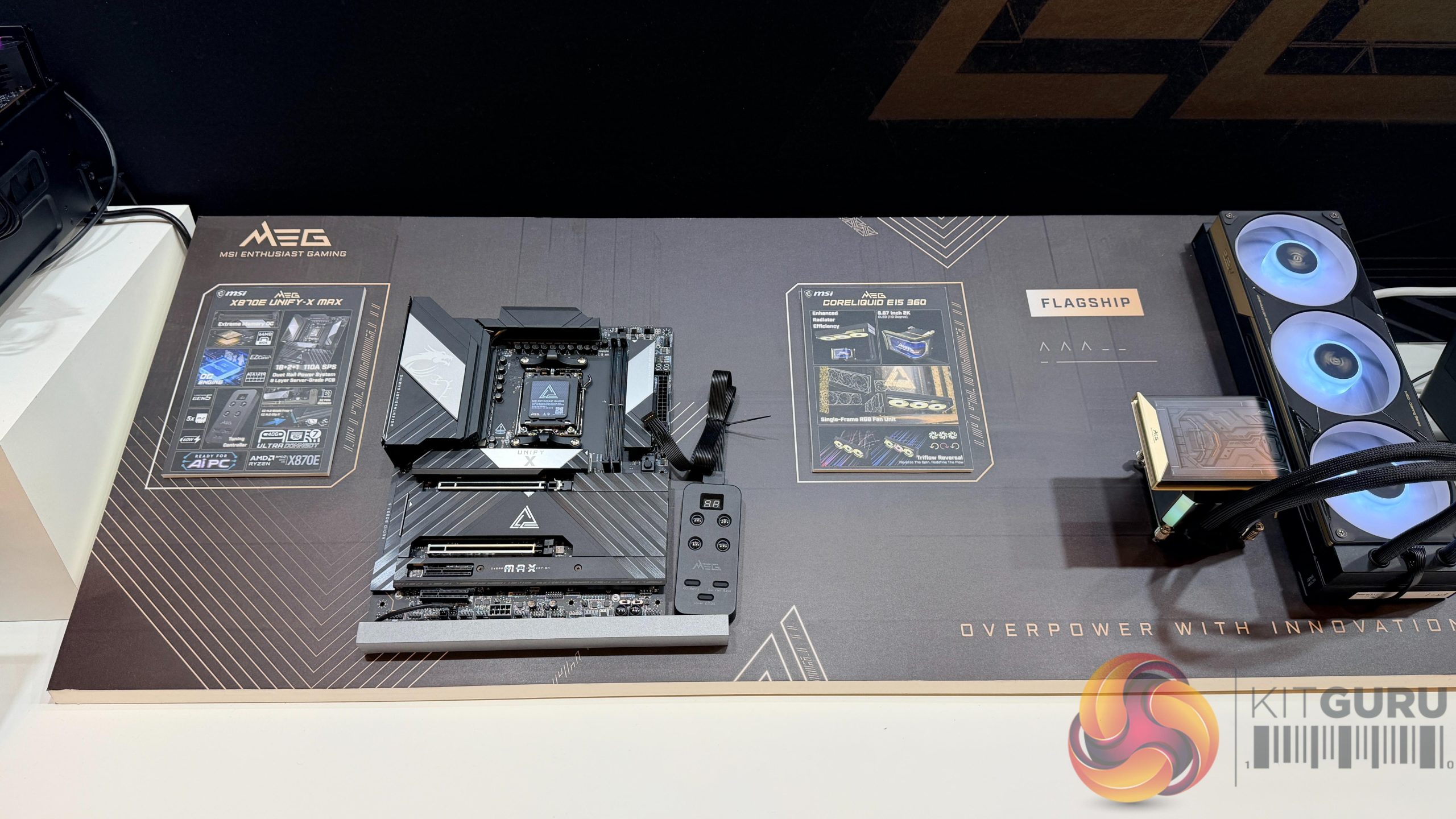
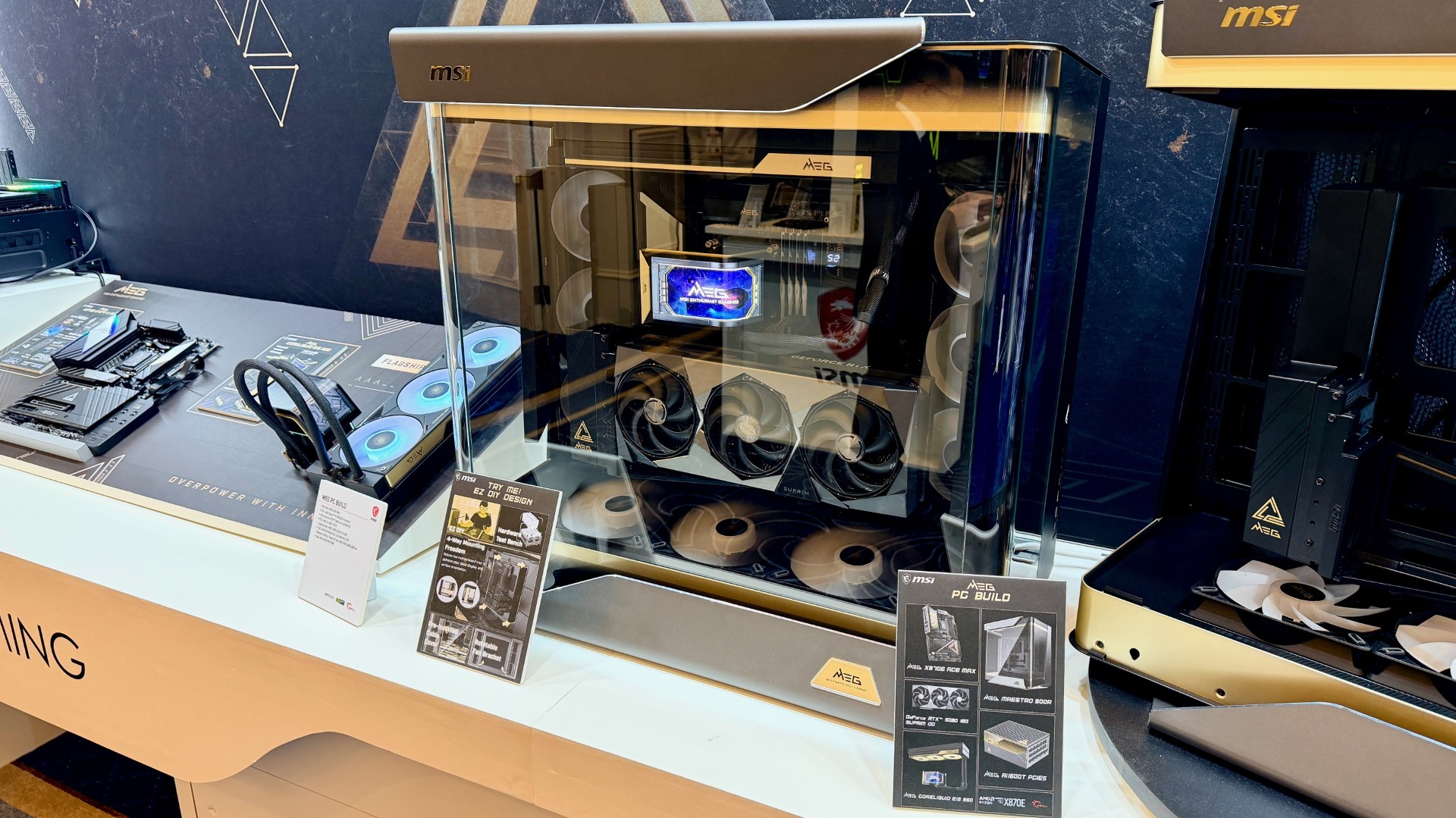
Aside from the new Maestro 900R chassis, the MEG system also utilises the new X870E Unify MAX motherboard, and a CoreLiquid E15 360mm AIO liquid cooler. The chassis allows you to rotate the motherboard by 90 degrees in all directions, and supports horizontal and vertical GPU mounting, giving you numerous ways to set up the internal layout of the system. You can also remove the central mount entirely to use as a dedicated test bench if the situation calls for it. To enhance visual appeal, there are multiple integrated displays as well, including one large one at the chassis front panel, and another inside the case, so you can monitor system stats or display custom graphics. It is unclear when the MEG PC will become available via retail channels but we should hear more on that front later in the year. In the display version here at CES, the only non-MSI component that can be seen is the RAM, which in this instance is a set of G.Skill Trident Z5 Neo RGB memory.

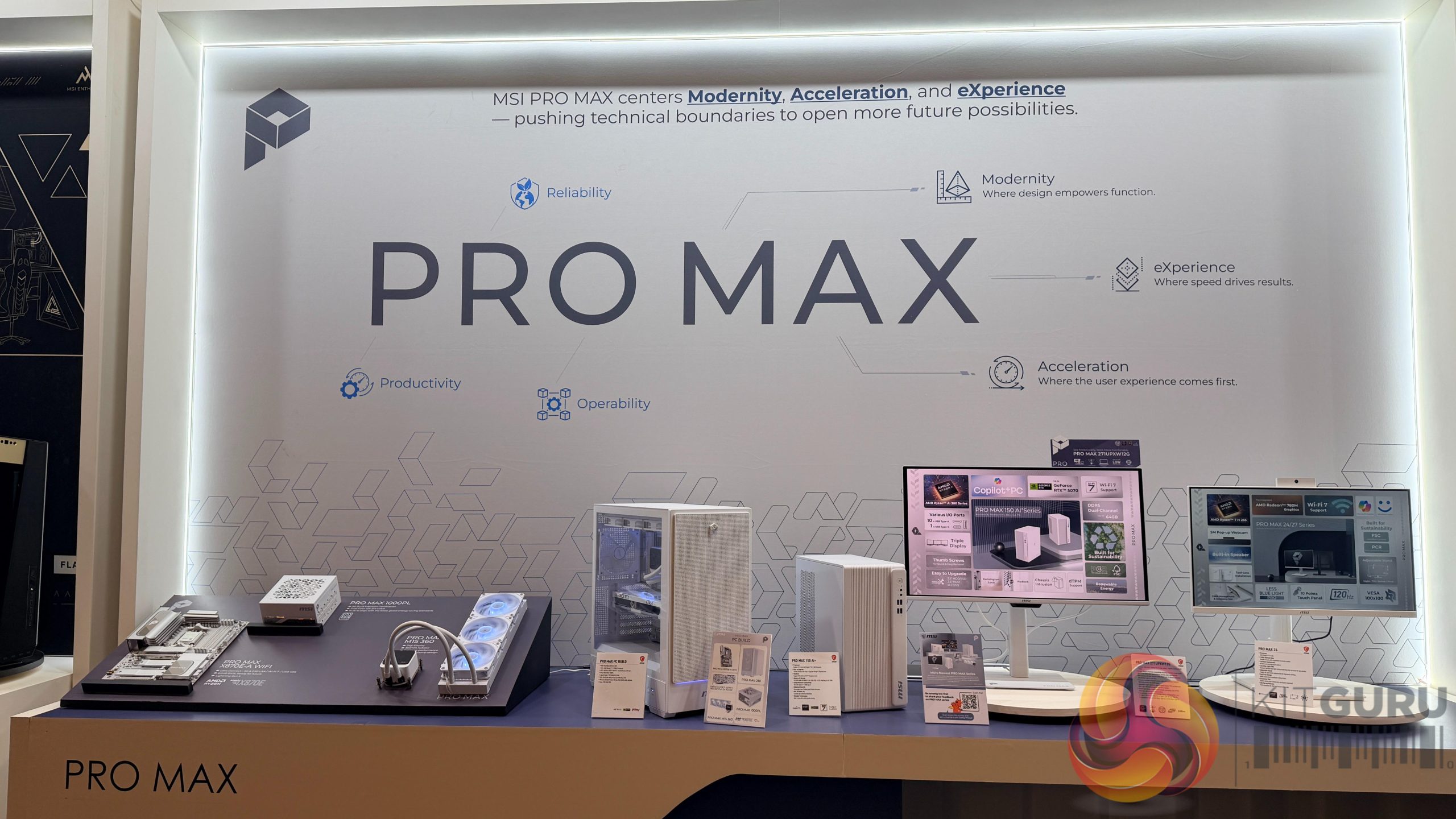
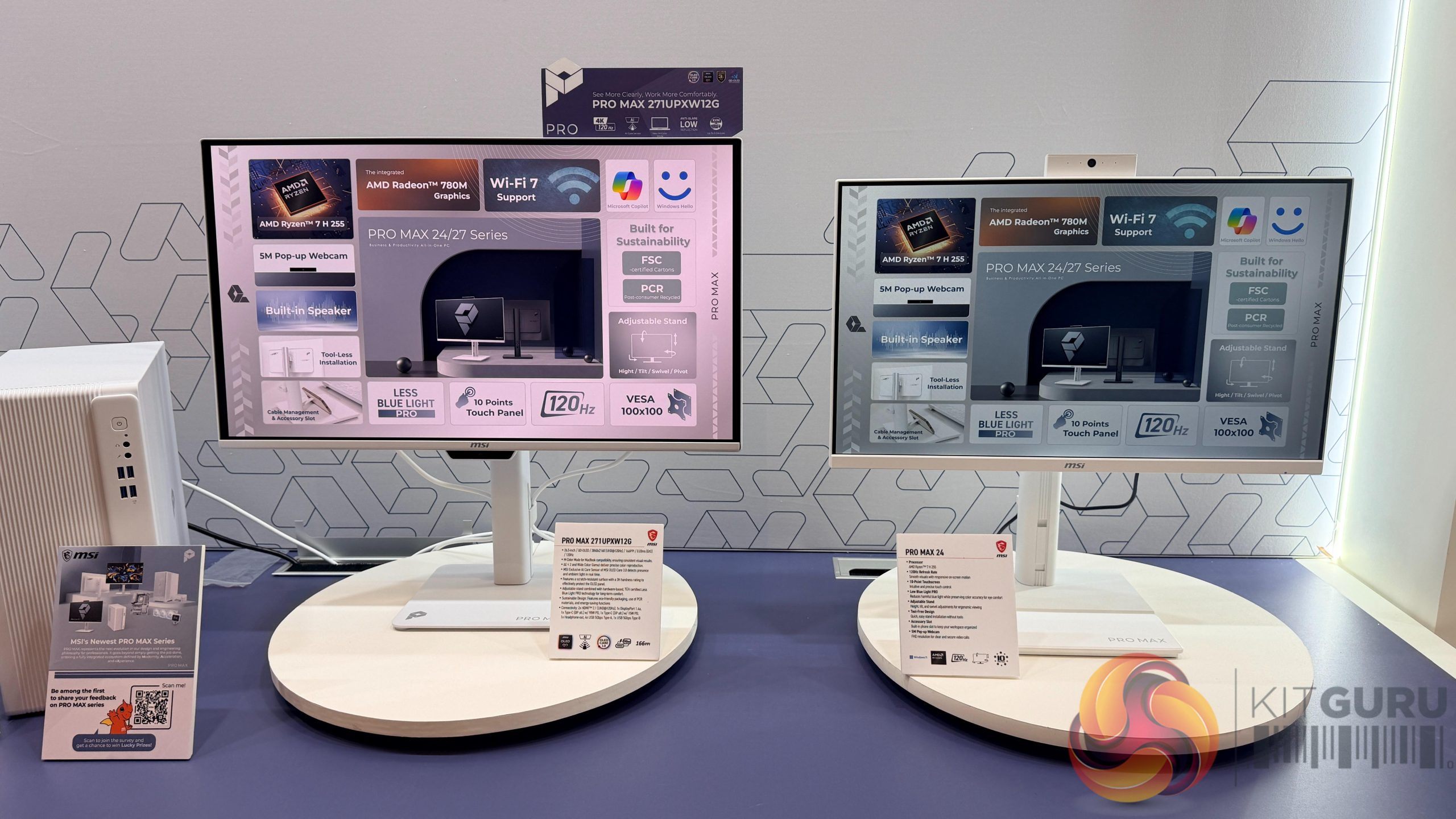
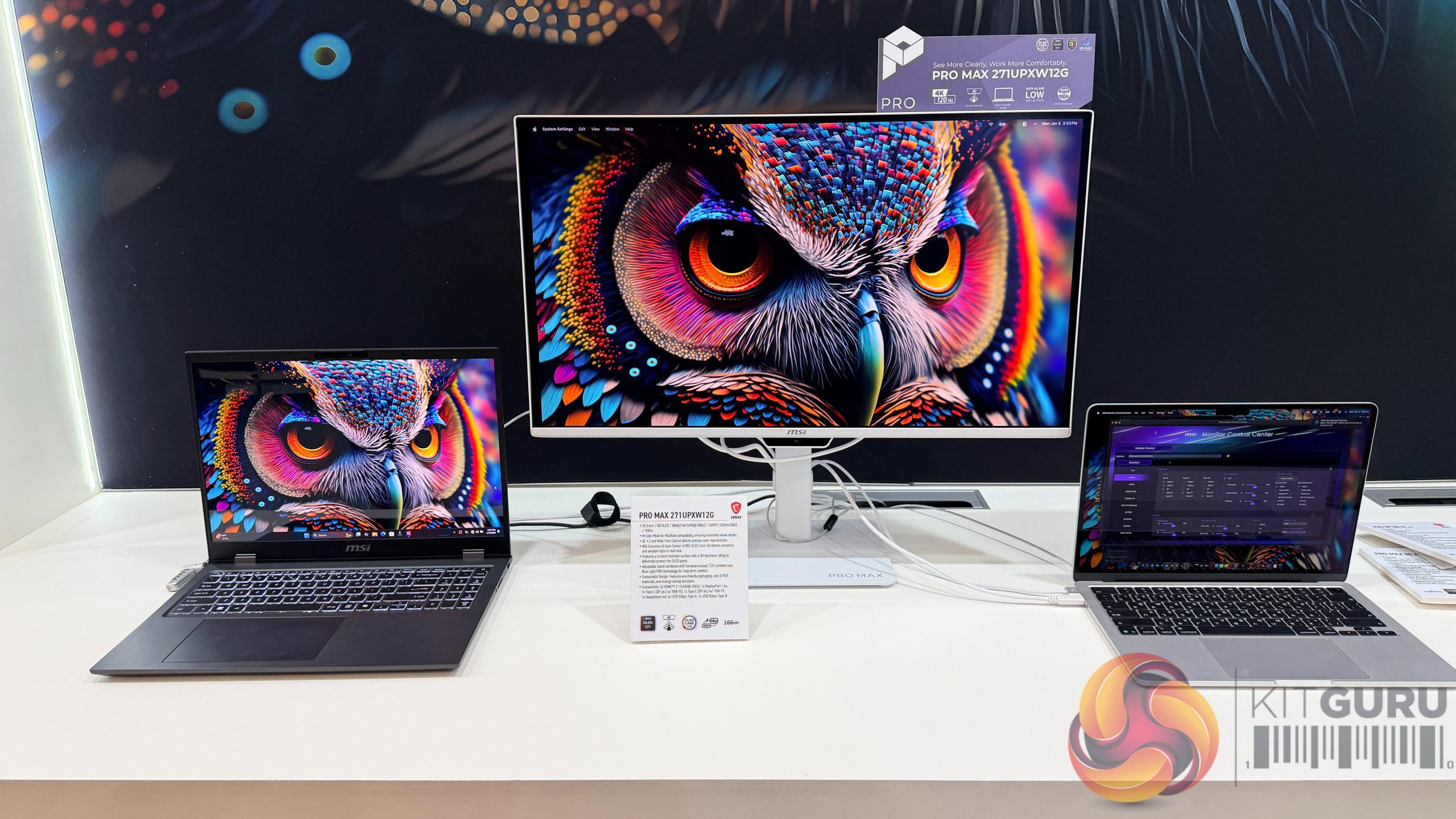
On the display front, MSI is showcasing both new gaming and professional monitors this week. On the professional side, MSI has a new PRO MAX monitor using Gen 4 QD-OLED panel with anti-glare and low-glare coating, complete with a KVM switch for those who rely on multiple devices, making this an ideal monitor choice for a home office set-up for editing. There are also new OLED displays hitting the gaming market, with new Gen 5 QD-OLED panels and a special new coating that increases surface hardness to reduce scratches, and a new sub-pixel structure that reduces text fringing, addressing one of the very few complaints early adopters had with QD-OLED monitors. We actually already have a review of one of these MSI Gen 5 QD-OLED monitors live, so you can see our in-depth analysis of the new QD-OLED panel already.

If you like the Pro Max monitor but don’t have much space, MSI also has a 24‑inch version. The difference is that this one is a complete all‑in‑one system, featuring its own integrated motherboard, CPU and integrated graphics. There’s a pop‑up camera on top, and a cable‑management hole underneath so wires can disappear neatly. It’s still a 120Hz panel, well‑balanced in colour and very flat in appearance.

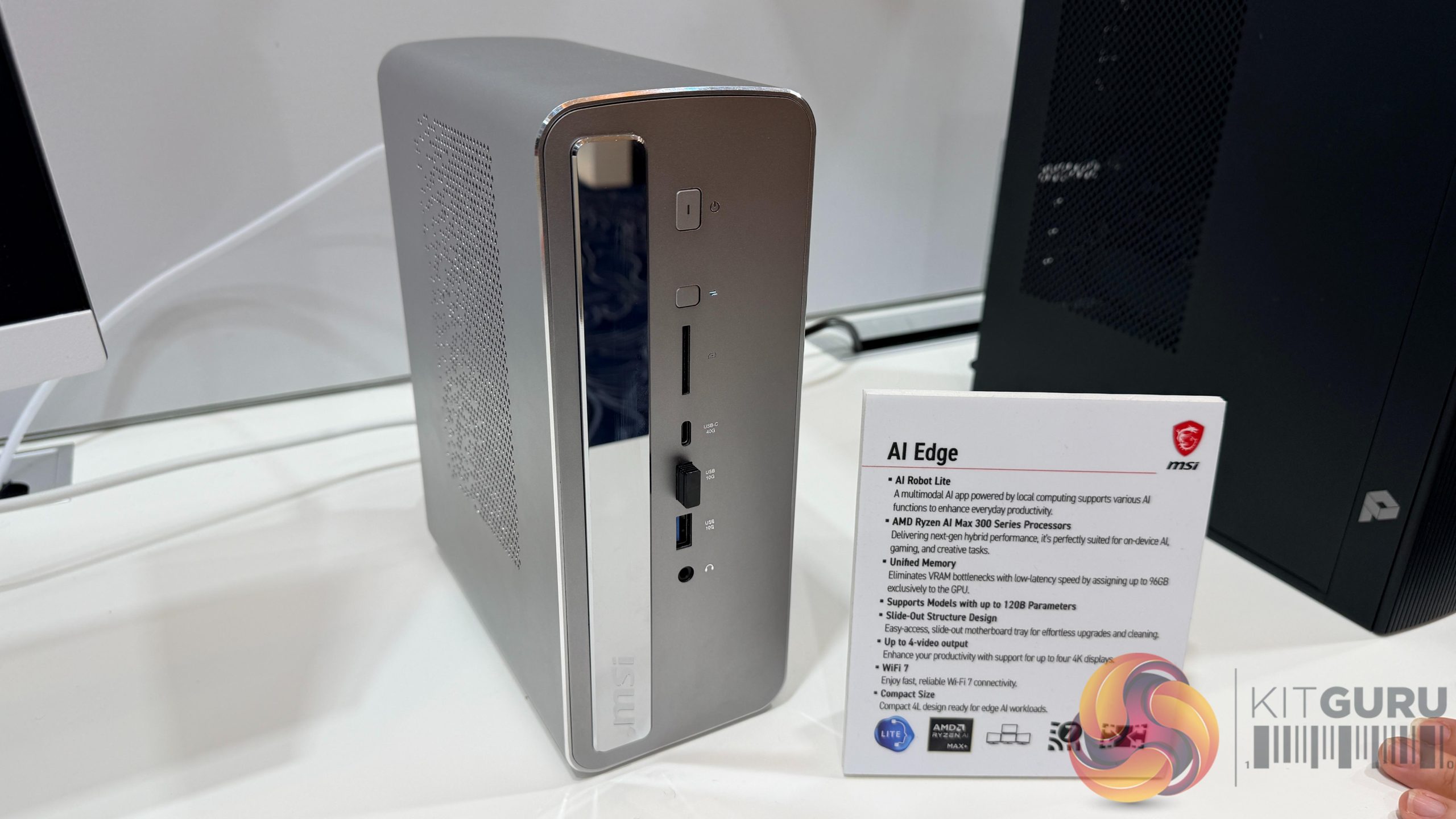
In the realm of desktop supercomputers, MSI is showing a localised AI supercomputer based on the NVIDIA DGX Spark platform, allowing you to create and run AI agents locally and upload them to the cloud when needed. The AI Edge is a slightly different concept product from MSI, likely to appear in a more complete form around Computex. For now, it’s a Windows‑bootable box that can emulate the AI environments needed to create solutions, and everything built on it will remain fully compatible with cloud‑based AI hosting platforms.

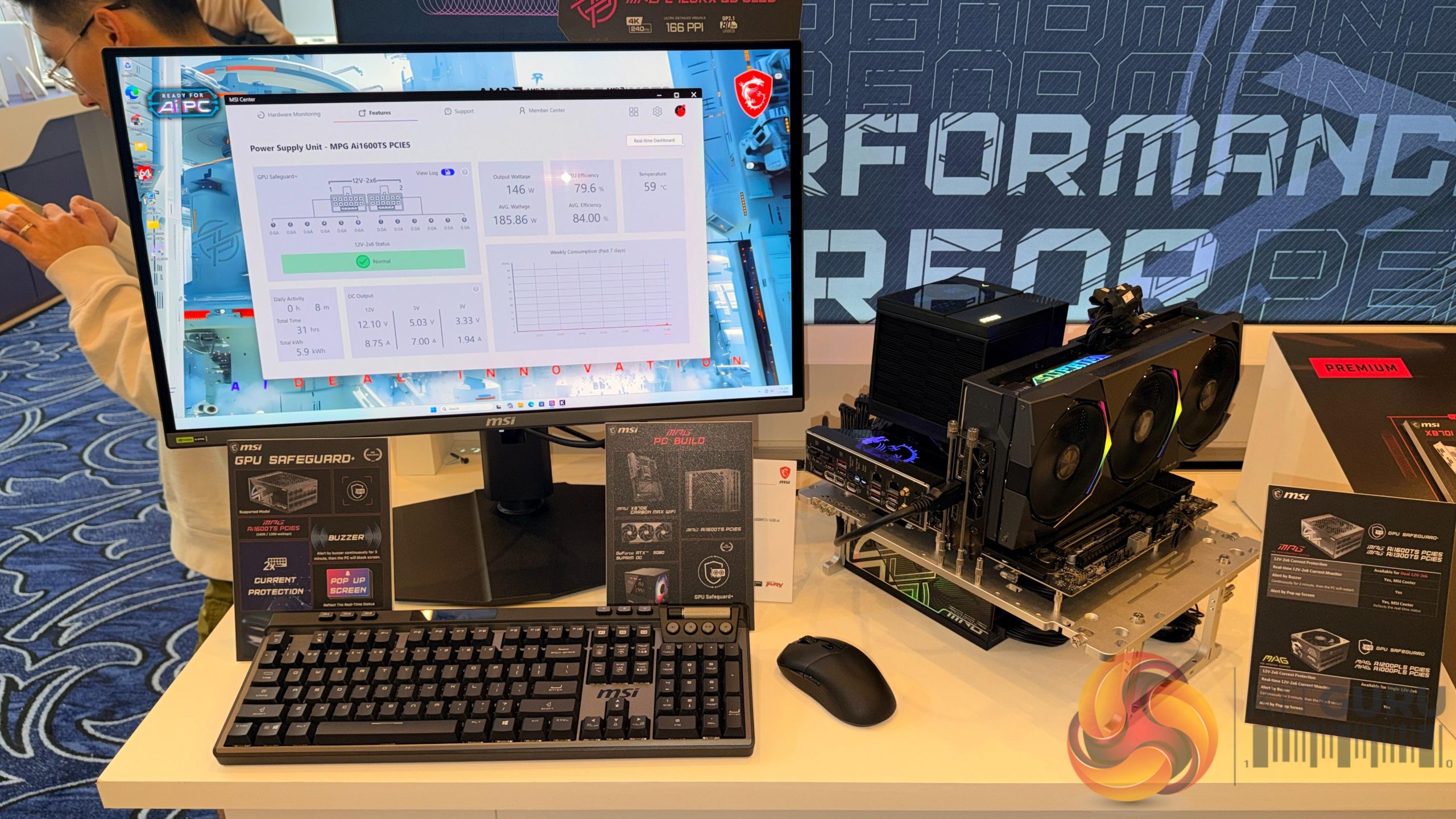
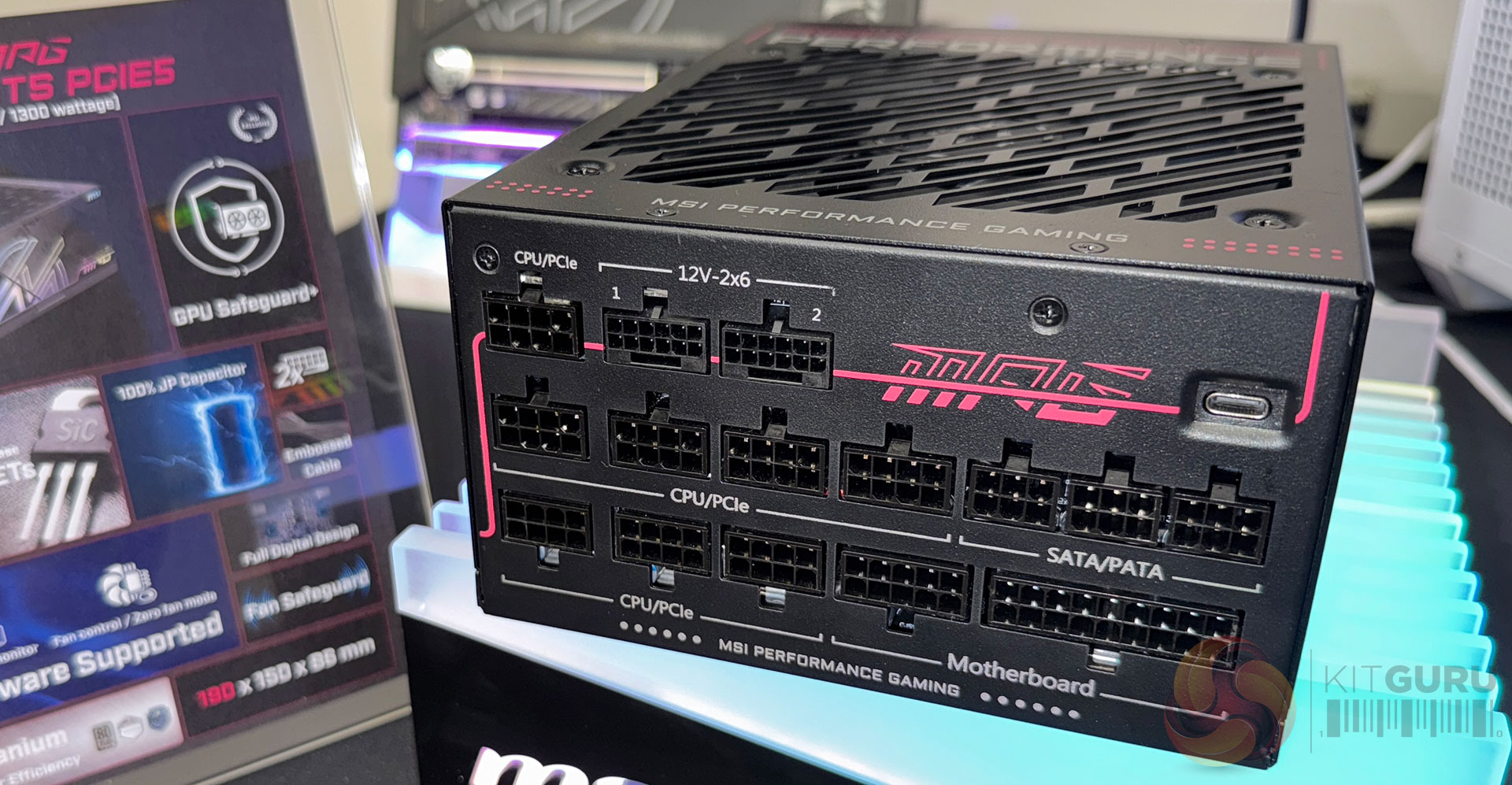
MSI also has a new range of power supplies coming. They look stylish from the outside, but something less obvious is the USB port on the back. To demonstrate what can be done with this connector, MSI has rigged up a large RTX 5090 with breaker points on each cable. On a nearby screen, you can see a live demonstration — for example, cable number two drawing 0.6 amps. When one of the assistants creates a fault, the current drops to zero, and the system triggers both an audible and on‑screen alert. In real‑world use, this would happen within seconds. The idea is that you power everything down for at least three minutes, check the generated log file, fix the issue, and then the system will return to normal.

Earlier we saw the MEG system, but while the booth was being set up, something else appeared – a new MSI Lightning graphics card. The MSI Lightning has long been a favourite amongst serious overclockers and this new model has already been used to set several world records, as we reported HERE. This will be a very expensive GPU, as it is intended to be a halo product, offering the very best speeds and overclocking potential that money can buy. Only 1300 units will be made, with availability starting in February.

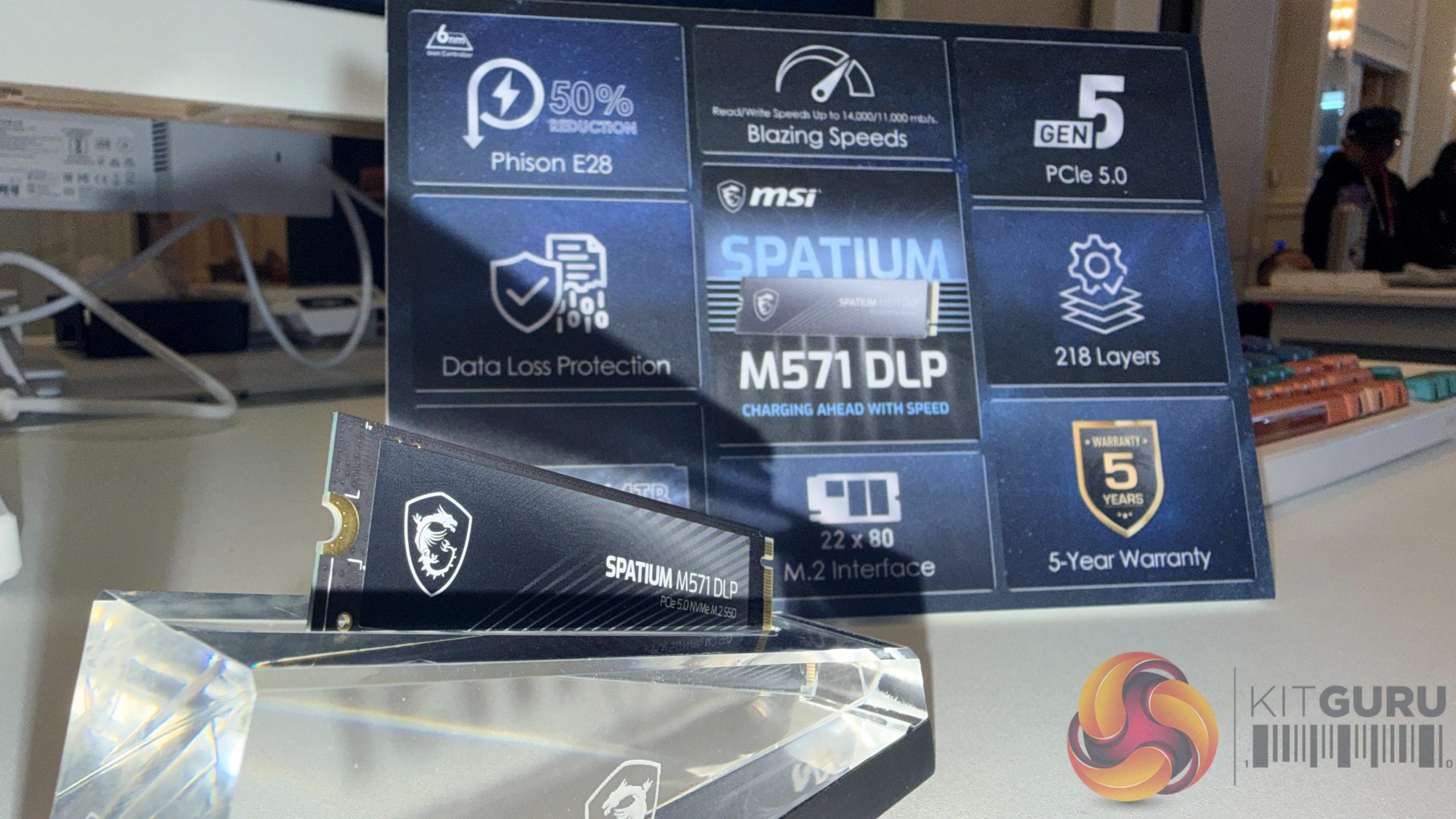
On the storage side, MSI has the Spatium N571 DLP. The stand is enormous for such a small product, but the SSD itself is a blazing‑fast Gen 5 model using a new TSMC 6nm controller. It includes enterprise‑grade technology MSI calls DLP, which is short for Data Loss Protection. This feature safeguards data during sudden power loss, so if severe weather suddenly hits and you end up with a power cut, your data should be safe when power returns.

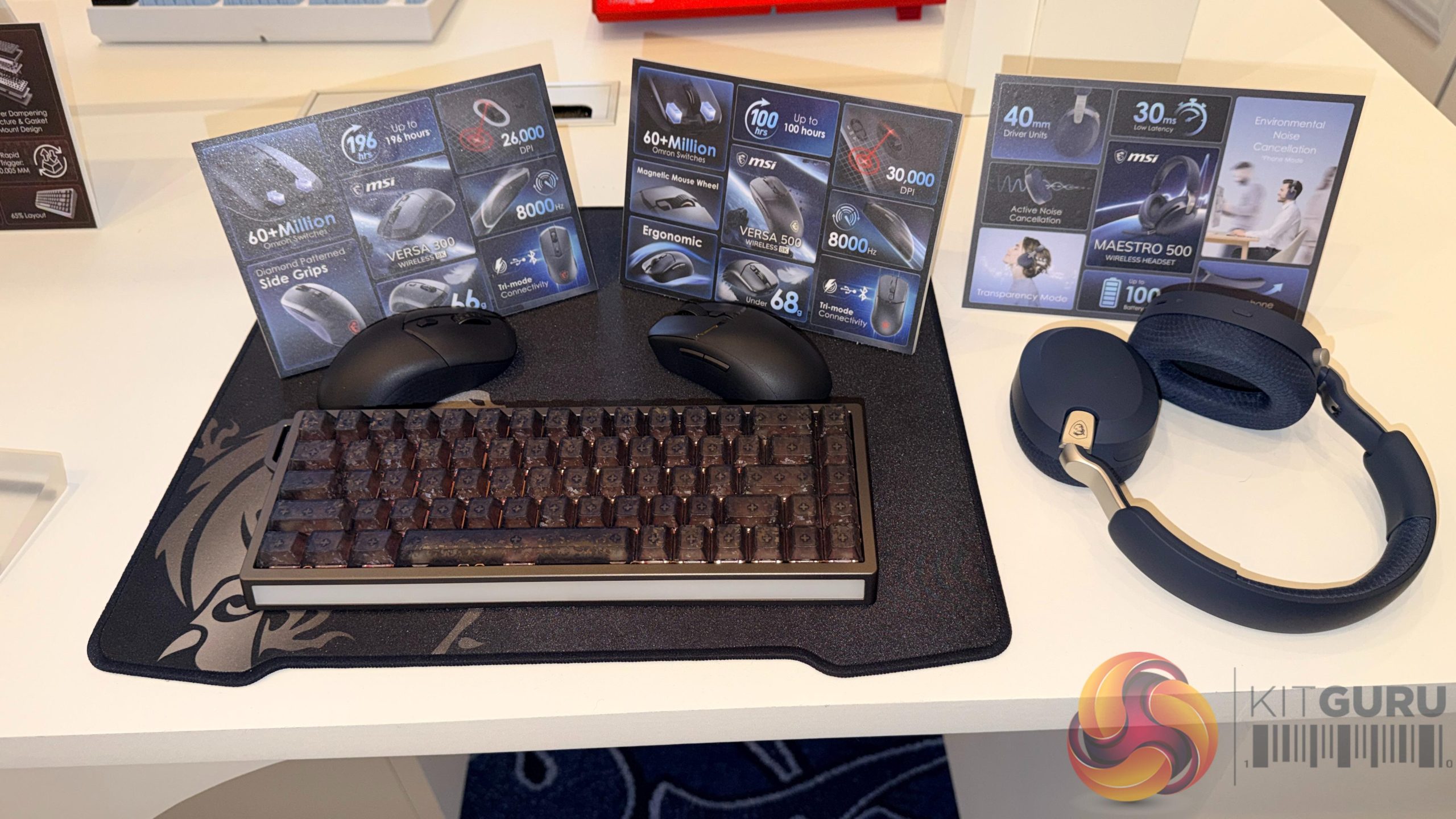
MSI has also expanded its gaming peripherals. The new 60% Strike 700 wireless keyboard is an 8K HE model using magnetic switches, allowing extremely fine control over actuation down to 0.005mm. It’s expected around Q2. There is also a new Maestro 500 wireless headset, which we found to be very lightweight and comfortable. The headset should offer up to 100 hours of battery life without noise cancellation, and close to 60 hours with it enabled.

KitGuru Says: What do you think of MSI's new product line-up for CES? Is there anything here that you'll be looking to get your hands on in the coming months?

The post CES 2026: MSI showcases RTX 5090 Lightning Z, MAX motherboards and more first appeared on KitGuru.
  •  

CES 2026: Nvidia announces DLSS 4.5, G-Sync Pulsar and more

Nvidia is kicking off CES with some announcements of its own. The biggest announcement is DLSS 4.5, which will introduce a higher-quality transformer model for upscaling, along with the first wave of G-Sync Pulsar capable displays for higher levels of motion clarity. 

Nvidia already has some major DLSS-supported titles lined up for 2026, including the likes of Resident Evil Requiem, Pragmata, Phantom Blade Zero and 007 First Light. On top of this, Nvidia is also ushering in the latest major DLSS update, bringing us up to version 4.5.

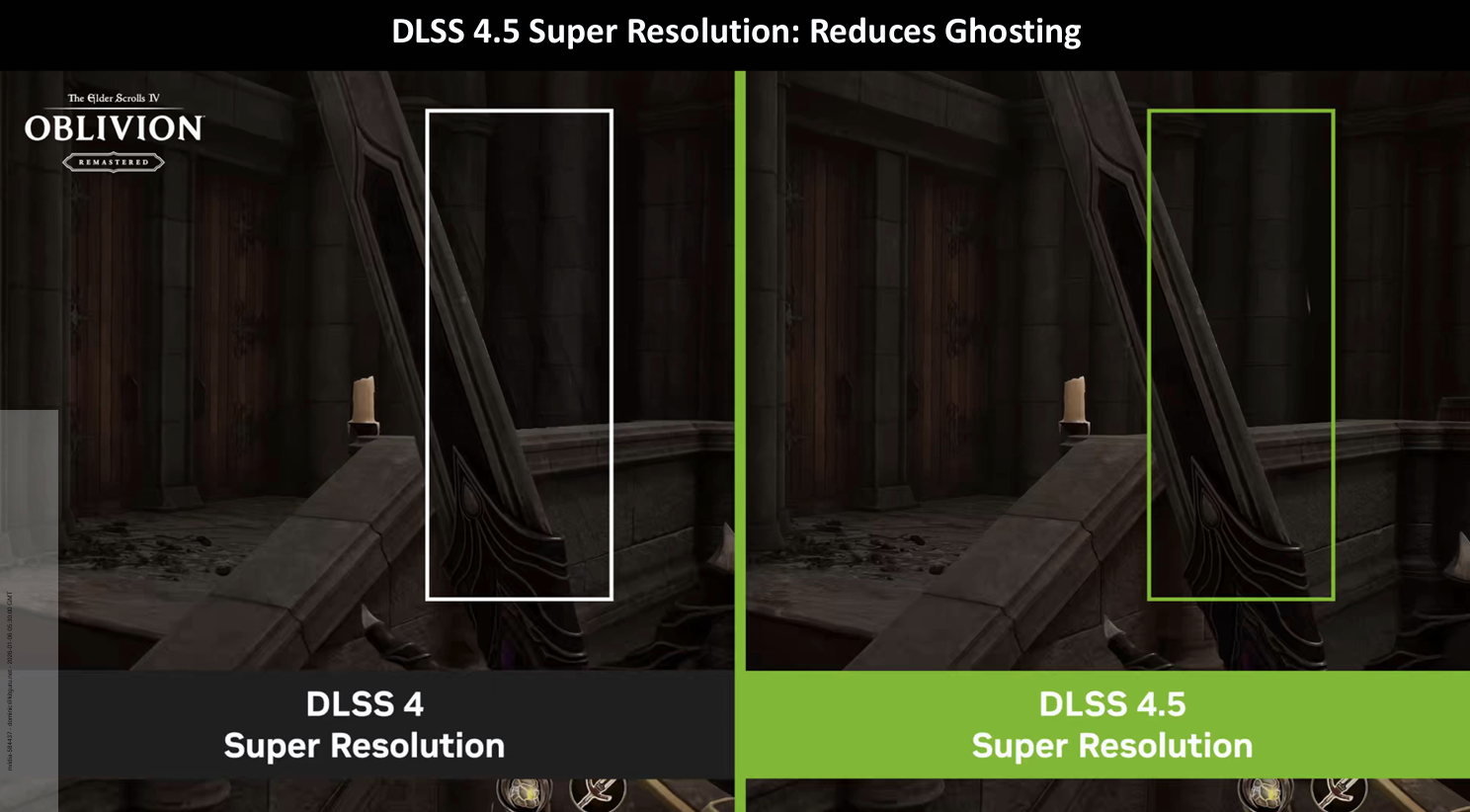
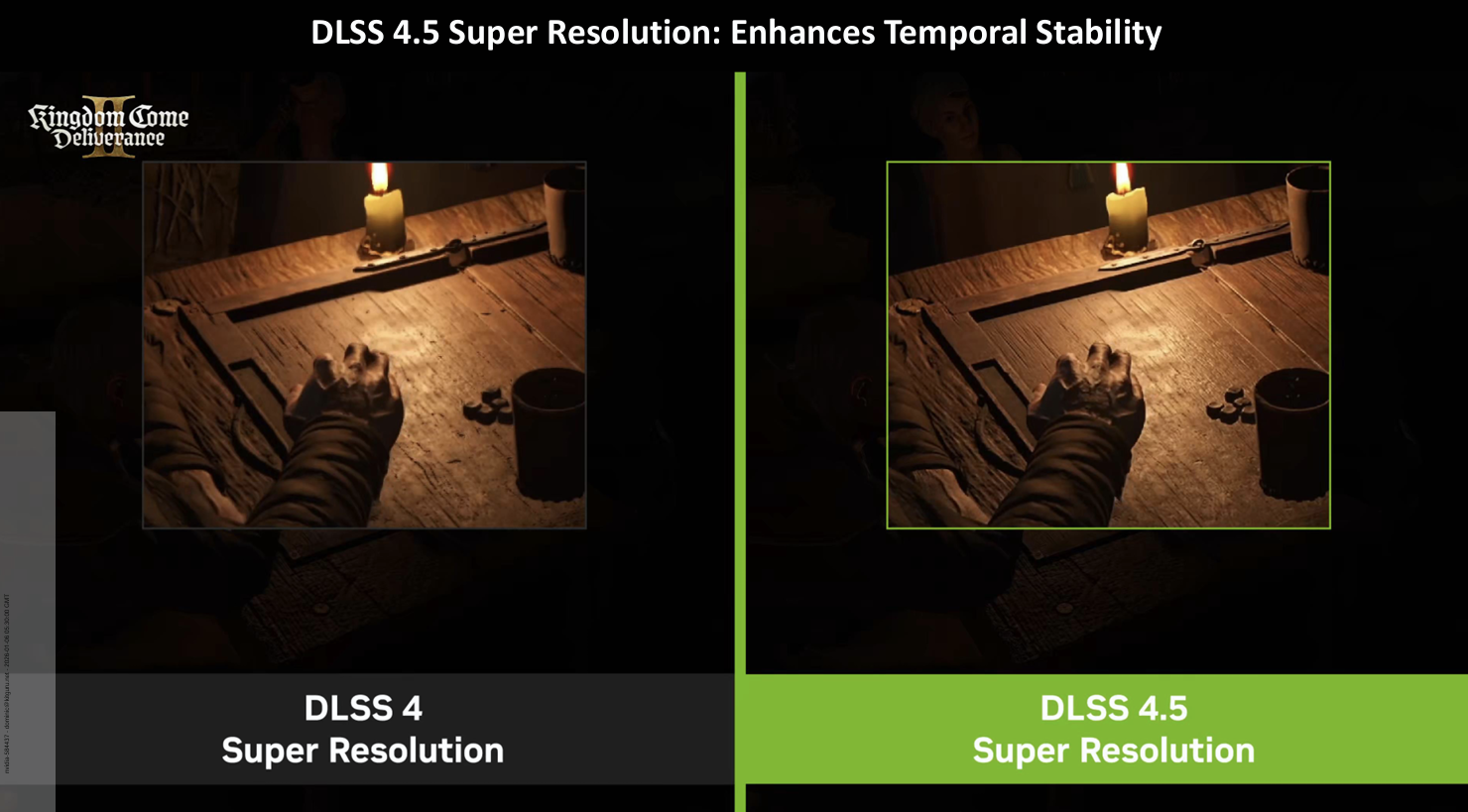
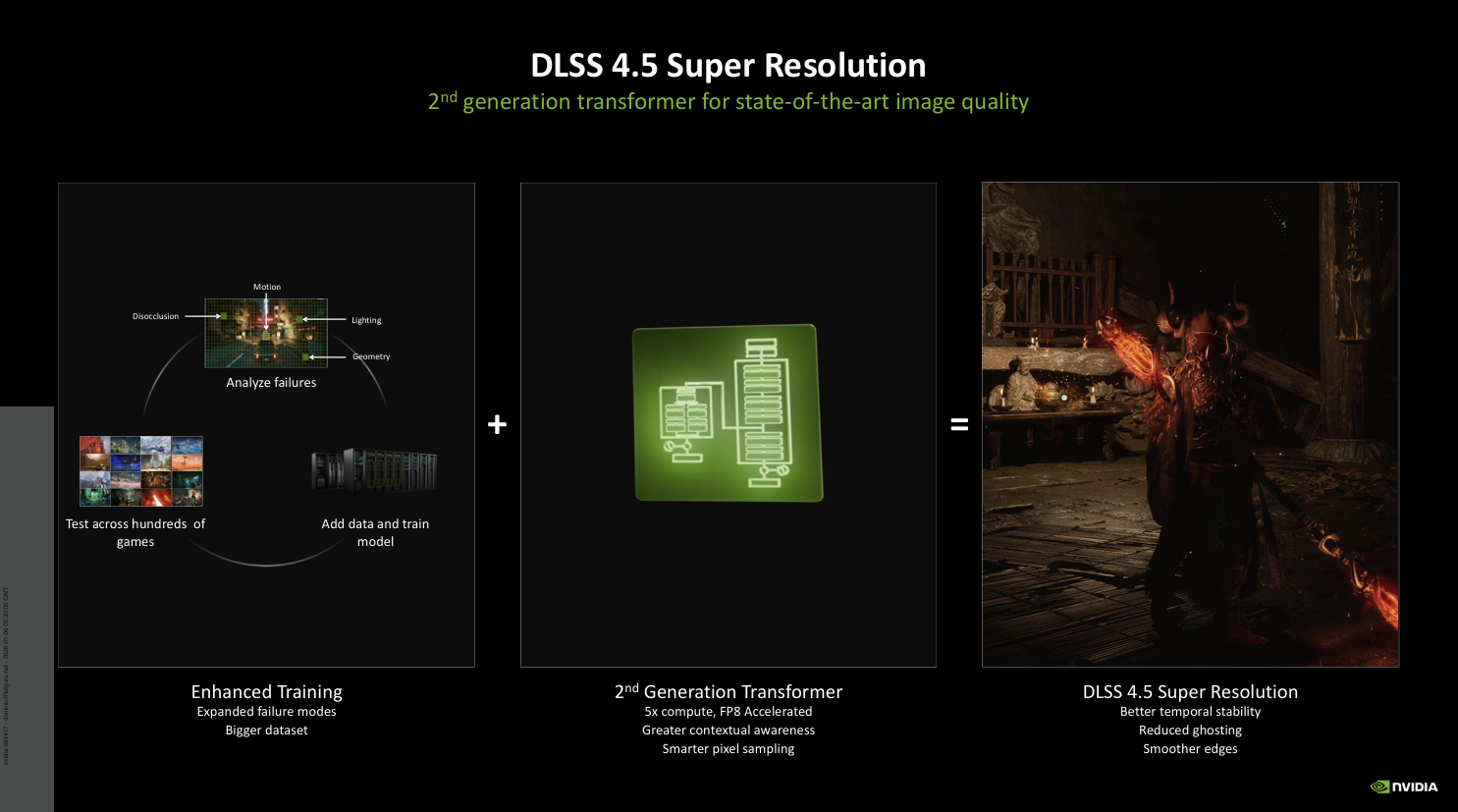
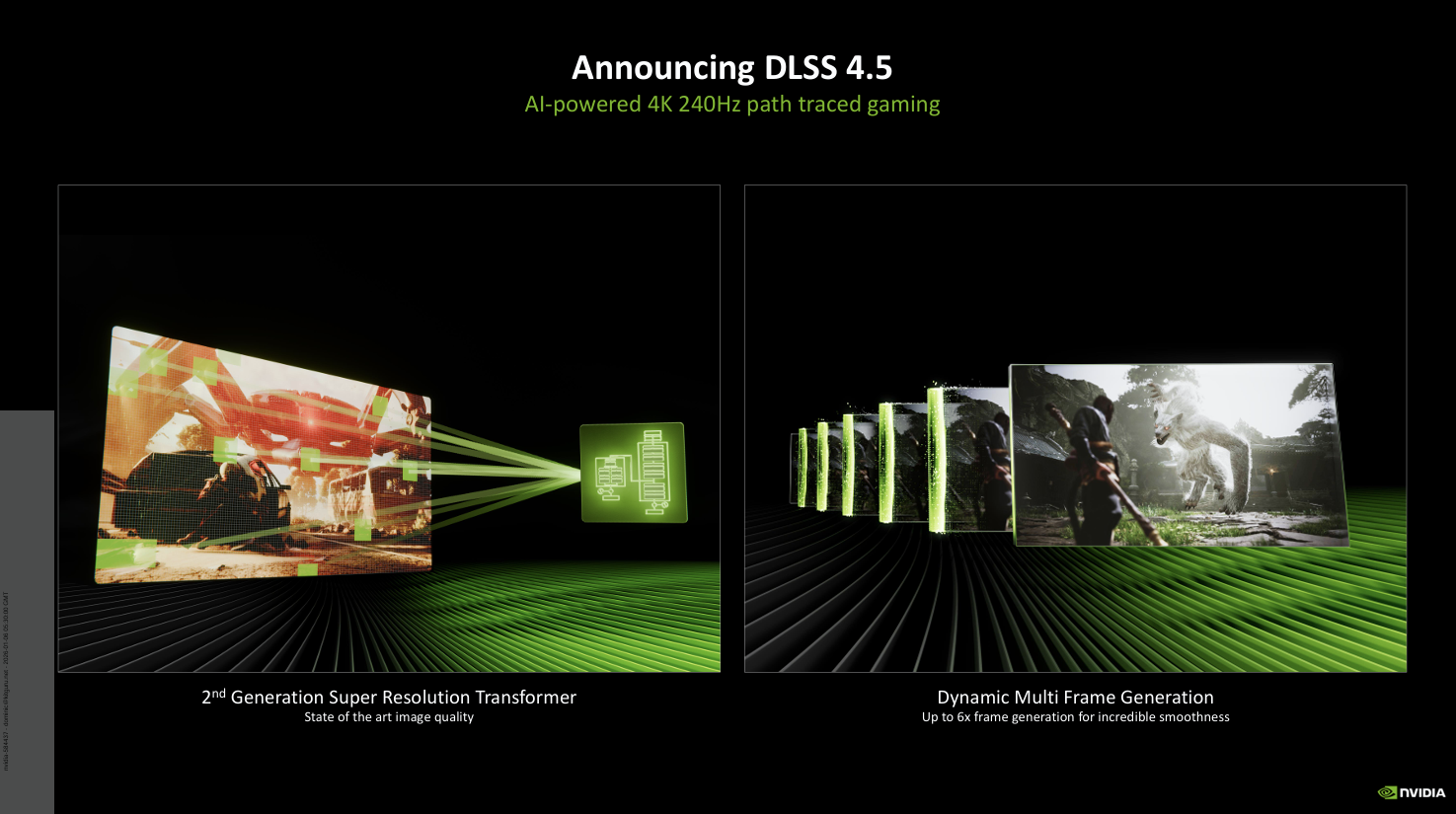
DLSS 4.5 features Nvidia's second-generation Super Resolution Transformer, which brings a number of improvements like greater contextual awareness and smarter pixel sampling, enabling better visuals while upscaling. Games like Kingdom Come Deliverance 2, Oblivion Remastered and Indiana Jones will support the update. In the slides below you can see some of the comparisons Nvidia has shared:

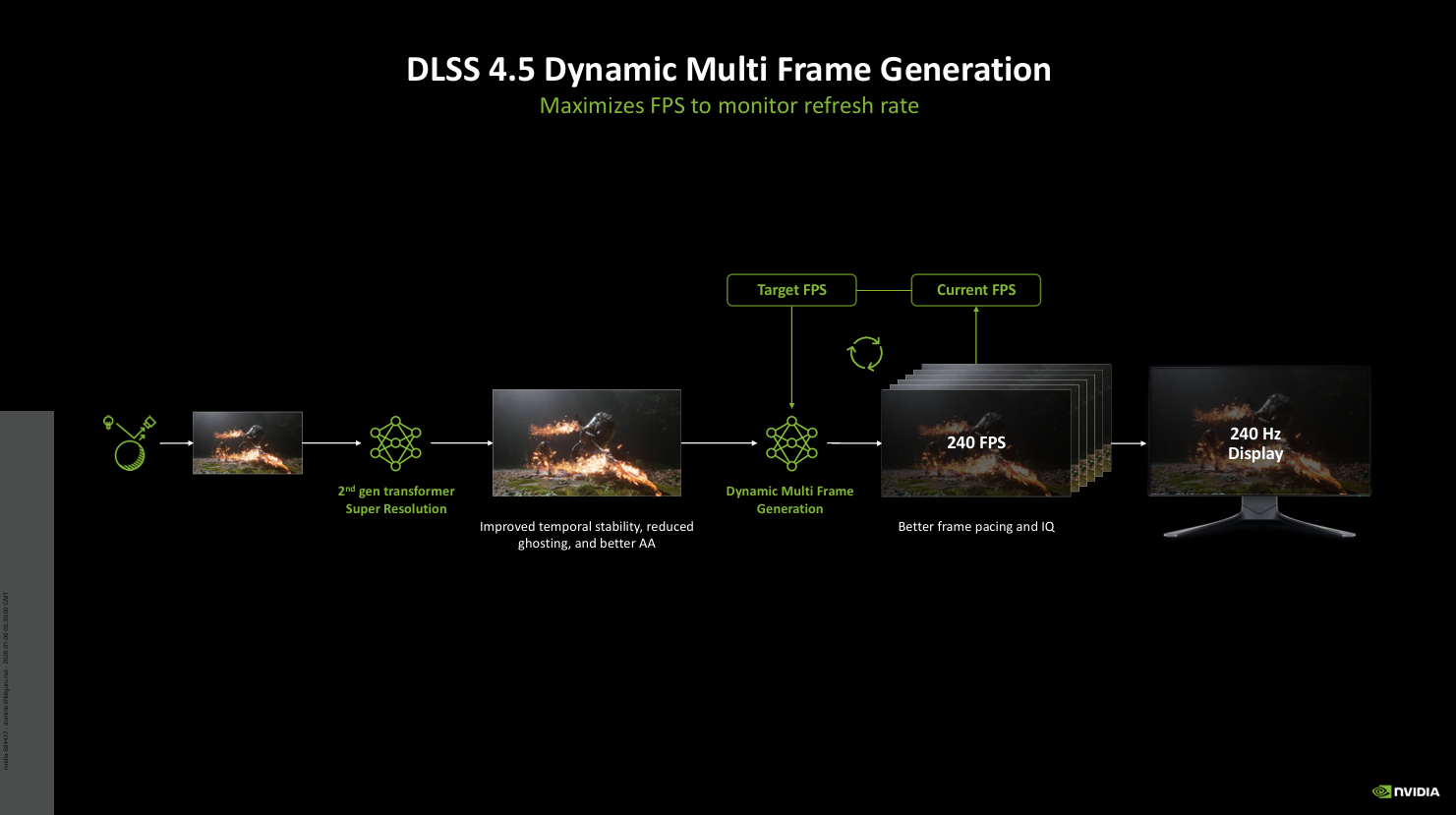
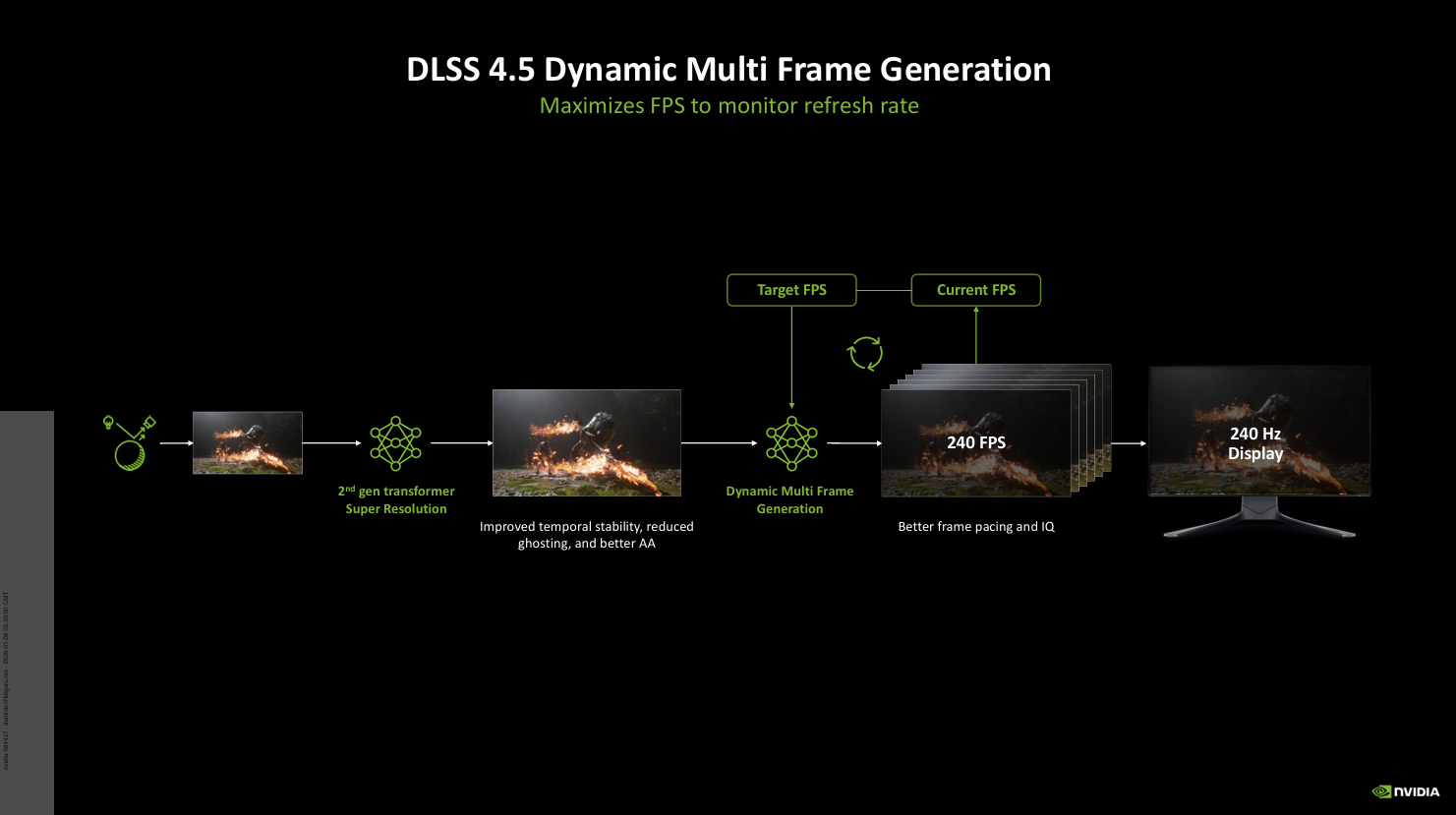
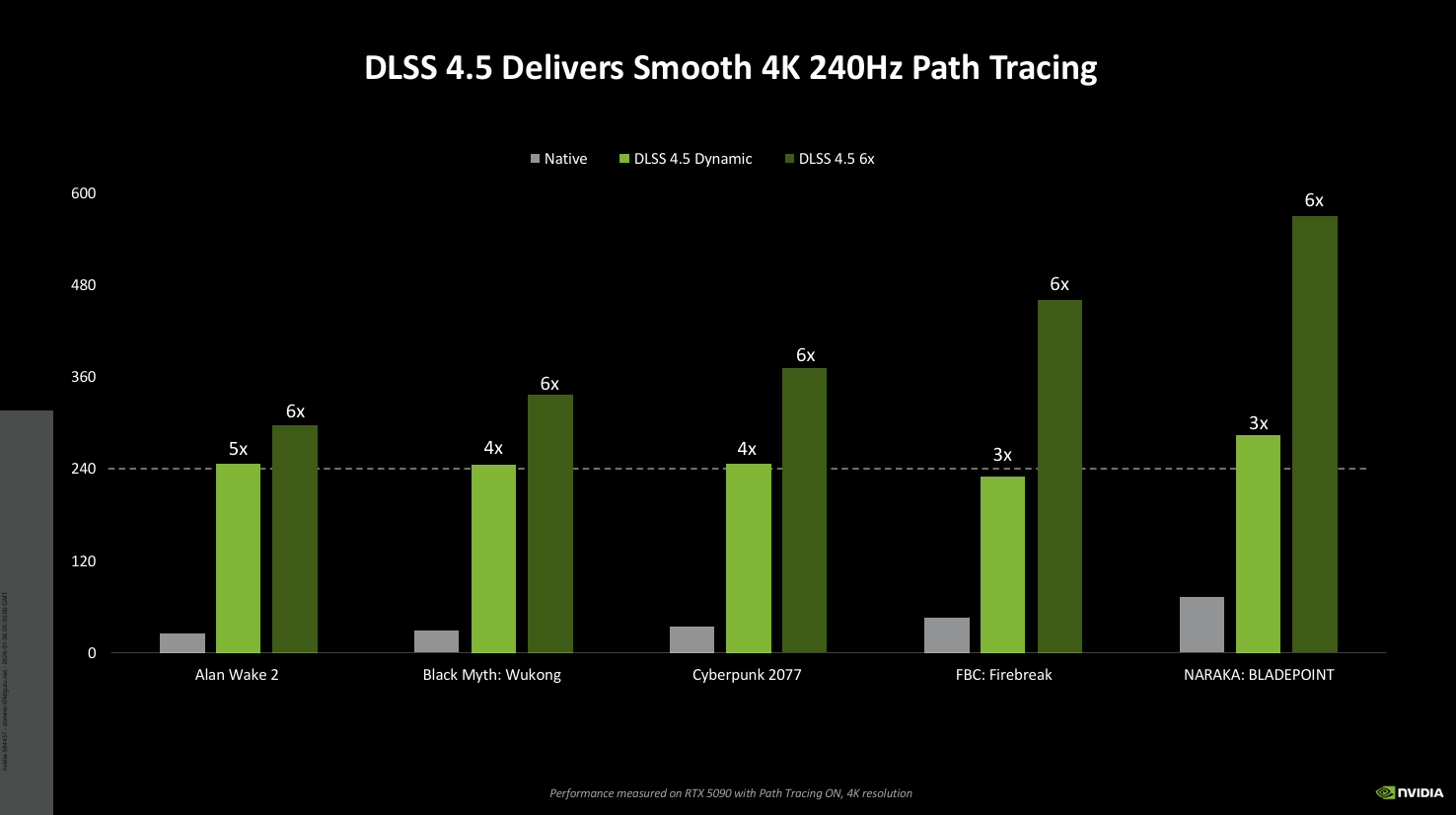
On top of the new transformer model, Nvidia is also bringing updates to Frame Generation. With DLSS 3, Nvidia released Frame Gen 2x, the standard version available on RTX 40 and RTX 50 series GPUs. Then with DLSS 4, Nvidia introduced 3x and 4x modes, exclusively available with RTX 50 series graphics cards. Now, the bar is raising again and Nvidia is set to roll out Frame Generation 6x. With this level of Frame Generation, gamers will be able to max out the refresh rates of 240Hz and 360Hz gaming monitors, which are becoming more prevalent each year, particularly at the moment with the growing adoption of OLED displays.

In the slide above you can see some of the results in games like Cyberpunk 2077 and Black Myth Wukong, showing that with 6x Frame Generation enabled, the RTX 5090 can provide 360Hz gameplay in very demanding titles, even with Path Tracing enabled. Nvidia says it has also made improvements to frame pacing and image quality, so it will be interesting to put that all to the test in the coming months while also measuring for added latency in the higher modes.

While the new DLSS Transformer model for upscaling will be available for all RTX GPU users, the new Multi-Frame Generation updates are exclusive to RTX 50 series GPUs and newer.

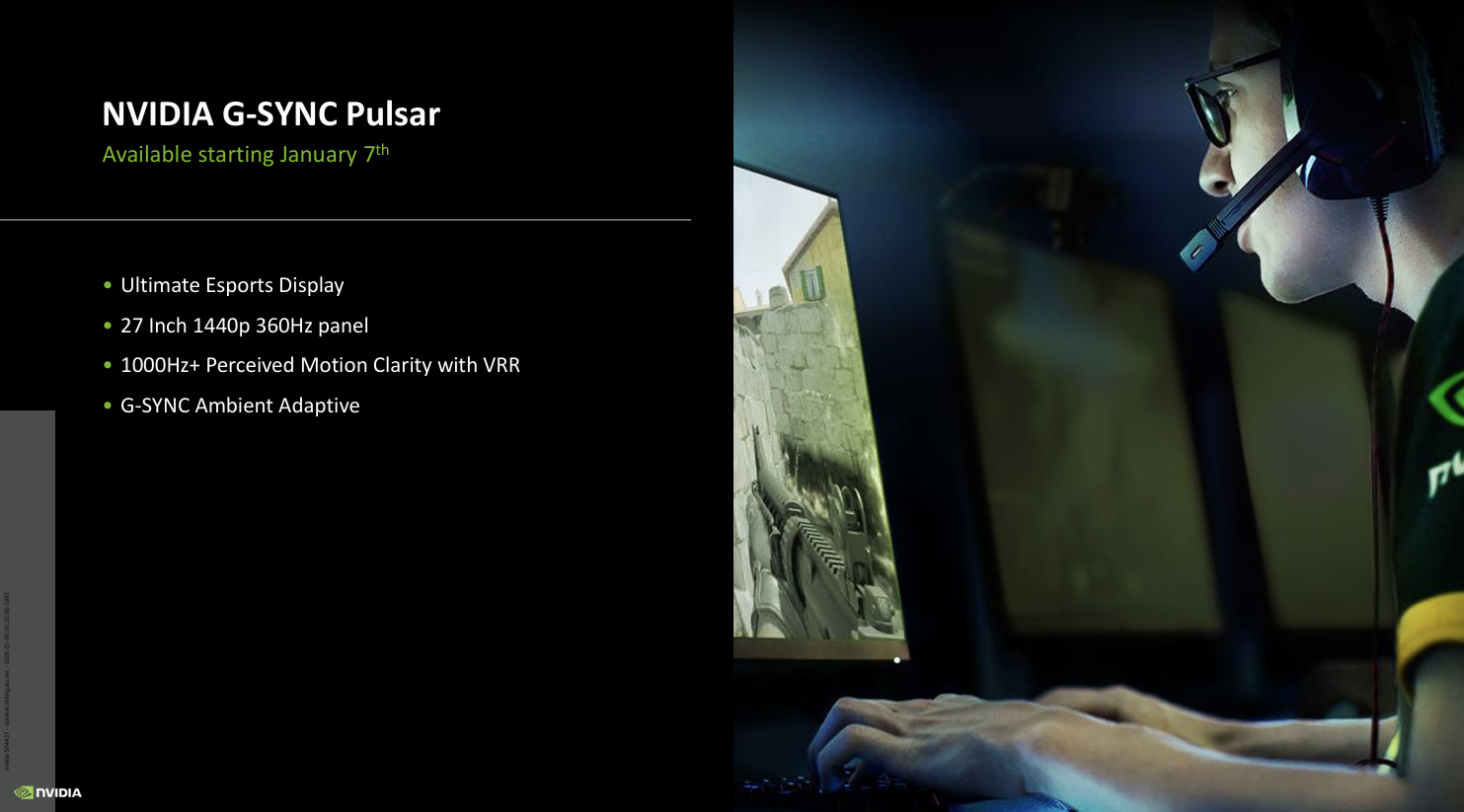
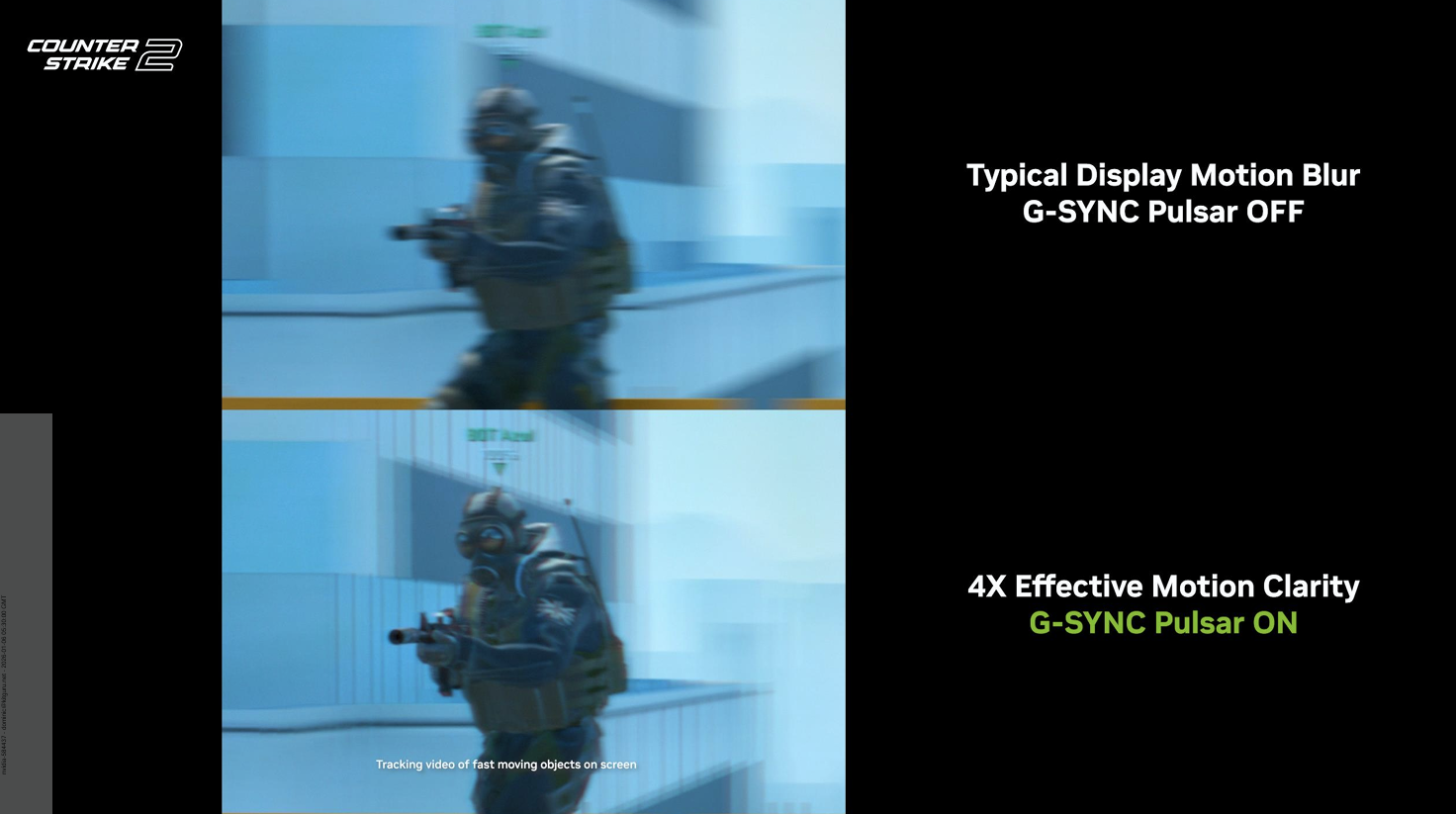
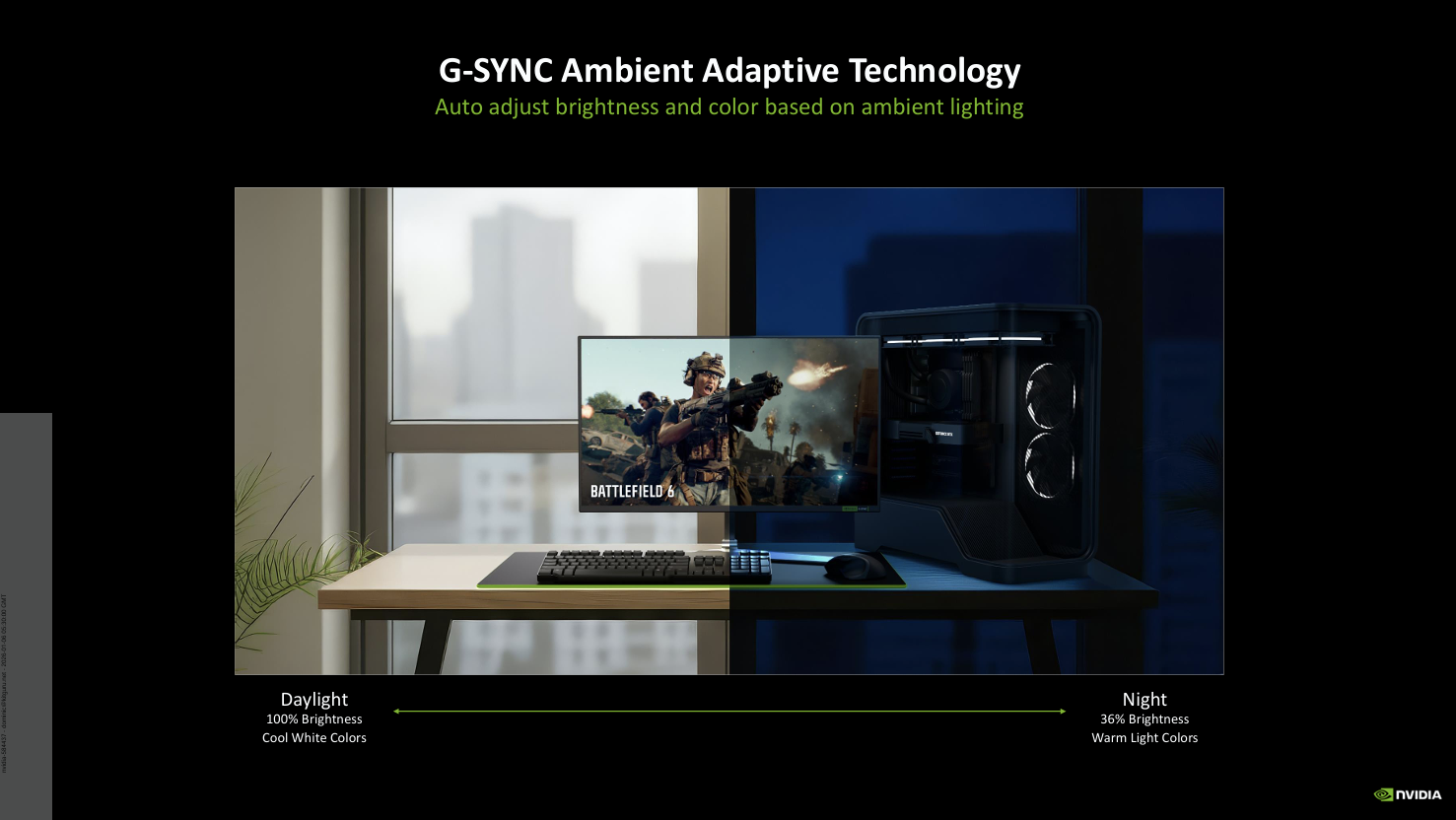
Sticking to gaming, Nvidia is also launching G-Sync Pulsar on January 7th. New displays equipped with this technology will feature QHD resolutions, up to 360Hz refresh rates and offer the equivalent motion clarity to a 1000Hz display with VRR. Nvidia is also introducing G-Sync Ambient Adaptive Technology, enabling the display to dynamically shift brightness based on lighting conditions and the time of day, so you can avoid eye-strain during late-night gaming.

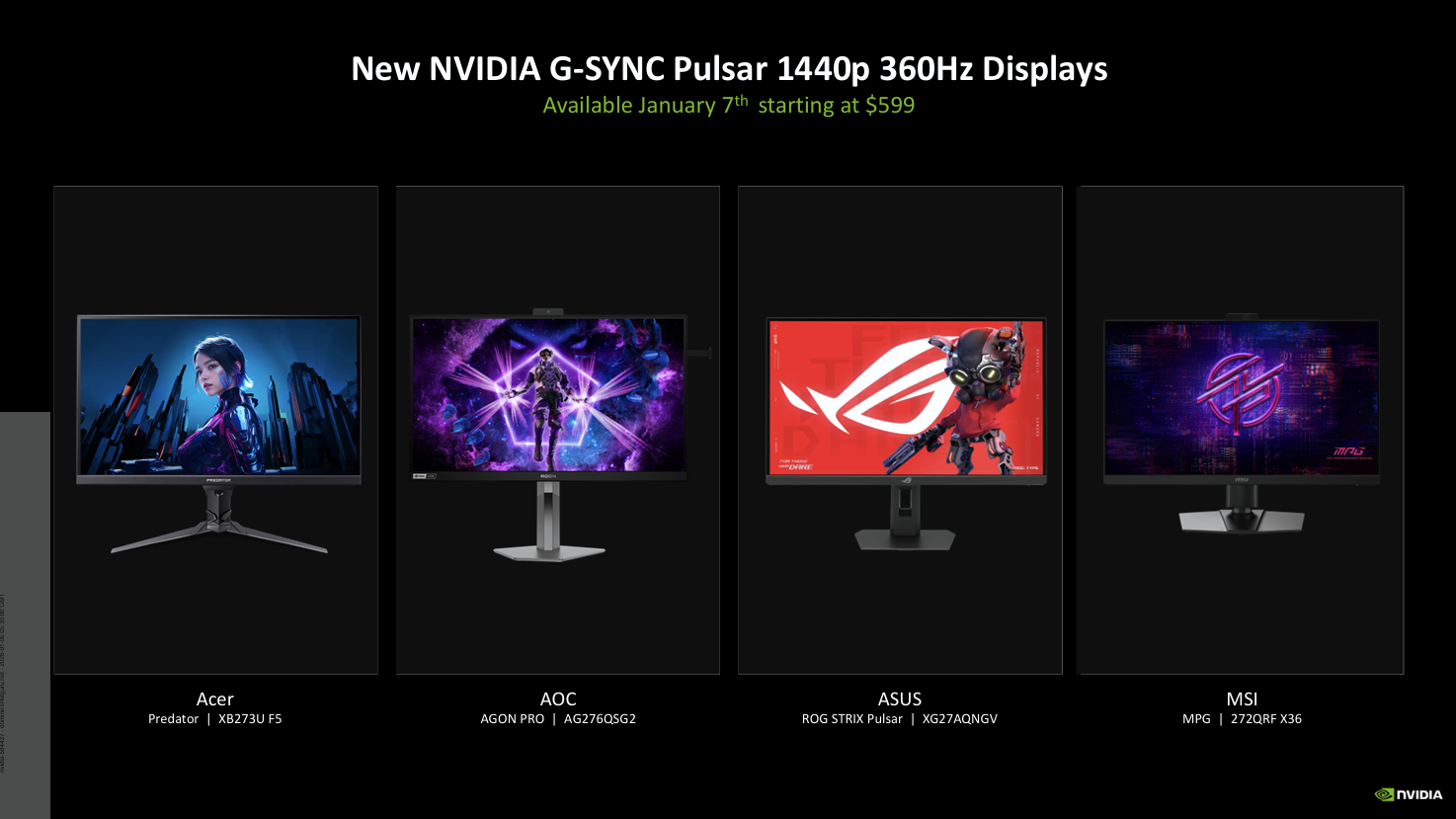
G-Sync Pulsar displays from the likes of Asus, MSI, AOC and Acer will be hitting the market in early 2026, with prices starting at $599.

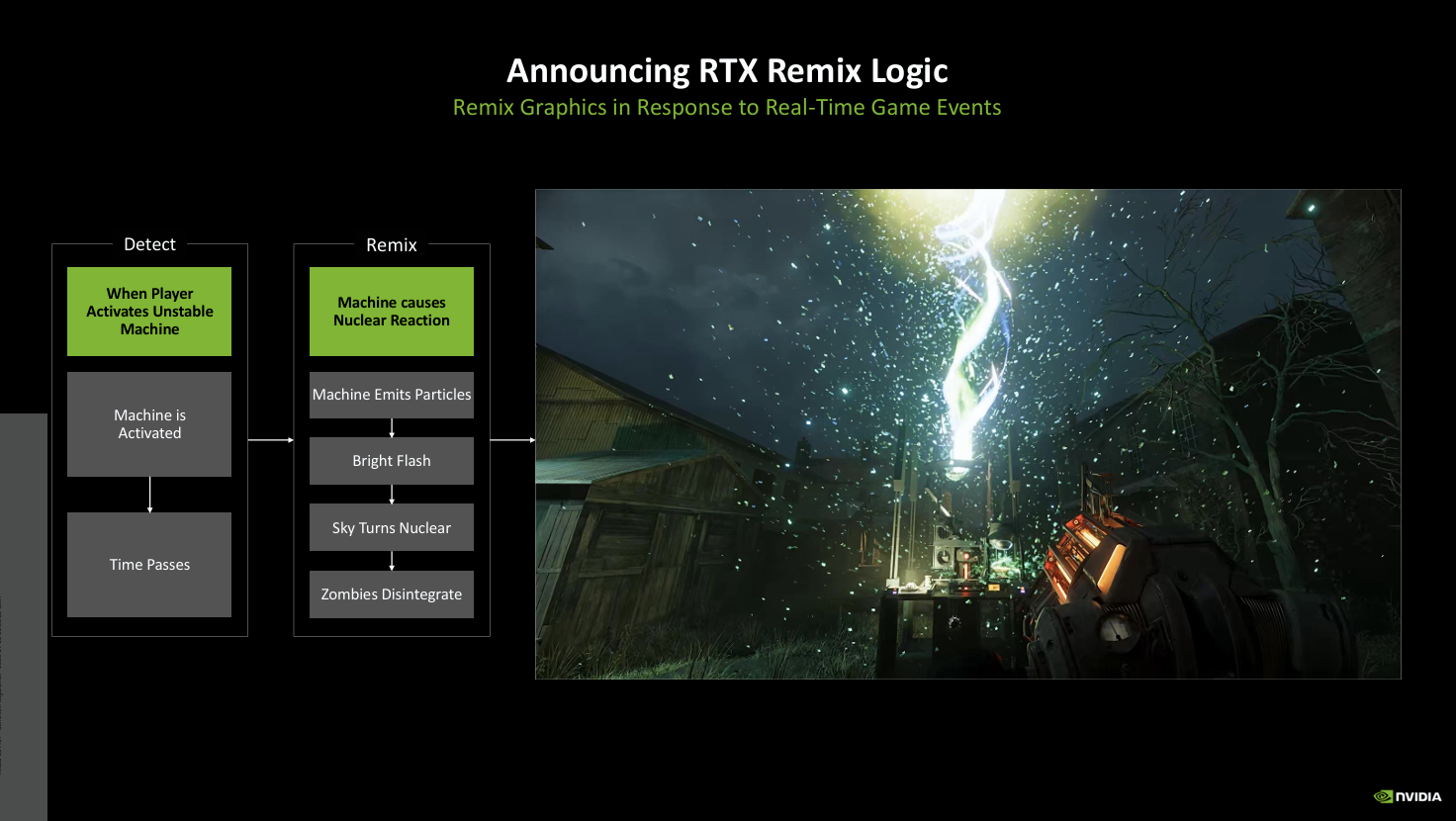
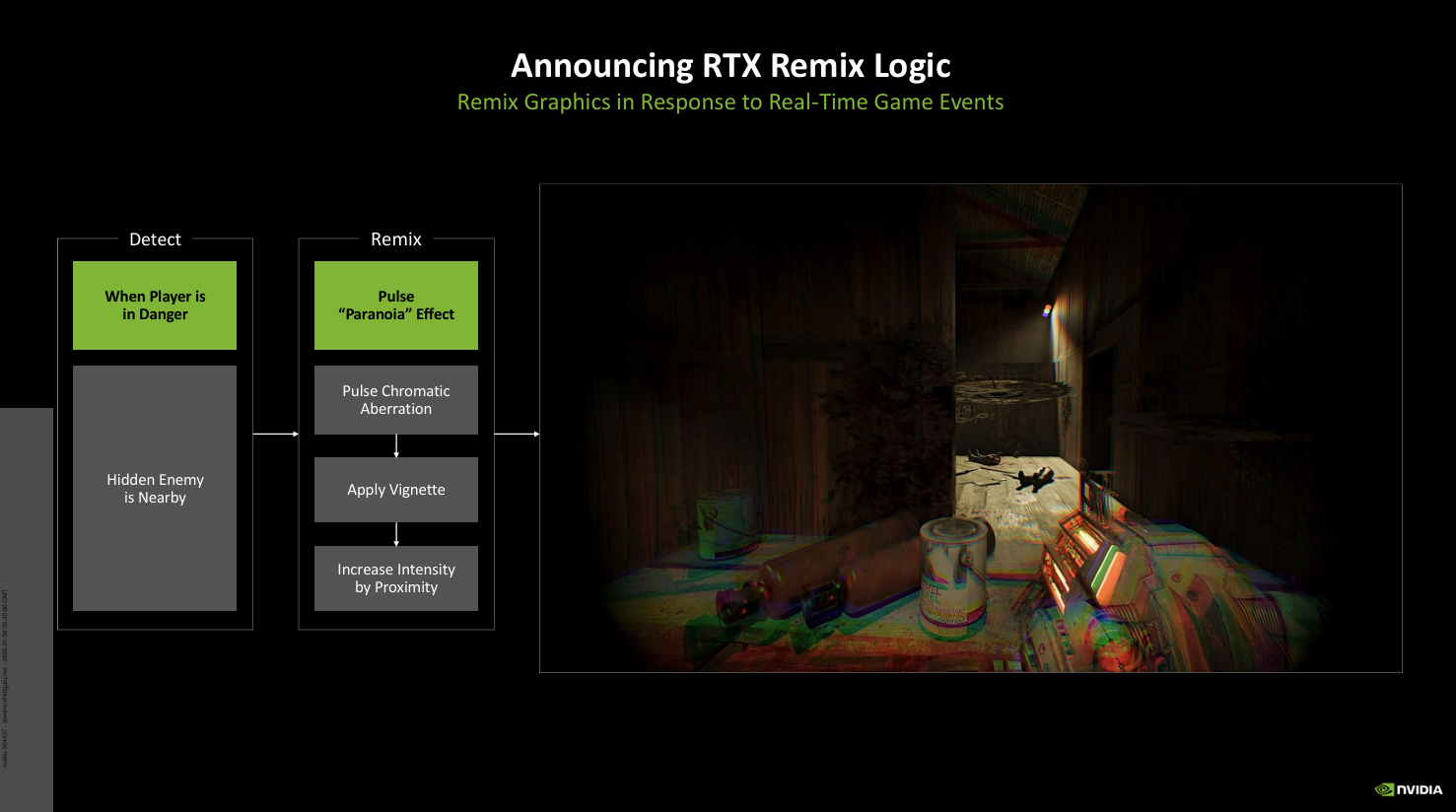
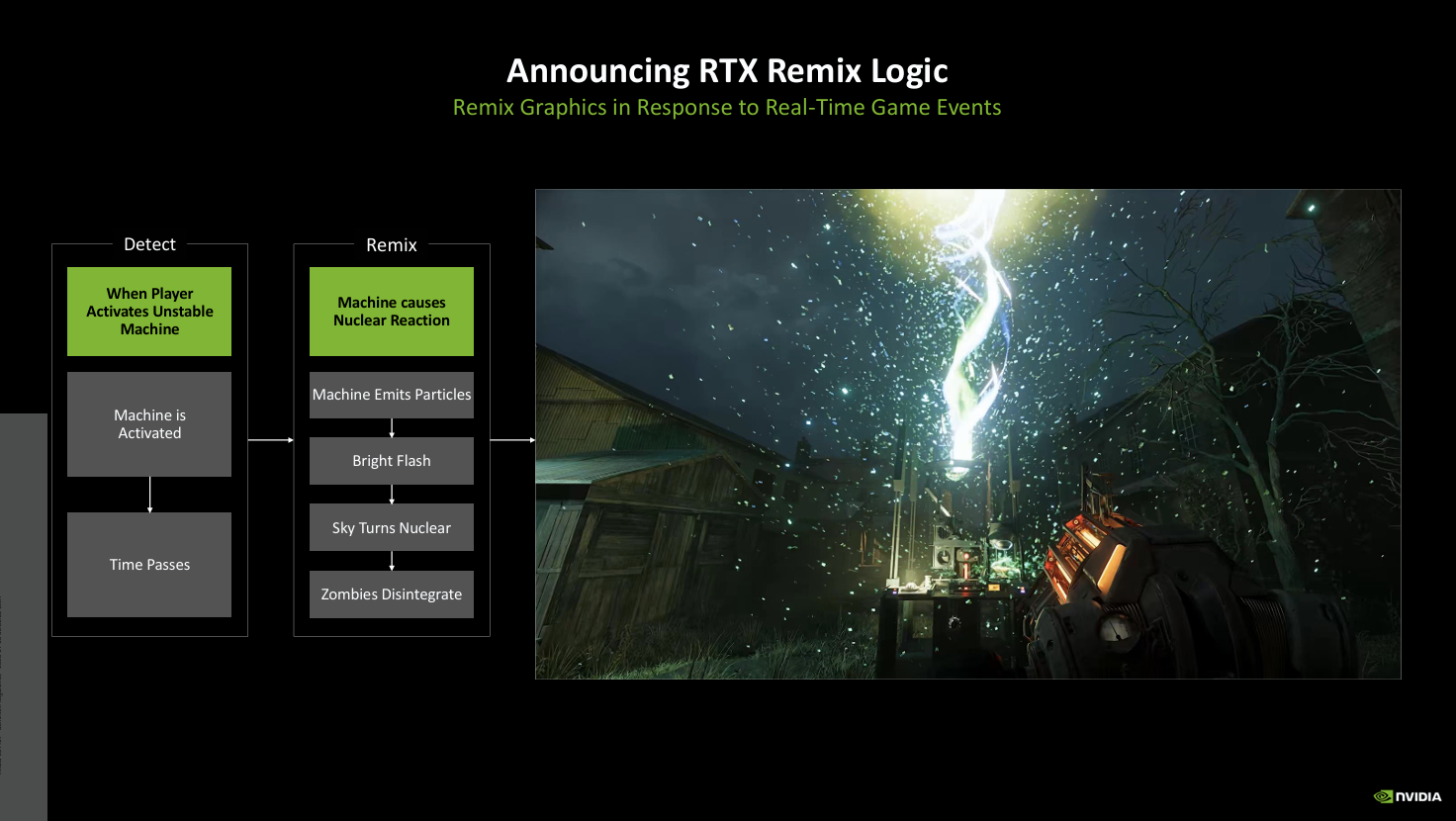
The RTX Remix modding project is also seeing some love at CES this week. RTX Remix Logic will allow modders to inject newly remixed graphical effects like particles in response to real-time game events, such as activating a machine in Half-Life 2, or adding in chromatic aberration in response to the player being in danger from a hidden enemy, creating a visual sense of paranoia.

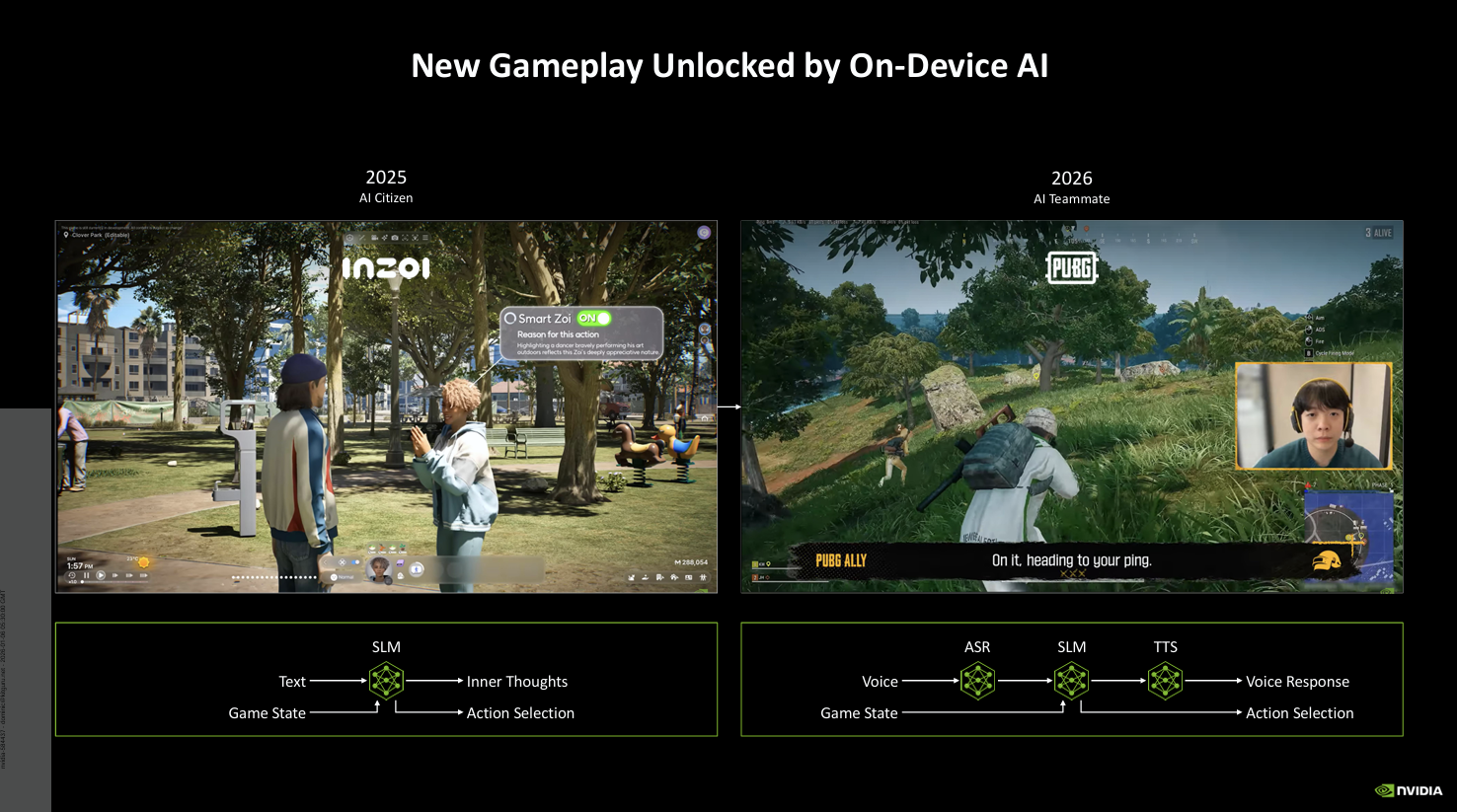
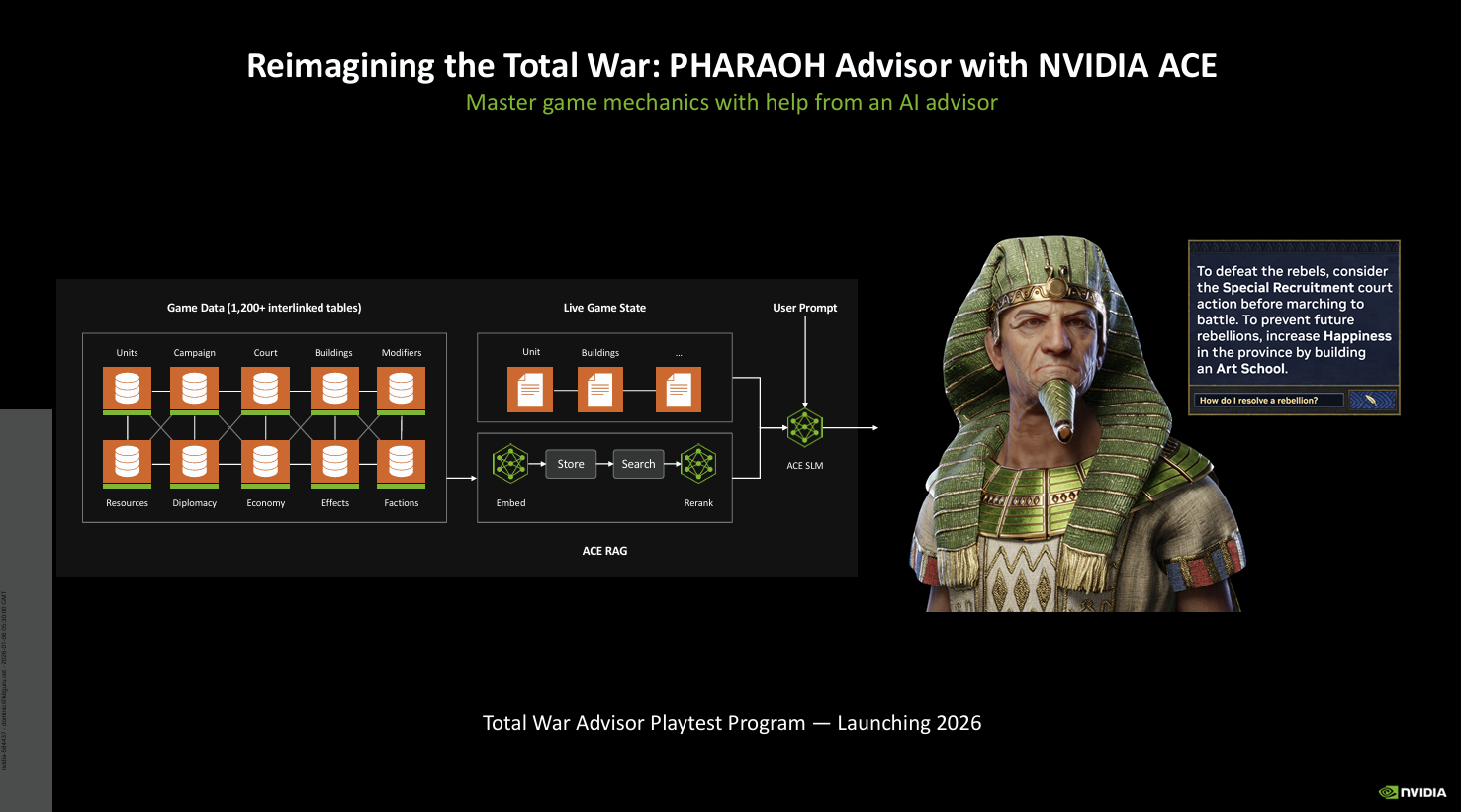
The Nvidia ACE AI suite is also being showcased with new potential use-cases. For instance, the ACE Small Language Model could be used to greatly enhance the Advisor in Total War: Pharoah, giving the player more relevant tips while building up a prospering civilisation and army.

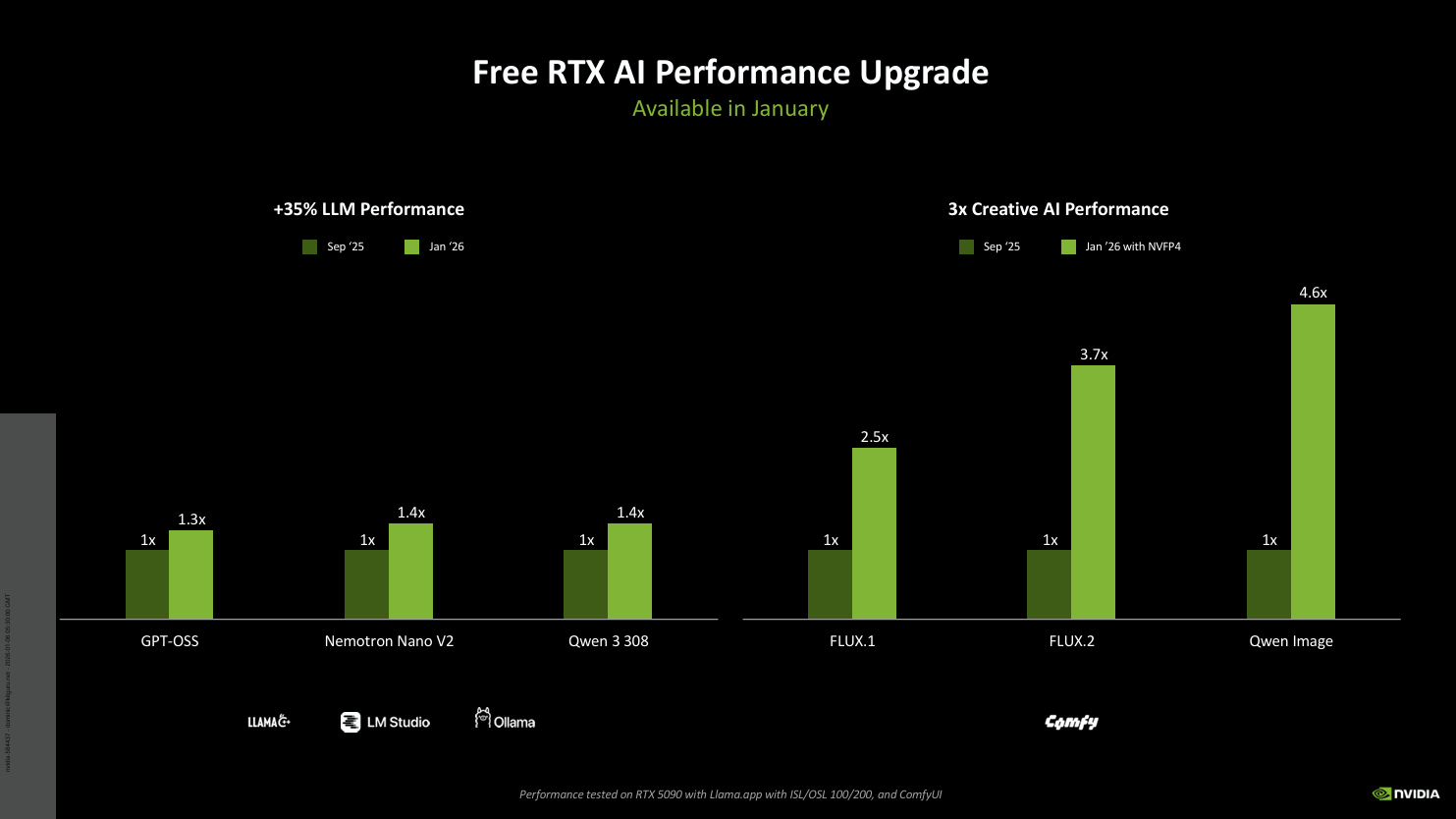
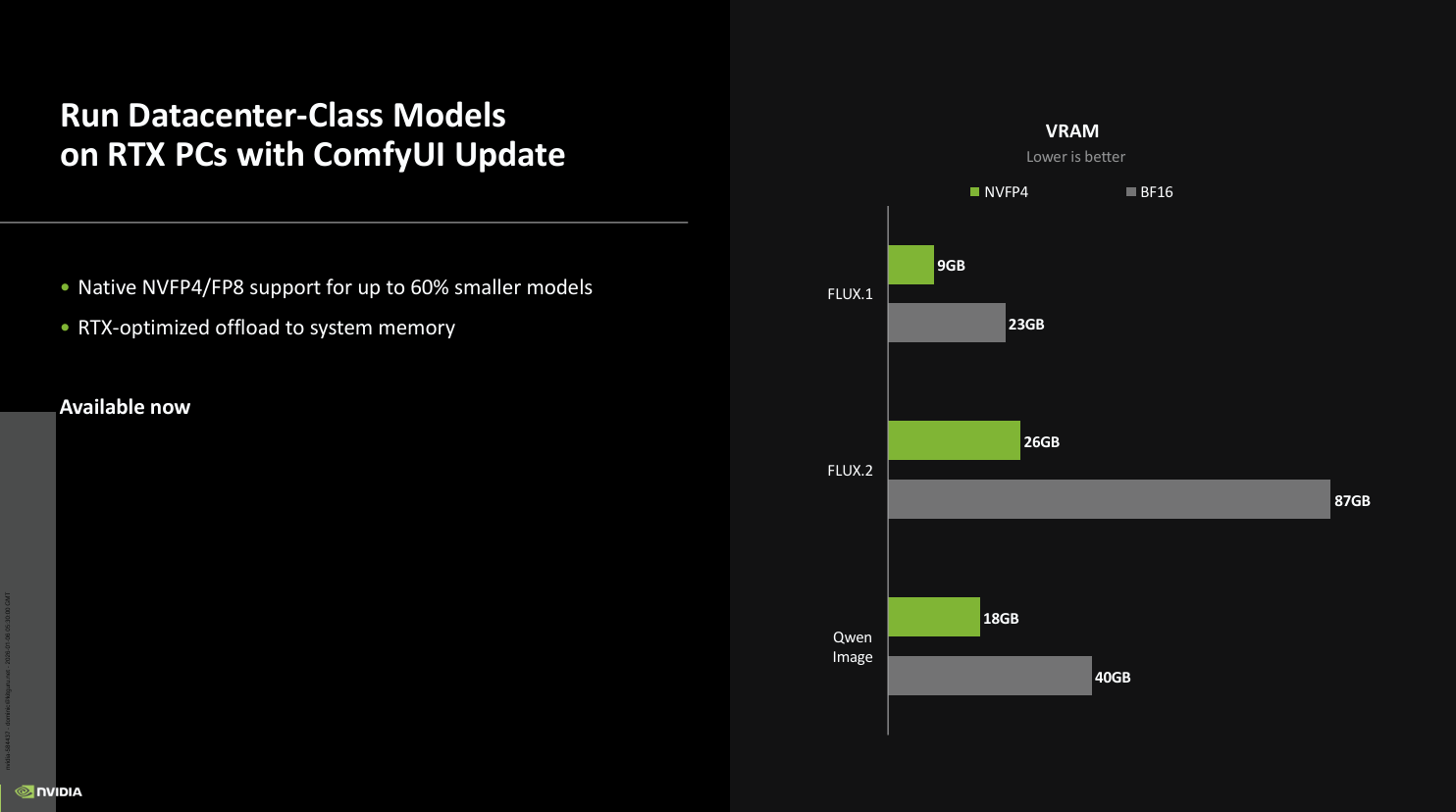
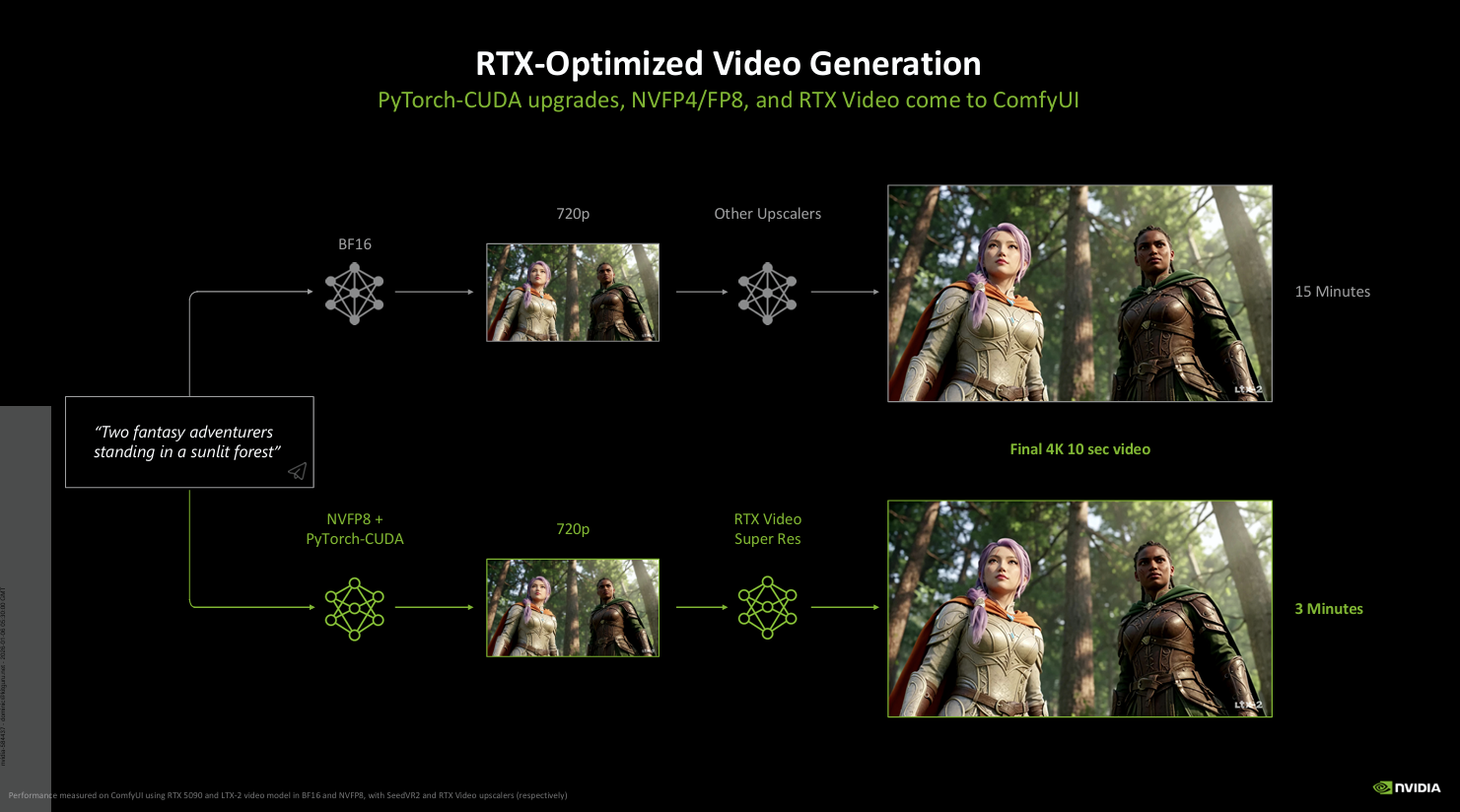
In keeping with the AI theme, Nvidia is also bringing new optimisations to make RTX GPUs more capable when running local AI projects. On an RTX 5090, tools like GPT-OSS, FLUX.1 and FLUX.2 will see performance upgrades. An upcoming ComfyUI update will also enable new optimisations to reduce VRAM usage. Nvidia is also bringing updates to enable private AI video search capabilities and Super Res for generated videos, allowing creators to make crisp 4K videos in seconds.

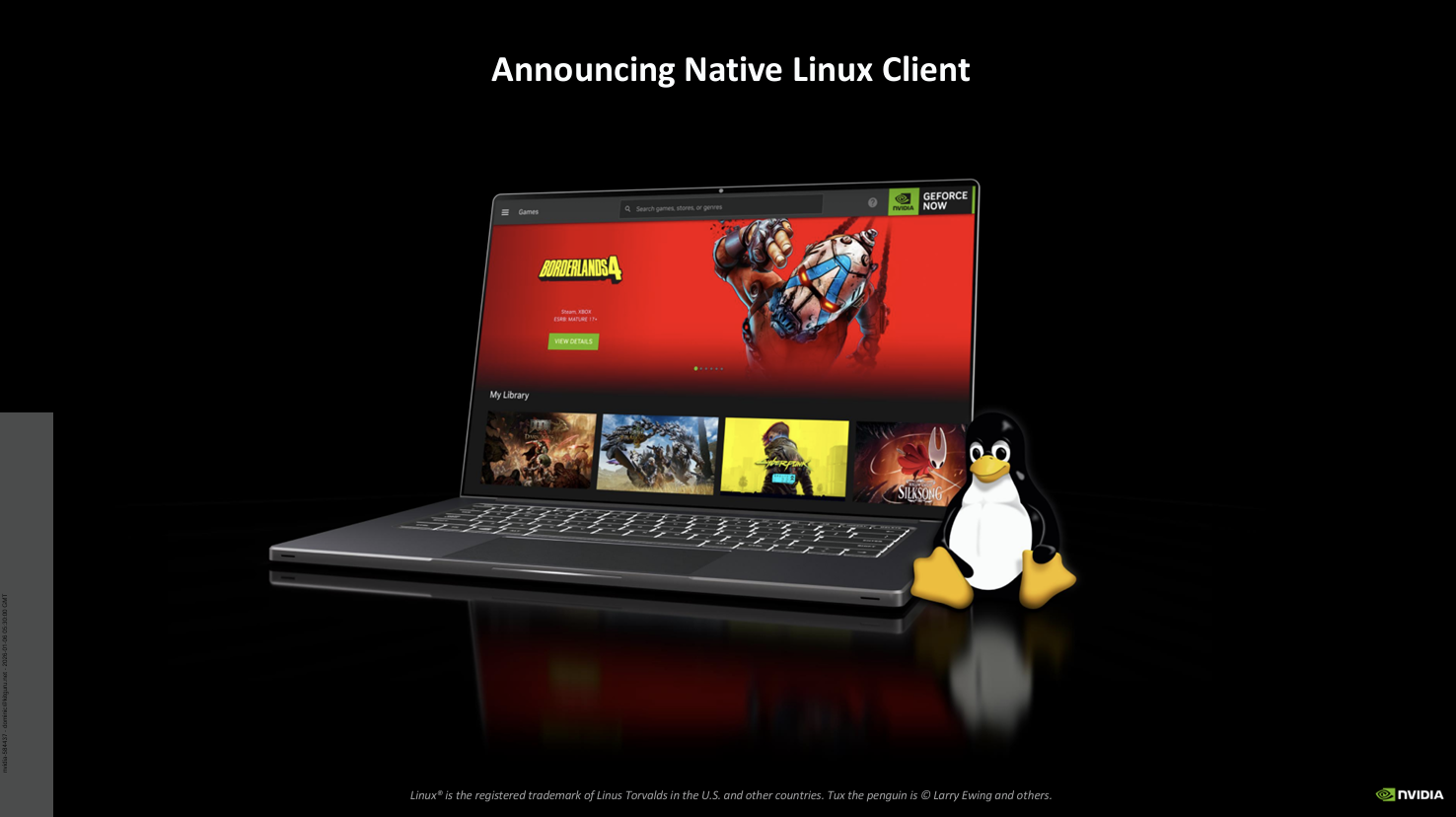
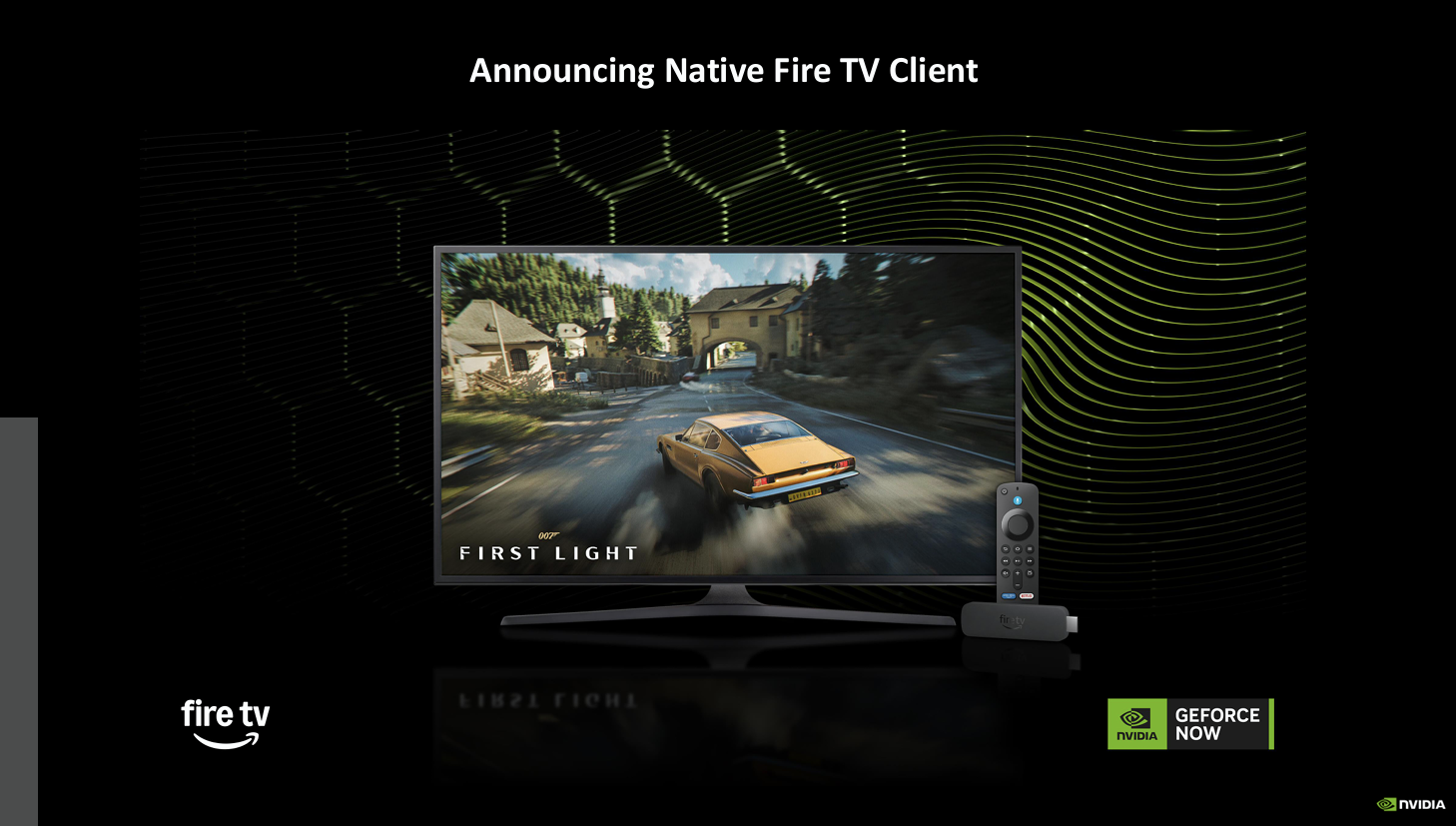
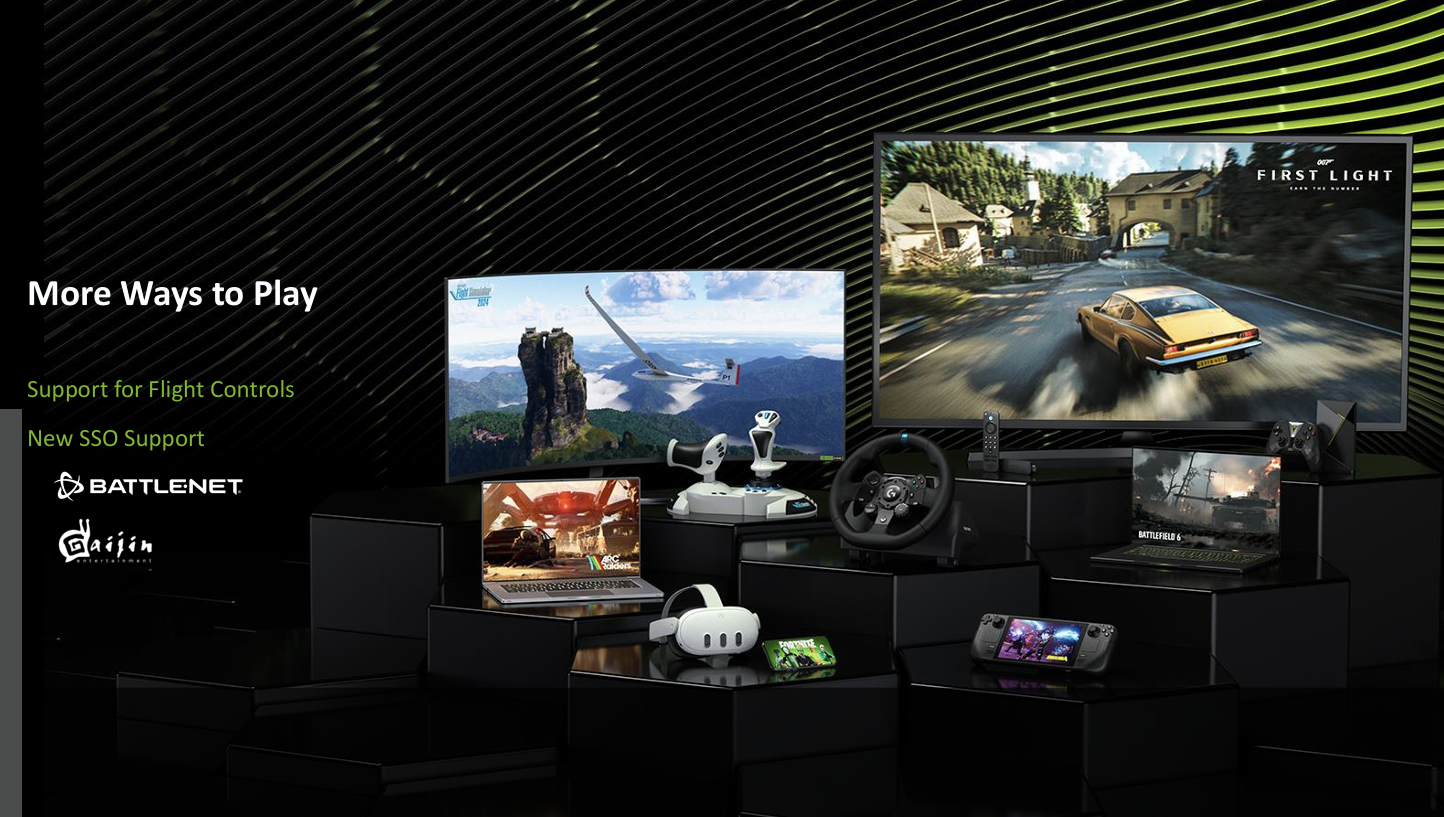
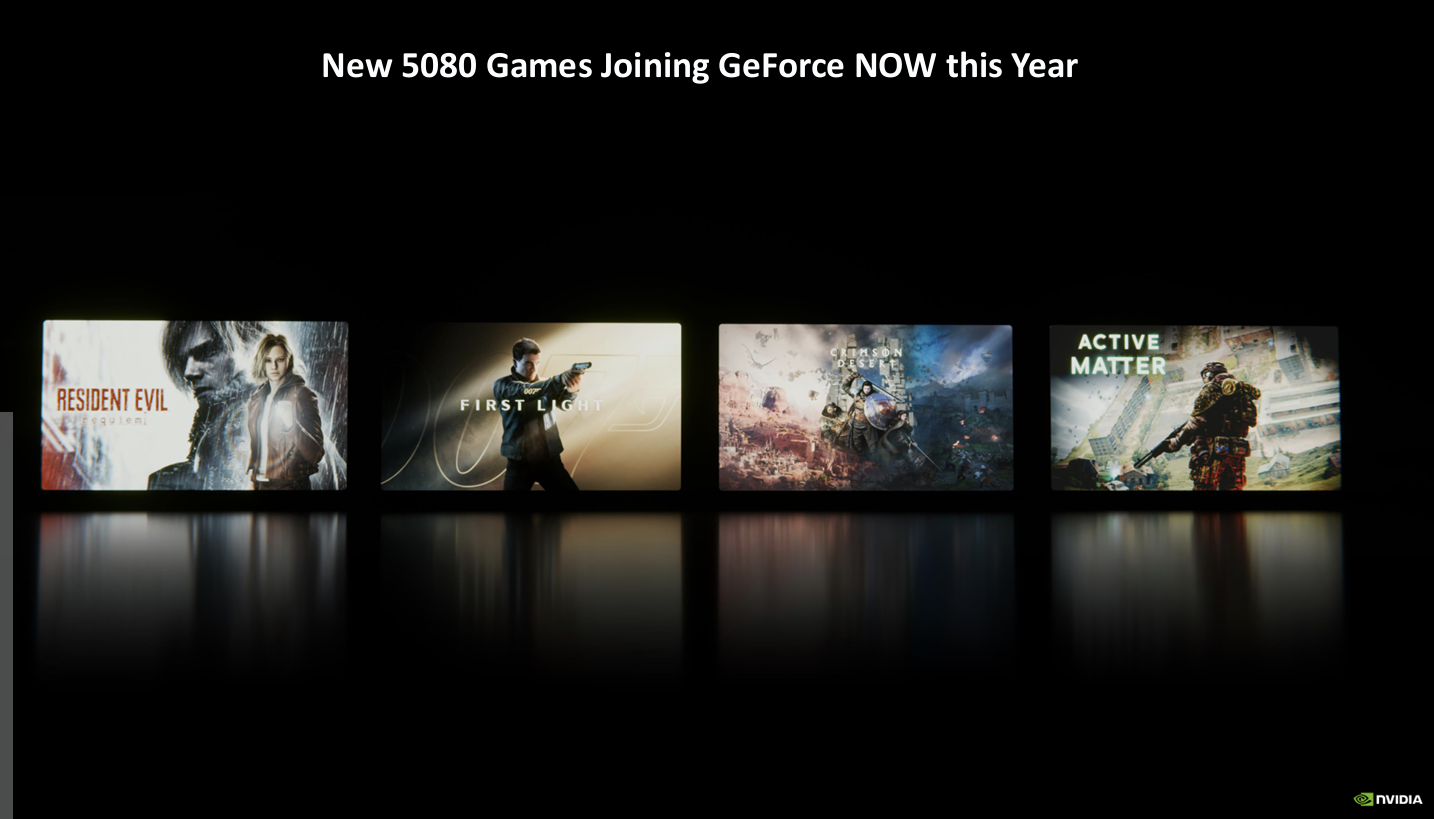
The final few announcements pertain to GeForce Now, Nvidia's cloud gaming service. Last year, the GeForce Now Ultimate servers were upgraded around the world to house RTX 5080 graphics cards. Now, Nvidia is rolling out native GeForce Now clients for more devices, including Linux-based PCs and Amazon Fire TV devices. Peripheral support is also expanding, so you can now move beyond a simple game controller to racing wheels and flight sticks for supported racing and flight sims. In the coming months, major titles like Resident Evil Requiem, 007 First Light and Active Matter will be available to stream day-one through GeForce Now.

KitGuru Says: What do you make of Nvidia's CES announcements this year? 

The post CES 2026: Nvidia announces DLSS 4.5, G-Sync Pulsar and more first appeared on KitGuru.
  •  

NVIDIA GeForce Now And DLSS Get Glorious Upgrades At CES 2026

NVIDIA GeForce Now And DLSS Get Glorious Upgrades At CES 2026 NVIDIA's consumer graphics presentation at CES 2025 was more interesting than many, although we'll spoil the surprise up-front: there wasn't any new hardware. If you're holding onto hype about new GeForce GPUs, well, you might as well return to hibernation. Or keep playing ARC Raiders, or Chaos Zero Nightmare, or Helldivers 2, or Warframe,
  •  

Pistol Whip Developer Cloudhead Lays Off 70 Percent Of Staff

The Canada-based development studio that describes itself as "VR's Creative Heart" laid off 70 percent of its staff.

CEO Denny Unger of Cloudhead Games released a statement announcing deep cuts at the studio behind Pistol Whip and The Gallery.

"Due to industry forces beyond our control, Cloudhead must make the difficult choice to reduce our workforce effective January 7th 2026. 30% of us will remain to continue the mission," a note from Unger reads. "Our belief remains in the power of VR as a medium, as a shared dream machine that will one day transform humanity. We have no doubt VR's mainstream relevance is predestined, with future devices that do "everything", but it will take studios like ours to be there when that time comes."

Unger promised further updates about the "challenges and potential opportunities of our industry" while posting a document titled "reverse recruitment" with contact details for more than 30 staffers departing Cloudhead in the layoffs. Most are based in Canada and list a preference for a remote job.

16 people remain at Cloudhead following the cuts, according to Unger, with 40 people in total affected by the layoffs. The studio had been hinting at work on additional projects back in 2022.

Cloudhead released Pistol Whip in 2019 to wide acclaim. I rated it "fantastic" at launch and, in the years after, the studio stacked on considerable updates including multiple campaigns and even a "growing library of explosive Scenes created by the Pistol Whip modding community directly in-game." At $29.99 today on Steam, Quest, and PlayStation VR2, the title remains a fantastic cinematic action experience delivered in one big package rather than metered out as paid DLCs.

Pistol Whip is also a member of Meta's Horizon+ subscription games program and the title is offered at a discount with new membership in Sony's program. A large number of other top tier VR developers have their games in those games programs, which have helped supplement income from sales in the past.

We'll be curious to hear more from Unger about his particular path at Cloudhead. In 2019, the studio was buoyed by the development of Aperture Hand Lab for Valve as a sampler experience for the Valve Index. With Steam Frame around the corner, Cloudhead will have a new surface for Pistol Whip sales in 2026, but the layoffs would suggest no partnership materialized for a project specific to the system.

The layoffs are unlikely to be the last major reduction in the VR space for an experienced development studio – Myst creator Cyan let half go last year among many others – as creative groups continue to be shocked by shifting platform priorities.

Please reach out to ian@uploadvr.com if you have anything to share regarding funding and recruitment in the VR and AR space.

  •  

CES 2026: AMD reveals new Ryzen CPUs for laptops and desktops

CES 2026 has officially begun and AMD is rolling out a number of new products to mark the occasion. As expected, AMD's primary focus is now shifting towards AI performance, although there are gaming-related product launches to look forward to as well.

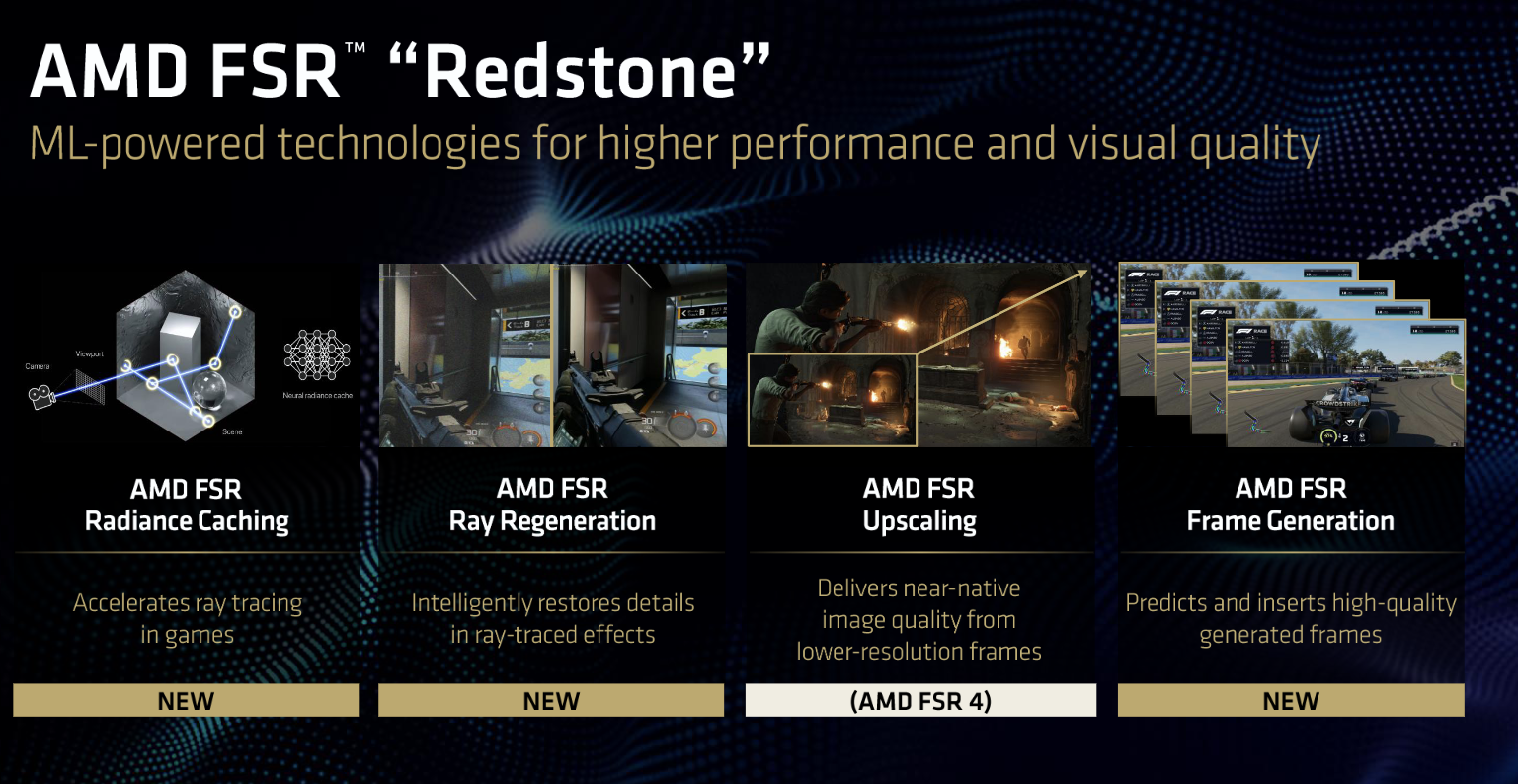
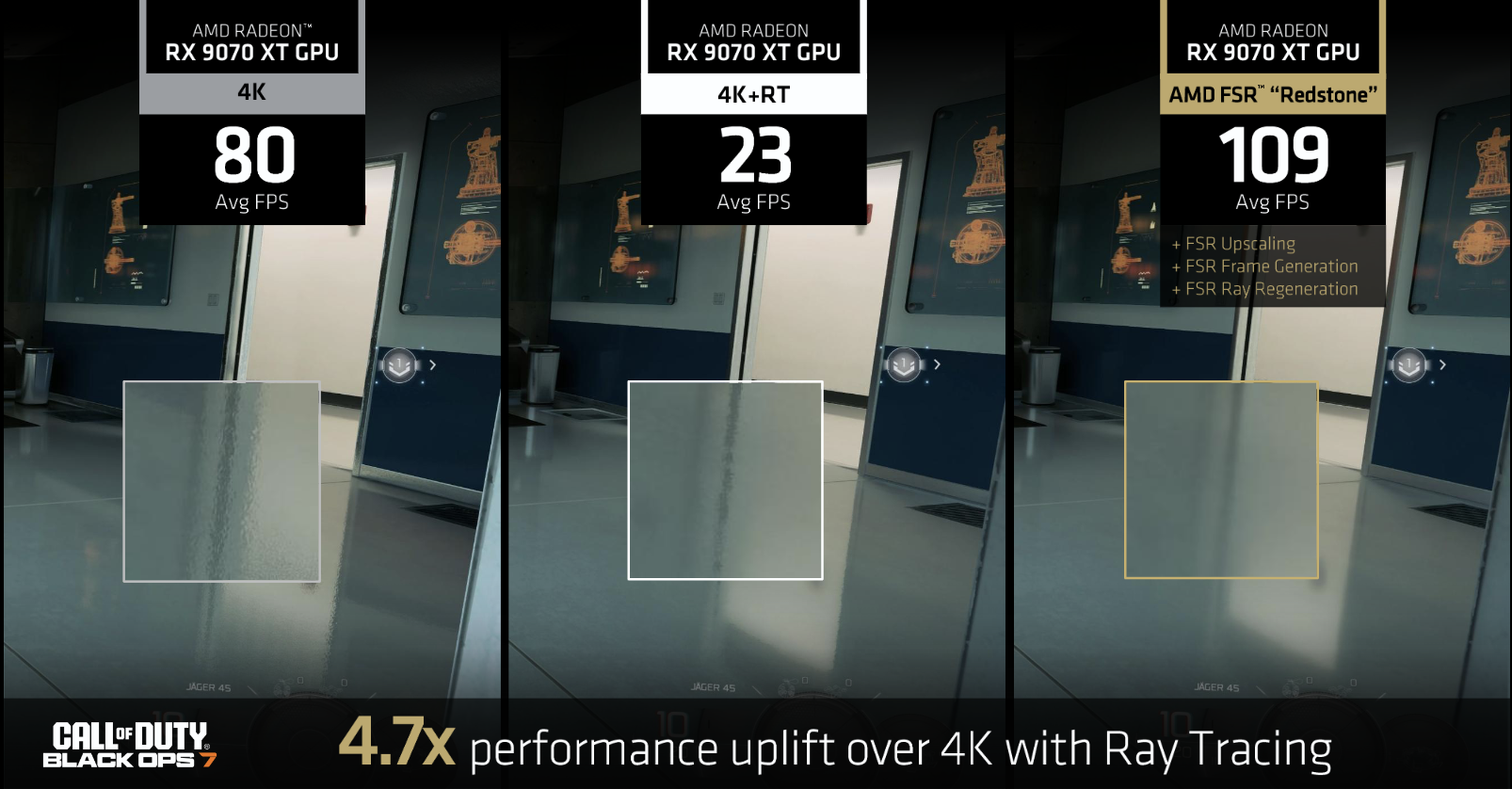
According to AMD's data, over 80 percent of the PC market will utilise NPUs by 2029. Currently, AMD has over 250 Ryzen AI PC models in circulation from various OEMs. Some of this AI-centric focus will benefit gamers, thanks to technologies like FSR 4 (Redstone), which is the new ML-enabled version of the FSR upscaler, enabling greater visual and performance gains on Radeon RX 9000 series graphics cards and newer. According to AMD, FSR Redstone can improve performance by up to 4.7x at 4K resolution with ray tracing enabled. A number of big 2025 titles have already been upgraded with this new version, including The Elder Scrolls IV: Oblivion Remastered, Silent Hill 2, Mafia: The Old Country and of course, Call of Duty: Black Ops 7.

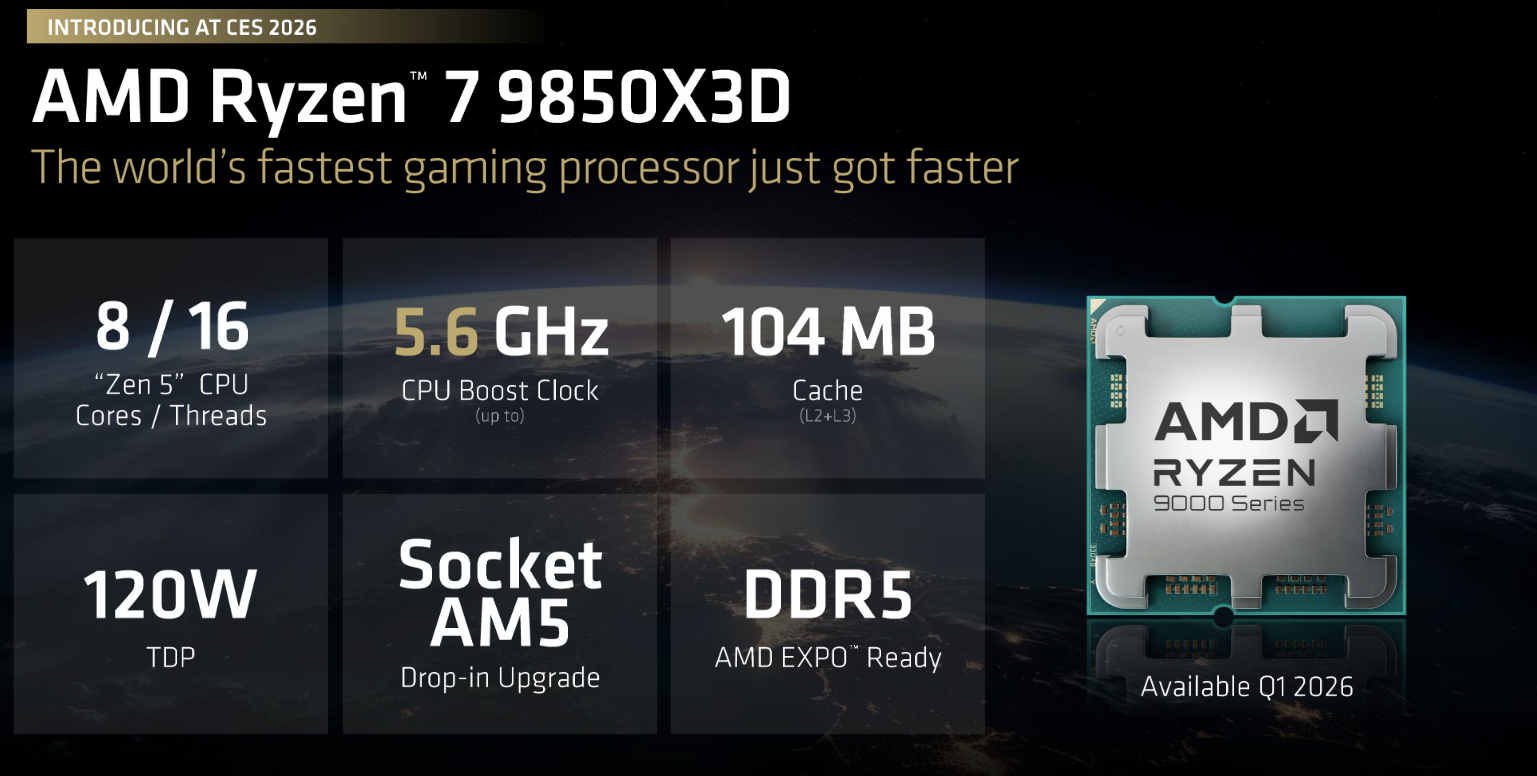
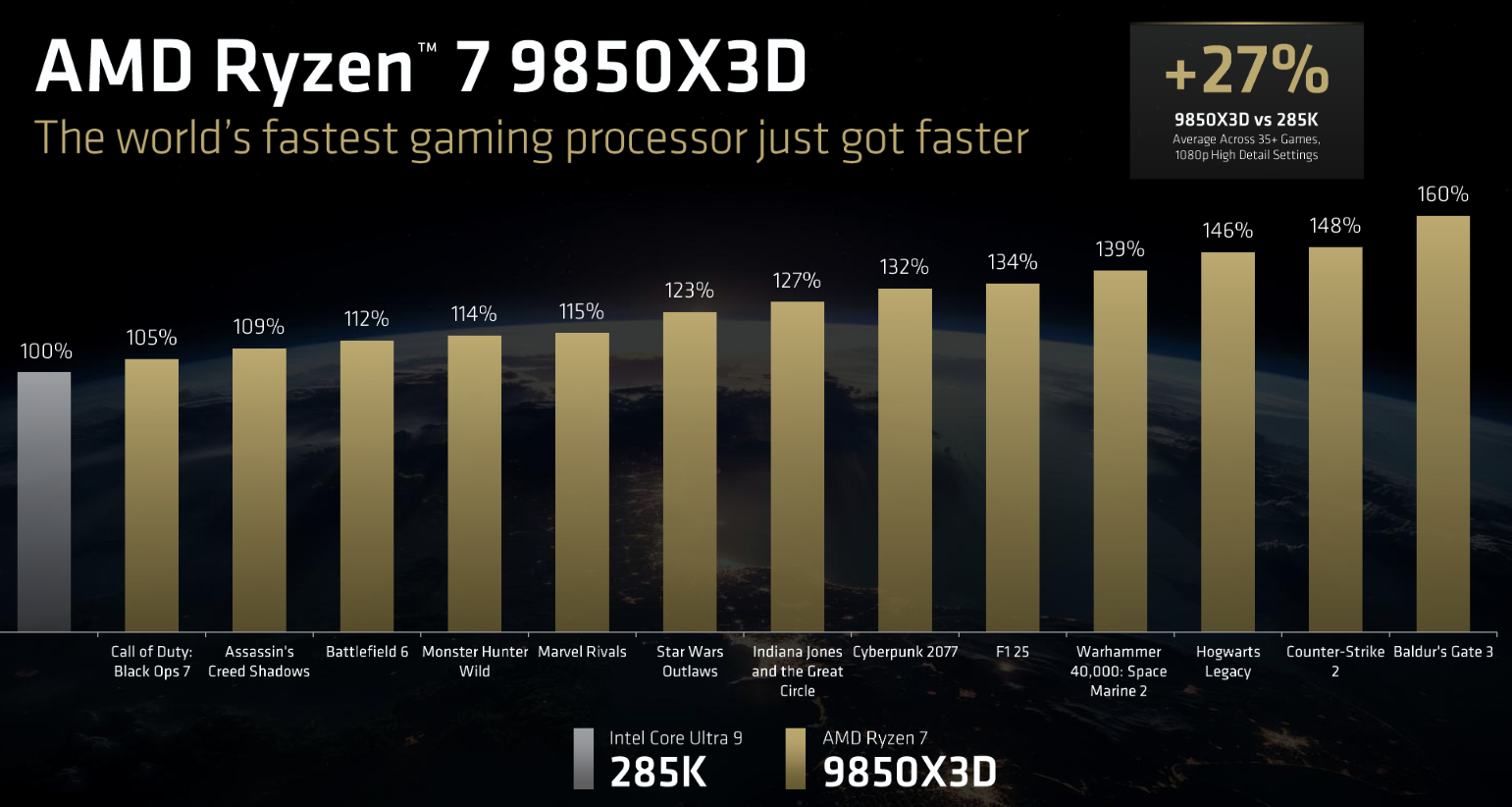
On the desktop PC front, AMD is unveiling its new Ryzen 7 9850X3D CPU today. This chip packs an 8C/16T Zen 5 CPU configuration, along with a massive 104MB of cache. It is a step above the previous 9800X3D, with a higher 5.6GHz boost clock speed. According to AMD, this chip offers as much as 60% more performance compared to the Intel Core Ultra 9 285K desktop processor in games like Baldur's Gate 3. This chip will soon be at the heart of Alienware's flagship Area 51 gaming PC, and many other OEMs are also expected to adopt it, alongside the chip's release to the DIY market.

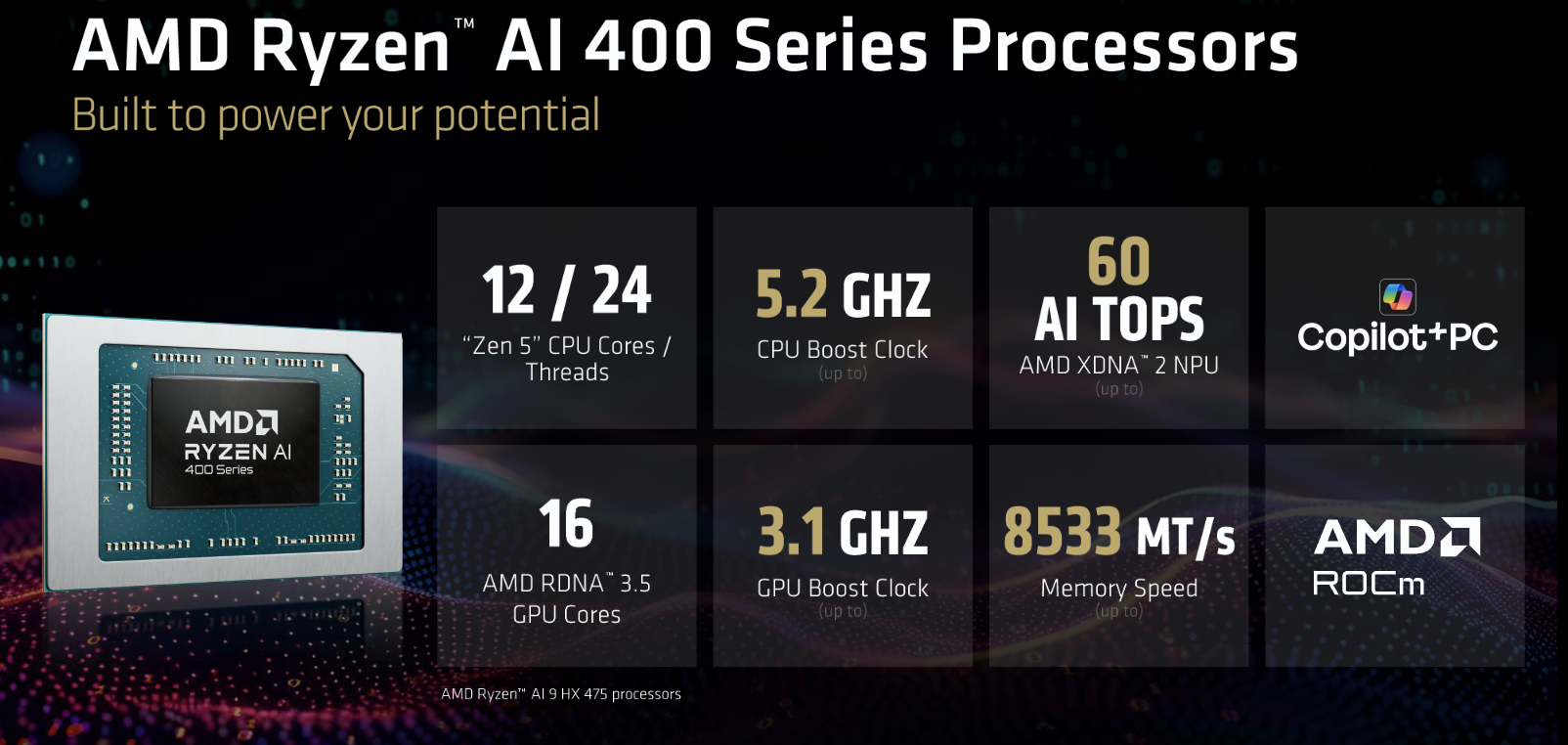
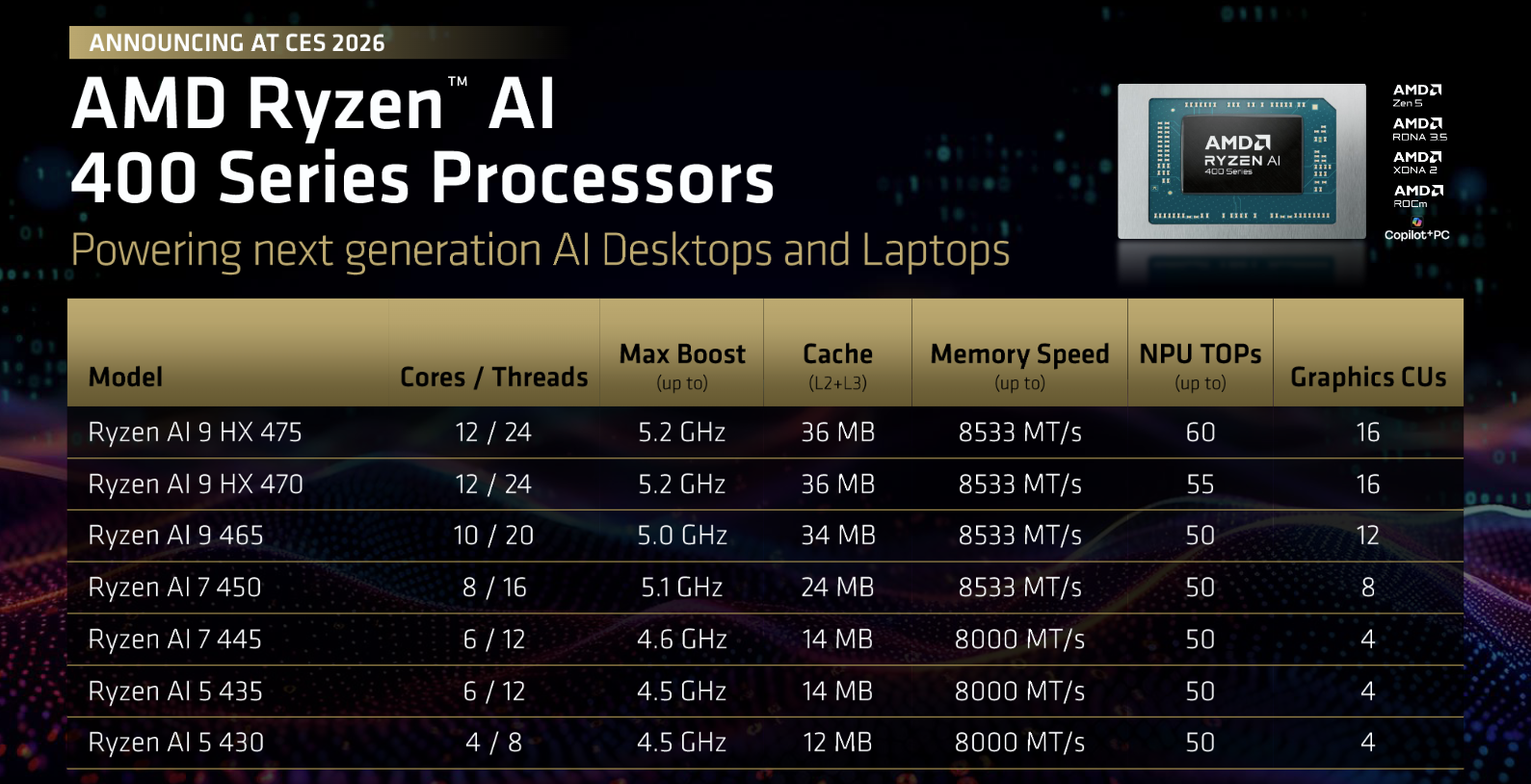
On the laptop side of things, AMD also has the new Ryzen AI 400 series processors. These CPUs aim to bring AMD into a leadership position for full stack CPU, GPU + NPU performance. These CPUs will offer up to 12C/24T with Zen 5 architecture, up to 5.2GHz boost clock and 60 AI TOPS via the XDNA 2 NPU, a 1.2X increase over the previous generation. For the integrated GPU, you'll get up to 16 RDNA 3.5 GPU cores.

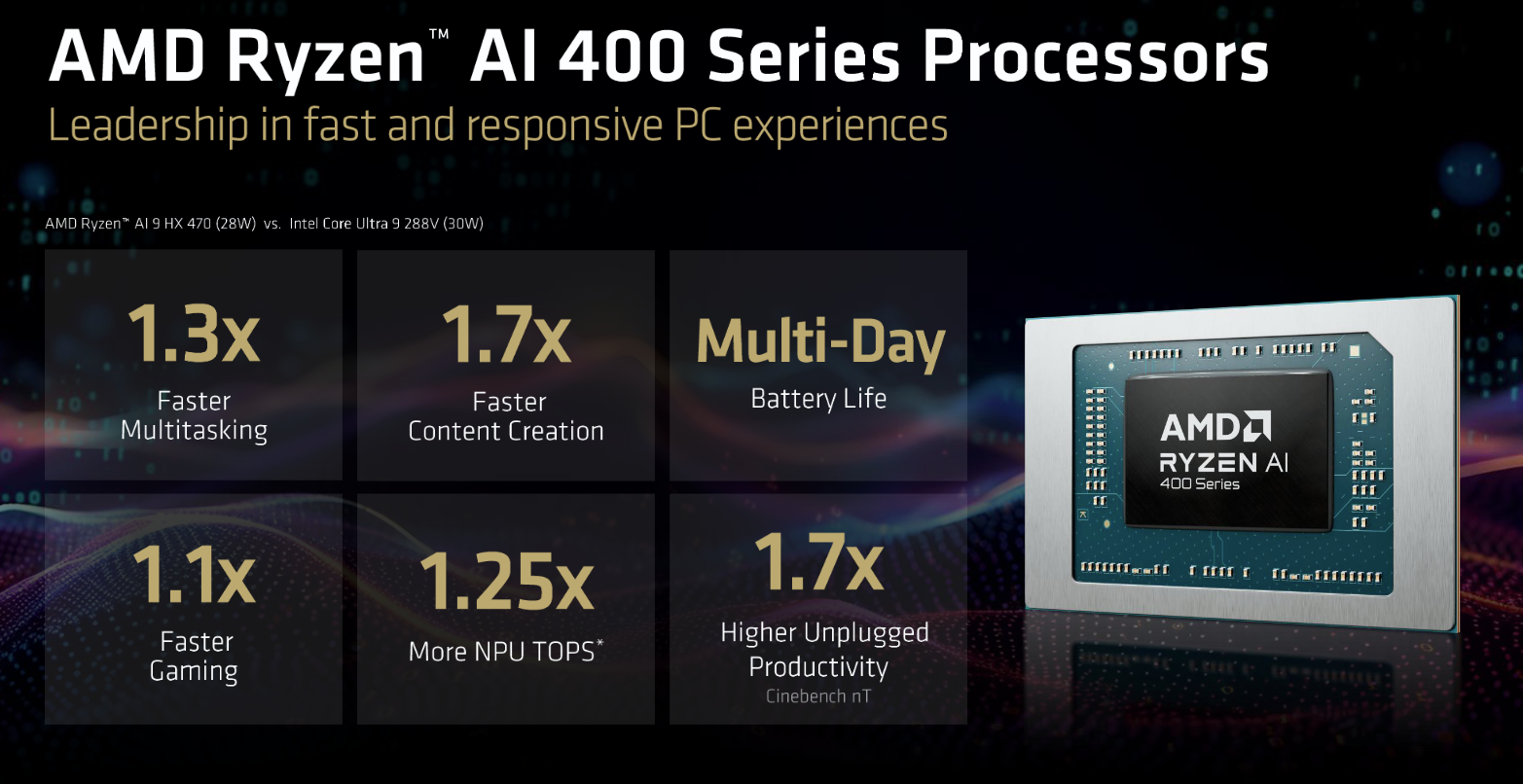
In content creation applications, AMD claims these chips will offer up to 1.7x more performance, as well as a 1.3x boost in multi-tasking. The big addition the line-up here is the Ryzen AI 9 HX 475, which will offer the highest possible specification, but there are also new Ryzen AI 7 and Ryzen AI 5 SKUs on the way as well. OEMs like Acer, Asus, Dell, HP, Lenovo, MSI, Gigabyte and more will offer laptops (or potentially mini PCs) using Ryzen AI 400 series processors in 2026.

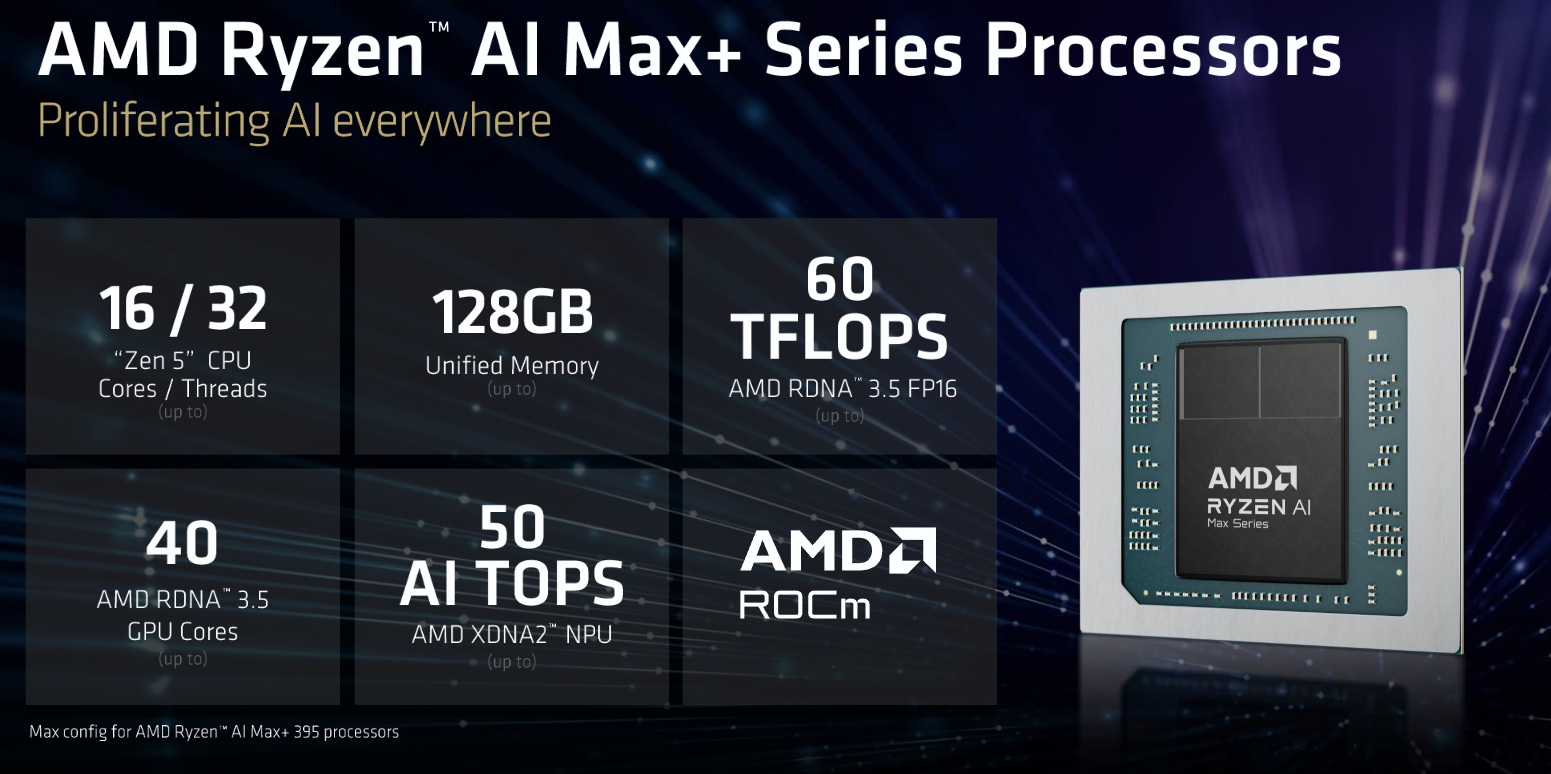
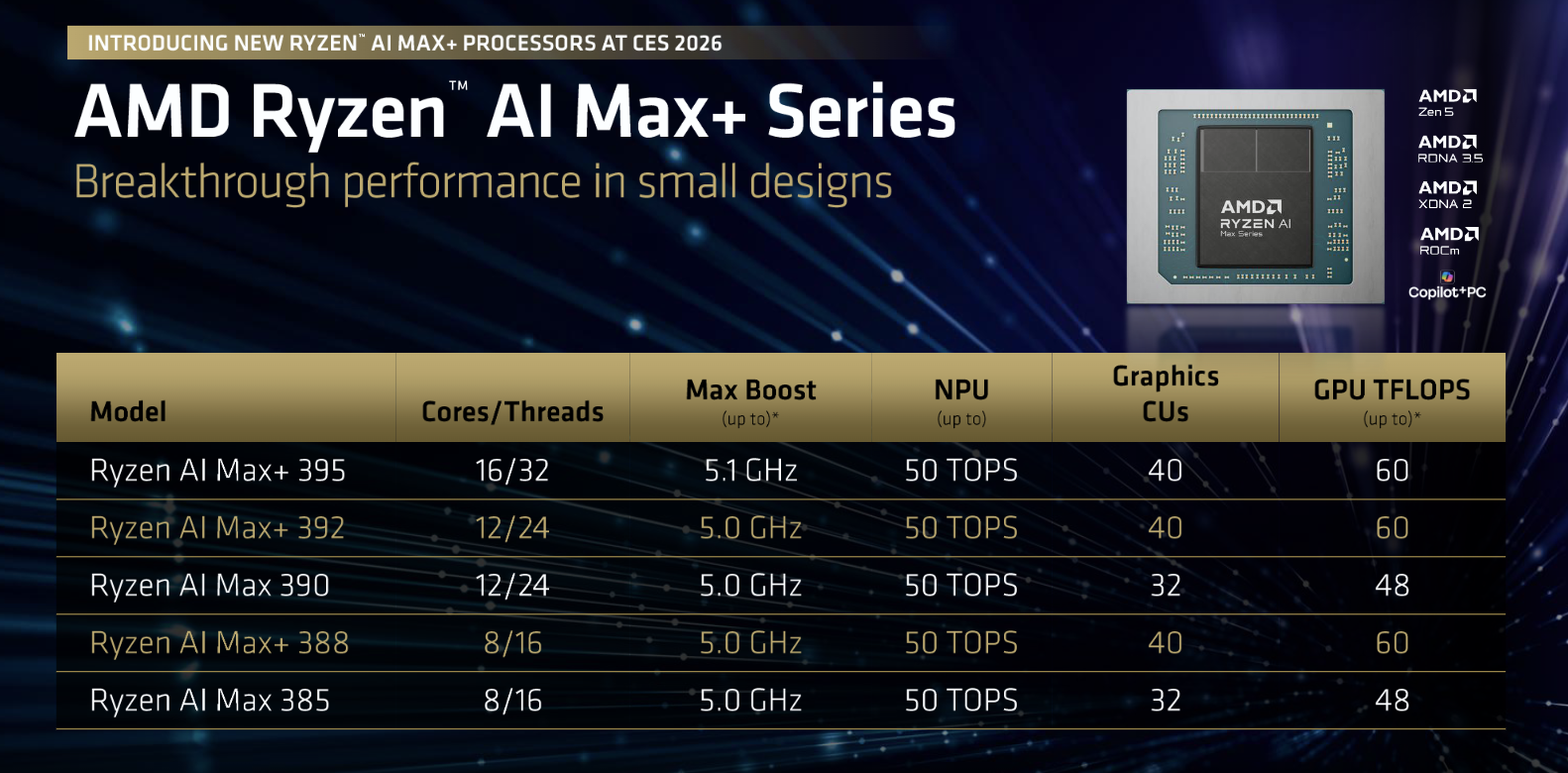
Ryzen AI Max CPUs will offer performance for AAA gaming, as well as perf needed for ‘workstation-level creation'. Systems will support up to 128GB of unified memory for AI powerhouse systems. Ryzen AI Max+ CPUs will offer up to 16C/32T, 40 RDNA 3.5 GPU cores and up to 60TOPS AI perf with XDNA 2 NPU.

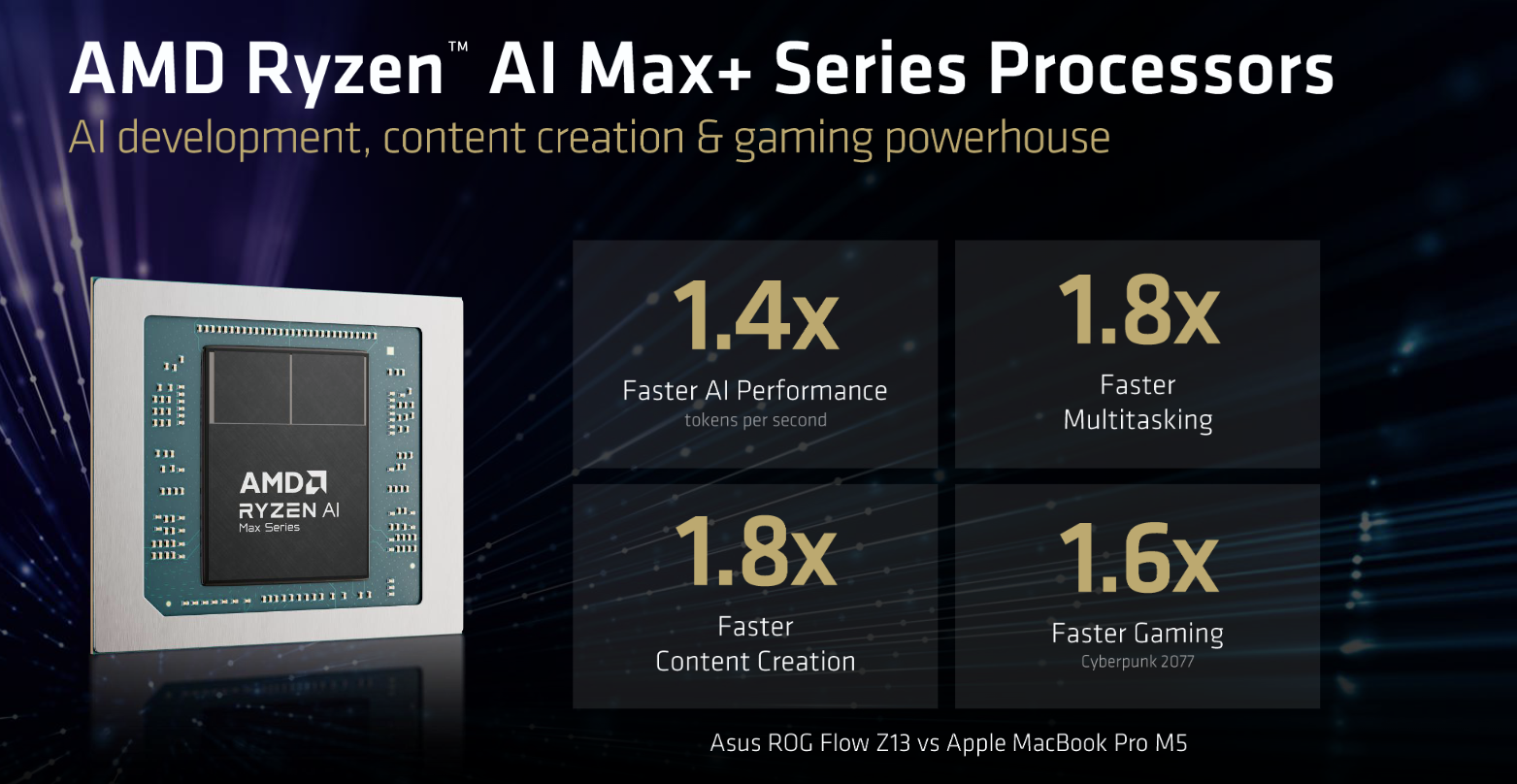
Against a MacBook Pro M5, the new Ryzen AI Max CPUs offer up to 1.4x better AI performance, up to 1.8x better content creation performance and up to 1.6x better in gaming. The Ryzen AI Max+ 392 and 388 CPUs are new to the line-up, launching in Q1 2026.

KitGuru Says: As is often the case, AMD is using CES to focus primarily on its laptop segment, with minor updates on the desktop CPU and GPU side. We should get more news on what's next for AMD in the desktop segment later in the year, likely around Computex time. 

The post CES 2026: AMD reveals new Ryzen CPUs for laptops and desktops first appeared on KitGuru.
  •  

HP Demos A New Standard In Professional 4K Monitors With Neo:LED Series 7 Pro

HP Demos A New Standard In Professional 4K Monitors With Neo:LED Series 7 Pro HP has unveiled its latest flagship, the improved Series 7 Pro 32-inch 4K Monitor (732xk), at CES 2026. Like the previous generation, the display is targeted towards creative professionals and content creators, but has been refined with Neo:LED display tech, advanced visual design, and robust I/O, just to name a few upgrades. The centerpiece
  •  

AMD Goes All-In On AI At CES 2026 With Ryzen AI 400 And MI455X

AMD Goes All-In On AI At CES 2026 With Ryzen AI 400 And MI455X Last year's CES reveal from AMD was pretty cool. We got the Ryzen 9 9950X3D as well as the official launch of AMD's Ryzen AI Max 300 series—the "Strix Halo" family of super-APUs. AMD is heading up CES again this year, with Dr. Lisa Su delivering the opening keynote for the show. AMD's disclosures this year are a little thinner, though. That's
  •  

The HP EliteBoard G1a Is A Portable All-In-One AI Powerhouse

The HP EliteBoard G1a Is A Portable All-In-One AI Powerhouse HP brought the latest and greatest of its product lineup to CES 2026, including what the company views as a new way forward in the all-in-one PC category that will pair nicely with the new HP Series 7 Pro 4K Monitor. The HP EliteBoard G1a Next Gen AI PC is a design that packs all its components within the frame of a full-sized keyboard, which
  •  

Alienware Unleashes OLED Laptops And Ryzen-Powered Area-51 Desktops

Alienware Unleashes OLED Laptops And Ryzen-Powered Area-51 Desktops Dell's Alienware brand is here at CES 2026, and the biggest highlight is in Alienware's upcoming laptops. Alienware's revived classic Area-51 brand is still going strong, including an updated Area-51 desktop with potent AMD Ryzen X3D CPUs, but most of the focus is clearly going into the Alienware laptop lineup. Coming up, we'll be discussing
  •  

Intel Panther Lake Performance Unveiled: Core Ultra Series 3 Roars To Life At CES

Intel Panther Lake Performance Unveiled: Core Ultra Series 3 Roars To Life At CES As promised, Intel has launched the Core Ultra Series 3 processors at CES 2026. These are the long-awaited "Panther Lake" chips, and if Intel's claims hold up under our own testing, they look incredibly impressive. Intel made some very big promises at the show: 24% improved multi-threaded performance versus its own Arrow Lake processors (despite
  •  

Apple Immersive Lakers Schedule Reserves Live NBA Games For Local Viewers

Apple revealed six upcoming Lakers games broadcasting live in Apple Immersive format to local Vision Pro owners.

The live schedule broadcasts from several angles at the Crypto.com Arena with one game from Ball Arena. Some angles are closer than a courtside seat with wide field of view stereoscopic views including "the scorer’s table, the area beneath each basket, a high-and-wide view of the arena, the player tunnel, the broadcast booth, and a roaming courtside perspective for interviews and commentary." We'll be curious to see how Lakers fans feel watching these games live as they air simultaneously on TV for most others.

Here's the schedule:

  • Friday, January 9 – Milwaukee Bucks vs. Los Angeles Lakers – 7:30 p.m. PT
  • Thursday, February 5 – Philadelphia 76ers vs. Los Angeles Lakers – 7 p.m. PT
  • Friday, February 20 – Los Angeles Clippers vs. Los Angeles Lakers – 7 p.m. PT
  • Thursday, March 5 – Los Angeles Lakers at Denver Nuggets – 7 p.m. PT
  • Tuesday, March 10 – Minnesota Timberwolves vs. Los Angeles Lakers – 8 p.m. PT
  • Monday, March 30 – Washington Wizards vs. Los Angeles Lakers – 7 p.m. PT

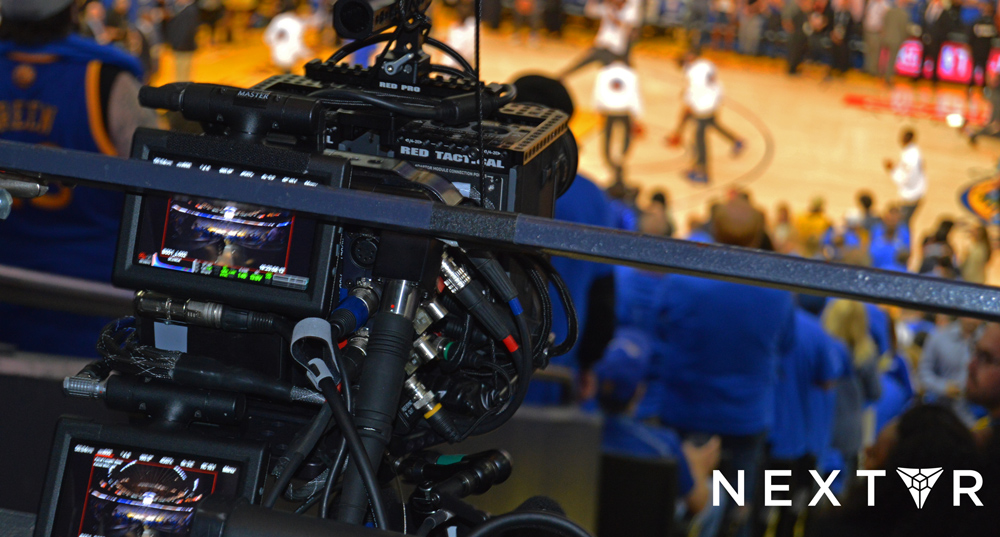
NextVR's full broadcasting schedule from 2016 is here on UploadVR for you to compare, with our report at the time noting that a free trial was offered ahead of the full broadcast schedule locked to NBA League Pass.

Here Is The NBA’s Full NextVR Live Broadcasting Schedule For This Season
NextVR has previously pulled in massive funding through big investment rounds, including $30 million and another 80 million, to continue live broadcasting in VR. Earlier this month we reported the startup took a major step forward, going into a full time stream schedule with the NBA. Now we have the
UploadVRCharles Singletary

Apple later acquired the "leading broadcaster of VR events" and the technology has been reborn as Apple Immersive, with the company investing heavily in broadcast rights and equipping sports venues with immersive camera systems that can offer better than a front row seat. In the case of "Spectrum Front Row" in 2026, Apple, the NBA, and Charter Communications require some authentication to view a live broadcast in headset.

"In Southern California, Hawaii, and parts of Nevada, Spectrum Internet customers and video subscribers of any provider with a package that includes Spectrum SportsNet can access live games, full-game replays, and highlights by downloading the new Spectrum SportsNet app for Apple Vision Pro and authenticating their active subscription. Users with a free NBA ID will also have access to live games, full-game replays, and highlights via the NBA app."

After-game replays should be available in markets where Apple Vision Pro is sold as early as 24 hours after each live game, with the first available on Sunday, January 11.

  •  

Acer Debuts Vivid Gaming Monitors At CES Plus A 240Hz Projector

Acer Debuts Vivid Gaming Monitors At CES Plus A 240Hz Projector Acer is pulling up to CES 2026 with a surprisingly versatile range of displays, including an impressive laser RGB projector that can pull double duty as a 4K HDR home cinema projector (with an impressive 106% of BT.2020 wide color gamut coverage) or a 1080p 240Hz gaming beast. The increasing trend of displays allowing you to prioritize resolution
  •  

Dell Brings Back XPS Laptops: We’re Hands-On With The CES Comeback

Dell Brings Back XPS Laptops: We’re Hands-On With The CES Comeback After a yearlong hiatus, Dell's XPS brand is back! Dell announced the return of the iconic brand at the Consumer Electronic Show (CES), the same event where it was officially retired last year in an effort to streamline Dell's various product categories. We had a chance to go hands-on with new XPS laptops coming out this year (more on that
  •  

HP Unifies HyperX And Omen For New High‑End Gaming Laptops And Monitors

HP Unifies HyperX And Omen For New High‑End Gaming Laptops And Monitors HP acquired HyperX from Kingston five years ago in a bid to capitalize on the booming PC gaming and peripherals market, and for the first time since the acquisition, its fusing HyperX with its Omen gaming for a new line of performance laptops and monitors that made their official debut at the Consumer Electronics Show (CES) in Las Vegas. The
  •  

NVIDIA Boosts DGX Spark Performance And Pushes New Developer Tools at CES 2026

NVIDIA Boosts DGX Spark Performance And Pushes New Developer Tools at CES 2026 If you haven't heard of NVIDIA's DGX Spark AI developer workstation, maybe you've been living under a rock or on a deserted island with nothing but a volleyball to keep you company. It's one of the multitude of AI-focused products of 2025, something that NVIDIA announced at CES last year as Project DIGITS, and it combines NVIDIA's Grace Arm64
  •  

Acer Gives Nitro And Predator Gaming Laptops More Bite With Intel Panther Lake

Acer Gives Nitro And Predator Gaming Laptops More Bite With Intel Panther Lake Acer is taking advantage of Intel's new Panther Lake processor lineup by injecting the chip maker's latest silicon into refreshed Predator Helios and Nitro V gaming laptops. Paired with NVIDIA's mobile GeForce RTX 50 series discrete GPUs based on Blackwell, these retooled laptops offers some potent specs for high-end gaming on the game. Acer
  •  

CES 2026: HP unites OMEN and HyperX gaming brands for future gaming products

It’s been several years since HP acquired HyperX from Kingston. During that time, HP has operated its own gaming brand, OMEN, alongside HyperX. Now, the company is consolidating the two, with OMEN products rebranded under HyperX to unify its gaming portfolio across PCs, displays, peripherals, and software.

Leading the CES 2026 lineup is the HyperX OMEN MAX 16, which HP claims is the world’s most powerful gaming laptop with fully internal cooling. It supports up to 300W platform power, next-gen Intel Core Ultra 200HX and AMD Ryzen AI processors, and NVIDIA GeForce RTX 5090 Laptop GPU. The system features a redesigned Tempest Cooling Pro setup, a high-polling rate keyboard, and a 240Hz OLED display.

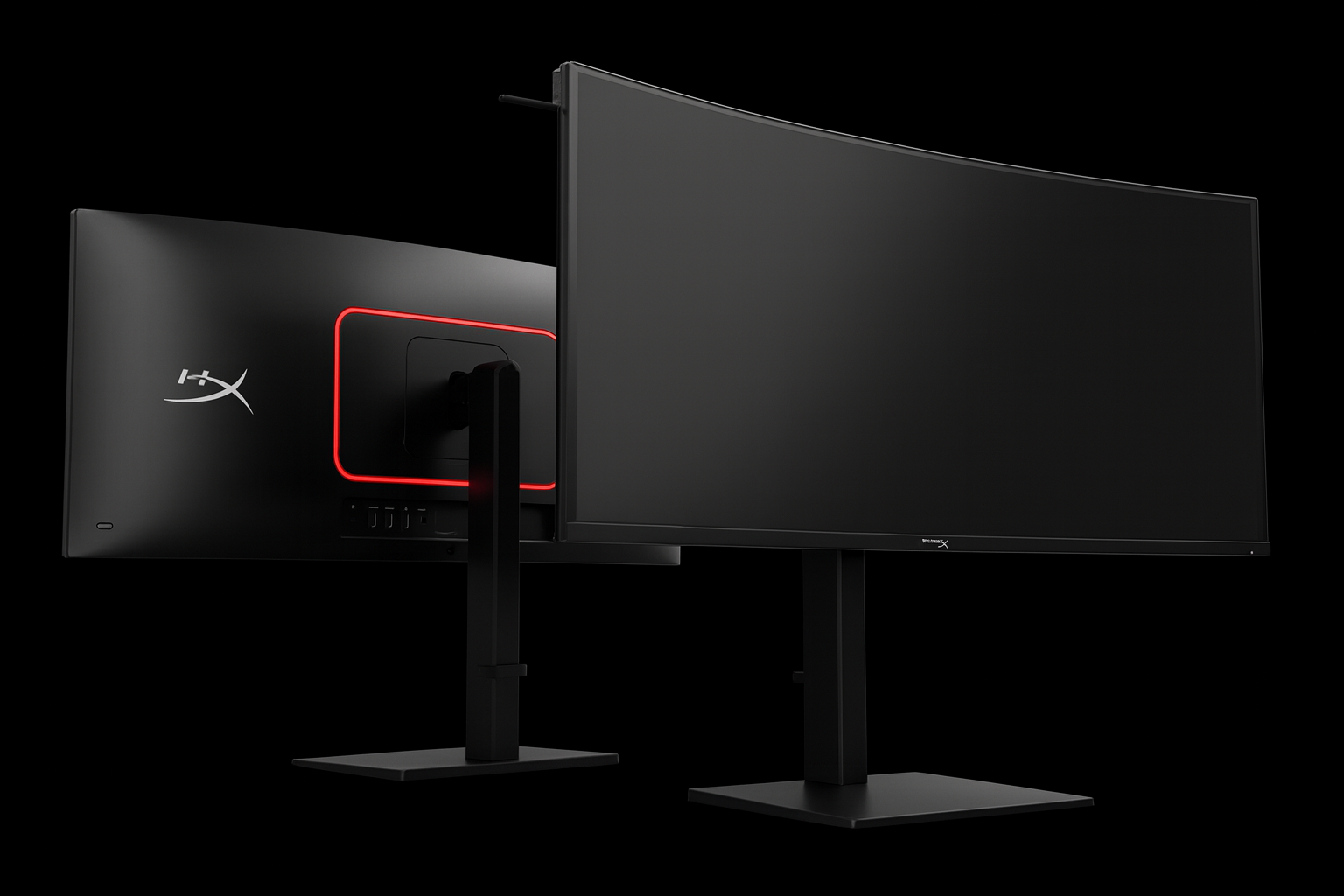
Also debuting is the HyperX OMEN OLED 34, a 34-inch QD-OLED monitor with 360Hz refresh rate, 0.03ms response time, and professional-grade color accuracy via HyperX ProLuma. It includes USB-C power delivery, a built-in KVM switch, and burn-in protection.

HP’s first Xbox-licensed arcade controller, the HyperX Clutch Tachi, features magnetic switches, customizable inputs, and support for 3D-printed mods. Finally, HP previewed a prototype EEG headset co-developed with Neurable, designed to interpret brain activity and help players improve focus and accuracy using AI and neurotechnology.

All products are expected to launch in Spring 2026, with pricing to be announced closer to availability.

KitGuru Says: Future HP gaming products will now carry HyperX OMEN branding, bringing the two sub-brands together, which should simplify things for consumers when shopping for new laptops or pre-built PCs. 

The post CES 2026: HP unites OMEN and HyperX gaming brands for future gaming products first appeared on KitGuru.
  •  

CES 2026: HP launches new OmniBook and OmniStudio PCs

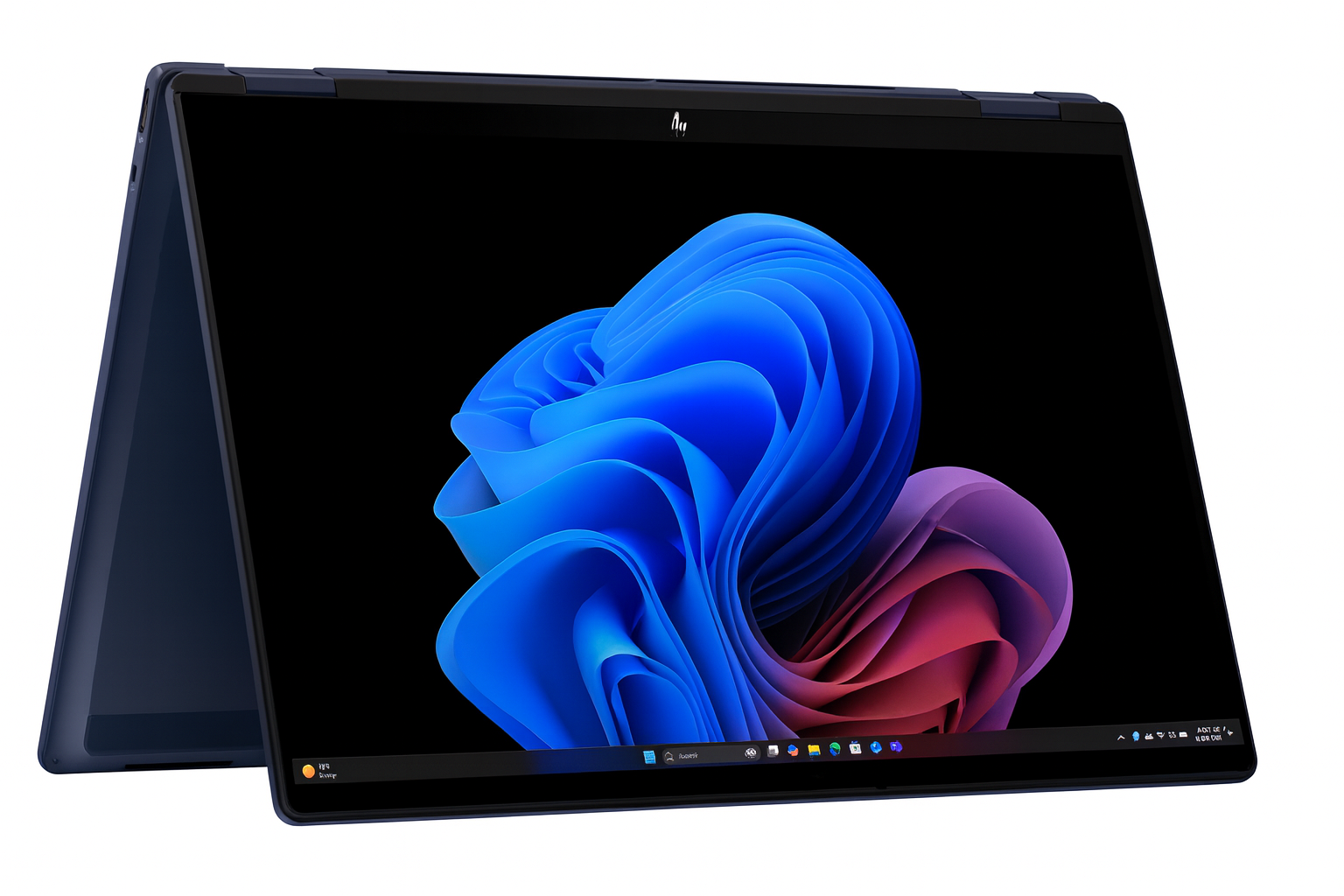
HP used CES 2026 to roll out a major refresh of its consumer PC portfolio, led by the OmniBook Ultra 14 — a flagship model the company claims is the world’s first consumer notebook offering up to 85 TOPS of NPU performance when configured with an HP‑exclusive Snapdragon X2 Elite variant.

The system also comes in Intel Core Ultra form for users prioritising GPU‑heavy AI workloads. Both versions include a 3K OLED display, a redesigned chassis that HP says is 52% lighter than the previous generation, and MIL‑STD‑810 durability testing. A new posture‑detection feature rounds out the updates.

The company is also pushing Snapdragon X2 and OLED displays across the wider OmniBook range, including a refreshed 16‑inch model in the OmniBook 3 Series that HP claims can reach up to 45 hours of battery life.

Beyond laptops, HP introduced the OmniStudio X 27, an all‑in‑one PC aimed at creators and home‑office users. It features what HP calls the world’s first Neo:LED AIO display with dual 100% colour coverage, plus next‑gen Intel Core Ultra processors and optional GeForce RTX 5050 graphics. Thunderbolt Share support allows users to control both a laptop and the AIO with a single keyboard and mouse, while Surface View enables easy sharing of sketches or notes during video calls.

HP is also overhauling its full OmniBook lineup across four series:

  • OmniBook X Series – Targeted at freelancers and power users, this line emphasises portability and premium design while offering next‑gen AMD, Intel, and Snapdragon options. These models are positioned as the most flexible in the range, balancing performance and mobility.
  • OmniBook 7 Series – Aimed at professionals who rely on video calls and hybrid‑work tools, these systems include Windows Studio Effects and Poly Studio‑tuned audio for clearer conferencing. They sit as HP’s mainstream productivity tier.
  • OmniBook 5 Series – Designed for families, students, and everyday users, the 5 Series brings OLED displays, slim aluminium builds, and responsive AI performance to mid‑range price points.
  • OmniBook 3 Series – The entry tier focuses on value while still supporting AI‑accelerated workloads, with a wide range of sizes and processor choices across AMD, Intel, and Qualcomm.

HP also updated its Chromebook Plus lineup, including new x360 14 and 14‑inch clamshell models with 2K displays and Google’s latest AI tools. Standard Chromebook models have also been refreshed with improved durability and better Android integration.

All new Windows 11 consumer PCs will ship with HP’s Digital Passport hub, plus two new software additions: Omni+ for cross‑platform password management and HP TV+ for free streaming content.

KitGuru Says: Are you planning on picking up a new laptop this year? Does CoPilot+ certification weigh into your purchase decision at all? 

The post CES 2026: HP launches new OmniBook and OmniStudio PCs first appeared on KitGuru.
  •  

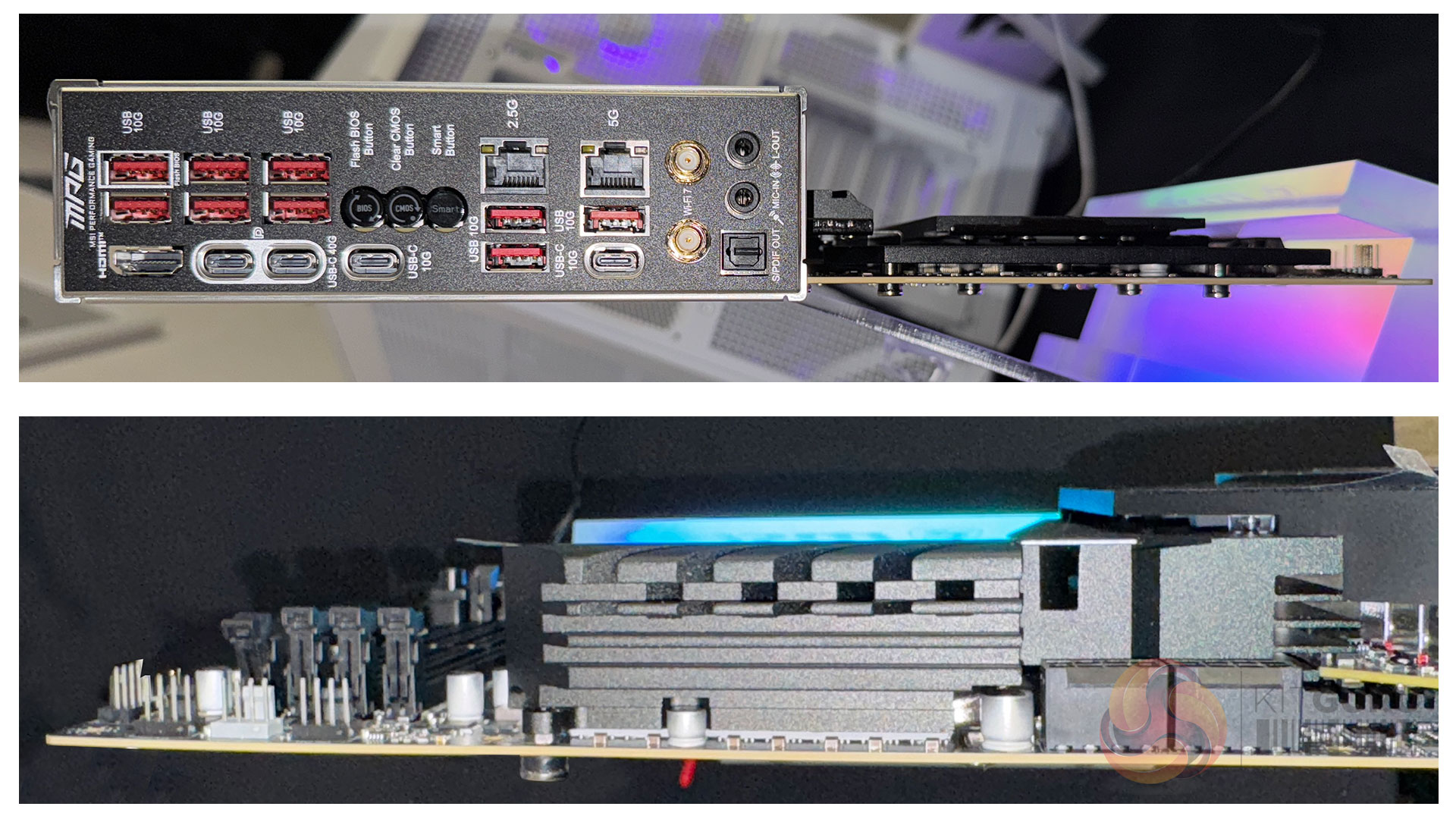
CES 2026: MSI unveils MEG system, AMD MAX motherboards and more

One of the clearest messages from our pre-CES briefing at MSI’s Taipei HQ, is that the company is no longer thinking solely in terms of isolated components. For 2026, the focus is on complete platforms, where motherboard, power delivery, cooling and chassis are designed and engineered as a single system. This is most evident in the MEG range, supported by the introduction of Safeguard+ at the PSU level and a substantially revised AMD MAX motherboard strategy built around X870E.

Rather than chasing peak benchmark numbers in isolation, MSI appears to be targeting stability under sustained load, predictable behaviour when pushed outside default limits and fewer failure points – as next-gen GPUs and CPUs continue to draw more power and operate closer to their electrical limits.

The MEG system: building around the extreme user
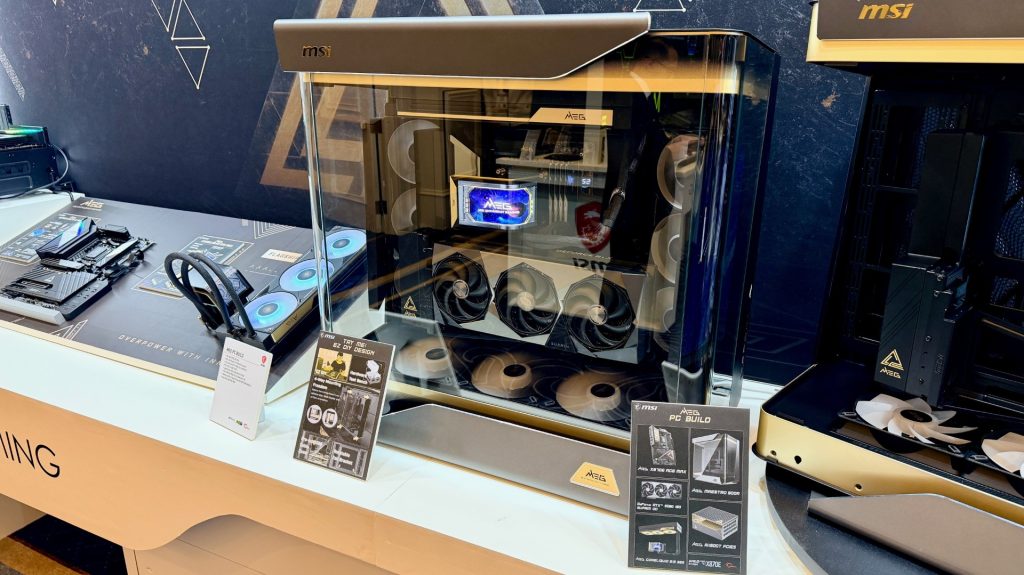
MEG, short for MSI Enthusiast Gaming, sits at the top of MSI’s desktop stack. What’s different with this generation is how tightly the individual MEG components are designed to work together, rather than simply sharing branding.

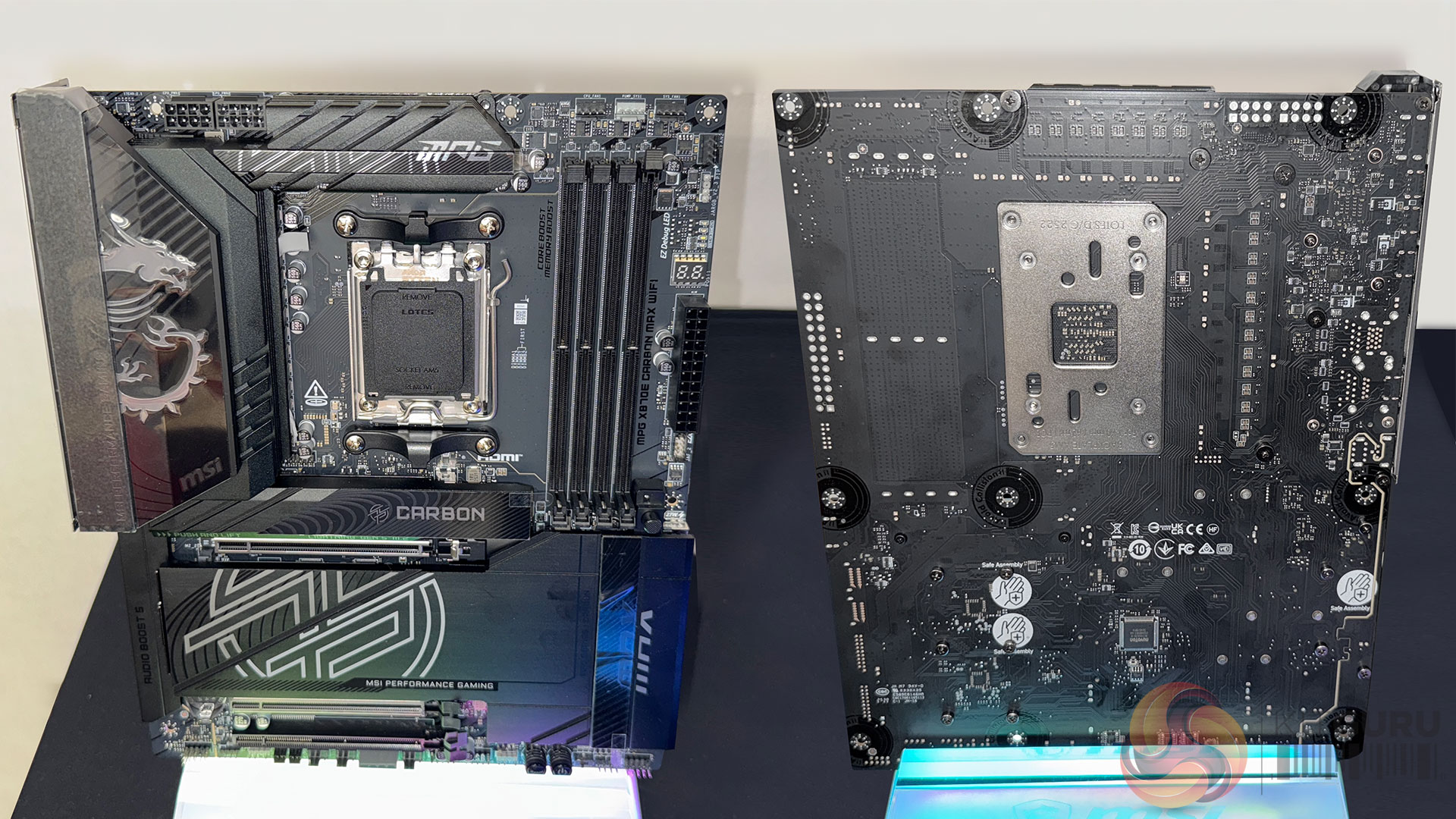
At the centre of the MEG system is the X870E ACE MAX motherboard. It uses an 18+2+1 phase power design with 110A smart power stages, mounted on a high-layer, server-grade PCB with 2oz copper. This is not unusual in isolation, but the way MSI builds around it feels more deliberate than before.

Power delivery and overclocking control
The defining feature across MAX boards is the built-in OC Engine, which decouples base clock control from the rest of the system. Instead of raising BCLK and dragging memory, PCIe and NVMe controllers out of specification, the OC Engine allows fine-grained CPU base clock adjustment while keeping other subsystems within tolerance.

For enthusiasts, the benefit should be more than just theoretical. It looks to enable measurable gains on modern Ryzen CPUs without destabilising storage or I/O (which has traditionally been the limiting factor for BCLK-based tuning). MSI also supports this with the Direct OC Jumper, allowing real-time base clock adjustment from within the operating system, rather than repeated BIOS reboots.

This is paired with a 64MB BIOS ROM across MAX boards, doubling previous capacity. In practice, this allows MSI to retain full CPU support tables, richer firmware features and a less constrained UI, while maintaining forward compatibility as future Ryzen CPUs are introduced.

Thermal design as part of the platform

Thermal management is another area where MSI is treating the motherboard as part of a wider system rather than a standalone product. The Frozr Guard cooling architecture combines wavy-fin heatsinks, cross heat-pipes, high-conductivity thermal pads and full-length metal backplates.

Importantly, this is not just about MOSFET cooling. PCIe 5.0 storage controllers can generate significant heat under sustained transfer loads, and MSI treats M.2 thermals as a first-class concern, with double-sided shield designs and tool-free installation that encourages users to use them correctly.

The cooling strategy extends beyond passive hardware. Frozr AI Cooling and the Cooling Wizard integrate fan curves, thermal zones and workload behaviour – allowing the board to respond dynamically rather than relying on static profiles.

MEG beyond the motherboard: chassis, cooling and power
MSI’s intent to treat MEG as a system becomes clearer when looking at the surrounding components.

MEG Maestro 900R chassis
The Maestro 900R is MSI’s largest and most flexible case to date. It supports E-ATX motherboards, graphics cards up to 400mm long and multiple radiator configurations, with capacity for up to four radiators or 14 fans.

The defining feature is the rotatable and removable motherboard tray. This allows traditional, inverted or showcase layouts, and even converts the chassis into a standalone test bench. While this will appeal to modders and extreme builders, it also reflects a more practical consideration: Airflow optimisation around increasingly large GPUs.

Vertical GPU mounting, dual-GPU configurations and complex liquid loops should all be accommodated without forcing compromises elsewhere in the system.

MEG CoreLiquid E15 360
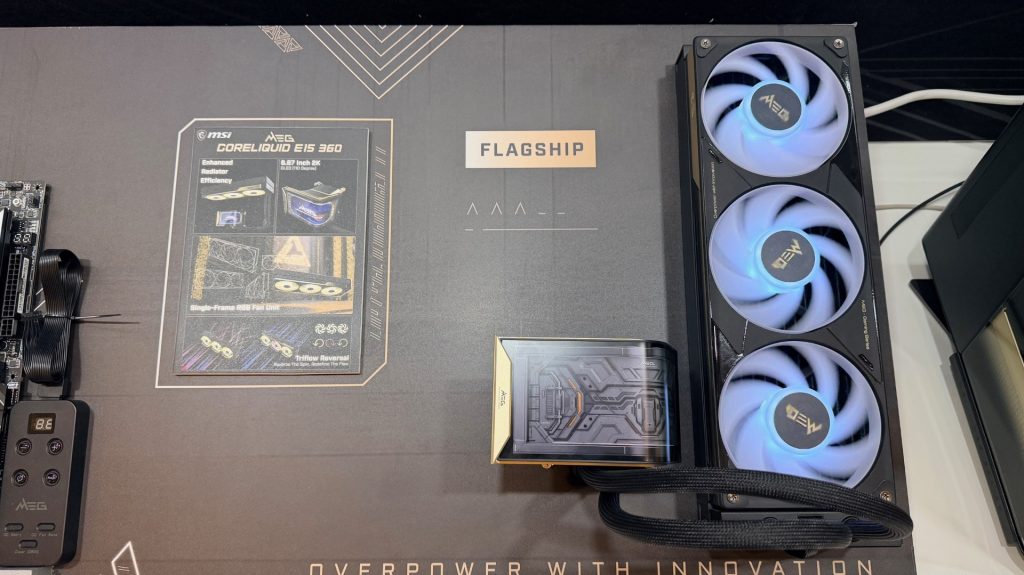
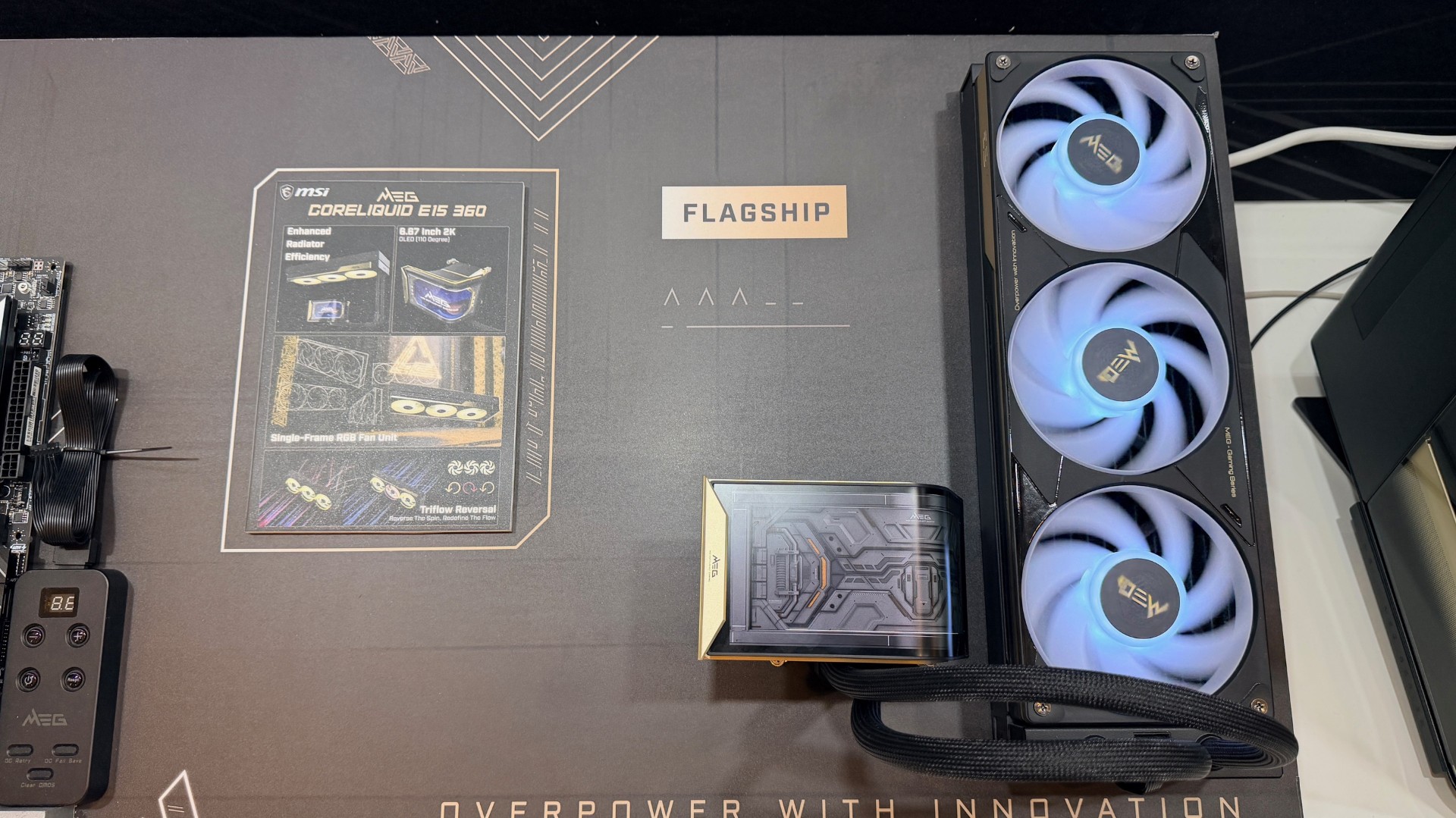
Cooling is handled at the top end by the MEG CoreLiquid E15 360. Beyond the obvious headline feature (which is a curved 6.67-inch OLED display with 2K resolution), the more interesting detail is the fan and cabling architecture.

The three radiator fans use alternating rotation directions to reduce turbulence and improve airflow consistency. All power, control and RGB signalling is routed through a single JAF_2 connector, significantly reducing cable clutter and potential installation errors.

The OLED display is configurable for system telemetry or custom visuals, but it also reinforces MSI’s broader move towards integrated system monitoring rather than relying on third-party tools.

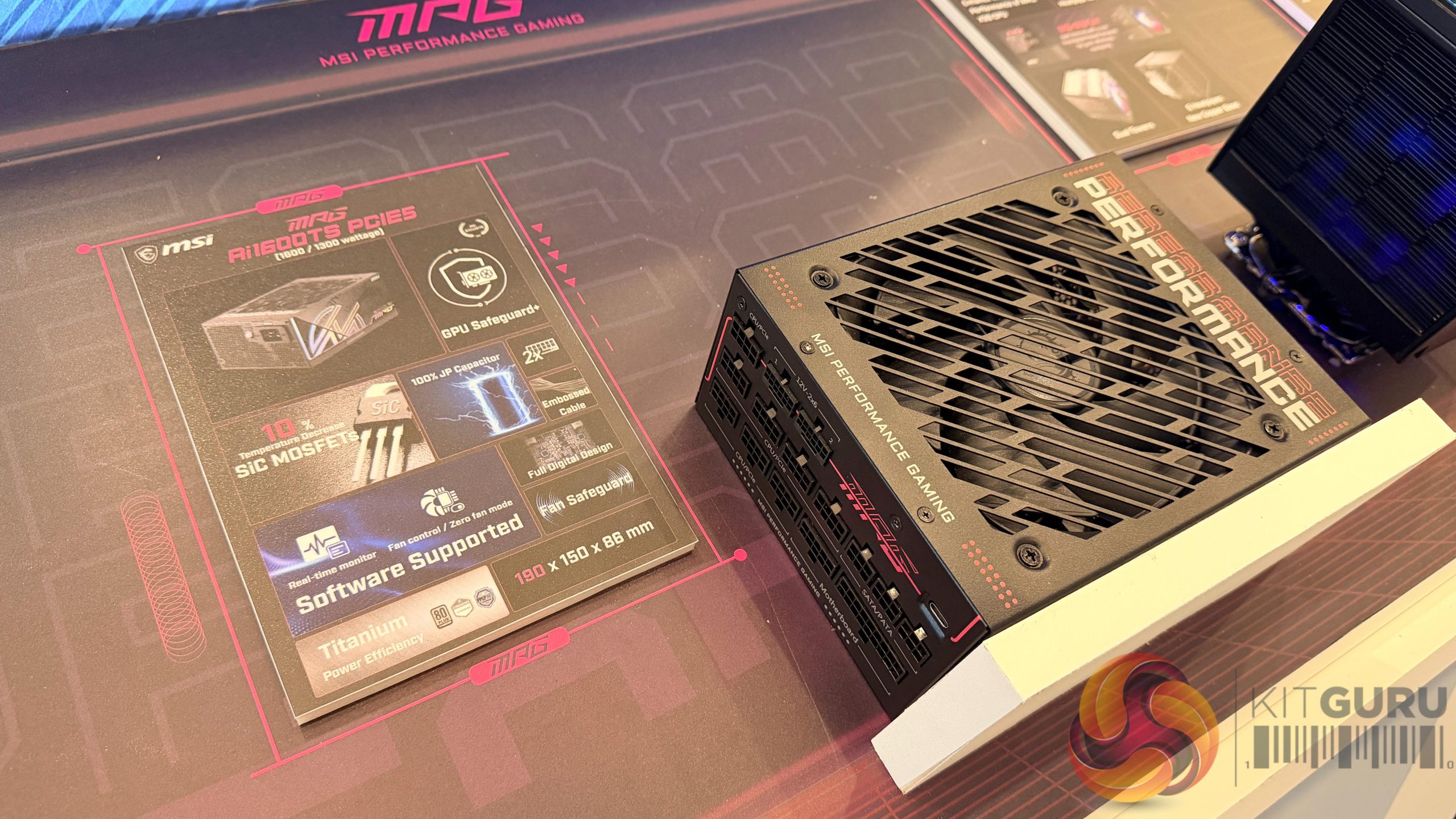
MEG Ai1600T PCIE5 power supply
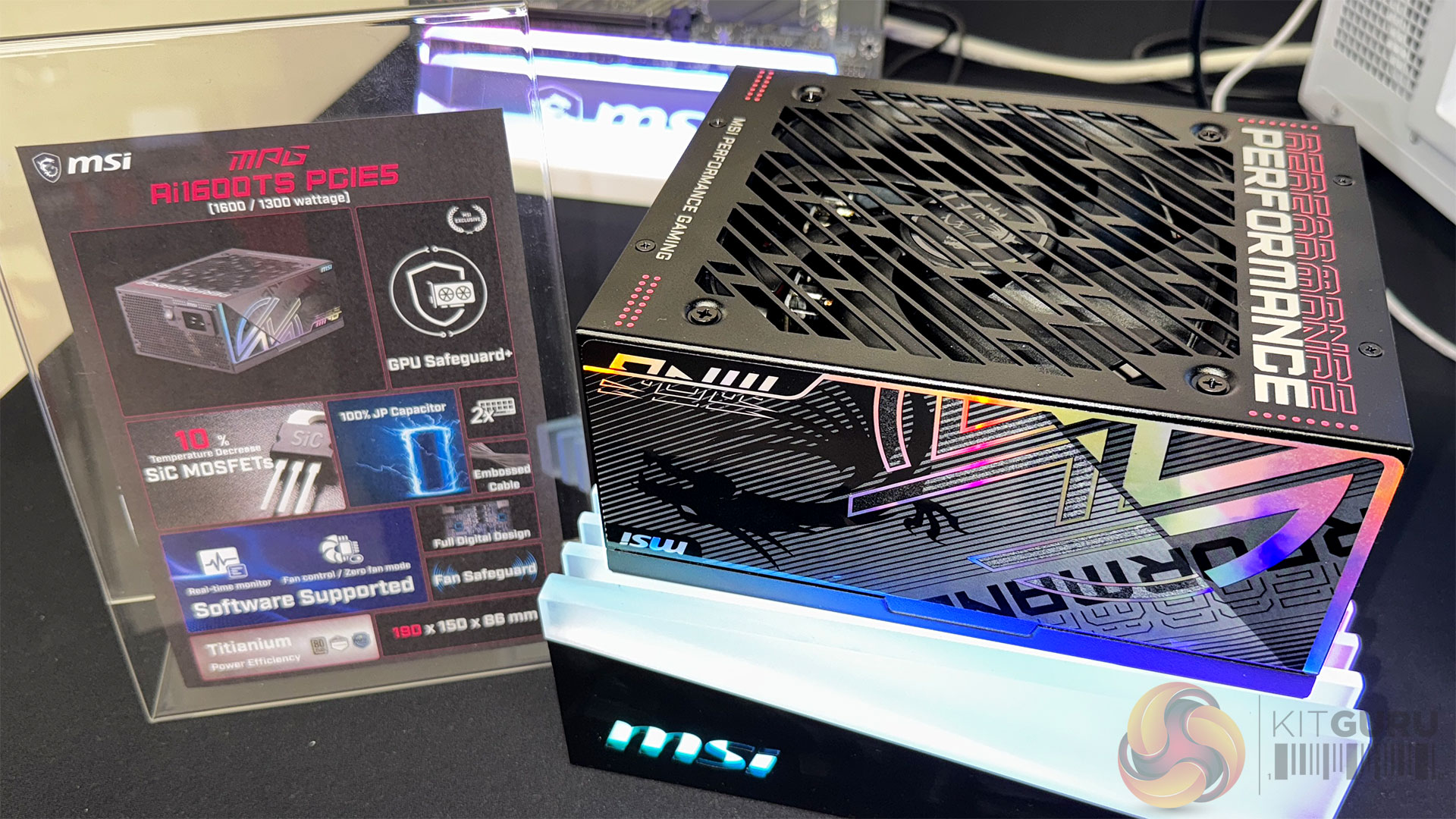
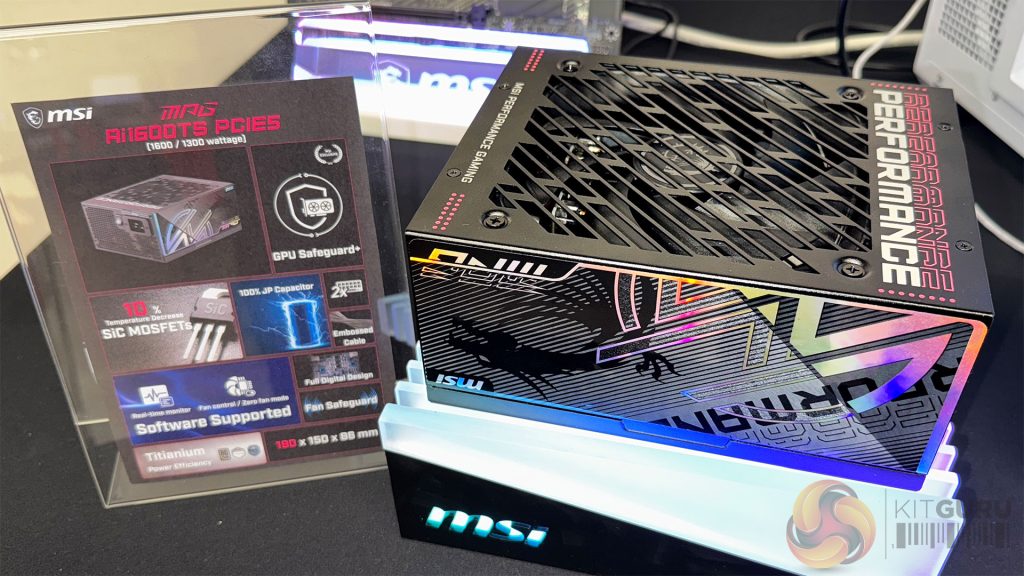
At the base of the system sits the MEG Ai1600T PCIE5 PSU. Rated for up to 1,600W with 80 Plus Titanium efficiency, it uses a fully digital design with SiC MOSFETs, reducing operating temperatures by around 10 percent compared to conventional silicon solutions.

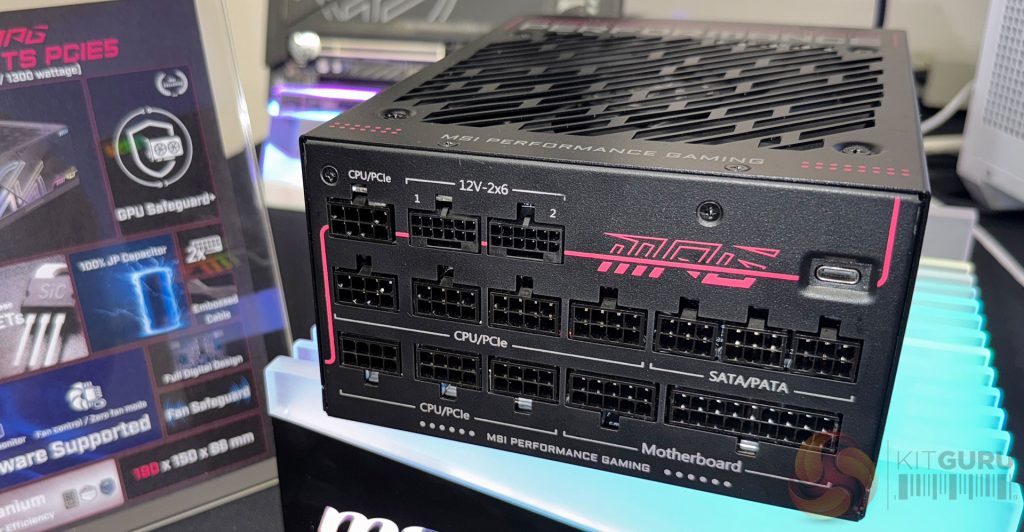
It provides dual 12V-2×6 connectors for flagship GPUs, which is increasingly relevant as single-card power budgets continue to climb. However, raw capacity is not the most important story here. That comes with Safeguard+ that is available on MPG Ai1600TS / Ai1300TS PCIE5, but not on the MEG Ai1600T PCIE5.
Safeguard+: Looking to address a real-world failure point
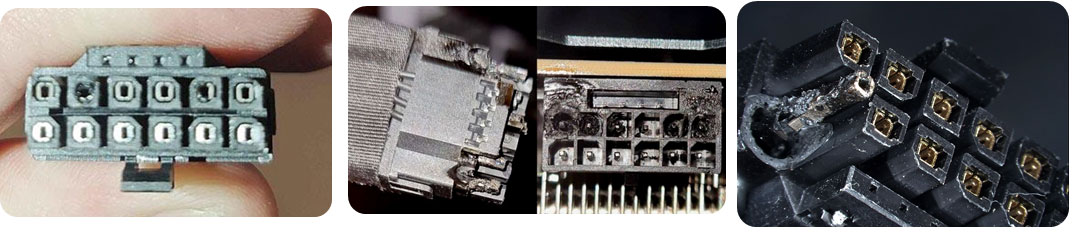
The move to the 12V-2×6 connector has solved some problems and created others. While it simplifies cabling and supports higher power delivery, it has also exposed systems to failures caused by poor seating, uneven current distribution and sudden overcurrent events. Safeguard+ is MSI’s attempt to deal with this ‘at the PSU level’, rather than leaving it to the GPU or the user.
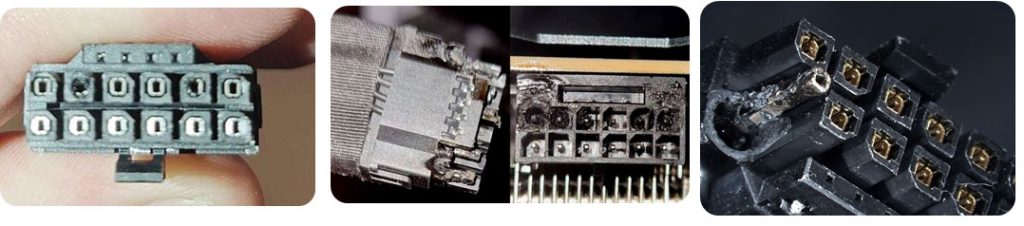
According to MSI, there continue to be power coupling issues across the industry – when connecting major-draw graphic cards and power supplies. They were careful to point out that if you only connect your GPU once, then it's likely to be fine – but if you (re)connect on a regular basis – then there is potential for problems.
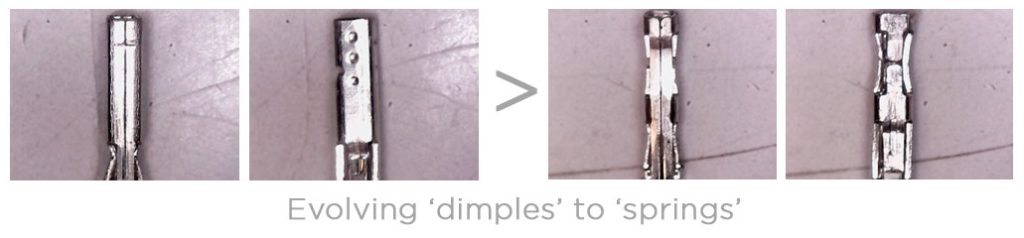
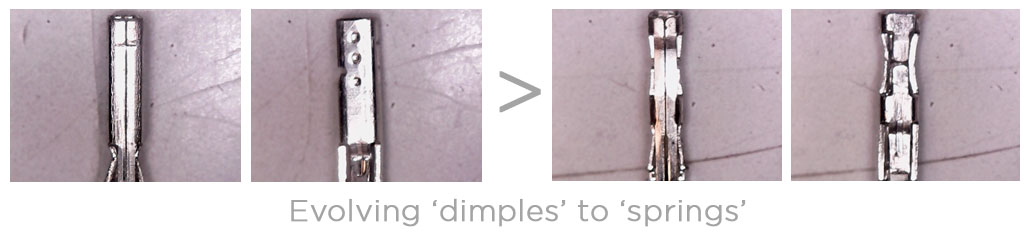
By changing connection mechanisms and other improvements, MSI believes that it can make high-wattage connections much safer. But the immovation doesn't stop with the physical PSUs themselves. Enter Safeguard+.

How Safeguard+ works
Safeguard+ uses an onboard microcontroller to monitor current across individual pins on the 12V-2×6 connector in real time. If it detects current imbalance or an instant overcurrent condition, the system moves through a defined protection sequence.

First, the user is alerted via a physical buzzer and an on-screen notification through MSI Center. If the issue is not resolved, the system disables video output while continuing to sound the alert, forcing user intervention before damage can occur.

This is not a soft warning system. It is designed to interrupt operation before heat or electrical stress causes permanent damage to the PSU, GPU or connector itself. We question whether an audio alarm is the best way forward, but at least it’s hard to ignore.

Software integration and logging
Through MSI Center, users can monitor real-time current delivery, PSU efficiency, temperatures and fan behaviour. Logs can be reviewed over time, making it easier to diagnose intermittent issues or confirm that a system is operating as expected under load.

Safeguard+ is implemented differently depending on PSU tier. MPG Ai1600TS and Ai1300TS models support dual 12V-2×6 monitoring with full software integration, while MAG-series units support single-connector protection with hardware alerts only.

Fan Safeguard
Alongside GPU-focused protection, MSI has implemented Fan Safeguard across new MPG and MAG PSUs. If the PSU fan fails to follow its expected rotation profile, whether due to dust build-up or disconnection, the PSU shuts down to prevent overheating. This is a simple feature, but it addresses a common long-term failure mode that is often ignored until damage has already occurred.

MAX series motherboards for AMD Ryzen: preparing for what comes next
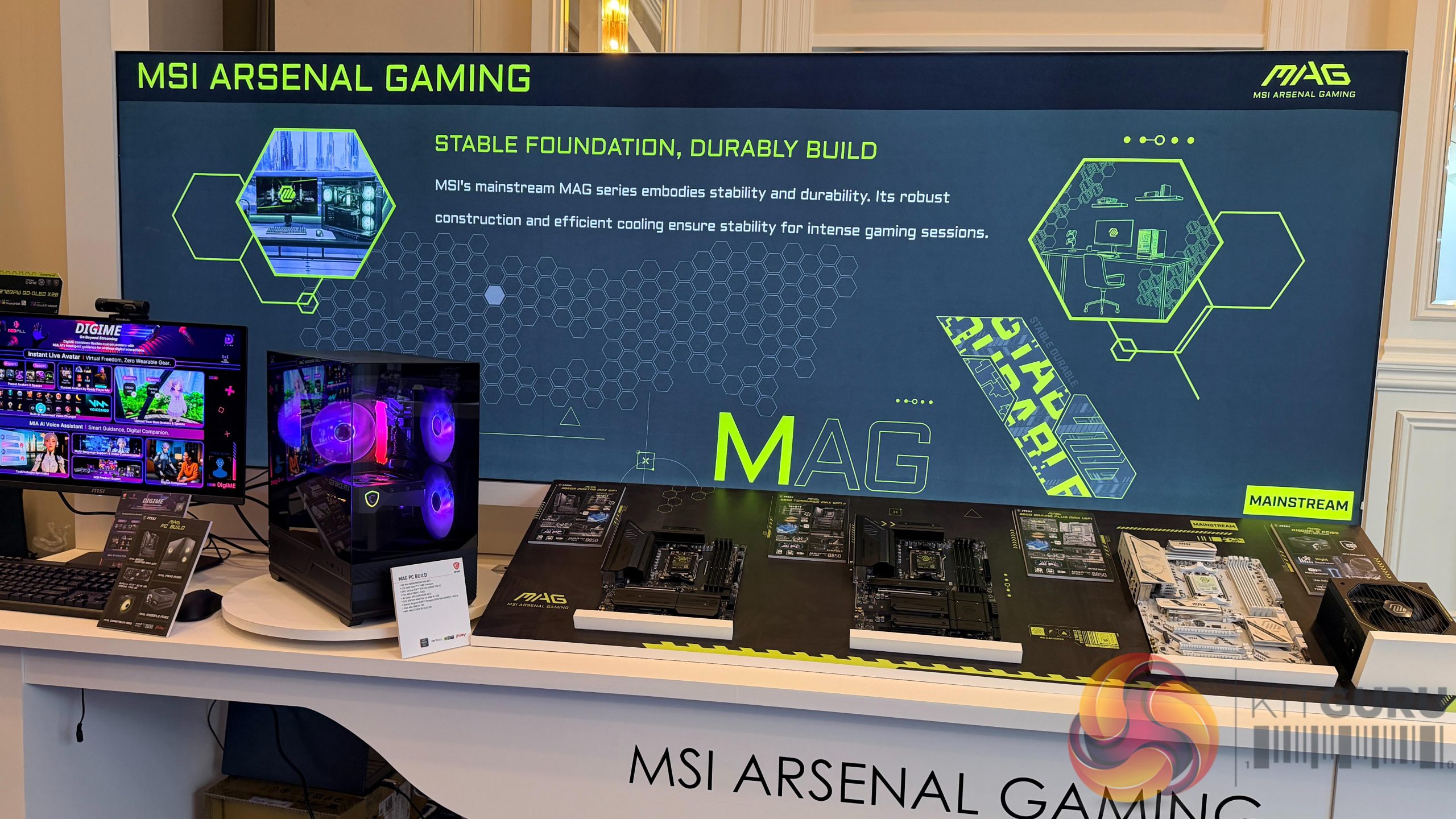
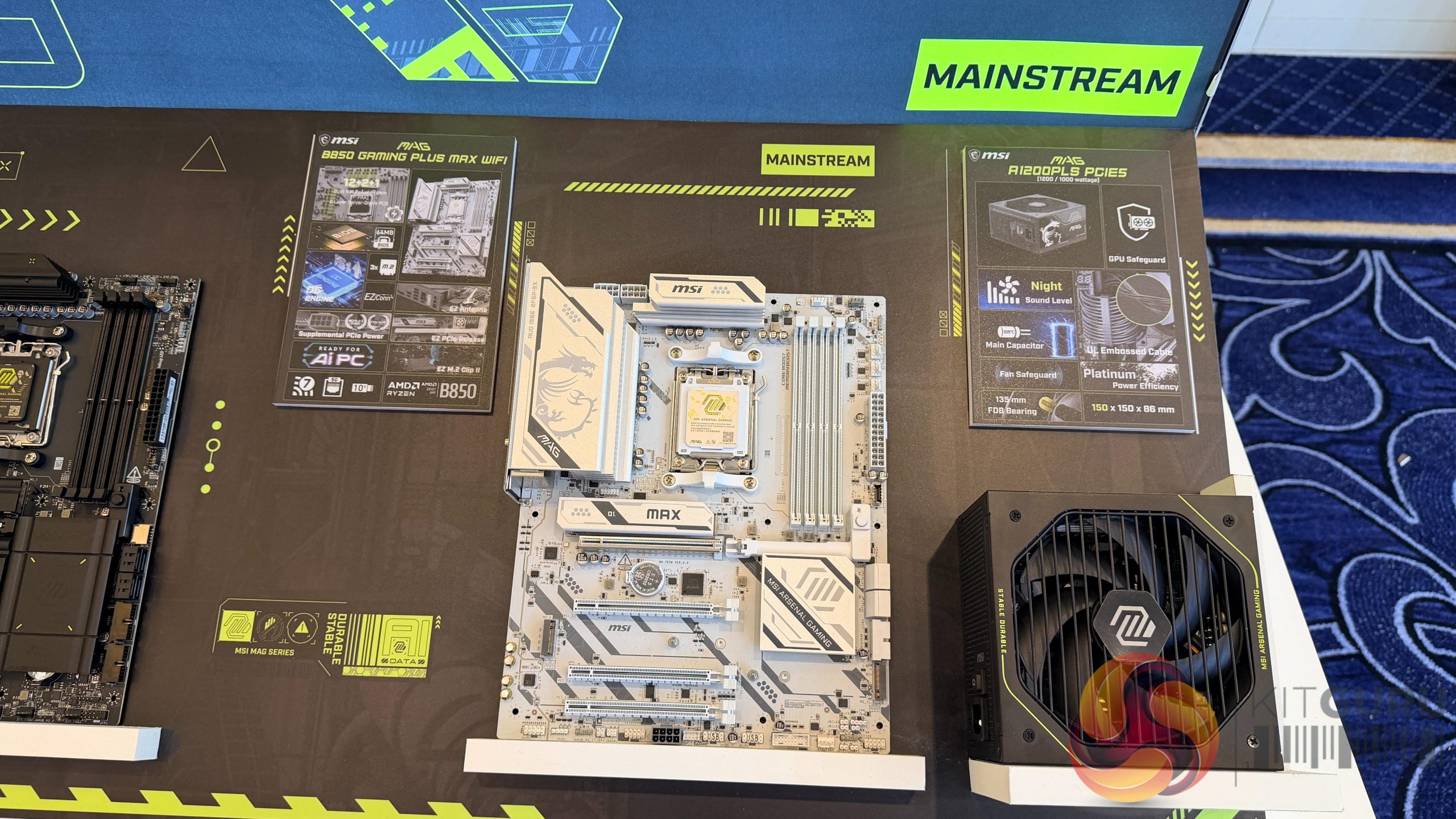
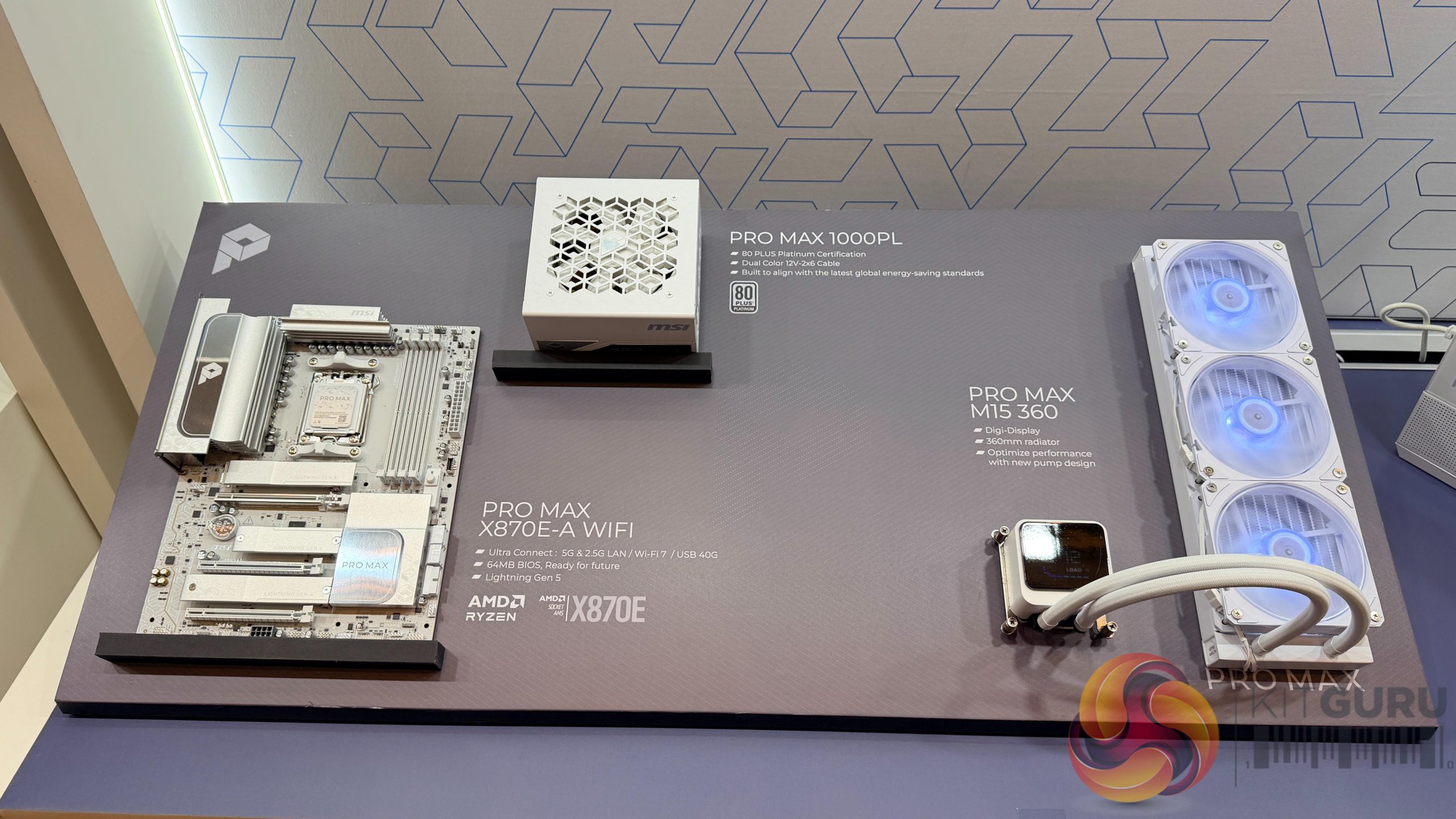
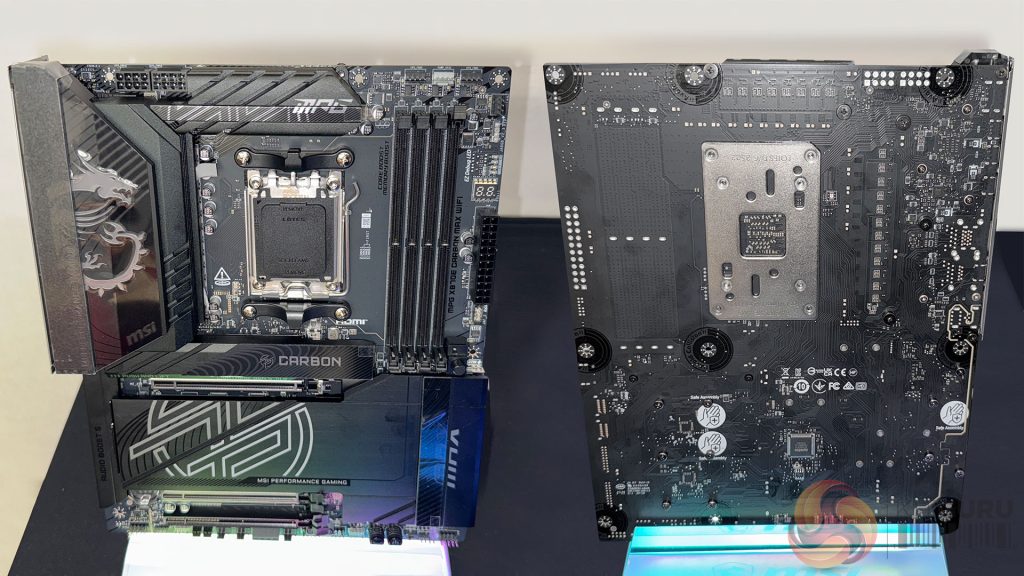
The third pillar of MSI’s strategy is the MAX motherboard range, built around AMD’s X870E chipset. MAX is not a cosmetic refresh. It is a structural upgrade designed to extend platform relevance as CPU, memory and I/O demands increase. There will also be new B850 models on show at CES from MSI.
Power and memory headroom
MAX boards scale up to 24 power phases with 110A stages on flagship models, with memory support officially extending beyond DDR5-10000 on compatible kits. While not every user will reach these limits, the headroom matters for stability at more modest settings.

MSI has also paid attention to PCB design, using higher layer counts and server-grade materials on upper-tier boards. This improves signal integrity for both memory and PCIe 5.0 devices, which is increasingly important as data rates climb.

Lane allocation and PCIe 5.0
One of the quieter but more meaningful improvements is how MSI handles PCIe lane bifurcation. On MAX boards, the GPU x16 slot and dual PCIe 5.0 M.2 slots can operate independently, avoiding bandwidth sharing that can limit performance in real-world workloads.

On boards like the MEG X870E GODLIKE X Edition, MSI goes further, supporting up to five onboard M.2 drives plus additional Gen5 storage via the included Xpander-Z card.

Connectivity and I/O
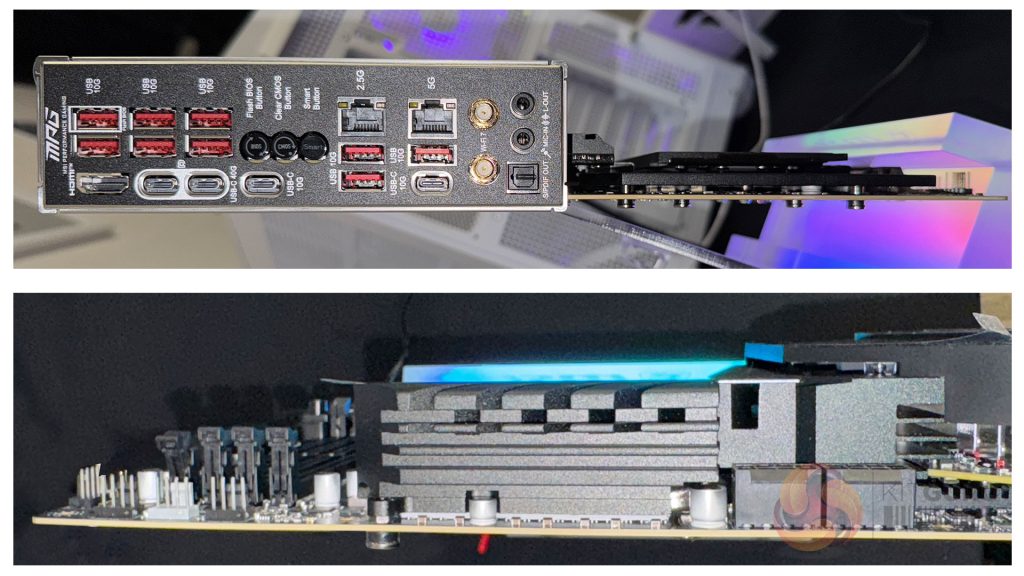
MAX boards standardise features that were previously reserved for select models. USB4, Wi-Fi 7 with full 320MHz channel support, and up to 10Gb Ethernet are now consistent across much of the range.

Front-panel USB-C charging is also enhanced, with up to 60W power delivery on higher-end boards, monitored in real time through the BIOS and software.
EZ DIY, taken seriously
MSI’s EZ DIY approach is not new, but on MAX boards it feels more comprehensive. Tool-free M.2 installation, PCIe slot release mechanisms, pre-installed I/O shields and consolidated cabling via EZ Conn and EZ Link designs all reduce friction during assembly and maintenance.

These are not headline features, but they matter when dealing with large, heavy GPUs and dense internal layouts.

In practical terms, we were told that a well configured system built on an MSI Max motherboard for Ryzen, could give you 5% to 15% additional in-game performance.

Across MEG, Safeguard+ and AMD MAX, MSI’s direction appears clear. The company is engineering for systems that are pushed hard, run for long periods and carry real financial risk when something goes wrong.

Rather than relying on user discipline or aftermarket solutions, MSI is building protection, monitoring and control into the platform itself. That does not make these systems simpler, but it does make them more predictable, which is arguably more valuable at this end of the market.

For enthusiasts, overclockers and professionals running high-end hardware at the edge of specification, that shift may prove more important than another incremental performance headline.

KitGuru says: In the DIY PC space, consumers are used to mixing up components from different vendors and throwing them all together in one system. As companies like MSI start to fill out their own ‘ecosystems' more, it becomes more tempting to buy more of your components from one place, as they've been designed to work well together. 

The post CES 2026: MSI unveils MEG system, AMD MAX motherboards and more first appeared on KitGuru.
  •  

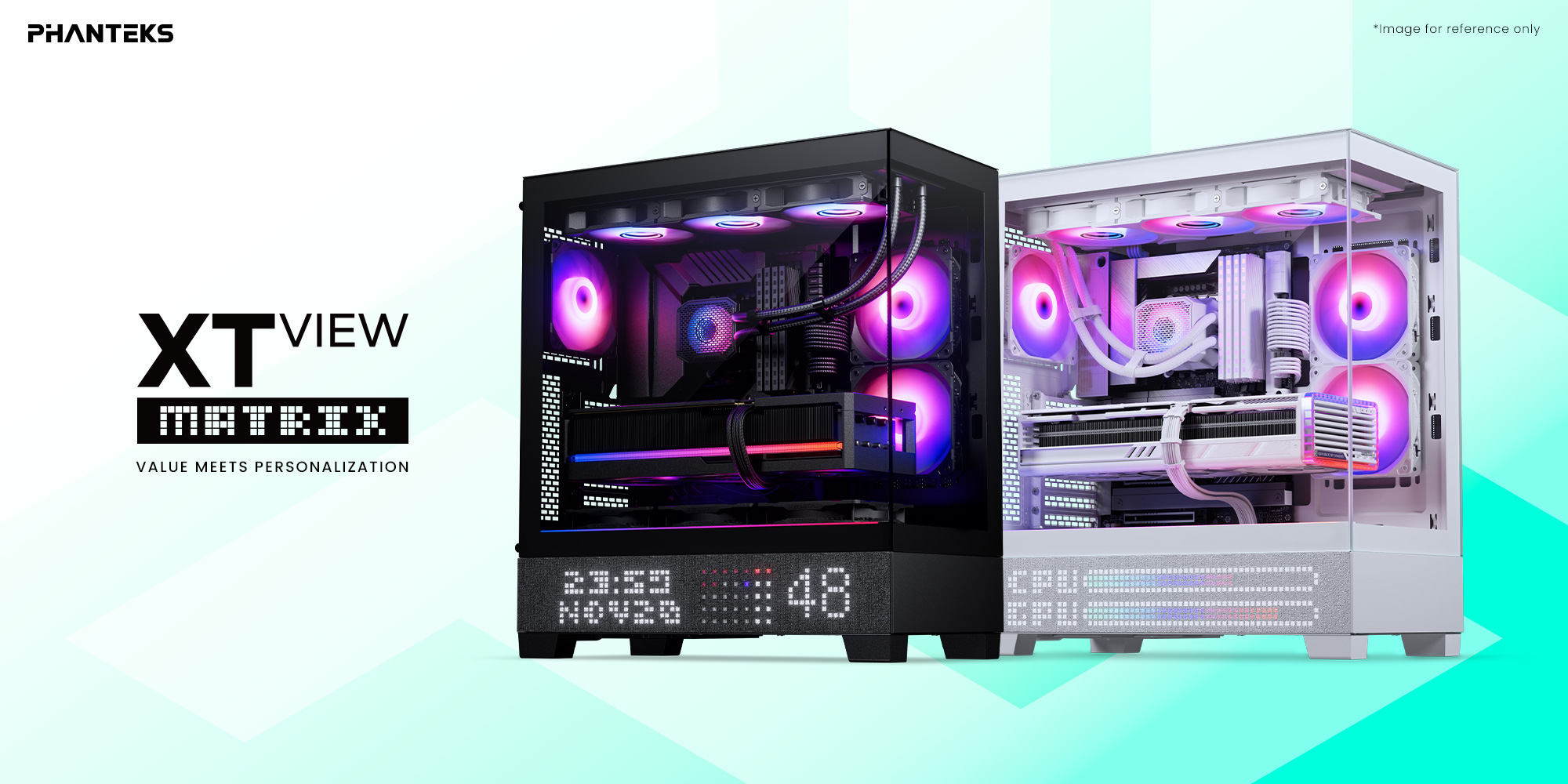
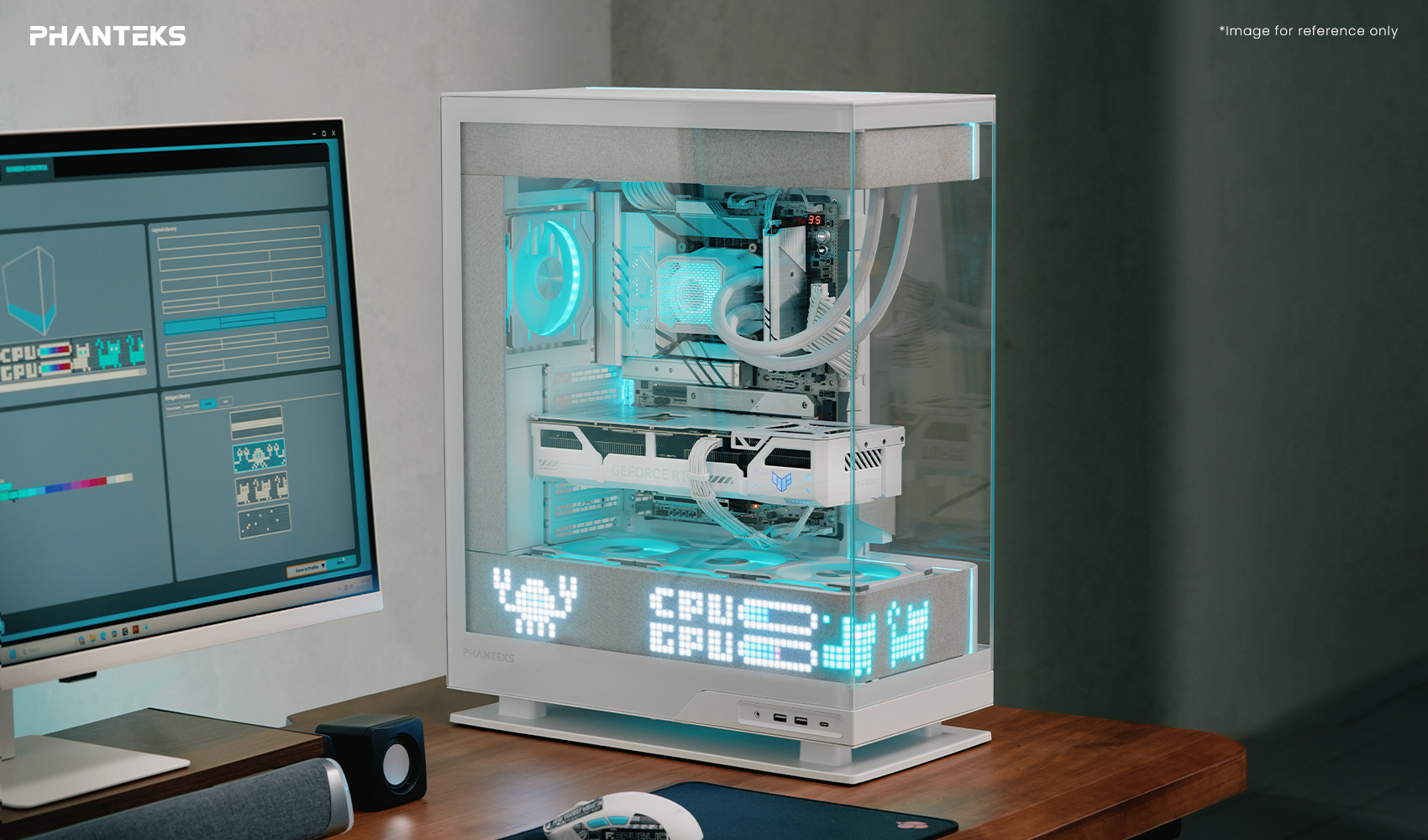
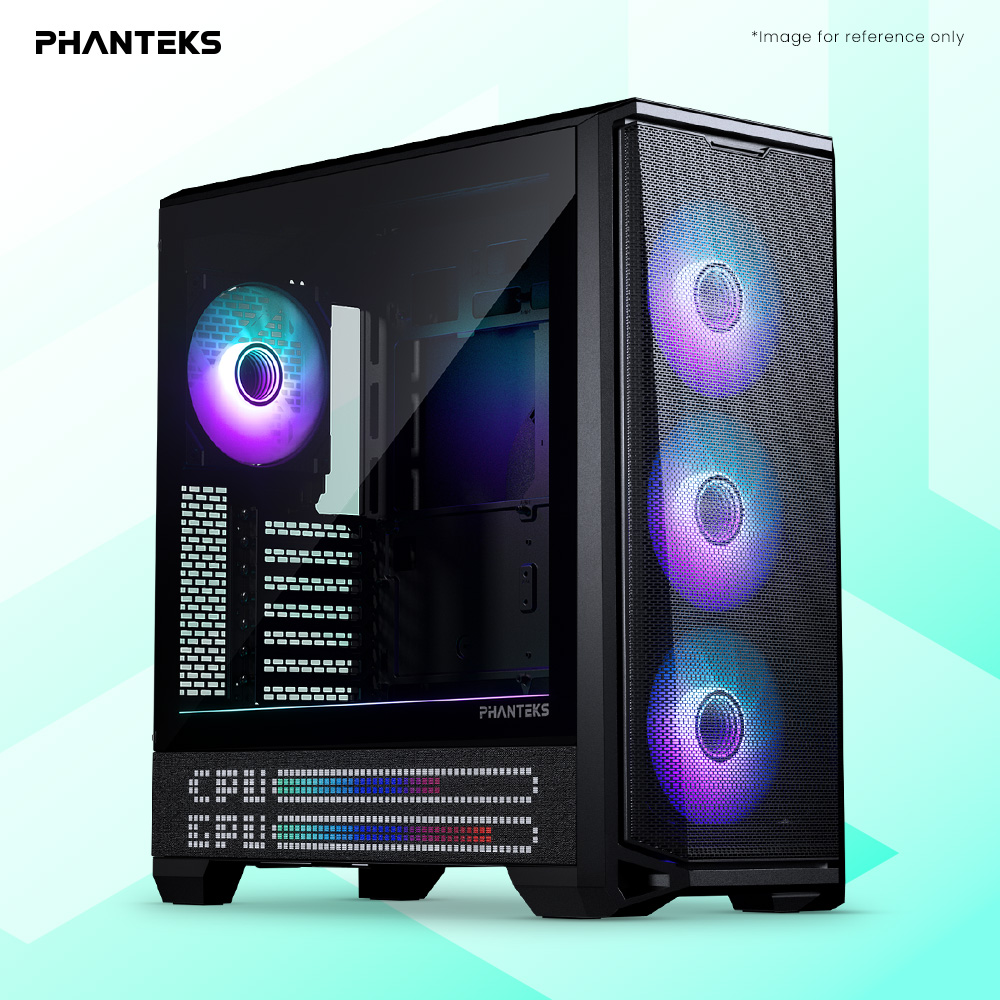
CES 2026: Phanteks debuts new Evolv and XT View Matrix cases

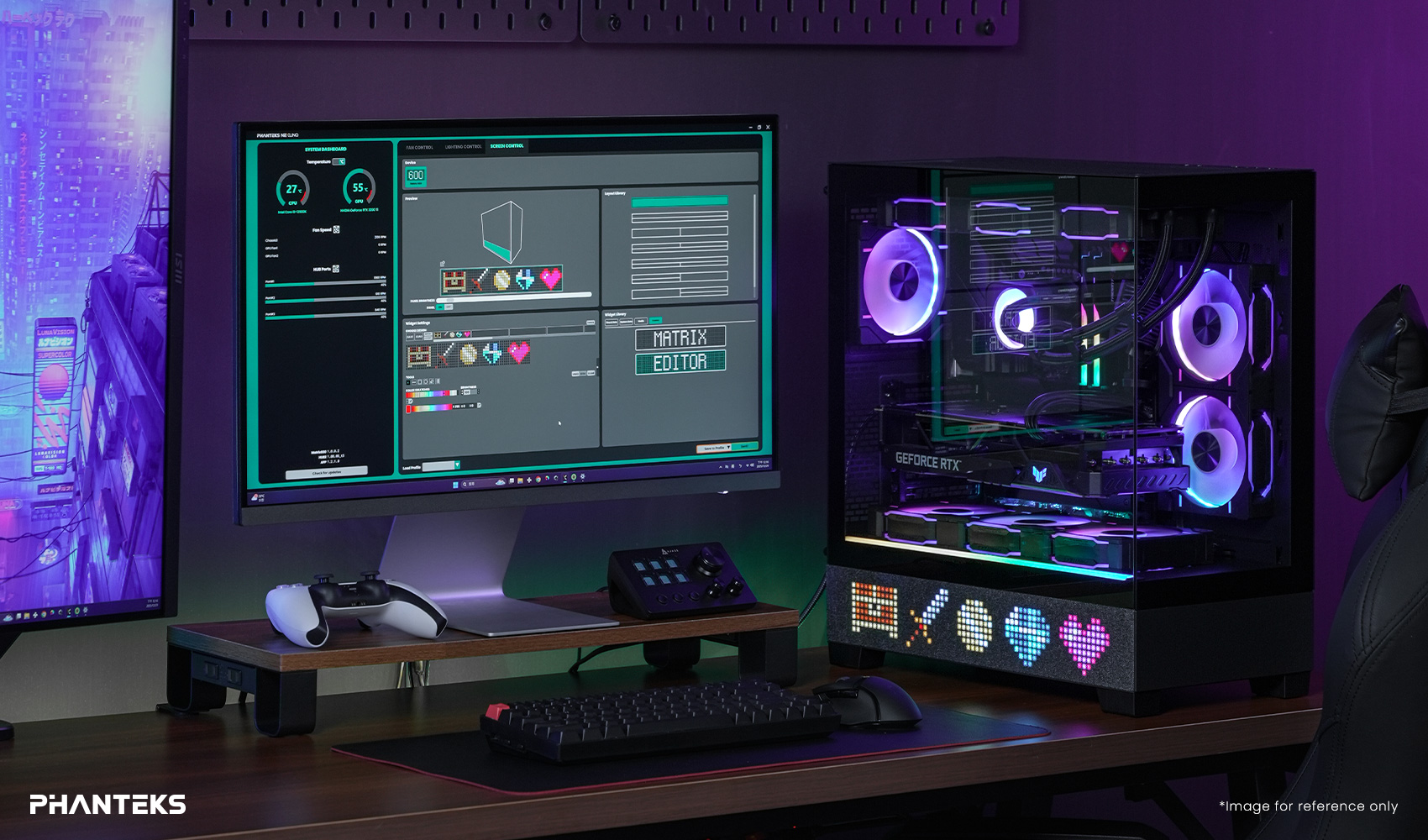
Phanteks has several new products to show off at CES this week, including new Evolv and XT View Matrix PC cases, and upgrade kits for those looking to add an LED Matrix display to their current Phanteks chassis. Here, we break it all down, along with pricing and launch dates. 

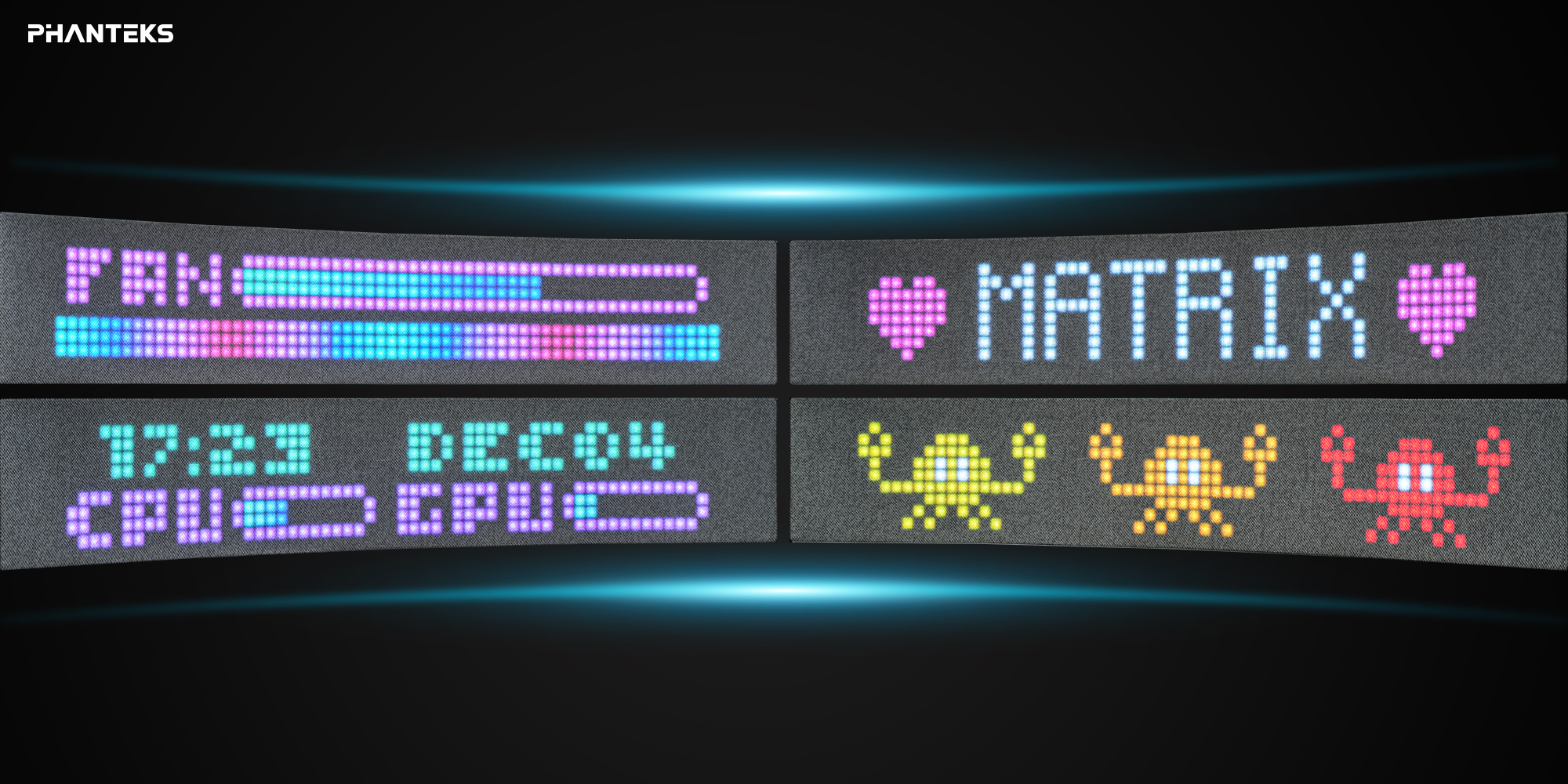
The flagship Evolv X2 Matrix features a 900‑LED display behind a soft fabric and glass front panel, offering ambient illumination and customizable visuals. It includes vertical airflow, support for rear‑connector ATX boards, and integrated D‑RGB accents.
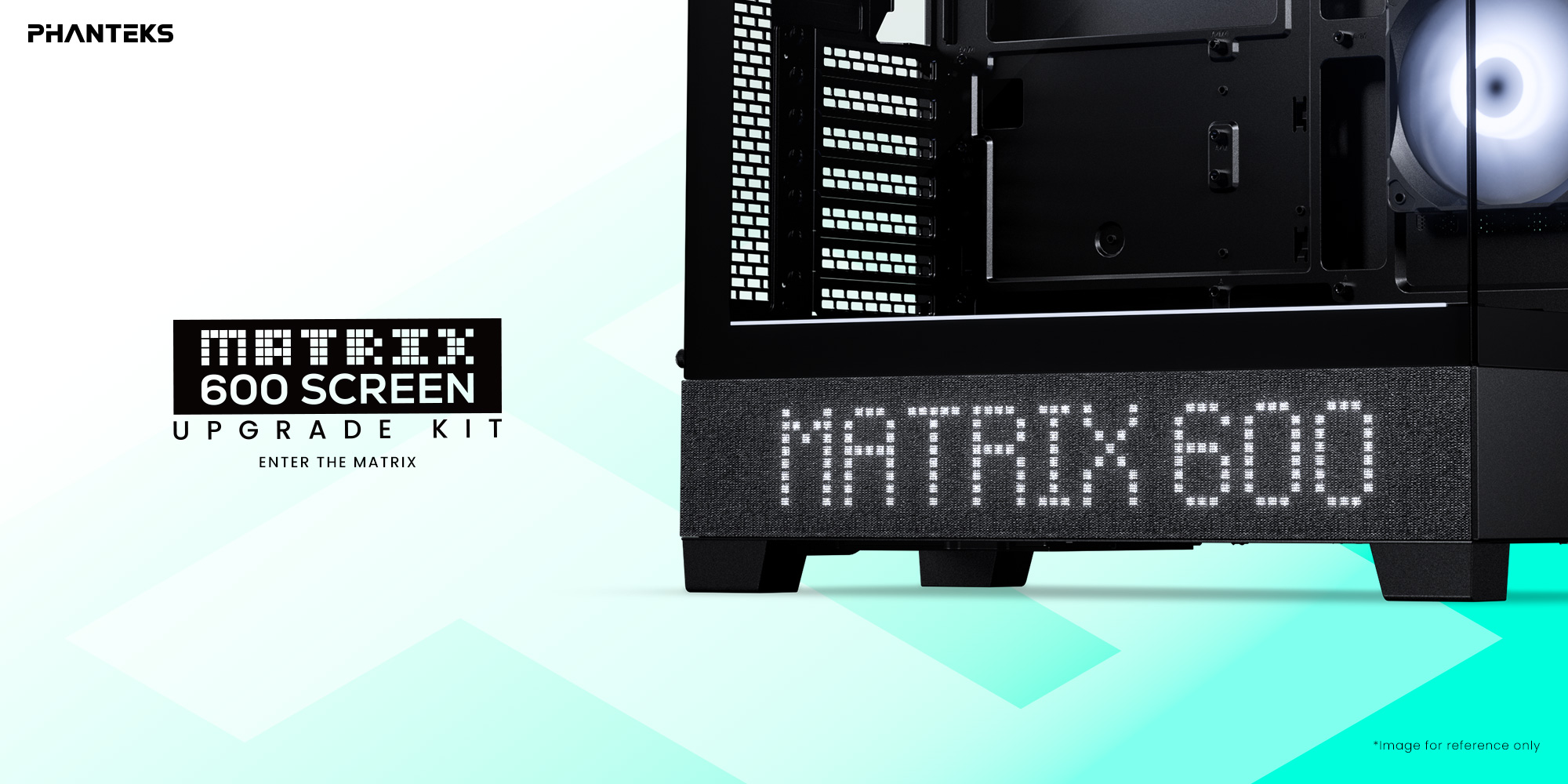
The XT View Matrix brings similar functionality to a mid‑range chassis, with a 600‑LED side panel display, support for large GPUs, nine fan positions, and three included D‑RGB fans. For existing builds, the Matrix‑600 Upgrade Kit adds display functionality to compatible cases like the XT View and G400A. It includes a 600‑LED array behind UV‑resistant fabric and supports full customization via Nexlinq.
All Matrix products are available starting January 5, 2026. Launch pricing includes:

  • Evolv X2 Matrix: $199.99 / €199.90 / £179.90
  • XT View Matrix: $119.99 / €119.90 / £104.90
  • Matrix‑600 Upgrade Kit: $49.99 / €49.90 / £43.90

A limited launch promotion includes a free Nexlinq Hub with Evolv X2 Matrix purchases, redeemable via Phanteks or authorised retailers.

KitGuru Says: Are you planning a new PC build this year? Will you be opting for a new Phanteks case for it? 

The post CES 2026: Phanteks debuts new Evolv and XT View Matrix cases first appeared on KitGuru.
  •  
❌