↩ Accueil

Vue lecture

Apple Immersive Lakers Schedule Reserves Live NBA Games For Local Viewers

Apple revealed six upcoming Lakers games broadcasting live in Apple Immersive format to local Vision Pro owners.

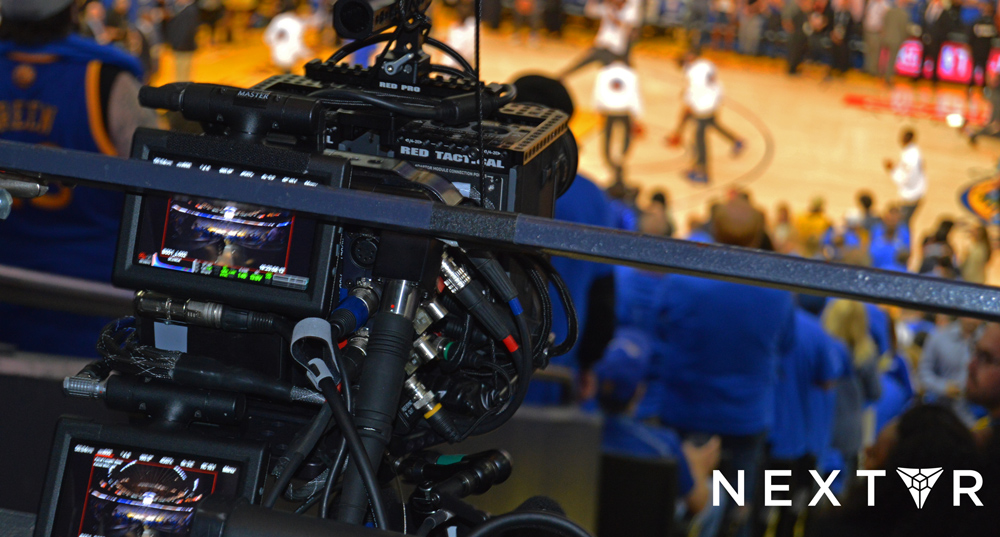
The live schedule broadcasts from several angles at the Crypto.com Arena with one game from Ball Arena. Some angles are closer than a courtside seat with wide field of view stereoscopic views including "the scorer’s table, the area beneath each basket, a high-and-wide view of the arena, the player tunnel, the broadcast booth, and a roaming courtside perspective for interviews and commentary." We'll be curious to see how Lakers fans feel watching these games live as they air simultaneously on TV for most others.

Here's the schedule:

  • Friday, January 9 – Milwaukee Bucks vs. Los Angeles Lakers – 7:30 p.m. PT
  • Thursday, February 5 – Philadelphia 76ers vs. Los Angeles Lakers – 7 p.m. PT
  • Friday, February 20 – Los Angeles Clippers vs. Los Angeles Lakers – 7 p.m. PT
  • Thursday, March 5 – Los Angeles Lakers at Denver Nuggets – 7 p.m. PT
  • Tuesday, March 10 – Minnesota Timberwolves vs. Los Angeles Lakers – 8 p.m. PT
  • Monday, March 30 – Washington Wizards vs. Los Angeles Lakers – 7 p.m. PT

NextVR's full broadcasting schedule from 2016 is here on UploadVR for you to compare, with our report at the time noting that a free trial was offered ahead of the full broadcast schedule locked to NBA League Pass.

Here Is The NBA’s Full NextVR Live Broadcasting Schedule For This Season
NextVR has previously pulled in massive funding through big investment rounds, including $30 million and another 80 million, to continue live broadcasting in VR. Earlier this month we reported the startup took a major step forward, going into a full time stream schedule with the NBA. Now we have the
UploadVRCharles Singletary

Apple later acquired the "leading broadcaster of VR events" and the technology has been reborn as Apple Immersive, with the company investing heavily in broadcast rights and equipping sports venues with immersive camera systems that can offer better than a front row seat. In the case of "Spectrum Front Row" in 2026, Apple, the NBA, and Charter Communications require some authentication to view a live broadcast in headset.

"In Southern California, Hawaii, and parts of Nevada, Spectrum Internet customers and video subscribers of any provider with a package that includes Spectrum SportsNet can access live games, full-game replays, and highlights by downloading the new Spectrum SportsNet app for Apple Vision Pro and authenticating their active subscription. Users with a free NBA ID will also have access to live games, full-game replays, and highlights via the NBA app."

After-game replays should be available in markets where Apple Vision Pro is sold as early as 24 hours after each live game, with the first available on Sunday, January 11.

  •  

Acer Debuts Vivid Gaming Monitors At CES Plus A 240Hz Projector

Acer Debuts Vivid Gaming Monitors At CES Plus A 240Hz Projector Acer is pulling up to CES 2026 with a surprisingly versatile range of displays, including an impressive laser RGB projector that can pull double duty as a 4K HDR home cinema projector (with an impressive 106% of BT.2020 wide color gamut coverage) or a 1080p 240Hz gaming beast. The increasing trend of displays allowing you to prioritize resolution
  •  

Dell Brings Back XPS Laptops: We’re Hands-On With The CES Comeback

Dell Brings Back XPS Laptops: We’re Hands-On With The CES Comeback After a yearlong hiatus, Dell's XPS brand is back! Dell announced the return of the iconic brand at the Consumer Electronic Show (CES), the same event where it was officially retired last year in an effort to streamline Dell's various product categories. We had a chance to go hands-on with new XPS laptops coming out this year (more on that
  •  

HP Unifies HyperX And Omen For New High‑End Gaming Laptops And Monitors

HP Unifies HyperX And Omen For New High‑End Gaming Laptops And Monitors HP acquired HyperX from Kingston five years ago in a bid to capitalize on the booming PC gaming and peripherals market, and for the first time since the acquisition, its fusing HyperX with its Omen gaming for a new line of performance laptops and monitors that made their official debut at the Consumer Electronics Show (CES) in Las Vegas. The
  •  

NVIDIA Boosts DGX Spark Performance And Pushes New Developer Tools at CES 2026

NVIDIA Boosts DGX Spark Performance And Pushes New Developer Tools at CES 2026 If you haven't heard of NVIDIA's DGX Spark AI developer workstation, maybe you've been living under a rock or on a deserted island with nothing but a volleyball to keep you company. It's one of the multitude of AI-focused products of 2025, something that NVIDIA announced at CES last year as Project DIGITS, and it combines NVIDIA's Grace Arm64
  •  

Acer Gives Nitro And Predator Gaming Laptops More Bite With Intel Panther Lake

Acer Gives Nitro And Predator Gaming Laptops More Bite With Intel Panther Lake Acer is taking advantage of Intel's new Panther Lake processor lineup by injecting the chip maker's latest silicon into refreshed Predator Helios and Nitro V gaming laptops. Paired with NVIDIA's mobile GeForce RTX 50 series discrete GPUs based on Blackwell, these retooled laptops offers some potent specs for high-end gaming on the game. Acer
  •  

CES 2026: HP unites OMEN and HyperX gaming brands for future gaming products

It’s been several years since HP acquired HyperX from Kingston. During that time, HP has operated its own gaming brand, OMEN, alongside HyperX. Now, the company is consolidating the two, with OMEN products rebranded under HyperX to unify its gaming portfolio across PCs, displays, peripherals, and software.

Leading the CES 2026 lineup is the HyperX OMEN MAX 16, which HP claims is the world’s most powerful gaming laptop with fully internal cooling. It supports up to 300W platform power, next-gen Intel Core Ultra 200HX and AMD Ryzen AI processors, and NVIDIA GeForce RTX 5090 Laptop GPU. The system features a redesigned Tempest Cooling Pro setup, a high-polling rate keyboard, and a 240Hz OLED display.

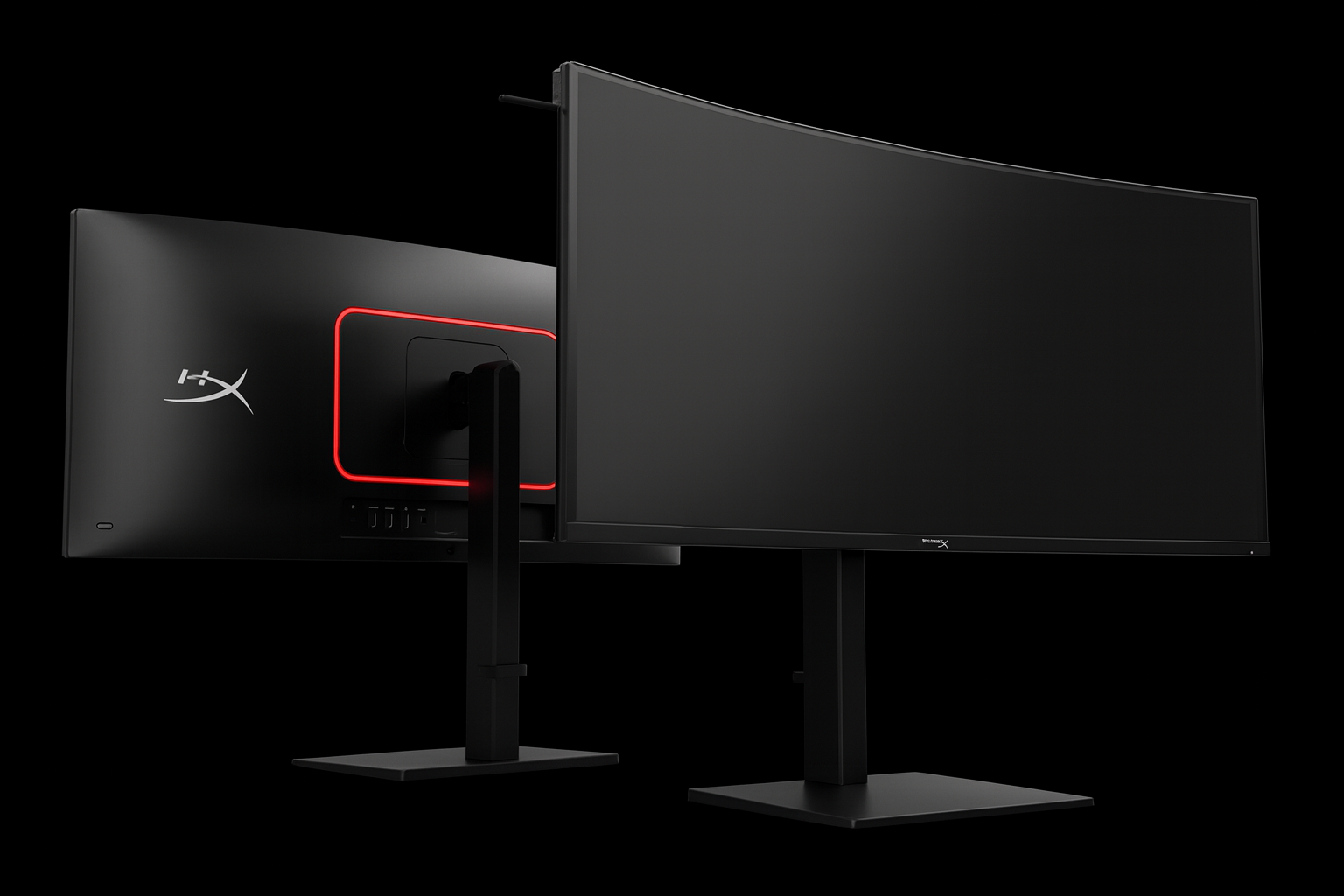
Also debuting is the HyperX OMEN OLED 34, a 34-inch QD-OLED monitor with 360Hz refresh rate, 0.03ms response time, and professional-grade color accuracy via HyperX ProLuma. It includes USB-C power delivery, a built-in KVM switch, and burn-in protection.

HP’s first Xbox-licensed arcade controller, the HyperX Clutch Tachi, features magnetic switches, customizable inputs, and support for 3D-printed mods. Finally, HP previewed a prototype EEG headset co-developed with Neurable, designed to interpret brain activity and help players improve focus and accuracy using AI and neurotechnology.

All products are expected to launch in Spring 2026, with pricing to be announced closer to availability.

KitGuru Says: Future HP gaming products will now carry HyperX OMEN branding, bringing the two sub-brands together, which should simplify things for consumers when shopping for new laptops or pre-built PCs. 

The post CES 2026: HP unites OMEN and HyperX gaming brands for future gaming products first appeared on KitGuru.
  •  

CES 2026: HP launches new OmniBook and OmniStudio PCs

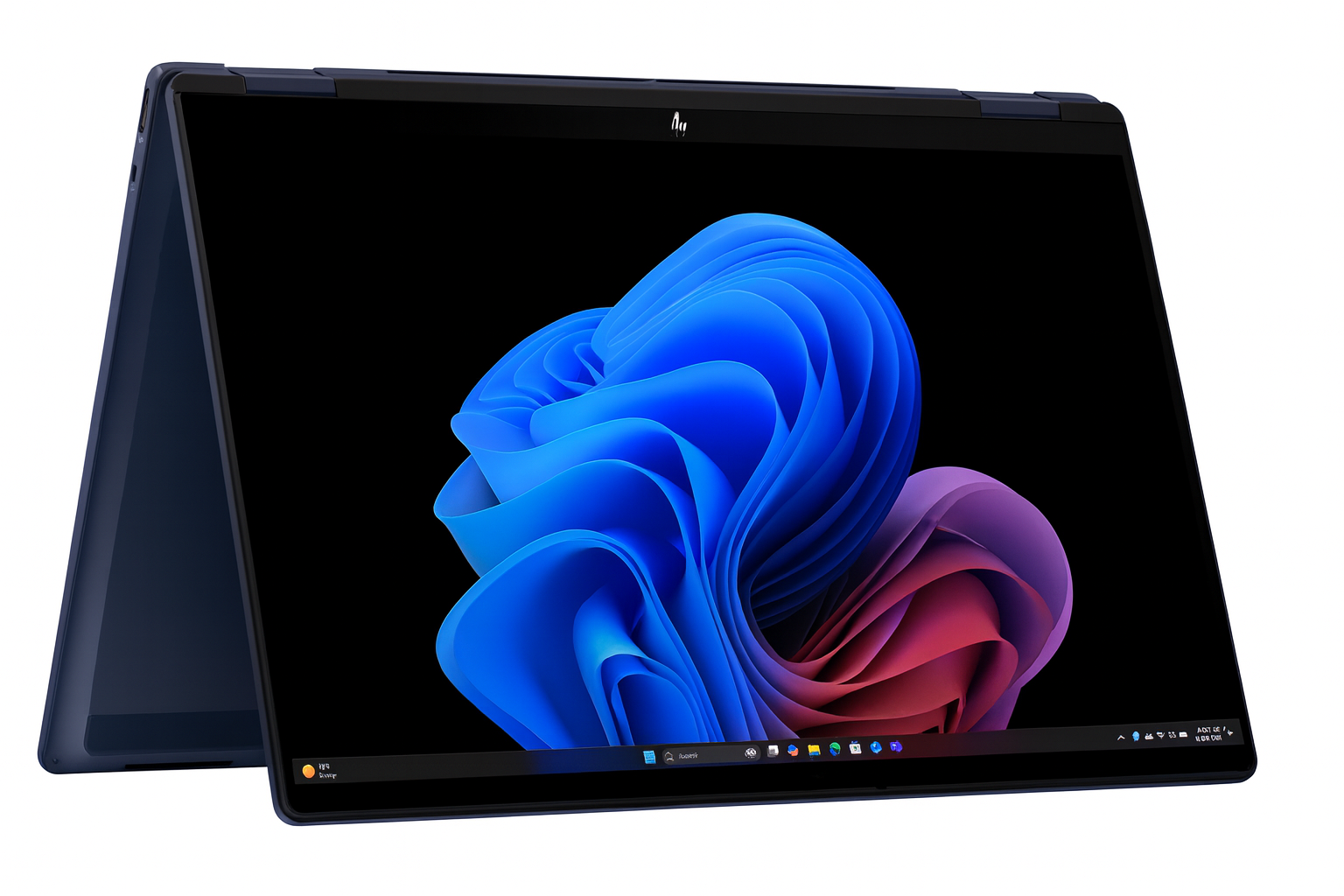
HP used CES 2026 to roll out a major refresh of its consumer PC portfolio, led by the OmniBook Ultra 14 — a flagship model the company claims is the world’s first consumer notebook offering up to 85 TOPS of NPU performance when configured with an HP‑exclusive Snapdragon X2 Elite variant.

The system also comes in Intel Core Ultra form for users prioritising GPU‑heavy AI workloads. Both versions include a 3K OLED display, a redesigned chassis that HP says is 52% lighter than the previous generation, and MIL‑STD‑810 durability testing. A new posture‑detection feature rounds out the updates.

The company is also pushing Snapdragon X2 and OLED displays across the wider OmniBook range, including a refreshed 16‑inch model in the OmniBook 3 Series that HP claims can reach up to 45 hours of battery life.

Beyond laptops, HP introduced the OmniStudio X 27, an all‑in‑one PC aimed at creators and home‑office users. It features what HP calls the world’s first Neo:LED AIO display with dual 100% colour coverage, plus next‑gen Intel Core Ultra processors and optional GeForce RTX 5050 graphics. Thunderbolt Share support allows users to control both a laptop and the AIO with a single keyboard and mouse, while Surface View enables easy sharing of sketches or notes during video calls.

HP is also overhauling its full OmniBook lineup across four series:

  • OmniBook X Series – Targeted at freelancers and power users, this line emphasises portability and premium design while offering next‑gen AMD, Intel, and Snapdragon options. These models are positioned as the most flexible in the range, balancing performance and mobility.
  • OmniBook 7 Series – Aimed at professionals who rely on video calls and hybrid‑work tools, these systems include Windows Studio Effects and Poly Studio‑tuned audio for clearer conferencing. They sit as HP’s mainstream productivity tier.
  • OmniBook 5 Series – Designed for families, students, and everyday users, the 5 Series brings OLED displays, slim aluminium builds, and responsive AI performance to mid‑range price points.
  • OmniBook 3 Series – The entry tier focuses on value while still supporting AI‑accelerated workloads, with a wide range of sizes and processor choices across AMD, Intel, and Qualcomm.

HP also updated its Chromebook Plus lineup, including new x360 14 and 14‑inch clamshell models with 2K displays and Google’s latest AI tools. Standard Chromebook models have also been refreshed with improved durability and better Android integration.

All new Windows 11 consumer PCs will ship with HP’s Digital Passport hub, plus two new software additions: Omni+ for cross‑platform password management and HP TV+ for free streaming content.

KitGuru Says: Are you planning on picking up a new laptop this year? Does CoPilot+ certification weigh into your purchase decision at all? 

The post CES 2026: HP launches new OmniBook and OmniStudio PCs first appeared on KitGuru.
  •  

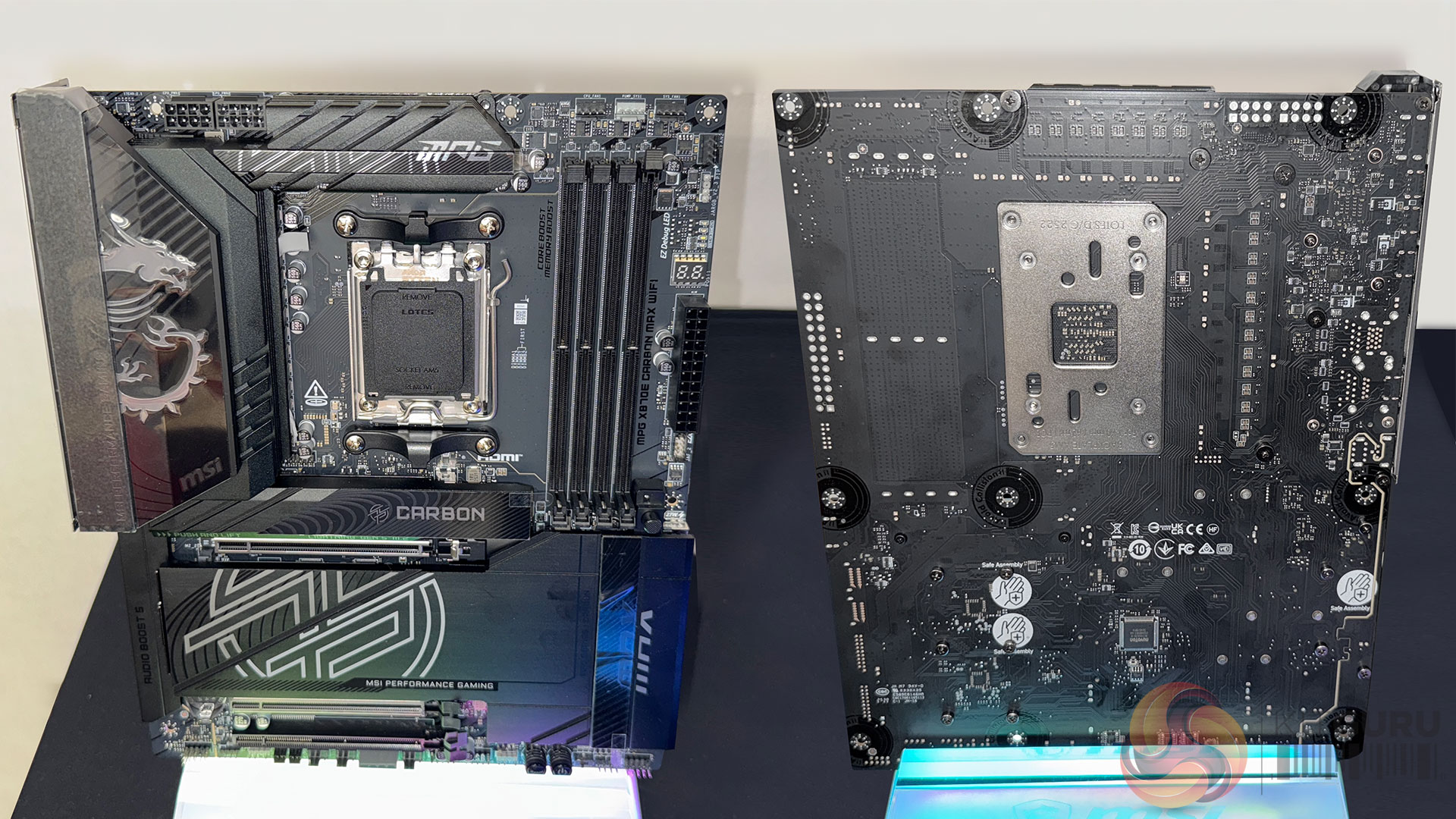
CES 2026: MSI unveils MEG system, AMD MAX motherboards and more

One of the clearest messages from our pre-CES briefing at MSI’s Taipei HQ, is that the company is no longer thinking solely in terms of isolated components. For 2026, the focus is on complete platforms, where motherboard, power delivery, cooling and chassis are designed and engineered as a single system. This is most evident in the MEG range, supported by the introduction of Safeguard+ at the PSU level and a substantially revised AMD MAX motherboard strategy built around X870E.

Rather than chasing peak benchmark numbers in isolation, MSI appears to be targeting stability under sustained load, predictable behaviour when pushed outside default limits and fewer failure points – as next-gen GPUs and CPUs continue to draw more power and operate closer to their electrical limits.

The MEG system: building around the extreme user
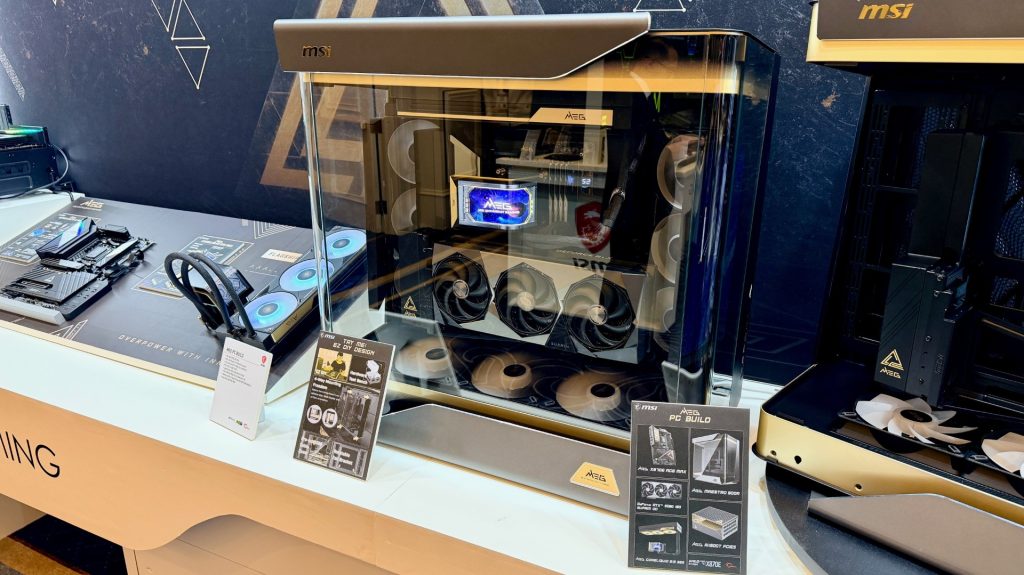
MEG, short for MSI Enthusiast Gaming, sits at the top of MSI’s desktop stack. What’s different with this generation is how tightly the individual MEG components are designed to work together, rather than simply sharing branding.

At the centre of the MEG system is the X870E ACE MAX motherboard. It uses an 18+2+1 phase power design with 110A smart power stages, mounted on a high-layer, server-grade PCB with 2oz copper. This is not unusual in isolation, but the way MSI builds around it feels more deliberate than before.

Power delivery and overclocking control
The defining feature across MAX boards is the built-in OC Engine, which decouples base clock control from the rest of the system. Instead of raising BCLK and dragging memory, PCIe and NVMe controllers out of specification, the OC Engine allows fine-grained CPU base clock adjustment while keeping other subsystems within tolerance.

For enthusiasts, the benefit should be more than just theoretical. It looks to enable measurable gains on modern Ryzen CPUs without destabilising storage or I/O (which has traditionally been the limiting factor for BCLK-based tuning). MSI also supports this with the Direct OC Jumper, allowing real-time base clock adjustment from within the operating system, rather than repeated BIOS reboots.

This is paired with a 64MB BIOS ROM across MAX boards, doubling previous capacity. In practice, this allows MSI to retain full CPU support tables, richer firmware features and a less constrained UI, while maintaining forward compatibility as future Ryzen CPUs are introduced.

Thermal design as part of the platform

Thermal management is another area where MSI is treating the motherboard as part of a wider system rather than a standalone product. The Frozr Guard cooling architecture combines wavy-fin heatsinks, cross heat-pipes, high-conductivity thermal pads and full-length metal backplates.

Importantly, this is not just about MOSFET cooling. PCIe 5.0 storage controllers can generate significant heat under sustained transfer loads, and MSI treats M.2 thermals as a first-class concern, with double-sided shield designs and tool-free installation that encourages users to use them correctly.

The cooling strategy extends beyond passive hardware. Frozr AI Cooling and the Cooling Wizard integrate fan curves, thermal zones and workload behaviour – allowing the board to respond dynamically rather than relying on static profiles.

MEG beyond the motherboard: chassis, cooling and power
MSI’s intent to treat MEG as a system becomes clearer when looking at the surrounding components.

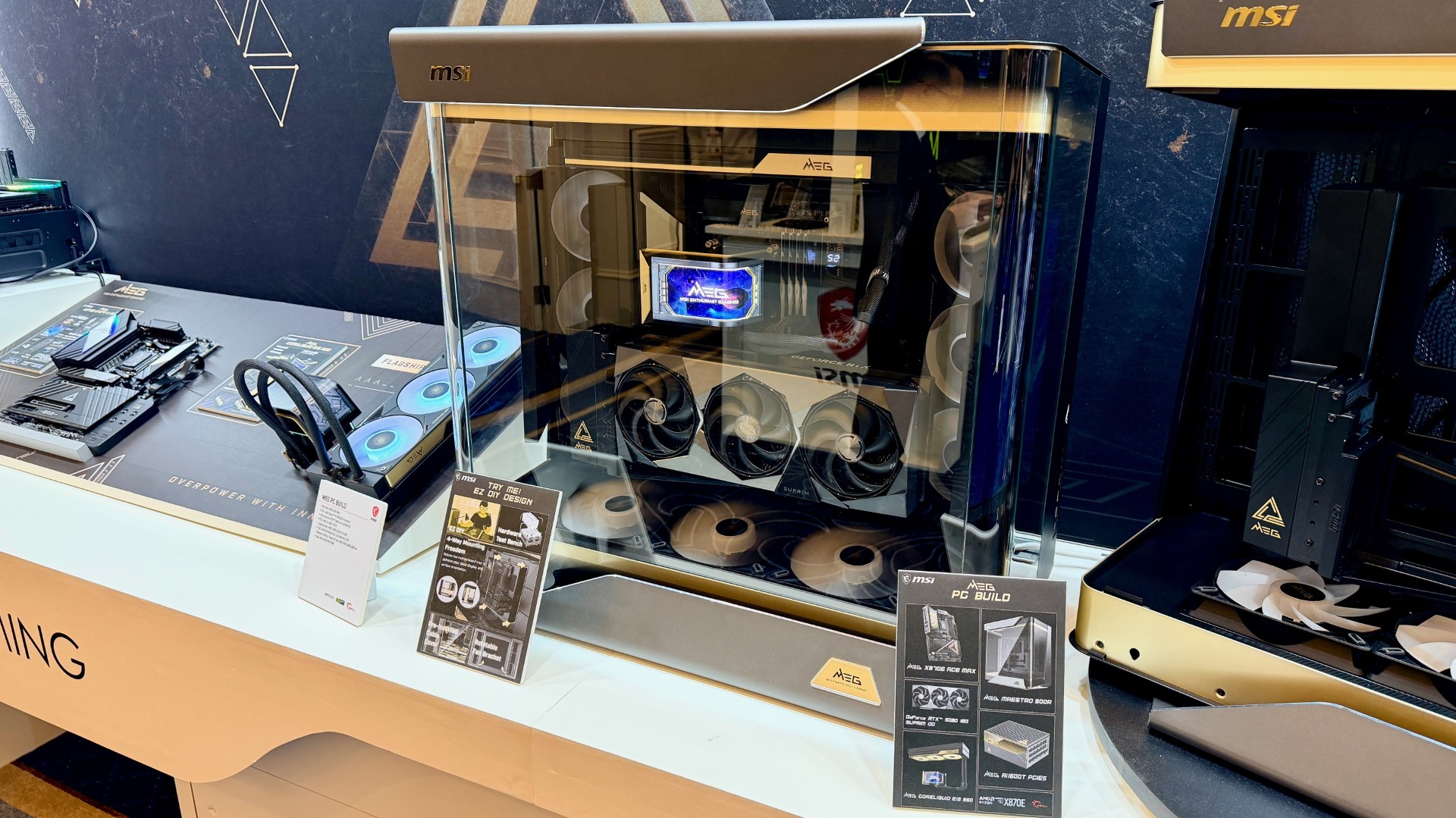
MEG Maestro 900R chassis
The Maestro 900R is MSI’s largest and most flexible case to date. It supports E-ATX motherboards, graphics cards up to 400mm long and multiple radiator configurations, with capacity for up to four radiators or 14 fans.

The defining feature is the rotatable and removable motherboard tray. This allows traditional, inverted or showcase layouts, and even converts the chassis into a standalone test bench. While this will appeal to modders and extreme builders, it also reflects a more practical consideration: Airflow optimisation around increasingly large GPUs.

Vertical GPU mounting, dual-GPU configurations and complex liquid loops should all be accommodated without forcing compromises elsewhere in the system.

MEG CoreLiquid E15 360
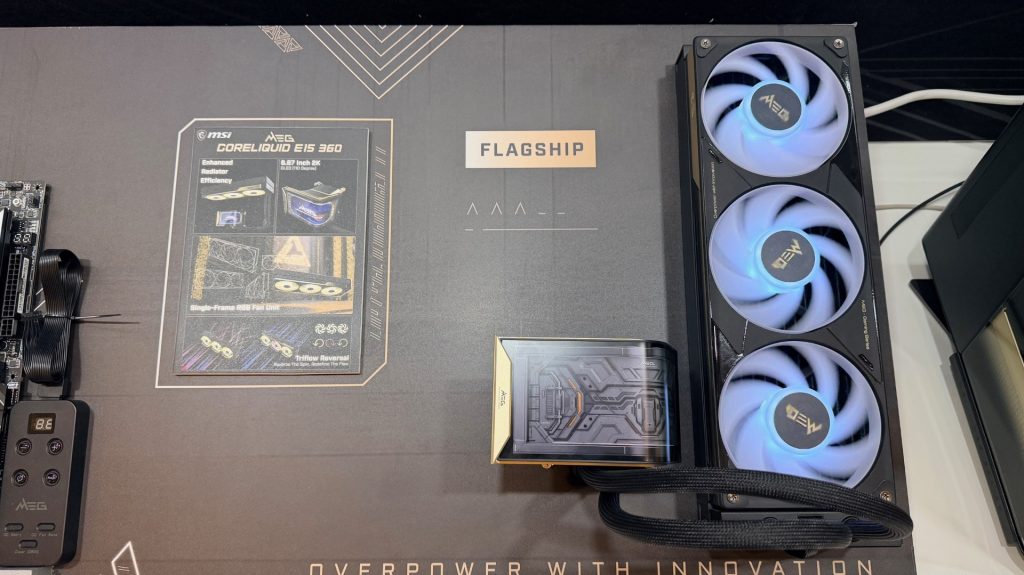
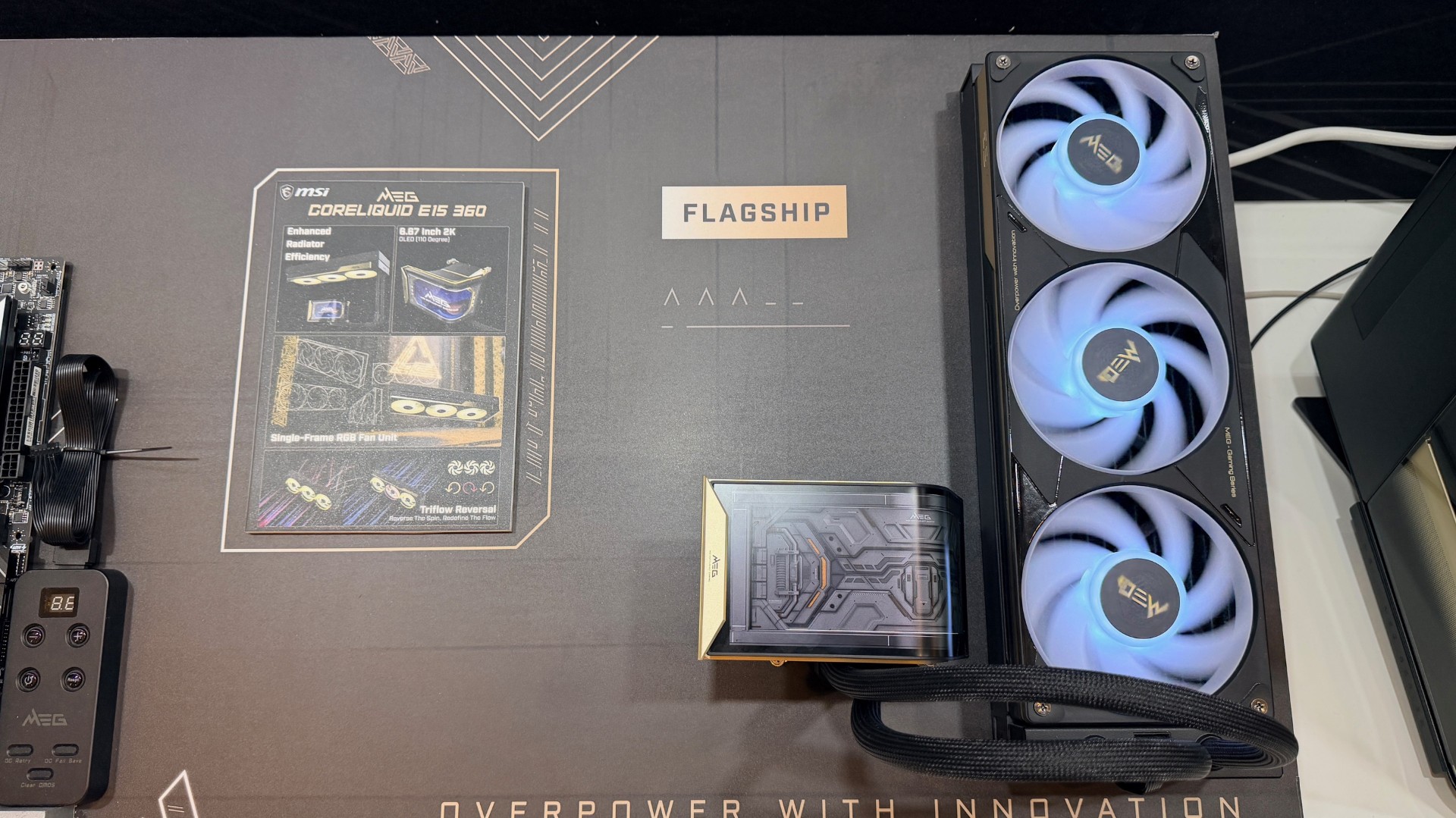
Cooling is handled at the top end by the MEG CoreLiquid E15 360. Beyond the obvious headline feature (which is a curved 6.67-inch OLED display with 2K resolution), the more interesting detail is the fan and cabling architecture.

The three radiator fans use alternating rotation directions to reduce turbulence and improve airflow consistency. All power, control and RGB signalling is routed through a single JAF_2 connector, significantly reducing cable clutter and potential installation errors.

The OLED display is configurable for system telemetry or custom visuals, but it also reinforces MSI’s broader move towards integrated system monitoring rather than relying on third-party tools.

MEG Ai1600T PCIE5 power supply
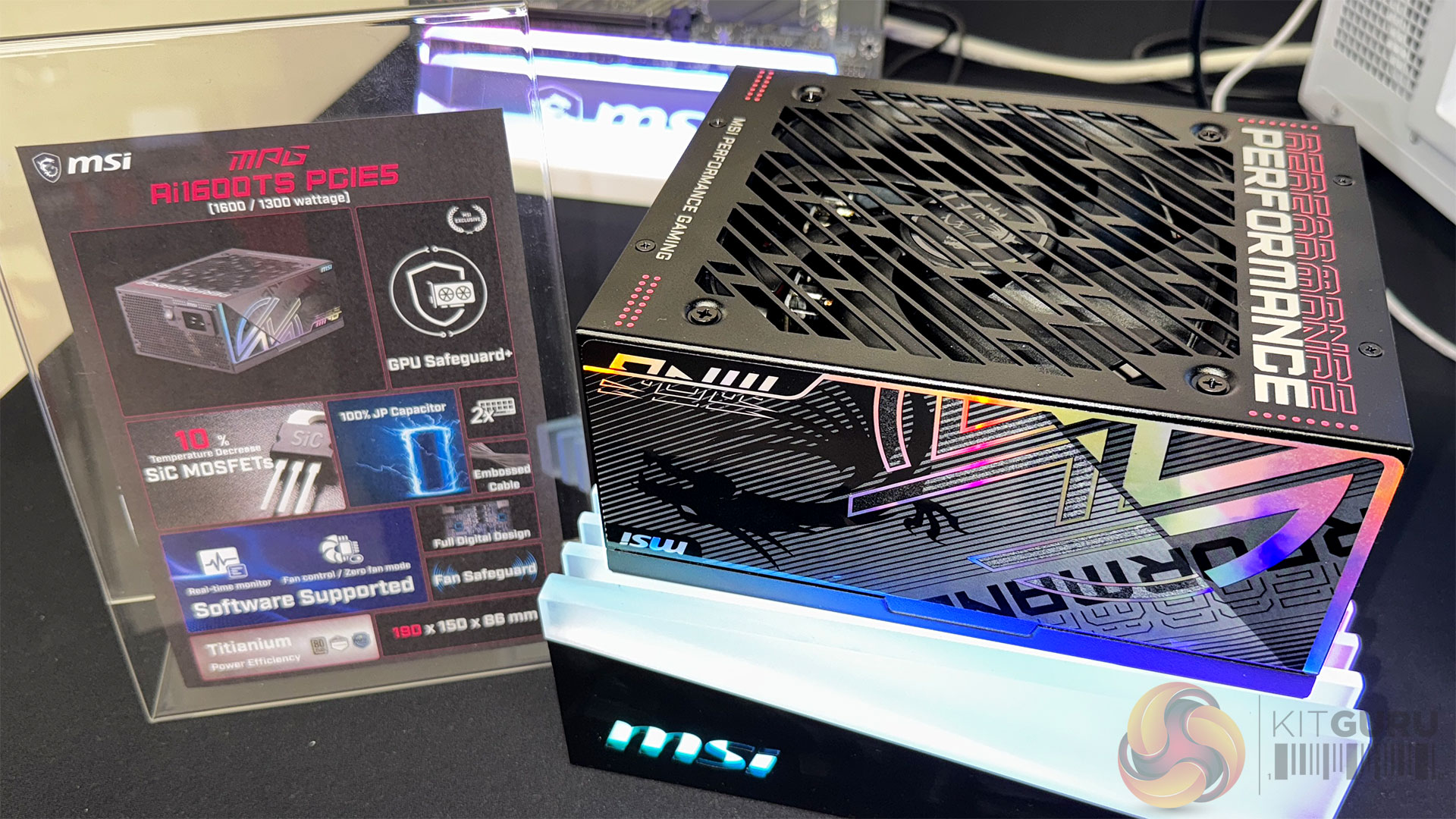
At the base of the system sits the MEG Ai1600T PCIE5 PSU. Rated for up to 1,600W with 80 Plus Titanium efficiency, it uses a fully digital design with SiC MOSFETs, reducing operating temperatures by around 10 percent compared to conventional silicon solutions.

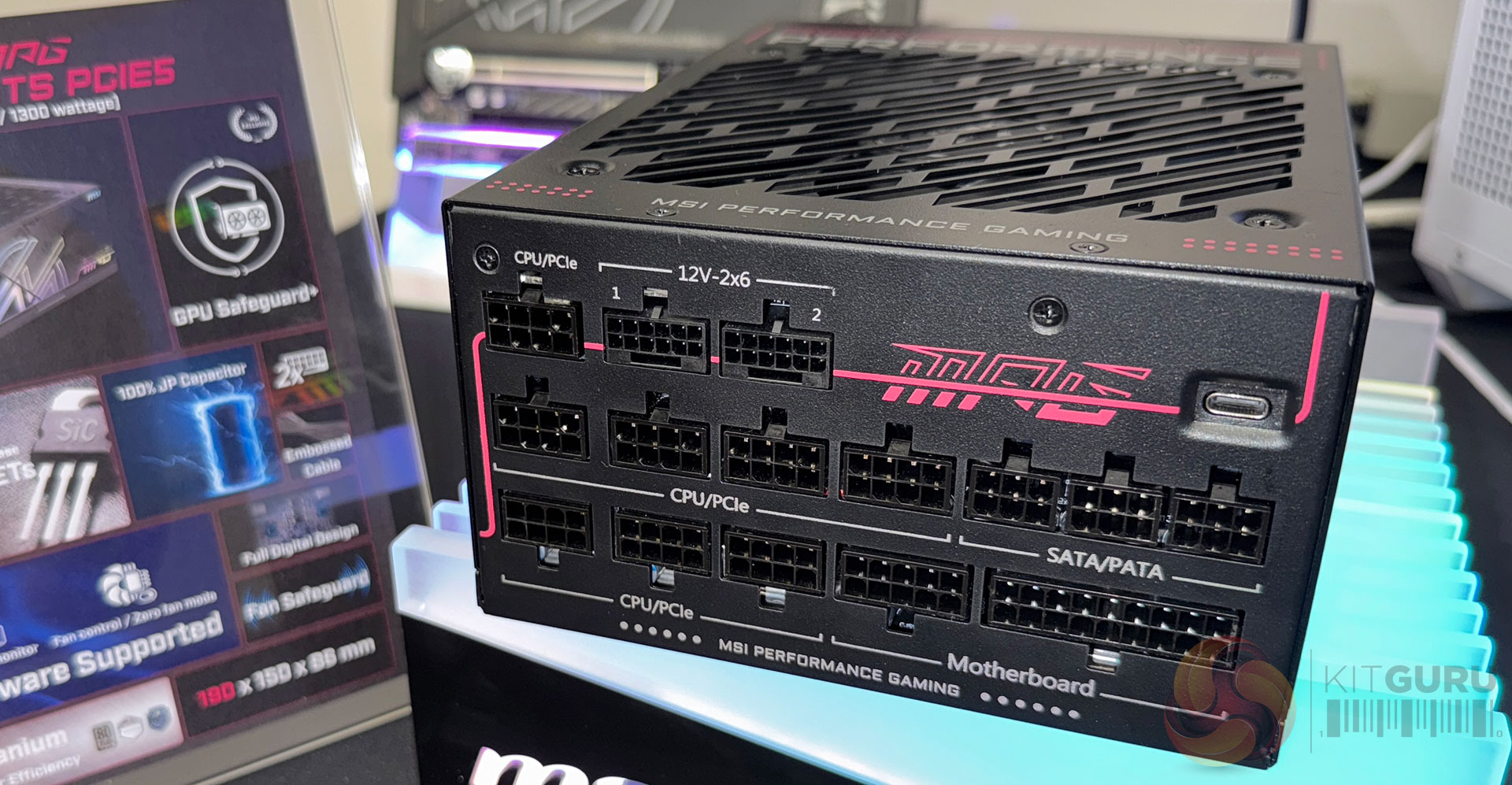
It provides dual 12V-2×6 connectors for flagship GPUs, which is increasingly relevant as single-card power budgets continue to climb. However, raw capacity is not the most important story here. That comes with Safeguard+ that is available on MPG Ai1600TS / Ai1300TS PCIE5, but not on the MEG Ai1600T PCIE5.
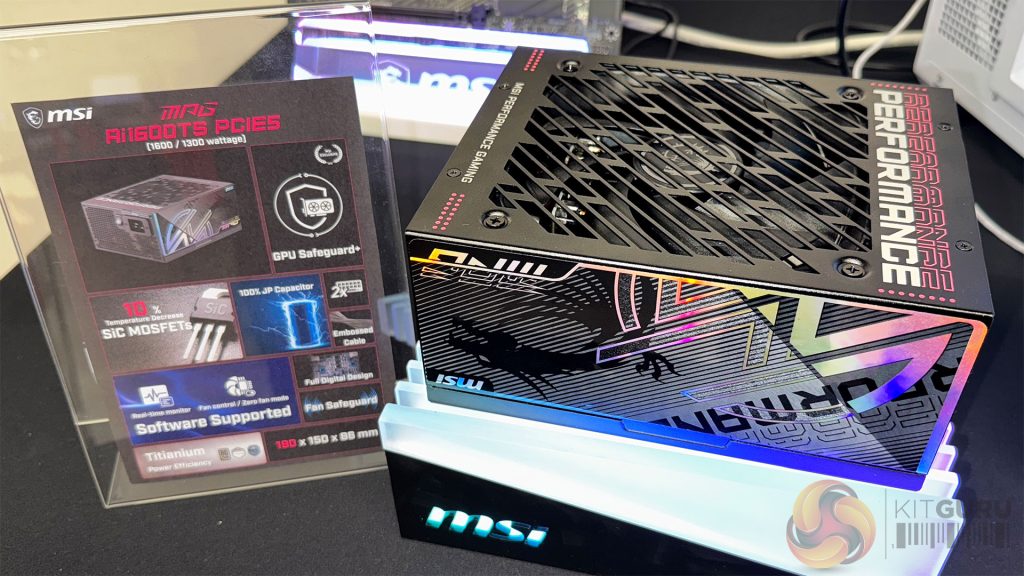
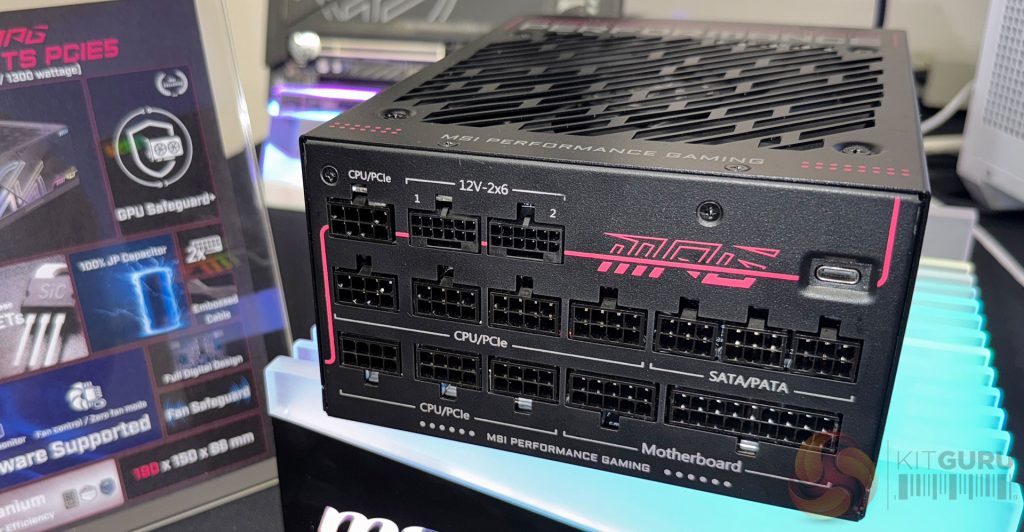
Safeguard+: Looking to address a real-world failure point
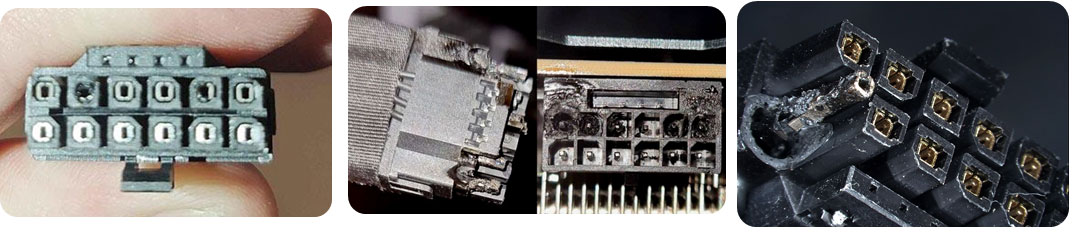
The move to the 12V-2×6 connector has solved some problems and created others. While it simplifies cabling and supports higher power delivery, it has also exposed systems to failures caused by poor seating, uneven current distribution and sudden overcurrent events. Safeguard+ is MSI’s attempt to deal with this ‘at the PSU level’, rather than leaving it to the GPU or the user.
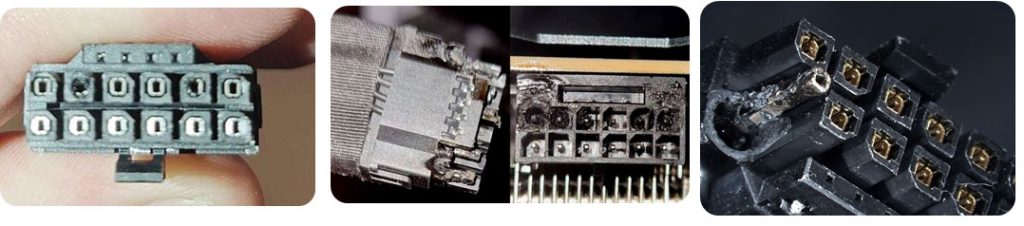
According to MSI, there continue to be power coupling issues across the industry – when connecting major-draw graphic cards and power supplies. They were careful to point out that if you only connect your GPU once, then it's likely to be fine – but if you (re)connect on a regular basis – then there is potential for problems.

By changing connection mechanisms and other improvements, MSI believes that it can make high-wattage connections much safer. But the immovation doesn't stop with the physical PSUs themselves. Enter Safeguard+.

How Safeguard+ works
Safeguard+ uses an onboard microcontroller to monitor current across individual pins on the 12V-2×6 connector in real time. If it detects current imbalance or an instant overcurrent condition, the system moves through a defined protection sequence.

First, the user is alerted via a physical buzzer and an on-screen notification through MSI Center. If the issue is not resolved, the system disables video output while continuing to sound the alert, forcing user intervention before damage can occur.

This is not a soft warning system. It is designed to interrupt operation before heat or electrical stress causes permanent damage to the PSU, GPU or connector itself. We question whether an audio alarm is the best way forward, but at least it’s hard to ignore.

Software integration and logging
Through MSI Center, users can monitor real-time current delivery, PSU efficiency, temperatures and fan behaviour. Logs can be reviewed over time, making it easier to diagnose intermittent issues or confirm that a system is operating as expected under load.

Safeguard+ is implemented differently depending on PSU tier. MPG Ai1600TS and Ai1300TS models support dual 12V-2×6 monitoring with full software integration, while MAG-series units support single-connector protection with hardware alerts only.

Fan Safeguard
Alongside GPU-focused protection, MSI has implemented Fan Safeguard across new MPG and MAG PSUs. If the PSU fan fails to follow its expected rotation profile, whether due to dust build-up or disconnection, the PSU shuts down to prevent overheating. This is a simple feature, but it addresses a common long-term failure mode that is often ignored until damage has already occurred.

MAX series motherboards for AMD Ryzen: preparing for what comes next
The third pillar of MSI’s strategy is the MAX motherboard range, built around AMD’s X870E chipset. MAX is not a cosmetic refresh. It is a structural upgrade designed to extend platform relevance as CPU, memory and I/O demands increase. There will also be new B850 models on show at CES from MSI.
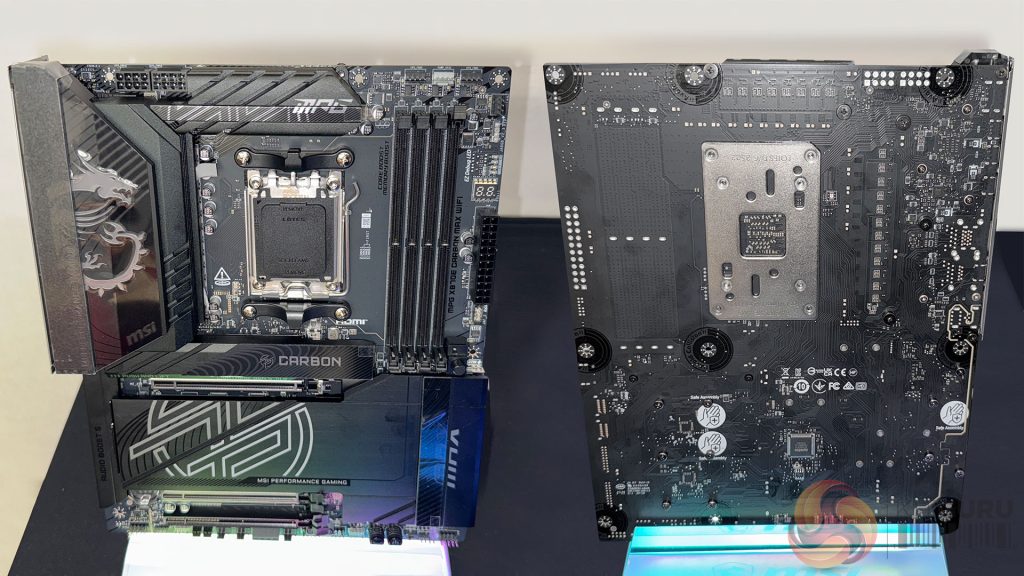
Power and memory headroom
MAX boards scale up to 24 power phases with 110A stages on flagship models, with memory support officially extending beyond DDR5-10000 on compatible kits. While not every user will reach these limits, the headroom matters for stability at more modest settings.

MSI has also paid attention to PCB design, using higher layer counts and server-grade materials on upper-tier boards. This improves signal integrity for both memory and PCIe 5.0 devices, which is increasingly important as data rates climb.

Lane allocation and PCIe 5.0
One of the quieter but more meaningful improvements is how MSI handles PCIe lane bifurcation. On MAX boards, the GPU x16 slot and dual PCIe 5.0 M.2 slots can operate independently, avoiding bandwidth sharing that can limit performance in real-world workloads.

On boards like the MEG X870E GODLIKE X Edition, MSI goes further, supporting up to five onboard M.2 drives plus additional Gen5 storage via the included Xpander-Z card.

Connectivity and I/O
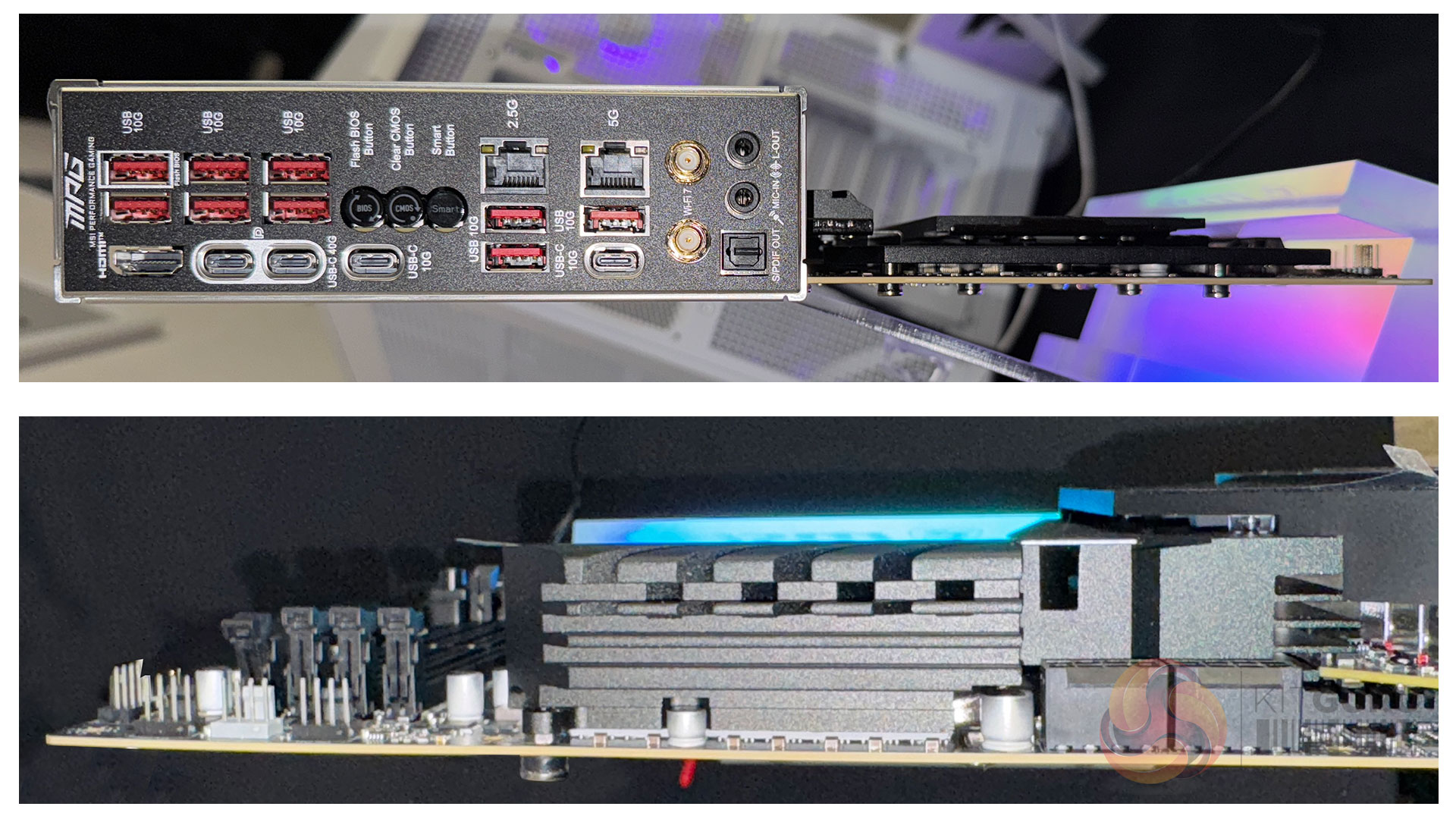
MAX boards standardise features that were previously reserved for select models. USB4, Wi-Fi 7 with full 320MHz channel support, and up to 10Gb Ethernet are now consistent across much of the range.

Front-panel USB-C charging is also enhanced, with up to 60W power delivery on higher-end boards, monitored in real time through the BIOS and software.
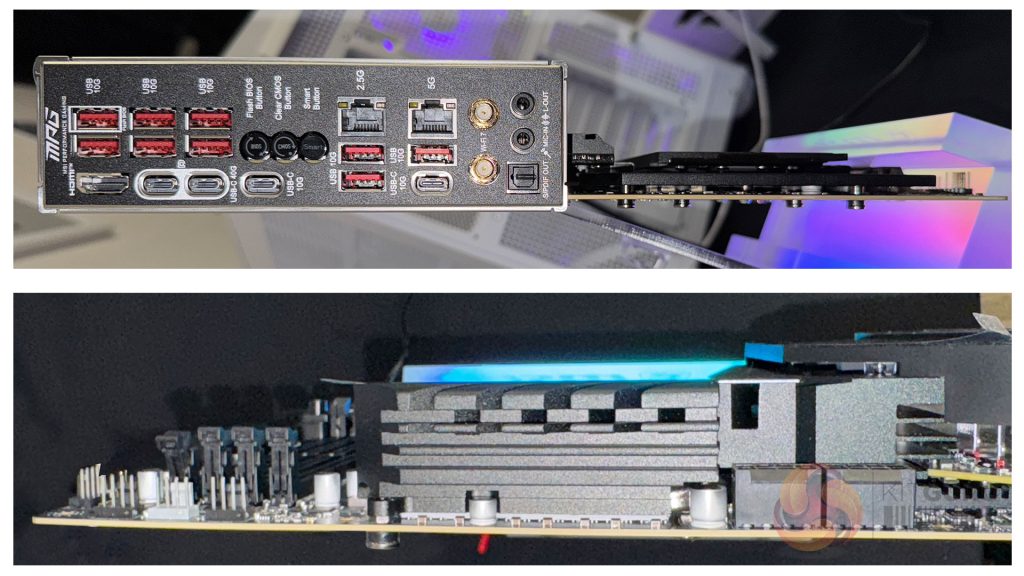
EZ DIY, taken seriously
MSI’s EZ DIY approach is not new, but on MAX boards it feels more comprehensive. Tool-free M.2 installation, PCIe slot release mechanisms, pre-installed I/O shields and consolidated cabling via EZ Conn and EZ Link designs all reduce friction during assembly and maintenance.

These are not headline features, but they matter when dealing with large, heavy GPUs and dense internal layouts.

In practical terms, we were told that a well configured system built on an MSI Max motherboard for Ryzen, could give you 5% to 15% additional in-game performance.

Across MEG, Safeguard+ and AMD MAX, MSI’s direction appears clear. The company is engineering for systems that are pushed hard, run for long periods and carry real financial risk when something goes wrong.

Rather than relying on user discipline or aftermarket solutions, MSI is building protection, monitoring and control into the platform itself. That does not make these systems simpler, but it does make them more predictable, which is arguably more valuable at this end of the market.

For enthusiasts, overclockers and professionals running high-end hardware at the edge of specification, that shift may prove more important than another incremental performance headline.

KitGuru says: In the DIY PC space, consumers are used to mixing up components from different vendors and throwing them all together in one system. As companies like MSI start to fill out their own ‘ecosystems' more, it becomes more tempting to buy more of your components from one place, as they've been designed to work well together. 

The post CES 2026: MSI unveils MEG system, AMD MAX motherboards and more first appeared on KitGuru.
  •  

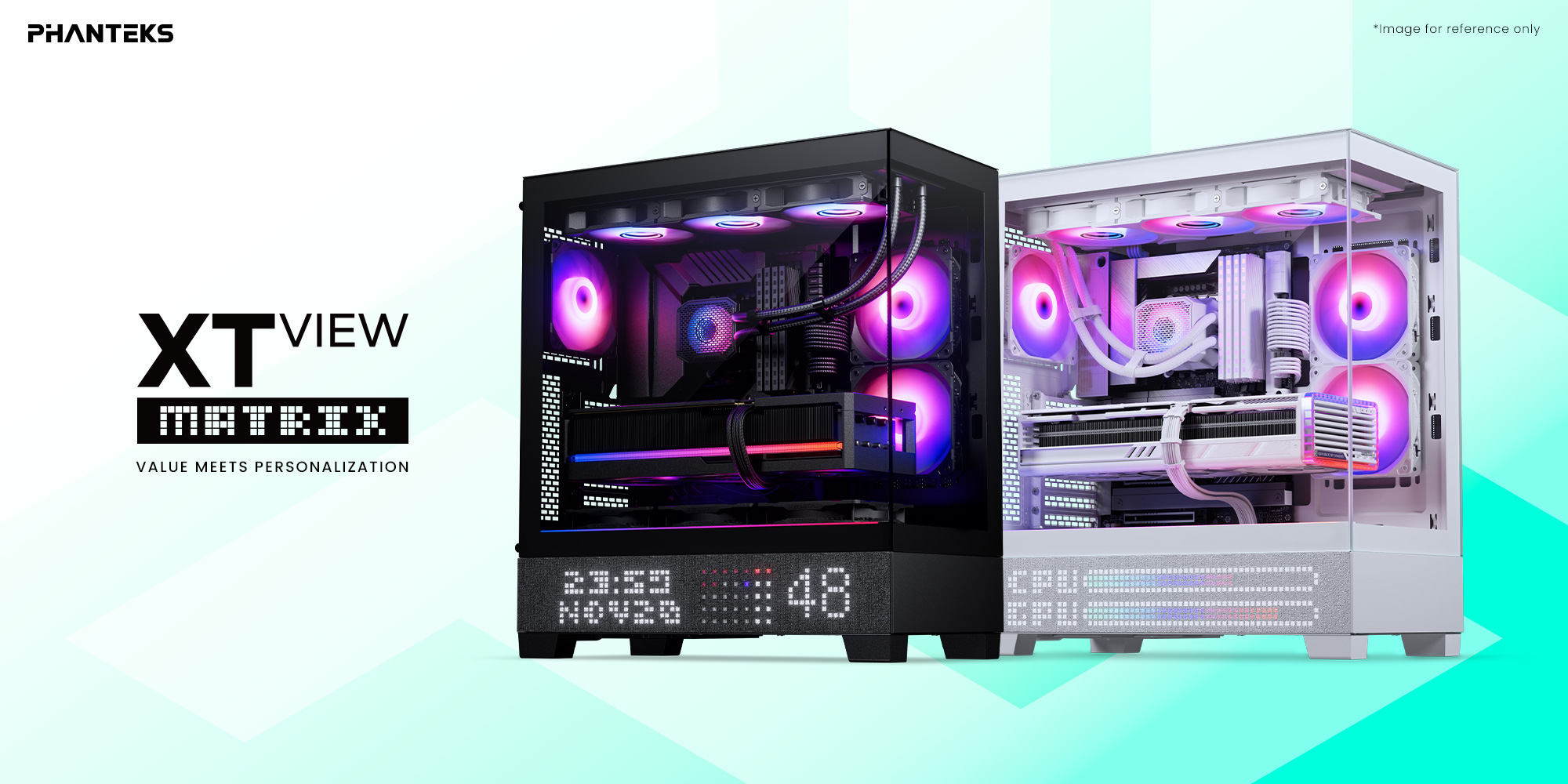
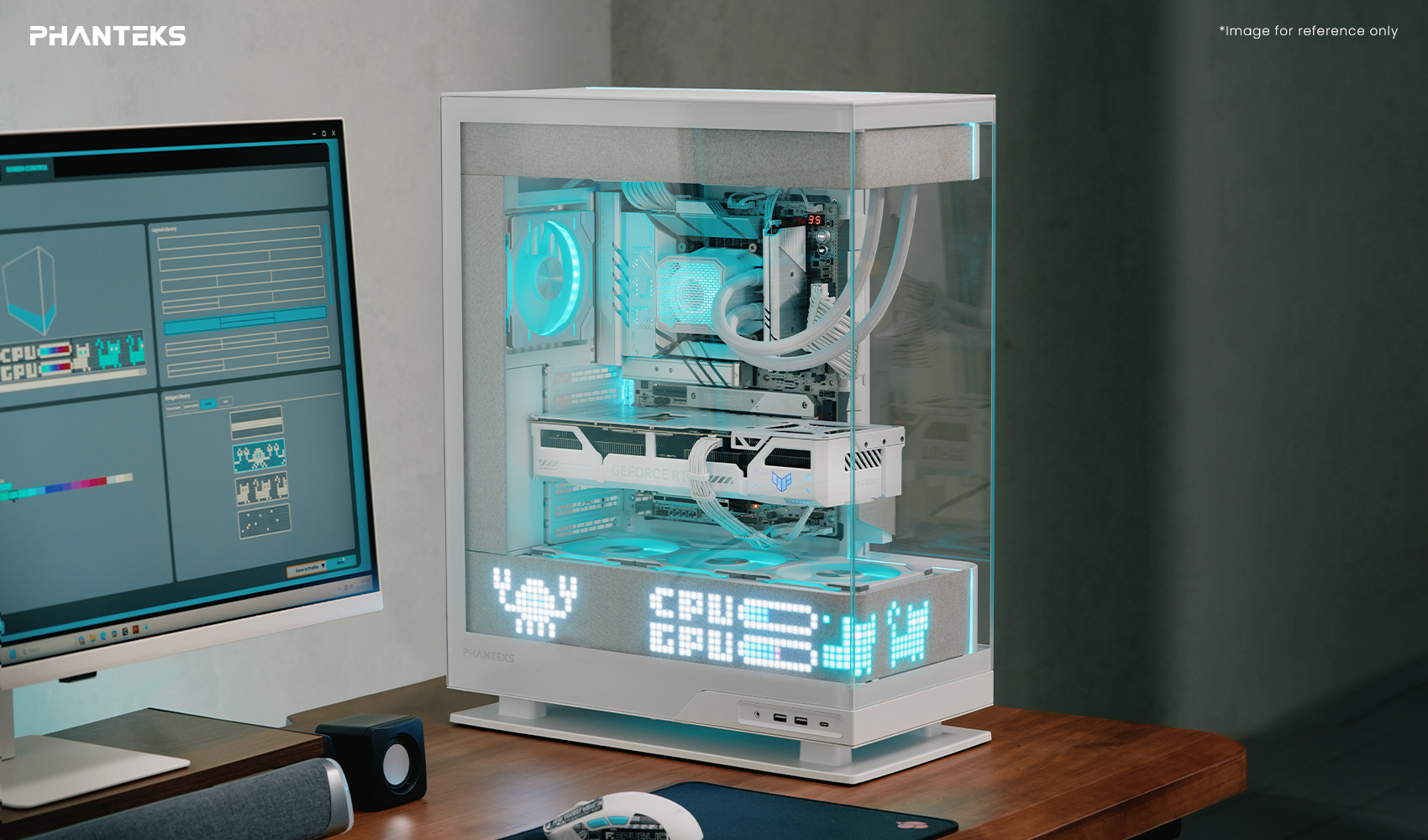
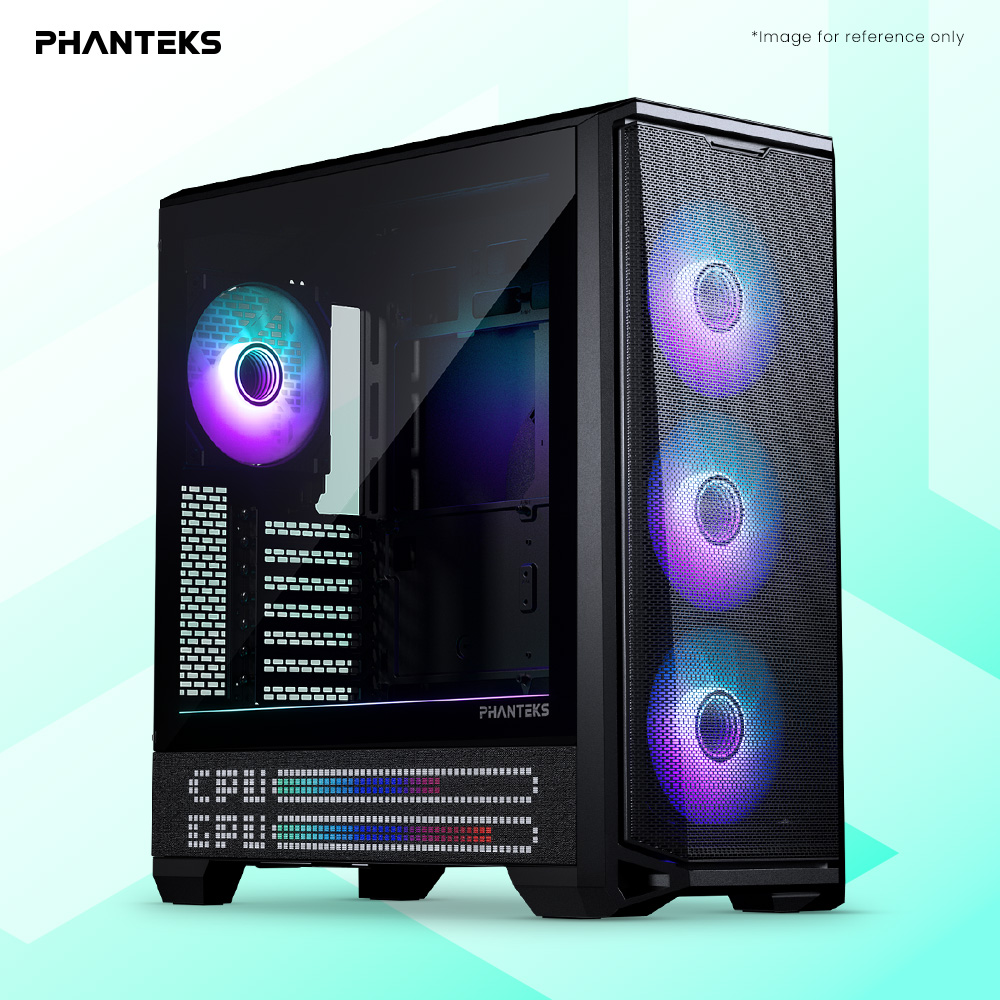
CES 2026: Phanteks debuts new Evolv and XT View Matrix cases

Phanteks has several new products to show off at CES this week, including new Evolv and XT View Matrix PC cases, and upgrade kits for those looking to add an LED Matrix display to their current Phanteks chassis. Here, we break it all down, along with pricing and launch dates. 

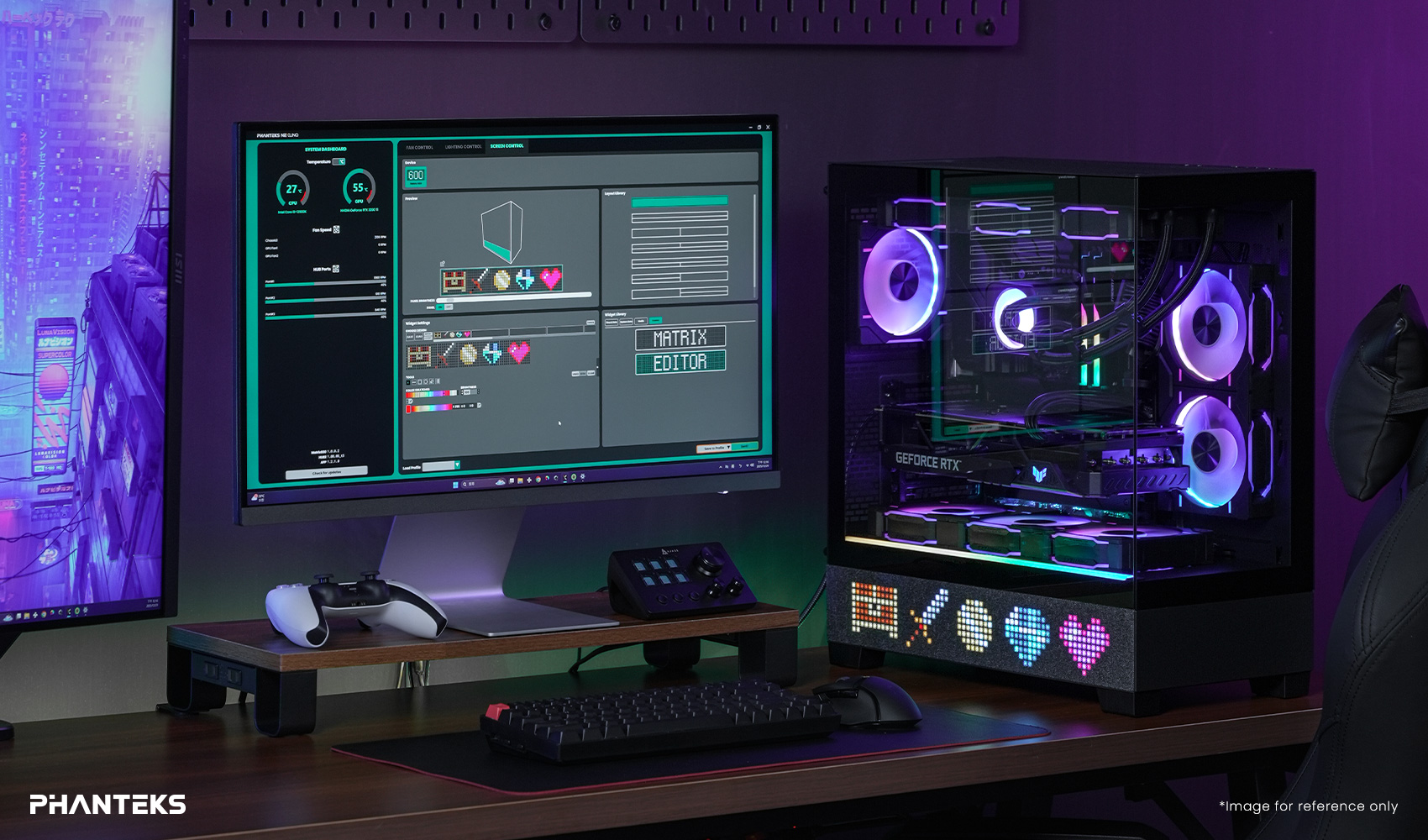
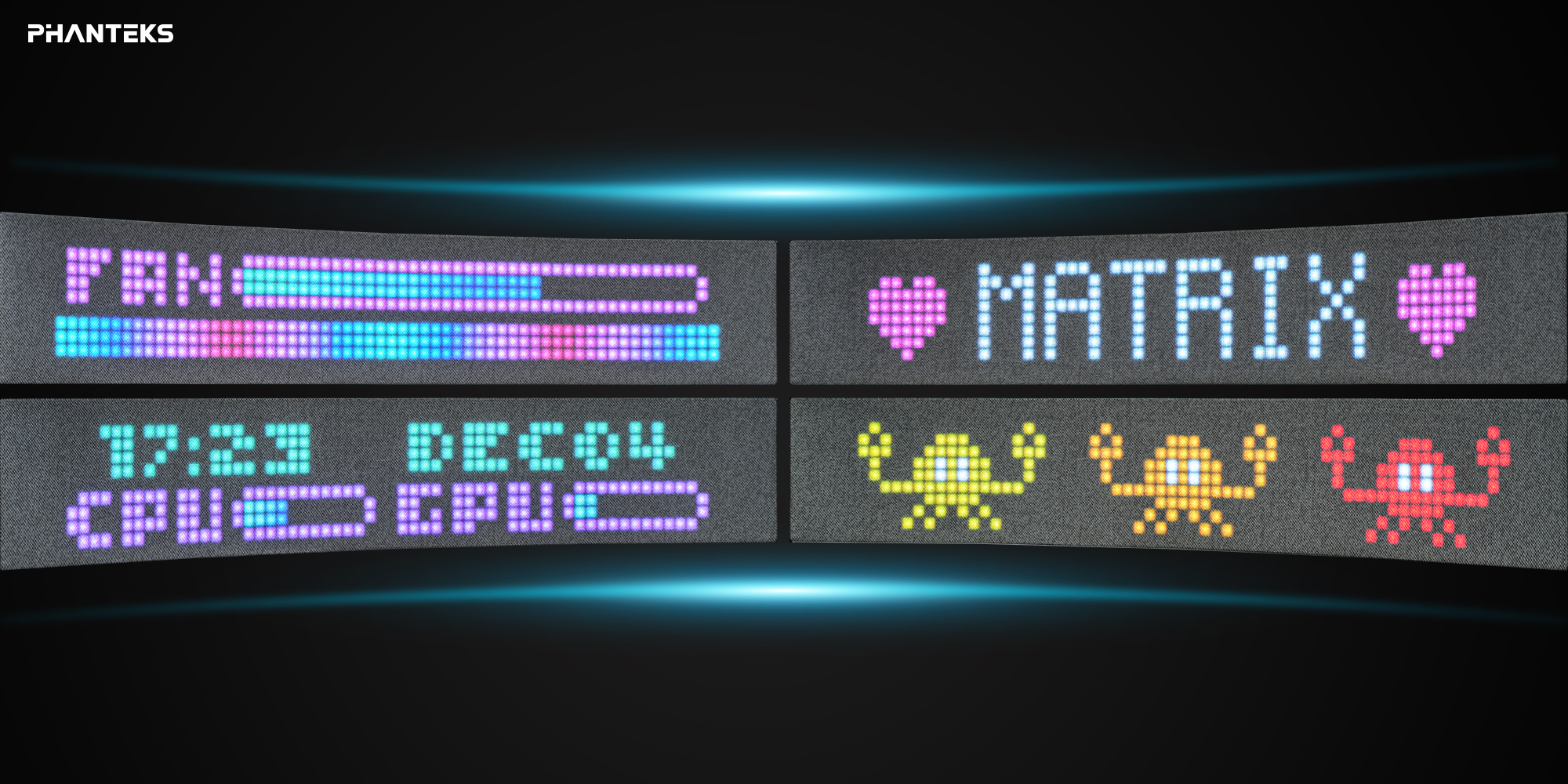
The flagship Evolv X2 Matrix features a 900‑LED display behind a soft fabric and glass front panel, offering ambient illumination and customizable visuals. It includes vertical airflow, support for rear‑connector ATX boards, and integrated D‑RGB accents.

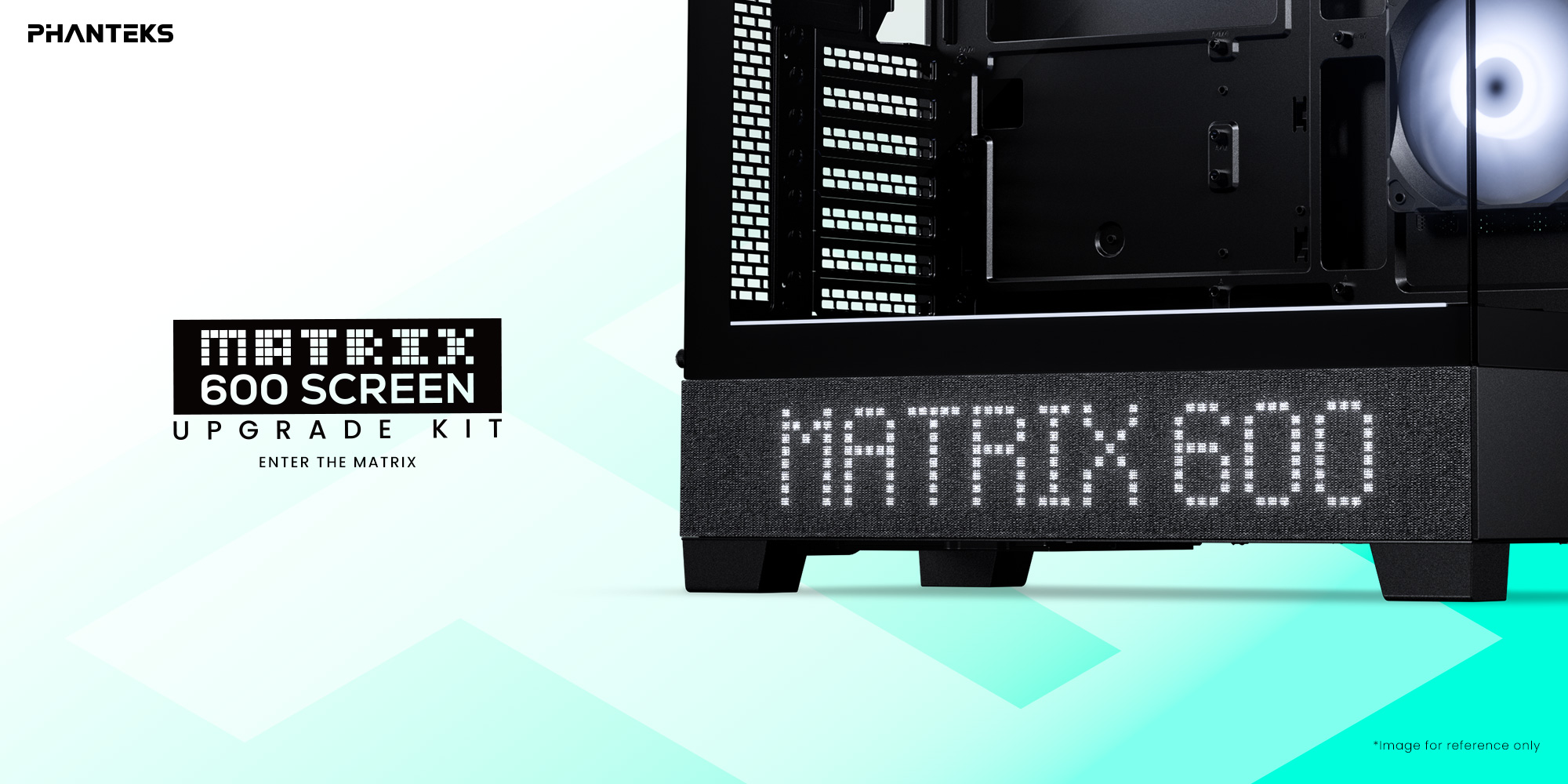
The XT View Matrix brings similar functionality to a mid‑range chassis, with a 600‑LED side panel display, support for large GPUs, nine fan positions, and three included D‑RGB fans. For existing builds, the Matrix‑600 Upgrade Kit adds display functionality to compatible cases like the XT View and G400A. It includes a 600‑LED array behind UV‑resistant fabric and supports full customization via Nexlinq.

All Matrix products are available starting January 5, 2026. Launch pricing includes:

  • Evolv X2 Matrix: $199.99 / €199.90 / £179.90
  • XT View Matrix: $119.99 / €119.90 / £104.90
  • Matrix‑600 Upgrade Kit: $49.99 / €49.90 / £43.90

A limited launch promotion includes a free Nexlinq Hub with Evolv X2 Matrix purchases, redeemable via Phanteks or authorised retailers.

KitGuru Says: Are you planning a new PC build this year? Will you be opting for a new Phanteks case for it? 

The post CES 2026: Phanteks debuts new Evolv and XT View Matrix cases first appeared on KitGuru.
  •  

MSI's New Pro Max Series Pushes Productivity To the Limit

MSI's New Pro Max Series Pushes Productivity To the Limit There's a huge emphasis on PC gaming at CES, and that's understandable; gaming is the primary market keeping the PC alive as a platform. Still, people need PCs for both work and play, so MSI is launching a new family of PC products that are designed specifically for multi-tasking, image processing, remote collaboration, and "data-driven workloads."
  •  

SanDisk Optimus SSDs Replace WD Black And Blue With Bold Design & Tiered Performance

SanDisk Optimus SSDs Replace WD Black And Blue With Bold Design & Tiered Performance SanDisk is bidding farewell to its WD Black and WD Blue storage brands and replacing them with its new Optimus line, which it has broken down into three performance tiers: Optimus, Optimus GX, and Optimus GX Pro. A bolder design accompanies the rebrand, but what this really indicates for consumers is that SanDisk is keeping the storage party
  •  

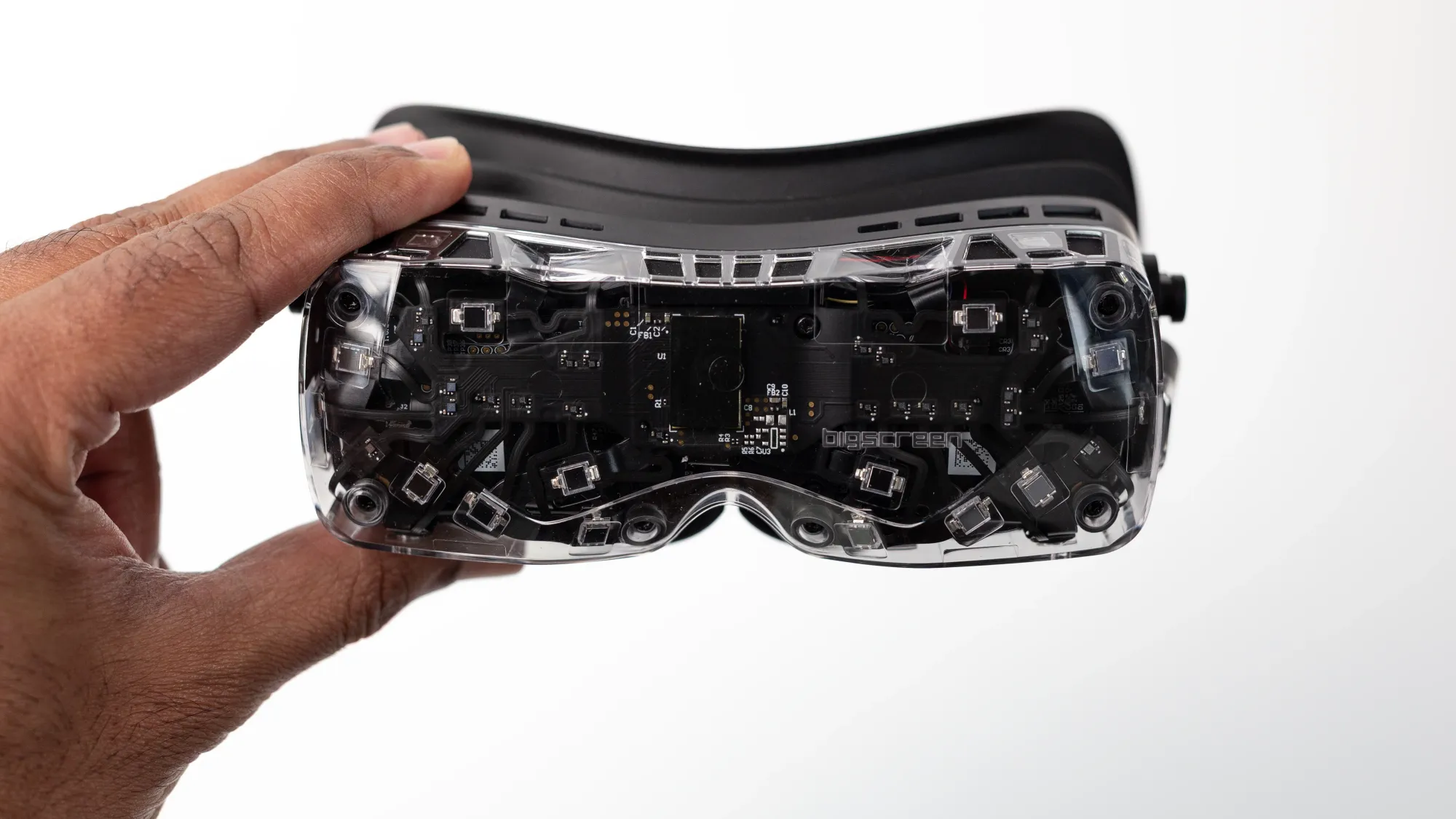
Darshan Shankar Reflects On 10 Years Of Bigscreen Beta As Beyond 2 Production Ramps

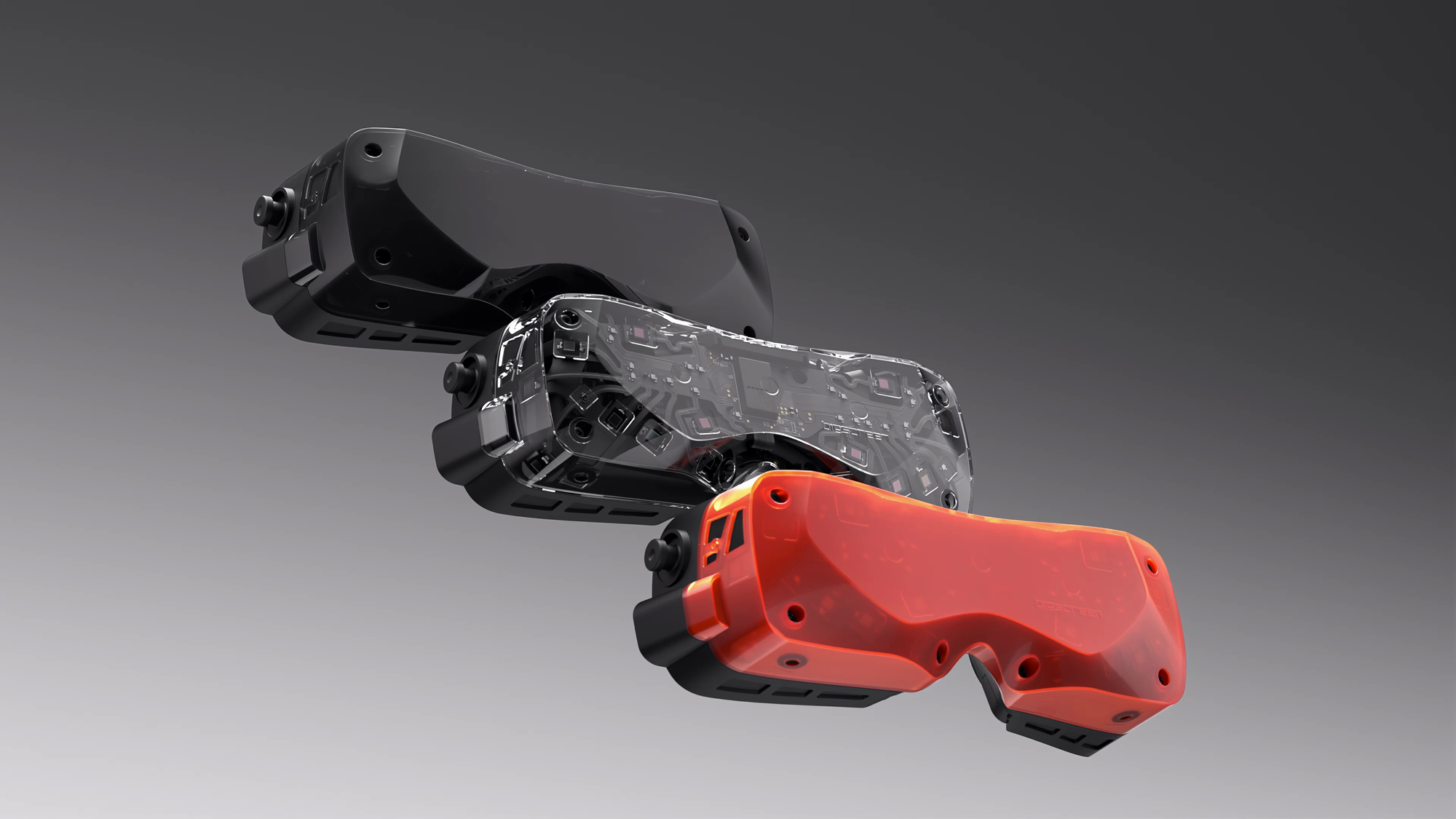
Bigscreen founder Darshan Shankar believes Beyond headsets could be among the top five systems in use on Steam in the next few years.

On that path, Shankar hopes to fully catch up to demand for Beyond 2 headsets in February so they "ship within 1-2 business days, including custom-fit and universal-fit orders." In April, Bigscreen marks 10 years of shared co-watching in VR on Steam with Shankar suggesting over email "perhaps we'll keep the 'beta' tag forever."

Shankar said Valve's announcement of Steam Frame coincided with "one of our biggest sales days" as "the Beyond 2 has become the obvious upgrade path for those who want ultra-lightweight high-resolution micro-OLED and still use their preferred SteamVR tracking/controller setup."

With Valve preparing to launch the Frame headset, I asked Shankar whether Bigscreen would support flat screen co-watching to devices like Steam Deck. Shankar responded:

"This has regularly come up in the past decade. We've stayed focused on VR, and I think that's our strength. Many others (especially Valve) will do a good job of cross-play across PC and VR. We're focused on the areas in which we think we have an exceptional edge in capability and knowledge. We have nothing to announce yet on our software development, need more time to develop :) but we haven’t been sitting idle, that’s for sure.

Bigscreen just launched Dynamic Foveated Rendering for the Beyond 2e headset with early access in iRacing and DCS World among the first to explore support for the feature, which promises "eye tracking-driven performance improvements." I purchased a Beyond 2 without eye tracking and received it near the end of 2025 to keep my base stations in service another couple years. We'll be curious to hear reports from 2e customers when it comes to their real world performance using the feature.

"Many customers – hundreds of thousands around the world – are actively using SteamVR Base Stations and Controllers right now with their Valve Index, HTC Vive, etc., and the Beyond 2 has become the obvious upgrade path for those who want ultra-lightweight high-resolution micro-OLED and still use their preferred SteamVR tracking/controller setup," Shankar wrote. "We are firmly committed to manufacturing the Beyond 2 with SteamVR Lighthouse tracking for the next 2 years. We can say this with certainty as we've inventoried components and have setup a continuously running production line. We've signed commitments to enterprise customers as they are reliant on our hardware for their businesses."

Beyond 2 was announced in March 2025, shipping started in July 2025 with a universal fit cushion shipping near the end of the year.

"December is our biggest month of shipping, shipping more units in a single month than we typically did in an entire year with Beyond 1 in 2023 or 2024," Shankar wrote. "We faced a lot more demand than we expected, with Beyond 2 already selling approximately 3 times more than Beyond 1 did."

"We thought we would have inventory on hand for fast-shipping by August/September, but demand has just been too high. Each time we ramp up supply/production, demand was going up even further."

The Steam Hardware Survey suggests that, as of this writing, Beyond headsets still need to climb past PlayStation VR2, Meta Quest Pro and both Windows Mixed Reality and the Oculus Rifts to make it into the top five.

"Perhaps within 1-2 years, we'll be Top 5 alongside Steam Frame, Quest 3, etc," Shankar wrote. "Beyond 2e's built-in eyetracking cameras is the first computer vision-driven product we've shipped. It should be no surprise that we'll eventually have more cameras inside Bigscreen Beyond, but there is no timeline for that. Camera R&D started years ago, and it'll still take years before we release anything. The bar is very high for any camera-based feature."

"I think the size of the existing SteamVR ecosystem is underestimated, and with Steam Frame dropping Lighthouse support, we're actually seeing growing sales."

Shankar said 2026 will see Bigscreen focus on expanding the company's international presence.

"We currently sell in the US, Japan, Canada, UK, Europe, Australia, and New Zealand (>50% of sales are international). To improve the speed of European fulfillment and support, we're planning to open a facility in The Netherlands in early 2026," Shankar wrote. "It currently takes 3-10 days to ship products into the EU from our Los Angeles factory, and we aim to improve this to 1-2 days with our local European center," Shankar wrote. "We've achieved meaningful scale as a company (expecting to cross $100 million in annual revenue in the next year). We've stayed true to our values, built by passionate VR enthusiasts for VR enthusiasts, and we're here for the long run."

  •  

Another Leak Points To Intel Arc B770 Battlemage Graphics Cards Incoming

Another Leak Points To Intel Arc B770 Battlemage Graphics Cards Incoming Okay, we know — you're tired of hearing about a hypothetical "Big Battlemage" GPU and just want Intel to launch the darn thing already. Hey, so do we! We can only report the news that comes to us, though, so until Intel pulls the trigger, we're gonna keep posting proof that the new parts exist. This latest one is arguably the most concrete
  •  

Hollow Knight: Silksong secures Game of the Year at the 2025 Steam awards

Valve has revealed the winners of the 2025 Steam Awards. Unlike the heavily produced ceremonies that rely on a mix of critics and developers, the Steam Awards remain entirely community-driven, with millions voting to decide which titles best represent each category. This year’s crowning achievement belongs to Hollow Knight: Silksong, which not only took home the Game of the Year award but also secured a second trophy for the Best Game You Suck At category.

The difference in player sentiment is most evident when comparing Steam Awards 2025 results to the accolades handed out at The Game Awards 2025. While Clair Obscur: Expedition 33 was the undisputed juggernaut of the December festival, sweeping nine categories including the primary GOTY title, it saw a much more modest reception from the Steam public, as the title only won the Best Soundtrack.

In the more niche categories, the community demonstrated a distinct sense of irony. The Sit Back and Relax Award was handed to RV There Yet?, a co-op driving game that many players find anything but relaxing.. Other notable victories included Hades II for Best Game on Steam Deck and Baldur's Gate 3, which continues its run by winning the Labor of Love award for Larian Studios. The detailed list of nominees and winners can be found below:

Game of the Year Award

  • Winner: Hollow Knight: Silksong
  • Dispatch
  • Clair Obscur: Expedition 33
  • Kingdom Come: Deliverance II
  • ARC Raiders

VR Game of the Year Award

  • Winner: The Midnight Walk
  • F1 25
  • Pavlov
  • Le Mans Ultimate
  • Emissary Zero

Labor of Love Award

  • Winner: Baldur’s Gate 3
  • Dota 2
  • No Man’s Sky
  • Rust
  • Helldivers 2

Best Game on Steam Deck Award

  • Winner: Hades II
  • Digimon Story Time Stranger
  • Ball x Pit
  • CloverPit
  • Deep Rock Galactic: Survivor

Better With Friends Award

  • Winner: Peak
  • Schedule I
  • Battlefield 6
  • R.E.P.O.
  • Split Fiction

Outstanding Visual Style Award

  • Winner: Silent Hill f
  • Final Fantasy VII Rebirth
  • ENA: Dream BBQ
  • My Little Puppy
  • DOOM: The Dark Ages

Most Innovative Gameplay Award

  • Winner: ARC Raiders
  • Escape From Duckov
  • Europa Universalis V
  • Mage Arena
  • Blue Prince

Best Game You Suck at Award

  • Winner: Hollow Knight: Silksong
  • Where Winds Meet
  • Marvel Rivals
  • Elden Ring Nightreign
  • Path of Exile 2

Best Soundtrack Award

  • Winner: Clair Obscur: Expedition 33
  • Tokyo Xtreme Racer
  • Rift of the NecroDancer
  • Deltarune
  • Marvel’s Spider-Man 2

Outstanding Story-Rich Game Award

  • Winner: Dispatch
  • Dying Light: The Beast
  • No, I’m Not a Human
  • The Last of Us Part II Remastered
  • Kingdom Come: Deliverance II

Sit Back and Relax Award

  • Winner: RV There Yet?
  • PowerWash Simulator 2
  • Chill with You : Lo-Fi Story
  • Megabonk
  • Slime Rancher 2

KitGuru says: Did you vote for the Steam Awards 2025? Do you agree with the winners?

The post Hollow Knight: Silksong secures Game of the Year at the 2025 Steam awards first appeared on KitGuru.
  •  

Asus ROG unveils trio of OLED monitors ahead of CES 2026

Asus has officially launched its CES 2026 campaign with a trio of ROG gaming monitors that address a major issue with OLED technology: text clarity. By adopting the latest sub-pixel architectures from both LG Display and Samsung Display, the new ROG Swift and Strix models promise to deliver a native RGB-stripe experience that eliminates the fringing issues that have historically plagued OLED panels on the desktop.

Starting with the ROG Swift OLED PG27UCWM, this 27-inch display uses LG Display's 4th Gen Tandem WOLED panel at a native 4K resolution, swapping the traditional white-subpixel (RGWB) layout for an RGB-stripe arrangement. Combined with a 166 PPI, this shift is designed to produce the sharpest text rendering ever seen on a 27-inch OLED, making it suitable for gaming and productivity. The monitor also features a dual-mode toggle that lets users choose between native 4K at 240 Hz and 1080p at 480 Hz.

On the ultrawide front, the ROG Swift OLED PG34WCDN serves as a showcase for Samsung Display's 5th-Gen QD-OLED technology. It introduces a new “V-stripe” vertical-pixel structure that replaces the triangular sub-pixel matrix used in previous generations. This structural change is paired with a new BlackShield Film coating, which Asus claims deepens black levels by 40% in bright rooms and significantly reduces the characteristic purple tint of QD-OLED panels. The 34-inch curved display features a 360 Hz refresh rate, a 1800R curvature, and a peak HDR brightness of 1,300 nits, thanks to the new EL 3.0 material stack.

For those looking for the same visual improvements in a slightly more accessible package, Asus is also launching the ROG Strix OLED XG34WCDMS. This model utilises the same V-stripe QD-OLED panel and BlackShield coating as its flagship sibling but scales the refresh rate back to a respectable 280 Hz. It maintains the 1300-nit peak brightness and 1800R curvature.

Connectivity across the new lineup is quite good, with the PG27UCWM and PG34WCDN both featuring DisplayPort 2.1 (UHBR20) for maximum uncompressed bandwidth. USB-C with 90W Power Delivery is standard on the Swift models, while all three units include the latest ROG OLED Care Pro suite and a Neo Proximity Sensor to mitigate burn-in risks.

KitGuru says: The move to an RGB-stripe layout is the “holy grail” for many who use their OLED monitor for both work and play. By offering these monitors with the latest OLED tech, Asus is making a very strong case for OLED as a primary, no-compromise desktop solution in 2026.

The post Asus ROG unveils trio of OLED monitors ahead of CES 2026 first appeared on KitGuru.
  •  

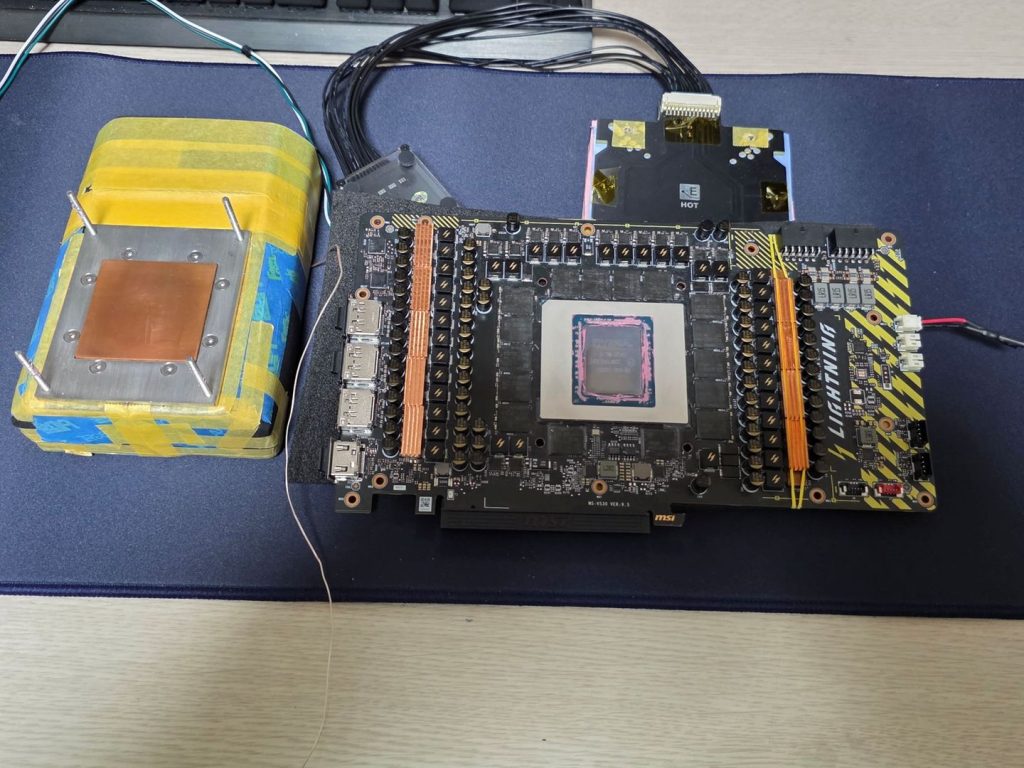
Unreleased MSI RTX 5090 Lightning GPU revealed in benchmark submissions

The high-end graphics card market is bracing for a literal storm as MSI prepares to resurrect its legendary Lightning brand at CES 2026. While the company hasn't confirmed it officially just yet, a series of calculated “weather forecast” teasers on social media predict thunder and lightning for the first day of CES. On top of that, a number of record-breaking benchmark submissions have also been unearthed, pointing to an RTX 5090 Lightning announcement. 

Various overclockers have shared the results of their work on HWBot (via Wccftech), where the MSI RTX 5090 Lightning was explicitly named in submissions from TSAIK, Lucky_n00b, and littleboy. TSAIK seems to have been the most successful, setting new world records for GPUPI v3.3 1B (1-core), 3DMark Port Royal, 3DMark Time Spy GPU, 3DMark Wild Life Extreme, 3DMark Speed Way, and Geekbench 6 Compute. During these runs, the overclocker also set the world record for RTX 5090 GPU frequency at 3,742 MHz. Lucky_n00b and littleboy were also reasonably competent, with the former getting the world record for Geekbench 5 Compute and the latter for 3DMark Solar Bay and Solar Bay Extreme.

Image credit: HWBot (littleboy)

The GPU itself appears to be an absolute behemoth designed for extreme scenarios. Leaked images and early technical data point to a massive 40-phase VRAM power delivery system. Perhaps most telling of its power requirements is the presence of dual 12V-2×6 power connectors, a configuration that doubles the potential power input compared to standard enthusiast cards.

Furthermore, Lucky_n00b has shared what appears to be the maximum power limit in the BIOS for the MSI GeForce RTX 5090 Lightning graphics card, which can reach 2500W. The overclocker also stated that the sample he received didn't include a proper cooling solution. Instead, he got the “OCER” version, which consists of a bare PCB and a test heatsink.

MSI has not used the Lightning moniker for a flagship Nvidia card since the RTX 2080 Ti Lightning Z in 2019. By bringing it back to the Blackwell architecture, MSI is signalling a return to the over-the-top engineering that defined the GTX 1080 Ti and Radeon R9 290X Lightning eras. For the average consumer, these records serve as a demonstration of silicon potential rather than out-of-the-box performance. However, for those with the budget to reach the absolute ceiling of the RTX 5090, the Lightning is positioning itself as the new benchmark to beat.

KitGuru says: The return of the Lightning brand marks MSI's first real “halo” card since the 20-series. With a 40-phase VRM and dual 12V-2×6 connectors, the new Lightning card is clearly not intended for the average gamer but rather for extreme overclocking in a lab.

The post Unreleased MSI RTX 5090 Lightning GPU revealed in benchmark submissions first appeared on KitGuru.
  •  

The Cyberdeck: How Personal Computing Enters VR

William Gibson's 1984 novel Neuromancer describes jacking into "the consensual hallucination" of "the matrix" with a "custom cyberspace deck" projecting one's "disembodied consciousness" there. The hardware necessary to spend time in VR is a "cyberspace deck" seen "banging against" the hip of the main character.

In 2026, the "Realworld cyberdecks" page on Reddit says "The era of virtual reality is coming, so it is also time for cyberdecks to come" as hundreds contribute new rigs weekly.

If the "era of virtual reality" is coming and a "cyberspace deck" is how we get there, what do the first “realworld” decks look like? What are their functions?

Unlocking Digital Data In VR By Locking It To The Real World

What is a cyberdeck?

My custom deck begins at a couple terabytes of local storage of videos, photos, music, games, and other personal files. I've been able to access this data store in VR since about 2016 with Virtual Desktop. I don't buy much software from Microsoft, though, so my data has been an ill fit inside Windows. Looking ahead, I’d love to build on my data with a Framework laptop to drive VR directly with Linux. In the meantime, I'm using macOS, iOS, Windows 11, SteamOS, and various flavors of Android to operate my file systems.

Many of us already carry, at the very least, 50 gigabytes of storage in our phones everywhere we go. Is it so difficult for us to imagine a couple years more and almost everyone finding use for terabytes carried with us?

After roughly a decade of headsets from Gear VR in 2014 to Quest 3 in 2023, when the Vision Pro arrived in 2024 I first experienced a standalone system unlock terabytes of digital information to use in VR. Apple brought apps from my iPad and iPhone, sure, but I also started perusing my own personal data store on local drives wirelessly through Mac Virtual Display. When I use the feature, my Mac's screen turns off in the "realworld" and a resizable virtual panel opens in VR instead. If anybody else happens to be watching my screen my data isn't displayed there anymore. For some scenarios that's a bug, but for many it's a feature.

Gibson's fiction understood the value of cyberspace before "the matrix" could actually be. Now VR is a consumer reality and our model for personal storage of digital content collides with Gibson's idea of a deck and the technical delivery of cyberspace. For example, you discover the confines of your digital keepers when you apply personal computing to your life without any specific platform limitations. The FAT god commands us to store no file greater than 4 gigabytes. And beware special characters in thy filenames.

In my view, a "custom deck" starts with pouring one's personal data into any portable device. MicroSD cards are readable in Steam Decks and Steam Frames while thumb drives include their universal connector. So you can start building a deck starting from a $15 thumb drive or MicroSD card, and build up over time to a multi-thousand dollar laptop with the very latest graphics card to cyberspace.

Entry Level Decks

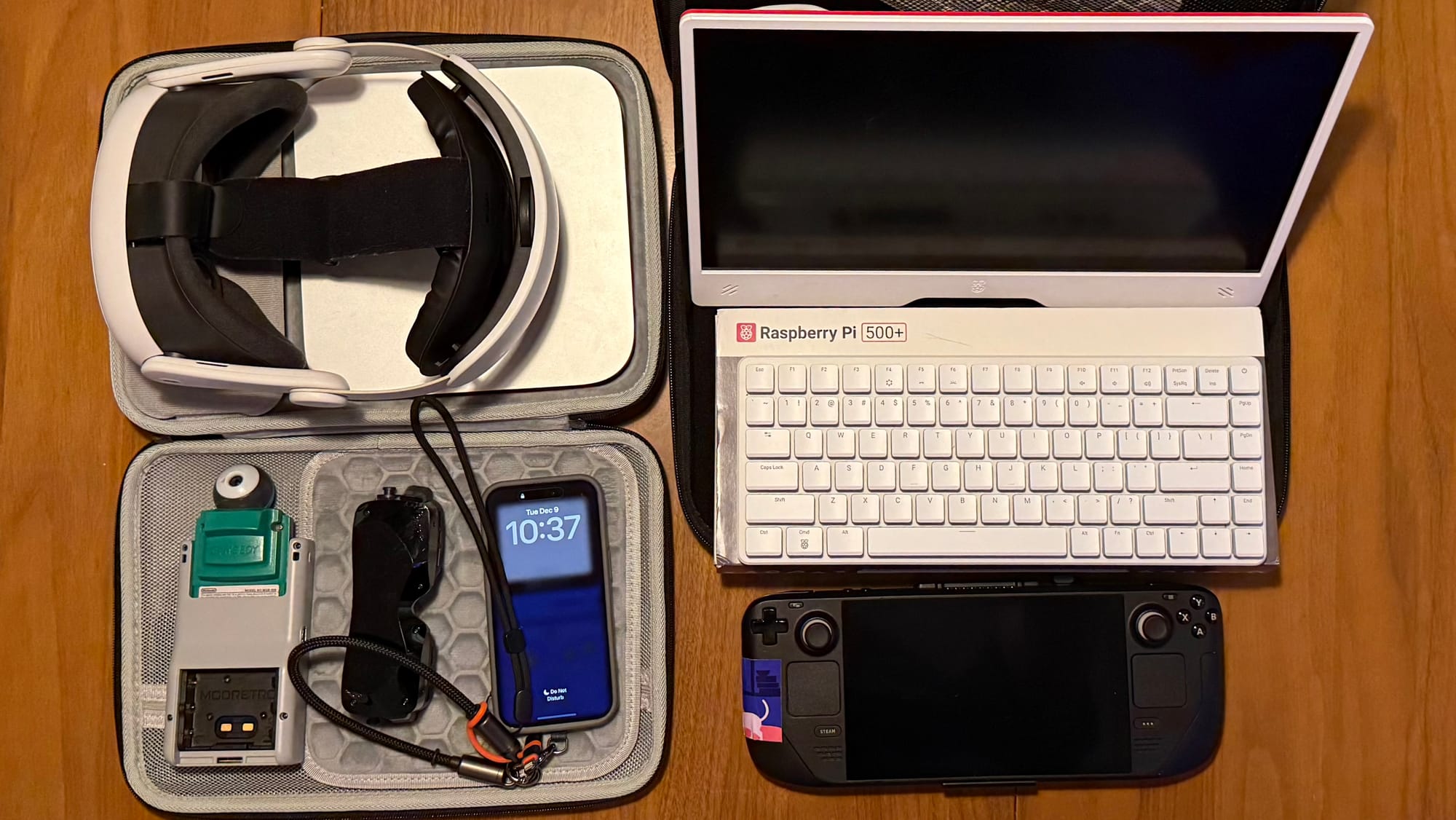
Hanging from a bag in the corner of my office is the latest personal computer from Raspberry Pi. Described as a "premium desktop computer" the Raspberry Pi 500+ is a keyboard selling for $200 with a 256-gigabyte solid-state drive built in running Linux.

Just send USB-C power into the Raspberry Pi and the keyboard starts computing. I used the included tools for the 500+ to unscrew the bottom of the keyboard and swap out its drive. The custom computer boots to the desktop quickly and now carries four terabytes of storage underneath satisfying mechanical keys.

Now I just need somewhere to display my files.

Conceptually, Raspberry Pi and I put together a custom deck of hardware and software that's cheaper and more portable than anything made by Apple. The Pi doesn't take me to cyberspace but it can display in cyberspace, and I can access it there as if from a floating terminal just like my Mac. And all of it is running in the space occupied by the keyboard traditionally used to operate a personal computer.

Wi-Fi and Bluetooth emanate from the keyboard. In the back, ethernet, USB and micro HDMI ports connect physical accessories. The biggest problem is that the year is 2026 and we don't have the easy-to-use software I need in virtual reality to access my deck's files wirelessly. Instead, I hack my keyboard PC into VR by any means necessary. That means dealing with stuff like VNC and IP addresses or perhaps a latency-inducing capture card.

The Steam Deck offers access to Linux in a more user-friendly handheld console-like form factor compared with any Pi or Mac. If logging into Steam online before you can do fun things with your computer is too restrictive, then you can build your own deck of hardware and software and log in online only if you want.

A Framework For The Future

Readers who invest multiple thousands of dollars in their personal computing rigs know $200 or even $500 doesn't truly buy a "premium desktop computer". If a Raspberry Pi can only display a flat screen in VR, then a Framework laptop should be able to fully embrace the concept of a cyberdeck carrying an NVIDIA RTX 5070 and 64 gigabytes of RAM.

My ideal configuration for a personal computer essentially matches the price of a top-of-the-line headset for a top-of-the-line deck that's upgradeable for years. To me, it doesn't really matter if my "deck" starts with my data on a thumb drive in a well-structured folder system, or if there's a complex operating system and graphics card and central processor with a virtual assistant managing my data. The computer becomes "custom" and "personal" when I put my data inside.

The aim is to bring personal computing with me wherever I go. It's not to the cafe or on a plane I really care about my deck of data and hardware going. Sure, those places would be great, but the most important place a deck goes is in VR.

Everyone Already Owns A Cyberdeck Lacking Direct VR Support

Bigscreen Beyond 2 needs a deck.

A cyberdeck is the missing key to Bigscreen Beyond.

As long as you're seated there in your chair and have a good supply of clean power, conceptually speaking, Bigscreen Beyond and a Framework laptop should put you in cyberspace when the headset touches your face.

Yes you need lasers sweeping the room right now for Beyond and a network connection added to this core experience would bring a lot. Yes you could also add accounts, friends, entitlements, digital rights management and thousands upon thousands of other services and software packages as with any open computer.

Whether Beyond is running from a desktop PC or the Framework laptop is a secondary concern. All that fundamentally matters is that when you go to VR you have at your fingertips a storage device you can separate from your computer with all your personal and favorite files organized, indexed, searchable, accessible and playable.

As of this writing, data portability in the "cloud" typically means waiting hours or days to download a store of information from a provider. There's a more immediate and extreme example of data portability, however, and we've had it for decades with removable storage systems.

If you have the freedom to immediately unplug both your content and yourself from the network and the headset, you also have the freedom to take your stuff with you anywhere and everywhere, in VR or otherwise.

From MP3 Players & Headphones To PCs & Assistants

Over the last quarter century, the MP3 player became the iPod and music libraries became the launchpad for iPhone – a new kind of hyper-connected deck filled with personal information. From iPhone and Android, our pocket decks consumed almost every product category of personal computing and remade a few others.

Something new is happening with spatial computing starting with experiences in virtual reality and extending into passthrough views and mixed reality. Any surface can become a touch-sensitive display. And our existing touch-sensitive displays become even more useful accepting touch input while turning off the flow of photons. They just send that data as bits over the network when needed. With reskinnable passthrough views, that "deck" in hand can become anything from a camera to a map to a tool to drag objects. Even non-interactive displays can become frames for new functionality. Watch a movie with closed captions while a friend seated on the same couch enjoys the same film in 3D without any text distractions.

That's just for starters. Now imagine looking down at your phone in hand in VR and swiping along its surface, but in the real world the screen is off. Or imagine playing Breath of the Wild while standing in Hyrule and holding a Sheikah Slate.

Like the words "virtual reality" before we could go there anytime, the word "cyberdeck" right now still exists largely in the realm of fiction, except to the people posting to a creative subreddit. It is still mostly a concept. But as a concept, consider the possibility that VR is taking so long to become accepted by mainstream audiences because we lack our companion devices, data, and services as we walk around another universe. To interact with VR, we hold a pair of controllers standing in for hands instead of a cyberdeck displaying a map of where to go.

Bring on the pucks to access cyberspace with terabytes carried between headsets and glasses. In the meantime, Neuromancer is in production for Apple TV.

  •  

Qualcomm Snapdragon X2 Plus Boosts Performance And Efficiency For Windows AI PCs

Qualcomm Snapdragon X2 Plus Boosts Performance And Efficiency For Windows AI PCs Qualcomm is expanding its latest-generation Snapdragon chip line for Windows laptops with the Snapdragon X2 Plus, and with the new addition comes the promise of a "legendary leap in performance." It slots underneath the existing Snapdragon X2 Elite that was unveiled several weeks ago and fleshes out Qualcomm's arsenal for its continued Arm-based
  •  

HP Unveils OmniBook Ultra 14 With Snapdragon X2 Elite And OLED To Challenge MacBook

HP Unveils OmniBook Ultra 14 With Snapdragon X2 Elite And OLED To Challenge MacBook HP is trotting out a bunch of new laptop and desktop designs (among other things) at the Consumer Electronics Show in Las Vegas this week, one of which is its sleek OmniBook Ultra 14 powered by Qualcomm's Snapdragon X2 Elite chip. According to HP, it's 52% lighter than the previous generation, and 5% thinner than a 2025 MacBook Air 13 (M4). It
  •  

Zeroth Is Bringing Wall-E And More AI Robots To Consumers In The US

Zeroth Is Bringing Wall-E And More AI Robots To Consumers In The US Zeroth Robotics has officially stormed CES 2026 with a fleet of five AI-powered mechanical companions designed to infiltrate our homes, workplaces, Christmas wish lists, and Pixar fever dreams. Quite undisputedly, the star of the show is the $5.600 W1 WALL-E lookalike, which brings everyone’s favorite trash-compacting romantic into the
  •  
❌