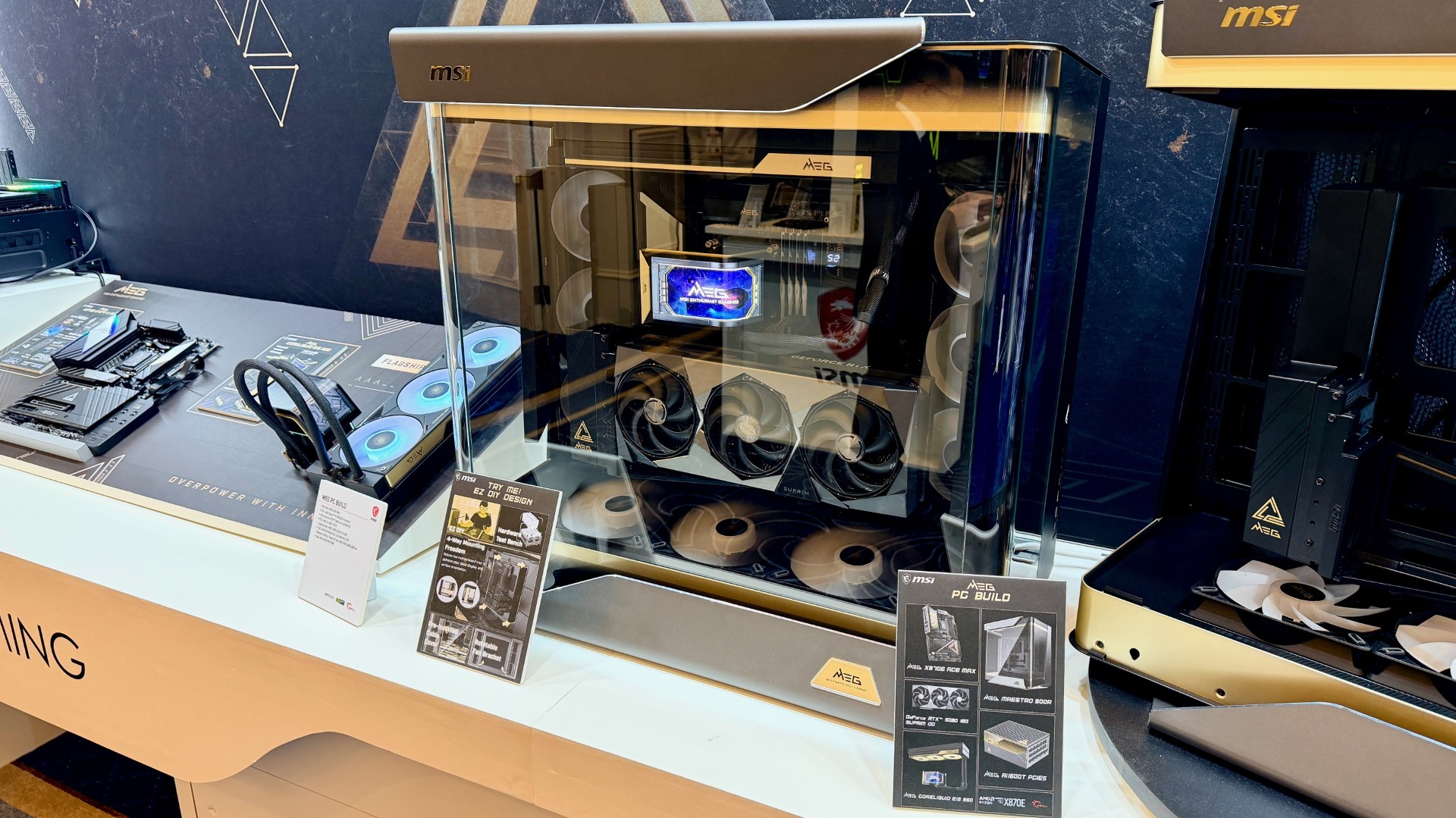
One of the clearest messages from our pre-CES briefing at MSI’s Taipei HQ, is that the company is no longer thinking solely in terms of isolated components. For 2026, the focus is on complete platforms, where motherboard, power delivery, cooling and chassis are designed and engineered as a single system. This is most evident in the MEG range, supported by the introduction of Safeguard+ at the PSU level and a substantially revised AMD MAX motherboard strategy built around X870E.
Rather than chasing peak benchmark numbers in isolation, MSI appears to be targeting stability under sustained load, predictable behaviour when pushed outside default limits and fewer failure points – as next-gen GPUs and CPUs continue to draw more power and operate closer to their electrical limits.
The MEG system: building around the extreme user
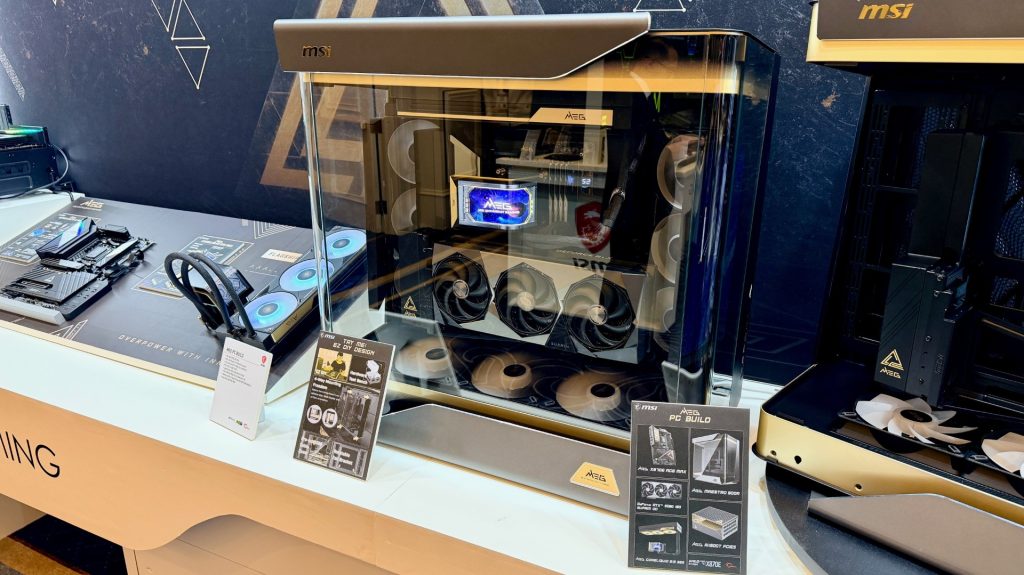
MEG, short for MSI Enthusiast Gaming, sits at the top of MSI’s desktop stack. What’s different with this generation is how tightly the individual MEG components are designed to work together, rather than simply sharing branding.
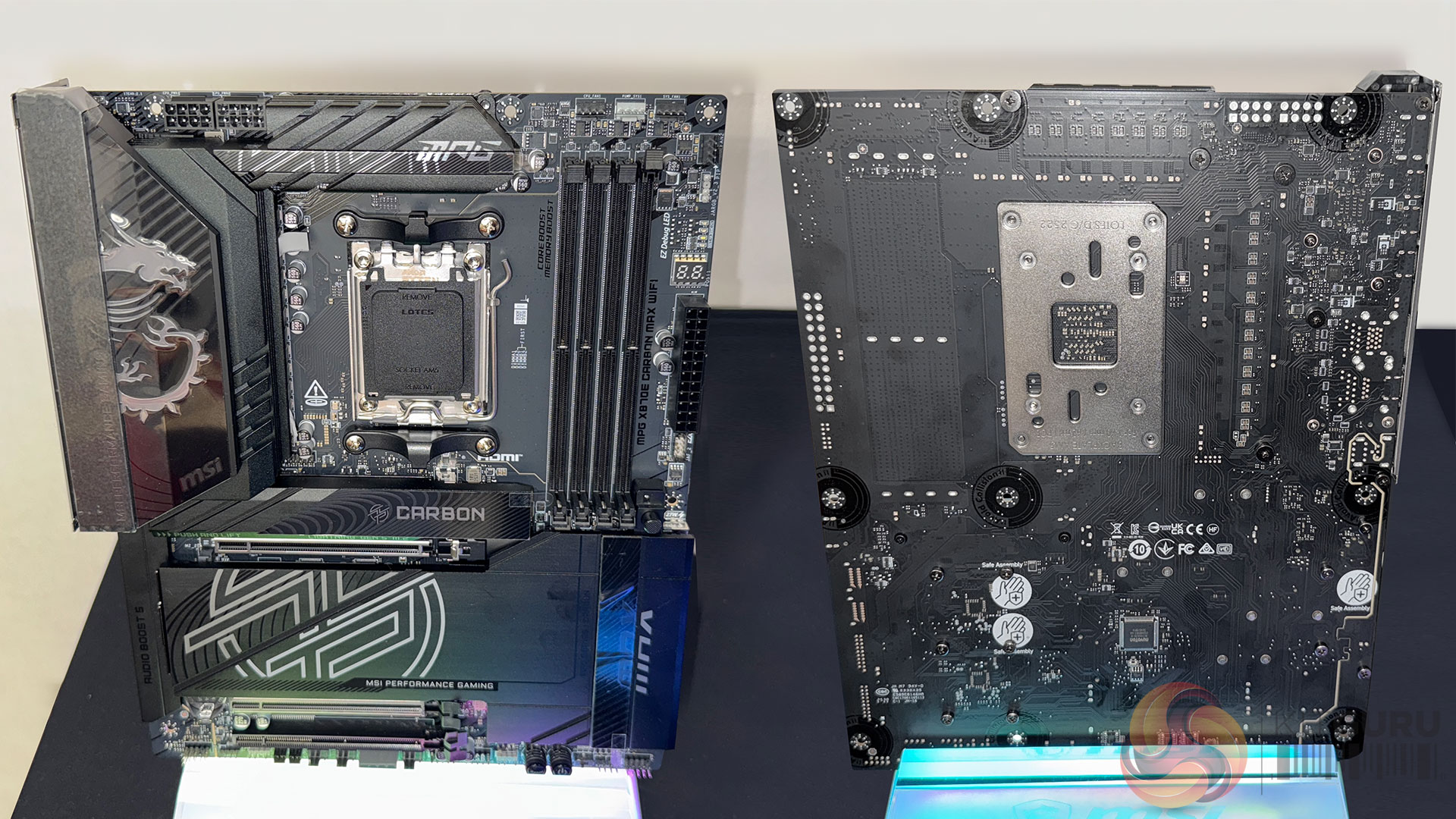
At the centre of the MEG system is the X870E ACE MAX motherboard. It uses an 18+2+1 phase power design with 110A smart power stages, mounted on a high-layer, server-grade PCB with 2oz copper. This is not unusual in isolation, but the way MSI builds around it feels more deliberate than before.
Power delivery and overclocking control
The defining feature across MAX boards is the built-in OC Engine, which decouples base clock control from the rest of the system. Instead of raising BCLK and dragging memory, PCIe and NVMe controllers out of specification, the OC Engine allows fine-grained CPU base clock adjustment while keeping other subsystems within tolerance.
For enthusiasts, the benefit should be more than just theoretical. It looks to enable measurable gains on modern Ryzen CPUs without destabilising storage or I/O (which has traditionally been the limiting factor for BCLK-based tuning). MSI also supports this with the Direct OC Jumper, allowing real-time base clock adjustment from within the operating system, rather than repeated BIOS reboots.
This is paired with a 64MB BIOS ROM across MAX boards, doubling previous capacity. In practice, this allows MSI to retain full CPU support tables, richer firmware features and a less constrained UI, while maintaining forward compatibility as future Ryzen CPUs are introduced.
Thermal design as part of the platform
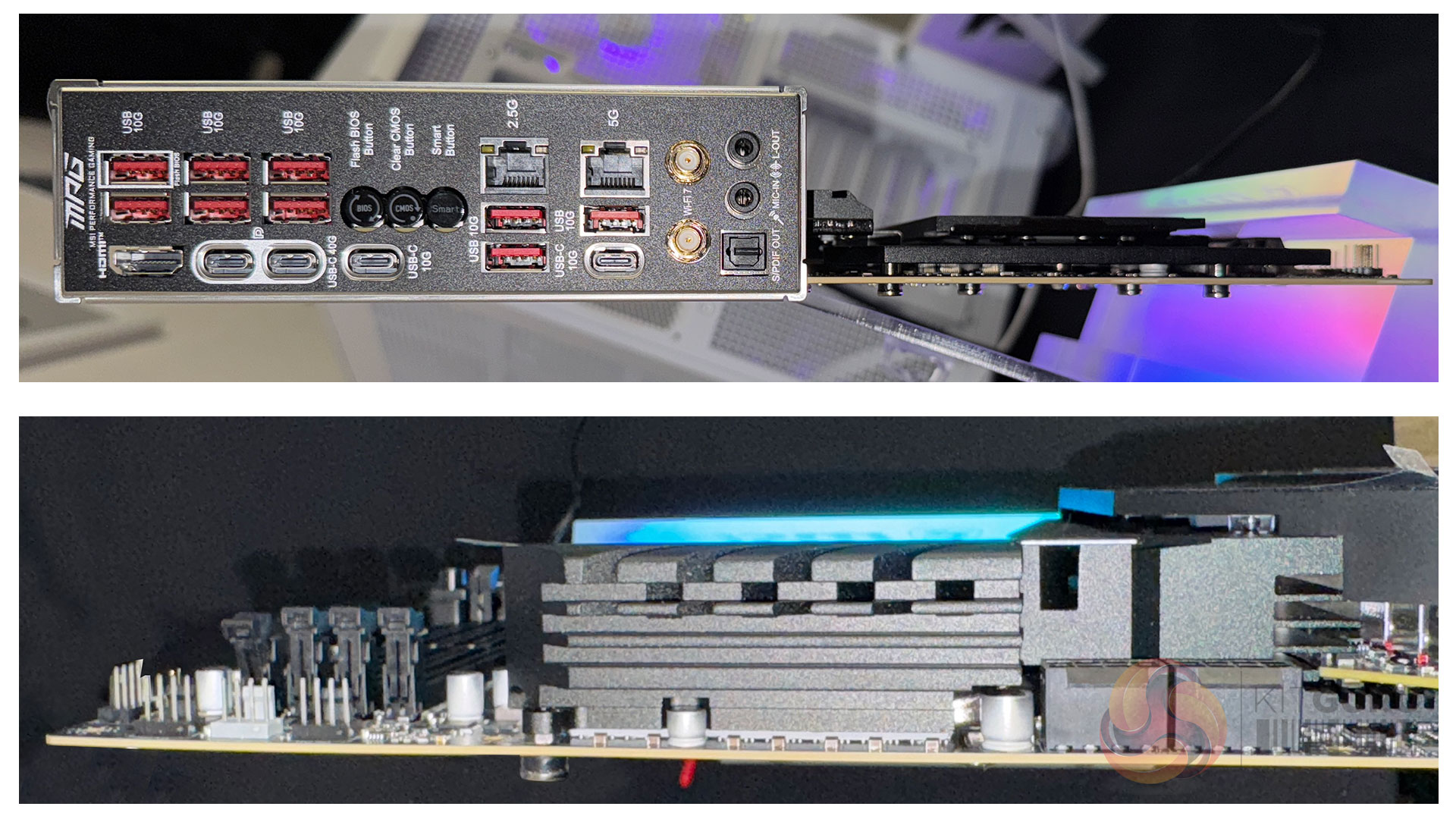
Thermal management is another area where MSI is treating the motherboard as part of a wider system rather than a standalone product. The Frozr Guard cooling architecture combines wavy-fin heatsinks, cross heat-pipes, high-conductivity thermal pads and full-length metal backplates.
Importantly, this is not just about MOSFET cooling. PCIe 5.0 storage controllers can generate significant heat under sustained transfer loads, and MSI treats M.2 thermals as a first-class concern, with double-sided shield designs and tool-free installation that encourages users to use them correctly.
The cooling strategy extends beyond passive hardware. Frozr AI Cooling and the Cooling Wizard integrate fan curves, thermal zones and workload behaviour – allowing the board to respond dynamically rather than relying on static profiles.
MEG beyond the motherboard: chassis, cooling and power
MSI’s intent to treat MEG as a system becomes clearer when looking at the surrounding components.
MEG Maestro 900R chassis
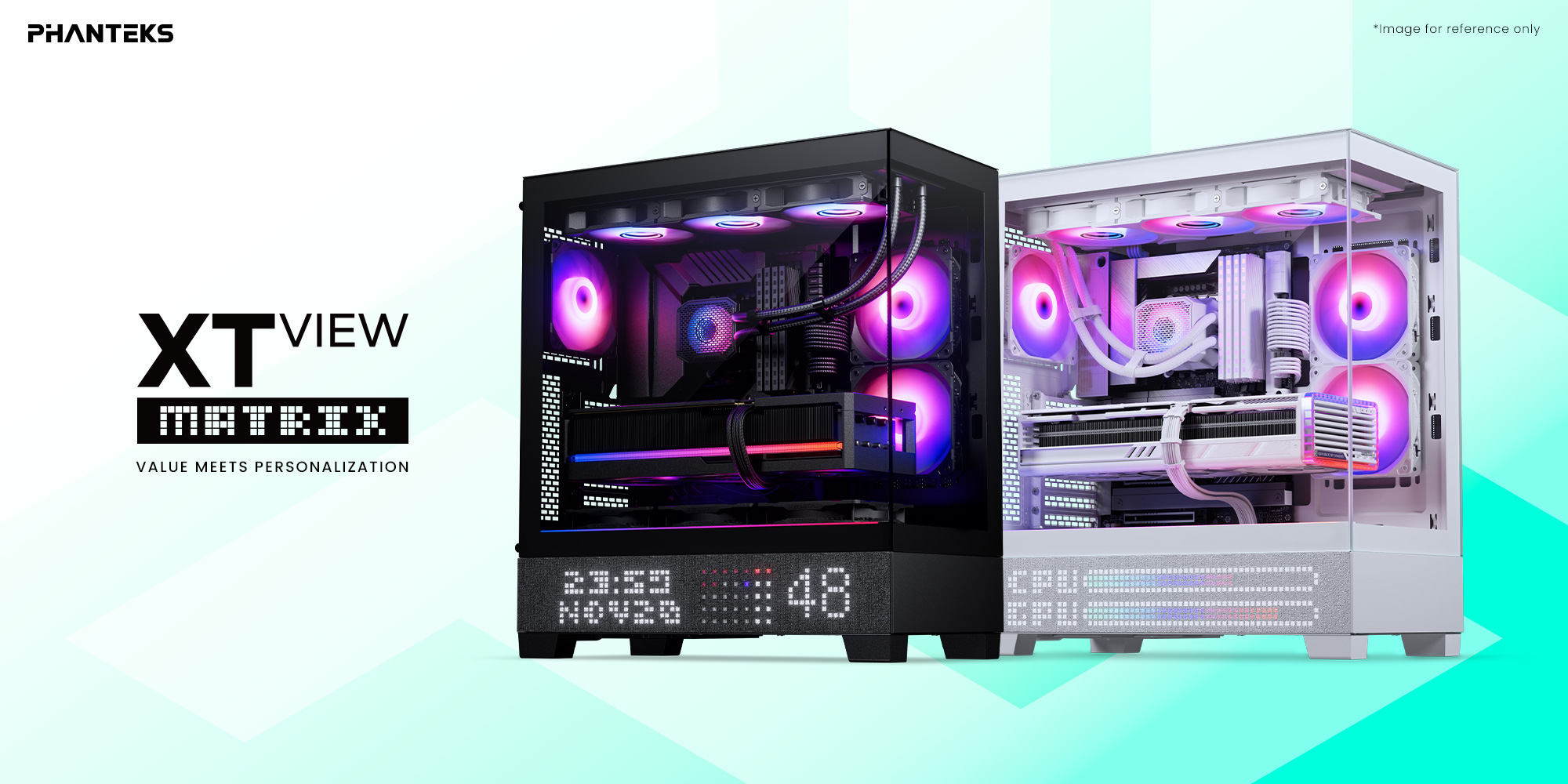
The Maestro 900R is MSI’s largest and most flexible case to date. It supports E-ATX motherboards, graphics cards up to 400mm long and multiple radiator configurations, with capacity for up to four radiators or 14 fans.
The defining feature is the rotatable and removable motherboard tray. This allows traditional, inverted or showcase layouts, and even converts the chassis into a standalone test bench. While this will appeal to modders and extreme builders, it also reflects a more practical consideration: Airflow optimisation around increasingly large GPUs.
Vertical GPU mounting, dual-GPU configurations and complex liquid loops should all be accommodated without forcing compromises elsewhere in the system.
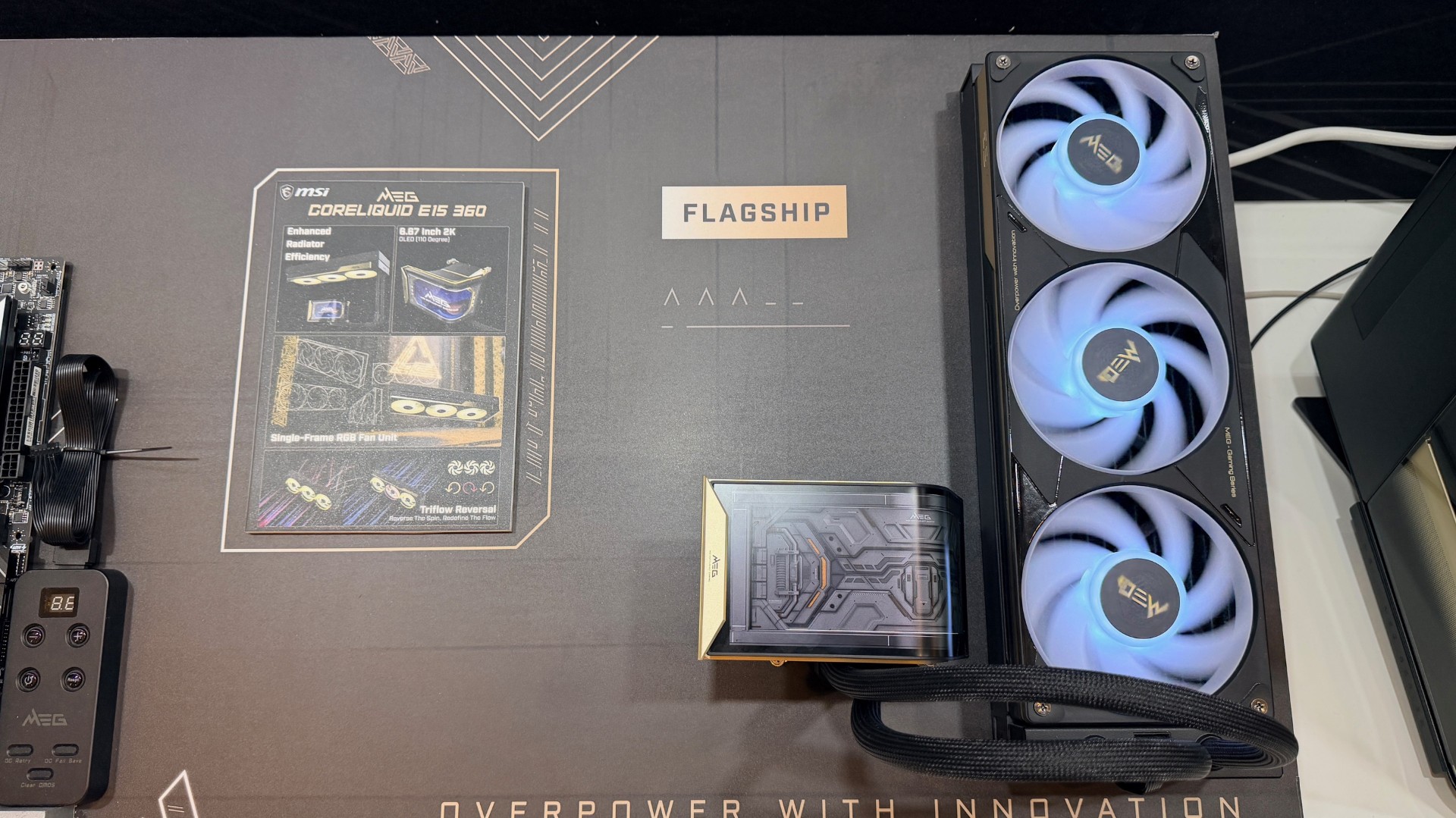
MEG CoreLiquid E15 360
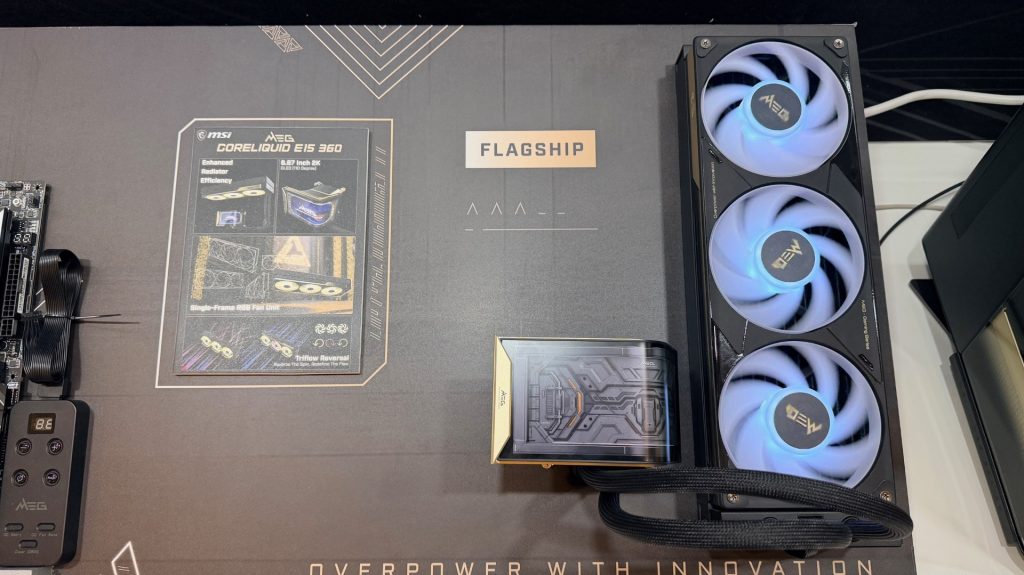
Cooling is handled at the top end by the MEG CoreLiquid E15 360. Beyond the obvious headline feature (which is a curved 6.67-inch OLED display with 2K resolution), the more interesting detail is the fan and cabling architecture.
The three radiator fans use alternating rotation directions to reduce turbulence and improve airflow consistency. All power, control and RGB signalling is routed through a single JAF_2 connector, significantly reducing cable clutter and potential installation errors.
The OLED display is configurable for system telemetry or custom visuals, but it also reinforces MSI’s broader move towards integrated system monitoring rather than relying on third-party tools.
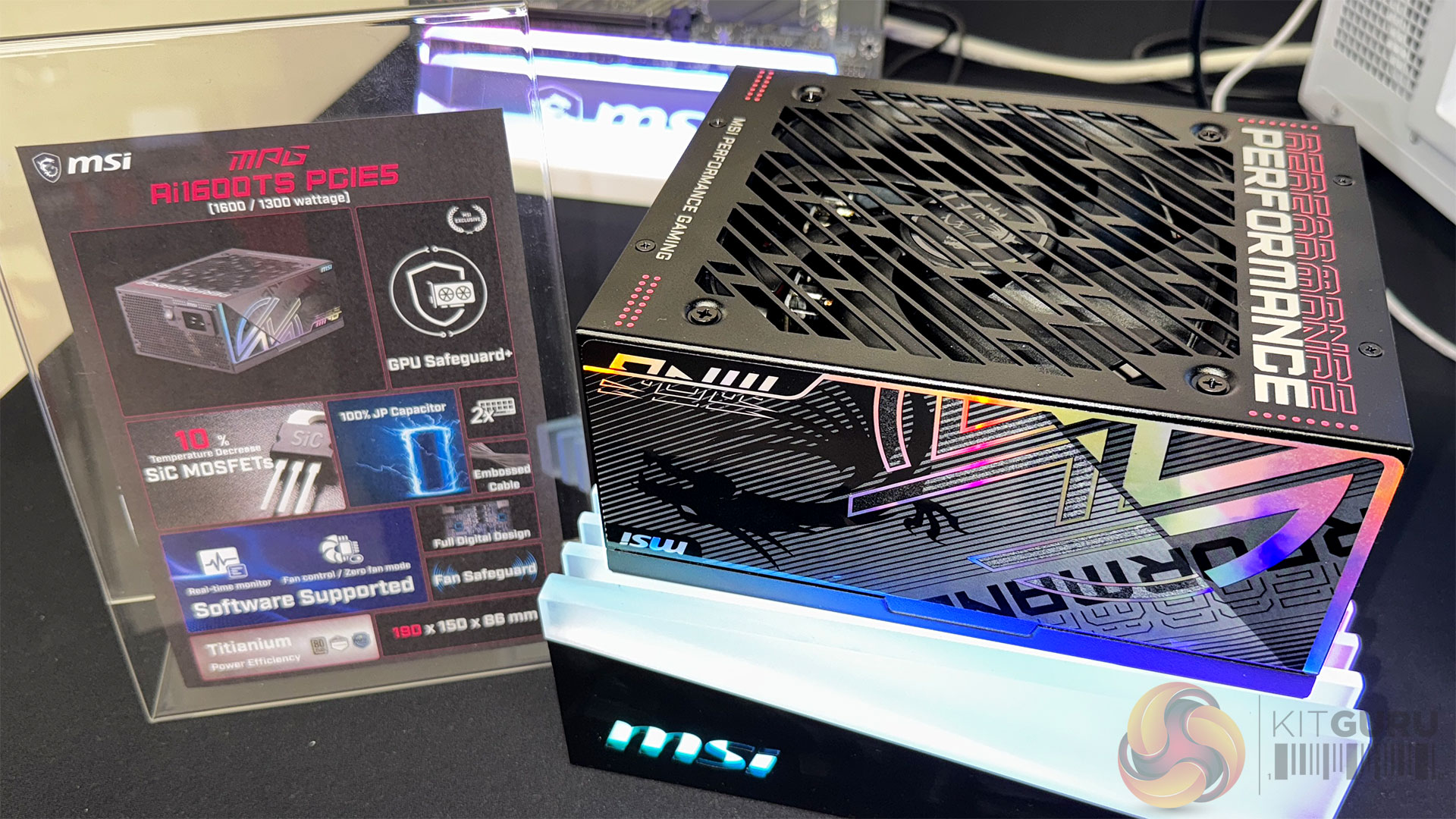
MEG Ai1600T PCIE5 power supply
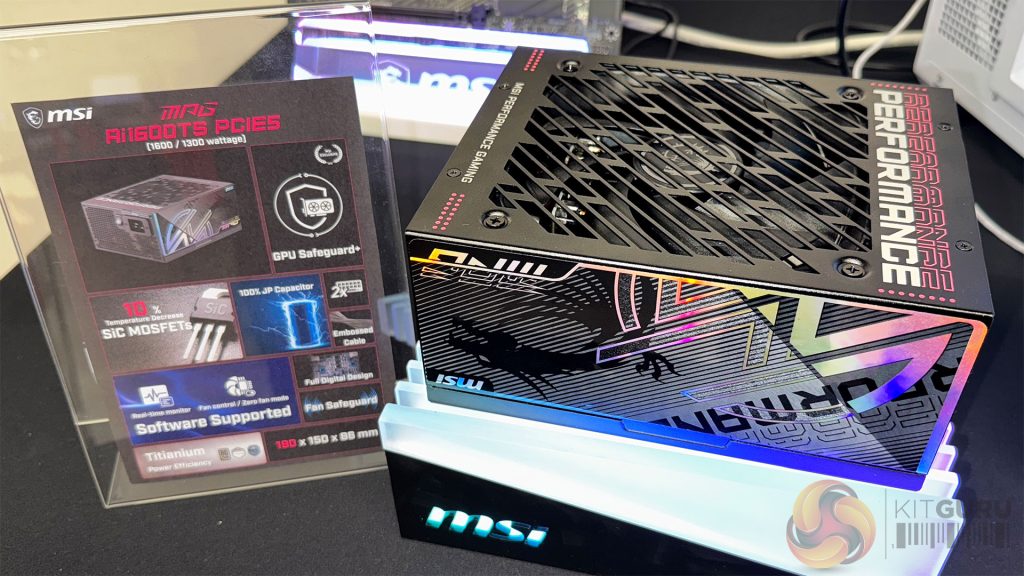
At the base of the system sits the MEG Ai1600T PCIE5 PSU. Rated for up to 1,600W with 80 Plus Titanium efficiency, it uses a fully digital design with SiC MOSFETs, reducing operating temperatures by around 10 percent compared to conventional silicon solutions.
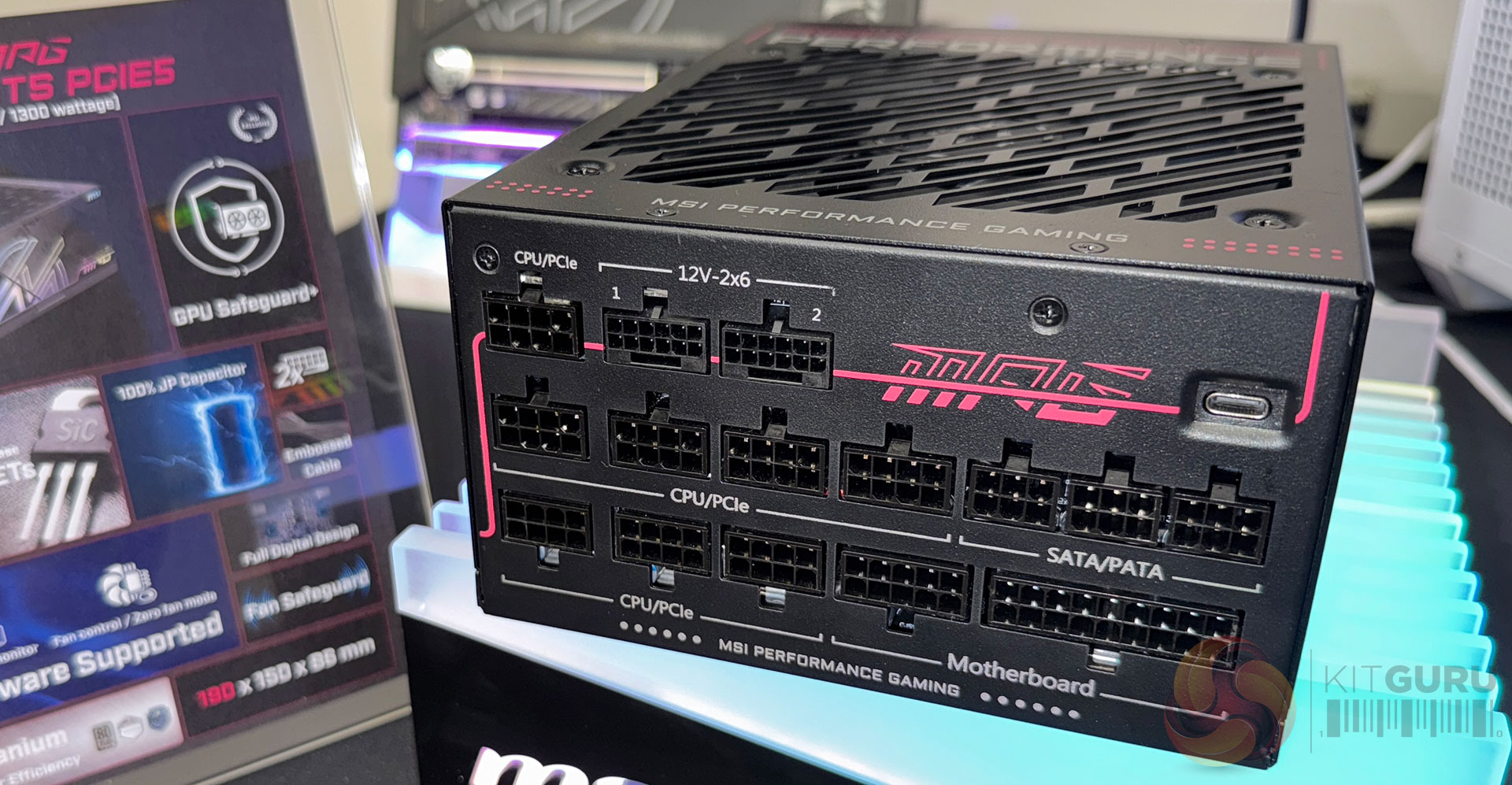
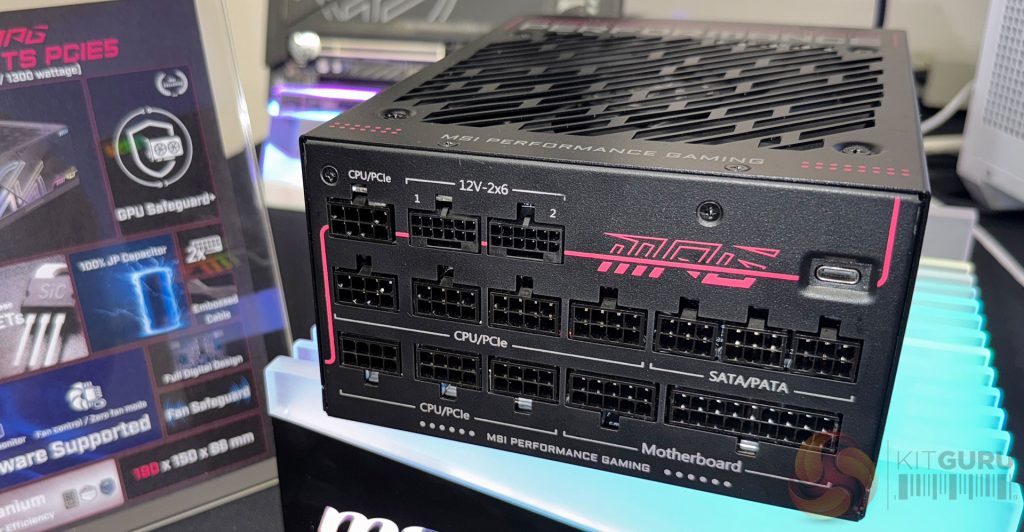
It provides dual 12V-2×6 connectors for flagship GPUs, which is increasingly relevant as single-card power budgets continue to climb. However, raw capacity is not the most important story here. That comes with Safeguard+ that is available on MPG Ai1600TS / Ai1300TS PCIE5, but not on the MEG Ai1600T PCIE5.
Safeguard+: Looking to address a real-world failure point
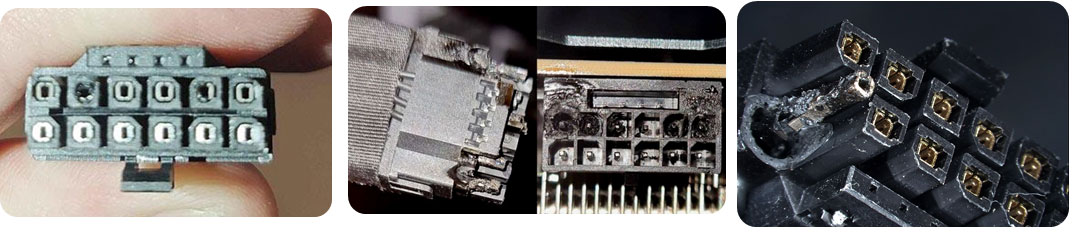
The move to the 12V-2×6 connector has solved some problems and created others. While it simplifies cabling and supports higher power delivery, it has also exposed systems to failures caused by poor seating, uneven current distribution and sudden overcurrent events. Safeguard+ is MSI’s attempt to deal with this ‘at the PSU level’, rather than leaving it to the GPU or the user.
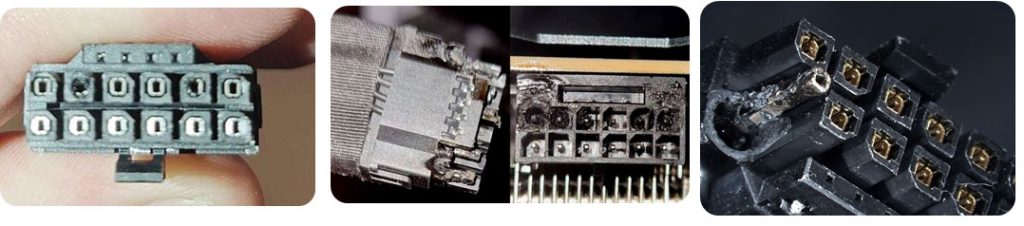
According to MSI, there continue to be power coupling issues across the industry – when connecting major-draw graphic cards and power supplies. They were careful to point out that if you only connect your GPU once, then it's likely to be fine – but if you (re)connect on a regular basis – then there is potential for problems.
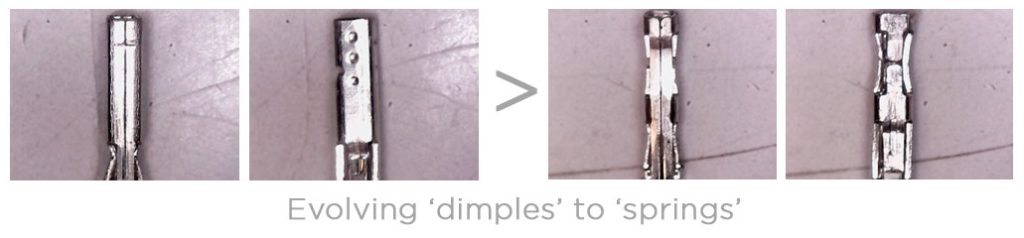
By changing connection mechanisms and other improvements, MSI believes that it can make high-wattage connections much safer. But the immovation doesn't stop with the physical PSUs themselves. Enter Safeguard+.
How Safeguard+ works
Safeguard+ uses an onboard microcontroller to monitor current across individual pins on the 12V-2×6 connector in real time. If it detects current imbalance or an instant overcurrent condition, the system moves through a defined protection sequence.
First, the user is alerted via a physical buzzer and an on-screen notification through MSI Center. If the issue is not resolved, the system disables video output while continuing to sound the alert, forcing user intervention before damage can occur.
This is not a soft warning system. It is designed to interrupt operation before heat or electrical stress causes permanent damage to the PSU, GPU or connector itself. We question whether an audio alarm is the best way forward, but at least it’s hard to ignore.
Software integration and logging
Through MSI Center, users can monitor real-time current delivery, PSU efficiency, temperatures and fan behaviour. Logs can be reviewed over time, making it easier to diagnose intermittent issues or confirm that a system is operating as expected under load.
Safeguard+ is implemented differently depending on PSU tier. MPG Ai1600TS and Ai1300TS models support dual 12V-2×6 monitoring with full software integration, while MAG-series units support single-connector protection with hardware alerts only.
Fan Safeguard
Alongside GPU-focused protection, MSI has implemented Fan Safeguard across new MPG and MAG PSUs. If the PSU fan fails to follow its expected rotation profile, whether due to dust build-up or disconnection, the PSU shuts down to prevent overheating. This is a simple feature, but it addresses a common long-term failure mode that is often ignored until damage has already occurred.
MAX series motherboards for AMD Ryzen: preparing for what comes next
The third pillar of MSI’s strategy is the MAX motherboard range, built around AMD’s X870E chipset. MAX is not a cosmetic refresh. It is a structural upgrade designed to extend platform relevance as CPU, memory and I/O demands increase. There will also be new B850 models on show at CES from MSI.
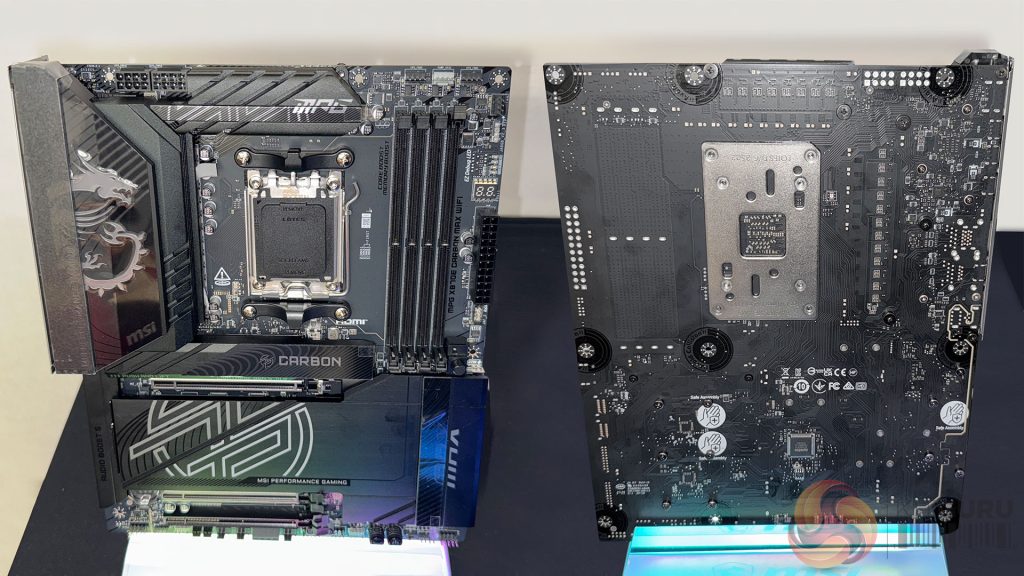
Power and memory headroom
MAX boards scale up to 24 power phases with 110A stages on flagship models, with memory support officially extending beyond DDR5-10000 on compatible kits. While not every user will reach these limits, the headroom matters for stability at more modest settings.
MSI has also paid attention to PCB design, using higher layer counts and server-grade materials on upper-tier boards. This improves signal integrity for both memory and PCIe 5.0 devices, which is increasingly important as data rates climb.
Lane allocation and PCIe 5.0
One of the quieter but more meaningful improvements is how MSI handles PCIe lane bifurcation. On MAX boards, the GPU x16 slot and dual PCIe 5.0 M.2 slots can operate independently, avoiding bandwidth sharing that can limit performance in real-world workloads.
On boards like the MEG X870E GODLIKE X Edition, MSI goes further, supporting up to five onboard M.2 drives plus additional Gen5 storage via the included Xpander-Z card.
Connectivity and I/O
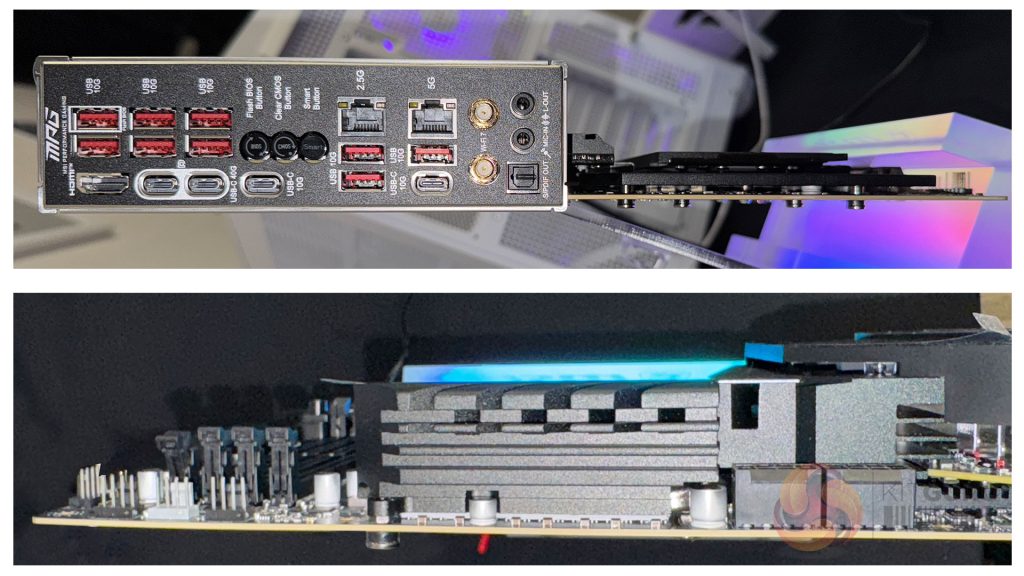
MAX boards standardise features that were previously reserved for select models. USB4, Wi-Fi 7 with full 320MHz channel support, and up to 10Gb Ethernet are now consistent across much of the range.
Front-panel USB-C charging is also enhanced, with up to 60W power delivery on higher-end boards, monitored in real time through the BIOS and software.
EZ DIY, taken seriously
MSI’s EZ DIY approach is not new, but on MAX boards it feels more comprehensive. Tool-free M.2 installation, PCIe slot release mechanisms, pre-installed I/O shields and consolidated cabling via EZ Conn and EZ Link designs all reduce friction during assembly and maintenance.
These are not headline features, but they matter when dealing with large, heavy GPUs and dense internal layouts.
In practical terms, we were told that a well configured system built on an MSI Max motherboard for Ryzen, could give you 5% to 15% additional in-game performance.
Across MEG, Safeguard+ and AMD MAX, MSI’s direction appears clear. The company is engineering for systems that are pushed hard, run for long periods and carry real financial risk when something goes wrong.
Rather than relying on user discipline or aftermarket solutions, MSI is building protection, monitoring and control into the platform itself. That does not make these systems simpler, but it does make them more predictable, which is arguably more valuable at this end of the market.
For enthusiasts, overclockers and professionals running high-end hardware at the edge of specification, that shift may prove more important than another incremental performance headline.
KitGuru says: In the DIY PC space, consumers are used to mixing up components from different vendors and throwing them all together in one system. As companies like MSI start to fill out their own ‘ecosystems' more, it becomes more tempting to buy more of your components from one place, as they've been designed to work well together.
The post
CES 2026: MSI unveils MEG system, AMD MAX motherboards and more first appeared on
KitGuru.
 Connexion
 UploadVRCharles Singletary