Connexion
NZXT F-Series X Fan Review: F120X/F240X/F360X

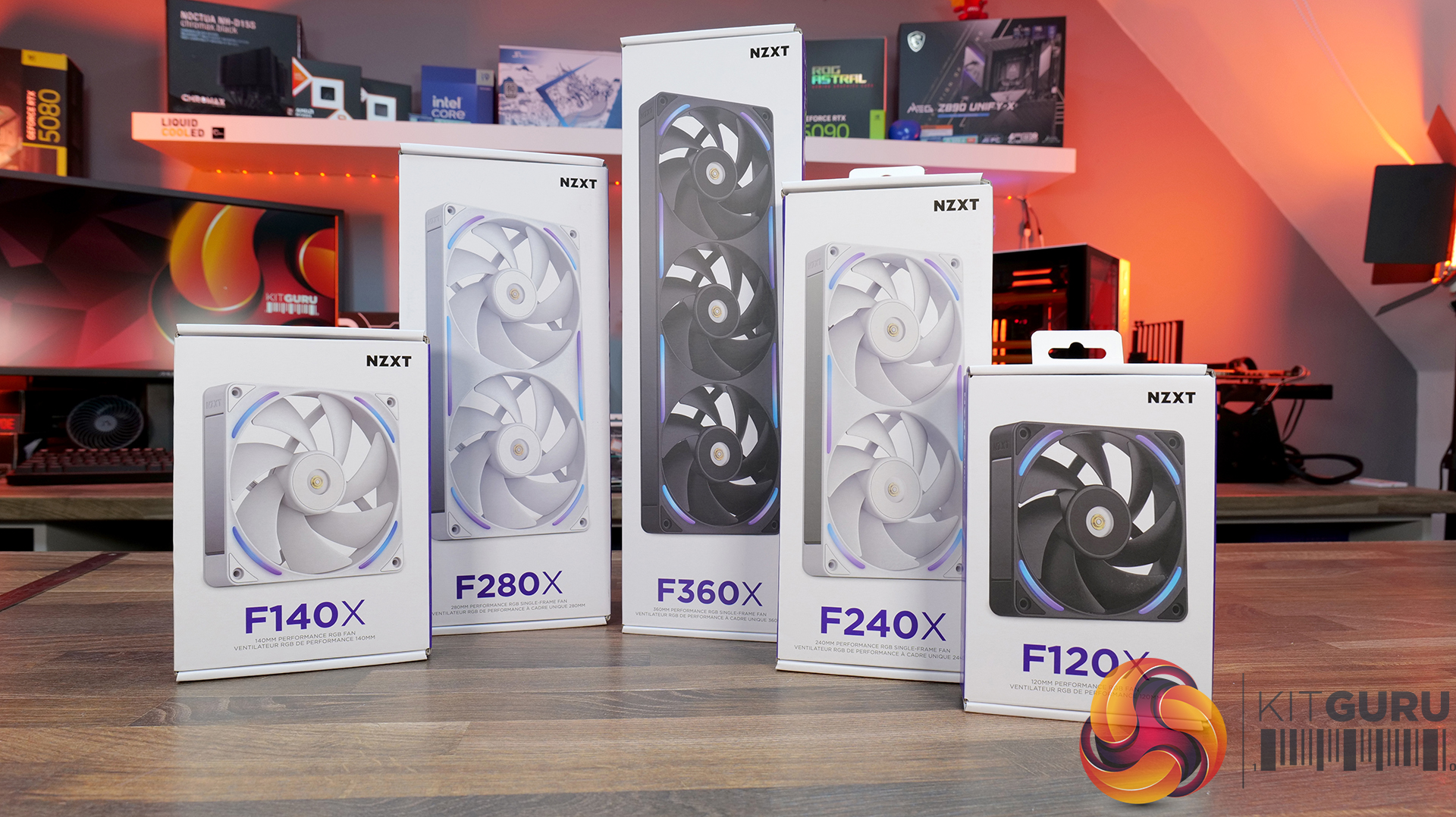
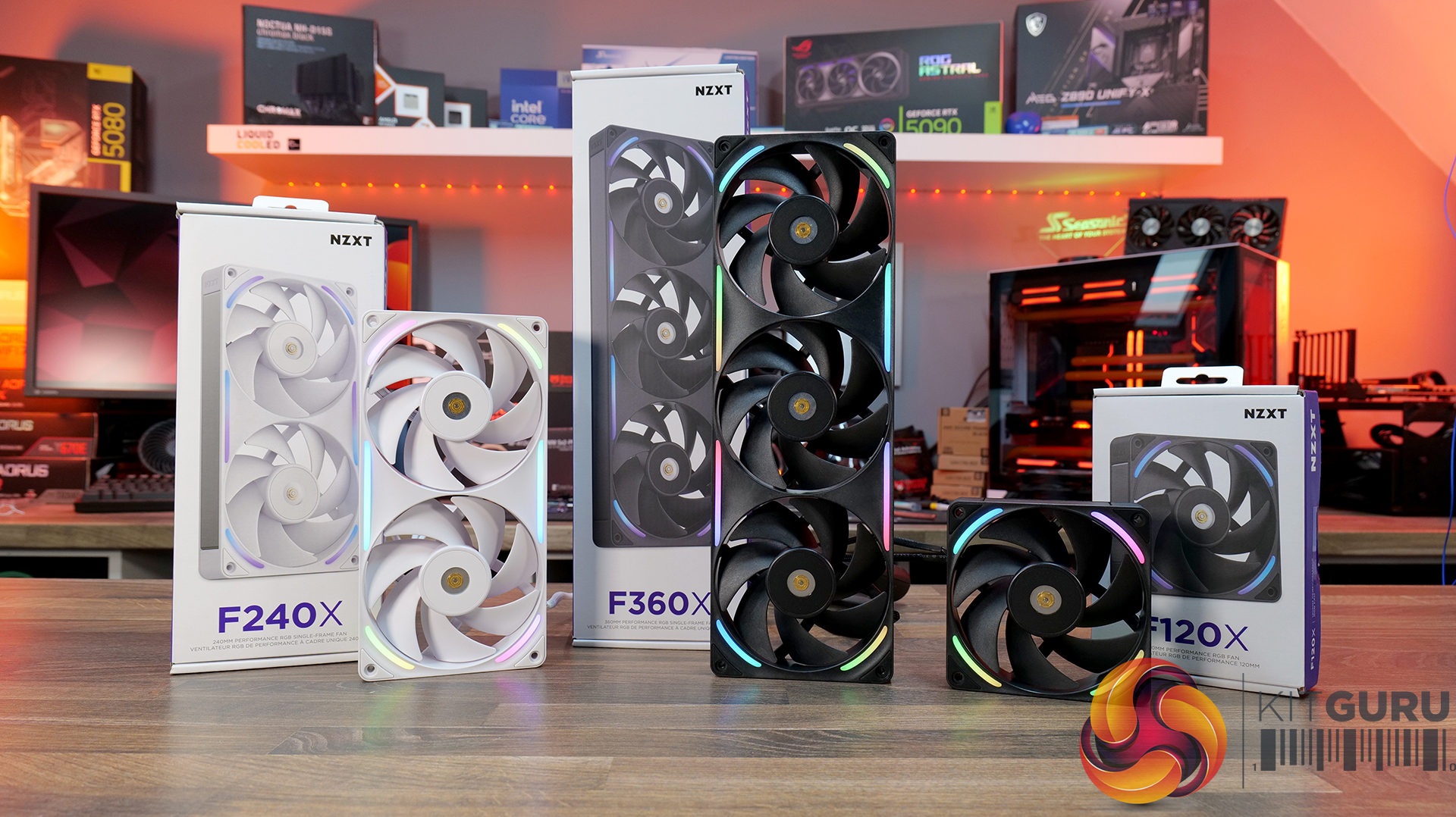
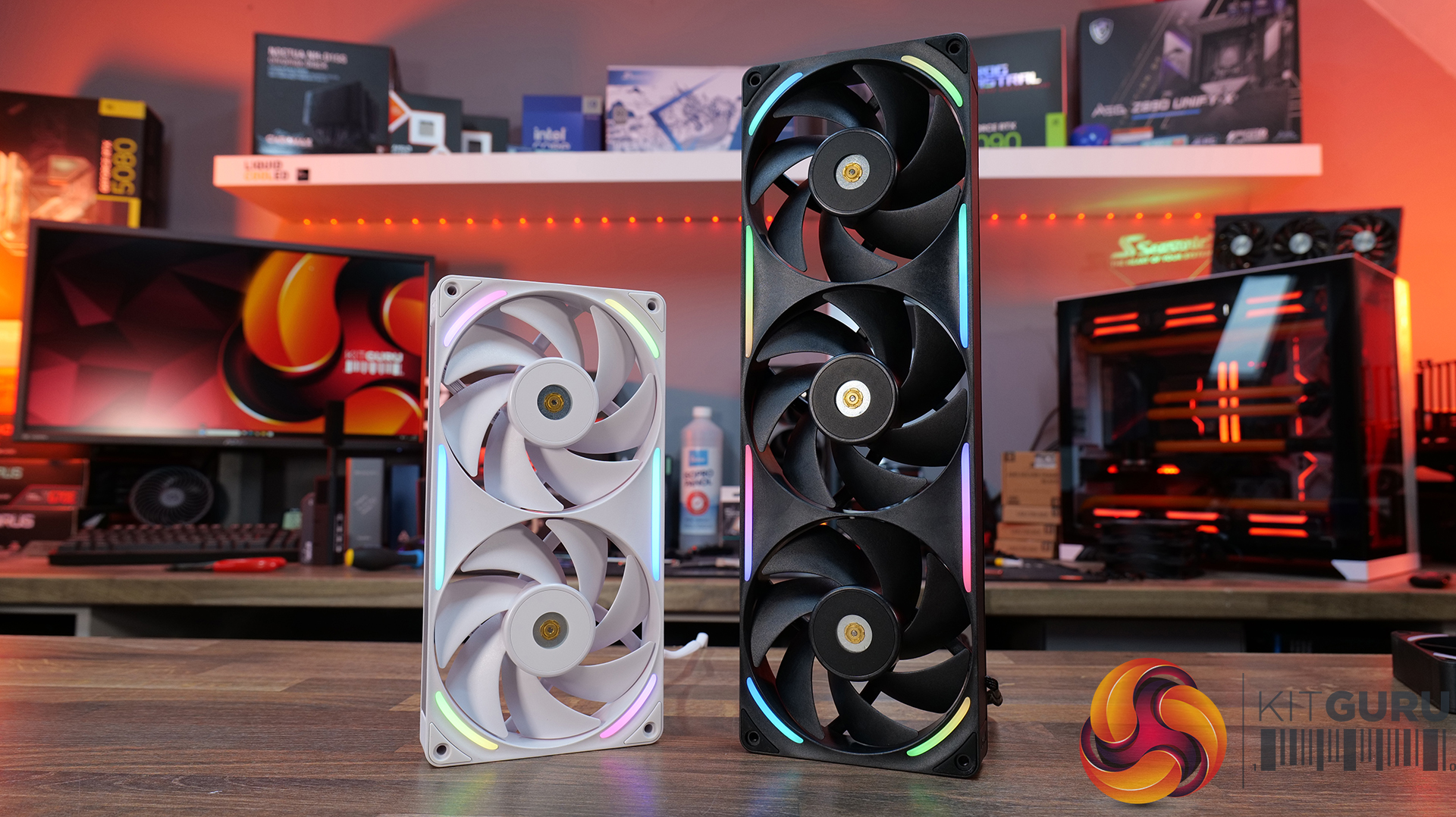
Today we’re taking a look at NZXT’s new F-Series X performance fans – the F120X, F240X, and the F360X. NZXT claims these are their most advanced fans yet, with LCP construction, ultra-tight tolerances, and a magnetic-levitation hybrid bearing designed to push serious airflow while keeping noise under control. We break down the design, the performance numbers, and of course whether these premium fans are actually worth the upgrade for your next build. Let’s dive in.
Timestamps:
00:00 Intro
00:52 The latest NZXT fans & pricing
02:10 Tech details on the coolers
02:38 A closer look at the fans
06:50 Do they look good?
07:07 Accessories
08:04 Test System
09:02 Smoke Visualisation Airflow Test
10:15 Thermal and Noise Performance
16:06 James thoughts – Are NZXT onto a winner?
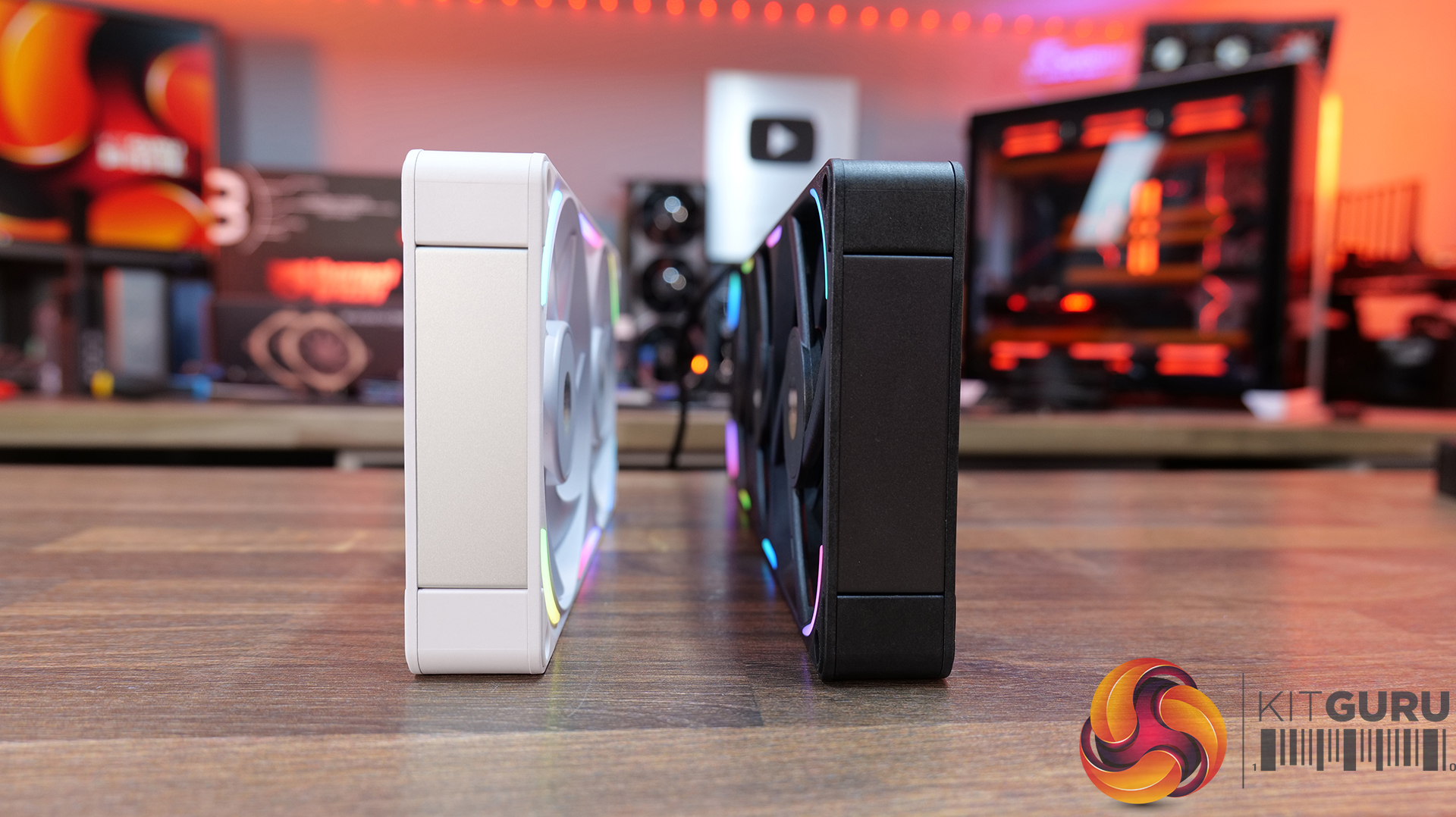
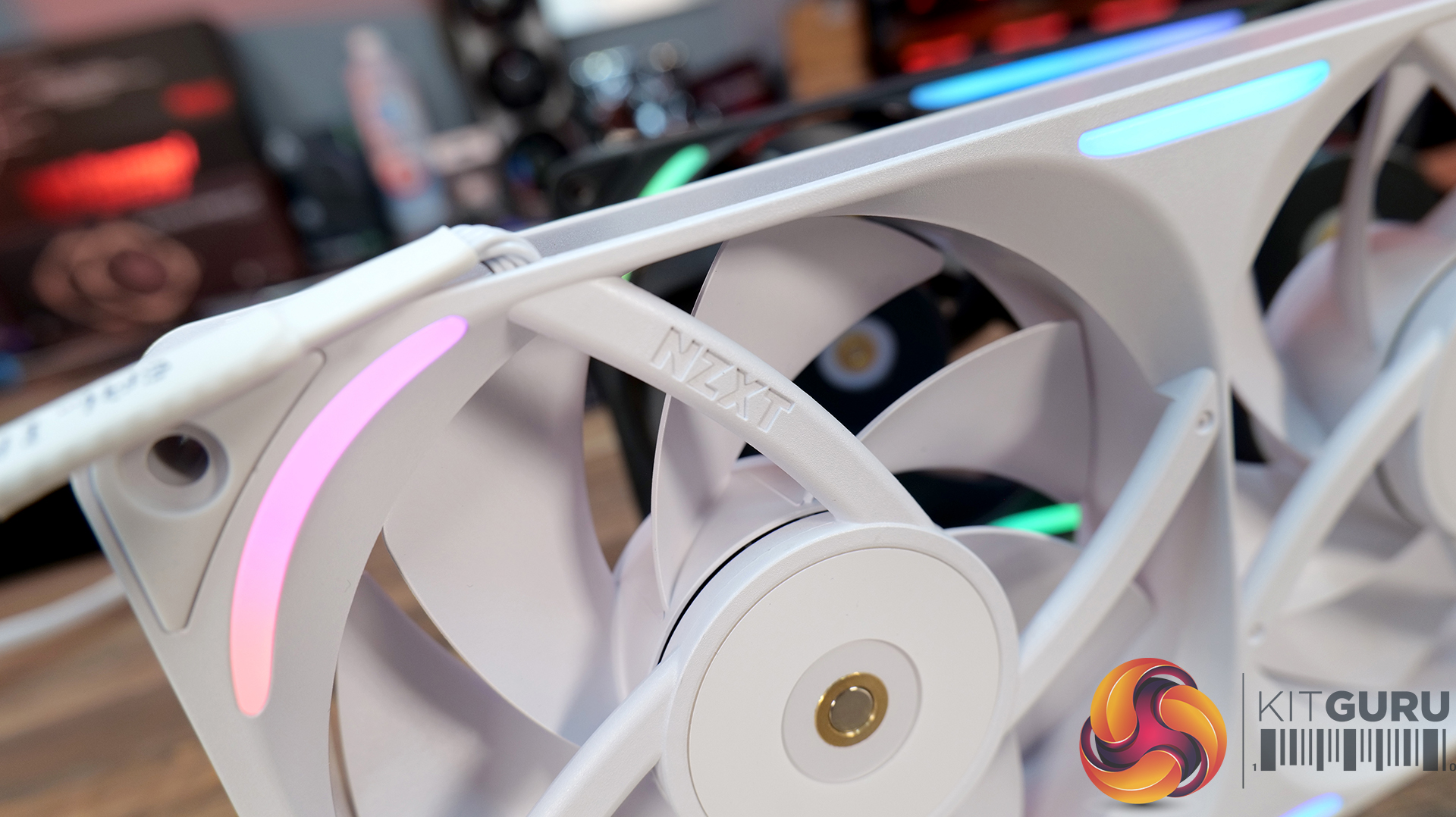
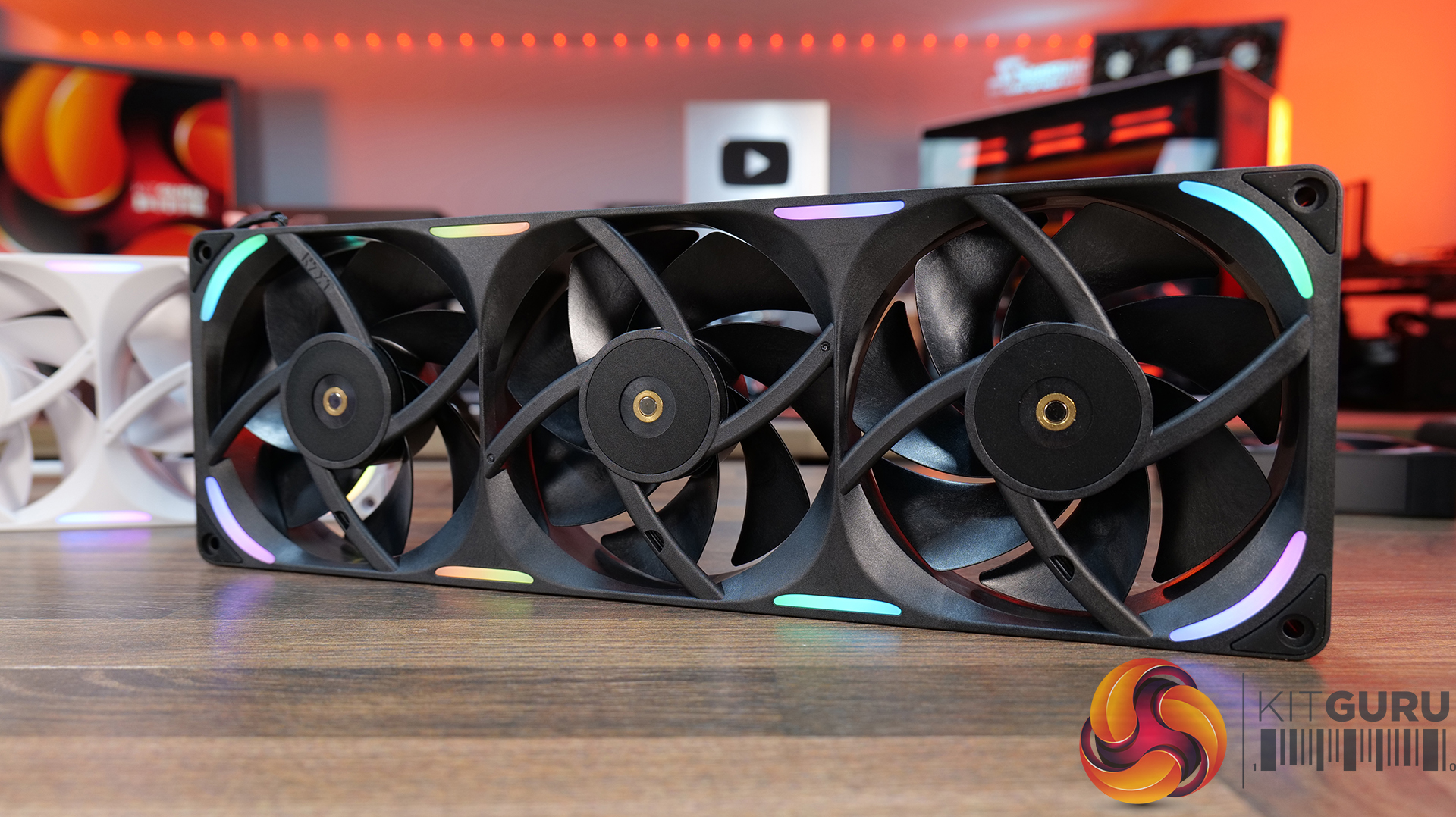
Features:
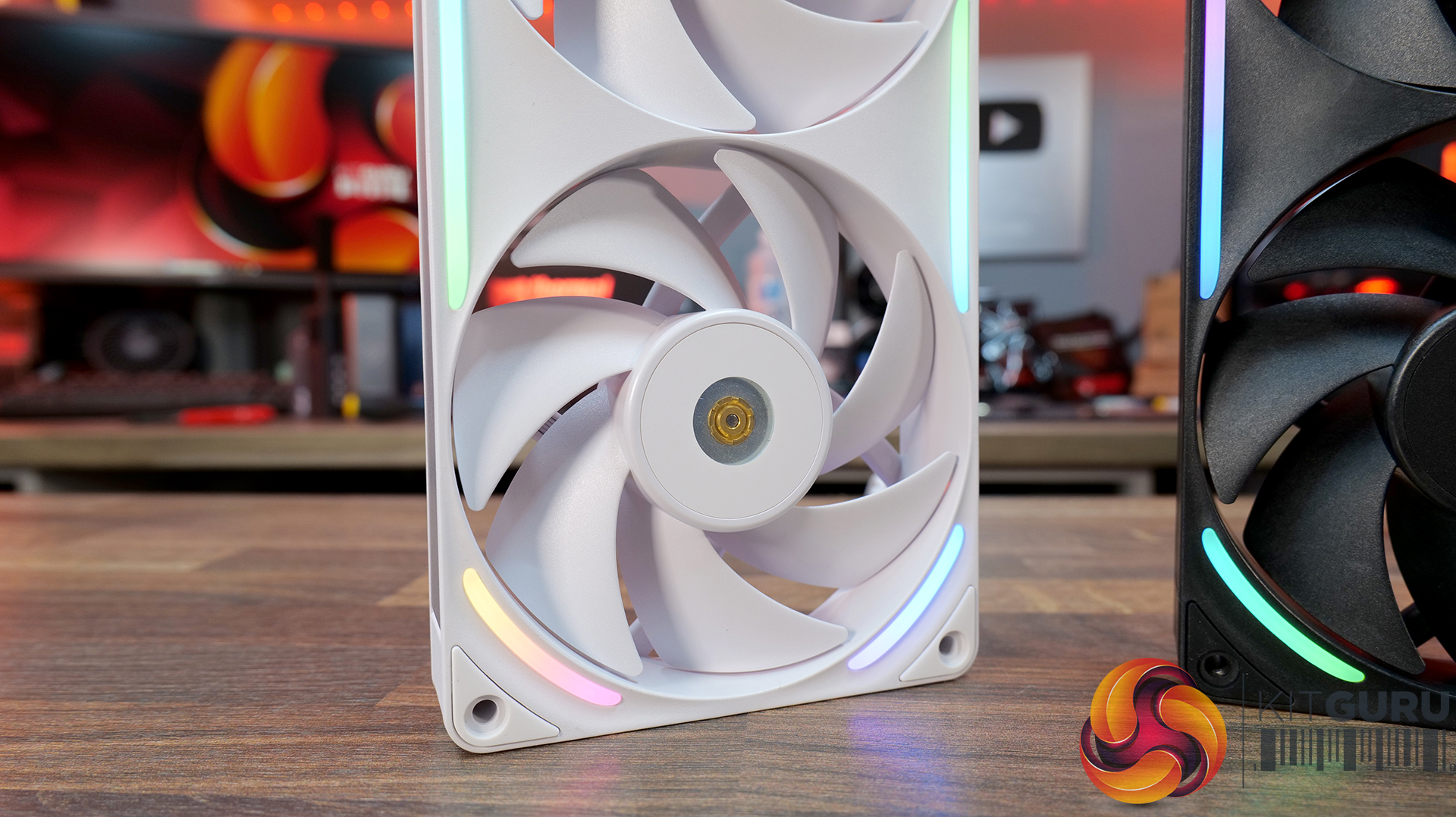
- LCP construction and optimised blade design for strong airflow & pressure — All three fans are equipped with liquid-crystal polymer (LCP) for blades and frame, for improved rigidity at high speed which helps resist flexing and vibration. Minimal blade-to-frame gap (“ultra-tight tip-to-frame clearance”), reduces turbulence and air leakage, resulting in optimal airflow and static pressure.
- Custom Hybrid bearing for quiet and durable operation — “Custom Hybrid Bearing” includes magnetic levitation to keep the rotor stable at higher RPM, combined with fluid-dynamic lubrication to help reduce friction and wear. The aim is to provide smooth, long-lasting, quiet rotation.
- Advanced 3-phase, 6-pole motor for precise, efficient cooling — The motor design enables more precise speed control for steady and efficient cooling across different speeds for lower noise and consistent performance.
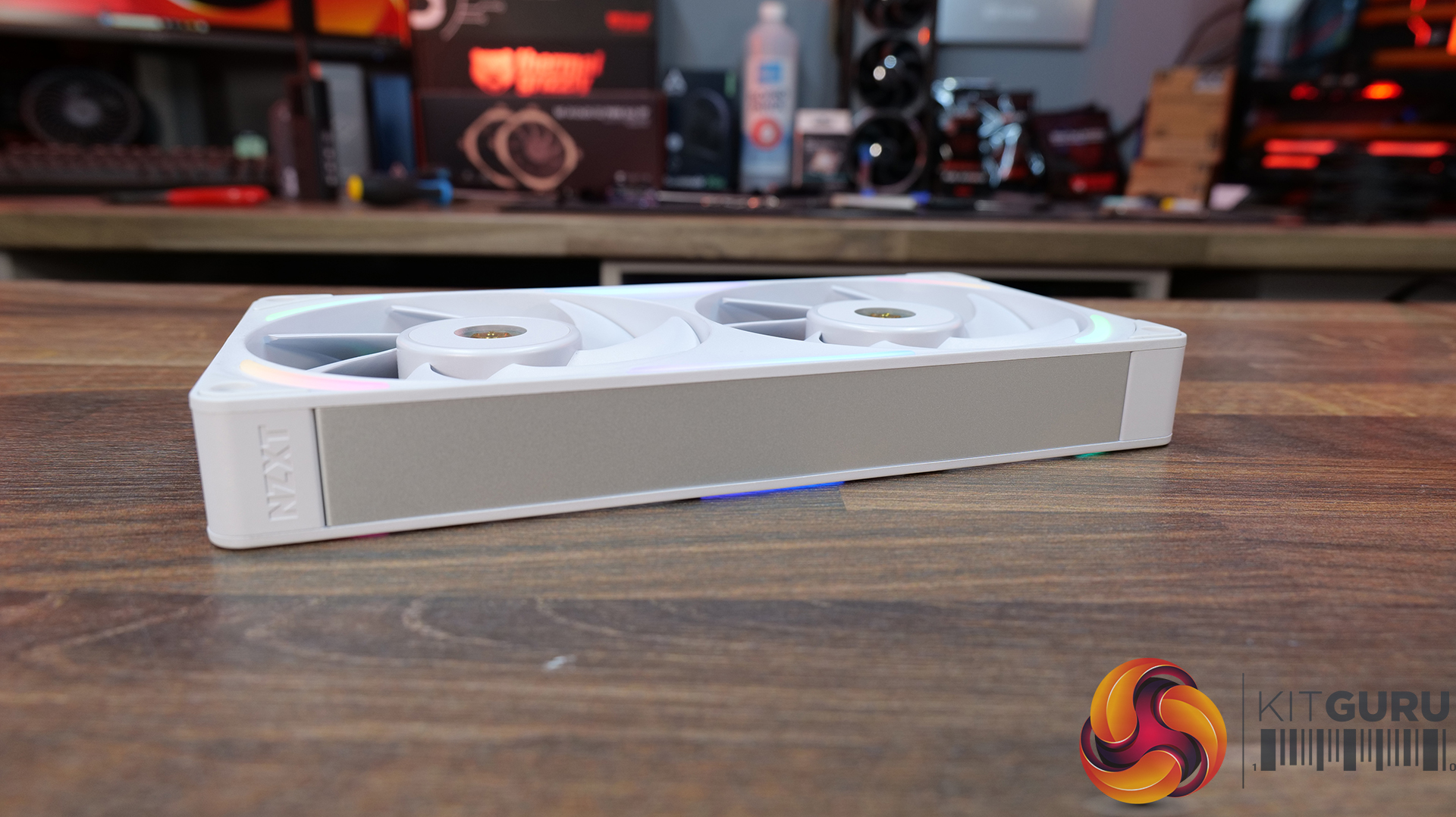
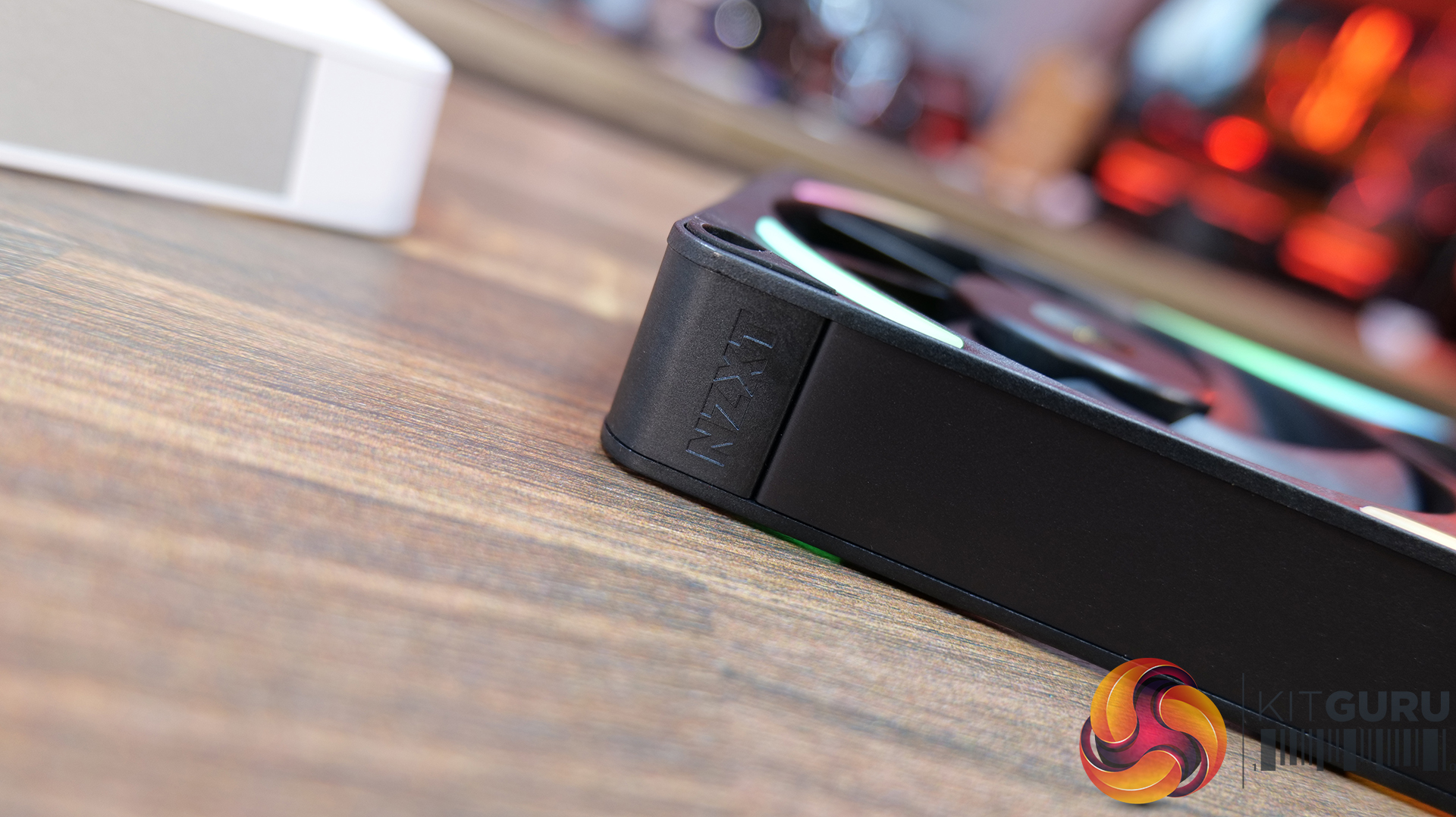
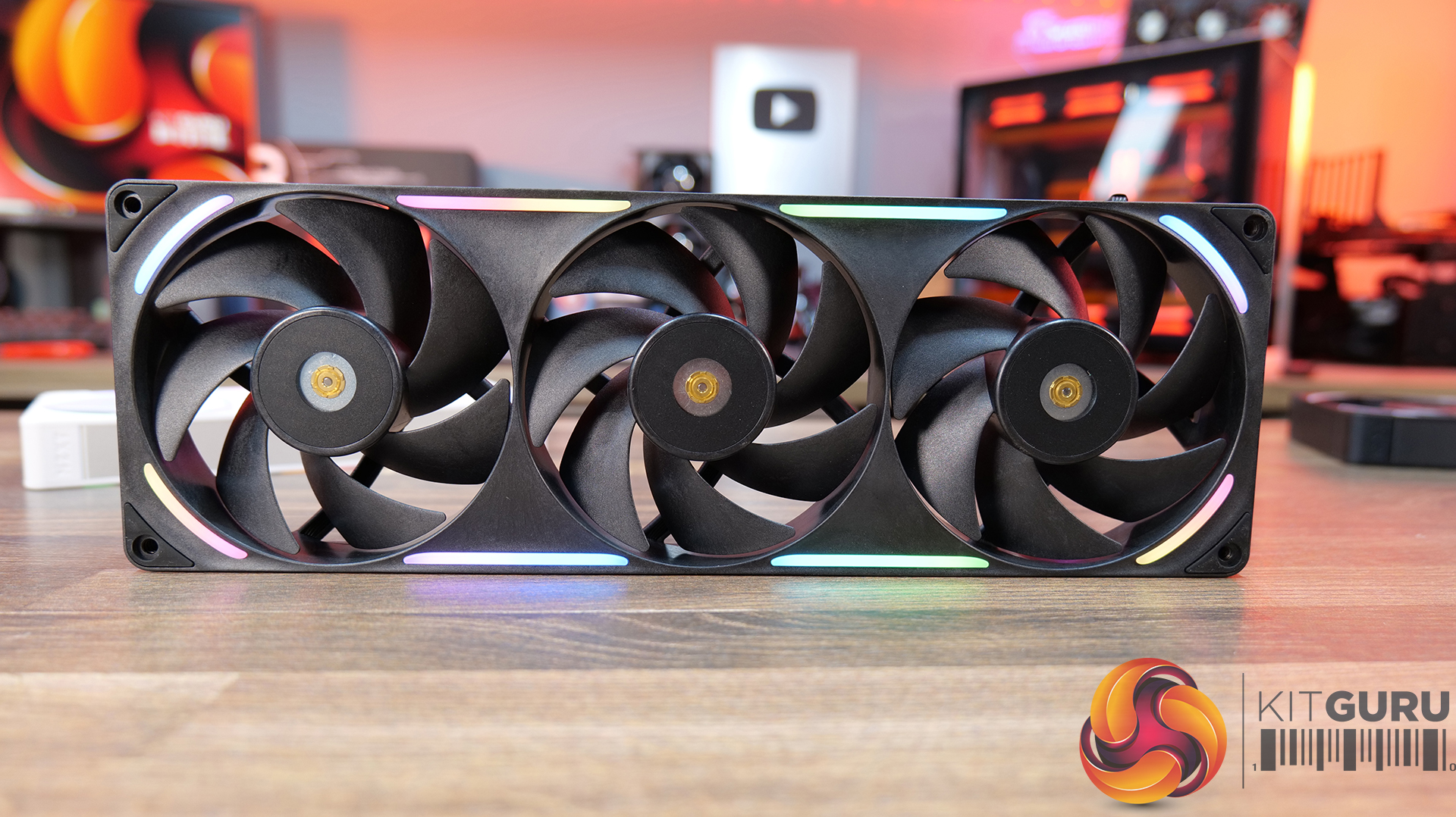
- Polished design with subtle RGB and easy install — Featuring brushed-aluminium accents, subtle RGB lighting and a clean aesthetic. You can control fan speeds and lighting via motherboard software or, with NZXT Control Hub and NZXT CAM software. The single-frame models (F240X and F360X) have an all-in-one frame that reduces screws and cables for clean and simple installation.
Specifications (F360X):
- Dimensions: 360 x 120 x 30mm
- Weight: 750g
- Speed (PWM): 3,100 ± 310 RPM
- Airflow: 0 CFM per fan
- Static Pressure: 53 mmH2O per fan
- Noise: 0 dBA per fan
- Bearing type: NZXT Magnetic Levitation Stabiliser & Fluid Dynamic Bearing
- Motor type: 3-phase, 6-pole
- Rate Voltage: 12V (Fan) / 5V (RGB)
- Rated Current: 60A (Fan) / 0.52A (RGB)
- Input Power: 8W
- Connector: 4-pin PWM and 5V ARGB
- Material (Blade & Frame): Liquid-crystal polymer (LCP), rubber
- Vibration damping / Mount: Rubber corner mounts
- Warranty: 5 Years
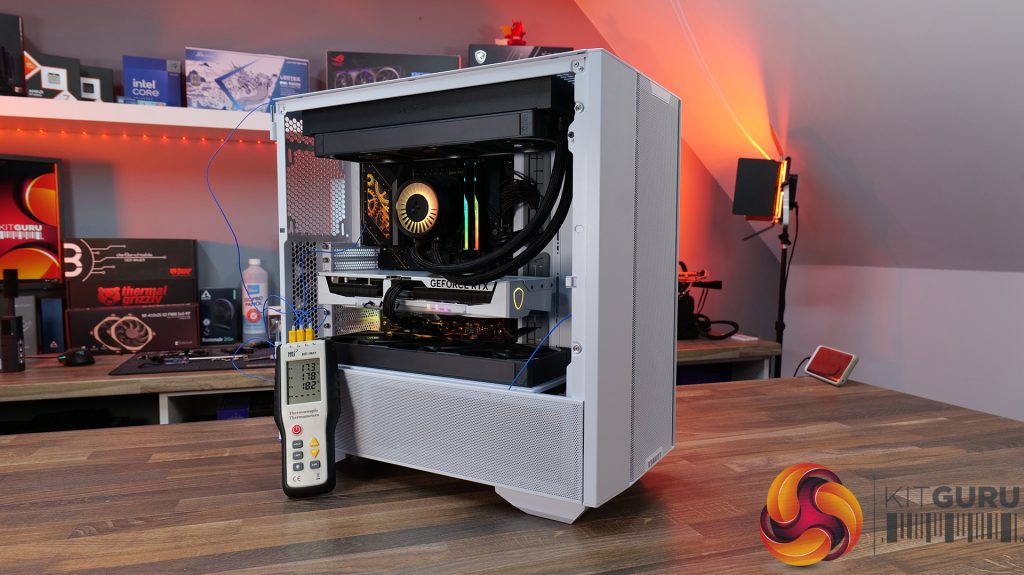
Test System Specifications:
- CPU: AMD Ryzen 9 9950X3D
- Motherboard: ASRock X870E Taichi
- Graphics card: MSI RTX 5080 Gaming Trio White
- RAM: 64GB (2 x 32GB Modules) G.SKILL Trident Z5 RGB DDR5-6000
- Storage: 1TB Corsair MP600 Elite PCIE Gen4 M.2 SSD
- Power Supply: Seasonic Prime TX-1600 Noctua Edition
- CPU Cooler: Arctic Liquid Freezer III 360
- Chassis: Lian Li Lancool III
- Operating System: Windows 11 24H2
Testing Methodology
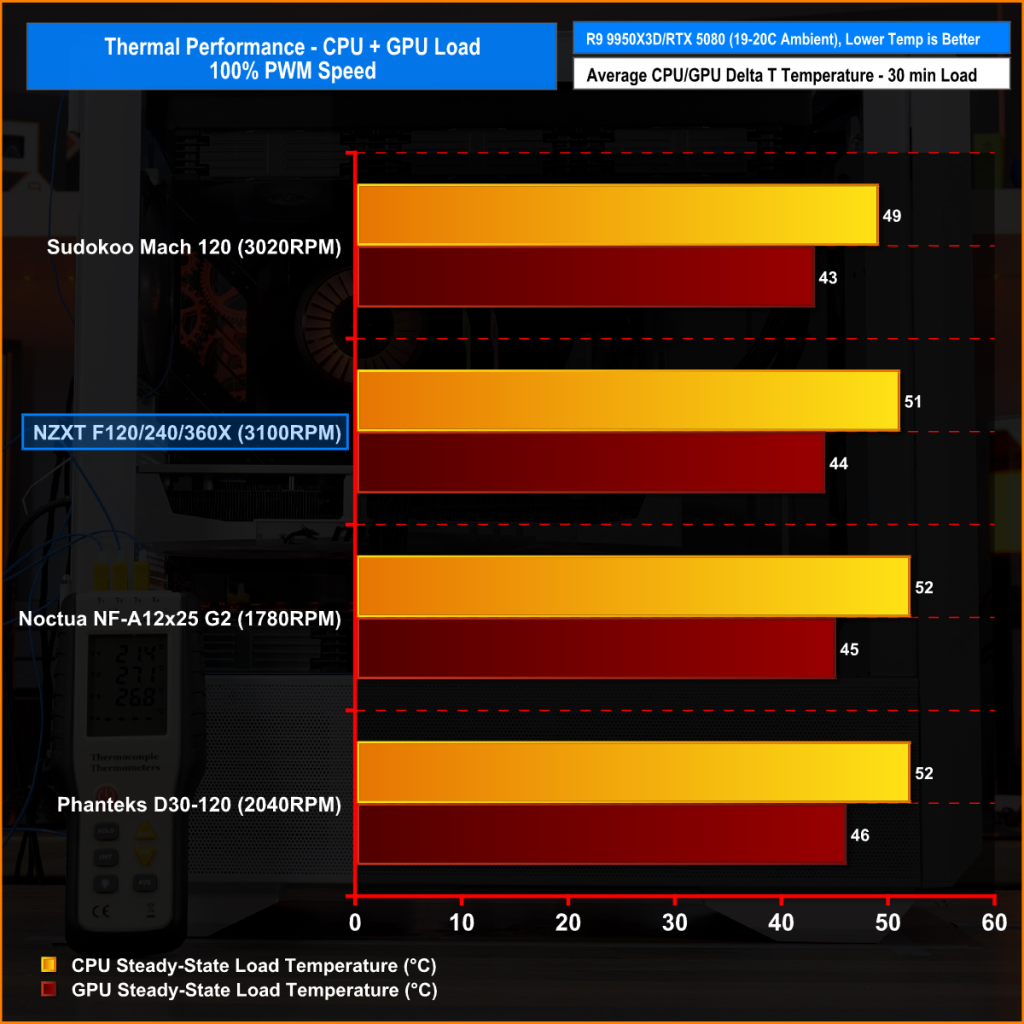
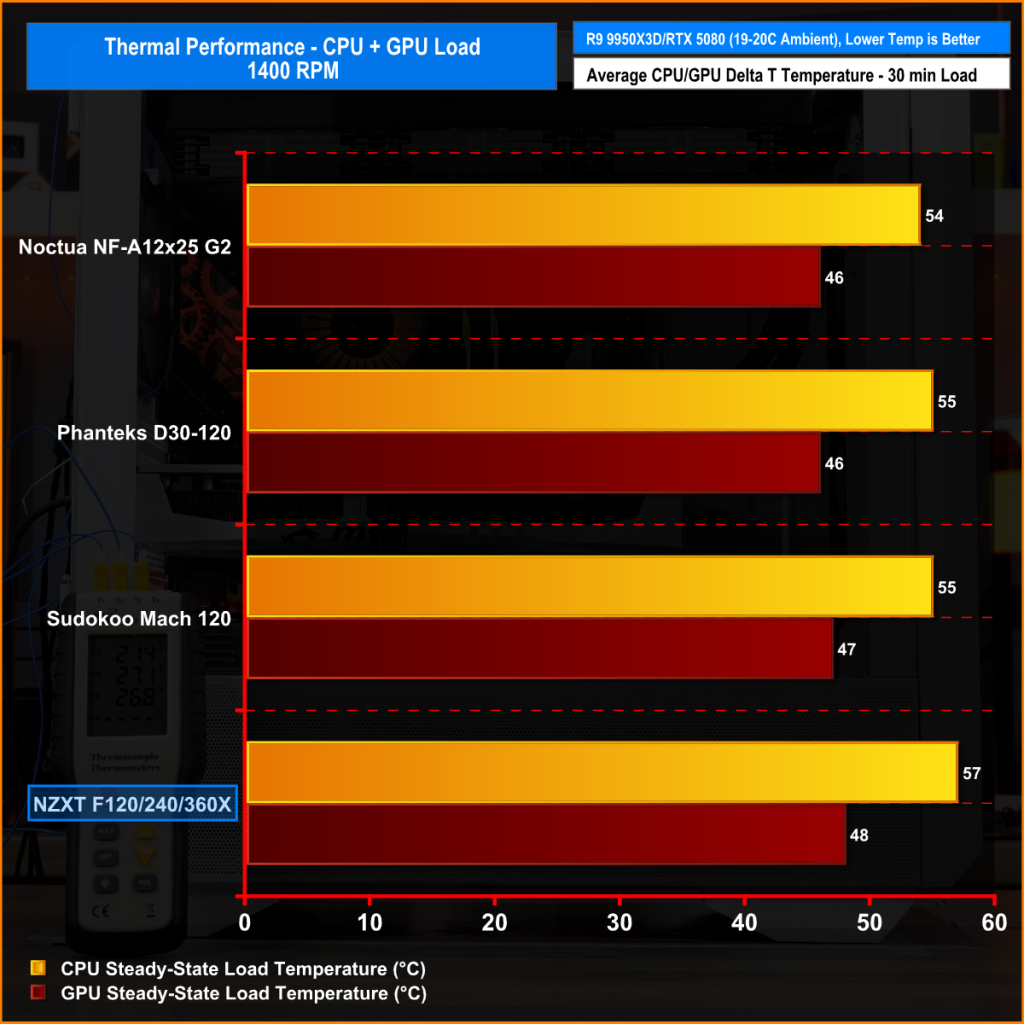
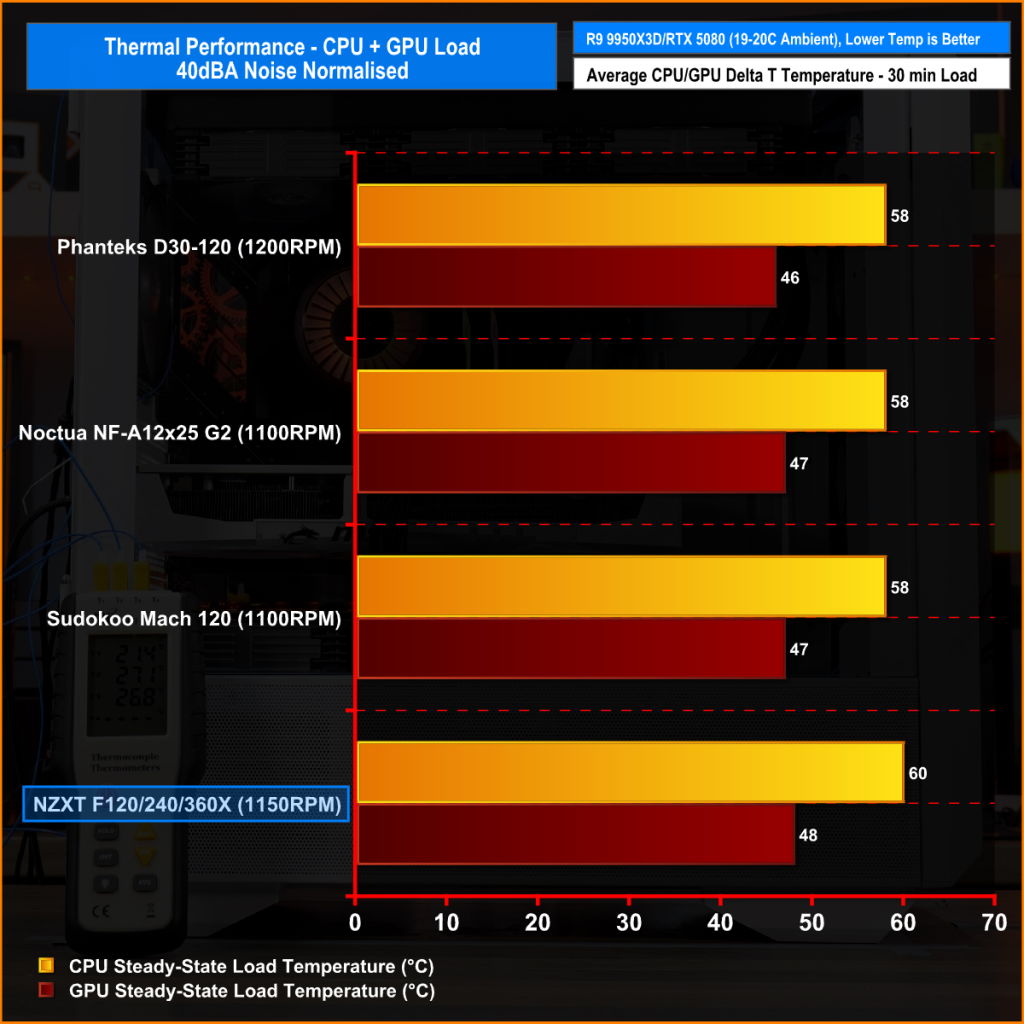
Our testing focuses on the thermal performance of each fan under three conditions: 100% PWM, 1400 RPM, and 40 dBA noise-normalised operation. All tests are conducted with a manual CPU overclock, locking the all-core frequency and VCORE to ensure consistent load across runs.
Baseline Measurement:
- Ambient temperature is recorded.
- The system is left idle for 10 minutes.
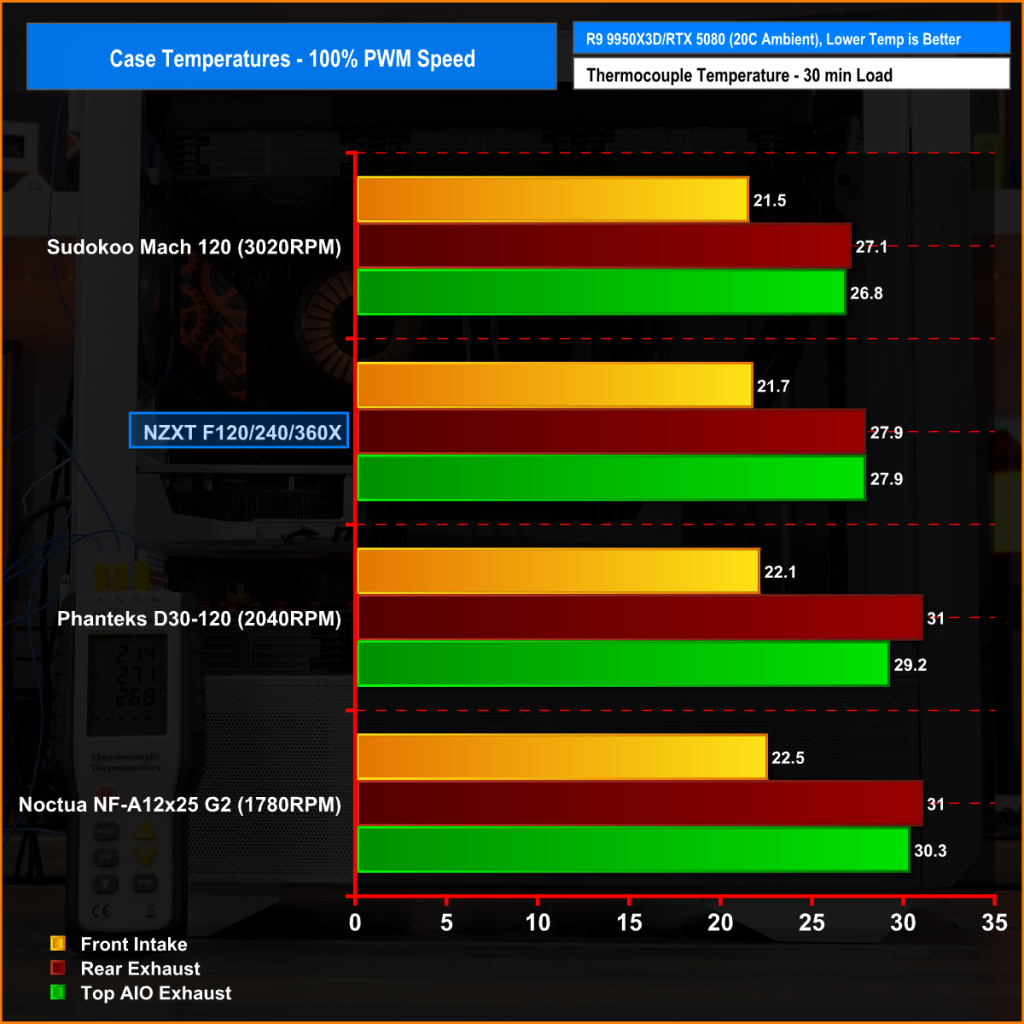
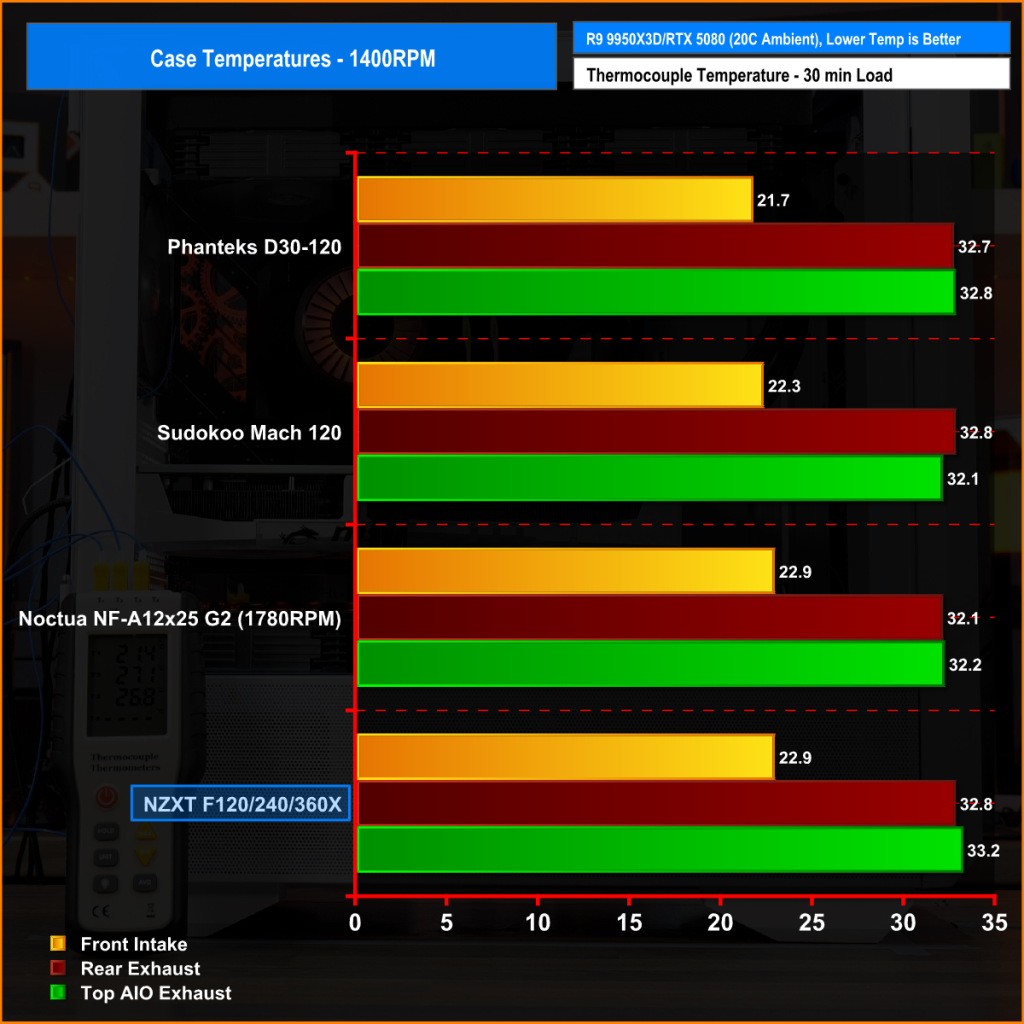
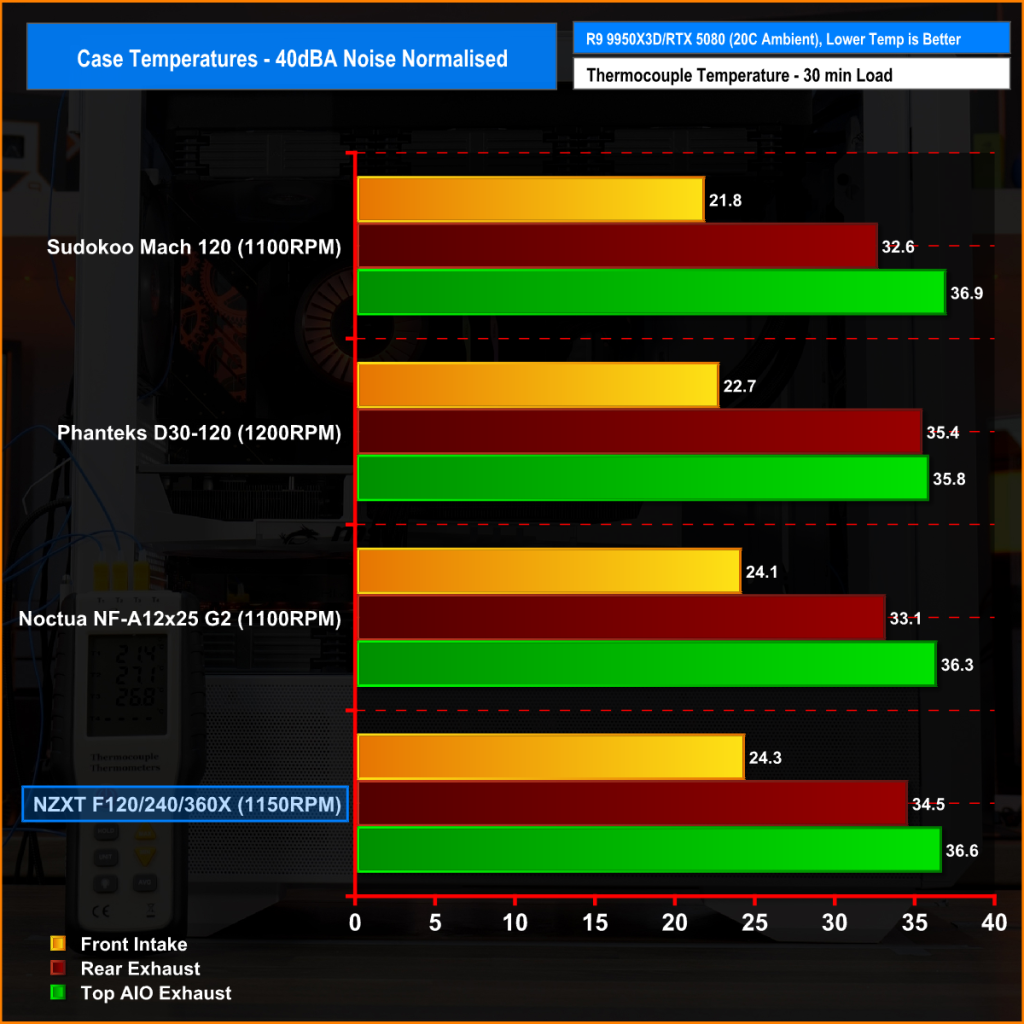
- CPU and GPU temperatures are logged using HWINFO, while case temperatures are monitored with thermocouples placed at three positions:
T1: Behind the front intake fan
T2: In front of the rear exhaust
T3: Above the AIO exhaust
Load Testing:
A combined CPU/GPU stress test is run for 30 minutes using 3DMark Speed Way stress test and Cinebench simultaneously.
Temperature charts show the average CPU/GPU delta over the final 10 minutes of the test, along with the thermocouple readings at the end of the session.
Noise Testing:
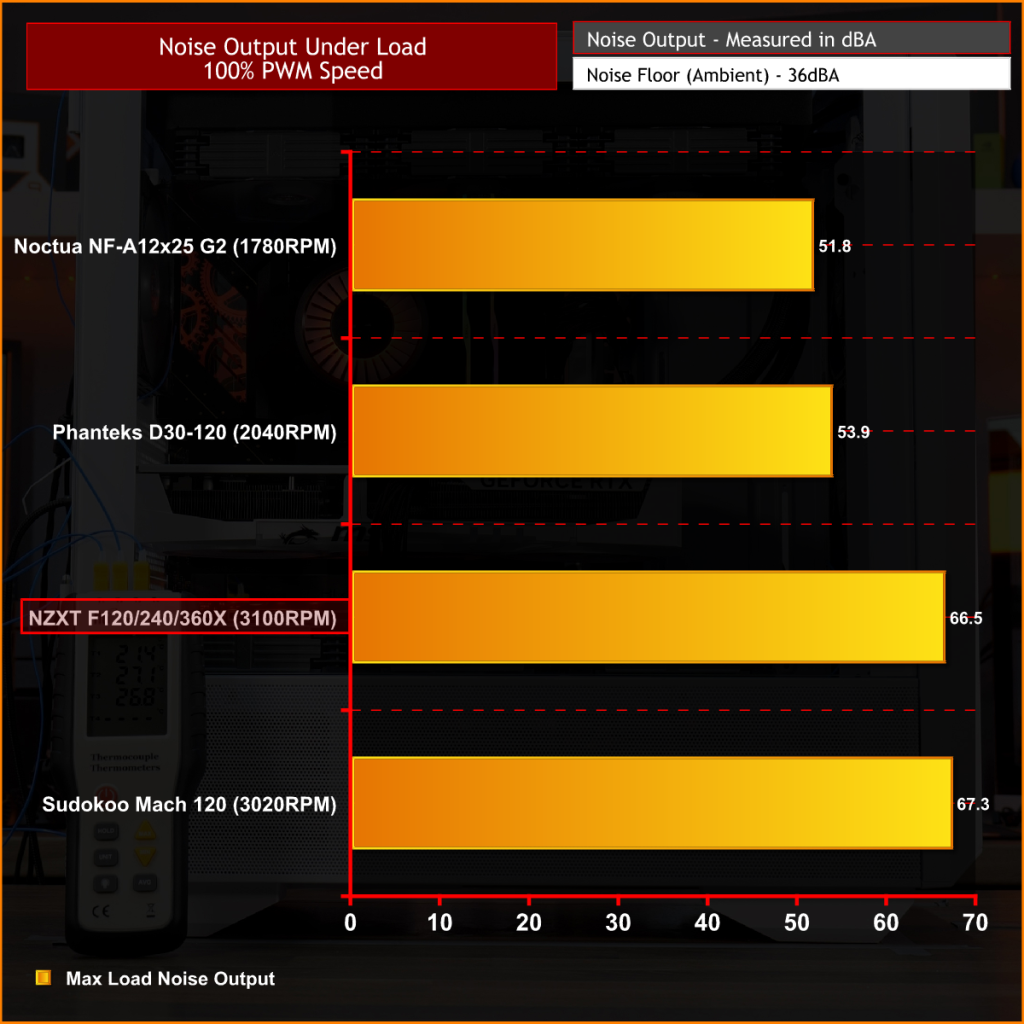
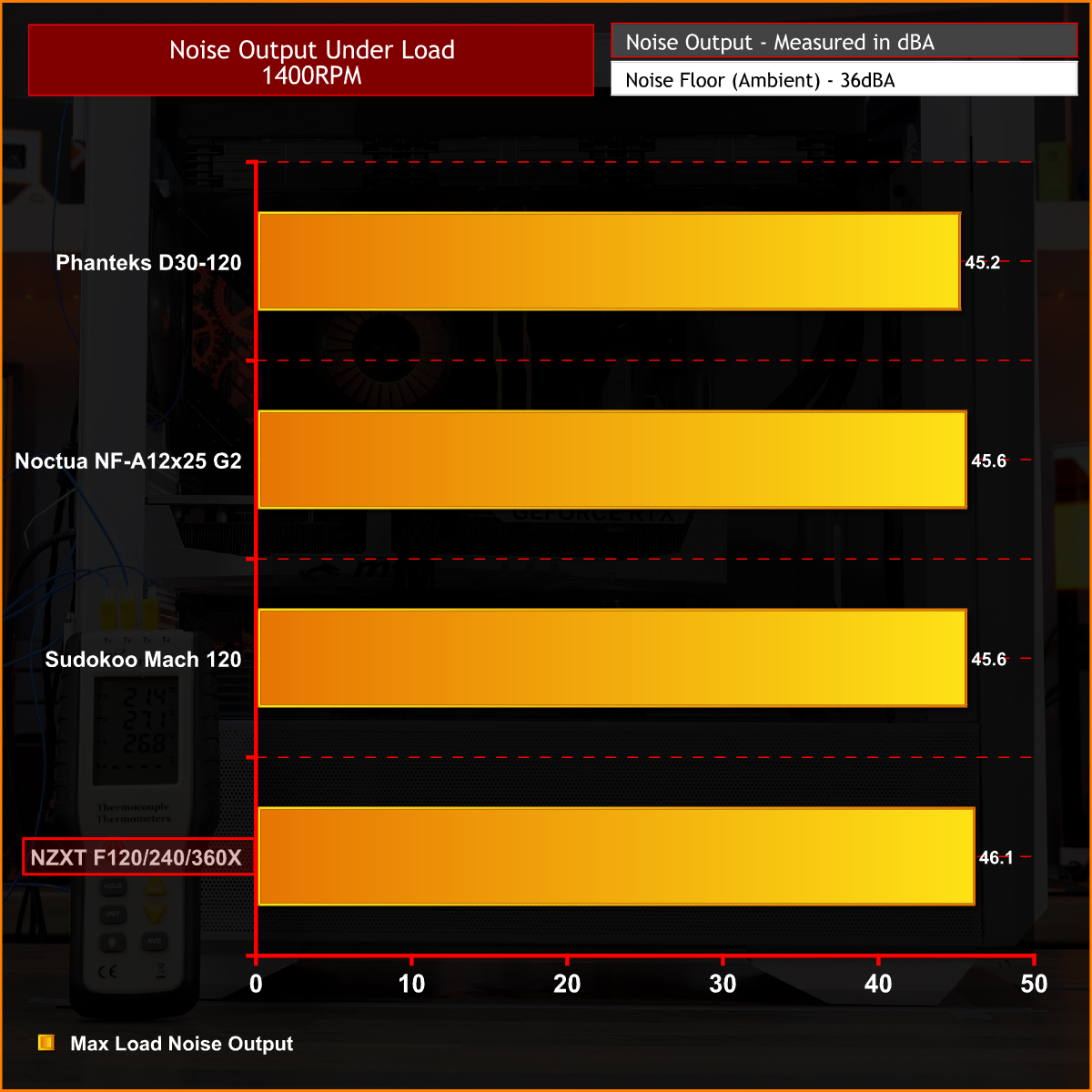
Noise levels are measured with a decibel meter placed 30 cm from the front of the system.
Airflow Visualisation:
Smoke tests are filmed with all fans running at 1400 RPM to illustrate airflow patterns across the case and cooling components.
This methodology ensures a consistent, real-world comparison of each fan’s thermal efficiency, noise performance, and airflow characteristics.
Test Results:
System Noise: 100% PWM
1400RPM Normalised
Case Temperatures: 100% PWM
1400RPM Normalised
40dBA Noise Normalised
CPU & GPU Temperature: 100% PWM
1400RPM Normalised
40dBA Noise Normalised
We found the NZXT F120/240/360X fans listed at Scan. An F120X costs £39.98 while the F360X is priced at £99.98.
Pros:
- Solid airflow and cooling, close to competitor performance.
- Clean looks with all in one frame and minimal cables.
- Very wide PWM speed range with high max speed for extreme cooling.
Cons:
- Quite expensive.
- Loud at max speed.
- Performance drops off a little at lower RPM.
- No reverse blade versions.
KitGuru says: If your build prioritises aesthetics over absolute thermal performance, then these fans might be a good fit for you. They will still provide solid cooling too, just not chart-topping, but they are very expensive and loud at max speed.