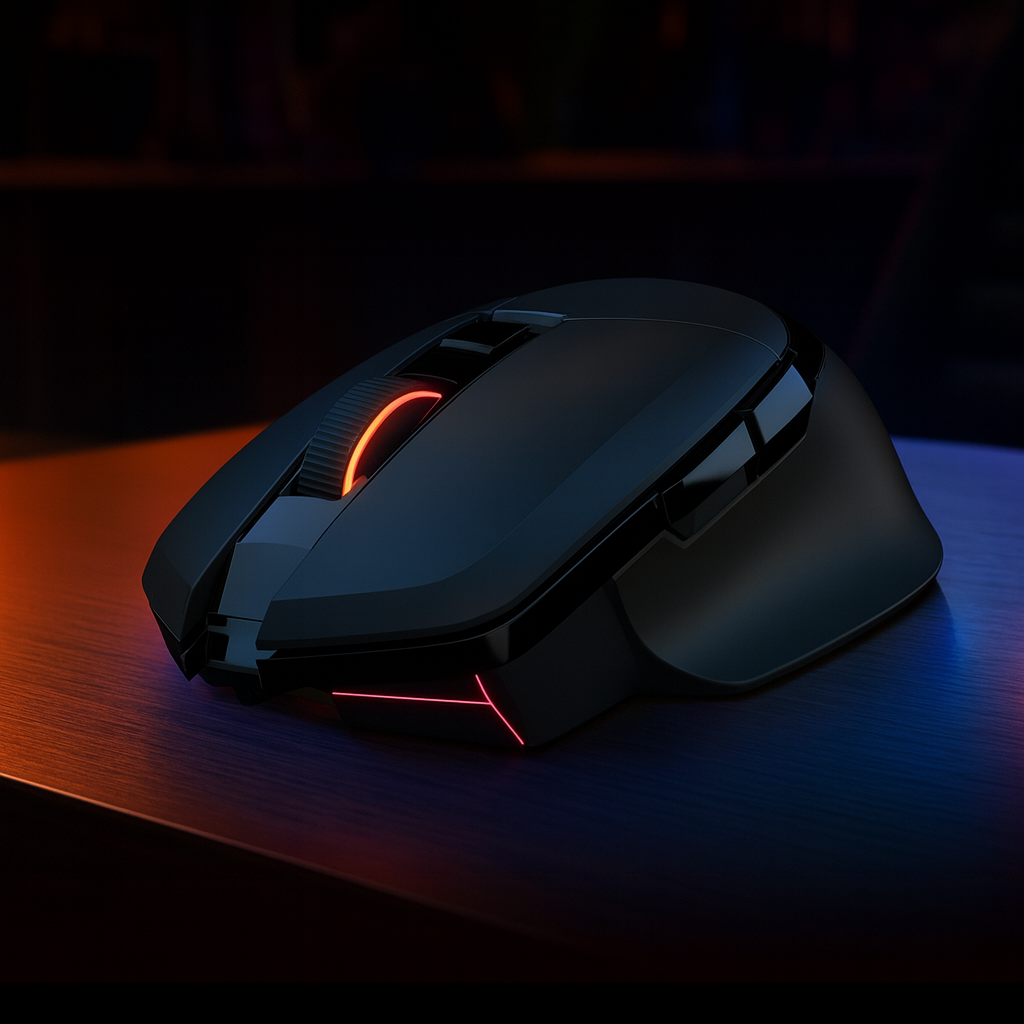
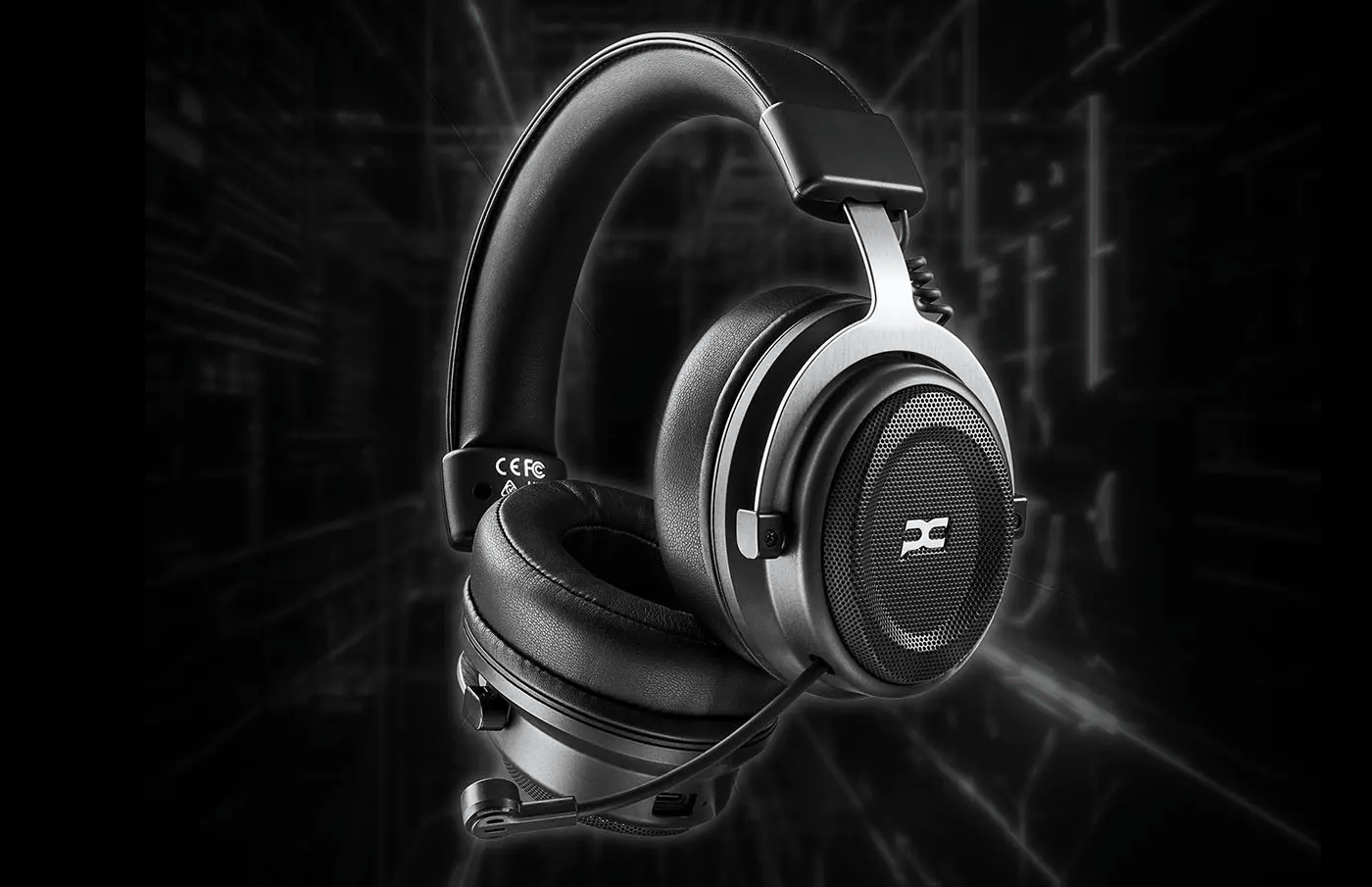
For Day 4 of the KitGuru Advent Calendar we have teamed up with PowerColor to offer up THREE prizes. Each winner today will get a brand-new PowerColor Alphyn AH10 gaming headset and AM10 gaming mouse.
The PowerColor Alphyn gaming peripherals became available in the UK earlier this year. The Alphyn AH10 headset is a great option, offering DTS-tuned audio profiles, low-latency wireless and up to 30 hours of continuous battery life with quick-charge capability so you can avoid downtime. The Alphyn AM10 mouse perfectly complements the headset with wired and wireless modes, a precise PAW3395 sensor and RGB lighting.
How to Enter:
To enter this giveaway, all you have to do is head over to our competition announcement post on Facebook, HERE. In the comments, leave an answer to the following question – What was your first gaming mouse?
This competition is open Worldwide.
The winners will be picked randomly shortly after 11AM GMT December 5th, and a new competition will be announced for Day 5. The chosen winners have 48 hours to respond, if we do not hear from them, a new winner will be picked.
Terms and Conditions: This competition is open worldwide, starting at 11AM GMT on December 4th and ending at 10:59AM GMT on December 5th. Due to the busy Christmas season, prize deliveries could take longer than usual, and some prizes may not ship until January. In compliance with GDPR, we will not collect or store any personal information as part of this competition. Once the winner has been contacted and their prize received, personal details will be deleted from our email servers. Your details will not be shared, we respect your privacy.
KitGuru Says: Good luck to all who enter, we'll be back tomorrow morning to announce a winner and turn the calendar over to Day 5!
Mario Kart World has had an interesting life so far. Released alongside the Switch 2, the latest and greatest Mario kart racer saw plenty of praise but an equal amount of criticism due in part to Nintendo’s rigid approach to player options across the board. Though it should have been available from the off, Nintendo has now released a massive update for Mario Kart World, bringing with it a ton of requested features.
Music track name and source title of the track that is playing will be displayed on the Pause Menu
Added ‘Music Volume’ to Settings/Controller
Added ‘Restart’ and ‘Next Race’ in the Pause Menu for ‘VS Race’ in ‘Single Player’
Changed the course layout of multiple intermission tracks
Made it so you can join in with friends who are playing Knockout Tour from ‘Friends’ in ‘2p’ and ‘Online Play’
Made it so players who gathered in a Room of Online Play can participate in Race, Knockout Tour, and Battle.
A ton of bug fixes
While there is no denying that these fixes, changes and additions are all welcome to see, pretty much everything added arguably should have been available from day-one, with the omission of a restart option, a music volume slider and more being rather unacceptable.
Skyblivion is an ambitious game-sized mod which brings Bethesda Game Studios’ classic RPG Oblivion into Skyrim’s Creation Engine. After almost a decade of dedicated development from fans, the mod was finally confirmed to be releasing this year. As we near the end of 2025 however, the team has offered a notable update on the project – including the fact that it has now been pushed back to 2026.
Releasing a video to their YouTube channel discussing the latest updates to the project, the Skyblivion team confirmed that they are going to need a bit more time to bring the ambitious mod to fruition, writing:
“As a project by fans, for fans, we need a little more time to ensure Skyblivion lives up to the standards you all deserve. Our anticipated release window is moving into 2026.”
In an exciting bit of news however, the team have now published their interactive Skyblivion map online for all to enjoy, adding “you can now explore the full, finished world of Cyrodiil from the snowy Jerall Mountains to the sand-swept beaches of the Gold Coast.”
The map is exhaustive and includes all of the many different points of interest, from caves to cities; camps to Shrines; Oblivion Gates and everything in between.
While the surprise launch of Oblivion Remastered earlier this year could have put a damper on this long-running project, Skyblivion appears to be different enough to warrant its own unique playthrough or two when the mod hopefully launches next year.
KitGuru says: Are you excited for Skyblivion? How do you think it will compare to the recently-released remaster? Let us know down below.
A Chinese startup with former Apple and Meta engineers built a coprocessor that enables ultralight headsets, and its reference design is the lightest ever shown.
The startup is called GravityXR, and includes engineers who worked on the R1 chip at Apple, the coprocessor present in both Vision Pro headsets to date, as well as others who worked on hardware at Meta, Huawei, and Amazon.
GravityXR's investors include Goertek, the Chinese company that manufactures Meta headsets, as well as ByteDance, the owner of Pico, and VC firms like Sequoia China and Lenovo Capital.
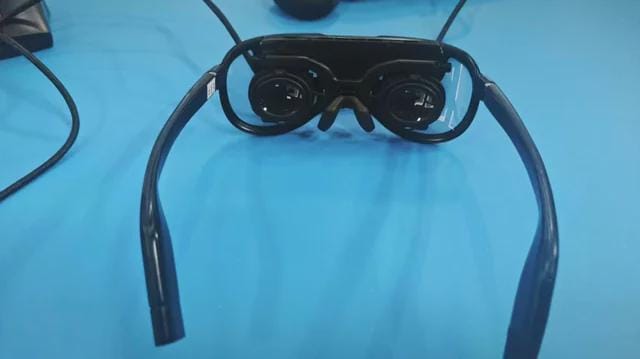
Rear angle of the GravityXR M1 reference design headset.
The chip that GravityXR built is called G-X100. It's a 3 watt TDP chip built on a 5nm process node, has a 10-core DSP, and achieves 200 TOPS for ML inference. Crucially, it has a memory bandwidth of 70 GB/s, letting it handle an array of cameras and sensors – up to 15 simultaneously. And it can output to dual 4K displays at 120Hz.
G-X100 is designed to be onboard ultralight mixed reality headsets, handling the latency-sensitive image processing and computer vision tasks like camera passthrough, positional tracking, hand tracking, and reprojection, with just 9 milliseconds of photon-to-photon latency.
This allows the general purpose chipset, such as a Qualcomm Snapdragon, to be moved to a tethered external puck.
And with its TDP of just 3 watts, G-X100 can be passively cooled, eliminating the need for the heavy heatsinks and fans that make up a significant chunk of the weight of standalone headsets today, which aim to cool 10-20 watt chips.
Another angle of the GravityXR M1 reference design headset.
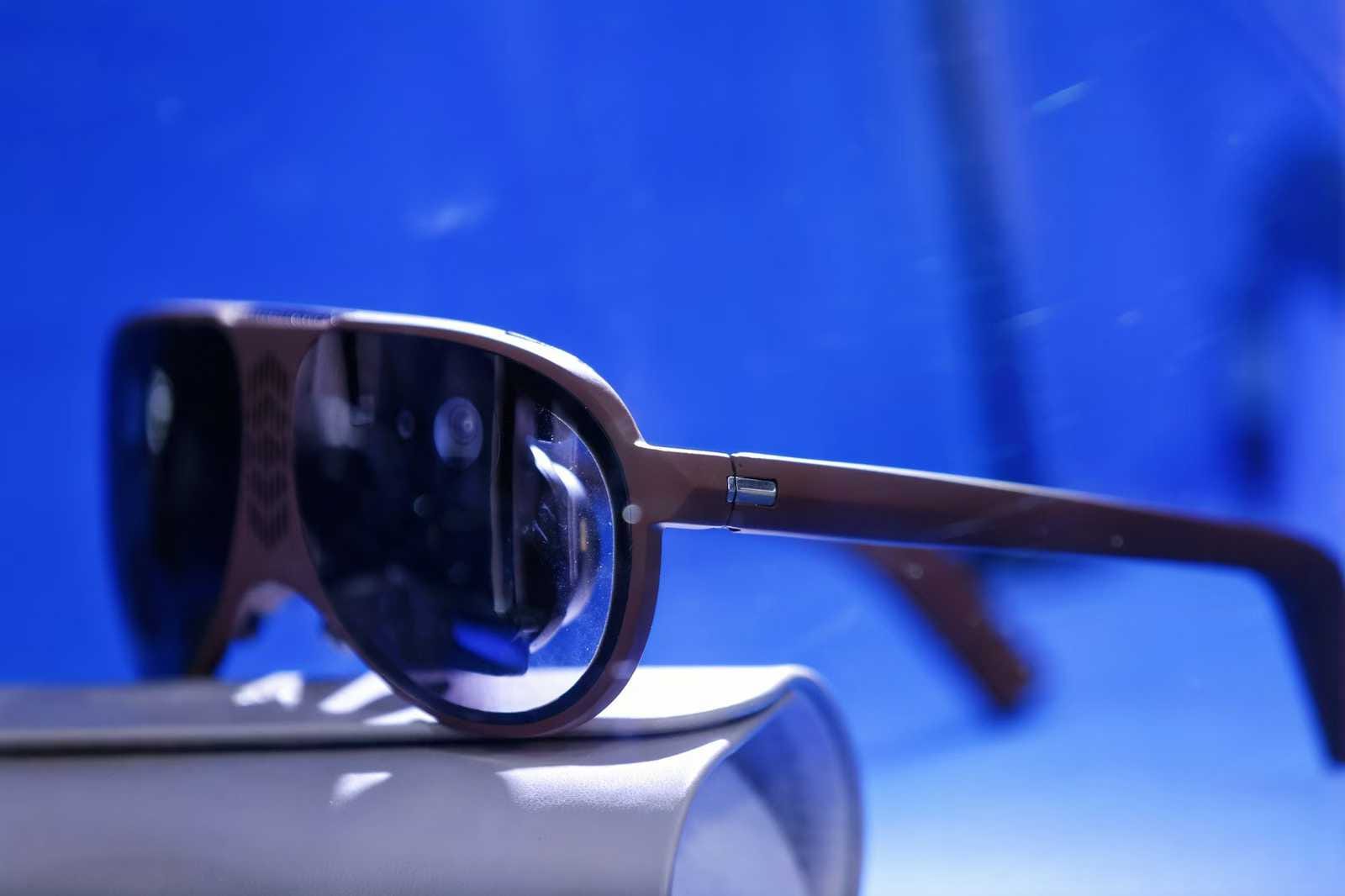
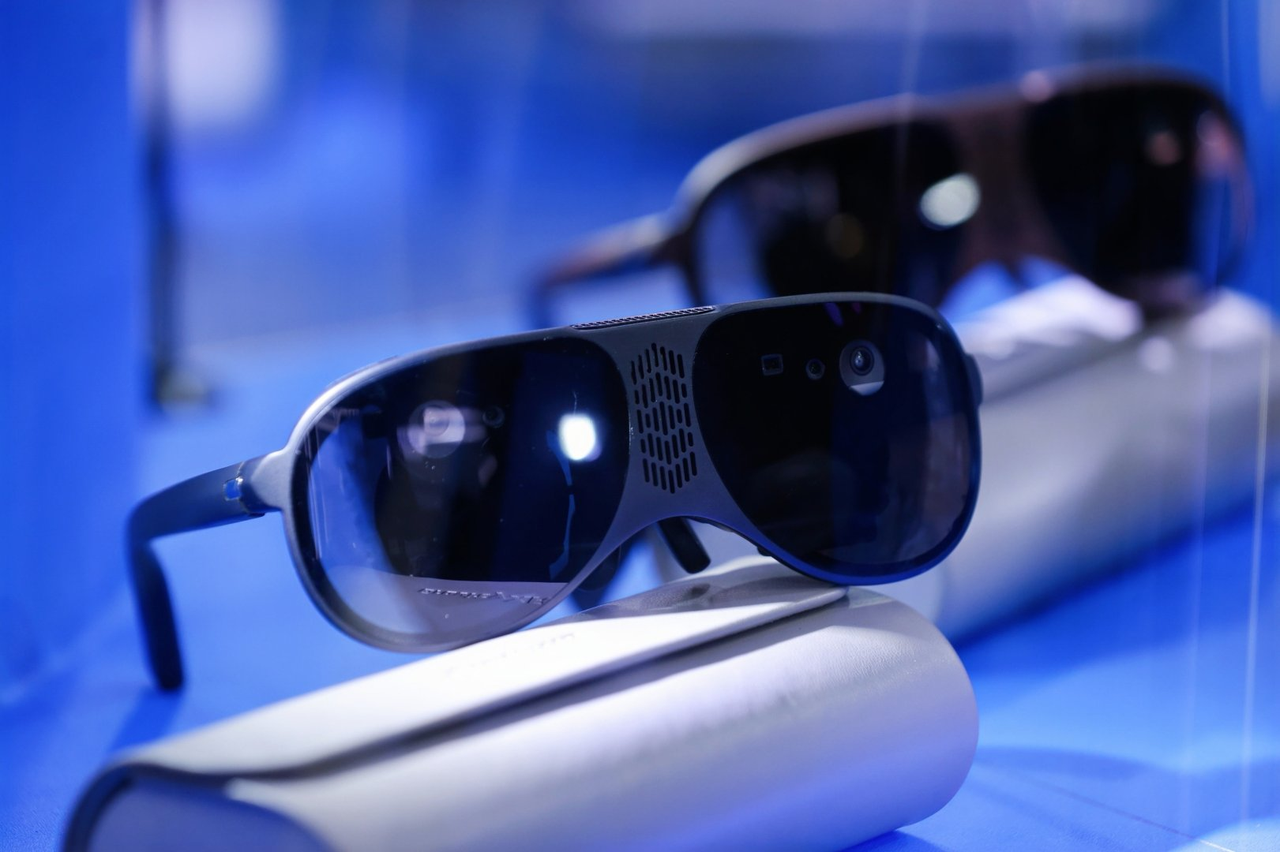
To prove out this approach of using G-X100 to offload the primary chipset, GravityXR built a reference design headset called GravityXR M1. It's a passthrough headset, using pancake lenses, displays, and cameras, yet weighs less than 100 grams.
That makes GravityXR M1 the lightest headset ever – lighter than even Bigscreen Beyond 2. Its form factor arguably reaches the point that it might be better described as "mixed reality glasses".
And unlike with see-through birdbath devices like Xreal and Viture, GravityXR M1 has a field of view of 90 degrees, close to current VR headsets, and as a passthrough system it can render fully opaque virtual objects without dimming your view.
To be clear, GravityXR M1 is just a reference design, and no company has yet publicly committed to using G-X100 in a product.
But rumors suggest that both Meta and Pico intend to launch ultralight headsets next year, and both companies are likely to take a similar engineering path to what GravityXR is showing. Just last week, a Pico executive said that the company had developed its own R1-style chip internally, for example, and Meta has a multi-year partnership to work closely with Qualcomm on XR-specific chip solutions, alongside its own custom chip teams.
It seems that, across the industry, mixed reality headsets are set to significantly shrink from half-kilogram facebricks into sleek glasses-like visors relatively soon. And a split-chip architecture, alongside an open periphery design that sacrifices some field of view, is how that remarkable jump will be possible.
In West Hollywood, Meta recently launched a permanent store to showcase, demo, and sell smart glasses and Quest headsets. So how exactly is the company choosing to showcase its hardware to prospective buyers on the fence?
Walking up to the new Los Angeles Meta Lab location, it's difficult to avoid the obvious comparisons to Apple stores. The moment you step inside, however, the difference in design sensibilities could not be any more obvious. Instead of a clean and simple aesthetic, Meta's approach aims for something considerably more busy.
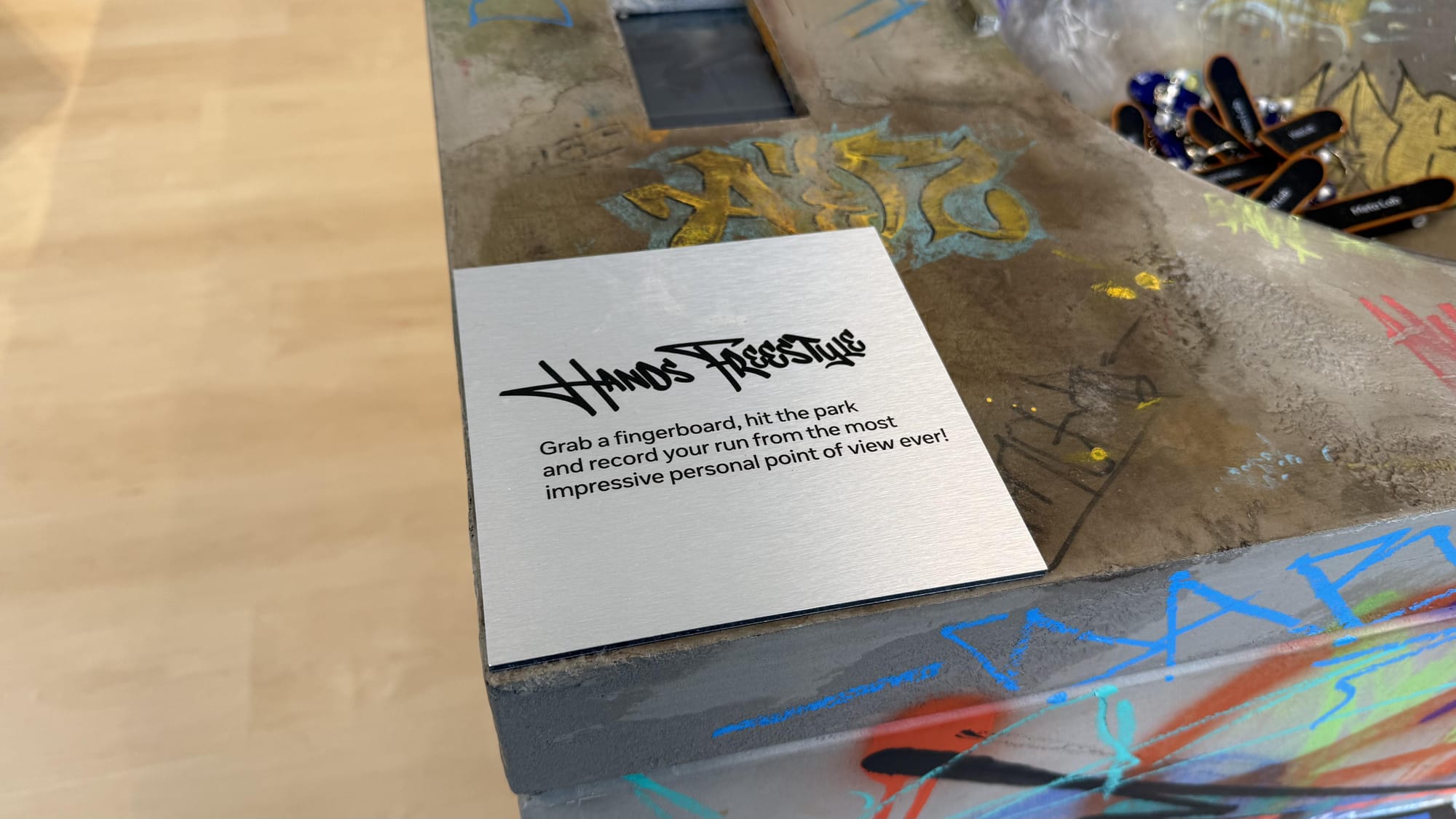
In an attempt to tie into the culture of Southern California, Meta Lab Los Angeles channels skateboarding as the primary theme - with numerous demos making use of the iconography.
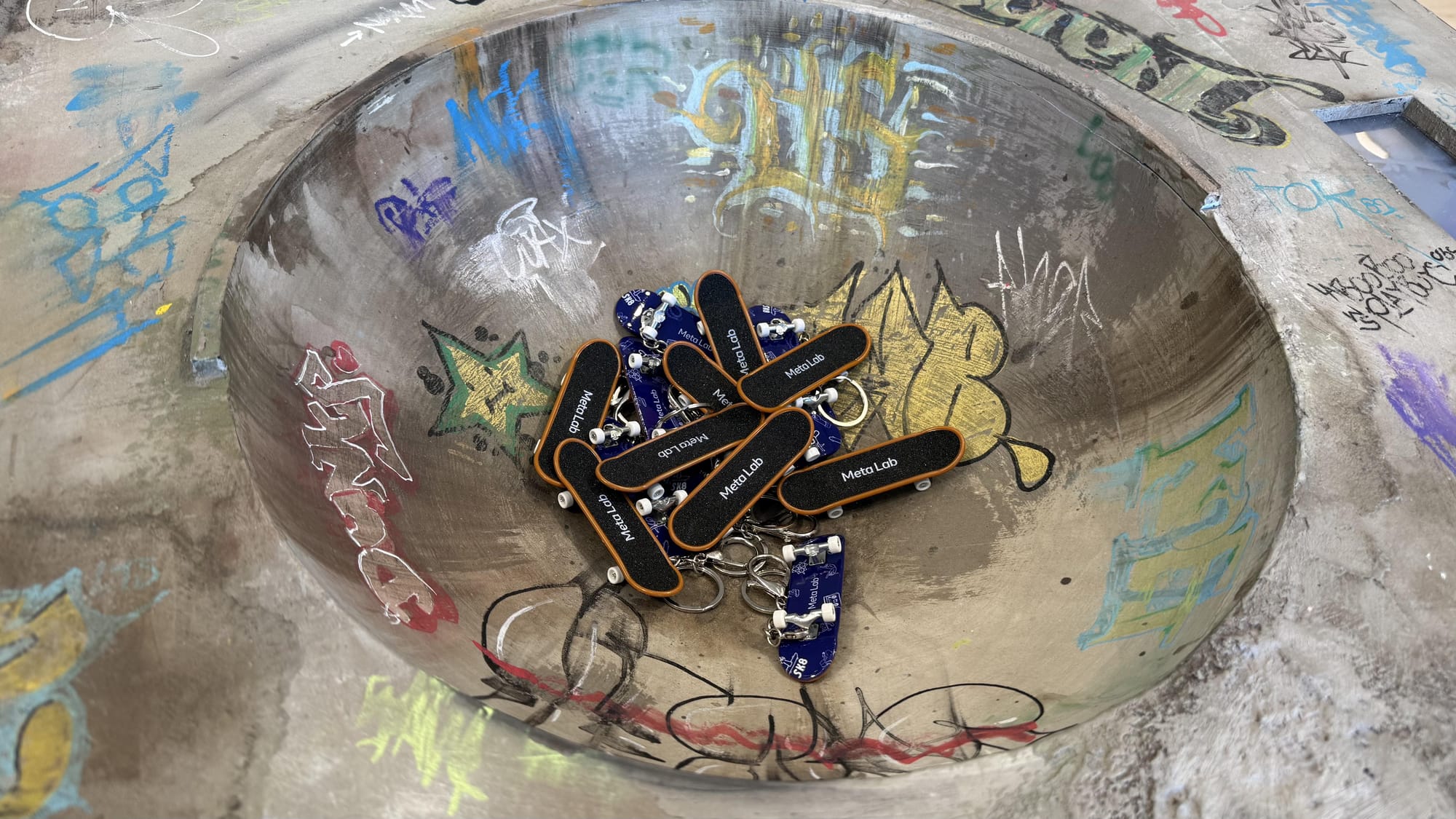
Near the entrance, prospective customers can grab Meta-branded fingerboards à la Tech Deck - and are invited to record their "sick tricks" using a pair of glasses by running their board through a miniature fingerboard skate park.
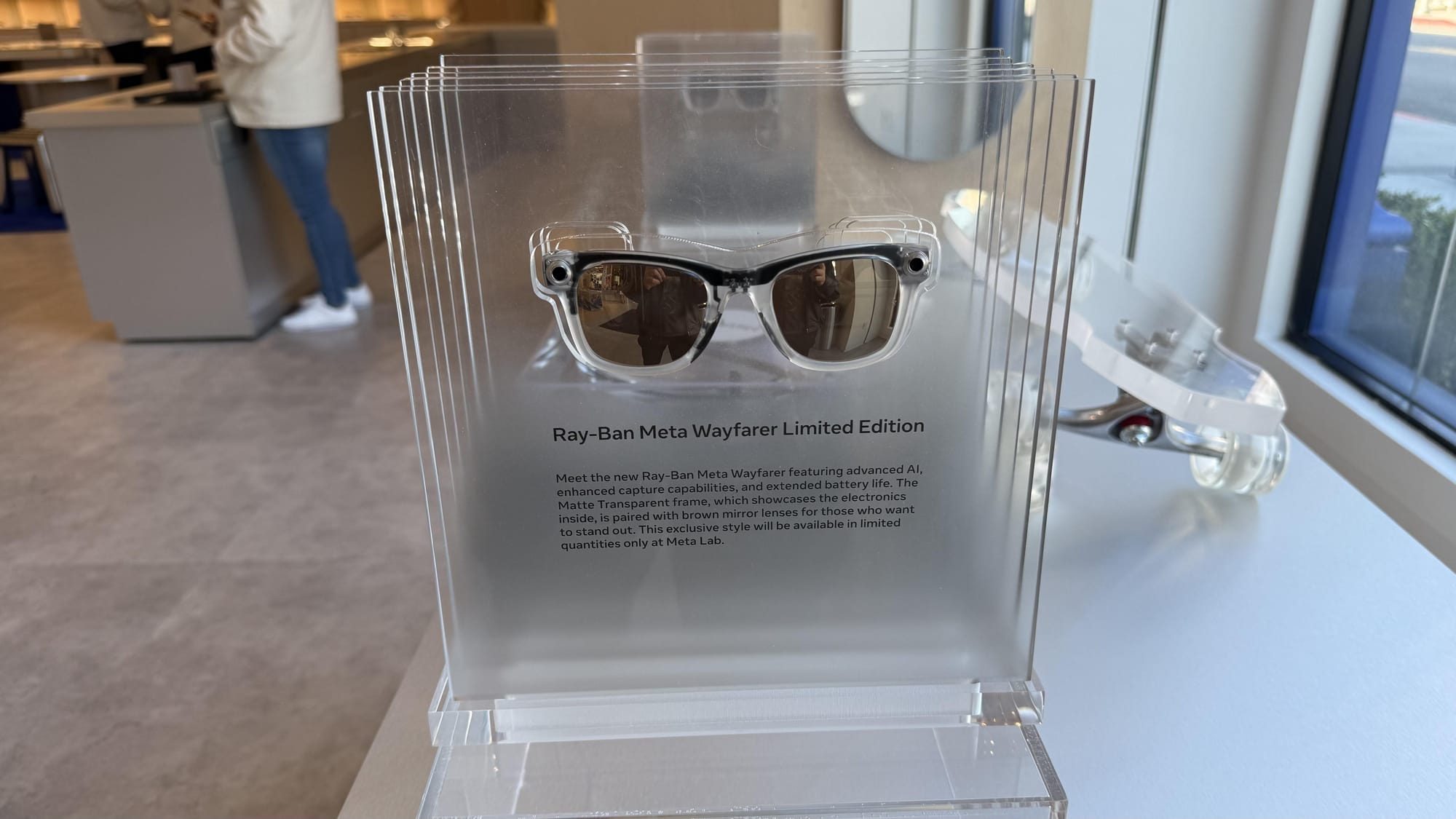
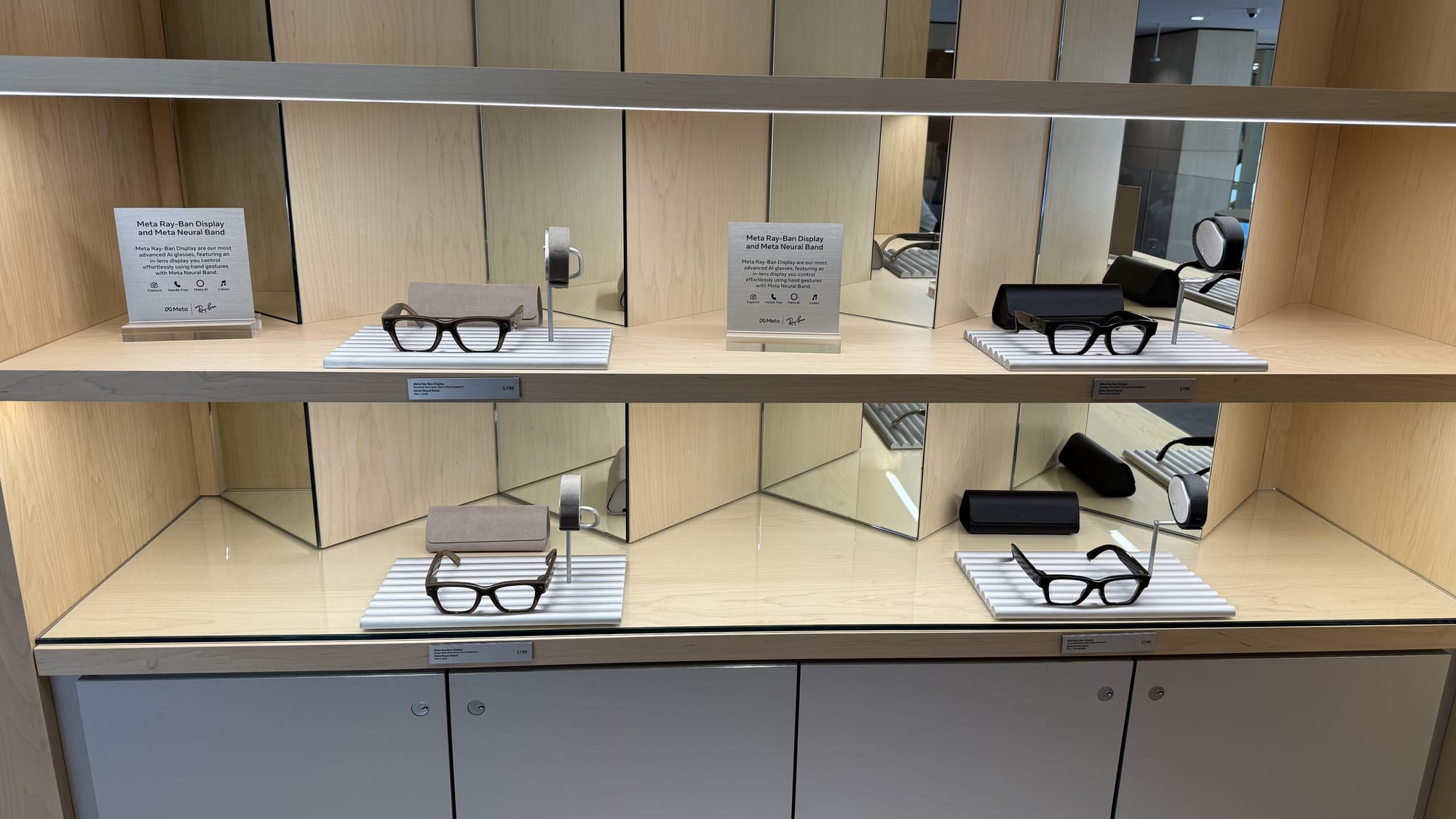
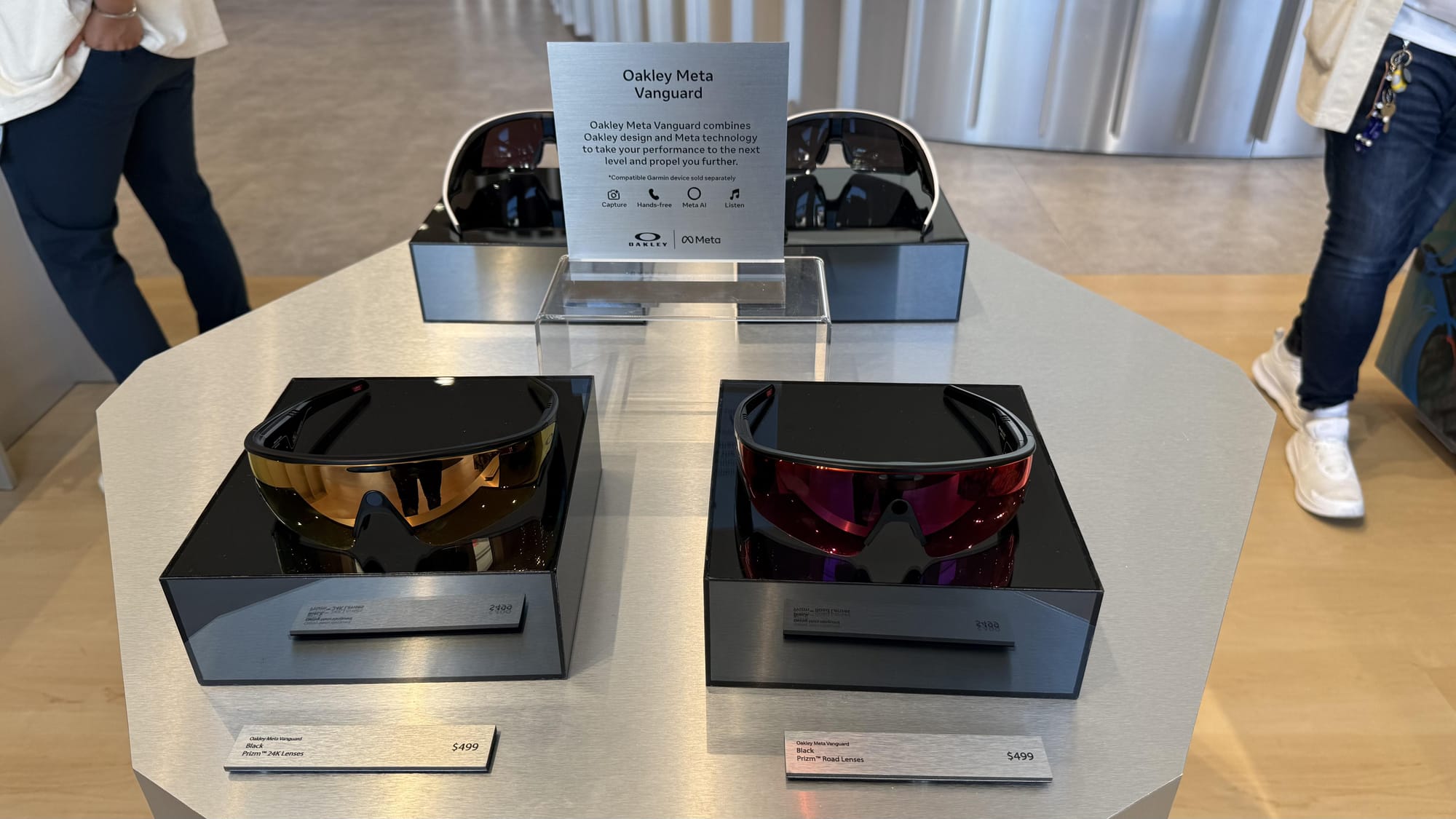
On either side are arrays of smart glasses. Right near the entrance is a showcase of the transparent limited edition Ray-Ban Meta glasses, sold in limited quantities at the store. Flanking the display of glasses on either side is a set of cases showing a variety of skating and SoCal-themed memorabilia.
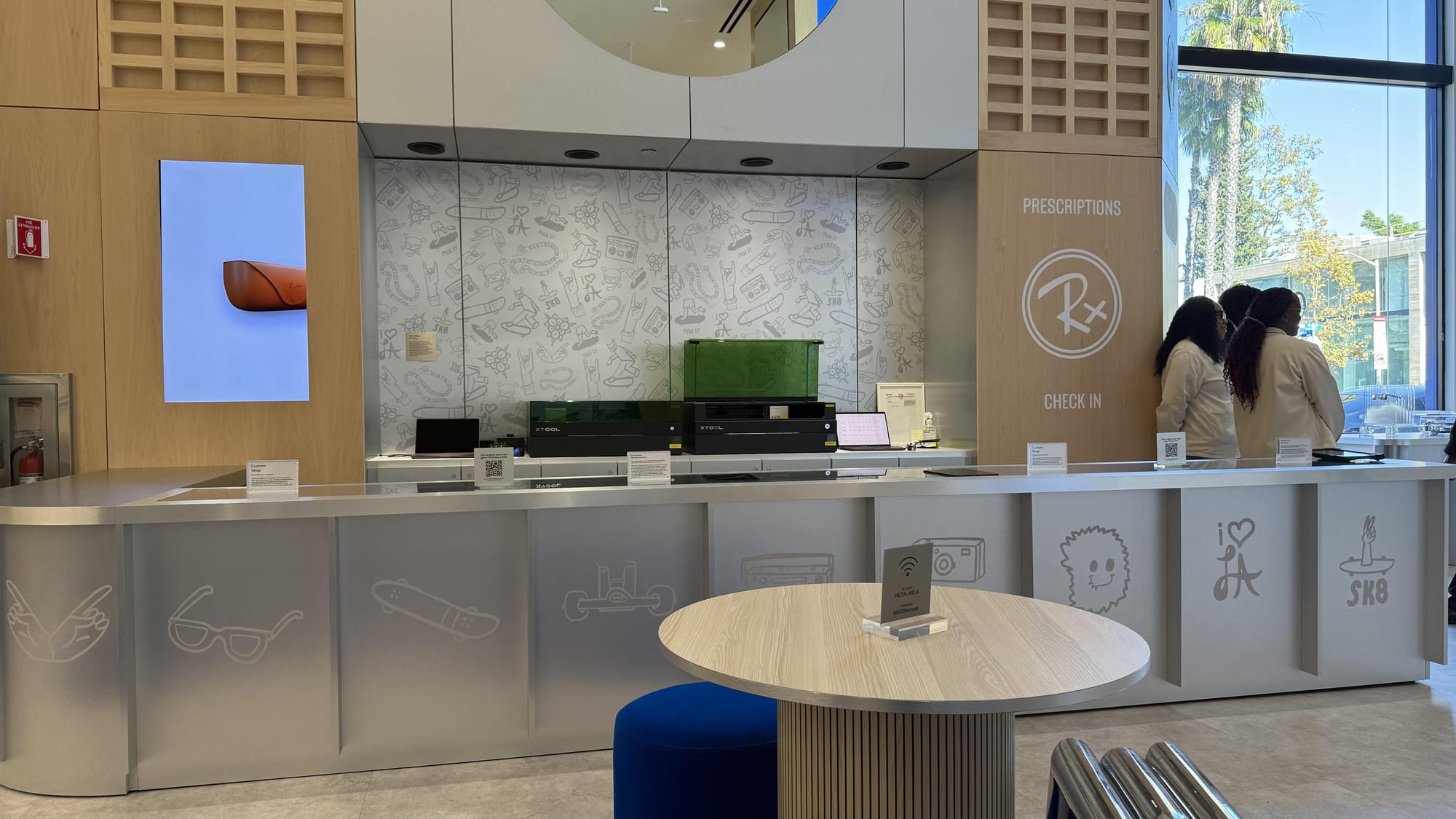
To the far right of the entrance, you're able to share your glasses prescription - if you have one - to fit your desired pair with the correct lenses for a test drive.
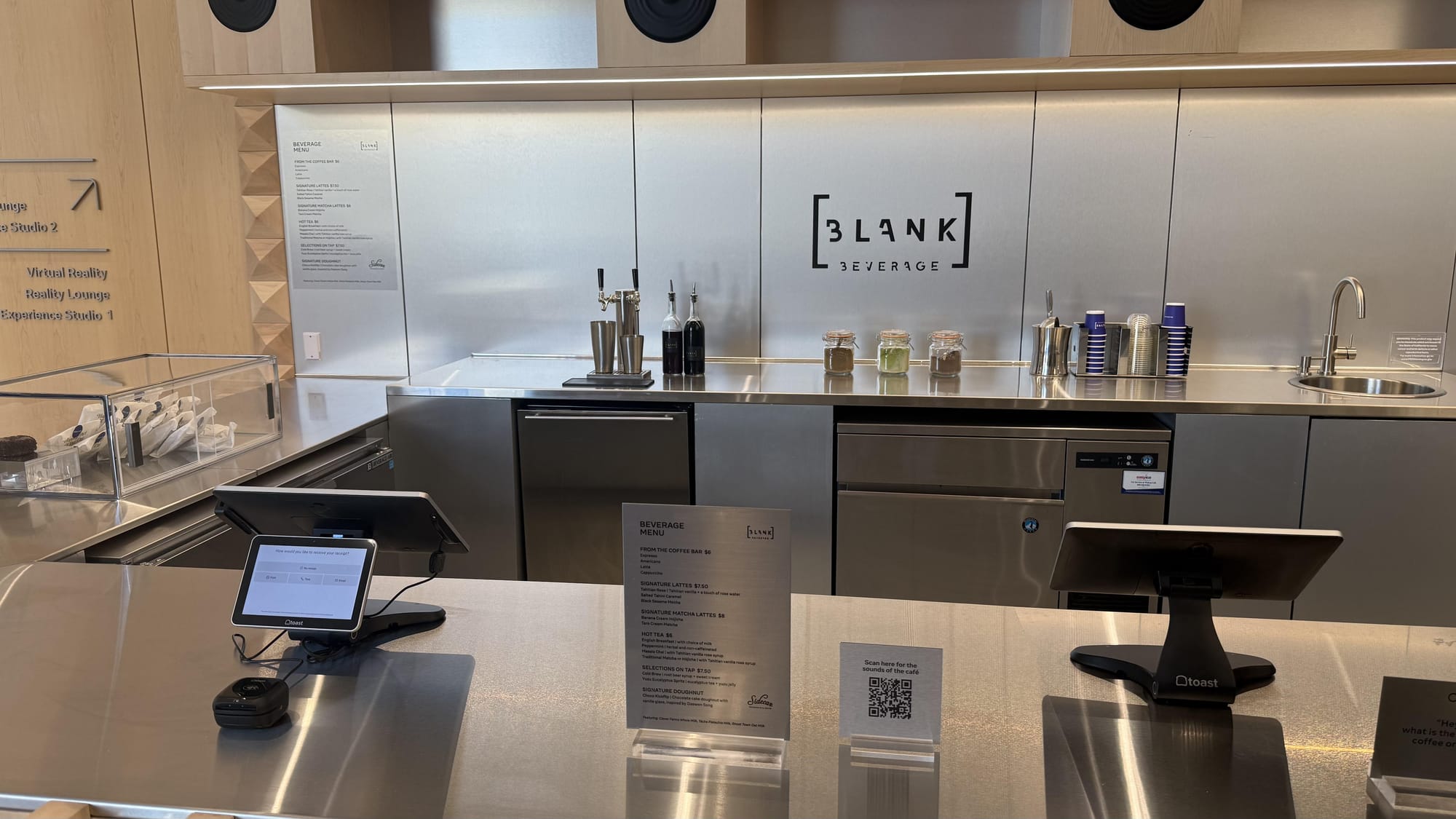
While you wait for your glasses to be prepared, a nearby cafe offers a number of appropriately expensive drinks, as well as free donuts, assuming you arrive early enough in the day that any are left. It's unclear whether that's a permanent fixture of the cafe, or if these pastries will eventually cost money after the store's opening celebrations.
Once you've been fitted with your glasses, to the far left from the entrance an "Experience Room" is fitted to take advantage of some of the AI glasses' features.
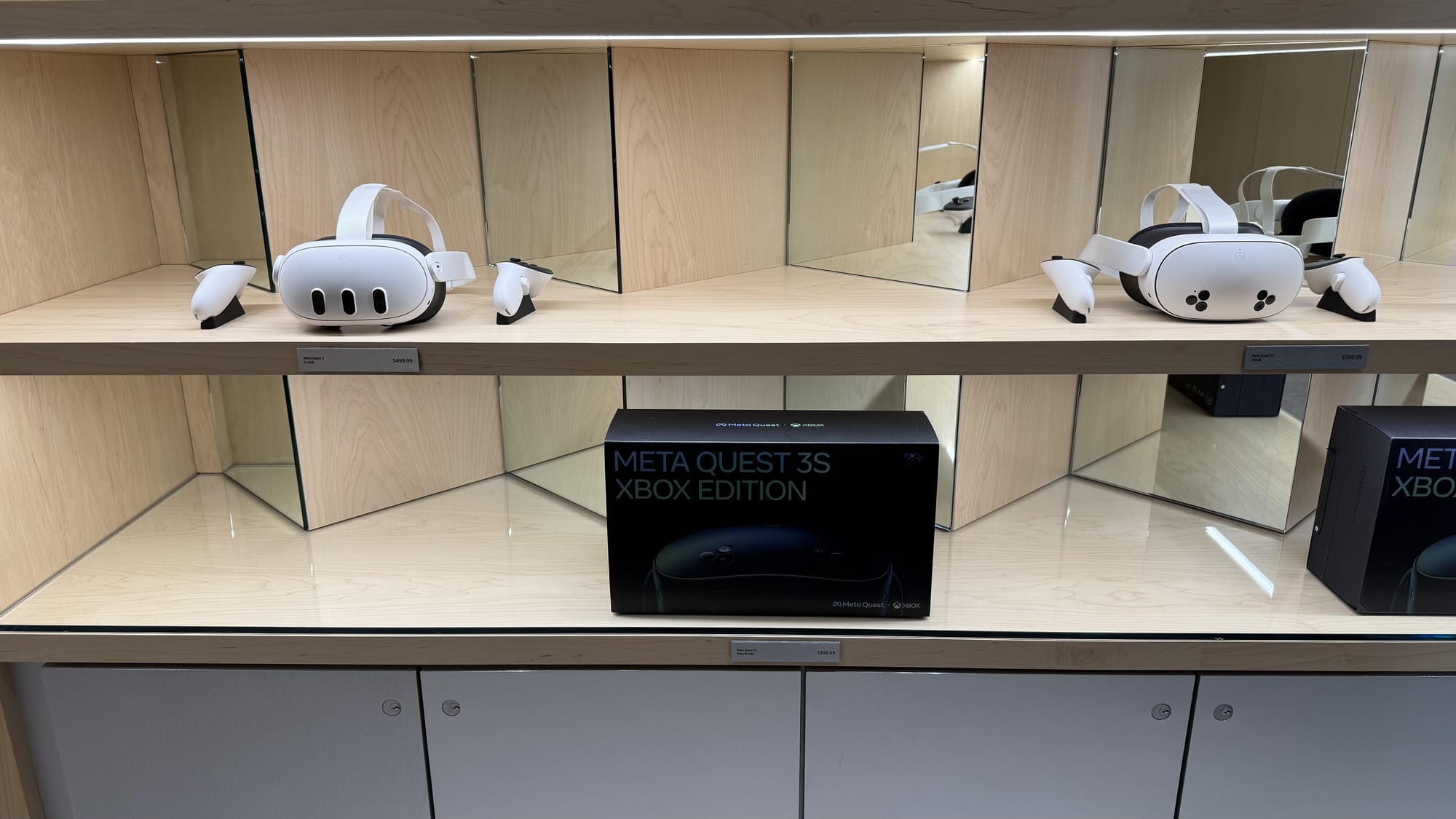
You might be wondering where the Quest headsets, and their associated demos, are found. Straight back from the entrance is a set of stairs to a second floor. Here is where you'll find the Quest 3 demos, including yet another miniature skate park, this time making use of the mixed reality functions of the nearby Quest 3 to overlay a virtual fingerboard rolling through the park.
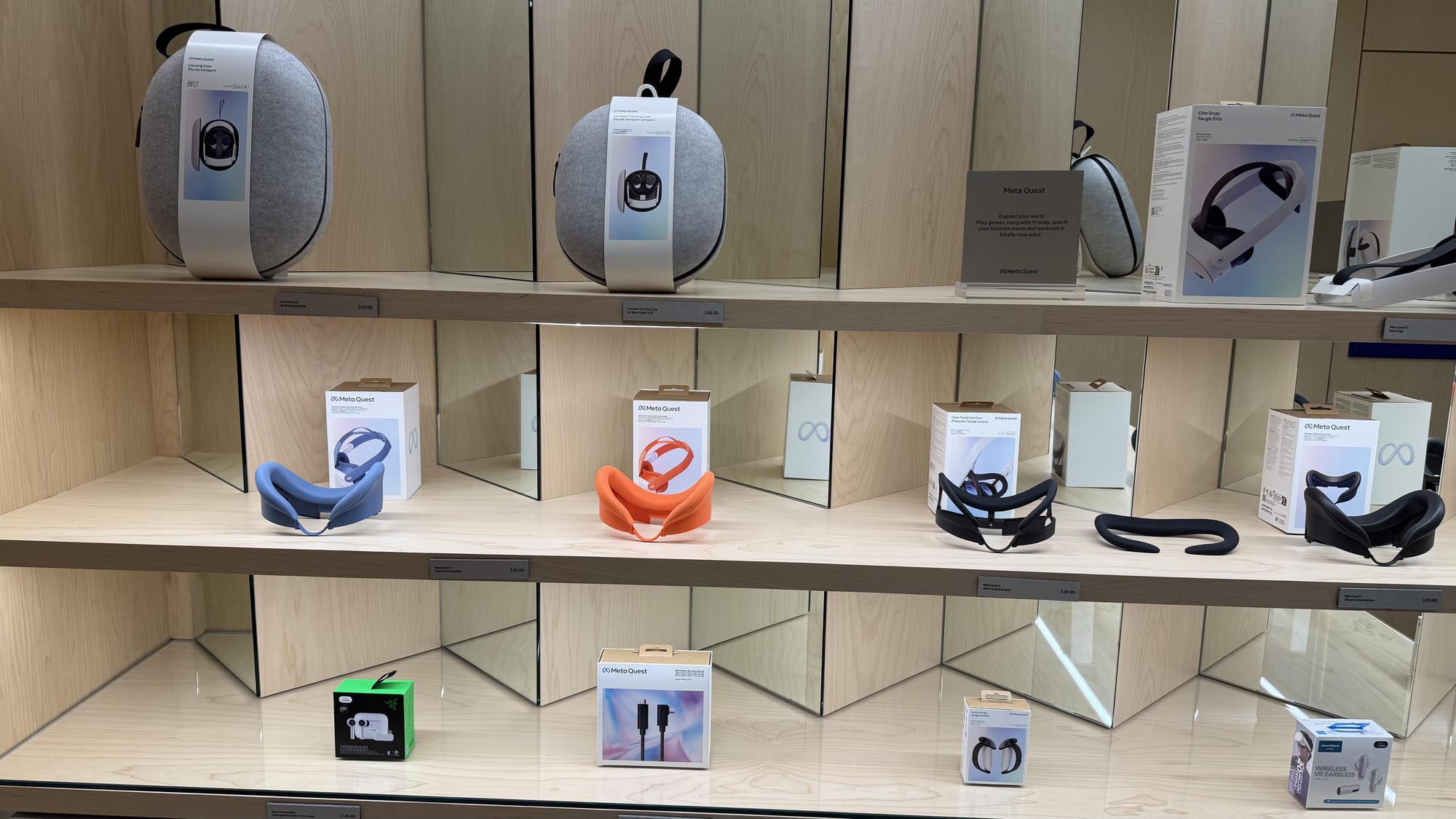
Nearby you can find a selection of Quest 3 headsets and accessories for sale; Meta employees also are at the ready to help prospective buyers test out VR or mixed reality for themselves.
According to the handlers for the demo station, there's nothing specifically exclusive to this location; they choose a variety of apps and games to showcase depending on factors such as prospective use cases, and age. As far as games are concerned, Beat Saber is a popular showcase - and for anyone 16 and older, a demo for Batman: Arkham Shadow is also available, though the team usually stresses that walk-ups should not play Batman without prior VR experience.
Also available for demo on the second floor is the new Meta Ray-Ban Display, which I opted to test out - though my specific circumstances did showcase a potential issue for other walk-ups looking to test or grab a pair for themselves.
The supported prescriptions for Meta Ray-Ban Display is considerably less than the rest of Meta's lineup, and it just so happens that my own prescription - which is supported for Quest 3 inserts - is not currently supported for the HUD glasses, so I can't speak to the full visual experience.
What I can say, however, is that Meta Lab Los Angeles gives off a strong impression. Even if the Quest is clearly only a small part of the store's lineup, Meta seems quite confident in what they have to show for the general public.
For those of you within the Los Angeles area that have been looking to check out a demo for Meta's current hardware, I can easily recommend stopping by to give things a look. If nothing else, it should be a memorable time.
If you're chomping at the bit for Panther Lake performance leaks, well, put that filthy thing away for a moment and come take a look. A result for a Core Ultra 7 366H has popped up in the Geekbench database, and we've taken the time to compare it against contemporary and past integrated GPUs to see how it rates.
The test run for the Panther
The latest update coming to Android 16 marks a shift in how Google plans to roll out releases. Moving forward, users will receive smaller updates more frequently instead of waiting for a large yearly update. The new features in this upcoming update include easier management of notifications, further customization options to change the look
The data center boom driven by the demand for AI is leading to price hikes for consumers. It has been felt in rising electric bills and is also affecting the price of hardware, like storage and memory. This economic environment is forcing Raspberry Pi to increase the prices on its product line-up, but it’s hoping to soften the blow by also
Since the inception of the internet, website and app developers have relied heavily on passwords as a means of protecting user accounts. As hackers continue to develop more sophisticated techniques to circumvent security guardrails, however, it has become easier for passwords to be cracked, especially with the help of powerful GPUs and AI
Yet another cut-price Z890 motherboard, this time it's MSI's high-end MEG ACE that's far more wallet-friendly. All while offering 10 Gbps Ethernet, dual PCIe Gen 5 M.2 SSD support, dual 40 Gbps Thunderbolt 4, 60 W power over your case's Type-C port and a huge number of fast USB ports.
Cooler Master is preparing to launch the latest addition to its Cosmos series. Dubbed the Cosmos Alpha, this full-tower chassis appears to be the production version of the “Cosmos 2025” prototype that was showcased earlier this year at Computex. While an official release date has not yet been confirmed, the sudden appearance of retail listings suggests a launch soon.
According to Vortez, the Cosmos Alpha is designed to modernise the iconic line while retaining the massive scale that defined its predecessors. Externally, the chassis features the brand's signature curved aluminium handles and frame, as well as a “metal sponge” front panel. First teased on the prototype, this material reportedly outperforms standard mesh in both airflow permeability and ease of cleaning, offering a unique aesthetic for high-end builds.
The chassis is built around the new FreeForm 2.0 design philosophy, which emphasises modularity. The layout supports highly customised configurations, including adjustable channels so you can target your cooling towards hot zones. The case is confirmed to support back-connect motherboards (such as ASUS BTF or MSI Project Zero), allowing for a cable-free visual presentation in the main chamber.
Early store listings have provided a first look at potential pricing. An Indian PC hardware retailer listed the case at ₹32,699 (about £310).
KitGuru says: Have you ever owned a Cosmos case? If you didn't, does the Cosmos Alpha have a chance to be your first?
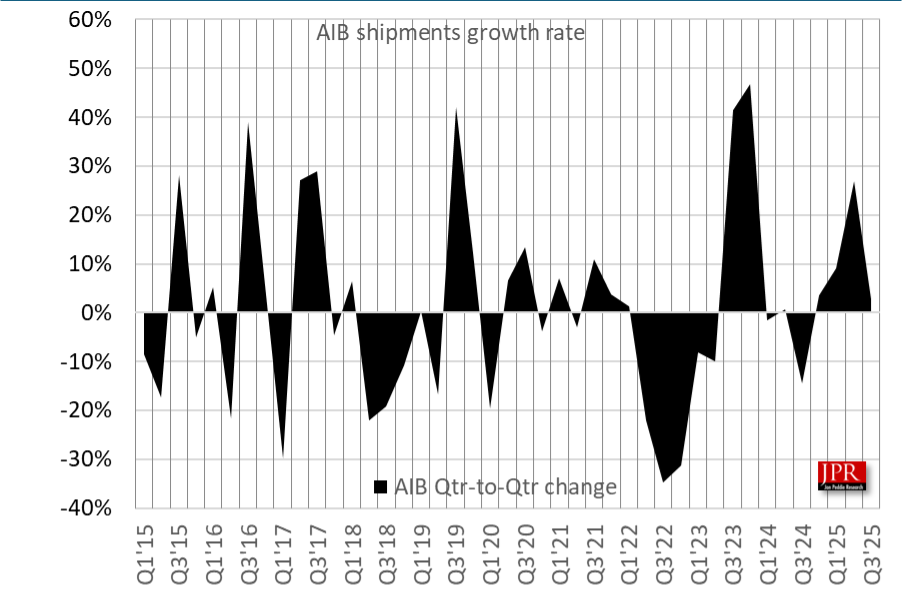
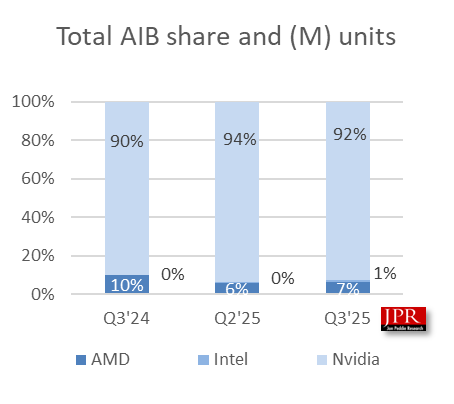
Analyst firm Jon Peddie Research (JPR) has released its Q3 2025 report on the AIB discrete GPU market, revealing a small but significant milestone for Intel. For the first time since its launch, the Intel Arc cards have cracked the 1% market share barrier, moving past the 0.5% mark it had previously been stuck at.
Intel's growth has been slow due to its late entry into a highly established market.However, recent growth offers a glimmer of hope for Team Blue and its supporters. According to JPR's latest report on the discrete GPU market, Intel has grown 0.4%, breaking the 1% barrier for the first time.
The remaining 99% of the market saw a slight shift in power dynamics. Nvidia continues to dominate the market, holding a massive 92% share. However, this represents a 1.2% decline from the previous quarter. AMD capitalised on this dip, increasing its share by 0.8% to reach 7%. These fluctuations are often driven by inventory availability and pricing strategies from board partners, where even minor adjustments can lead to visible swings in quarterly percentages.
Broader market health appears mixed. Shipments for the quarter reached 12 million units, valued at $8.8 billion, representing a modest 2.8% growth over the previous quarter. However, JPR warns that this figure masks underlying volatility. The firm forecasts a long-term decline, predicting a -0.7% annual drop through 2029.
KitGuru says: The GPU market is in a weird spot right now thanks to the AI boom, so it will be interesting to follow numbers like this in the year ahead.
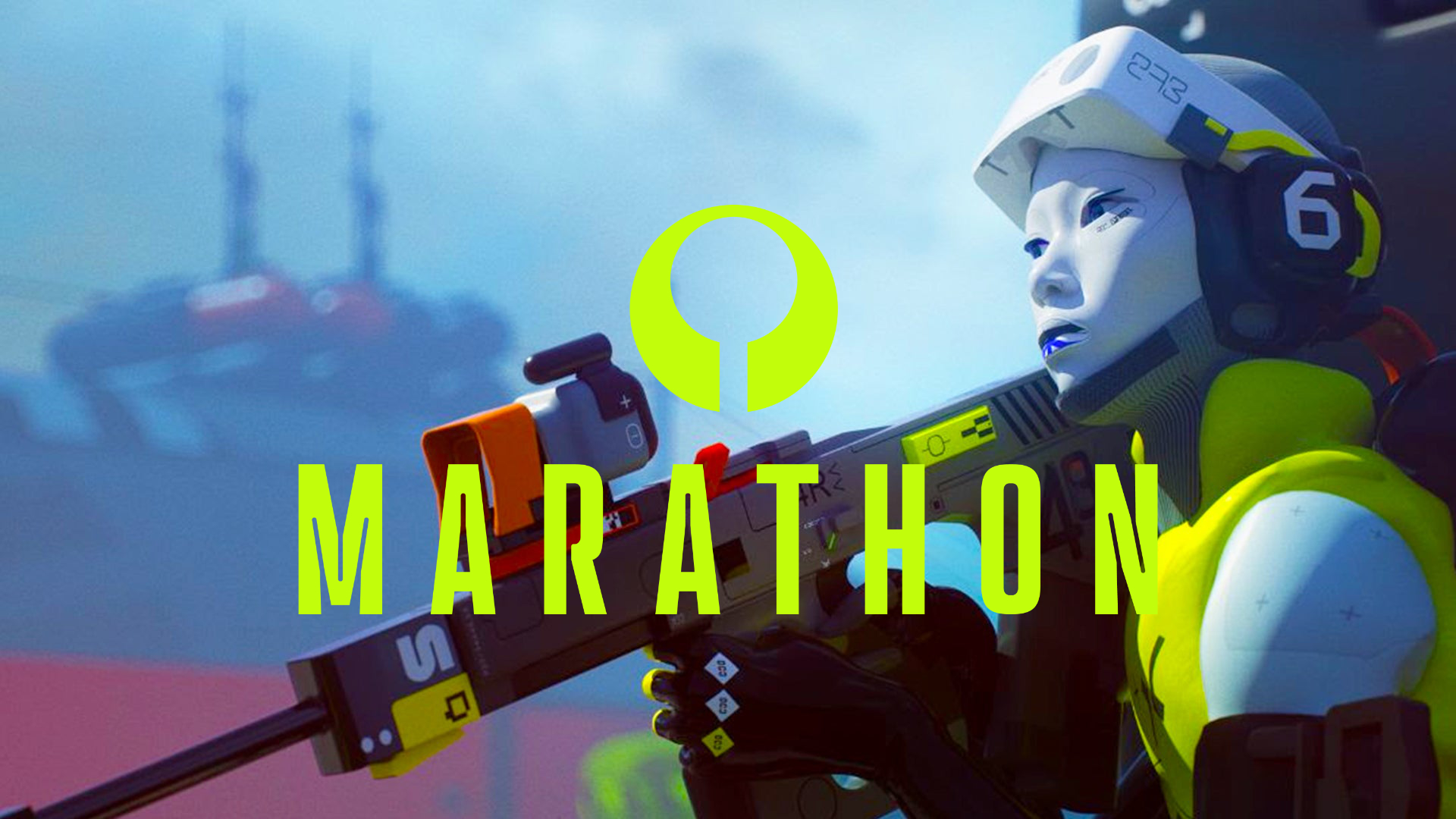
Earlier this year, following a publicly playable alpha test, Bungie was forced to delay Marathon after an artist noticed that their work had been included in the game uncredited. Now months later and seemingly ahead of Marathon's re-reveal, the artist has confirmed that the dispute has been resolved.
In an update shared on social media, the artist, who goes by the online handle @4nt1r34l, confirmed that “the Marathon art issue has been resolved with Bungie and Sony Interactive Entertainment to my satisfaction”. The statement doesn't reveal any more than that, but we would assume that the artist got paid.
Bungie spent several months over the summer removing the offending assets from Marathon and only just recently resumed playtesting. With this dispute now resolved and the new assets implemented in the game, Bungie should be free to finally show Marathon publicly again.
Marathon is expected to launch in early 2026, though an exact date is not yet known. Bungie could make some announcements before the end of the month, perhaps around The Game Awards on December 11th.
KitGuru Says: Bungie can now move on from this fiasco. Chances are, the agreement between the artist and Bungie included an NDA and likely included a clause to announce publicly that the dispute is resolved, so we'll never know the true details of what was discussed behind closed doors, or how the stolen assets made their way into the game.
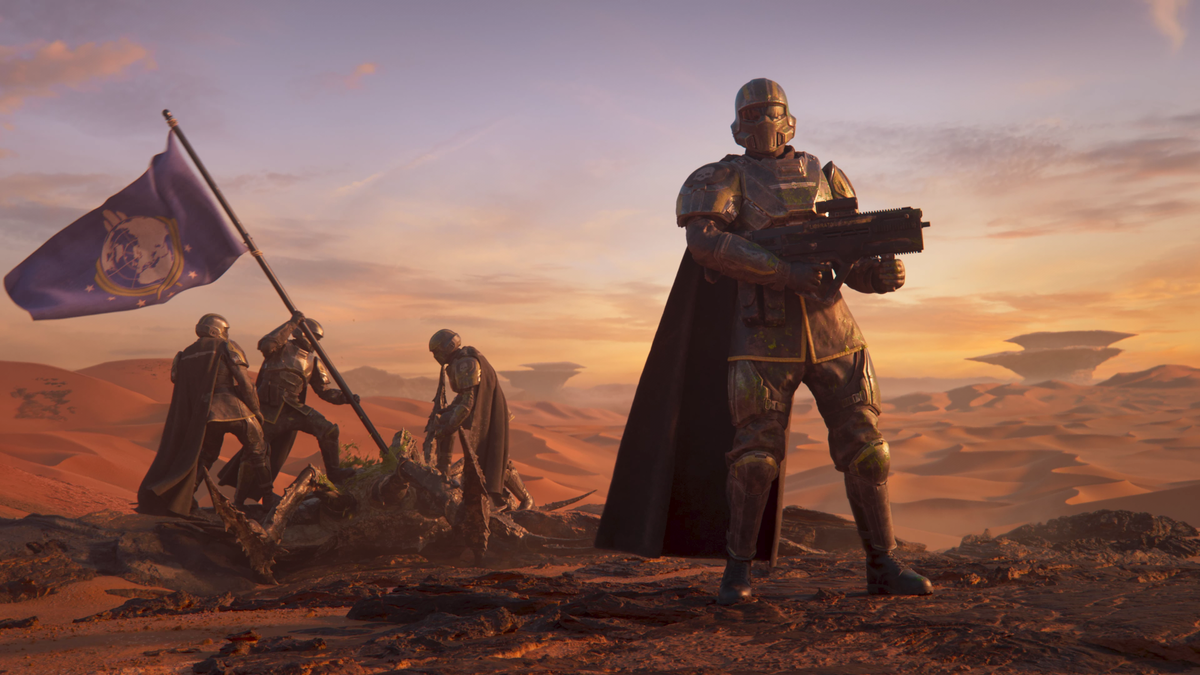
Helldivers 2 has always had a significantly higher install size on PC compared to the console versions. At launch, players needed around 70GB of free space to install the game but after more than a year of updates, the PC version has ballooned to a 150GB file size. Now, thanks to some intricate optimisation work, the PC version has been dramatically reduced by over 130GB.
Helldivers 2 fans can rejoice and reclaim some SSD space. In a recent update, Arrowhead revealed that with some help from Sony's PC-focused studio, Nixxes, they have managed to reduce the PC install size of the game all the way down to just 23GB.
This is a massive 85 percent reduction in file size. It turns out that the PC version of the game was so big because it had a ton of duplicated assets within the game files. This duplication was originally implemented to improve load times for players using mechanical hard drives, but in practice most of the loading delays came from level generation rather than asset streaming. As a result, the duplicated data wasn’t providing meaningful benefits, yet it caused the install footprint to balloon far beyond the console versions.
After coming to this conclusion, Arrowhead and Nixxes worked together to create a ‘slim' build of the game. The end result was SSD users experiencing no difference in load times, while HDD users should only experience a few extra seconds of delay. This change not only makes the game more manageable to install and update, but also ensures parity with console versions, which were much smaller all along.
Arrowhead is still testing the slim version of the game, but PC players can opt in via Steam and get immediate access to the smaller version of the game, all without giving up access to the usual matchmaking queues and game content. If you do encounter an issue, you can quickly revert to the ‘legacy' build by going into the Steam menu and changing your beta participation status to ‘none'.
KitGuru Says: I would like to see more game developers focusing their efforts on reducing file sizes. Many titles nowadays have large 100GB+ install requirements, despite the game content not necessarily justifying the install size.
Let's talk about the latest AI models, which are mostly powered by something called a "Mixture of Experts" design. Mixture of Experts (MoE) is a form of model sparsity, but we'll talk about that more in a minute. The key takeaways from this post are that the broad majority of 'frontier' language models are based on MoE, and NVIDIA says that
ShadyPanda is a nasty project that has been running invisibly for years only to attempt to unleash devastation this year. The group behind it has been publishing useful apps to both the…
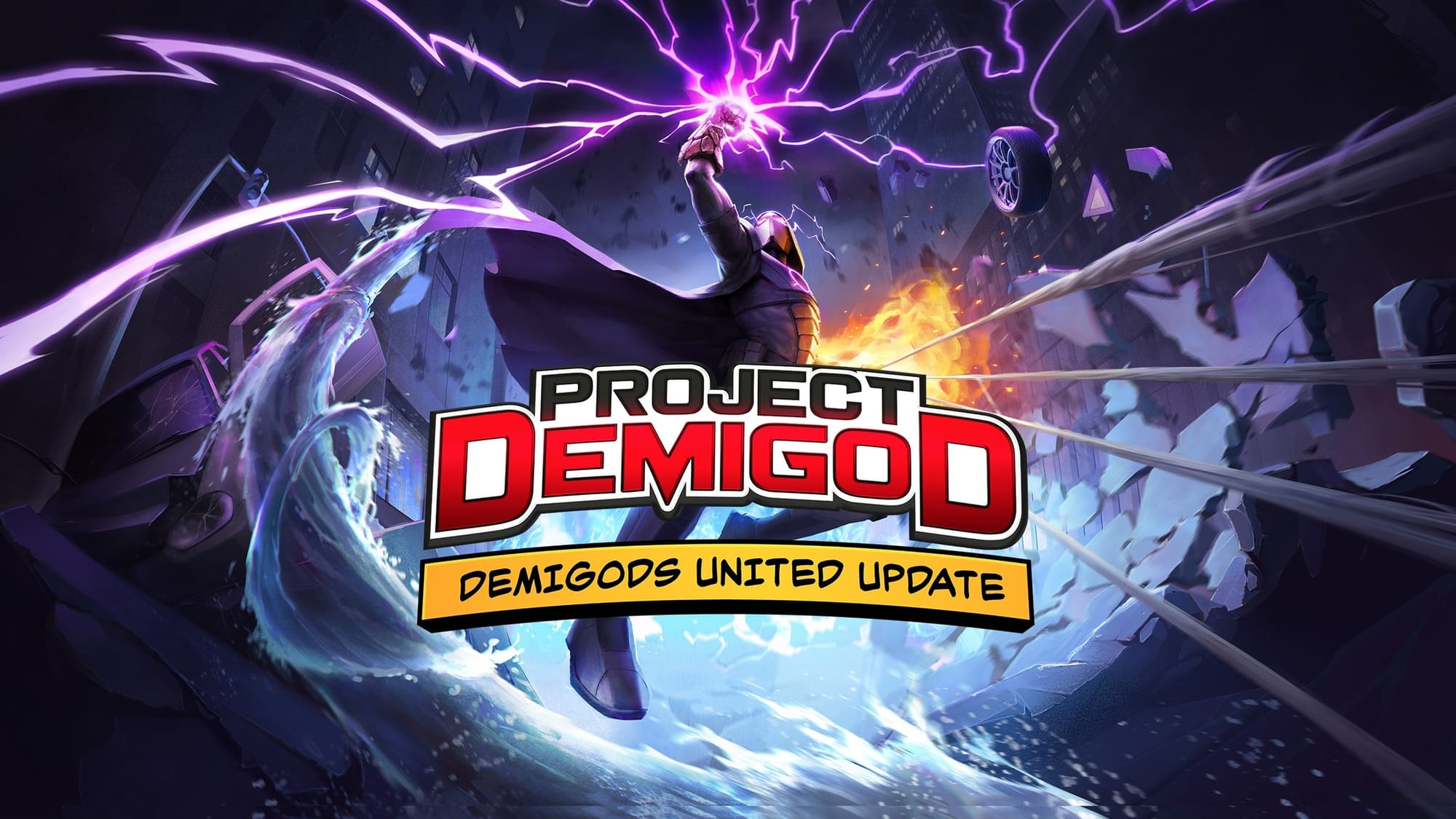
Superhero sim Project Demigod now has a multiplayer mode on Quest and Steam.
Developed by Omnifarious Studios, you may recall Project Demigod entered full release in February 2024 after an initial early access launch. It's a physics-based superhero sandbox with modding support that gives you a range of powers such as super strength or flight, where you can take on enemies and bosses across different missions.
Now, Project Demigod has recently launched the 'Demigods United' update with two major additions. Social multiplayer lets you hang out with others across the city, with “full enemy combat” coming soon in a future update. Drone combat is also available, where you can fight against drones, turrets, and attack helicopters.
Demigods United marks the latest patch in a series of post-launch updates. Previous updates include adding giant enemies, a 'Demi-Mod' patch that upgraded the modding SDK, and the 'Armory Update' with new weapons and other changes. This April's 'Lights, Camera, Action' update also included the LIV Creator Kit and power color customization.
Project Demigod is out now on the Meta Quest platform and PC VR.
During a recent trip to New York, Walkabout Mini Golf game director Lucas Martell sat down with me as well as some fans and students for an in-depth Q&A session.
Walkabout launches its 37th course this week with Alice's Adventures in Wonderland alongside a new size-changing mechanic that will quickly turn a VR outing into a mad tea party. Work has already begun on Walkabout's 50th course. At publication time, Martell, art director Don Carson and a few other members of the Mighty Coconut art team are in Gravity Sketch roughing out ideas for courses that will open starting in 2027.
I've lightly edited the first half of the session featuring questions for Martell aimed at covering how he transformed the project from an effort he worked on solo before the pandemic to something dozens of artists contribute to from their homes.
What is the 'Walkabout Path'?
We hop into Gravity Sketch once we figure out what the course is gonna be and we actually start designing the course. And one of the very first things that we do is a yellow line that goes through the entire course that represents the path that the players will take to get to holes one through 18. That is the core thread of gameplay of how it all works, and sort of how we decide what areas you're gonna get to when, what is the sort of narrative that's gonna unfold.
How did you decide to build VR that way?
Gravity Sketch is a tool in VR that allows you to basically sketch in 3D space. So you could just be sketching lines, you could also do full models. A lot of our courses, we actually do the final models in Gravity Sketch, or we'll use it to place an asset library — all of the grass and rocks and stuff that you would see is probably just someone grabbed a little library of grass and they're like, oh, put that one there, put that one there. It gives it a very organic feel because, it's not perfect, it has a little bit of that hand-feel to it. And the other really cool thing about Gravity Sketch is that you could have multiple people in the same room working at the same time. We've added a fourth designer to the team within the last year here, and so we will all be in there and literally sketching and be like, oh, we need to have a table. And so Don tends to do a lot of the prop work and he'd be like, oh, let me go do that really quick. He'll literally like do a rough table in just like 20 seconds. “Like this? What if we'd made it longer, made it more oval?” He'll make the tweaks and we're literally going through and making it. He might just be like, ‘Oh, here, I replaced the chair. Can you go put this around?” And I'll grab his chair and place it and stamp it all over the place. So it's a very interactive way of working and it allows us to sort of work in 3D in a very sketchy way. And we have really found that sort of like the instinct a lot of people have is to try to make something look good. And what we've learned is try to stay as messy as long as possible. And that's where the "Walkabout Path" kind of came in, is that we want to think about what the overall experience is like, kind of like you would doing storyboards for a film. You want to be fast, loose, you want to capture it as quickly as you can so you can start finding what works and what doesn't work, so you don't spend a whole lot of time polishing something that's gonna end up on the cutting room floor.
How did you decide the trigger pull mechanic to teleport to the next hole?
The game started off as a solo project. So this would've been mostly during the pandemic. There was actually a little bit of work that was done on it before the pandemic, but that's really when it kicked into full gear. And it was just me for probably about nine months full time, although there's probably about three months spaced out of work that had been done in the year or two prior. And the two big things that I had always felt was, to me, mini golf, half the fun is not necessarily the game, it's actually the course itself. It's walking through the pirate ship. It's walking through the cave, it's seeing the blue, weird water. It's the environment that's around you. And yes, the game itself can be fun, but to me the path with all of that stuff takes it from even being like a hike into almost being like a theme park, but it's almost like a guided tour through the theme park.
The trigger to get to your ball, the one other big kind of like idea that I had is that I wanted people to be able to play the game with a single button. And so even to this day, you can play the entire game with just the trigger button. And so if you're ever trying to teach someone how to do it, that's the only thing you have to. And part of that came from just having done mobile games before, or just having done some other things where you have to keep it so, so simple that it shouldn't take long. And now you can't pick up the lost balls, you couldn't fly. But the actual, the core game mechanic is just one button.
Can you list off all the things that you can do in Walkabout now?
When it launched it was just four courses. Teleport only. There was no music, there was no settings menu cause there weren't any settings to adjust. There were no fox hunts and there was night mode and there were lost balls, but it was just four courses, night mode, no avatars, you were just gray. So flying became a thing. Smooth locomotion became a thing. We added music and fox hunts at the same time with the new putters. And then all the other activities that we've done as well. So that would be slingshots, mini mode, giant mode. I don't know if people have played recently, but there are a lot more sort of like game modes. You can play chess now in Venice, Upside Town and Welcome Island. And if you just go up to it and it's the same idea, it is just a trigger. You'll just get like a little sort of like an eyedropper thing that you can just grab whatever piece you want and place it wherever you want.
Are we gonna get hand tracking at some point?
We're definitely looking at it and I will say that the hand tracking has to be really good in order to do golf, but there's a lot of other things that don't, like picking up that chess piece, could theoretically work really nicely without some of that.
Why did you build your workplace the way that you did?
We were an animation and visual effects studio for a really long time, mostly doing vendor work. I came from the film world, mostly animation, pitching, setting up projects, got a couple of things made. So we came at this not as traditional game designers and we have kind of inherited a lot of things from animation. So one of the things that we do very, very differently than most other game design companies is that normally, when you were building a world like this, you would have artists building individual pieces. They would build that table, they would build that whiteboard, they would build the trash can and then someone else would be assembling it all in the engine. We do it all more like the film world where everything is just built in Gravity Sketch, Blender, it's all basically there. So you can do the entire world at any point in the process. Anyone can come along and be like, I don't like that railing right there, and move the whole thing. And it gives a lot more freedom to the team and there's a lot more trust. But also, because it's low poly, it also allows them to help create the world and maybe not get lost so much in the detail. Because one of the things that I've seen a lot of game studios struggle with is just if people are hyper-focused on making a version of that phone, they're gonna want to keep adding detail and detail and detail. And our point is more like, let's stop adding so much little detail to every single item. Yes, you could sort of make that phone look perfect, or you can have the table set up that clearly it looks like there's been a party. There's like a bunch of chip bags, there's a couple that have been opened. It actually feels like this big space is lived in, and that you only get when people are not focused on the micro, they're focused on more of the big picture stuff.
What does your funding model mean when recruiting talent – is it difficult or easy to hire?
I have to say it's a lot easier because I think that everyone who works in the games industry has struggled with what happens when funding gets pulled. Just a year ago, especially with some of the Embracer group stuff, like there were so many projects that got canceled just because, not cause the project was bad, but just because financing blew up or everyone has horror stories of all that happening. So the fact that we call it “player funded” because I sunk about a year of my personal time into it, but there was no like hard dollars that were into that. It was just the effort involved. And then since then it's just been sale of the game and sale of the DLCs that has fully funded the entire thing. I think that does put us in a really unique spot where we, when we say player-first, we really do mean it because we need those players to keep coming back and keep supporting the game.
Who is Don Carson?
Don joined us, I think probably about number 10 or 12, somewhere in there. So he was earlier on, he was an Imagineer, he was the senior art director on Splash Mountain, Mickey's Toontown. A couple of different, pretty big things. So he came from the theme park world and since then he's worked on Dragons and Mario World and he had worked on a bunch of other stuff, much of it five, 10 years ago and it's just now actually getting finished and seeing the light of day because theme parks just take so long to do. But Don had embraced VR pretty early on as a design tool because he was creating spaces. It was just the best way for him to do that. And he's always been very, very sort of like tech-forward, and Don reached out to us just because, I think it was in Bogey’s Bonanza, which is course number six or seven, somewhere in there. Why don't you come talk? So we had kind of had him into an all-hands meeting. He just came in and did a presentation. It was like 45 minutes or so, talking about theme park design and what he did. And we just played a couple of rounds and kind of kept talking.
It was like, "would you ever consider coming to, to work for us?" He jumped at the opportunity. It really has sort of changed a couple things about how we do. We've definitely kind of embraced some of the theme park design in what we do, and a lot of that comes down to environmental storytelling, and the way that you can kind of create these different stories. For folks like me, coming from the film world, I always had a very, a very sort of like linear idea of what storytelling was. And he really helped us understand that it's almost more about, you need to have a very, very general conceit about what the world is and why it is that way. But then it's about all the details that you put in there that sort of support that. And it's not a linear story. It's sort of like all these little things that you might find as you go around. So I feel like once Don came on board, Nautilus or 20,000 Leagues was the first one that he was super involved with, and I think you kind of feel that...that sort of like, it really took a, a big leap at that point, from these are cool worlds to being sort of like, no, this is inhabited. It feels like a place.
What is the value of virtual reality to you?
I think that being able to go into another world, that was the thing that sort of like really drew me there. And I feel like space is such an important thing to me and I love that ability of basically just being able to like fully immerse yourself in a world. Also, I think that games like this that also maybe feel a lot less like games. That it is almost more of a space. And yes, there is a game activity, but that is almost like the lightest of — it’s an excuse to get in. A lot of times people aren't even coming for the game. They're coming more to spend time in the world. There's a significant number of people who do use it just as almost like kind of meditation or just sort of like a way to just like wind down at the end of the day.
But then the social side of things. When I was doing this, Quest 1 was the only headset that was really out there at the time. And Oculus had talked, we didn't take any money, but they were just like, we know it's coming up, we really think you should add multiplayer. This is like two months before launch. I was like, okay. I didn't know any better. Luckily mini golf turned out to be one of the easier things to do multiplayer with just because you don't have some of the interactions. So I basically coded up a really crude multiplayer implementation and the very first time that I played I was like, I need someone to play with. So my dad, it was height of the pandemic. He grabbed the other headset, went upstairs and we played a game together. And it was mind blowing how being in the same space as someone else really sort of like – it felt alive. And it felt like you were sort of sharing that, that place with someone. It gets to you in a way even more so than FaceTiming someone would.
How often has the subject come up of selling the company?
It came up and there was definitely a period, especially three years ago when all the VR stuff was really hot, that we were getting approached quite a bit. And yeah, I think that ultimately, none of the prospects brought anything to us that was really of interest outside of money. But it was also one of those things that we weren't trying to pay anything off. The game has already paid for itself. And because we're already set up that the game is paying for all of the artists, it does put sort of an upper limit on our burn rate. I don't know that we could make more mini golf faster in a way that would really be better for anyone. I feel like we've really found a nice sort of like a nice pace and cadence with all that. But sure you could spend more time on any individual course adding more stuff. But even then, there's a polygon budget that we have to hit. There's only so much that we can put into any one thing anyways. I feel like if we reduced the number of courses, if we went to like one every quarter or so, I feel like then we would be in a weird boat where we would have to be so much more precious about every single one of them. If you're spending twice as much as what we're spending on this certain course, now you're getting into a version of AAA where now it's like, ‘okay, now like everything has to be a raging success in order to just break even.’ As opposed to, we can make an Upside Town and maybe some people will hate it, but taking those risks, I think is one of the things that the independence has allowed. And it lets us sometimes try some stuff, and we don't have to deal with a lot of the bureaucracy.
When you're playing with people in like Ice Lair, where you get turned into an ice cube, which is intentionally kind of a little annoying that you're putting a cube now. When you're playing with people, you're sharing the laugh and when it turns into a cube, and then it bounces and then suddenly rolls off to the wrong side, everyone is laughing and having a good time. I'm reminded of something Elan Lee, the Exploding Kittens creator, talks a lot about making it so that it's not about making the game funny, it's about allowing the other players to be. And the more you can get one of the other people who are playing to be funny or to have a good time, then it's sort of like, then that's what's infectious.
All your artists work from home?
Yeah. We do technically have an Austin office and a Boise office where a couple of our tech folks in the QA team are, but almost everybody's working remotely.
How do we make more places like Mighty Coconut?
I definitely think that being driven by the creative is kind of a big part of that. And I think that some of it goes back to what we were talking about earlier in terms of sort of like giving people the latitude to contribute things like that. Because part of the reason that we've got so much of that in there is that it comes back to how we're fundamentally set up so that someone owns the entire course at any given point for usually multiple weeks. And so they have opportunities to add capybara in, to add those little scenes, to create those little moments that were never really intended. And I feel like when I'm doing my job as sort of a game director, I wear a few different hats, but like the game director side of me when I'm doing my job right, is really early on sort of like, "here's what the course is." I'll call it sandbox directing. It's sort of like my job is not to describe the sand castle that's gonna be. My job is to sort of like create the sandbox and it's like, “here's how big the sandbox is.” Here's a few of the toys that you have to work with inside of there. Okay, focus here, and as long as you stay within the walls, then we're good. And by doing that and then trusting people to make something cool, I think that's where you get some really interesting stuff that no one person on the team could have possibly come up with. And even the courses that I've designed myself, a lot of the things that make them the most memorable are the things that other people add. And yeah, just embracing that. I think that a lot of it does come just down to being creative-led and trusting and knowing how to hire the right people that have that right sense of taste.
Please consider becoming a member or patron to support UploadVR's work directly.
Hello Kitty Skyland, a free-to-play social VR experience based on Sanrio's iconic mascot, enters early access later this month on Quest.
Originally announced in September, Hello Kitty Skyland is being developed by Thirdverse (Soul Covenant, X8). Set in a virtual world called 'SKYLAND' with various Sanrio characters, the early access release features a central online lobby and a full-body multiplayer racing game called 'Sky Dash,' which seems to use Gorilla Tag-style locomotion. You can see that below with today's trailer.
Other features available in this month's early access launch include an avatar dress-up system, using various original outfits. Limited-time costumes themed around Hello Kitty, Kuromi, and My Melody are also included, though it's unknown how long they'll be available for.
It's currently unknown what further features will be added for the full release of Hello Kitty Skyland, and a targeted release window for that wasn't provided; Thirdverse only states that “the development team will gather player feedback and continue adding content toward the full release.”
Hello Kitty Skyland enters early access on December 22 on the wider Meta Quest platform (store page currently down) as a free-to-play release with in-app purchases.
You could easily spend $50, $100, or even more on a high quality gaming mouse, but do you really need to? That's up to each individual buyer to decide, but if you're looking to spend far less without compromising too much, there are deals out there, especially now that we're in the midst of the holiday shopping season. To that end, how does
Samsung has formally confirmed the existence of its next-generation flagship processor, the Exynos 2600. From what we can tell, the new SoC bound for the S26 seems to be the course correction that the company has promised for ages, following years of Exynos performance controversies.
The official reveal trailer titled “The next Exynos”
Gran Turismo 7 launches its free Spec III update and the Power Pack DLC tomorrow on PS5 and PlayStation VR2.
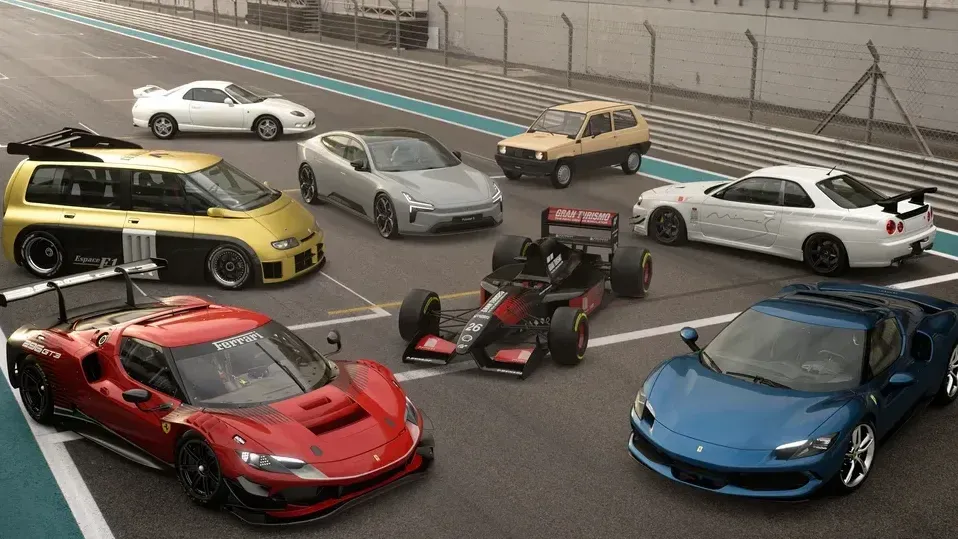
We've known since September's State of Play presentation that Polyphony Digital planned to launch its Gran Turismo 7: Spec III update. Celebrating the wider series reaching 100 million sales, this free update comes with two new tracks - Abu Dhabi's Yas Marina Circuit and Canada's Circuit Gilles-Villeneuve - alongside eight new cars. You can see that in action below.
Like before, these cars aren't unlocked immediately and require purchasing from different shops in Gran Turismo 7. Here's the full list of cars being added: Ferrari 296 GT3 ’23, Ferrari 296 GTB ’22, FIAT Panda 30 CL ’85, Gran Turismo F3500-B, Mine’s BNR34 GT-R N1 base, Mitsubishi FTO GP Version R ’97, Polestar 5 Performance ’26, and the Renault Espace F1 ’95.
These aren't the only free additions in update 1.65, either. PlayStation Blog confirms other changes include Dunlop tires, a raised collector level cap, seven new events across World Circuits, and more weekly challenges. A new 'Data Logger' is accessible in non-racing modes, while further Café Menus and featured curations in Scapes mode are also included.
With the Power Pack DLC, Polyphony Digital states that it's “based around the theme of real racing.” The studio confirmed this offers various motorsports challenges such as full racing weekend formats, 50 new events across 20 categories, and 24-hour endurance races.
This DLC also exclusively contains the latest version of Gran Turismo 7's AI agent, Sophy 3.0, and completing Menu Book No.9 Championship unlocks the Power Pack pavilion on the world map, represented by a sailboat icon. Unlike Spec III, that's a paid content update costing $29.99 and includes 5,000,000 in-game credits.
It was only a matter of time before Blackwell would rank as one of the top 10 GPUs on Steam and it's now official, at least if ignoring the catch-all "AMD Radeon(TM) Graphics" entry. If so, then NVIDIA's mid-range GeForce RTX 5070 graphics card as the 10th most popular GPU on Steam, based on the latest survey results for November 2025.
The
Samples retrieved from asteroid Bennu by NASA’s OSIRIS-REx mission in September 2023 have yielded a surprising treasure trove, revealing not just the building blocks of life, but also a mysterious "space gum" and ancient stellar dust.
Researchers have detailed three major findings published in Nature Geosciences and Nature Astronomy. Foremost
 Connexion