↩ Accueil

Vue lecture

Sapphire's New Motherboard With PhantomLink Powers A Radeon RX 9070 XT Without Cables

Sapphire's New Motherboard With PhantomLink Powers A Radeon RX 9070 XT Without Cables Ahead of CES 2026, Sapphire is showing off a pair of "PhantomLink" (its equivalent to ASUS' BTF) AMD Radeon RX 9070 XT GPUs and motherboards. Both will come in white or black colorways and are (for now) China-exclusives. This launch from Sapphire shows a continued push from AIB GPU partners and motherboard manufacturers to minimize cable
  •  

Microsoft's Hardware-Accelerated BitLocker Promises A Huge Performance Boost

Microsoft's Hardware-Accelerated BitLocker Promises A Huge Performance Boost For Windows' BitLocker drive encryption, performance has been a long-standing pain point, especially as high-speed NVMe drives have become more dominant in the market. Fortunately, Microsoft has taken note and will soon be introducing hardware-accelerated BitLocker drive encryption and decryption on supported hardware, with future updates
  •  

AMD Ryzen 9 9950X3D2 With 192MB L3 Cache Spotted In Multiple Benchmarks

AMD Ryzen 9 9950X3D2 With 192MB L3 Cache Spotted In Multiple Benchmarks The long-awaited "double X3D" CPU, which AMD once denied would ever happen, has finally confirmed its existence with new leaks over at Geekbench and Passmark. We'll cut to the chase: neither benchmark result is particularly interesting, as both show performance nearly identical to the extant Ryzen 9 9950X3D in these specific benchmarks. However,
  •  

AMD's Next-Gen RDNA 5 Radeon GPUs Rumored For TSMC N3P And 2027 Launch

AMD's Next-Gen RDNA 5 Radeon GPUs Rumored For TSMC N3P And 2027 Launch Over on X, Kepler_L2, one of the more trusted leakers in the industry, claims that AMD's next-generation RDNA 5 graphics architecture is slated for a mid-2027 release date, with chips being built on TSMC's N3P process. This claim emerged as a direct response to a quote tweet where another leaker, Jukan05, claimed AMD RDNA 5 would be made on
  •  

SODIMM to DIMM adapters could help gamers work around DDR5 memory shortage

In recent weeks, DDR5 memory prices have begun skyrocketing due to a shortage brought about by AI companies buying up the majority of available DRAM supply. Gamers may be able to work around the shortages with a little ingenuity though, as desktop RAM can be replaced by SODIMM modules with the use of an adapter. 

Hardware Canucks (via Videocardz) put this idea to the test in a recent video to see how viable it is. By going to the used SODIMM memory market, PC builders can save a decent amount of money compared to current desktop RAM prices. As 3DCenter points out, these adapters are currently very cheap as well, so an end user would be looking at a 30% saving when buying 16GB of DDR5 SODIMM memory, plus an adapter, versus buying the equivalent amount of desktop memory at current prices.

However, this cost-saving measure is not without technical caveats. These adapters are fundamentally a hack, designed for repurposing spare hardware. Desktop motherboards are engineered for specific trace lengths and signal integrity, and introducing an additional physical interface via a passive adapter inherently degrades the quality of that signal path. Consequently, users should expect to lose some performance. Laptop modules typically operate with much looser timings and lower clock speeds than desktop kits from the likes of Corsair or G.Skill. To maintain system stability, further downclocking may be necessary to compensate for the electrical noise introduced by the adapter's additional circuitry.

This trend follows other DIY measures we've seen, such as the rise of “solder-it-yourself” memory kits. While these SODIMM adapters are a far more accessible solution that doesn't require specialised electronics knowledge, they represent a similar level of desperation in the current market. For gamers who have spare SODIMM sticks from an old gaming laptop or access to cheaper mobile stock, the adapter offers a viable bridge to a functional PC, even if it means sacrificing the low-latency performance of desktop modules.

KitGuru says: This may be a good workaround in a pinch, but we wouldn't necessarily recommend running your PC this way. 
The post SODIMM to DIMM adapters could help gamers work around DDR5 memory shortage first appeared on KitGuru.
  •  

NuPhy unveils new Node 100 keyboards

After launching the compact Node 75, NuPhy has officially unveiled the Node 100, a new low-profile mechanical keyboard with a retro minimalist design and an 1800 layout. Designed for users who need a full numpad without the desk-consuming footprint of a standard 104-key board, the Node 100 is available in three colours and three switch options.

The Node 100 retains the design elements of its smaller sibling, most notably the dot-matrix LED indicators on the left and the touch-sensitive strip on the right, which allows intuitive shortcuts and media controls. Despite its premium features, NuPhy has kept the price competitive, starting at $99.95 (with a $10 discount). This is achieved through a high-quality plastic construction with a PCB gasket mount system, ensuring a bouncier typing experience.

NuPhy is launching the Node 100 in two distinct configurations. The low-profile variants are aimed at the “productivity on the go” crowd, featuring a slim front height of just 13.8 mm and weighing in at 787 g. It uses NuPhy's Low-Profile Nano switches (based on Gateron's LP 3.0 tech) and dye-sublimated nSA profile PBT keycaps. The high-profile options are for the traditional desk setup, with a front height of 18.9 mm and double-shot PBT keycaps in the mSA profile.

Both versions feature two-stage adjustable feet, offering typing angles of 6°, 9°, or 12°, and support tri-mode connectivity: Bluetooth, 2.4 GHz wireless, and wired USB-C. Moreover, the two versions can be acquired in dark gray, pink, or white with linear, tactile, or silent mechanical switches.

Under the hood, the Node 100 runs on NuPhyIO firmware, which is fully programmable through a web interface. Battery life promises to be quite good: with south-facing RGB lighting disabled, the low-profile model (3,000 mAh) and the high-profile model (4,000 mAh) last up to 1,000 hours on a single charge. Even with the lights on, users can expect roughly 100 hours of wireless use.

Moreover, NuPhy is releasing the 3D reference files for the keyboard. This allows users with 3D printers to create custom accessories for the Node 100's top rail. Pre-designed files include everything from pen holders and phone stands to LEGO-compatible mounts, making the keyboard a literal playground.

KitGuru says: The Node 100 looks like a perfect blend of minimalism, enthusiast features, complete layout, and a decent price point. While you may find equivalent or even better standard/high-profile keyboards at this price, in the low-profile market, it can be challenging to find one this promising.

The post NuPhy unveils new Node 100 keyboards first appeared on KitGuru.
  •  

Buckshot Roulette hits 8 million sales, console port gets delayed

The horror hit Buckshot Roulette continues to defy the typical trajectory of indie titles. Developer Mike Klubnika and publisher Critical Reflex have announced that the game has officially surpassed 8 million copies sold on PC, an impressive figure for a project that began as a small-scale experimental release.

To put that 8-million-unit milestone into perspective, the game has now outpaced several major AA and AAA releases of the year, including Clair Obscur: Expedition 33 and the lifetime sales of the entire Octopath Traveler franchise. Perhaps most impressive is that these numbers represent actual sales of a PC-exclusive game, as Buckshot Roulette has never been part of a subscription service like Xbox Game Pass or PlayStation Plus. The game's success seems to stem from its mechanical hook: a high-tension game of Russian roulette played with a 12-gauge shotgun in a grime-streaked basement.

On not-so-bright news, fans waiting for the promised console versions will have to wait a bit longer. Initially slated for a late 2025 release, the ports have now been pushed back to 2026. Critical Reflex cited “technical difficulties” as the primary reason for the delay. The game was built in the Godot engine, and the team is reportedly working through specific optimisation hurdles to ensure the console experience matches the PC original's atmosphere and responsiveness. Despite the delay, the franchise is expanding into the physical realm, but not as a release. Over the next year, fans can expect a physical release of the game's soundtrack, along with new merchandise.

For now, the only place to play Buckshot Roulette is on PC via Steam and Itch.io. With a multiplayer update already proving popular throughout 2025, the game appears well-positioned to maintain its momentum until it finally hits consoles next year.

KitGuru says: Eight million copies for a game about shooting yourself in a basement is a testament to how much “vibes” and a strong mechanical hook matter in the indie space.

The post Buckshot Roulette hits 8 million sales, console port gets delayed first appeared on KitGuru.
  •  

PS5 Is $100 Off And More Top Gaming Deals Still Available After Christmas

PS5 Is $100 Off And More Top Gaming Deals Still Available After Christmas Santa is back at the North Pole kicking back and relaxing before getting started on next year's batch of gifts. A year is a long time to wait if you didn't get what you hoping for, but the good news is you can take matters into your own hands with several deals that are still in effect the day after Christmas. That includes a $100 on selection
  •  

LG's New UltraGear Evo Gaming Monitors Include A 5K2K OLED With AI Upscaling

LG's New UltraGear Evo Gaming Monitors Include A 5K2K OLED With AI Upscaling LG is rolling out a brand new UltraGear evo (stylized with a lowercase 'e'), which it will show off in more detail at the Consumer Electronics Shows (CES) in Las Vegas early next month. In the meantime, LG is providing a few details about three upcoming models, one of which is a 39-inch curved OLED display that it's pitching as the world's
  •  

ASUS Responds To Rumors It Will Make DRAM To Alleviate The Memory Crisis

ASUS Responds To Rumors It Will Make DRAM To Alleviate The Memory Crisis Sorry folks, but ASUS is not likely to save us from the current DRAM crisis that is expected to not only persist through all of next year, but potentially far beyond. Rumor has it that ASUS is toying with the idea of making its own DRAM chip production line to serve the consumer market, which if true, could help alleviate the shortage. However,
  •  

How To Pitch Articles To UploadVR

Last Updated: December 26, 2025.

At UploadVR, we regularly publish articles from freelance writers and if you're looking to write for us, here's what you need to know.

Our regular duties often involve considering pitches from freelance writers. As a leading voice across XR media, our goal is to deliver informative articles filled with expertise, original reporting, fresh perspectives and other insights across VR/AR/MR. While the biggest stories and games will be covered by our internal staff, we're open to suggestions elsewhere too.

With that said, here are some key details to keep in mind.


How To Pitch Us In The Email

Here are some general guidelines we recommend following when pitching UploadVR.

  • Clearly label your email subject as a pitch - To avoid your email getting lost, we'd normally advise adding “Pitch:” to your email's subject line while mentioning the game's name.
  • Include your headline - Headlines are ultimately reflective of your wider article. We want to know which game is this referring to and what's the hook of your piece. We don't enforce a strict character limit, so you don't need to make these too short, but we're also not after headlines that read like an entire paragraph. You don't need to put the headline in the subject line either, as long as it's in the main body.
  • Outline your pitch - Tell us how you plan to follow through with your pitch. Summarize your angle, how you intend to approach the article, and the structure you expect to follow.
  • Keep it concise - If you need four or five paragraphs to explain your pitch, we advise reframing it. We don't need you to outline every individual aspect providing the key points are addressed, brevity is an art form in itself. Ideally, keep your pitch within one or two paragraphs when sending an email over.
  • Sell the idea to us - This effectively comes down to two points. Why are you the best person to tell this story, and why do you believe this will interest our audience?
  • Do not use Generative AI - Please do not use generative AI to write your email pitch in any form. It's incredibly obvious, we will not respond to these emails, and this will significantly impact our likelihood of working with you. We also reserve the right to remove any articles written using generative AI without prior disclosure.
  • Link your previous work - If we haven't worked together before, please include links to a portfolio, personal blog, or author profiles for other outlets. We're open to working with new authors, but it always helps to have a sample of your previous work.

Where To Send Your Pitch

There are two ways to send your pitch. While our Contact Us page goes to the whole team, we'd normally suggest directly emailing our Editor-in-Chief, Ian Hamilton.

  • Ian Hamilton: ian@uploadvr.com

You can also use our general inbox, tips@uploadvr.com, which goes to the wider editorial team. However, we generally suggest directly contacting editors instead, since that inbox is where we recommend readers/developers/publishers/PR etc. to send in relevant news stories and updates.


What We're Interested In Commissioning

  • Original reporting and interviews - If you've got a high-interest story where you've directly spoken with different sources, we're always willing to hear your pitch. If you're pitching interviews for a game that's not publicly launched, we'd ideally need you to have gone hands-on with it first.
  • Community-driven features - Do you have an intriguing tale you'd like to share about an existing VR community? Whether that's social VR platforms like VRChat or more traditional multiplayer games, we're interested in hearing these stories.
  • Reviews, impressions, previews - Reviews and impressions are the most commonly commissioned articles by UploadVR. Though we work with an existing freelance pool of writers, we're open to hearing from more people if you've got a specific interest in any niche genres.

What We Currently Aren't Looking For

  • Anything that isn't related to VR/MR/AR/XR - This may sound obvious, but we regularly receive pitches that have nothing to do with the XR industry. We won't cover more traditional gaming unless a game has VR support, or anything outside XR technology. If your pitch only peripherally relates to XR, we probably won't accept it.
  • Op-eds - While we welcome unique perspectives, op-eds (that aren't interview-driven) about big games or new hardware are largely matters UploadVR prefers to keep to its staff.
  • Q&A interviews - We're open to interview pitches, but we don't want these features presented in a standard question and answer format. Here are some examples of our preferred approach.
  • Stories you've already written - This rule is mostly to avoid wasting your time. Editors may agree to a pitch while also requesting changes to your approach, which could involve significant rewrites if you've already completed your article. We'll always aim to help you shape these stories if guidance is needed.
  • Articles about Web3/Crypto/Generative AI/Gambling - Though UploadVR has covered how select XR apps use generative AI in the past, this is not a subject we'll ever commission.

Our Rates

As of December 13, 2025, UploadVR pays the following USD rates for these types of articles with the following suggested word counts.

  • News - $50 (200–300 words)
  • Previews/Impressions - $150 (500–700 words)
  • Reviews - $250 (minimum 900 words)
    • Review-in-progress - We pay an extra $60 minimum for a one-off update. This is negotiable depending on the scope.
  • Features - Rates are negotiable due to how varied they can be, but we start from a minimum rate of $175. Please note that feature pitches are not a current priority for us, though we'll still consider them.

Other Details

We occasionally take unpaid guest articles or editorials from XR experts like developers, researchers, and engineers looking to share something of broad interest to our community.

Guest articles like this are not something that would apply to freelance journalists. However, if you're an industry expert looking to share your insights, you can email Ian Hamilton (ian@uploadvr.com) about this.

We also have a separate marketing department with a different pool of writers producing labeled “Sponsored” content adhering to our public guidelines. We do not commission writers who have worked on editorial articles with us for sponsored content. Potential marketing partners can email Beck Gibson (beck@uploadvr.com) with inquiries, this is not something handled by Ian.

For everything else that's not been addressed above, please email Ian or use the Contact Us form.

  •  

KitGuru Games: Predicting PlayStation’s Portable Plans

There’s something special about handhelds. Ever since the early days of the OG Game Boy and SEGA Game Gear, portable consoles have carried with them a sense of novelty and wonder, allowing you to take your favourite hobby wherever you go – be it in a car, on a bus, a plane or even just your own bed. While arguably even more popular than their home console counterparts, handhelds have waxed and waned over the years/generations as console maker priorities have shifted and audience trends changed. We currently reside in a handheld renaissance of sorts, starting with the overwhelming success of the Nintendo Switch in 2017, and followed up by the likes of the Steam Deck; ROG Ally; Lenovo Legion Go; and countless ‘retro’ emulation handhelds.

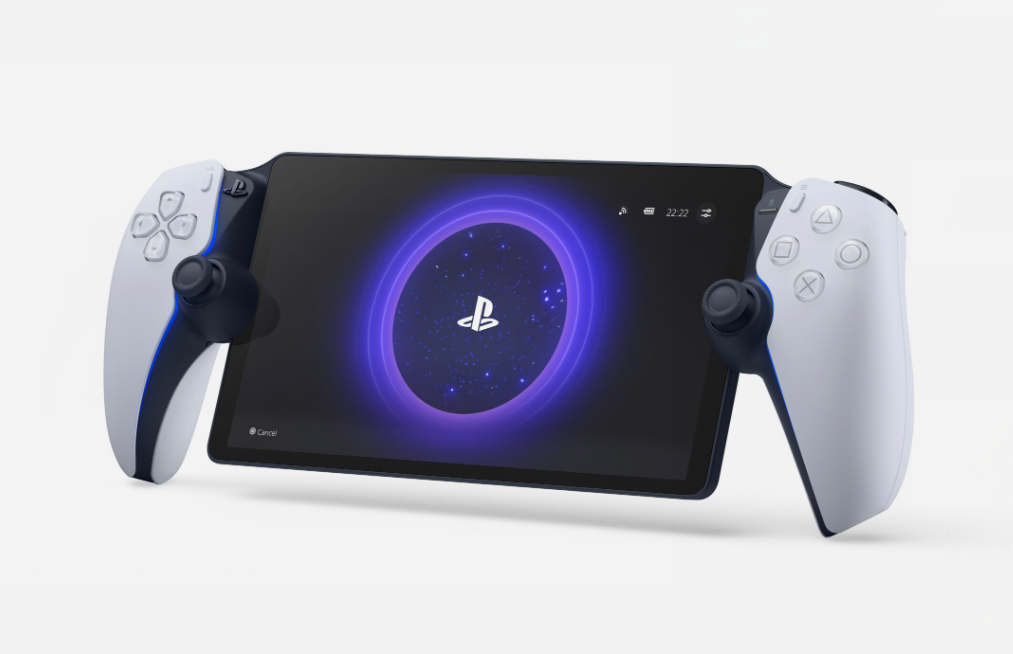
One company which has shied away from portables in recent generations is Sony. After the massive success of the PSP, PlayStation’s faith in portables was seemingly shaken due to the undeniable failure of its follow-up: the PS Vita. As mentioned however, the industry has since rebounded, and even Sony themselves have started to dip their toes back into the handheld water with the Remote Play enabled ‘PS Portal’. With recent leaks now claiming that the console maker is gearing up to release a true dedicated portable PlayStation once again, it is time we looked back to the PSP’s past successes, failures, and lessons (hopefully) learned.

Portable handheld

The original PSP was a bit of a phenomenon. Released back in 2004 (2005 in the West) a little ahead of the PlayStation 3, this portable was positioned as being in essence a handheld PS2 – and in many ways it was. Of course, this was before the rise in digital media, PSN and the like and as such there was no cross-device compatibility. That said, such a notion in this era was rarely considered, and so the idea of needing to purchase a whole new library of games was not much of a deterrent. 

Speaking of games, while the PSP’s library fell short in a number of ways, the novelty of having a powerful handheld gaming device was enough of a draw in and of itself. Of course, the system did wind up receiving a ton of support – especially from 3rd party developers – but Sony themselves also brought over many of their popular IPs at the time to the PSP with rather competent spin-offs.

Thanks to the likes of Ratchet and Clank: Size Matters; Daxter; Gran Turismo; God of War Ghost of Sparta and Chains of Olympus; the PSP proved itself as a worthwhile portable powerhouse. While the lack of a right analogue stick did cause some issues with a number of games, the PSP wound up receiving just as much if not more support from 3rd parties, with classics including Persona 3 Portable; Crisis Core: Final Fantasy VII; GTA: Vice City Stories; Metal Gear Solid: Peace Walker; Naruto Ultimate Ninja Heroes and of course Lumines all releasing on the little handheld that could.

Like with the PS2 before it however, the PSP’s multi-media functionality gave it a bit of a unique selling point at a time when technology was in a transitory period. While the PS2 was a gaming powerhouse which helped to shape the current industry which we find ourselves in, what allowed the console to blow past 160 million units was the fact that it served as an affordable way to play DVDs at a time when the technology was just coming into popularity. Why buy a dedicated DVD player when the PS2 could do just that and so much more for a similar if not cheaper price?

The PSP benefited in a similar way. At the time of its launch, smartphones were not yet a thing, and so beyond the handheld’s ability to play ‘console quality’ games on the go, its function as a multi-media device served as an excellent selling point. Though perhaps in some ways not as ubiquitous as the PS2, Sony’s portable did allow you to purchase UMDs (universal media discs) of various films and TV shows. Yes, in today’s day and age, you’d just pull out your phone and open up Netflix or whatever, but at the time the prospect of being able to watch media anywhere you went was novel and exciting.

What was perhaps even more of a selling point was the fact that the PSP was internet enabled. Of course, the WIFI chip within the console left plenty to be desired and would be a pretty frustrating affair to use nowadays, but at the time, for many the PSP served as the first personal point of access to the wider internet (for better and for worse).

In an era when laptops were just starting to become more widely accessible and affordable, the PSP felt like it could do pretty much anything you desired from it. That’s not to mention many of the PSP’s other ancillary features as a music player, a photo/video viewer (and if you modded the device) a competent retro emulator.

However, 2007 would see the introduction of the iPhone and subsequently the rise of smartphones, making many of the PSP’s USPs no longer as unique. Still, the handheld was an undeniable success, selling over 80 million units across its various SKUs. 

Though less relevant, it is worth touching briefly on the PSP’s follow-up models. Already a pretty pocketable device, the PSP Slim and Lite managed to shave off a bunch of weight and thickness to make for an even sleeker feel. You then also had the PSP 3000 which primarily offered a higher quality LCD screen while slightly boosting its RAM and general performance. Nothing too crazy, but it did help the handheld feel more current as smartphones began to see rapid improvements.

Last but certainly not least (in my mind), the PSP GO offered a brand new form factor which was even more pocketable, featuring many of the improvements seen with the PSP 3000; with its only downside being the lack of support for physical media (aka UMDs). At the time, this removed functionality came with quite a bit of backlash. Looking back however, the PSP GO was somewhat ahead of its time, and still impresses in many ways to this day.

The PSP is an excellent handheld which I will always hold close to my heart. It did many things right and only a few things wrong. That said, much of its success can be attributed to the idea of ‘right place, right time’; something which the PSP’s follow-up unfortunately did not benefit from – quite the opposite in fact.

Though perhaps not as novel as it once would have been, the PS Vita arrived in 2011 (2012 in the West) and promised to fix pretty much all of the issues seen with the OG PSP. Given the generational gap between the two devices, the Vita obviously featured far more horsepower, landing somewhere in between the PlayStation 2 and PS3. Additionally, the OG Vita made use of an OLED screen, which at the time especially was a big deal. Hell, even the Switch 2 still uses a relatively basic LCD panel.

Sure, OLED technology at the time was far from perfect, so you didn’t have any HDR support and the panel could eventually suffer from slight burn-in. That said, in a time when most TVs were still using edge-lit LCD/LED panels, the Vita’s screen made for an experience which felt visually evolved (in some ways at least).

In terms of controls, the Vita also saw a marked improvement over the PSP. Unlike its predecessor, the Vita included two analogue sticks as opposed to the PSP’s singular circlepad/stick.

Though ultimately underutilised, the Vita’s front and back touch panels allowed you to map certain actions to a tap or swipe, which helped make up somewhat for the lack of R2/L2 triggers and no L3/R3 clickable sticks. It even included a camera for whatever reason – letting you take pictures and videos, or in some instances using the viewfinder for some augmented reality fun.

In terms of software, the ubiquity of the PlayStation Network / digital store by this point meant that the idea of cross-buy could be a reality. Though of course not applicable to all titles, those which did offer both a Vita and PS3/4 version could often be played between the two, with cross-saves and all.

As I mentioned however, for all of its improvements, the PS Vita suffered from being in the ‘wrong place at the wrong time’.

By the time of the Vita’s release in late 2011 / early 2012, smartphones had become a global phenomenon, which unlike consoles were being updated on an annual basis – seeing countless and continuous improvements with each new model.

Being the new ‘everything’ device, much of what made the OG PSP exciting was no longer applicable. Smartphones offered an even more convenient way to take photos and videos, watch films and shows, listen to music, browse the internet, and even play games.

Though limited at the time to the likes of Temple Run, Fruit Ninja, Angry Birds (and some select more-ambitious titles), having impressive 3D titles playable via a pocketable device was no longer a new concept.

While likely overblown in terms of how much its existence contributed to the Vita’s failure, the handheld’s use of a dedicated first-party memory card at a time when games were getting larger in file size also did not do the handheld any favours.

Sure, the OG PSP had its own Sony-developed memory cards as well, but by the time of the Vita MicroSD had become the standard, and so paying double or triple the price for an 8GB card rubbed many the wrong way.

Another annoyance (though more of a personal one this time) was the fact that the Vita used its own bespoke charging port. Though far from a dealbreaker (especially considering the PSP did something similar), like with the SD Card, by 2012 micro USBs had become the standard and so having to keep a separate charger at hand in order to power the Vita served as that one extra step which some would find annoying. That’s not to mention the frustration should you misplace the charger.

The follow-up PS Vita Slim did fix this, bundling the handheld with a micro USB port instead while offering improved battery life at the cost of an LCD panel instead – but the damage was already done by this point. 

While the PS Vita was a major improvement over the PSP in a bunch of objective ways, the shifting tides of the industry, and the industries around it, meant that by the time the portable came out, its improvements did not feel as transformative nor as impactful.

Even outside of the smartphone effect on the market, the release timing for the Vita was quite unfortunate. Though similarly sat in between two console generations, the Vita’s relative power in comparison to its home console counterparts was far less impressive when contrasted with the PSP.

Unlike the PSP, which felt like a hybrid between the PS2 and PS3 at time when Sony had yet to release the PS3, the Vita launched a little ahead of the PS4, while still featuring a power profile which sat somewhere in between the PS2 and PS3 – albeit closer to the latter. Combine this with the lack of R2/L2/R3/L3 buttons and the Vita felt like a step or two behind its home counterpart.

PS Vita games could and did look quite pleasing on both the OLED and LCD screens. That said, one of the biggest leaps in visuals seen with the PS4 generation included the rise in use of anti-aliasing. Most Vita games kept its pixels looking raw, which while was not really an issue on a smaller screen, the more jagged look of a game at this point did give a last-gen vibe to it.

All that said, assuming the Vita was a perfect device with no flaws, the system would still have been unlikely to reach the peaks of the PSP simply due to the state technology was in at the time. Smartphones were the new hotness and would remain so for a solid decade or so.

This brings us to today, where we currently rest within a gaming handheld resurgence. Kickstarted by the Nintendo Switch in 2017, the handheld-console hybrid may have been a generation or so behind the competition specs-wise, however its ability to offer a console-like experience on the go with relatively few cutbacks led to an explosion in popularity.

Nintendo has of course capitalised on this with the Switch OLED, Switch Lite and the latest Switch 2. They aren’t the only ones however, with the other major player in the portable space – Valve – opening up the floodgates for handheld PCs with their hit Steam Deck. Sure, the Steam Deck has only sold a few million units so far, but its release signalled the arrival of the rise in gaming PC handhelds.

As mentioned, we’ve since seen the likes of ASUS, ASUS (aka Xbox) and Lenovo join the list of smaller manufacturers to bring Windows, SteamOS and Android handhelds to the market.

While still a niche within the PC space, the increased interest in portables and the rise in accessible parts which have seen notable shrinkages has made console-quality portables a true reality. This is where Sony once again enters the fray.

After going a whole console generation and then some without any word of a portable PlayStation experience, Sony surprise-announced the PlayStation Portal back in 2023. Though far from the PSP successor which many were hoping for, the remote play (now cloud streaming) enabled device served as an experiment of sorts to see how fans respond.

While the device itself is certainly not for everyone owing to its reliance on a stable internet connection, the Portal has managed to be a surprise sales hit, consistently sitting at or near the top of the best-selling accessories list, with Sony themselves stating multiple times that the Portal’s reception has exceeded expectations.

And so, with their toes sufficiently dipped back into the handheld water, Sony looks set to take a proper plunge into the pool. Though yet to be officially announced or confirmed, recent leaks and rumours have claimed that Sony is working on a proper dedicated PlayStation handheld to sit alongside its next-generation PS6.

Aside from some early SoC leaks and performance reports, little-to-nothing is known about the handheld and how it will sit within Sony’s line-up of consoles. That said, assuming it is done right, the PSP3 or whatever it winds up being called could be the true next-gen PlayStation Portable which many of us have been waiting generations for.

Not only has technology caught up, allowing handhelds to render games at perceptively high resolutions thanks to DLSS, FSR and PSSR, while maintaining relatively low power draws, but the Switch has served as a strong blueprint for how developers can adapt their games to both home and handheld console experiences – making ‘crossplay/buy’ a non-issue.

Perhaps the most interesting aspect of the PSP3 which we know nothing about is its design and hardware. Unlike the ROG Xbox Ally which needed only to alter its buttons and grip slightly in order to emulate an Xbox controller feel, the PS5’s DualSense is a far more complex accessory with its use of advanced haptics, adaptive triggers, gyro controls, a touchpad and more.

While we have seen the PS Portal ensure that all of the DualSense’s functionality is correctly replicated when playing in handheld, the Portal also features one of the most uninspired designs I've ever witnessed, looking like Sony simply cut a DualSense in half and glued the pieces onto the sides of an LCD screen.

Not only should the PSP3 look far more distinct and unique, but the realities of tech means that it will have to.

Unlike the Portal which is a glorified Google Chromecast, a proper dedicated PlayStation handheld will need to include all of the bits and bobs necessary to natively run games – meaning it will likely be both bigger and chunkier.

I concede to the fact that we are still many generations away from handhelds once again being fully-pocketable devices, but at the very least I hope to see the PSP3 manage to maintain a relatively slim profile while not looking like a brick.

Regardless of how it looks, feels or sells, I am excited to see Sony once again take on the handheld market. If there ever was a time when a new PlayStation Portable could succeed, it's now. Not just due to the many reasons listed above, but also thanks to the fact that we have once again entered that ‘right place right time’ moment of opportunity.

KitGuru says: What did you think of the OG PSP and PS Vita back in the day? Are we in a handheld renaissance? What would your perfect PSP3 look like? Let us know down below.

The post KitGuru Games: Predicting PlayStation’s Portable Plans first appeared on KitGuru.
  •  

KitGuru Advent Calendar Day 26: Win an AMD Ryzen 7 9800X3D!

For Day 26 of the KitGuru Advent Calendar, we teamed up with AMD to give away one of their best CPUs to date, a Ryzen 7 9800X3D!

The AMD Ryzen 7 9800X3D is an eight‑core, 16‑thread Zen 5 desktop processor, pairing a 4.7GHz base clock with boost speeds up to 5.2GHz and AMD’s second‑generation 3D V‑Cache, which stacks an additional 64MB of L3 cache for a total of 96MB to dramatically reduce latency and improve frame rates in a wide range of games.

How to Enter:

To enter this giveaway, all you have to do is head over to our competition announcement post on Facebook, HERE. In the comments, leave an answer to the following question – What CPU are you running?

This competition is open in the UK and EU.

The winner will be picked randomly shortly after 11AM GMT December 27th, and a new competition will be announced for Day 27. The chosen winner has 48 hours to respond, if we do not hear from them, a new winner will be picked.

Terms and ConditionsThis competition is open in the UK and EU, starting at 11AM GMT on December 26th and ending at 10:59AM GMT on December 27th. Due to the busy Christmas season, prize deliveries could take longer than usual, and some prizes may not ship until January. In compliance with GDPR, we will not collect or store any personal information as part of this competition. Once the winner has been contacted and their prize received, personal details will be deleted from our email servers. Your details will not be shared, we respect your privacy.

KitGuru Says: Good luck to all who enter, we'll be back tomorrow morning to announce a winner and turn the calendar over to Day 27!

The post KitGuru Advent Calendar Day 26: Win an AMD Ryzen 7 9800X3D! first appeared on KitGuru.
  •  

7 Best Game Deals On Humble Bundle To Fill The Holiday With Gaming

7 Best Game Deals On Humble Bundle To Fill The Holiday With Gaming A lot of gamers likely picked up new hardware thanks to the solid discounts that happened during the holiday shopping season. Now it’s time to buy some new games that can take advantage of those upgraded rigs, and thankfully Humble Bundle has a great selection of titles on sale. Here are the picks that stood out to us. Silent Hill f - $41.99
  •  

Gigabyte X870E Aorus Pro X3D Ice Review

When Gigabyte sent us their X870E Aorus Pro X3D Ice we figured a refresh of AMD X870E was a minor matter and a review would take two or three days at most. Instead we spent a solid week figuring out how Gigabyte's X3D Turbo Mode 2 goes about its business and yes, it includes AI. Buckle up, this video is 25 minutes in length, and for good reason.

Timestamps:

00:00 Start
00:56 Updates and ‘AI Claims’
03:28 Unboxing / Accessories
05:32 Featureset / Ports / Connectors / VRMs
07:11 Removing heatsinks & more connectors
08:45 Back Drilling / Micro holes
09:16 BIOS and AI Claims
09:48 Testing Methodology
10:55 Geekbench 6 Multi Core
12:00 DDR5 8000 tests
12:44 Geekbench 6 Single Core
13:28 Cinebench R23 Multi Core
13:53 Whats going on then?
14:45 Leo gets to the root
15:53 AIDA64 Memory Bandwidth
17:00 Far Cry 6
18:30 Assassins Creed Mirage
19:31 Cyberpunk 2077
20:46 Total War Pharoah
21:45 OnFly Software
22:38 The Experience / Pricing
23:42 Closing Thoughts

Key features

  • X870E X3D features vs. previous X870E models
  • X3D Turbo Mode 2
  • 8 layer PCB with Back-Drill
  • DDR5 now up to 9000 MT/sec
  • VRM Heatsinks have Direct-Touch Heatpipe
  • PCIe Gen 5 x16 not shared with M.2
  • All M.2 have EZ Match and not just the main M.2
  • All models have Back Armour
  • DriverBIOS
  • Front USB with 65W PD
  • All models have Rear EZ-Buttons

Specification:

  • CPU support: AMD Socket AM5 for AMD Ryzen 9000 / 8000 / 7000 Series processors
  • Chipset: AMD X870E
  • VRMs:
    • Infineon XDPE192C3D 12-phase controller
    • 18x 110A Infineon PMC41430 Vcore
    • 2x 110A Infineon PMC41430 SoC
    • 2x 60A DrMOS OnSemi 302155P (Misc)
  • Memory support: DDR5 up to 9000 (O.C.), 4x DDR5 DIMM slots up to 256GB; dual-channel architecture; non-ECC unbuffered DIMMs
  • Expansion slots: 1x PCIe 5.0 x16 (CPU), 1x PCIe 4.0 x16 (x4, chipset), 1x PCIe 3.0 x16 (x2, chipset)
  • Storage:
    • 1x M.2 PCIe 5.0 x4 (CPU)
    • 1x M.2 PCIe 5.0 x4 (CPU, shared with USB4)
    • 2x M.2 PCIe 4.0 x4 (chipset)
    • 4x SATA 6Gb/s
  • USB:
    • 2x USB4 40Gbps Type-C (rear)
    • 1x USB 3.2 Gen 2×2 20Gbps Type-C (front, up to 65W PD 3.0 / QC 4+)
    • 2x USB 3.2 Gen 2 10Gbps Type-C (rear)
    • 5x USB 3.2 Gen 2 10Gbps Type-A (rear)
    • 3x USB 3.2 Gen 1 5Gbps Type-A (rear)
    • 4x USB 3.2 Gen 1 5Gbps Type-A (front)
    • 4x USB 2.0 Type-A (front)
  • Audio: Realtek ALC1220 codec, HD Audio 7.1-channel
  • Ethernet: Realtek 5GbE
  • Wireless: Qualcomm QCNCM865 Wi-Fi 7 and Bluetooth 5.4
  • Fan headers: 8x PWM fan headers
  • RGB headers: 3x ARGB headers, 1x RGB header
  • BIOS: 64MB flash BIOS chip
  • Form factor: ATX, 305 x 244 mm

Testing

As we show in our video, the X3D Turbo Mode 2 feature required a good deal of investigation. We could figure out Off and Standard easily enough, however Max Performance and Extreme Gaming caused us some confusion. As you will see from our charts, Extreme Gaming does not necessarily boost gaming performance.

Test system

  • Processor: AMD Ryzen 7 9800X3D
  • Memory: 32GB ADATA XPG Lancer RGB DDR5-6000
  • CPU Cooler: Phanteks Glacier One 360MPH
  • Graphics card: MSI GeForce 4090 Ventus 3X 24GB
  • Power supply: Seasonic Vertex GX-1200 ATX 3
  • SSD: 1TB Crucial T700 M.2 NVMe
  • OS: Windows 11

Performance and Overclocking

Geekbench 6 Multi Core

In Geekbench 6 Multi Core we see the Max Performance profile wins the day with DDR5-8000 memory. The curiosity here is that the Extreme Gaming profile scores well below the baseline Auto settings, which is due to SMT being disabled.

Geekbench 6 Single Core

By contrast in Geekbench 6 Single Core the Extreme Gaming profile tops the chart as each single core is drawing slightly more power and running a very few Megahertz faster.

Far Cry 6 at 1080p

The Extreme Gaming profile wins by a comfortable margin in Far Cry 6 at 1080p where the combination of high processor speed and low CPU requirements acts as a killer combination.

Total War: Pharaoh at 1080p

We show Total War: Pharaoh at 1080p to demonstrate that things can get complicated. In this instance the Extreme Gaming profile is an utter disaster and far worse than default Auto settings.

Closing Thoughts

Our review of the Gigabyte X870E Aorus Pro X3D Ice started easily and developed into something of a battle.

The easy part is the hardware and features which are pretty much beyond reproach. The hardware is good quality and the cooling is excellent, and if you were simply plugging together a new AMD Ryzen PC you should certain consider this motherboard in a battle against the MSI MPG X870E Carbon WiFi (review HERE) and the Asus ROG Crosshair X870E Hero (review HERE).

Things take a turn for the complicated when we consider the X3D Turbo Mode 2 settings as we suddenly have a PC that can perform superbly in one test and poorly in another. Or, as we show above, superbly well in one game and badly in another.

The only solution we found is to run a benchmark test and then change the Turbo setting and run another test, and another, and perhaps another. By the end of the proceedings you should have a PC that does an excellent job, but you may well question the effort that is required.

You can buy the Gigabyte X870E Aorus Pro X3D Ice for £387 HERE.

Pros:

  • Loads of ports and connectors.
  • DIY features speed up your PC build.
  • High quality hardware with excellent cooling.
  • Good performance (depending on Turbo Mode 2 behaviour).

Cons:

  • Turbo Mode 2 requires testing and investigation to get the best performance.
  • The price is fairly high.

KitGuru says: Gigabyte X870E Aorus Pro X3D Ice has some complicated control systems that require careful consideration.

The post Gigabyte X870E Aorus Pro X3D Ice Review first appeared on KitGuru.
  •  

Merry Christmas And Happy Holidays From Our Family To You And Yours

Merry Christmas And Happy Holidays From Our Family To You And Yours We'd like to take this opportunity to wish you all a very Merry Christmas and Happy Holidays, from our family here at Hot Hardware, to you and your family--we consider you all our larger extended family here on the web. We hope whatever you had on your wish-list, naughty or nice, that your yuletide dreams came true. And if you still need some
  •  

KitGuru Advent Calendar Day 25: Win an MSI CyberPower Gaming PC!

Christmas day has arrived and with it comes our biggest giveaway of the season! Today's prize will be none other than a fully built gaming PC packed with MSI hardware, built by CyberPowerPC. 

We reviewed this PC recently, so if you want to see a range of benchmarks, you can find our full review HERE.

Specifications:

  • Case – MSI MAG Panoramic 130R Project Zero Gaming Case – White
  • CPU – AMD Ryzen 7 9800X3D
  • CPU Cooling – MSI Coreliquid A13 360mm ARGB AIO
  • Cooling Upgrades – Thermal Grizzly Premium Thermal Paste
  • Motherboard – MSI B850 Gaming Plus WIFI PZ
  • Memory – Kingston Fury Beast DDR5 32GB (2x16GB) 5600MT/s CL36
  • Graphics Card – MSI GeForce RTX™ 5070 Ti 16G Ventus 3X PZ OC
  • PSU – MSI MAG A850GL PCIE5 850W
  • Primary Storage – 2TB MSI M470 PCle 4.0 NVMe SSD
  • Operating System – Windows 11 Home

How to Enter:

To enter this giveaway, all you have to do is head over to our competition announcement post on Facebook, HERE. In the comments, leave an answer to the following question – What is the first game you would install on this PC?

This competition is open in the UK.

The winner will be picked randomly shortly after 11AM GMT December 25th, and a new competition will be announced for Day 25. The chosen winner has 48 hours to respond, if we do not hear from them, a new winner will be picked.

Terms and ConditionsThis competition is open in the UK, starting at 11AM GMT on December 25th and ending at 10:59AM GMT on December 26th. Due to the busy Christmas season, prize deliveries could take longer than usual, and some prizes may not ship until January. In compliance with GDPR, we will not collect or store any personal information as part of this competition. Once the winner has been contacted and their prize received, personal details will be deleted from our email servers. Your details will not be shared, we respect your privacy.

KitGuru Says: Good luck to all who enter, we'll be back tomorrow morning to announce a winner and turn the calendar over to Day 26!

The post KitGuru Advent Calendar Day 25: Win an MSI CyberPower Gaming PC! first appeared on KitGuru.
  •  

Windows 11 has a hidden driver that may boost NVMe SSD performance

Windows users have long relied on the default disk.sys driver for storage management, a component that has mainly remained fundamentally unchanged since its introduction in 2006. While Windows has supported the NVMe protocol since Windows 8.1, the legacy driver continues to treat modern high-speed solid-state storage as a legacy SCSI disk. To address this bottleneck, Microsoft has officially introduced nvmedisk.sys for Windows Server 2025, but apparently, Windows 11 25H2 also has it hidden away.

The team over at Notebookcheck tested this new driver on a Windows 11 PC, and as promised by Microsoft, the deeper NVMe awareness appears to be paying dividends in raw throughput. The testing suggests that nvmedisk.sys provides a measurable performance uplift across both sequential and random read/write workloads compared to the old driver. By bypassing the legacy SCSI translation layer, the new driver allows the OS to interface more directly with the flash controller, reducing overhead and improving latency on high-end drives such as the Samsung 990 Pro and Crucial T705. You can find the results before and after installing the new driver below:

Image credit: Noteboocheck

Although impressive, enthusiasts looking to force the transition should proceed with extreme caution, as the driver is not yet enabled by default for all hardware configurations. Current reports indicate that forcing nvmedisk.sys via registry modifications can lead to severe system instability or a total failure to boot if the underlying SSD controller lacks specific compatibility hooks. To verify which driver your system is currently using, users must navigate to Driver Details in Device Manager.

Given the potential for data loss or unbootable partitions, we strongly advise against manually switching drivers without a full-disk backup at hand. While the performance gains are enticing for those chasing benchmark records, the new driver is still in a soft launch.

KitGuru says: It is about time Microsoft retired a driver stack from 2006 for high-end storage. The question that remains is when it will arrive at a stable build.

The post Windows 11 has a hidden driver that may boost NVMe SSD performance first appeared on KitGuru.
  •  

LG Display to fix OLED text clarity with new 27-inch 4K RGB stripe panel

LG Display is unveiling its new OLED technology ahead of CES 2026. The company has officially announced the development of the world's first 27-inch 4K OLED panel featuring an RGB stripe structure and a 240Hz refresh rate. This new monitor promises to address the most persistent complaint regarding OLED monitors: text clarity.

While OLED has long dominated in contrast and response times, the technology has struggled with productivity tasks. Current-generation WOLED panels typically use an RWGB structure, while QD-OLED uses a triangular RGB arrangement. Both configurations often cause “color bleeding” or “fringing” around text because modern operating systems like Windows are designed for the standard vertical RGB stripe found in traditional LCDs. By successfully implementing a true RGB stripe at 4K resolution, LG is promising a monitor that is finally as capable for spreadsheet work and coding as it is for high-end gaming.

The breakthrough isn't just about clarity, however. This new panel is the first of its kind to maintain the RGB stripe while pushing to 240Hz. To achieve this, LG applied new manufacturing techniques to increase the aperture ratio (the physical area of the pixel that emits light), allowing for higher brightness and faster refresh cycles without the need for an extra white subpixel found in standard WOLEDs.

For competitive gamers, the panel also features LG's Dynamic Frequency & Resolution (DFR) technology. This “dual-mode” capability allows users to switch between the native UHD (4K) at 240Hz for immersive gaming and a high-speed FHD (1080p) at 480Hz mode. We expect to see the first retail monitors using this panel at CES 2026.

KitGuru Says: Are you thinking of making the jump to an OLED monitor in 2026?

The post LG Display to fix OLED text clarity with new 27-inch 4K RGB stripe panel first appeared on KitGuru.
  •  

Multiple Studies Say Video Games Can Boost Brain Power And Fight Burnout

Multiple Studies Say Video Games Can Boost Brain Power And Fight Burnout Two recent studies have highlighted gaming's potential benefits for mental health and acuity. The most recent is a study published this month by JMIR Serious Games, named Super Mario Bros. and Yoshi Games' Affordance of Childlike Wonder and Reduced Burnout Risk in Young Adults: In-Depth Mixed Methods Cross-Sectional Study. This study, authored
  •  

AMD Expo 1.2 Expected To Bring Faster Memory Overclocking & CUDIMM Support

AMD Expo 1.2 Expected To Bring Faster Memory Overclocking & CUDIMM Support Because of the way we interact with these features, it's easy to think of Intel XMP and AMD EXPO as binary, 'yes or no' features, but both standards have actually gone through a few revisions. Right now, we're on revision 1.1 of AMD's EXPO, but it looks like 1.2 is on the horizon, and we know that because it has just appeared in the patch
  •