Connexion
CES 2026: Snap-On Accessory Adds Touch Display to Your MacBook

Apple has historically resisted the idea of touchscreen MacBooks, arguing that laptop PCs with the feature are unwieldy and far from ergonomic. But recent reports suggest Apple has changed its tune, and the company is now rumored to be developing a touchscreen MacBook Pro. In the meantime, startup Intricuit has been showcasing its own solution at CES 2026 that brings touchscreen functionality to existing MacBooks with Apple silicon.
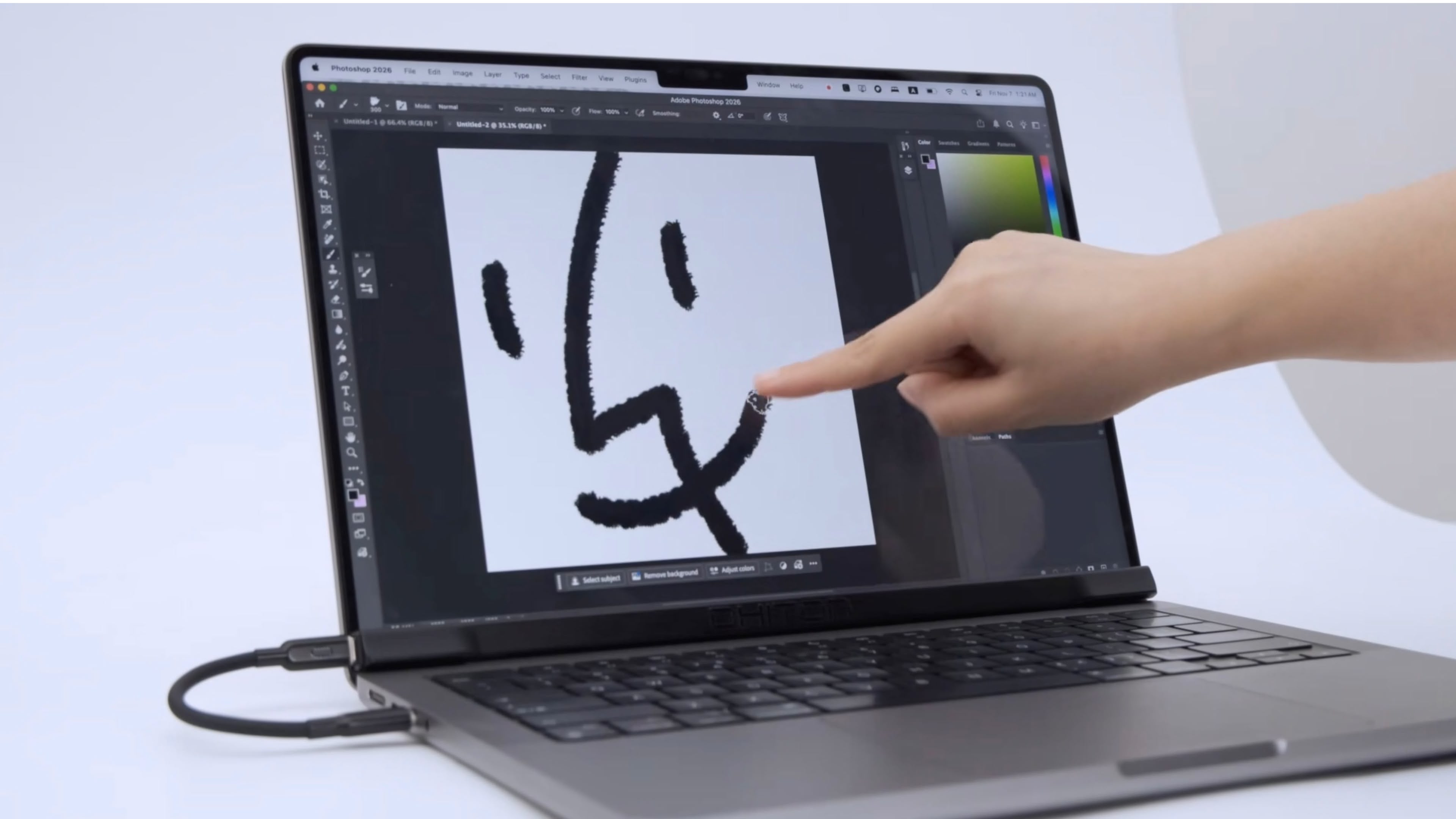
The Magic Screen is a snap-on digitizer that aligns to your MacBook's display using the built-in magnets that let your Mac know when the lid is closed to trigger sleep mode. After connecting it via a single USB-C cable, the tempered glass layer supports the gamut of gestures we've come to associate with smartphones – tapping, swiping, and zooming with your fingers directly on the screen.
In a nod to the iPad and Apple Pencil, the Magic Screen also comes with its own stylus that supports pressure sensitivity and stylus hover for drawing, writing, manipulating objects, and navigation. The company has shown off the touchscreen in action with apps like SketchUp, Miro, and Resolume Arena. It also supports iPhone Mirroring, allowing you to interact with iOS apps on your MacBook display with your fingers.
The Magic Screen includes a built-in battery that Intricuit says works for up to 100 hours on a single charge, and it comes with a Folio Case that also folds into a stand that braces against the MacBook screen to reduce wobble. When removed from the MacBook display, the device also doubles as a standalone drawing tablet.
As for Apple's plans, a report by industry analyst Ming-Chi Kuo suggests the company's first OLED MacBook Pro will feature a touchscreen display. Kuo made the remarks in September 2025, and the claim has since been corroborated by Bloomberg's Mark Gurman, who added that the touchscreen OLED MacBook Pro will retain a full trackpad and keyboard.
According to Kuo, the OLED panel will use on-cell touch technology, which integrates the touch sensors directly into the display panel's top layer (the "cell") rather than requiring a separate, dedicated touch layer like the Magic Screen. The analyst added that the shift "appears to reflect Apple's long-term observation of iPad user behavior, indicating that in certain scenarios, touch controls can enhance both productivity and the overall user experience."
The reports suggest Apple is aiming to launch its first touchscreen MacBook Pro as soon as late 2026 or early 2027. Meanwhile, Intricuit says the Magic Screen is compatible with all MacBook Air and MacBook Pro models powered by Apple silicon, and that it will soon be available on Kickstarter, with shipping on track to begin in the first quarter of this year. Does the idea of a touchscreen display on a Mac appeal to you? Let us know in the comments.
This article, "CES 2026: Snap-On Accessory Adds Touch Display to Your MacBook" first appeared on MacRumors.com
Discuss this article in our forums
The Magic Screen is a snap-on digitizer that aligns to your MacBook's display using the built-in magnets that let your Mac know when the lid is closed to trigger sleep mode. After connecting it via a single USB-C cable, the tempered glass layer supports the gamut of gestures we've come to associate with smartphones – tapping, swiping, and zooming with your fingers directly on the screen.
In a nod to the iPad and Apple Pencil, the Magic Screen also comes with its own stylus that supports pressure sensitivity and stylus hover for drawing, writing, manipulating objects, and navigation. The company has shown off the touchscreen in action with apps like SketchUp, Miro, and Resolume Arena. It also supports iPhone Mirroring, allowing you to interact with iOS apps on your MacBook display with your fingers.
The Magic Screen includes a built-in battery that Intricuit says works for up to 100 hours on a single charge, and it comes with a Folio Case that also folds into a stand that braces against the MacBook screen to reduce wobble. When removed from the MacBook display, the device also doubles as a standalone drawing tablet.
As for Apple's plans, a report by industry analyst Ming-Chi Kuo suggests the company's first OLED MacBook Pro will feature a touchscreen display. Kuo made the remarks in September 2025, and the claim has since been corroborated by Bloomberg's Mark Gurman, who added that the touchscreen OLED MacBook Pro will retain a full trackpad and keyboard.
According to Kuo, the OLED panel will use on-cell touch technology, which integrates the touch sensors directly into the display panel's top layer (the "cell") rather than requiring a separate, dedicated touch layer like the Magic Screen. The analyst added that the shift "appears to reflect Apple's long-term observation of iPad user behavior, indicating that in certain scenarios, touch controls can enhance both productivity and the overall user experience."
The reports suggest Apple is aiming to launch its first touchscreen MacBook Pro as soon as late 2026 or early 2027. Meanwhile, Intricuit says the Magic Screen is compatible with all MacBook Air and MacBook Pro models powered by Apple silicon, and that it will soon be available on Kickstarter, with shipping on track to begin in the first quarter of this year. Does the idea of a touchscreen display on a Mac appeal to you? Let us know in the comments.
Tag: CES 2026
This article, "CES 2026: Snap-On Accessory Adds Touch Display to Your MacBook" first appeared on MacRumors.com
Discuss this article in our forums