 Connexion
SHM : des métriques d’usage pour applications self-hosted… sans espionner les utilisateurs

Quand on développe et distribue des applications open-source auto-hébergées, il y a une question très simple à laquelle il est presque impossible de répondre :
Combien d’instances actives de mon application sont réellement utilisées ?
C’est exactement le problème que j’ai rencontré avec Ackify, une application open-source de preuve de lecture de documents (politiques internes, procédures, formations, etc.), déployée en self-hosted par ses utilisateurs - sans que j'ai le moindre contrôle dessus.
Pas de SaaS, pas de compte centralisé, pas de tracking utilisateur.
Résultat : zéro visibilité.
👉 Combien d’instances Ackify tournent vraiment ?
👉 Quelles versions sont encore actives ?
👉 Quelles fonctionnalités sont utilisées (ou pas) ?
C’est pour répondre à ce besoin très concret que j’ai créé SHM – Self-Hosted Metrics.
- lien nᵒ 1 : Self Hosted Metrics (SHM)
- lien nᵒ 2 : Ackify
SHM, c’est quoi ?
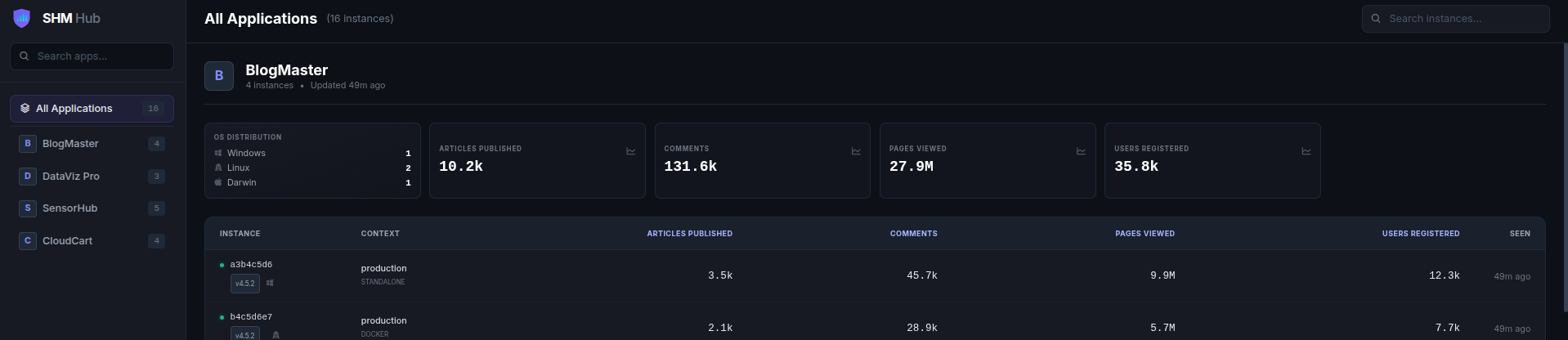
SHM est un serveur de télémétrie privacy-first, conçu spécifiquement pour les applications self-hosted open-source.
L’idée est simple :
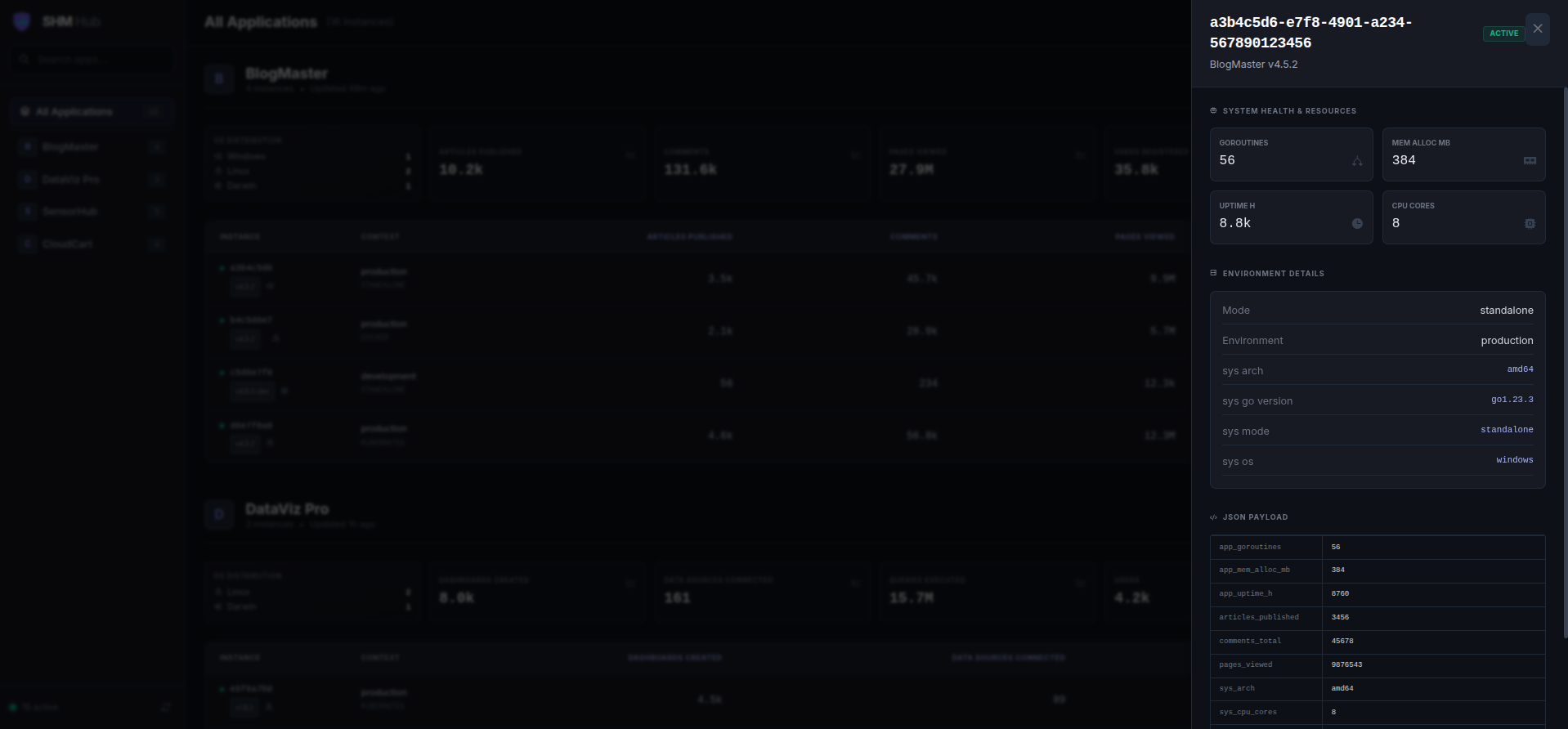
- chaque instance auto-hébergée envoie périodiquement un snapshot de métriques agrégées
- aucune donnée utilisateur
- aucun événement individuel
- aucun tracking comportemental
Juste ce qu’il faut pour comprendre l’usage réel d’un logiciel déployé “dans la nature”.
Un point important : SHM est agnostique
Contrairement à beaucoup d’outils existants, SHM n’impose aucun schéma.
Tu envoies :
{
  "documents_created": 123,
  "active_users": 42,
  "webhooks_sent": 9
}
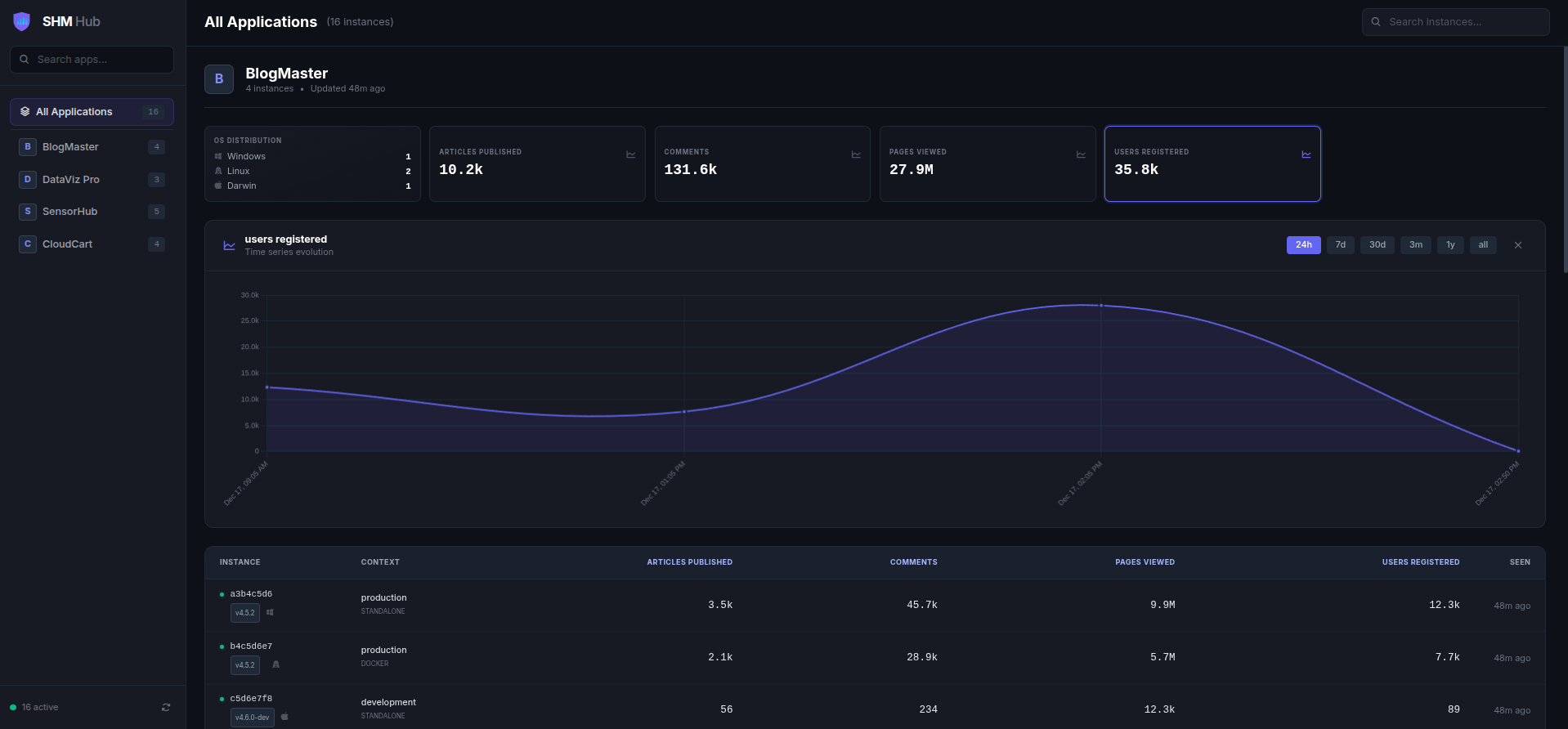
➡️ le dashboard s’adapte automatiquement :
- nouvelles cartes KPI
- nouvelles colonnes
- graphiques générés dynamiquement
Aucun frontend à recompiler, aucune migration à écrire.
Un petit mot sur Ackify
Ackify est l’application qui a déclenché tout ça :
- open-source
- self-hosted
- preuve de lecture avec signature cryptographique
- alternative légère à DocuSign pour des usages internes
SHM est désormais utilisé pour répondre à des questions très simples :
- combien d’instances actives ?
- combien de documents créés ?
- combien de signatures générées ?
Projet open-source
- Code source : https://github.com/btouchard/shm
- Déploiement simple en
docker compose - SDK Go (et Node.js) pour intégrer la collecte facilement
Le projet est encore très jeune (MVP), mais fonctionnel et déjà utilisé en conditions réelles.
Les retours, critiques et idées sont évidemment bienvenus 🙂
Stack technique (sobre et assumée)
- Backend : Go (binaire unique, léger)
- Stockage : PostgreSQL (JSONB)
- Déploiement : Docker
- Licence : AGPLv3 (SDK en MIT)
- Auth des instances : Ed25519 (clé générée localement, signature des snapshots)
Chaque instance :
- génère une identité cryptographique locale
- s’enregistre une seule fois
- signe chaque envoi de métriques ➡️ impossible de spoof une instance existante.
Et côté vie privée ?
C’était non négociable.
SHM :
- ne collecte aucune donnée personnelle
- ne collecte pas les IP (hors reverse-proxy)
- ne collecte ni hostname, ni username
- fonctionne sur des compteurs agrégés uniquement
C’est au mainteneur du logiciel de décider quelles métriques exposer, et à l’utilisateur final de pouvoir désactiver la télémétrie.
Commentaires : voir le flux Atom ouvrir dans le navigateur
 Canonical confirms Ubuntu 26.04 LTS will ship with Linux kernel 6.20 (7.0) in April, bringing latest hardware support and performance improvements to users.
 Kdenlive 25.12 adds native vertical video support, a new UI docking system, and duration-based markers. See what’s new in the latest KDE video editor update.
 Bluestar Linux is a GNU/Linux distribution that is based on Arch Linux. The Bluestar distribution features up to date packages, a full range of desktop and multimedia software in the default installation and a live desktop DVD.
  DESERT OS Linux is a Ukrainian desktop Linux distribution based on Ubuntu and featuring the Xfce desktop. It supports Pacstall, a package manager inspired by Arch's AUR and capable of creating native Ubuntu DEB packages from source and binary packages, git repositories, AppImage apps, release artifacts and non-Ubuntu DEB packages. The distribution also offers out-of-the box support for Flatpak packages.
  Linux Mint is an Ubuntu-based distribution whose goal is to provide a classic desktop experience with many convenient, custom tools and optional out-of-the-box multimedia support. It also adds a custom desktop and menus, several unique configuration tools, and a web-based package installation interface. Linux Mint is compatible with Ubuntu software repositories. Besides its Ubuntu-based flavour, the project also produces a separate "Debian" edition (called LMDE), based on the latest stable Debian version.
  XCP-ng is a CentOS-based Linux server distribution designed to be a high-performance enterprise-level virtualization platform that uses Xen, a free and open-source hypervisor that allows multiple computer operating systems to execute on the same computer hardware concurrently. XCP-ng stands for Xen Cloud Platform - next generation, it is the modern successor to XCP, initially created as an open-source version of Citrix XenServer back in 2010. XCP-ng is a secure platform to run any kind of virtualization workload, while being managed by a central administration console called Xen Orchestra (XO).
  Linuxfx (also known as Winux or Wubuntu) is a Brazilian Linux distribution based on Ubuntu. It ships with an intuitive Cinnamon desktop user interface designed to facilitate migration of users from Windows. It includes a video management system called Sentinela, a computer vision software with video analytics and software for access control (facial recognition and automatic number plate recognition), object detection, gender, age and mood detection. Other features of the distribution include a new personal assistant, a WX theme for desktop and system applications, and compatibility with software written for Windows (.exe and .msi) through a Wine port. Following the release of Linuxfx 10.6 the distribution became a commercial offering.
  Unraid OS is a Linux-based commercial operating system designed to provide an easy-to-use and flexible platform for building and managing a Network-Attached Storage (NAS). Some of Unraid's main features include the ability to mix and match drives of different sizes, an easy-to-use web interface for managing storage, virtual machines and Docker containers, protection to safeguard against drive failures, ability to expand the storage by adding more drives.
  TUXEDO OS is an Ubuntu-based distribution developed in Germany by TUXEDO Computers GmbH, designed and optimised for the company's own range of Linux-friendly personal computers and notebooks. The distribution uses KDE Plasma as the preferred desktop. Some of the differences between Ubuntu and TUXEDO OS include custom boot menu, the TUXEDO Control Centre, Calamares installer, availability of the Lutris open gaming platform, preference for the PipeWire audio daemon (over PulseAudio), removal of Ubuntu's snap daemon and snap packages, and various other tweaks and enhancements.
  TrueNAS CORE (previously known as FreeNAS) is a free and Open Source Network-Attached Storage (NAS) operating system that supports file, block and object storage. TrueNAS CORE is FreeBSD based and is a community-supported branch of the TrueNAS project, sponsored by iXsystems. It also has a commercial branch called TrueNAS Enterprise and a free and HyperConverged storage solution called TrueNAS SCALE. The TrueNAS SCALE branch is based on the Debian Linux distribution.