↩ Accueil

Vue lecture

Dell Outlet Restocked Alienware Area-51 16 Gaming Laptops with RTX 5090 GPUs

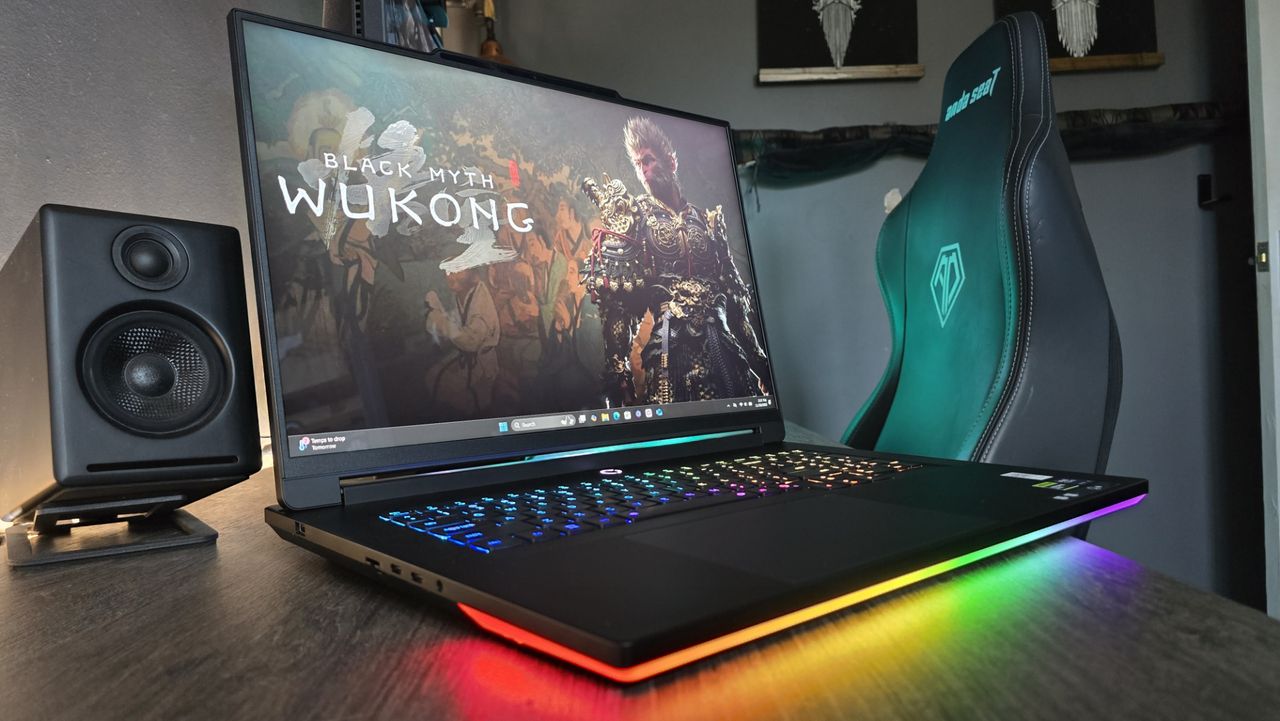
The Alienware Area-51 is Dell's highest-end gaming laptop and the only model that can be equipped with the super powerful GeForce RTX 5090 mobile GPU. Prices have gone way up for the new year, but fortunately there's still an easy way to get a good deal. Dell Outlet recently restocked its inventory of Alienware Area-51 16" gaming laptops, including RTX 5090 models. You can currently get one for as low as $3,564, which is about $500 cheaper than the least expensive brand new 5090 config (with worse specs). These are "Like New" models with 1 year warranty.

The Area-51: new color, curvy design, metal construction, and upgraded cooling

The Alienware Area-51 is a considerable upgrade compared to the previous generation's Alienware m16. For starters, it's clad in anodized aluminum for both the lid and bottom chassis and features a unique iridescent finish that sparkles in direct lighting. The frame is made of a durable and lightweight magnesium alloy. Cooling has been upgraded with generous amounts of copper and a new thermal interface. Dell claims that it can handle up to 240W TDP without raising acoustics.

Design-wise, the Area 51 has a sleeker, more contoured shape compared to previous models, with rounded edges and soft corners replacing the traditional squared off design. The hinges are internally positioned so that they're near invisible. There's a transparent window on the undercarriage to show off the internal components. There's also plenty of RGB illumination, although most of it can be turned off if you don't like that sort of thing.

The GeForce RTX 5090 is without doubt the fastest mobile GPU you can get

The Nvidia GeForce RTX 5090 is the most powerful mobile graphics card on the market, performing about 15% better than the RTX 5080. It also has considerably more VRAM (24GB vs 16GB), which can come in handy when playing games at higher resolutions (like on an attached 4K monitor) or if you're planning to use this as a mobile creator or AI workstation. Everyone is also aware by now that current generation VRAM is in extremely high demand, so getting 24GB of GDDR7 in a $3K laptop sounds like a great "deal" at the moment.

Eric Song is the IGN commerce manager in charge of finding the best gaming and tech deals every day. When Eric isn't hunting for deals for other people at work, he's hunting for deals for himself during his free time.

  •  

'We Know There's a Lot of Eyes on Us After Our Game Awards Trailer' — as Highguard Goes Live, Dev Insists 'We're in This for the Long Haul'

Highguard is out now following its high-profile showing at last month’s The Game Awards — and its developers have said a full year of post-launch content is already “deep in development.”

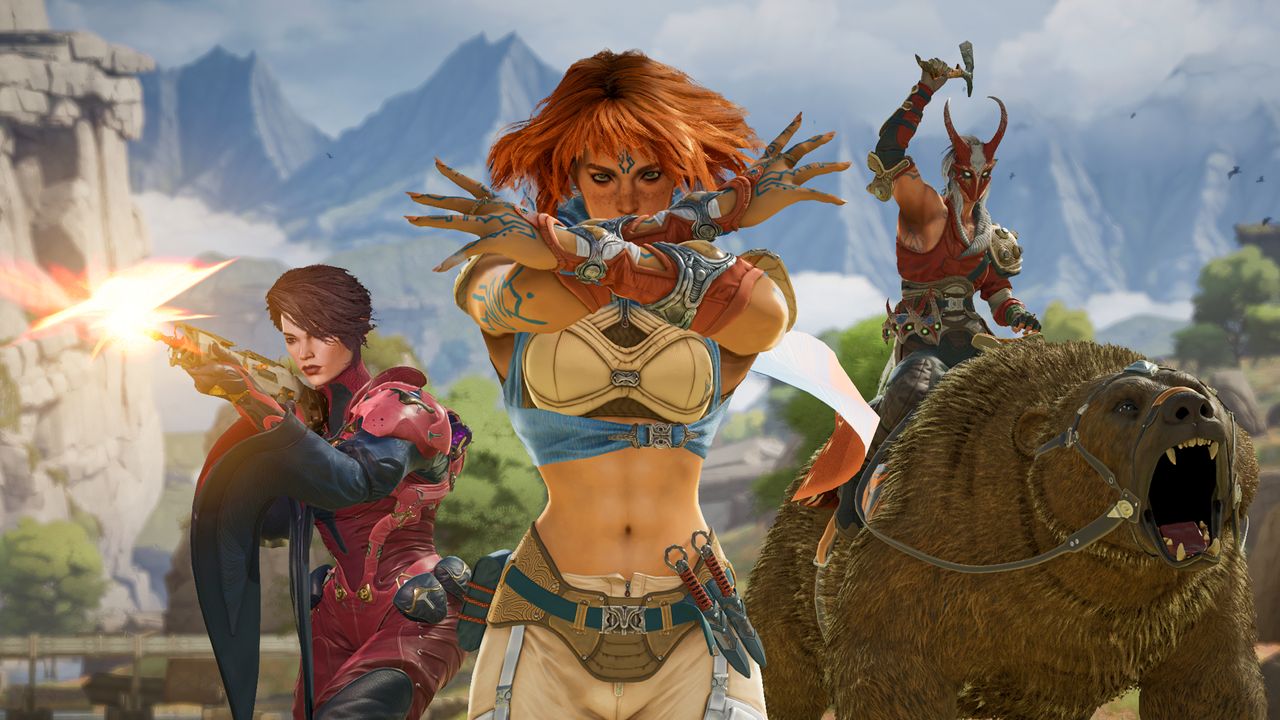
The free-to-play PvP raid shooter is live on PC, Xbox Series X and S, and PlayStation 5, with full crossplay. Development studio Wildlight is made up of former Apex Legends, Titanfall, and Call of Duty: Modern Warfare staff, and promises “a new competitive structure that blends siege warfare and territory control in an evolving match where power levels escalate until only one base is left standing.”

Here’s how Highguard works, according to Wildlight:

Players step into the boots of Wardens, arcane gunslingers sent to fight for control of a mythical continent where magic, gunfire, and siege warfare collide:

  • Teams of three select a unique base and fortify their defenses, then ride out across vast, uncharted lands to loot, harvest resources, and upgrade their gear while clashing with a rival Warden crew.
  • As magical storms roll in, teams battle over the Shieldbreaker, a powerful sword required to breach enemy defenses. Carrying the Shieldbreaker to the opposing base triggers a full raid — forcing teams to attack, defend, adapt, and escalate in power as the match continues.
  • Most of the time, victory doesn’t come with a single raid. When that happens, the enemy base shields repair, the siege tower dissipates, and the fight escalates as loot, gear, and weapons all upgrade in the field, and a new Shieldbreaker forms in a different location in the world. From there, the fight for control continues — until only one base is left standing.

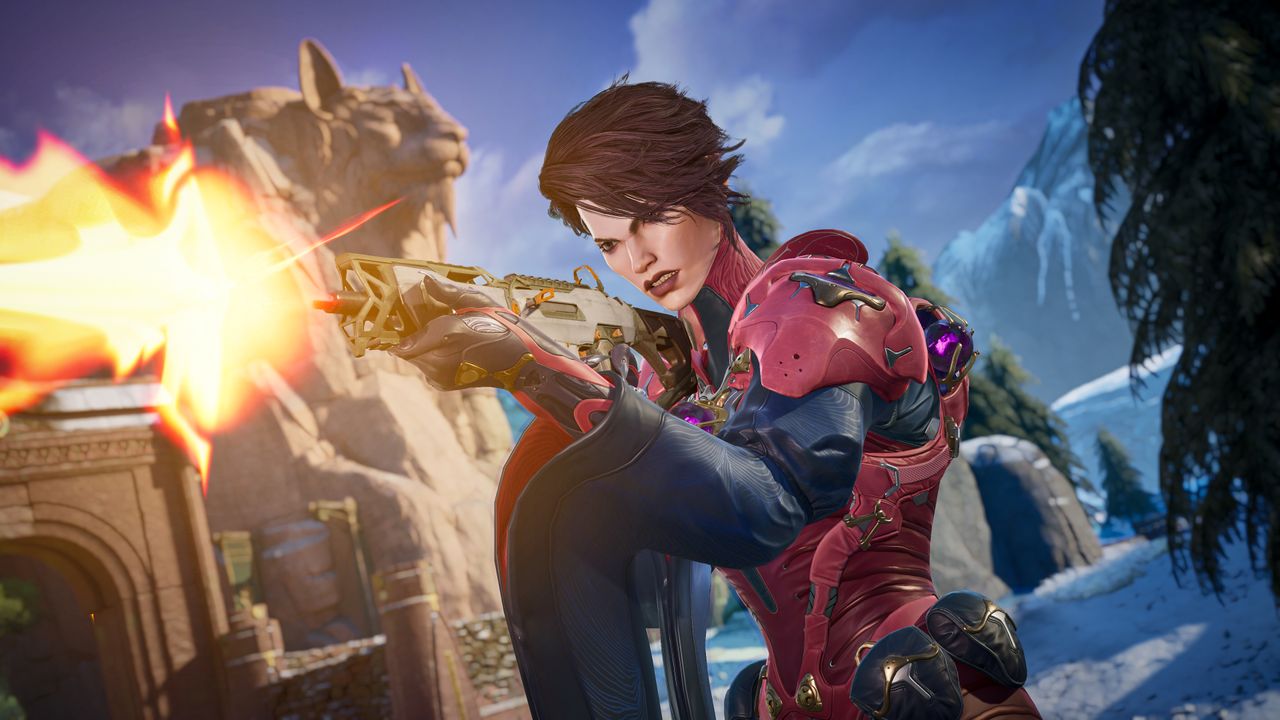
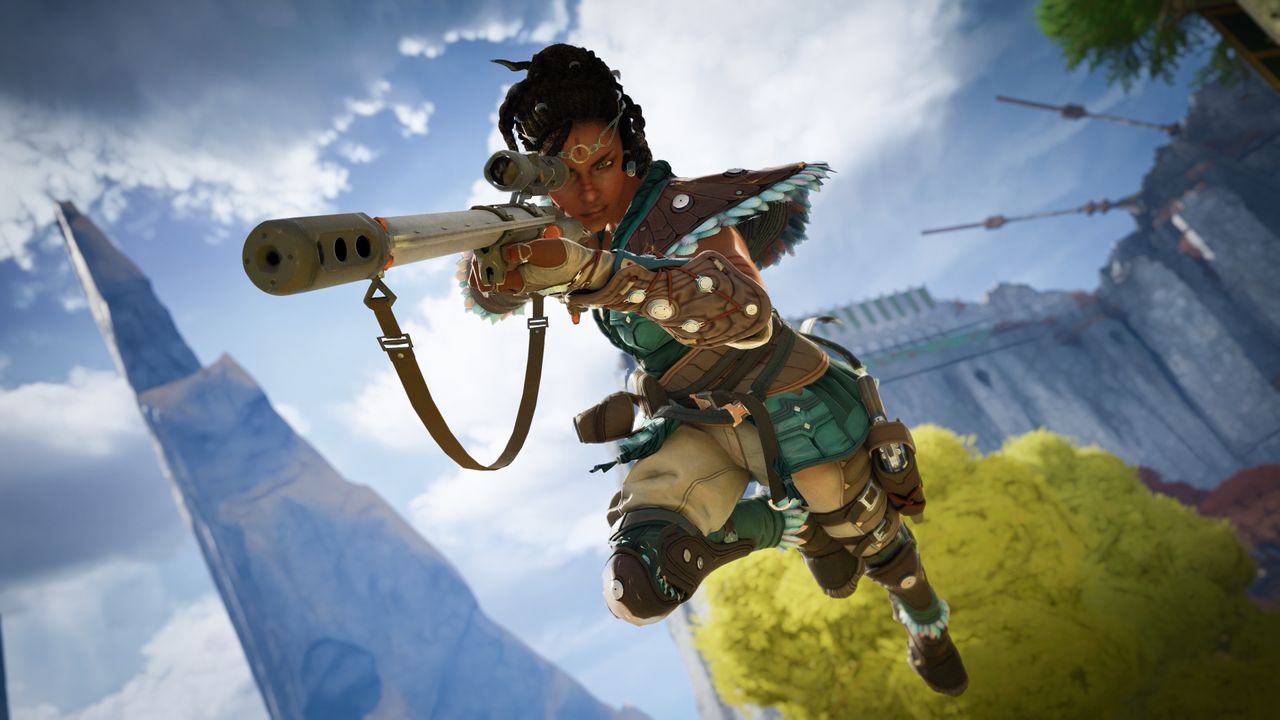
Each Warden is built specifically for Highguard’s PvP Raid Mode. Wardens combine guns, raid tools, and arcane abilities, each designed to support raiding, destruction, defense, infiltration, resource acquisition, and open-world combat.

Mounts allow teams to move quickly across massive maps, fight on the move, and transport the Shieldbreaker. Magical abilities supplement combat, but Highguard is still a gun game at its core. Gunplay remains central, with abilities and tools adding tactical depth.

At launch, the game features a wide array of content: five large-scale maps, six distinct bases, eight Wardens, three mount types, ten weapons, three raid tools, eleven weapon and raid-tool mods, and a wide range of lootable items. More content will be added via seasonal updates.

Wildlight hadn’t said a word about Highguard since its announcement at The Game Awards, opting to launch it cold. Today, now the game is out in the wild, wildlight said it was built “with long-term play in mind.”

“Wildlight brings decades of experience operating live-service shooters at scale, applying those lessons to Highguard’s launch and beyond, with a full year of post-launch content already deep in development,” the developer said. “Highguard’s live service is built around Episodes — each lasting roughly two months and split into two parts — with new core content arriving each month throughout 2026, including content such as maps, bases, modes, Wardens, weapons, mounts, raid tools, and additional loot items.”

Core gameplay content — including new maps, bases, Wardens, and modes — will always be free, delivered through regular updates, with the first wave arriving in two weeks following launch, Wildlight insisted. The studio added that all in-game purchases are cosmetic only, direct purchase only, with no effect on gameplay and no loot boxes or RNG.

“Launch is a huge moment. But our team builds franchises that stand the test of time, and we’re in this for the long haul,” said Dusty Welch, co-founder and CEO of Wildlight. “Success for us is a healthy, growing global community that’s enjoying the game — and a team that’s energized by engaging with players and surprising them with new experiences over time.”

All players receive the Episode One War Chest free forever, featuring 44 items, including 11 legendary skins and emotes for Wardens, weapons, and mounts.

“We know there’s a lot of eyes on us after our Game Awards trailer debut, and today is finally the time to show the world what we mean by a PvP Raid Shooter. We built Highguard around a loop that doesn’t really exist anywhere else,” commented Chad Grenier, co-founder and game director at Wildlight. “Every match is about escalation: fortifying, venturing out, clashing, then mounting coordinated raids and defenses until only one base is left standing.”

Wesley is Director, News at IGN. Find him on Twitter at @wyp100. You can reach Wesley at wesley_yinpoole@ign.com or confidentially at wyp100@proton.me.

  •  

Highguard Review So Far

Like lots of folks, I didn’t have much to say after Highguard’s underwhelming reveal at The Game Awards last month. Yet another hero shooter that I couldn’t pick out of a lineup from the dozens of other options that are available? Not exactly riveting stuff. But as I’ve learned over a couple decades of gaming, you never really know what you’re in for until you’ve got the controller in your hands – and after doing just that, it turns out Highguard has plenty going for it. I spent about five hours learning the ropes and playing matches at a pre-release hands-on event last week, and what I’ve seen so far had polished gunplay, a compelling roster of characters, and a trailblazing game mode that serves as its killer feature.Of course, that limited play session means it’s still hard to tell if it will have staying power beyond the initial novelty, but with a promising roadmap for the next year already charted out, I’m surprised to say that I like Highguard’s chances.

This competitive shooter has components from lots of FPS games, like playable characters with special abilities that are very much drawn from hero shooters and a simplified loot system that’s reminiscent of battle royale games, but it sets itself apart with a unique multiplayer gametype: Raid Mode. In this mode, two opposing teams of three players battle it out to invade and utterly destroy the enemy base in incredibly chaotic sieges. Inspired by the developers’ experience attacking player bases in survival games like Rust, Highguard looks to condense that high-stakes attack/defend showdown into minutes-long matches, rather than serving as the climax to hours of preparation in a game with less structured PvP. After several hours running matches, my first impression is that this formula both stands out as a fresh shooter experience and is a lot of fun to play.

Raids are smartly broken into a few phases: a short defensive phase where players pick their starting weapon loadout and reinforce their own base, then an exploration and looting phase where teams leave their base in search of weapons, armor, and other upgrades to use in battle. But the real fun begins during the Intercept phase when a sword called the Shieldbreaker spawns on the map for one team to claim, making conflict between the two teams inevitable and showcasing Highguard’s stellar gunplay (more on that later). Whichever team is able to claim the Shieldbreaker and carry it to the enemy’s base then begins the final phase, called the Raid phase, where the invading team temporarily tears down the shield protecting the other team’s base and assaults it in an attempt to destroy defensive structures and plant bombs to destroy generators – by far the most exciting and high stakes part of each match. Depending on the outcome of the raid phase, this process can repeat itself up to four times during each match, making games last anywhere from eight to 30 minutes, depending on how heated the competition is.

I really dig the structured, phased approach used in this game mode, as it offers a very clear objective every step of the way, where I never felt like I had a bunch of things competing for my attention. I could very easily see a version of these matches where I’m having to choose between adding defenses to my base, looting better gear, or trying to invade an enemy base, which sounds like way too much to juggle at once. Having my crew always be on the same page about how we were supposed to be spending our time was great, and helped build suspense as we inched ever closer to the absolute mayhem that is the Raid phase, regardless of which side of that confrontation we ended up on.

The weapon selection is small, but each feels incredibly well tuned.

That said, I also saw areas that could likely use some tweaking, like how the loot system limits you to lower-tier items before the first raid but increases the rarity that can be found in chests or bought from the vendor during each subsequent round. While it’s a nice feeling to get more powerful for each new raid in a match, it felt a bit underwhelming to know that practically all the loot on the map had been upgraded, making both teams roughly equally geared at all times. If both teams are increasing their power at the same rate consistently, it sorta makes it feel less impactful – like level scaling in an open world RPG. It’d be nice if there was a way for players to gain access to better loot by performing better in raids or by making better use of their time during the exploration phase where they’re searching chests. As of now, it’s just too easy to find all the loot you need, and being capped on the rarity of loot available during each round means you’re almost never in a position where you’ve got a shiny toy your opponents aren’t ready for.

It’s no big surprise that developer Wildlight Entertainment has built a shooter that immediately feels great, as this new studio is made up primarily of people who worked on Titanfall and Apex Legends. Whether I was sniping enemies at a distance or getting in close for a cheeky submachine gun or shotgun kill, combat was crisp and immediately reminded me of my days sweating it out in Apex Legends lobbies (especially the extremely recognizable feel of the sliding). The selection of weapons is quite small, with just one of each type available, but the upside of that slim arsenal is that each feels incredibly well tuned – and when you start to find higher rarities, you’ll see little modifiers and buffs randomly rolled on each that slightly tweak things like reload speed, magazine size, or stability. Those become more interesting at higher levels, where you might find things like a fully automatic version of the normally slow-firing hand cannon, which can provide that game changing power I was looking for. I didn’t have enough time to really dig into how many variations there are during the preview event, but so far everything was a blast to bring into battle.

Similar to the small but mighty number of weapons, Highguard is launching with eight playable characters, called Wardens, who will feel quite familiar to anyone who has spent time in a hero shooter like Overwatch or Apex Legends. Each character fulfills a specific magic-based fantasy, like Atticus, the flying, lightning bolt-chucking DPS machine, or Kai, an ice magic user who can turn into a massive frost oni and is unmatched in his ability to defend an area. Following in the tradition of most hero shooters, they all have two abilities on a cooldown, plus an ultimate that can be used a few times per match. These might be helpful little tricks, like one character’s ability to temporarily make walls intangible so your team can pass through them discretely, or powerful combat abilities, like another character who can lob balls of lava over an area, making the whole zone impassible. There’s nothing particularly original to this formula, but Highguard does a really good job at making each character someone I’m eager to master. Seeing someone form a giant ice wall and then magically push that wall right at my team as we tried to cross a narrow bridge convinced me to immediately try that character out in the next match.

The highlight of Highguard, and the thing that really sets what I saw of it apart from all the other shooters out there, is the raid mechanics, where one team brings down the full force of their squad’s destructive capabilities on a heavily fortified base, while the other uses their superior positioning to bring their advance to a halt. There aren’t many things cooler than a castle siege, and Highguard channels the battle of Helm’s Deep as the meat and potatoes of its one and only game mode. At the beginning of each match, your team votes on which fortress to call their own, each of which comes with its own set of strengths and weaknesses. For example, one volcanic base called Hellmouth is a classic castle surrounded by a lava moat, with dangerous choke points for invaders to cross and long lines of sight for defenders to shoot from. The downside is that if they manage to get through these narrow entryways, there’s not a lot stopping them from blasting through your inner walls and planting bombs on your all-important generators. Or you could instead choose to call Smuggler’s Den your home; a multi-leveled base that lacks narrow chokepoints, but has layers of defensive walls to get through that can be tough for invaders to navigate before getting ambushed by a defending squad.

The raid mechanics really set what I saw apart from other shooters.

As the attacking team during a raid, you’ll make use of some interesting raid tools in addition to your standard guns and abilities. The zipline allows you to create shortcuts and new pathways when assaulting a base, while the rocket launcher and blast hammer have a more straightforward solution to sieging by allowing you to blast through reinforced walls, killing enemy players in the process. Fighting your way through the enemy’s ranks to plant and defend a bomb deep within their territory is exactly as thrilling and tense as it sounds, but watching the enemy panic and despair as a giant explosion rocks their base and their defensive walls crumble around them makes it well worth the effort.

Holding the line against the enemy while on the defensive end of a raid can be incredibly stressful, but also extremely rewarding, like one time where I reinforced a series of walls to box the invaders into a choke zone, then used a well-placed ice wall to cut their team in half, then ambushed them before they could reorient themselves. I do wish there were more opportunities to set traps and go full Home Alone with your base, though – as of now, the only way to make your base harder to assault is by making a select number of walls harder to destroy. There are a few tricks, like intentionally breaking through floors and walls to create new lines of sight when the enemy steps into your domain, but aside from that it really comes down to your ability to outplay the invaders on your own turf, using the static advantages and disadvantages of whichever base your team ends up with. Still, managing to stave off an enemy assault and kick them out on their ass is extremely satisfying.

When you’re not defending or attacking a base, you’ll spend your time out in the much larger areas of the map where you’ll find yourself greatly in need of a faster way to get around, and that’s where mounts come in. While they don’t have a role in raids, as they aren’t permitted within the bounds of a base, they’re absolutely essential out in the world, where you can instantly mount or dismount them at any time to close long distances quickly, as well as leap to normally out of reach areas. Once you start fighting against the enemy team for the Shieldbreaker, you’ll find them extremely important in the capture the flag style of that phase, where victory often comes down to being able to outmaneuver the enemy. Riding your mount isn’t without risks though, as it turns you into a huge target, and if your mount gets killed, you will lose access to it for a while which makes you a sitting duck for your enemies and leaves you vulnerable for a small period of time as you fall to the ground and pick yourself back up.

One thing that feels like it’s missing from Highguard at the moment are PvE opponents, which there is a complete lack of even during the phase where you’re just exploring the map in search of gear. I’d assume there would be baddies trying to stop you or bosses to hunt down to claim rarer loot along the way, but instead you’ll find the map complete devoid of life aside from the enemy team, who more often than not I didn’t bump into until the next phase where we ran to the same location in search of the Shieldbreaker. The lack of NPC enemies is mitigated somewhat by supply drops that spawn during the gear up phase, giving you a reason to engage in PvP earlier in each round, but I still feel like it would be nice to have more to do before the big conflict at the end.

My first hands-on impressions are much better than the reveal trailer left me with.

Wildlight has clearly learned some other lessons from the various lumps in the road that Apex Legends faced, particularly when it comes to the live-service model. After taking a peek at Highguard’s roadmap for the next year, which includes new content every single month, I’m pretty impressed by how much is supposedly coming down the pipe. That roadmap includes five new playable characters, as well as several new bases, maps, and weapons, all within the first year, with seasonal content coming every two months. I’m sure at least some of this won’t go according to plan, as even the best intentioned roadmaps can often get bumped off course, but it’s at least great to see Wildlight has come prepared for long-term support.

I still have many more hours of matches to play with Highguard now that it’s out in the wild, but my first impressions are much better than the reveal trailer left me with. Once I’ve had a chance to spend time with with every class and figured out the ins-and-outs of every base (as well as see how the live servers hold up), I’m sure I’ll have plenty more to say and a score to go with it. For now, it’s back to the lobbies with me!

  •  

The Lenovo Legion 5 Gaming Laptop with OLED Display and RTX 5070 GPU Drops to $1,259

Lenovo's best deals use coupon codes that aren't advertised on its website. Case in point, you can get a Lenovo Legion 5 Gen 10 gaming laptop, equipped with a 15" OLED display and RTX 5070 GPU, for just $1,259 after you apply coupon code "GAMINGDEALS" (apply this on the shopping cart page). That's a $737 discount, making it one of the least expensive RTX 5070 laptops I've seen for the new year and just a good deal overall considering the build quality of Lenovo's laptops.

Lenovo Legion 5 RTX 5070 Gaming Laptop for $1,259

The Legion 5 series is Lenovo's most popular gaming laptop. It's the least expensive of the Legion models, but it still features premium build quality (including an anodized aluminum lid) and weighs in at around 4.5 pounds. The gorgeous 15" OLED display has a 2.5K 189ppi resolution, 165Hz refresh rate, HDR 1000 True Black certification, and 100% DCI-P3 color range. The rest of the specs include an Intel Core Ultra 7 255HX CPU, RTX 5070 GPU, 16GB of DDR5-5600MHz RAM and a 1TB SSD. The Intel Core Ultra 7 255HX has a max turbo frequency of 5.1GHz with 16 total cores. It's a good processor for gaming and you won't notice a performance improvement upgrading to a Core Ultra 9.

The GeForce RTX 5070 will run most games smoothly

The RTX 5070 is a full powered (unthrottled) mobile model with 115W TGP and performs about 5%-10% better than the RTX 4070 that it replaces. It also supports DLSS 4.5 and multi-frame generation which widens the performance gap in games that support it. This laptop will able to play most games smoothly even on the enhanced 2.5K resolution, although extremely high demand games like Cyberpunk 2077 will require some graphics settings adjustment to get there.

Eric Song is the IGN commerce manager in charge of finding the best gaming and tech deals every day. When Eric isn't hunting for deals for other people at work, he's hunting for deals for himself during his free time.

  •  

Top 10 Riftbound Origins Cards to Pick Up Before Spiritforged Comes Out

With Riftbound's second set, Spiritforged on the horizon, the meta is about to experience a huge shake-up. We've seen this in practice already, since the set has been out in China since December 12.

They recently had their first Regional Qualifier in Fuzhou, and the new meta is slowly shaping up into a Draven-filled wasteland, but it's far from solved.

There are still plenty of cards from the previous set, Origins, to keep an eye on as things evolve that will still be big players when the new cards come out. Spiritforged releases February 13.

Top 10 Riftbound Origins Cards to Get Before Spiritforged Is Out

10. Nocturne, Horrifying

Players have been trying to make Nocturne work in decks like Teemo, Strategist and Yasuo, Unforgiven thanks to cards like Stacked Deck since the game came out. It sadly hasn't been the most consistent, but there are a few Spiritforged inclusions that could make this guy the real deal.

9. Viktor, Innovator

The newest boogeyman of the Spiritforged meta is easily Draven, Glorious Executioner. With Spiritforged, there are a handful of great new Yellow and Blue tools to make a unitless Viktor control deck viable, and it has a decent match up into Draven.

8. Stacked Deck

Stacked Deck has been, and will continue to be, one of the best cards in the game. It's currently sitting under $4 on TCGPlayer, so I'd recommend picking up a playset now before it goes again, especially since Purple is poised to likely warp the format around it.

7. Fiora, Victorious

The new Legend Fiora, Grand Duelist recently placed second in the over 500-player Fuzhou Regionals in China, and Fiora, Victorious was that player's Chosen Champion. Not only does it have a good rate with its cost and Might, but it also synergizes well with the rest of the deck and helps ramp with the Legend.

6. Salvage

You may already have a few Salvages in your collection since it's an uncommon and less than a buck, but with Spiritforged bringing tons of new equipment cards into the mix, gear removal is at a premium. Drawing a card is nice, too.

5. Divine Judgment

Another card that slots nicely into that unitless Viktor deck mentioned earlier, as leaving your opponent with reduced resources while you can still develop a boardstate is crucial. I can see Divine Judgment seeing more play as time goes on, especially since it continues to drop in price.

4. Whiteflame Protector

Master Yi, Honed was the other top deck during the Origins meta, thanks in part to cards like Whiteflame Protector. With Spiritforged, Master Yi continues to put up good numbers, and our favorite shiny white dragon is no longer in the $80+ range.

3. Sabotage

I've included Sabotage for the same reason as Salvage, as it may prove invaluable to remove equipment early. But Spiritforged is bringing along a host of new spells that aim to disrupt your game plan, so you should disrupt theirs first with this.

2. Brynhir Thundersong

Players got wise to how good Brynhir is a bit late during the Origins meta, but I wouldn't be shocked if people are packing one to two of this tempo-breaking card once Spiritforge drops.

1. Seal of Discord

It's no secret that, even in Origins, Purple was the best color. With the release of Spiritforged, the color gets a ton of new powerful cards the synergize well with this unassuming little gear. Cards like Ezreal, Prodigy and Called Shot take advantage of the semi-free Power cost, and some Draven lists are running the maximum number of Seal of Discord to elevate their gameplan.

Riftbound Spiritforged Products

Click the items below to get your Riftbound Spiritforged cards from TCGPlayer, although unfortunately at a significantly inflated price compared to MSRP. You can get single booster packs, booster boxes, and the two new Champion decks.

Myles Obenza is a freelance writer for IGN. Follow him on Bluesky @mylesobenza.bsky.social.

  •  

18 minutes of new gameplay footage from Resident Evil Requiem, featuring both Leon and Grace

YouTube’s ‘Punish’ has shared a video, showcasing 18 minutes of new gameplay footage from Resident Evil Requiem. This gameplay video features both Leon S. Kennedy and Grace Ashcroft. As such, it can give you a glimpse at the two different gameplay styles that this new RE game will have. Resident Evil Requiem will be a … Continue reading 18 minutes of new gameplay footage from Resident Evil Requiem, featuring both Leon and Grace

The post 18 minutes of new gameplay footage from Resident Evil Requiem, featuring both Leon and Grace appeared first on DSOGaming.

  •  

This Oblivion Remastered Mod Adds Almost 2000 New Trees Into Cyrodiil

Modder ‘Ianjoseph1986’ has released a cool new mod for Oblivion Remastered that adds almost 2000 trees into Cyrodiil. This mod aims to make the game’s forests feel denser than those of the vanilla version. All of the new trees were carefully hand-placed. As the modder noted, the performance hit of this mod is quite small. … Continue reading This Oblivion Remastered Mod Adds Almost 2000 New Trees Into Cyrodiil

The post This Oblivion Remastered Mod Adds Almost 2000 New Trees Into Cyrodiil appeared first on DSOGaming.

  •  

Resident Evil Requiem Director Gives Definitive Response to Open World 'Speculation'

Capcom has responded to ongoing fan speculation about Resident Evil Requiem being an open world game with a definitive-sounding response.

Fan discussion and leaks around the game have long pointed to Requiem featuring more open exploration than in previous Resident Evil titles. This suggestion was fuelled further earlier this month by the release of a fresh gameplay snippet that included a look at a bustling city street, complete with pedestrians and traffic.

Now, however, Resident Evil Requiem director Koshi Nakanishi has stepped in to set the record straight, having seen the discussion online. In short, anyone hoping for an open world Resident Evil should reset their expectations.

"[The development team] did just want to make clear one point," Nakanishi told Game Informer. "They've seen some speculation of whether there's any open world elements in the game, and they just want to set the record straight that this isn't an open world game.

"The main concept behind this game is combining the very different gameplay of Grace and Leon into a cohesive package, and having those two gameplays represent the Resident Evil series, and I think when you play the game, you realize that, or you will find as well that the development team picked the best approach to do this."

In other words, what you should expect from this game is for Grace and Leon's portions to feel like how they've already been pitched, with Grace's focus on horror and Leon's focused on action, as an extension of the Resident Evil franchise's existing games.

In IGN's just-published Resident Evil Requiem final preview, we described Grace's gameplay sections as familiar to anyone who has played Resident Evil 2 or 7. Leon's gameplay sections, meanwhile, stirred up our muscle memory of playing Resident Evil 4. Neither of those games were open world, so it sounds like we shouldn't expect Requiem to be open world either.

"This year is the 30th anniversary of the Resident Evil series, so it feels like no coincidence that 2026’s Resident Evil Requiem is combining the best ideas of the saga into what appears to be a fantastically constructed tribute to everything that makes the series so great," IGN wrote. "Do you like tense survival horror? It’s here. Wanna go all guns blazing with intense action and a quip-obsessed hero? You get that too."

Tom Phillips is IGN's News Editor. You can reach Tom at tom_phillips@ign.com or find him on Bluesky @tomphillipseg.bsky.social

  •  

Iconic Horror Villains Get a Fresh Look in Funko x WBD Mystery Pops! Series

What toy collector doesn't love a good blind box? Half the fun is not knowing exactly what you're getting. That's the thinking behind Funko's latest series of Funko Pop! figurines, which gives the blind box treatment to iconic horror movie villains like Pennywise the Dancing Clown, Annabelle, and The Exorcist's Regan.

Funko revealed first details about the Mystery Pop! line at the London Toy Fair today. The first Mystery Pop! line is a collaboration with Warner Bros. Discovery and focuses on horror villains from various WB films. While all of these characters have been tackled in Funko Pop! form before, this series features a brand-new, two-tone paint deco.

Check out the Mystery Pop! figurines in the slideshow gallery below:

The six characters included in the Mystery Pop! line are:

  • Pennywise
  • Regan
  • La Llorona
  • Annabelle
  • Pennywise Classic
  • The Nun

Again, fans won't know which figure they're getting until they open the outer packaging. Each figure also comes with an accompanying Pop! card, with a 1:72 chance of receiving a chase foil collector's card.

Funko will reveal more details about pricing and release date for the Mystery Pop! line in the months to come.

For more on the Funko Pop! line, check out the newest Stranger Things line and see where you can preorder the upcoming Tomb Raider figures.

Jesse is a mild-mannered staff writer for IGN. Allow him to lend a machete to your intellectual thicket by following @jschedeen on BlueSky.

  •  

Razer Raiju V3 Pro Review: A Top-End PS5 and PC Controller Only Limited by Sony Restrictions

The Raiju V3 Pro is one of those rare PlayStation-layout controllers that also works brilliantly on PC, augmented with modern tech like drift-resistant TMR joysticks, Hall Effect triggers, six extra buttons and polling rates up to 2000Hz. After a month with the Raiju V3 Pro, completing Clair Obscur: Expedition 33, the latest MechWarrior 5: Clans DLC and a long-running F1 23 campaign, I'm happy to call it: this is the best symmetric controller I've ever tested.

Design and Features

The Raiju V3 Pro's matte black plastic shell outwardly resembles the DualSense, but conceals a multitude of features – some intended for competitive gamers and plenty of others that benefit everyone. The most obvious example of the latter are the Raiju's advanced thumbsticks: unlike the similarly premium Sony DualSense Edge, the Raiju uses TMR (tunneling magnetoresistance) sensors. This tech has just gone mainstream in the last couple of years, and has both longevity (anti-drift) and precision (no dead zone) benefits over traditional potentiometer-based alternatives, making them a natural choice for a $220 gamepad that you'll want to use for years to get your money's worth.

The stick caps are also swappable, with a taller concave cap and a same-size convex cap awaiting you in the included carry case. That same case also includes a minute screwdriver for installing or removing the four rear buttons, which come attached by default and are labeled M3 to M6. These back paddles, plus two additional clicky M1 and M2 keys hiding out near the shoulder buttons, can all be remapped using the Synapse software on PC or the Razer Controller iOS/Android app. There's also an additional button below the PlayStation button to swap between profiles quickly without software.

The regular face buttons are also interesting, with what Razer calls 'mecha-tactile' switches - essentially clicky, short-threw variants of a traditional membrane button under a PBT cap. These give each button and d-pad direction a pleasing amount of tactile and audible feedback when pressed, while the short travel distance is nicely calibrated to feel immediate without making accidental presses too easy.

The same fine-tuning is evident on the Hall Effect triggers, which are also more durable than their potentiometer-based forebears. A trigger lock on each side allows you to swap the full travel distance for a short and snappy digital input with a mouse click – ideal for timing-dependent games like Elden Ring or Clair Obscur: Expedition 33. The d-pad is also customizable, with four-way and eight-way modes, plus four SOCD settings that let you choose what happens when two opposing directions are held at the same time, whether that's prioritising the first or last input, cancelling the inputs or recognising both simultaneously.

Moving deeper down, into the guts of the controller, there's a high-end microcontroller that allows for a maximum polling rate of 2000Hz when wired to a PC. For a wireless PC connection to the included 2.4GHz USB dongle, the maximum is 500Hz, while on PlayStation 5, it's 250Hz – a platform limitation, Razer tells me. Higher polling rates cut down input latency, though genres like fighting games and shooters will feel the difference most readily.

Gaming and Performance

With its comfortable grips, TMR sticks and familiar layout, adapting to the Raiju V3 Pro was the work of a moment, but I really came to appreciate it while playing through Clair Obscur: Expedition 33. The Raiju V3 Pro carried me through the end game and its increasingly challenging optional content, proving more comfortable for timing parries than the keyboard-and-mouse setup I was using before. Being able to lock the triggers helped for executing Gradient Parries or quickly setting off at a run, and even aiming for moving weak points using the left thumbstick was easier than I expected.

F1 23 was a sterner test of the analogue triggers and thumb sticks, which the Raiju V3 passed with precision, and I appreciated having extra buttons on-hand for changing brake bias or differential settings without taking my eyes off the next corner. MechWarrior 5: Clans is another game that has more functionality than can easily be mapped to a default controller, so having a conveniently-placed rear button to quickly enable a MASC boost or change weapon control groups often came in useful. I found aiming a challenge here versus my usual mouse-and-keyboard, but setting the deadzone to 3% in Synapse and opting for a taller stick cap made things easier.

While most of my testing took place on PC, I also dug out the PlayStation 5 to get some impressions there. The Raiju V3 Pro can't wake the console from sleep, nor can its software be run on the PlayStation directly – that luxury is only afforded to Sony's own DualSense Edge. Similarly, there's no counterpart to the DualSense's adaptive triggers, which means games that heavily rely on haptic feedback, like Astro's Playroom, fall flat. In every other sense though, the Raiju V3 Pro felt as hooked-up and comfortable on PlayStation as it did on PC, whether I was flying through intersections in Grand Theft Auto 5 or gunning down adversaries in Battlefield 6's Redsec battle royale mode.

Battery life for the Raiju V3 Pro is rated at 36 hours, which felt accurate – getting the platinum in Clair Obscur: Expedition 33 only took two charges, and the rest of my testing was done with only a single further top-up. One silver lining of the highest polling rates being locked behind wired play means that you don't need to choose between longevity and performance, as you do on high-end gaming mice that perform at their best at 8000Hz – but tend to run out of juice within a day or two of sustained play.

Will is deputy tech editor for IGN, specialising in PC hardware, sim racing and display tech. He has been publishing about games and technology since 2001 (age 12). Will was formerly Deputy Editor at Digital Foundry. He is currently playing MechWarrior 5: Clans.

  •  

Send Help Review

Send Help opens in theaters on January 30.

I’m really shooting myself in the foot here, but I feel compelled to open with a statement which itself constitutes a fulsome review of Send Help, and I’d totally understand if it’s all you needed to hear before buying your ticket and going about your day: if the idea of a Sam Raimi survival thriller centered on Rachel McAdams and Dylan O’Brien going batshit bananas on a beach sounds like a good time at the movies, Send Help is for you.

After turning in one of the better post-Endgame Marvel movies – Doctor Strange in the Multiverse of Madness – Raimi returns to simpler delights: namely, putting his leads through harrowing hell as they struggle to survive the elements and each other. There’s nothing better than seeing a master at work and at play at the same time.

There’s some immensely satisfying symmetry in how Raimi scales down here after Multiverse of Madness in the context of his last movie before that: 2010’s gooptastic Drag Me to Hell, which you’ll remember followed a woman gunning for a promotion and reckoning with how much of herself she’s willing to compromise in order to get it. Send Help goes in completely different directions with that conceit, but takes off from spiritually similar ground: Rachel McAdams plays the terminally chipper Linda Liddle who’s toiled for seven years crunching numbers for Preston Strategic Solutions working towards a vice president role within the company, and those efforts are derailed once Dylan O’Brien’s interminably annoying nepo baby Bradley Preston takes over as CEO.

Linda begins Send Help framed as a bit of a sad sack – desperate for connection with coworkers who want nothing to do with her – who goes home to her bird and works on research for her real dream gig: competing on Survivor. Surprise: those skills become quite relevant quite quickly. From the jump, Linda feels like she would have been right at home at the school lunch table with Tobey Maguire’s Peter Parker and Christine Brown from Drag Me to Hell, passed-over losers full of potential the world can’t or won’t see.

Bradley grudgingly brings Linda along for an important overseas trip, and it’s over those seas that their plane crashes and strands them on a tropical island. Life or death survival situations tend to expose the true self, and seeing how Linda and Bradley adapt and reveal themselves in their perilous circumstances drives much of the movie’s tension. This is the make-or-break moment Linda’s been waiting for her whole life, and Bradley is forced to confront just how much of his privilege has been spoon-fed to him.

Damian Shannon and Mark Swift’s (Freddy vs. Jason) script does great work starting Linda and Bradley at polar opposite points of audience sympathy, and seeing how adversity drives them towards the middle is supremely satisfying. Bradley’s terrible to Linda, but we see him make genuine overtures towards more self-awareness as he’s forced to confront his first impressions of her. Linda, on the other hand, has a past that puts her hunger for survival into a complex and rich frame that makes her decisions in the weeks that follow shocking, but nevertheless rooted in real emotion.

Raimi and McAdams do canny work making that clear by how Linda holds herself as Send Help goes, with a Clark Kent-worthy transition out of Linda’s initial shabbiness into an Amazonian warrior. Remember how Rob Schneider turned into Rachel McAdams in The Hot Chick? Raimi basically pulls that trick here in Send Help, with McAdams gleefully leaning into that transition by preening in moments where she’s alone, and getting bolder in her interest towards Bradley as their time on the island passes – a shift that Bradley can hardly reconcile with his disdain for her when they first meet. McAdams and O’Brien are both incredibly strong here in their own rights, but it’s their chemistry that keeps Send Help roaring full-speed ahead. From moment to moment, it’s never clear whether these two are going to kill or kiss each other, and McAdams and O’Brien’s dance between those possibilities never tires.

Excellent though she is in Send Help, Rachel McAdams’ success as a Raimi lead is less a revelation and more of a foregone conclusion: McAdams has been a comedy heavy since the very beginning of her career, and likewise has shown through darker projects like True Detective and Spotlight that she’s just as comfortable in more serious spaces. Both that humor and heaviness are of crucial importance to Linda’s function within this story, and flawlessly executed.

But it’s Dylan O’Brien who really feels like he’s breaking into new territory here, clearly reveling in Bradley’s unsavory, broad buffoonery, and that ironic and total lack of vanity as he snivels his way in and out of Linda’s good graces would make Bruce Campbell proud (something which Send Help seems to nod to with a nice piece of production design during Bradley’s introduction).

Raimi’s at the ready with an airhorn and a taser when it comes time for the big setpieces.

One of the most exciting things about watching a new Sam Raimi movie is seeing genre trappings refracted through his lens. Send Help’s mostly rooted in the survival thriller space, but out of that structure, Raimi animates and escalates those stakes in all the ways you could hope for. The shifting power dynamic between Linda and Bradley serves as the backbone of the action once they’re stranded on the island, but Raimi’s at the ready with an airhorn and a taser when it comes time for the big setpieces.

The plane crash which strands the pair is breathlessly exciting, full of quick little setups and payoffs that act as the first hints of how powerful Linda’s survival instincts are. Linda also puts herself to the test early by hunting a boar, and you’d better believe it doesn’t go exactly according to plan. If you’ve ever wondered how much blood and snot are contained within a boar, Send Help has an answer for you and the answer is “so much less than what we’re actually showing you.” But what of bile? Surely, there must be some bile in a Raimi picture!? And surely, there is. Oh, and some eye shit… some top-shelf eye shit that had me crawling in my skin (these wounds, they will not heal). These gore moments pop off like fireworks and pair wonderfully with the more psychologically-bent slings and arrows the two leads launch at each other.

Despite coming in under two hours, Send Help does occasionally double over itself here and there with respect to how it underlines Linda and Bradley’s suitability for their circumstances, even if that’s already been clearly and effectively established. Frequent Raimi collaborator Danny Elfman’s score also doesn’t leave much of an impression, serviceably punctuating the big moments but otherwise feeling a lot more nondescript than you may expect, especially given the bombastic heights the film reaches by the end. But Send Help represents such a purity of vision and intent that the nits there are to pick feel largely inoffensive.

  •  

The First Big Arc Raiders Update of 2026 Adds Solo vs. Squads Matchmaking, 'Bird City,' and More Tomorrow

Developer Embark Studios is launching into new Arc Raiders content when the Headwinds update brings a solo vs. squads matchmaking option, a Bird City map condition, and more to the experience tomorrow.

Following a few social media teases and a month of waiting, Embark confirmed plans to deliver the first real content drop of 2026 with a tense teaser trailer and release date of January 27 just moments ago. The announcement has the Headwinds update set to bring a set of smaller additions to PC, PlayStation 5, and Xbox Series X | S tomorrow, as fans wait to really get the ball rolling in February.

Although the next new map, new Arc threats, and major map conditions won’t arrive for a few more weeks, the January update sets Arc Raiders up for all of its future plans. Solo vs. squads matchmaking is probably the biggest addition here, with Embark describing the new queue option as a way to let the more skilled players really test their mettle.

Where players thus far had been pitted against squads of equal count, solo vs. squads is only available to those over level 40, allowing them to match as a solo Raider against teams of as many as three people for extra XP. Players will also benefit from quality-of-life changes with open parties, which allow players to join between matches, and expanded squad invites, which lets squadmates invite additional players directly.

Arc Raiders players can also look forward to a rather bizarre new minor map condition for Buried City called Bird City. It’s more than a cheeky play on words, as it sees the population of topside birds swarming as they leave better loot on top of buildings. Other highlights from the Headwinds update include an Arc Trophy display, a new long-term player project, new quests, the Sandwalker cosmetic set, and what Embark describes as “a range” of gameplay updates and adjustments.

“Headwinds is about opening up new ways for the community to approach ARC Raiders and additional challenges for advanced players,” Embark design director Virgil Watkins said in a statement. “Between the expanded matchmaking options, new map condition and new player project, we’re excited to see how Raiders adapt and experiment — and we can’t wait to see the unexpected, funny moments and short clips the community starts creating as the update rolls out.”

Headwinds is the first of a four-phase roadmap that has content scheduled out through April 2026. Next on the docket is the Shrouded Sky update, which adds a new map condition, Arc threat, player project, map update, Raider Deck, and more sometime in February. Flashpoint will then arrive in March with another map condition and Scrappy update, with Riven Tides rounding things out with a new map and a new large Arc in April.

Arc Raiders launched for PC, PS5, and Xbox Series X | S October 30, 2025. For more while Embark’s 2026 plans roll out, you can read up on how the developer feels about players who spawn into matches late. You can also check out the real-life Stella Montis hotel that Arc Raiders fans have bombarded with positive reviews.

Michael Cripe is a freelance writer with IGN. He's best known for his work at sites like The Pitch, The Escapist, and OnlySP. Be sure to give him a follow on Bluesky (@mikecripe.bsky.social) and Twitter (@MikeCripe).

  •  

Ubisoft Follows Last Week's Game Cancelations and Studio Closures With a Proposed Reduction of 200 More Jobs at its Paris Headquarters

Just a week after announcing the cancelation of six games, the closure of two studios and further job losses at another three locations, Ubisoft is now aiming its cost-reduction initiative at staff working inside its Paris headquarters.

Ubisoft has proposed the loss of up to 200 jobs within the French capital, where it currently employs around 1100 people. This process will be organized under the voluntary Rupture Conventionnelle Collective (RCC) process, where staff can agree to form a collective, voluntary mutual termination agreement.

"In line with last week's announcements on its new operating model and the acceleration of cost-reduction initiatives, Ubisoft International has initiated discussions regarding a potential Rupture Conventionnelle Collective, a collective, voluntary mutual termination agreement that could involve up to 200 positions at its headquarters in France," a Ubisoft spokesperson told IGN today.

"At this stage, this remains a proposal, and no decision will be final until a collective agreement is reached with employee representatives and validated by French authorities. The proposal applies exclusively to Ubisoft International employees under French contracts and has no impact on other French entities or Ubisoft teams worldwide."

While the RCC process has to be voluntary and has to be based on terms agreed by employees and trade unions, there's no word today on next steps if the company does not achieve the reduction in headcount it is expecting through this scheme.

Ubisoft's Parisian offices have previously been the sight of protests against the company's previous return-to-office stipulations. Last week, Ubisoft said its company reorganization would also reintroduce five-day office work as standard (albeit with an annual pool of remote working days). Still, IGN understands the decision to propose an RCC to its Parisian workers was made some time ago, before the five-day mandate was decided.

Last week, Ubisoft said it was completely shuttering its Stockholm studio that previously collaborated on Avatar: Frontiers of Pandora, alongside mobile studio Ubisoft Halifax. "Restructurings" have also taken place at Ubisoft offices in Abu Dhabi, at Trials studio RedLynx and at Massive, home to The Division.

Of the half dozen games that have now been fully scrapped, Ubisoft only publicly named one — its long-awaited Prince of Persia: Sands of Time remake. Today, an actress believed to have been working on the remake said that she had lost three years' worth of work and discovered her project had been canceled after reading about Ubisoft's shock decision online.

Ubisoft simultaneously confirmed it had delayed a further seven games, including an unannounced title set for launch within the next two months that is widely expected to be the company's under-wraps Assassin's Creed: Black Flag remaster. Ubisoft's stock plunged by 40% following the announcement, and now sits 95% down on its January 2021 peak.

Image credit: IGN.

Tom Phillips is IGN's News Editor. You can reach Tom at tom_phillips@ign.com or find him on Bluesky @tomphillipseg.bsky.social

  •  

LEGO The Lord of the Rings: Sauron’s Helmet Is Up for Preorder

LEGO has gradually been releasing new Lord of the Rings sets for a few years now, racking up an impressive collection over time. The brick-building company has just announced another one, and it’s actually relatively affordable this time. It’s a display piece depicting Sauron’s Helmet (see it at Amazon), releasing on March 1 for $69.99. Read on for details.

LEGO Icons The Lord of The Rings: Sauron's Helmet

While the evil ruler of Mordor already has a set in the form of the dark castle Barad-dur, he now has a more affordable option. This finely detailed helmet is mounted on a buildable stand, complete with a placard and a minifigure of the Ring-seeking villain.

The helmet itself is mostly all gray, but it’s definitely not boring to look at. It’s all sharp spikes and angles. All of these helmet and bust LEGO sets are aimed at adults, since they’re not toys that are meant to be played with. They’re decorations meant to be displayed. Most of the other similar sets are based on Star Wars or Marvel characters.

More LEGO Lord of the Rings Sets

LEGO initially released a whole series of Lord of the Rings sets starting way back in 2012, but all of those sets are now long retired. This latest batch of sets kicked off in 2023 when LEGO released the massive Rivendell set. This was followed by Barad-dur in 2024, and The Shire in 2025. Also in 2025, LEGO released a Balrog book nook you can expand or fold up to nestle in among your collection of Lord of the Rings books.

Chris Reed is a commerce editor and deals expert for IGN. He also runs IGN's board game and LEGO coverage. You can follow him on Bluesky.

  •  
❌