The Beelink EQi13 Pro offers quick everyday performance in a clean and compact aluminum chassis. Its built-in power supply helps cut down on desk clutter, though the interior layout makes upgrades tricky. The Intel UHD iGPU model isn't meant for gaming, but if you want a quiet, capable Mini-PC for work, streaming, and general use, it delivers.
En 2006, plus de 400 000 Canadiens vivaient avec la maladie d’Alzheimer ou d’autres formes de démence. Alors que les traitements médicaux demeuraient limités, une approche non pharmacologique suscitait de l’espoir : la musicothérapie. Sans guérir la maladie, la musique offre un soutien réel. Son utilisation régulière peut réduire le stress, la paranoïa, la confusion et l’agitation. Plusieurs études indiquent aussi une amélioration de la mobilité et de l’expression des émotions. En activant certaines zones du cerveau, la musique crée un espace de réconfort et contribue à transformer le quotidien des patients. Source : Découverte, 26 mars 2006 Journaliste : Michel Rochon Présentateur : Charles Tisseyre
The Cougar CFV235 is a unique looking chassis that breaks the mold of the classic mid-tower by physically separating the PSU and storage from the rest of the system. Cougar did not stop there, making sure that everything still feels functional with lots of attention to detail.
As a theoretical and mathematical physicist at Imperial College London, UK, Bhavin Khatri spent years using statistical physics to understand how organisms evolve. Then the COVID-19 pandemic struck, and like many other scientists, he began searching for ways to apply his skills to the crisis. This led him to realize that the equations he was using to study evolution could be repurposed to model the spread of the virus – and, crucially, to understand how it could be curtailed.
In a paper published in EPL, Khatri models the spread of a SARS-CoV-2-like virus using branching process theory, which he’d previously used to study how advantageous alleles (variations in a genetic sequence) become more prevalent in a population. He then uses this model to assess the duration that interventions such as lockdowns would need to be applied in order to completely eliminate infections, with the strength of the intervention measured in terms of the number of people each infected person goes on to infect (the virus’ effective reproduction number, R).
Tantalizingly, the paper concludes that applying such interventions worldwide in June 2020 could have eliminated the COVID virus by January 2021, several months before the widespread availability of vaccines reduced its impact on healthcare systems and led governments to lift restrictions on social contact. Physics World spoke to Khatri to learn more about his research and its implications for future pandemics.
What are the most important findings in your work?
One important finding is that we can accurately calculate the distribution of times required for a virus to become extinct by making a relatively simple approximation. This approximation amounts to assuming that people have relatively little population-level “herd” immunity to the virus – exactly the situation that many countries, including the UK, faced in March 2020.
Making this approximation meant I could reduce the three coupled differential equations of the well-known SIR model (which models pandemics via the interplay between Susceptible, Infected and Recovered individuals) to a single differential equation for the number of infected individuals in the population. This single equation turned out to be the same one that physics students learn when studying radioactive decay. I then used the discrete stochastic version of exponential decay and standard approaches in branching process theory to calculate the distribution of extinction times.
Simulation trajectories a) A plot of the decline in the number of infected individuals over time. b) Probability density of extinction times for the same parameters as in a), showing that the most likely extinction times are measured in months. (Courtesy: Bhavin S. Khatri 2025 EPL152 11003 DOI 10.1209/0295-5075/ae0c31 CC-BY 4.0 https://creativecommons.org/licenses/by/4.0/)
Alongside the formal theory, I also used my experience in population genetic theory to develop an intuitive approach for calculating the mean of this extinction time distribution. In population genetics, when a mutation is sufficiently rare, changes in its number of copies in the population are dominated by randomness. This is true even if the mutation has a large selective advantage: it has to grow by chance to sufficient critical size – on the order of 1/(selection strength) – for selection to take hold.
The same logic works in reverse when applied to a declining number of infections. Initially, they will decline deterministically, but once they go below a threshold number of individuals, changes in infection numbers become random. Using the properties of such random walks, I calculated an expression for the threshold number and the mean duration of the stochastic phase. These agree well with the formal branching process calculation.
In practical terms, the main result of this theoretical work is to show that for sufficiently strong lockdowns (where, on average, only one of every two infected individuals goes on to infect another person, R=0.5), this distribution of extinction times was narrow enough to ensure that the COVID pandemic virus would have gone extinct in a matter of months, or at most a year.
How realistic is this counterfactual scenario of eliminating SARS-CoV-2 within a year?
Leaving politics and the likelihood of social acceptance aside for the moment, if a sufficiently strong lockdown could have been maintained for a period of roughly six months across the globe, then I am confident that the virus could have been reduced to very low levels, or even made extinct.
The question then is: is this a stable situation? From the perspective of a single nation, if the rest of the world still has infections, then that nation either needs to maintain its lockdown or be prepared to re-impose it if there are new imported cases. From a global perspective, a COVID-free world should be a stable state, unless an animal reservoir of infections causes re-infections in humans.
Modelling the decline of a virus: Theoretical physicist and biologist Bhavin Khatri. (Courtesy: Bhavin Khatri)
As for the practical success of such a strategy, that depends on politics and the willingness of individuals to remain in lockdown. Clearly, this is not in the model. One thing I do discuss, though, is that this strategy becomes far more difficult once more infectious variants of SARS-CoV-2 evolve. However, the problem I was working on before this one (which I eventually published in PNAS) concerned the probability of evolutionary rescue or resistance, and that work suggests that evolution of new COVID variants reduces significantly when there are fewer infections. So an elimination strategy should also be more robust against the evolution of new variants.
What lessons would you like experts (and the public) to take from this work when considering future pandemic scenarios?
I’d like them to conclude that pandemics with similar properties are, in principle, controllable to small levels of infection – or complete extinction – on timescales of months, not years, and that controlling them minimizes the chance of new variants evolving. So, although the question of the political and social will to enact such an elimination strategy is not in the scope of the paper, I think if epidemiologists, policy experts, politicians and the public understood that lockdowns have a finite time horizon, then it is more likely that this strategy could be adopted in the future.
I should also say that my work makes no comment on the social harms of lockdowns, which shouldn’t be minimized and would need to be weighed against the potential benefits.
What do you plan to do next?
I think the most interesting next avenue will be to develop theory that lets us better understand the stability of the extinct state at the national and global level, under various assumptions about declining infections in other countries that adopted different strategies and the role of an animal reservoir.
It would also be interesting to explore the role of “superspreaders”, or infected individuals who infect many other people. There’s evidence that many infections spread primarily through relatively few superspreaders, and heuristic arguments suggest that taking this into account would decrease the time to extinction compared to the estimates in this paper.
I’ve also had a long-term interest in understanding the evolution of viruses from the lens of what are known as genotype phenotype maps, where we consider the non-trivial and often redundant mapping from genetic sequences to function, where the role of stochasticity in evolution can be described by statistical physics analogies. For the evolution of the antibodies that help us avoid virus antigens, this would be a driven system, and theories of non-equilibrium statistical physics could play a role in answering questions about the evolution of new variants.
Whether you’re running a business project, carrying out scientific research, or doing a spot of DIY around the house, knowing when something is “good enough” can be a tough question to answer. To me, “good enough” means something that is fit for purpose. It’s about striking a balance between the effort required to achieve perfection and the cost of not moving forward. It’s an essential mindset when perfection is either not needed or – as is often the case – not attainable.
When striving for good enough, the important thing to focus on is that your outcome should meet expectations, but not massively exceed them. Sounds simple, but how often have we heard people say things like they’re “polishing coal”, striving for “gold plated” or “trying to make a silk purse out of a sow’s ear”. It basically means they haven’t understood, defined or even accepted the requirements of the end goal.
Trouble is, as we go through school, college and university, we’re brought up to believe that we should strive for the best in whatever we study. Those with the highest grades, we’re told, will probably get the best opportunities and career openings. Unfortunately, this approach means we think we need to aim for perfection in everything in life, which is not always a good thing.
How to be good enough
So why is aiming for “good enough” a good thing to do? First, there’s the notion of “diminishing returns”. It takes a disproportionate amount of effort to achieve the final, small improvements that most people won’t even notice. Put simply, time can be wasted on unnecessary refinements, as embodied by the 80/20 rule (see box).
The 80/20 rule: the guiding principle of “good enough”
Also known as the Pareto principle – in honour of the Italian economist Vilfredo Pareto who first came up with the idea – the 80/20 rule states that for many outcomes, 80% of consequences or results come from 20% of the causes or effort. The principle helps to identify where to prioritize activities to boost productivity and get better results. It is a guideline, and the ratios can vary, but it can be applied to many things in both our professional and personal lives.
Examples from the world of business include the following:
Business sales: 80% of a company’s revenue might come from 20% of its customers.
Company productivity: 80% of your results may come from 20% of your daily tasks.
Software development: 80% of bugs could be caused by 20% of the code.
Quality control: 20% of defects may cause 80% of customer complaints.
Good enough also helps us to focus efforts. When a consumer or customer doesn’t know exactly what they want, or a product development route is uncertain, it can be better to deliver things in small chunks. Providing something basic but usable can be used to solicit feedback to help clarify requirements or make improvements or additions that can be incorporated into the next chunk. This is broadly along the lines of a “minimum viable product”.
Not seeking perfection reminds us too that solutions to problems are often uncertain. If it’s not clear how, or even if, something might work, a proof of concept (PoC) can instead be a good way to try something out. Progress can be made by solving a specific technical challenge, whether via a basic experiment, demonstration or short piece of research. A PoC should help avoid committing significant time and resource to something that will never work.
Aiming for “good enough” naturally leads us to the notion of “continuous improvement”. It’s a personal favourite of mine because it allows for things to be improved incrementally as we learn or get feedback, rather than producing something in one go and then forgetting about it. It helps keep things current and relevant and encourages a culture of constantly looking for a better way to do things.
Finally, when searching for good enough, don’t forget the idea of ballpark estimates. Making approximations sounds too simple to be effective, but sometimes a rough estimate is really all you need. If an approximate guess can inform and guide your next steps or determine whether further action will be necessary then go for it.
The benefits of good enough
Being good enough doesn’t just lead to practical outcomes, it can benefit our personal well-being too. Our time, after all, is a precious commodity and we can’t magically increase this resource. The pursuit of perfection can lead to stagnation, and ultimately burnout, whereas achieving good enough allows us to move on in a timely fashion.
A good-enough approach will even make you less stressed. By getting things done sooner and achieving more, you’ll feel freer and happier about your work even if it means accepting imperfection. Mistakes and errors are inevitable in life, so don’t be afraid to make them; use them as learning opportunities, rather than seeing them as something bad. Remember – the person who never made a mistake never got out of bed.
Recognizing that you’ve done the best you can for now is also crucial for starting new projects and making progress. By accepting good enough you can build momentum, get more things done, and consistently take actions toward achieving your goals.
Finally, good enough is also about shared ownership. By inviting someone else to look at what you’ve done, you can significantly speed up the process. In my own career I’ve often found myself agonising over some obscure detail or feeling something is missing, only to have my quandary solved almost instantly simply by getting someone else involved – making me wish I’d asked them sooner.
Caveats and conclusions
Good enough comes with some caveats. Regulatory or legislative requirements means there will always be projects that have to reach a minimum standard, which will be your top priority. The precise nature of good enough will also depend on whether you’re making stuff (be it cars or computers) or dealing with intangible commodities such as software or services.
So what’s the conclusion? Well, in the interests of my own time, I’ve decided to apply the 80/20 rule and leave it to you to draw your own conclusion. As far as I’m concerned, I think this article has been good enough, but I’m sure you’ll let me know if it hasn’t. Consider it as a minimally viable product that I can update in a future column.
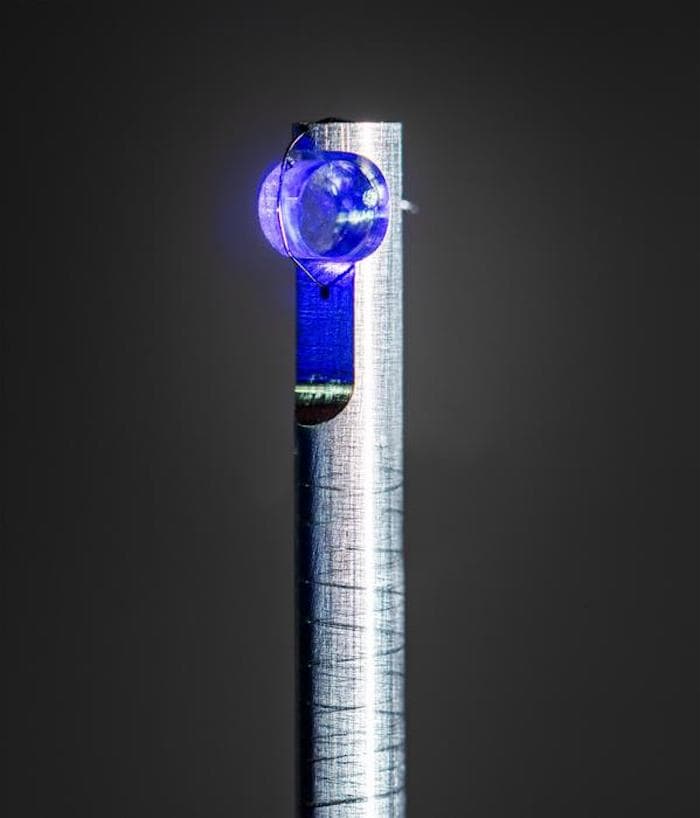
The core element of the experiment: a crystal containing thorium atoms. (Courtesy: TU Wien)
New high-precision laser spectroscopy measurements on thorium-229 nuclei could shed more light on the fine structure constant, which determines the strength of the electromagnetic interaction, say physicists at TU Wien in Austria.
The electromagnetic interaction is one of the four known fundamental forces in nature, with the others being gravity and the strong and weak nuclear forces. Each of these fundamental forces has an interaction constant that describes its strength in comparison with the others. The fine structure constant, α, has a value of approximately 1/137. If it had any other value, charged particles would behave differently, chemical bonding would manifest in another way and light-matter interactions as we know them would not be the same.
“As the name ‘constant’ implies, we assume that these forces are universal and have the same values at all times and everywhere in the universe,” explains study leader Thorsten Schumm from the Institute of Atomic and Subatomic Physics at TU Wien. “However, many modern theories, especially those concerning the nature of dark matter, predict small and slow fluctuations in these constants. Demonstrating a non-constant fine-structure constant would shatter our current understanding of nature, but to do this, we need to be able to measure changes in this constant with extreme precision.”
With thorium spectroscopy, he says, we now have a very sensitive tool to search for such variations.
Nucleus becomes slightly more elliptic
The new work builds on a project that led, last year, to the worlds’s first nuclear clock, and is based on precisely determining how the thorium-229 (229Th) nucleus changes shape when one of its neutrons transitions from a ground state to a higher-energy state. “When excited, the 229Th nucleus becomes slightly more elliptic,” Schumm explains. “Although this shape change is small (at the 2% level), it dramatically shifts the contributions of the Coulomb interactions (the repulsion between protons in the nucleus) to the nuclear quantum states.”
The result is a change in the geometry of the 229Th nucleus’ electric field, to a degree that depends very sensitively on the value of the fine structure constant. By precisely observing this thorium transition, it is therefore possible to measure whether the fine-structure constant is actually a constant or whether it varies slightly.
After making crystals of 229Th doped in a CaF2 matrix at TU Wien, the researchers performed the next phase of the experiment in a JILA laboratory at the University of Colorado, Boulder, US, firing ultrashort laser pulses at the crystals. While they did not measure any changes in the fine structure constant, they did succeed in determining how such changes, if they exist, would translate into modifications to the energy of the first nuclear excited state of 229Th.
“It turns out that this change is huge, a factor 6000 larger than in any atomic or molecular system, thanks to the high energy governing the processes inside nuclei,” Schumm says. “This means that we are by a factor of 6000 more sensitive to fine structure variations than previous measurements.”
Increasing the spectroscopic accuracy of the 229Th transition
Researchers in the field have debated the likelihood of such an “enhancement factor” for decades, and theoretical predictions of its value have varied between zero and 10 000. “Having confirmed such a high enhancement factor will now allow us to trigger a ‘hunt’ for the observation of fine structure variations using our approach,” Schumm says.
Schumm and colleagues are now working on increasing the spectroscopic accuracy of their 229Th transition measurement by another one to two orders of magnitude. “We will then start hunting for fluctuations in the transition energy,” he reveals, “tracing it over time and – through the Earth’s movement around the Sun – space.
Le trafic de cocaïne explose en Europe. Des ports comme Le Havre et Rotterdam deviennent les maillons clés d’une logistique mondialisée qui prend ses sources au Brésil. Le sociologue Gabriel Feltran révèle ce que le narcotrafic a appris du capitalisme de plateforme.
Vous êtes un certain nombre de lecteurs à nous poser des questions à propos de nos livres numériques (ou ebooks). Souvent, vous trouvez le processus d’achat et de mises à jour des ouvrages peu clair...
Que vaut l’aspirateur balai Tineco Pure One A90S ?
Le Tineco Pure One A90S a été officiellement annoncé le 7 novembre dernier. Le modèle avait également été aperçu plus tôt dans l’année lors de l’IFA 2025 à Berlin, où la marque avait présenté ses nouveautés en matière d’aspiration intelligente. Cette double présence — salon technologique majeur et annonce officielle — a marqué l’arrivée du A90S comme l’un des aspirateurs balais les plus innovants de la nouvelle génération.
Officiellement disponible à la vente, vous le retrouverez à l’heure où ses lignes sont écrites en promotion au prix de 599 €. En temps normal, il est affiché à 699 €. Place au test !
Unboxing
Ici, nous aurons très vite fait le tour de notre première paetie. Nous retrouverons à gauche et à droite le nom de la marque, celui du modèle, et la mention « Cordless Stick Vaccum Cleaner », tandis qu’à l’avant, nous aurons la même chose avec cette fois, un dessin dudit modèle du jour. On regrettera tout de même deux petites poignées pour porter le tout car c’est tout de même assez lourd.
Caractéristiques techniques
Marque
Tineco
Caractéristique spéciale
Aspiration puissante de 270AW, brosse maîtresse 3DSense, conception ZeroTangle, jusqu’à 105 min d’autonomie, système SmartLift
Type de filtre
Filtre HEPA
Composants inclus
Buse FlexiSoft, mini brosse motorisée, Outil 2-en-1 pour fentes et dépoussiérage, support de charge et de rangement
Sans fil ?
Oui
Puissance
650 Watts
Facteur de forme
Bâton
Couleur
Gris Gunmetal
Nom de modèle
Pure One A90S
Dimensions du produit
37L x 29,5l x 122,5H centimètres
Fonctionnalités
Aspiration puissante de 270AW : cet aspirateur sans fil puissant capture rapidement la poussière, les débris et les poils d’animaux, assurant un nettoyage en profondeur.
Brosse 3DSense Master : cet aspirateur balai sans fil allie DustSense, EdgeSense et la détection du type de sol pour offrir une efficacité de nettoyage de nouvelle génération.
Système SmartLift : grâce à son réglage au niveau du sol, son interrupteur côté manche et sa détection automatique, le nouveau système de tineco aspirateur sans fil gère sans effort les débris plus volumineux sans obstruction – sans se pencher.
Éclairage LED vert amélioré : le phare grand-angle de 150° de cet aspirateur balai illumine une plus grande surface et révèle clairement les particules de poussière jusqu’à 0,02 mm.
Autonomie ultra-longue : notre modèle du jour dispose d’une autonomie ultra-longue, jusqu’à 105 minutes (mode éco avec brosse 2-en-1 pour les fissures) pour un nettoyage complet de la maison sans interruption.
Contenu
Aspirateur balais Pure One A90S
Buse FlexiSoft,
Mini brosse motorisée,
Outil 2-en-1 pour fentes et dépoussiérage,
Support de charge et de rangement
Test
Tineco est devenu en quelques années l’un des acteurs incontournables du nettoyage dit smart. D’ailleurs, vous pouvez retrouver tous nos tests de la marque ici. Avec le Pure One A90S, la marque revient avec un aspirateur balai plus ambitieux, plus autonome et plus polyvalent, pensé pour simplifier le ménage sans sacrifier la performance. Sur le papier, c’est un modèle qui se place clairement dans le haut de gamme. Mais comme toujours chez Vonguru, on a voulu vérifier s’il tient réellement ses promesses.
Sans surprise, Tineco continue d’affiner son identité. Le Pure One A90S reprend les lignes élégantes et modernes des modèles de la marque, avec un châssis gris métallisé, un écran circulaire parfaitement intégré dans la poignée, et une impression générale de produit bien fini. L’appareil est agréable à manipuler : équilibré, pas trop lourd, et surtout très maniable, ce qui est crucial lorsque l’on passe des sols durs aux plafonds en quelques instants. Les multiples accessoires fournis confirment la volonté de polyvalence de la marque pour son nouveau modèle : brosse motorisée, suceur long, embout textiles, mini-brosse anti-acariens… tout y est, et rien ne fait cheap. Oui, tout respire la qualité.
Ce qui fait la force des aspirateurs Tineco, c’est le système iLoop, capable d’analyser en temps réel la quantité de saleté pour ajuster automatiquement la puissance. Sur le A90S, cette technologie est encore plus réactive et mieux calibrée. Dans la pratique, on ne se soucie plus du mode manuel : sur carrelage, il reste discret et économise la batterie et sur tapis ou lors d’un amas de miettes, il envoie beaucoup plus fort, instantanément.
L’écran LED, qui change de couleur selon la quantité de saleté détectée, n’est pas qu’un gadget : il permet d’identifier les zones encore sales et de savoir quand insister. En mode Auto, le Tineco Pure One A90S dépasse facilement les 50 minutes d’utilisation, ce qui est largement suffisant pour un appartement ou une petite maison. Le système iLoop optimise tellement la consommation que l’on n’a quasiment jamais à utiliser le mode Max.
Le changement de batterie, ultra simple, permet même de doubler l’autonomie si l’on investit dans une seconde batterie. Le bac à poussière se vide très facilement, sans projections, et le système de filtration HEPA se démonte en quelques secondes. On apprécie la brosse anti-emmêlement, particulièrement efficace : nettement moins de cheveux enroulés, ce qui est un confort au quotidien.
Les LEDs vertes grand-angle de 150° révèlent clairement les particules de poussière et à chaque passage je me fais la même réflexion : « Mon dieu mais comment ça peut être sale à ce point ?? ». En sachant que je passe l’aspirateur plusieurs fois par jour…. Ces LEDs sont un must have, comme sur notre Dreame H15 Mix, et on adore.
On regrettera cependant la taille du bac, que l’on aura à vider assez régulièrement et la base murale qui me semble tout de même un peu perfectible. Sur les aspirateurs balai puissants, le bruit est souvent le point faible. Ici, Tineco surprend agréablement : même lors des pics de puissance, l’aspirateur reste raisonnablement silencieux. En mode Auto, il devient même discret. On appréciera également son manche pliable, très pratique pour passer sous certains meubles difficiles d’accès.
Conclusion
Le Pure One A90S est un aspirateur-balai premium qui assume pleinement son statut. Il offre une très bonne puissance, une aspiration intelligemment optimisée, une autonomie solide et un confort d’utilisation qui fait vraiment la différence à l’utilisations. Quelques détails comme la taille du bac ou la base murale perfectible peuvent encore être améliorés, mais l’ensemble est cohérent, moderne et très efficace.
Au final, le Tineco Pure One A90S est un excellent choix pour ceux qui veulent un aspirateur intelligent, et réellement performant au quotidien. Cependant, son prix n’est clairement pas à la portée de toutes les bourses. Pour rappel, vous le retrouverez à l’heure où ses lignes sont écrites en promotion au prix de 599 €. En temps normal, il est affiché à 699 €.
Et voilà déjà le dernier Open Bar de l’année 2025 que j’ai l’impression de ne pas avoir vu passer. Premier lundi du mois, c’est le moment pour vous d’écrire ce qui vous tarabuste, vous questionne, ou de nous faire part d’un émerveillement, d’une information qui pourrait nous être utile. De mon côté, et pour quelque part faire suite à mon article de la semaine passée sur le noir et blanc, ... Continuer la lecture
Une rumeur prétend que Apple pourrait devenir un client des fonderies Intel pour faire fabriquer de futurs SoC Mx pour ses Mac ou Ax pour ses iPhone. Les fonderies d'Intel sont larguées face à TSMC, Intel lui-même faisant fabriquer ses haut-de-gammes par ce dernier. Ils ne pourraient que fabriquer des générations antérieures pour Apple.
Ça me parait possible, mais pas pour les raisons avancées ici ou là...
La première raison évoquée serait de s'assurer de pouvoir fabriquer des SoC Mx ou Ax en cas de problème entre Taïwan dont TSMC et la Chine. Avec soit la production soit l'expédition de SoC affectées. Si ça arrivait, je peux vous promettre que les fonderies d'Intel ne servirait pas à fabriquer des SoC pour Apple mais évidemment des processeurs pour le DoD et tous les secteurs stratégiques aux USA.
En fait c'est justement car les USA ont besoin de garder une capacité souveraine de fabrication de puces (CPU, GPU, RAM, SoC, etc.) que les fonderies Intel doivent exister, comme seconde-source pour la fabrication de puces n'ayant pas besoin des derniers process. Sauf que tant que ça n'arrive pas, il faut les faire tourner et les rentabiliser!
L'Administration Américaine actuelle voudrait que Apple fasse de l'assemblage final aux USA de ses produits comme les Mac ou les iPhone. C'est difficilement possible rapidement. En revanche Intel a besoin de clients pour ses fonderies, qui sont énormément subventionnées mais ça ne suffit pas. Je pense que la négociation a tourné autour de l'idée de produire d'anciens SoC Apple chez Intel, en échange d'abandonner l'idée de réaliser les assemblages finaux aux USA.
Mais il faut bien avoir en tête que Intel ne sera pas capable de produire des M5 avant au moins un ou deux ans, et qu'ils ne pourront viser que des M3 voire M2 dans le court terme. Ou similaire coté iPhone. Contrairement à ce que j'ai lu ailleurs, un M4 nécessite le même exact process de fabrication qu'un M4 Max. Ou sinon on obtient un produit consommant bien plus, plus lent, ou les deux!
C'est une idée des plus étonnantes. Pour tenter de sauver sa maternité, le maire d'une commune du Cher veut proposer un chèque-cadeau de 1.000 euros à chaque femme qui viendra accoucher dans sa commune en 2026. Il explique pourquoi sur RMC.
[MàJ 30/11 05:13] Tousles liens de cet article sont bien encore valides (jusqu'à demain).
Le Black Friday, c'est l'occasion en or de faire des affaires à l'approche des fêtes de fin d'année. Je ne pense pas être le seul à différer ses achats et à attendre de voir ce qu'il sera proposé à cette occasion. Car il s'agit très souvent la période de l'année où l'on trouve les meilleures affaires. Amazon participe une fois de plus à cet évènement commercial et ne déroge pas à la règle cette année. Enfin, si... Car le Black Friday commence en fait dès aujourd'hui sur Amazon (et pas demain) et ne dure pas qu'un seul jour mais plusieurs : c'est la "Black Friday Week".
L'idée de cet article est très simple : recenser les meilleures offres (tech) que je repère. Je mettrai à jour l'article à mesure de l'évolution des stocks/prix. N'hésitez pas à me faire part de vos trouvailles en réagissant à cette news sur les forums afin de permettre d'étoffer la liste !
Le Black Friday... Au lendemain de la fête de américaine de Thanksgiving, ce jour de promotions marque traditionnellement le coup d'envoi de la course aux achats de fin d’année. Importé et désormais ancré en France, le Black Friday s’étend souvent aujourd’hui à une période voire à un mois complet pour certains revendeurs (i.e. la « Black Friday Week » d’Amazon).
Apple, voulant comme toujours se démarquer des autres, appelle plutôt sa version l’« Événement shopping Apple Store ». Et comme chez Apple, la promotion est proscrite (histoire d’image de marque « luxueuse »), il ne s’agit pas de directement réduire le prix de produits mais plutôt d’offrir une carte cadeau Apple suite à un achat. Cet événement commence aujourd’hui et jusqu’à lundi, le fameux « Cyber Monday » de clôture.
Pourtant, l’instauration d’un store officiel Apple sur Amazon il y a quelques années permet désormais à la firme de Cupertino de déroger à sa propre règle à l’abris des regards, hors de son store principal. Et, dans les faits, faire ses achats Apple sur Amazon pendant cette période promet souvent de faire de bien meilleures affaires qu’autre part. Voici, par exemple le genre d’offres qui y sont actuellement disponibles :
On est, pour certains produits, bien loin de la carte cadeau de 150€ maximum que peut proposer Apple en direct. Pour retrouver l’ensemble des offres tech intéressantes de cette Black Friday Week (jusqu’à ce lundi), rendez-vous sur notre sujet dédié.
Cet article contient des liens d’affiliation Amazon. En achetant via ces liens, vous soutenez MacBidouille sans dépenser plus.
The PowerColor RX 9070 XT Reva is the company's latest character-driven GPU model. In our testing, it delivered impressively low noise levels, making it the quietest RX 9070 XT we've ever reviewed. It also includes a small factory overclock, dual BIOS, and RGB lighting with a dedicated off switch.
Trois pulls moches distribués sur l’île officielle de Nintendo sont disponibles, juste à temps pour fêter l’hiver en mode kitsch dans Animal Crossing : New Horizons.
Alongside the Fenrir Max 8K, G-Wolves also offers the Fenrir Asym 8K, which too is designed for fingertip grip, but is more ergonomically shaped. At a weight of 21 g, the Fenrir Max Asym comes with PixArt's PAW3950 sensor, Huano main button switches, and 8000 Hz wireless polling, configurable through a web driver.
L’installation de télescopes de grande taille aux Canaries pousse des astronomes à jouer les alpinistes. Objectif de ces instruments : étudier des objets et des événements très lointains tels que les sursauts gamma et les noyaux actifs de galaxies. Un reportage en partenariat avec Le Monde.
A new heat engine driven by the temperature difference between Earth’s surface and outer space has been developed by Tristan Deppe and Jeremy Munday at the University of California Davis. In an outdoor trial, the duo showed how their engine could offer a reliable source of renewable energy at night.
While solar cells do a great job of converting the Sun’s energy into electricity, they have one major drawback, as Munday explains: “Lack of power generation at night means that we either need storage, which is expensive, or other forms of energy, which often come from fossil fuel sources.”
One solution is to exploit the fact that the Earth’s surface absorbs heat from the Sun during the day and then radiates some of that energy into space at night. While space has a temperature of around −270° C, the average temperature of Earth’s surface is a balmy 15° C. Together, these two heat reservoirs provide the essential ingredients of a heat engine, which is a device that extracts mechanical work as thermal energy flows from a heat source to a heat sink.
Coupling to space
“At first glance, these two entities appear too far apart to be connected through an engine. However, by radiatively coupling one side of the engine to space, we can achieve the needed temperature difference to drive the engine,” Munday explains.
For the concept to work, the engine must radiate the energy it extracts from the Earth within the atmospheric transparency window. This is a narrow band of infrared wavelengths that pass directly into outer space without being absorbed by the atmosphere.
To demonstrate this concept, Deppe and Munday created a Stirling engine, which operates through the cyclical expansion and contraction of an enclosed gas as it moves between hot and cold ends. In their setup, the ends were aligned vertically, with a pair of plates connecting each end to the corresponding heat reservoir.
For the hot end, an aluminium mount was pressed into soil, transferring the Earth’s ambient heat to the engine’s bottom plate. At the cold end, the researchers attached a black-coated plate that emitted an upward stream of infrared radiation within the transparency window.
Outdoor experiments
In a series of outdoor experiments performed throughout the year, this setup maintained a temperature difference greater than 10° C between the two plates during most months. This was enough to extract more than 400 mW per square metre of mechanical power throughout the night.
“We were able to generate enough power to run a mechanical fan, which could be used for air circulation in greenhouses or residential buildings,” Munday describes. “We also configured the device to produce both mechanical and electrical power simultaneously, which adds to the flexibility of its operation.”
With this promising early demonstration, the researchers now predict that future improvements could enable the system to extract as much as 6 W per square metre under the same conditions. If rolled out commercially, the heat engine could help reduce the reliance of solar power on night-time energy storage – potentially opening a new route to cutting carbon emissions.
A new microscale version of the flumes that are commonly used to reproduce wave behaviour in the laboratory will make it far easier to study nonlinear hydrodynamics. The device consists of a layer of superfluid helium just a few atoms thick on a silicon chip, and its developers at the University of Queensland, Australia, say it could help us better understand phenomena ranging from oceans and hurricanes to weather and climate.
“The physics of nonlinear hydrodynamics is extremely hard to model because of instabilities that ultimately grow into turbulence,” explains study leader Warwick Bowen of Queensland’s Quantum Optics Laboratory. “It is also very hard to study in experiments since these often require hundreds-of-metre-long wave flumes.”
While such flumes are good for studying shallow-water dynamics like tsunamis and rogue waves, Bowen notes that they struggle to access many of the complex wave behaviours, such as turbulence, found in nature.
Amplifying the nonlinearities in complex behaviours
The team say that the geometrical structure of the new wave-on-a-chip device can be designed at will using lithographic techniques and built in a matter of days. Superfluid helium placed on its surface can then be controlled optomechanically. Thanks to these innovations, the researchers were able to experimentally measure nonlinear hydrodynamics millions of times faster than would be possible using traditional flumes. They could also “amplify” the nonlinearities of complex behaviours, making them orders of magnitude stronger than is possible in even the largest wave flumes.
“This promises to change the way we do nonlinear hydrodynamics, with the potential to discover new equations that better explain the complex physics behind it,” Bowen says. “Such a technique could be used widely to improve our ability to predict both natural and engineered hydrodynamic behaviours.”
So far, the team has measured several effects, including wave steepening, shock fronts and solitary wave fission thanks to the chip. While these nonlinear behaviours had been predicted in superfluids, they had never been directly observed there until now.
Waves can be generated in a very shallow depth
The Quantum Optics Laboratory researchers have been studying superfluid helium for over a decade. A key feature of this quantum liquid is that it flows without resistance, similar to the way electrons move without resistance in a superconductor. “We realized that this behaviour could be exploited in experimental studies of nonlinear hydrodynamics because it allows waves to be generated in a very shallow depth – even down to just a few atoms deep,” Bowen explains.
In conventional fluids, Bowen continues, resistance to motion becomes hugely important at small scales, and ultimately limits the nonlinear strengths accessible in traditional flume-based testing rigs. “Moving from the tens-of-centimetre depths of these flumes to tens-of-nanometres, we realized that superfluid helium could allow us to achieve many orders of magnitude stronger nonlinearities – comparable to the largest flows in the ocean – while also greatly increasing measurement speeds. It was this potential that attracted us to the project.”
The experiments were far from simple, however. To do them, the researchers needed to cryogenically cool the system to near absolute zero temperatures. They also needed to fabricate exceptionally thin superfluid helium films that interact very weakly with light, as well as optical devices with structures smaller than a micron. Combining all these components required what Bowen describes as “something of a hero experiment”, with important contributions coming from the team’s co-leader, Christopher Baker, and Walter Wasserman, who was then a PhD student in the group. The wave dynamics themselves, Bowen adds, were “exceptionally complex” and were analysed by Matthew Reeves, the first author of a Science paper describing the device.
As well as the applications areas mentioned earlier, the team say the new work, which is supported by the US Defense Advanced Research Project Agency’s APAQuS Program, could also advance our understanding of strongly-interacting quantum structures that are difficult to model theoretically. “Superfluid helium is a classic example of such a system,” explains Bowen, “and our measurements represent the most precise measurements of wave physics in these. Other applications may be found in quantum technologies, where the flow of superfluid helium could – somewhat speculatively – replace superconducting electron flow in future quantum computing architectures.”
The researchers now plan to use the device and machine learning techniques to search for new hydrodynamics equations.
Que vaut l’aspirateur laveur FloorShine 880 de Eureka ?
Vous le savez, depuis le temps, mais chez Vonguru, on adore se faciliter la vie et on adore quand le ménage du quotidien est vite fait, certes, mais surtout bien fait ! On passe pour certain un temps fou à réaliser notre ménage au sein de nos foyers et les constructeurs ont bien compris que notre temps était précieux, d’où la démocratisation plus ou moins récente des aspirateurs laveurs. Aujourd’hui, on s’attaque au FloorShine 880 de la marque Eureka, qui n’est autre que la nouveauté annoncée à l’IFA 2025.
Ce dernier est vendu 579 € hors promotion. Place au test !
Unboxing
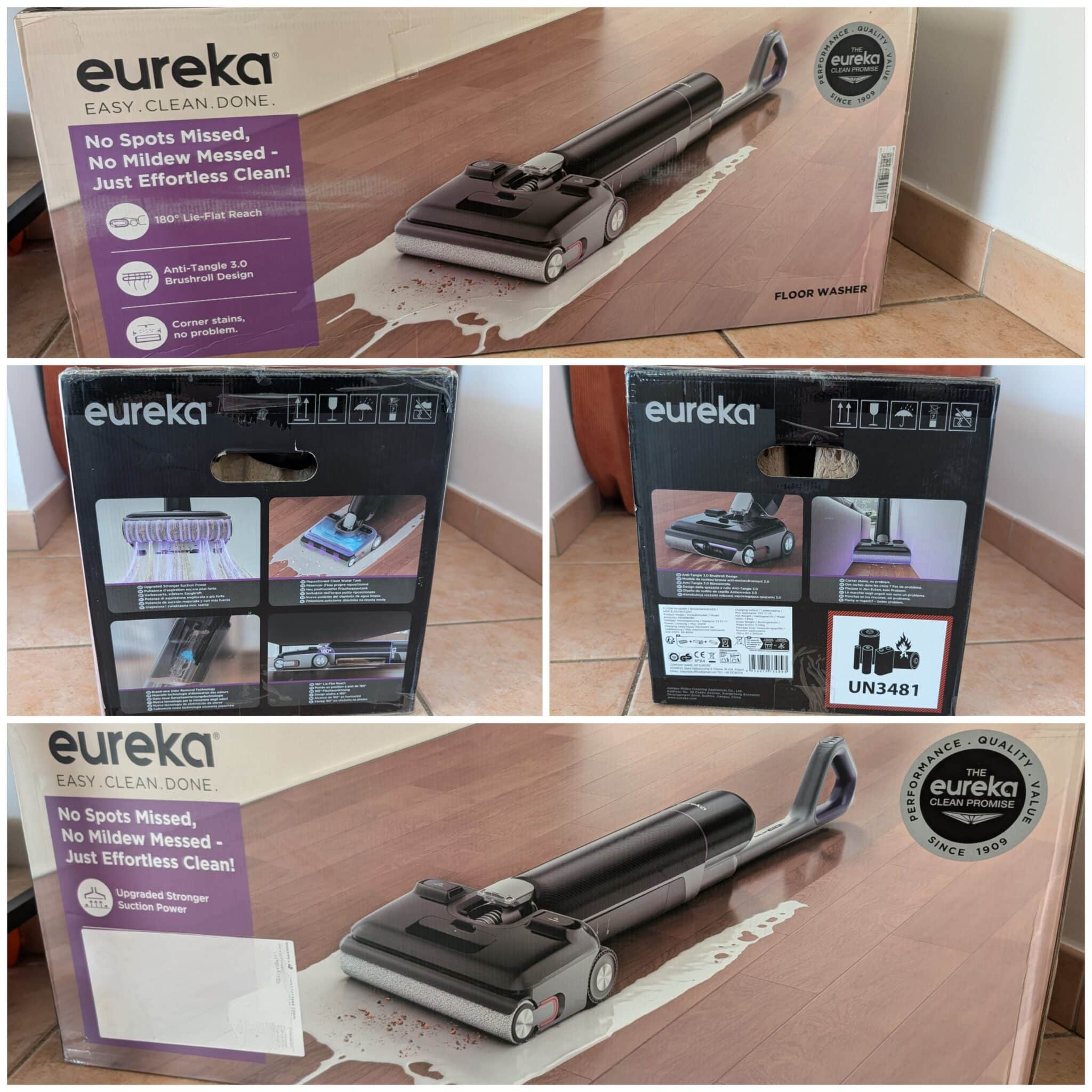
Sur la face avant comme sur la face arrière, on découvrira une grande photo de l’appareil en pleine action, en train d’aspirer et de laver une flaque. Le slogan est clair : « No spots missed, no mildew messed – Just effortless clean! ». À côté, un encadré violet rappelle les points forts : la tête qui peut se coucher complètement à 180°, la brosse anti-emmêlement, et la capacité à gérer les coins sans effort. Le tout, en anglais. On retrouve aussi le sceau rond Eureka Clean Promise.
En tournant la boîte, que ce soit à droite ou à gauche, on découvrira plus de détails techniques. On y voit plusieurs images montrant la brosse, l’appareil en situation réelle, et sa capacité à se glisser presque à plat sous les meubles.
Caractéristiques techniques
Puissance d’aspiration : 24 000 Pa
Vitesse de rotation de la brosse : 450 tours / minute (rpm)
Pression vers le sol : ~ 45 N (force exercée vers le bas par la brosse / le réservoir d’eau)
Température d’auto-lavage : 100 °C pour l’eau
Température de séchage : 75 °C d’air chaud
Direction de nettoyage des bords : triple — gauche, droite, avant
Propulsion : assistance électrique avant + arrière
Disponibilité : Europe
Prix conseillé : 579 €
Fonctionnalités
Nettoyage wet & dry : peut aspirer la poussière et laver le sol en même temps
Technologie de propulsion double direction : assistance électrique quand on pousse et quand on tire
Conception plate à 180° : permet de passer sous les meubles facilement
Brosse à nettoyage de bord trois côtés : gauche, droite, avant — pour bien nettoyer les bords et les plinthes
Auto-nettoyage : système d’auto-entretien pour la brosse et les composants
Lavage automatique de la brosse avec eau chauffée à 100 °C : pour éliminer la graisse et les saletés incrustées
Séchage à l’air chaud à 75 °C : pour éviter les odeurs et la moisissure
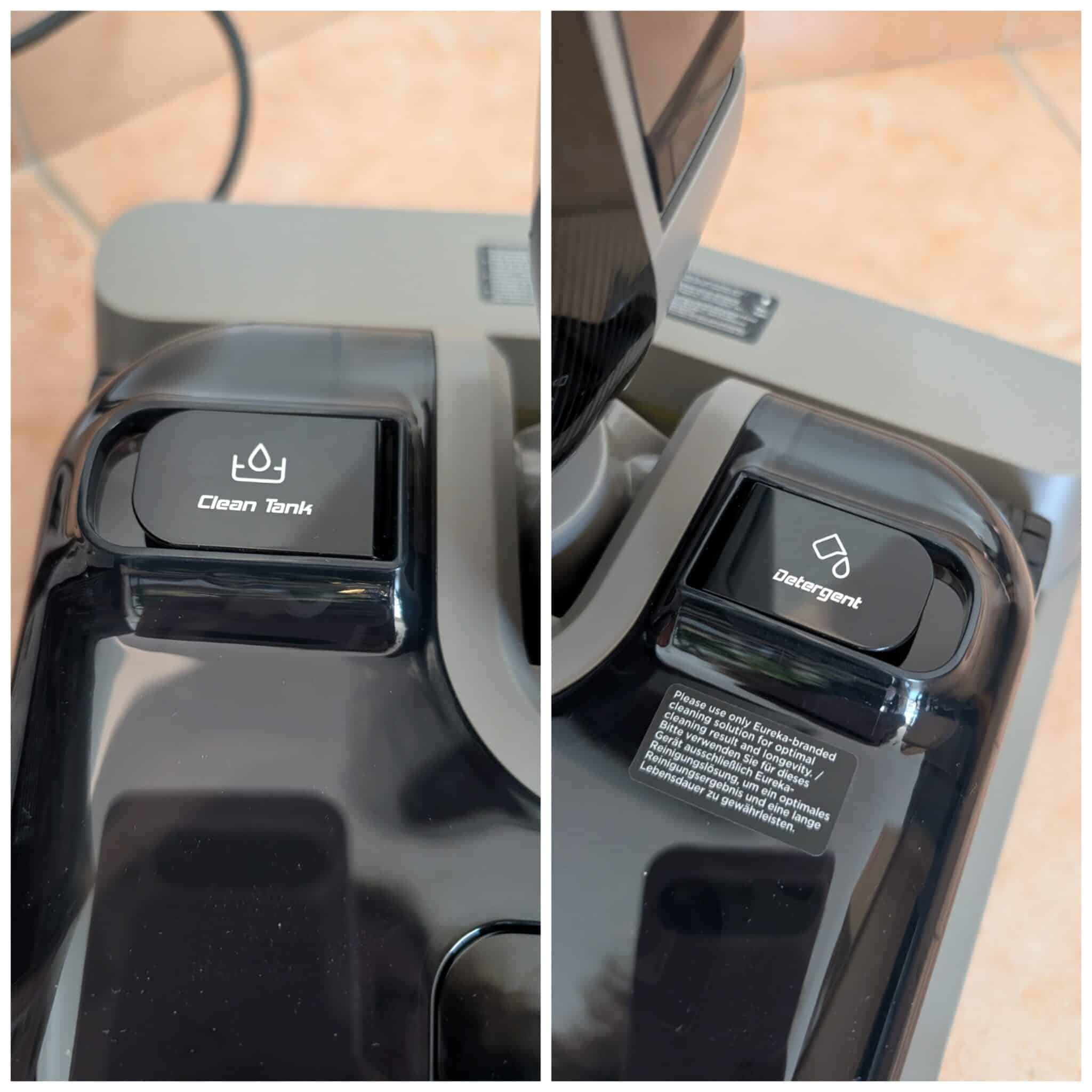
Module désodorisant dans le réservoir d’eaux usées : permet de limiter les mauvaises odeurs
Réservoir d’eau propre positionné au-dessus de la brosse : pour un bon transfert de la pression vers le sol.
Contenu
L’aspirateur laveur FloorShine 880
Son manche
Sa base
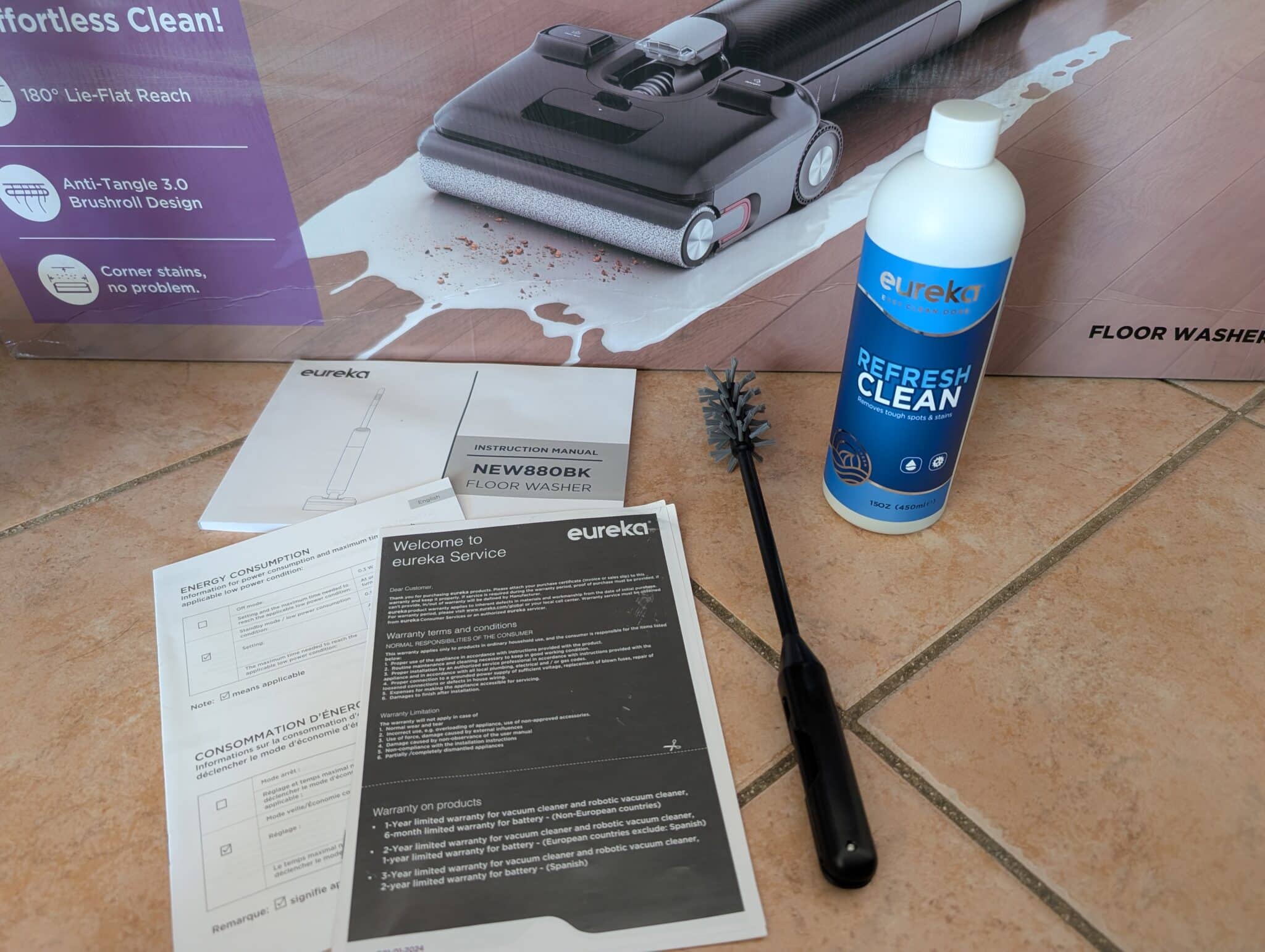
Produit de nettoyage
Brosse de nettoyage
Filtre supplémentaire
Notice
Test
Présenté en grande pompe à l’IFA 2025, le Eureka FloorShine 880 fait partie de ces produits qui semblent vouloir réconcilier tout le monde avec le ménage. Un pari audacieux, certes, mais Eureka se présente avec des arguments suffisamment solides pour attirer notre attention ici et en plus, vous savez qu’on adore tous les types d’aspiration… Au programme : puissance annoncée impressionnante, fonctions d’auto-entretien très poussées et volonté claire de se démarquer d’une concurrence devenue vraiment, vraiment féroce. Après avoir décortiqué ses caractéristiques, il est temps de voir si ce FloorShine 880 mérite sa place parmi les appareils premium de nettoyage domestique.
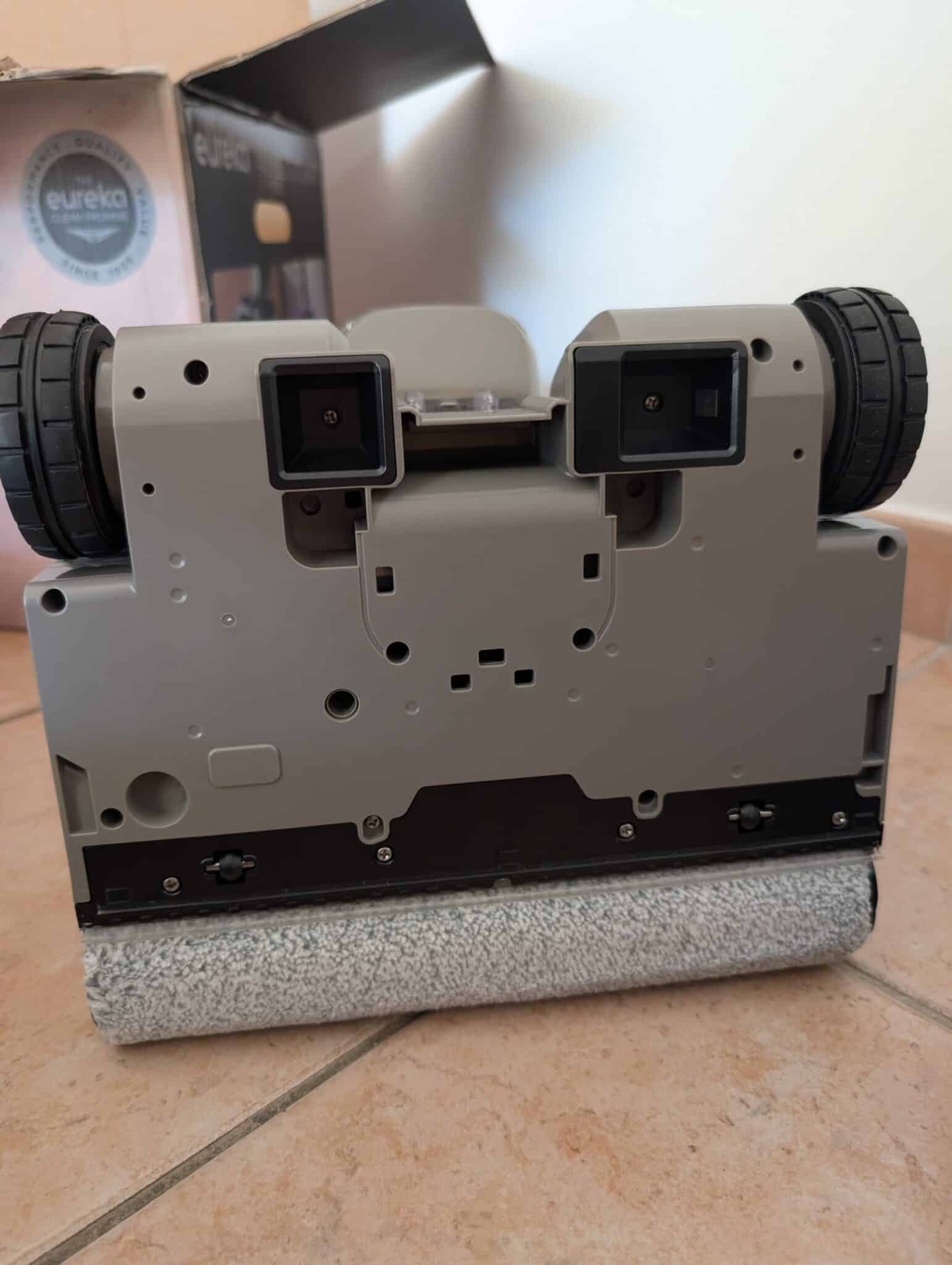
Dès les premières prises en main, on sent que Eureka a voulu proposer quelque chose de sérieux. Le FloorShine 880 est un aspirateur-laveur « wet & dry », un appareil capable de gérer aussi bien la poussière quotidienne que les taches les plus coriaces. Il n’est pas simplement là pour ramasser quelques miettes : il ambitionne de récurer vos sols avec une efficacité que l’on attend plutôt d’un matériel semi-professionnel. Et la fiche technique donne le ton : une aspiration culminant à 24 000 Pa, un rouleau qui tourne à 450 tours/minutes, et surtout une pression verticale annoncée à 45 N pour gratter le sol sans faiblir. Sur le papier, c’est costaud, et en pratique ?
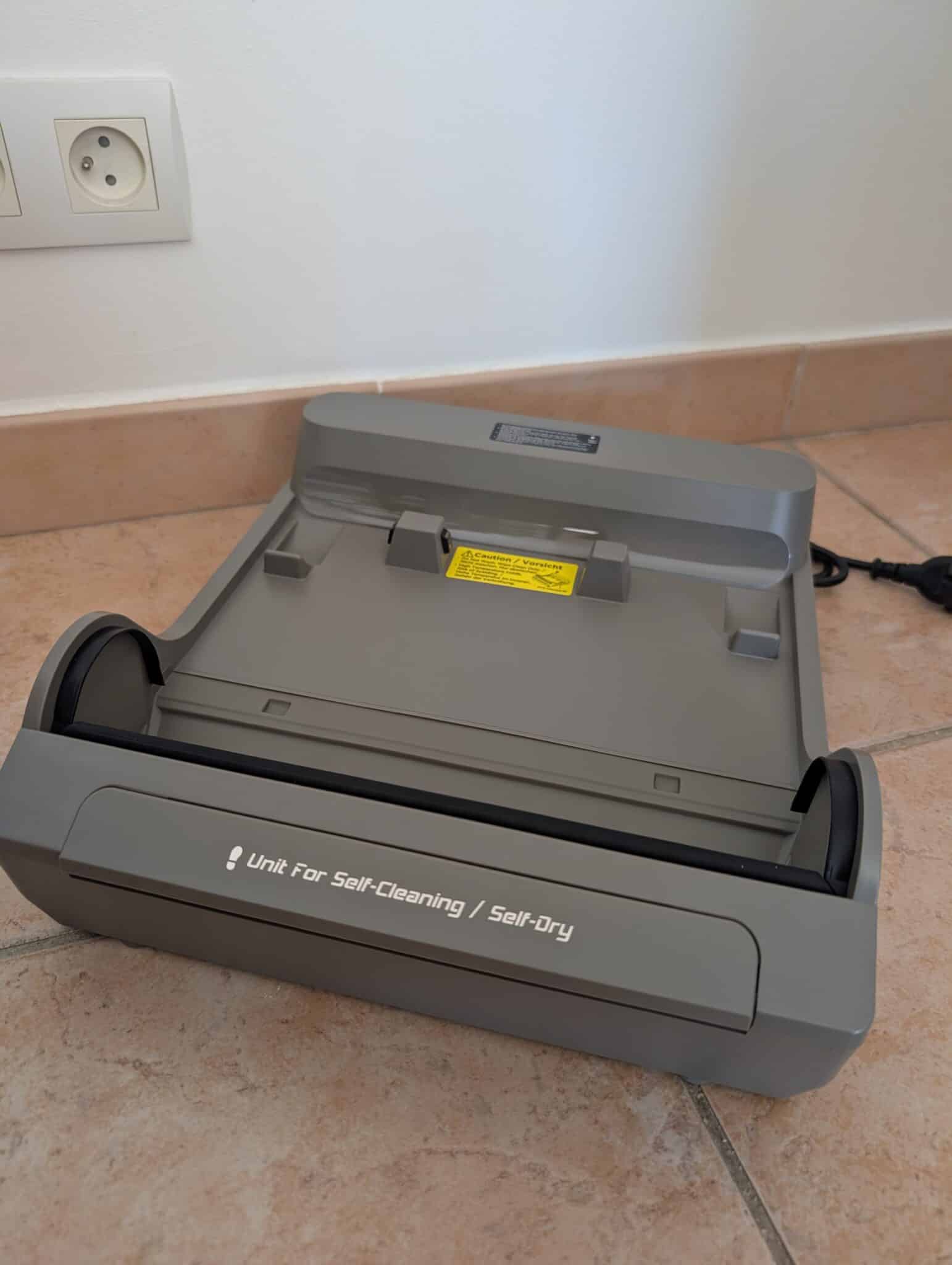
Mais au-delà des chiffres, c’est l’approche globale du nettoyage qui intrigue. Le 880 est pensé comme un appareil autonome, ou du moins semi-autonome, dans le sens où il s’occupe aussi… de lui-même. Eureka a intégré un système complet d’auto-nettoyage, capable de laver son rouleau à 100 °C, puis de le sécher à 75 °C afin d’éviter les mauvaises odeurs et la formation de moisissures. Ceux qui ont déjà possédé un appareil de ce type savent que c’est précisément le point noir des balais laveurs classiques : ça finit toujours par sentir l’aquarium abandonné. Ici, tout est fait pour éviter ça, et c’est franchement appréciable. En revanche, je précise qu’idéalement, il faut vider et rincer le bac à eau sale après chaque utilisation car l’odeur arrive tout de même assez vite.
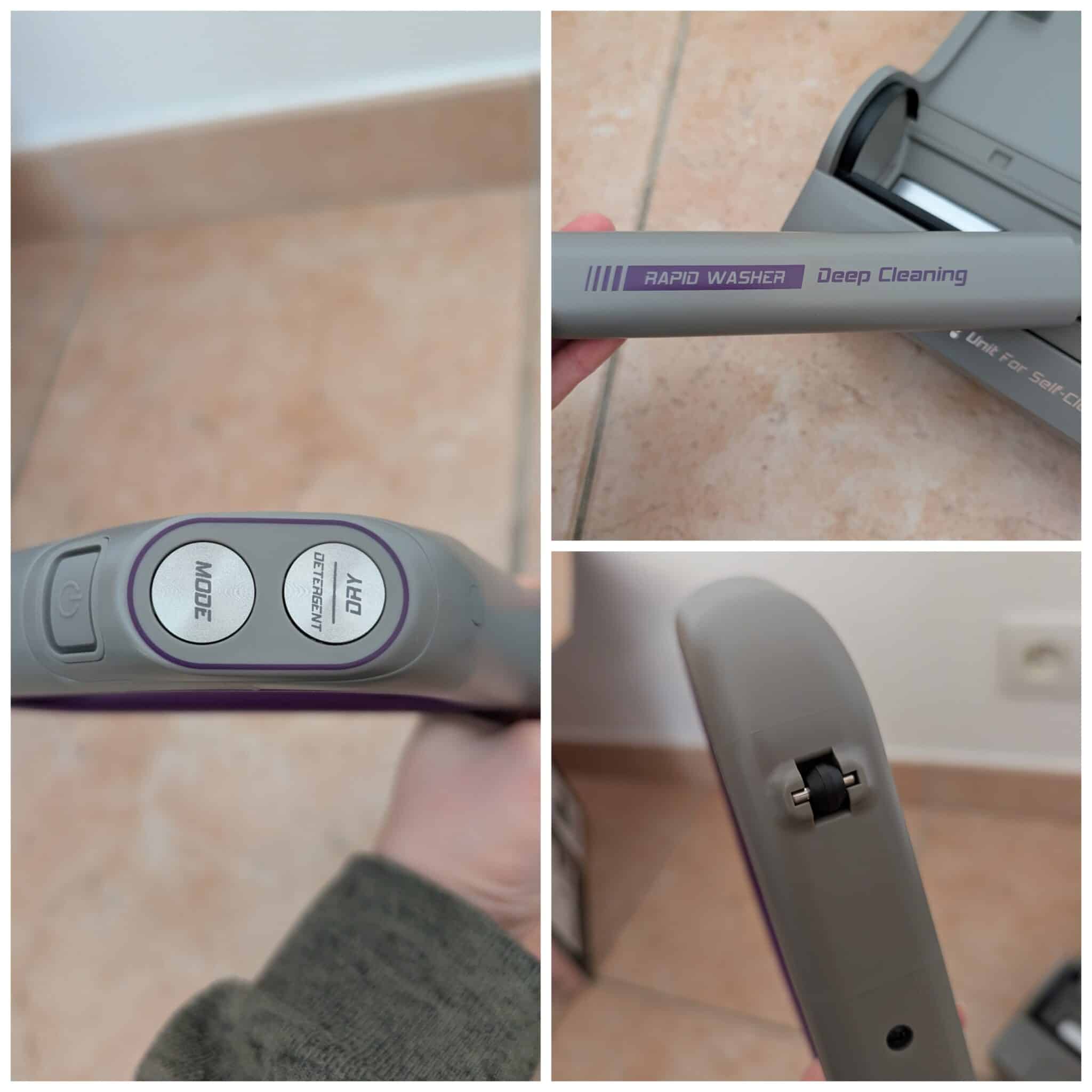
Le design, lui, reste très étudié. La tête fine et plate, capable de pivoter à 180°, permet de passer sous les meubles bas sans acrobaties. L’appareil bénéficie également d’une propulsion assistée dans les deux sens, ce qui offre une sensation de fluidité étonnamment agréable. Terminé l’époque où il fallait pousser comme un tapis de 30 kg ou tirer un aspirateur qui s’accrochait dans chaque coin de meuble : là, tout glisse, ça suit, ça répond, et c’est clairement l’un des gros points forts du FloorShine 880. Eureka a aussi ajouté un système de brosse permettant de nettoyer efficacement les bords et les plinthes, un détail qui fait souvent toute la différence dans les pièces comme la cuisine.
Pour lancer le nettoyage, il suffit d’appuyer sur la base et ça on adore ! C’est super pratique et très intuitif. En parlant de la base justement, elle arbore un design un peu retro futuriste assez drôle, mais qui n’ira pas forcément dans tous les intérieurs.
Au quotidien, le FloorShine 880 se destine clairement aux foyers qui ont besoin d’un nettoyage régulier et plutôt intense. Il sera parfaitement à l’aise sur carrelage, lino, sol composite ou parquet scellé, et s’adressera sans la moindre hésitation aux familles avec enfants, animaux ou simplement aux personnes qui veulent un intérieur impeccablement propre sans y consacrer un temps infini. La capacité du réservoir reste correcte sans être gigantesque, ce qui impose parfois quelques pauses sur les grandes surfaces. Mais cela reste dans la moyenne des appareils de ce type.
Bien sûr, notre appareil du jour à quelques défauts. Comme souvent avec les aspirateurs-laveurs du genre, la consommation électrique devra être observée de près : chauffer de l’eau à 100 °C puis sécher à 75 °C n’est pas anodin. Le FloorShine 880 est aussi un appareil assez volumineux, ce qui demandera un vrai espace de rangement. On notera également que son prix n’est pas forcément à la portée de toutes les bourses, bien que le rapport qualité/prix soit indéniable selon moi. Il manque également selon moi un rouleau supplémentaire dans le colis.
Conclusion
L’heure est à la conclusion. Le FloorShine 880 est clairement ambitieux et cherche à se faire une place sur le marché avec une approche haut de gamme assumée. Si vous cherchez un appareil capable de nettoyer en profondeur sans trop d’efforts et avec un entretien réduit, il mérite une place sur votre shortlist. Et même si son prix peut faire hésiter, ses capacités et son confort d’usage pourraient bien justifier chaque euro investi. Tout dépend donc de vos besoins et de votre budget.
Pour rappel, vous le retrouverez hors promotion au prix de 579 € directement sur le site de la marque.
 Connexion