 Connexion
Appel au public pour retrouver un cerf rouge en cavale
26 novembre 2025 à 21:39
L'animal, une femelle adulte, a été aperçu à deux reprises depuis le 16 novembre.

L'animal, une femelle adulte, a été aperçu à deux reprises depuis le 16 novembre.
In the early universe, moments after the Big Bang and cosmic inflation, clusters of exotic, massive particles could have collapsed to form bizarre objects called cannibal stars and boson stars. In turn, these could have then collapsed to form primordial black holes – all before the first elements were able to form.
This curious chain of events is predicted by a new model proposed by a trio of scientists at SISSA, the International School for Advanced Studies in Trieste, Italy.
Their proposal involves a hypothetical moment in the early universe called the early matter-dominated (EMD) epoch. This would have lasted only a few seconds after the Big Bang, but could have been dominated by exotic particles, such as the massive, supersymmetric particles predicted by string theory.
“There are no observations that hint at the existence of an EMD epoch – yet!” says SISSA’s Pranjal Ralegankar. “But many cosmologists are hoping that an EMD phase occurred because it is quite natural in many models.”
Some models of the early universe predict the formation of primordial black holes from quantum fluctuations in the inflationary field. Now, Ralegankar and his colleagues, Daniele Perri and Takeshi Kobayashi propose a new and more natural pathway for forming primordial holes via an EMD epoch.
They postulate that in the first second of existence when the universe was small and incredibly hot, exotic massive particles emerged and clustered in dense haloes. The SISSA physicists propose that the haloes then collapsed into hypothetical objects called cannibal stars and boson stars.
Cannibal stars are powered by particles annihilating each other, which would have allowed the objects to resist further gravitational collapse for a few seconds. However, they would not have produced light like normal stars.
“The particles in a cannibal star can only talk to each other, which is why they are forced to annihilate each other to counter the immense pressure from gravity,” Ralegankar tells Physics World. “They are immensely hot, simply because the particles that we consider are so massive. The temperature of our cannibal stars can range from a few GeV to on the order of 1010 GeV. For comparison, the Sun is on the order of keV.”
Boson stars, meanwhile, would be made from pure a Bose–Einstein condensate, which is a state of matter whereby the individual particles quantum mechanically act as one.
Both the cannibal stars and boson stars would exist within larger haloes that would quickly collapse to form primordial black holes with masses about the same as asteroids (about 1014–1019 kg). All of this could have taken place just 10 s after the Big Bang.
Ralegankar, Perri and Kobayashi point out that the total mass of primordial black holes that their model produces matches the amount of dark matter in the universe.
“Current observations rule out black holes to be dark matter, except in the asteroid-mass range,” says Ralegankar. “We showed that our models can produce black holes in that mass range.”
Richard Massey, who is a dark-matter researcher at Durham University in the UK, agrees that microlensing observations by projects such as the Optical Gravitational Lensing Experiment (OGLE) have ruled out a population of black holes with planetary masses, but not asteroid masses. However, Massey is doubtful that these black holes could make up dark matter.
“It would be pretty contrived for them to make up a large fraction of what we call dark matter,” he says. “It’s possible that dark matter could be these primordial black holes, but they’d need to have been created with the same mass no matter where they were and whatever environment they were in, and that mass would have to be tuned to evade current experimental evidence.”
In the coming years, upgrades to OGLE and the launch of NASA’s Roman Space Telescope should finally provide sensitivity to microlensing events produced by objects in the asteroid mass range, allowing researchers to settle the matter.
It is also possible that cannibal and boson stars exist today, produced by collapsing haloes of dark matter. But unlike those proposed for the early universe, modern cannibal and boson stars would be stable and long-lasting.
“Much work has already been done for boson stars from dark matter, and we are simply suggesting that future studies should also think about the possibility of cannibal stars from dark matter,” explains Ralegankar. “Gravitational lensing would be one way to search for them, and depending on models, maybe also gamma rays from dark-matter annihilation.”
The research is described in Physical Review D.
The post Did cannibal stars and boson stars populate the early universe? appeared first on Physics World.
The deliberate targeting of scientists in recent years has become one of the most disturbing, and overlooked, developments in modern conflict. In particular, Iranian physicists and engineers have been singled out for almost two decades, with sometimes fatal consequences. In 2007 Ardeshir Hosseinpour, a nuclear physicist at Shiraz University, died in mysterious circumstances that were widely attributed to poisoning or radioactive exposure.
Over the following years, at least five more Iranian researchers have been killed. They include particle physicist Masoud Ali-Mohammadi, who was Iran’s representative at the Synchrotron-light for Experimental Science and Applications in the Middle East project. Known as SESAME, it is the only scientific project in the Middle East where Iran and Israel collaborate.
Others to have died include nuclear engineer Majid Shahriari, another Iranian representative at SESAME, and nuclear physicist Mohsen Fakhrizadeh, who were both killed by bombing or gunfire in Tehran. These attacks were never formally acknowledged, nor were they condemned by international scientific institutions. The message, however, was implicit: scientists in politically sensitive fields could be treated as strategic targets, even far from battlefields.
What began as covert killings of individual researchers has now escalated, dangerously, into open military strikes on academic communities. Israeli airstrikes on residential areas in Tehran and Isfahan during the 12-day conflict between the two countries in June led to at least 14 Iranian scientists and engineers and members of their family being killed. The scientists worked in areas such as materials science, aerospace engineering and laser physics. I believe this shift, from covert assassinations to mass casualties, crossed a line. It treats scientists as enemy combatants simply because of their expertise.
The assassinations of scientists are not just isolated tragedies; they are a direct assault on the global commons of knowledge, corroding both international law and international science. Unless the world responds, I believe the precedent being set will endanger scientists everywhere and undermine the principle that knowledge belongs to humanity, not the battlefield.
International humanitarian law is clear: civilians, including academics, must be protected. Targeting scientists based solely on their professional expertise undermines the Geneva Convention and erodes the civilian–military distinction at the heart of international law.
Iran, whatever its politics, remains a member of the Nuclear Non-Proliferation Treaty and the International Atomic Energy Agency. Its scientists are entitled under international law to conduct peaceful research in medicine, energy and industry. Their work is no more inherently criminal than research that other countries carry out in artificial intelligence (AI), quantum technology or genetics.
If we normalize the preemptive assassination of scientists, what stops global rivals from targeting, say, AI researchers in Silicon Valley, quantum physicists in Beijing or geneticists in Berlin? Once knowledge itself becomes a liability, no researcher is safe. Equally troubling is the silence of the international scientific community with organizations such as the UN, UNESCO and the European Research Council as well as leading national academies having not condemned these killings, past or present.
Silence is not neutral. It legitimizes the treatment of scientists as military assets. It discourages international collaboration in sensitive but essential research and it creates fear among younger researchers, who may abandon high-impact fields to avoid risk. Science is built on openness and exchange, and when researchers are murdered for their expertise, the very idea of science as a shared human enterprise is undermined.
The assassinations are not solely Iran’s loss. The scientists killed were part of a global community; collaborators and colleagues in the pursuit of knowledge. Their deaths should alarm every nation and every institution that depends on research to confront global challenges, from climate change to pandemics.
I believe that international scientific organizations should act. At a minimum, they should publicly condemn the assassination of scientists and their families; support independent investigations under international law; as well as advocate for explicit protections for scientists and academic facilities in conflict zones.
Importantly, voices within Israel’s own scientific community can play a critical role too. Israeli academics, deeply committed to collaboration and academic freedom, understand the costs of blurring the boundary between science and war. Solidarity cannot be selective.
Recent events are a test case for the future of global science. If the international community tolerates the targeting of scientists, it sets a dangerous precedent that others will follow. What appears today as a regional assault on scientists from the Global South could tomorrow endanger researchers in China, Europe, Russia or the US.
Science without borders can only exist if scientists are recognized and protected as civilians without borders. That principle is now under direct threat and the world must draw a red line – killing scientists for their expertise is unacceptable. To ignore these attacks is to invite a future in which knowledge itself becomes a weapon, and the people who create it expendable. That is a world no-one should accept.
The post Academic assassinations are a threat to global science appeared first on Physics World.
DNA is a fascinating macromolecule that guides protein production and enables cell replication. It has also found applications in nanoscience and materials design.
Colloidal crystals are ordered structures made from tiny particles suspended in fluid that can bond to other particles and add functionalisation to materials. By controlling colloidal particles, we can build advanced nanomaterials using a bottom-up approach. There are several ways to control colloidal particle design, ranging from experimental conditions such as pH and temperature to external controls like light and magnetic fields.
An exciting approach is to use DNA-mediated processes. DNA binds to colloidal surfaces and regulates how the colloids organize, providing molecular-level control. These connections are reversible and can be broken using standard experimental conditions (e.g., temperature), allowing for dynamic and adaptable systems. One important motivation is their good biocompatibility, which has enabled applications in biomedicine such as drug delivery, biosensing, and immunotherapy.
Programmable Atom Equivalents (PAEs) are large colloidal particles whose surfaces are functionalized with single-stranded DNA, while separate, much smaller DNA-coated linkers, called Electron Equivalents (EEs), roam in solution and mediate bonds between PAEs. In typical PAE-EE systems, the EEs carry multiple identical DNA ends that can all bind the same type of PAE, which limits the complexity of the assemblies and makes it harder to program highly specific connections between different PAE types.
In this study, the researchers investigate how EEs with arbitrary valency, carrying many DNA arms, regulate interactions in a binary mixture of two types of PAEs. Each EE has multiple single-stranded DNA ends of two different types, each complementary to the DNA on one of the PAE species. The team develops a statistical mechanical model to predict how EEs distribute between the PAEs and to calculate the effective interaction, a measure of how strongly the PAEs attract each other, which in turn controls the structures that can form.
Using this model, they inform Monte Carlo simulations to predict system behaviour under different conditions. The model shows quantitative agreement with simulation results and reveals an anomalous dependence of PAE-PAE interactions on EE valency, with interactions converging at high valency. Importantly, the researchers identify an optimal valency that maximizes selectivity between targeted and non-targeted binding pairs. This groundbreaking research provides design principles for programmable self-assembly and offers a framework that can be integrated into DNA nanoscience.
Designed self-assembly of programmable colloidal atom-electron equivalents
Xiuyang Xia et al 2025 Rep. Prog. Phys. 88 078101
Assembly of colloidal particles in solution by Kun Zhao and Thomas G Mason (2018)
The post DNA as a molecular architect appeared first on Physics World.
Proteins are made up of a sequence of building blocks called amino acids. Understanding these sequences is crucial for studying how proteins work, how they interact with other molecules, and how changes (mutations) can lead to diseases.
These mutations happen over vastly different time periods and are not completely random but strongly correlated, both in space (distinct sites along the sequences) and in time (subsequent mutations of the same site).
It turns out that these correlations are very reminiscent of disordered physical systems, notably glasses, emulsions, and foams.
A team of researchers from Italy and France have now used this similarity to build a new statistical model to simulate protein evolution. They went on to study the role of different factors causing these mutations.
They found that the initial (ancestral) protein sequence has a significant influence on the evolution process, especially in the short term. This means that information from the ancestral sequence can be traced back over a certain period and is not completely lost.
The strength of interactions between different amino acids within the protein affects how long this information persists.
Although ultimately the team did find differences between the evolution of physical systems and that of protein sequences, this kind of insight would not have been possible without using the language of statistical physics, i.e. space-time correlations.
The researchers expect that their results will soon be tested in the lab thanks to upcoming advances in experimental techniques.
Fluctuations and the limit of predictability in protein evolution – IOPscience
S. Rossi et al, 2025 Rep. Prog. Phys. 88 078102
The post The link between protein evolution and statistical physics appeared first on Physics World.
Vous le savez chez Vonguru, on adore tout ce qui est domotique et chez eufy, on a toujours le choix de ce côté-là ! Aujourd’hui, c’est la sécurité qui est mise en avant avec la caméra eufyCam S3 Pro ! Elle viendra compléter notre installation existante et rejoindra notre réseau HomeBase 3 !
Son prix oscille pas mal en ce moment, passant de 279 € hors promotion à 179 € au prix où ses lignes sont écrites, alors soyez vigilants ! Place au test !
Sur la face avant arborant le fond bleu bien caractéristique de la marque eufy, on retrouvera le nom de la marque, le modèle ainsi 3 principaux arguments marketing, un visuel de la caméra et on nous rappellera également ici qu’il n’y a pas d’abonnement à payer en supplément. À gauche, c’est cette même information qui nous sera détaillé en détails, et ce en anglais.

À droite, la marque a décidé de mettre en avant son application gratuite avec deux visuels, à nouveaux une liste non exhaustive des principales fonctionnalités de notre caméra du jour ainsi que les divers compatibilités et lien pour télécharger ladite app. À l’arrière bien sûr et comme toujours, c’est là que nous ferons le plein d’infos avec non seulement le contenu de la boîte mais également à nouveau les principaux arguments de notre S3 Pro, cette fois en 8 langues différentes.
| Marque | eufy Security |
| Nom de modèle | T8162 |
| Technologie de connectivité | Wi-Fi |
| Caractéristique spéciale | Résolution 4K améliorée couleur vision nocturne système de détection de mouvement Technologie SolarPlus 2.0 Sécurité locale, pas de frais mensuels, compatible avec Apple Home, Alexa et Google Assistant Résolution 4K améliorée couleur vision nocturne système de détection de mouvement Technologie SolarPlus 2.0 Sécurité locale, pas de frais mensuels, compatible avec Apple Home, Alexa et Google Assistant |
| Utilisation intérieure/extérieure | Extérieure |
| Source d’alimentation | Alimenté par batterie |
| Protocole de connectivité | Wi-Fi |
| Type de fixation | Montage arbre |
| Résolution d’enregistrement vidéo | 4k |


Ici, tout s’installe comme le kit 4 caméras solaire eufyCam S330, mais nous allons reprendre pour ceux qui n’auraient pas suivi.
Vous aurez dans la boîte la marche à suivre pour réaliser la configuration de la HomeBase 3. Commencez par installer votre disque dur si jamais vous en avez un. Si ce n’est pas le cas, sachez que notre produit du jour embarque 16Go de base. Branchez ce dernier à votre box internet ou à votre routeur et alimentez-le à une prise secteur. Ensuite, téléchargez l’application eufy security que vous retrouverez sur Android et iOS.
Ensuite, suivez le guide pas à pas. Il n’y a rien de compliqué, tout est intuitif. Vous aurez également à effectuer une mise à jour lors de votre première utilisation.
L’ajout de la caméra est tout aussi enfantin. N’oubliez pas de la recharger. Ici, c’est l’USB-C qui est de la partie, sans surprise. Vous pouvez donc réaliser leur recharge directement via le pro USB de la HomeBase ou bien sur n’importe quel autre chargeur.

Il vous faudra une perceuse adaptée pour percer vos murs extérieurs, bien sûr. Sinon, les vis et chevilles sont fournies dans le bundle. Ce n’est donc pas très compliqué à installer, si tant est que vous avez le bon matériel.
Ici encore, plus de câbles, deux vis, deux chevilles et le tour est joué. Bien sûr, il vous faudra une exposition au soleil, minimum deux heures par jour, mais grâce à cette technologie, on s’évite bien des tracas ! Et puis en cas de problèmes de recharge, ne sait-on jamais, il suffira de dévisser la caméra et d’aller la recharger via un câble USB-C, directement sur sa HomeBase ou bien sur n’importe quel chargeur.
Nous avons donc mis notre nouvelle caméra au niveau de notre abri à bois et notre composte, avec une vue sur l’abri à vélo.
L’installation est propre, rapide et esthétique. Nos caméras ne jurent pas sur nos façades et on adore !

Eufy revient avec une nouvelle caméra extérieure haut de gamme, la eufyCam S3 Pro, pensée pour ceux qui veulent la tranquillité d’esprit sans l’abonnement mensuel qui vient habituellement avec. Une caméra 4K, totalement sans fil, profitant de l’énergie solaire qui ne manque pas dans le Var pour tourner en continu, le tout adossé à l’écosystème HomeBase 3. Sur le papier, un cocktail de modernité et d’efficacité. Sur le terrain, une solution qui cherche clairement à s’imposer comme référence parmi les caméras extérieures premium. On a testé tout ça pour vous.
Dès le déballage, la S3 Pro donne le ton. Le design est dans la droite lignée de ce que propose Eufy depuis quelques années et nous rappelle bien sûr nos S330 : une coque blanc mat, arrondie, qui n’a rien d’un gadget et s’intègre facilement sur une façade, un portail ou un abri. Le panneau solaire intégré est presque invisible, parfaitement fondu dans la silhouette du produit.
La grande promesse, évidemment, c’est la surveillance 4K. Et sur ce point, la S3 Pro ne déçoit pas. Les images sont nettes, les couleurs fidèles, les détails suffisamment précis pour identifier un visage, une plaque d’immatriculation ou un colis posé devant votre portail. Le capteur 1/1.8 s’en sort très bien en pleine journée, mais c’est surtout la vision nocturne couleur qui marque des points. Grâce à la technologie maison MaxColor, la caméra peut restituer la scène de nuit en conservant un rendu naturel, sans vous obliger à activer un projecteur blafard. Même dans des environnements mal éclairés, la lisibilité reste excellente, un vrai confort pour la consultation des alertes. On notera cependant que la caméra peut avoir du mal à rendre une image nette la nuit par temps très humide ou quand il gèle.

La détection est un autre pilier de cette S3 Pro. Eufy ajoute ici un radar en plus du classique capteur PIR, permettant une identification plus précise des mouvements. Résultat : moins d’alertes inutiles, moins de « vent dans les feuilles », plus de vrais événements. L’IA embarquée peut distinguer un humain, un véhicule ou un simple mouvement ambiant, et les notifications arrivent rapidement, avec un résumé clair de ce qui est détecté. Le micro offre une captation propre, et l’audio bidirectionnel permet de répondre à un livreur ou de faire fuir quelqu’un en quelques secondes.
La partie solaire est évidemment au centre du concept. Sur le terrain, le principe fonctionne si la caméra est correctement exposée. Une bonne heure d’ensoleillement quotidien suffit en théorie à maintenir la batterie, mais dans la pratique, tout dépendra de l’emplacement, de l’orientation et du nombre d’événements enregistrés. Bien positionnée, la S3 Pro peut tourner des semaines sans broncher. Dans une zone plus ombragée ou très sollicitée, la batterie aura tendance à descendre un peu plus vite, mais l’autonomie reste largement supérieure à la majorité des caméras sans fil traditionnelles.

La présence obligatoire de la HomeBase 3 est un point central. C’est elle qui stocke les vidéos localement, évitant le passage par un abonnement cloud. L’ensemble est cohérent, simple à consulter et très réactif. L’écosystème Eufy reste l’un des plus agréables à utiliser du marché : interface claire, timeline fluide, options facilement accessibles et réglages fins de détection ou de zones d’activité.

Au quotidien, la caméra se comporte de manière stable, avec une connexion rapide et une consultation en direct assez fluide, même en 4K. La sirène intégrée est suffisamment puissante pour dissuader, sans être assourdissante. L’ensemble respire le sérieux et la volonté de proposer une alternative vraiment premium à des modèles concurrents souvent enfermés derrière des abonnements mensuels. Côté longévité, on espère que ce modèle aura une aussi bonne durée de vie que ses aînées.
La eufyCam S3 Pro se place donc comme une excellente solution pour ceux qui disposent déjà d’une HomeBase et qui veulent une caméra extérieure puissante, autonome et vraiment complète. Entre la 4K impeccable, la vision nocturne couleur, la détection radar et le solaire intégré, Eufy propose une caméra qui coche presque toutes les cases. Elle demande toutefois un emplacement bien réfléchi pour exploiter pleinement la recharge solaire, et l’obligation de passer par la HomeBase 3 augmente légèrement la facture finale (sauf si vous l’avez déjà). Mais une fois l’installation optimisée, difficile de ne pas apprécier le confort d’un système sans fil, sans abonnement et sans compromis sur la qualité d’image.
En résumé, une caméra premium qui assume son ambition et s’adresse clairement à ceux qui veulent équiper leur extérieur sérieusement, avec une solution durable, élégante et performante.
On rappellera que son prix oscille pas mal en ce moment, passant de 279 € hors promotion à 179 € au prix où ses lignes sont écrites, alors soyez vigilants !

Test – Caméra de surveillance eufyCam S3 Pro a lire sur Vonguru.
UK artist Alison Stott has created a new glass and light artwork – entitled Naturally Focused – that is inspired by the work of theoretical physicist Michael Berry from the University of Bristol.
Stott, who recently competed an MA in glass at Arts University Plymouth, spent over two decades previously working in visual effects for film and television, where she focussed on creating photorealistic imagery.
Her studies touched on how complex phenomena can arise from seemingly simple set-ups, for example in a rotating glass sculpture lit by LEDs.
“My practice inhabits the spaces between art and science, glass and light, craft and experience,” notes Stott. “Working with molten glass lets me embrace chaos, indeterminacy, and materiality, and my work with caustics explores the co-creation of light, matter, and perception.”
The new artwork is based on “caustics” – the curved patterns that form when light is reflected or refracted by curved surfaces or objects
The focal point of the artwork is a hand-blown glass lens that was waterjet-cut into a circle and polished so that its internal structure and optical behaviour are clearly visible. The lens is suspended within stainless steel gyroscopic rings and held by a brass support and stainless stell backplate.
The rings can be tilted or rotated to “activate shifting field of caustic projections that ripple across” the artwork. Mathematical equations are also engraved onto the brass that describe the “singularities of light” that are visible on the glass surface.
The work is inspired by Berry’s research into the relationship between classical and quantum behaviour and how subtle geometric structures govern how waves and particles behave.
Berry recently won the 2025 Isaac Newton Medal and Prize, which is presented by the Institute of Physics, for his “profound contributions across mathematical and theoretical physics in a career spanning over 60 years”.
Stott says that working with Berry has pushed her understanding of caustics. “The more I learn about how these structures emerge and why they matter across physics, the more compelling they become,” notes Stott. “My aim is to let the phenomena speak for themselves, creating conditions where people can directly encounter physical behaviour and perhaps feel the same awe and wonder I do.”
The artwork will go on display at the University of Bristol following a ceremony to be held on 27 November.
The post ‘Caustic’ light patterns inspire new glass artwork appeared first on Physics World.
WiFi networks could pose significant privacy risks even to people who aren’t carrying or using WiFi-enabled devices, say researchers at the Karlsruhe Institute of Technology (KIT) in Germany. According to their analysis, the current version of the technology passively records information that is detailed enough to identify individuals moving through networks, prompting them to call for protective measures in the next iteration of WiFi standards.
Although wireless networks are ubiquitous and highly useful, they come with certain privacy and security risks. One such risk stems from a phenomenon known as WiFi sensing, which the researchers at KIT’s Institute of Information Security and Dependability (KASTEL) define as “the inference of information about the networks’ environment from its signal propagation characteristics”.
“As signals propagate through matter, they interfere with it – they are either transmitted, reflected, absorbed, polarized, diffracted, scattered, or refracted,” they write in their study, which is published in the Proceedings of the 2025 ACM SIGSAC Conference on Computer and Communications Security (CCS ’25). “By comparing an expected signal with a received signal, the interference can be estimated and used for error correction of the received data.”
An under-appreciated consequence, they continue, is that this estimation contains information about any humans who may have unwittingly been in the signal’s path. By carefully analysing the signal’s interference with the environment, they say, “certain aspects of the environment can be inferred” – including whether humans are present, what they are doing and even who they are.
The KASTEL team terms this an “identity inference attack” and describes it as a threat that is as widespread as it is serious. “This technology turns every router into a potential means for surveillance,” says Julian Todt, who co-led the study with his KIT colleague Thorsten Strufe. “For example, if you regularly pass by a café that operates a WiFi network, you could be identified there without noticing it and be recognized later – for example by public authorities or companies.”
While Todt acknowledges that security services, cybercriminals and others do have much simpler ways of tracking individuals – for example by accessing data from CCTV cameras or video doorbells – he argues that the ubiquity of wireless networks lends itself to being co-opted as a near-permanent surveillance infrastructure. There is, he adds, “one concerning property” about wireless networks: “They are invisible and raise no suspicion.”
Although the possibility of using WiFi networks in this way is not new, most previous WiFi-based security attacks worked by analysing so-called channel state information (CSI). These data indicate how a radio signal changes when it reflects off walls, furniture, people or animals. However, the KASTEL researchers note that the latest WiFi standard, known as WiFi 5 (802.11ac), changes the picture by enabling a new and potentially easier form of attack based on beamforming feedback information (BFI).
While beamforming uses similar information as CSI, Todt explains that it does so on the sender’s side instead of the receiver’s. This means that a BFI-based surveillance method would require nothing more than standard devices connected to the WiFi network. “The BFI could be used to create images from different perspectives that might then serve to identify persons that find themselves in the WiFi signal range,” Todt says. “The identity of individuals passing through these radio waves could then be extracted using a machine-learning model. Once trained, this model would make an identification in just a few seconds.”
In their experiments, Todt and colleagues studied 197 participants as they walked through a WiFi field while being simultaneously recorded with CSI and BFI from four different angles. The participants had five different “walking styles” (such as walking normally and while carrying a backpack) as well as different gaits. The researchers found that they could identify individuals with nearly 100% accuracy, regardless of the recording angle or the individual’s walking style or gait.
“The technology is powerful, but at the same time entails risks to our fundamental rights, especially to privacy,” says Strufe. He warns that authoritarian states could use the technology to track demonstrators and members of opposition groups, prompting him and his colleagues to “urgently call” for protective measures and privacy safeguards to be included in the forthcoming IEEE 802.11bf WiFi standard.
“The literature on all novel sensing solutions highlights their utility for various novel applications,” says Todt, “but the privacy risks that are inherent to such sensing are often overlooked, or worse — these sensors are claimed to be privacy-friendly without any rationale for these claims. As such, we feel it necessary to point out the privacy risks that novel solutions such as WiFi sensing bring with them.”
The researchers say they would like to see approaches developed that can mitigate the risk of identity inference attack. However, they are aware that this will be difficult, since this type of attack exploits the physical properties of the actual WiFi signal. “Ideally, we would influence the WiFi standard to contain privacy-protections in future versions,” says Todt, “but even the impact of this would be limited as there are already millions of WiFi devices out there that are vulnerable to such an attack.”
The post Is your WiFi spying on you? appeared first on Physics World.
In proton exchange membrane water electrolysis (PEMWE) systems, voltage cycles dropping below a threshold are associated with reversible performance improvements, which remain poorly understood despite being documented in literature. The distinction between reversible and irreversible performance changes is crucial for accurate degradation assessments. One approach in literature to explain this behaviour is the oxidation and reduction of iridium. Iridium-based electrocatalyst activity and stability in PEMWE hinge on their oxidation state, influenced by the applied voltage. Yet, full-cell PEMWE dynamic performance remains under-explored, with a focus typically on stability rather than activity. This study systematically investigates reversible performance behaviour in PEMWE cells using Ir-black as an anodic catalyst. Results reveal a recovery effect when the low voltage level drops below 1.5 V, with further enhancements observed as the voltage decreases, even with a short holding time of 0.1 s. This reversible recovery is primarily driven by improved anode reaction kinetics, likely due to changing iridium oxidation states, and is supported by alignment between the experimental data and a dynamic model that links iridium oxidation/reduction processes to performance metrics. This model allows distinguishing between reversible and irreversible effects and enables the derivation of optimized operation schemes utilizing the recovery effect.

Tobias Krenz is a simulation and modelling engineer at Siemens Energy in the Transformation of Industry business area focusing on reducing energy consumption and carbon-dioxide emissions in industrial processes. He completed his PhD from Liebniz University Hannover in February 2025. He earned a degree from Berlin University of Applied Sciences in 2017 and a MSc from Technische Universität Darmstadt in 2020.
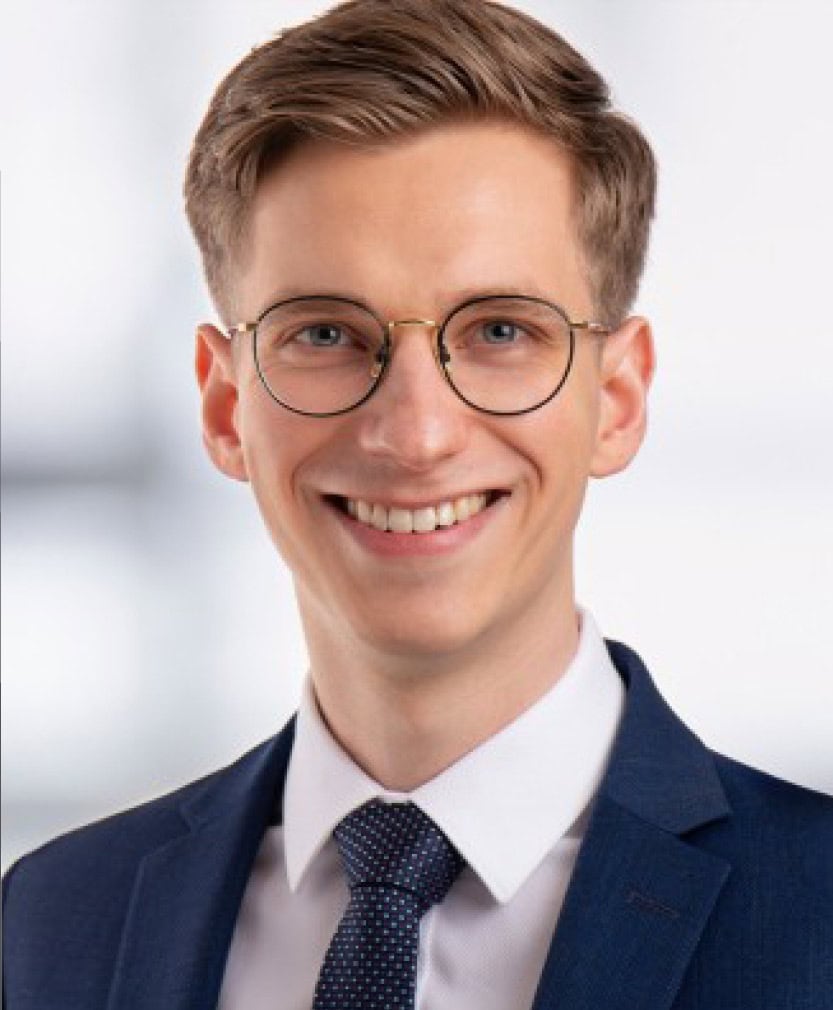
Alexander Rex is a PhD candidate at the Institute of Electric Power Systems at Leibniz University Hannover. He holds a degree in mechanical engineering from Technische Universität Braunschweig, an MEng from Tongji University, and an MSc from Karlsruhe Institute of Technology (KIT). He was a visiting scholar at Berkeley Lab from 2024 to 2025.
The post Reversible degradation phenomenon in PEMWE cells appeared first on Physics World.
Ramy Shelbaya has been hooked on physics ever since he was a 12-year-old living in Egypt and read about the Joint European Torus (JET) fusion experiment in the UK. Biology and chemistry were interesting to him but never quite as “satisfying”, especially as they often seemed to boil down to physics in the end. “So I thought, maybe that’s where I need to go,” Shelbaya recalls.
His instincts seem to have led him in the right direction. Shelbaya is now chief executive of Quantum Dice, an Oxford-based start-up he co-founded in 2020 to develop quantum hardware for exploiting the inherent randomness in quantum mechanics. It closed its first funding round in 2021 with a seven-figure investment from a consortium of European investors, while also securing grant funding on the same scale.
Now providing cybersecurity hardware systems for clients such as BT, Quantum Dice is launching a piece of hardware for probabilistic computing, based on the same core innovation. Full of joy and zeal for his work, Shelbaya admits that his original decision to pursue physics was “scary”. Back then, he didn’t know anyone who had studied the subject and was not sure where it might lead.
Fortunately, Shelbaya’s parents were onboard from the start and their encouragement proved “incredibly helpful”. His teachers also supported him to explore physics in his extracurricular reading, instilling a confidence in the subject that eventually led Shelbaya to do undergraduate and master’s degrees in physics at École normale supérieure PSL in France.
He then moved to the UK to do a PhD in atomic and laser physics at the University of Oxford. Just as he was wrapping up his PhD, Oxford University Innovation (OUI) – which manages its technology transfer and consulting activities – launched a new initiative that proved pivotal to Shelbaya’s career.

OUI had noted that the university generated a lot of IP and research results that could be commercialized but that the academics producing it often favoured academic work over progressing the technology transfer themselves. On the other hand, lots of students were interested in entering the world of business.
To encourage those who might be business-minded to found their own firms, while also fostering more spin-outs from the university’s patents and research, OUI launched the Student Entrepreneurs’ Programme (StEP). A kind of talent show to match budding entrepreneurs with technology ready for development, StEP invited participants to team up, choose commercially promising research from the university, and pitch for support and mentoring to set up a company.
As part of Oxford’s atomic and laser physics department, Shelbaya was aware that it had been developing a quantum random number generator. So when the competition was launched, he collaborated with other competition participants to pitch the device. “My team won, and this is how Quantum Dice was born.”
The initial technology was geared towards quantum random number generation, for particular use in cybersecurity. Random numbers are at the heart of all encryption algorithms, but generating truly random numbers has been a stumbling block, with the “pseudorandom” numbers people make do with being prone to prediction and hence security violation.
Quantum mechanics provides a potential solution because there is inherent randomness in the values of certain quantum properties. Although for a long time this randomness was “a bane to quantum physicists”, as Shelbaya puts it, Quantum Dice and other companies producing quantum random number generators are now harnessing it for useful technologies.
Where Quantum Dice sees itself as having an edge over its competitors is in its real-time quality assurance of the true quantum randomness of the device’s output. This means it should be able to spot any corruption to the output due to environmental noise or someone tampering with the device, which is an issue with current technologies.
Quantum Dice already offers Quantum Random Number Generator (QRNG) products in a range of form factors that integrate directly within servers, PCs and hardware security systems. Clients can also access the company’s cloud-based solution – Quantum Entropy-as-a-Service – which, powered by its QRNG hardware, integrates into the Internet of Things and cloud infrastructure.
Recently Quantum Dice has also launched a probabilistic computing processor based on its QRNG for use in algorithms centred on probabilities. These are often geared towards optimization problems that apply in a number of sectors, including supply chains and logistics, finance, telecommunications and energy, as well as simulating quantum systems, and Boltzmann machines – a type of energy-based machine learning model for which Shelbaya says researchers “have long sought efficient hardware”.
After winning the start-up competition in 2019 things got trickier when Quantum Dice was ready to be incorporated, which occurred just at the start of the first COVID-19 lockdown. Shelbaya moved the prototype device into his living room because it was the only place they could ensure access to it, but it turned out the real challenges lay elsewhere.
“One of the first things we needed was investments, and really, at that stage of the company, what investors are investing in is you,” explains Shelbaya, highlighting how difficult this is when you cannot meet in person. On the plus side, since all his meetings were remote, he could speak to investors in Asia in the morning, Europe in the afternoon and the US in the evening, all within the same day.
Another challenge was how to present the technology simply enough so that people would understand and trust it, while not making it seem so simple that anyone could be doing it. “There’s that sweet spot in the middle,” says Shelbaya. “That is something that took time, because it’s a muscle that I had never worked.”
The company performed well for its size and sector in terms of securing investments when their first round of funding closed in 2021. Shelbaya is shy of attributing the success to his or even the team’s abilities alone, suggesting this would “underplay a lot of other factors”. These include the rising interest in quantum technologies, and the advantages of securing government grant funding programmes at the same time, which he feels serves as “an additional layer of certification”.
For Shelbaya every day is different and so are the challenges. Quantum Dice is a small new company, where many of the 17 staff are still fresh from university, so nurturing trust among clients, particularly in the high-stakes world of cybersecurity is no small feat. Managing a group of ambitious, energetic and driven young people can be complicated too.
But there are many rewards, ranging from seeing a piece of hardware finally work as intended and closing a deal with a client, to simply seeing a team “you have been working to develop, working together without you”.
For others hoping to follow a similar career path, Shelbaya’s advice is to do what you enjoy – not just because you will have fun but because you will be good at it too. “Do what you enjoy,” he says, “because you will likely be great at it.”
The post Ramy Shelbaya: the physicist and CEO capitalizing on quantum randomness appeared first on Physics World.


The standardization process helps to promote the legitimacy of emerging quantum technologies by distilling technical inputs and requirements from all relevant stakeholders across industry, research and government. Put simply: if you understand a technology well enough to standardize elements of it, that’s when you know it’s moved beyond hype and theory into something of practical use for the economy and society.
Standards will, over time, help the quantum technology industry achieve critical mass on the supply side, with those economies of scale driving down prices and increasing demand. As the nascent quantum supply chain evolves – linking component manufacturers, subsystem developers and full-stack quantum computing companies – standards will also ensure interoperability between products from different vendors and different regions.
Those benefits flow downstream as well because standards, when implemented properly, increase trust among end-users by defining a minimum quality of products, processes and services. Equally important, as new innovations are rolled out into the marketplace by manufacturers, standards will ensure compatibility across current and next-generation quantum systems, reducing the likelihood of lock-ins to legacy technologies.
I have strategic oversight of our core technical programmes in quantum computing, quantum networking, quantum metrology and quantum-enabled PNT (position, navigation and timing). It’s a broad-scope remit that spans research, training as well as responsibility for standardization and international collaboration, with the latter often going hand-in-hand.
Right now, we have over 150 people working within the NPL quantum metrology programme. Their collective focus is on developing the measurement science necessary to build, test and evaluate a wide range of quantum devices and systems. Our research helps innovators, whether in an industry or university setting, to push the limits of quantum technology by providing leading-edge capabilities and benchmarking to measure the performance of new quantum products and services.

That’s right. For starters, we have a team focusing on the inter-country strategic relationships, collaborating closely with colleagues at other National Metrology Institutes (like NIST in the US and PTB in Germany). A key role in this regard is our standards specialist who, given his background working in the standards development organizations (SDOs), acts as a “connector” between NPL’s quantum metrology teams and, more widely, the UK’s National Quantum Technology Programme and the international SDOs.
We also have a team of technical experts who sit on specialist working groups within the SDOs. Their inputs to standards development are not about NPL’s interests, rather providing expertise and experience gained from cutting-edge metrology; also building a consolidated set of requirements gathered from stakeholders across the quantum community to further the UK’s strategic and technical priorities in quantum.
Absolutely. We believe that quantum metrology and standardization are key enablers of quantum innovation, fast-tracking the adoption and commercialization of quantum technologies while building confidence among investors and across the quantum supply chain and early-stage user base. For NPL and its peers, the task right now is to agree on the terminology and best practice as we figure out the performance metrics, benchmarks and standards that will enable quantum to go mainstream.
Front-and-centre is the UK Quantum Standards Network Pilot. This initiative – which is being led by NPL – brings together representatives from industry, academia and government to work on all aspects of standards development: commenting on proposals and draft standards; discussing UK standards policy and strategy; and representing the UK in the European and international SDOs. The end-game? To establish the UK as a leading voice in quantum standardization, both strategically and technically, and to ensure that UK quantum technology companies have access to global supply chains and markets.
The Quantum Standards Network Pilot also provides a direct line to prospective end-users of quantum technologies in business sectors like finance, healthcare, pharmaceuticals and energy. What’s notable is that the end-users are often preoccupied with questions that link in one way or another to standardization. For example: how well do quantum technologies stack up against current solutions? Are quantum systems reliable enough yet? What does quantum cost to implement and maintain, including long-term operational costs? Are there other emerging technologies that could do the same job? Is there a solid, trustworthy supply chain?
The quantum landscape is changing fast, with huge scope for disruptive innovation in quantum computing, quantum communications and quantum sensing. Faced with this level of complexity, NMI-Q leverages the combined expertise of the world’s leading National Metrology Institutes – from the G7 countries and Australia – to accelerate the development and adoption of quantum technologies.
No one country can do it all when it comes to performance metrics, benchmarks and standards in quantum science and technology. As such, NMI-Q’s priorities are to conduct collaborative pre-standardization research; develop a set of “best measurement practices” needed by industry to fast-track quantum innovation; and, ultimately, shape the global standardization effort in quantum. NPL’s prominent role within NMI-Q (I am the co-chair along with Barbara Goldstein of NIST) underscores our commitment to evidence-based decision-making in standards development and, ultimately, to the creation of a thriving quantum ecosystem.
Every day, our measurement scientists address cutting-edge problems in quantum – as challenging as anything they’ll have encountered previously in an academic setting. What’s especially motivating, however, is that the NPL is a mission-driven endeavour with measurement outcomes linking directly to wider societal and economic benefits – not just in the UK, but internationally as well.
Measurement for Quantum (M4Q) is a flagship NPL programme that provides industry partners with up to 20 days of quantum metrology expertise to address measurement challenges in applied R&D and product development. The service – which is free of charge for projects approved after peer review – helps companies to bridge the gap from technology prototype to full commercialization.
To date, more than two-thirds of the companies to participate in M4Q report that their commercial opportunity has increased as a direct result of NPL support. In terms of specifics, the M4Q offering includes the following services:
Performance metrics and benchmarks point the way to practical quantum advantage
End note: NPL retains copyright on this article.
The post Why quantum metrology is the driving force for best practice in quantum standardization appeared first on Physics World.
Researchers in the US and Korea have created nanoparticles with carefully designed “patches” on their surfaces using a new atomic stencilling technique. These patches can be controlled with incredible precision, and could find use in targeted drug delivery, catalysis, microelectronics and tissue engineering.
The first step in the stencilling process is to create a mask on the surface of gold nanoparticles. This mask prevents a “paint” made from grafted-on polymers from attaching to certain areas of the nanoparticles.
“We then use iodide ions as a stencil,” explains Qian Chen, a materials scientist and engineer at the University of Illinois at Urbana-Champaign, US, who led the new research effort. “These adsorb (stick) to the surface of the nanoparticles in specific patterns that depend on the shape and atomic arrangement of the nanoparticles’ facets. That’s how we create the patches – the areas where the polymers selectively bind.” Chen adds that she and her collaborators can then tailor the surface chemistry of these tiny patchy nanoparticles in a very controlled way.
The team decided to develop the technique after realizing there was a gap in the field of microfabrication stencilling. While techniques in this area have advanced considerably in recent years, allowing ever-smaller microdevices to be incorporated into ever-faster computer chips, most of them rely on top-down approaches for precisely controlling nanoparticles. By comparison, Chen says, bottom-up methods have been largely unexplored even though they are low-cost, solution-processable, scalable and compatible with complex, curved and three-dimensional surfaces.
Reporting their work in Nature, the researchers say they were inspired by the way proteins naturally self-assemble. “One of the holy grails in the field of nanomaterials is making complex, functional structures from nanoscale building blocks,” explains Chen. “It’s extremely difficult to control the direction and organization of each nanoparticle. Proteins have different surface domains, and thanks to their interactions with each other, they can make all the intricate machines we see in biology. We therefore adopted that strategy by creating patches or distinct domains on the surface of the nanoparticles.”
Philip Moriarty, a physicist of the University of Nottingham, UK who was not involved in the project, describes it as “elegant and impressive” work. “Chen and colleagues have essentially introduced an entirely new mode of self-assembly that allows for much greater control of nanoparticle interactions,” he says, “and the ‘atomic stencil’ concept is clever and versatile.”
The team, which includes researchers at the University of Michigan, Pennsylvania State University, Cornell, Brookhaven National Laboratory and Korea’s Chonnam National University as well as Urbana-Champaign, agrees that the potential applications are vast. “Since we can now precisely control the surface properties of these nanoparticles, we can design them to interact with their environment in specific ways,” explains Chen. “That opens the door for more effective drug delivery, where nanoparticles can target specific cells. It could also lead to new types of catalysts, more efficient microelectronic components and even advanced materials with unique optical and mechanical properties.”
She and her colleagues say they now want to extend their approach to different types of nanoparticles and different substrates to find out how versatile it truly is. They will also be developing computational models that can predict the outcome of the stencilling process – something that would allow them to design and synthesize patchy nanoparticles for specific applications on demand.
The post ‘Patchy’ nanoparticles emerge from new atomic stencilling technique appeared first on Physics World.
Les résultats d'un essai clinique témoignent d'une efficacité au moins similaire aux vaccins actuels.
The $330m Jiangmen Underground Neutrino Observatory (JUNO) has released its first results following the completion of the huge underground facility in August.
JUNO is located in Kaiping City, Guangdong Province, in the south of the country around 150 km west of Hong Kong.
Construction of the facility began in 2015 and was set to be complete some five years later. Yet the project suffered from serious flooding, which delayed construction.
JUNO, which is expected to run for more than 30 years, aims to study the relationship between the three types of neutrino: electron, muon and tau. Although JUNO will be able to detect neutrinos produced by supernovae as well as those from Earth, the observatory will mainly measure the energy spectrum of electron antineutrinos released by the Yangjiang and Taishan nuclear power plants, which both lie 52.5 km away.
To do this, the facility has a 80 m high and 50 m diameter experimental hall located 700 m underground. Its main feature is a 35 m radius spherical neutrino detector, containing 20,000 tonnes of liquid scintillator. When an electron antineutrino occasionally bumps into a proton in the liquid, it triggers a reaction that results in two flashes of light that are detected by the 43,000 photomultiplier tubes that observe the scintillator.
On 18 November, a paper was submitted to the arXiv preprint server concluding that the detector’s key performance indicators fully meet or surpass design expectations.
New measurement
Neutrinos oscillate from one flavour to another as they travel near the speed of light, rarely interacting with matter. This oscillation is a result of each flavour being a combination of three neutrino mass states.
Yet scientists do not know the absolute masses of the three neutrinos but can measure neutrino oscillation parameters, known as θ12, θ23 and θ13, as well as the square of the mass differences (Δm2) between two different types of neutrinos.
A second JUNO paper submitted on 18 November used data collected between 26 August and 2 November to measure the solar neutrino oscillation parameter θ12 and Δm221 with a factor of 1.6 better precision than previous experiments.
Those earlier results, which used solar neutrinos instead of reactor antineutrinos, showed a 1.5 “sigma” discrepancy with the Standard Model of particle physics. The new JUNO measurements confirmed this difference, dubbed the solar neutrino tension, but further data will be needed to prove or disprove the finding.
“Achieving such precision within only two months of operation shows that JUNO is performing exactly as designed,” says Yifang Wang from the Institute of High Energy Physics of the Chinese Academy of Sciences, who is JUNO project manager and spokesperson. “With this level of accuracy, JUNO will soon determine the neutrino mass ordering, test the three-flavour oscillation framework, and search for new physics beyond it.”
JUNO, which is an international collaboration of more than 700 scientists from 75 institutions across 17 countries including China, France, Germany, Italy, Russia, Thailand, and the US, is the second neutrino experiment in China, after the Daya Bay Reactor Neutrino Experiment. It successfully measured a key neutrino oscillation parameter called θ13 in 2012 before being closed down in 2020.
JUNO is also one of three next-generation neutrino experiments, the other two being the Hyper-Kamiokande in Japan and the Deep Underground Neutrino Experiment in the US. Both are expected to become operational later this decade.
The post Scientists in China celebrate the completion of the underground JUNO neutrino observatory appeared first on Physics World.
New experiments at CERN by an international team have ruled out a potential source of intergalactic magnetic fields. The existence of such fields is invoked to explain why we do not observe secondary gamma rays originating from blazars.
Led by Charles Arrowsmith at the UK’s University of Oxford, the team suggests the absence of gamma rays could be the result of an unexplained phenomenon that took place in the early universe.
A blazar is an extraordinarily bright object with a supermassive black hole at its core. Some of the matter falling into the black hole is accelerated outwards in a pair of opposing jets, creating intense beams of radiation. If a blazar jet points towards Earth, we observe a bright source of light including high-energy teraelectronvolt gamma rays.
During their journey across intergalactic space, these gamma-ray photons will occasionally collide with the background starlight that permeates the universe. These collisions can create cascades of electrons and positrons that can then scatter off photons to create gamma rays in the gigaelectronvolt energy range. These gamma-rays should travel in the direction of the original jet, but this secondary radiation has never been detected.
Magnetic fields could be the reason for this dearth, as Arrowsmith explains: “The electrons and positrons in the pair cascade would be deflected by an intergalactic magnetic field, so if this is strong enough, we could expect these pairs to be steered away from the line of sight to the blazar, along with the reprocessed gigaelectronvolt gamma rays.” It is not clear, however, that such fields exist – and if they do, what could have created them.
Another explanation for the missing gamma rays involves the extremely sparse plasma that permeates intergalactic space. The beam of electron–positron pairs could interact with this plasma, generating magnetic fields that separate the pairs. Over millions of years of travel, this process could lead to beam–plasma instabilities that reduce the beam’s ability to create gigaelectronvolt gamma rays that are focused on Earth.
Oxford’s Gianluca Gregori explains, “We created an experimental platform at the HiRadMat facility at CERN to create electron–positron pairs and transport them through a metre-long ambient argon plasma, mimicking the interaction of pair cascades from blazars with the intergalactic medium”. Once the pairs had passed through the plasma, the team measured the degree to which they had been separated.
Called Fireball, the experiment found that the beams remained far more tightly focused than expected. “When these laboratory results are scaled up to the astrophysical system, they confirm that beam–plasma instabilities are not strong enough to explain the absence of the gigaelectronvolt gamma rays from blazars,” Arrowsmith explains. Unless the pair beam is perfectly collimated, or composed of pairs with exactly equal energies, instabilities were actively suppressed in the plasma.
While the experiment suggests that an intergalactic magnetic field remains the best explanation for the lack of gamma rays, the mystery is far from solved. Gregori explains, “The early universe is believed to be extremely uniform – but magnetic fields require electric currents, which in turn need gradients and inhomogeneities in the primordial plasma.” As a result, confirming the existence of such a field could point to new physics beyond the Standard Model, which may have dominated in the early universe.
More information could come with opening of the Cherenkov Telescope Array Observatory. This will comprise ground-based gamma-ray detectors planned across facilities in Spain and Chile, which will vastly improve on the resolutions of current-generation detectors.
The research is described in PNAS.
The post Accelerator experiment sheds light on missing blazar radiation appeared first on Physics World.
One thing I can say for sure that I got from working in academia is the ability to quickly read, summarize and internalize information from a bunch of sources. Journalism requires a lot of that. Being able to skim through papers – reading the abstract, reading the conclusion, picking the right bits from the middle and so on – that is a life skill.
In terms of other skills, I’m always considering who’s consuming what I’m doing rather than just thinking about how I’d like to say something. You have to think about how it’s going to be received – what’s the person on the street going to hear? Is this clear enough? If I were hearing this for the first time, would I understand it? Putting yourself in someone else’s shoes – be it the listener, reader or viewer – is a skill I employ every day.
The best thing is the variety. I ended up in this business and not in scientific research because of a desire for a greater breadth of experience. And boy, does this job have it. I get to talk to people around the world about what they’re up to, what they see, what it’s like, and how to understand it. And I think that makes me a much more informed person than I would be had I chosen to remain a scientist.
When I did research – and even when I was a science journalist – I thought “I don’t need to think about what’s going on in that part of the world so much because that’s not my area of expertise.” Now I have to, because I’m in this chair every day. I need to know about lots of stuff, and I like that feeling of being more informed.
I suppose what I like the least about my job is the relentlessness of it. It is a newsy time. It’s the flip side of being well informed, you’re forced to confront lots of bad things – the horrors that are going on in the world, the fact that in a lot of places the bad guys are winning.
When I started in science journalism, I wasn’t a journalist – I was a scientist pretending to be one. So I was always trying to show off what I already knew as a sort of badge of legitimacy. I would call some professor on a topic that I wasn’t an expert in yet just to have a chat to get up to speed, and I would spend a bunch of time showing off, rabbiting on about what papers I’d read and what I knew, just to feel like I belonged in the room or on that call. And it’s a waste of time. You have to swallow your ego and embrace the idea that you may sound like you don’t know stuff even if you do. You might sound dumber, but that’s okay – you’ll learn more and faster, and you’ll probably annoy people less.
In journalism in particular, you don’t want to preload the question with all of the things that you already know because then the person you’re speaking to can fill in those blanks – and they’re probably going to talk about things you didn’t know you didn’t know, and take your conversation in a different direction.
It’s one of the interesting things about science in general. If you go into a situation with experts, and are open and comfortable about not knowing it all, you’re showing that you understand that nobody can know everything and that science is a learning process.
The post Ask me anything: Jason Palmer – ‘Putting yourself in someone else’s shoes is a skill I employ every day’ appeared first on Physics World.
Retour en 2007, Apple sort sa sixième version de Mac OS X, Leopard.
Très rapidement les critiques fusent, trop de nouveautés assorties de trop de bugs récurrents.
Pour faire face au mécontentement général, Apple décide de faire une pause dans les nouvelles fonctions et sort deux ans plus tard Snow Leopard. Cette version n'apporte que peu de nouveautés. En revanche l'accent a été mis sur la correction des bugs et l'amélioration des performances.
Aux dernières nouvelles la société s'apprêterait à faire de même avec iOS 27. La mise à jour n'apportera que peu de nouveautés visibles. En échange, tout sera retravaillé afin d'optimiser les performances et la stabilité. Le but est de créer un socle stable pour le futur.
Nous ne vous cachons pas que c'est une excellente nouvelle qui demande à être confirmée. C'est d'autant plus vrai qu'il y a aujourd'hui un facteur capital qui s'ajoute, la sécurité.
En 2009, il y avait peu de pirates réellement intéressés à réaliser des piratages de masse sur les Mac. Aujourd'hui, toutes les mises à jour iOS s'accompagnent de mises à jour de sécurité multiples car les failles peuvent rapporter des fortunes. Faire une pause dans les nouveautés et revoir le code en profondeur devrait donc aussi permettre de rendre iOS plus robuste face aux attaques incessantes.
